WASHINGTON, — The U.S. Navy has awarded Boeing a $12.68 million contract modification to upgrade electronic systems on the MQ-25A Stingray, the Navy’s carrier-based unmanned aircraft. The exact contract value is $12,680,717.
The modification covers non-recurring engineering and integration work for an updated Radio Frequency Blanker Unit and an Encrypted Mass Storage System with an embedded Data Transfer System. The Radio Frequency Blanker Unit is designed to prevent the aircraft’s own transmissions from interfering with its onboard sensors, while the encrypted storage system provides secure storage and transfer of mission data.
The contract also includes deficiency analysis and software corrections resulting from security assessments of the MQ-25’s Mission Management System Computer. The specific deficiencies have not been publicly disclosed.
About 85 percent of the work will be performed in St. Louis, Missouri, with the remaining 15 percent in Fairborn, Ohio. The work is scheduled for completion by November 2029. Fiscal 2026 Navy research, development, test and evaluation funds will cover the full amount. The modification was not competitively bid, and Naval Air Systems Command at Patuxent River, Maryland, is the contracting activity.
MQ-25's Carrier Role
The MQ-25 is being developed primarily as an unmanned aerial refueling aircraft for U.S. Navy carrier air wings. It is intended to take over tanker missions currently performed by crewed F/A-18E/F Super Hornets, allowing those aircraft to remain available for other missions.
The Navy has said the Stingray will be the first unmanned aircraft to routinely operate from a U.S. aircraft carrier. The platform is also planned to support intelligence, surveillance and reconnaissance missions.
2026 Flight Testing
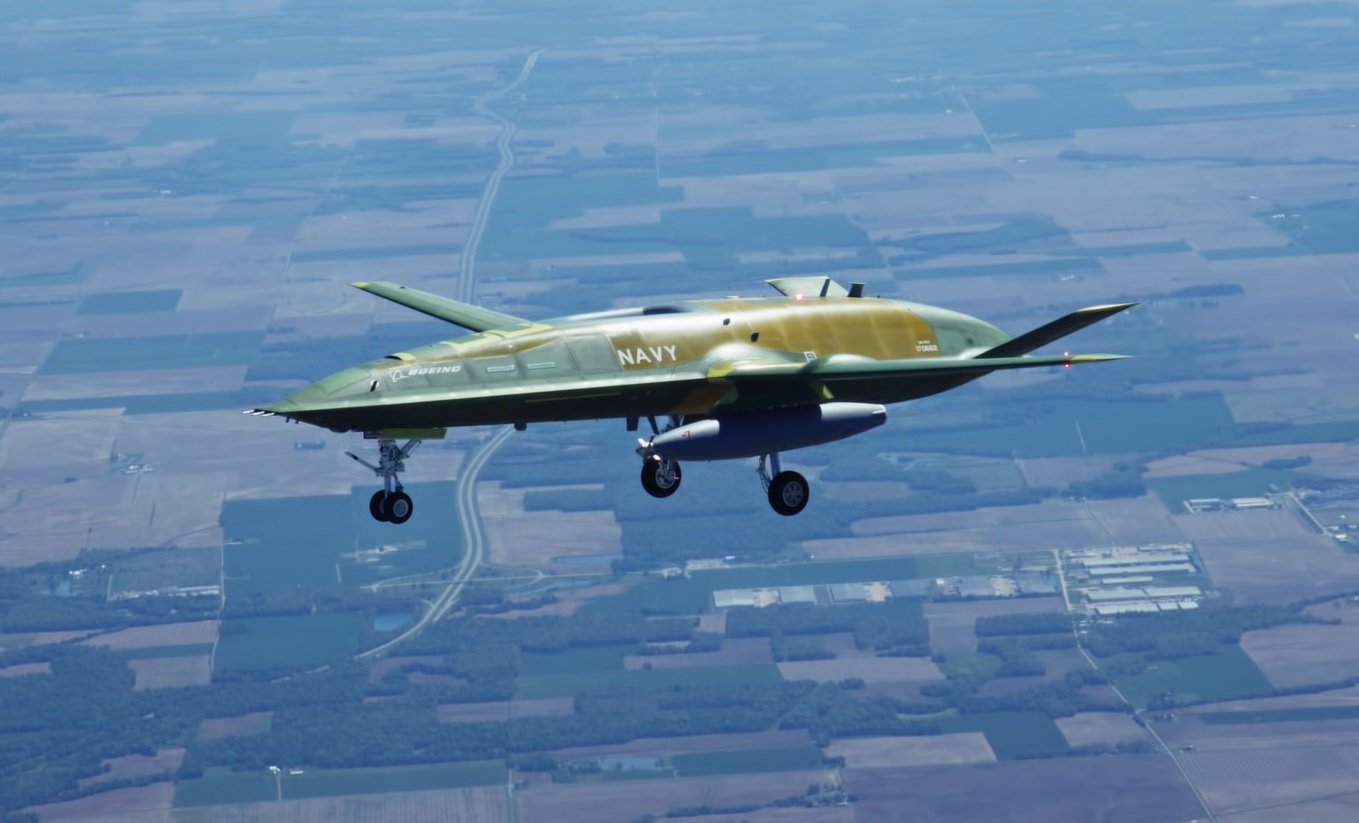
The first production-representative MQ-25A completed its approximately two-hour maiden flight on April 25, 2026, at Boeing’s facility at MidAmerica St. Louis Airport in Mascoutah, Illinois. An earlier flight attempt on April 22 was aborted for undisclosed reasons.
During the maiden flight, the aircraft autonomously taxied, took off, maneuvered and landed while responding to commands from the Unmanned Carrier Aviation Mission Control System MD-5 ground station.
The aircraft completed its second test flight in July, including landing-gear cycling and testing of new software intended to support future expansion of its flight envelope. Separate deck-handling trials aboard USS George H.W. Bush demonstrated the aircraft’s physical compatibility with carrier deck operations. The Boeing-owned T1 demonstrator has also participated in carrier deck activities aboard USS Nimitz.
The Navy previously planned a test fleet of nine MQ-25 aircraft, including four Engineering Development Model aircraft produced under an $805 million engineering and manufacturing development contract. Future testing will expand the aircraft’s flight envelope, certify its aerial-refueling capability and eventually move to Naval Air Station Patuxent River for operational evaluation.
The Navy has targeted Initial Operational Capability for the MQ-25, while the program continues its testing and development toward operational deployment.
——— End of Article ———