ANKARA — Turkish defence company Roketsan announced on September 23 that its KARAOK short-range anti-tank guided missile successfully struck an aerial target for the first time.
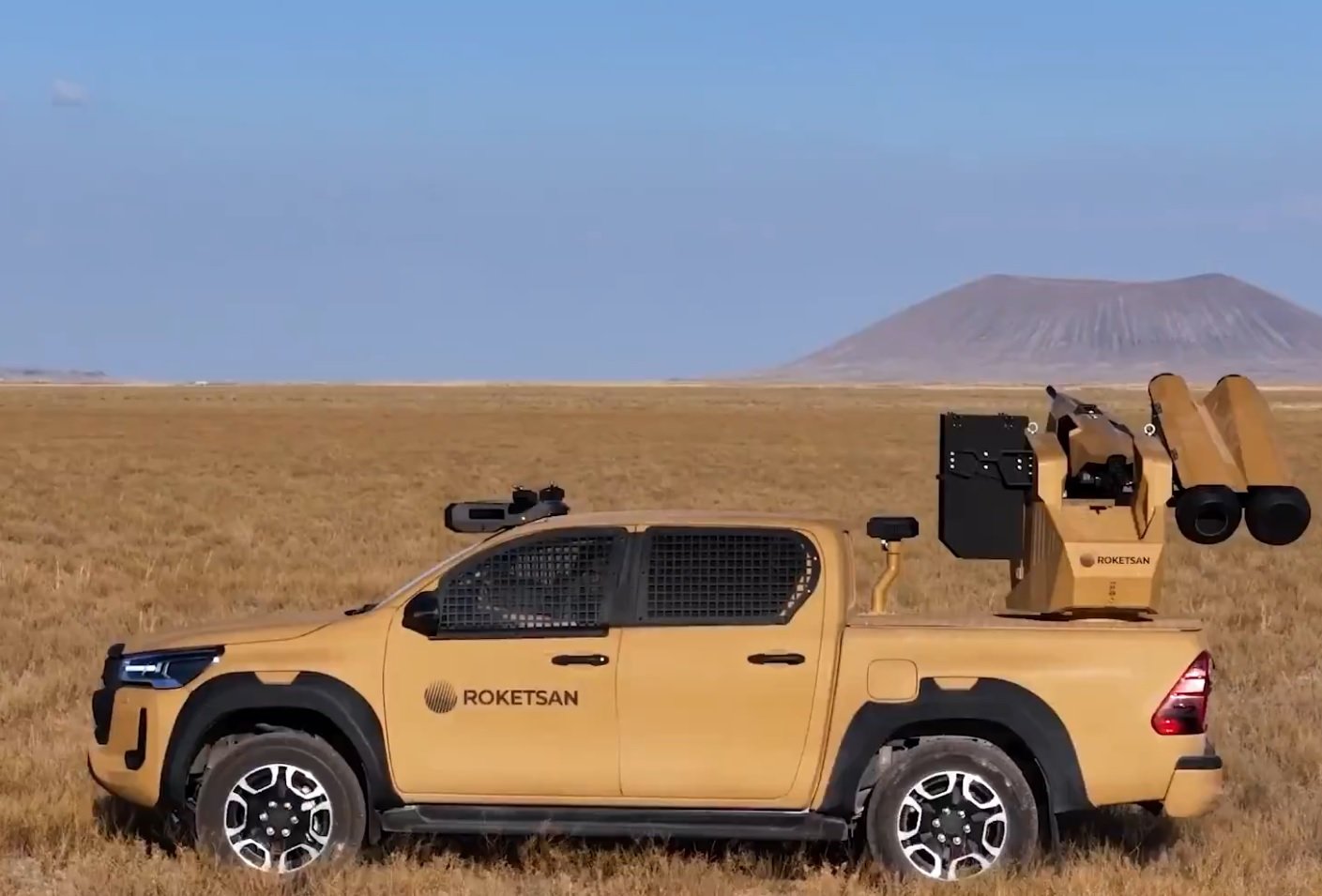
Roketsan released video footage on X showing the missile being launched from a turret mounted on a light tactical pickup truck and intercepting a drone designed to resemble a Shahed-type one-way attack drone.
The test expands the KARAOK's demonstrated capability beyond its original role against ground targets. Roketsan CEO Murat İkinci said the successful test broadened the system's operational scope and that the company is continuing to integrate different capabilities into its systems to address changing requirements in the field.
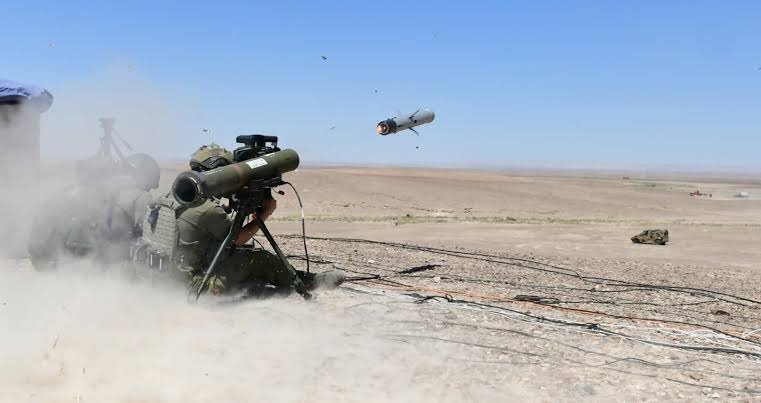
KARAOK is a man-portable, fire-and-forget anti-tank weapon designed to be operated by a single soldier from a shoulder-fired tube. The complete system weighs less than 16 kilograms, has a 125 mm diameter and a range exceeding 2,500 metres. It uses an imaging infrared seeker for day-and-night operation and carries a tandem high-explosive anti-tank warhead. The missile supports both direct-attack and top-attack modes and can engage stationary and moving ground targets.
For the latest test, KARAOK was installed on a vehicle-mounted turret instead of being operated from the shoulder. The vehicle configuration allows the missile to be aimed and fired from the platform and provides a setup more similar to a mobile air-defence system.
The use of anti-tank missiles against drones has become increasingly visible during the war in Ukraine. Ukrainian forces have used systems such as Stugna-P against aerial targets, while the improvised STASH system combines U.S.-made AGM-114 Hellfire missiles with RADA radars for air-defence missions. The U.S. Javelin also has limited capability against slow, low-flying aircraft, while Hellfire missiles have been used against UAVs in addition to their anti-armour role.
The KARAOK's guidance technology helps explain its potential for such applications. Its imaging infrared seeker and terminal guidance system are designed to track moving targets, although the missile was originally developed for ground combat.
KARAOK entered service with the Turkish military in 2022. Roketsan began developing the system around 2016, and it uses a hybrid dual-stage rocket motor that allows firing from enclosed spaces.
The missile has also attracted international interest. Malaysia became KARAOK's first foreign customer, selecting it to replace the Russian-made Metis-M anti-tank system. The contract covers 18 launchers and associated missiles, with the first deliveries planned for early 2026.
Roketsan has not yet stated whether the turret-mounted anti-drone configuration demonstrated in the latest test will become a standard product or remain an experimental configuration.
——— End of Article ———