WASHINGTON — The U.S. Space Force has awarded $50 million to Space Kinetic Corp. to develop Whirlwind, a space maneuverability and deployment system designed to release small spacecraft from a larger host vehicle at high velocity without using a thruster for the initial boost.
Space Kinetic announced the award on August 13, 2026, describing it as the largest award in the company's history. The agreement was made through an Other Transaction Authority (OTA) mechanism.
Using centrifugal acceleration to deploy satellites
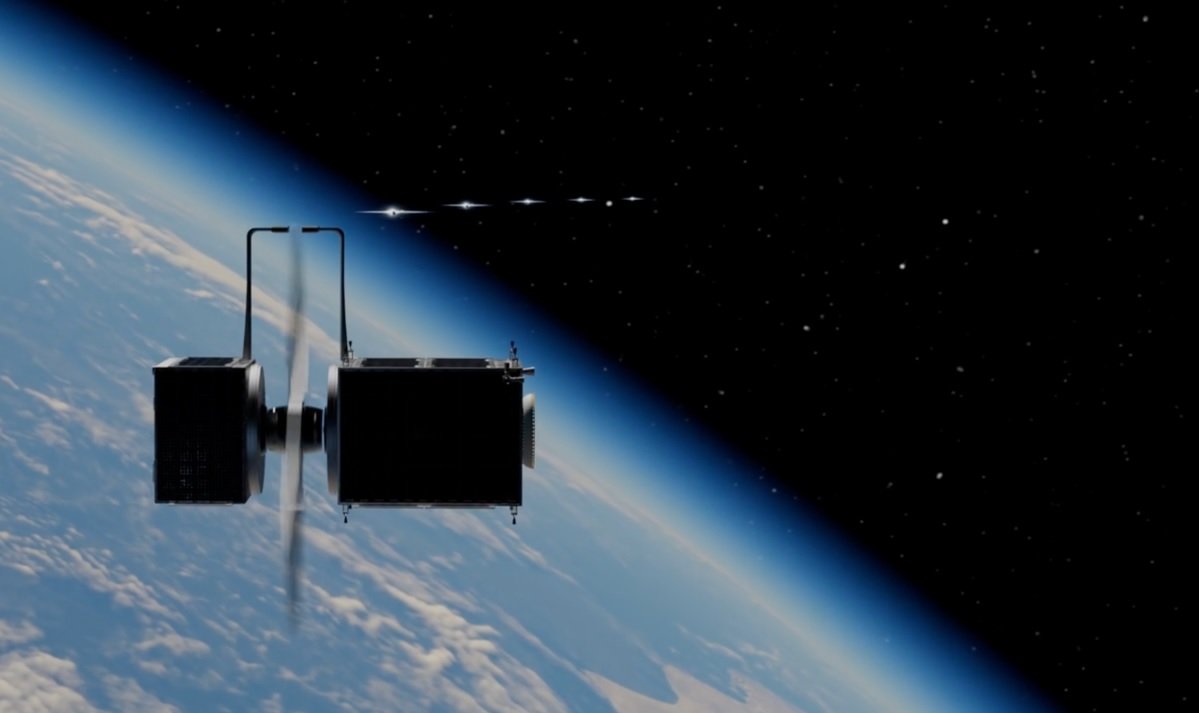
Whirlwind takes a different approach from conventional satellite deployment. The system uses an electromechanical mechanism on a host spacecraft to spin and accelerate ruggedized microsatellites before releasing them on independent trajectories.
The company describes the concept as a "space-based David sling." Rather than using chemical propulsion to provide the initial change in velocity, Whirlwind uses centrifugal acceleration to provide most of that initial Delta-V.
After deployment, the individual microsatellites can use their own limited propulsion and communications systems for further adjustments.
The approach is intended to shift much of the initial propulsion requirement from each individual payload to the host spacecraft. Space Kinetic says this could reduce the mass, cost and complexity of individual micro-payloads.
One host spacecraft, multiple missions
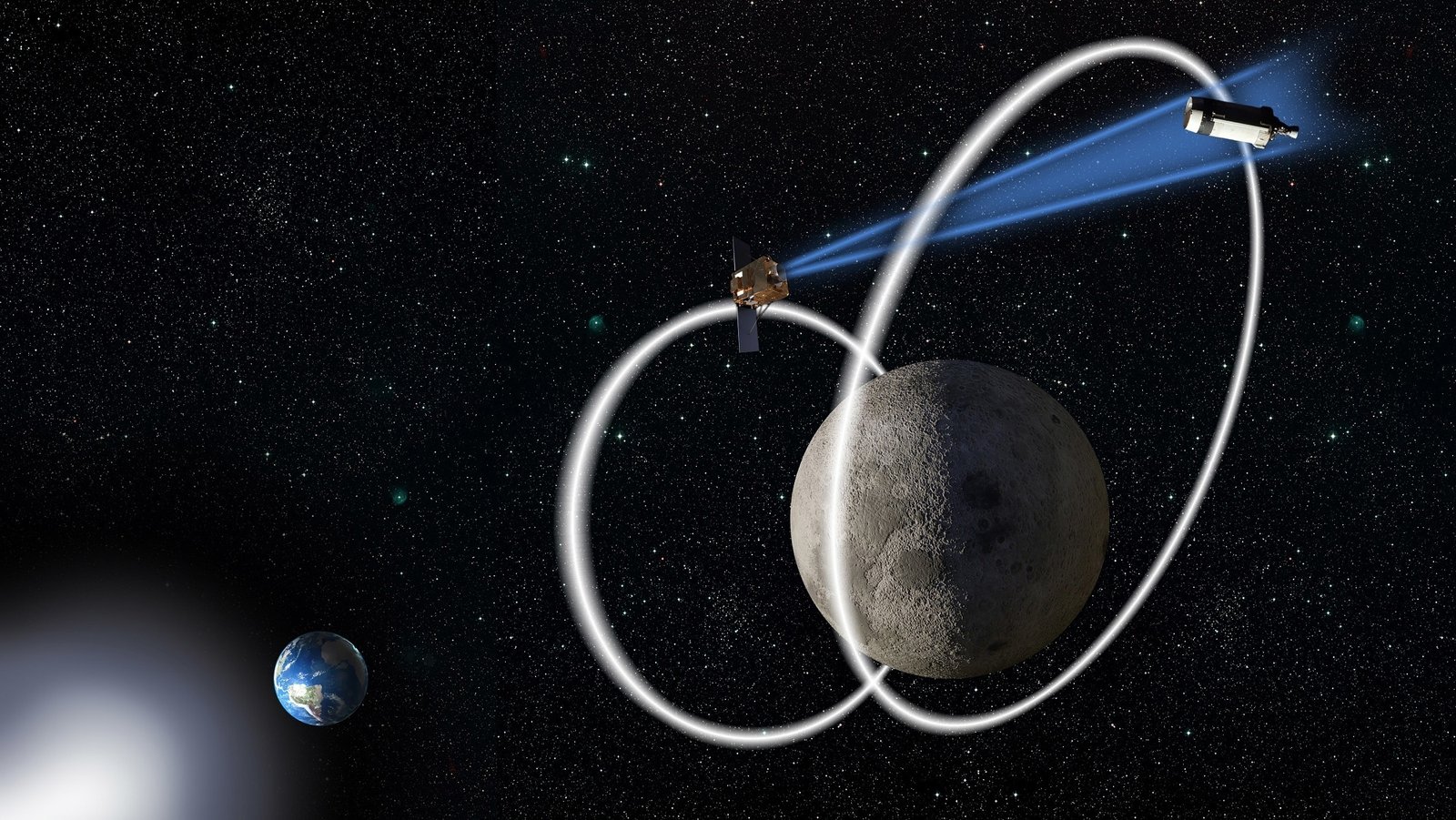
Space Kinetic refers to Whirlwind as a "one-to-many" architecture, in which one host spacecraft can deploy multiple mission-specific micro-payloads.
The company is targeting several potential dual-use applications, including:
- Space domain awareness sensors
- Electro-optical imaging
- Rapid-response communications nodes
- Space debris characterization
- Scientific research probes
- Inspection missions
- Elements of asymmetric space-based missile-defense concepts
The system is designed to support different payload types and orbital regimes, according to Space Kinetic.
Applying "drone economics" to space
A central part of Space Kinetic's concept is reducing the cost of individual spacecraft enough to enable missions that would not require a satellite to operate for years.
CEO and co-founder Ryan Sullivan has described the idea as bringing "drone economics" to orbit. Under this concept, some small spacecraft could be designed for short-duration missions rather than long-term operation. Sullivan has discussed scenarios in which a payload could have a useful life measured in 30 minutes if its cost were low enough.
The company says this could allow a host spacecraft to distribute different capabilities when and where they are required.
Space Kinetic expands its government work
The $50 million Space Force award follows a $12 million seed funding round in 2025, led by Balerion Space Ventures, with participation from Industrious Ventures, Marque Ventures and CerraCap Ventures.
Space Kinetic also received a multi-million-dollar DARPA contract related to an asymmetric space-based missile-defense architecture and was selected for the SpaceWERX Adaptive and Intelligent Space Challenge in July 2026.
The company currently has about 50 employees. It operates a prototyping laboratory in Albuquerque, New Mexico, maintains a multi-year partnership with Los Alamos National Laboratory, and is expanding its presence in El Segundo, California. The company is also hiring as it works to expand its team.
No in-orbit test date announced
Space Kinetic has not announced a firm date for an in-orbit demonstration of Whirlwind. The company is currently focused on technology maturation and discussions with government and other partners about system integration.
The Space Force award gives the company funding to advance a deployment architecture that could allow a single host spacecraft to release multiple small payloads without requiring each payload to provide the full initial propulsion needed for its mission.
——— End of Article ———