
World
WASHINGTON, D.C. : Five countries have formally committed troops to a newly established International Stabilization Force (ISF) for the Gaza Strip, marking the first structured multinational security arrangement following the October ceasefire. The commitments were announced during the inaugural Board of Peace meeting held in Washington on Thursday. Indonesia, Morocco, Kazakhstan, Kosovo, and Albania confirmed participation in the force, which is designed to provide security support during the early stages of reconstruction in Gaza. The ISF will operate separately from existing United Nations peacekeeping missions and will carry a defined non-combatant, humanitarian-focused mandate. ISF Structure and Deployment Framework The stabilization plan outlines a total deployment of 20,000 international soldiers and 12,000 police officers. The force will be commanded by U.S. Army Major General Jasper Jeffers and will coordinate its activities with civilian reconstruction authorities. Initial deployment will begin in Rafah, identified as the primary location for early infrastructure rehabilitation efforts. Rafah has been designated as the starting point for phased stabilization and reconstruction activities. Under the agreed structure, the ISF’s responsibilities will include securing border areas, protecting reconstruction sites, and ensuring safe conditions for humanitarian operations. The mandate does not authorize offensive combat operations and is focused on maintaining order during rebuilding phases. Indonesia’s Contribution and Command Role Indonesia has pledged the largest individual contingent among participating countries and will serve as deputy commander within the ISF structure. President Prabowo Subianto reaffirmed Indonesia’s commitment, stating: "We reaffirm our commitment to contribute a significant number of troops, up to 8,000 or more if necessary; we are prepared to contribute the troops to take part actively in the International Stabilization Force." Morocco, Kazakhstan, Kosovo, and Albania will also contribute military personnel under the agreed deployment framework. Specific troop numbers from these countries were not disclosed during the announcement, but all five nations confirmed readiness to proceed with planning and coordination. Parallel Palestinian Police Training Program Alongside the international military deployment, a separate initiative is underway to establish a new Palestinian domestic police force in Gaza. The security force will be composed entirely of personnel from the Gaza Strip but will be affiliated with and paid by the Palestinian Authority based in Ramallah. Egypt and Jordan are leading the training program. Egypt has already begun training hundreds of Palestinian cadets at facilities in Cairo, where recruits are undergoing intensive two-month police training courses. The target strength for the domestic security force is 10,000 personnel. Half of the force will consist of newly trained recruits from Egypt and Jordan, and the remainder will be drawn from vetted, existing police personnel in Gaza. Oversight will be managed by a technocratic committee approved by participating Palestinian factions. Financial Commitments and Reconstruction Funding The troop deployments coincide with major financial pledges aimed at rebuilding the territory's decimated infrastructure, which carries an estimated total reconstruction cost of $70 billion. During Thursday's summit, nine member nations — Kazakhstan, Azerbaijan, the United Arab Emirates, Morocco, Bahrain, Qatar, Saudi Arabia, Uzbekistan, and Kuwait — collectively pledged $7 billion toward an initial relief package. Concurrently, the United States announced an additional $10 billion pledge for the Board of Peace's stabilization efforts. The combined $17 billion in announced funding will support early-phase reconstruction, stabilization logistics, humanitarian assistance, and administrative coordination. Next Steps The member nations are scheduled to continue coordinating deployment timelines and logistical frameworks in the coming weeks before the first advance guards arrive in the territory. The ISF deployment represents the first structured multinational security initiative implemented in Gaza under the current ceasefire framework, operating in coordination with regional training programs and reconstruction funding commitments.
Read More → Posted on 2026-02-19 17:56:53
World
PYONGYANG, : North Korea has formally unveiled 50 newly manufactured 600mm multiple launch rocket systems (MLRS) during a presentation ceremony held in central Pyongyang, marking a significant expansion of its large-caliber artillery capabilities ahead of the Ninth Congress of the ruling Workers’ Party of Korea. The event took place at the plaza outside the April 25 House of Culture, where defense industry workers displayed the upgraded systems before senior officials and military representatives. The unveiling signals the transition of the new systems from production to active deployment within the Korean People’s Army. Design Modifications and Technical Configuration The newly introduced 600mm systems represent an upgraded configuration of North Korea’s existing large-caliber rocket artillery platform. The most visible structural modification is the launcher assembly, which now incorporates five launch tubes mounted on a four-axle vehicle chassis. Previous versions were equipped with four tubes. The addition of a fifth launch tube increases the number of rockets that can be fired in a single salvo, thereby enhancing firepower density per launcher. The system remains road-mobile, allowing rapid relocation and operational flexibility. South Korean and United States intelligence agencies classify the 600mm platform — widely known by its U.S. designation KN-25 — as a short-range ballistic missile (SRBM) system rather than conventional rocket artillery. This classification is based on its flight characteristics and guidance mechanisms. AI Integration and Guidance System During the ceremony, Kim Jong Un inspected the systems and drove one of the launch vehicles. He stated that the upgraded platform is equipped with artificial intelligence-based technology and a composite guidance system. According to official statements, the rockets follow a controlled ballistic trajectory and are fitted with movable fins that allow in-flight course correction. Unlike traditional unguided multiple launch rocket systems, the 600mm rockets are designed to adjust their flight path to improve accuracy. Kim described the integration of AI guidance as a development that alters traditional artillery concepts by combining large-caliber firepower with precision guidance capabilities. Operational Range and Strike Parameters The 600mm rockets have an estimated operational range of approximately 400 kilometers (250 miles). At this range, the system can reach targets across the entirety of South Korea from positions within North Korean territory. North Korean state media refers to the platform as a “super-large” multiple rocket launcher. However, external military assessments categorize it as a ballistic missile system due to its flight profile and range. Kim stated that the system’s precision and power make it suitable for carrying out “strategic missions.” In North Korean military terminology, this phrase typically indicates compatibility with tactical nuclear warheads, although no specific payload details were disclosed during the event. Production Timeline and Deployment The 50 upgraded systems were reportedly produced over a two-month period by North Korean defense enterprises following testing activities conducted in late January 2026. The scale and pace of production indicate an acceleration in output within the country’s defense manufacturing sector. The public presentation confirms that the five-tube 600mm systems are moving into operational service. The Korean People’s Army is expected to integrate the new units into its artillery and missile forces as part of broader force modernization efforts. Kim indicated that additional military and defense-industrial expansion plans will be outlined at the forthcoming Ninth Congress of the Workers’ Party of Korea. The unveiling of the upgraded systems reflects North Korea’s continued emphasis on enhancing precision-guided strike capabilities while maintaining large-caliber, high-volume firepower platforms within its conventional and strategic arsenal.
Read More → Posted on 2026-02-19 17:44:14
World
SEOUL : South Korea has intensified development of an air-launched hypersonic anti-ship cruise missile following the successful flight validation of its land-based Hycore hypersonic cruise vehicle. The new air-delivered variant, introduced conceptually by Hyundai Rotem, is widely understood to be designated as the K-HCM (Korean Hypersonic Cruise Missile), and represents the next phase in Seoul’s expanding scramjet-powered strike capabilities. The program builds directly on performance data gathered from the Hycore ground-launch testbed, which validated sustained hypersonic flight and integrated scramjet propulsion. Development is being coordinated under the leadership of the Agency for Defense Development (ADD), with major industrial participation from Hyundai Rotem and Hanwha Aerospace. Air-Launched K-HCM Configuration The air-launched K-HCM is being engineered with aerodynamic and structural modifications tailored for aerial deployment and maritime strike missions. Compared to the ground-launched Hycore configuration, the air-delivered version incorporates several key design differences. The missile omits the interstage section required for ballistic trajectory management in ground-launched systems, resulting in a more streamlined external profile suited to release from an aircraft platform. It adopts a single solid-fuel booster configuration for initial acceleration, replacing the two-stage booster arrangement used in the land-based version. The air-launched variant also features expanded wings and larger control surfaces. These structural adjustments are designed to support extended long-range cruising and controlled supersonic glide during the terminal phase of flight. Hyundai Rotem publicly highlighted the anti-ship mission profile of the K-HCM during a promotional video shown at the Seoul International Aerospace and Defense Exhibition (ADEX) last year. The simulation depicted an air-launched hypersonic missile striking an Aegis-equipped surface combatant, indicating the system’s intended role against high-value naval assets protected by advanced air-defense networks. Hycore Baseline Technical Data The accelerated development of the K-HCM follows the successful testing of the Hycore ground-based hypersonic cruise vehicle. South Korean defense contractors have released detailed operational parameters for the baseline system. The Hycore missile measures 8.7 meters in length and weighs approximately 2,400 kilograms. It is designed to achieve a maximum speed of Mach 6.2. Flight testing conducted in 2024 validated sustained flight at Mach 6, confirming the performance of the propulsion and thermal management systems under hypersonic conditions. The system has an estimated total strike range of approximately 800 kilometers. Its flight profile consists of a 500-kilometer high-altitude cruise phase at an altitude ceiling of around 30 kilometers, followed by a 300-kilometer supersonic glide phase toward the target. The propulsion architecture integrates a solid-fuel rocket booster derived from South Korea’s Tactical Surface-to-Surface Missile (KTSSM) program. The booster accelerates the vehicle beyond Mach 3. Once this threshold is reached, a dual-mode scramjet (supersonic combustion ramjet) engine activates to sustain controlled hypersonic flight at speeds approaching Mach 6. Propulsion and Industrial Roles Hyundai Rotem has taken primary responsibility for advanced air-breathing propulsion systems within the hypersonic portfolio. The company has showcased dual-mode hypersonic ramjets and ducted ramjet engines designed to maintain stable combustion and thrust at extreme velocities. Hanwha Aerospace contributes its expertise in solid rocket booster production and precision-guided munition integration, including the adaptation of booster technologies derived from existing missile programs. The ADD oversees system integration, research validation, and performance evaluation across the program. The collaboration reflects a coordinated national approach to developing scramjet-powered long-range strike systems. Transition from Ground to Air Launch The conversion of the Hycore testbed into an operational air-launched anti-ship platform represents a technical adaptation rather than a wholly new design. The core propulsion concept remains unchanged: a booster-driven acceleration phase to exceed Mach 3, followed by sustained hypersonic cruise powered by a dual-mode scramjet. By translating the validated ground-launch configuration into an air-deployable format, South Korea aims to field a long-range standoff weapon capable of engaging maritime targets while reducing exposure of launch platforms to adversary air-defense systems. The K-HCM, once operational, is expected to provide extended reach, high-speed terminal approach, and survivability against modern naval air-defense architectures. Development continues as South Korea expands its portfolio of domestically engineered hypersonic systems based on the Hycore foundation.
Read More → Posted on 2026-02-19 17:27:42
World
TOULOUSE / BERLIN / PARIS : Airbus has stated it would support the development of two separate fighter jets under the €100 billion Future Combat Air System (FCAS) programme if participating governments formally request such an arrangement, as disagreements over governance and industrial leadership continue to delay progress on Europe’s flagship sixth-generation combat aircraft initiative. The FCAS programme, launched in 2017 by France and Germany, with Spain joining later, aims to develop a next-generation air combat system to replace France’s Rafale fighter jets and the Eurofighter Typhoons operated by Germany and Spain. The project includes not only a new fighter aircraft — the Next Generation Fighter (NGF) — but also remote carrier drones and a combat cloud network designed to connect assets across air, land and sea domains. Airbus Chief Executive Guillaume Faury said the company would adapt to a revised structure if governments opt for parallel fighter developments. He stated that Airbus is prepared to assume a leading role under a two-fighter configuration, if mandated by partner nations. At the same time, he emphasized that disputes affecting one component should not undermine the broader high-technology defence framework. Governance Dispute Between Dassault and Airbus The programme has faced repeated delays due to governance disputes between Dassault Aviation and Airbus, which represents German and Spanish industrial interests in the aircraft pillar of FCAS. The disagreement centres on leadership structure, workshare allocation and intellectual property control during the NGF development phase. Airbus has indicated that expectations differ regarding what constitutes leadership and cooperation in managing the aircraft component. German political and industrial stakeholders have raised concerns that Dassault Aviation has sought to revise previously agreed arrangements in a manner that would increase its authority over fighter development. Dassault, which leads the NGF pillar, has maintained that clear leadership is required to ensure technical coherence and timely execution. In September 2025, Dassault Aviation Chairman and Chief Executive Eric Trappier stated publicly that his company could develop the future fighter independently if necessary, indicating that differences with German partners would not prevent Dassault from proceeding on its own. Divergent Military Requirements Differences in national defence requirements have added complexity to the programme. France requires a fighter capable of carrying nuclear weapons as part of its airborne nuclear deterrent and operating from an aircraft carrier. Germany and Spain do not share identical operational requirements, particularly regarding carrier-based operations. German Chancellor Friedrich Merz recently signalled that Berlin could consider abandoning the unified fighter element of the FCAS programme if structural disagreements persist. His remarks reflected concerns about alignment between German military requirements and the current project framework. France and Spain Reaffirm Commitment France has reiterated its support for the FCAS programme. The office of President Emmanuel Macron described the ongoing inability to resolve governance disputes as “incomprehensible”, especially at a time when European defence cooperation is considered strategically important. Paris continues to describe FCAS as central to Europe’s long-term defence autonomy. Spain’s defence ministry has confirmed that Madrid remains fully committed to the programme in accordance with the 2019 framework agreement signed by the participating countries. Scope and Cost of the Programme The FCAS initiative is estimated to cost approximately €100 billion over its development lifecycle. The programme is structured around several key pillars: Next Generation Fighter (NGF) — the core crewed aircraft. Remote carrier drones — designed to operate alongside the fighter. Combat cloud system — enabling secure, networked data exchange. Advanced enabling technologies — including sensors and propulsion systems. While the NGF pillar remains stalled due to governance issues, Airbus has stated that progress continues in other areas, including drone systems development and the digital combat cloud infrastructure. Strategic Implications FCAS is regarded as a central component of European defence cooperation and efforts to maintain advanced aerospace capabilities within Europe. The programme also aims to preserve industrial competitiveness for participating nations in the global combat aircraft sector. Airbus indicated that a formally adopted two-fighter solution could potentially open the door to additional international participation, subject to decisions by the partner governments. Any structural modification to the programme would require agreement among France, Germany and Spain. The future configuration of Europe’s next-generation air combat system remains dependent on ongoing political and industrial negotiations among the participating states.
Read More → Posted on 2026-02-19 17:00:32
World
KARLSRUHE, Germany : Researchers at the Karlsruhe Institute of Technology (KIT) have achieved a new operational milestone in hydrogen-based turbine technology, running a compressorless hydrogen gas turbine continuously for 303 seconds and generating electricity in the process. The test, completed in mid-February 2026, exceeds the previous 250-second runtime record established by NASA for comparable experimental systems. The experiment marks the first confirmed instance of electricity production from a hydrogen gas turbine operating without a mechanical air compressor, demonstrating sustained performance and energy transfer under load. Pressure-Gain Combustion Replaces Mechanical Compression Traditional gas turbines, widely used in power generation facilities and aircraft engines, rely on mechanical compressors to increase air pressure before combustion. This compression stage typically consumes close to 50 percent of total power output, significantly affecting overall efficiency. The KIT prototype eliminates the compressor entirely by employing pressure-gain combustion. Instead of compressing incoming air mechanically, the system generates high pressure directly inside the combustion chamber through controlled detonation waves and fluid-mechanical instabilities. This approach allows the pressure rise required for turbine operation to occur during combustion itself. By removing the compressor stage, the design reduces internal energy losses, decreases the number of moving components, and improves thermodynamic efficiency. The simplified mechanical configuration also lowers system mass and reduces structural complexity. Hydrogen was selected as the fuel due to its rapid reaction kinetics. Its combustion characteristics enable the fast and stable pressure increases necessary for maintaining controlled detonation-based operation within the chamber. Extended Operation Confirms Structural Stability Prior experimental demonstrations of compressorless turbine concepts typically operated only for fractions of a second because extreme thermal loads caused rapid material degradation in the combustion chamber. Sustained operation under continuous load had not previously been achieved at this scale. In the 303-second test, the turbine was successfully coupled to the combustion chamber, allowing mechanical energy transfer and electricity generation. According to Professor Daniel Banuti, Director of the Institute of Thermal Energy Technology and Safety (ITES) at KIT, integrating the turbine with the high-velocity combustion process represented a major engineering challenge. The intense heat flux and rapid pressure oscillations required advanced thermal management and structural reinforcement to prevent material failure. The continuous runtime of just over five minutes demonstrates that the combustion chamber and turbine assembly can withstand sustained thermal and mechanical stresses while maintaining stable power output. Researchers indicated that validating structural durability under operational load was a key objective of the test. Efficiency and System-Level Advantages Eliminating the mechanical compressor reduces both parasitic energy consumption and total system mass. Because conventional turbines allocate a significant portion of output power to drive compression, bypassing this stage provides a direct improvement in net efficiency. Fewer moving parts also translate to reduced mechanical wear and potentially lower maintenance requirements. The simplified architecture could enable more compact power systems suitable for decentralized electricity generation or specialized industrial applications. Hydrogen operation further positions the system within low-emission energy strategies, as hydrogen combustion does not produce carbon dioxide at the point of use. The research aligns with broader European efforts to expand hydrogen infrastructure and develop next-generation power conversion technologies. Potential Aerospace Applications Beyond stationary electricity generation, the reduction in component count and overall weight makes the compressorless hydrogen turbine architecture relevant for aerospace applications. Removing the compressor stage decreases engine mass and mechanical complexity, factors that are critical in aircraft propulsion systems. The pressure-gain combustion approach also offers a framework for future zero-emission propulsion concepts based on hydrogen fuel. While further development and certification would be required for aviation deployment, the extended runtime demonstrates progress toward practical implementation. Upcoming Public Demonstration KIT plans to present the turbine prototype at the Hannover Messe in April 2026. The demonstration will provide industry stakeholders with direct insight into the system’s operational characteristics and engineering design. The 303-second runtime and successful electricity generation represent a measurable advancement in pressure-gain combustion research and hydrogen turbine development, establishing a new performance benchmark beyond the prior 250-second record set by NASA.
Read More → Posted on 2026-02-19 16:36:38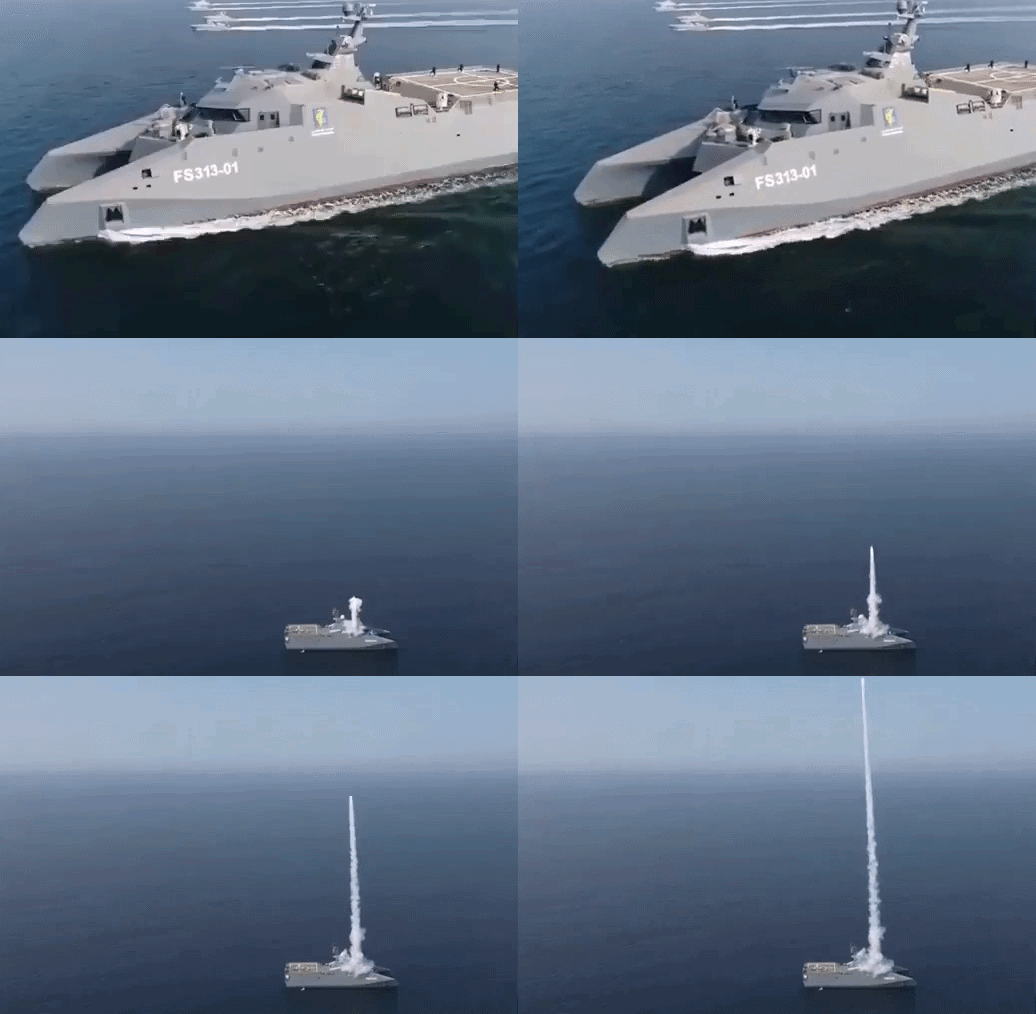
World
BANDAR ABBAS : Iran has carried out the first naval launch of its Sayyad-3G surface-to-air missile from a warship platform, marking the initial operational firing of the system from a vertical launching system (VLS) at sea. The launch was conducted in the Strait of Hormuz and was followed by the immediate deployment of the vessel to the Gulf of Oman for a bilateral passing exercise (PASSEX) with the Russian Navy. First Naval Launch of Sayyad-3G The missile was launched from the vertical launch system aboard the Islamic Revolutionary Guard Corps (IRGC) Navy’s stealth catamaran corvette Shahid Sayyad Shirazi (hull identification FS313-03). The Sayyad-3G, also referred to as Sayyad-3F, is an interceptor designed for mid-to-long-range air defense. It has an estimated engagement range of approximately 150 kilometers and is intended to provide extended aerial coverage against aircraft and other airborne threats. The missile forms part of Iran’s broader layered air defense architecture and is adapted for naval deployment through vertical launch integration. The launch took place in the Strait of Hormuz, a strategically significant maritime chokepoint connecting the Persian Gulf to international waters. Conducting the test in this area demonstrates the integration of the missile system into operational fleet units operating in high-traffic and strategically sensitive sea lanes. Vessel and Platform Details The Shahid Sayyad Shirazi is a recently commissioned corvette belonging to the Shahid Soleimani class. The class is characterized by its catamaran hull configuration, which enhances stability and speed while reducing radar cross-section. The vessel incorporates a multi-mission vertical launching infrastructure designed to accommodate surface-to-air missiles. The ship’s stealth-oriented design includes angular superstructure features intended to lower radar detectability. The class has been developed to support air defense, anti-surface warfare, and patrol operations, reflecting Iran’s effort to modernize its surface fleet with modular and vertically launched missile capabilities. Deployment to Gulf of Oman One day after completing the missile launch in the Strait of Hormuz, the Shahid Sayyad Shirazi redeployed to the Gulf of Oman to participate in a bilateral PASSEX with the Russian Navy. The Iranian vessel integrated with units from the Baltic Fleet of the Russian Navy. The Russian contingent was led by the corvette Stoikiy (545), a Project 20380 Steregushchiy-class vessel. Prior to the exercise, the Stoikiy had made a port call at Iran’s First Naval District in Bandar Abbas. Participating Vessels and Exercise Scope In addition to the Shahid Sayyad Shirazi and the Stoikiy (545), the PASSEX included the Iranian frigate Alvand and the missile craft Neyze. A PASSEX is a standard naval exercise format conducted when vessels from different navies operate in proximity. It is designed to ensure safe navigation, improve communication protocols, and enhance interoperability during transit or coordinated activity at sea. The drill focused on coordinated tactical maneuvering, bridge-to-bridge communications, navigational safety procedures, and maritime traffic deconfliction. The exercise area covered approaches to the Strait of Hormuz, an area of sustained commercial shipping traffic and energy transport routes. Operational and Strategic Context The back-to-back sequence of the missile launch and subsequent joint exercise reflects two parallel developments: the operational validation of Iran’s naval vertical launch capability and ongoing maritime coordination between the Iranian Federation and the Islamic Republic of Iran. The integration of the Sayyad-3G missile into a naval vertical launching system represents an expansion of Iran’s shipborne air defense capacity, extending coverage beyond point-defense systems traditionally used on smaller vessels. The deployment of the Shahid Sayyad Shirazi to a multinational drill immediately after the test indicates the vessel’s readiness for operational missions following the launch event. The PASSEX with Russian naval forces, including elements of the Baltic Fleet, underscores continued bilateral naval engagement in waters adjacent to the Strait of Hormuz and the Gulf of Oman, areas central to regional maritime security and global energy transit. No additional operational incidents were reported during the missile test or the joint exercise.
Read More → Posted on 2026-02-19 16:27:00
World
WASHINGTON / TEL AVIV : The United States is repositioning the USS Gerald R. Ford Carrier Strike Group to the eastern Mediterranean Sea in a move intended to reinforce Israeli air and missile defense capabilities amid continued regional tensions and concerns over potential Iranian missile activity. According to reporting by The New York Times and U.S. defense officials, the nuclear-powered aircraft carrier and its accompanying warships are expected to operate initially near Israel’s coastline. The deployment is part of a broader effort to expand defensive coordination between U.S. naval assets and Israel’s existing multi-layered air defense architecture. Deployment Status and Fleet Composition The carrier strike group is currently in transit after being redeployed from the Caribbean Sea. Maritime tracking data and defense sources indicate that the fleet is expected to arrive in the eastern Mediterranean by this weekend or early next week. The deployment includes the USS Gerald R. Ford (CVN-78), the U.S. Navy’s newest and largest aircraft carrier, commissioned in 2017 and powered by two nuclear reactors. The vessel is designed to carry more than 75 aircraft and features the Electromagnetic Aircraft Launch System (EMALS), advanced radar systems, and increased sortie-generation capability compared with earlier carrier classes. Accompanying the carrier are three guided-missile destroyers equipped with the Aegis Combat System. These Arleigh Burke-class destroyers are capable of ballistic missile defense, long-range air defense, and maritime security operations. Integration with Israeli Missile Defense Systems U.S. defense officials state that the principal objective of forward-deploying the strike group is to integrate its maritime-based radar and interception capabilities into a broader U.S.–Israeli defensive network. The Aegis-equipped destroyers provide long-range detection, tracking, and interception of ballistic missiles. Operating offshore, these vessels can contribute an additional maritime layer of defense to Israel’s air defense structure, particularly against short- and medium-range missile threats. This naval deployment is designed to complement Israel’s existing ground-based systems rather than replace them. The coordination between sea-based and land-based assets increases overall detection coverage and interception opportunities. Ground-Based Air Defense Coordination The carrier strike group will operate in conjunction with Israel’s multi-tiered missile defense systems, which are structured to address threats at different ranges and flight phases. The integrated defense framework includes: Arrow System: Designed to intercept long-range ballistic missiles outside the Earth’s atmosphere. The Arrow system forms the uppermost tier of Israel’s missile defense architecture. David’s Sling: Developed to counter medium- to long-range ballistic missiles and cruise missiles. It fills the gap between short-range systems and the Arrow interceptors. Patriot Batteries: Utilized for intercepting tactical ballistic missiles, cruise missiles, and advanced aircraft. THAAD (Terminal High Altitude Area Defense): A U.S.-operated system capable of shooting down short-, medium-, and intermediate-range ballistic missiles in their terminal phase. By integrating maritime Aegis capabilities with these land-based systems, U.S. and Israeli defense planners aim to expand tracking range, increase interceptor options, and improve overall response coordination. Broader U.S. Military Posture in the Region The repositioning of the USS Gerald R. Ford Carrier Strike Group occurs as the United States maintains an expanded military presence in the Middle East. The deployment coincides with a period of indirect nuclear negotiations involving Iran and continued regional security concerns. The Ford Strike Group will operate alongside the USS Abraham Lincoln Carrier Strike Group, which is currently deployed in the Arabian Sea with its own escort of guided-missile destroyers. The presence of two U.S. carrier strike groups in adjacent theaters provides extended coverage across the eastern Mediterranean and the broader Middle East maritime corridor. U.S. officials have described the deployment as defensive in nature, focused on deterrence and the reinforcement of existing air and missile defense structures rather than offensive operations. The arrival of the USS Gerald R. Ford in the eastern Mediterranean is expected within days, after which integration with Israeli and U.S. regional command structures will proceed as part of ongoing security coordination efforts.
Read More → Posted on 2026-02-19 16:09:42
World
BOSTON : Marine autonomy developer Sea Machines Robotics has formally introduced its STEAMRACER-class unmanned surface vessel (USV), confirming that the platform is currently in the final competitive evaluation phase of the U.S. Navy’s Modular Attack Surface Craft (MASC) program. The unveiling comes as the Navy advances its transition toward scalable, uncrewed maritime systems intended to expand distributed operational capacity, particularly across the Indo-Pacific region. Platform Overview The STEAMRACER-class USV is a purpose-built autonomous surface vessel engineered to meet the operational and technical requirements outlined under the MASC framework. The vessel operates on Sea Machines’ proprietary AI-enabled remote command and autonomy architecture, developed and refined over the past decade. According to the company, the autonomy stack integrates vessel control, navigation, sensor fusion, and remote supervisory capabilities within a hardened software-hardware framework designed for fleet-scale deployment. The system supports both fully remote and supervisory control modes, allowing distributed operations from shore-based or afloat command nodes. Operational Capabilities The STEAMRACER platform incorporates the following key characteristics aligned with MASC program requirements: Performance: The vessel is configured for high-speed transit and extended operational endurance to support distributed maritime missions. Payload Architecture: The USV features a modular, open-deck configuration capable of accommodating containerized payloads specified under the MASC concept. The open architecture allows integration of mission packages without structural redesign, supporting rapid reconfiguration. Data Security: The platform includes a secure onboard data environment designed to protect mission systems and enable resilient, distributed command-and-control operations. Manned Flexibility: While designed as an “unmanned-first” platform, STEAMRACER retains structural and mechanical provisions for limited-duration crewed operations if mission parameters require temporary human presence onboard. Domestic Manufacturing and Industrial Base Integration To support scalable production and align with U.S. Navy requirements for domestic sourcing, Sea Machines has established a localized manufacturing network under what it describes as a “Florida-forged” production model. The STEAMRACER integrates Sea Machines’ autonomy software with established U.S. shipbuilding and maritime industrial capabilities. Manufacturing and integration partners include: St. Johns Ship Building TOTE Services Ring Power Incat Crowther EMI-W&O Sea Machines stated that this consortium structure is designed to reinforce recent executive directives aimed at strengthening the domestic maritime industrial base and increasing shipbuilding capacity within the United States. Communications and Cybersecurity Integration The vessel’s communications infrastructure is supported by Sierra Nevada Company (SNC), which is integrating its Maritime Advanced Secure Transmission (MAST) solution into the platform. The MAST system is intended to provide an open, scalable communications architecture with cybersecurity features that meet Navy standards for resilient, secure maritime operations. The integration supports distributed command-and-control, secure data transmission, and interoperability within broader fleet networks. MASC Program Background The Navy’s Modular Attack Surface Craft (MASC) program was established in 2025 through the consolidation of earlier Large Unmanned Surface Vessel (LUSV) and Medium Unmanned Surface Vessel (MUSV) development efforts. The restructuring was aimed at accelerating fielding timelines while reducing prolonged development cycles. The MASC program emphasizes modularity, containerized mission payloads, rapid production scalability, and operational mass. The initiative seeks to expand the Navy’s distributed maritime capabilities and address pacing challenges in contested environments, including those posed by China. Company Background and Investment Founded in 2015, Sea Machines Robotics has focused on the development of autonomous control systems for commercial and defense maritime applications. The company reports that it has secured more than $50 million in venture-backed capital to develop and mature its fully integrated autonomy stack. Sea Machines stated that this investment was directed toward solving a central challenge associated with the MASC program: achieving reliable integration between autonomy software, vessel hardware, and scalable manufacturing processes. By leveraging mature and field-tested autonomy systems rather than initiating a new prototype development cycle, the company asserts that the STEAMRACER platform offers a production-ready capability aligned with the Navy’s near-term and future distributed fleet requirements. The final competitive evaluation phase of the MASC program will determine the selection of platforms for subsequent production and deployment.
Read More → Posted on 2026-02-19 15:57:55
World
BRUSSELS : The European Union is moving toward the adoption of its 20th sanctions package against Russia, marking what officials describe as the bloc’s most far-reaching financial restrictions since the start of the Ukraine conflict. As of mid-February 2026, the European Commission is finalizing measures that expand enforcement from designated individuals and entities to broader segments of Russia’s financial infrastructure, including digital asset services and third-country intermediaries. The package is expected to be formally presented ahead of February 24, 2026, aligning with the anniversary of the full-scale invasion of Ukraine. Comprehensive Ban on Russian Cryptocurrency Transactions According to internal European Commission drafts and diplomatic briefings, the new sanctions introduce a blanket prohibition on cryptocurrency transactions linked to Russia. The proposal bars individuals and companies within the EU from engaging with any crypto-asset service provider established in Russia. Unlike earlier rounds of sanctions that targeted specific exchanges, wallet addresses or designated platforms, the new framework applies system-wide restrictions. EU-based financial institutions, payment processors, custodians and digital asset firms would be prohibited from facilitating transactions involving Russian crypto infrastructure, regardless of whether a particular entity has been individually listed. Officials state that the measure is designed to close loopholes that allowed sanctioned platforms to continue operating under new corporate identities or successor entities. Previous enforcement actions by US and EU regulators had identified Garantex as facilitating sanctions evasion and enabling cross-border transfers for restricted entities. The broader prohibition aims to prevent similar circumvention practices. The proposed package also extends compliance obligations to EU nationals operating outside the bloc and to subsidiaries of European firms abroad. National supervisory authorities would be responsible for enforcement, with penalties aligned to existing sanctions regimes. Extension to Third-Country Financial Institutions Draft texts reviewed by EU diplomats indicate that enforcement will also apply to certain financial institutions in third countries accused of supporting Russian digital asset services or facilitating the procurement of dual-use goods. Banks in Kyrgyzstan, Laos and Tajikistan are referenced in proposals as having processed transactions linked to Russian entities subject to EU restrictions. If adopted, the measures would bar EU financial institutions from conducting transactions with the designated banks. The move reflects a broader EU strategy to limit indirect access to European markets through intermediary jurisdictions. European officials have stated that the objective is to strengthen sanctions implementation rather than expand primary sanctions to additional sectors. The Commission has emphasized coordination with G7 partners and the United States to ensure consistency in enforcement standards. Frozen Russian Sovereign Assets: Scope and Location Parallel to the cryptocurrency measures, the EU continues deliberations over the handling of frozen Russian sovereign assets held within its jurisdiction. More than €209 billion (approximately $247 billion) in Russian central bank assets remain immobilized across EU member states. The majority—around €180 billion—is held at Euroclear, the Belgium-based international central securities depository. The assets were frozen in 2022 following coordinated sanctions imposed by the EU and G7 countries. The funds primarily consist of foreign exchange reserves and sovereign bonds held through custodial and clearing systems. While the principal remains frozen, interest generated on the assets has been subject to separate EU decisions allowing limited use for Ukraine-related financial support. Proposal to Underwrite €90 Billion Loan to Ukraine The European Commission has proposed using the immobilized Russian sovereign assets as collateral to support a €90 billion interest-free loan to Ukraine. Under the plan, the frozen funds would not be immediately confiscated but would serve as financial backing to guarantee borrowing for Kyiv. The Commission’s legal services have examined potential mechanisms to structure the arrangement in a manner consistent with EU law and international financial obligations. Discussions among member states have focused on minimizing exposure to legal risk while maintaining political unity. Belgium, where Euroclear is headquartered and holds the bulk of the assets, has requested indemnification mechanisms to shield it from potential financial or legal repercussions. Belgian officials have indicated that any decision affecting the principal assets could expose domestic institutions to litigation and retaliatory measures. Hungary has also expressed reservations regarding the proposal, citing legal concerns and potential economic implications. Several member states have called for additional legal analysis to ensure compliance with principles of sovereign immunity under international law. Russian Legal and Diplomatic Response The Russian government and the Central Bank of Russia have formally opposed both the proposed crypto restrictions and the asset-backed loan plan. Russian authorities have characterized attempts to use frozen sovereign funds as a violation of international legal norms. The Central Bank of Russia has initiated legal proceedings in Moscow courts against Euroclear, arguing that the immobilization and potential use of assets breach sovereign immunity protections. Russian officials have also indicated that reciprocal measures could be considered against Western-owned assets located in Russia. The scope and implementation of such potential countermeasures have not been formally detailed. Regulatory Context and Anti-Terror Financing Oversight Separately from the Russia-focused sanctions, EU and US financial intelligence authorities continue to strengthen oversight of digital assets and traditional banking channels linked to designated terrorist organizations. In recent years, regulatory scrutiny of cryptocurrency platforms has intensified, particularly in relation to transfers suspected of benefiting Iranian-backed groups and other sanctioned actors. Coordination between European supervisory authorities, the European Banking Authority, and international partners has expanded to monitor digital asset flows more closely. However, authorities have not announced any specific multi-billion euro seizures targeting the Muslim Brotherhood in Europe. Existing enforcement actions remain confined to entities formally designated under EU or UN sanctions frameworks. Implementation Timeline EU diplomats indicate that final approval of the 20th sanctions package could occur before February 24, 2026, subject to unanimous agreement among member states. Once adopted, the measures would enter into force following publication in the Official Journal of the European Union. The combined focus on digital asset infrastructure, third-country intermediaries, and immobilized sovereign reserves reflects an ongoing shift in EU sanctions policy toward systemic financial restrictions rather than entity-specific listings. Discussions among member states continue as legal and political considerations are reviewed ahead of formal adoption.
Read More → Posted on 2026-02-19 15:40:35
World
LONDON : The United Kingdom has declined a formal request from the United States to authorize the use of two British-linked military installations for potential preemptive strikes on Iran, citing legal obligations under international law and domestic requirements governing the use of force. According to an exclusive report by The Times, the UK government has withheld consent for the United States to operate from RAF Fairford in Gloucestershire and the joint U.S.-UK facility on Diego Garcia in the Indian Ocean for any offensive military action targeting Iran. Both installations play a significant role in U.S. long-range bomber operations and broader strategic force projection. Under existing bilateral defense agreements, the United States cannot use these facilities for combat missions without prior approval from the British government. The White House is currently developing military contingency plans focused on Iran’s nuclear infrastructure, and those plans reportedly rely in part on access to these two bases. Legal Basis for the UK Decision British officials have indicated that the refusal is grounded in formal legal advice concerning the permissibility of preemptive military action under international law. Government legal counsel reportedly warned that there is no meaningful legal distinction between conducting an unlawful strike and enabling it through logistical or operational support if the supporting state has knowledge of the circumstances surrounding the act. According to the legal interpretation referenced in the report, granting permission for U.S. bombers to launch from UK territory could expose Britain to legal responsibility if any strike were later judged to violate international law. The concern applies particularly in the context of an unprovoked or preventive attack. Prime Minister Keir Starmer’s government has therefore withheld authorization, citing both international legal standards and domestic constitutional procedures that require ministerial oversight and legal clearance before British territory can be used in offensive operations. U.S. Response and Chagos Sovereignty Dispute The decision has prompted a public response from U.S. President Donald Trump, who directly linked the military base issue to the United Kingdom’s agreement concerning the Chagos Archipelago. Under a framework agreed in 2025, the UK planned to transfer sovereignty of the Chagos Islands to Mauritius while retaining a 99-year lease to maintain the military base on Diego Garcia. On February 18, 2026, President Trump formally withdrew his administration’s support for that arrangement. In a statement posted on Truth Social, Trump described the sovereignty transfer agreement as a “big mistake” and stated that the United Kingdom should not relinquish control of Diego Garcia under what he characterized as a “tenuous” long-term lease arrangement. He further indicated that access to Diego Garcia and RAF Fairford could become necessary if diplomatic efforts with Iran fail and the United States determines that military action is required. White House spokesperson Karoline Leavitt subsequently confirmed that the President’s remarks reflect official administration policy. Operational and Strategic Context RAF Fairford regularly hosts U.S. heavy bombers operating in Europe and is equipped to support strategic air missions. Diego Garcia, located in the British Indian Ocean Territory, serves as a key logistics and power projection hub for U.S. operations in the Middle East and Indo-Pacific regions. The dispute comes amid a broader U.S. military buildup in the Middle East and ongoing indirect nuclear negotiations with Iran taking place in Geneva. U.S. officials have indicated in recent briefings that military options remain under consideration if Iran declines to accept stricter limits on its nuclear program. A similar legal dynamic was reported in June 2025, when the United States conducted limited strikes against Iranian nuclear facilities. During that operation, U.S. planners reportedly did not seek permission to use UK airbases, anticipating that British ministers would be legally compelled to refuse due to differing interpretations of the legality of preemptive force. Implications for U.S.–UK Relations The current disagreement places operational constraints on potential U.S. strike planning and introduces strain into the longstanding U.S.–UK defense partnership. Access to British territory has historically formed a core component of American global force posture. With formal permission now denied, the availability of RAF Fairford and Diego Garcia remains uncertain for any future action against Iran. The issue also intersects with ongoing negotiations over sovereignty and basing rights in the Indian Ocean, adding a territorial dimension to what was initially a military planning matter. As of February 19, 2026, both governments continue diplomatic engagement, but the legal and strategic impasse over base access remains unresolved.
Read More → Posted on 2026-02-19 15:17:43
World
DETROIT, : The United States Army has awarded Rolls-Royce Solutions America Inc. a $73,528,916 firm-fixed-price contract to provide propulsion units and associated engineering services in support of Israel’s armored vehicle fleet. The award, executed under the U.S. Foreign Military Sales (FMS) program, forms part of a broader sustainment arrangement with a cumulative ceiling value of $462,947,478. The contract was issued by the U.S. Army Contracting Command at Detroit Arsenal, Michigan, and is identified under reference number W912CH-26-C-0019. Fiscal Year 2026 Foreign Military Sales funds designated for Israel were obligated at the time of award. The estimated completion date for all work under the extended agreement is December 31, 2032. Contract Scope and Financial Structure The $73.5 million award represents a component of a larger multi-year sustainment framework valued at nearly $463 million. The agreement is structured as a firm-fixed-price contract, meaning pricing terms are established at the outset and are not subject to adjustment based on cost fluctuations. The procurement covers both hardware and technical services required to support Israel’s heavy armored maneuver units. The hardware component includes Merkava Power Pack Less Transmission (NPPLT) units supplied in both “full” and “lite” configurations. The contract also provides secure metal shipping containers designed for transportation and storage of the propulsion systems. In addition to equipment delivery, the agreement includes ongoing contractor engineering and technical services. These services support depot-level maintenance, refurbishment, system integration, and lifecycle sustainment activities associated with the propulsion units. Platforms Supported The propulsion systems supplied under the contract are intended to sustain two primary armored platforms operated by the Israel Defense Forces (IDF): Merkava Main Battle Tank: Israel’s principal heavy battle tank platform relies on modular power packs that integrate engine and mobility components into a unified system. The NPPLT units are designed to maintain operational readiness across active armored formations. Namer Infantry Fighting Vehicle (IFV) / Armored Personnel Carrier (APC): The Namer platform is constructed on a modified Merkava chassis. Because both platforms share a common propulsion architecture, the interchangeable power pack design supports maintenance standardization, logistics efficiency, and parts interoperability. The current procurement is designated for sustainment, refurbishment, and lifecycle maintenance of existing operational fleets. It does not include the production of newly manufactured armored vehicles. Industrial and Production Details Rolls-Royce Solutions America Inc., headquartered in Novi, Michigan, serves as the prime contractor for the agreement. Manufacturing, assembly, and engineering activities associated with the contract will be conducted at the company’s facilities in Graniteville, South Carolina. Work under the contract will include production of propulsion units, configuration management, technical support, depot-level engineering assistance, and integration services aligned with IDF operational requirements. Foreign Military Sales Framework The award was processed through the U.S. Army acquisition system under the Foreign Military Sales (FMS) program. The FMS framework enables partner nations to procure U.S.-managed defense articles and services through standardized contracting mechanisms. Under this structure, the U.S. government manages contract execution, financial oversight, and compliance procedures on behalf of the purchasing government. By utilizing U.S. Army contracting channels, the sustainment program maintains compatibility with U.S. logistical standards, acquisition oversight protocols, and lifecycle support practices. The agreement extends through the end of 2032, covering multi-year sustainment requirements for Israel’s existing armored vehicle propulsion systems under the defined financial ceiling.
Read More → Posted on 2026-02-19 15:03:45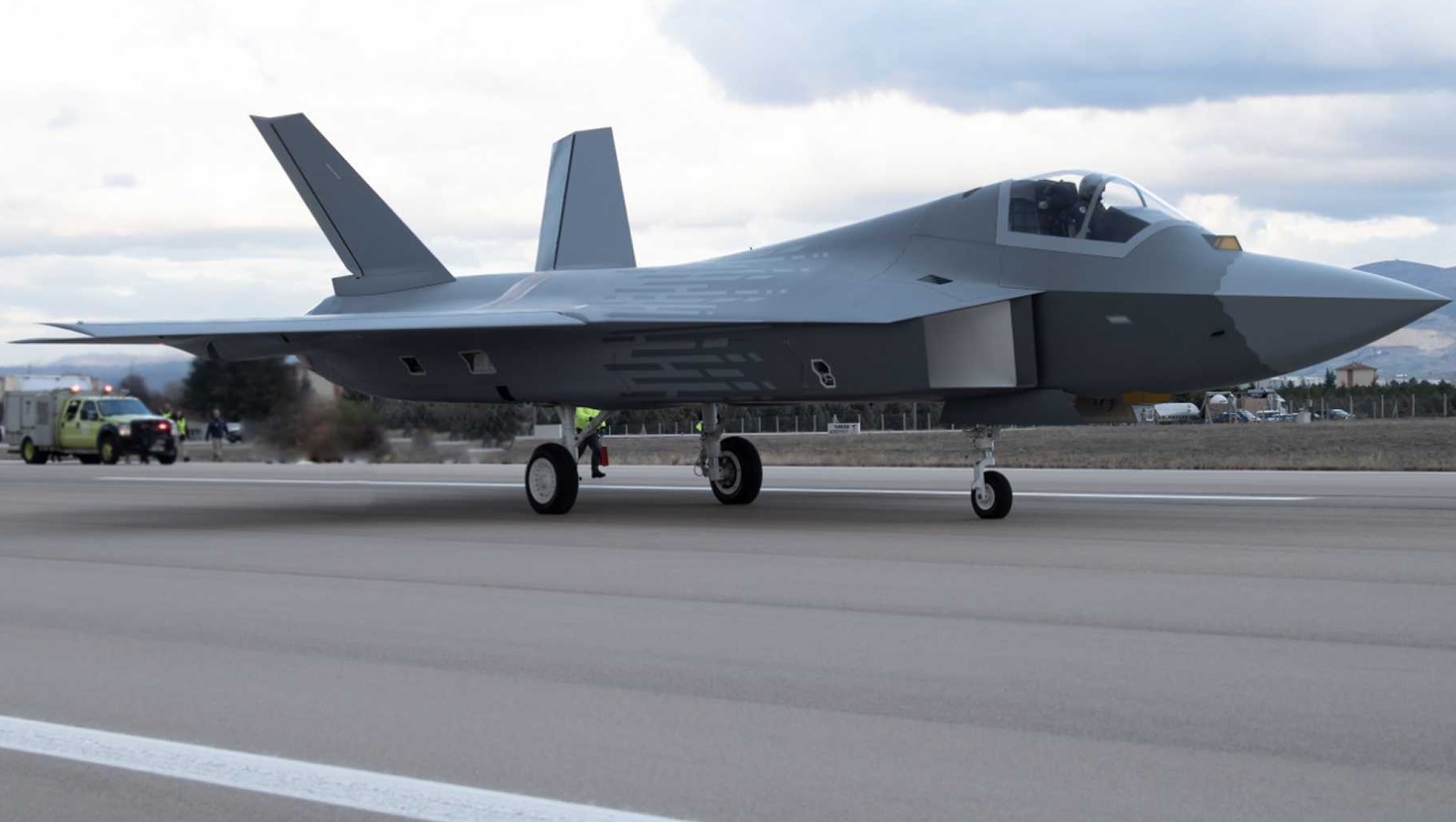
World
ANKARA / RIYADH : Saudi Arabia and Türkiye have advanced negotiations over the potential procurement and joint production of the KAAN fifth-generation fighter aircraft, with Turkish aerospace officials indicating that a formal agreement could be concluded before the end of 2026. The discussions reflect expanding bilateral defense cooperation and align with Riyadh’s broader industrial localization strategy under Vision 2030. Senior representatives from Turkish Aerospace Industries (TAI) confirmed during the World Defense Show (WDS) 2026 in Riyadh that talks are in the final stages of internal evaluation and decision-making. Mehmet Demiroğlu, General Manager of TAI, stated that multiple frameworks remain under consideration, depending on Saudi Arabia’s operational requirements and industrial participation objectives. Procurement Scope and Industrial Conditions Current proposals center on an initial acquisition of approximately 20 KAAN aircraft, representing the size of a standard operational squadron. However, discussions have expanded to include a significantly larger fleet of up to 100 aircraft. According to feasibility assessments conducted by TAI, the establishment of a final assembly line in Saudi Arabia would require a minimum order of 50 aircraft to justify the necessary industrial investment and infrastructure. Such a structure would include local assembly, subsystem integration, and phased technology transfer arrangements. The potential agreement is therefore structured around both direct procurement and long-term co-production, with final terms dependent on Riyadh’s preferred balance between operational delivery timelines and domestic industrial participation. Integration With Vision 2030 Objectives The negotiations are closely aligned with Saudi Arabia’s Vision 2030 framework, which sets a target of localizing 50 percent of the Kingdom’s defense spending by the end of the decade. Riyadh has increasingly prioritized defense contracts that incorporate onshore production, workforce development, and transfer of industrial know-how. In this context, the KAAN program discussions include provisions for localized manufacturing of systems and subsystems, along with structured technology transfer. The talks also follow a recently signed memorandum of understanding for the co-production of TAI’s T625 Gökbey utility helicopter within the Kingdom, indicating broader aerospace collaboration beyond fighter aircraft. Saudi defense planners have emphasized the importance of building domestic aerospace capacity, including long-term maintenance, repair, and overhaul (MRO) capabilities for advanced combat aircraft. KAAN Program and Operational Capabilities KAAN is Türkiye’s indigenous fifth-generation fighter program, designed to deliver stealth characteristics, advanced avionics, network-centric warfare capability, and high maneuverability. The aircraft is being developed to replace older-generation platforms in the Turkish Air Force while also targeting export markets. At WDS 2026, TAI displayed a full-scale mock-up of the KAAN aircraft featuring both the Saudi Arabian and Turkish flags on its vertical stabilizer, highlighting the depth of bilateral engagement. The exhibition also included an interactive simulator demonstrating Manned-Unmanned Teaming (MUM-T) capability. The concept envisions KAAN functioning as an airborne command platform coordinating with ANKA-3 stealth unmanned combat aerial vehicles. In this configuration, the fighter would manage unmanned assets in missions such as deep strike operations and suppression of enemy air defenses. Engine Development and Regulatory Considerations Early KAAN prototypes are powered by General Electric F110 engines. However, Türkiye is simultaneously developing an indigenous TF35000 turbofan engine, intended to power future production blocks of the aircraft in the 2030s. Transitioning to a fully domestic engine would reduce reliance on foreign propulsion systems and potentially remove the aircraft from U.S. International Traffic in Arms Regulations (ITAR) constraints. This is considered relevant for export flexibility and long-term supply chain autonomy. Strategic and Diplomatic Context If finalized in 2026, the agreement would represent a significant export development for Türkiye’s aerospace sector and a diversification step for Saudi Arabia’s air power structure. Saudi Arabia has historically relied on Western defense suppliers for advanced combat aircraft. While the current U.S. administration recently approved a potential sale of F-35 fighter jets to the Kingdom, U.S. officials have expressed concern regarding Riyadh’s parallel negotiations with Ankara. American policymakers have traditionally preferred to remain the primary provider of fifth-generation air capabilities to Saudi Arabia. However, Saudi defense authorities continue to pursue multiple procurement channels as part of a broader strategy aimed at ensuring technological access, supply resilience, and sustained industrial development. The outcome of the KAAN negotiations is expected to influence both countries’ aerospace industries and regional defense procurement patterns in the coming decade.
Read More → Posted on 2026-02-19 14:56:36
World
GENEVA / MOSCOW : Russia has formally confirmed its willingness to accept and store enriched uranium from Iran if a comprehensive agreement is reached between Tehran and Washington, as indirect nuclear negotiations between the United States and Iran continue in February 2026. The proposal emerges amid renewed diplomatic engagement following the breakdown in relations and U.S. military strikes on Iranian nuclear facilities in June 2025. Discussions are currently being conducted indirectly through Omani intermediaries, with recent rounds held in Oman and Switzerland. Russia’s Position and Official Statements Russia’s state atomic energy corporation, Rosatom, confirmed this week that it is prepared to facilitate the transfer and storage of Iranian enriched uranium under a potential agreement. Rosatom Director General Alexey Likhachev stated that the agency stands ready to manage the material if such provisions are included in a finalized deal. Kremlin spokesman Dmitry Peskov reiterated on February 18, 2026, that Moscow has maintained readiness to accept the enriched material as part of efforts to resolve the nuclear dispute. On February 19, Russian Foreign Minister Sergey Lavrov stated that requiring Iran to completely renounce its right to peaceful uranium enrichment would contradict the Nuclear Non-Proliferation Treaty (NPT). Moscow has consistently argued that enrichment for civilian purposes is permitted under the treaty, provided it remains under international safeguards. Structure of the February 2026 Negotiations The current diplomatic track follows the collapse of earlier negotiations and heightened tensions in 2025. Talks are being mediated indirectly through Oman, which has served as an intermediary between Washington and Tehran. Round One – February 6, 2026 (Oman)According to reporting by The Wall Street Journal, the Iranian delegation proposed transferring a portion of its stockpile of uranium enriched to 60% purity to Russia. Iran also indicated it could suspend domestic uranium enrichment activities for up to three years. No formal agreement was reached during this round, and discussions remained exploratory. Round Two – February 17, 2026 (Geneva)Negotiators reconvened in Geneva, Switzerland. Iranian Foreign Minister Abbas Araghchi stated that the meeting lasted approximately three and a half hours and described the discussions as constructive. He confirmed that the two sides agreed on “general guiding principles” for continued negotiations. However, he noted that substantial differences remain and that a rapid conclusion is unlikely. A key focus during the Geneva session was the verification of Iran’s nuclear activities and the framework governing inspections by the International Atomic Energy Agency (IAEA). Discussions addressed inspection protocols, oversight mechanisms, and compliance procedures. Both sides are expected to consult with their respective governments over the following two weeks before exchanging draft texts and scheduling a third round of talks. Central Dispute: Domestic Uranium Enrichment The primary unresolved issue remains Iran’s right to enrich uranium domestically. The U.S. administration is reportedly demanding a “zero enrichment” policy, which would require Iran to permanently dismantle its enrichment infrastructure. Washington’s position reflects concerns over Iran’s technical capacity to produce weapons-grade material if enrichment continues at high levels. Iranian officials have rejected this demand. Foreign Minister Abbas Araghchi and the head of the Atomic Energy Organization of Iran (AEOI) have publicly stated that uranium enrichment for peaceful civilian purposes is a sovereign right under international law. Iran maintains that it does not pursue nuclear weapons and asserts that its nuclear program is intended for civilian energy production. Tehran has indicated openness to temporary limits or confidence-building measures, but has stated that it will not permanently surrender enrichment rights. Stockpile and Technical Context Iran’s current stockpile includes uranium enriched to 60% purity, a level significantly above that required for civilian nuclear power generation but below weapons-grade enrichment, which typically exceeds 90% purity. Under the proposal reported from the February 6 meeting, a portion of the 60% enriched uranium would be transferred to Russia. Iran’s suggestion to suspend domestic enrichment for up to three years would represent a temporary measure, not permanent dismantlement. Verification mechanisms and the role of the IAEA remain central to determining how any suspension, transfer, or limitation would be monitored and enforced. Military and Strategic Environment The diplomatic engagement is occurring alongside continued military deployments in the Middle East. The United States is deploying additional naval assets to the region, including the USS Gerald R. Ford aircraft carrier strike group, currently en route to the Gulf region. These movements follow the June 2025 strikes on Iranian nuclear facilities and ongoing regional security concerns. There have been no official statements directly linking the military deployments to the ongoing negotiations, though the broader strategic environment continues to shape the diplomatic context.
Read More → Posted on 2026-02-19 14:51:19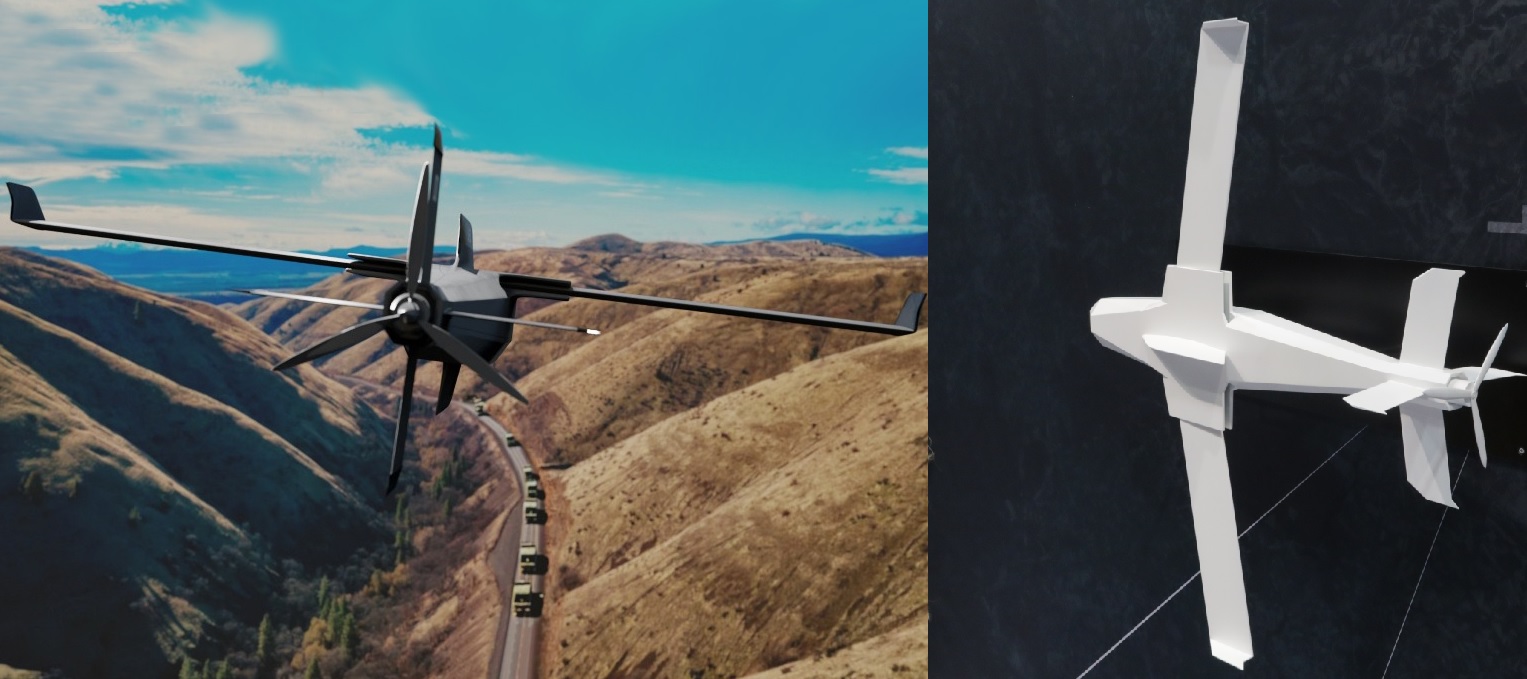
World
COCHSTEDT, Germany : German defense company Rheinmetall has conducted a live flight demonstration of its newly developed FV-014 loitering munition system (LMS), known as the “Raider,” for a prospective NATO customer. The test took place on February 18, 2026, at the National Test Centre for Unmanned Aerial Systems operated by the German Aerospace Centre (DLR) in Cochstedt, Saxony-Anhalt. The demonstration included multiple simulated mission scenarios and representative attack flight profiles. According to the company, the event marks a significant development milestone for the system, which was designed and engineered entirely in-house. Rheinmetall positions the FV-014 as a European-developed loitering munition that is not subject to third-party export controls. The system was first publicly presented as a prototype at the DSEI exhibition in London in September 2025. System Role and Operational Concept The FV-014 is a fixed-wing tactical loitering munition intended for dynamic battlefield deployment at the tactical level. The system integrates intelligence, surveillance, and reconnaissance (ISR) capabilities with precision-strike functionality in a single platform. It is designed to support maneuver units by engaging high-value point targets beyond line of sight, including armored vehicles, artillery systems, command posts, and other critical battlefield assets. Initially configured as a man-portable capability for troop-level use, the system is launched from a sealed transport canister using a booster mechanism. After exiting the container, the munition deploys folding wings and transitions into powered aerodynamic flight. While optimized for dismounted operations, Rheinmetall has stated that the FV-014 architecture allows integration into scalable multi-launcher configurations. These configurations can be mounted on ground vehicles or adapted for naval platforms, enabling deployment across land and maritime domains. Technical Specifications and Performance Parameters The FV-014 has a total launch weight of approximately 20 kilograms, including a payload capacity of 6 kilograms. The system carries a 5-kilogram High-Explosive Dual Purpose (HEDP) warhead designed to address both armored and soft targets. Key performance characteristics include: Operational Range: Up to 100 kilometers, with a maximum data link range of 60 kilometers. Flight Endurance: Approximately 70 minutes, providing loiter time for target detection, identification, tracking, and engagement decision-making. Penetration Capability: More than 600 millimeters of Rolled Homogeneous Armor (RHA), while remaining effective against unarmored vehicles, personnel, and infrastructure targets. The munition’s electric propulsion system drives a rear-mounted propeller, contributing to a reduced acoustic signature during the terminal approach phase. The airframe incorporates a conventional wing configuration and features faceted structural elements intended to reduce radar and infrared observability. Control Architecture and Human Oversight Operation of the FV-014 is conducted through a ground control station that maintains a continuous “human-in-the-loop” engagement model. This architecture enables the operator to receive real-time situational awareness data, conduct positive target identification, authorize strike execution, or abort the mission if operational conditions change. The communications and control framework is designed to maintain stability in contested environments. The system incorporates navigation protocols capable of functioning in Global Navigation Satellite System (GNSS)-denied conditions and in environments subject to electromagnetic interference or jamming. Networked and Swarm Capabilities Rheinmetall has equipped the FV-014 with networking capabilities that support coordinated operations among multiple units. This configuration allows for synchronized engagement of clustered targets or coordinated saturation of adversary air defense systems. The architecture enables distributed employment concepts, including swarm-based tasking and shared targeting data among deployed munitions. The recent demonstration at the DLR-operated test facility represents the first confirmed live presentation of the system to a prospective NATO client following its public unveiling in 2025. Rheinmetall has not disclosed the identity of the customer involved in the evaluation.
Read More → Posted on 2026-02-19 14:36:53
World
NEW DELHI : The BRICS grouping is advancing the development of an independent cross-border payment system capable of processing up to 20,000 transactions per second, as member states prepare formal proposals for adoption at the 2026 BRICS Summit in New Delhi. The planned infrastructure is designed to enable full-scale trade settlements in national currencies and establish interoperability among Central Bank Digital Currencies (CBDCs) across the bloc. The initiative is being coordinated by a coalition of founding and newly admitted members, including Brazil, Russia, India, China, South Africa, Egypt and the United Arab Emirates. These countries are aligning technical standards, regulatory frameworks and financial protocols to ensure operational readiness before the 2026 summit. Technical Architecture and Processing Capacity At the center of the framework is the Decentralized Cross-border Messaging System (DCMS), a blockchain-compatible network engineered to operate independently of Western-controlled financial messaging platforms such as SWIFT. The DCMS is structured to achieve a throughput of up to 20,000 transactions per second, placing it within the capacity range of major global payment infrastructures while maintaining low transaction costs. The system is designed to interconnect existing domestic real-time payment networks across member states. These include Brazil’s Pix, India’s Unified Payments Interface (UPI), Russia’s Faster Payments System (SBP) and China’s Internet Banking Payment System (IBPS). By linking these established platforms through a shared messaging and settlement layer, the bloc aims to reduce clearing time, improve transaction transparency, and lower foreign exchange conversion costs in cross-border trade. The architecture emphasizes interoperability, standardized messaging protocols, and compliance with domestic financial regulations in each participating country. Officials involved in the project have highlighted cybersecurity resilience, data localization safeguards, and regulatory oversight mechanisms as core structural components. Focus on CBDC Interoperability A central agenda item for the 2026 summit is the formal integration of sovereign digital currencies. The Reserve Bank of India has proposed prioritizing CBDC linkage and interoperability during structured negotiations at the New Delhi meeting. The objective is to establish a unified technical protocol that enables instant, wholesale exchanges between central banks and authorized financial institutions. Under this framework, payment-versus-payment (PvP) foreign exchange settlements could be executed directly between national digital currencies without routing funds through intermediary currencies or correspondent banking networks. India’s e-rupee and China’s e-CNY are expected to be included in early-stage interoperability testing. Other member states are currently at varying stages of CBDC pilot programs and research initiatives, and technical working groups are coordinating to harmonize standards related to issuance mechanisms, settlement finality, liquidity management, compliance procedures and cross-border reporting requirements. From 2025 Consensus to Operational Deployment The proposed payment infrastructure represents the next operational phase of financial cooperation discussions initiated during the 2025 BRICS Summit in Rio de Janeiro. That summit established consensus on expanding cross-border payment collaboration, increasing the use of local currencies in trade, and aligning technological systems across jurisdictions. The current phase transitions those agreements into a high-volume operational framework. Technical working groups are focused on infrastructure testing, throughput validation, latency benchmarks, scalability assessments and regulatory approvals. Integration trials between domestic payment platforms are expected to continue through 2025 before formal adoption proposals are presented in 2026. Trade Settlement Trends and Currency Diversification The acceleration of the independent payment corridor aligns with a broader shift toward settlement in national currencies within the bloc. Recent trade data indicates that more than 65 percent of intra-BRICS trade is now conducted in local currencies rather than the U.S. dollar. Member states cite foreign exchange volatility, geopolitical risk exposure, and the increased use of financial sanctions in global markets as contributing factors behind the diversification of settlement channels. The deployment of a dedicated, high-speed payment infrastructure integrated with CBDCs is intended to institutionalize this transition within a regulated and standardized framework. The proposed system is structured to provide direct central bank oversight of cross-border digital transactions while reducing dependency on third-party clearing networks. If formally adopted at the 2026 summit, the infrastructure would combine domestic real-time payment systems with interoperable sovereign digital currencies under a unified cross-border protocol. Further technical documentation, compliance standards and implementation timelines are expected to be circulated among member governments ahead of the New Delhi summit, where decisions on formal adoption, rollout sequencing and expansion criteria for additional members will be determined.
Read More → Posted on 2026-02-18 18:37:21
World
TEHRAN / WASHINGTON : The operational presence of United States Carrier Strike Groups (CSGs) in the Persian Gulf continues to factor into Iranian naval planning, particularly regarding the deployment of Tehran’s Ghadir-class midget submarines. Defense assessments estimate that Iran maintains a submarine fleet of approximately 28 to 30 vessels, the majority optimized for shallow-water operations in the Gulf. Of these, 20 to 23 are believed to be operational Ghadir-class units. Rather than pursuing parity with U.S. blue-water naval capabilities, Iran’s maritime strategy emphasizes asymmetric systems designed to complicate anti-submarine warfare (ASW) operations, increase surveillance burdens, and impose operational constraints on high-value surface assets transiting confined waterways such as the Strait of Hormuz. Development and Fleet Composition Open-source defense intelligence links the origin of the Ghadir-class to the North Korean Yono-class midget submarine design. Following the reported transfer of a Yono-class vessel in 2004, Iran’s defense industry initiated domestic production of modified variants under the Ghadir designation. The Ghadir-class forms the numerical backbone of Iran’s submarine force. While Iran also operates larger submarines, including Russian-built Kilo-class vessels, the Ghadir fleet is structured specifically for restricted-depth operations in the Persian Gulf. The number of hulls enables distribution across multiple coastal bases and maritime chokepoints, ensuring redundancy and geographic coverage. Design and Technical Characteristics The Ghadir-class submarines are configured for littoral warfare. Each vessel measures approximately 29 meters in length with a 9-meter beam. Displacement is estimated at 117 tons surfaced and 125 tons submerged, with a crew complement of around seven personnel. Powered by a diesel-electric propulsion system, the submarines achieve a maximum surface speed of 10 knots and a submerged speed of 8 knots. Due to size limitations, endurance and payload capacity are restricted, leading to short-duration sorties from coastal facilities rather than extended deployments. Their compact dimensions allow navigation in shallow waters and complex seabed terrain, where larger submarines face operational constraints. When operating on battery power, the platform maintains a reduced acoustic signature, supporting low-detectability missions in confined maritime environments. Armament and Weapons Integration Each Ghadir-class submarine is equipped with two 533 mm torpedo tubes. These are compatible with the domestically produced Valfajr heavyweight torpedo, assessed to carry a 220 to 300 kilogram warhead with an estimated range of 15 to 20 kilometers. The platform is also reported to deploy the Hoot supercavitating torpedo, a high-speed system with publicly cited speeds approaching 200 knots. Additional capabilities include naval mine deployment and support for limited special operations, including the insertion and extraction of combat divers. In February 2019, Iranian authorities announced the successful test launch of the Jask-2 anti-ship cruise missile (ASCM) from a Ghadir-class submarine. The Jask-2 is assessed to be conceptually derived from the Nasr-1 missile family. It operates as an encapsulated swim-out weapon, ejected from the torpedo tube before breaching the surface and igniting its propulsion system. The missile has a reported operational range of approximately 35 kilometers, extending engagement options beyond conventional torpedo distance and requiring defensive planning against both subsurface and aerial threats. Operating Environment in the Persian Gulf The effectiveness of the Ghadir-class is closely tied to the geographic and oceanographic conditions of the Persian Gulf. The region features shallow average depths, dense commercial shipping lanes, offshore energy infrastructure, and an irregular coastline. Environmental factors such as elevated salinity, strong currents, and seasonal temperature layering (thermoclines) create complex acoustic conditions. These characteristics can distort sonar propagation and reduce the effectiveness of both active and passive detection systems. High ambient noise from maritime traffic further contributes to acoustic clutter. Iranian naval doctrine incorporates a “bottom-resting” technique, in which a submarine can shut down propulsion systems and settle on the seabed. In such conditions, a stationary vessel may be more difficult to distinguish from surrounding terrain using sonar, particularly in areas with uneven topography and sediment. Strategic Implications for U.S. Naval Operations For U.S. naval planners, the Ghadir-class represents a distributed undersea threat that increases ASW workload rather than a system intended for direct confrontation with carrier strike groups. The positioning of multiple submarines near maritime chokepoints, combined with potential mine deployment, aligns with a layered maritime denial strategy. Although aircraft carriers avoid the shallowest routes, escorts, logistics vessels, and narrow transit corridors present operational considerations. The presence of small submarines may necessitate reduced transit speeds, expanded protective formations, and sustained ASW patrol operations. To mitigate these risks, U.S. Carrier Strike Groups deploy MH-60R Seahawk helicopters equipped with advanced dipping sonar systems optimized for shallow-water detection. The U.S. Navy has also expanded the use of unmanned surface and subsurface vehicles to strengthen maritime domain awareness across the Gulf. Despite these measures, tracking small diesel-electric submarines in cluttered littoral environments remains resource-intensive due to environmental and acoustic constraints. Operational Context Ongoing and potential future deployments of U.S. naval assets in the Middle East underscore the relevance of littoral-focused submarine forces in regional security planning. Iran’s investment in the Ghadir-class reflects a force structure centered on geographic constraints, dispersal, and layered maritime defense. Within the confined waters of the Persian Gulf, the platform is assessed primarily as a means of increasing operational complexity and surveillance demands rather than conducting sustained blue-water engagements.
Read More → Posted on 2026-02-18 18:31:19
World
TEHRAN / BEIJING : China is expanding its defense cooperation with Iran through the provision of satellite-based intelligence, surveillance data, and integration of the BeiDou Navigation Satellite System into Iranian military infrastructure, according to defense analysts and intelligence assessments. The partnership is increasing Iran’s situational awareness across the Middle East and enhancing the precision of its missile and unmanned systems amid continued tensions between Tehran and Washington. Recent assessments indicate that China is functioning as a surveillance and reconnaissance partner by supplying high-resolution satellite imagery, electronic intelligence (ELINT), and real-time data streams to Iranian command networks. Analysts describe the arrangement as a division of roles in which Chinese space-based assets support Iran’s regional strike capabilities. Satellite Intelligence and Surveillance Support China’s satellite fleet, which includes more than 500 operational military and dual-use satellites, forms the backbone of this intelligence-sharing structure. Data from these platforms is reportedly transmitted to Iranian command nodes, strengthening Tehran’s capacity to monitor U.S. military deployments and naval operations in the Indian Ocean, Gulf of Oman, and Persian Gulf. Maritime tracking capabilities are supported by China’s Yaogan satellite clusters. These platforms specialize in maritime electronic intelligence (ELINT) and use time-difference-of-arrival (TDOA) calculations to geolocate signal emissions from naval vessels. Defense analysts note that this capability enables tracking of U.S. naval task forces, including aircraft carrier strike groups, in near real time. In addition to electronic intelligence, China’s optical and infrared satellite constellations provide terrain mapping and persistent imaging. The Jilin-1 constellation, operated by Chang Guang Satellite Technology, delivers high-resolution imagery across varying weather conditions. This supplements Iran’s domestic satellite assets, including the Noor-3 satellite, which operates at comparatively lower resolution. Commercial Satellite Imagery and Open-Source Exposure A significant development in the intelligence-sharing framework involves the use of commercial Chinese satellite imagery to document U.S. military deployments in the region. High-resolution images published by the Chinese firm MizarVision have detailed the precise coordinates and layouts of U.S. defense assets at key regional bases. In Jordan, satellite imagery revealed the configuration and operational positioning of a U.S. Army Terminal High Altitude Area Defense (THAAD) missile system at Muwaffaq al-Salti Air Base. In Bahrain, imagery showed the deployment of MIM-104F Patriot PAC-3 surface-to-air missile batteries alongside F-16 multirole fighter aircraft at Isa Air Base. Defense analysts state that publication of such imagery reduces the operational secrecy of forward-deployed U.S. systems. By identifying radar arrays, missile launchers, and aircraft dispersal zones, these images provide targeting-relevant data that can assist in refining ballistic missile trajectories and unmanned aerial vehicle (UAV) flight paths. Transition to the BeiDou Navigation System A central element of the expanded cooperation is Iran’s transition from reliance on the U.S.-operated Global Positioning System (GPS) to China’s BeiDou-3 Navigation Satellite System for military applications. The shift followed reports of GPS jamming and signal spoofing incidents during recent regional conflicts. Iran has integrated BeiDou’s encrypted signals into the guidance architecture of its ballistic and cruise missile systems. Analysts report that the system provides several operational benefits. BeiDou is designed to operate in contested electronic environments and incorporates anti-jamming and anti-spoofing protections. These features increase the resilience of Iranian munitions against electronic warfare tactics. Authorized military users can access centimeter-level positioning accuracy, contributing to improved circular error probability (CEP) metrics for long-range strike systems. The BeiDou system also includes a short-message communication capability that enables encrypted satellite-based text transmissions. This function allows command units to exchange operational data without depending solely on terrestrial communication networks. Additional Defense Cooperation Beyond satellite intelligence and navigation integration, China continues to provide Iran with defense-related equipment and materials. Among the systems referenced by analysts is the YLC-8B anti-stealth radar, designed to detect low-observable aircraft. Reports also reference the supply of sodium perchlorate and other solid rocket fuel precursors used in the production of ballistic missile propellants. These materials are considered essential components of Iran’s missile development programs. Strategic Implications The integration of Chinese orbital surveillance assets with Iranian ground-based strike systems represents a structural development in regional security dynamics. By combining satellite-enabled maritime tracking, high-resolution terrain mapping, encrypted navigation, and open-source exposure of U.S. installations, the partnership expands Iran’s intelligence and targeting capabilities. Defense planners assess that this level of cooperation increases the complexity of U.S. operational planning in the Middle East. Real-time tracking capabilities and hardened navigation systems reduce vulnerabilities traditionally associated with electronic denial measures and navigational disruption. The continued alignment between Beijing and Tehran in space-based intelligence and defense technology cooperation marks a measurable shift in the balance of reconnaissance and precision-strike capabilities across the Persian Gulf region.
Read More → Posted on 2026-02-18 17:52:57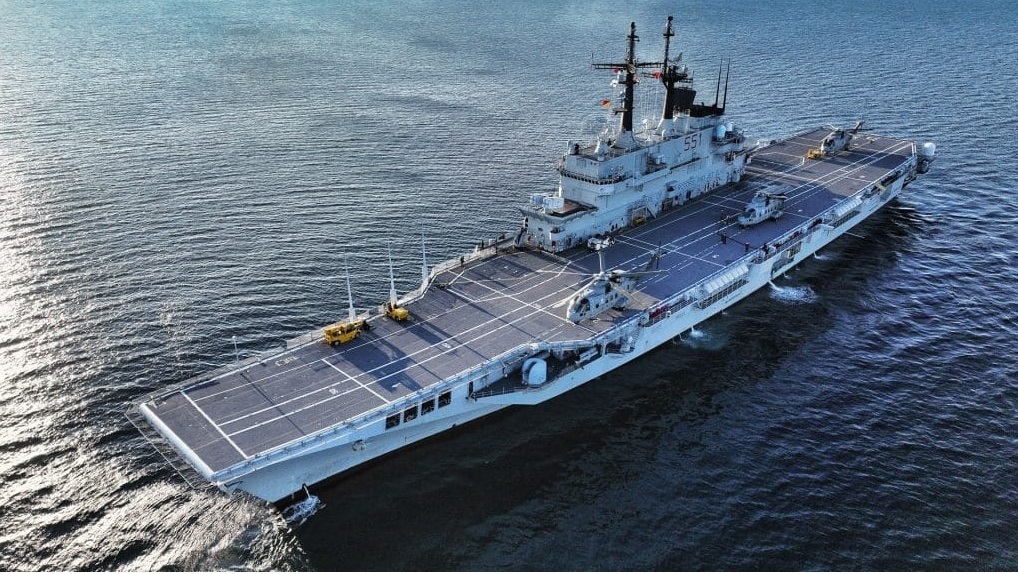
World
JAKARTA, INDONESIA : The Indonesian government has formally agreed to acquire the decommissioned Italian aircraft carrier Giuseppe Garibaldi from the Government of Italy. The 40-year-old vessel will be transferred as a direct grant, while Indonesia will finance its modernization and operational integration through two separate foreign loan arrangements totaling $1 billion. The agreement represents one of the most significant naval acquisitions undertaken by Indonesia in recent years and signals an expansion of the Indonesian Navy’s aviation and maritime support capabilities. Financial Structure and Modernization Plan Although the hull itself is being transferred without purchase cost, Indonesia’s Ministry of Defense has arranged two financial packages to prepare the vessel for active service. The first package consists of a $450 million modernization loan, designated for extensive refitting and structural adaptation. The funds will be used to convert the ship from its original configuration as a fixed-wing aircraft carrier into a platform optimized for rotary-wing aircraft and unmanned aerial vehicles (UAVs). The conversion aligns with Indonesia’s maritime security priorities, including surveillance, disaster response, and maritime domain awareness across its archipelago. The modernization process is expected to include modifications to the flight deck layout, hangar facilities, aviation support systems, command and control infrastructure, and maintenance capabilities. The vessel will no longer operate short take-off and vertical landing (STOVL) fighter aircraft, and instead will be configured exclusively for helicopters and drones. The second package, valued at $550 million, has been approved specifically for the procurement of Italian-manufactured helicopters. These aircraft will form the primary aviation component aboard the converted carrier. The financing arrangement restricts expenditures to equipment sourced from Italy under the existing bilateral defense cooperation framework. Together, the two loan mechanisms total $1 billion, covering both the ship’s physical transformation and the aviation assets required to render it operational. Vessel Background and Technical Specifications The Giuseppe Garibaldi was constructed by Italian shipbuilder Fincantieri and commissioned into the Italian Navy in 1985. The vessel served for nearly four decades before being officially retired in October 2024. As of early 2026, it has been out of active service for approximately one and a half years. At the time of retirement, the carrier’s baseline technical specifications included: Standard displacement: 10,100 tons Length: 180.2 meters Maximum speed: 30 knots During its operational service, the carrier was capable of deploying up to 18 AV-8B Harrier II fighter aircraft. It also operated mixed air wings that combined fixed-wing jets with helicopters such as the Agusta SH-3D and AW101. The original configuration supported short take-off and vertical landing operations. Under Indonesia’s modernization plan, the fixed-wing fighter capability will be removed, and the ship will be reconfigured solely for helicopter and UAV operations. Administrative Process and Delivery Timeline Negotiations are ongoing between Indonesia’s Ministry of Defense, the Italian Navy, and Fincantieri to finalize the administrative transfer procedures and define the detailed scope of the technical refit. Indonesian Navy Chief of Staff Admiral Muhammad Ali has stated that the government is targeting delivery of the vessel prior to October 5, 2026, which marks the 81st anniversary of the Indonesian National Armed Forces (TNI). The timeline includes both the formal handover and completion of initial modernization work necessary for operational deployment. Intended Operational Role Once fully refitted and staffed, the carrier is expected to serve as a mobile aviation and logistics platform within the Indonesian Navy. Defense officials have indicated that the vessel will primarily support non-combat military missions. Its planned operational roles include: Disaster response and humanitarian assistance Large-scale logistics support operations Extended maritime patrol missions Surveillance across Indonesia’s territorial waters As the world’s largest archipelagic state, Indonesia faces logistical and maritime security challenges due to its dispersed geography. The modified carrier is intended to enhance rapid deployment capability and enable sustained aviation operations across remote and strategically significant regions. The acquisition, structured as a grant-supported transfer combined with foreign financing for modernization and aviation assets, expands Indonesia’s naval aviation infrastructure without the procurement of a new-build carrier platform.
Read More → Posted on 2026-02-18 17:37:55
World
BERLIN : German Chancellor Friedrich Merz has publicly questioned the long-term viability of the trinational Future Combat Air System (FCAS) program, citing unresolved structural, military and industrial differences between Germany and France. Speaking on the political podcast Machtwechsel, Merz stated that Berlin could reconsider its participation if fundamental requirement gaps cannot be resolved. The FCAS program, launched in 2017 by France and Germany and later joined by Spain, is designed to deliver a next-generation air combat system by 2040. The initiative aims to replace France’s Rafale fighter jets and the Eurofighter Typhoons currently operated by Germany and Spain. The system is structured around a New Generation Fighter (NGF) supported by unmanned remote carrier drones and a digital Combat Cloud network linking aircraft, sensors and command systems. Merz emphasized that the current friction does not stem from diplomatic disagreements but from differing operational requirements. “We have a real problem in the requirement profile,” he said, underlining that the divergence is rooted in objective military needs. Diverging Military Requirements At the center of the debate are France’s specific operational requirements linked to its nuclear deterrence posture and naval aviation capabilities. France requires a nuclear-capable aircraft that can operate from aircraft carriers, replacing both land-based Rafale variants and the Rafale Marine fleet deployed aboard the Charles de Gaulle carrier and its planned successor. Carrier-capable aircraft require reinforced landing gear, strengthened airframes, tailhook systems, and design modifications suited for catapult launches and arrested landings. Incorporating these capabilities into a single airframe intended to also serve the German Air Force presents engineering and financial complexity. Germany’s Bundeswehr does not currently operate aircraft carriers and does not maintain an independent nuclear deterrent. While Germany participates in NATO’s nuclear sharing arrangement, its requirements differ structurally from France’s fully sovereign nuclear doctrine. According to Merz, the Bundeswehr does not presently require a carrier-capable platform, raising the question of whether a single design can realistically satisfy both national profiles without substantial compromise. The Chancellor stated that if the structural requirement gap cannot be resolved, sustaining the joint program in its current form would be difficult. Industrial Governance and Program Delays The FCAS initiative has also faced prolonged industrial disputes between its primary contractors: Dassault Aviation of France and Airbus Defence and Space, representing German and Spanish interests. Dassault Aviation has insisted on retaining primary design authority and intellectual property leadership over the New Generation Fighter component. Airbus has advocated for an equal partnership structure reflecting Germany and Spain’s financial and industrial contributions. The disagreement over workshare, governance, and intellectual property rights has delayed key program milestones. The overall program cost is estimated at approximately €100 billion over its lifecycle. Analysts note that developing two distinct fighter variants to meet divergent national requirements would significantly increase development and production costs, potentially exceeding initial projections. Merz has questioned whether the consortium has the financial and industrial capacity to sustain parallel aircraft development under a unified program structure. Broader Strategic Assessment In addition to industrial governance issues, the German Chancellor has raised broader strategic considerations about the role of manned sixth-generation fighter aircraft. Advances in unmanned aerial systems, artificial intelligence, and network-centric warfare have prompted discussion within Germany about whether investment priorities should shift toward remote carriers, autonomous platforms and digital combat networking rather than focusing primarily on a crewed aircraft. The FCAS architecture was originally conceived as a “system of systems,” integrating the New Generation Fighter with unmanned drones and a Combat Cloud digital backbone. Merz indicated that Berlin must assess whether the manned fighter component remains the optimal allocation of defense resources within this framework. Potential Alternative Pathways If the manned fighter segment of FCAS proves unworkable under current conditions, Germany may consider alternative European partnerships. One potential pathway discussed by industry observers involves separating elements of the program. Under such a model, Germany and France could independently pursue their own next-generation fighter platforms while maintaining cooperation on shared technologies such as the Combat Cloud network and unmanned systems. Another possibility is engagement with the Global Combat Air Programme (GCAP), a separate next-generation fighter initiative led by the United Kingdom, Italy and Japan. While no formal decision has been announced, Merz acknowledged that Germany could explore other European aerospace collaborations if negotiations with Paris do not produce a sustainable compromise. France Reaffirms Commitment In response to Merz’s remarks, French officials reiterated their commitment to the original structure of the FCAS agreement. The Élysée Palace stated that the participating states’ military requirements, including France’s nuclear deterrence and carrier operations, were defined at the outset of the program. French authorities have emphasized the strategic importance of European defense sovereignty and technological autonomy, maintaining that industrial and technical differences can be resolved through continued negotiation. Ongoing Discussions Discussions between Berlin and Paris are continuing at both political and industrial levels. A joint decision regarding the structure and future direction of the aircraft component of FCAS is expected in the coming weeks. The outcome will determine whether the trinational program proceeds as a unified sixth-generation fighter development effort or transitions into a revised cooperative framework reflecting national priorities.
Read More → Posted on 2026-02-18 17:18:56
World
China and Iran Expand Security Cooperation Through Digital Infrastructure Overhaul TEHRAN/BEIJING : China and Iran have significantly expanded their security and intelligence cooperation, launching a coordinated technological overhaul aimed at countering what both governments describe as foreign intelligence infiltration, primarily by Israel and the United States. The initiative centers on restructuring Iran’s digital infrastructure, replacing Western-origin systems, and strengthening cyber and communications security across military and government networks. The latest phase of cooperation began in January 2026, when Beijing and Tehran intensified joint counterintelligence coordination following regional conflicts that exposed weaknesses in Iran’s security and communications architecture. According to officials familiar with the framework, Chinese intelligence and technical advisors are working directly with Iranian agencies to assess vulnerabilities and reinforce sensitive systems. Expanded Counterintelligence Coordination The joint effort focuses on identifying infiltration pathways within Iran’s digital and physical infrastructure. Iranian authorities have conducted comprehensive reviews of communications networks, data transmission systems, and command-and-control platforms used by military, nuclear, and governmental institutions. Chinese technical teams are assisting in auditing software dependencies, hardware supply chains, and network configurations to detect potential backdoors or unauthorized access points. Iranian officials have concluded that reliance on Western-developed systems created structural exposure that could be exploited for surveillance, cyber-espionage, or operational disruption. As part of the coordination, cybersecurity protocols are being standardized across ministries and defense entities. Integrated monitoring mechanisms are being deployed to track anomalous activity within classified and semi-classified networks. Technological Replacement Directive A central component of the expanded partnership is the phased removal of Western software and hardware from sensitive sectors. Chinese authorities have advised Iran to discontinue use of platforms originating in the United States and Israel, citing national security risks. Iranian defense and communications agencies have adopted a policy directive aimed at transitioning critical infrastructure to alternative systems supplied or supported by China. The directive applies to government data centers, telecommunications frameworks, military networks, and select energy infrastructure nodes. Officials involved in the transition state that the objective is to establish sovereign, closed-loop operational networks that reduce exposure to foreign-controlled supply chains and software ecosystems. The restructuring includes both physical hardware replacement and migration to new operating systems and encrypted communications suites. Encrypted Communications and Cybersecurity Integration China is supplying encrypted communication platforms designed for secure internal military and governmental use. These systems are intended to protect command-and-control channels from interception, signal analysis, and deep packet inspection. In parallel, advanced cybersecurity architecture is being deployed across Iranian state networks. The new systems incorporate AI-based monitoring tools capable of detecting irregular traffic patterns, unauthorized access attempts, and malware signatures. The AI-enabled monitoring infrastructure is designed to operate continuously across multiple network layers, integrating data from communication systems, data centers, and select physical security platforms. Iranian officials describe the goal as establishing real-time threat detection and rapid response capabilities within sensitive institutions. Transition From GPS to BeiDou A major element of the overhaul involves Iran’s transition from reliance on the United States-operated Global Positioning System (GPS) to China’s BeiDou satellite navigation system. Defense planners in Tehran have cited concerns regarding potential signal disruption, spoofing, or denial in conflict scenarios as key reasons for the shift. By integrating BeiDou into military navigation systems, Iran aims to secure independent positioning, navigation, and timing (PNT) services. The transition affects ballistic missile guidance systems, unmanned aerial vehicles, and other military platforms that depend on satellite navigation data. Chinese technical support is facilitating compatibility upgrades to ensure seamless integration of BeiDou signals into existing Iranian defense systems. Iranian authorities state that access to BeiDou provides encrypted, military-grade positioning signals designed to function under high electronic warfare conditions. Strategic Framework and SCO Coordination The technological integration builds upon the 25-year Comprehensive Strategic Partnership signed between China and Iran in 2021. The agreement outlines long-term cooperation across economic, energy, infrastructure, and security sectors. Through expanded digital and cybersecurity collaboration, China is embedding its technological standards into key components of Iran’s state infrastructure. Analysts note that this alignment strengthens institutional interoperability and deepens bilateral security coordination. The cooperation is also supported by regional intelligence-sharing mechanisms linked to the Shanghai Cooperation Organization (SCO), of which both countries are members. These frameworks facilitate information exchange related to counterterrorism, cyber threats, and external intelligence activities. Officials in both capitals state that the initiative represents a phased structural modernization program aimed at enhancing resilience against foreign intelligence penetration while consolidating long-term strategic coordination between Beijing and Tehran. Implementation of the technological transition is expected to continue throughout 2026 and beyond, with additional system replacements and infrastructure upgrades planned in subsequent phases.
Read More → Posted on 2026-02-18 17:09:10Search
Top Trending in 24 Hours
-
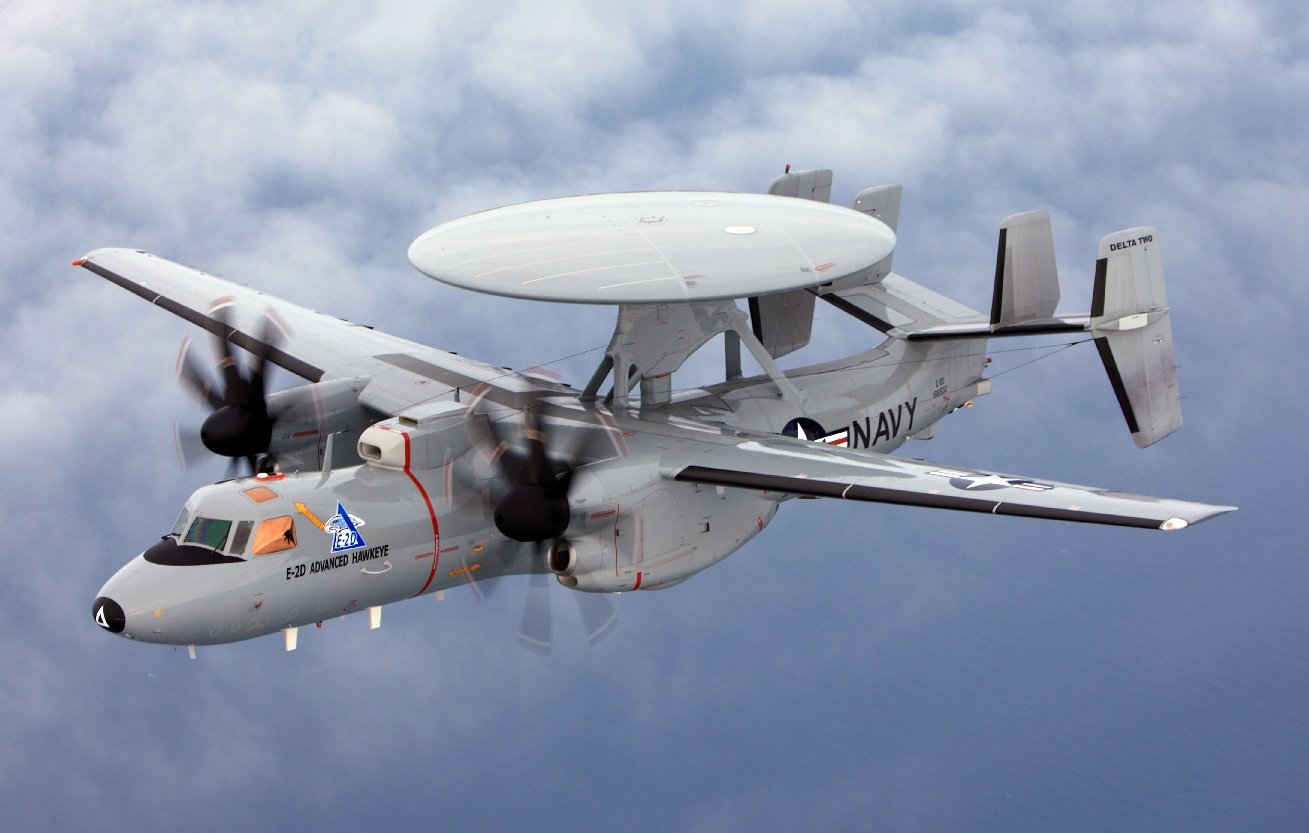 U.S. Navy Awards Northrop Grumman $1.2 Billion Deal for Three New E-2D Advanced Hawkeyes
-
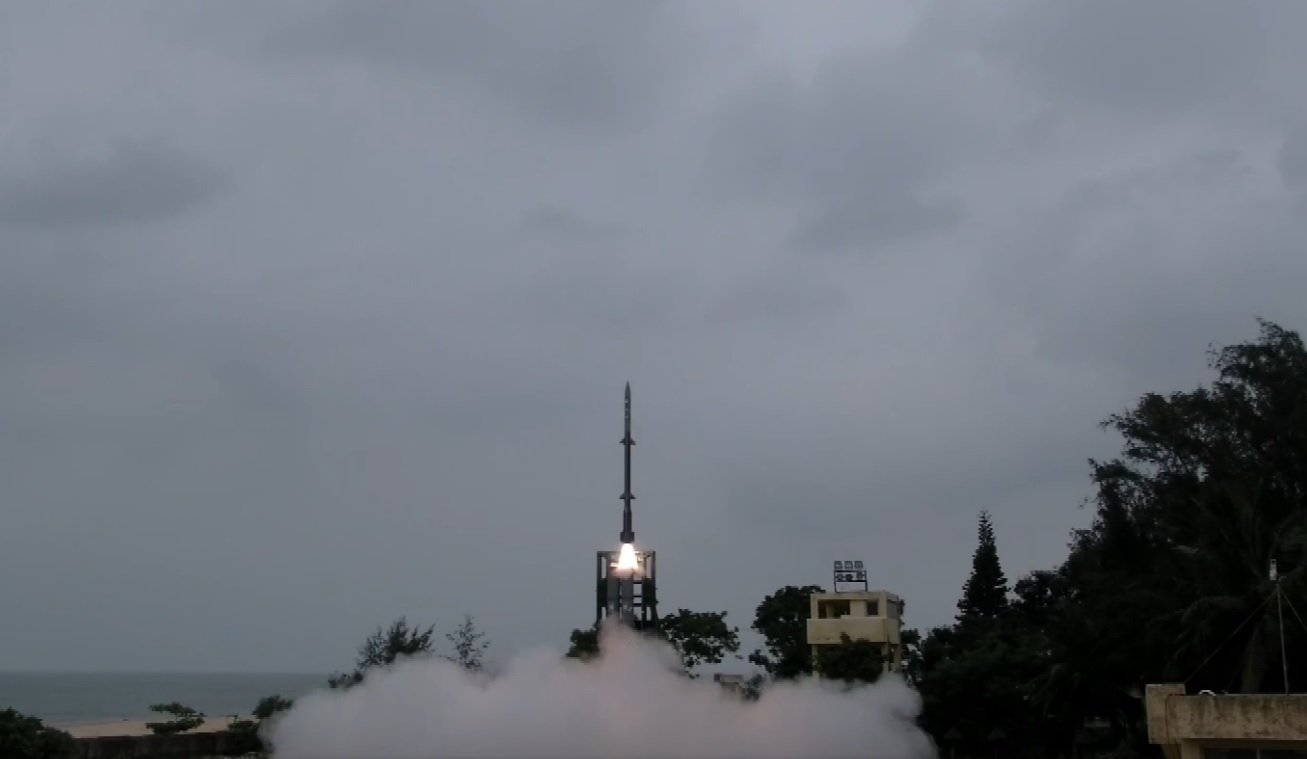 DRDO Successfully Conducts Maiden Flight Test of 150-km-Range Kusha M1 Air Defence Missile
-
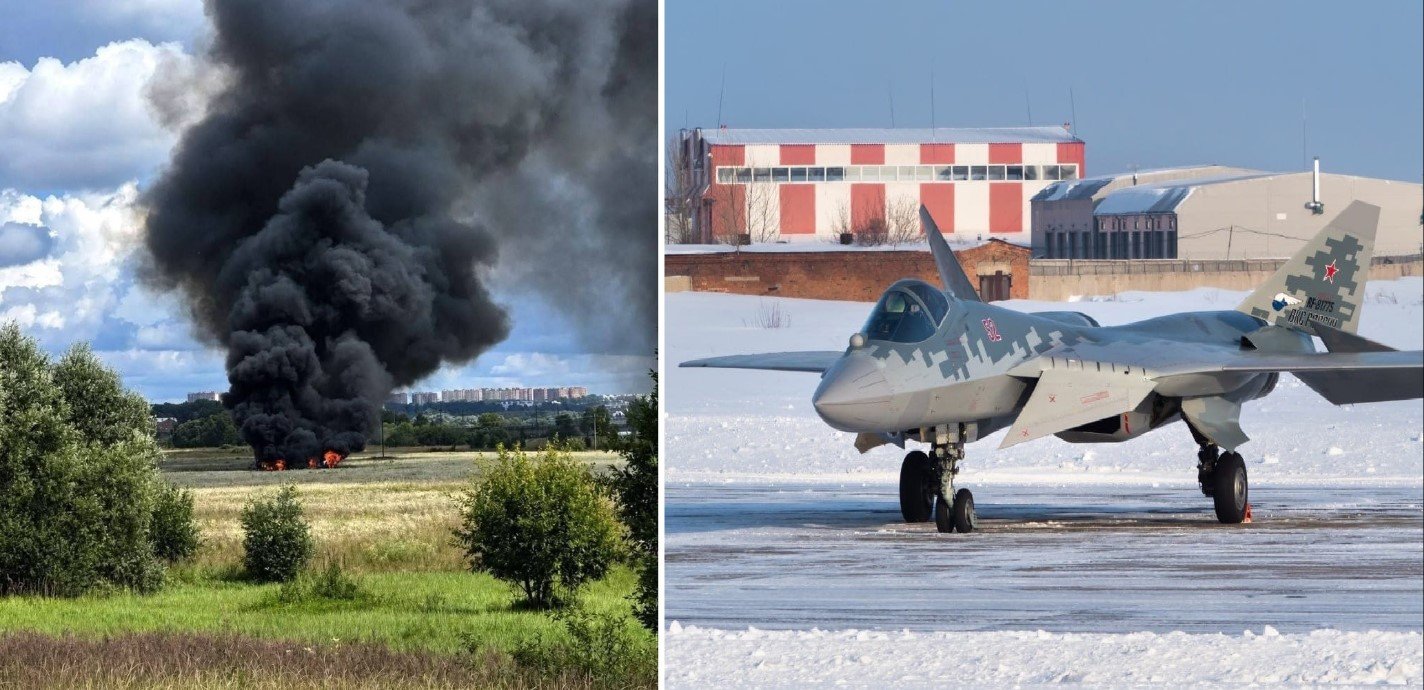 Russian Su-57 Stealth Fighter Crashes During Training Flight Near Moscow, Pilot Ejects Safely
-
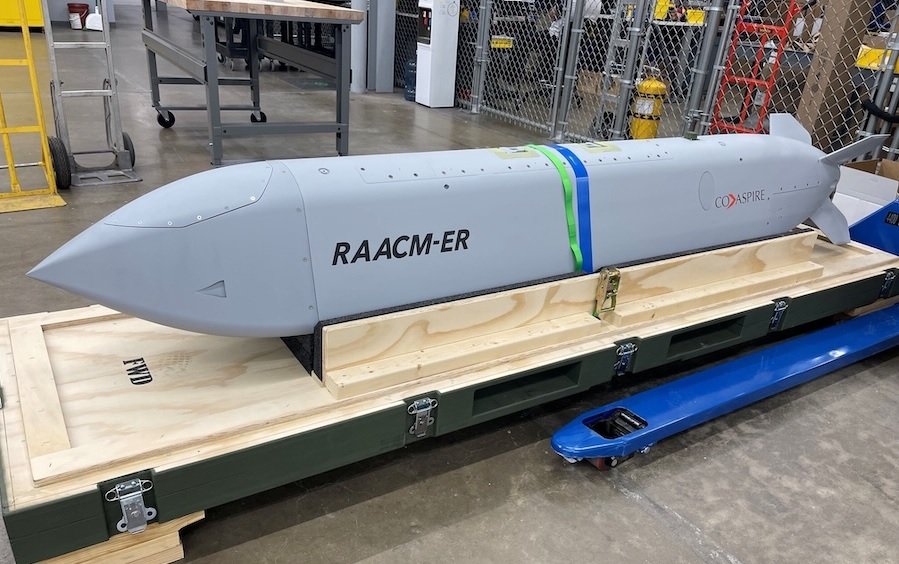 U.S. Navy Selects CoAspire to Build Ground-Launched CHAOS Cruise Missile Under $70 Million Program
-
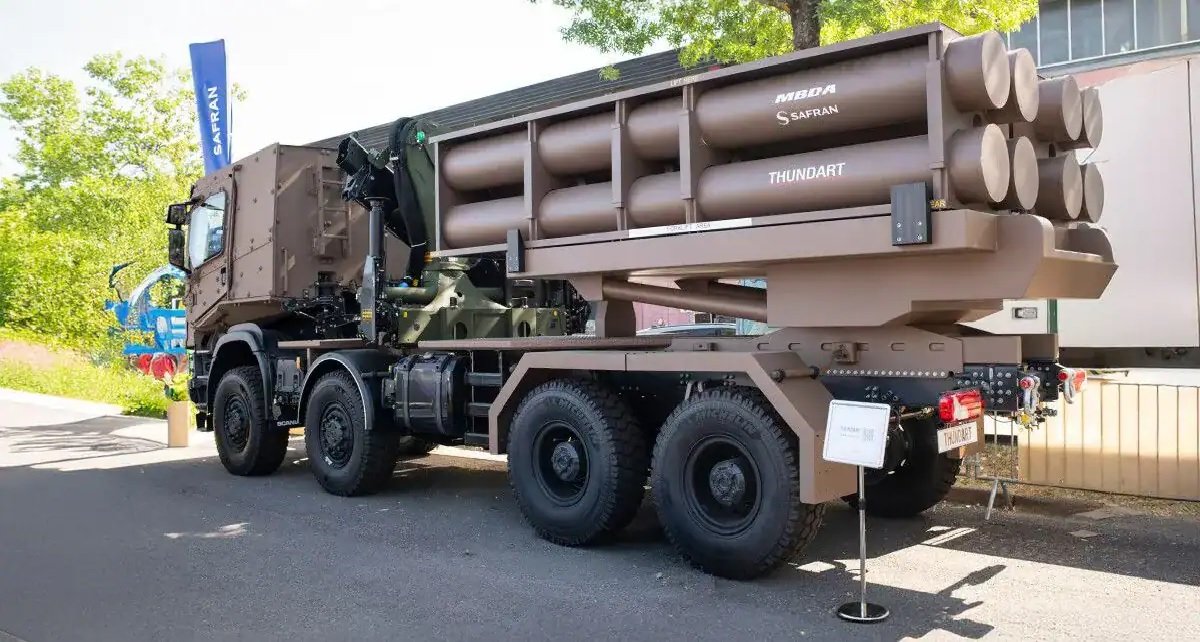 France's THUNDART Long-Range Rocket System May Undergo Prototype Combat Testing in Ukraine
-
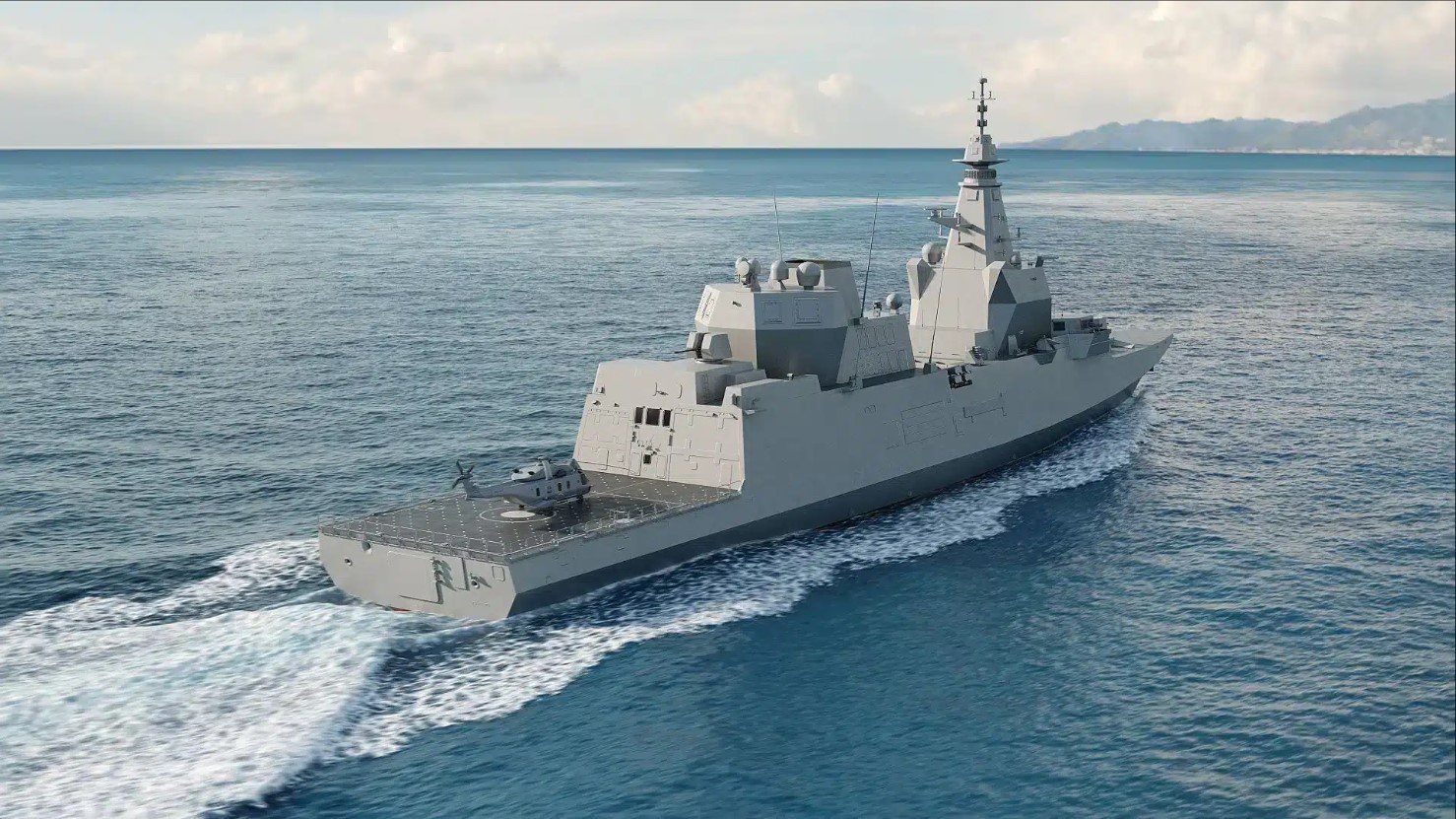 Portugal Orders Three FREMM EVO Frigates from Italy in €3.9 Billion Naval Deal
-
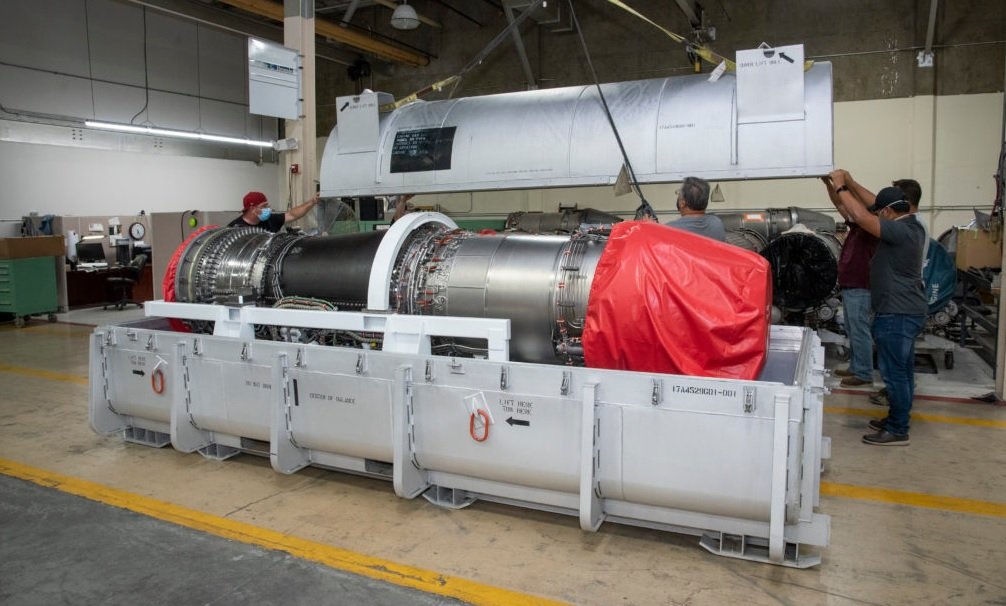 GE Aerospace and Magellan Aerospace Corporation Sign Strategic MoU for F414 Engine Sustainment in Canada
-
 Destinus Unveils Vorexon Interceptor Concept to Defend Critical Sites from Artillery Threats
Top Trending in 4 Days
-
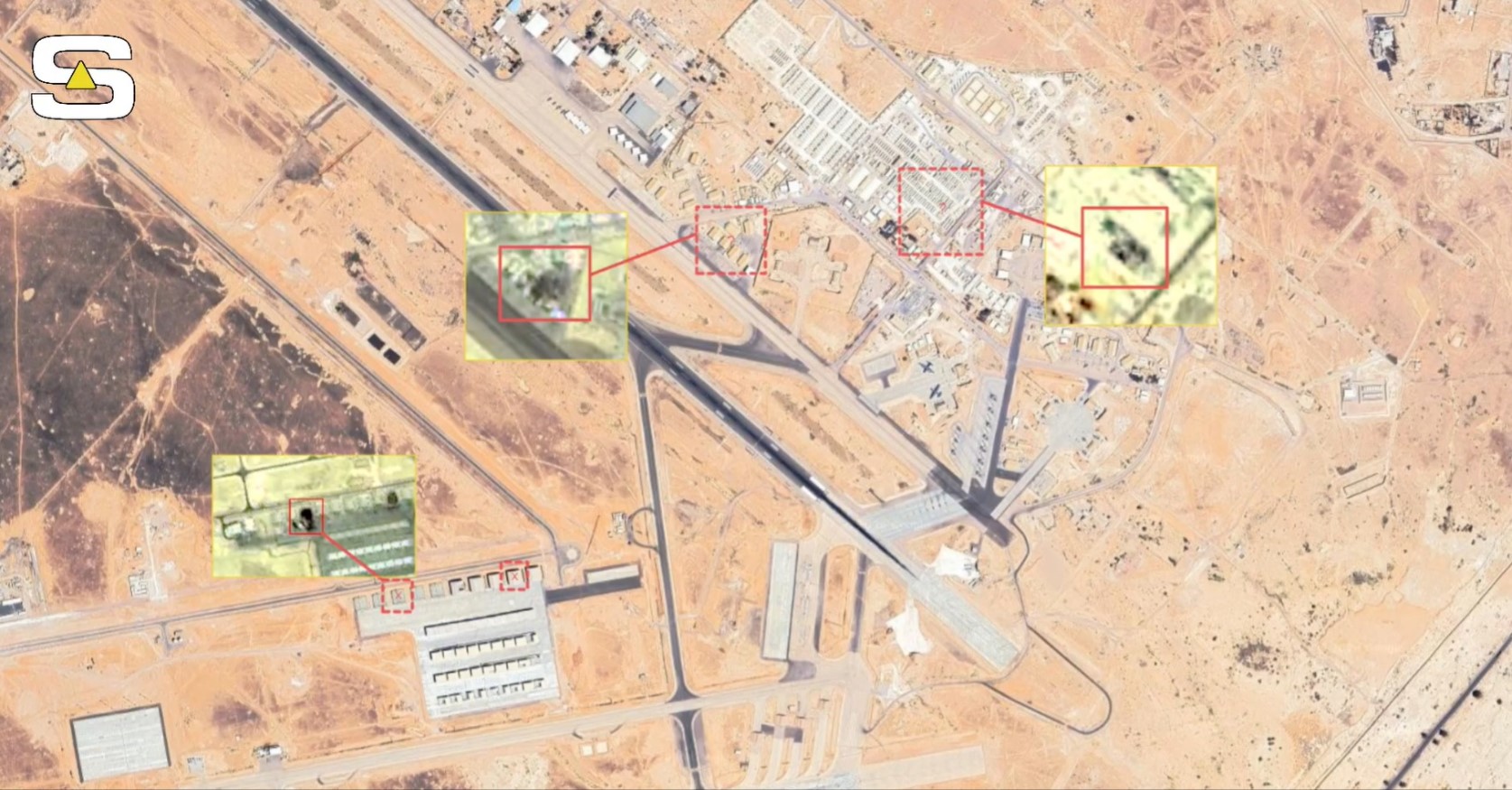 New Satellite Imagery Reveals Extensive Damage at Jordan's Muwaffaq al-Salti Air Base After Iranian Missile Strike
-
 Anduril Unveils Thunder Autonomous Attack Rotorcraft Built with Archer Aviation to Support Apache Helicopters
-
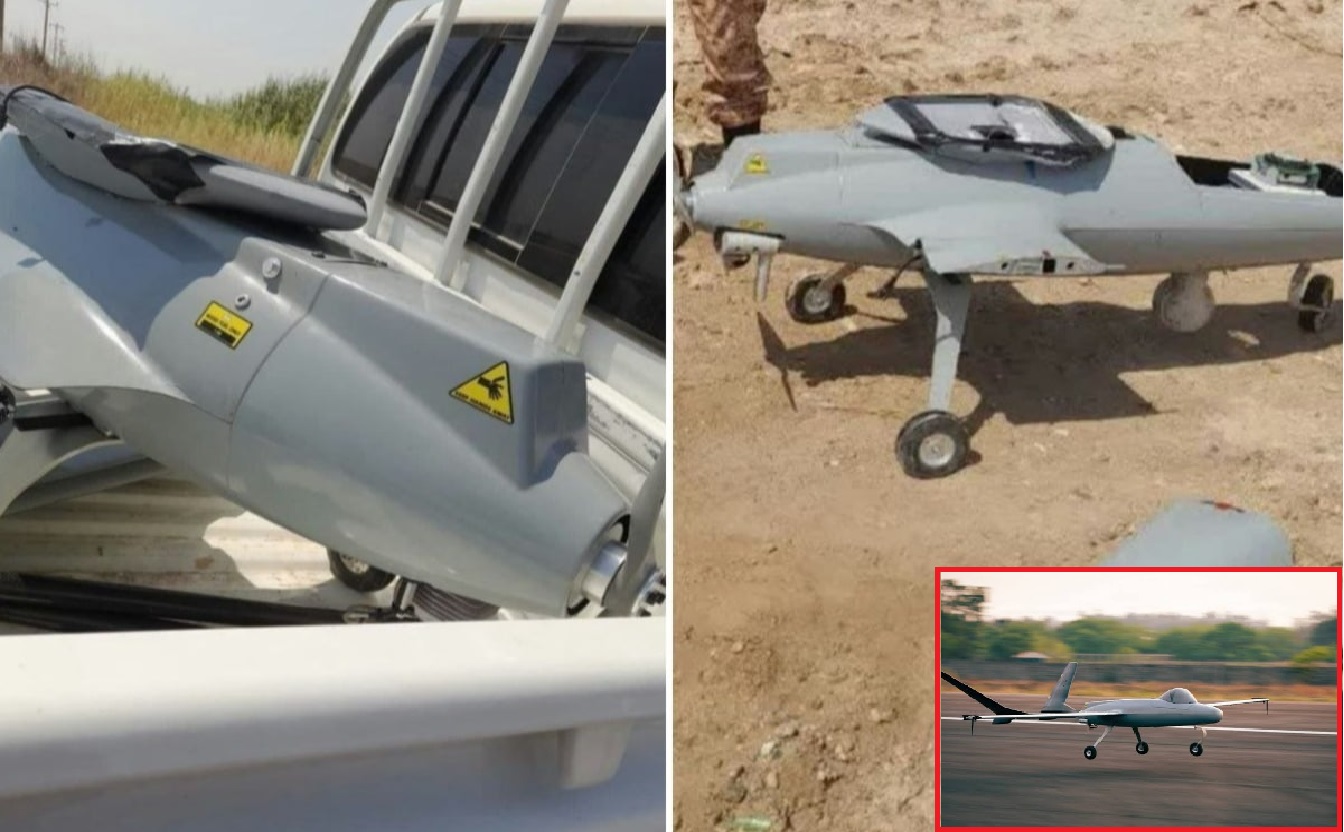 Iran Claims It Shot Down U.S.-Operated Polish-Built Tiguar-M Drone, Releases Images
-
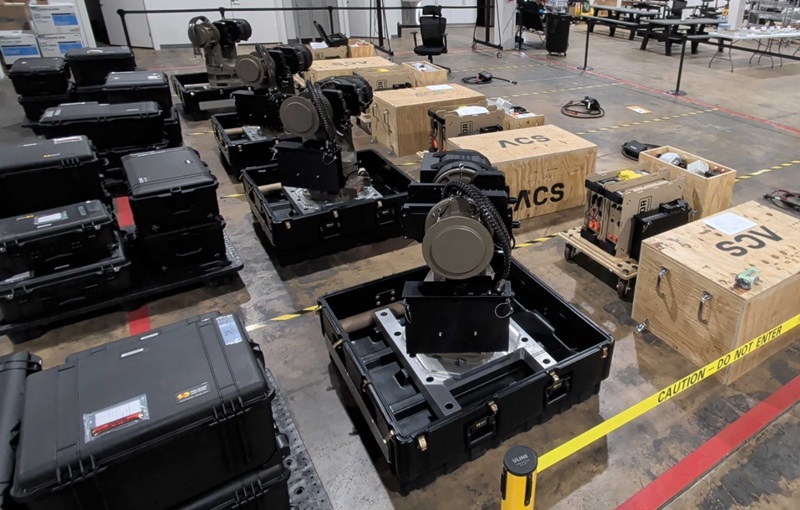 U.S. Marine Corps Selects AI-Powered Bullfrog Weapon Station for L-MADIS Counter-Drone Platform
-
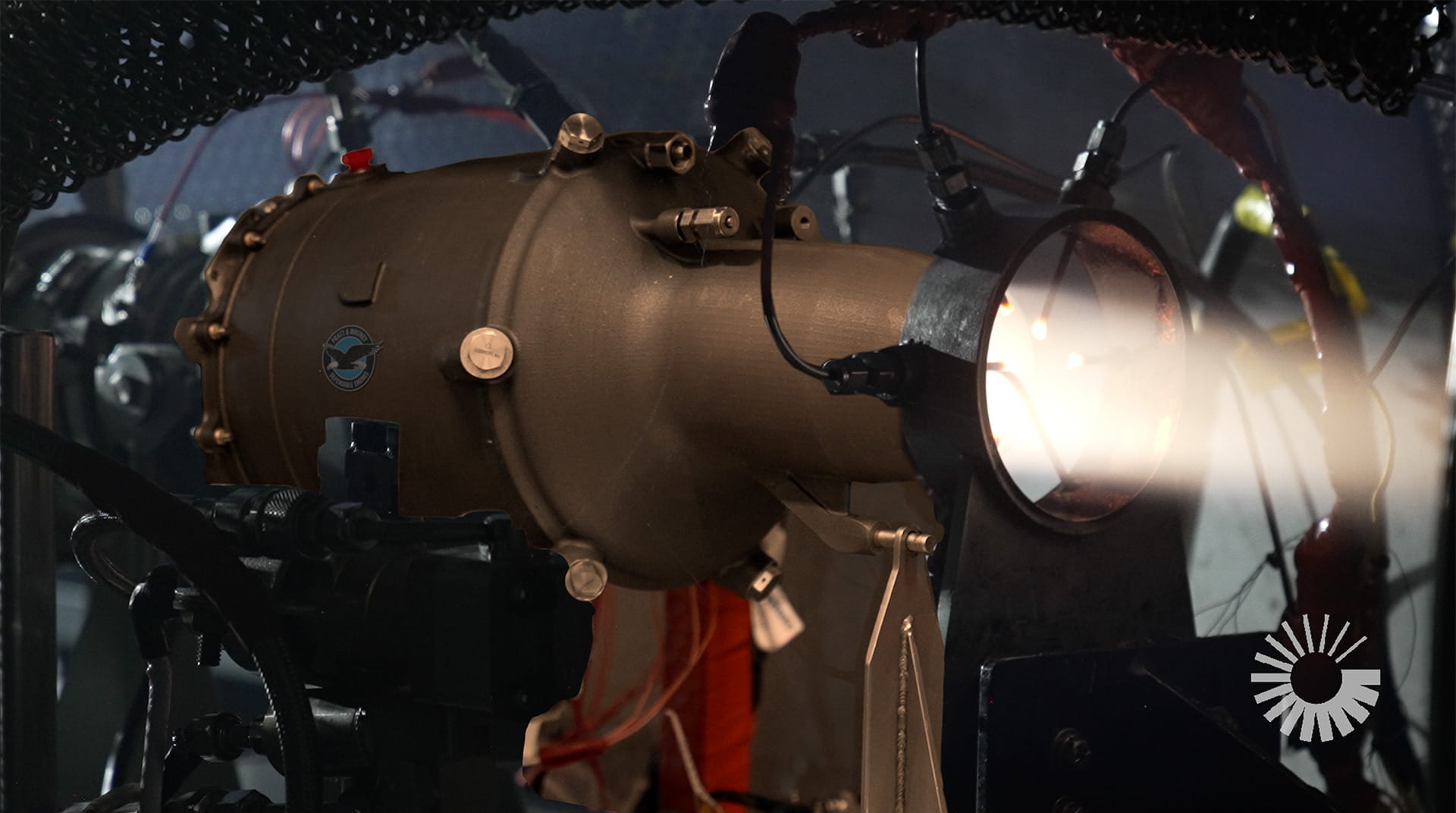 Pratt & Whitney Completes Testing of 3D-Printed TJ150 Engine for Military Applications
-
 Lockheed Martin Unveils MORFIUS X-Rotor High-Power Microwave System That Can Neutralize 50+ Drones in One Flight
-
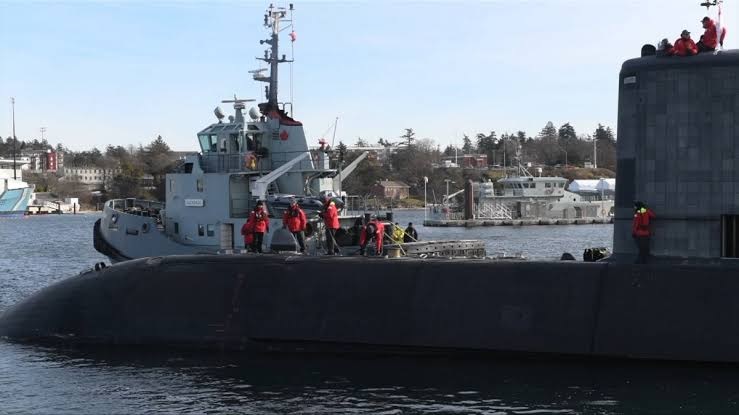 Canada Awards Babcock $1.1 Billion Six-Year Contract Extension to Support Victoria-Class Submarine Fleet
-
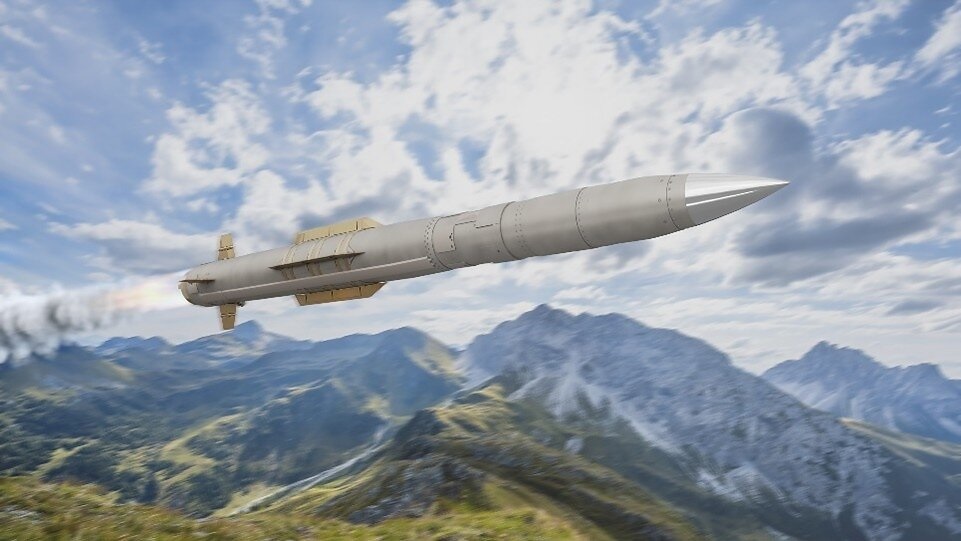 Lockheed Martin Unveils Lower-Cost PAC-3 ACE Interceptor for Patriot Air Defense System
