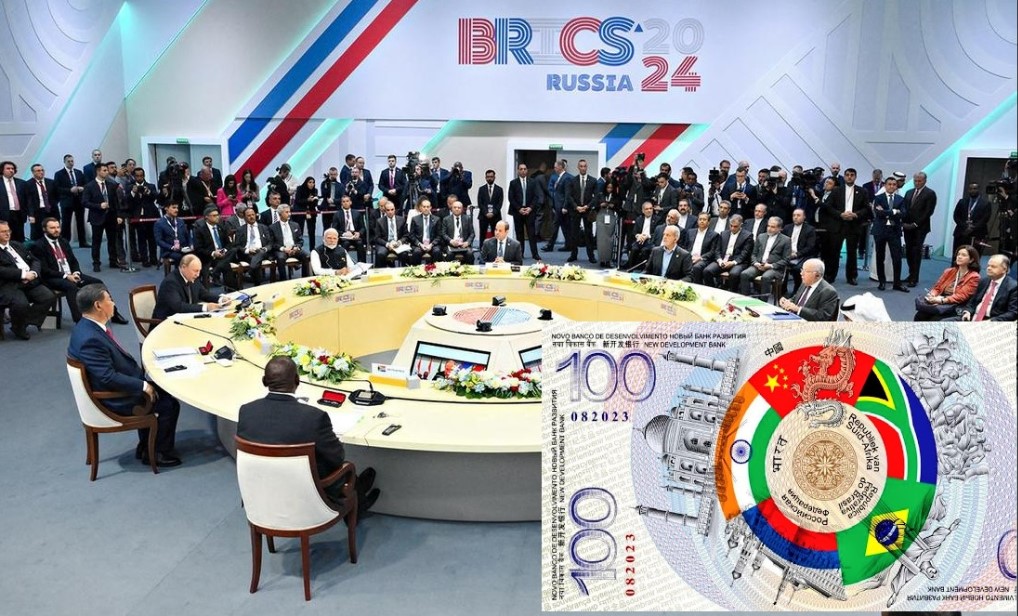
NEW DELHI : The BRICS grouping is advancing the development of an independent cross-border payment system capable of processing up to 20,000 transactions per second, as member states prepare formal proposals for adoption at the 2026 BRICS Summit in New Delhi. The planned infrastructure is designed to enable full-scale trade settlements in national currencies and establish interoperability among Central Bank Digital Currencies (CBDCs) across the bloc.
The initiative is being coordinated by a coalition of founding and newly admitted members, including Brazil, Russia, India, China, South Africa, Egypt and the United Arab Emirates. These countries are aligning technical standards, regulatory frameworks and financial protocols to ensure operational readiness before the 2026 summit.
Technical Architecture and Processing Capacity
At the center of the framework is the Decentralized Cross-border Messaging System (DCMS), a blockchain-compatible network engineered to operate independently of Western-controlled financial messaging platforms such as SWIFT. The DCMS is structured to achieve a throughput of up to 20,000 transactions per second, placing it within the capacity range of major global payment infrastructures while maintaining low transaction costs.
The system is designed to interconnect existing domestic real-time payment networks across member states. These include Brazil’s Pix, India’s Unified Payments Interface (UPI), Russia’s Faster Payments System (SBP) and China’s Internet Banking Payment System (IBPS). By linking these established platforms through a shared messaging and settlement layer, the bloc aims to reduce clearing time, improve transaction transparency, and lower foreign exchange conversion costs in cross-border trade.
The architecture emphasizes interoperability, standardized messaging protocols, and compliance with domestic financial regulations in each participating country. Officials involved in the project have highlighted cybersecurity resilience, data localization safeguards, and regulatory oversight mechanisms as core structural components.
Focus on CBDC Interoperability
A central agenda item for the 2026 summit is the formal integration of sovereign digital currencies. The Reserve Bank of India has proposed prioritizing CBDC linkage and interoperability during structured negotiations at the New Delhi meeting.
The objective is to establish a unified technical protocol that enables instant, wholesale exchanges between central banks and authorized financial institutions. Under this framework, payment-versus-payment (PvP) foreign exchange settlements could be executed directly between national digital currencies without routing funds through intermediary currencies or correspondent banking networks.
India’s e-rupee and China’s e-CNY are expected to be included in early-stage interoperability testing. Other member states are currently at varying stages of CBDC pilot programs and research initiatives, and technical working groups are coordinating to harmonize standards related to issuance mechanisms, settlement finality, liquidity management, compliance procedures and cross-border reporting requirements.
From 2025 Consensus to Operational Deployment
The proposed payment infrastructure represents the next operational phase of financial cooperation discussions initiated during the 2025 BRICS Summit in Rio de Janeiro. That summit established consensus on expanding cross-border payment collaboration, increasing the use of local currencies in trade, and aligning technological systems across jurisdictions.
The current phase transitions those agreements into a high-volume operational framework. Technical working groups are focused on infrastructure testing, throughput validation, latency benchmarks, scalability assessments and regulatory approvals. Integration trials between domestic payment platforms are expected to continue through 2025 before formal adoption proposals are presented in 2026.
Trade Settlement Trends and Currency Diversification
The acceleration of the independent payment corridor aligns with a broader shift toward settlement in national currencies within the bloc. Recent trade data indicates that more than 65 percent of intra-BRICS trade is now conducted in local currencies rather than the U.S. dollar.
Member states cite foreign exchange volatility, geopolitical risk exposure, and the increased use of financial sanctions in global markets as contributing factors behind the diversification of settlement channels. The deployment of a dedicated, high-speed payment infrastructure integrated with CBDCs is intended to institutionalize this transition within a regulated and standardized framework.
The proposed system is structured to provide direct central bank oversight of cross-border digital transactions while reducing dependency on third-party clearing networks. If formally adopted at the 2026 summit, the infrastructure would combine domestic real-time payment systems with interoperable sovereign digital currencies under a unified cross-border protocol.
Further technical documentation, compliance standards and implementation timelines are expected to be circulated among member governments ahead of the New Delhi summit, where decisions on formal adoption, rollout sequencing and expansion criteria for additional members will be determined.
——— End of Article ———