COCHSTEDT, Germany : German defense company Rheinmetall has conducted a live flight demonstration of its newly developed FV-014 loitering munition system (LMS), known as the “Raider,” for a prospective NATO customer. The test took place on February 18, 2026, at the National Test Centre for Unmanned Aerial Systems operated by the German Aerospace Centre (DLR) in Cochstedt, Saxony-Anhalt.
The demonstration included multiple simulated mission scenarios and representative attack flight profiles. According to the company, the event marks a significant development milestone for the system, which was designed and engineered entirely in-house. Rheinmetall positions the FV-014 as a European-developed loitering munition that is not subject to third-party export controls. The system was first publicly presented as a prototype at the DSEI exhibition in London in September 2025.
System Role and Operational Concept
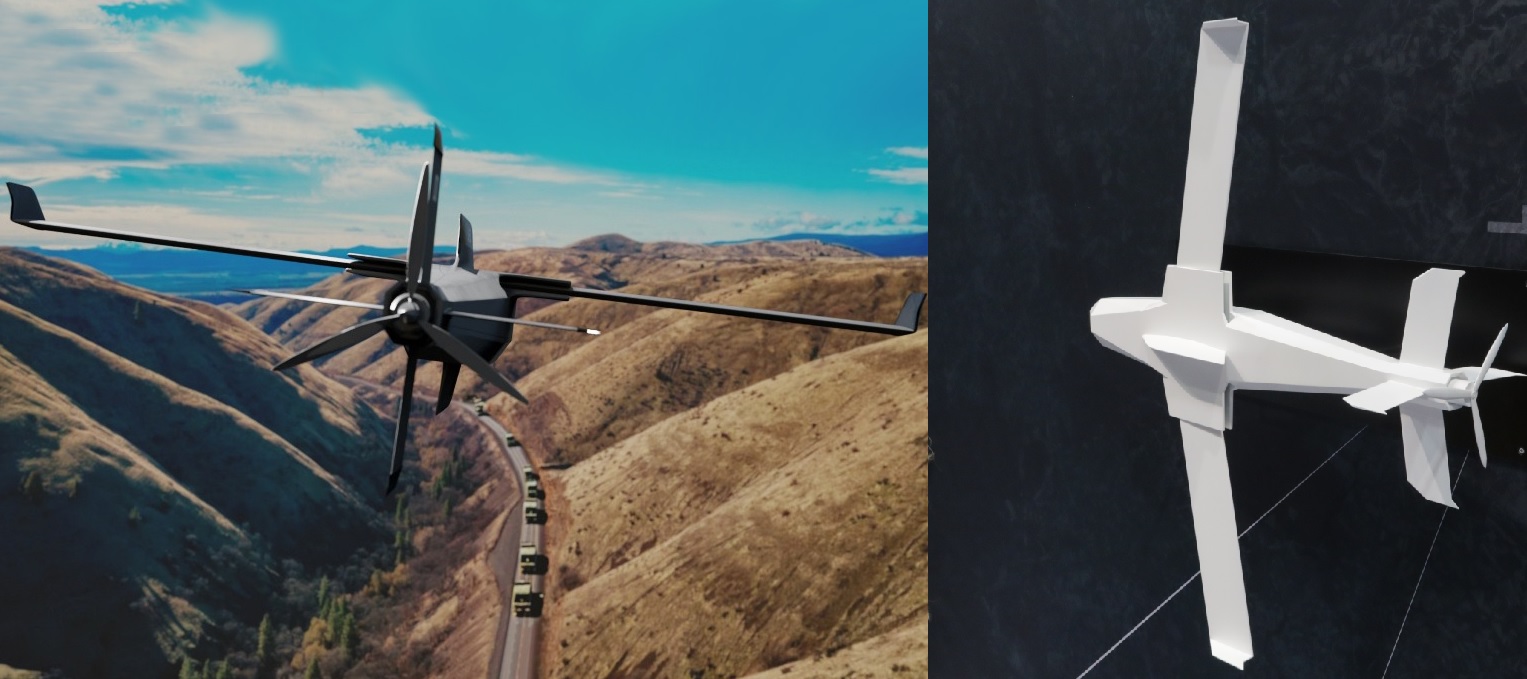
The FV-014 is a fixed-wing tactical loitering munition intended for dynamic battlefield deployment at the tactical level. The system integrates intelligence, surveillance, and reconnaissance (ISR) capabilities with precision-strike functionality in a single platform. It is designed to support maneuver units by engaging high-value point targets beyond line of sight, including armored vehicles, artillery systems, command posts, and other critical battlefield assets.
Initially configured as a man-portable capability for troop-level use, the system is launched from a sealed transport canister using a booster mechanism. After exiting the container, the munition deploys folding wings and transitions into powered aerodynamic flight. While optimized for dismounted operations, Rheinmetall has stated that the FV-014 architecture allows integration into scalable multi-launcher configurations. These configurations can be mounted on ground vehicles or adapted for naval platforms, enabling deployment across land and maritime domains.
Technical Specifications and Performance Parameters
The FV-014 has a total launch weight of approximately 20 kilograms, including a payload capacity of 6 kilograms. The system carries a 5-kilogram High-Explosive Dual Purpose (HEDP) warhead designed to address both armored and soft targets.
Key performance characteristics include:
-
Operational Range: Up to 100 kilometers, with a maximum data link range of 60 kilometers.
-
Flight Endurance: Approximately 70 minutes, providing loiter time for target detection, identification, tracking, and engagement decision-making.
-
Penetration Capability: More than 600 millimeters of Rolled Homogeneous Armor (RHA), while remaining effective against unarmored vehicles, personnel, and infrastructure targets.
The munition’s electric propulsion system drives a rear-mounted propeller, contributing to a reduced acoustic signature during the terminal approach phase. The airframe incorporates a conventional wing configuration and features faceted structural elements intended to reduce radar and infrared observability.
Control Architecture and Human Oversight
Operation of the FV-014 is conducted through a ground control station that maintains a continuous “human-in-the-loop” engagement model. This architecture enables the operator to receive real-time situational awareness data, conduct positive target identification, authorize strike execution, or abort the mission if operational conditions change.
The communications and control framework is designed to maintain stability in contested environments. The system incorporates navigation protocols capable of functioning in Global Navigation Satellite System (GNSS)-denied conditions and in environments subject to electromagnetic interference or jamming.
Networked and Swarm Capabilities
Rheinmetall has equipped the FV-014 with networking capabilities that support coordinated operations among multiple units. This configuration allows for synchronized engagement of clustered targets or coordinated saturation of adversary air defense systems. The architecture enables distributed employment concepts, including swarm-based tasking and shared targeting data among deployed munitions.
The recent demonstration at the DLR-operated test facility represents the first confirmed live presentation of the system to a prospective NATO client following its public unveiling in 2025. Rheinmetall has not disclosed the identity of the customer involved in the evaluation.
——— End of Article ———