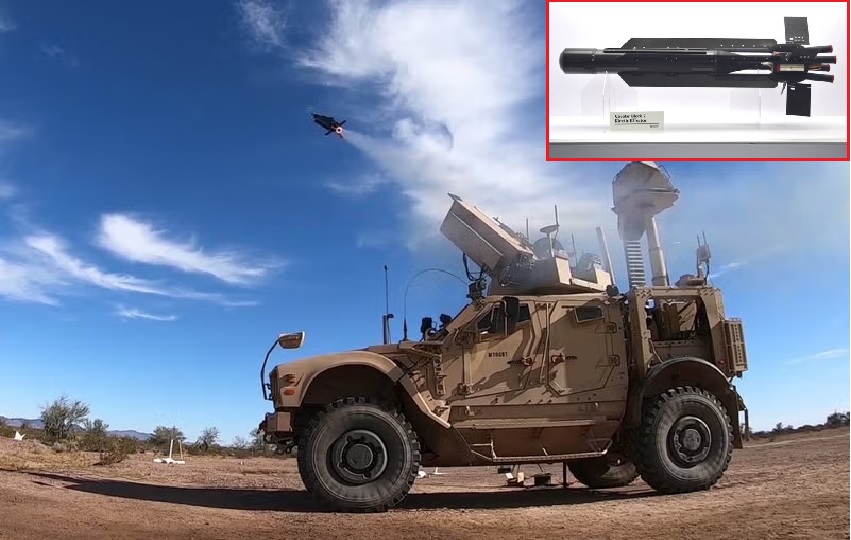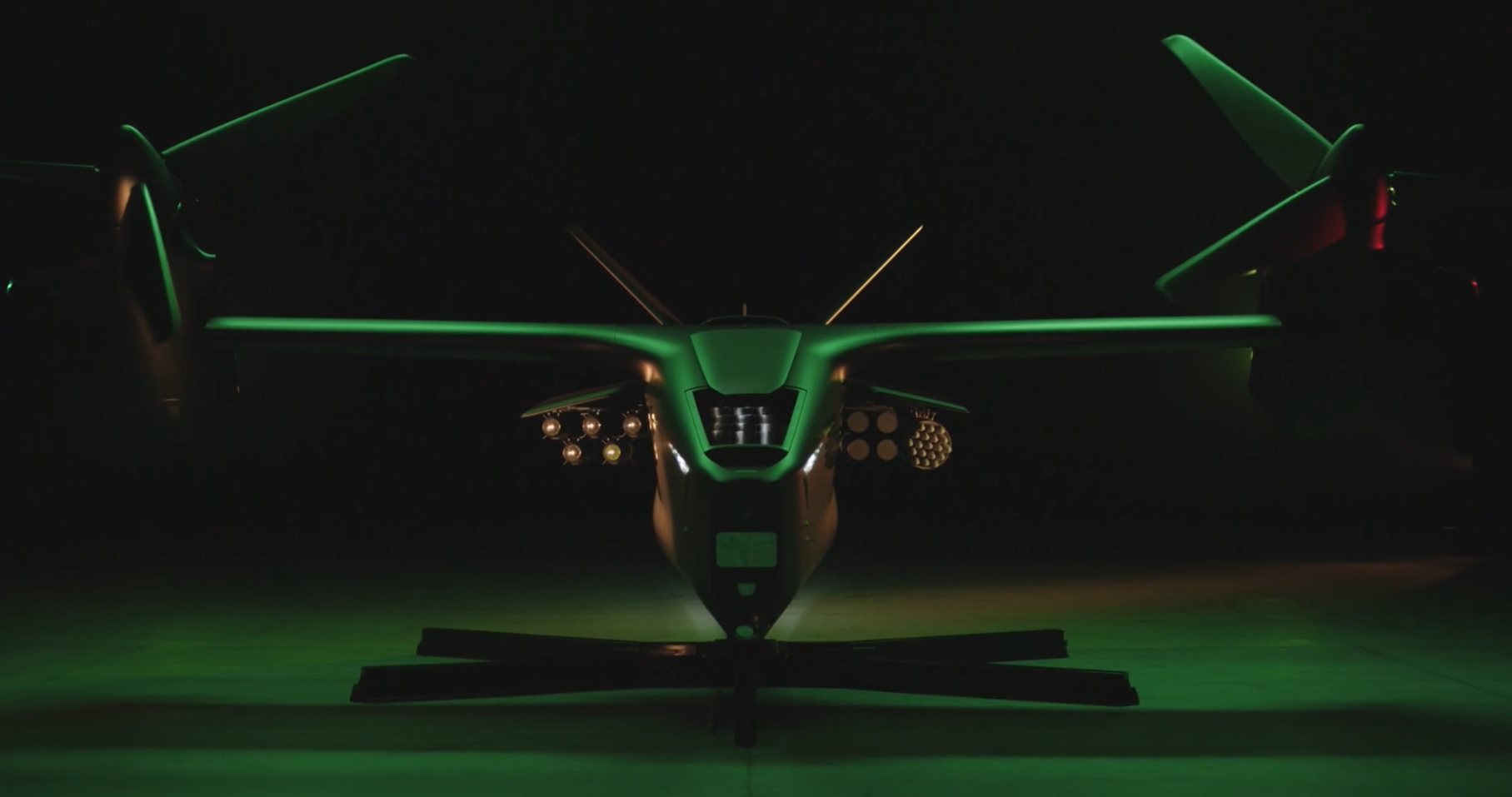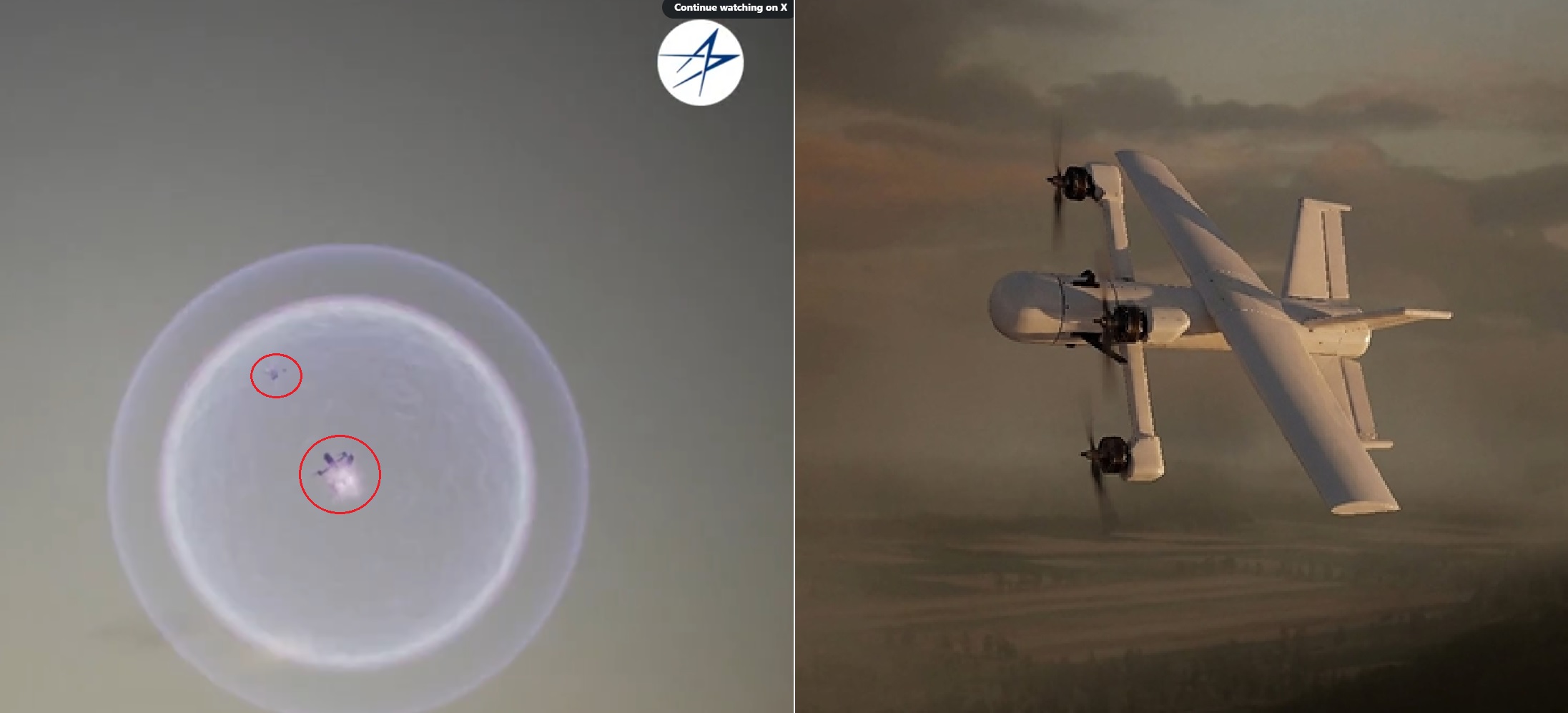
FARNBOROUGH, England — Lockheed Martin has introduced the MORFIUS X-Rotor, a reusable airborne counter-drone system designed to defeat large groups of unmanned aerial vehicles (UAVs) using high-power microwave (HPM) technology. The system was unveiled at the 2026 Farnborough International Airshow as the company expands its counter-unmanned aerial systems (C-UAS) portfolio to address the increasing use of drone swarms on modern battlefields.
According to Lockheed Martin, the ground-launched MORFIUS X-Rotor can neutralize more than 50 enemy drones during a single flight by emitting bursts of high-power microwave energy that disrupt or disable the electronics of multiple UAVs simultaneously. Unlike conventional air defense systems that rely on single-use interceptor missiles, the MORFIUS X-Rotor is designed to be recovered after a mission and reused, reducing the cost of countering low-cost drone threats.
The MORFIUS™ X-Rotor is a portable, cost‑effective counter‑drone system that can neutralize up to 50 enemy drones in a single mission. Designed for rapid reuse and rapid deployment. pic.twitter.com/J3tvFrgkuf
— Lockheed Martin (@LockheedMartin) July 20, 2026
The company said the system follows a "one-to-many" engagement approach, allowing a single platform to engage multiple drones in one mission instead of using individual interceptors against each target. This is intended to help military forces respond more efficiently to large drone swarms while lowering the cost per engagement.
High-Power Microwave Counter-Drone Capability
The MORFIUS X-Rotor carries a lightweight high-power microwave payload that is activated once the system reaches its target area. The microwave energy disables the electronic systems of multiple drones without relying on explosive warheads or kinetic interceptors.
Lockheed Martin said the system is designed to be sensor and command-and-control agnostic, allowing it to integrate with a wide range of existing military sensors and command networks. It does not require dedicated fire-control radars or proprietary guidance systems, making it compatible with existing air defense architectures.
"MORFIUS sets a new benchmark for counter-drone capability—delivering a high kill rate while keeping the cost per kill low," said Randy Crites, Vice President and General Manager of Advanced Programs at Lockheed Martin Missiles and Fire Control.
"By leveraging a lightweight, field-reusable high-power microwave architecture, we provide the most effective, low-cost solution on the market today," he added.
Built on Years of Development
The MORFIUS X-Rotor is the latest version of Lockheed Martin's MORFIUS high-power microwave program, which the company has been developing and testing since 2017. The X-Rotor builds on earlier MORFIUS variants while introducing an updated design focused on improving performance against drone swarms.
Lockheed Martin said the microwave technology is intended to disable hardened electronic targets while minimizing collateral damage, providing a non-kinetic option for countering unmanned aerial threats.
Testing and Prototype Production
The company has completed a series of demonstrations and evaluations in Arizona, California, and Oklahoma, where the system's flight performance, target interception capability, and overall effectiveness were assessed.
Lockheed Martin is now accelerating prototype production of both the MORFIUS X-Rotor platform and its high-power microwave payload. Additional flight tests are planned as the company continues development toward operational deployment.
Supporting Counter-Drone Requirements
Lockheed Martin said the MORFIUS X-Rotor aligns with the U.S. Department of Defense's 2025–2028 Rapid Response Counter-UAS Roadmap, which emphasizes affordable, scalable, and rapidly deployable solutions to counter increasingly capable drone threats.
The company also released demonstration videos showing the MORFIUS X-Rotor engaging simulated drone swarms. As drone technology continues to evolve, the reusable high-power microwave system is intended to complement existing layered air defense systems by providing a non-kinetic capability against multiple unmanned aerial threats in a single mission.
——— End of Article ———