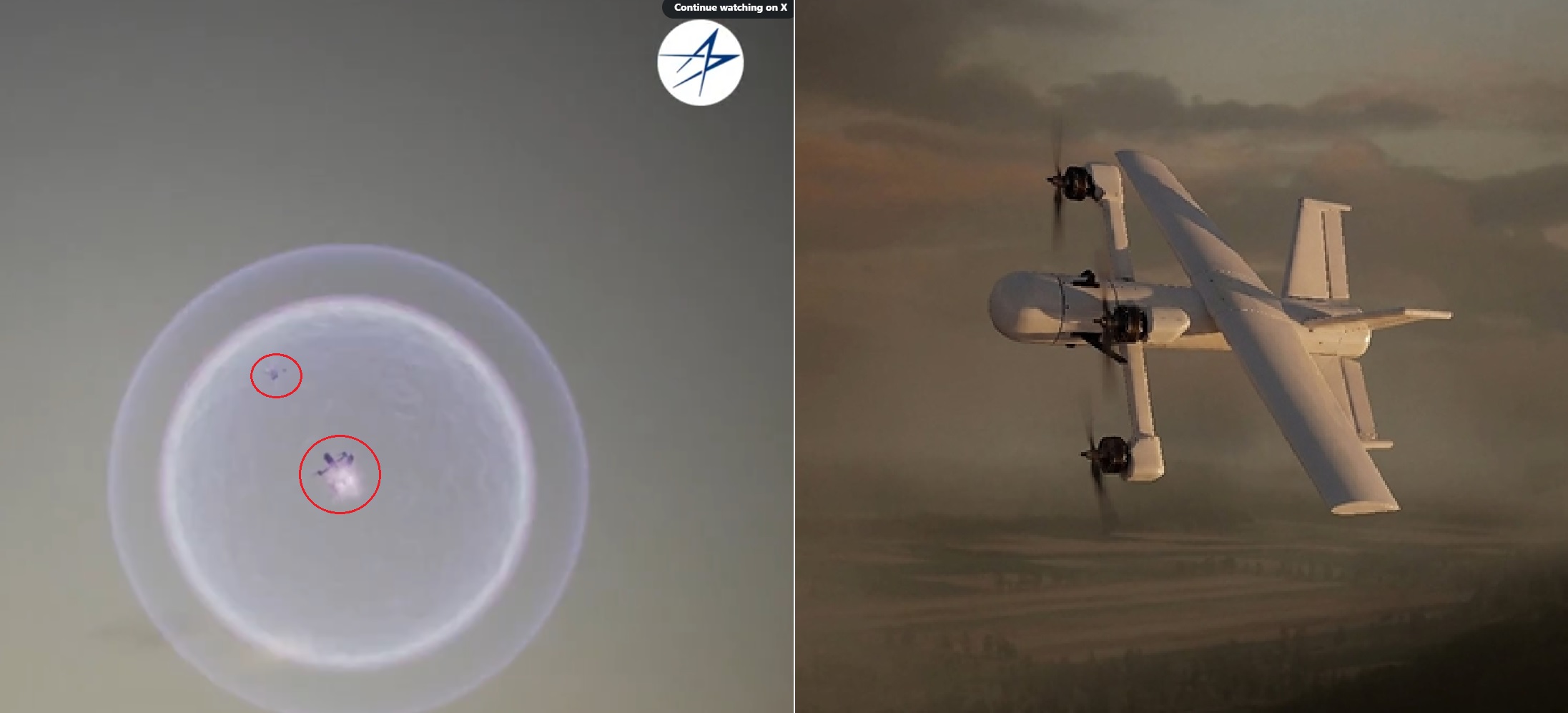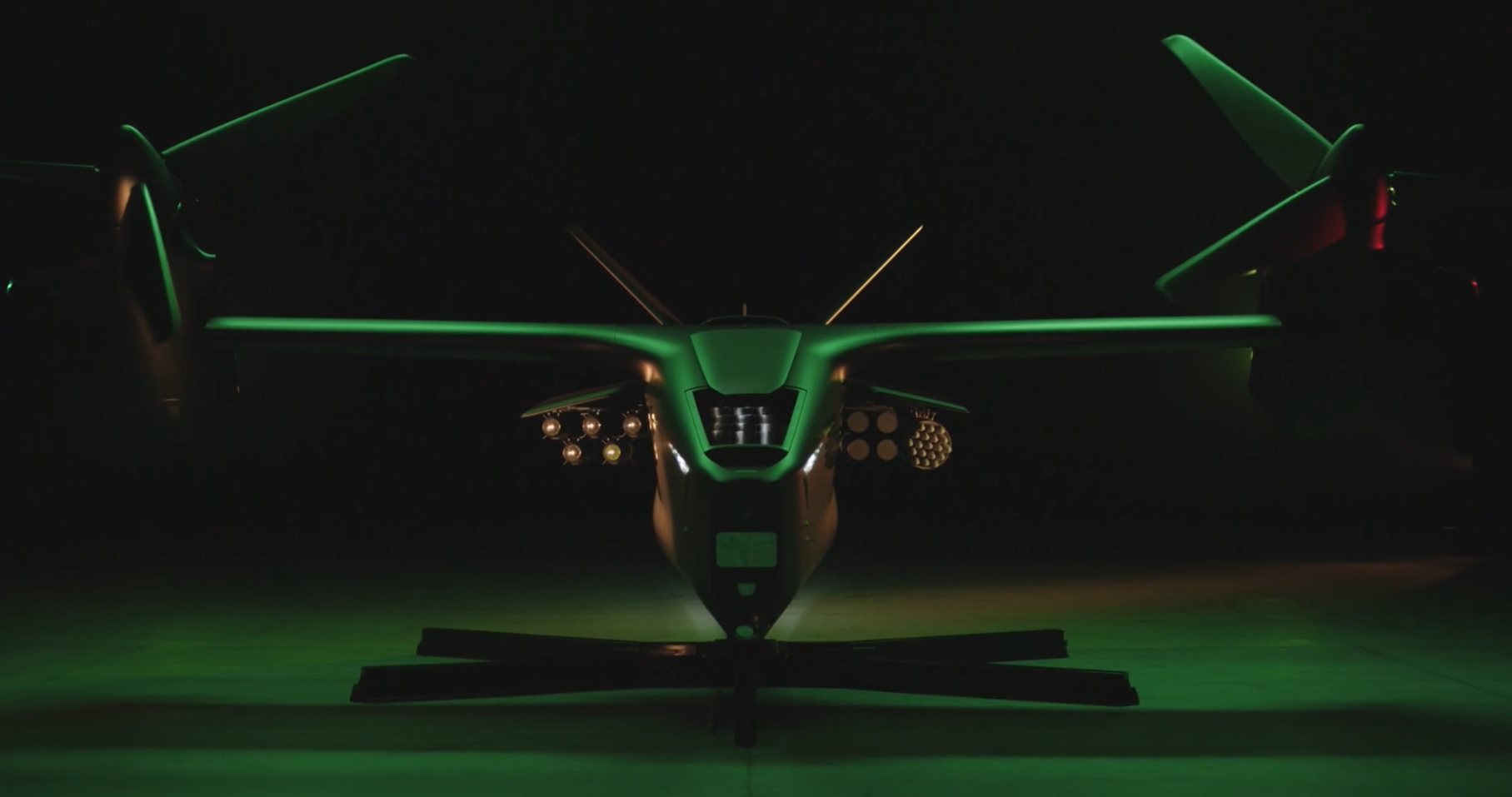
FARNBOROUGH, England, July 20, 2026 — Anduril Industries and Archer Aviation (NYSE: ACHR) on Monday unveiled Thunder, a Group 5 Autonomous Air Vehicle (AAV) designed to operate alongside crewed attack and assault helicopters, increasing combat capability while reducing risk to pilots in contested environments.
The aircraft was introduced at the Farnborough International Airshow as part of a strategic partnership between Anduril and Archer Aviation that combines Archer's electric vertical takeoff and landing (VTOL) technology with Anduril's autonomous mission systems. The companies said Thunder is a dual-use platform that brings commercial VTOL technology into military applications while sharing a common development baseline for both defense and commercial variants.
The modern battlefield is a robotic kill zone.
— Anduril Industries (@anduriltech) July 20, 2026
Attack helicopters and their crews face more sophisticated threats than ever before.
In this new era of maneuver warfare, we need eyes for what’s ahead and a shield for what we can’t afford to lose.
Thunder is a Group 5… pic.twitter.com/0gWwAKZFJC
Built as a New Military Platform
According to the companies, Thunder has been under development since 2024 and was designed from the ground up rather than adapted from Archer's commercial air taxi aircraft.
Archer Aviation CEO Adam Goldstein said the program followed a "first principles" approach to develop a purpose-built vertical lift aircraft capable of meeting military operational requirements.
The aircraft uses a series hybrid-electric powertrain combined with Optimum Speed Tiltrotor (OSTR) technology, allowing its rotors to adjust rotational speed for improved efficiency during different phases of flight. This enables Thunder to perform vertical takeoffs and landings like a helicopter while transitioning to efficient wingborne forward flight, providing greater speed, range and endurance.
The hybrid-electric propulsion system is designed to provide sufficient range for long-distance self-deployment. For transport, Thunder can also be packed into a standard shipping container, allowing movement by air, road, rail or sea into operational areas.
Designed for Multiple Mission Types
Thunder is intended to operate as an autonomous attack rotorcraft that supports crewed helicopters such as the AH-64 Apache or flies independently in autonomous formations.
The aircraft features modular internal payload bays in both the main fuselage and nose section, allowing operators to configure it for different mission requirements. These payloads include precision-guided weapons, rockets, launched effects, electronic warfare systems, counter-unmanned aerial system (counter-UAS) equipment and standard cargo.
According to Anduril, the main payload module can be configured to carry:
- Up to 10 air-to-ground missiles, including AGM-114 Hellfire, AGM-179 JAGM or Anduril's Barracuda-100M
- Up to 16 launched effects, including the Altius-600
- Up to 76 individual 70mm rockets
In addition, the nose payload module can simultaneously carry 12 counter-UAS effectors, enabling the aircraft to engage aerial threats while carrying weapons for ground attack missions.
The company said the platform's open architecture allows future mission systems and payloads to be integrated as operational requirements evolve.
Supporting Crewed Aviation
Anduril said Thunder is designed to complement, rather than replace, existing crewed aircraft. The company said pairing multiple Thunder aircraft with platforms such as the Apache could significantly increase available firepower without requiring additional pilots while helping crews operate at greater stand-off distances.
Its autonomous software is designed to enable coordinated operations between crewed and uncrewed aircraft while providing a shared tactical picture across formations.
Developed for Contested Environments
The companies said the platform was developed in response to changing battlefield conditions, where the widespread use of drones, loitering munitions, persistent intelligence, surveillance and reconnaissance (ISR) systems, and low-cost air defense systems has increased the risks faced by conventional attack helicopters.
Thunder is intended to provide additional combat effects in these contested environments by combining autonomous operation with a large payload capacity, extended range and vertical lift capability.
Testing and Future Plans
Anduril and Archer said they have completed multiple test flights using full-scale surrogate aircraft to validate the platform's core technologies. The first flight of the production Thunder aircraft is planned for 2027.
Alongside the defense-focused Thunder program, Archer Aviation said it plans to announce a commercial version of the platform, known as Halo, along with its first commercial launch partners later this week.
Following the announcement, Archer Aviation shares rose more than 14% in Monday morning trading, reflecting investor interest in the company's expansion into the defense sector.
——— End of Article ———