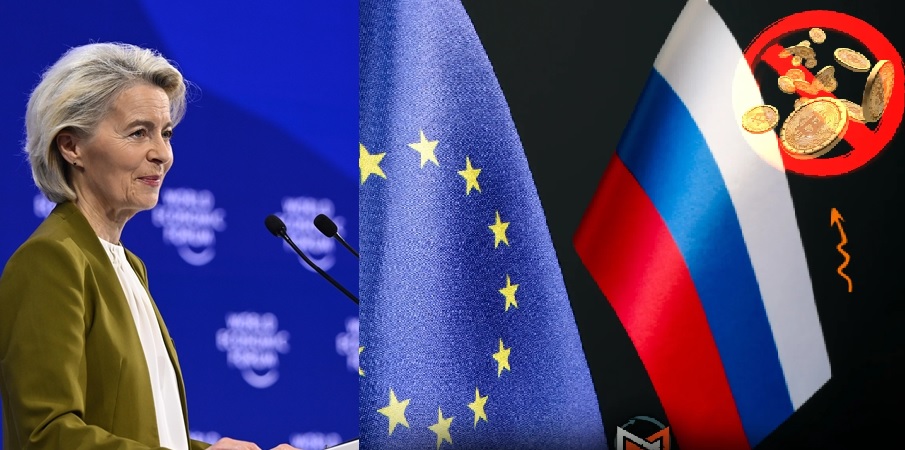
BRUSSELS : The European Union is moving toward the adoption of its 20th sanctions package against Russia, marking what officials describe as the bloc’s most far-reaching financial restrictions since the start of the Ukraine conflict. As of mid-February 2026, the European Commission is finalizing measures that expand enforcement from designated individuals and entities to broader segments of Russia’s financial infrastructure, including digital asset services and third-country intermediaries.
The package is expected to be formally presented ahead of February 24, 2026, aligning with the anniversary of the full-scale invasion of Ukraine.
Comprehensive Ban on Russian Cryptocurrency Transactions
According to internal European Commission drafts and diplomatic briefings, the new sanctions introduce a blanket prohibition on cryptocurrency transactions linked to Russia. The proposal bars individuals and companies within the EU from engaging with any crypto-asset service provider established in Russia.
Unlike earlier rounds of sanctions that targeted specific exchanges, wallet addresses or designated platforms, the new framework applies system-wide restrictions. EU-based financial institutions, payment processors, custodians and digital asset firms would be prohibited from facilitating transactions involving Russian crypto infrastructure, regardless of whether a particular entity has been individually listed.
Officials state that the measure is designed to close loopholes that allowed sanctioned platforms to continue operating under new corporate identities or successor entities. Previous enforcement actions by US and EU regulators had identified Garantex as facilitating sanctions evasion and enabling cross-border transfers for restricted entities. The broader prohibition aims to prevent similar circumvention practices.
The proposed package also extends compliance obligations to EU nationals operating outside the bloc and to subsidiaries of European firms abroad. National supervisory authorities would be responsible for enforcement, with penalties aligned to existing sanctions regimes.
Extension to Third-Country Financial Institutions
Draft texts reviewed by EU diplomats indicate that enforcement will also apply to certain financial institutions in third countries accused of supporting Russian digital asset services or facilitating the procurement of dual-use goods.
Banks in Kyrgyzstan, Laos and Tajikistan are referenced in proposals as having processed transactions linked to Russian entities subject to EU restrictions. If adopted, the measures would bar EU financial institutions from conducting transactions with the designated banks. The move reflects a broader EU strategy to limit indirect access to European markets through intermediary jurisdictions.
European officials have stated that the objective is to strengthen sanctions implementation rather than expand primary sanctions to additional sectors. The Commission has emphasized coordination with G7 partners and the United States to ensure consistency in enforcement standards.
Frozen Russian Sovereign Assets: Scope and Location
Parallel to the cryptocurrency measures, the EU continues deliberations over the handling of frozen Russian sovereign assets held within its jurisdiction.
More than €209 billion (approximately $247 billion) in Russian central bank assets remain immobilized across EU member states. The majority—around €180 billion—is held at Euroclear, the Belgium-based international central securities depository. The assets were frozen in 2022 following coordinated sanctions imposed by the EU and G7 countries.
The funds primarily consist of foreign exchange reserves and sovereign bonds held through custodial and clearing systems. While the principal remains frozen, interest generated on the assets has been subject to separate EU decisions allowing limited use for Ukraine-related financial support.
Proposal to Underwrite €90 Billion Loan to Ukraine
The European Commission has proposed using the immobilized Russian sovereign assets as collateral to support a €90 billion interest-free loan to Ukraine. Under the plan, the frozen funds would not be immediately confiscated but would serve as financial backing to guarantee borrowing for Kyiv.
The Commission’s legal services have examined potential mechanisms to structure the arrangement in a manner consistent with EU law and international financial obligations. Discussions among member states have focused on minimizing exposure to legal risk while maintaining political unity.
Belgium, where Euroclear is headquartered and holds the bulk of the assets, has requested indemnification mechanisms to shield it from potential financial or legal repercussions. Belgian officials have indicated that any decision affecting the principal assets could expose domestic institutions to litigation and retaliatory measures.
Hungary has also expressed reservations regarding the proposal, citing legal concerns and potential economic implications. Several member states have called for additional legal analysis to ensure compliance with principles of sovereign immunity under international law.
Russian Legal and Diplomatic Response
The Russian government and the Central Bank of Russia have formally opposed both the proposed crypto restrictions and the asset-backed loan plan.
Russian authorities have characterized attempts to use frozen sovereign funds as a violation of international legal norms. The Central Bank of Russia has initiated legal proceedings in Moscow courts against Euroclear, arguing that the immobilization and potential use of assets breach sovereign immunity protections.
Russian officials have also indicated that reciprocal measures could be considered against Western-owned assets located in Russia. The scope and implementation of such potential countermeasures have not been formally detailed.
Regulatory Context and Anti-Terror Financing Oversight
Separately from the Russia-focused sanctions, EU and US financial intelligence authorities continue to strengthen oversight of digital assets and traditional banking channels linked to designated terrorist organizations.
In recent years, regulatory scrutiny of cryptocurrency platforms has intensified, particularly in relation to transfers suspected of benefiting Iranian-backed groups and other sanctioned actors. Coordination between European supervisory authorities, the European Banking Authority, and international partners has expanded to monitor digital asset flows more closely.
However, authorities have not announced any specific multi-billion euro seizures targeting the Muslim Brotherhood in Europe. Existing enforcement actions remain confined to entities formally designated under EU or UN sanctions frameworks.
Implementation Timeline
EU diplomats indicate that final approval of the 20th sanctions package could occur before February 24, 2026, subject to unanimous agreement among member states. Once adopted, the measures would enter into force following publication in the Official Journal of the European Union.
The combined focus on digital asset infrastructure, third-country intermediaries, and immobilized sovereign reserves reflects an ongoing shift in EU sanctions policy toward systemic financial restrictions rather than entity-specific listings. Discussions among member states continue as legal and political considerations are reviewed ahead of formal adoption.
——— End of Article ———