LONDON : The United Kingdom has declined a formal request from the United States to authorize the use of two British-linked military installations for potential preemptive strikes on Iran, citing legal obligations under international law and domestic requirements governing the use of force.
According to an exclusive report by The Times, the UK government has withheld consent for the United States to operate from RAF Fairford in Gloucestershire and the joint U.S.-UK facility on Diego Garcia in the Indian Ocean for any offensive military action targeting Iran. Both installations play a significant role in U.S. long-range bomber operations and broader strategic force projection.
Under existing bilateral defense agreements, the United States cannot use these facilities for combat missions without prior approval from the British government. The White House is currently developing military contingency plans focused on Iran’s nuclear infrastructure, and those plans reportedly rely in part on access to these two bases.
Legal Basis for the UK Decision
British officials have indicated that the refusal is grounded in formal legal advice concerning the permissibility of preemptive military action under international law. Government legal counsel reportedly warned that there is no meaningful legal distinction between conducting an unlawful strike and enabling it through logistical or operational support if the supporting state has knowledge of the circumstances surrounding the act.
According to the legal interpretation referenced in the report, granting permission for U.S. bombers to launch from UK territory could expose Britain to legal responsibility if any strike were later judged to violate international law. The concern applies particularly in the context of an unprovoked or preventive attack.
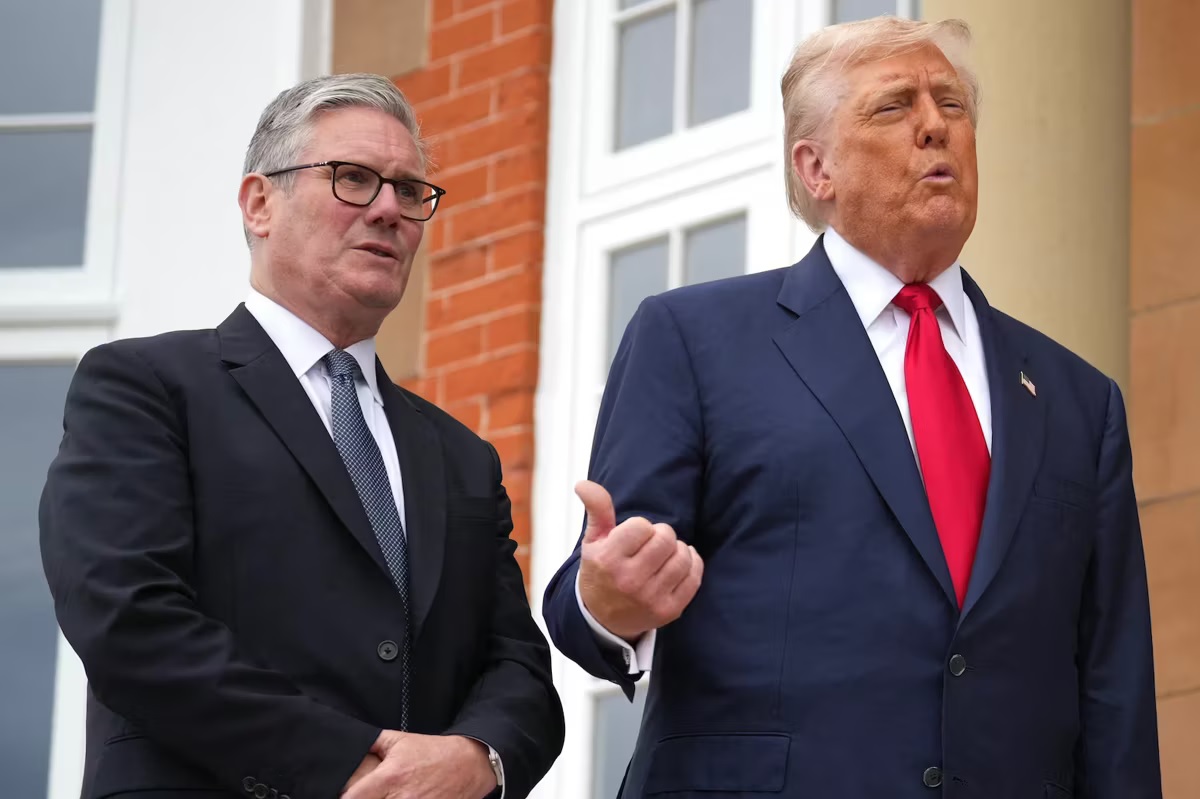
Prime Minister Keir Starmer’s government has therefore withheld authorization, citing both international legal standards and domestic constitutional procedures that require ministerial oversight and legal clearance before British territory can be used in offensive operations.
U.S. Response and Chagos Sovereignty Dispute
The decision has prompted a public response from U.S. President Donald Trump, who directly linked the military base issue to the United Kingdom’s agreement concerning the Chagos Archipelago.
Under a framework agreed in 2025, the UK planned to transfer sovereignty of the Chagos Islands to Mauritius while retaining a 99-year lease to maintain the military base on Diego Garcia. On February 18, 2026, President Trump formally withdrew his administration’s support for that arrangement.
In a statement posted on Truth Social, Trump described the sovereignty transfer agreement as a “big mistake” and stated that the United Kingdom should not relinquish control of Diego Garcia under what he characterized as a “tenuous” long-term lease arrangement. He further indicated that access to Diego Garcia and RAF Fairford could become necessary if diplomatic efforts with Iran fail and the United States determines that military action is required.
White House spokesperson Karoline Leavitt subsequently confirmed that the President’s remarks reflect official administration policy.
Operational and Strategic Context
RAF Fairford regularly hosts U.S. heavy bombers operating in Europe and is equipped to support strategic air missions. Diego Garcia, located in the British Indian Ocean Territory, serves as a key logistics and power projection hub for U.S. operations in the Middle East and Indo-Pacific regions.
The dispute comes amid a broader U.S. military buildup in the Middle East and ongoing indirect nuclear negotiations with Iran taking place in Geneva. U.S. officials have indicated in recent briefings that military options remain under consideration if Iran declines to accept stricter limits on its nuclear program.
A similar legal dynamic was reported in June 2025, when the United States conducted limited strikes against Iranian nuclear facilities. During that operation, U.S. planners reportedly did not seek permission to use UK airbases, anticipating that British ministers would be legally compelled to refuse due to differing interpretations of the legality of preemptive force.
Implications for U.S.–UK Relations
The current disagreement places operational constraints on potential U.S. strike planning and introduces strain into the longstanding U.S.–UK defense partnership. Access to British territory has historically formed a core component of American global force posture.
With formal permission now denied, the availability of RAF Fairford and Diego Garcia remains uncertain for any future action against Iran. The issue also intersects with ongoing negotiations over sovereignty and basing rights in the Indian Ocean, adding a territorial dimension to what was initially a military planning matter.
As of February 19, 2026, both governments continue diplomatic engagement, but the legal and strategic impasse over base access remains unresolved.
——— End of Article ———