WASHINGTON / TEL AVIV : The United States is repositioning the USS Gerald R. Ford Carrier Strike Group to the eastern Mediterranean Sea in a move intended to reinforce Israeli air and missile defense capabilities amid continued regional tensions and concerns over potential Iranian missile activity.
According to reporting by The New York Times and U.S. defense officials, the nuclear-powered aircraft carrier and its accompanying warships are expected to operate initially near Israel’s coastline. The deployment is part of a broader effort to expand defensive coordination between U.S. naval assets and Israel’s existing multi-layered air defense architecture.
Deployment Status and Fleet Composition
The carrier strike group is currently in transit after being redeployed from the Caribbean Sea. Maritime tracking data and defense sources indicate that the fleet is expected to arrive in the eastern Mediterranean by this weekend or early next week.
The deployment includes the USS Gerald R. Ford (CVN-78), the U.S. Navy’s newest and largest aircraft carrier, commissioned in 2017 and powered by two nuclear reactors. The vessel is designed to carry more than 75 aircraft and features the Electromagnetic Aircraft Launch System (EMALS), advanced radar systems, and increased sortie-generation capability compared with earlier carrier classes.
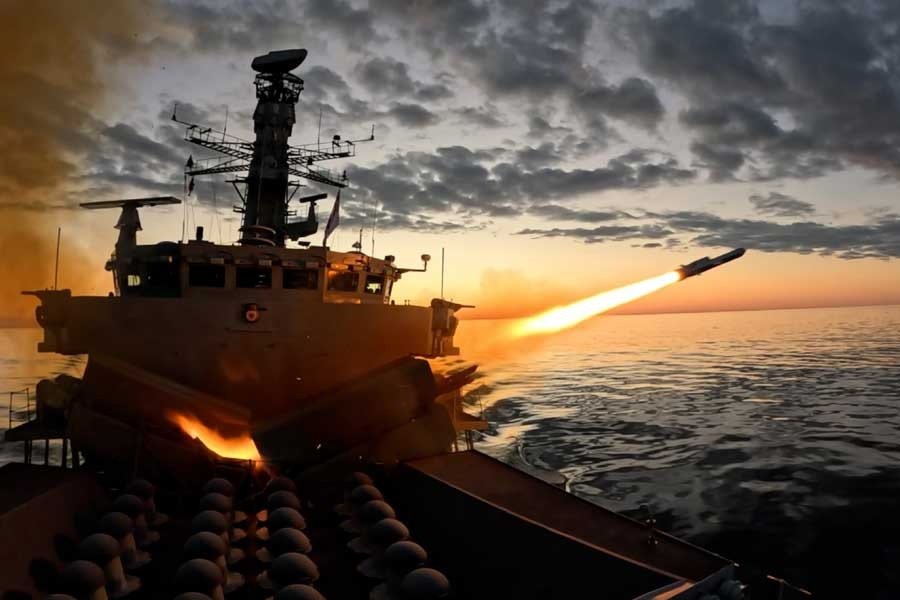
Accompanying the carrier are three guided-missile destroyers equipped with the Aegis Combat System. These Arleigh Burke-class destroyers are capable of ballistic missile defense, long-range air defense, and maritime security operations.
Integration with Israeli Missile Defense Systems
U.S. defense officials state that the principal objective of forward-deploying the strike group is to integrate its maritime-based radar and interception capabilities into a broader U.S.–Israeli defensive network.
The Aegis-equipped destroyers provide long-range detection, tracking, and interception of ballistic missiles. Operating offshore, these vessels can contribute an additional maritime layer of defense to Israel’s air defense structure, particularly against short- and medium-range missile threats.
This naval deployment is designed to complement Israel’s existing ground-based systems rather than replace them. The coordination between sea-based and land-based assets increases overall detection coverage and interception opportunities.
Ground-Based Air Defense Coordination
The carrier strike group will operate in conjunction with Israel’s multi-tiered missile defense systems, which are structured to address threats at different ranges and flight phases.
The integrated defense framework includes:
-
Arrow System: Designed to intercept long-range ballistic missiles outside the Earth’s atmosphere. The Arrow system forms the uppermost tier of Israel’s missile defense architecture.
-
David’s Sling: Developed to counter medium- to long-range ballistic missiles and cruise missiles. It fills the gap between short-range systems and the Arrow interceptors.
-
Patriot Batteries: Utilized for intercepting tactical ballistic missiles, cruise missiles, and advanced aircraft.
-
THAAD (Terminal High Altitude Area Defense): A U.S.-operated system capable of shooting down short-, medium-, and intermediate-range ballistic missiles in their terminal phase.
By integrating maritime Aegis capabilities with these land-based systems, U.S. and Israeli defense planners aim to expand tracking range, increase interceptor options, and improve overall response coordination.
Broader U.S. Military Posture in the Region
The repositioning of the USS Gerald R. Ford Carrier Strike Group occurs as the United States maintains an expanded military presence in the Middle East. The deployment coincides with a period of indirect nuclear negotiations involving Iran and continued regional security concerns.
The Ford Strike Group will operate alongside the USS Abraham Lincoln Carrier Strike Group, which is currently deployed in the Arabian Sea with its own escort of guided-missile destroyers. The presence of two U.S. carrier strike groups in adjacent theaters provides extended coverage across the eastern Mediterranean and the broader Middle East maritime corridor.
U.S. officials have described the deployment as defensive in nature, focused on deterrence and the reinforcement of existing air and missile defense structures rather than offensive operations.
The arrival of the USS Gerald R. Ford in the eastern Mediterranean is expected within days, after which integration with Israeli and U.S. regional command structures will proceed as part of ongoing security coordination efforts.
——— End of Article ———