
Europe
WARSAW — Poland has warned SpaceX that it could reconsider its annual payments for Starlink services supporting Ukraine after Polish customers were excluded from Starlink’s European roaming region. Polish Foreign Minister and Deputy Prime Minister Radosław Sikorski addressed SpaceX CEO Elon Musk on X, saying Poland might reconsider paying about $50 million a year for Starlink services if Polish users continue to face different roaming conditions from customers in other European countries. The dispute follows changes to Starlink’s roaming rules. Starlink’s current guidance lists more than 30 European countries in a common roaming region, while stating that Poland is not included. Accounts registered in Poland are treated as intended for use in Poland. Polish Users Face Different Roaming Conditions Under the updated rules, Polish Starlink customers traveling outside the country face additional requirements and may need to use a more expensive plan for extended international use. The changes were introduced for new customers in July, while existing customers are scheduled to be affected from August 17, 2026. Starlink has separately announced that its Global Roam plan is being discontinued for existing customers from August 17, with customers advised to move to another international plan. Polish officials have sought an explanation from SpaceX and questioned why Poland has been excluded from the European roaming region while other European countries remain included. Deputy Prime Minister and Digital Affairs Minister Krzysztof Gawkowski said Poland expected equal treatment for Polish customers and asked SpaceX to identify any specific regulatory reasons behind the decision. Dispute Linked to Starlink Support for Ukraine The roaming dispute has also brought Poland's financial support for Starlink services in Ukraine back into focus. Poland has funded Starlink terminals and subscriptions for Ukraine since Russia's full-scale invasion. Polish officials have previously said that the Polish Ministry of Digital Affairs pays about $50 million annually for Starlink services used in Ukraine. Sikorski has previously warned that Poland could look for alternative suppliers if SpaceX proved to be an unreliable provider. The issue has been part of a wider public dispute between Sikorski and Musk over Starlink's role in Ukraine and the costs paid by Poland. The two have exchanged public criticism over Starlink on several occasions. In earlier discussions, Sikorski pointed out that Poland finances the Starlink service used by Ukraine, while Musk disputed the significance of Poland's contribution. SpaceX Has Not Given a Public Explanation As of August 12, SpaceX had not publicly provided a detailed explanation for why Poland was excluded from the European roaming region. The Starlink guidance confirms the exclusion, but does not provide a reason for Poland's separate treatment. The change has therefore prompted questions from Polish officials and users about the basis for the policy. For existing Polish customers, the new arrangements are scheduled to take effect on August 17. Poland is continuing to seek clarification from SpaceX while the dispute remains unresolved.
Read More → Posted on 2026-08-12 15:47:42
Space & Technology
HERNDON, Va. — BlackSky Technology Inc. (NYSE: BKSY) has secured a seven-figure, multi-year international contract to provide high-frequency satellite imagery and AI-enabled analytics to an undisclosed global customer. The agreement expands an earlier pilot program into a full operational subscription. Under the deal, the customer will receive access to BlackSky’s Gen-2 and Gen-3 low Earth orbit (LEO) satellite constellations. The contract uses BlackSky’s two subscription services. Its On-Demand service provides global coverage, while the Assured subscription provides priority access to tasking capacity and analytics over designated regional areas. Gen-2 and Gen-3 satellite capabilities BlackSky’s Gen-2 constellation is designed for high-frequency monitoring, including dawn-to-dusk observation. The company’s Gen-3 satellites provide 35-centimeter-class imagery and are being added to the existing constellation. BlackSky has said the two satellite generations are designed to complement each other. Gen-2 provides high-frequency monitoring and time-diverse imagery, while Gen-3 provides higher-resolution imagery for more detailed observation. The company has previously described the combined capability as useful for intelligence, surveillance and reconnaissance (ISR) applications. The customer will integrate imagery and analytics from both satellite generations into its existing defense command environments through Spectra, BlackSky’s tasking and analytics platform. The platform provides a centralized workflow for tasking, monitoring and analyzing information from multiple locations. BlackSky’s existing Gen-3 contracts have also demonstrated demand for the higher-resolution imagery and AI-enabled analytics. In its first-quarter 2026 results, the company reported that an international defense customer had expanded from a Gen-3 pilot to a nearly $30 million annual Assured subscription, while another international Ministry of Defense signed a $25 million multi-year subscription. AI-enabled satellite intelligence The combined Gen-2 and Gen-3 system supports automated identification and classification of objects including vehicles, aircraft and maritime vessels. BlackSky has previously said its Gen-3 imagery is used with AI-enabled analytics to provide customers with more detailed information while Gen-2 supports high-frequency monitoring. The company has also continued expanding its Gen-3 constellation during 2026. Its fourth Gen-3 satellite began delivering very-high-resolution imagery within hours of launch and entered commercial operations in less than one week, according to BlackSky. BlackSky CEO Brian O’Toole said the new agreement demonstrates the value of combining the company’s Gen-2 and Gen-3 systems, allowing customers to use high-frequency monitoring together with very-high-resolution imagery through a single workflow. The company has been converting several international pilot programs into longer-term subscriptions. In March 2026, BlackSky announced a seven-figure Assured extension contract with an international customer following an early-access program for Gen-3 imagery and AI-enabled analytics. BlackSky, headquartered in Herndon, Virginia, operates a commercial low-Earth-orbit satellite constellation and the Spectra software platform, providing satellite imagery, monitoring and AI-enabled analytics to government and commercial customers.
Read More → Posted on 2026-08-12 15:39:12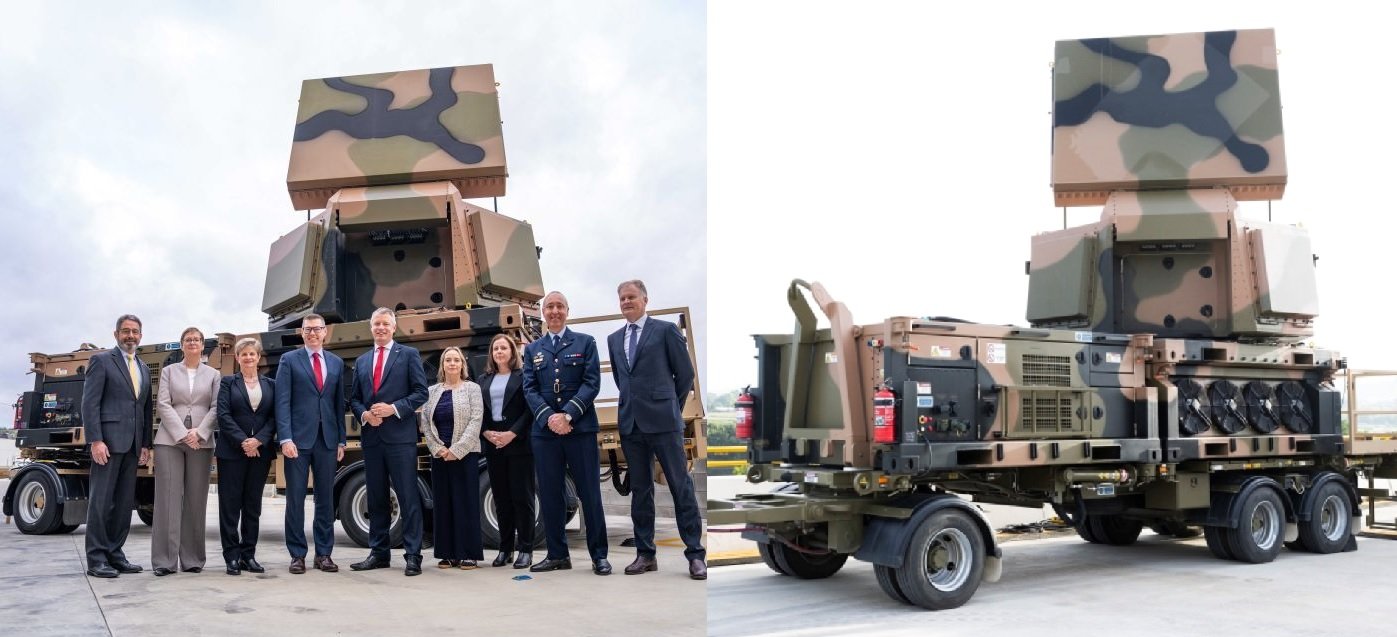
World
CANBERRA, Australia — The United Kingdom and Australia are strengthening defence-industry cooperation over the potential adoption of Australian Active Electronically Scanned Array (AESA) radar technology for UK frontline forces. A Statement of Intent involving the UK Ministry of Defence, the Australian Department of Defence, British defence company QinetiQ and Canberra-based CEA Technologies was signed at the CEA Technologies facility in Canberra. The signing was attended by UK Minister for Defence Readiness and Industry Luke Pollard and Australian Minister for Defence Industry Pat Conroy. The agreement builds on commitments made during the Australia-UK Ministerial Consultations (AUKMIN) in June. At those talks, the two governments announced a Government-to-Government Project Arrangement to advance cooperation on AESA radar capabilities supplied by CEA Technologies, including the possibility of jointly developing and producing CEA systems. QinetiQ to support UK integration and testing Under the new framework, QinetiQ will support the integration, testing and assurance of CEA radar technology across the UK defence enterprise. The company will provide technical expertise as the two countries assess potential opportunities for using the Australian radar technology in UK systems. The statement does not identify specific UK platforms or military branches that would receive the radar. “Today, we are deepening our industrial cooperation with Australia on cutting-edge radar technologies,” Luke Pollard said. He said combining QinetiQ’s expertise with CEA’s radar technology could strengthen the readiness of both countries while supporting their defence industries. QinetiQ Group Chief Executive Officer Steve Wadey said the company’s expertise positioned it as a strategic partner for the UK Ministry of Defence and its allies. He also pointed to the increasing importance of air-defence capabilities in current conflicts. CEA Technologies Chief Executive Officer Alan Clements said the agreement was an important milestone for the company and the Australian and UK defence industries. He said it reflected confidence in CEA’s radar technology and the role of industrial partnerships in strengthening sovereign capability. CEA radar technology CEA Technologies specialises in advanced radar systems, including AESA technology used by the Australian Defence Force. The company’s CEAFAR phased-array radar family is used on Royal Australian Navy Anzac-class frigates and has also been selected for the Hunter-class frigates. CEA radar technology has additionally been integrated with the Aegis combat system during Australian missile-defence testing. In July 2026, Australian Defence confirmed that CEA Technologies worked with Lockheed Martin on a first-of-type integration between a CEA radar and the Aegis Combat System. AESA radars electronically steer their radar beams rather than relying on mechanical movement of a conventional antenna. This architecture allows radar systems to perform functions such as tracking multiple objects and rapidly changing between different operating tasks. Cooperation linked to AUKUS The radar initiative is part of wider defence and industrial cooperation between Australia and the UK under their broader strategic partnership and AUKUS. At the June AUKMIN meeting, both governments said their cooperation on CEA’s AESA technology could create opportunities for further radar development, including potential co-development and co-production. The two countries had already identified Australian AESA radar technology as an area for closer cooperation earlier in 2026. During the Australia-UK Defence Industry Dialogue in February, ministers agreed to undertake targeted risk-reduction activities to help inform future decisions on the potential use of Australian AESA technology by the UK. The latest Statement of Intent provides a framework for continued cooperation while the two governments and companies examine future opportunities. No specific UK platform, acquisition quantity, delivery schedule or production arrangement has been confirmed under the agreement. Further decisions will depend on subsequent technical and defence-industry work between the participating organisations.
Read More → Posted on 2026-08-12 14:32:35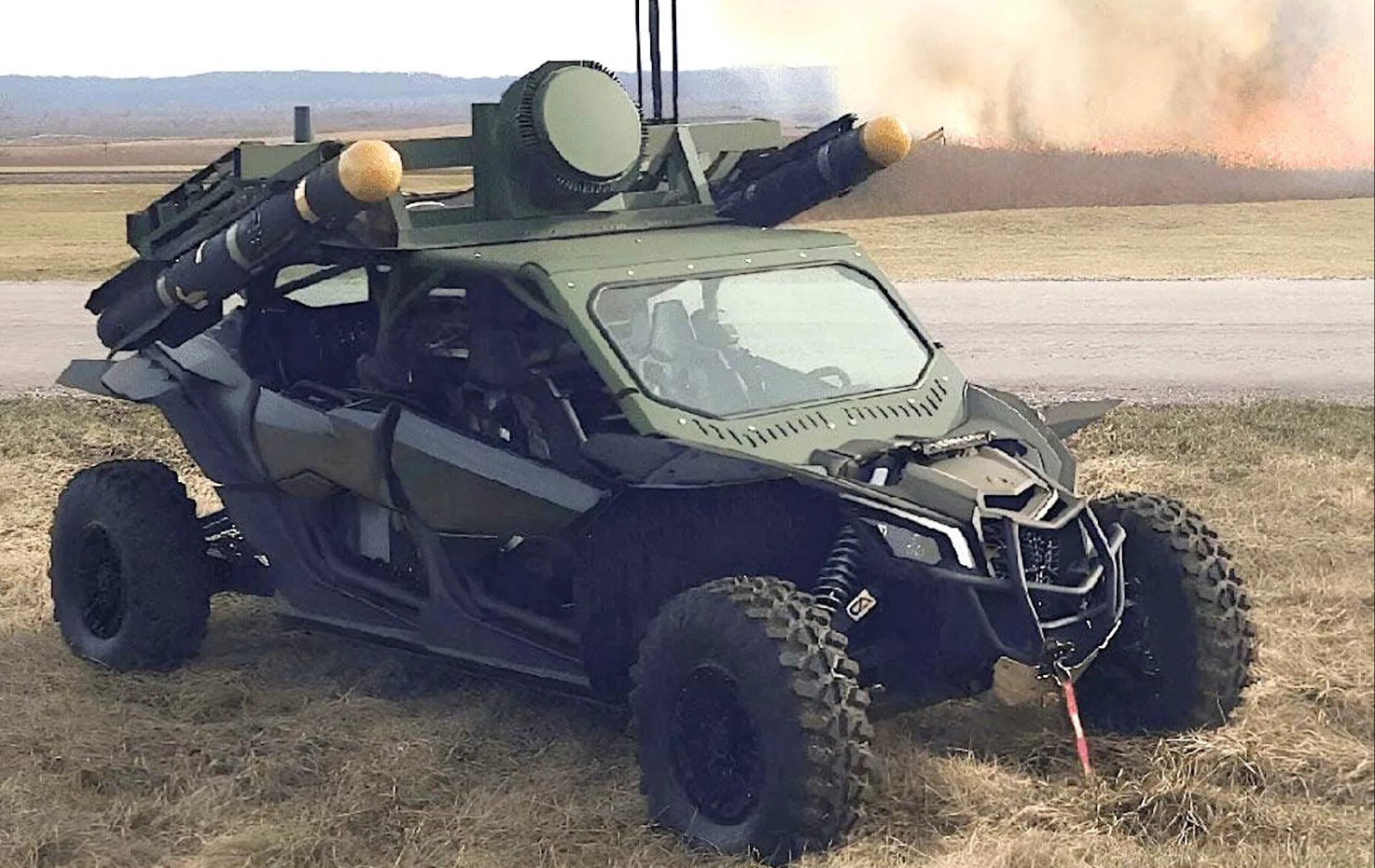
U.S
INDIANAPOLIS, Indiana — The U.S. Marine Corps has awarded Vertex Modernization and Sustainment LLC, a subsidiary of V2X, a $19.06 million contract for 10 Tempest mobile counter-unmanned aerial systems (C-UAS) vehicles. The $19,062,156 award covers the vehicles along with software management, spare parts, ancillary equipment, training and related services. According to the contract information provided, work will primarily be performed in Indianapolis, Indiana, with completion scheduled for August 10, 2027. The contract is identified as a hybrid firm-fixed-price, cost-plus-fixed-fee and cost indefinite-delivery/indefinite-quantity award. It was issued on a sole-source basis under 10 U.S. Code 3204(a)(1). No funds were obligated at the time of award, with funding to be provided through individual task orders. The contracting activity is the Portfolio Acquisition Executive Marine Corps, Program Manager Ground Based Air Defense, based in Quantico, Virginia. The contract number is M67854-26-D-0080. Tempest Mobile Counter-UAS Vehicle V2X first publicly introduced Tempest at the Association of the United States Army (AUSA) Annual Meeting in October 2025. The company describes it as a rugged, commercially based combat vehicle designed for rapid, limited-exposure missions. V2X says the platform uses dual weapon launchers and a counter-UAS capability intended to detect, engage and defeat Class 2 and Class 3 unmanned aircraft. The company also says the vehicle can withdraw after an engagement to reduce its exposure to enemy counterfire. Earlier demonstrations of Tempest showed the system on a commercially derived 4x4 vehicle. Configurations displayed publicly included dual launchers and counter-UAS sensors. However, the latest Marine Corps contract notice does not publicly specify the exact production configuration that will be delivered. The contract also does not confirm the precise missile or interceptor package, radar configuration, electro-optical sensors, engagement range or software architecture of the 10 Marine Corps vehicles. Marine Corps DASH Requirement The procurement is connected to the Marine Corps' Denied Area Sprinter-Hellfire (DASH) requirement for a highly mobile counter-small-UAS capability. Earlier Marine Corps contracting information identified a requirement for a system at Technology Readiness Level 9, meaning a mature system demonstrated in an operational environment. The earlier requirement also indicated an intention to procure up to 50 systems, although the current contract covers an initial 10 vehicles. V2X has separately confirmed that it received an award to provide counter-UAS capabilities through the Tempest platform. The company describes Tempest as a mobile system developed to detect, engage and defeat unmanned aircraft. Focus on Mobile Counter-Drone Operations Tempest is designed around mobility rather than a fixed defensive position. Its ability to relocate after an engagement is intended to support operations in environments where counter-UAS systems may themselves be exposed to enemy observation and fires. The Marine Corps requirement is aimed at providing a mobile capability that can support maneuvering forces. The system's combination of a compact vehicle, sensors and weapon launchers allows it to be positioned with units and moved as operational requirements change. The contract's inclusion of software management, training and related equipment indicates that the procurement covers more than the vehicles themselves. The total contract value therefore should not be treated as a simple calculation of $19.06 million divided by 10 vehicles. Part of a Broader Counter-UAS Approach Tempest will add another counter-UAS option to the Marine Corps' ground-based air-defense capabilities. It is not described in the available contract information as a replacement for the service's broader Marine Air Defense Integrated System (MADIS). V2X's own description places Tempest in the mobile counter-UAS role, with the system intended to engage Class 2 and Class 3 unmanned aircraft. The effectiveness of such a system also depends on the availability and integration of targeting information. The Marine Corps has not publicly released the complete software and network architecture for the vehicles under this contract, so it is not yet clear how the production Tempest vehicles will be integrated with existing Marine Corps command-and-control and air-defense networks. What Remains Undisclosed The public information currently available does not identify the specific Marine Corps unit that will receive the 10 vehicles. It also does not confirm the final chassis configuration, exact radar and sensor equipment, interceptor type, engagement parameters, reload arrangements or detailed software architecture for the Marine Corps production vehicles. The $19.06 million contract nevertheless establishes an initial procurement of 10 Tempest vehicles and moves the platform from its earlier public demonstrations into a defined Marine Corps acquisition program. V2X has described Tempest as a commercially based mobile combat vehicle intended to provide counter-UAS capability with dual launchers and rapid relocation after engagement. The Marine Corps contract will now support the delivery, training, software management and sustainment elements associated with the initial fleet.
Read More → Posted on 2026-08-12 14:22:54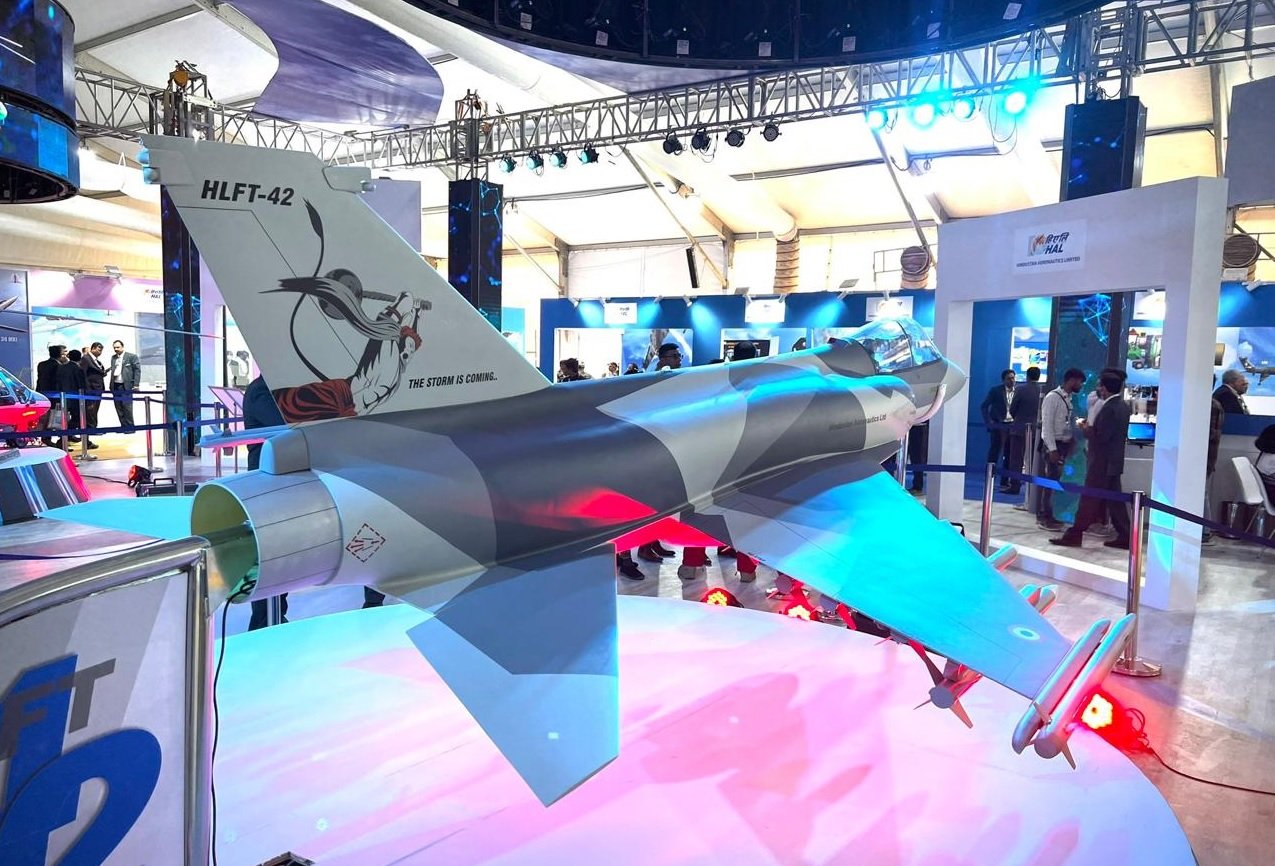
Indian Air Force Issues Request for Information for 150 Advanced Jet Trainers to Replace Hawk Mk-132
India
NEW DELHI — The Indian Air Force (IAF) has started the process to find a new advanced jet trainer to replace its Hawk Mk-132 fleet, issuing a Request for Information (RFI) for approximately 150 Stage-III (F) training aircraft. The new trainers will be used during the final stage of fighter pilot training, before pilots move to operational fighter squadrons. The requirement is aimed at providing trainees with experience on systems and capabilities relevant to modern combat aircraft, including airborne radars, electronic warfare systems and beyond-visual-range (BVR) missiles. The training will prepare pilots for aircraft such as the Dassault Rafale and indigenous Light Combat Aircraft (LCA) Tejas, and eventually the Advanced Medium Combat Aircraft (AMCA). Foreign and Indian Aircraft in the Competition The RFI has been issued to Indian and global aerospace manufacturers. Among the foreign aircraft expected to compete are Leonardo's M-346 Master and Korea Aerospace Industries' T-50 family. India's main domestic option is Hindustan Aeronautics Limited's (HAL) Hindustan Lead-in Fighter Trainer (HLFT-42). HAL first displayed a scale model of the aircraft in 2023. The proposed trainer has been designed with the aim of replicating advanced avionics and systems associated with modern fighter aircraft. The competition will allow the IAF to assess available aircraft and their technical capabilities, as well as areas such as indigenous content, technology transfer and delivery schedules. Procurement Timeline The current RFI is the market-sounding stage of the procurement process. Responses from the original equipment manufacturers are expected by October 5. The IAF is tentatively scheduled to issue the formal Request for Proposal (RFP) in December 2027. The RFP would begin the actual bidding stage of the programme. After the RFP stage, the aircraft competing for the requirement are expected to undergo trials in India on a no-cost, no-commitment basis. These trials will allow the IAF to evaluate the aircraft under its required operating and training conditions. According to defence sources, deliveries are expected to be completed within 60 months of the final contract signing. Based on the current procurement timeline, the first aircraft could therefore arrive at an IAF flying training base only in the mid-2030s. Replacing the Hawk Mk-132 The Hawk Mk-132 has been the backbone of the IAF's Stage-III fighter pilot training at Air Force Station Bidar. The aircraft entered Indian service in 2008, with the majority of India's fleet produced under licence by HAL. The Hawk has also been used by the Surya Kiran aerobatic team. The new procurement reflects the IAF's requirement for a more advanced training platform as pilots transition to increasingly capable fighter aircraft. The proposed fleet of around 150 trainers would provide the IAF with a new platform for the final stage of fighter pilot training while the service continues to introduce newer combat aircraft. The selection process will now determine which aircraft best meets the IAF's requirements for the next generation of advanced fighter pilot training.
Read More → Posted on 2026-08-12 14:08:47
World
NOVOROSSIYSK, Russia — Ukrainian forces carried out a large overnight attack on the Russian Black Sea port city of Novorossiysk, targeting the Russian naval base and port infrastructure with drones, missiles and unmanned naval systems. Ukrainian President Volodymyr Zelenskyy said the operation involved Palianytsia jet-powered drones, Neptune missiles and unmanned naval systems. He said the strikes hit designated targets, including air-defense positions, piers and seaport infrastructure. Zelenskyy described Novorossiysk as the Russian Black Sea Fleet's last major stronghold and said the port is located more than 300 kilometers from the front line. Ukraine has launched a major overnight strike on Russia’s Novorossiysk naval base, using Neptune missiles, Palianytsia jet-powered drones and unmanned naval systems. Ukrainian officials said the attack hit air-defense positions, piers and port infrastructure. pic.twitter.com/MUYoCa2unP — The Defense News (@TheDefenseNews) August 12, 2026 Naval Base Targeted Novorossiysk has become an important base for Russian Black Sea Fleet vessels after Russia moved some of its warships and submarines there following repeated Ukrainian attacks on naval assets in occupied Crimea. The August 12 operation therefore targeted both military and commercial infrastructure in one of Russia's most important Black Sea ports. The reported strikes came amid a broader increase in Ukrainian attacks against Russian ports, vessels and energy infrastructure in the Black Sea. Grain Terminals Damaged The attack also disrupted grain exports from Novorossiysk. Russia's Novorossiysk Grain Terminal suspended operations after sustaining damage during the overnight attack, according to an industry source cited by Reuters. Demetra Holding, which owns the terminal, confirmed that the facility had been damaged and said the extent of the damage was being assessed. The Novorossiysk Grain Terminal has an annual export capacity of 8.5 million metric tons, according to the information provided for the facility. Operations were also suspended at the Novorossiysk Grain Products Combine (NKHP), which has an annual capacity of 7.1 million metric tons. Reuters reported that the two major grain terminals were put out of operation following the attack. Damage was also reported to a conveyor trestle at the Novorossiysk Grain Terminal. The structure is used to move grain between storage and loading facilities. The available reporting has not established whether the damage was caused directly by a Ukrainian weapon or by Russian air-defense activity. Novorossiysk is an important outlet for Russian grain exports. Russia is the world's largest wheat exporter, and its Black Sea ports handle a major share of its seaborne agricultural shipments. Oil Infrastructure Also Affected Fires were reported around the Sheskharis oil terminal in Novorossiysk during the overnight attack. The terminal is a major Russian oil-export facility on the Black Sea and serves as an endpoint for oil pipelines operated by Transneft. Novorossiysk also handles oil transported through the Caspian Pipeline Consortium (CPC) system. Reuters reported that there was no indication that CPC infrastructure or tankers using the CPC terminal were hit in the overnight attack. Ukraine had reportedly agreed not to target CPC infrastructure and certain non-Russian vessels following a U.S. request, although Reuters said it could not independently verify all details of that reported arrangement. Civilian Damage and Casualties Krasnodar Krai Governor Veniamin Kondratyev described the overnight attack as massive and said several hundred drones were involved. Russian authorities reported damage to residential buildings and local businesses in Novorossiysk. The city's mayor said the attack damaged more than two dozen residential buildings, four enterprises and some educational facilities. Water supplies in the city were also suspended, and an emergency situation was declared. Kondratyev reported that at least two people were killed, including an eight-year-old child, while several others were injured in the wider area. Emergency services were deployed to damaged locations to clear debris and respond to the effects of the attack. Russia Reports Large-Scale Drone Attack Russia's Defense Ministry said its air defenses intercepted more than 500 Ukrainian drones overnight across several Russian regions. That figure has not been independently verified. The attack on Novorossiysk comes after weeks of increasing Ukrainian operations against Russian maritime and energy infrastructure. Earlier in July, Russia introduced restrictions on nighttime vessel movements at Novorossiysk because of drone attacks, while grain terminals in the region also faced growing security and logistical problems. The latest strike has added further disruption to a port that serves simultaneously as a major commercial shipping center, grain-export hub, oil-export facility and Russian naval base.
Read More → Posted on 2026-08-12 14:02:12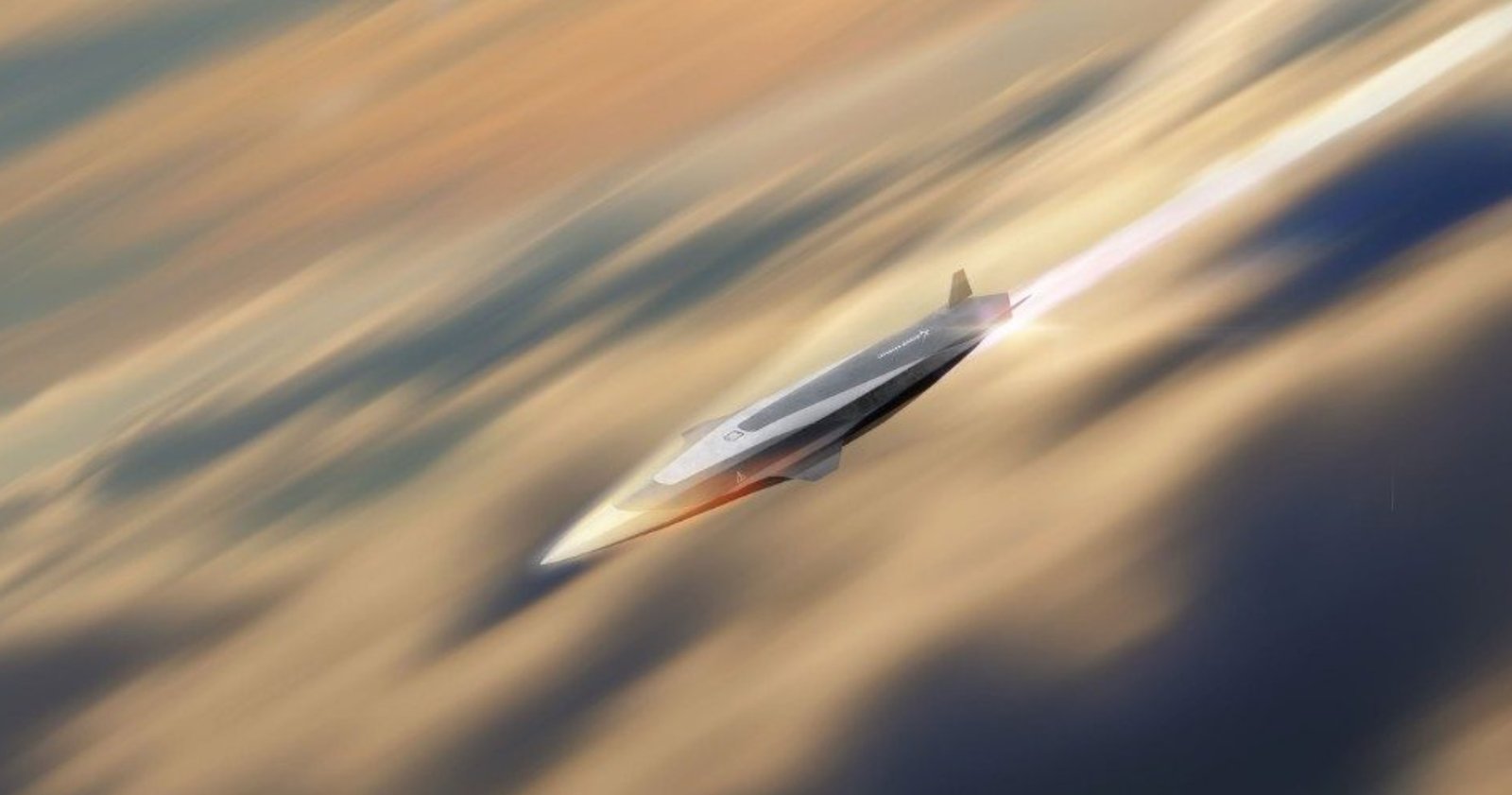
U.S
BETHESDA, Md. — Lockheed Martin and Albany Engineered Composites (AEC), a segment of Albany International Corp., have signed a teaming agreement aimed at increasing the production of hypersonic weapons for the U.S. Department of War. The agreement focuses on addressing the manufacturing challenges involved in moving hypersonic systems from prototype and test quantities to higher-volume production. The companies plan to jointly pursue future full-rate production contracts as hypersonic weapon designs move toward larger-scale manufacturing. Hypersonic systems are designed to travel at speeds above Mach 5, or about 3,836 miles per hour (6,174 km/h). Their ability to operate at these speeds while maneuvering creates challenges for traditional missile-defense systems. Focus on Advanced Composite Manufacturing Lockheed Martin will contribute its experience in systems integration and engineering, while AEC will provide its expertise in advanced composite manufacturing. AEC, based in Rochester, New Hampshire, specializes in lightweight, high-strength composite structures made from layered fibers. Its capabilities include 3D-woven composite aeroshells and thermal protection systems used for applications exposed to high temperatures and structural stresses. The companies said the partnership is intended to address the manufacturing requirements that arise after a hypersonic system has completed its design and testing phases. Johnathon Caldwell, Lockheed Martin’s vice president and general manager of Strategic and Missile Defense Systems, said the agreement combines Lockheed Martin’s systems integration and engineering experience with Albany’s composite production capabilities. Chris Stone, president of Albany Engineered Composites, said large-scale manufacturing of advanced composite structures is an important part of developing hypersonic systems. He said the partnership combines Lockheed Martin’s architecture with Albany’s composite technologies and manufacturing capabilities. The financial terms of the teaming agreement were not disclosed. The agreement has a flexible structure with defined roles and cost responsibilities. According to the companies, this approach is intended to allow the partnership to adapt to changing program requirements and government priorities. Push for Higher Production Rates The agreement supports the Department of War’s broader Arsenal of Freedom initiative, which seeks to increase the speed and volume of weapons production and reduce the time between successful testing and availability of operational systems. Lockheed Martin has also disclosed a multimillion-dollar investment in its Modular Prompt Distributed Strike system. The approach uses flight-tested hypersonic technologies and a modular architecture intended to reduce the engineering work required to integrate different payloads with existing hypersonic airframes. The company said increased automation in assembly, integration and testing can reduce labor requirements and help shorten delivery timelines. The investment supports the Department of War’s Scaled Hypersonics Critical Technology Area. Lockheed Martin is also continuing its work on the Conventional Prompt Strike (CPS) program. During the company’s second-quarter 2026 earnings call, Chief Executive Officer Jim Taiclet reported technical and contractual progress following successful flight tests. The program has also received contract modifications valued at about $1.4 billion to support accelerated development. Additional contract actions in 2026 have supported production of All-Up Rounds for Army requirements within the same program family. AEC Role in Future Production The companies have not identified the specific hypersonic programs that will receive production work under the new agreement once contracts are competed and awarded. Aviation Week has reported that Albany will supply a 3D-woven composite aeroshell for Lockheed Martin’s Next Generation Glide Body. The partnership comes as the United States continues efforts to expand its hypersonic weapons production capacity. The manufacturing challenge is not limited to developing the weapon itself; production of specialized structures and other components must also increase if larger inventories are required. Chinese state media reported in early August 2026 that the DF-17 hypersonic missile had reached full combat capability and entered mass deployment. The reports included footage showing multiple launch vehicles in formation. The Lockheed Martin-AEC agreement is intended to prepare the companies for higher-volume production opportunities as hypersonic programs progress from development and testing toward full-rate manufacturing.
Read More → Posted on 2026-08-12 13:34:59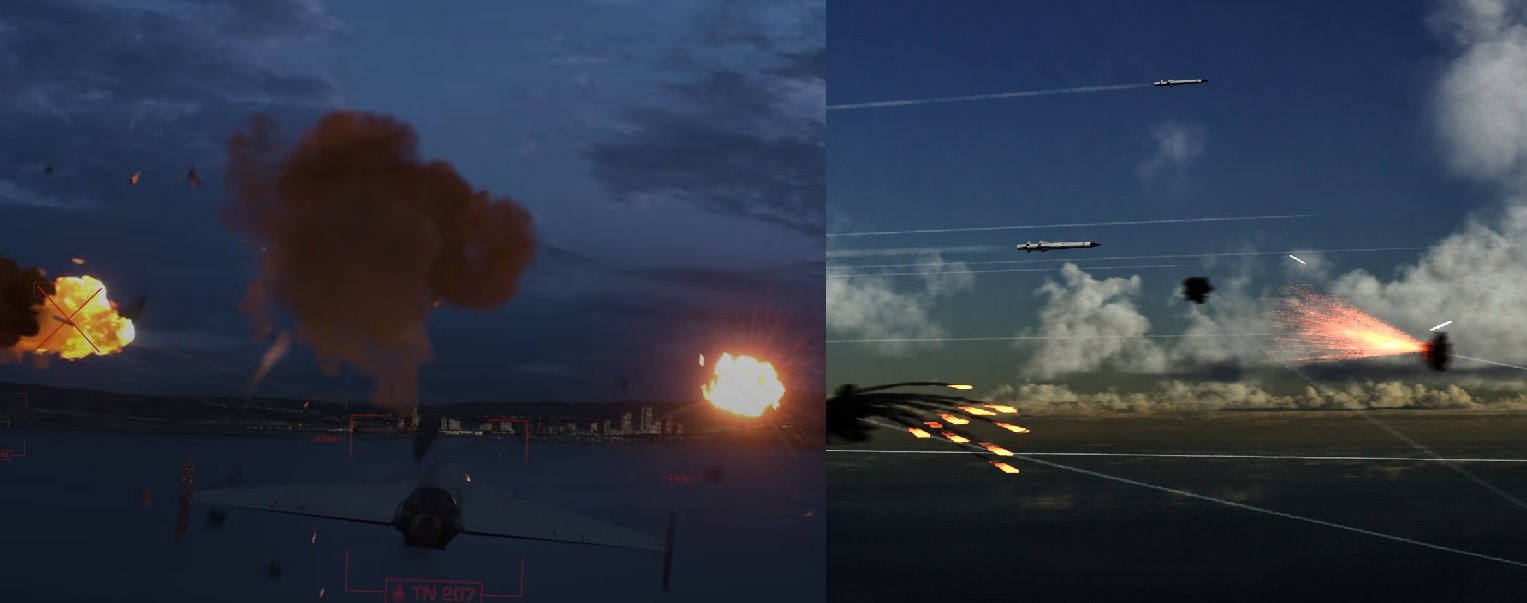
U.S
FALLS CHURCH, Va. — Northrop Grumman has unveiled Raid Hunter™, the official name of its new 50mm Gun-Based Air Defense (GBAD) system designed to provide short-range, layered protection against cruise missiles, unmanned aerial systems (UAS), drone swarms and other aerial threats. The company said Raid Hunter is intended to address a gap in short-range air defense by providing high-capacity firepower against large and mixed aerial raids. The system is designed to protect military bases, airfields and other critical infrastructure. We’re introducing Raid Hunter™, our newly named 50mm gun-based air defense system designed to defeat mass, mixed aerial raids with cost-effective interceptors and deep magazine effectors which can be delivered to the warfighter at scale. Learn more: https://t.co/gnOzpo0RA3 pic.twitter.com/oTqORTG9Q4 — Northrop Grumman (@NGCNews) August 11, 2026 50mm gun and guided ammunition Raid Hunter combines Chain Gun® technology, precision-guided 50mm ammunition and a networked, interoperable system controller. According to Northrop Grumman, the combination provides a high rate of fire, deep magazines and fast reloads for engagements involving high volumes of aerial threats. The system is designed to counter a range of threats, including high-priority cruise missiles, UAS and other advanced aerial threats. Its guided 50mm ammunition is intended to support cost-considerate engagements against massed threats. Kenn Todorov, vice president and general manager of command and control and weapons integration at Northrop Grumman, said Raid Hunter addresses a critical short-range defense gap by providing rapid, high-capacity protection against complex aerial threats such as cruise missiles and drone swarms. He said air defenders need systems capable of dealing with large and complex raids designed to overwhelm traditional defense systems. According to Todorov, Raid Hunter provides a cost-effective and deep-magazine solution that can be rapidly delivered to the warfighter at scale. Modular design and deployment Northrop Grumman said Raid Hunter uses a modular, palletized design that enables rapid transportation on C-130 aircraft. The company also plans future vehicle-mounted and container-based configurations, which are intended to expand the system's deployment options. The modular design is intended to support different operational requirements while allowing the system to be integrated into layered air-defense architectures. Part of Raid Defense Solutions Raid Hunter is part of Northrop Grumman's Raid Defense Solutions portfolio, which focuses on layered kinetic capabilities for protection against increasingly complex and high-volume aerial threats, including coordinated drone swarms. The portfolio combines fielded programs with AI-enabled command and control, sensor fusion and high-rate firepower. Northrop Grumman said these capabilities are intended to support faster detection, decision-making and coordinated engagements across different operational scenarios. Testing planned Northrop Grumman said it is continuing to work with government and allied partners to mature Raid Hunter's capabilities. Planned testing throughout the year will be used to further validate system performance and support accelerated fielding. The company has not disclosed specific customers, contract values or production quantities for Raid Hunter in the information provided. Raid Hunter represents Northrop Grumman's latest effort to expand its counter-UAS and air-defense capabilities with a 50mm gun-based system designed specifically for high-volume aerial threats.
Read More → Posted on 2026-08-12 13:19:36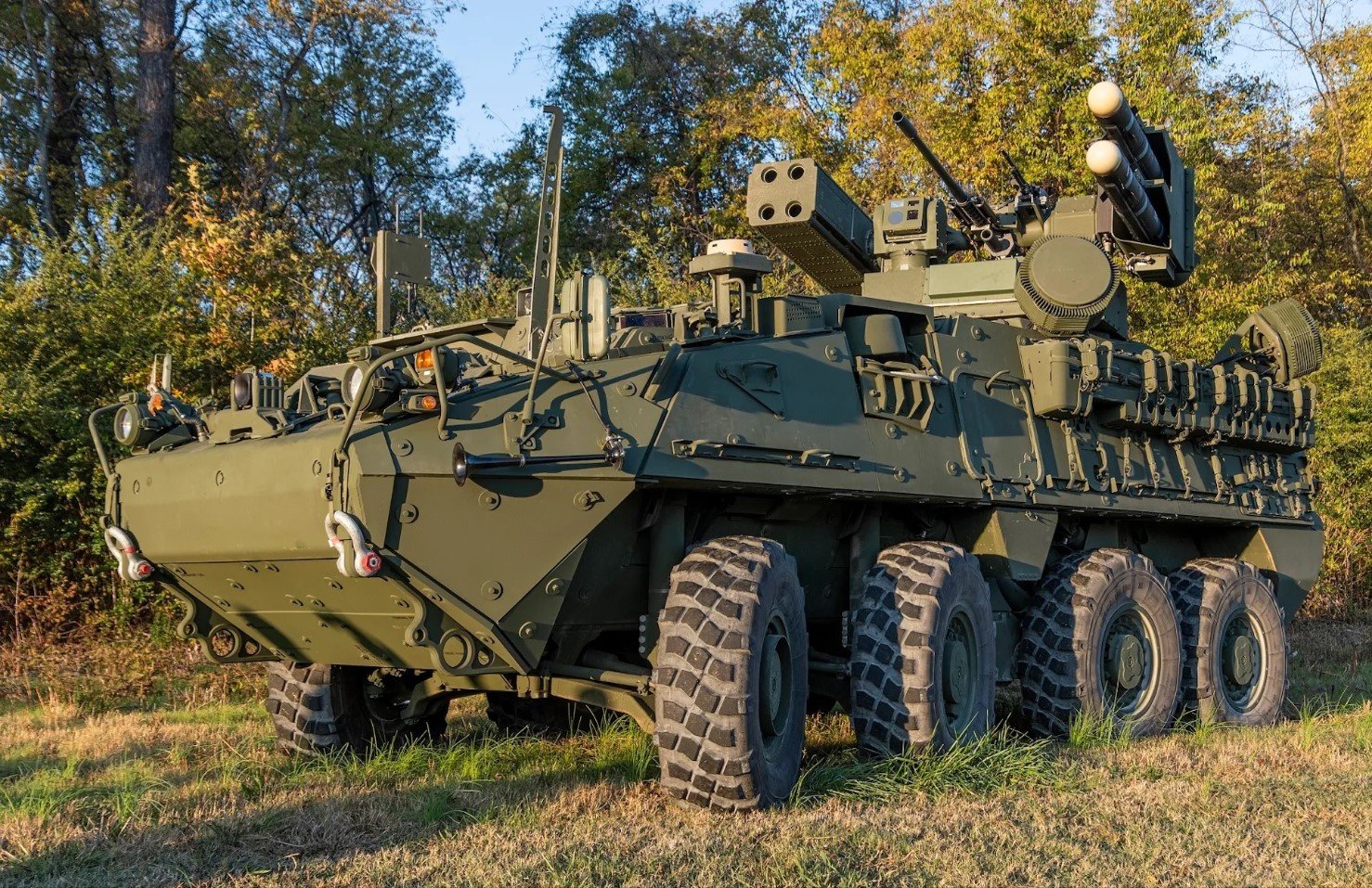
U.S
ARLINGTON, Va. — Leonardo DRS announced that its SGT STOUT Maneuver Short-Range Air Defense (M-SHORAD) Mission Equipment Package successfully defeated Group 1 and Group 2 small unmanned aircraft systems (sUAS) during a recent U.S. government test event. According to Leonardo DRS, the expanded capability was achieved through software updates to the system’s detection and fire-control functions. The company said the test did not require the addition of new physical hardware to the Mission Equipment Package. The SGT STOUT is the U.S. Army’s M-SHORAD system based on a Stryker vehicle. The Army renamed the system in June 2024 after Sgt. Mitchell W. Stout, a Medal of Honor recipient who served with the 1st Battalion, 44th Air Defense Artillery Regiment during the Vietnam War. Expanded Counter-Drone Capability SGT STOUT was developed to provide mobile air defense for maneuver formations. Leonardo DRS says the system can detect, identify and track air threats using onboard sensors and engage them with multiple kinetic effectors. The company’s current description also identifies Group 1 and Group 2 UAS as smaller air threats that the system can defeat at closer ranges using direct fire when required. The recent government test demonstrates an expansion from the system’s original focus on larger Group 3 unmanned aircraft systems, as well as rotary-wing and fixed-wing aircraft. Leonardo DRS said the new capability allows the existing Mission Equipment Package to address smaller drone threats without replacing its hardware. The company attributed the software-based upgrade path to SGT STOUT’s modular and open-architecture design. “SGT STOUT was engineered from the start for modernization, so capability can evolve as the threat evolves,” said Aaron Hankins, senior vice president and general manager of the Leonardo DRS Land Systems business unit. “This event highlights an upgrade path that emphasizes speed, safety, cybersecurity-by-design, and operational interoperability.” Designed for Maneuver Forces SGT STOUT is designed for formation-based air defense, rather than primarily serving as a stationary point-defense system. Its mission equipment combines sensing, cueing and engagement functions to support maneuvering forces. Leonardo DRS previously described the system as providing the mobility, survivability and lethality needed to move with Brigade Combat Teams while detecting, tracking and defeating low-altitude aerial threats. The system also integrates with existing Army networks and is interoperable with Sentinel radar. The U.S. Army has also been developing tactics for using SGT STOUT against Group 1 and Group 2 UAS. An Army Air Defense Artillery Journal article published in June 2026 identified counter-small-UAS training and updated tactics as important areas for SGT STOUT units. Existing System and Future Upgrades The Mission Equipment Package uses modular and platform-portable interfaces, allowing additional technologies to be integrated without redesigning the complete platform. Leonardo DRS has identified potential future additions including passive detection options, artificial intelligence-enabled decision aids, edge computing and new effectors. The company said several proven technologies could be incorporated into SGT STOUT systems already operating in the field. These upgrades are intended to further improve the system’s ability to detect, track and defeat Group 1 and Group 2 drone threats. The Army’s 2027 budget documents also show ongoing investment in SGT STOUT modernization, including software upgrades for its Multi-Mission Hemispheric Radars and other product-improvement work. The system is mounted on a Stryker platform and uses a combination of sensors, guns and missiles. Leonardo DRS lists the XM914 30 mm cannon and M240 7.62 mm machine gun among its onboard weapons, while the Army has also demonstrated Stinger missile launches from SGT STOUT during training in 2026. Lessons From Counter-UAS Programs Leonardo DRS said it is also using experience from its role as prime contractor on the Mobile Low, Slow UAS Integrated Defeat System (M-LIDS) program. The company said lessons from SGT STOUT and other counter-UAS work are supporting the continued development of modular, software-driven air-defense capabilities. The latest test therefore demonstrates that changes to the SGT STOUT capability do not necessarily require a new vehicle or a new hardware configuration. In this case, Leonardo DRS said the ability to defeat Group 1 and Group 2 small drones was demonstrated through updates to the existing detection and fire-control software.
Read More → Posted on 2026-08-12 13:10:34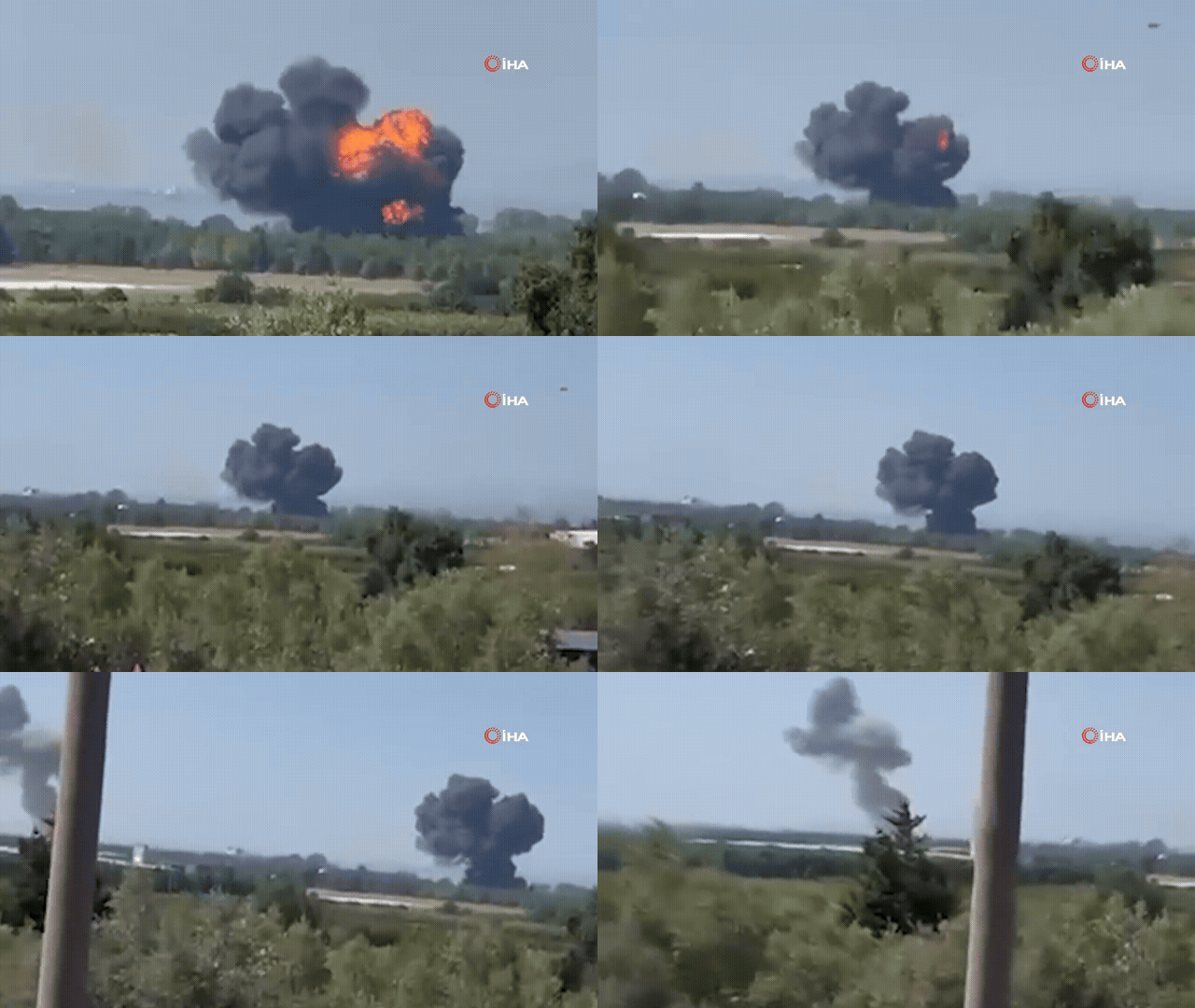
World
YALOVA, Türkiye, August 12, 2026 — A Turkish Air Force F-16 fighter jet crashed on Wednesday during a training flight in the northwestern province of Yalova, the Turkish Defense Ministry said. The aircraft was involved in the incident at Yalova Airfield Command. The pilot successfully ejected before the crash and survived. “One of our Air Force’s F-16 aircraft crashed in Yalova during a training flight; the pilot ejected and survived,” the Defense Ministry said. The ministry added that the cause of the crash will be determined through a detailed investigation. Yalova Governor Ahmet Hamdi Usta also confirmed the accident and said he was heading to the scene. Local media footage showed black smoke rising from a field near the crash site. Military authorities secured the area, while an investigation was launched to determine the cause of the accident. Officials have not provided further details about the pilot’s condition or any damage or injuries on the ground.
Read More → Posted on 2026-08-12 12:55:37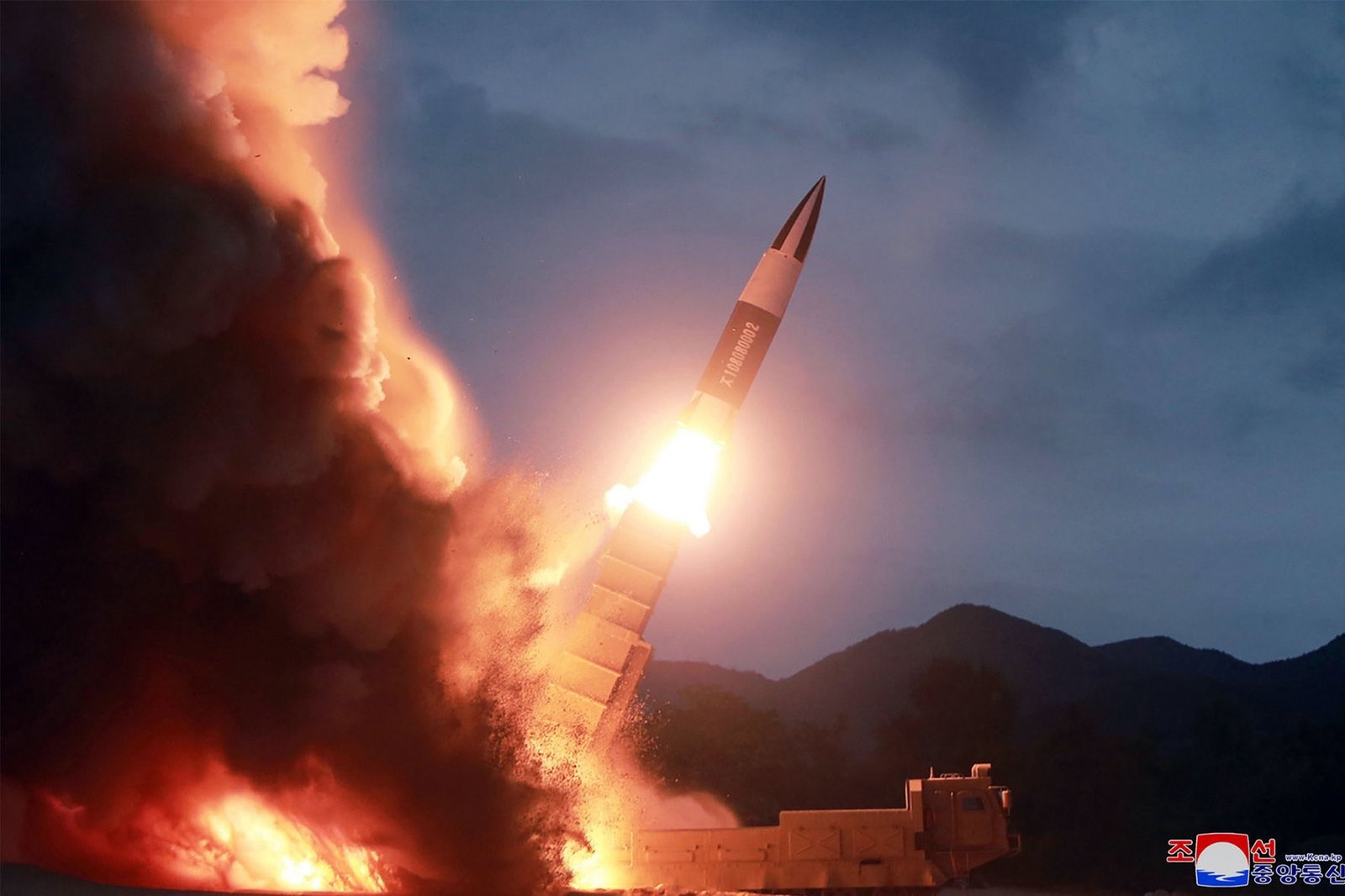
World
SEOUL — North Korea launched a ballistic missile from the Wonsan area toward the East Sea, also known as the Sea of Japan, early Wednesday, according to South Korea and Japan. The launch came less than a week before the start of the annual Ulchi Freedom Shield military exercises between South Korea and the United States. South Korea’s Joint Chiefs of Staff said the missile was launched at around 6 a.m. local time from the Wonsan area on North Korea’s eastern coast. South Korean authorities said it traveled more than 700 kilometers, while Japan’s Defense Ministry estimated the distance at about 690 kilometers and the maximum altitude at around 90 kilometers. Japanese authorities said the missile landed outside Japan’s exclusive economic zone, and there were no reports of damage to aircraft or ships. Missile Type Still Under Analysis South Korea’s Joint Chiefs of Staff has not yet identified the exact type of missile. Officials said a detailed analysis is being carried out by South Korean and U.S. authorities. The reported flight distance falls within the range generally associated with short-range ballistic missiles, but Seoul has not officially classified Wednesday’s weapon as an SRBM. Analysts have therefore left open several possibilities regarding the missile’s identity. Hong Min, a senior researcher at the Korea Institute for National Unification in Seoul, said the missile’s range, trajectory and launch location could indicate a hypersonic-type weapon, while a submarine-launched missile was also considered a possibility. These remain assessments rather than an official identification of the weapon. Second Launch From Wonsan in Less Than a Week Wednesday’s launch was the second ballistic missile firing from the Wonsan area in less than a week. South Korean authorities said North Korea launched another ballistic missile from the same area on August 6. That missile reportedly traveled about 300 kilometers. North Korean state media did not report the August 6 launch. Hong Min said the earlier test may not have achieved its intended objective, although North Korea has not publicly confirmed the reason for not reporting it. South Korean assessments indicate that Wednesday’s launch was North Korea’s 11th suspected ballistic missile test of 2026. The country’s missile testing this year has included short-range ballistic missiles, artillery rockets and other tactical weapons. Launch Comes Before Ulchi Freedom Shield The missile launch took place five days before the scheduled start of the Ulchi Freedom Shield exercise. The annual South Korean-U.S. military drills are scheduled for August 17 to August 27 and are intended to improve the allies’ ability to respond to North Korea’s nuclear and weapons capabilities. North Korea has repeatedly criticised U.S.-South Korean military exercises, describing them as preparations for an invasion. Hong Min said Wednesday’s missile test could be part of North Korea’s existing weapons development program, while the timing may also have been selected to send a political message ahead of the exercises. “Even if it was a test of a weapon under development, choosing when to conduct it requires a political decision,” Hong said. South Korea, Japan and U.S. Respond South Korea’s Office of National Security held an emergency meeting following the launch and called on North Korea to stop actions that violate United Nations Security Council resolutions. The South Korean military said it was maintaining readiness under its combined defence posture with the United States and was prepared to respond to further provocations. The U.S. Indo-Pacific Command said it was consulting with allies and partners. Its initial assessment was that the launch did not pose an immediate threat to U.S. personnel or territory, or to U.S. allies. Japan also condemned the launch. Defense Minister Shinjiro Koizumi said Tokyo had lodged a strong protest with North Korea through diplomatic channels at the Japanese Embassy in Beijing. He said the launch threatened peace and security in Japan, the region and the wider international community. North Korea Criticizes South Korea and Japan North Korea did not immediately issue a statement specifically addressing the Wonsan missile launch. However, its officials and state media issued separate criticism of South Korea and Japan on Wednesday. A North Korean Foreign Ministry official responsible for South Korean affairs criticised Seoul’s plans related to nuclear-powered submarines, describing them as a serious security challenge for North Korea. The official said Pyongyang needed retaliatory capabilities against military moves by its opponents. In separate commentary, North Korea’s state news agency KCNA accused Japan of seeking nuclear weapons under the cover of peaceful nuclear energy. The commentary referred to Japan’s nuclear power program and domestic political debate over nuclear armament. The latest missile launch adds to tensions on the Korean Peninsula ahead of the U.S.-South Korean military exercises. South Korean, Japanese and U.S. authorities are continuing to assess the missile’s exact type and technical characteristics.
Read More → Posted on 2026-08-12 12:50:09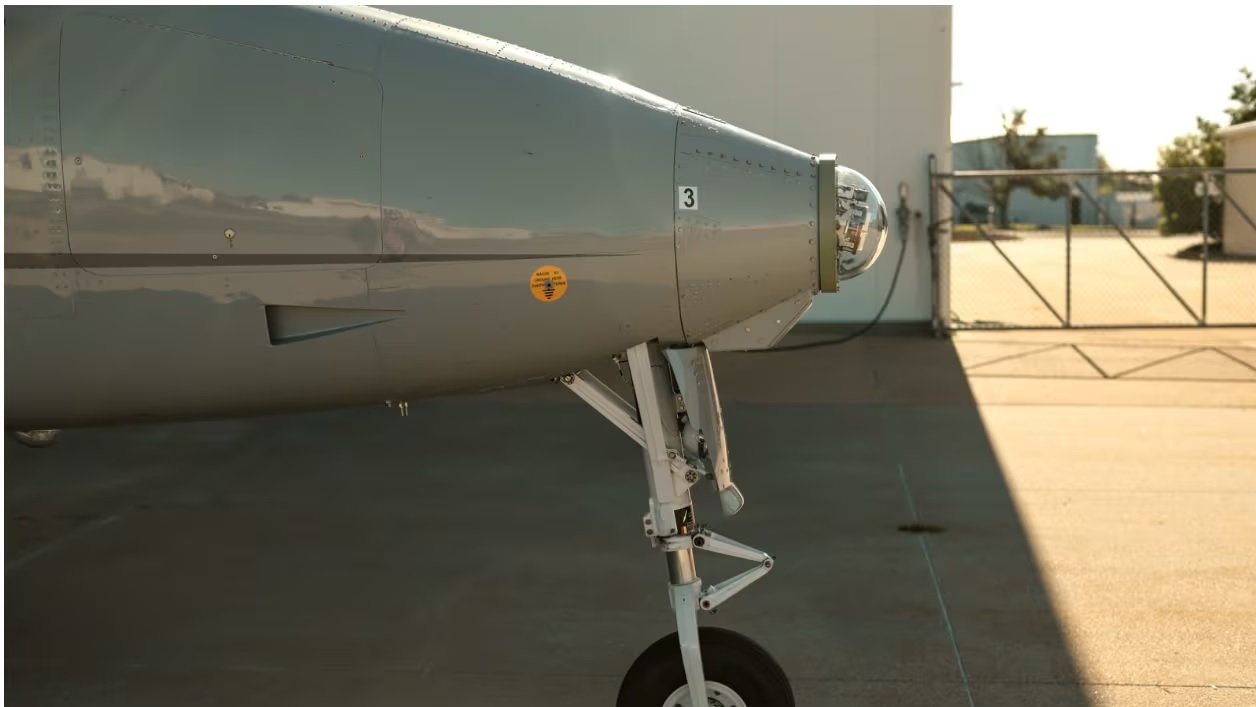
U.S
Huntsville, Alabama — Boeing has completed a series of tests of its newly developed Ultra Low-Cost Seeker (ULCS), an active radar seeker designed to provide lower-cost precision guidance for a range of offensive and defensive weapon systems. The company announced the testing progress this week as the Space and Missile Defense Symposium opened in Huntsville, Alabama. Boeing is evaluating the ULCS for possible integration into its direct-attack, cruise missile, and integrated air and missile defense portfolios. Testing Across Multiple Environments The latest test campaign concluded earlier this summer and examined the seeker's detection and tracking performance as well as its ability to withstand the physical stresses associated with flight. Testing included an anechoic chamber, captive-carry flights and a surrogate rocket launch. During captive-carry testing, the ULCS was mounted on the nose of a Beechcraft 1900 aircraft. The aircraft operated over both land and maritime environments to evaluate the sensor's ability to detect and track targets. At Spaceport America in New Mexico, Boeing also tested the seeker from a fixed ground position. The ULCS successfully tracked a passing unmanned aerial vehicle (UAV). Boeing then mounted the seeker on a surrogate rocket. During the flight, the sensor tracked a secondary drone equipped with a radar reflector to represent a larger target. According to Boeing, the seeker detected and tracked its targets in each test and survived the acceleration and vibration associated with the rocket launch. Commercial Components and Open Architecture The ULCS is an active radar seeker built primarily from commercial off-the-shelf components that Boeing has adapted for military applications. Boeing is using a modular, open-systems architecture for the seeker. The company says this approach is intended to support high-volume production and allow a common sensor architecture to be used across several weapons programs. The effort also draws on Boeing's experience producing the active radar seeker used by the Patriot Advanced Capability-3 Missile Segment Enhancement (PAC-3 MSE). Boeing currently produces PAC-3 seekers in Huntsville, Alabama, as a subcontractor to Lockheed Martin. Unlike the more sophisticated PAC-3 seeker, the ULCS is being developed for lower-complexity threats where a lower-cost seeker could support larger production quantities. Potential Applications Boeing is evaluating the ULCS for use across several weapon categories, including direct-attack weapons, cruise missiles and integrated air and missile defense systems. The company describes the seeker as being intended to support weapons capable of operating in all weather conditions and engaging moving targets. Bob Ciesla, vice president of Boeing Precision Engagement Systems, said the company wants to use a common sensor architecture across several programs. “We are developing ULCS with the goal of sharing a common sensor architecture across several of our programs. It is modular, producible and built with Weapons Open Systems Architecture to speed integration and future changes,” Ciesla said. Boeing's broader air and missile defense portfolio already includes PAC-3 seeker production and other missile-defense systems. The company says its PAC-3 seekers provide active guidance data for target acquisition, aim-point selection and terminal guidance. Further Flight Testing Planned Boeing engineers are now analyzing data collected during the latest test campaign to refine the ULCS design. The company plans to conduct additional advanced flight tests in 2027 using configurations that more closely represent the seeker's intended end-use applications. Steve Wright, Boeing's senior manager for weapon sensors and advanced guidance, said further development work remains but described the recent testing as evidence that the ULCS concept is viable. “We still have more work to do but the rapid testing our teams have completed prove that this capability is real and will fundamentally change how we look at seeker affordability across our programs,” Wright said. Boeing has not provided a specific unit cost for the ULCS. The company is instead focusing on its use of commercial components, modular design and open-systems architecture as the basis for developing a seeker that can be produced in larger quantities and integrated into multiple weapons programs.
Read More → Posted on 2026-08-12 12:28:39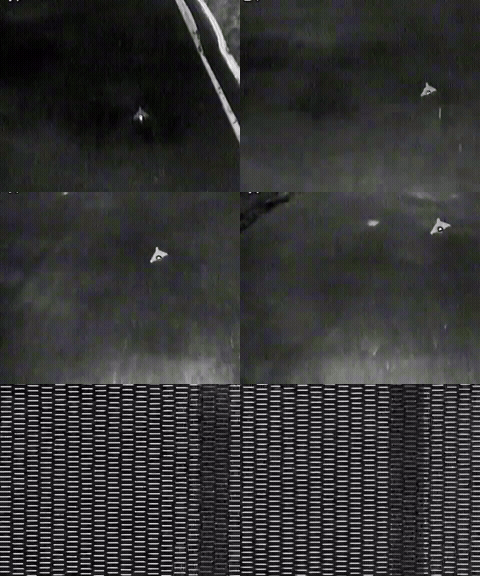
World
KYIV, Ukraine — Russian forces may be attempting to equip some Shahed-type long-range attack drones with two different electronic warfare (EW) systems, one intended to suppress Ukrainian interceptor drones and another designed to interfere with ground-based radar systems, according to Ukrainian radio technology expert and Defense Ministry adviser Serhiy “Flash” Beskrestnov. Beskrestnov reported in May 2026 that there were reasonable suspicions that certain Shahed drones had been fitted with EW equipment for these two purposes. The report did not establish that all Shahed drones carry such systems. EW Systems Intended to Counter Interceptor Drones One of the suspected EW systems is intended to interfere with Ukrainian interceptor drones used to attack Shahed-type UAVs. According to Beskrestnov, the system can target the video transmission between an interceptor drone and its operator on the ground. By transmitting interference on the relevant frequencies, the onboard jammer can make it difficult or impossible for the operator to receive the interceptor's live video feed. The loss of the video connection is particularly relevant for FPV-style interceptor drones that depend on an operator to control the final approach toward a target. Beskrestnov has also explained that the frequencies used by Ukrainian interceptor drones can be identified because information about some of the equipment and communication systems is publicly available. Possible Radar-Jamming System The second suspected EW system would have a different role: creating interference for ground-based radar systems. Beskrestnov described the presence of such equipment as a reasonable suspicion rather than a confirmed feature of every Shahed. The available reporting therefore does not establish how many drones may carry radar-jamming equipment or how effective such a system is against Ukrainian radar networks. Evidence of EW Modifications The reports are part of a broader series of modifications observed on Russian Shahed/Geran-type drones. Ukrainian officials have previously confirmed that some modified Shahed-type drones have been equipped with electronic warfare systems intended to suppress Ukrainian interceptor drones. In May 2026, Ukrainian Deputy Defense Minister Oleksii Vyskub said that such modified drones had been observed during Russian attacks. Other modifications reported on Shahed-type drones include additional antennas and cameras. Ukrainian analysts have also reported rear-facing cameras on some drones, although the exact operational purpose of individual modifications can vary. Russia has also been changing the types and tactics of Shahed-family drones used in attacks. Serhiy Beskrestnov said in July that Russia was increasingly using jet-powered Shahed variants for attacks deeper inside Ukraine after Ukrainian forces improved their ability to intercept conventional propeller-driven versions. Continuing Drone and EW Competition The reported EW modifications reflect the continuing adaptation of Russian long-range attack drones in response to Ukraine's use of interceptor drones. Ukrainian forces have increasingly used relatively low-cost interceptor UAVs against Shahed-type attack drones. Russia has responded with modifications intended to make its drones more difficult to intercept, including electronic warfare equipment and other changes to their configuration. However, the exact number of Shahed drones equipped with the suspected two types of EW systems, their technical specifications and their overall effectiveness remain unclear. For now, the key assessment from Beskrestnov is that some Russian Shahed-type drones may be carrying one EW system intended to suppress Ukrainian interceptor drones and another intended to create interference for ground-based radar systems. This remains a reported assessment rather than confirmation that the capability is present across the entire Shahed fleet.
Read More → Posted on 2026-08-12 12:07:34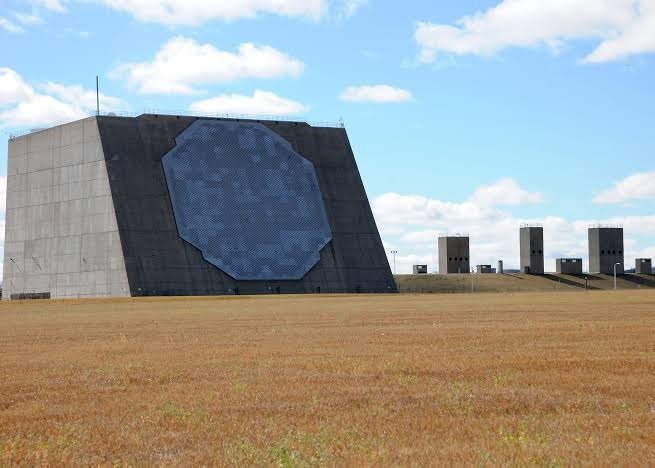
U.S
BOULDER, Colo. — SciTec, a wholly owned subsidiary of Firefly Aerospace (Nasdaq: FLY), has been awarded a $93,704,410 firm-fixed-price Other Transaction Agreement (OTA) by the U.S. Space Force for the Ground-Based Radar Digitization (GBRD) program. The contract will support the development of a common architecture and design for modernizing U.S. ground-based radar systems. Space Systems Command, headquartered in Colorado Springs, Colorado, is the contracting activity. The work is expected to continue through April 21, 2028, with activities to be performed in Arlington, Texas; Princeton, New Jersey; and Woburn, Massachusetts. Three Companies Selected for Radar Digitization SciTec is one of three companies selected by the Space Force for the GBRD effort. The contracts have a combined value of approximately $423.4 million. Company Contract value Raytheon Corp. $309,472,660 SciTec Innovations LLC $93,704,410 WildStar LLC $20,226,551 Total $423,403,621 The contracts were awarded through a competitive acquisition process that received eight offers. The U.S. government also obligated $107.436 million in fiscal 2025 research, development, test and evaluation funds at the time of the awards. Modernizing Six Legacy Radar Systems The GBRD program covers the digitization of six legacy radar systems, consisting of five Upgraded Early Warning Radar (UEWR) sites and one Perimeter Acquisition Radar Attack Characterization System (PARCS) site. The modernization effort is intended to create a common architecture and design for the upgraded ground-based radars. According to the program description, the work is aimed at improving battlespace situational awareness through increased radar tracking capacity, range and object classification while also addressing system obsolescence and sustainment challenges. The program's focus on digitization is intended to address aging radar infrastructure and establish a more common approach to upgrading the systems. The Space Force has not publicly provided all technical details of the planned architecture. SciTec's Role Under its $93.7 million agreement, SciTec will contribute to the GBRD modernization effort alongside Raytheon and WildStar. SciTec has more than four decades of experience supporting national security missions. Its work includes defense software, data processing and capabilities supporting areas such as missile warning and defense, intelligence, surveillance and reconnaissance, space domain awareness, remote sensing and autonomous command and control. David Simenc, president of SciTec, said: “SciTec is honored to support the Space Force. This effort strengthens national defense, modernizing vital radar infrastructure and ensuring the United States maintains an operational advantage in an increasingly contested environment while minimizing total lifecycle costs to taxpayers and warfighters.” Firefly Completed SciTec Acquisition in 2025 The radar contract also comes after Firefly Aerospace completed its acquisition of SciTec in late 2025. Firefly announced the completion of the transaction on November 5, 2025, after announcing the planned acquisition the previous month. Firefly agreed to acquire SciTec for approximately $855 million, with the transaction involving cash and Firefly shares. The acquisition brought SciTec's national-security software and data-processing capabilities into Firefly's broader space and defense business. SciTec has continued operating as part of Firefly following the acquisition. Firefly Aerospace has capabilities spanning launch, lunar and in-space operations. In March 2025, its Blue Ghost Mission 1 successfully landed on the Moon, an achievement also documented by the American Institute of Aeronautics and Astronautics. The GBRD award adds another U.S. government modernization program to SciTec's defense portfolio and gives the company a role in the planned digitization of legacy ground-based radar infrastructure. The current contract is scheduled to run through April 21, 2028.
Read More → Posted on 2026-08-11 16:27:56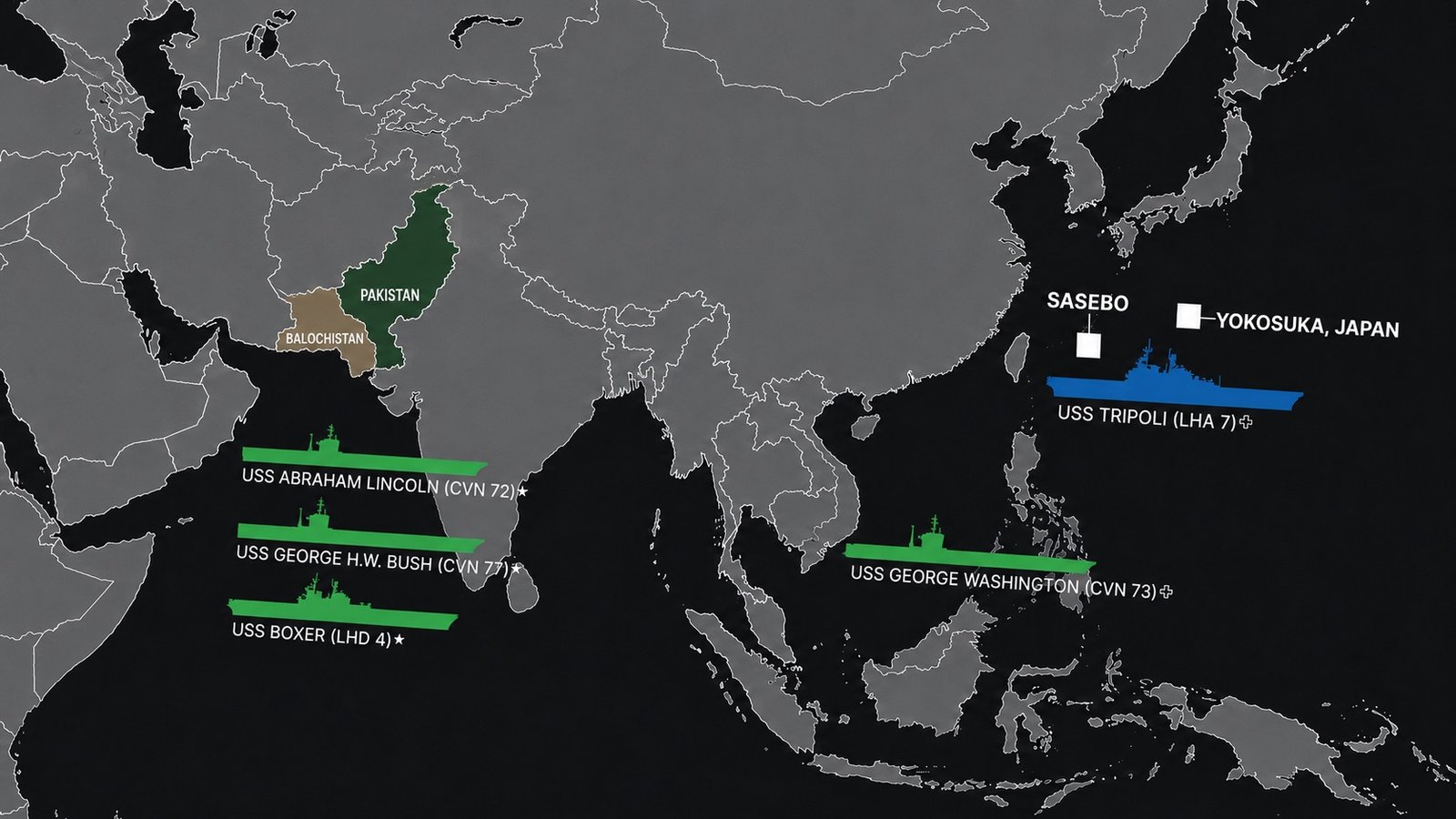
U.S
The United States is maintaining a significant naval presence in the Middle East as the 60-day negotiating period established under the June U.S.-Iran memorandum of understanding approaches its deadline. The June 17 memorandum established a maximum 60-day period for Washington and Tehran to negotiate a final agreement, with the period extendable by mutual consent. The agreement also addressed the U.S. naval blockade and called for its removal, with the blockade to be fully ended within 30 days. Because of that provision, the U.S. naval presence in the region is more accurately described as a dual-carrier presence rather than a confirmed continuing blockade. Two Aircraft Carriers Remain Central to U.S. Naval Presence The U.S. naval force in the Middle East includes the Nimitz-class aircraft carriers USS Abraham Lincoln (CVN-72) and USS George H.W. Bush (CVN-77), according to the information provided. The presence of the two carriers provides the U.S. Navy with substantial aviation and maritime capabilities while negotiations over a longer-term U.S.-Iran agreement continue. The June memorandum called for an immediate start to the removal of the U.S. naval blockade and its complete removal within 30 days. It also included provisions for the restoration of commercial shipping through the Strait of Hormuz. The supplied operational data states that U.S. Central Command forces had redirected 55 commercial vessels, boarded two vessels and kinetically disabled two others as part of maritime enforcement operations. These specific figures could not be independently confirmed through an official U.S. government source available for this report and are therefore treated as reported figures rather than independently verified facts. Extended Deployment of USS Abraham Lincoln The USS Abraham Lincoln is approaching nine months of deployment, according to the supplied information. The long deployment has raised concerns among some family members about conditions aboard the carrier. U.S. 5th Fleet spokesperson Cmdr. Joseph Hontz acknowledged that deployments lasting more than 250 days present challenges for sailors and equipment. Hontz said the carrier remains capable of carrying out its assigned missions and has adequate food and provisions. He also acknowledged that the ship has occasionally experienced short periods when certain supplies were running low. The supplied information also reports continued carrier aviation activity, including the launch of an EA-18G Growler from Electronic Attack Squadron 133 from Abraham Lincoln on July 31. USS George Washington Operates in the South China Sea While the Middle East force remains focused on the Iran situation, the U.S. Navy continues to maintain a separate carrier presence in the Indo-Pacific. The Nimitz-class USS George Washington (CVN-73) recently completed a scheduled five-day port visit to Da Nang, Vietnam. The carrier arrived on July 30, according to the U.S. Navy, alongside elements of Carrier Strike Group 5. The visit was the fourth U.S. aircraft-carrier visit to Vietnam and followed earlier U.S.-Vietnam naval engagements. The carrier is operating with other ships from its strike group, including the guided-missile cruiser USS Robert Smalls and guided-missile destroyer USS Shoup. The supplied information also identifies USS Benfold as part of the group. Open-source flight-tracking information cited in the supplied data placed the group approximately 100 nautical miles west of Luzon in the Philippines. A CMV-22B Osprey associated with Carrier Air Wing 5, using the callsign RUDY73, was also reported to have made a round trip to Clark Air Base in the Philippines. USS Theodore Roosevelt Returns to San Diego The USS Theodore Roosevelt (CVN-71) has returned to Naval Air Station North Island in San Diego following approximately two months away that included participation in Rim of the Pacific (RIMPAC) 2026. RIMPAC 2026 ran from June 24 through July 31 around Hawaii and involved dozens of nations, ships, aircraft and personnel. The U.S. Navy describes RIMPAC as a major multinational maritime exercise. After returning to San Diego, Theodore Roosevelt hosted nearly 2,000 friends and family members for a "tiger cruise" over the weekend of August 8. The event gave family members an opportunity to observe carrier operations and the working environment of the crew. Capt. William Mathis, the carrier's commanding officer, said the event was intended to allow sailors to demonstrate their professionalism and help their families understand their work. The carrier's future deployment is not clear from publicly verified information. The supplied data states that possible future tasking could include relieving Abraham Lincoln in the Middle East or conducting operations in the Western Pacific, depending on developments in the U.S.-Iran negotiations. Amphibious Fleet Faces Continued Demand The Navy's amphibious forces also remain heavily committed. Marine Corps Commandant Gen. Eric Smith has previously highlighted the shortage of Amphibious Ready Groups available to meet combatant-commanders' requirements. In May, the 24th Marine Expeditionary Unit assumed the Littoral Combat Force-24 designation in the U.S. Southern Command area of responsibility. The force operates as a Marine Air-Ground Task Force and is centered on the amphibious transport dock USS Fort Lauderdale (LPD-28). The Littoral Combat Force-24 concept provides a different deployment model from a traditional Amphibious Ready Group. U.S. Southern Command has described it as an agile force designed to provide operational options in the region. Other amphibious ships are also moving through training and deployment cycles. The USS Essex (LHD-2) participated in RIMPAC 2026 and subsequently conducted operations around Pearl Harbor as it prepared to leave the area following the exercise. The supplied information states that USS Makin Island completed ARGMEUEX training on July 31, while USS Essex departed Pearl Harbor following RIMPAC. U.S. Navy Maintains a Global Carrier Posture The supplied fleet assessment indicates that three U.S. aircraft carriers are deployed globally, while three are in various stages of workups or homeport readiness, four are undergoing maintenance and one is assigned to training. For the amphibious fleet, the same assessment lists one Amphibious Ready Group as deployed, five in port or training and three undergoing maintenance. These figures represent a snapshot of the fleet's status and can change as ships complete maintenance, training and deployment rotations. For the Middle East, the key issue remains the outcome of the U.S.-Iran negotiations. The June memorandum established the 60-day negotiating period while also requiring the removal of the U.S. naval blockade. As the deadline approaches, the disposition of U.S. carrier forces in the Middle East will remain closely linked to developments in the negotiations and the broader security situation around the Strait of Hormuz. Recent reporting indicates that discussions over reopening the waterway and reaching a longer-term arrangement remain ongoing. Note: I changed “dual-carrier blockade” to “dual-carrier presence” because the verified June 17 U.S.-Iran memorandum explicitly required the U.S. naval blockade to be fully ended within 30 days. Describing a continuing blockade as an established fact would conflict with the verified agreement. Source : TWZ
Read More → Posted on 2026-08-11 16:16:12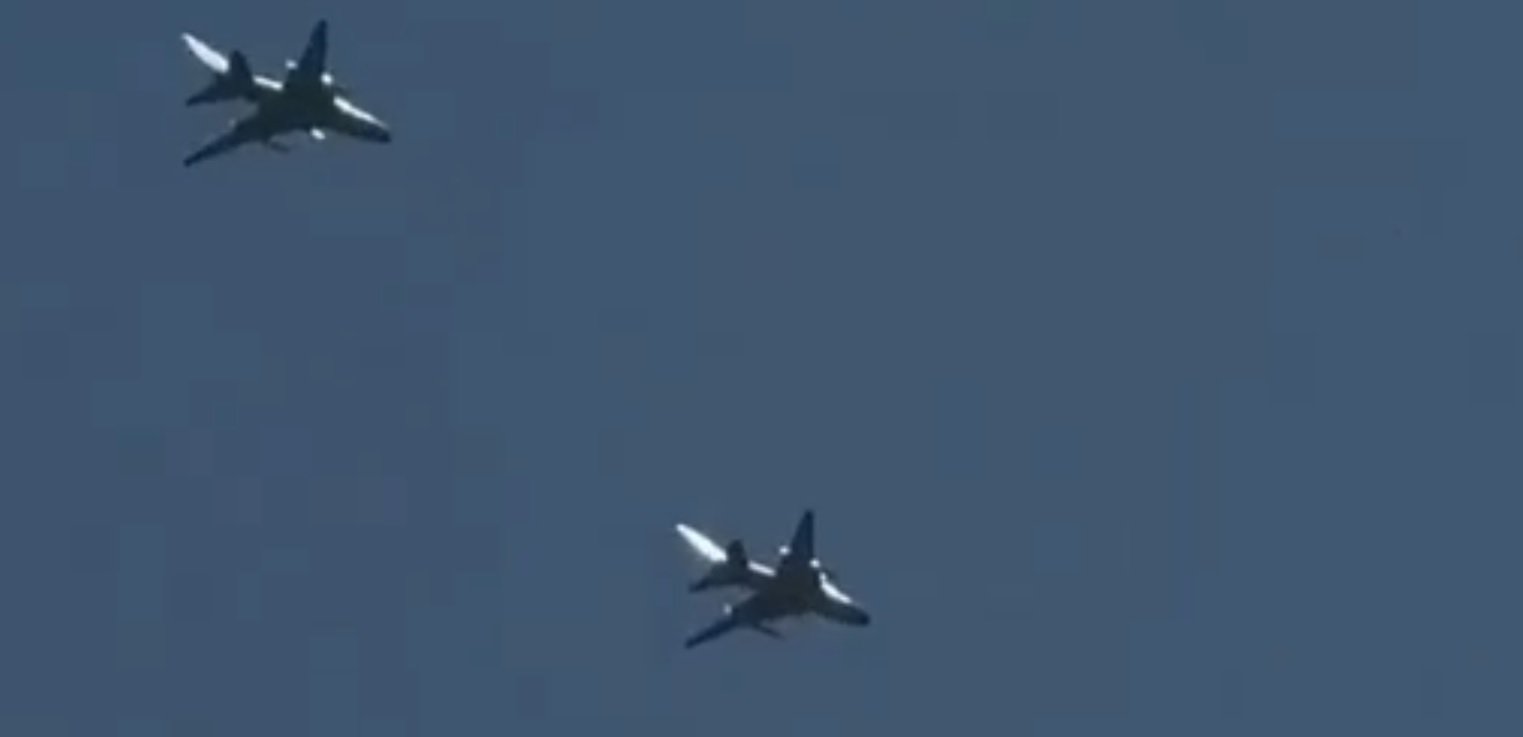
World
NORTHERN SYRIA — The Syrian Air Force has resumed training flights with at least two Su-22 fighter-bombers as the country’s new government continues efforts to rebuild its aviation capabilities following the fall of Bashar al-Assad’s government in December 2024. Video footage analyzed by aviation analyst Hassan shows two Su-22M3/M4 aircraft flying over northern Syria. The aircraft are export versions of the Soviet Su-17 fighter-bomber. Reports have identified the flights as part of renewed training activity involving Syrian fixed-wing combat aircraft. The exact number of Su-22s that are currently airworthy remains unclear. According to The Military Balance, Syria had 20 Su-22M3/M4 aircraft in its inventory in 2024, before the change of government. طائرات سوخوي سورية تجري طلعات تدريبية فوق سماء عدة محافظات سورية. pic.twitter.com/JqYwI2urOB — مُضَر | Modar (@ivarmm) August 10, 2026 Syria Begins Rebuilding Its Air Force Most of the aircraft left behind after the fall of the Assad government were reportedly found in storage and were not considered ready for flight. The new government has not disclosed the exact number or types of aircraft that have been preserved and returned to service. The rebuilding effort began soon after the political transition. In December 2024, rebel forces seized several SA342 Gazelle helicopters equipped with anti-tank missiles at Mezzeh Air Base in Damascus. In January 2025, former rebels from Hayat Tahrir al-Sham began organizing aviation units for training and territorial patrols. By March, the new government’s forces had used Mi-24 attack helicopters in combat against remaining pro-Assad forces. The new authorities also returned the Su-22 to the air. On September 7, 2025, an Su-22 was flown from Shayrat Air Base, marking the first reported flight of the type by the new Syrian government. The latest flights over northern Syria therefore follow earlier efforts to restore a limited fixed-wing capability. Training Expansion The renewed Su-22 activity comes after the graduation of 1,000 cadets from the Syrian Air Force College on July 26. They were the first class trained entirely under the new administration. The graduation ceremony was held at Khalid bin al-Walid Air Base, formerly known as Kuweires, east of Aleppo. L-39 trainer aircraft and Mi-24 helicopters took part in ceremonial flyovers. Reports from Israeli sources have also described an accelerated effort by Syria to rebuild its air power, including recruitment of pilots and training involving trainer aircraft, helicopters and fighter aircraft. The recent Su-22 flights reportedly took place over northern Syrian provinces, including Idlib. Reports identified the pilots as Abdullah al-Obeido from Kafr Nabl and Ibrahim al-Khalid from Maarat al-Numan, although independent confirmation of their identities was not available in the sources reviewed. Five Decades of Su-22 Operations in Syria Syria has operated the Su-22 family for decades. The country received its first 15 Su-20 aircraft, an earlier export version of the Su-17, from the Soviet Union in 1973. Eight were lost during that year's war with Israel. The Soviet Union later supplied additional aircraft. Syria received Su-22M-3s in 1983 and at least 42 Su-22M-4Ks between 1984 and 1985. Syrian industry also upgraded the remaining older Su-22Ms to the Su-22M-2K standard. In 2010, Syria allocated funding for a gradual modernization program. At that time, the fleet consisted of seven Su-22M-2s, 12 Su-22M-3s, 24 Su-22M-4Ks, five Su-22UM-2Ks and four to five Su-22UM-4Ks, giving an estimated total of 52–53 aircraft. The fleet suffered substantial losses during the Syrian civil war. The first confirmed Su-22 loss occurred on February 14, 2013, when rebels shot down an aircraft using a man-portable air-defense system. Several aircraft underwent major overhauls in 2014, but by mid-2015 only about a dozen Su-22s were reported to remain fully combat-ready. The prolonged combat operations had also depleted bomb stocks and spare external fuel tanks. By mid-2016, around 30 Su-22s of different variants remained, distributed among three squadrons at Tiyas, Shayrat and Dmeir air bases. Further losses followed. On July 24, 2018, Israel said it had shot down a Syrian Sukhoi fighter after it entered Israeli airspace. Israel said two Patriot missiles were fired; Syrian authorities disputed the claim that the aircraft had entered Israeli airspace. The aircraft was identified by Syrian sources as a Su-22. In August 2019, Syrian opposition groups reported shooting down another Syrian Su-22 over the Idlib area. Russia-Syria Agreement Covers Hmeimim and Tartus The rebuilding of Syria's military aviation is also taking place alongside a new agreement with Russia. On August 9, Syria and Russia signed a memorandum of understanding concerning the future of Russia's military presence at Hmeimim Air Base near Latakia and the naval facility at Tartus. The agreement followed 18 months of negotiations. Under the agreement, Syria will take over management of civilian facilities, including Hmeimim Airport and the commercial section of Tartus Port. Military facilities are to be transformed into joint training and qualification centres, with the transition scheduled to be completed within three months. Russian forces are expected to remain at the new training facilities, although the number of personnel has not been specified. The latest Su-22 flights are therefore part of a broader process in which the new Syrian government is rebuilding its military aviation structure, training personnel and attempting to return some surviving aircraft to operational use. However, the number of Su-22s currently capable of sustained operations remains unknown, and the available evidence does not establish the size of the restored fleet. The recent flights demonstrate that at least a small number of the aircraft have returned to the air, but they do not by themselves establish the overall readiness of Syria's rebuilt air force. Source : militarnyi
Read More → Posted on 2026-08-11 15:57:19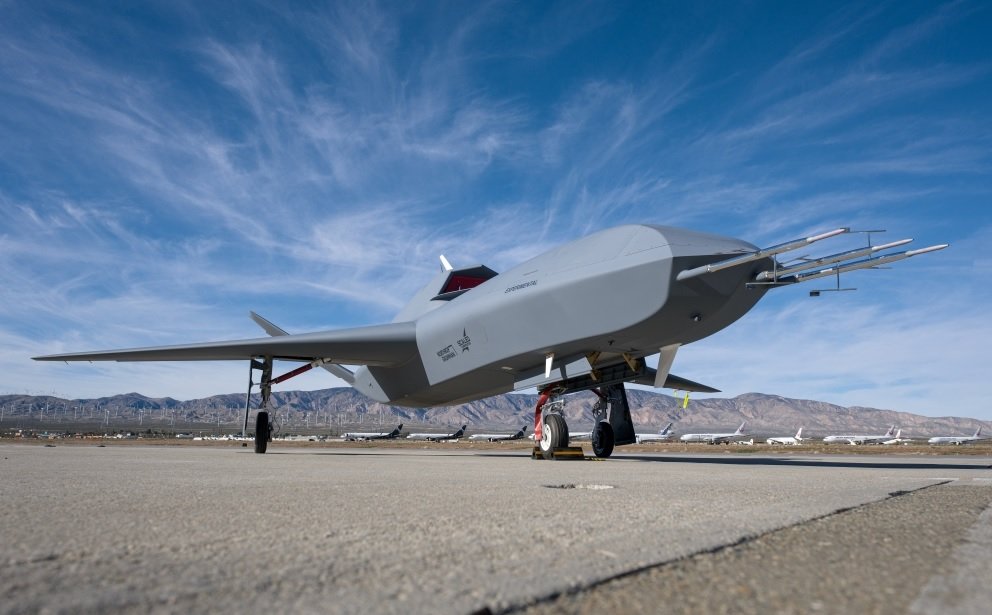
U.S
FALLS CHURCH, Va. — Northrop Grumman is advancing its Project Talon initiative, a connected autonomous combat ecosystem that brings together autonomy software development, flight testing and modular uncrewed aircraft. The company’s approach is focused on reducing the time required to move new autonomous capabilities from development and laboratory testing to flight evaluation and, ultimately, operational applications. Northrop Grumman describes Project Talon as part of its broader effort to develop open-architecture autonomous systems that can be adapted as mission requirements change. Project Talon includes two principal elements: Talon IQ, an autonomous flight-test environment, and the YFQ-48A Talon Blue, an autonomous wingman aircraft intended to operate with crewed aircraft. Project Talon links software testing with operational aircraft The central idea behind Project Talon is to separate the development and testing of autonomy software from the development of the final combat aircraft. Talon IQ provides a flight environment where autonomy capabilities can be integrated and evaluated using an existing aircraft platform. Software can then be refined before being transferred to other aircraft. Northrop Grumman has described its autonomy approach as based on open architecture and interoperability. The company says this allows different technologies and software providers to work with its autonomous systems rather than limiting development to a single software solution. The approach has already been demonstrated through Talon IQ flights. In March 2026, Northrop Grumman and Shield AI tested Shield AI's Hivemind autonomy software on the Talon IQ aircraft. During the flight, Hivemind controlled mission-level behaviors before control was transferred back to Northrop Grumman's Prism autonomy system. The demonstration was intended to show the ability to integrate third-party autonomy software into the open-architecture test environment. YFQ-48A Talon Blue The second major element of Project Talon is the YFQ-48A Talon Blue. Northrop Grumman developed the aircraft after its original Collaborative Combat Aircraft proposal did not advance to the final selection in the Air Force's first CCA competition. The U.S. Air Force selected General Atomics' YFQ-42A and Anduril's YFQ-44A for the first increment of the program. Northrop Grumman subsequently redesigned its concept with Scaled Composites, its subsidiary, focusing on a simpler airframe and faster manufacturing. The Air Force formally assigned the YFQ-48A designation to Northrop Grumman's Project Talon aircraft in December 2025. At the time, the company said the new aircraft was significantly different from its earlier CCA design. According to figures disclosed by Northrop Grumman, the YFQ-48A has approximately 50 percent fewer parts, weighs about 1,000 pounds less than the company's previous CCA proposal and can be manufactured approximately 30 percent faster. The aircraft makes extensive use of composite structures, while some components are based on existing aerospace designs. The company has also been conducting ground testing of the aircraft. The YFQ-48A completed an engine start earlier in 2026 and conducted its first taxi test in May. Northrop Grumman describes the Talon Blue as a modular, cost-effective and rapidly deployable autonomous wingman, with the design intended to support different mission configurations. Talon IQ is based on Model 437 Talon IQ uses the Scaled Composites Model 437 as its flight-test platform. The Model 437 is a 41-foot-long aircraft with a 41-foot wingspan and a gross takeoff weight of approximately 10,000 pounds. The aircraft is powered by a Pratt & Whitney PW535 turbofan producing approximately 3,400 pounds of thrust. Its stated design figures include a range of about 3,000 nautical miles, an endurance of up to six hours and a payload capacity of approximately 2,000 pounds. The Model 437 was developed as a low-cost, multi-mission aircraft and has an internal weapons bay sized for two AIM-120 air-to-air missiles. Its design also provides space for other mission payloads. The aircraft first flew in August 2024 as a technology demonstrator developed by Scaled Composites. Its development was also used to demonstrate Northrop Grumman's digital design and manufacturing processes. Project Talon develops alongside the CCA program Project Talon is being developed as the U.S. Air Force continues its Collaborative Combat Aircraft (CCA) effort. CCA is intended to provide uncrewed aircraft that can operate alongside crewed platforms. The first increment is currently moving forward with the General Atomics YFQ-42A and Anduril YFQ-44A. The CCA program has also progressed into weapons and operational testing. In July 2026, the Air Force conducted a live-fire test in which a YFQ-44A fired an AIM-120 missile at a digital target over the Mojave Desert. The Air Force said the test followed earlier inert weapons carriage and data-link evaluations. The Air Force has emphasized that human oversight remains part of the CCA concept. During the July test, the service stated that weapon-release decisions remain under human control, even as the aircraft performs portions of the weapon-employment sequence autonomously. The service is also testing CCA aircraft in more operationally representative environments. In July, the YFQ-44A participated in an exercise at Creech Air Force Base, Nevada, where the Air Force examined operations, logistics, maintenance and integration with crewed aircraft. Northrop Grumman's focus on software and manufacturing Northrop Grumman's Project Talon approach combines two areas that are becoming increasingly important in autonomous aircraft development: software integration and aircraft production. Talon IQ is intended to provide a reusable environment for testing autonomy technologies, while Talon Blue is designed around reduced part counts, modular construction and faster manufacturing. The company says its broader autonomy portfolio uses open architectures and human-overseen autonomy, with the aim of allowing autonomous systems to incorporate new technologies without requiring an entirely new aircraft for every capability change. Northrop Grumman is therefore continuing to develop the YFQ-48A Talon Blue even though it was not selected for the Air Force's initial CCA Increment 1 production competition. The aircraft has received an official Air Force designation and continues through development and ground testing, while Talon IQ provides a separate platform for testing autonomy software and related technologies. The combination of the two platforms forms the main structure of Project Talon: Talon IQ provides the flight-test environment for autonomy development, while YFQ-48A Talon Blue is the modular autonomous aircraft being developed for future CCA requirements.
Read More → Posted on 2026-08-11 15:36:49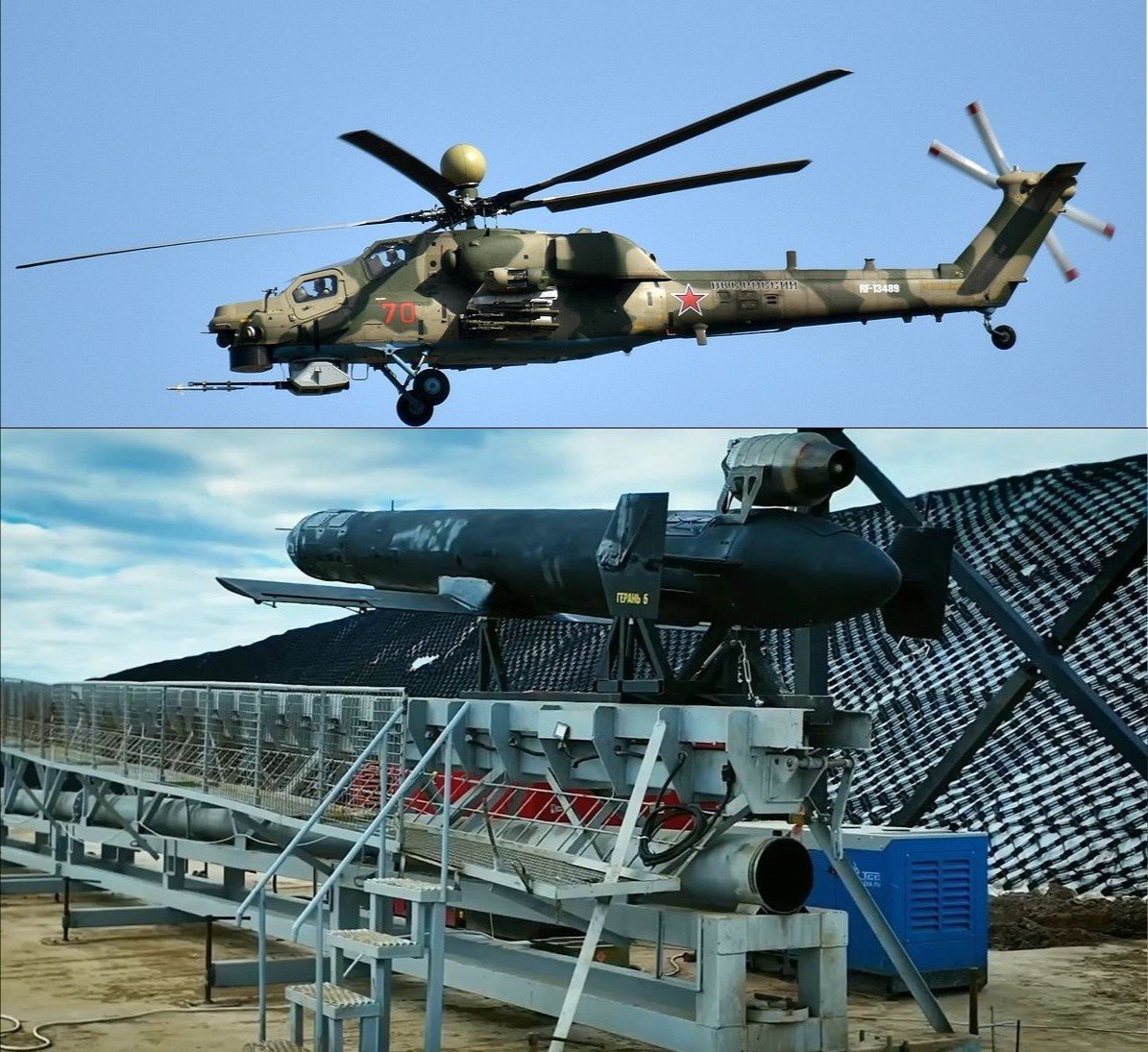
World
KYIV — Ukrainian sources have reported that Russia is now launching its jet-powered Geran-5 one-way attack drone from Mi-28 attack helicopters. The reported helicopter launch method would add another way of deploying the system, which had previously been associated with ground launch systems and planned air-launch trials involving the Su-25. The Geran-5 first appeared in combat use against Ukraine in January 2026, according to Ukraine’s Main Directorate of Intelligence (HUR). Unlike earlier propeller-driven Geran variants based on the Iranian Shahed design, the Geran-5 uses a conventional aircraft-style configuration and a turbojet engine. According to HUR, the Geran-5 has a maximum takeoff weight of 850 kg, a 90-kg warhead, a cruising speed of 450–600 km/h, flight endurance of up to two hours, and a reported range of about 950 km. Its maximum altitude is listed at 6,000 meters. The drone is powered by the Chinese TELEFLY TF-TJ2000A turbojet engine, which HUR identifies as producing 200 kgf (about 1,960 newtons) of thrust. Its navigation and communications equipment includes the Kometa-M12 satellite navigation system, SADRA/MINSOO inertial navigation, Tracker V3 telemetry equipment and an Xingkai Tech XK-F358 MESH modem. HUR has also identified electronic components originating from China, the United States and Germany in the Geran-5. The Ukrainian intelligence service previously reported that Russia was examining the possibility of launching the drone from Su-25 aircraft. The reported use of Mi-28 helicopters has not been independently confirmed in the sources reviewed for this report.
Read More → Posted on 2026-08-11 13:35:06
Europe
STOCKHOLM — Sweden’s Security Service (Säpo) has disrupted a Russian intelligence operation aimed at influencing Swedish decision-making and discrediting Sweden, NATO and the European Union. According to Säpo, the operation was directed by Russia’s Foreign Intelligence Service (SVR). Two Russian intelligence officers operating under diplomatic cover recruited an employee of another foreign diplomatic mission in Stockholm to act as an agent. The recruited agent was tasked with obtaining information concerning Swedish political decision-making and the country’s relations with other states. Säpo said the information was intended to support Russian influence activities involving polarising issues and undermine decision-making in Sweden. Säpo’s deputy head of operations, Christoffer Wedelin, said the service had monitored the operation over an extended period. Investigators documented meetings between the agent and the two Russian officers at different locations around Stockholm, including restaurants and during outdoor meetings. Information was exchanged during the meetings, and gifts were also handed to the agent. Säpo said it had detailed knowledge of the assignments given to the agent and intervened to stop further intelligence collection. The agency assessed that the Russian operation had been prevented from achieving its objectives. All three individuals had diplomatic immunity and therefore could not be arrested or prosecuted in Sweden. Säpo said the two Russian officers and the recruited agent have since left the country. Säpo said it publicly disclosed the case to increase awareness of the threat posed by Russian intelligence activities. Sweden’s security service has previously identified Russian intelligence gathering, including activities conducted through diplomatic missions, as a continuing security concern.
Read More → Posted on 2026-08-11 13:12:52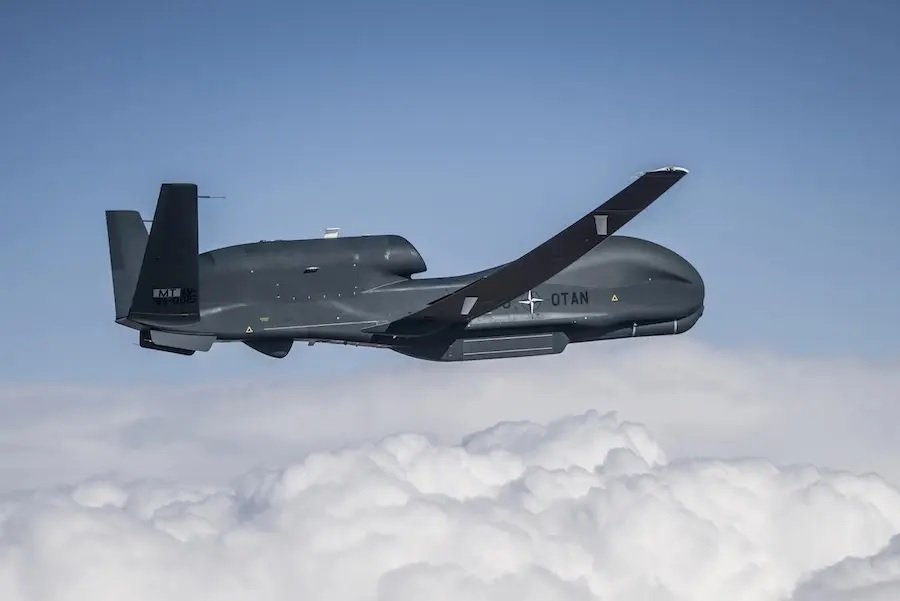
Europe
Sigonella, Italy — NATO’s RQ-4D Phoenix remotely piloted aircraft provided persistent intelligence, surveillance and reconnaissance (ISR) coverage across the High North and North Atlantic during Neptune Strike 26-3, supporting Allied maritime, air and joint forces during the multinational activity. The NATO Intelligence, Surveillance and Reconnaissance Force (NISRF) operated the Phoenix from its main operating base at Sigonella, Italy, throughout the exercise, which ran from July 17 to July 23, 2026. NISRF said the aircraft supported NATO’s Find-Fix-Track process and supplied intelligence products for operational planning, situational awareness and decision-making. RQ-4D Phoenix supports NATO operations The persistent ISR coverage helped contribute to NATO’s shared operational picture as Allied forces conducted operations across the High North and North Atlantic. According to NISRF, the information collected by the aircraft supported commanders coordinating maritime, air and joint forces during the enhanced vigilance activity. The RQ-4D Phoenix is NATO’s high-altitude, long-endurance remotely piloted ISR aircraft. NISRF operates a fleet of five NATO-owned RQ-4D Phoenix aircraft, all based at Sigonella. The aircraft are derived from the RQ-4 Global Hawk design and were developed specifically to meet NATO requirements. The aircraft are equipped with Multi-Platform Radar Technology Insertion Program (MP-RTIP) and synthetic aperture radar (SAR) sensors, together with long-range wideband data links. NATO says the SAR capability allows the aircraft to conduct surveillance independently of weather conditions, during both day and night. The Phoenix has a maximum operating altitude of 60,000 feet, according to NATO specifications. Its radar and communications systems allow collected information to be processed and shared as part of NATO’s wider ISR architecture. Neptune Strike expands into the High North Neptune Strike 26-3 was led by Naval Striking and Support Forces NATO (STRIKFORNATO) and focused on the High North and North Atlantic. The activity brought together Allied maritime, air and joint capabilities to strengthen interoperability, readiness and multi-domain coordination. The 2026 iteration was significant because the Neptune Strike series expanded into the High North and North Atlantic under NATO’s Arctic Sentry framework. NATO launched Arctic Sentry in February 2026 as a multi-domain military activity intended to strengthen the Alliance’s posture in the Arctic and High North. It brings together Allied exercises, forces and capabilities under a broader operational approach. Participating nations in Neptune Strike 26-3 included Croatia, Denmark, France, Greece, Iceland, Italy, Norway, Poland, Portugal, the Republic of North Macedonia, Romania, Spain, the United Kingdom and the United States, alongside NISRF. Major naval elements included the UK Carrier Strike Group centred on HMS Prince of Wales and the Spanish Navy Expeditionary Strike Group. The exercise also included long-range air operations, expeditionary planning and the integration of autonomous systems. NISRF continues to build operational readiness Brigadier General John B. Creel, Commander of NISRF, said Neptune Strike demonstrated the value of persistent multinational ISR and that each mission strengthens interoperability with Allied forces while supporting commanders with timely intelligence. NISRF said its continued participation in NATO exercises and enhanced vigilance activities such as Arctic Sentry is building operational experience, readiness and interoperability. These activities also support the force’s progress toward Full Operational Capability. The RQ-4D Phoenix is a core part of NISRF’s ISR mission. NATO describes NISRF as a collectively owned and operated capability that provides persistent, long-range surveillance on land and at sea and supplies intelligence products to NATO decision-makers and Allied forces. The deployment during Neptune Strike 26-3 therefore provided NATO with continued airborne ISR coverage while Allied maritime, air and joint forces operated across the High North and North Atlantic.
Read More → Posted on 2026-08-11 13:03:18Search
Top Trending in 24 Hours
-
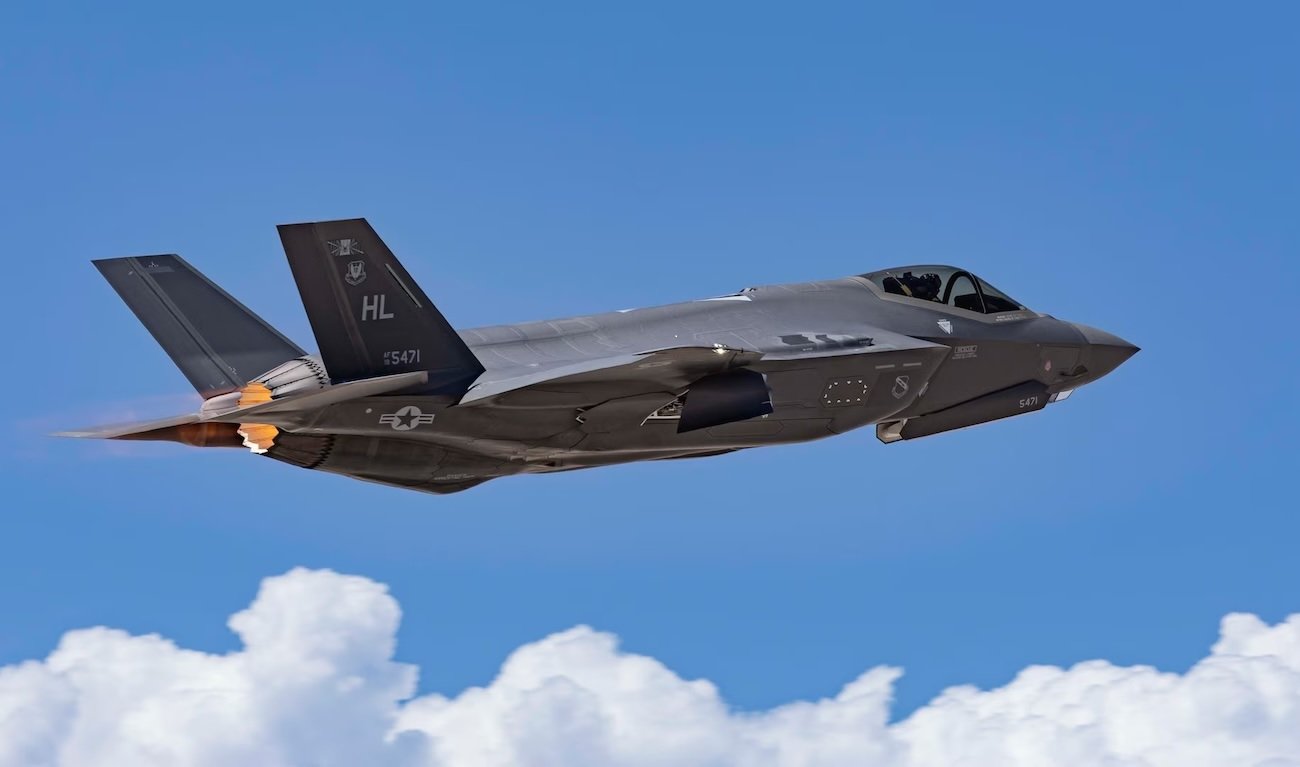 Sensitive F-35 Components Diverted to Hong Kong, Some Parts Missing
-
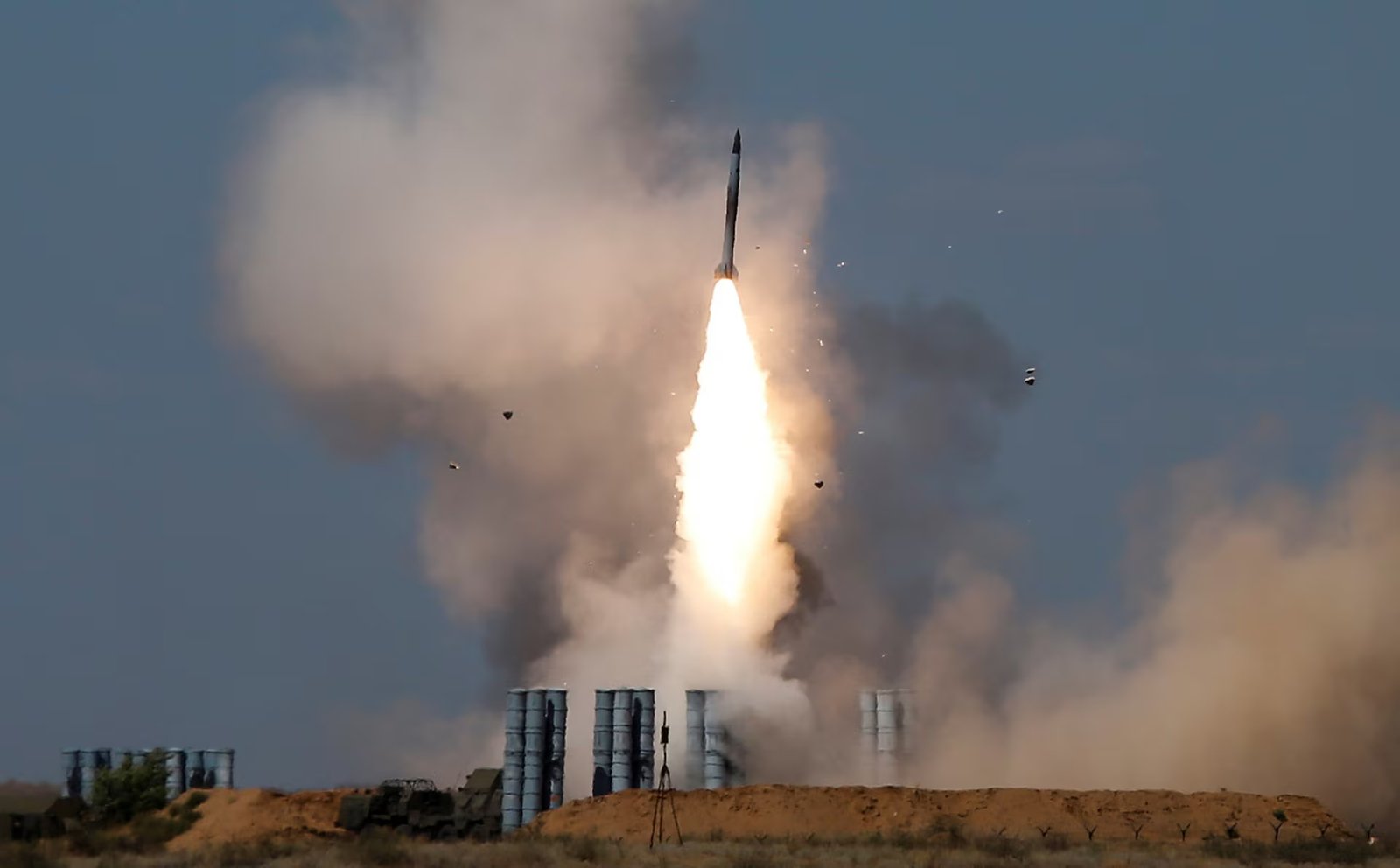 U.S. Approves Potential $2.68 Billion Air Defense Package for Ukraine Including S-300 Clone Missiles
-
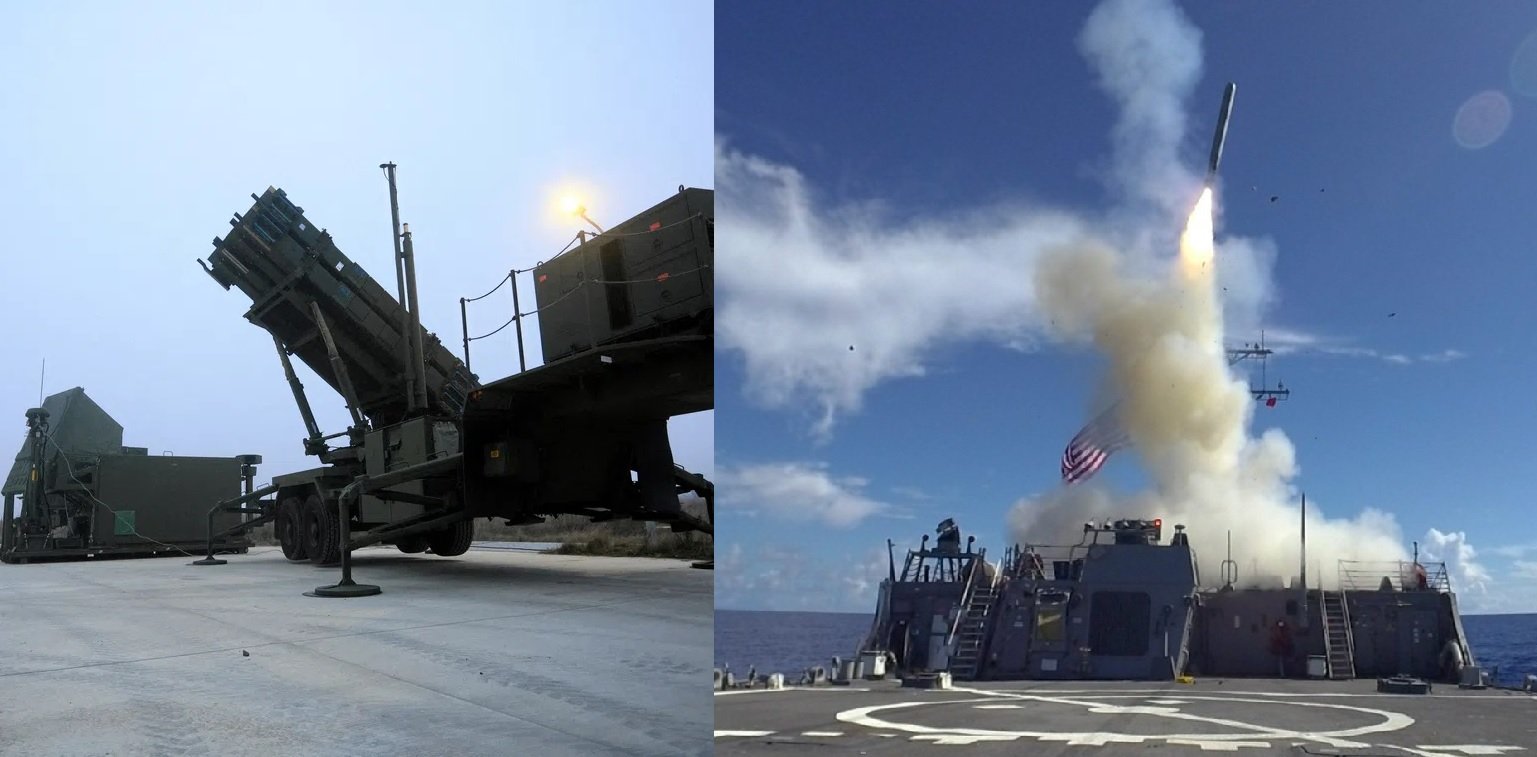 U.S. Warns Allies of Up to Five-Year Delays in Key Weapons Deliveries
-
 U.S. Secures Permanent Military Rights in Greenland in Historic Security Pact with Denmark
-
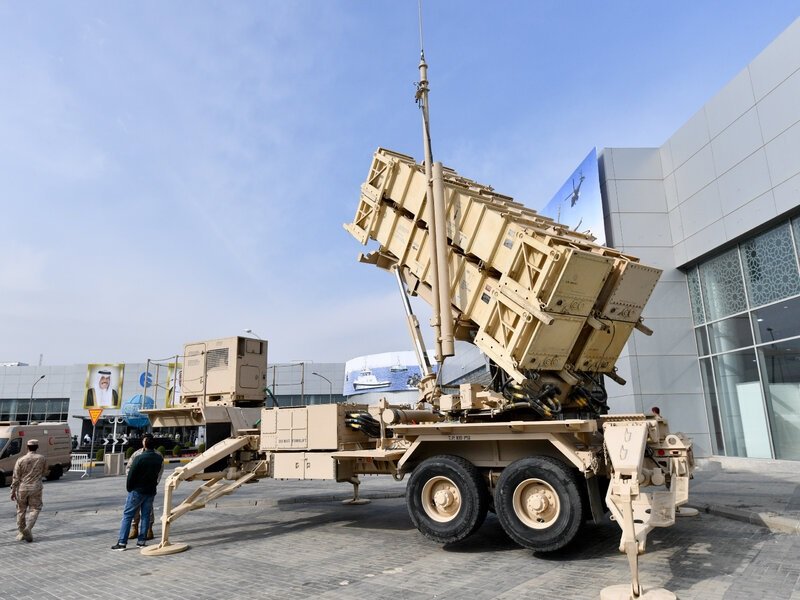 U.S. Iran War Cost Hits $43.6 Billion as Missile Interceptor Stocks Come Under Pressure
-
 Russia’s Aeroflot Orders 90 MC-21-310 Aircraft in Record Aviation Deal
-
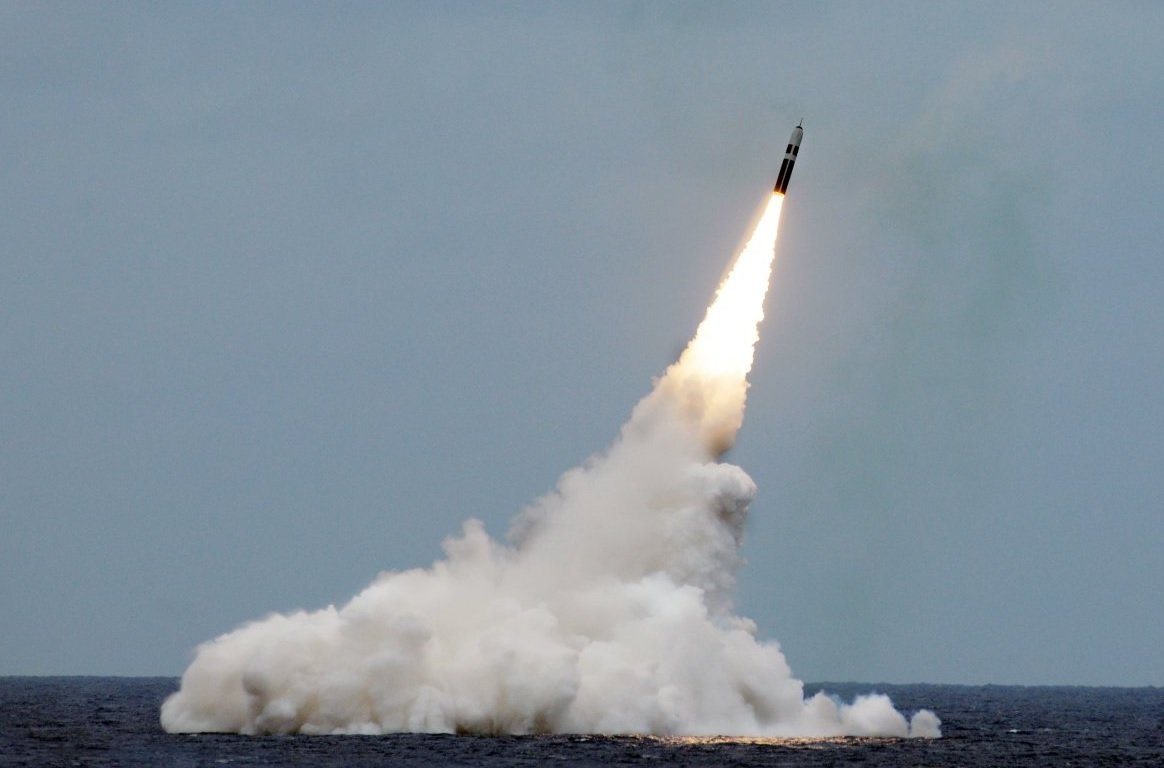 U.S. Navy Awards Lockheed Martin $76.6 Million for Continued Trident II D5LE2 Development
-
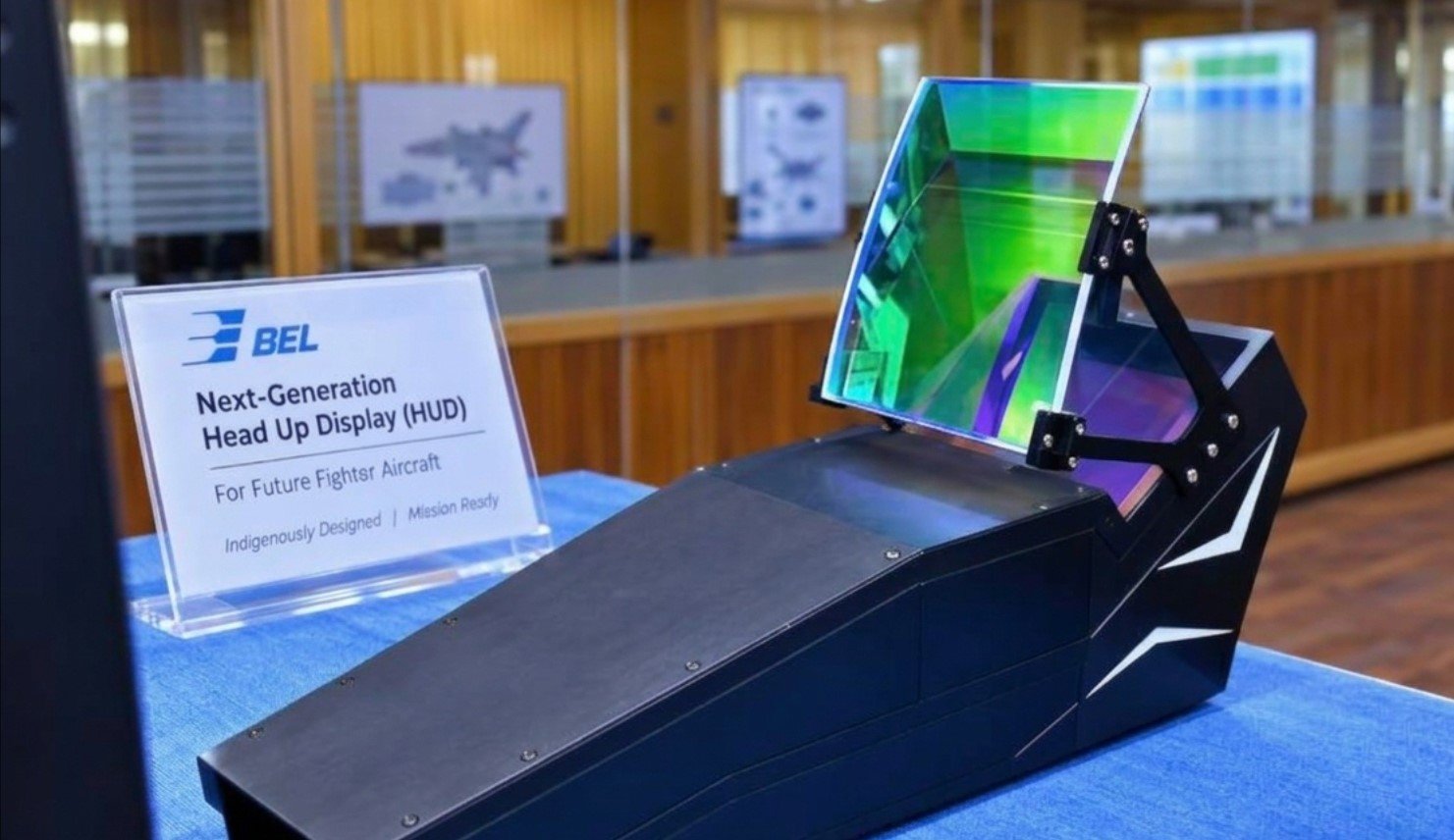 BEL Showcases New-Generation Head-Up Display, Potentially Linked to Tejas Mk2
Top Trending in 4 Days
-
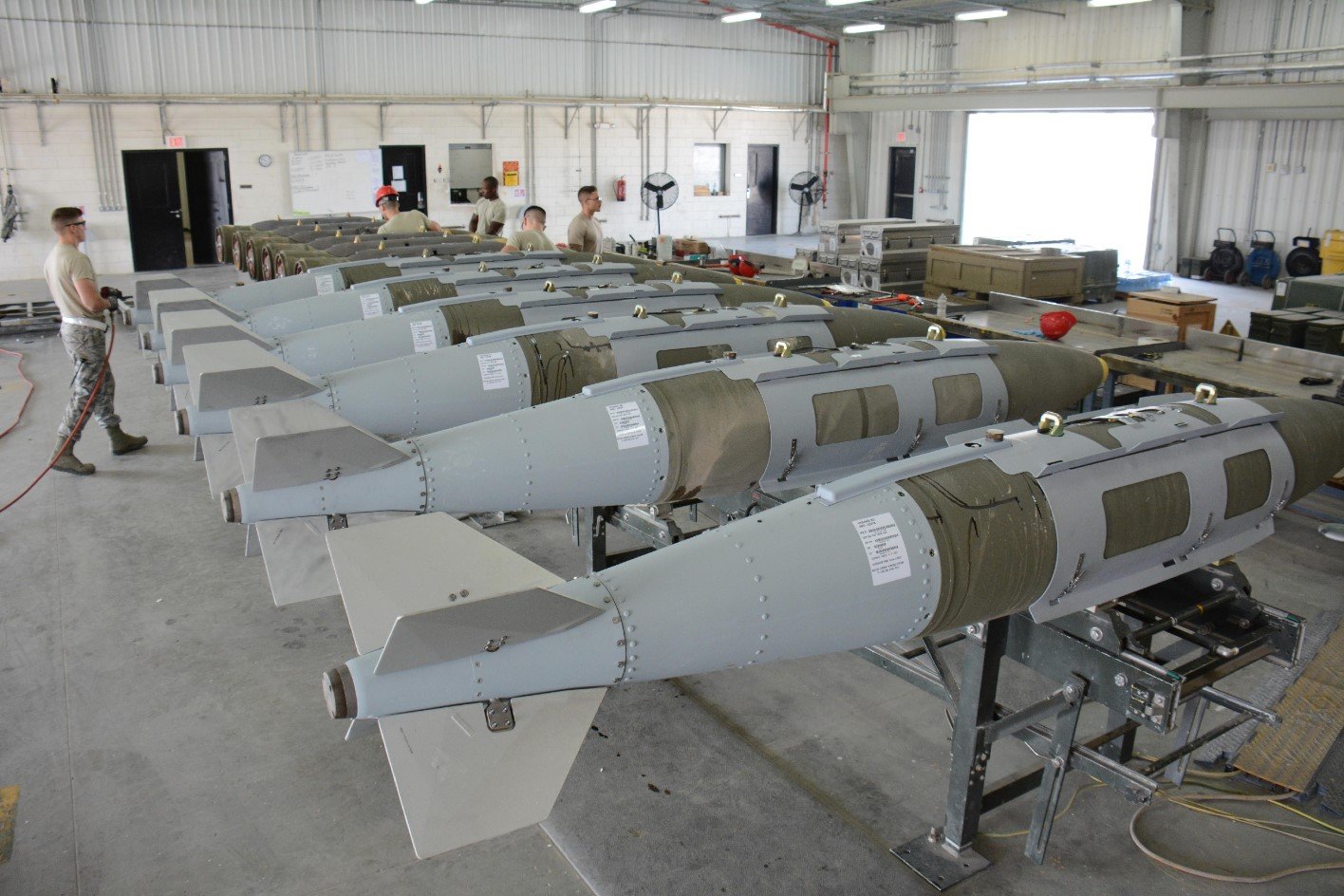 U.S. Plans $2.8 Billion Sale of 40,000 Heavy Bombs and 20,000 I-2000 Penetrator Warheads to Israel
-
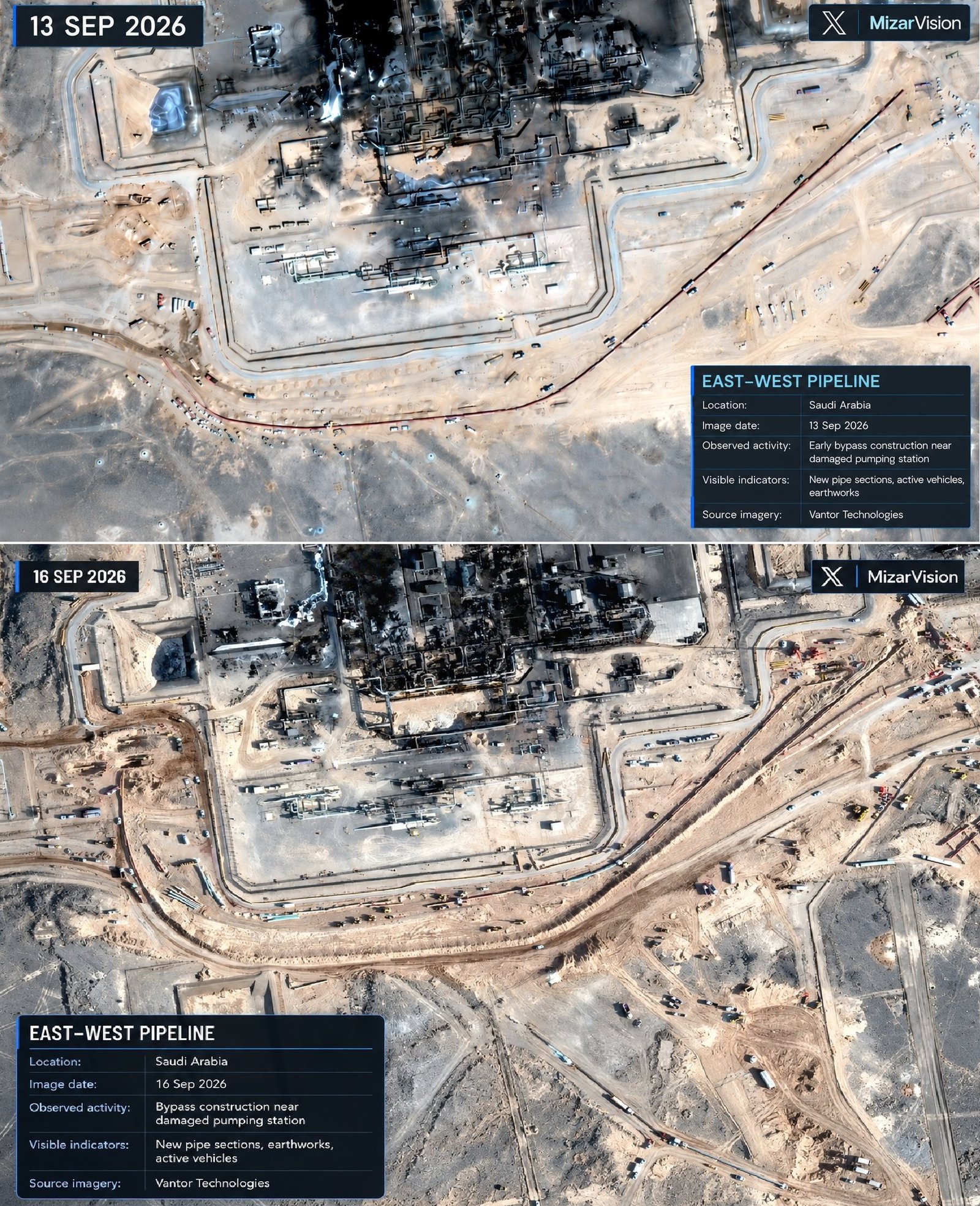 Satellite Images Show Saudi Arabia Building Emergency Bypass Around Damaged East-West Oil Pipeline Station
-
 Houthis Claim Downing of Saudi F-15 and Wing Loong II Drone Over Marib
-
 Photos Reveal Damaged E-3 Sentry, Buildings and Vehicles at U.S. Bases in Saudi Arabia and Kuwait After Iranian Strikes
-
Sensitive F-35 Components Diverted to Hong Kong, Some Parts Missing
-
 Bharat Forge, Pratt & Whitney Canada to Evaluate Turboprop Engines for DRDO’s Indigenous HALE UAV
-
 China Privately Urges Iran to Restrain Houthis After Saudi Appeal
-
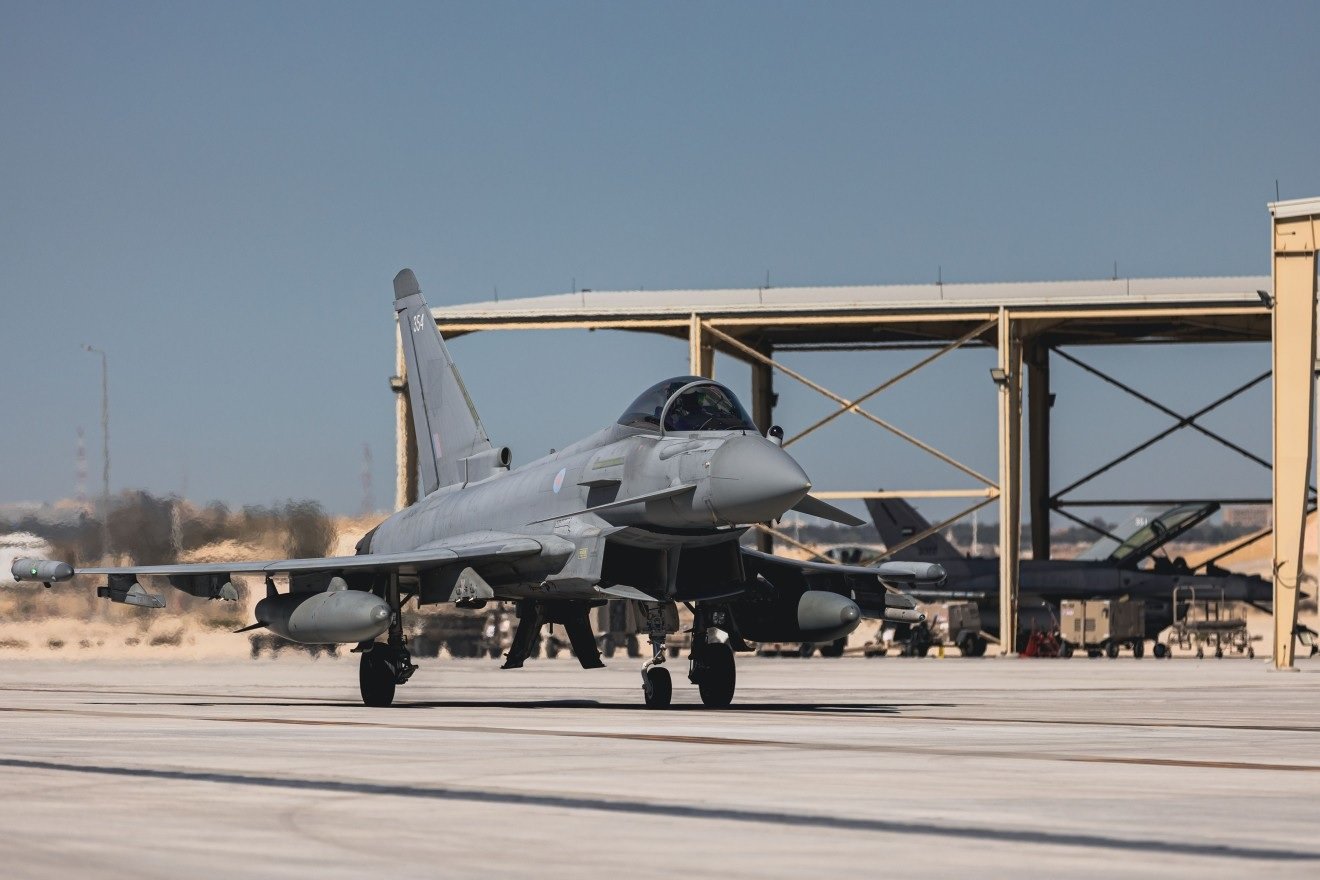 Italian Eurofighter Damaged in Houthi Attack on Saudi Arabia’s King Fahd Air Base
