World
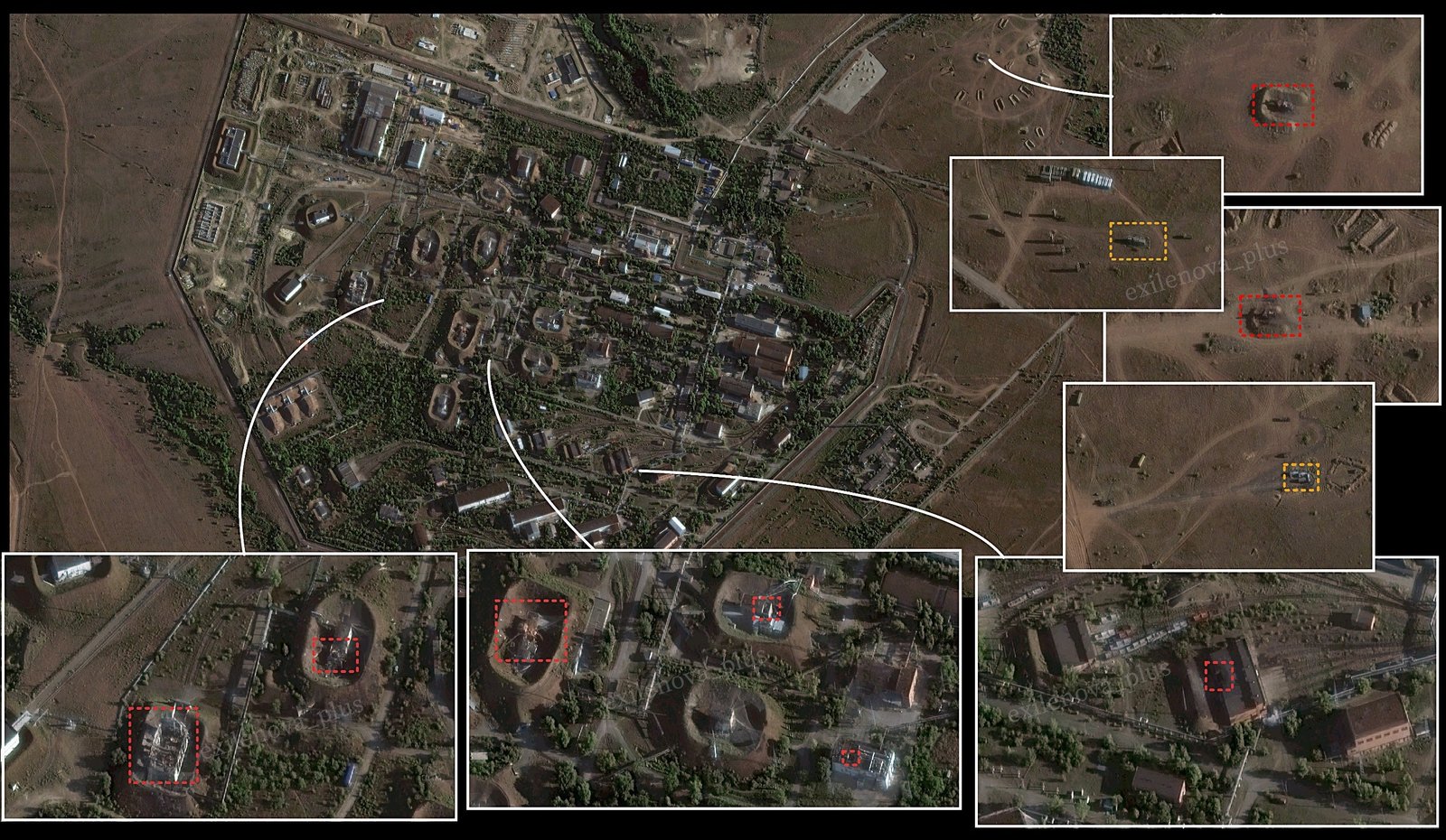
Kamensk-Shakhtinsky, Rostov Region, Russia — Ukrainian Defense Forces struck the Kamensky Combine, a Russian military-industrial facility in Kamensk-Shakhtinsky in the Rostov region, during the night of August 16, 2026. Ukraine’s General Staff confirmed the results of the attack on August 17. According to the General Staff, two workshops involved in the production of explosives and gunpowder were destroyed, while four other workshops were damaged. Satellite imagery analyzed by the Exilenova+ indicated damage to five production facilities overall, including roof penetrations and torn anti-drone nets on some buildings. Damage to Production Facilities The Kamensky Combine, also known as Combinat Kamensky or FSE Kamensky Combine, is a chemical enterprise that supplies products to Russia’s military-industrial sector. The European Union has identified the facility as a chemical plant producing special-purpose chemical products for Russia’s military industry. The plant produces solid rocket propellant for ammunition used by the Uragan, Smerch and Tornado-S multiple-launch rocket systems, as well as for a number of missile systems and air-launched weapons. The production buildings at the site were protected by earth berms and anti-drone nets. Satellite imagery showed that the protective netting did not prevent damage to several facilities. The plant is located at approximately 48.29943029832428, 40.17984650497104, around 10–15 kilometers from Ukraine’s state border. The facility is described by the OSINT resource VARTA as one of the largest chemical enterprises in southern Russia and an anchor enterprise. Air Defense Positions Also Affected The attack also affected Russian air-defense positions deployed around the facility. According to the imagery analysis provided by Exilenova+, signs of fire were observed at positions associated with a Pantsir-S1 air-defense system and multifunctional target illumination and guidance radars used with S-300/S-400 systems. Rostov region Governor Yuriy Slyusar said that Russian air-defense systems shot down more than 150 UAVs over the region during the night. He did not provide the total number of drones involved in the attack. NASA’s Fire Information for Resource Management System (FIRMS) detected a thermal signature at the plant beginning at 1:14 a.m. on August 16. The detected thermal signature continued and expanded until about 2:20 a.m. Previous Strike on the Plant The Kamensky Combine had previously been targeted during the war. On December 18, 2024, the facility was struck in a missile attack. Russian authorities later said the attack involved ATACMS and Storm Shadow missiles, while Ukrainian officials and analysts identified the Kamensky Combine as the target. The Ukrainian Air Force also indirectly confirmed the use of Storm Shadow/SCALP missiles in strikes against targets in the Rostov region. Satellite imagery released by the CyberBoroshno group after the 2024 attack showed critical damage to two buildings at the production site. The plant was also described at the time as producing solid-fuel components for rocket engines, including those used by multiple-launch rocket systems. The latest August 16 strike therefore represents another attack on the same Russian military-industrial facility. The Ukrainian General Staff said that operations against key Russian military and military-industrial facilities continue. Source : militarnyi
Read More → Posted on 2026-08-17 14:01:46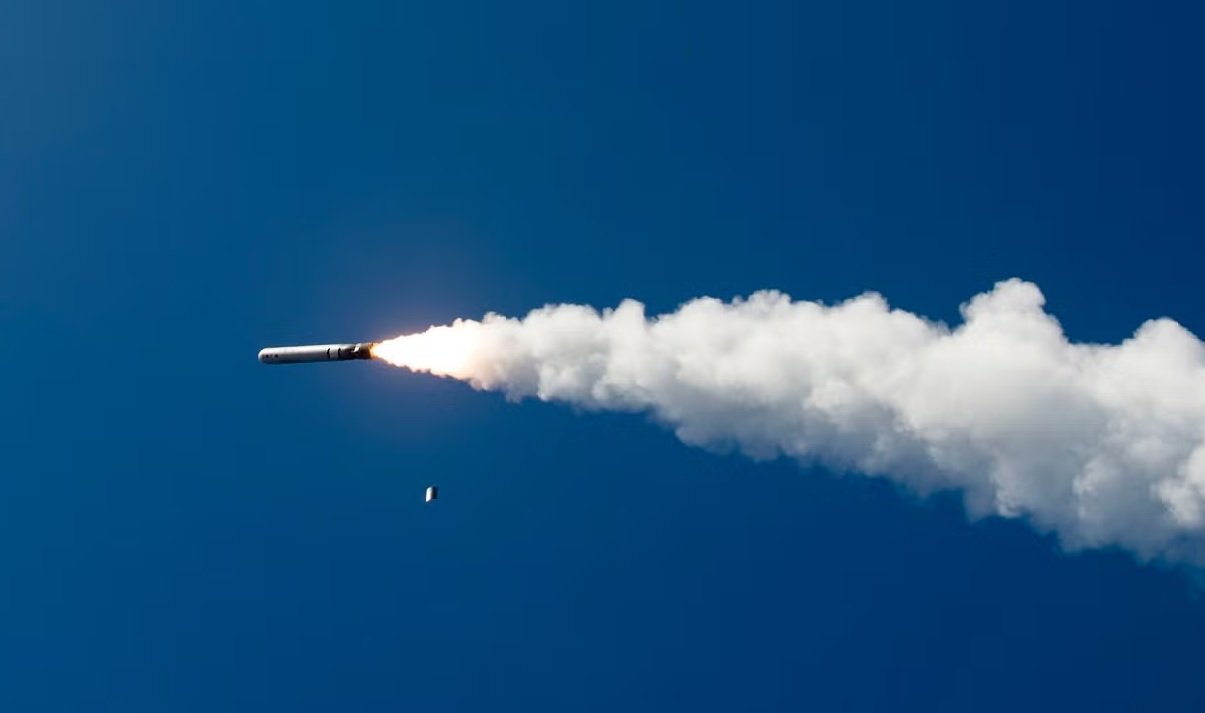
U.S
WASHINGTON — The U.S. Navy has awarded Raytheon, an RTX business, a $22.9 billion seven-year contract to increase production of Tomahawk cruise missiles and associated support. The contract is intended to raise annual Tomahawk production to more than 1,000 missiles, significantly above previous production levels of about 60 missiles per year for U.S. forces. RTX said it delivered three times more Tomahawks in the first half of 2026 than during the same period in 2025. The Tomahawk is a long-range precision strike missile used by the Navy’s surface ships and submarines against land targets. The new award formalizes an earlier framework agreement between the U.S. military and Raytheon covering increased production of several critical munitions. Acting Secretary of the Navy Hung Cao said the investment will expand the U.S. munitions industrial base and support current operational requirements. Raytheon President Phil Jasper said the company is investing in its workforce, technology, supply chain and facilities to increase production capacity. RTX also plans to work with hundreds of small and mid-sized suppliers across the United States. The contract is part of the Department of War’s Arsenal of Freedom initiative and a broader effort to expand domestic munitions production and rebuild U.S. weapons inventories. The Navy has also been pursuing increased production of other missile systems, including AMRAAM, SM-3 and SM-6, while recent agreements have targeted components for Patriot and THAAD interceptor missiles.
Read More → Posted on 2026-08-17 13:32:33
U.S
PHOENIX, Arizona — Honeywell Aerospace has demonstrated its latest counter-unmanned aircraft system (C-UAS) during the U.S. military’s Experimentation: Transforming in Contact (EXTiC) 26-2 event, testing the technology against simulated drone threats in an operationally relevant environment. The event, organized by U.S. Central Command (CENTCOM) in coordination with the Defense Innovation Unit, was held from July 27-29, 2026, at the Playas Training and Research Center in New Mexico. Twenty-one companies were selected from 149 industry submissions. The scenarios included electronic warfare, GPS-denied conditions, autonomous systems and coordinated drone swarms. Honeywell served as the lead systems integrator, combining sensors and effectors with its AI-driven C-UAS software to detect, track and mitigate simulated drones while defending a simulated airfield. The system was demonstrated in both stationary and mobile configurations. “As a lead systems integrator, we combined best-in-class sensors and effectors with our AI-driven C-UAS software to detect, track, and mitigate simulated drone threats while defending an airfield,” said Shannon Bowman, senior customer marketing specialist for defense and space at Honeywell Aerospace. “Our system proved effective across both static and on-the-move operations, highlighting an open, adaptable and layered approach to countering rapidly evolving UAS threats.” SAMURAI Counter-UAS System At the center of Honeywell’s demonstration was its Stationary and Mobile UAS Reveal and Intercept system, known as SAMURAI. It uses a Modular Open Systems Approach (MOSA) architecture, allowing operators to combine customer-selected detectors and effectors from multiple defense manufacturers. Honeywell has integrated components from BlueHalo, Leonardo DRS, Silent Sentinel, Pierce Aerospace, Walaris, Rocky Research and Versatol. SAMURAI serves as a battle-management layer that fuses information from radio-frequency sensors, electro-optical and infrared trackers and other detectors. Its AI-based software helps distinguish threats and supports kinetic and non-kinetic effectors, including interceptor drones. The system is designed to counter Group 1 through 3 drone swarms, including low-signature “dark” drones that can be difficult to detect. It can operate from a vehicle traveling at up to 70 mph (113 km/h), from a fixed position, or through sensors installed on an aerostat flying more than 1,000 feet (305 meters) above the ground. Airborne SAMURAI Development Since March 2026, Honeywell has worked with Odys Aviation to adapt an airborne version of SAMURAI for the company’s long-range Laila unmanned aircraft. Laila is a hybrid-electric vertical take-off and landing aircraft with a flight time of up to eight hours and a range of approximately 450 miles. The aircraft does not require a traditional runway and is intended to carry SAMURAI as an airborne counter-drone layer. The configuration is being developed to help protect infrastructure such as pipelines, refineries and offshore energy platforms by providing counter-UAS coverage farther from high-value assets. Matt Milas, president of Defense and Space at Honeywell Aerospace, said SAMURAI provides counter-UAS capabilities with scalability and integration with existing defense architectures. Other Counter-Drone Technology at EXTiC EagleNXT’s joint venture, ThirdEye USA, was separately selected in July 2026 to demonstrate its MeduzaX passive electro-optical counter-drone sensor at EXTiC 26-2. MeduzaX uses AI and passive electro-optical technology to detect, track and classify hostile drones. It is designed to provide 360-degree coverage, can be set up in less than 10 minutes and operates without emitting radiation. The EXTiC event allowed multiple technologies to be tested in scenarios involving contested conditions and drone threats, with Honeywell focusing on an integrated architecture that connects sensors, AI-based software and effectors. Bowman summarized Honeywell’s approach: “One integrated system. Built to stay ahead of the drone threat.”
Read More → Posted on 2026-08-17 13:13:20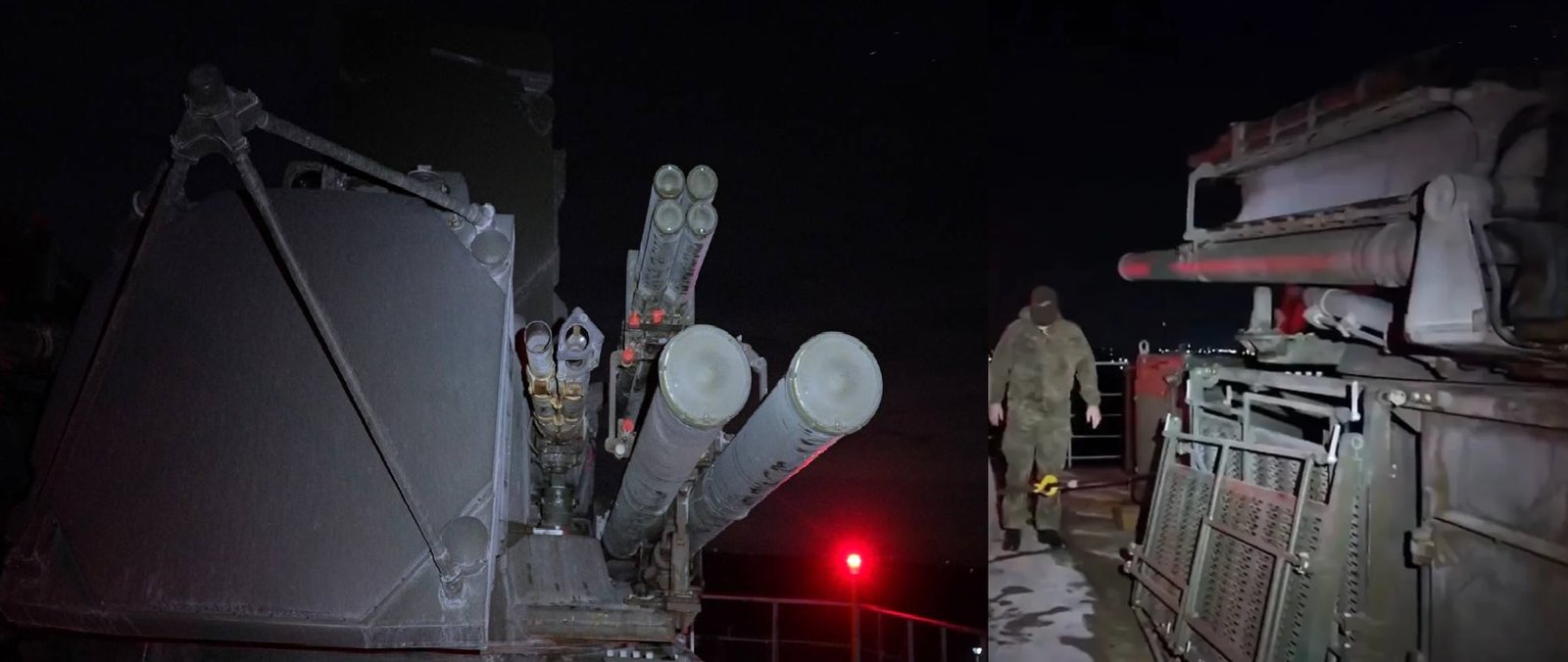
World
MOSCOW — Russia is expanding its air defense infrastructure with specialized 35-meter-high towers designed to host Pantsir-family short-range air defense systems against unmanned aerial vehicles (UAVs). A recent Russian report showed a Pantsir-S1M mounted on one such tower. Construction of these elevated positions began in 2023, initially forming several defensive rings around Moscow. Similar towers are now being built in other Russian regions. The Pantsir-S1M is equipped with the 1RS-ZE multifunctional phased-array radar, which has a reported detection range of approximately 50–70 kilometers, compared with around 30–40 kilometers for the radar of the earlier Pantsir-S1. The longer detection range provides the upgraded system with greater distance for detecting and tracking aerial targets. pic.twitter.com/MJKB9BL8vJ — 🪖MilitaryNewsUA🇺🇦 (@front_ukrainian) August 17, 2026 The elevated platforms raise the system above surrounding terrain and buildings, improving its radar horizon and helping detect and track low-flying drones that can be difficult to detect from ground level. Earlier, Russia also placed Pantsir systems on rooftops of government and commercial buildings, as well as on other elevated positions. Open-source satellite imagery and visual analysis have identified multiple Pantsir positions around Moscow, including locations roughly 40–50 kilometers from the capital, as well as positions near energy facilities, airports and other high-value sites. By the end of 2025, researchers had identified around 100 additional Pantsir positions across European Russia, including dozens around Moscow. Mid-2026 assessments placed the number of known short-range air defense positions in and around Moscow at more than 100, with roughly two dozen new towers observed earlier this year. New TKB-1055 “Gvozd” Missiles The tower-based Pantsir systems can use conventional missiles as well as the smaller TKB-1055 “Gvozd” interceptor developed for counter-drone operations. The Gvozd is considerably smaller than the standard Pantsir missile. Four Gvozd missiles can be placed in a container occupying the space of one standard missile, allowing a Pantsir system to carry up to 48 compact interceptors, compared with 12 standard missiles, depending on configuration. The TKB-1055 has a reported engagement range of 500 meters to 7 kilometers and can engage targets at altitudes from 15 meters to 5 kilometers. It uses radio-command guidance rather than an active radar or infrared seeker. Russian state corporation Rostec has confirmed that the miniature missiles completed state testing and entered serial production, with deliveries to Russian forces underway. Debris consistent with TKB-1055 missiles has also been documented after reported interceptions. The launchers can use mixed ammunition, allowing operators to combine the smaller Gvozd missiles with standard missiles for different types of aerial targets. Expansion Beyond Moscow The elevated towers are part of a broader layered air defense network around Moscow that also includes S-300 and S-400 systems. Russia has increasingly adjusted its air defense deployment since 2023 in response to the use of Ukrainian UAVs. The exact number of operational systems, prepared positions and towers, as well as their precise coverage and performance, remains limited in publicly available information.
Read More → Posted on 2026-08-17 12:48:43
U.S
NEWPORT NEWS, Virginia — Huntington Ingalls Industries (HII) has successfully completed the U.S. Defense Innovation Unit’s (DIU) Production-Ready, Inexpensive, Maritime Expeditionary (PRIME) prototype project for its Watcher small unmanned surface vessel (sUSV), moving the system closer to a potential transition to production. The PRIME initiative was launched to identify commercially available, production-ready autonomous surface vessels for maritime expeditionary operations. HII was selected after a full and open competition that received 116 solution briefs to design, build and demonstrate its solution. The Watcher is based on HII’s ROMULUS-25 unmanned surface vessel and was developed with MetalCraft Marine. Two Watcher ROMULUS-25 vessels were delivered in December 2025 under a DIU contract supporting smaller-form-factor autonomous surface vessels for the U.S. Marine Corps. The two vessels underwent extensive government-led testing covering autonomy, seakeeping, performance and operations in degraded environments. They also demonstrated autonomous mission behaviors during at-sea testing that included contractor demonstrations and government autonomy evaluations. In a memorandum to HII, DIU said the Watcher demonstrated the ability to autonomously travel hundreds of miles through contested waters, loiter in an assigned operating area while monitoring maritime surface threats, and sprint to intercept a noncooperative maneuvering vessel. DIU confirmed that HII achieved the prototype’s key technical objectives and success metrics, supporting a potential transition to production under Other Transaction Authority (OTA) prototype agreements. The 27-foot ROMULUS-25 is a high-speed unmanned surface interceptor capable of carrying payloads of up to 1,000 pounds and operating at ranges of up to 1,000 nautical miles. Its navigation and mission execution are managed by HII’s Odyssey Autonomous Control System. Odyssey uses a modular open systems architecture for navigation, mission planning, collaborative behaviors and autonomous operations across different vehicle types. HII said the system can also support AI-enabled contact recognition, identification and edge-based decision-making. Its service-based software architecture allows additional mission technologies to be integrated as requirements change. HII said Odyssey has previously accumulated more than 2,200 hours of autonomous operations in government-led tests and exercises over five years. It has also been deployed on more than 30 platforms, recording more than 12,000 hours of successful at-sea operations. Duane Fotheringham, president of HII’s Unmanned Systems group within its Mission Technologies division, said the milestone reflects the company’s strategy of moving autonomous technologies from concept toward operational capability and providing greater flexibility for naval operations. Mike Reed, general manager of MetalCraft Marine, said the Watcher was engineered for the speed, seakeeping, strength and reliability required by the mission. He added that completing the government-led assessments confirmed the quality of the aluminum platform and its construction. HII plans to position the Watcher and ROMULUS platforms alongside its REMUS unmanned underwater vehicles and Odyssey autonomy software as part of an integrated maritime systems portfolio. The company said these platforms can operate independently or collaboratively to extend fleet reach, improve maritime awareness and support naval operations across surface and undersea domains. The completion of the PRIME prototype provides a potential path toward follow-on production while confirming the Watcher’s performance against the stated operational requirements for autonomous small surface interceptors.
Read More → Posted on 2026-08-17 12:22:34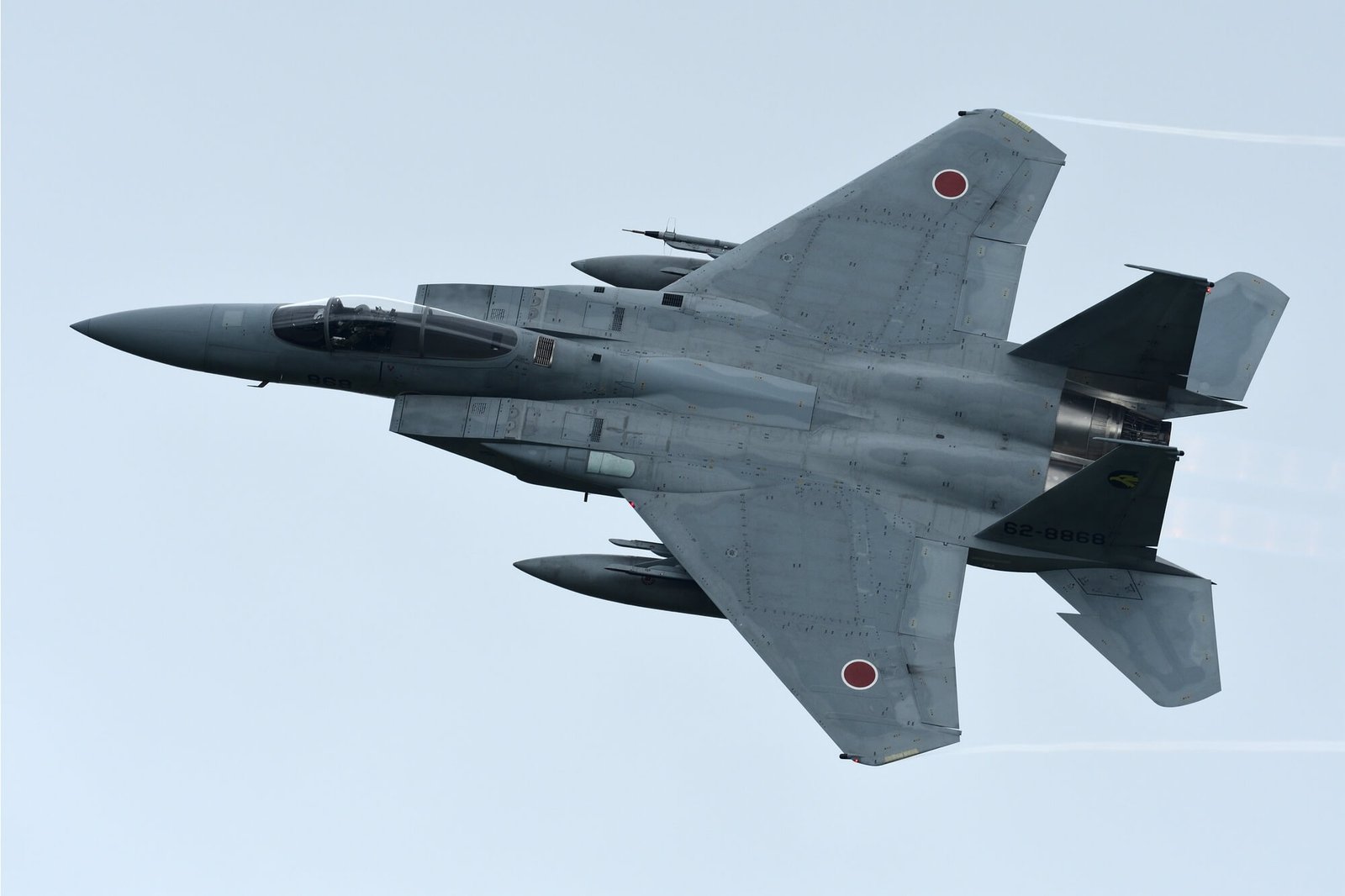
World
TOKYO — Japan’s Ministry of Defense signed four new contracts in May 2026 to support the ongoing modernization of Japan Air Self-Defense Force (JASDF) F-15J fighters to the F-15JSI, or Japan Super Interceptor, configuration. The four agreements were concluded with the U.S. Air Force under the Foreign Military Sales (FMS) program. Their combined value is ¥42.65 billion (approximately $267.75 million). The contracts cover equipment for improving the fighters’ combat capabilities, communications systems maintenance equipment, flight operations support and logistics support for the serial modernization program. Four Contracts Cover F-15J Modernization According to Japan’s Ministry of Defense contract information, the largest agreement is valued at ¥34,598,728,358, or approximately $217.2 million. It covers equipment intended to enhance the combat capabilities of the F-15Js being modernized to the JSI configuration. A second contract, worth ¥3,223,462,424 (about $20.2 million), covers communications systems maintenance equipment. The third agreement provides equipment to support flight operations of the upgraded F-15Js, identified as MDS. It is valued at ¥36,742,200, or around $230,600. The fourth contract covers logistics support for the serial modernization of the F-15J fleet. It is worth ¥4,794,000,798 (about $30.1 million). Together, the four contracts total ¥42,652,933,780, equivalent to approximately $267.75 million. F-15JSI Modernization Program The F-15JSI program is a major modernization effort for selected JASDF F-15J fighters. The program is being carried out by Boeing and Mitsubishi Heavy Industries under the U.S. FMS framework, with the main contract framework finalized at the end of 2021. The modernization is intended to bring selected F-15J aircraft to a capability level comparable to modern F-15 variants such as the F-15EX and F-15QA, while continuing to use the remaining service life of the existing airframes. A major part of the upgrade is the replacement of the F-15J’s older AN/APG-63(V)1 mechanically scanned radar with the AN/APG-82(V)1 active electronically scanned array (AESA) radar. The aircraft are also receiving upgraded electronic warfare, radar warning and communications equipment intended to bring their systems closer to the Advanced Eagle standard. The electronic warfare upgrade includes the Eagle Passive Active Warning Survivability System (EPAWSS). Mitsubishi Heavy Industries is separately studying the possibility of integrating a Japanese-developed AESA radar into the modernized aircraft. Further details of that work have not been released. Increased Weapon-Carrying Capability The F-15JSI modernization will also increase the aircraft’s ability to carry air-to-air weapons. An unmodernized F-15J can carry up to eight air-to-air missiles, while the JSI configuration is expected to carry more than twice that number. The final weapon configuration has not been fully detailed. Mitsubishi is testing the AAM-4 (Type 99) missile for compatibility with the upgraded aircraft, while the modernization includes integration for the AAM-4B and AAM-5B. Japan is also considering the integration of air-launched cruise missiles, including the AGM-158 JASSM. Modernization Numbers Reduced Japan initially planned to modernize approximately 98 F-15J aircraft to the F-15JSI standard. Funding was later secured for modernization of 68 aircraft. The number has since been reduced. Japan’s defense planning documents identify 54 F-15 aircraft for the modernization program. Japan’s Ministry of Defense has also continued to plan the replacement of F-15 aircraft that are not suitable for modernization with F-35A and F-35B fighters. The JASDF operates approximately 200 F-15J/DJ fighters in total. The reduction in the number of aircraft selected for the JSI program means that the modernization effort will apply to only part of Japan’s F-15J/DJ fleet. Surplus F-100 Engines The modernization and wider changes to the F-15J fleet are also creating surplus equipment. IHI Corporation has been examining options for disposing of approximately 200 Pratt & Whitney F100 engines removed from F-15J aircraft as older airframes leave service. The F-15 modernization program itself has also received multiple modifications under the broader U.S. contract FA8634-22-C-2705, covering areas including radars, self-protection systems, mission computers and other equipment. Japan’s wider fighter modernization effort is taking place alongside the introduction of the F-35 and development of the Global Combat Air Programme (GCAP) with the United Kingdom and Italy. Japan, the UK and Italy continue to advance GCAP through their joint government organization and industry partnership. The four May 2026 FMS contracts therefore represent another stage in Japan’s ongoing effort to modernize the selected F-15J aircraft that will remain in JASDF service.
Read More → Posted on 2026-08-17 12:04:48
U.S
CAPE CANAVERAL, Fla. — MDA Space has successfully deployed the first eight of 17 replenishment satellites being built for Globalstar’s low Earth orbit (LEO) communications constellation. The eight satellites were launched on August 15 at 9:12 p.m. Eastern Time aboard a SpaceX Falcon 9 rocket from Space Launch Complex 40 at Cape Canaveral Space Force Station in Florida. Following deployment, contact was established with all eight spacecraft. The satellites are generating power, operating as expected in orbit and entering the commissioning phase, where they will undergo in-orbit testing. The launch marks MDA Space’s first satellite delivery as prime contractor for a commercial communications constellation. MDA Space was selected by Globalstar in 2022 to provide 17 replacement satellites intended to replenish and extend the company’s existing LEO constellation. MDA Space Leads Satellite Program Under the program, MDA Space is responsible for the overall satellite program, including design, manufacturing, assembly, testing and integration. The spacecraft were fully integrated and tested at MDA Space’s facilities in Montréal, Canada, before being transported to Florida for launch. MDA Space originally announced the 17-satellite contract in February 2022. The contract was valued at $327 million and included the design, manufacture, assembly and testing of the satellites. The satellites are intended to integrate with Globalstar’s existing constellation and help maintain continuity of service. The Globalstar replenishment program has also been an important part of MDA Space’s expansion of its satellite production capabilities. The company has been developing higher-volume manufacturing processes to support constellation-class spacecraft. MDA Space CEO Mike Greenley previously said the Globalstar program was helping transform the company’s satellite design and high-volume production process. The company has also brought its new high-volume satellite manufacturing facility in Montréal into operation. Rocket Lab Provides Satellite Platforms Rocket Lab is supplying the satellite platforms for the 17 spacecraft under its agreement with MDA Space. The platforms are based on a customized version of Rocket Lab’s Lightning satellite design. Each spacecraft weighs approximately 500 kilograms. Rocket Lab has supplied components including solar arrays, reaction wheels, avionics, flight and ground software, and command and telemetry radios. The platforms were manufactured at Rocket Lab’s facility in Long Beach, California, before being sent to MDA Space in Montréal for integration and testing. Rocket Lab reported that it established contact with all eight spacecraft after launch and confirmed that they were generating power and operating nominally. MDA Space and Rocket Lab’s roles were established when the satellite contract was announced in 2022. MDA Space was named prime contractor, while Rocket Lab was selected to lead development of the spacecraft bus. Satellites Will Replenish Globalstar’s LEO Network Globalstar’s existing LEO constellation supports mobile satellite services and Internet of Things applications. The company has also used its satellite network to provide direct-to-device services for selected mobile devices. Globalstar previously said the 17 replacement satellites would replenish its existing constellation and provide continuity of satellite services. The company signed launch agreements with SpaceX for two Falcon 9 missions to deploy the replacement satellites. The first launch carries eight of the 17 satellites. The remaining nine satellites are in the final stages of integration at MDA Space’s facilities. Globalstar signed a separate agreement with SpaceX in July 2025 for the launch of the remaining nine replacement satellites. The company said at the time that the second launch was expected in 2026. A specific launch date for the remaining nine satellites has not been announced in the information provided. Next Steps The eight newly deployed spacecraft will continue through their commissioning process before being incorporated into Globalstar’s operational constellation. The remaining nine satellites will complete the 17-satellite replenishment program once they are integrated, tested and launched. The program gives MDA Space a commercial reference for its role as a prime contractor responsible for delivering satellites for a LEO communications constellation. It also builds on the company’s broader work with Globalstar. In February 2025, MDA Space announced a separate contract worth approximately $1.1 billion to serve as prime contractor for Globalstar’s next-generation LEO constellation, which is planned to include more than 50 MDA AURORA software-defined satellites.
Read More → Posted on 2026-08-17 11:44:18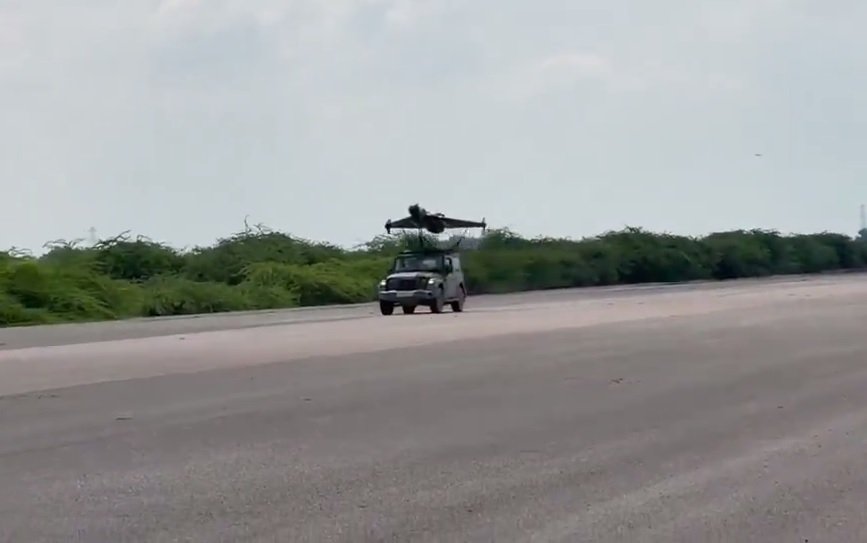
India
Lucknow, August 16, 2026: Kawa UAV Pvt. Ltd., operating under the brand HoverIt, has successfully conducted the maiden flight of the Divyastra Mk3, a jet-powered loitering munition developed and manufactured in India. The flight took place on August 11, 2026, at a designated testing airstrip in Uttar Pradesh. According to the company, the Divyastra Mk3 is the first indigenously designed, developed and manufactured jet-powered loitering munition to fly with a fully Indian-made jet engine. The system is powered by a turbojet engine developed by DG Propulsion, an Indian propulsion technology company. During the trial, the engine met all pre-defined operational parameters. Kawa UAV said the platform uses no imported jet engine or foreign critical subsystems. The Divyastra Mk3 programme began at the start of 2026. Kawa UAV said the system progressed from concept to its successful maiden flight within the same calendar year, with some reports placing the development timeline at under eight months. A loitering munition is an unmanned system designed to remain airborne over an area, search for targets and strike when required. The jet-powered configuration of the Divyastra Mk3 is intended to provide higher speed than comparable propeller-driven systems. DG Propulsion has developed microjet engines in the 40 kgf and 100 kgf classes for applications including loitering munitions and high-speed unmanned aerial vehicles. The Divyastra Mk3 flight provides an airborne demonstration of the company’s engine technology on an Indian-designed platform. The co-founders of HoverIt said the achievement demonstrates India’s ability to develop a jet-powered precision-strike system domestically and described the Divyastra Mk3 as an example of “Atmanirbhar Bharat in action.” The maiden flight adds to India’s wider efforts to develop indigenous unmanned and precision-strike capabilities, with both private companies and government defence organisations working on autonomous weapon systems.
Read More → Posted on 2026-08-16 15:24:42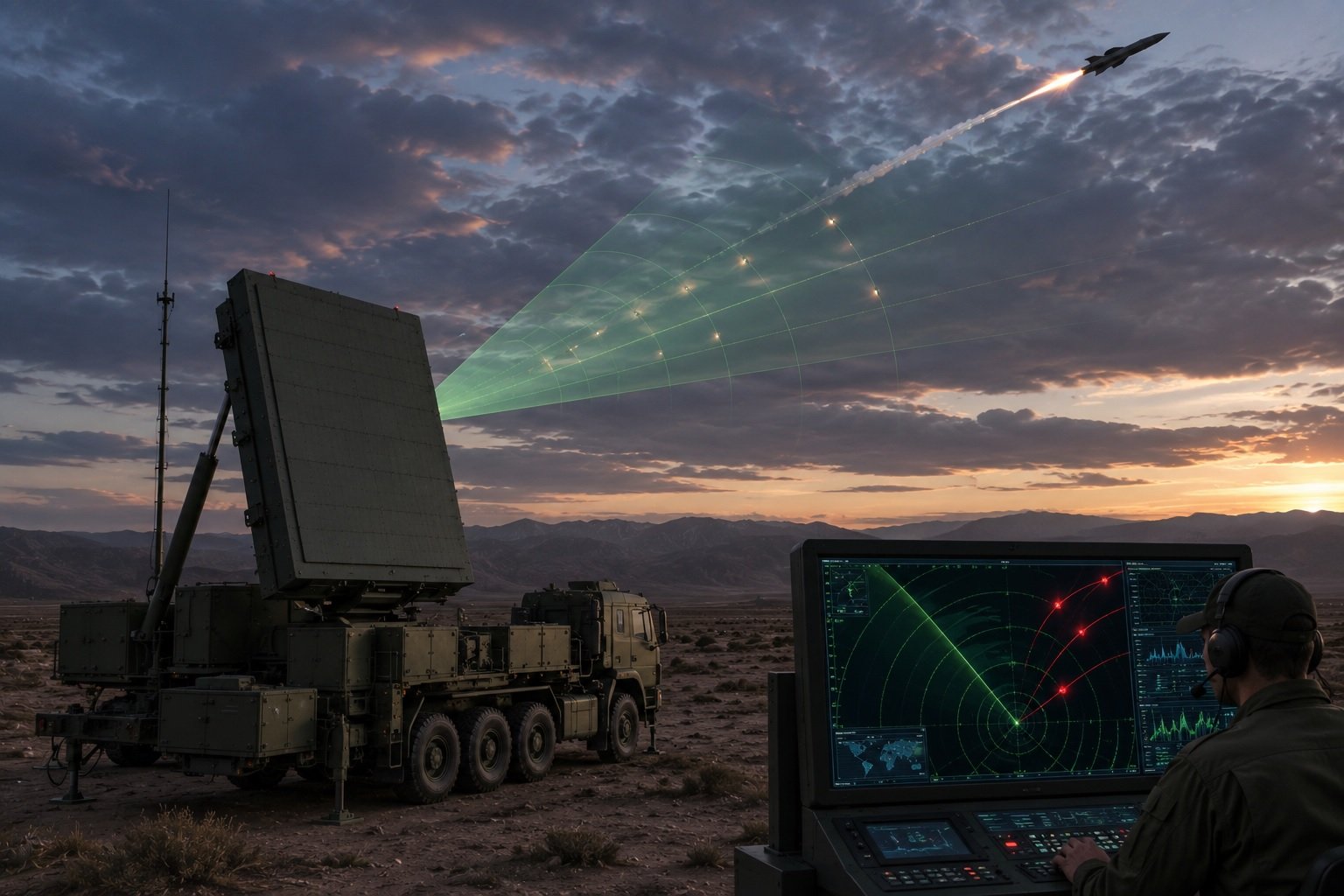
U.S
REDSTONE ARSENAL, Alabama — The U.S. Missile Defense Agency (MDA) is seeking industry prototypes for a new highly mobile radar system designed to detect, track and discriminate ballistic, cruise and hypersonic missiles and other advanced airborne threats. The Forward-Based Mode (FBM) Radar Next program is being led by the MDA’s Mobile Land-Based Sensors Project Office. The agency issued a presolicitation notice on August 10, 2026, through SAM.gov under its Nimble Options for Buying Layered Effects (NOBLE) Multiple Authority Announcement. Rapid Prototyping and Production The MDA plans to use Other Transaction Authority (OTA) to speed up the prototyping process. The prototype must demonstrate a clear path to rapid, high-volume production at an affordable unit cost, allowing systems to be produced and replaced cost-effectively in forward locations. Only companies that successfully complete the prototype project will be eligible for a potential sole-source follow-on production award. The MDA will first screen out speculative or immature technologies. Vendors must demonstrate hardware maturity and provide empirical measurement data before entering the prototyping pipeline. The planned stages include concept development; technology and manufacturing readiness and extensibility; subscale prototyping with modeling and simulation; and full-scale prototype development and demonstration. Proposals will be evaluated on technical merit, operational feasibility, schedule viability, producibility, affordability and cost realism. Mobile and Survivable Design The FBM Radar Next is intended to address limitations of current static or semi-mobile radars, which the MDA says can be vulnerable to counterattacks and lack the rapid relocation capability needed for distributed operations. The system must be transportable by C-17 aircraft and tactical ground vehicles, while supporting rapid setup and teardown. It must provide high-sensitivity detection, persistent tracking and precise discrimination in high-clutter and contested electromagnetic environments. The radar must also support remote operation and automated health monitoring, reducing the need for personnel at the radar site. It must remain interoperable with existing Command and Control, Battle Management and Communications (C2BMC) networks and use a flexible aperture configuration and modular open-systems architecture. Its physical, thermal and electromagnetic signatures must also be designed to improve survivability. Driven by Changing Missile Threats The MDA said the requirement for agile and survivable forward-based sensors has increased as adversaries develop more sophisticated missile capabilities. The notice comes amid reports of Iranian targeting of U.S. air-and-missile defense radars in the Middle East, Russian use of hypersonic and ballistic missiles in Ukraine, and China's continued expansion of missile arsenals in the Pacific. FBM Radar Next is positioned as a more mobile successor concept to systems such as the AN/TPY-2, which has been used in forward-based roles but is not optimized for rapid relocation. The MDA’s Fiscal Year 2027 budget request includes funding for two next-generation radar prototypes to mature technologies for a future fleet. The formal solicitation has not yet been released, and the government is not currently accepting inquiries or feedback on the presolicitation. The listed place of performance is Redstone Arsenal, Alabama. The notice carries public-release marking 26-MDA-12385, dated August 10, 2026. Offerors must hold or obtain a facility security clearance through the Defense Counterintelligence and Security Agency (DCSA) before beginning the first cycle. The MDA also encourages teaming arrangements involving non-traditional defense contractors and small businesses, including shared resource alignment or co-investment.
Read More → Posted on 2026-08-16 15:19:53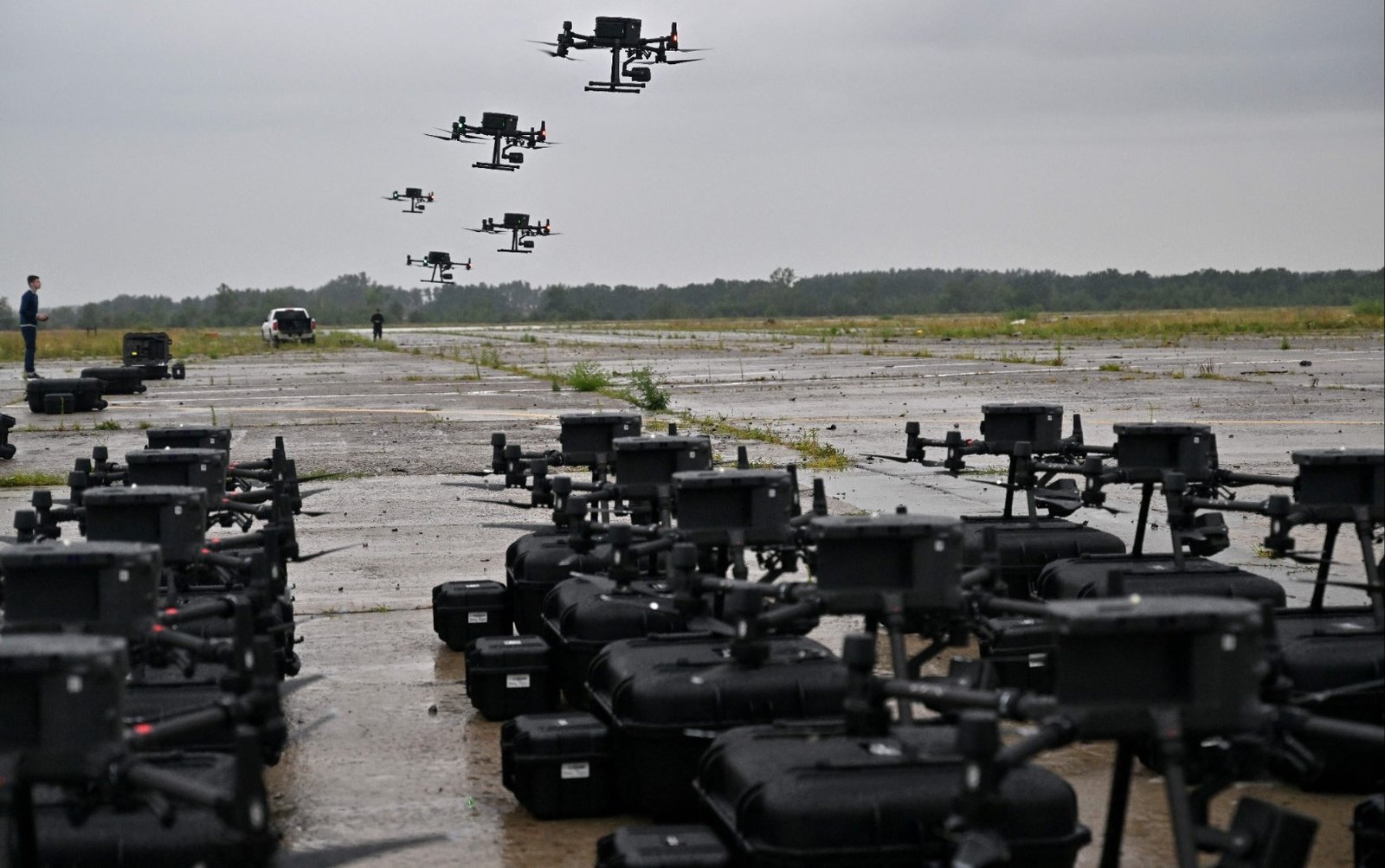
U.S
CHEYENNE, Wyoming — The U.S. Air Force is purchasing Chinese-made DJI drones for counter-drone training at F.E. Warren Air Force Base in Wyoming. The aircraft will be used as realistic stand-ins to train security personnel to detect, track and defeat small unmanned aircraft systems. The purchase is intended to allow the 90th Missile Security Operations Squadron (90 MSOS), under Air Force Global Strike Command, to test radar, electronic warfare, jamming and other counter-drone systems against the actual radio-frequency signals produced by DJI aircraft rather than relying only on computer simulations. On August 14, 2026, the 90th Contracting Squadron posted a combined synopsis and solicitation, identified as FA461326Q1042, seeking a small business vendor to provide the aircraft. Vendor quotes are due August 24. DJI drones requested The procurement document identifies the requested equipment as the “Red Fleet.” The order includes: Two refurbished DJI Mavic 2 Pro quadcopters with Fly More kits Two DJI Mini 3 Pro drones with remote controllers Two DJI Avata 2 Fly More combos Six airdrop payload release devices Shipping The Air Force plans to award a firm fixed-price contract to the lowest-priced offer that meets the technical requirements. Contracting officials designated the purchase as a brand-name requirement, meaning the Air Force specifically requires DJI products rather than accepting equivalent drones from other manufacturers. A justification document signed July 29 by Contracting Officer Technical Sergeant Chad A. Evans said DJI controls an estimated 80 to 85 percent of the global commercial drone market. The document also states that DJI's proprietary electronic protocols, radio-frequency signatures and flight capabilities are not accurately replicated by American-made drones or other manufacturers. According to the justification, using the actual DJI aircraft is necessary to test counter-drone systems against the equipment that adversaries are statistically most likely to use. The document says relying only on domestic drones or simulated data would leave security personnel without training against DJI's actual radio signatures and communication protocols. Training for nuclear missile field security F.E. Warren Air Force Base is one of three U.S. Air Force bases that operate Minuteman III intercontinental ballistic missiles. Its security personnel are responsible for protecting the missile fields against ground and airborne threats. The 90 MSOS requires the DJI aircraft for counter-small unmanned aircraft systems training as part of its nuclear security mission. The drones will provide live targets and signals for personnel testing detection and defeat capabilities. The justification also notes that Malmstrom Air Force Base in Montana, another Air Force Global Strike Command missile base, is already using or pursuing similar DJI platforms for counter-drone training. The F.E. Warren procurement is intended to support more consistent threat replication across Global Strike Command's missile fields. Air Force plans cybersecurity safeguards Although the aircraft are manufactured in China, the Air Force plans to modify the drones before they are used for training. The justification states that every DJI aircraft will be loaded with U.S.-made software called RIZER. According to the document, the software overrides the drones' native firmware and creates an air-gapped system that prevents the aircraft from transferring or downloading telemetry or imagery to foreign entities or Department of War networks. The justification says similar RIZER-equipped DJI drones have previously been procured by other Air Force units for counter-small unmanned aircraft systems testing and training. Legal authority for the purchase The procurement document cites a July 2025 memorandum from Secretary of War Pete Hegseth, titled “Unleashing U.S. Military Drone Dominance,” as the authority for acquiring small quantities of foreign drone equipment for electronic warfare testing, training and counter-UAS development. The memo allows officers at the O-6 (colonel) level or equivalent to use the authority provided under 10 U.S.C. 2304(c)(1) to procure foreign drone equipment under specified circumstances without full and open competition. The requirement is still being conducted as a 100 percent small business set-aside because the contracting squadron identified multiple authorized DJI distributors capable of supplying the requested equipment. It is therefore not a single-source award to DJI itself. The purchase is part of F.E. Warren's broader efforts to improve security against small unmanned aircraft. Recent activities have included multi-command counter-small unmanned aircraft systems qualification training at Camp Guernsey Joint Training Center in Wyoming involving personnel from Air Force Global Strike Command, Air Combat Command, U.S. Strategic Command and the Air National Guard. F.E. Warren is also transitioning helicopter support from the UH-1N Huey to the MH-139A Grey Wolf as part of broader upgrades to its nuclear security mission.
Read More → Posted on 2026-08-16 14:59:43
U.S
WASHINGTON — Publicly available workout data from fitness-tracking app Strava is raising renewed security concerns after an investigation found that military personnel have continued to publish exercise routes from sensitive installations and deployment areas. A Sky News investigation published on August 12 found more than 1,300 Strava users sharing workouts from or near U.S. military bases in the Middle East. Many of the accounts used real names, while the publicly visible routes could reveal where personnel were exercising, their routines and changes in activity around military facilities. Security experts cited by Sky News said such information could potentially be combined with other intelligence to track U.S. personnel and movements. Strava Data Linked to U.S. Bases in Middle East The investigation examined activity around several U.S. military facilities during the conflict with Iran. At the main U.S. naval base in Manama, Bahrain, Sky News identified a Strava account linked to a U.S. Navy contractor who had regularly recorded runs around the base. The activity stopped for two days after personnel began leaving the facility. The account then showed runs around the courtyard of the Crowne Plaza hotel, where some personnel had reportedly relocated. Six days later, Iran attacked the hotel. Two U.S. Department of Defense employees were reportedly wounded, according to the Sky News investigation. However, the investigation did not establish that Strava data was specifically used by Iran to select the hotel as a target. A similar pattern was identified at Jordan's Muwaffaq Al Salti Air Base. Before the conflict, U.S. personnel had regularly published runs across the installation. Activity resumed in April after a pause in March, but Sky News found that the routes had become concentrated in one area. According to the investigation, 76% of the later activities began or ended near barracks on the eastern side of the base. Iran attacked those barracks on July 17, killing three U.S. soldiers. Sky News also found publicly accessible Strava activity at the base on July 16, one day before the attack. Sky News reported that the data can provide what intelligence analysts describe as a "pattern of life" by combining large numbers of individual activities. Such information can reveal regular movements, concentrations of personnel and changes in deployment patterns. British and Israeli Locations Also Exposed The investigation found that the problem extends beyond U.S. forces. Sky News identified about 12,000 workouts recorded inside RAF Akrotiri in Cyprus since January 2026. The investigation also identified British personnel sharing activities from the base and tracked some profiles across deployments in the Middle East. Separate reporting in April found that 519 British military personnel, contractors and family members had publicly recorded Strava activities at sensitive UK military sites. The locations included Faslane, home to Britain's nuclear deterrent, and Northwood, the headquarters of the UK's military command. Sky News also identified three Strava users recording runs inside Israel's Dimona nuclear research facility. The facility is considered highly sensitive and has previously been a target of Iranian attacks. French Military Has Faced Similar Problems French military operations have also been affected by publicly shared fitness data. In March 2026, a French Navy officer using Strava publicly uploaded a workout recorded during the deployment of the aircraft carrier Charles de Gaulle. The data allowed the ship's location in the Mediterranean, northwest of Cyprus, to be identified. Le Monde matched the Strava activity with satellite imagery and located the carrier and its escort group. The French military acknowledged that publishing the workout did not comply with existing operational security instructions and said appropriate measures would be taken. Earlier investigations also identified Strava activity connected to France's Île Longue naval base, where the country's nuclear-armed ballistic-missile submarines are based. Analysis of activity gaps was reported to have provided indications of submarine patrol periods. Pentagon Has Warned About Fitness Tracker Risks Since 2018 The security problem is not new. In 2018, a Strava global activity map exposed patterns around military facilities, including a previously undisclosed U.S. installation in Niger. The Pentagon subsequently prohibited Department of Defense personnel from using geolocation features on government and personal devices, applications and services in designated operational areas, unless authorized under specified conditions. The Defense Department had already warned in January 2018 that fitness trackers could reveal the locations and routines of military personnel. Officials advised personnel to use the strictest privacy settings and warned that publicly available fitness data could expose military locations and potentially assist targeting. Despite those restrictions and repeated warnings, publicly accessible fitness activity has continued to appear at sensitive military locations. Public Data Can Reveal More Than a Single Location The main security concern is not limited to identifying where one person is exercising. When multiple users repeatedly publish GPS-based workouts, the information can show where personnel are concentrated, their regular routines and changes in activity over time. It can also provide indications of movements between military facilities and changes in the number of people present at particular locations. Sky News said its investigation did not establish that Iran specifically used Strava information to select the targets described in its report. The available data nevertheless demonstrates how publicly shared commercial location information can potentially be combined with other intelligence sources. Strava said it takes user safety and privacy seriously and provides privacy controls. The company also said it expects people working in sensitive professions to use those controls and appropriately limit what they publish. The continued appearance of military activity on public fitness platforms therefore remains an operational-security concern, particularly when individual workout records can be combined to reveal movements and patterns around military facilities.
Read More → Posted on 2026-08-16 14:49:13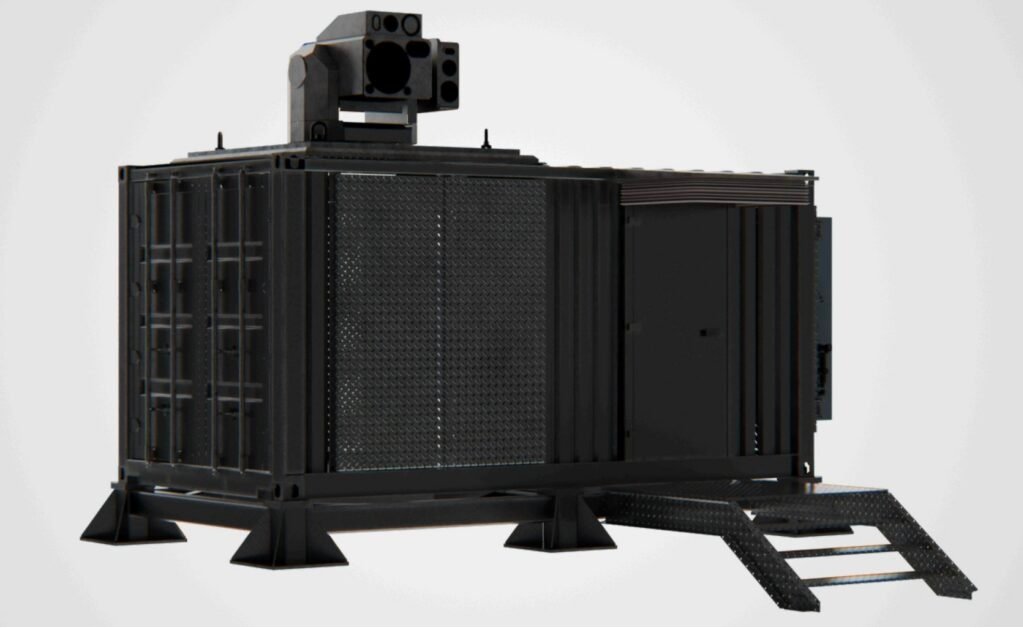
U.S
PHILADELPHIA, PA — U.S. defense technology company Attalon has introduced the Valaris family of directed-energy laser systems, a new product lineup designed to provide defense contractors and military system integrators with multiple laser architectures and power levels for air, land and maritime applications. Attalon says the Valaris family combines its coherent, spectral and dichroic beam-combining technologies with lightweight adaptive optics for beam control. The company has structured the lineup around three variants, allowing customers to select a laser architecture and power level according to their specific mission requirements. Three Valaris Laser Variants The Valaris X is the highest-powered system in the family. It uses a coherently beam-combined (CBC) architecture and provides 50-kilowatt-class performance. Attalon says the system can scale beyond 300 kilowatts for long-range directed-energy missions and incorporates advanced adaptive optics. The Valaris S uses a spectrally beam-combined (SBC) architecture and provides 30-kilowatt-class output. It is designed to scale to 50-kilowatt-class levels, while focusing on beam quality, manufacturing scalability and cost. The Valaris D uses a dichroically beam-combined (DBC) architecture and provides 10-kilowatt-class performance. Attalon positions it for lower-power missions and as a more cost-effective option for operational applications. According to Attalon, bringing the three architectures together under one product family is intended to give defense primes, system integrators and government customers greater flexibility when selecting a laser system. The company says the modular approach also focuses on manufacturability, maintainability and operational readiness as directed-energy technologies move from demonstrations toward production programs. Focus on Field Maintainability The Valaris announcement follows Attalon's recent work on improving the maintainability of high-energy laser systems. On July 23, Attalon announced the first production shipment of its Kilowatt Interconnect (kWIC) Disconnect subsystem. The component is designed to allow field replacement of laser amplifiers without fiber splicing or specialized maintenance personnel. Attalon says the system provides a precision-aligned fiber-optic connection and includes verification checks for proper alignment before laser operation. Attalon's focus on field serviceability is part of its broader effort to develop directed-energy components that can be maintained outside specialized facilities. Recent U.S. Navy Directed-Energy Work Attalon also received a $17.1 million contract modification from the Office of Naval Research under the U.S. Navy's SONGBOW program in July. The work includes continued development of pulsed fiber lasers for remote sensing and illumination and further development of a 400-kilowatt-class directed-energy subsystem through the integration of a 50-kilowatt laser with a beam-control assembly. The work is being led by Attalon's Directed Energy & Advanced Lasers team in Beavercreek, Ohio. The SONGBOW award adds to Attalon's ongoing work in high-power laser systems and beam-control technologies. Attalon's Directed-Energy Business Attalon is an independent U.S. defense technology company headquartered in Philadelphia. The company works in directed energy, precision optics and coatings for aerospace and defense applications. Attalon says its vertically integrated approach covers technologies from materials through finished laser and beam-control assemblies. The company's Directed Energy & Advanced Lasers business is led by Matt Straup, vice president and general manager. With Valaris, Attalon is bringing its three beam-combining approaches into a single product family, with systems ranging from 10-kilowatt-class to 50-kilowatt-class output and higher scaling options for the Valaris X. The company says the lineup is intended to give defense customers more options when selecting directed-energy systems for different mission and integration requirements.
Read More → Posted on 2026-08-16 13:40:35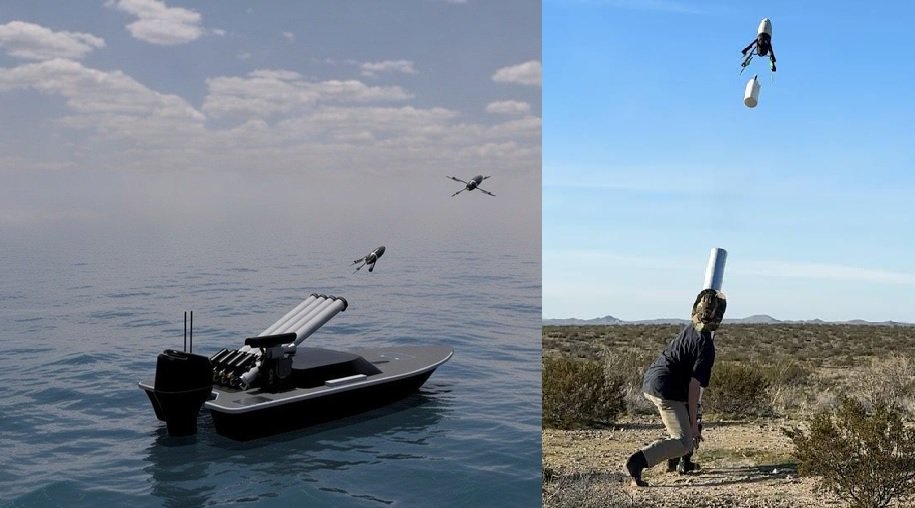
U.S
HAWTHORNE, Calif. — California-based defense startup Thermopylae Aerospace has announced SPART, a tube-launched interceptor designed to counter Group 2 and 3 unmanned aircraft systems (UAS) and turbojet-powered attack drones. SPART is a foldable, ultra-light electric-powered quadcopter launched from a conventional, mortar-like pneumatic tube. It uses thermal guidance to track and intercept targets and can reach speeds of up to 350 km/h (217 mph), with a targeted flight endurance of up to 20 minutes. The interceptor is designed to address high-volume, low-cost aerial threats, including Shahed-type attack drones. Thermopylae Aerospace is targeting a unit cost of about $10,000 or less per launch. SPART also has a partial-reuse design, allowing an interceptor that misses its target to potentially be recovered and used again. The system can be deployed from UAVs, ground vehicles, maritime vessels and manned vehicles. Rather than depending on a centralized protection system, the company intends SPART to provide a mobile, distributed defensive layer. Thermopylae Aerospace is developing a complete system combining the interceptor with its launcher, RF communications and command-and-control system, which can integrate with available radar systems. Its software has also been designed to work with widely used Ukrainian situational-awareness and command-and-control systems. In mid-July 2026, the company completed a successful end-to-end demonstration at Edwards Air Force Base during the “Game of Drones 26-2” event organized by the U.S. Air Force’s 412th Test Wing. Founder and CEO Yehor Balytskyi briefed senior Air Force Test Center leadership, including Brig. Gen. Mark Massaro and Chief Master Sgt. Sevin Balkuvvar. Thermopylae Aerospace was founded in June 2025 by Ukrainian aerospace and mechanical engineers and is headquartered in Hawthorne, California. Balytskyi left Ukraine at age 17 after Russia’s full-scale invasion in 2022. The company has grown from a two-person team to about five employees. In November 2025, Thermopylae Aerospace raised $1.6 million in pre-seed funding from investors including Naval Ravikant, UA1, Norgard Capital and Cyrus Venture Fund. The company said the funding would support production expansion, further testing in Ukraine and deployment with defense units. Thermopylae Aerospace says its goal is to develop a low-cost interceptor that can be produced and deployed in high volumes, helping address the economic challenge of defending against large numbers of relatively inexpensive drones.
Read More → Posted on 2026-08-16 13:20:34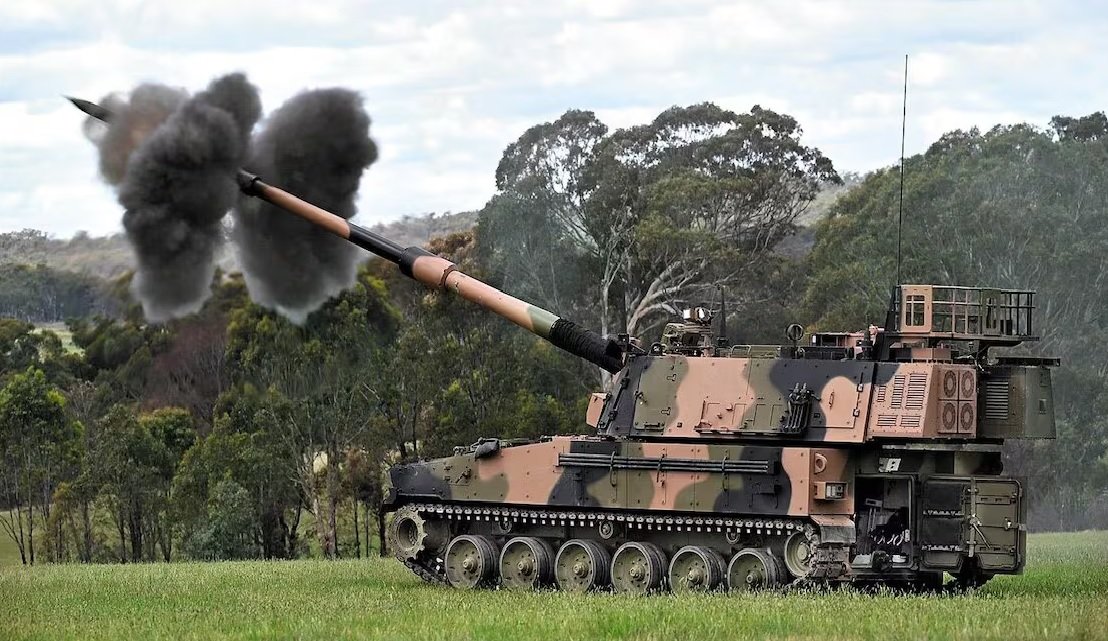
World
TOWNSVILLE, QLD — The Australian Army has officially fielded its first protected mobile fires battery with the 3rd Brigade, introducing the AS9 Huntsman self-propelled howitzer into operational training with 106 Battery, 4th Regiment, Royal Australian Artillery. Six AS9 Huntsman self-propelled howitzers and one AS10 Armoured Ammunition Resupply Vehicle have been delivered to 106 Battery at Lavarack Barracks in Townsville. The delivery follows Australia’s first AS9 operator training and live-fire activity at the School of Artillery in Puckapunyal, Victoria. In May, 30 gunners from 4th Regiment completed a six-week training course, followed by live-fire activity involving around 150 rounds from multiple AS9 systems. Brigadier James Davis, Director General Systems and Integration, said the transition from Australian production to trained crews conducting live fire in a short period demonstrated effective cooperation between the Army, the Capability Acquisition and Sustainment Group and industry partners. Australian-built artillery capability The AS9 Huntsman is a tracked 155mm/52-calibre self-propelled howitzer based on the South Korean K9 Thunder. It is designed to provide protected indirect fire while allowing artillery crews to rapidly relocate after completing a firing mission. The vehicle has a maximum road speed of more than 60 km/h, carries a crew of about five and has onboard storage for around 48 rounds. It can fire three rounds in about 15 seconds and sustain six to eight rounds per minute. Its reported range is approximately 30–40 km with standard ammunition and up to around 60 km with specialised ammunition. The AS10 uses the same tracked chassis and is designed to resupply the AS9. Its automated ammunition-transfer system allows ammunition to be transferred while crews remain under armour, with a stated capacity of around 100 rounds. Local production under LAND 8116 Australia is acquiring the Huntsman system through LAND 8116 Phase 1, Protected Mobile Fires. The program covers 30 AS9 howitzers and 15 AS10 resupply vehicles under a contract with Hanwha Defence Australia valued at approximately A$1 billion. Initial vehicles were manufactured in South Korea and arrived in Australia in late 2024 or early 2025. The remaining vehicles are being produced locally at Hanwha Defence Australia’s Armoured Vehicle Centre of Excellence near Avalon Airport in Geelong, Victoria. The program forms part of the Australian Army’s broader modernisation toward a heavier and more protected force, with the AS9 providing a tracked alternative to the M777 towed howitzers for the 3rd Brigade’s protected mobile fires capability. Moving to collective training The introduction of the first battery now allows 106 Battery to move beyond individual operator qualification and begin collective training. During Exercise Pozieres Run, crews will integrate the AS9 and AS10 into 3rd Brigade activities while 4th Regiment develops the tactics, techniques and procedures needed for brigade and divisional employment. Major General Ash Collingburn, Commander 1st Division, said the new capability was intended to provide a warfighting advantage by making soldiers more lethal, mobile and survivable. Lieutenant Colonel Simon Frewin, Commanding Officer of 4th Regiment, said 106 Battery was ready to take the systems into the field and build its collective proficiency. Sergeant Dale Chivers, battery guide for 106 Battery, said the AS9 could come into action in about 30 seconds, conduct its firing mission and move quickly, improving survivability and allowing the battery to keep pace with the brigade. The Australian Army is working toward full operational capability for protected mobile fires by 2028.
Read More → Posted on 2026-08-16 13:13:58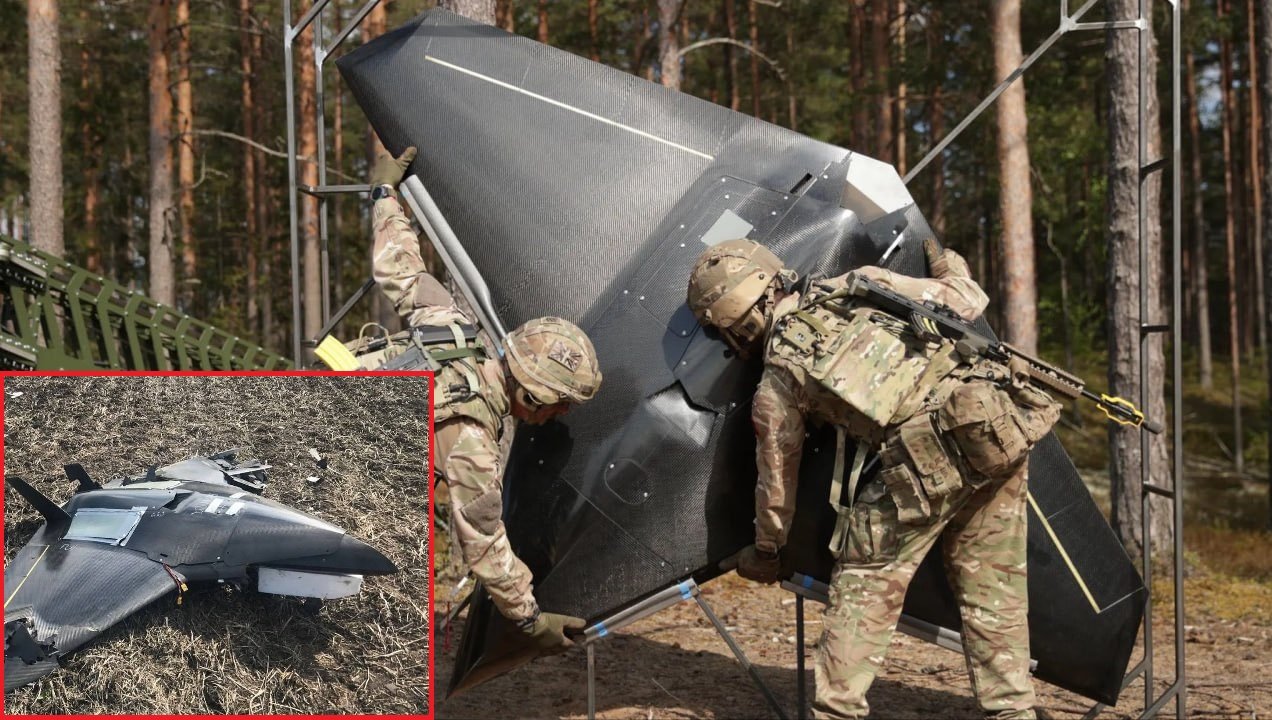
World
LONDON, UK — Ukraine has used British-made drones in deep-strike operations against targets inside Russia over the past six months, including oil refineries in Volgograd and Yaroslavl, according to The Times. Ukrainian military sources cited by the newspaper said the British systems have also been used against other targets, including naval bases, logistics hubs and transport networks. The Nyan One-Way Effector (OWE), developed by British company Callen-Lenz, is among the systems used in these operations. Callen-Lenz is part of FalconWorks, BAE Systems’ technology division. The Times reported that a second British-made drone has also been used, but the manufacturer was not identified for security reasons. pic.twitter.com/iRn2U5Ct6A — Drone Wars (@Drone_Wars_) August 16, 2026 Ukrainian sources said most of the country's deep-strike missions continue to rely on domestically produced drones, but British systems have contributed to long-range operations. The reported targets include the Volgograd and Yaroslavl oil facilities, as well as targets in the Belgorod region. Nyan One-Way Effector The Nyan is a jet-powered one-way effector designed for deep-strike missions. BAE Systems describes it as having a low radar cross-section, a flexible payload bay, modular architecture and the ability to operate in GNSS-denied environments. The company also lists deep strike among its intended operational uses. The aircraft has a 2.9-metre wingspan and a maximum takeoff weight of more than 75 kg. It is launched using a pneumatic catapult and is powered by a single micro gas-turbine engine. Its cruising speed is around 120 knots, or approximately 222 km/h, while its reported range is more than 150 miles (about 240 km). The drone can carry a payload of up to 20 kg. Its carbon-fibre airframe and modular design allow different equipment configurations depending on the mission. BAE Systems says the system is designed to be deployed from unprepared ground and has already been used operationally in contested environments. Nyan Already in Ukrainian and British Service The Nyan has been used by the Ukrainian Defence Forces for some time. In June 2024, an identical jet-powered drone was recovered on Russian territory and was initially identified as a new Ukrainian one-way attack drone. The system was later identified as the British-made Nyan. The system is also being introduced into the British Army. The UK Ministry of Defence said in March 2026 that the Army intends to field an initial One-Way Effector capability, including the Callen-Lenz Nyan, as part of the UK's deep-fires contribution on Operation CABRIT. In February 2026, the UK Ministry of Defence awarded Callen-Lenz a contract worth £4,996,500 excluding VAT for Nyan OWE systems for operational and training use. The official procurement notice said the Nyan was the only off-the-shelf product of its type registered on the Military Aircraft Register and had undergone a UK Ministry of Defence Article 36 legal review. BAE Systems has said that more than 1,000 Nyan systems have been produced. Tested in Estonia and at Sea The British Army demonstrated the Nyan during Exercise Spring Storm in Estonia in May 2026, where it was used as part of the UK's deep-fires capability. Callen-Lenz said the system was operated with the Estonian-built Threod Systems CATA launcher. The Nyan has also been tested for maritime operations. In June 2026, the Royal Navy and British Army launched the drone from the experimental vessel XV Patrick Blackett during trials off the south coast of England. The launch was conducted as part of Exercise Neptune Reach under Project Vantage, which is focused on testing maritime attack drones. The Royal Navy said the drone was launched from a launcher installed on the ship's deck and flown while the vessel was at sea. Further trials, including possible testing aboard HMS Queen Elizabeth, have been discussed. The use of British-made drones in Ukraine's deep-strike campaign adds another role for the Nyan beyond the British Army's own testing and deployment. While Ukraine continues to rely mainly on its domestic drone industry for long-range attacks, the reported use of British systems shows that UK-supplied unmanned platforms are also being employed in operations against targets inside Russia. BAE Systems said it provides a range of capabilities to the UK Ministry of Defence as part of Britain's support for Ukraine and described the Nyan as a rapidly developed uncrewed system that has been proven in contested environments.
Read More → Posted on 2026-08-16 13:03:29
World
MOSCOW — A large Ukrainian drone attack targeted Russia’s Moscow region overnight, causing fires at major logistics facilities in Podolsk and Domodedovo and killing one person. Regional authorities reported at least six other injuries. Moscow Mayor Sergey Sobyanin said that around 600 UAVs flew toward the Moscow region between August 15 evening and 6:30 a.m. August 16, with 201 drones destroyed. Moscow Region Governor Andrey Vorobyov separately said air defense and electronic warfare systems shot down or suppressed 187 drones across Domodedovo, Podolsk, Stupino, Odintsovo, Naro-Fominsk, Ramenskoye, Chekhov, Kolomna, Kashira and Yegoryevsk. Wildberries Warehouse Catches Fire A drone struck the Wildberries logistics facility in the Koledino industrial park in Podolsk, starting a fire at the company’s largest logistics complex. The warehouse has an area of more than 200,000 square meters. Wildberries said employees had been evacuated to shelters before the attack and that none were injured. The company also said its logistics operations had been reorganized, with deliveries and order shipments moved to other facilities. Ukrainian open-source monitoring account ASTRA identified the facility at 20 Troitskaya Street in Koledino. It also reported that the neighboring Koledino3PL logistics complex had been damaged by a Ukrainian attack on July 28. A second fire was reported at a warehouse storing medications in Domodedovo. Vorobyov said no injuries were initially reported there. ASTRA identified the site as Warehouse No. 15 at the Severnoye Domodedovo sorting and logistics complex. One Killed, Several Injured An 83-year-old man was killed in the Ramenskoye municipal district after a drone fell on a private home. Three people were injured in Podolsk, including one with shrapnel wounds and two injured by falling drone debris near the M-2 highway and in Zheleznodorozhny. A truck driver in Klimovsk suffered a hand injury, while another resident of Zheleznodorozhny sustained a shoulder injury. Authorities said the injuries were not life-threatening. Sobyanin also reported three people injured near the Moscow Ring Road (MKAD). Damage was reported in several other locations. In Podolsk, a private home, car and power line were damaged. In Domodedovo, residential buildings, two private homes and a shopping center roof were damaged. A newly built police station in Kashira, industrial structures in Voskresensk, a private home and church school building in Chekhov, and a bathhouse in Stupino were also reported damaged. Part of Wider Wildberries Campaign The Podolsk strike is part of a broader Ukrainian campaign against Wildberries logistics facilities. Ukrainian officials have claimed that some of the company’s warehouses support Russian military logistics by handling drone parts and other sanctioned dual-use components. Previous strikes have affected Wildberries facilities in the Tambov, Krasnodar, Stavropol, Ryazan, Leningrad, Vladimir, Tver and Sverdlovsk regions. Ukrainian sources have said nearly two dozen Wildberries logistics centers have been targeted since mid-July. Wildberries is also planning to build 260,000 square meters of new warehouse space in Kazakhstan, with construction expected to be completed in early 2027. The latest attack caused temporary flight restrictions at Vnukovo, Domodedovo and Zhukovsky airports. Russia later launched another wave of missile and drone strikes against targets in Ukraine, including areas around Kyiv, Kremenchuk and Kryvyi Rih. Independent verification of the exact number of drones launched and intercepted remains limited.
Read More → Posted on 2026-08-16 12:53:13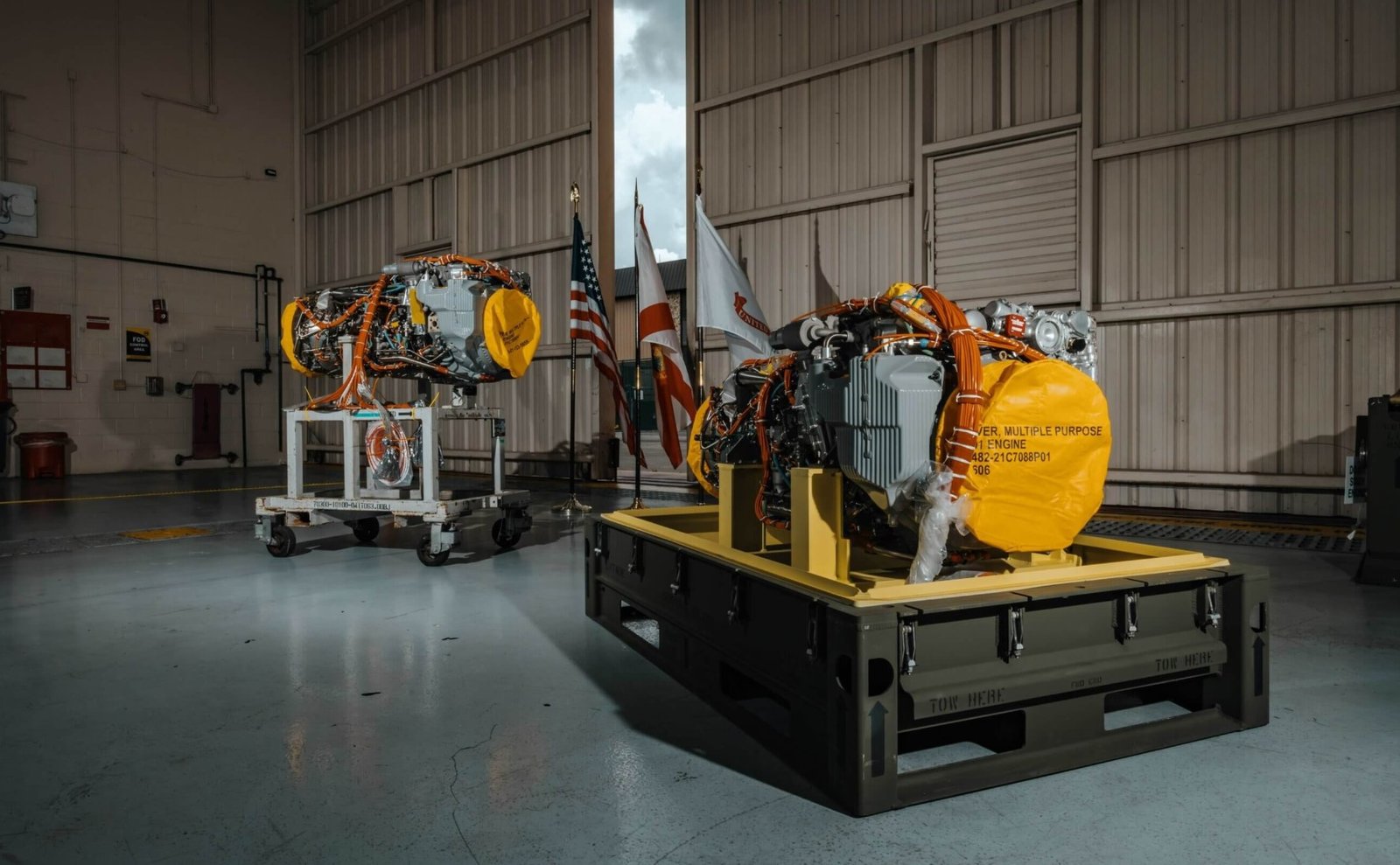
U.S
HUNTSVILLE, Ala. — The U.S. Army has issued a Sources Sought notice for companies capable of producing the T901-GE-900 turboshaft engine, as the Improved Turbine Engine Program (ITEP) moves toward its production phase. The notice was posted August 14, 2026, by the Army’s Aviation Turbine Engines Project Office, with responses due by August 29. It is being used for market research and planning and will not directly result in a contract award. The program is advancing under the Middle Tier Acquisition pathway. The T901 is a 3,000-shaft-horsepower engine developed by GE Aerospace. It is designed as a form, fit and function replacement for the T700-GE-701D engines used by the Army’s UH-60 Black Hawk and AH-64E Apache fleets. The engine fits within the existing engine nacelles, avoiding major structural modifications to the aircraft. The Army selected the T901 in 2019 under ITEP to provide greater power and improved fuel efficiency. The engine is intended to provide about 50 percent more power and 25 percent better specific fuel consumption compared with the T700 while maintaining the same installation envelope. The T901 was also originally planned for the Army’s Future Attack Reconnaissance Aircraft (FARA) before that program was canceled. T901 flight testing on the Black Hawk began in May 2025, following ground testing. As of mid-August 2026, the engine had accumulated about 2,600 hours of test-stand operation and more than 90 hours of aircraft testing, including flights reaching 17,000 feet and 160 knots. The Army has recently granted the engine a preliminary flight rating, with additional airworthiness testing planned. Technical Data and Production Requirements The Army’s notice states that the government does not currently have a complete Technical Data Package (TDP) for the T901. The missing information includes system and subsystem drawings, tooling drawings and software source code and models. For the future production contract, the Army wants all delivered hardware and software to carry at least Government Purpose Rights. This would allow the government to share technical information with other contractors for maintenance, sustainment and future competitive requirements. The anticipated production contract would have a 60-month period of performance, with production work expected primarily in Lynn, Massachusetts. The contract would cover engines along with: Spare parts and special tooling Support equipment and shipping containers Interim contractor logistics support Depot maintenance work requirements Contractor field service representatives Associated training programs Maintenance support is expected to involve the engine’s original equipment manufacturer as well as the manufacturers of the Black Hawk and Apache. Production Timeline and Industry Information The Army expects production deliveries to begin no later than 2031 and be completed by 2033. The deliveries will support the Army’s First Unit Equipped and First Unit Issued fielding milestones. The procurement falls under NAICS code 336412, Aircraft Engine and Engine Parts Manufacturing, and is designated as a partial Small Business Set-Aside. Interested companies must provide information on their size, ownership structure and small-business status, along with technical data showing that their manufacturing approach meets Airworthiness Release criteria. The Army also requests engine dimensions and weight specifications, previous airworthiness qualification test reports and pricing estimates. Companies are also being asked whether they maintain a technical, logistics and contracting presence in the Huntsville, Alabama, area, near the Army contracting office at Redstone Arsenal. The Sources Sought notice is part of the Army’s market research as it prepares for T901 production and the planned replacement of T700 engines across the Black Hawk and Apache fleets.
Read More → Posted on 2026-08-16 11:55:38
U.S
WASHINGTON — The U.S. Navy is reviewing major design changes to its Gerald R. Ford-class aircraft carriers to make them more closely resemble earlier U.S. warships, according to current and former U.S. officials cited by The Washington Post. One proposal would move the multi-level command island from its current aft position toward the middle of the ship. President Donald Trump has expressed a preference for the appearance of World War II-era warships. The current aft island arrangement was selected for operational reasons. It provides more deck space around the catapults, helps position aircraft for launch, and reduces turbulence around the angled landing area. A similar review during Trump's first administration concluded that moving the island would require a major structural redesign, potentially affecting the carrier's buoyancy and weight distribution and causing significant costs and delays. The Navy has not made a final decision, and the island review remains in its early stages. Steam Catapults Planned for Future Carrier The review follows Trump's August 13, 2026 national security memorandum, which directs the Pentagon to develop a plan within 60 days to replace EMALS and advanced weapons elevators with conventional steam catapults and hydraulic systems, beginning with the future USS Doris Miller (CVN-81). The first three Ford-class carriers — USS Gerald R. Ford, USS John F. Kennedy and USS Enterprise — will retain their electromagnetic systems. The Doris Miller, the fourth ship of the class, is being built by Huntington Ingalls Industries' Newport News Shipbuilding. The Navy selected EMALS in 2009, and the USS Gerald R. Ford had completed more than 36,000 EMALS launches by March 2026. The proposed change has raised cost, schedule and integration concerns because the Doris Miller is already under construction and EMALS production is reportedly nearly 50 percent complete. General Atomics, EMALS' manufacturer, has warned of additional integration and schedule risks. Ford-Class and $275 Billion Battleship Program The lead USS Gerald R. Ford took about 17 years to construct, while future Ford-class carriers have been estimated at roughly $22 billion each. Meanwhile, the administration is pursuing the proposed Trump-class, or BBG(X), nuclear-powered guided-missile battleships as part of the proposed "Golden Fleet." Trump announced the concept in December 2025, with the first ship planned as USS Defiant. The Congressional Budget Office estimates that building 15 ships between 2028 and 2056 would cost about $275 billion. The lead ship is projected at $23.4 billion, with subsequent ships averaging about $18 billion. Earlier congressional material describes the proposed battleships as 840 to 880 feet long and more than 35,000 tons at full load. Planned weapons include long-range missiles, hypersonic weapons, nuclear-armed cruise missiles, high-powered lasers and a railgun. The Navy describes the BBG(X) as a large surface combatant intended for long-range offensive fires, integrated air and missile defense, and command-and-control capabilities. The programs come as the Navy faces continuing shipbuilding capacity, labor, cost and schedule challenges. Adding a new battleship class while continuing other major warship programs would place additional demands on the U.S. shipbuilding industrial base, while any Ford-class redesign would have to be integrated into an already established carrier construction program.
Read More → Posted on 2026-08-16 11:43:21
U.S
NEWPORT NEWS, Va. — Huntington Ingalls Industries (HII) announced on August 15, 2026, that its Newport News Shipbuilding division has completed acceptance sea trials for the future USS John F. Kennedy (CVN 79), the U.S. Navy’s second Gerald R. Ford-class nuclear-powered aircraft carrier. The approximately 100,000-ton carrier departed Newport News on August 12 and returned to the shipyard on August 15 after a series of at-sea tests and evaluations. The completion of acceptance trials moves the ship toward preliminary acceptance and the next phase of Navy testing before delivery. During the trials, Newport News Shipbuilding shipbuilders, sailors assigned to John F. Kennedy and other Navy personnel worked together to evaluate the carrier while underway. Testing examined the operation and performance of major systems and components, including propulsion, navigation, combat systems and aviation infrastructure. “It is an honor to take Kennedy to sea to demonstrate the quality work and commitment by our shipbuilders,” said Derek Murphy, Newport News Shipbuilding vice president of new construction aircraft carrier programs. “This critical set of sea trials is a testament to the entire nuclear shipbuilding enterprise and the work of thousands across our country to prepare CVN 79 to join the fleet.” The acceptance trials follow the carrier’s successful builder’s sea trials earlier this year. John F. Kennedy departed Newport News on January 28 and returned on February 4 after its initial at-sea testing of propulsion, navigation, combat systems and other equipment. After those trials, the carrier returned to Newport News for additional construction work, correction of discrepancies and system integration ahead of the latest acceptance testing. Ford-Class Systems As the second ship of the Gerald R. Ford class, John F. Kennedy incorporates design and technology changes compared with the older Nimitz-class carriers. The ship includes the Enterprise Air Surveillance Radar (EASR) and next-generation aircraft launch and recovery systems intended to support a higher volume of flight operations. CVN 79 is also being completed under a congressional requirement for a “single-phase delivery approach.” Under this approach, the carrier is intended to be capable of operating and deploying F-35C Lightning II fighter aircraft upon delivery rather than requiring post-delivery modifications for that capability. With acceptance sea trials complete, the next step is preliminary acceptance of the carrier. This will allow the Navy to begin underway testing and evaluation of systems unique to John F. Kennedy. The carrier remains a pre-commissioning unit until formal acceptance and commissioning. Its delivery to the U.S. Navy is currently projected for March 2027, while work continues on remaining systems ahead of delivery.
Read More → Posted on 2026-08-16 11:27:09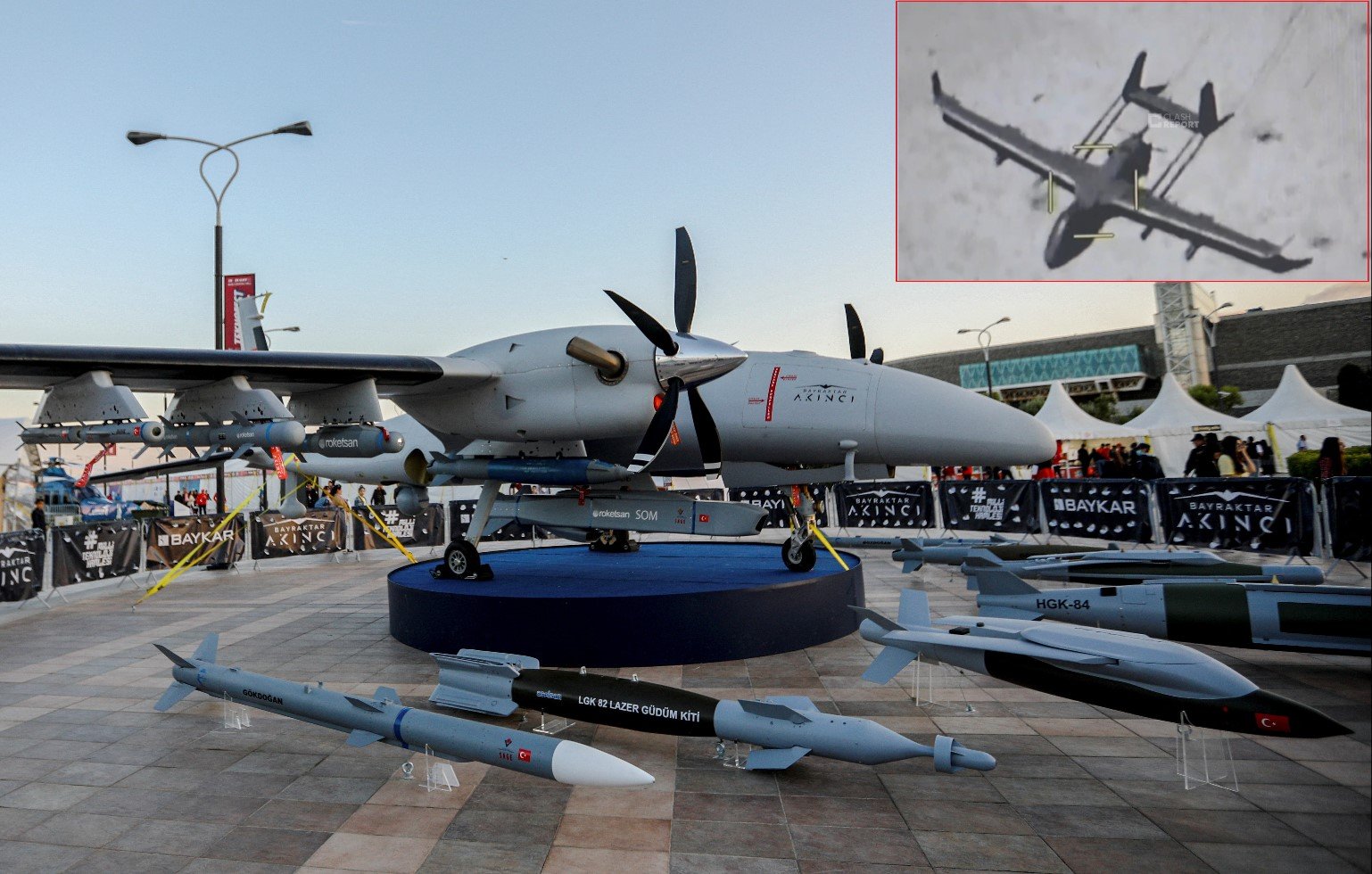
World
KHARTOUM, Sudan — The Sudanese Armed Forces (SAF) used a Turkish-made Bayraktar AKINCI unmanned combat aerial vehicle to intercept and destroy a Chinese-made CH-95 drone operated by the Rapid Support Forces (RSF) northwest of El Obeid in North Kordofan on July 13, 2026. According to reporting by Clash Report, the AKINCI fired an air-to-air missile and destroyed the CH-95 while it was in flight. A second CH-95 was also reportedly destroyed on the ground during the same operation. The incident was part of a series of losses involving Chinese-built RSF drones. Between June 23 and July 14, 2026, the RSF reportedly lost at least five FH-95 and CH-95 drones. An FH-95 was destroyed north of Tawila in North Darfur on June 23, another was lost near Tendelti in White Nile State on July 2, and another was destroyed along the highway linking Khartoum with North Kordofan. A further FH-95 was lost north of Al-Andaraba in North Kordofan on July 7. The locations cover several routes used by the RSF for reconnaissance and operations toward central Sudan. El Obeid is an important transportation junction, while Tendelti lies along the route between Kosti and western Sudan. The reported losses therefore cover multiple sectors rather than being concentrated around Khartoum. Akıncı Avlamaya Devam Ediyor!AKINCI, Sudan’da CH-95 SİHA’yı hava-hava angajmanında düşürdüSudan Silahlı Kuvvetleri’nin (SAF) kullandığı Bayraktar AKINCI , Hızlı Destek Kuvvetleri (RSF) tarafından işletildiği belirtilen Çin üretimi CH-95 SİHA’yı hava-hava angajmanında… pic.twitter.com/fVw6vsDNVH — Turkish Defence Agency (@tdefenceagency) August 15, 2026 CH-95 and FH-95 The CH-95 is a medium-altitude, long-endurance UAV with a maximum takeoff weight of about 650 kg and a payload capacity of up to 170 kg. It has an endurance of about six to 12 hours, a service ceiling of approximately 7,000 meters and a line-of-sight combat radius of roughly 250 km. Its payload options include day and night electro-optical sensors, synthetic aperture radar (SAR), ground-moving-target indication (GMTI) radar, precision-guided weapons, communications relay equipment and electronic-warfare systems. The larger FH-95 has a maximum takeoff weight of about 1,000 kg and can carry up to 250 kg of payload. Its endurance can reach about 30 to 35 hours in longer-range configurations, and it can use satellite communications for beyond-line-of-sight operations. The platform is designed for electronic warfare, signals collection, reconnaissance and command support while also being capable of carrying precision weapons. AKINCI's Air-to-Air Role The Bayraktar AKINCI used by the SAF is a medium-altitude, long-endurance combat UAV equipped with an active electronically scanned array (AESA) radar. The platform can carry air-to-air weapons, including Turkish systems associated with Roketsan such as Sungur and EREN in reported engagements. Its air-to-air capability allows the AKINCI to engage other large UAVs in flight rather than relying only on ground-based air-defense systems. The Sudanese conflict between the SAF and RSF has continued since April 2023, with both sides increasingly using larger unmanned aircraft equipped with long-endurance capabilities, satellite communications, precision weapons, radar, and electronic-warfare systems. The July 13 engagement near El Obeid adds to the growing number of reported Chinese drone losses suffered by the RSF and demonstrates the use of an armed UAV in an air-to-air interception role. Reporting on the incident has primarily come from Clash Report, with additional coverage from defense outlets including Army Recognition, Defence Blog and Military Africa. The SAF and RSF did not provide immediate independent confirmation of some details in the early reports.
Read More → Posted on 2026-08-15 14:46:37Search
Top Trending in 24 Hours
-
 Sensitive F-35 Components Diverted to Hong Kong, Some Parts Missing
-
 U.S. Approves Potential $2.68 Billion Air Defense Package for Ukraine Including S-300 Clone Missiles
-
 U.S. Warns Allies of Up to Five-Year Delays in Key Weapons Deliveries
-
 U.S. Secures Permanent Military Rights in Greenland in Historic Security Pact with Denmark
-
 U.S. Iran War Cost Hits $43.6 Billion as Missile Interceptor Stocks Come Under Pressure
-
 Russia’s Aeroflot Orders 90 MC-21-310 Aircraft in Record Aviation Deal
-
 U.S. Navy Awards Lockheed Martin $76.6 Million for Continued Trident II D5LE2 Development
-
 BEL Showcases New-Generation Head-Up Display, Potentially Linked to Tejas Mk2
Top Trending in 4 Days
-
 U.S. Plans $2.8 Billion Sale of 40,000 Heavy Bombs and 20,000 I-2000 Penetrator Warheads to Israel
-
 Satellite Images Show Saudi Arabia Building Emergency Bypass Around Damaged East-West Oil Pipeline Station
-
 Photos Reveal Damaged E-3 Sentry, Buildings and Vehicles at U.S. Bases in Saudi Arabia and Kuwait After Iranian Strikes
-
 Houthis Claim Downing of Saudi F-15 and Wing Loong II Drone Over Marib
-
Sensitive F-35 Components Diverted to Hong Kong, Some Parts Missing
-
 Bharat Forge, Pratt & Whitney Canada to Evaluate Turboprop Engines for DRDO’s Indigenous HALE UAV
-
 China Privately Urges Iran to Restrain Houthis After Saudi Appeal
-
 Former Italian Navy Carrier Enters Indonesian Waters to Join Indonesian Navy as Indonesia’s First Aircraft Carrier
