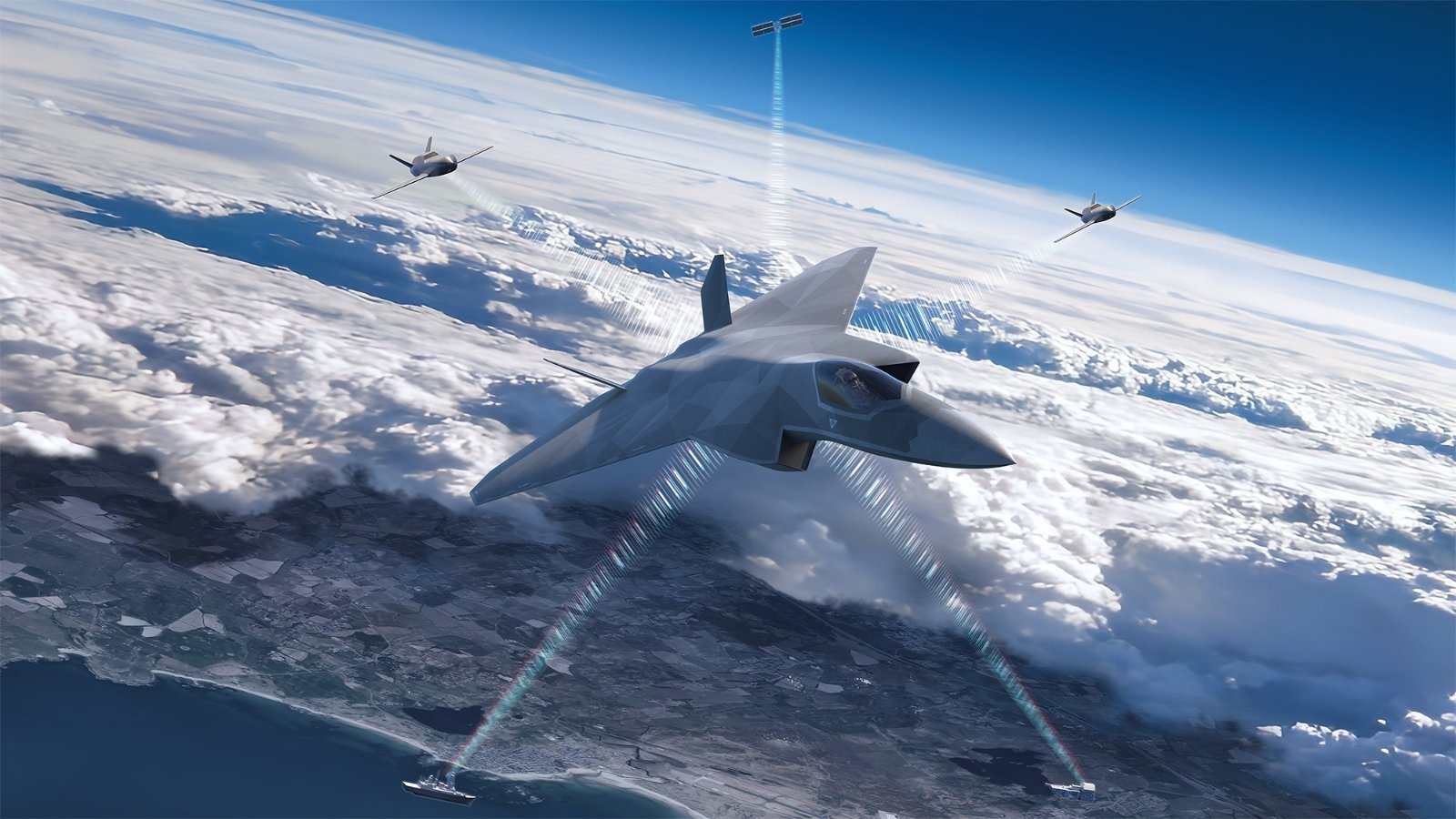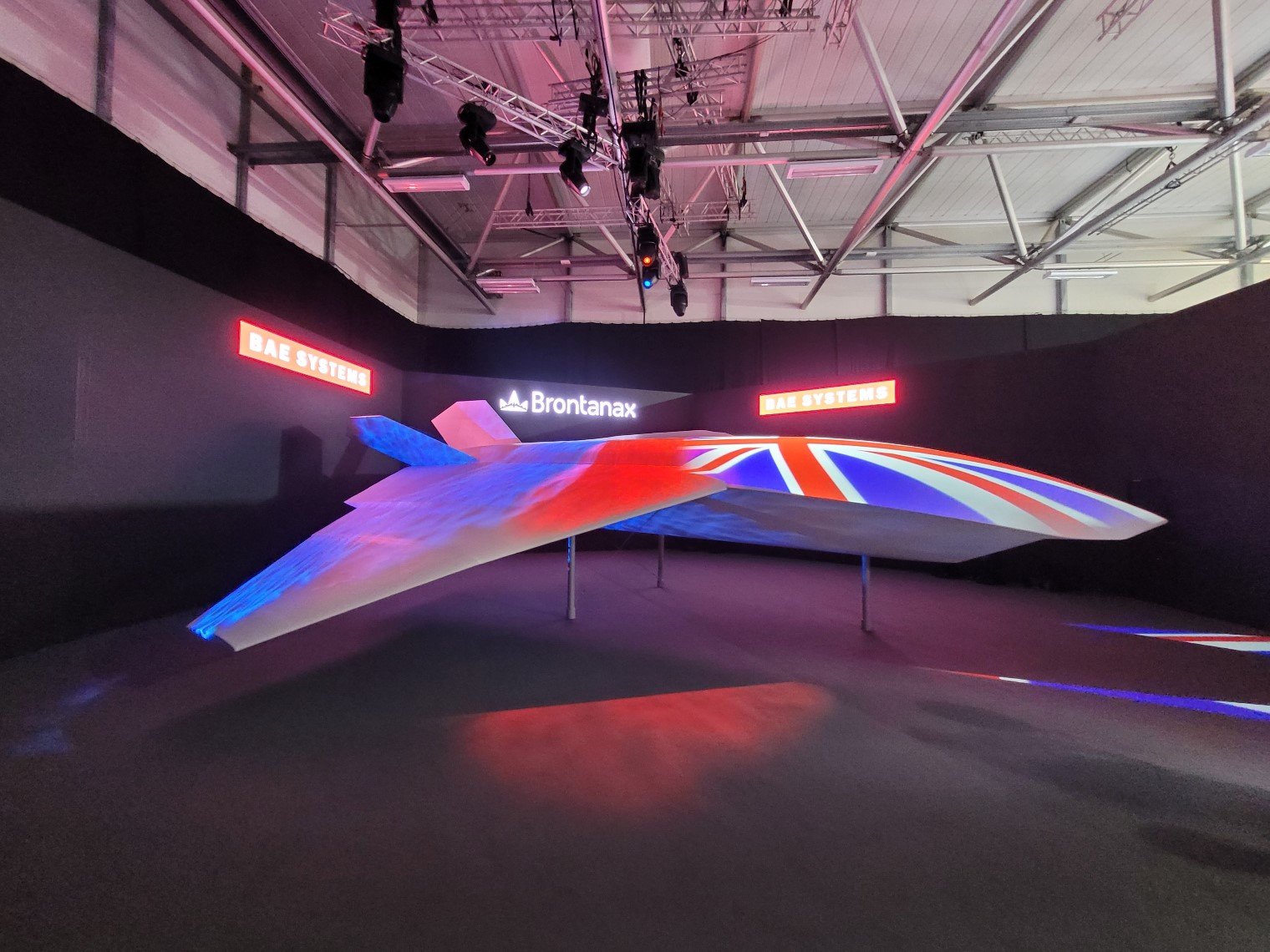
FARNBOROUGH, England — BAE Systems has officially unveiled Brontanax, the United Kingdom's first domestically designed uncrewed autonomous Collaborative Combat Aircraft (CCA), during the Farnborough International Airshow.
Named Brontanax, a title derived from the Ancient Greek words for "thunder" and "king," the aircraft has been developed to operate alongside crewed combat aircraft, expanding frontline capabilities while reducing risk to pilots. BAE Systems described the platform as an operational prototype rather than a technology demonstrator.
The company said Brontanax is designed to increase "combat mass" at a significantly lower cost than traditional fighter aircraft. It is intended to work alongside existing crewed platforms, including the Eurofighter Typhoon, under the control of either a mission commander or a Typhoon pilot.
Designed for Frontline Support
Brontanax is approximately the size of a BAE Systems Hawk jet trainer and has been developed to carry out multiple frontline support missions.
Its planned roles include electronic warfare, where it can disrupt and degrade enemy communications and radar systems, and precision strike missions against both airborne and ground-based targets.
The aircraft also features an open architecture and modular design, allowing capabilities to be updated as operational requirements evolve.
Developed by FalconWorks
The aircraft was designed and built by FalconWorks, BAE Systems' advanced projects division, at the company's Warton facility in Lancashire.
According to BAE Systems, development has been funded through the company's own research and development investment. More than 500 BAE Systems employees contributed to the programme alongside over 75 UK aerospace companies and small and medium-sized enterprises (SMEs).
The company also stated that the programme draws on more than 25 years of experience in uncrewed and autonomous systems development.
Testing and Future Plans
Following its public debut at Farnborough, Brontanax is being prepared for ground-based testing at the Warton facility.
Flight testing in UK airspace is scheduled to begin in 2027, and the aircraft is also expected to participate in a NATO exercise in 2027.
BAE Systems said it aims for Brontanax to be available for military service before the end of the decade.
Linked to UK's Storm Fighter Programme
The unveiling comes after the UK Government published its Defence Investment Plan, which includes a £300 million commitment to the Storm Fighter sovereign autonomous Collaborative Combat Aircraft programme.
The investment is intended to support the UK's domestic development of autonomous combat aircraft and strengthen the country's defence industrial capability.
UK Defence Secretary Wes Streeting, who attended the unveiling, described Brontanax as an important achievement for British engineering and manufacturing.
"Built at BAE Systems in Warton by British engineers, backed by British businesses large and small, this aircraft demonstrates that the UK has the skills, the technology and the determination to lead the world in combat air power," Streeting said.
He added that the government's £300 million investment would help accelerate the development of autonomous combat aircraft in the UK.
RAF Vision
Air Chief Marshal Sir Harv Smyth, Chief of the Air Staff, said Collaborative Combat Aircraft are a key element of the Royal Air Force's future force structure.
According to Smyth, the RAF aims to become "Europe's first sixth-generation air force" by integrating crewed and uncrewed aircraft to improve survivability and combat effectiveness in increasingly complex operational environments.
BAE Systems said Brontanax has been developed to support human-machine teaming by extending the reach and capability of crewed aircraft while reducing risk to pilots. The company has also stated that the aircraft is designed with strong stealth characteristics and aims to deliver around 70–80% of the capability of a traditional fighter aircraft at significantly lower cost, potentially less than 25% of the cost of a crewed platform.
Further details on the aircraft's payloads, performance and future production plans are expected as the flight test programme progresses.
Source : baesystems
——— End of Article ———