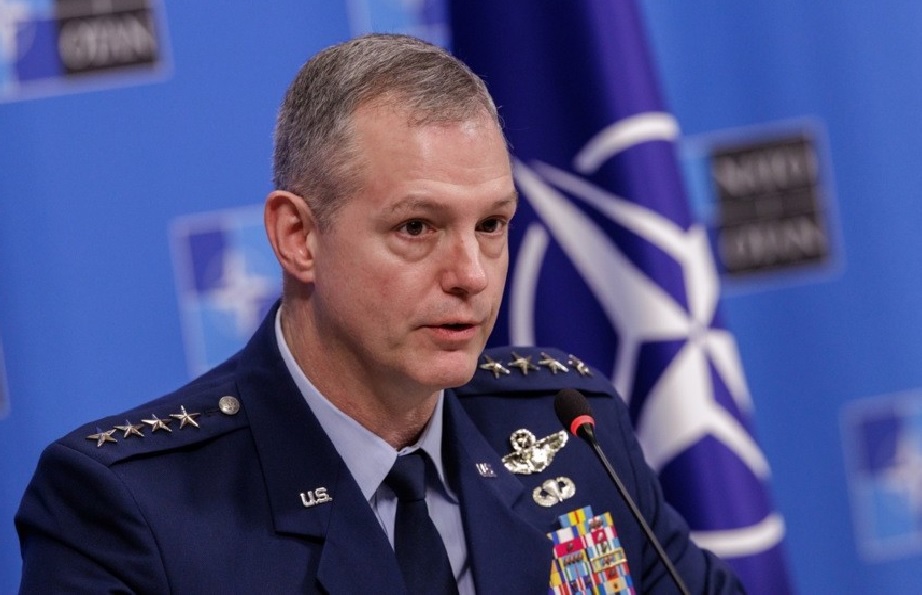
BERLIN, — June 12, 2026 : General Alexus G. Grynkewich, Supreme Allied Commander Europe (SACEUR) and commander of U.S. European Command, said Russia is not seeking a direct military confrontation with NATO, emphasizing that Moscow understands the alliance's military advantages and the risks associated with any attack on NATO territory.
Speaking during a panel discussion at the ILA Berlin Air Show on June 11, Grynkewich stated that his assessment is based on continuous monitoring of intelligence and Russian military activities. His remarks come as the United States prepares to reduce certain military capabilities assigned to NATO in Europe as part of a broader strategic shift toward the Indo-Pacific region.
Grynkewich said NATO intelligence closely tracks developments involving Russian forces and strategic planning. Based on that assessment, he believes Russia does not intend to initiate a direct conflict with the alliance.
"I've watched the intelligence very closely. Russia is not looking for a conflict," Grynkewich said. "They do understand the term 'defensive alliance,' and they do understand that we have a number of asymmetric advantages."
According to the NATO commander, Russia's military leadership recognizes the significant challenges it would face in any confrontation with the alliance. He noted that Russia's ongoing military campaign in Ukraine has resulted in substantial casualties while yielding relatively limited territorial gains.
Grynkewich stressed that one of NATO's primary objectives is to maintain a level of deterrence that prevents any attack from occurring. Referring to the Baltic region, he stated that Russia understands it would not be able to achieve success against NATO forces.
"My job is to ensure that an attack does not happen tomorrow and that Russia understands: if they try to attack the Baltic states, they will not succeed. And when they know they won't succeed, they won't risk doing something like that," he said.
The commander’s comments come amid discussions within NATO regarding planned U.S. military force adjustments in Europe. Washington has informed allies that several assets currently supporting NATO operations will be reassigned as the United States increases its focus on security challenges in the Indo-Pacific.
The planned reductions affect NATO's Force Model, which consists of forces that can be deployed within periods ranging from 10 to 180 days. The adjustments include reductions in F-16 and F-15E fighter aircraft, reconnaissance assets, the withdrawal of U.S. aerial refueling tankers from the European theater, and the reassignment of naval forces, including an aircraft carrier strike group.
Additional measures under discussion include the withdrawal of approximately 5,000 U.S. troops from Germany, the return of an armored brigade combat team to the United States, and the cancellation of a planned long-range fires battalion deployment. Submarines capable of launching cruise missiles and maritime patrol aircraft could also be affected by the restructuring.
The changes have generated concerns among NATO's eastern members, particularly Estonia, Latvia, and Lithuania, where leaders have warned that a reduced American military presence could influence regional security calculations.
Despite the planned drawdowns, Grynkewich emphasized that NATO remains fully prepared to respond to any threat and maintained that the alliance's deterrence posture remains strong.
"When people ask me, are you ready to fight tonight? Absolutely," he said.
The commander noted that all 32 NATO member states remain committed to collective defense obligations and maintain a high level of readiness.
"If the need arises, all 32 allies are ready to respond tonight. And this readiness will only continue to grow," he added.
To address capability gaps created by the redeployment of U.S. assets, Grynkewich called on European allies and Canada to increase their contributions. He said NATO members should prioritize military systems that can be acquired, deployed, and expanded quickly in order to sustain operational effectiveness.
"In the near term, we need to focus on things that we can acquire quickly, field quickly, and scale rapidly and sustain over time," he said, highlighting the importance of long-range precision fires, unmanned systems, and drone technologies.
According to Grynkewich, European allies are expected to help compensate for the shifting U.S. force posture by providing additional naval vessels, manned and unmanned aircraft, and other military capabilities. These issues are expected to be discussed further ahead of the upcoming NATO summit in July, where alliance members will review defense spending commitments, force requirements, and long-term security priorities.
Grynkewich also addressed the ongoing conflict in Ukraine, which has entered its fifth year. He described the war as a difficult and costly conflict while noting that Russian forces continue to incur heavy losses for limited territorial gains.
At the same time, he said Ukrainian forces have demonstrated resilience and innovation on the battlefield.
"The front line remains relatively stable, and Ukrainian forces have successes of their own. The Ukrainians are doing fairly well," he said.
The NATO commander also highlighted ongoing diplomatic efforts aimed at achieving peace in Ukraine and noted his involvement in discussions led by the United States and its partners.
While expressing confidence that Russia is not currently seeking a direct confrontation with NATO, Grynkewich emphasized that the alliance continues to closely monitor Russian military activities and broader security developments. NATO remains focused on strengthening its integrated air and missile defense networks, improving readiness levels, and updating operational plans to address emerging threats across Europe.
His remarks at the ILA Berlin Air Show reflected NATO's assessment that Russia remains heavily committed to the war in Ukraine and is unlikely to risk a direct military confrontation with the alliance, while underscoring the importance of maintaining credible deterrence and collective defense as NATO adapts to evolving strategic challenges and changes in U.S. force posture.
——— End of Article ———