PARIS, — June 12, 2026 : The French Defence Procurement Agency (DGA) has awarded European missile manufacturer MBDA a framework agreement and development contract for the ASN4G (Air-Sol Nucléaire de 4ème Génération), France’s next-generation air-launched nuclear missile. The contract, officially notified on June 2, marks the transition of the program from technology maturation and research activities into the full-scale development phase.
The ASN4G is being developed to replace the current ASMPA-R nuclear missile, which serves as the airborne component of France’s nuclear deterrent. The new weapon is expected to enter operational service around 2035 and will be integrated with the future Rafale F5 fighter aircraft standard, which is currently under development as part of France’s long-term combat aviation modernization plans.
Once operational, the missile will be employed by both branches responsible for France’s airborne nuclear deterrence mission: the Forces Aériennes Stratégiques (FAS) of the French Air and Space Force and the Force Aéronavale Nucléaire (FANu) of the French Navy.
According to the DGA, the ASN4G represents a major technological advancement over previous generations of French air-launched nuclear weapons. The program relies on highly specialized expertise in hypersonic propulsion, aerodynamics, materials engineering, and guidance technologies possessed by only a limited number of nations worldwide.
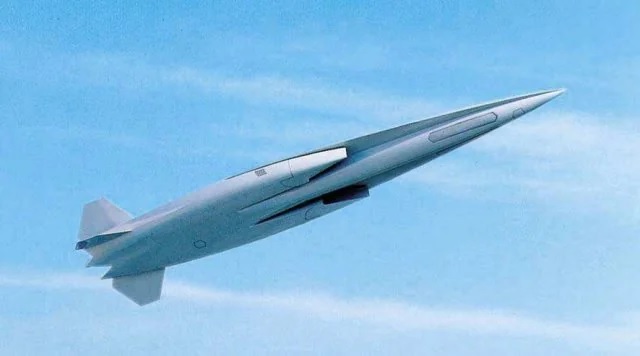
The missile is being developed by MBDA France in cooperation with ONERA, France’s national aerospace research organization. Unlike the current ASMPA-R, the ASN4G will utilize advanced scramjet (superstatoréacteur) propulsion technology, enabling sustained hypersonic flight over long distances. Scramjet engines operate efficiently at extremely high speeds by compressing incoming air without the need for moving compressor components, allowing sustained propulsion throughout hypersonic flight.
Based on current development objectives, the ASN4G is expected to achieve sustained speeds between Mach 6 and Mach 8, placing it firmly within the hypersonic category. The missile is also projected to have an operational range exceeding 1,000 kilometers, more than double that of the ASMPA-R, significantly increasing the stand-off distance available to launch platforms.
In addition to its speed and range advantages, the ASN4G is designed with advanced maneuverability capabilities. Military planners expect the missile’s ability to perform high-speed evasive maneuvers during flight to improve its effectiveness against increasingly sophisticated air defense and missile interception systems. The weapon is also expected to operate at high altitudes, estimated at approximately 27 to 35 kilometers, while retaining the ability to conduct complex flight profiles.
The missile will reportedly be equipped with the new TNA 4G nuclear warhead, which is being developed as part of France’s broader modernization of its strategic deterrent forces. Together with the Rafale F5 and associated command-and-control upgrades, the ASN4G will form a key element of France’s airborne nuclear capability for decades to come.
The contract is part of the modernization objectives outlined in France’s current Military Programming Law (LPM), which prioritizes maintaining the credibility and effectiveness of the country’s nuclear deterrent. French defense officials have stated that the combination of extended range and hypersonic speed is necessary to ensure the survivability of the airborne deterrent as potential adversaries continue to deploy advanced anti-access/area-denial (A2/AD) networks and integrated air defense systems.
Development of a successor to the ASMPA missile has been under consideration for several years, with official confirmation of the ASN4G program dating back to the mid-2010s. The latest contract award formally launches the next stage of development and moves the project closer to future testing and qualification activities.
MBDA, which is jointly owned by Airbus (37.5%), BAE Systems (37.5%), and Leonardo (25%), will serve as the prime contractor for the program. The company will oversee missile development, integration, and testing activities in cooperation with French government agencies and research institutions.
The DGA has not publicly disclosed the value of the development contract. However, officials emphasized that the ASN4G program is intended to preserve France’s fully sovereign nuclear deterrent by ensuring that critical technologies, manufacturing capabilities, and operational control remain under national authority.
As hypersonic weapons development accelerates globally, the ASN4G is expected to become one of the most advanced components of France’s strategic forces, supporting the airborne leg of the nation’s nuclear deterrent well into the 2050s.
——— End of Article ———