WASHINGTON, — June 12, 2026 : The United States has formally proposed a significant reduction in the military assets it contributes to NATO operations in Europe, marking a major shift in the alliance's force posture and burden-sharing arrangements.
According to a document shared with European allies earlier this month, Washington intends to scale back several key military capabilities currently allocated under the NATO Force Model, including fighter aircraft, surveillance platforms, aerial refueling tankers, naval strike assets, and bomber forces.
The planned reductions are part of a broader effort by the United States to encourage European NATO members and Canada to assume greater responsibility for the continent's conventional defense while maintaining the alliance's overall military readiness.
Planned Reductions in US Military Assets
The proposal outlines a series of specific cuts affecting American air and naval forces assigned to support NATO operations in Europe.
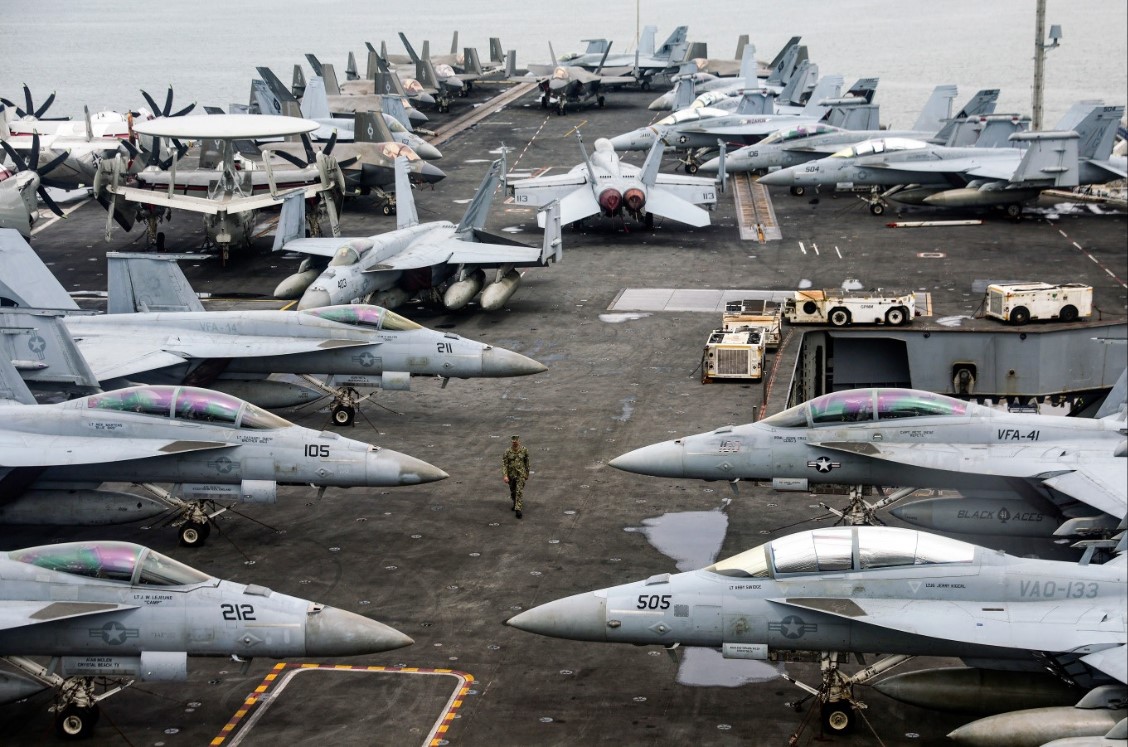
The number of F-16 and F-15E fighter jets available for NATO missions would be reduced by approximately one-third, decreasing from around 150 aircraft to 100 aircraft.
In the surveillance and reconnaissance sector, maritime patrol and reconnaissance aircraft would be reduced from 26 aircraft to 15 aircraft, lowering the alliance's available airborne maritime monitoring capacity.
The plan also calls for the complete withdrawal of eight aerial refueling tanker aircraft currently assigned to support European operations. Military analysts note that the removal of tanker support could limit the operational range and endurance of alliance aircraft during extended missions.
In addition, the United States intends to redeploy several major naval and strategic assets, including an aircraft carrier, a missile-launching submarine, associated warships, and carrier-based aircraft. One of the two bomber task force groups currently assigned to Europe's defense would also be reassigned to another region.
Current and Planned Force Levels
| Military Asset | Current US Deployment | Planned Reduction | Remaining Force |
|---|---|---|---|
| F-16 & F-15E Fighter Jets | Approximately 150 aircraft | Reduction of 50 aircraft | 100 aircraft |
| Maritime Reconnaissance Aircraft | 26 aircraft | Reduction of 11 aircraft | 15 aircraft |
| Aerial Refueling Tankers | 8 aircraft | Complete withdrawal | 0 aircraft |
| Heavy Bomber Task Forces | 2 groups | Reallocation of 1 group | 1 group |
| Naval Strike Assets | Aircraft carrier, missile-launching submarine, warships, and carrier aircraft | Redeployment of multiple assets | Reduced naval strike presence |
Military experts indicate that the reduction of these assets could affect NATO's immediate ability to conduct independent long-range strike missions and large-scale aerial surveillance operations, including monitoring submarine activity in strategically important maritime regions.
Part of Broader NATO Burden-Sharing Strategy
US military officials have described the decision as a necessary adjustment designed to create a more balanced distribution of defense responsibilities among NATO members.
The move aligns with Washington's 2026 National Defense Strategy and the broader modernization initiative referred to as "NATO 3.0." The policy also reflects continued US calls for European allies and Canada to increase defense spending and expand their own military capabilities.
General Alexus G. Grynkewich, Commander of US European Command and Supreme Allied Commander Europe, stated that NATO has historically relied heavily on American military capabilities. He said the planned reductions are intended to make alliance defense planning more realistic and encourage greater self-sufficiency among member states.
The restructuring effort is being led by Under Secretary of Defense for Policy Elbridge Colby, who has consistently advocated for European allies and Canada to assume a larger share of responsibility for conventional defense missions in Europe.
US officials have also argued that European nations possess the economic and industrial capacity to expand their air, naval, and ground force capabilities, reducing long-term dependence on American military resources.
NATO Acknowledges Transition
NATO officials have publicly recognized the proposed changes and characterized them as part of the alliance's long-term evolution.
NATO spokesperson Allison Hart confirmed the planned reductions and acknowledged the alliance's historical dependence on US military assets.
According to Hart, the adjustments reflect a broader shift within NATO aimed at reducing reliance on any single member while strengthening collective defense planning. She stated that increasing defense investments by European allies and Canada will gradually create a more balanced and sustainable distribution of responsibilities across the alliance.
NATO officials have indicated that allied nations are expected to fill capability gaps created by the reduction of US assets, particularly in areas such as maritime surveillance, airpower, and naval operations.
No Change to US Nuclear Commitment
Despite the proposed reductions in conventional forces, US officials have emphasized that America's nuclear deterrence commitment to Europe remains unchanged.
The planned drawdown focuses on aircraft, naval assets, and support capabilities assigned to the NATO Force Model rather than the alliance's strategic nuclear framework.
Officials also noted that discussions regarding the reductions have been conducted over several months in coordination with NATO command structures to ensure a controlled transition and maintain operational readiness throughout the process.
Implementation Timeline Yet to Be Announced
The Pentagon has not publicly released a detailed timeline for implementing the proposed reductions. However, US officials indicated that planning and coordination efforts are already underway and that adjustments could begin in the near future.
The proposal follows earlier force posture reviews and previous announcements involving reductions of approximately 5,000 US military personnel stationed in Europe, reflecting a continuing reassessment of American military commitments overseas.
If implemented, the drawdown would represent one of the most significant adjustments to US conventional military contributions to NATO in recent years, while accelerating efforts to shift a larger share of European defense responsibilities to NATO's European members and Canada.
——— End of Article ———