LONDON — The United Kingdom has decided not to proceed with a mid-life upgrade of its Meteor beyond-visual-range (BVRAAM) air-to-air missile, choosing instead to direct investment toward the development of its next-generation Future Air Superiority Effectors (FASE) programme.
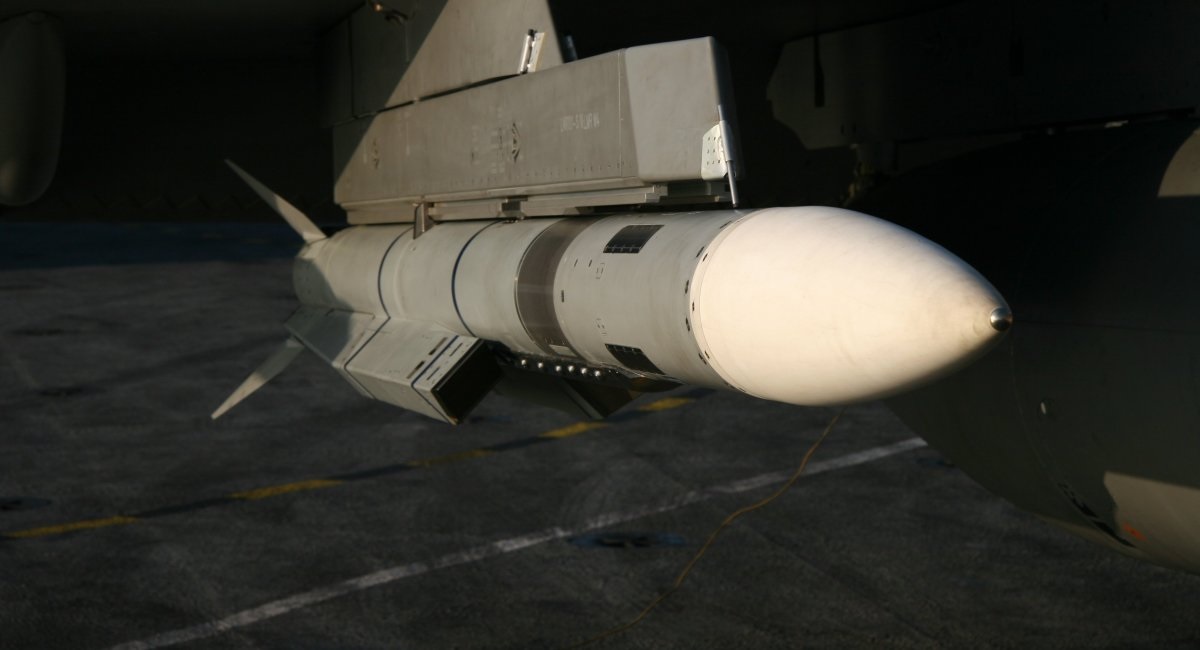
According to information from the British Ministry of Defence, the Meteor missile will remain in its current configuration and continue in service through routine maintenance rather than undergoing a major modernization programme. The missile is expected to remain operational with the Royal Air Force (RAF) into the 2040s.
The decision reflects the UK's strategy of prioritizing future air combat capabilities over incremental upgrades to existing weapons.
UK Shifts Investment to Future Air Combat Capabilities
On July 3, 2026, UK Minister for Defence Readiness and Industry Luke Pollard confirmed that the government would not continue with the Meteor mid-life upgrade programme.
"We are not continuing with the mid-life upgrade of the Meteor. We want to invest in the next generation of capabilities faster than the previous generation of capabilities," Pollard said.
Instead of upgrading the current missile, funding is being redirected to the Future Air Superiority Effectors (FASE) programme, which is currently in its pre-concept phase.
FASE aims to develop a family of advanced air combat effectors, including a new long-range air-to-air missile capable of engaging targets from extended stand-off distances. The future weapons are expected to be compatible with both manned combat aircraft and future uncrewed air platforms.
To support the programme, the United Kingdom and France signed a memorandum of understanding (MoU) on April 1, 2026, launching a 12-month joint study. The study will examine future air combat threats, evaluate emerging missile technologies, and establish a roadmap for the development of a successor to the Meteor missile.
Meteor to Remain in RAF Service into the 2040s
Although the mid-life upgrade has been cancelled, the Meteor missile will continue to play a key role in the RAF's air combat capability.
The missile entered RAF service in 2018 on the Eurofighter Typhoon, where it serves as the service's primary beyond-visual-range air-to-air missile. Production of the missile is expected to continue to meet operational requirements, while support will focus on routine maintenance rather than extensive modernization.
The F-35B Lightning II is expected to become the second RAF aircraft equipped with the Meteor under the fighter's Block 4 upgrade programme, with integration expected in the early 2030s. The missile has already completed successful flight tests on the F-35B, while ground integration work is continuing for the F-35A variant.
Meteor Programme and Technical Features
The Meteor missile is developed by MBDA through a multinational European programme involving the United Kingdom, Germany, Italy, France, Sweden, and Spain. It is currently in operational service with partner nations on the Eurofighter Typhoon, Dassault Rafale, and Saab Gripen, while integration is also underway for the F-35A, F-35B, and South Korea's KF-21 fighter aircraft.
One of the Meteor's defining features is its solid-fuel variable-flow ducted rocket (ramjet) propulsion system. Unlike conventional rocket motors that provide thrust only during the initial phase of flight, the ramjet delivers controlled thrust throughout the missile's flight, enabling it to maintain energy until interception and providing a large no-escape zone against maneuvering targets.
The missile uses an active radio-frequency (RF) seeker for all-weather engagements and combines inertial mid-course guidance with autonomous terminal guidance. A two-way data link allows it to receive updated target information during flight, including data from third-party platforms, supporting network-enabled air combat operations.
Meteor carries a blast-fragmentation warhead equipped with both impact and RF proximity fuses to increase the probability of destroying its target.
The missile weighs approximately 190 kilograms, measures 3.7 metres in length, has a 178-millimetre diameter, and supports both rail and ejection launch methods, allowing integration across multiple fighter aircraft.
Focus Turns to the FASE Programme
The Future Air Superiority Effectors (FASE) programme is intended to deliver a new generation of air-to-air weapons capable of addressing future threats, including advanced combat aircraft, increasingly sophisticated missiles, and evolving electronic warfare systems.
The ongoing UK-France study will help define future operational requirements, assess enabling technologies, and establish a development roadmap for the new missile family.
While some Meteor partner nations, including Germany, have expressed interest in pursuing modernization of the existing missile, the United Kingdom has chosen to concentrate its resources on developing a successor alongside France.
For the foreseeable future, the Meteor will continue to meet the RAF's long-range air combat requirements while the FASE programme advances toward the next generation of air superiority weapons for the Eurofighter Typhoon, F-35B, and future combat aircraft.
Source : militarywatchmagazine
——— End of Article ———