PARIS, — June 12, 2026 : France has officially launched a market-exploration phase for a future Collaborative Combat UAV System (CCA), as the country's defense procurement agency, the Direction Générale de l'Armement (DGA), seeks industry input on next-generation loyal wingman platforms and manned-unmanned teaming (MUM-T) capabilities.
The initiative follows the publication of a Request for Information (RFI) on June 4, 2026, aimed at gathering operational, technical, and industrial data from defense companies and research organizations. The effort is intended to help define the requirements for future collaborative combat drones capable of operating alongside crewed aircraft across multiple mission environments.
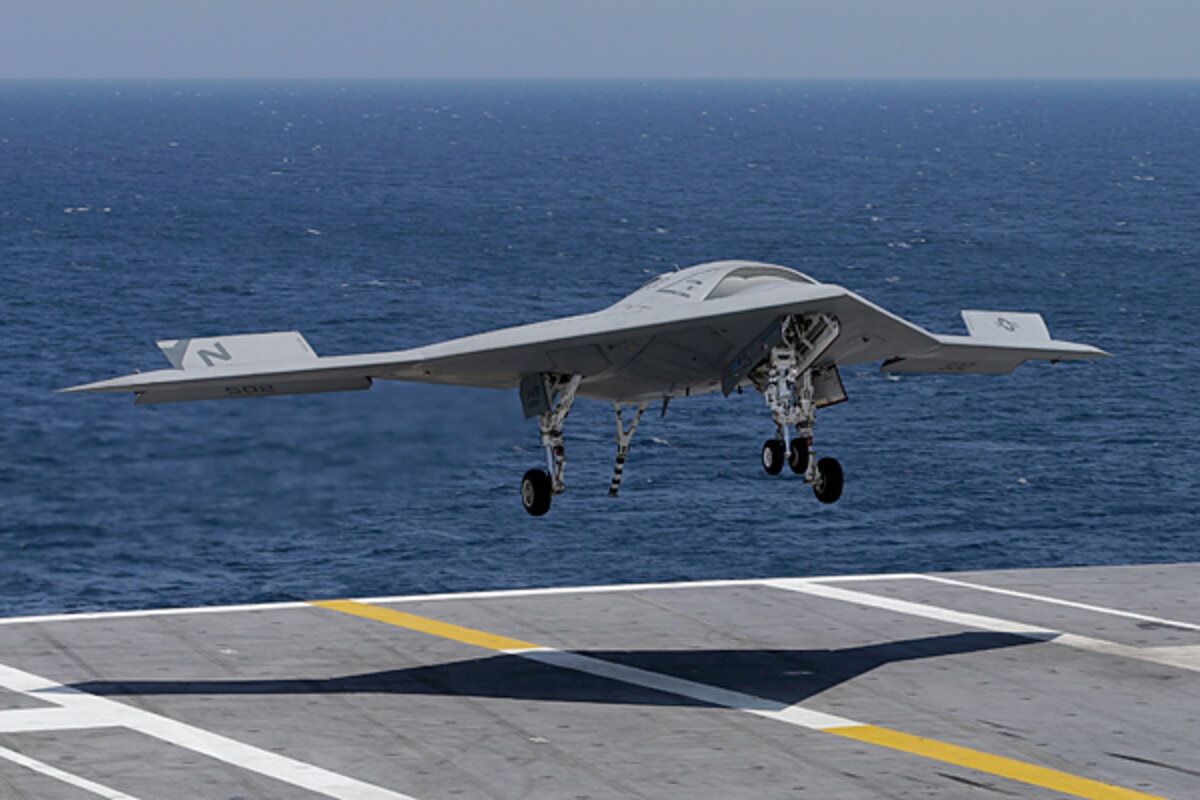
While the RFI covers airborne collaborative combat systems in general, the specifications released by the French Ministry of Armed Forces place particular emphasis on naval aviation applications, highlighting France's intention to develop unmanned combat aircraft that can support future carrier-based operations of the French Navy (Marine Nationale).
Focus on Carrier-Based Operations
One of the most significant aspects of the RFI is its requirement for information related to aircraft carrier operations. The DGA has requested detailed data on platform characteristics, including maximum takeoff weight during catapult-assisted launches and maximum landing weight for aircraft carrier recovery operations, where applicable.
The inclusion of these requirements indicates that France is evaluating unmanned combat aircraft capable of integrating directly into future carrier air wings. The program aligns with the country's Next-Generation Aircraft Carrier (PA-Ng/PANG) project, under which the future carrier France Libre is expected to replace the current Charles de Gaulle around 2038.
The RFI also suggests that experimental deployment and testing of collaborative drones could take place aboard existing naval platforms before the new carrier enters operational service.
Advanced Manned-Unmanned Teaming Requirements
According to the document, the future collaborative combat drone system will require high levels of flight autonomy, mission management capabilities, and flexible command-and-control (C2) architectures.
The DGA is seeking information on systems that can be controlled through traditional ground stations, naval platforms, or directly from manned aircraft during flight. Such capabilities would enable the establishment of advanced MUM-T networks, allowing unmanned aircraft to operate closely with crewed combat aircraft in complex operational environments.
The drones are expected to function as force multipliers for the future Rafale M F5-standard fighter aircraft and could eventually integrate with France's future next-generation combat aircraft programs.
Intended Mission Roles
The RFI outlines several mission profiles that collaborative combat drones may be required to perform. These include operations in high-threat environments where unmanned platforms can reduce risk to crewed aircraft while extending the reach of naval air power.
Potential missions include:
- Penetration of heavily defended anti-access/area-denial (A2/AD) environments.
- Suppression of Enemy Air Defenses (SEAD) operations.
- Intelligence, Surveillance and Reconnaissance (ISR) missions.
- Support for maritime strike and anti-surface warfare operations.
- Electronic warfare and battlespace awareness tasks.
To support these missions, the DGA is requesting information on the integration of a wide range of payloads, including electro-optical sensors, infrared systems, advanced radar, electronic warfare suites, secure communications equipment, and mission-specific payloads.
The document also covers mission systems beyond the aircraft itself, including mission planning tools, support infrastructure, training systems, flight autonomy software, and communication architectures.
Industrial Participation and International Engagement
The DGA has established August 21, 2026, as the deadline for responses from defense contractors and industrial consortia. Companies may submit proposals covering either the complete requirement or selected segments of the program, a structure designed to encourage participation from both major defense primes and smaller specialized enterprises.
French authorities have emphasized that the program aims to strengthen the nation's Defense Industrial and Technological Base (BITD) while ensuring access to the latest technological developments available on the global market.
To facilitate broader participation, the DGA has released an official English-language "Request for Information – Courtesy Translation", inviting contributions from foreign defense companies and international industry partners. This approach allows France to assess a wider range of technologies, industrial capabilities, and potential solutions before moving toward future acquisition decisions.
The market-exploration phase represents an important step in shaping France's future collaborative combat aviation capabilities, particularly as the country prepares for the introduction of its next-generation aircraft carrier and seeks to expand the role of autonomous systems within naval and air operations.
——— End of Article ———