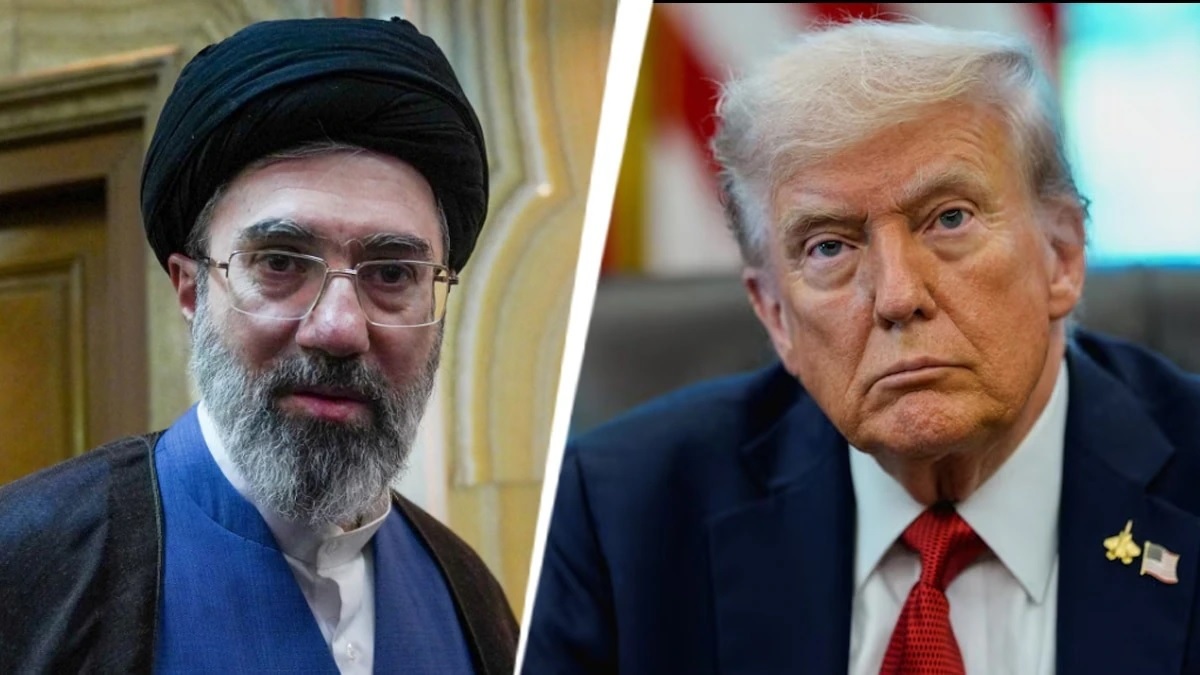
TEHRAN, — June 12, 2026 : Iranian state media outlets, including Mehr News Agency, have published the contents of a proposed 14-point draft memorandum of understanding (MoU) between Iran and the United States, outlining a framework aimed at ending recent hostilities, easing economic restrictions, and creating conditions for a broader agreement on nuclear issues and sanctions relief.
The publication of the draft comes amid ongoing diplomatic efforts between Tehran and Washington following months of heightened tensions and military confrontation in the region.
Background to the Negotiations
The proposed framework follows a period of conflict that intensified on February 28 after joint U.S.-Israeli military operations against Iran. The escalation led to a U.S. naval blockade and the operational closure of the Strait of Hormuz by Iran, disrupting international energy shipments and global supply chains.
The Strait of Hormuz remains one of the world's most important maritime routes for oil and energy exports, and restrictions on shipping through the waterway have contributed to increased commodity prices and concerns among international markets.
Earlier this week, U.S. President Donald Trump suspended planned military strikes on Iranian targets, including the Kharg Island oil terminal, citing progress in diplomatic efforts and indicating that a potential settlement was under discussion.
While previous reports suggested that Washington and Tehran were considering an interim arrangement to reduce tensions, the document published by Mehr News Agency provides the most detailed outline yet of a possible agreement between the two countries.
Details of the Proposed Framework
According to the draft, the agreement would establish a direct link between military de-escalation measures and economic concessions.
The United States would lift its naval blockade and suspend sanctions affecting Iranian oil exports, while Iran would reopen the Strait of Hormuz within 30 days under security arrangements determined by Tehran.
A significant feature of the document is its limitation on the scope of future negotiations. The draft specifies that final talks would focus on nuclear-related issues, sanctions relief, economic reconstruction, and relevant international resolutions.
The framework explicitly excludes discussions regarding Iran's ballistic missile program and its support for regional armed groups. This position differs from longstanding demands by several U.S. allies, including Israeli Prime Minister Benjamin Netanyahu, who has repeatedly argued that any comprehensive agreement should address both Iran's nuclear activities and missile capabilities.
The draft also includes a proposal requiring the United States and its allies to present an economic reconstruction package worth at least $300 billion for Iran, a provision that U.S. administrations have historically opposed.
The 14 Proposed Points
According to the text published by Mehr News Agency, the draft framework contains the following provisions:
-
Immediate and permanent cessation of hostilities on all fronts, including Lebanon.
-
U.S. commitment to non-interference in Iran's internal affairs and respect for Iranian sovereignty.
-
Complete lifting of the U.S. naval blockade within 30 days.
-
Withdrawal of U.S. military forces from territories bordering Iran.
-
Reopening of the Strait of Hormuz within 30 days under arrangements determined by Iran.
-
Suspension of sanctions targeting Iranian oil, petrochemical products, and related exports, alongside full access to Iran's financial resources.
-
Presentation of a reconstruction plan by the United States and its allies valued at a minimum of $300 billion.
-
Commencement of negotiations within 60 days to reach a final agreement covering nuclear issues, sanctions architecture, and relevant resolutions of the United Nations Security Council and the International Atomic Energy Agency (IAEA).
-
Reaffirmation of Iran's commitment to the Nuclear Non-Proliferation Treaty (NPT) and its renunciation of nuclear weapons production.
-
U.S. commitment not to increase troop deployments in the region or impose new sanctions during negotiations.
-
Unfreezing of $24 billion in Iranian assets during the negotiation period, with half of the amount to be released before talks begin.
-
Establishment of a monitoring mechanism to oversee implementation of the agreement.
-
Approval of the final agreement through a United Nations Security Council resolution.
-
Final negotiations to begin only after partial asset releases, suspension of oil sanctions, and the lifting of the naval blockade. The talks would be limited to enrichment activities, sanctions relief, and economic reconstruction, excluding missile programs and regional proxy issues.
Iranian Government Response
Iranian officials have emphasized that the document remains a preliminary proposal rather than a finalized agreement.
Iranian Foreign Ministry spokesperson Esmail Baghaei stated that the framework is still under review and has not yet received formal approval from Iran's leadership.
At the same time, Iranian officials have pushed back against reports suggesting that a final agreement could be signed within days. Noor News, which is affiliated with Iran's Supreme National Security Council, denied reports of an imminent signing and indicated that internal consultations remain ongoing.
International and Economic Implications
If implemented, the proposed framework could lead to the reopening of critical energy trade routes, the release of frozen Iranian assets, and a reduction in regional military tensions.
Financial markets responded positively to reports of the draft agreement, with investors viewing the developments as a potential step toward stabilizing energy supplies and reducing geopolitical risks in the Middle East.
However, significant issues remain unresolved, including the acceptance of the reconstruction proposal, implementation mechanisms, and whether both sides can reach consensus on a final agreement within the proposed negotiation period.
For now, both Tehran and Washington continue to describe the draft as a basis for further discussions rather than a completed settlement, with diplomatic engagement expected to continue in the coming days.
——— End of Article ———