World
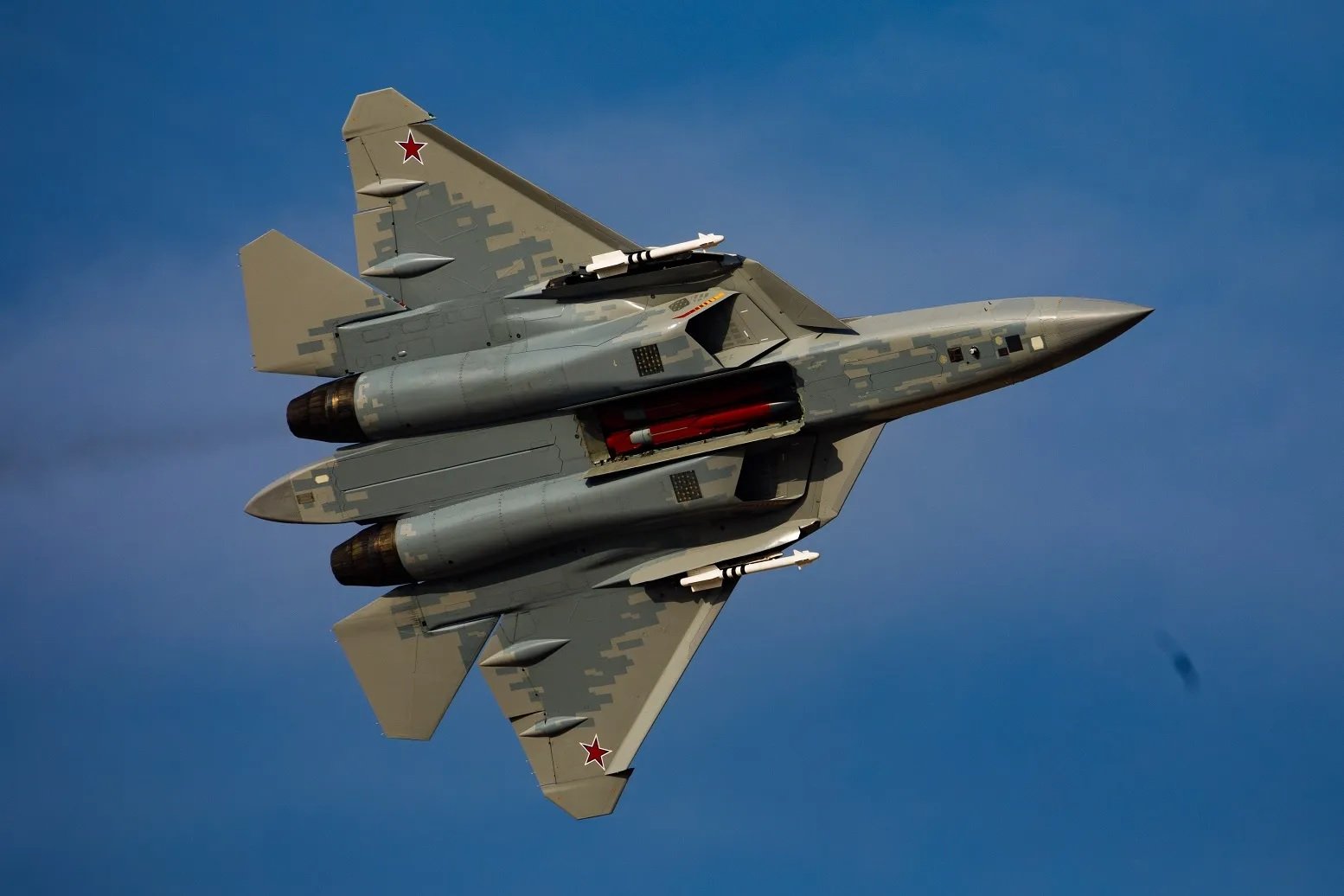
MOSCOW — Russia has officially confirmed that its fifth-generation Su-57 stealth fighter has achieved its first air-to-air kill during the conflict in Ukraine, marking the first official acknowledgment of such an engagement by Moscow. The announcement was made by Rosoboronexport Director General Alexander Mikheev, who said the aircraft successfully employed the newly introduced RVV-SDM medium-range air-to-air missile while operating in a heavily contested combat environment. According to Mikheev, the Su-57 has engaged airborne, ground and surface targets using Russian-made weapons while operating against advanced air-defense and electronic warfare systems. He stated that the aircraft demonstrated its capabilities in real combat conditions, including during the engagement that resulted in the confirmed aerial victory. The announcement coincides with the international debut of the RVV-SDM, a new medium-range air-to-air missile developed by Tactical Missiles Corporation primarily for the export version of the fighter, the Su-57E. RVV-SDM Designed for Internal Carriage Rosoboronexport said the RVV-SDM is designed to be carried inside the Su-57E's internal weapons bays, allowing the aircraft to retain its low-observable characteristics during combat operations. Official images released by the company show two RVV-SDM missiles mounted inside the fighter's internal weapons bay. According to Rosoboronexport, the missile features: Fire-and-forget capability An active-passive radar seeker An inertial navigation system with radio data-link for mid-course updates Improved aerodynamic performance A higher power-to-weight ratio than earlier missiles Enhanced resistance to electronic jamming The company also stated that the missile is capable of engaging fixed-wing aircraft, helicopters, cruise missiles and unmanned aerial vehicles at altitudes ranging from 15 metres to 25 kilometres and at target speeds of up to Mach 3. It is designed to operate during both day and night and under electronic countermeasure conditions. Rosoboronexport has not disclosed the missile's maximum engagement range. While some estimates suggest performance comparable to or greater than the earlier RVV-SD, no official range has been released. Defense analyst and former Indian Air Force pilot Vijainder K. Thakur has assessed that the RVV-SDM is likely an advanced development of the RVV-SD, modified for internal carriage and optimized for the Su-57's internal weapon bays. The missile is also being offered for other Russian combat aircraft and, after suitable modifications, for selected foreign platforms. First Official Confirmation of Su-57 Air-to-Air Victory Although reports claiming Su-57 aerial victories had appeared earlier this year, Russia had not officially confirmed any such engagement until now. In April 2026, reports attributed to Sergei Lebedev claimed that a Su-57 destroyed a Ukrainian aircraft over the Mykolaiv region using a long-range missile. In May, Russian media reported that a Su-57 had used an R-37M long-range missile against a Swedish Saab 340 AEW&C aircraft over eastern Ukraine. Those reports were never officially confirmed by Russian authorities. Mikheev's latest statement represents Moscow's first official acknowledgment that the Su-57 has achieved an air-to-air kill during the Ukraine conflict. Su-57 Continues to Operate Cautiously Despite the confirmed engagement, Russia has continued to employ the Su-57 cautiously during the war. The aircraft has primarily been used for stand-off strike missions launched from outside heavily defended areas protected by Western-supplied air-defense systems, including Patriot batteries. More recently, publicly available images have shown Su-57 aircraft carrying R-73 short-range air-to-air missiles on external wing pylons instead of inside internal weapon bays. Although this configuration reduces the aircraft's stealth characteristics, it is considered suitable for short-range interception missions against drones and cruise missiles. Reports indicate the aircraft has been used in anti-drone operations, including missions near Moscow and in the defense of industrial facilities. Export Campaign Focuses on Su-57E Rosoboronexport is marketing the RVV-SDM as part of its broader export package for the Su-57E. The company says international interest in the aircraft has increased following its combat record. Algeria remains the only officially confirmed export customer for the Su-57E. In November 2025, United Aircraft Corporation (UAC) Director General Vadim Badekha confirmed that the first two Su-57E aircraft had been delivered to a foreign customer and had entered combat duty. Subsequent reports and publicly available visual evidence identified Algeria as the recipient. Algeria already operates Russian-built Su-30MKA, MiG-29, and MiG-25 fighter aircraft. Russia also continues to promote the Su-57E to India, offering technology transfer and local production. However, no procurement decision has been announced by the Indian government. Alongside the RVV-SDM, Rosoboronexport is offering other weapons for the Su-57E, including the RVV-MD2 short-range missile, the RVV-BD long-range air-to-air missile, and various internally carried air-to-surface munitions. Ongoing Upgrades Under Megapolis Program The Su-57 continues to receive upgrades under Russia's long-term Megapolis development program. UAC has stated that the aircraft will continue evolving beyond 2040 through improvements to its weapons, onboard systems and overall capabilities. In February 2026, the Russian Aerospace Forces accepted another batch of Su-57 fighters featuring an updated technical configuration. Open-source analysis of official images identified visible changes to the aircraft's 101KS electro-optical complex, indicating expanded passive infrared and visual detection capabilities intended to improve situational awareness and self-protection. Separately, UAC confirmed in December 2025 that the Product 177 (Izdeliye 177) engine had entered flight testing. According to UAC, the engine produces up to 16,000 kilograms of thrust with afterburner, while offering lower fuel consumption and greater durability than the current AL-41F1 engines. The engine is planned for future integration into the Su-57 fleet. Comparison With the F-35 Russia's announcement comes months after the first officially confirmed air-to-air kill by an F-35 against a manned aircraft. In March 2026, the Israel Defense Forces (IDF) confirmed that an Israeli F-35I Adir shot down an Iranian Yak-130 over Tehran. Before that engagement, the F-35 had been employed against drones and cruise missiles in several operational theaters. The operating environments for the two aircraft differ. Ukraine's airspace is defended by modern Western air-defense systems, including the Patriot system, while previous F-35 combat operations have taken place in different operational environments. Russia has presented the Su-57's latest combat achievement alongside the introduction of the RVV-SDM as evidence of the aircraft's expanding operational role and as part of its continuing effort to promote the Su-57E and its associated weapons to international customers.
Read More → Posted on 2026-08-05 16:37:08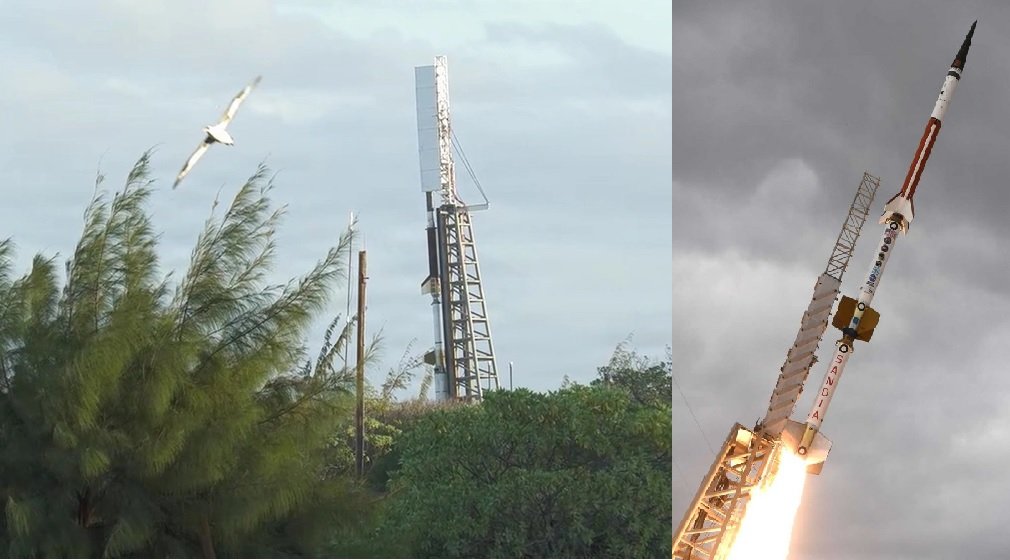
U.S. Navy Successfully Conducts SMART Sounding Rocket Mission from Wake Island to Study Space Plasma
U.S
WAKE ISLAND, Pacific Ocean — The U.S. Navy has released new details of the Space Measurement of A Rocket-released Turbulence (SMART) mission, a scientific sounding rocket experiment conducted on February 12, 2026, from the remote Pacific atoll of Wake Island. The mission was designed to study how plasma energy converts and behaves in space, providing data that could improve understanding of space weather and its effects on satellites and other space-based systems. The SMART mission was managed by the U.S. Naval Research Laboratory (NRL) and carried out by the Naval Surface Warfare Center (NSWC), Port Hueneme Division's White Sands Detachment. The launch marked the detachment's largest sounding rocket mission to date and its first flight of a four-stage sounding rocket. Mission aimed at studying plasma turbulence The experiment focused on understanding plasma turbulence and energy conversion in Earth's upper atmosphere. Scientists say space weather can affect satellite communications, navigation systems, and other spacecraft operating in low Earth orbit. Dr. Gurudas Ganguli, NRL Senior Scientist for Intense Particle Beams and Plasma Processes, said space weather poses challenges for spacecraft in much the same way atmospheric weather affects aircraft. To carry out the experiment, the Navy launched Oriole IV, a 68-foot (20.7-meter), four-stage sounding rocket built using four repurposed motors—Talos, Terrier, Oriole, and Nihka. According to officials, using existing rocket motors significantly reduced mission costs compared with developing a new large single-stage motor capable of reaching the same altitude. The rocket reached an altitude of approximately 539 kilometers (335 miles), within the region where many satellites operate. At that point, the payload separated, and a directional shape charge vaporized several pounds of barium metal, creating an artificial plasma cloud in the ionosphere. After the release, sunlight ionized the neutral barium atoms. Officials said the neutral atoms glowed green, while the ions produced blue and purple colors. Earth's magnetic field confined the ions, triggering electrostatic plasma turbulence. A second payload carrying scientific instruments then passed through the plasma cloud to measure the resulting electric and magnetic field changes and other electromagnetic effects. Testing plasma-wave conversion in space According to the Naval Research Laboratory, the mission was designed to confirm how electrostatic lower hybrid waves convert into electromagnetic whistler waves during a high-speed metal vapor release in the ionosphere. Christopher Netwall, Branch Head for Dynamics and Control Systems at the Naval Research Laboratory's Naval Center for Space Technology, SMART program manager, and experiment lead, said the experiment addressed a scientific question that had previously been studied mainly in laboratory conditions. Officials reported that the team successfully induced and measured plasma turbulence in the space environment using this method. Instruments recorded electric and magnetic field fluctuations, while ground-based sensors tracked the plasma cloud's size, optical intensity, and the propagation of the resulting electromagnetic waves. The complete mission sequence, from liftoff to final measurements, lasted about 10 minutes before the vapor dispersed and recombined with atmospheric elements. Jay Breuer, Senior Test Director in the White Sands Detachment's Suborbital Vehicles Division, said the mission demonstrated scientific theories that could eventually support future operational capabilities. Wake Island selected for safety reasons The SMART mission was originally planned for NASA's Wallops Flight Facility in Virginia. However, NASA safety assessments determined that detonating a shape charge at such a high altitude could spread debris across an area too large for that location. The project was subsequently transferred to the U.S. Navy, which selected Wake Island, a remote atoll managed by the U.S. Air Force. Located approximately 2,300 miles (3,701 kilometers) west of Honolulu and 1,500 miles (2,414 kilometers) northeast of Guam, Wake Island's isolation allowed the military to safely close the required airspace and ocean areas. The nearest inhabited island is nearly 600 miles (966 kilometers) away. Breuer described the location simply as being "in the middle of nowhere." Building a launch site in a remote environment Launching from Wake Island required extensive preparation because the island lacks permanent sounding rocket infrastructure. Unlike established launch ranges such as White Sands Missile Range, the Hebrides Range in Scotland, or the Pacific Missile Range Facility in Kauai, Wake Island did not have permanent telemetry systems or launch control facilities. An advance team surveyed the island months before the mission, and eight personnel from the White Sands Detachment spent about seven weeks, from early January through late February, establishing the launch site. The launch control center was set up inside an abandoned garage with a dirt floor, leaking roof, and mold-covered walls. The team relied on Starlink satellite terminals for internet connectivity throughout the operation. In total, 42 personnel participated in the mission, including scientists from the Naval Research Laboratory, NASA's Goddard Space Flight Center, the Naval Surface Warfare Center Indian Head Division, university research teams, and supporting contractors. Rocket and equipment transported across the Pacific Transporting personnel, rocket hardware, and equipment to Wake Island required three C-17 Globemaster III cargo aircraft operating from Holloman Air Force Base in New Mexico. Aircraft carrying rocket stages and explosives stopped at Travis Air Force Base in California and Joint Base Pearl Harbor-Hickam in Hawaii before continuing across the Pacific to Wake Island. Officials said the journey covered approximately 5,800 miles (9,334 kilometers) and took about four days. The launch used a Missile Defense Agency launcher capable of handling payloads of up to 50,000 pounds (22,680 kilograms). The launcher was extended to accommodate the 68-foot Oriole IV sounding rocket. Mission planners also delayed launch opportunities several times to avoid potential conflicts with orbiting satellites before successfully completing the flight. Mission supports future research and testing Following the successful launch, the Missile Defense Agency transferred ownership of the heavy-duty Wake Island launch rail to the White Sands Detachment. According to Navy officials, the successful expeditionary launch demonstrated the unit's ability to conduct complex sounding rocket operations from remote locations. They said this capability could support future hypersonic vehicle testing and work related to the Golden Dome for America homeland missile-defense architecture. The Naval Research Laboratory said the SMART mission successfully confirmed laboratory predictions of plasma-wave conversion in the actual space environment while providing valuable data to improve understanding of space weather and its potential effects on satellites and other space-based systems. The mission involved multiple government organizations, including the Naval Research Laboratory, Naval Surface Warfare Center divisions, Pacific Air Forces Regional Support Center Wake Island Detachment, U.S. Army Space and Missile Defense Command Reagan Test Site, U.S. Space Force 19th Space Defense Squadron, Missile Defense Agency Test Directorate, NASA Goddard Space Flight Center, the University of Alaska Fairbanks, and the University of Washington. Sponsors included the Office of the Undersecretary of Defense for Research and Engineering, the Office of Naval Research, the Department of War Space Test Program, the Rocket Systems Launch Program, the Defense Advanced Research Projects Agency (DARPA), and the Space Security and Defense Program.
Read More → Posted on 2026-08-05 16:21:08
Space & Technology
HAWTHORNE, Calif. — SpaceX has announced a strategic partnership with Nvidia to develop the compute payload for its Starmind AI1 satellites, marking a major step in the company's plan to build orbital data centers capable of delivering data center-class artificial intelligence (AI) computing in space. The partnership, announced on August 4, will see each first-generation Starmind AI1 satellite equipped with Nvidia's Vera Rubin NVL72 platform, combining Rubin GPUs and Vera CPUs to handle intensive AI workloads in orbit. According to SpaceX, the same optimized server architecture developed for space missions will also be deployed in the company's terrestrial data centers. AI1 Satellite Designed as an Orbital Data Center The Starmind AI1 is the first-generation satellite for SpaceX's planned Starmind constellation and is designed to function as an orbital AI computing platform with onboard data processing capabilities. According to SpaceX's official Starmind information, the AI1 satellite has a deployed height of 30 meters and a 75-meter wingspan. It is designed to operate in sun-synchronous orbit, allowing continuous access to solar power while using the vacuum of space for thermal management through radiative cooling. The satellite's compute payload reaches 250 kilowatts at peak power and 175 kilowatts on average, with a reported vehicle efficiency of 75 kilowatts per ton. SpaceX said the platform uses a modular architecture that can support compute modules from different providers. Processed AI workloads will be transmitted back to Earth through high-bandwidth laser communication links connected to the Starlink satellite network. Nvidia Vera Rubin NVL72 Forms the Core Compute System The AI1 satellites will carry a customized version of Nvidia's Vera Rubin NVL72 system that has been adapted for space operations. According to the company, the platform combines 72 Rubin GPUs with 36 Vera CPUs in a single rack-scale architecture designed for large AI workloads. Reported specifications for the NVL72 system include: Approximately 3.6 EFLOPS of NVFP4 inference performance. 20.7 TB of HBM4 memory. 260 TB/s of NVLink bandwidth. SpaceX said the standard NVL72 architecture has been modified to withstand launch conditions, radiation exposure and the thermal environment of space while simplifying the overall system design. SpaceX Plans to Use the Same Architecture on Earth During SpaceX's earnings call, Chief Executive Officer Elon Musk said the company will build its AI infrastructure exclusively on Nvidia hardware. "We think the Vera Rubin architecture is the best architecture. We think it's the best AI computer, and we greatly value our close cooperation and partnership on many levels with Nvidia. So we're exclusive to Nvidia." Musk also said the redesigned NVL72 system developed for the Starmind satellites offers advantages over conventional rack-based data center designs. "We think the design of the NVL72 VR computer is a much better design than, say, having a standard rack style design. We expect to actually deploy this on the ground as well as in orbit, because we think it's going to be a radical simplification of the normal NVL72 rack. It will cost less. It'll be more effective. If we're going to put it in space, why not put it on the ground? I think that's going to be pretty cool." He added that the same Starmind V1 design, without the solar arrays and radiators required for space operations, will also be used in SpaceX's ground-based data centers. SpaceX Reports AI Revenue Growth The partnership announcement came alongside SpaceX's first financial report since becoming a public company. The company reported $2.6 billion in AI-related revenue for the second quarter of 2026, driven primarily by cloud service agreements and growth in its X and Grok subscription businesses. SpaceX has said its long-term objective is to expand AI computing capacity beyond the limitations of land availability, electrical power infrastructure and cooling systems that affect traditional data centers. The company has previously outlined plans for a large Starmind satellite constellation, with the Nvidia partnership providing the initial compute payload while keeping the platform open to future hardware upgrades. According to SpaceX, launches of the Starmind AI1 satellites are expected to begin in 2027, with mass production planned for late 2027 at the company's Gigasat facility in Bastrop, Texas.
Read More → Posted on 2026-08-05 15:57:40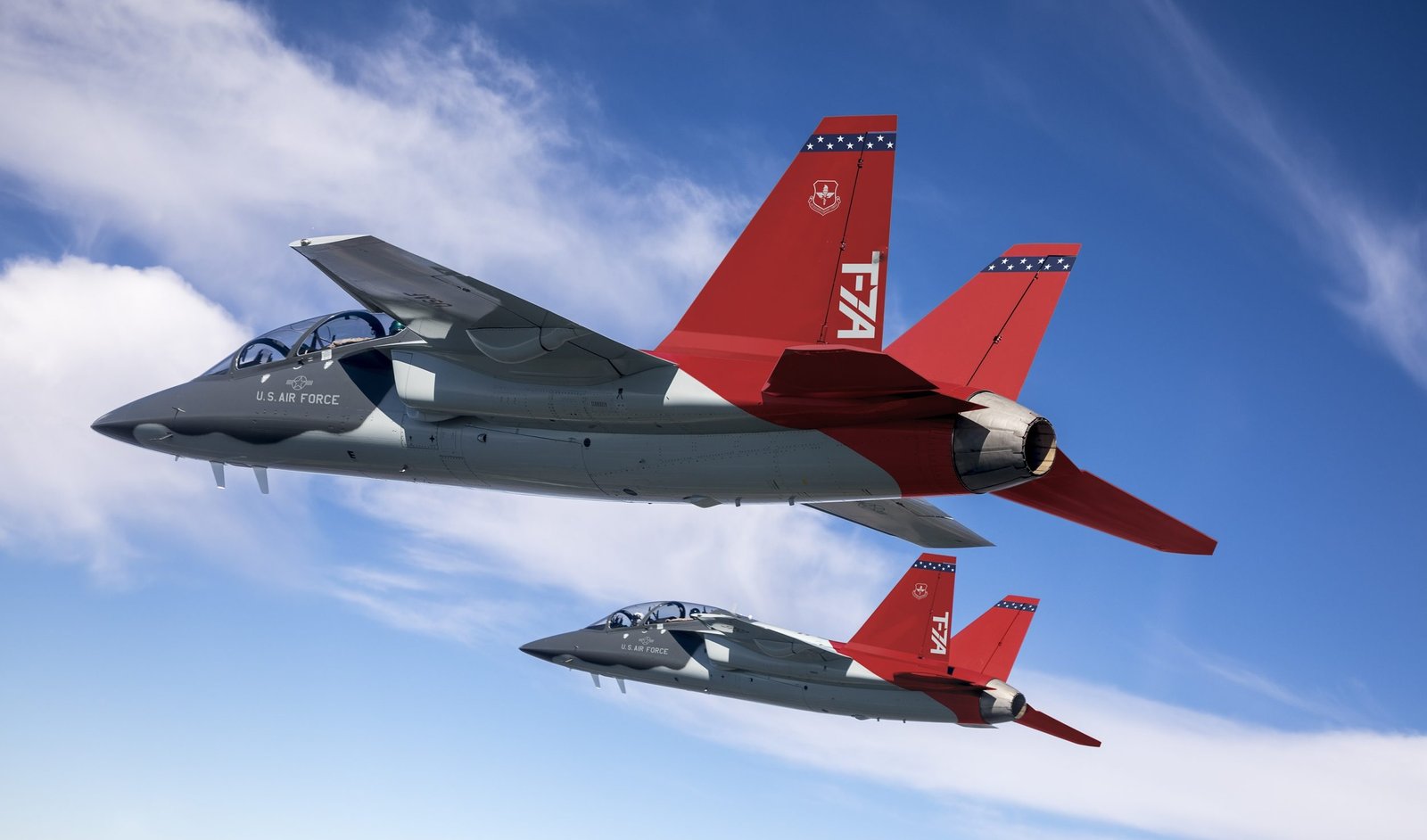
Europe
WEST LAFAYETTE, Ind. — The Boeing-Saab T-7A Red Hawk advanced jet trainer program has entered a new phase after the U.S. Air Force approved Milestone C on April 23, 2026, allowing the aircraft to move from development into low-rate initial production (LRIP). The decision, announced publicly in early May 2026, was followed by a $219 million contract awarded to Boeing for the first 14 production aircraft, together with associated support equipment, training systems, and spare parts. The approval marks a significant milestone for both the U.S. Air Force and Saab, which manufactures the T-7A's aft fuselage at its dedicated production facility in West Lafayette, Indiana. The T-7A Red Hawk is being developed jointly by Boeing and Saab to replace the U.S. Air Force's T-38 Talon advanced trainer, which has served for more than six decades. The aircraft is intended to prepare future pilots for operating modern combat aircraft, including the F-35 Lightning II, F-22 Raptor, F-15EX Eagle II, and B-21 Raider. Indiana Facility Expected to Increase Production Saab's West Lafayette facility was built specifically to support long-term production of the T-7A. The plant uses digital manufacturing methods developed jointly with Boeing and is now the exclusive production site for all T-7A aft fuselage sections after manufacturing was transferred from Sweden to the United States. The facility has operated below planned capacity in recent years because of delays in the T-7A program. As a result, Saab has experienced underutilization at the plant, affecting the financial performance of its Aeronautics business. During Saab's second-quarter 2026 earnings presentation, President and CEO Micael Johansson said the start of production contracts means manufacturing activity now needs to increase. He noted that Saab had already begun work on initial production batches under earlier contracts from Boeing but added that it will take several quarters and "a couple of years" before the Indiana operation reaches stronger financial performance. Johansson also said the T-7A program continues to have a negative impact on Saab's Aeronautics business while production volumes remain below efficient operating levels. Despite the gradual ramp-up, he described the Red Hawk as a long-term industrial program that is expected to become "an excellent franchise program over many years." Milestone C Clears the Way for Production In the U.S. Department of Defense acquisition process, Milestone C authorizes a program to move from engineering and manufacturing development into the production and deployment phase. For the T-7A, the approval allows the aircraft to enter low-rate initial production rather than full-rate manufacturing. The U.S. Air Force is using an incremental production strategy for the Red Hawk. Instead of approving large-scale production immediately, the service plans to review and approve each of the first three LRIP lots separately. This approach allows engineers to incorporate lessons learned from developmental testing before larger production quantities are authorized. The phased production strategy is intended to reduce technical and manufacturing risks while allowing aircraft deliveries to continue. Budget planning documents outline potential follow-on production lots, including 23 aircraft in fiscal year 2027 and 36 aircraft in fiscal year 2028, although each lot will require separate approval. Digital Design Supports Future Growth The T-7A Red Hawk is the first U.S. Air Force aircraft designed and developed using fully digital engineering methods. The aircraft features modern avionics, open-architecture systems, and embedded training capabilities intended to support future upgrades throughout its service life. The program of record includes 351 T-7A aircraft and 46 ground-based training simulators, with deliveries planned to five Air Education and Training Command bases over the coming decade. The aircraft is expected to become the U.S. Air Force's primary advanced trainer for pilots preparing to transition to current and future combat aircraft. Program Moving Toward Initial Operational Capability The T-7A program has experienced development challenges, including work related to the aircraft's ejection seat and flight-control software, resulting in schedule adjustments during testing. Boeing has continued development under the program's fixed-price contract. Five test-configured aircraft have already been delivered, with the first aircraft arriving at Joint Base San Antonio-Randolph in late 2025 for Air Education and Training Command activities. With Milestone C now complete, Boeing and Saab can gradually increase production in line with future U.S. Air Force contracts. Initial production aircraft will support instructor and maintainer training as the Air Force works toward achieving Initial Operational Capability (IOC) in 2027. For Saab, the approval also marks the beginning of a gradual increase in manufacturing activity at its Indiana facility. While company executives expect financial improvements to take time, they continue to view the West Lafayette operation as a long-term production center that will benefit as aircraft output expands and the T-7A program progresses.
Read More → Posted on 2026-08-05 15:24:40
World
BEIJING — China has released the first official in-flight footage of its H-6N strategic bomber carrying what military analysts identify as the JL-1 air-launched ballistic missile (ALBM), providing the clearest official view so far of the aircraft and missile combination. The footage appeared in the final episode of the documentary Securing Victory, broadcast by state broadcaster CCTV as part of events marking the 99th anniversary of the People's Liberation Army (PLA) on August 1. The documentary was jointly released by the Central Military Commission's Political Work Department, the Cyberspace Administration of China, and China Media Group. In the video, the H-6N bomber is shown flying with a large externally mounted missile beneath its fuselage while being escorted by two J-20 fifth-generation stealth fighters. Although CCTV did not identify the weapon by name, military observers and Chinese media reports assessed it to be the JL-1, also known as Jing Lei-1 ("Startling Thunder"), based on its size and external appearance. The footage marks the first official confirmation of the JL-1 being carried by an H-6N during flight. The missile had previously appeared publicly during a military parade in Beijing in September 2025 alongside other strategic weapons, while unofficial images of the aircraft and missile combination had circulated online earlier. H-6N Modified for Air-Launched Ballistic Missile Operations The H-6N is a modified version of China's H-6 bomber family, designed to carry oversized external payloads. The aircraft features a recessed section under the fuselage to accommodate large weapons such as the JL-1 and is equipped with an aerial refueling probe to extend its operational range. According to defense assessments, the bomber has a combat radius of around 4,000 kilometers with aerial refueling support. Open-source assessments also estimate the JL-1's range at more than 5,000 kilometers, with some reports placing it at nearly 8,000 kilometers depending on payload configuration and launch profile. Launching a ballistic missile from an airborne platform provides greater operational flexibility than a ground launch by allowing the missile to begin its flight at altitude and speed. Analysts also note that an air-launched system can expand operational reach and provide additional launch options. The JL-1 is widely assessed as a nuclear-capable air-launched ballistic missile that forms the airborne component of China's nuclear triad alongside land-based and sea-based nuclear forces. Military analysts also state that the missile can carry conventional warheads for tactical missions. Footage Shows Simulated Joint Anti-Ship Exercise The documentary presents the footage within a simulated joint exercise conducted by the PLA Southern Theater Command. According to the exercise scenario, a rapidly maneuvering enemy surface fleet approaches from the southeast while ship-borne aircraft move toward the operational area. PLA forces respond by deploying reconnaissance drones, airborne early warning and control aircraft, and logistics support units before carrying out a coordinated strike. The exercise depicts anti-ship missiles being launched from multiple platforms, including destroyers, road-mobile launchers, and aircraft. The documentary also shows a Type 052D destroyer launching a YJ-20 hypersonic anti-ship missile through its vertical launch system. This is the first official confirmation of the YJ-20 being launched from a Type 052D destroyer, as the missile had previously been associated with the larger Type 055 destroyers. In addition, another H-6 bomber variant is shown releasing the YJ-12 supersonic anti-ship missile. The documentary also includes footage of DF-21D anti-ship ballistic missiles during the exercise. Analysts Outline JL-1's Intended Role Former PLA Air Force officer and military analyst Fu Qianshao said the JL-1 is intended for targets of greater strategic importance than conventional naval targets, including regional hubs, military bases, command centers, and headquarters. Fu stated that the combined reach of the H-6N and JL-1 could cover almost the entire Pacific Ocean. He also noted that while the missile serves as part of China's nuclear deterrent, it can also carry conventional warheads for tactical missions. Wang Yanan, editor-in-chief of Aerospace Knowledge magazine, described the JL-1 as a missile capable of conducting both anti-ship and ground-strike missions. Bomber and J-20 Escort Reflect Evolving Air Operations The documentary also highlights the H-6N operating alongside two J-20 stealth fighters. The combination reflects an operational approach that pairs long-range bombers with advanced fighter aircraft during extended missions. Military observers note that escort fighters can provide protection against potential interceptors while supporting the bomber as it approaches its launch position. The release of the footage comes as China continues to modernize its long-range aviation and naval strike capabilities through the development of strategic bombers, long-range precision weapons, hypersonic missile systems, aerial refueling aircraft, and fifth-generation fighters. Chinese authorities have not released additional official information regarding when the footage was recorded, the specific name of the exercise, or the operational status of the JL-1 beyond its public appearance in the documentary.
Read More → Posted on 2026-08-05 14:46:43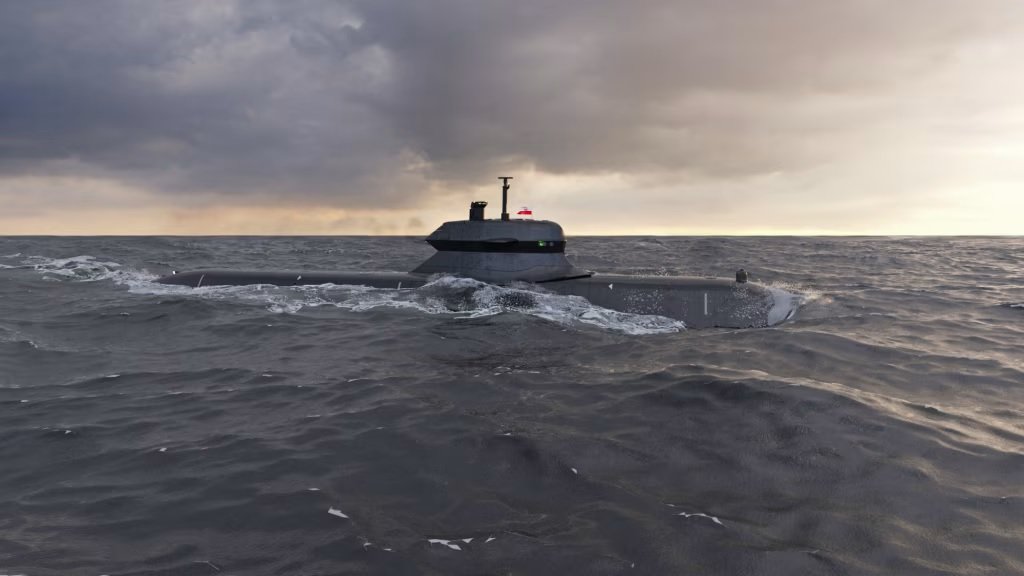
Europe
STOCKHOLM — Swedish defence company Saab is expanding its submarine production capacity as work on Sweden's A26 submarine program continues and a newly signed contract to build three A26-type submarines for Poland significantly increases demand across its naval business. The update was provided by Saab President and Chief Executive Officer Micael Johansson during the company's second-quarter 2026 earnings call. He said the combined Swedish and Polish submarine programs are strengthening industrial capacity, increasing underwater capabilities in the Baltic Sea, and creating greater production resilience through shipyard operations in both Sweden and Poland. Sweden's A26 Program Continues to Progress Johansson said Saab is making "really good progress" on Sweden's A26 submarine program, which remains the company's flagship conventional submarine project. The A26, officially designated as the Blekinge-class in Swedish Navy service, is currently under construction at Saab's Karlskrona shipyard. Sweden has ordered two submarines—HMS Blekinge and HMS Skåne—with deliveries expected in 2031 and 2033, respectively. While Johansson did not provide additional schedule details during the earnings call, he described the program's overall development as positive alongside Saab's expanding international submarine business. Poland's Order Marks a Major Export Success The biggest development during the quarter was Poland's decision to order three A26-type submarines under its Project Orka submarine modernization program. The contract, valued at approximately SEK 47 billion, includes the submarines, a weapons package, training, and long-term support. According to Saab, the first submarine is expected to be delivered in 2031, with the final delivery scheduled for 2038. Johansson described the agreement as one of the most significant contracts secured during the quarter and said it confirms Saab's position in the conventional submarine market. "They have now contracted us for three submarines that will be delivered in the next few years," Johansson said, adding that the order represents both an industrial achievement and a significant increase in underwater capability from a Baltic Sea security perspective. Saab Expands Shipyard Capacity To meet the production requirements of both the Swedish and Polish programs, Saab is increasing submarine manufacturing capacity at its Karlskrona shipyard. The company is also expanding operations at its Landskrona facility, where additional submarine construction and assembly activities will be carried out. "Now the contract on the submarines for Poland, in combination with the Swedish contract, of course, means that we are ramping up production capacity both in Karlskrona," Johansson said, adding that Saab is also expanding capability at its second shipyard in Landskrona. The expanded facilities are intended to support long-term production for both domestic and export submarine programs. Industrial Cooperation with Poland The Polish submarine program also includes extensive industrial cooperation between Saab and Polish industry. As part of the agreement, Saab will establish maintenance, repair and overhaul (MRO) capabilities in Poland while helping develop local shipyard capacity to support the submarines throughout their service life. Johansson said having shipyard capabilities on both sides of the Baltic Sea will improve industrial resilience and reduce dependence on a single production location. "It will also entail industrial collaboration with Poland," Johansson said. "We will have shipyard capabilities on both sides of the Baltic Sea, which makes lots of sense in terms of security and redundancy going forward." Contract Supports Production Expansion Saab said the investments required to expand production facilities are supported by the structure of the Polish contract. The agreement includes an advance payment and a payment schedule designed to help the company rapidly increase shipyard capacity. Saab did not disclose the value or percentage of the advance payment. "It's a good advance payment and a payment schedule that supports our quick ramp-up of shipyard capacity and all that," Johansson said. "We're not going to act like a bank related to that contract, that much I can say." Johansson also said the Polish submarine order was the main contributor to Saab's SEK 68.4 billion order intake during the second quarter, creating a record backlog for the company's naval business and providing long-term production visibility. Broader Swedish-Polish Cooperation Beyond the submarine contract, Sweden and Poland have agreed on additional naval cooperation. Under a separate bilateral agreement, Poland will operate the Swedish submarine HMS Södermanland as an interim capability until 2032. Training for Polish submarine crews is scheduled to begin in August 2026. Sweden will also support Poland's New Type Submarine program from around 2027 to 2038, including participation in testing and experimental activities involving Sweden's A26 submarines currently under construction. Saab has also committed to establishing long-term maintenance, repair and overhaul (MRO) capabilities in Poland in cooperation with local industry. A26 Designed for Baltic Sea Operations The A26 submarine has been designed for operations in the Baltic Sea, with a focus on quiet operation and the ability to remain difficult to detect during missions. The latest updates on the Swedish A26 program, the Polish submarine contract, production expansion, and industrial cooperation were presented during Saab's second-quarter 2026 results presentation and related official statements.
Read More → Posted on 2026-08-05 14:26:52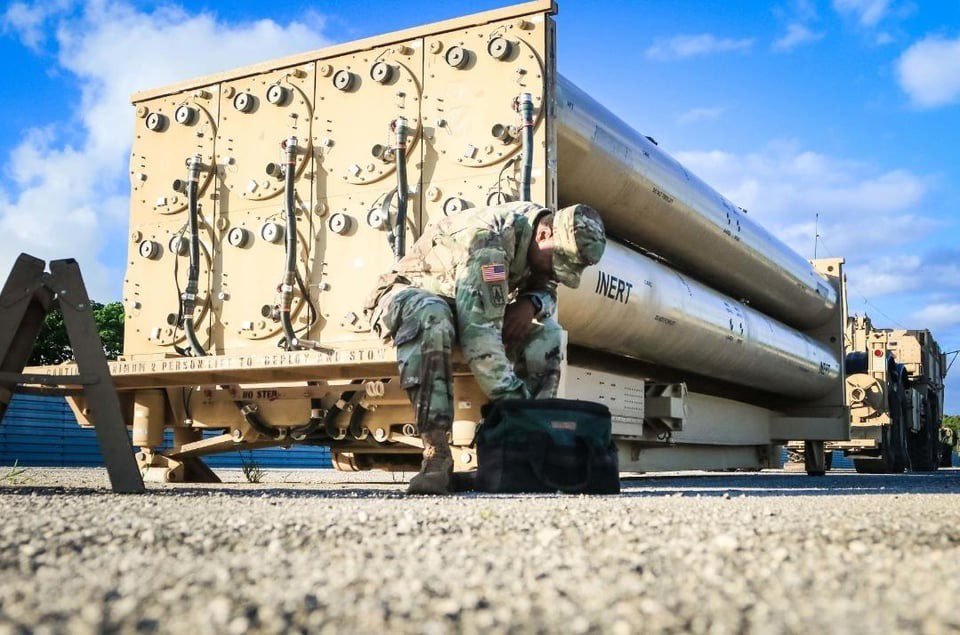
U.S
WASHINGTON — The United States has used a significant portion of its advanced missile interceptor inventory during the five-month conflict with Iran, raising concerns inside the Pentagon over the readiness of U.S. air and missile defense forces if another major conflict emerges. According to an exclusive CNN report published on Tuesday, U.S. military commanders have warned that the Pentagon's stockpile of key interceptor missiles has reached "dangerously low" levels after months of sustained operations against Iranian missile attacks. The report, citing officials familiar with the latest Pentagon inventory assessment, states that the U.S. Army has expended nearly 80% of its pre-war Terminal High Altitude Area Defense (THAAD) interceptor inventory and roughly half of its Patriot air defense interceptors since the conflict began in late February. THAAD and Patriot Inventories Under Pressure The reported decline reflects the heavy use of U.S. layered missile defense systems during repeated Iranian ballistic missile attacks targeting American military bases and regional partners across the Middle East. According to estimates from the Center for Strategic and International Studies (CSIS), the United States entered the conflict with approximately 2,200 Patriot interceptors (including PAC-3 and GEM-T variants) and 452 THAAD interceptors. CNN's assessment indicates that nearly four-fifths of the THAAD inventory has now been consumed, while about half of the Patriot interceptor stockpile has also been used during combat operations. Earlier CSIS estimates, published before the latest Pentagon assessment, projected somewhat lower levels of expenditure. The think tank estimated that between February and July the United States had used about 65% of its Patriot inventory, leaving fewer than 1,000 missiles, while THAAD inventories had fallen by at least 38%, to roughly 250 interceptors. CSIS noted that the actual numbers could change as additional operational data became available. Concerns Raised Before Additional Strikes Were Halted According to CNN, senior military officials warned about the rapid depletion of interceptor stockpiles before President Donald Trump decided last week to halt additional military strikes against Iran. The reported shortage has also raised concerns among U.S. partners in the Middle East, where American missile defense systems play a central role in protecting military installations and allied forces from ballistic missile attacks. Officials are concerned that prolonged regional tensions could place additional pressure on remaining interceptor inventories if another large-scale missile campaign occurs. Budget Request Focuses on Rebuilding Missile Inventories The depletion of interceptor stockpiles is reflected in the Trump administration's fiscal year 2027 defense budget request. The proposal includes $95 billion for munitions procurement, together with an additional $21 billion in supplemental funding, aimed at accelerating production of critical missile systems. The procurement request includes plans to acquire more than 3,000 Patriot interceptor missiles and approximately 800 THAAD interceptors. Defense analysts note that replenishing these inventories will take time because procurement levels in previous years were comparatively lower, limiting near-term missile deliveries. Missile Production Capacity Being Expanded To address increasing demand, the U.S. Department of Defense has begun expanding missile production capacity through long-term agreements with industry. In January 2026, Lockheed Martin signed a framework agreement with the Department of Defense to increase THAAD interceptor production capacity from 96 missiles annually to 400 per year. The company also announced construction of a new Munitions Acceleration Center in Camden, Arkansas, to support higher production rates using advanced manufacturing technologies. Separately, the Pentagon has also signed agreements to increase production capacity for Patriot interceptor components as part of a broader effort to rebuild U.S. missile inventories following high operational demand. THAAD's Role in U.S. Missile Defense THAAD (Terminal High Altitude Area Defense) is designed to intercept ballistic missiles during the terminal phase of flight, including engagements outside the Earth's atmosphere. The system uses the Talon hit-to-kill interceptor, which destroys incoming ballistic missiles through direct kinetic impact rather than an explosive warhead. According to publicly available U.S. Army information, THAAD can engage ballistic missile threats at altitudes of up to 150 kilometers (93 miles) and at ranges of up to 200 kilometers (124 miles). The United States currently operates seven THAAD batteries and plans to expand the force to eight batteries. Higher interceptor production is intended both to replenish depleted inventories and support future force expansion. Patriot Provides Lower-Layer Missile Defense The Patriot air defense system operates alongside THAAD as part of the U.S. layered missile defense architecture. Using PAC-3 and GEM-T interceptor missiles, Patriot is designed to engage tactical ballistic missiles as well as aerodynamic threats such as aircraft and cruise missiles, providing medium- and high-altitude air defense for military forces and critical infrastructure. Precision-Guided Missile Stocks Also Reportedly Affected The reported pressure on U.S. munitions has extended beyond defensive interceptor missiles. According to Reuters, U.S. forces also came close to exhausting inventories of Army Tactical Missile System (ATACMS) and Precision Strike Missile (PrSM) long-range precision-guided weapons during the five-month campaign, highlighting broader concerns over the sustainability of high-intensity military operations and the pace of munitions production. Defense analysts have said rebuilding these inventories will require sustained production increases over several years, even with expanded manufacturing capacity now being introduced across the U.S. defense industrial base.
Read More → Posted on 2026-08-05 14:06:54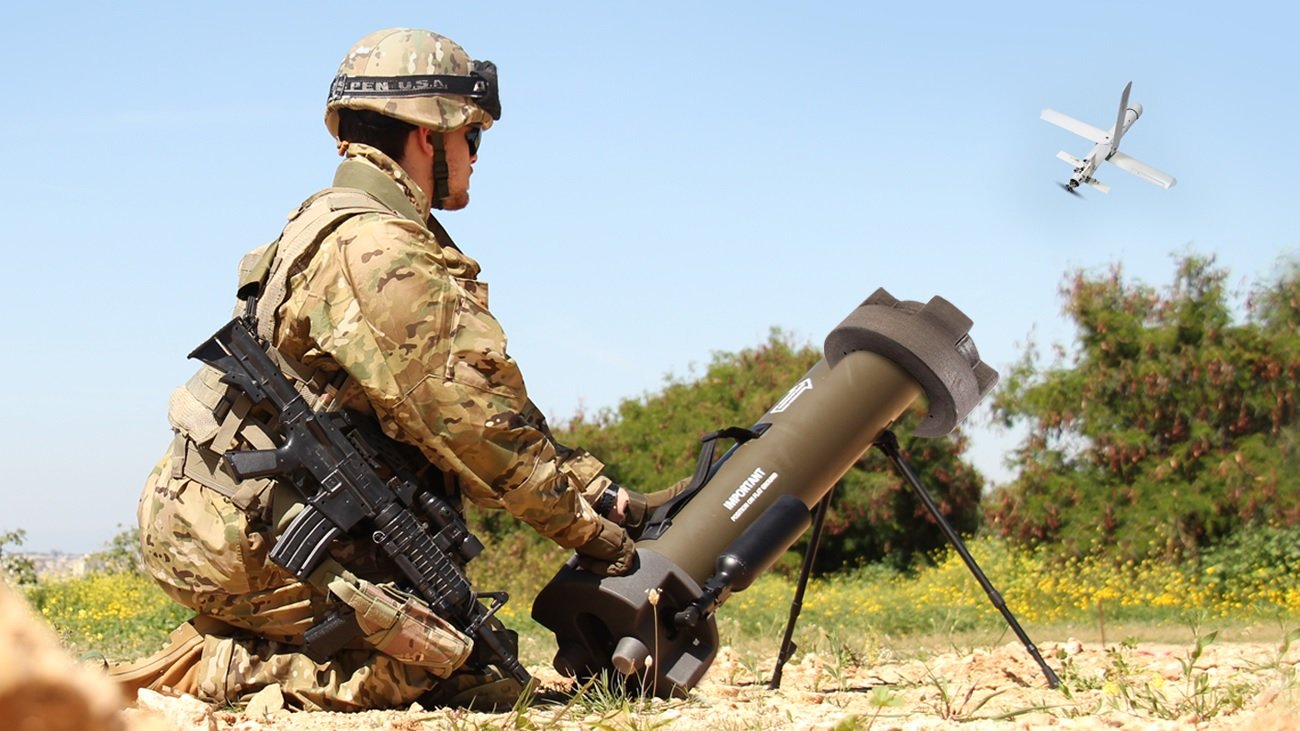
U.S
BETHESDA, Md. — Mistral Inc. and UVision have successfully completed the first Lot Acceptance Tests (LAT) for the HERO 120 loitering munition system under the U.S. Army's Lethal Unmanned System (LUS) program, marking an important step toward fielding the system with Army units. According to the companies, all HERO 120 systems successfully completed the required acceptance-test missions during the recent testing event. The results support continued progress toward operational deployment under the Army's LUS program. The LUS program is managed under the Precision Strike Reconnaissance System (PSRS) portfolio within the Capability Portfolio Executive for Mission Autonomy, which oversees the development and fielding of advanced autonomous capabilities for the U.S. Army. HERO 120 Moves Closer to Army Fielding The successful completion of the first Lot Acceptance Tests confirms that the evaluated HERO 120 systems met the Army's required acceptance-test objectives. The milestone allows the program to continue toward broader fielding across Army units. Mistral Inc. and UVision are jointly delivering the HERO 120 under a $982 million multi-year Indefinite Delivery, Indefinite Quantity (IDIQ) contract awarded in October 2025. The contract covers procurement, fielding, training, and sustainment of the system for the U.S. Army, with initial deliveries scheduled to begin in early 2026. HERO 120 Designed for Reconnaissance and Precision Strike The HERO 120 is a mid-range loitering munition designed to provide tactical units with both reconnaissance and precision-strike capabilities. The system is intended to give soldiers greater operational flexibility while operating in complex battlefield environments. The munition uses a pneumatic launch system and features a gimbaled electro-optical/infrared (EO/IR) seeker supported by advanced image processing technology. A key capability of the HERO 120 is its man-in-the-loop control, which allows the operator to maintain control throughout the mission. Operators can observe, identify, track, and engage both moving and stationary targets. If battlefield conditions change, they can abort an attack during flight or redirect the munition to another target. According to the companies, the system is also designed to operate in GPS-denied environments while maintaining precision accuracy and minimizing collateral damage. Previously released specifications state that the HERO 120 carries an approximately 4.5-kilogram warhead, has an operational range of approximately 40 to 60 kilometers, and can remain airborne for up to 60 minutes. The system is compatible with multiple launch platforms, including vehicles, and can also be operated by infantry teams. Companies Share Responsibilities Mistral Inc. serves as the U.S.-based prime contractor and systems integrator for the program. The company is responsible for system integration, the lethality package, program management, and sustainment. UVision serves as the design authority for the HERO 120. The company supports the system's development, manufacturing, and delivery and also provides training and sustainment support for the HERO family of loitering munitions. Together, the companies are responsible for delivering the systems and supporting Army units throughout fielding and operational service. Company Statements Yoav Banai, Senior Vice President at Mistral Inc., said the successful testing represents an important milestone for the companies and the U.S. Army. "Completing the first Lot Acceptance Tests is an important milestone for Mistral Inc., Uvision, and the U.S. Army. The successful completion of all required acceptance test HERO 120 missions reflects the shared commitment of both companies to deliver reliable, effective, and mission-ready capability to our warfighters. Mistral Inc. and Uvision are proud to support this Army program and remain focused on providing warfighters with the tools they need to win the fight." Jarmin Blanton, Vice President of Business Development, Sales & Marketing at UVision Inc., said the milestone demonstrates the close cooperation between the Army and industry partners. "Uvision is proud to support the U.S. Army's LUS program. As the design authority for HERO 120, Uvision is committed to delivering a mature, reliable, and combat effective system that exceeds the operational needs of the soldier. This LAT milestone reflects the close collaboration between the Army, Mistral Inc., Uvision, and the broader program team, and we look forward to continuing our support as the program advances." Next Phase Following the successful completion of the first Lot Acceptance Tests, the HERO 120 program will continue toward active fielding with the U.S. Army. In addition to supplying the systems, Mistral Inc. and UVision will continue providing training and sustainment support to help ensure Army personnel are prepared to operate and maintain the HERO 120 throughout its service life.
Read More → Posted on 2026-08-05 13:14:38
U.S
WASHINGTON — The U.S. Department of Defense is drafting a new nuclear strategy that would place greater emphasis on the possible use of shorter-range tactical nuclear weapons during regional conflicts involving China or Russia, according to officials familiar with the classified review. The strategy, led by Undersecretary of Defense for Policy Elbridge Colby, is intended to expand the range of nuclear response options available to the U.S. president while retaining all existing strategic capabilities. Officials said the proposal does not replace current nuclear policies but seeks to strengthen regional deterrence by giving greater importance to tactical nuclear weapons. Strategy Aims to Expand Deterrence Options According to officials, the review is designed to provide the president with a broader set of credible nuclear response options during regional crises. Pentagon planners believe that relying only on high-yield strategic nuclear weapons, such as intercontinental ballistic missiles (ICBMs), may not always present a believable deterrent in limited regional conflicts. The draft strategy therefore gives increased attention to lower-yield, shorter-range tactical nuclear weapons, which officials believe offer more proportionate response options while maintaining deterrence. The proposal would leave all existing U.S. nuclear options in place and expand the role of tactical nuclear capabilities within regional defense planning. Review Focused on Two Nuclear-Armed Competitors The classified review comes as U.S. defense officials continue assessing how to deter both China and Russia simultaneously. Officials have pointed to China's continued expansion of its nuclear arsenal and Russia's large inventory of non-strategic nuclear weapons as key factors behind the review. Earlier this year, Elbridge Colby told Congress that the administration would not conduct a formal Nuclear Posture Review similar to previous administrations. Instead, he said the Pentagon was reviewing nuclear strategy to address the challenges posed by two nuclear-armed peer competitors. A senior defense official also said the review is examining nuclear force requirements, modernization efforts, and possible additional theater nuclear weapons programs, including options based on existing stockpiles and delivery platforms. Changing Global Nuclear Environment The review also reflects changes in the international security environment. In February 2026, the New START arms control treaty expired without a replacement agreement, ending the last legally binding limits on U.S. and Russian strategic nuclear forces. At the same time, U.S. officials have highlighted developments in Russian and Chinese nuclear capabilities. Russia has updated its military doctrine to lower the threshold for the possible use of tactical nuclear weapons during conventional conflicts and has deployed tactical nuclear weapons to neighboring Belarus. China, meanwhile, continues expanding its nuclear triad and has deployed dual-capable intermediate-range systems, including the DF-26, which can carry either conventional or nuclear payloads across the Indo-Pacific region. National Defense Strategy Supports Nuclear Modernization The 2026 National Defense Strategy, released earlier this year, calls for modernizing and adapting U.S. nuclear forces with an emphasis on deterrence and escalation management. Defense officials have also identified the nuclear-armed sea-launched cruise missile as one option to strengthen regional deterrence without relying solely on long-range strategic nuclear systems. Officials have stressed that maintaining and modernizing the U.S. nuclear triad remains a top defense priority. Debate Over the Proposed Strategy The draft strategy has generated debate within Washington's national security community. Supporters argue that expanding tactical nuclear options would improve the credibility of U.S. deterrence by providing response choices that are more appropriate for limited regional conflicts. They believe a wider range of options would reduce the likelihood that potential adversaries miscalculate U.S. intentions during a crisis. Critics, however, caution that increasing the role of tactical nuclear weapons could lower the perceived threshold for nuclear use. They argue that integrating such weapons more deeply into regional military planning could increase escalation risks and shift attention away from long-range strategic deterrence. Strategy Still Under Review The nuclear strategy review remains classified, and the Pentagon has not announced when it will be finalized or whether it will lead to changes in U.S. nuclear doctrine, force posture, or future weapons programs. Officials have stated that the review is part of broader efforts to ensure the United States maintains a credible and effective nuclear deterrent while responding to evolving security challenges involving China and Russia. Source : nbcnews
Read More → Posted on 2026-08-05 13:02:18
U.S
WIESBADEN, Germany — The United States has begun reorganizing its Ukraine security assistance mission, directing U.S. European Command (USEUCOM) to restructure the Security Assistance Group–Ukraine (SAG-U) and gradually transfer its core leadership responsibilities to NATO. U.S. officials said the move is intended to improve the efficiency of military assistance to Ukraine while shifting greater responsibility to allied nations without reducing U.S. support. USEUCOM announced the decision on Aug. 3, stating that the reorganization will not affect overall U.S. military assistance to Ukraine. Instead, it is designed to streamline security assistance, transition leadership of key mission elements to allies, and allow the United States to focus more resources on other global priorities. "Allies have shown that they can take the lead in support of Ukraine's defense," said U.S. Air Force Gen. Alexus G. Grynkewich, commander of USEUCOM and NATO Supreme Allied Commander Europe. "SAG-U was always meant to be a temporary command. Its transition builds on the progress that we have already seen, helping to set conditions for lasting peace in Ukraine." Leadership Transition Begins The restructuring officially began with a change-of-command ceremony on Aug. 3, 2026, at Lucius D. Clay Kaserne in Wiesbaden, Germany. During the ceremony, Lt. Gen. Guillaume N. Beaurpere assumed command of both SAG-U and the NATO Security Assistance and Training for Ukraine (NSATU) mission, replacing Lt. Gen. Curtis A. Buzzard, who had led both organizations since August 2024 and is retiring after 34 years of military service. Beaurpere previously served as Chief of Staff of U.S. Special Operations Command. NATO to Take Greater Responsibility NSATU is NATO's operational command responsible for coordinating military equipment deliveries and training for Ukraine provided by NATO allies and partner countries. According to USEUCOM, SAG-U will gradually transfer its roles and responsibilities to European allies and NSATU over the next year. Once the transition is completed, SAG-U is expected to dissolve. Under the new structure: NSATU will assume responsibility for Ukrainian military training, material management, and sustainment support. The mission will eventually be led by a European or Canadian commander, with an American officer serving as deputy commander. U.S.-specific support functions currently handled by SAG-U will move to U.S. Army Europe and Africa and other USEUCOM components. U.S. Says Support for Ukraine Will Continue U.S. officials emphasized that the organizational changes do not represent a reduction in military assistance to Ukraine. "The reorganization of SAG-U does not diminish our support or commitment to Ukraine," said Col. Michael Weisman, spokesperson for U.S. Army Europe and Africa. "We will continue providing support to Ukraine through coordination with USEUCOM and NSATU in alignment with U.S. policy." USEUCOM also stated that the transition reflects the increasing role played by allied nations in supporting Ukraine's defense over the past year. Role of SAG-U Since 2022 SAG-U was established on Nov. 4, 2022, following Russia's full-scale invasion of Ukraine, to coordinate long-term U.S. security assistance. The headquarters was built around the U.S. Army's XVIII Airborne Corps, which initially deployed to Europe to reinforce NATO's eastern flank before expanding its mission to oversee the training and equipping of the Ukrainian Armed Forces. According to USEUCOM, the organization has: Overseen the delivery of more than $2 billion in security assistance. Coordinated military support from allied and partner nations. Served as a central organization for conventional defense coordination in Europe. Shared lessons learned from the Ukrainian Armed Forces' battlefield experience with U.S. and NATO military institutions. SAG-U and NSATU currently include joint and multinational personnel from more than 25 nations and are headquartered at Clay Kaserne in Wiesbaden, Germany. International Training Effort The multinational training mission has continued to expand alongside military assistance efforts. In 2024, 34 countries participated in training Ukrainian troops through the combined efforts of SAG-U and the European Union Military Assistance Mission (EUMAM), highlighting the broad international participation in supporting Ukraine's armed forces. Part of a Broader U.S. Strategy The reorganization is also part of a wider U.S. effort to shift greater responsibility for European defense to allied nations. Earlier this year, the Trump administration announced plans to reduce part of its senior military leadership presence in Europe. As part of that broader realignment, the administration also announced that command of NATO's Joint Force Command Norfolk, currently based in Norfolk, Virginia, would be transferred to the United Kingdom. The transfer of SAG-U's responsibilities to NATO represents another step in that broader restructuring of the U.S. military posture in Europe. Transition to Continue Over the Next Year USEUCOM said the transfer of responsibilities from SAG-U to NATO will take place gradually over the next year. During this period, NSATU will assume a larger operational role while U.S.-specific support functions move to other USEUCOM organizations. Officials said the restructuring is intended to maintain uninterrupted military assistance to Ukraine while placing more operational leadership in the hands of NATO allies and partner nations.
Read More → Posted on 2026-08-05 12:07:05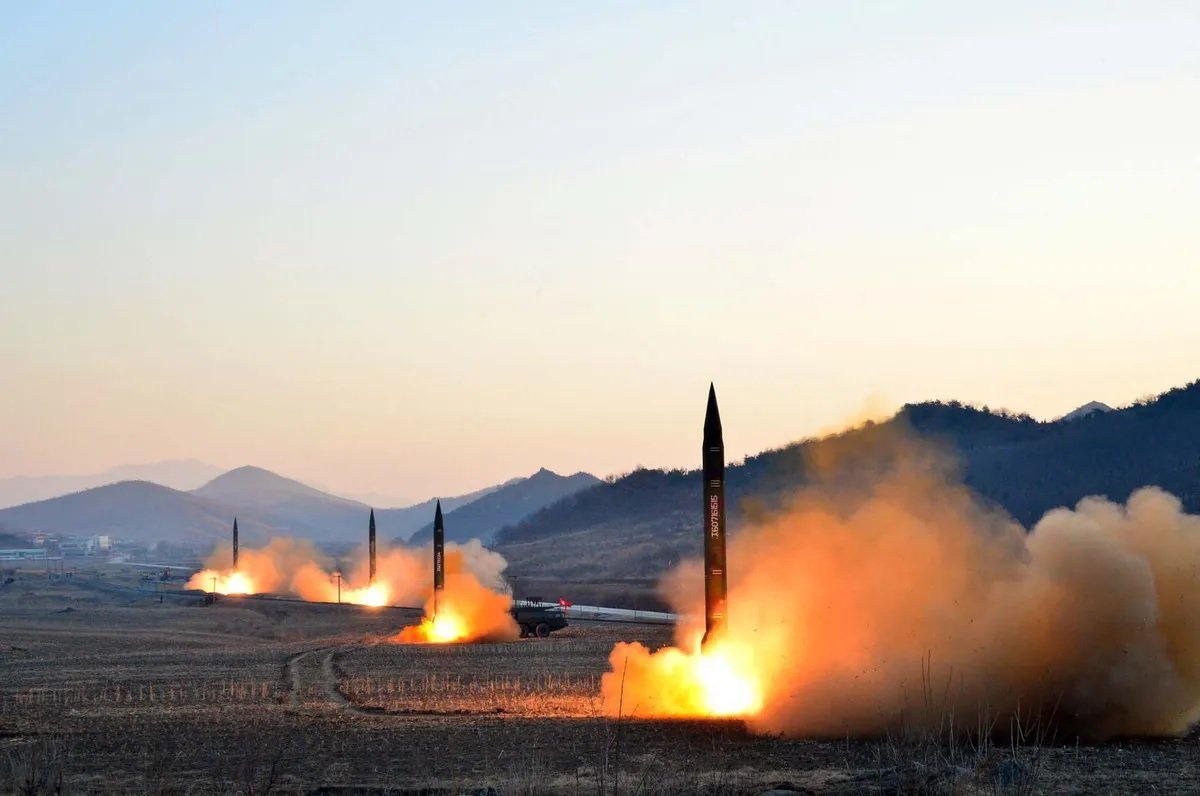
World
LONDON — A North Korean missile unit has started deploying to western Russia and could eventually operate with 120 ballistic missiles and six launchers in support of Russia's military campaign against Ukraine, according to Ukraine's Main Directorate of Intelligence (HUR). The reported deployment marks a further expansion of military cooperation between Moscow and Pyongyang following the mutual defence pact signed in 2024. While Russia has previously used North Korean-made weapons during the war, Ukrainian officials say the establishment of a dedicated North Korean missile unit would also involve North Korean personnel being integrated into Russia's missile operations. According to Andrii Cherniak, a representative of Ukraine's Main Directorate of Intelligence, Russia plans to station the unit in the Voronezh region as part of the 112th Missile Brigade. The deployment is expected to include approximately 90 North Korean personnel. Voronezh is located about 150 kilometres (95 miles) from the Ukrainian border and serves as an important logistics and staging area for Russian forces. Cherniak said North Korea has already delivered a new batch of 40 KN-23 and KN-24 ballistic missiles together with the initial personnel. He added that the final size and structure of the deployment, including the planned force of 120 ballistic missiles and six launchers, will be decided during high-level talks between Russia and North Korea scheduled for next month. The exact role that the North Korean personnel will perform within the Russian military remains unclear. North Korean Missiles Used Again Against Ukraine The reported deployment comes as Russia has resumed using North Korean ballistic missiles against Ukraine. According to Cherniak, Russia recently launched its first two North Korean ballistic missiles since August 2025, and both missiles came from the newly delivered batch of 40. One of the strikes, carried out on July 30, hit a residential house in the village of Radushne in central Ukraine, killing at least five members of the same family. Ukrainian President Volodymyr Zelenskyy later said preliminary information indicated that the weapon used in the attack was a North Korean ballistic missile. Ukraine has repeatedly warned that it faces a shortage of advanced air defence systems capable of intercepting ballistic missiles. Russia has increasingly relied on ballistic missiles because they are more difficult to intercept than many other types of missiles. Ukrainian officials have said that U.S.-made Patriot air defence systems remain the only systems that have consistently intercepted these ballistic threats. Rob Lee, a senior fellow at the Foreign Policy Research Institute, said any increase in the number of ballistic missiles available to Russia would create additional challenges for Ukraine's air defences. "Ballistic missile defence is one of Ukraine's greatest vulnerabilities, so any increase in the quantities of ballistic missiles they face will pose a greater challenge," Lee said. He added that Ukraine's air defence capability could become an even greater concern during winter if Russia resumes large-scale attacks on the country's energy infrastructure. KN-23 and KN-24 Missile Supplies According to Ukrainian military sources, North Korea's KN-23 and KN-24 ballistic missiles have a longer range and larger payload than Russia's comparable Iskander missile systems, although they are considered less accurate. Ukrainian officials have linked their use to missile strikes that resulted in high civilian casualties. Cherniak said North Korea has supplied Russia with approximately 150 ballistic missiles between late 2023 and August 2025. Russia began using KN-23 and KN-24 missiles against Ukraine during that period. Expanding Russia-North Korea Military Cooperation Military cooperation between Russia and North Korea has expanded significantly since Russia's full-scale invasion of Ukraine in 2022. In addition to missile supplies, North Korea has provided millions of artillery shells to Russia. Ukraine also says North Korea has contributed military personnel. Ukrainian officials previously reported that around 14,000 North Korean troops were deployed to Russia's Kursk region to help repel a Ukrainian cross-border operation in 2024. According to Cherniak, about 9,500 North Korean troops remain in the Kursk region, although they are not currently taking part in direct combat operations against Ukraine. Last month, President Volodymyr Zelenskyy said Russia was preparing to receive another 30,000 North Korean troops, with preparations already underway in the Voronezh region. Russian and North Korean Response The Russian Defence Ministry and North Korea's mission to the United Nations in New York did not immediately respond to written requests for comment. Cherniak said his statements were based on Ukrainian intelligence that could not be publicly disclosed. Reuters said it was unable to independently verify the intelligence claims.
Read More → Posted on 2026-08-05 11:58:34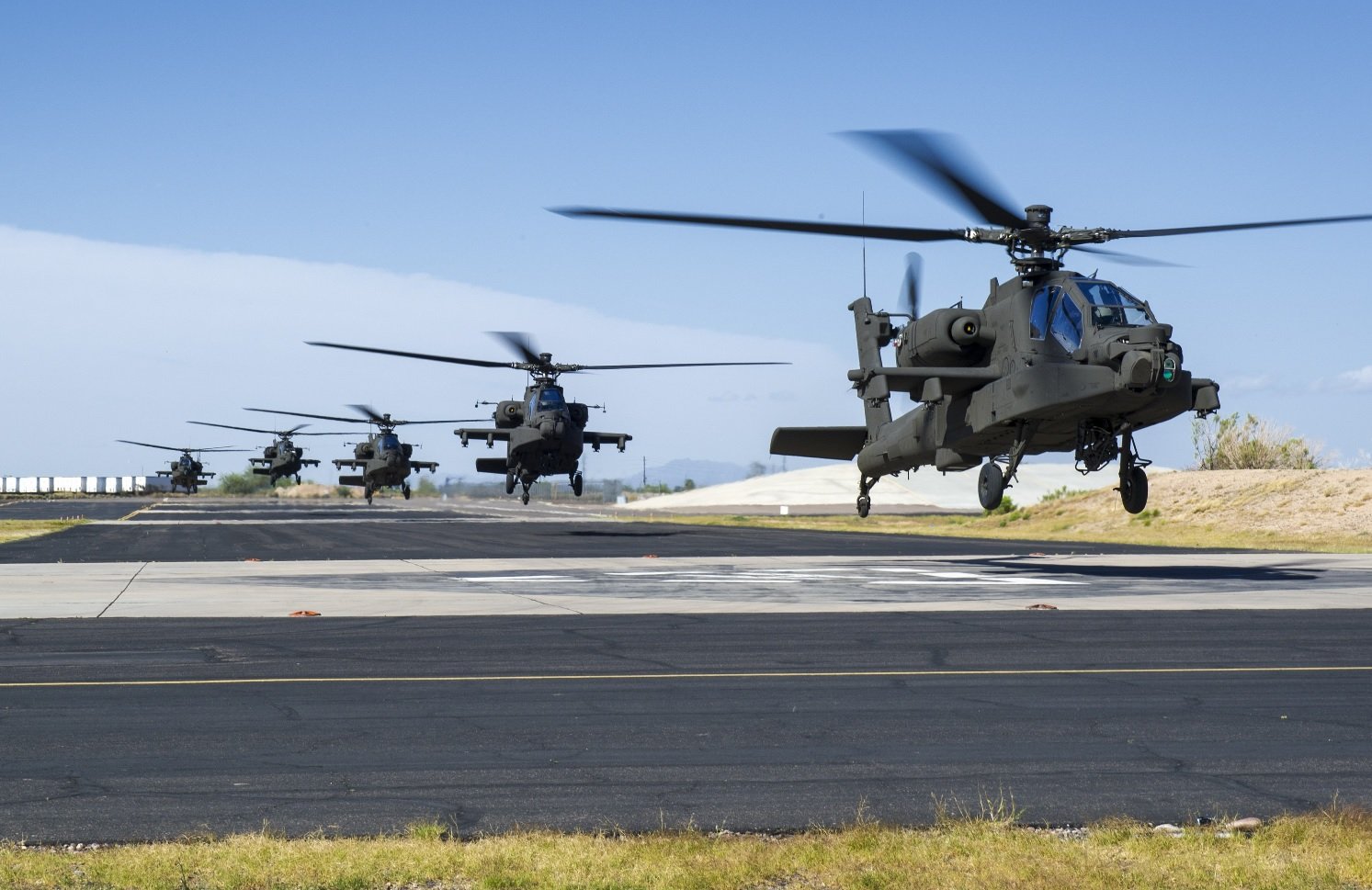
U.S
REDSTONE ARSENAL, Ala. — The U.S. Army is moving forward with plans to award a sole-source contract to Boeing for the remanufacture of up to 12 AH-64E Apache attack helicopters as part of its continued effort to modernize the Army's primary heavy attack and reconnaissance aircraft while addressing aging components across the fleet. The U.S. Army Contracting Command at Redstone Arsenal, Alabama, published a notice on Aug. 4, 2026, announcing its intent to negotiate the contract directly with Boeing rather than open it to competitive bidding. Interested parties have until Aug. 19, 2026, to submit capability statements if they wish to challenge the proposed acquisition approach. The planned work will be carried out as a 53-month effort under an existing Boeing contract. In addition to the remanufacture of up to 12 AH-64E helicopters, the program includes work to manage and correct obsolescence in critical electronic components that have become outdated or difficult to obtain. Boeing Remains the Only Practical Source According to the Army, Boeing is the sole designer, developer, manufacturer, and systems integrator of the AH-64 Apache helicopter. The Army does not own a complete production-level technical data package, including the engineering drawings and manufacturing instructions required to build the aircraft. It also does not hold the rights to Boeing's proprietary technical data developed over decades of Apache production. Because of these legal and technical limitations, the Army stated that no other company can realistically manufacture a fully functional Apache helicopter, making Boeing the only practical source for the work. Remanufacturing Continues Long-Term Modernization Strategy Rather than producing entirely new helicopters, the Army continues to rely on remanufacturing existing aircraft as its preferred modernization approach for the Apache fleet. The same process was previously used to convert older AH-64A helicopters into the AH-64D configuration. More recently, Boeing's facility in Mesa, Arizona, has remanufactured hundreds of AH-64D helicopters into the current AH-64E standard now operated by the U.S. Army and several allied nations. The latest effort will also focus on replacing obsolete electronic components. As older technologies leave production, engineers must redesign and requalify replacement parts to maintain aircraft availability and long-term fleet support. AH-64E Provides Expanded Operational Capabilities The AH-64E is the U.S. Army's primary heavy attack and reconnaissance helicopter, designed to engage ground targets and provide combat support for ground forces. The aircraft is equipped with a 30-millimeter cannon, 2.75-inch rockets, laser-guided and radar-guided Hellfire missiles, and the Joint Air-to-Ground Missile (JAGM). Its digital network architecture enables crews to control unmanned aerial vehicles from the cockpit while sharing real-time intelligence and targeting information with other joint forces, improving battlefield coordination. Boeing is also continuing efforts to expand the helicopter's capabilities. Current integration work includes launched effects, which are small drones deployed directly from the aircraft, directed-energy weapons, and the Lockheed Martin-Rafael Spike NLOS (Non-Line Of Sight) long-range missile. Recent live-fire testing has demonstrated the AH-64E's ability to employ the Spike NLOS missile against targets at distances of up to 32 kilometers (20 miles), extending the aircraft's engagement range beyond that of Hellfire-equipped configurations. International Orders Continue to Support Production Demand for the AH-64E remains strong among U.S. allies, helping sustain Boeing's production and remanufacturing lines beyond domestic Army requirements. The United Kingdom completed delivery of its fleet of 50 remanufactured AH-64E helicopters earlier this year. Other international customers are also progressing with deliveries. Australia is acquiring 29 AH-64E helicopters, with deliveries underway and six aircraft already in the country as of mid-2026. India's Army completed the induction of six AH-64E helicopters by late 2025, in addition to the 22 Apache helicopters already operated by the Indian Air Force. Morocco has received 12 of its 24 ordered AH-64E helicopters. Meanwhile, Poland has finalized the purchase of 96 AH-64E Apache helicopters through the U.S. Foreign Military Sales program, with deliveries expected to begin in 2028. Supporting Fleet Readiness Work under the planned Army program is expected to take place primarily at Boeing's Mesa, Arizona, facility, consistent with previous Apache remanufacture programs managed by Army Contracting Command at Redstone Arsenal. The proposed contract reflects the U.S. Army's continued investment in sustaining the AH-64E fleet through aircraft remanufacture and electronic component modernization while maintaining the industrial capability that supports both U.S. military requirements and Apache operators around the world.
Read More → Posted on 2026-08-05 11:50:58
U.S
LONG BEACH, Calif. — Rocket Lab Corporation has secured a $397 million contract from the U.S. Space Force to develop, launch, and operate a constellation of advanced Flatellites under the Space-Based Airborne Moving Target Indicator (SB-AMTI) program. The satellites will provide persistent space-based tracking of airborne threats and support the Space Force's next-generation sensing architecture. The award is part of a $615 million package of three firm-fixed-price Other Transaction Authority (OTA) agreements announced by Space Systems Command on Aug. 4, 2026. Besides Rocket Lab, Systems & Technology Research (STR) also received a contract, while the identity of the third recipient has not been disclosed for operational security reasons. SB-AMTI Program Aims to Expand Space-Based Surveillance The SB-AMTI program is led by the Portfolio Acquisition Executive for Space-Based Sensing and Targeting. Its objective is to create a resilient network capable of detecting and tracking airborne threats—including aircraft, cruise missiles, and other moving targets—in real time. Unlike traditional airborne surveillance platforms, the program is designed to provide persistent coverage from orbit. The architecture combines satellites, secure communications links, and ground processing systems. Artificial intelligence will assist in processing large volumes of sensor data, filtering background clutter, and identifying moving targets. According to the Space Force, the move toward space-based sensing is intended to reduce reliance on conventional surveillance aircraft, which face increasing operational challenges in contested environments where advanced anti-access and area-denial (A2/AD) systems can restrict their ability to operate. Rocket Lab to Develop, Launch and Operate Flatellites Under the contract, Rocket Lab will build multiple Flatellites, a next-generation flat satellite platform designed for deployment in large constellations. The spacecraft will carry advanced space-based sensors along with high-bandwidth, low-latency communications links to transmit tracking data. The satellites will be launched aboard Rocket Lab's upcoming Neutron medium-lift rocket, which is currently targeting a late-2026 debut. Following deployment, Rocket Lab will operate the satellites from secure ground facilities and provide tracking information directly to the U.S. Space Force. The contract covers spacecraft development, launch services, and on-orbit mission operations. It also includes an option for additional Flatellites within the total contract value, although Rocket Lab has not disclosed the number of satellites included in the initial award. Focus on Multiple Technologies and Supplier Diversity According to the Space Force, this second task order is intended to expand the supplier base and evaluate multiple sensing technologies rather than relying on a single technical solution. The agency said this approach supports long-term competition while advancing different technologies for the airborne moving target indication mission. Col. Ryan Frazier, Acting Space Force Portfolio Acquisition Executive for Space-Based Sensing and Targeting, said the program is focused on broadening available capabilities. "With these new partnerships, we are exploring unique innovations and technologies and fundamentally different ways to accomplish the airborne moving target indication mission." Rocket Lab also said the inclusion of its Neutron launch vehicle will increase vendor diversity within the SB-AMTI program. Rocket Lab Highlights Vertically Integrated Capabilities Rocket Lab Founder and Chief Executive Officer Sir Peter Beck said the company is well positioned to support the Space Force because it provides satellite manufacturing, launch services, and mission operations through a vertically integrated business model. "Rocket Lab is honored to play a key role in the SB-AMTI program, which is critical to expanding the Space Force's layered, resilient tracking architecture. Our vertically integrated, constellation-class satellite capabilities, mission operations, and launch services uniquely position us to deliver innovative solutions that meet the urgent needs of the Space Force. We are proud to contribute to the deployment of a resilient space-based sensing layer that will enhance the Joint Force's ability to operate in contested airspace." Part of a Broader Space Force Acquisition Strategy The latest award follows an earlier $4.16 billion Space Force contract awarded to SpaceX to establish an initial SB-AMTI constellation, with satellites expected to be fielded by 2028. Space Force officials have stated that the overall program will involve multiple vendors and different sensor designs as the architecture expands. According to the Space Force, the acquisition strategy is intended to mature emerging technologies, leverage commercial investment, and maintain long-term competition while developing the future SB-AMTI tracking network. Expanding Rocket Lab's Defense Portfolio The contract further strengthens Rocket Lab's role in U.S. national security space programs. The company has previously supported missions for the U.S. Space Force, National Reconnaissance Office (NRO), Defense Advanced Research Projects Agency (DARPA), and NASA. The SB-AMTI award also follows two recent milestones for the company. Last week, Rocket Lab secured a $266 million suborbital launch contract, and earlier this year it completed the Victus Haze responsive space mission, further expanding its participation in U.S. defense and space operations.
Read More → Posted on 2026-08-05 11:42:57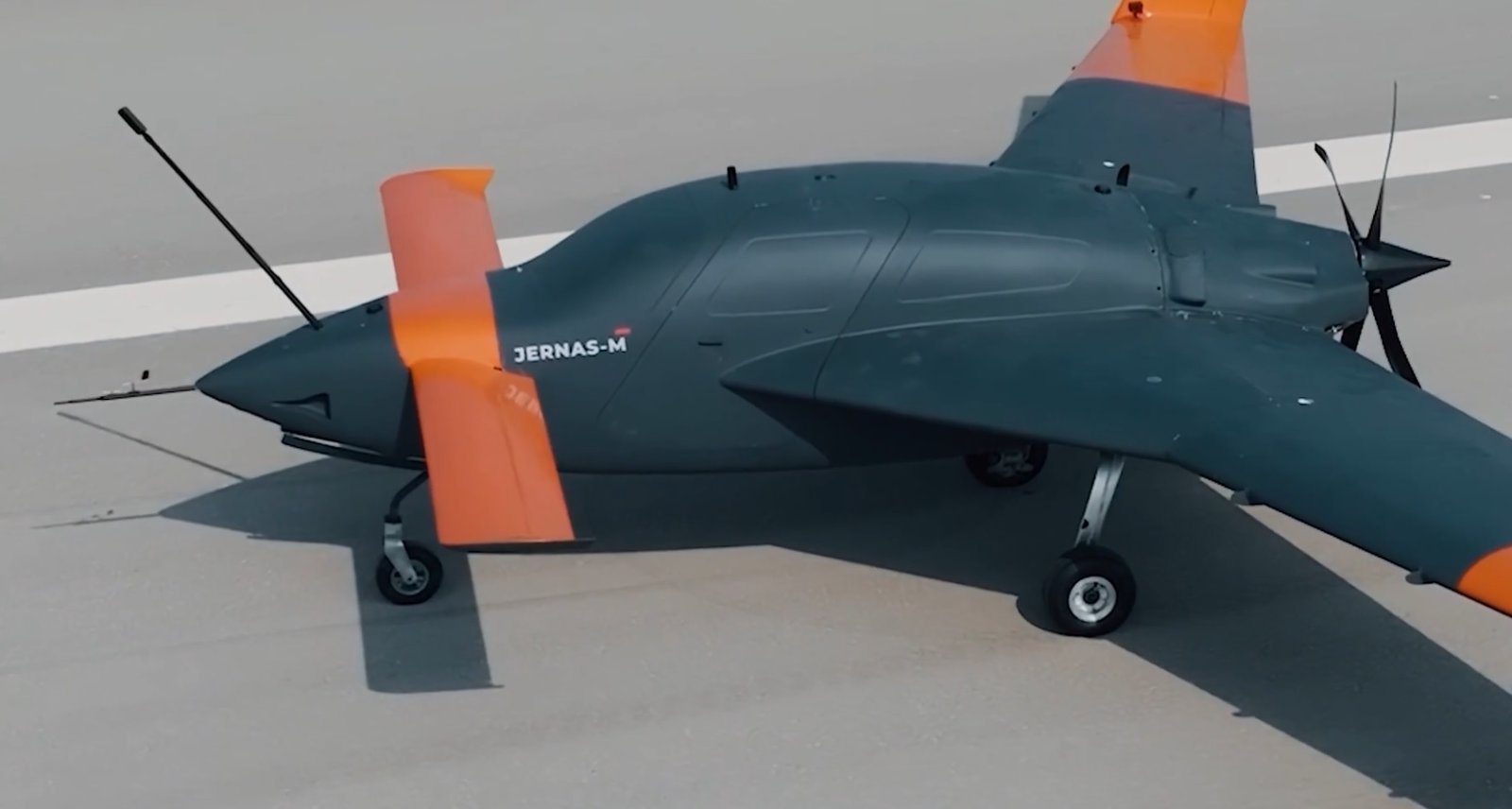
World
ABU DHABI — Abu Dhabi-based EDGE Group has released new flight test footage of its JERNAS-M unmanned aircraft, a medium-altitude, long-endurance (MALE) platform developed for intelligence, surveillance, reconnaissance (ISR), target tracking, and multi-mission operations. The state-owned Emirati defence company shared the video on X, describing the JERNAS-M as a dependable and cost-effective solution designed for continuous surveillance and modern air defence missions. According to EDGE, the platform provides persistent monitoring and target tracking while supporting long-endurance operations. Built for constant vigilance.JERNAS-M provides dependable surveillance and target tracking in an efficient, cost-effective solution built for modern air defence. Delivering the capability that matters, where it matters most. pic.twitter.com/vY1StwATD1 — EDGE (@_edgegroup) August 4, 2026 Developed by ADASI The JERNAS-M is being developed by ADASI, EDGE Group's autonomous systems subsidiary. The aircraft made its public debut at the Dubai Airshow 2025, where EDGE introduced 42 new defence products. Alongside the JERNAS-M, ADASI also unveiled the Strike fixed-wing weapon carrier and the Vortex-E counter-drone interceptor as part of its expanding unmanned systems portfolio. The JERNAS-M builds on the earlier JERNAS-S programme, which is a smaller variant of the platform. Flight Performance and Specifications According to EDGE's published specifications, the JERNAS-M has a 10-metre wingspan, an empty weight of 590 kilograms, and a maximum take-off weight of 1,200 kilograms. The aircraft is powered by an EP918Ti-185H four-stroke, four-cylinder horizontally opposed engine producing 185 horsepower at 5,800 rpm. It operates on standard automotive gasoline and carries 350 litres of fuel, with reported fuel consumption of approximately 17 litres per hour. EDGE lists both the maximum and cruising speed at 240 km/h. For intelligence, surveillance and reconnaissance (ISR) missions, the aircraft can remain airborne for up to 20 hours. When carrying its maximum payload of 280 kilograms, endurance is reduced to 12 hours. The drone has a line-of-sight operational range of 200 kilometres, while its maximum operating altitude is 30,000 feet, according to official specifications. Mission Payloads The JERNAS-M is designed as a multi-mission platform capable of carrying different mission systems. According to EDGE, it can be equipped with: Electro-optical sensors Radar systems Electronic warfare payloads In a strike configuration, the aircraft can carry one RASH MK81 bomb together with four RASH-3 munitions, according to the company's published specifications. The aircraft operates from conventional runways using tricycle landing gear and features a forward canard, winglets on the main wings, and a rear-mounted pusher propeller. Airframe Design Flight test footage released by EDGE shows an aircraft with a composite airframe featuring a forward canard, rear-mounted pusher propeller, cockpit canopy shape, fuselage design and landing gear arrangement that closely resemble the Velocity composite kit aircraft produced by Velocity Inc. of Sebastian, Florida, since the 1980s. The civilian Velocity aircraft is designed for homebuilt aviation and traces its aerodynamic heritage to Burt Rutan's Long-EZ design. EDGE has not issued an official statement confirming that the JERNAS-M is based on the Velocity airframe. However, adapting an existing civilian aircraft design is a recognised aerospace development approach that can reduce structural development work, flight testing requirements and programme costs compared with developing an entirely new airframe. Development Timeline Speaking to EDR On-Line, Marcus de Jonge, Chief Development Officer at ADASI, said the current JERNAS-M is a pre-prototype aircraft that completed its first flights shortly before the opening of the Dubai Airshow in 2025. According to de Jonge: An updated JERNAS-M design is scheduled to fly in late 2026. Production is planned for 2027. He also said the smaller JERNAS-S, which features an 8-metre wingspan, 630-kilogram maximum take-off weight, and 155-kilogram payload, is further advanced and is expected to enter production in 2026. Wider Unmanned Systems Strategy At the Dubai Airshow 2025, EDGE also announced a joint venture with U.S. defence technology company Anduril focused on the Omen runway-independent unmanned aircraft. While the partnership is centred on a different platform, industry observers have noted that cooperation in software and production could support the international reach of EDGE's wider unmanned systems portfolio. The JERNAS-M forms part of EDGE's broader effort to expand its autonomous capabilities across air, land and sea domains. Positioned in the medium-altitude, long-endurance (MALE) category, the platform is intended to provide extended surveillance, reconnaissance and target-tracking capabilities while offering a lower-cost option than many purpose-built systems in the same class.
Read More → Posted on 2026-08-05 11:28:50
U.S
BALTIMORE — Anduril Industries is in advanced negotiations to establish a major manufacturing and testing facility for unmanned surface vessels (USVs) at Maryland's historic Sparrows Point industrial site, a move that would significantly expand the company's autonomous maritime production capacity if the agreement is finalized. The Southern California-based defense technology company has signed a memorandum of understanding (MoU) with the operators of the 3,300-acre Tradepoint Atlantic industrial complex in Baltimore County. The site, formerly operated by Bethlehem Steel, includes a deep-water port and has a long history of steel production and shipbuilding. The proposed investment could reach the hundreds of millions of dollars, with plans to convert part of the site into a manufacturing and testing hub for autonomous military boats. However, negotiations are still underway, no lease has been signed, and the project could still be abandoned if a final agreement is not reached. Maryland Governor Wes Moore's office has participated in the discussions, and any completed agreement is expected to include state incentives. Strategic Location for Naval Production Sparrows Point offers several logistical advantages for defense manufacturing. Located near Washington, D.C., the site is also close to the U.S. Coast Guard's largest shipyard at Curtis Bay, allowing easier testing of new vessels and smoother integration with existing military fleets. The deep-water port further supports manufacturing, sea trials, and transportation of completed vessels. Growing Demand for Autonomous Surface Vessels The proposed facility comes as the U.S. Department of Defense continues expanding the use of uncrewed systems across naval operations. Recent military operations have increased demand for autonomous platforms that can perform surveillance, reconnaissance, logistics, and other missions while reducing risks to personnel. Defense planners have also emphasized deploying larger numbers of lower-cost autonomous systems as militaries increasingly face inexpensive drones that often require much more expensive interceptor missiles to defeat. Operational Use Highlights Expanding Role Autonomous surface vessels have already demonstrated their operational value in recent missions. In June 2026, a 24-foot autonomous Corsair unmanned surface vessel built by Saronic Technologies successfully located and rescued two U.S. Army Apache helicopter crew members after their aircraft was shot down near the Strait of Hormuz. The mission marked a notable example of an autonomous vessel conducting a personnel recovery operation without placing additional crews at risk. The same class of vessels was later used during operations against Iranian shipping and submarine infrastructure at Bandar Abbas Naval Base in July 2026, marking the first reported combat use of U.S. unmanned surface vessels. Although surveillance remains their primary mission, these operations demonstrated their expanding operational roles. Anduril Expanding Manufacturing Capacity The Sparrows Point project aligns with Anduril's broader effort to increase defense production. The company completed a $5 billion Series H funding round in May 2026, led by Thrive Capital and Andreessen Horowitz, valuing the company at $61 billion. Following the investment, Anduril announced plans to roughly double its weapons production capacity. The company has also expanded its autonomous maritime programs through partnerships in the United Kingdom and with South Korea's HD Hyundai Heavy Industries to develop and produce autonomous surface vessels. In addition to surface systems, Anduril manufactures autonomous underwater vehicles, including the Dive-LD and Ghost Shark. Future U.S. production is also planned at American shipyards, including a facility at the former Foss Shipyard in Seattle, where the company has already invested. Technology Still Faces Reliability Challenges Despite increasing investment and growing military interest, autonomous maritime technology continues to face technical hurdles. During testing, unmanned vessels have reportedly misidentified objects, crashed, stalled, or drifted off course. The U.S. Navy is also working to improve the reliability of autonomous piloting software for operations in unpredictable open-water environments. In one May 2025 exercise off the California coast, more than a dozen Anduril drone boats operating with the company's Lattice software failed to complete their assigned missions and instead entered a fail-safe idle mode. Historic Industrial Site Could Gain New Role Sparrows Point has long been one of America's most important industrial locations. The property was once home to one of the world's largest steel mills and an active shipyard that produced merchant vessels and warships during both World Wars under Bethlehem Steel. Today, Tradepoint Atlantic is redeveloping the site as a modern industrial and logistics center. If the negotiations are successfully completed, the Anduril project would represent another example of the U.S. defense industry repurposing historic industrial facilities to expand domestic production of autonomous maritime systems.
Read More → Posted on 2026-08-04 16:27:00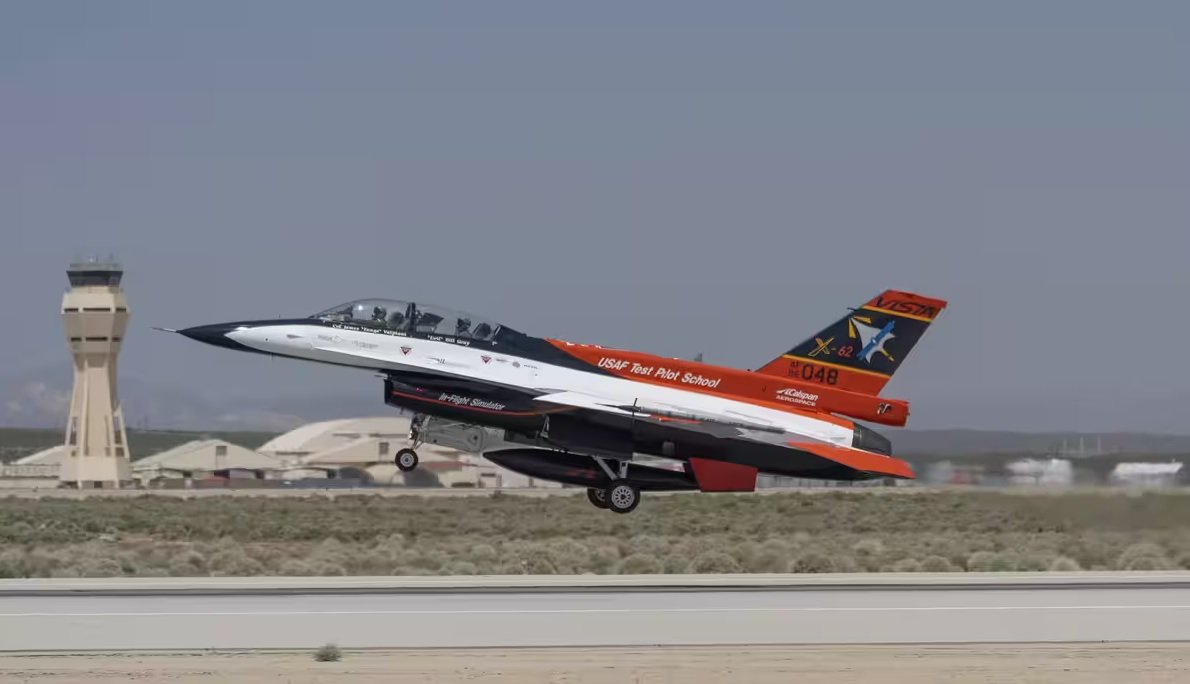
U.S
EDWARDS AIR FORCE BASE, Calif. — Lockheed Martin Skunk Works and the U.S. Air Force Test Pilot School (TPS) have completed a flight test campaign demonstrating an artificial intelligence (AI) agent directly controlling a fighter aircraft during live intercept missions using operational onboard sensor data. During the campaign, the U.S. Air Force's X-62 Variable In-flight Simulation Test Aircraft (VISTA) completed 27 AI-controlled intercepts against a live T-38 target aircraft across eight flights. The tests demonstrated the AI system's ability to receive live sensor information, make tactical decisions, and control the aircraft during real-world intercept maneuvers without relying on simulated target data. AI Demonstrates Real-Time Sensor-to-Action Capability The X-62, a heavily modified F-16 used for advanced flight research and autonomy testing at Edwards Air Force Base, was equipped with Lockheed Martin's Legion Pod, an operational infrared search-and-track (IRST) sensor. During each intercept, the Legion Pod continuously tracked the T-38 target aircraft and securely transmitted live targeting data to the onboard AI agent. Using only this real-time sensor information, the AI autonomously controlled the X-62 and maneuvered the aircraft into tactical intercept positions. The flight tests successfully connected target detection, autonomous decision-making, and aircraft control in real time, completing what engineers describe as the "sensor-to-action loop." According to Lockheed Martin, the campaign marked the transition from AI operating with simulated target information to using live data from an operational onboard sensor during flight. Three-Month Development and Integration Lockheed Martin said the project validated the complete software development process, including AI development, simulation, training, integration, ground testing, and live flight operations. The company completed AI-agent integration and all required ground testing within three months using its proprietary "Supermassive" AI agent generation capability, which is designed to accelerate software development and system integration. The successful campaign also expands the U.S. Air Force Test Pilot School's work in integrating mission-critical onboard AI and operational autonomy into advanced flight testing. Company Officials Highlight Operational Benefits Ron Fehlen, vice president and general manager of Lockheed Martin Skunk Works, said the latest flight series demonstrated the AI's ability to operate on an operational combat aircraft using live sensor data. "Our ongoing partnership with TPS is driving important progress with this latest flight test series demonstrating that our AI can effectively and reliably close the sensor to action loop aboard an operational combat aircraft. Our autonomous agents consumed classified infrared search and track feeds and executed combat-critical maneuvers in real time. This achievement marks a decisive advance toward delivering AI augmented air dominance for the United States." Stacy Kubicek, vice president and general manager of Lockheed Martin Sensors and Global Sustainment, said reliable sensor data becomes more valuable when it is directly connected to AI systems capable of taking action. "Our ability to provide reliable sensor data is critical, but the real advantage comes when that data can connect seamlessly with AI to take action. This project demonstrates how sensing and autonomous AI can come together as a force multiplier to make faster, more informed action in complex environments." Lockheed Martin added that allowing AI to perform complex tracking and maneuvering tasks gives pilots more time to focus on broader tactical awareness, improving effectiveness and survivability during complex operations. Future Mission Systems Upgrade Planned Building on the successful completion of the 27 AI-controlled intercepts, Lockheed Martin plans to carry out a Mission Systems Upgrade for the X-62. According to the company, the future architecture will integrate advanced combat systems, sensors, and airborne AI agents within a next-generation mesh communications network. The upgrade is intended to support future uncrewed and AI-assisted fighter operations. X-62 Continues to Support Advanced Flight Research Skunk Works has supported the X-62 program for decades through its open hardware and software architecture, allowing the aircraft to serve as a flexible platform for testing new technologies. Originally designated NF-16D before being redesignated X-62A, the aircraft has been used for variable-stability flight research and, more recently, for autonomy and artificial intelligence flight testing, including earlier work under the DARPA Air Combat Evolution (ACE) program. The latest flight campaign further expands the U.S. Air Force Test Pilot School's experience in testing onboard AI and autonomous flight technologies using operational aircraft and live sensor data. The results of the flight test campaign were announced on August 4, 2026.
Read More → Posted on 2026-08-04 16:18:48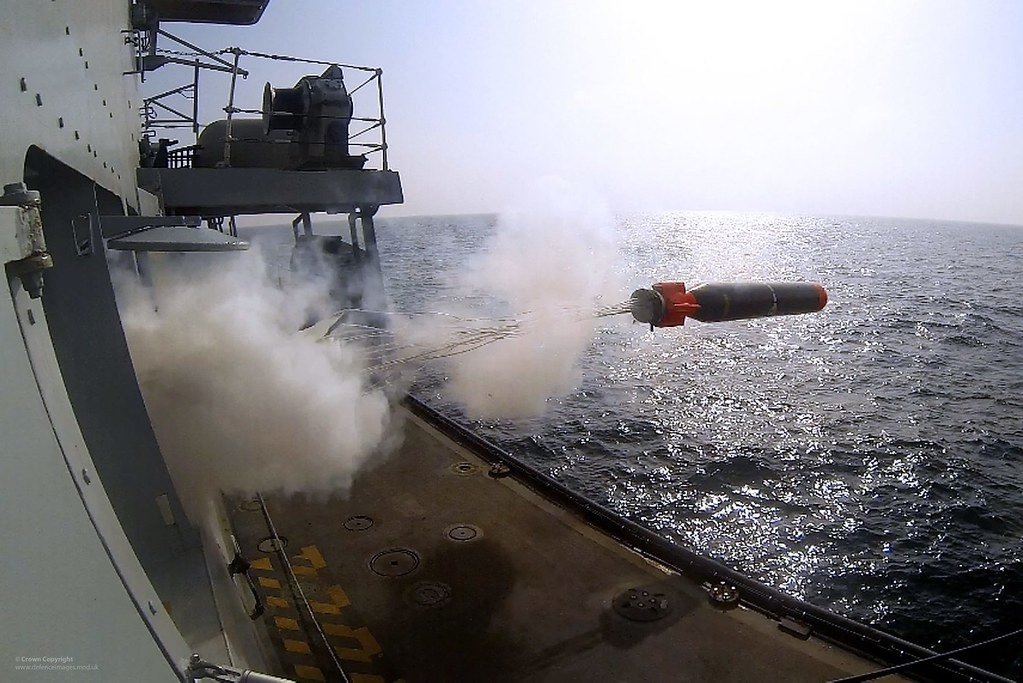
Europe
LONDON — The UK Ministry of Defence (MOD) has awarded BAE Systems a £135 million contract to maintain and repair the Royal Navy's torpedo inventory under the Torpedo Repair and Maintenance (TRAM) programme. The three-year agreement will run from July 2026 to June 2029, ensuring the continued availability of two of the Royal Navy's primary torpedo systems. The funding forms part of the UK government's £298 billion Defence Investment Plan, which outlines defence investment over the next four years. Contract Covers Spearfish and Sting Ray Torpedoes The TRAM contract includes maintenance and repair support for the Spearfish heavyweight torpedo and the Sting Ray lightweight torpedo, both of which are key elements of the Royal Navy's underwater warfare capability. The Spearfish heavyweight torpedo is carried by the Royal Navy's Astute-class attack submarines and Vanguard-class ballistic missile submarines. It serves as the fleet's primary heavyweight torpedo. The Sting Ray lightweight torpedo is designed for anti-submarine warfare and is deployed from submarines, surface warships and maritime patrol aircraft. It is currently used on Type 23 frigates, will also equip the future Type 26 frigates, and is launched from Merlin HM2 and Wildcat helicopters, as well as maritime patrol aircraft including the P-8A Poseidon. Sole-Source Award Based on Design Authority The Ministry of Defence awarded the contract to BAE Systems without a competitive tender. According to a contract award notice published in late July, the sole-source award was approved because BAE Systems is the original Design Authority for both the Spearfish and Sting Ray torpedoes. The MOD stated that no other supplier has the necessary expertise, technical knowledge and infrastructure to provide the required support without creating unacceptable risks to safety and system performance. Contract Supports More Than 300 UK Jobs The agreement will support approximately 315 jobs across the United Kingdom. This includes 150 highly skilled engineering and technician positions within BAE Systems, with around 100 jobs based in Portsmouth and 50 across Edinburgh, Chelmsford and sites near Glasgow. The contract will also sustain an additional 165 jobs throughout the company's UK supply chain. UK Minister for Defence Readiness and Industry Luke Pollard said the agreement supports both national security and the domestic defence industry. "This is defence spending doing exactly what it should – keeping our country safe while securing 315 skilled jobs and creating new opportunities across our country. We are proud to be backing British jobs, British skills and British industry." Officials Highlight Operational Importance Scott Jamieson, Managing Director of BAE Systems' Maritime and Land Defence Solutions, said the company has maintained high levels of torpedo availability for the UK Armed Forces since 2019. "Since 2019 we have delivered consistently high levels of torpedo availability for the UK Armed Forces, supporting both the successful entry into service of Spearfish and the ongoing operational readiness of Sting Ray. As a trusted partner to UK Defence, we are proud to underpin the nation's Continuous At Sea Deterrent and anti-submarine warfare capability through exceptional reliability, availability and performance." Rear Admiral Matt Stratton, Royal Navy Director of Naval Acquisition, said the extension ensures uninterrupted torpedo support for the fleet. "This contract extension ensures the Royal Navy retains a safe, reliable and continuous torpedo support capability. It is a critical enabler of our operational readiness and directly supports the UK's Continuous At Sea Deterrent." Richard Murray, Director Lethality and Protect at the National Armaments Director Group – Materiel, said the extension secures continued reliable support for the UK's torpedo capability and reflects close cooperation between the Royal Navy, the National Armaments Director Group and industry. Bridge to the WHITEHEAD2 Programme Defence officials described the TRAM agreement as a transitional contract that will bridge current torpedo maintenance operations to the long-term WHITEHEAD2 programme. Scheduled to begin in 2029, WHITEHEAD2 is intended to deliver a modernised and comprehensive torpedo support solution for the Royal Navy while ensuring long-term support for its underwater weapons capability. Part of Wider UK Naval Investment The torpedo maintenance agreement follows another major contract awarded to BAE Systems in late July. On 29–30 July 2026, the UK government awarded the company a £5.9 billion contract for the next phase of work on the Dreadnought-class nuclear-powered ballistic missile submarines. The Dreadnought class is being developed to replace the Royal Navy's Vanguard-class submarines in the early 2030s and will continue supporting the UK's Continuous At Sea Deterrent. Maintaining Fleet Readiness The new TRAM agreement will keep the Royal Navy's existing torpedo inventory maintained and serviceable through June 2029, ensuring continued support for submarine, surface fleet and maritime aviation operations while preparations continue for the transition to the WHITEHEAD2 programme.
Read More → Posted on 2026-08-04 16:14:17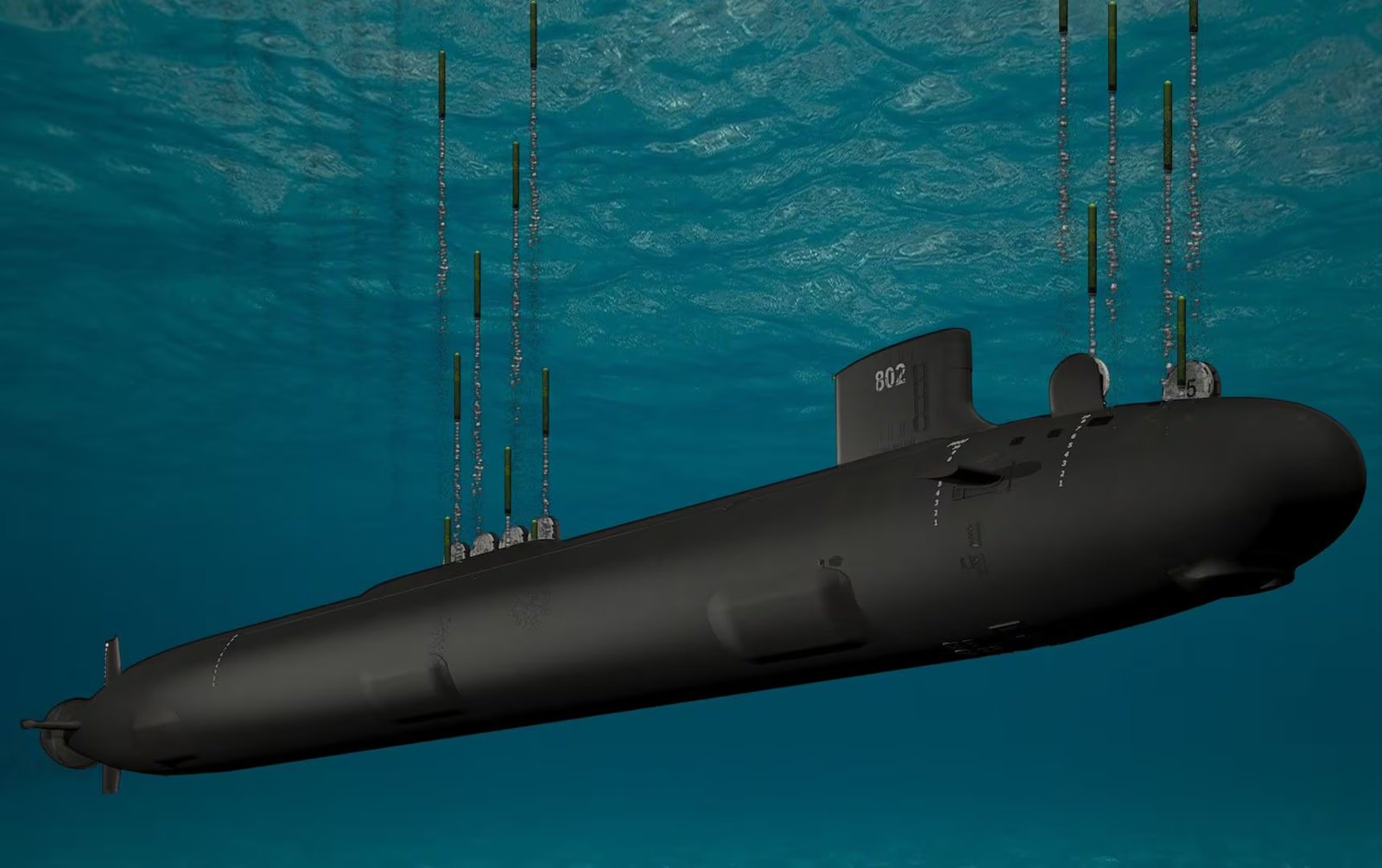
U.S
WASHINGTON — The U.S. Navy has officially reclassified 19 future Virginia-class submarines equipped with the Virginia Payload Module (VPM) as guided-missile submarines (SSGNs), recognizing their expanded long-range strike capability as the service prepares to retire its Ohio-class guided-missile submarine fleet. The redesignation applies to Block V and Block VI Virginia-class submarines fitted with the Virginia Payload Module. Previously classified as nuclear-powered fast attack submarines (SSNs), the vessels will now carry the SSGN designation to reflect their significantly increased conventional strike capacity. Chief of Naval Operations Adm. Daryl Caudle said the new designation accurately represents the strike capability, operational flexibility and global reach of VPM-equipped submarines. He added that the change comes as the Navy begins retiring its Ohio-class SSGNs and positions the Virginia-class fleet to continue that mission with greater survivability and adaptability. Virginia Payload Module Expands Strike Capability The Virginia Payload Module is a hull extension inserted into the middle section of the submarine. According to the Navy, the module measures about 70 to 84 feet in length and contains four large vertical payload tubes. Each tube can carry seven Tomahawk land-attack cruise missiles, adding 28 missiles to the submarine's vertical-launch capacity. Combined with the submarine's two existing Virginia Payload Tubes, which each hold six Tomahawk missiles, a VPM-equipped Virginia-class submarine can carry 40 vertically launched Tomahawk missiles. Earlier Virginia-class submarines carried 12 Tomahawk missiles in their vertical launch systems or payload tubes. The larger payload tubes are also designed to accommodate future payloads, including the Intermediate-Range Conventional Prompt Strike (IRCPS) hypersonic missile. The Navy has also identified the potential to deploy unmanned underwater vehicles (UUVs), specialized seabed warfare systems, and future surface-to-air missiles using the same payload spaces. In addition to the new payload module, the submarines will continue to carry four 21-inch torpedo tubes, capable of launching Mk 48 heavyweight torpedoes, Tomahawk cruise missiles, and Harpoon anti-ship missiles. They also retain the ability to deploy and recover unmanned underwater vehicles, while selected boats can support special operations forces through Dry Deck Shelters. USS Arizona to Be First Virginia-Class SSGN The future USS Arizona (SSGN 803), the second Block V submarine currently under construction, will become the first Virginia-class submarine equipped with the Virginia Payload Module. The Navy expects the submarine to be delivered in fiscal year 2029. The lead Block V submarine, the future USS Oklahoma, is being built without the payload module and will retain its SSN configuration. Under current acquisition plans, the Navy will field 11 Block V submarines and nine Block VI submarines. Excluding USS Oklahoma, the remaining 19 submarines equipped with the Virginia Payload Module will receive the new SSGN designation. Ohio-Class Retirement Drives Transition The redesignation comes as the Navy begins retiring its four Ohio-class guided-missile submarines, which have served as the fleet's primary conventional strike platforms for more than two decades. USS Georgia completed its final patrol in late July 2026 and is scheduled to begin formal inactivation in 2027. The remaining three submarines—USS Ohio, USS Florida, and USS Michigan—are scheduled to retire by the end of fiscal year 2029. An Ohio-class SSGN can carry up to 154 Tomahawk cruise missiles, although typical operational loads are lower. By comparison, a Virginia-class submarine equipped with the Virginia Payload Module carries 40 vertically launched Tomahawk missiles. Based on missile capacity, approximately four VPM-equipped Virginia-class submarines provide a strike volume comparable to one Ohio-class SSGN. Fleet Transition Extends Into 2038 The Navy does not expect all 19 Virginia-class SSGNs to enter service until fiscal year 2038, creating a transition period after the retirement of the Ohio-class fleet. Virginia-class submarine production also remains below the Navy's objective of building two boats per year, with officials expecting that production rate to be achieved sometime during the 2030s. Construction demand is further affected by U.S. commitments under the AUKUS partnership to provide Virginia-class submarines to Australia. Last week, the Navy awarded a $76.6 billion contract covering the construction of nine Block VI Virginia-class submarines and five Columbia-class ballistic missile submarines, supporting long-term modernization of the U.S. undersea fleet. Navy Highlights Expanded Operational Role Vice Adm. Rob Gaucher, Director of Submarine Programs, said the redesignation recognizes the increased lethality provided by the Virginia Payload Module and will allow the Navy to surge additional strike power when required. The Navy said VPM-equipped Virginia-class submarines will continue performing their existing missions, including anti-submarine warfare, anti-surface warfare, intelligence collection, mine warfare, and support for special operations forces. The additional payload capacity is intended to strengthen Distributed Maritime Operations by providing fleet commanders with greater long-range precision strike capability from a stealth platform. The redesignation formally marks the Navy's transition from the Ohio-class guided-missile submarine fleet to a new generation of Virginia-class submarines with expanded conventional strike capabilities while maintaining their broad undersea warfare mission.
Read More → Posted on 2026-08-04 16:04:48
U.S
WASHINGTON — The U.S. Air Force has launched a new effort to expand competition for fighter aircraft engines, seeking new manufacturing partners as it works to address production delays, quality control issues, and supply chain challenges affecting several military aviation programs. The Air Force recently issued a Request for Information (RFI) inviting industry feedback on future fighter engine production. Responses are due by Aug. 28, and the information gathered will help shape the service's long-term acquisition strategy for engines used in the Boeing F-15EX Eagle II and Lockheed Martin F-16 Fighting Falcon. According to the RFI, the current defense industrial base is facing significant challenges, including production delays, quality control issues, critical obsolescence, diminishing manufacturing sources, and shortages of raw materials required for key engine components. "The government will pursue a strategic competition requiring industry to innovate manufacturing and guarantee supply chain resiliency," the RFI states. Air Force Plans Long-Term Engine Procurement The Air Force expects demand for more than 180 fighter engines annually by 2034 and is preparing a multiyear procurement strategy designed to strengthen manufacturing capacity and improve long-term supply stability. The procurement effort covers engines for both U.S. Air Force requirements and Foreign Military Sales (FMS) programs. The F-15EX and F-16 fleets have traditionally used Pratt & Whitney F100 or GE Aerospace F110 engines. As part of the new approach, the Air Force intends to increase industrial competition while encouraging manufacturers to invest in production capability and supply chain resilience. Engine Programs Continue to Face Delays The procurement initiative follows continuing engine-related problems across several major Air Force programs. A 2025 Government Accountability Office (GAO) report found that the F-35 Lightning II engine contractor continued to miss contract performance requirements after two decades of production. According to the report, Pratt & Whitney delivered all 123 F-35 engines late in 2024, with an average delivery delay of 155 days, compared with 68 days in 2023. Aircraft deliveries were also delayed by an average of 238 days during 2024. The Air Force's B-52 Commercial Engine Replacement Program has also experienced significant delays. A July 2026 GAO report stated that the program, which will install Rolls-Royce F130 engines, has seen costs increase by approximately $3 billion. The report also found that initial operational capability has slipped by more than 15 months, while overall engine program costs have increased by more than 38 percent since 2018, with initial operational capability now projected for 2033. New Procurement Strategy Focuses on Lifecycle Performance To improve future engine programs, the Air Force has outlined five foundational pillars that will guide its new procurement and sustainment approach. Rather than focusing primarily on the initial purchase price, future acquisitions will place greater emphasis on an engine's total lifecycle cost, including reliability, maintenance requirements, long-term support, and operational performance. The Air Force said future suppliers will be expected to deliver propulsion systems that are more capable, more reliable, and lower in cost while supporting a stronger industrial base. "We will implement an acquisition strategy that prioritizes ease of maintenance and establishes a resilient, sustainable supply chain from day one," the Air Force said. Officials said the objective is to reduce maintenance demands, improve logistics efficiency, minimize aircraft downtime, and ensure a steady supply of replacement parts to support flightline readiness. Industry Must Demonstrate Production Capacity The RFI requires prospective suppliers to demonstrate that they can meet stringent producibility requirements and rapidly increase production to support both U.S. military requirements and Foreign Military Sales customers. Companies have been asked to provide information on engine development and manufacturing timelines, along with the minimum production volume needed to justify private investment in advanced automation, facility expansion, and tooling modernization. The Air Force is also seeking details on how these investments could reduce long-term unit costs while improving manufacturing efficiency. Supply Chain Risks Remain a Key Concern The Air Force is placing particular emphasis on supply chain resilience as global competition for critical materials continues to grow. Manufacturers responding to the RFI have been asked to identify major production bottlenecks that could limit future engine output, including dependence on specialized titanium and nickel alloys and limitations in advanced casting and forging capacity. The RFI also requests information on material constraints associated with critical raw materials, including the impact of restrictions on rare earth elements, as the Air Force evaluates the long-term capacity of the U.S. defense industrial base to support future fighter engine production. Industry responses will help inform the Air Force's next steps as it develops its future fighter engine acquisition strategy for the F-15EX, F-16, and related programs. Source : Defense News
Read More → Posted on 2026-08-04 14:00:42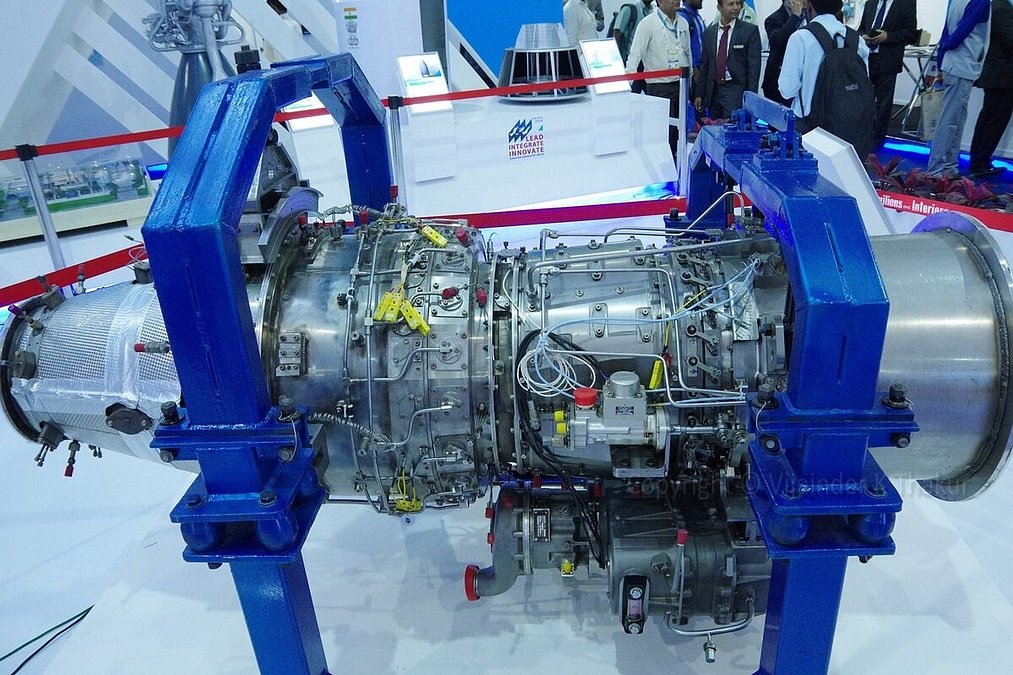
India
BENGALURU — Hindustan Aeronautics Limited (HAL) has achieved a new development milestone in its indigenous HTFE-25 (Hindustan Turbo Fan Engine) programme, with the engine's core successfully reaching 99.5% of its maximum speed during acceleration trials. The achievement marks further progress in the development of India's 25 kN thrust-class turbofan engine, which is being designed for military and civil aviation applications. According to HAL's latest Directors' Report, the company has so far built two core engines and one full-engine technology demonstrator under the programme. The core engine has completed light-up, acceleration, and speed trials up to 99.5%, while additional development trials are continuing. The HTFE-25 is a low-bypass turbofan engine being designed and developed by HAL's Aero Engine Research and Design Centre (AERDC) in Bengaluru. The engine is intended to power basic and advanced military trainer aircraft, small business jets, and large unmanned aerial vehicles (UAVs). HAL states that the engine can be used in two different aircraft configurations. In a single-engine configuration, it is designed for aircraft in the 5-ton weight class, while a twin-engine configuration is intended for aircraft weighing up to the 9-ton class. The HTFE-25 has a length of 1,730 mm, a diameter of 590 mm, and a dry weight of approximately 350 kg. It is designed to produce 25 kN of dry thrust and features a bypass ratio of 0.5, an air mass flow of 43 kg/s, and a thrust-to-weight ratio of around 7.27. As part of its development, HAL has incorporated 3D-printed Ti-6Al-4V components, a titanium alloy commonly used in aerospace applications because of its high strength and low weight. The engine programme has undergone several stages of testing since the first successful core engine run on December 14, 2015. Development activities have included sea-level performance trials, cold-weather starting tests, and hot-weather high-altitude trials at Leh. HAL has also built and successfully operated a full-engine technology demonstrator. Earlier acceleration trials had reached about 55% of the engine's rated speed. The latest achievement of 99.5% speed represents a significant advance in the core engine evaluation process. HAL stated that sea-level performance trials on the core engine have also been completed satisfactorily, while further testing remains in progress. The company has also explored afterburner integration, with basic afterburner tests conducted during earlier stages of development. HAL estimates the potential market for the HTFE-25 at 200 to 250 engines, based on its technical feasibility assessment. The programme is supported by a dedicated design and testing facility at AERDC, inaugurated in late 2023, which includes specialised test beds for accelerated engine development and evaluation. The HTFE-25 programme is part of HAL's wider indigenous aero-engine development efforts, alongside projects such as the HTSE-1200 turboshaft engine. According to HAL, development and certification work on the HTFE-25 is continuing. Based on the company's latest updates, flight-worthiness testing and final certification are currently targeted within the next four to five years. The successful progress of the HTFE-25 programme is expected to strengthen India's indigenous aero-engine development capability and provide a domestically developed propulsion option in the 25 kN thrust class for future aviation platforms.
Read More → Posted on 2026-08-04 13:46:37Search
Top Trending in 24 Hours
-
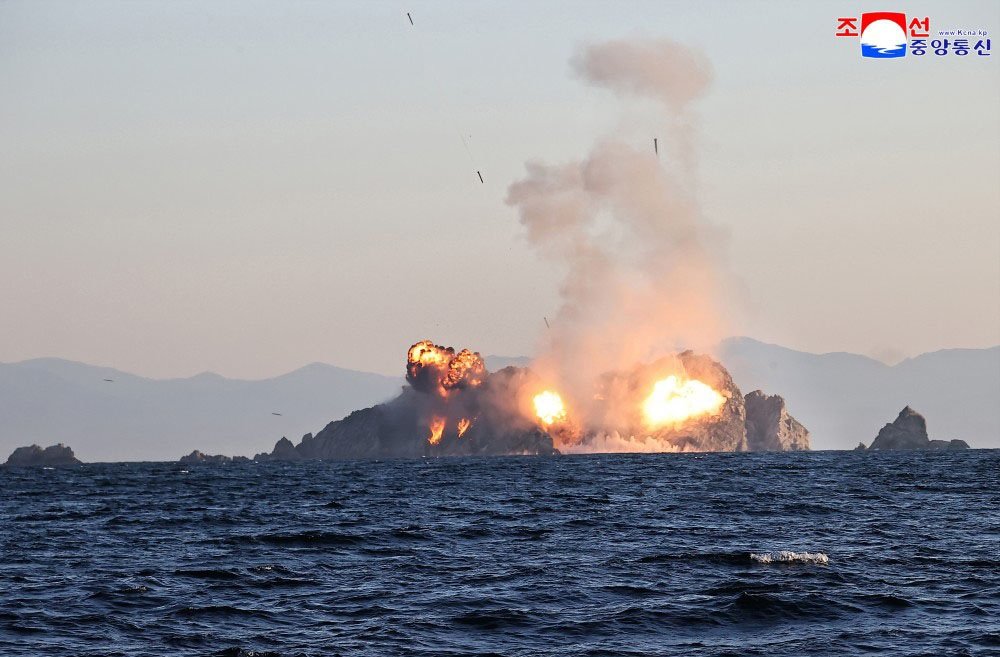 North Korea Fires Short-Range Ballistic Missile Toward Sea of Japan After Freedom Edge 26
-
 U.S. Army Awards $10.64 Million Contract to Ukrainian Drone Maker Skyeton for Raybird Systems
-
 India’s xTerra Robotics Launches Indigenous DHAV-Hy Wheeled-Legged Quadruped for Industrial Inspection
-
 U.S. Space Force Seeks Rapid-Response Satellites for Close-Range Orbital Inspections
-
 BEL Showcase X-Band Multi-Function Radar for QRSAM to Japanese Delegation
-
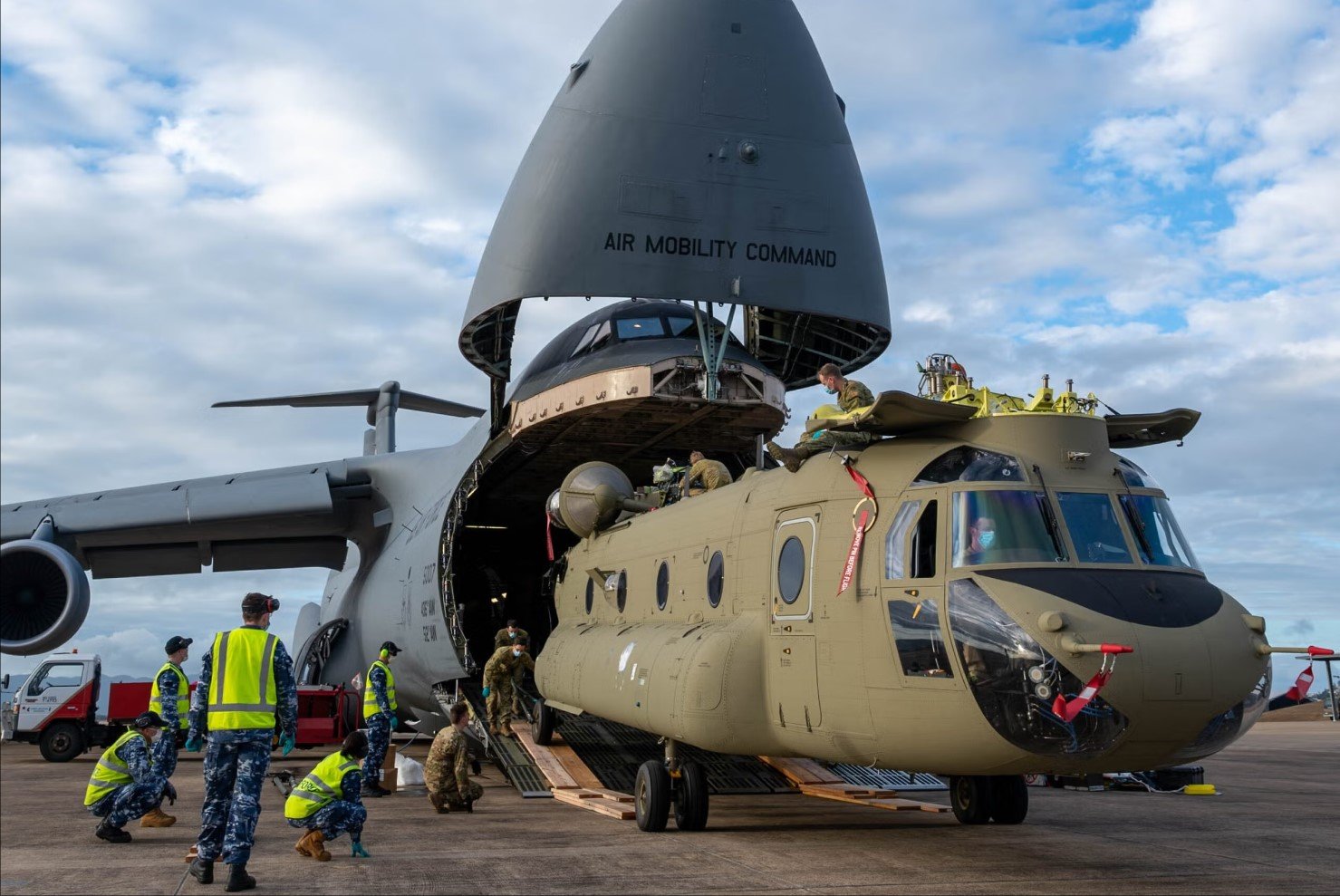 U.S. Delivers First CH-47F Chinook to Egypt Under 12-Helicopter Deal
-
 U.S. Government Seizes Almasirah.net, Houthi-Linked News Website
-
 IRGC Experts Visit Bab El-Mandeb to Oversee Radar Installation and Tunneling, Houthi Sources Say
Top Trending in 4 Days
-
 Satellite Images Show Saudi Arabia Building Emergency Bypass Around Damaged East-West Oil Pipeline Station
-
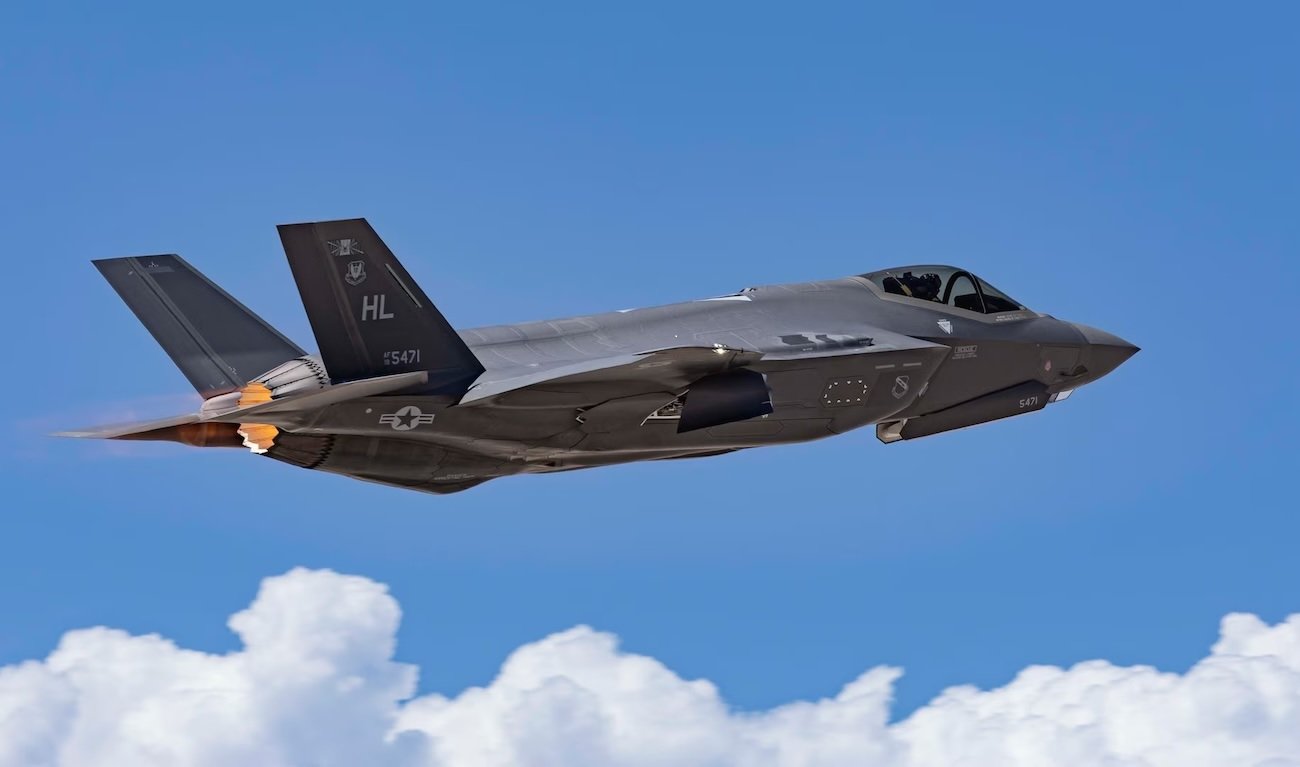 Sensitive F-35 Components Diverted to Hong Kong, Some Parts Missing
-
 Italian Eurofighter Damaged in Houthi Attack on Saudi Arabia’s King Fahd Air Base
-
 U.S. Secures Permanent Military Rights in Greenland in Historic Security Pact with Denmark
-
 U.S. Approves Potential $2.68 Billion Air Defense Package for Ukraine Including S-300 Clone Missiles
-
 BEL Signs Export Deal with Elbit Systems for Directed Infrared Countermeasure Sub-Assemblies, Secures ₹648 Crore in Additional Orders
-
 China Privately Urges Iran to Restrain Houthis After Saudi Appeal
-
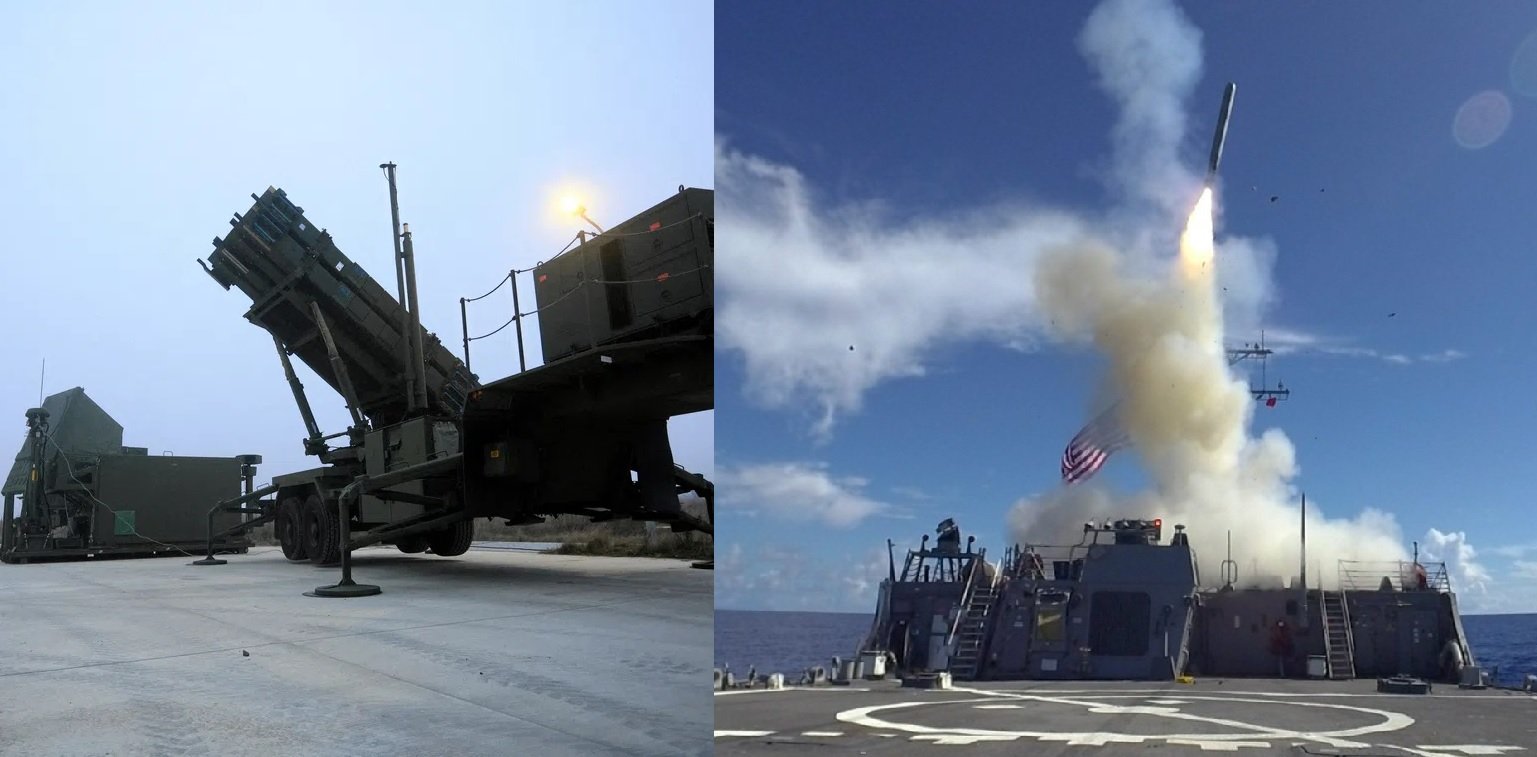 U.S. Warns Allies of Up to Five-Year Delays in Key Weapons Deliveries
