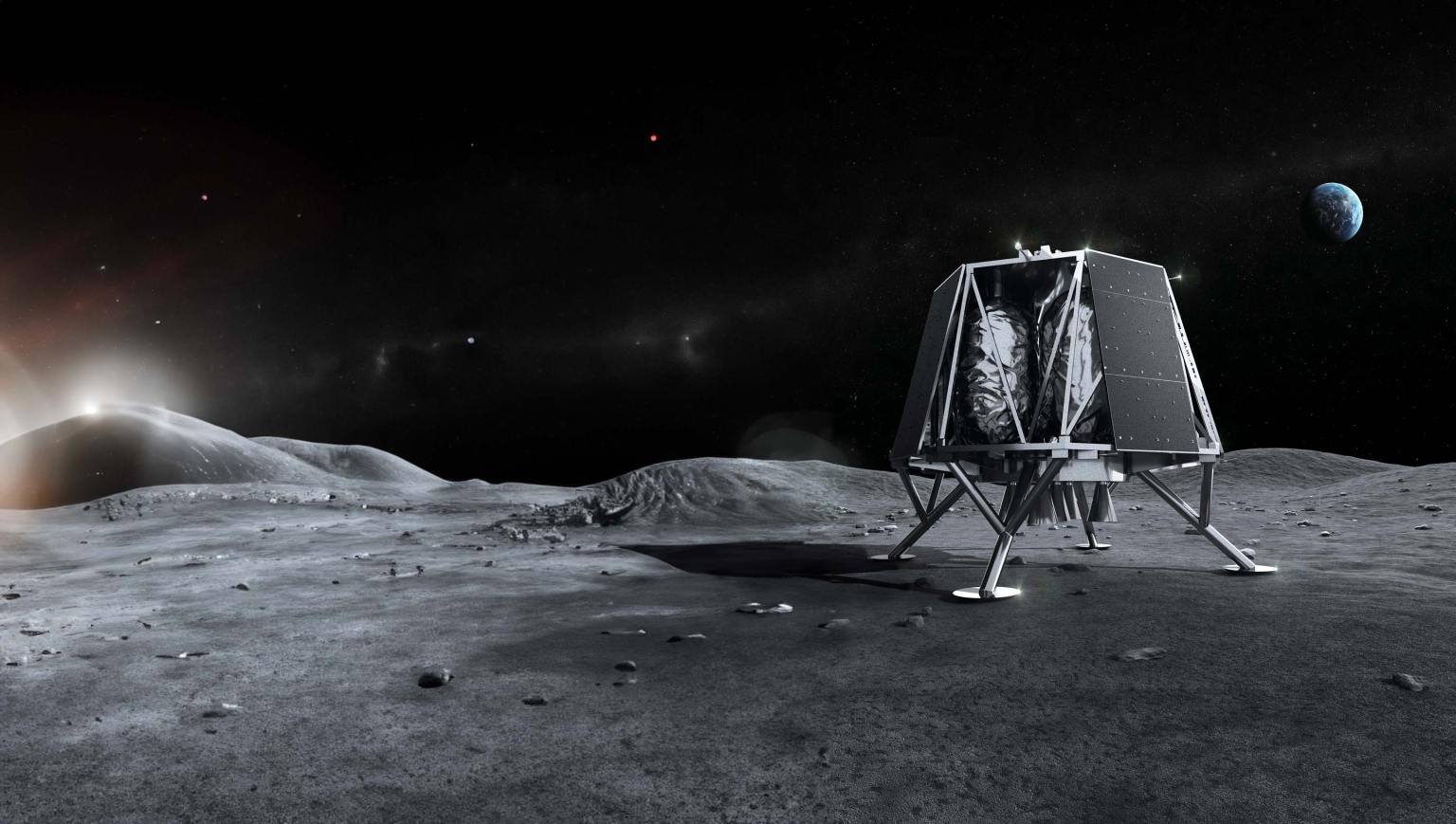
WASHINGTON — NASA and The Charles Stark Draper Laboratory (Draper) have mutually agreed to terminate the CP-12 lunar lander mission after years of development delays and technical changes pushed the project's schedule well beyond NASA's planned timeline.
The CP-12 mission was part of NASA's Commercial Lunar Payload Services (CLPS) program, an initiative that partners with private companies to deliver scientific instruments and technology to the Moon in support of the agency's Artemis program.
Following the cancellation of the main agreement, ispace technologies U.S. (ispace-U.S.) announced on July 15, 2026, that its subcontract with Draper had also been terminated. The U.S.-based subsidiary of Japan's ispace was responsible for developing the lunar lander and providing transportation services for the mission.
NASA awarded Draper the CP-12 task order in July 2022 with a total contract value of $73 million. According to reports, NASA paid approximately $43 million for work completed before the project was ended.
Development Delays Led to Mission Cancellation
The CP-12 mission was originally planned for launch in 2025, but several engineering changes significantly delayed its development.
In 2023, the lander's hardware was redesigned to better integrate NASA's scientific payloads. The redesign included moving to a larger unified platform known as Ultra (APEX 1.0) to accommodate the instruments more effectively.
Additional changes followed in 2025, when the project team decided to replace the spacecraft's propulsion system. In March 2026, ispace announced that its Japanese and U.S. lunar lander designs would be combined into a new ULTRA lander configuration, along with further engine modifications.
Although Draper and ispace proposed revised development plans, the cumulative technical changes pushed the estimated mission readiness to 2030–2031. NASA determined that the revised schedule no longer aligned with the agency's operational priorities, leading both organizations to end the project by mutual agreement.
Mission Was Intended for the Moon's Far Side
The CP-12 mission was designed to deliver three major scientific investigations to the Schrödinger basin, a large impact crater located on the Moon's far side.
The planned payloads included:
- Farside Seismic Suite (FSS): Two seismometers designed to detect moonquakes, meteorite impacts, and study differences between the Moon's near and far sides. The investigation is led by NASA's Jet Propulsion Laboratory.
- Lunar Interior Temperature and Materials Suite (LITMS): Instruments including a heat-flow probe and electrical conductivity sensors to study the Moon's subsurface temperature and internal structure. The project is led by the Southwest Research Institute.
- Lunar Surface Electromagnetics Experiment-Lite (LuSEE-Lite): Instruments intended to measure electric and magnetic fields on the lunar surface and examine interactions with the solar wind and lunar dust.
Together, these scientific instruments were expected to improve understanding of the Moon's interior, geological activity, and surface environment, supporting future Artemis exploration and long-term lunar surface operations.
NASA Plans to Fly the Science Payloads on Future Missions
Although the CP-12 mission has been canceled, NASA intends to use the completed scientific instruments on future CLPS missions or other Artemis-related lunar missions whenever possible.
Reassigning the payloads may require additional planning because most commercial lunar landers currently under development are designed for the Moon's near side. Missions to the far side require communication relay satellites since the lunar far side cannot directly communicate with Earth, making such missions more technically complex.
Part of a Broader CLPS Program
The cancellation of CP-12 is not the first program adjustment within NASA's Commercial Lunar Payload Services (CLPS) initiative.
In 2019, NASA terminated a CLPS contract awarded to Orbit Beyond, while another CLPS mission ended in 2022 after Masten Space Systems filed for bankruptcy.
Despite the end of the CP-12 project, ispace-U.S. said the decision does not change its long-term plans in lunar exploration. The company stated it will continue developing lunar technologies and intends to compete for future opportunities under CLPS 2.0, the next phase of NASA's commercial lunar delivery program, which is expected to support more frequent lunar missions.
Draper, which has a long history of contributing guidance technology to NASA's Apollo program, had led overall mission management, systems engineering, navigation, integration, testing, and mission assurance for CP-12, while ispace-U.S. was responsible for providing the lunar lander. The mission's cancellation reflects NASA's continued focus on maintaining realistic schedules while advancing commercial lunar exploration through the CLPS program.
Source : SpaceNews
——— End of Article ———