
World
WASHINGTON — May 11, 2026 : President Donald Trump has formally rejected Iran’s response to the latest United States proposal aimed at ending the ongoing conflict, after Tehran delivered a detailed multipage counterproposal through Pakistani mediators following nearly 10 days of diplomatic exchanges. Speaking in a telephone interview with Axios, Trump criticized Tehran’s communication and expressed distrust toward the Iranian leadership. “I don't like their letter. It is inappropriate. I don't like their response,” Trump said, adding that Iran “has been deceiving many countries for 47 years.” Trump later repeated his criticism publicly on Truth Social, describing Iran’s response as “TOTALLY UNACCEPTABLE!” and accusing Tehran of failing to engage seriously with the proposed framework. Iran’s Counterproposal According to regional and diplomatic reports, Iran’s response was delivered on May 10 through Pakistani mediators and addressed several key disputes, including the Iranian nuclear program, maritime security in the Persian Gulf, and the reopening of the Strait of Hormuz. Tehran reportedly proposed an immediate cessation of fighting across all fronts, including Lebanon, alongside a gradual reopening of the Strait of Hormuz in exchange for the United States lifting its naval blockade on Iranian ports and commercial shipping. Iran’s proposal places nuclear-related discussions into a separate negotiation process to be conducted over the next 30 days. Iranian officials reportedly indicated willingness to temporarily suspend uranium enrichment activities, though for a significantly shorter period than the 20-year moratorium sought by Washington. Tehran also rejected any requirement to dismantle its nuclear infrastructure. On the issue of Iran’s highly enriched uranium stockpile, the proposal reportedly suggests that part of the material would be diluted while the remainder would be transferred to a third country under guarantees ensuring its return if negotiations collapse or if the United States withdraws from a future agreement. Iran’s Foreign Ministry spokesperson Esmaeil Baghaei stated that Tehran’s response prioritizes ending the war and restoring maritime security in the Persian Gulf and Strait of Hormuz. The proposal also calls for the removal of U.S. sanctions, the release of frozen Iranian financial assets, and an end to what Iran describes as illegal U.S. actions against commercial shipping. Iranian officials characterized their position as based on “legitimate rights” rather than concessions. Details of the U.S. Proposal The latest U.S. proposal reportedly consisted of a one-page memorandum of understanding intended to establish an initial ceasefire framework. The proposal sought to reopen the Strait of Hormuz and launch a 30-day negotiation period focused on nuclear restrictions, sanctions relief, maritime security arrangements, and broader regional stability issues. While the United States prioritized rapid agreement on nuclear limitations and maritime access, Iran’s response placed greater emphasis on the immediate cessation of hostilities and the removal of economic and naval pressure measures before entering detailed nuclear negotiations. Diplomatic sources familiar with the talks said major disagreements remain over the sequencing of concessions, the duration of enrichment restrictions, and future control of nuclear material. Trump Reaffirms U.S. Position Amid the stalled negotiations, Trump confirmed that he held discussions with Israeli Prime Minister Benjamin Netanyahu on Sunday. Trump described the exchange as “a very pleasant call” and reiterated that relations between the United States and Israel remain close during the ongoing regional crisis. At the same time, Trump emphasized that the negotiations would remain under direct U.S. control. “The negotiations with Iran are my business, not anyone else’s,” Trump stated, signaling that his administration intends to independently manage the diplomatic process despite ongoing consultations with allies. Administration officials indicated that the United States will continue applying economic and diplomatic pressure on Iran while negotiations remain unresolved. Regional Tensions Continue As of May 11, no immediate resumption of full-scale hostilities has been announced, though the fragile ceasefire remains under pressure amid continued Iranian shipping restrictions in the Strait of Hormuz and the sustained U.S. naval presence in the region. Global energy markets continue to monitor developments closely due to the strategic importance of the waterway for international oil shipments. Officials involved in the mediation process said further diplomatic exchanges remain possible through Pakistani intermediaries, although significant differences continue to separate both sides on the scope and timing of potential concessions. The developments come ahead of Trump’s scheduled three-day state visit to China beginning May 13 at the invitation of Chinese President Xi Jinping. Discussions during the visit are expected to include trade relations, artificial intelligence, Taiwan, regional security issues, and China’s economic relationship with Iran, including Beijing’s continued purchases of Iranian oil and exports of dual-use goods that Washington believes could support Iran’s strategic capabilities.
Read More → Posted on 2026-05-11 14:36:04
World
SEOUL — May 11, 2026 : South Korea’s Presidential Office on Monday condemned the attack on the cargo vessel HMM Namu in the Strait of Hormuz after a joint government investigation concluded that the ship was struck by two drones while anchored near the United Arab Emirates. Officials stated that Seoul is preparing a coordinated and “firm response” following the completion of forensic analysis conducted in Dubai. National Security Adviser Wi Sung-lac said attacks on civilian commercial shipping are “intolerable” and cannot be justified under international law. The Presidential Office emphasized that the vessel had not violated any maritime regulations at the time of the incident. Investigation Confirms Dual Drone Strike According to the findings released by South Korean authorities, the HMM Namu, a Panama-flagged general cargo vessel operated by HMM Co. Ltd., was anchored near Umm Al Quwain in the United Arab Emirates on May 4 when two aerial objects struck the vessel’s lower port stern approximately one minute apart. The joint investigative team concluded that the ship had been hit by two Iranian drones based on forensic analysis, debris patterns, and damage assessment conducted after the vessel was towed to Dubai for inspection. Officials stated that the first impact caused an explosion and ignited a fire inside the engine room. A second strike followed shortly afterward, spreading flames across the rear section of the vessel and causing additional structural damage. Investigators confirmed that the attack created a breach measuring approximately 5 meters wide and up to 7 meters deep in the lower port stern. Authorities noted that the extent of the damage was not immediately visible because the impact area was located below the vessel’s rear port section. Crew Rescued, Vessel Towed to Dubai All 24 crew members aboard the HMM Namu, including six South Koreans, were rescued without injury. The fire was later extinguished, though the vessel was disabled and required tugboat assistance for extraction from the area. The ship was transported to Drydocks World in Dubai, where it arrived around May 8 for repairs and a full forensic inspection. The investigative team included inspectors from the Korea Maritime Safety Tribunal under the Ministry of Oceans and Fisheries and forensic specialists from the National Fire Agency. Officials examined CCTV footage, interviewed the captain and crew members, and collected debris from the impact site. Authorities ruled out internal mechanical failure and sea mines as possible causes of the explosion. “The damage was not immediately known because the strike occurred in the lower port stern,” Wi Sung-lac said during a media briefing. “However, forensic evidence collected in Dubai clarified the nature of the assault.” Diplomatic Protest Lodged With Iran Following the release of the investigation results, South Korea’s Foreign Ministry summoned the Iranian ambassador in Seoul on May 10 to formally protest the incident. The Presidential Office stated that attacks against civilian commercial vessels operating in compliance with international regulations cannot be tolerated and that Seoul would continue coordinating with international partners on maritime security measures. In response, the Iranian embassy in South Korea stated that it currently had no official position on the matter and would provide updates if information becomes available. Tehran has previously denied involvement in the incident. South Korean authorities said additional forensic analysis of debris and damage patterns will continue as investigators work to determine the exact origin and technical characteristics of the drones involved in the strike. Rising Tensions in the Strait of Hormuz The attack occurred amid heightened tensions and maritime disruptions in the Strait of Hormuz, where regional shipping traffic has faced increasing security risks over the past two months. Donald Trump stated after initial reports of the incident that Iran was responsible for the strike and urged South Korea to join a U.S.-led coalition aimed at securing commercial shipping routes in the region. At the same time, commanders of the Islamic Revolutionary Guard Corps (IRGC) have warned that interference with Iranian shipping operations would result in retaliatory action against U.S. military assets and vessels considered hostile. The United Kingdom has also announced the deployment of the destroyer HMS Dragon to the Middle East as part of a French-led maritime security mission focused on protecting commercial shipping. Additional Maritime Incidents Reported The strike on the HMM Namu followed several recent maritime security incidents in the region. On Sunday, another cargo vessel arriving from Abu Dhabi was reportedly attacked by a drone near Qatar’s territorial waters. Separately, authorities in the United Arab Emirates announced that two Iranian drones had been intercepted. Despite the tensions, some maritime transit operations have continued. A Qatari liquefied natural gas tanker was recently permitted by Tehran to transit regional waters toward Pakistan, marking the first such passage since the escalation of the current crisis in late February. South Korean officials stated that the government will continue prioritizing the safety of its citizens, the protection of commercial shipping, and the security of international maritime trade routes while further assessments of the HMM Namu continue in Dubai.
Read More → Posted on 2026-05-11 14:19:07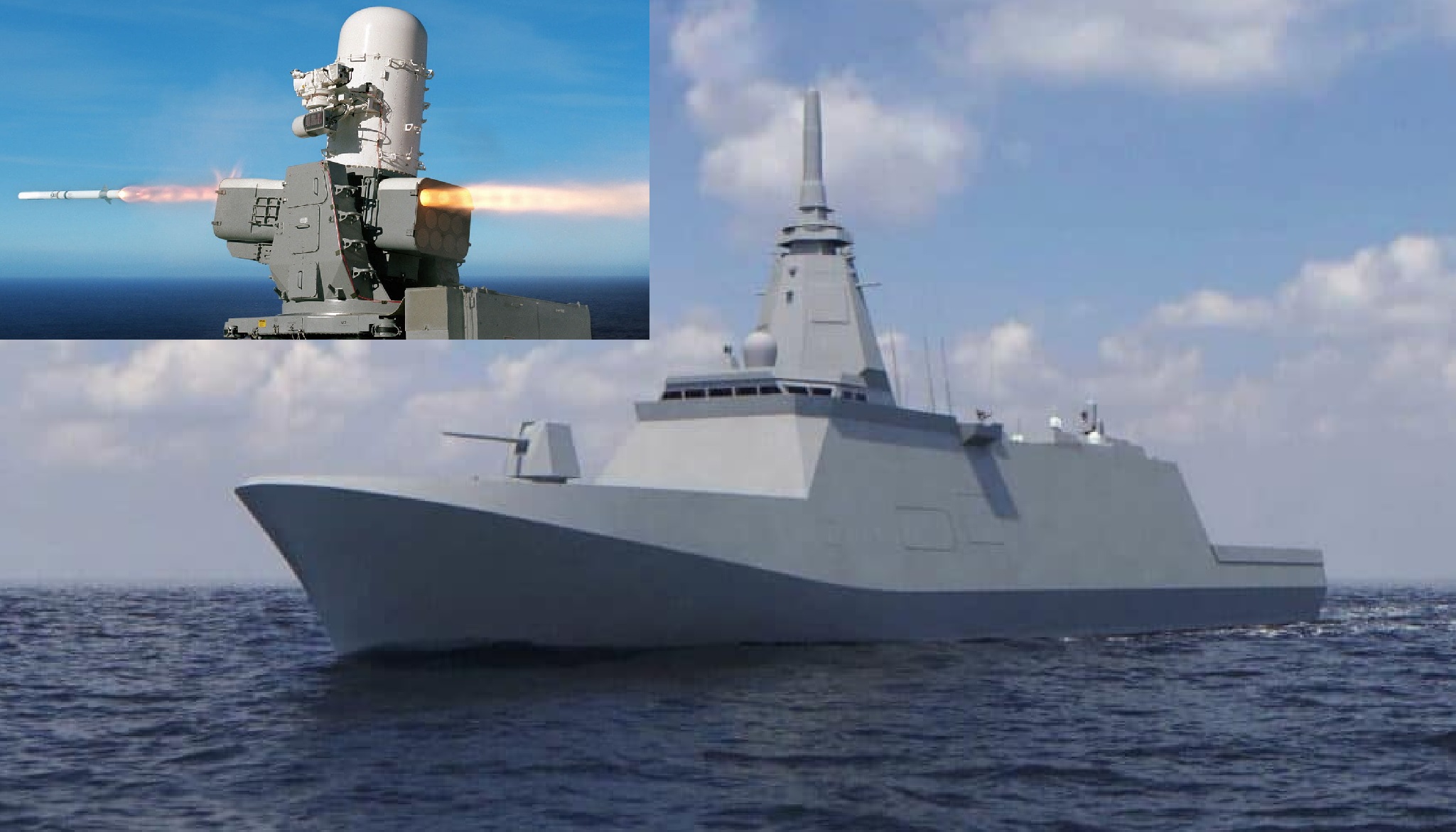
World
LOUISVILLE, Kentucky — May 11, 2026 : RTX announced that its Raytheon business has been awarded a contract by Mitsubishi Heavy Industries to supply SeaRAM ship self-defense systems for the Royal Australian Navy’s future upgraded Mogami-class frigates under Australia’s SEA 3000 General Purpose Frigate program. The SEA 3000 program is a major naval modernization initiative aimed at replacing Australia’s retiring Anzac-class frigates with 11 upgraded Mogami-class warships designed for multi-role maritime operations. The new vessels are intended to strengthen the Royal Australian Navy’s capabilities in undersea warfare, local air defense, and regional maritime security operations. Under the agreement, Raytheon will deliver SeaRAM launchers, Blast Test Vehicles, and technical support services for the first three frigates currently under construction by Mitsubishi Heavy Industries in Nagasaki, Japan. The systems will support installation, integration, and testing activities during the ships’ construction phase. The first three vessels will be built in Japan, while additional ships planned under the program are expected to be constructed at the Henderson Defence Precinct in Western Australia as part of Australia’s long-term naval expansion strategy. SeaRAM Capability and System Integration The SeaRAM system is designed to provide autonomous terminal defense against a wide range of airborne threats, including anti-ship cruise missiles, helicopters, and unmanned aerial vehicles. The system combines the sensor suite of the Phalanx Close-In Weapon System Block 1B — including search-and-track radar and electro-optical sensors — with an 11-cell launcher equipped with RIM-116 Rolling Airframe Missiles. Unlike traditional gun-based close-in weapon systems, SeaRAM extends a ship’s defensive reach beyond short-range ballistic interception distances while maintaining the same shipboard footprint and power requirements as the Phalanx platform. The RIM-116 Rolling Airframe Missile is a fire-and-forget interceptor that uses passive radio-frequency and infrared guidance to engage incoming threats at ranges of approximately nine kilometers. Barbara Borgonovi, president of Naval Power at Raytheon, stated that the system would provide the Royal Australian Navy with an additional layer of terminal air and missile defense capability for its future surface combatants. Australia Joins Global SeaRAM Operators The acquisition marks Australia’s first procurement of the SeaRAM system, officially adding the country to the global community of Rolling Airframe Missile operators. RTX stated that the contract reflects continuing international demand for layered naval air and missile defense architectures amid expanding regional security requirements. The upgraded Mogami-class frigates are being introduced as Tier 2 surface combatants within Australia’s broader maritime modernization plan. The vessels are designed with lower crew requirements than the Anzac-class frigates while maintaining advanced operational capabilities and interoperability with allied naval forces. Production and Delivery Timeline Manufacturing and related contract work will be carried out at Raytheon’s facility in Louisville, Kentucky. Deliveries of the SeaRAM systems are scheduled to begin in late 2028. According to the current SEA 3000 production schedule, the first upgraded Mogami-class frigate is expected to be delivered to the Royal Australian Navy by the end of 2029.
Read More → Posted on 2026-05-11 14:04:02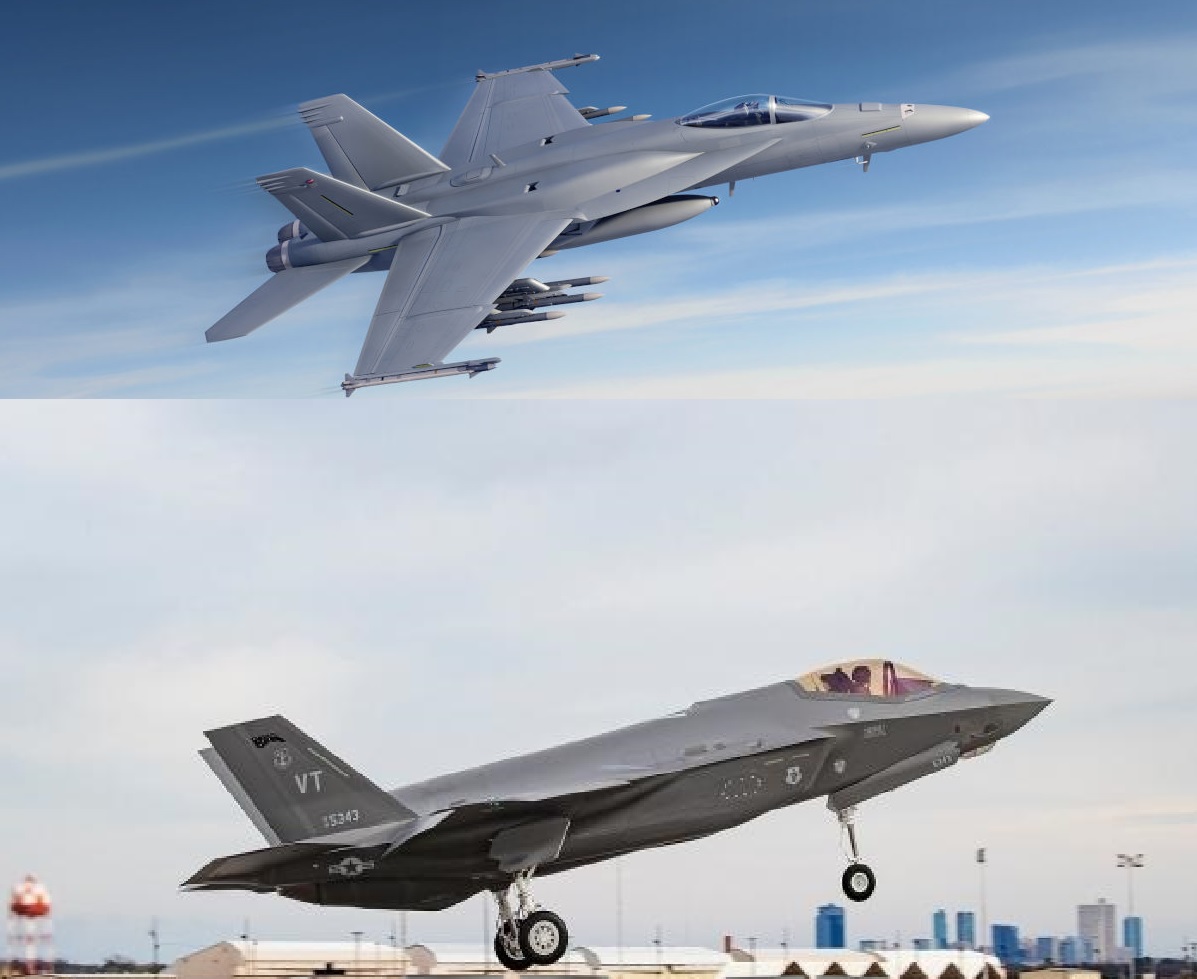
World
WASHINGTON — May 11, 2026 : The U.S. Marine Corps has formally established 2030 as the deadline for retiring its remaining McDonnell Douglas F/A-18 Hornet fleet, completing a long-term transition toward the F-35 Lightning II as the service’s primary tactical aviation platform. The transition, outlined in the Marine Aviation Plan 2026 and reinforced through a May 2026 Marine Administrative Message (MARADMIN 207/26), represents a major restructuring of Marine Corps aviation operations, personnel management, and expeditionary combat doctrine. The modernization effort is intended to align Marine aviation with fifth-generation warfare requirements, including stealth operations, sensor fusion, networked targeting, and dispersed basing in contested environments. F/A-18 Maintenance Roles to Be Eliminated As part of the transition, the Marine Corps will phase out maintenance occupations directly tied to the F/A-18 Hornet community. The affected specialties include fixed-wing aircraft mechanics, power plant technicians, airframe mechanics, electrical systems technicians, communications and radar systems specialists, and aviation safety equipment personnel assigned to Hornet squadrons. Under the administrative guidance, Marines serving in these occupational fields will be provided three primary options: Retraining into F-35 maintenance and sustainment roles Transfer into other military occupational specialties Separation from service at the completion of existing enlistment contracts The message also states that promotion and retention opportunities within the F/A-18 maintenance community will end as Hornet units are progressively deactivated. Marines not approved for retraining or lateral transfers will be reassigned according to broader Marine Corps manpower requirements. Phased Withdrawal Schedule The retirement of remaining Hornet operations will occur in phases across three major Marine aviation installations: Marine Corps Air Station Beaufort, South Carolina — by August 1, 2028 Marine Corps Air Station Miramar, California — by August 1, 2029 Naval Air Station Joint Reserve Base Fort Worth, Texas — by August 1, 2030 The Marine Corps currently operates approximately 125 F/A-18 aircraft across two active squadrons and one reserve squadron. The aircraft entered Marine Corps service in 1983 and has served in strike, interdiction, escort, and close-air-support missions for more than four decades. Expansion of the F-35 Fleet According to the Marine Aviation Plan 2026, the service plans to field approximately 420 F-35 aircraft, including 280 F-35B Short Takeoff and Vertical Landing (STOVL) variants and 140 carrier-capable F-35C variants. By the end of 2026, the Marine Corps expects to have received 205 F-35Bs and 56 F-35Cs supporting operational squadrons, fleet replacement squadrons, and test units. Squadron aircraft inventories are also planned to increase from 10 to 12 primary aircraft authorized by fiscal year 2035. The F-35B variant is powered by the Pratt & Whitney F135 engine generating approximately 43,000 pounds of thrust. The aircraft incorporates a shaft-driven lift fan system enabling short takeoffs and vertical landings from expeditionary airstrips and amphibious assault ships while retaining supersonic flight capability. The F-35C variant is optimized for carrier operations and includes larger wings, reinforced landing gear, and increased fuel capacity to support catapult launches and arrested recoveries aboard Navy aircraft carriers. Advanced Sensors and Networked Warfare Capabilities Both F-35 variants incorporate low-observable stealth technology and internal weapon bays capable of carrying AIM-120 Advanced Medium Range Air-to-Air Missiles and Joint Direct Attack Munition precision-guided bombs while preserving reduced radar visibility. The aircraft integrates the AN/APG-81 Active Electronically Scanned Array radar, Electro-Optical Targeting System, and Distributed Aperture System to provide enhanced situational awareness and targeting capability. Using Multifunction Advanced Data Link and Link 16 connectivity, the F-35 can transmit targeting and sensor information in near real time to naval vessels, artillery units, airborne warning aircraft, and other joint-force assets. Marine Corps planners view the aircraft not only as a strike platform but also as an airborne sensor and command node within a wider multi-domain combat network. Support for Expeditionary Operations Marine aviation officials stated that the transition directly supports Expeditionary Advanced Base Operations and Distributed Aviation Operations concepts, which emphasize dispersed deployments across temporary forward bases, austere airstrips, island chains, and amphibious platforms in contested maritime regions. The operational concepts are particularly focused on the Indo-Pacific theater, where U.S. forces are preparing for environments dominated by advanced anti-access and area-denial networks, long-range missile systems, integrated air defenses, and electronic warfare capabilities. The F-35’s reduced radar signature, sensor fusion systems, and networking capabilities are intended to complicate enemy targeting cycles while supporting distributed Marine units operating inside contested areas. Sustainment and Readiness Challenges While the consolidation of tactical aviation around a single aircraft family is expected to simplify logistics, training, software integration, and interoperability, defense officials continue to monitor sustainment challenges associated with the F-35 program. Pentagon assessments have repeatedly identified concerns involving maintenance complexity, spare-parts availability, and operational readiness rates across the F-35 fleet. Unlike previous Marine aviation structures that distributed operational roles across aircraft such as the Harrier and Hornet, the new force structure places greater operational reliance on a single platform family. The retirement of the F/A-18 Hornet and expansion of the F-35 fleet reflects a broader U.S. military modernization strategy centered on fifth-generation aircraft, integrated sensor-sharing, and multi-domain operations against technologically advanced adversaries.
Read More → Posted on 2026-05-11 13:51:11
World
BAGHDAD — May 10, 2026 : Satellite imagery and investigative reports have revealed the existence of a covert Israeli military facility established in Iraq’s western desert during the opening phase of Operation Roaring Lion, the joint U.S.-Israeli air campaign against Iran launched on 28 February 2026. The facility was located approximately 180 kilometres west of Najaf and south of Baghdad, in a remote desert region near the Najaf–Anbar borderlands. Open-source intelligence analysts later geolocated the site to a dry lakebed area in the Himyar Valley region. Construction and Layout of the Site Satellite imagery from late February 2026 showed the rapid construction of an improvised 1.5-kilometre airstrip built inside a wadi to reduce aerial visibility. The site also included dugouts believed to have been used for troop concentrations and defensive positions. Additional imagery captured in early March revealed tents, helicopters and military vehicles stationed at the facility, indicating that the base had become operational shortly before the start of the air campaign against Iran. Analysts said the sparsely populated terrain of western Iraq provided suitable conditions for a temporary forward operating site with limited civilian activity and minimal observation. By mid-March, however, heavy rainfall and flooding reportedly rendered the airstrip unusable. Operational Role During the Iran Campaign According to sources familiar with the matter and reporting by The Wall Street Journal, the installation served as both a logistics hub and a combat search-and-rescue facility for the Israeli Air Force. The base reportedly housed Israeli special forces and SAR teams tasked with recovering aircrews in the event Israeli aircraft were shot down during operations over Iranian territory. Sources said the facility had been established with the awareness of the United States, although without the approval of the Iraqi government. Following the reported downing of a U.S. Air Force F-15 near Isfahan during the conflict, Israeli personnel at the site reportedly offered assistance for recovery operations. American forces ultimately carried out the rescue independently. No Israeli aircraft were confirmed lost during the campaign, and the Israeli search-and-rescue teams stationed at the base were not required to conduct recovery missions. Discovery by Iraqi Authorities The covert installation reportedly remained undetected until early March 2026, when a local shepherd informed Iraqi authorities about unusual military activity and helicopter flights in the area. In response, Iraqi forces dispatched a patrol using HMMWV vehicles to investigate the location. During the approach, the patrol reportedly came under an airstrike intended to prevent exposure of the facility. One Iraqi soldier was killed and two others were wounded in the strike. Iraq subsequently deployed two units from its Counter Terrorism Service (CTS) to the area, where personnel reportedly recovered evidence indicating the presence of foreign military operations. Lieutenant General Qais Al-Muhammadawi, deputy commander of Iraq’s Joint Operations Command, stated that the operation appeared to involve ground forces supported by air assets and exceeded the operational capabilities of Iraqi units stationed in the region. He described the presence of the force as a “reckless operation” conducted without coordination or sovereign approval from Baghdad. Political and Diplomatic Fallout The incident triggered political tensions inside Iraq, with the Iraqi parliament summoning the defence and interior ministers to explain the breach of Iraqi territory and airspace. Initially, Iraqi authorities attributed the strike on their patrol unit to the United States and later filed a complaint with the United Nations regarding foreign military activity inside Iraq. U.S. officials reportedly denied involvement in the specific incident. Tensions escalated further in late March 2026 after a U.S. Air Force A-10 Thunderbolt II conducted a strike on Iraq’s Al-Habbaniyah military base in Anbar province. The strike reportedly hit a military healthcare clinic and an engineering unit, killing seven Iraqi soldiers and injuring 13 others. Iraq’s Ministry of Defence condemned the incident and summoned the U.S. chargé d’affaires, while several Iraqi political factions renewed demands for the withdrawal of foreign forces from the country. Subsequent Iraqi intelligence assessments reportedly concluded that the “unidentified force” initially believed to be American was in fact an Israeli detachment operating covertly inside Iraqi territory. The Israel Defense Forces has not publicly commented on the reports or the alleged operation in western Iraq.
Read More → Posted on 2026-05-10 16:28:39
World
NIZHNY TAGIL, RUSSIA — May 10,2026 : Uralvagonzavod, part of the Rostec state corporation, has delivered a new batch of T-90M “Proryv,” T-80BVM, and T-72B3M main battle tanks to the Russian Armed Forces. The transfer was announced on May 9, 2026, ahead of Russia’s Victory Day commemorations. The company stated that all vehicles completed factory testing and were formally accepted by military representatives before being transferred to operational units. The exact number of tanks delivered was not disclosed. Modernized Tank Fleet The delivered vehicles represent upgraded versions of Soviet-era armored platforms currently used by Russian ground forces. All three tank models are equipped with 125 mm smoothbore guns, though they differ in armor configuration, engines, electronics, and battlefield support systems. Russian defense industry officials stated that the latest production batch incorporates modifications based on operational experience from the ongoing conflict in Ukraine. The upgrades are focused primarily on improving survivability against drones, loitering munitions, anti-tank guided missiles, and artillery threats. T-90M “Proryv” The T-90M is regarded in Russia as the most advanced operational tank within the T-72/T-90 family. The vehicle features a redesigned welded turret, Relikt explosive reactive armor, and upgraded fire-control systems including the Kalina and Sosna-U targeting complexes. The tank is also equipped with a remotely operated combat module carrying a 12.7 mm machine gun, allowing the commander to engage targets without leaving the protected interior of the vehicle. Russian sources describe the T-90M as the most modern and expensive serially produced tank currently fielded by the Russian military. T-80BVM and T-72B3M Upgrades The T-80BVM modernization retains the platform’s gas turbine engine, which is designed to provide high mobility and operational reliability in cold-weather environments. The newest variants include updated Relikt armor arrangements and additional protection systems. The T-72B3M remains one of the primary tanks used by Russian armored units. The upgraded version includes a more powerful V-92S2F engine, enhanced thermal imaging systems for the gunner, and improved fire-control equipment intended to increase battlefield effectiveness. Industry reports indicate that Uralvagonzavod and associated facilities continue to modernize older T-72 and T-80 hulls while simultaneously manufacturing newly built T-90M tanks. Additional Protective Systems A major feature of the latest delivery is the installation of factory-produced additional protective structures designed to counter drone attacks. These include anti-drone screens, commonly referred to as slat armor or “cope cages,” which are mounted above the turret and intended to disrupt the shaped charges carried by FPV drones and loitering munitions before impact with thinner upper armor sections. The tanks are also reported to include localized electronic warfare systems, including the Volnorez suite, designed to jam radio frequencies used by unmanned aerial vehicles. Additional explosive reactive armor coverage has reportedly been added to side skirts, turret sections, and rear areas of the vehicles to improve protection against anti-tank weapons. Production and Battlefield Context Russian defense industry officials stated that the latest modifications were introduced after receiving feedback from frontline crews operating in Ukraine. Rostec has emphasized that new production vehicles are being adapted to current battlefield conditions with increased attention to 360-degree protection and survivability. Uralvagonzavod continues to serve as Russia’s primary manufacturer of main battle tanks under the state defense order. Reports from Russian industry sources indicate that the company has expanded production capacity and moved toward a continuous manufacturing cycle to meet increased procurement requirements. Despite the upgrades, all three tank models have sustained documented losses during the Russian-Ukrainian conflict. The first confirmed destruction of a T-90M was reported in 2022, and Ukrainian forces later captured intact examples of the tank during operations in the Kharkiv region. Military analysts and Ukrainian officials have stated that while the new anti-drone protection measures may reduce vulnerability to light UAV attacks, the vehicles remain exposed to heavy anti-tank guided missiles, artillery strikes, and advanced battlefield drones. The latest delivery reflects Russia’s continued focus on replacing combat losses through modernization of existing armored platforms rather than large-scale deployment of next-generation systems such as the T-14 Armata.
Read More → Posted on 2026-05-10 16:12:20
World
TALLINN, Estonia — May 10, 2026 : Ukraine has proposed dispatching military and technical air defense specialists to the Baltic states to support regional airspace security following a series of drone incidents near NATO borders, according to Estonian officials and regional media reports. The initiative comes after multiple suspected Ukrainian long-range drones, reportedly disrupted by Russian electronic warfare systems during strikes on Russian targets, entered or approached the airspace of Estonia, Latvia, and Lithuania in recent weeks. Ukrainian Foreign Minister Andrii Sybiha said Kyiv is prepared to send expert teams to help strengthen regional air defense coordination and improve airspace security measures. Ukrainian authorities have already contacted the Estonian Embassy regarding potential cooperation. Estonia Requests Clarification on Ukrainian Proposal Estonian Defense Minister Hanno Pevkur confirmed that Tallinn had received the proposal but stated that further clarification is required before discussions can move forward. Pevkur said Estonian authorities want additional details regarding the exact responsibilities and operational role of the Ukrainian specialists. He stressed that the most effective immediate solution would be improved control over Ukrainian drone operations to prevent accidental incursions into neighboring countries’ airspace. “The easiest way for the Ukrainians to keep their drones away from our territory is to exercise more effective control over their activities,” Pevkur stated. He added that Ukraine could introduce measures such as revised drone flight paths and automatic “kill switch” systems capable of remotely destroying drones if they deviate from planned routes. Drone Incidents Raise Regional Security Concerns The proposal follows several drone-related incidents recorded across the Baltic region and Finland since March 2026. The issue gained renewed attention on May 7 after two suspected Ukrainian drones entered Latvian airspace from Russian territory and crashed near Rēzekne, approximately 25 miles from the Russian border. The incident damaged four empty oil storage tanks at a fuel facility. No casualties were reported. According to regional officials, many of the drones involved in the incidents were likely affected by Russian electronic warfare and GPS spoofing systems during Ukrainian long-range strikes against Russian military and energy infrastructure. Ukraine has intensified attacks on Russian oil export and logistics facilities near the Baltic Sea, including infrastructure around the ports of Ust-Luga and Primorsk. Concerns Over Russian Electronic Warfare Estonian Foreign Minister Margus Tsahkna warned that Russia could potentially exploit drone navigation disruptions to redirect Ukrainian drones toward NATO territory, creating security risks and possible civilian damage. Tsahkna stated that while Russia generally avoids direct military escalation near NATO borders, the possibility of manipulated drone trajectories remains a serious concern for regional governments. Following the incidents, Ukrainian Foreign Minister Sybiha stated that Kyiv is working to reduce the likelihood of future airspace violations and expressed readiness to cooperate closely with Baltic partners on regional air defense coordination. Baltic States Seek Stronger NATO Air Defenses The repeated drone incursions have prompted renewed calls from the Baltic states for expanded NATO and European Union air defense support, particularly against low-flying unmanned aerial vehicles. Baltic officials have requested improved radar coverage, additional ground-based air defense systems, enhanced drone interception capabilities, and broader multi-layered counter-UAV networks across the region. Latvian Defense Minister Andris Sprūds noted that detailed drone flight path information remains highly sensitive operational data controlled by Ukraine. Meanwhile, Estonian security analyst Rainer Saks said Baltic governments should adopt a more proactive regional approach toward counter-drone defense coordination rather than waiting for additional proposals from Kyiv. Expanding Estonia–Ukraine Defense Cooperation The discussions take place amid broader defense cooperation between Estonia and Ukraine. In April 2026, Estonia signed a Letter of Intent with Ukraine on defense industry collaboration focused on drone production, interceptor technologies, and electronic warfare systems. Estonia has allocated approximately €110.7 million in military assistance to Ukraine for 2026, with a significant portion directed toward drone and counter-drone programs. No formal agreement or deployment timeline for Ukrainian specialists has been announced. Estonian authorities stated that consultations with Latvia and Lithuania will continue as the proposal is reviewed.
Read More → Posted on 2026-05-10 15:56:12
World
MOSCOW, — May 10, 2026 : Russian President Vladimir Putin stated that Russia immediately agreed to a U.S.-brokered ceasefire and large-scale prisoner exchange tied to Victory Day commemorations, while accusing Ukraine of refusing to move forward with an earlier Russian exchange proposal. Speaking after the May 9 Victory Day military parade in Moscow, Putin said Russia had sent a formal proposal to the Ukrainian side on May 5 that included a list of 500 captured Ukrainian servicemen currently held in Russia. According to Putin, Ukrainian officials initially responded by saying they needed additional time to review the list and suggested a smaller exchange involving around 200 prisoners instead of all 500. Putin stated that communication later stalled and that Ukraine ultimately informed Russia it was “not ready” for the exchange. He claimed Kyiv “does not want to” proceed with the proposal. Russian officials also stated that Moscow has not yet received a finalized response from Ukraine regarding the earlier exchange initiative. The remarks came after U.S. President Donald Trump announced on May 8 that Russia and Ukraine had agreed to a three-day ceasefire running from May 9 through May 11. The temporary suspension of hostilities was arranged to coincide with Russia’s Victory Day commemorations and to support a planned 1,000-for-1,000 prisoner exchange between the two countries. Putin described Trump’s proposal for an additional ceasefire period and prisoner swap as “justified” and said the initiative was based on humanitarian considerations and respect for the shared historical victory over Nazism during World War II. Kremlin foreign affairs adviser Yuri Ushakov confirmed that Russia accepted the U.S.-mediated initiative and linked it directly to the Victory Day observances. Russia had already announced a unilateral ceasefire for May 8 and May 9 before the U.S.-brokered arrangement expanded the truce period to three days. Russian officials stated that Moscow viewed the broader agreement as acceptable and consistent with the humanitarian objectives connected to the commemorations. Ukrainian officials rejected Putin’s claims that Kyiv was unwilling to conduct a prisoner exchange. A source within the office of Ukrainian President Volodymyr Zelenskyy said the Russian president’s statements “do not correspond to reality” and emphasized that preparations for the exchange are continuing through U.S.-mediated contacts. According to the Ukrainian side, the implementation of the ceasefire and prisoner exchange depends heavily on the United States acting as a guarantor of the agreement. Ukrainian officials stated that discussions regarding the operational and logistical arrangements for the transfer remain active. Zelenskyy confirmed Ukraine’s participation in the planned 1,000-for-1,000 exchange and supported the temporary ceasefire despite the timing coinciding with Russia’s Victory Day celebrations. He stated that “Red Square is less important to us than the lives of Ukrainian prisoners who can be returned home” and confirmed that Ukrainian authorities had been instructed to establish the required “silence regime” during the three-day truce period. The ceasefire officially entered into effect on May 9 alongside Russia’s annual Victory Day events in Moscow. Both Russia and Ukraine have publicly confirmed support for the broader U.S.-brokered framework involving the temporary halt in hostilities and the large-scale prisoner exchange, although Russian officials maintain that they are still awaiting a finalized Ukrainian proposal connected to the earlier May 5 exchange offer. No additional details regarding the exact timing or implementation schedule of the prisoner exchange had been released by either side as of May 10.
Read More → Posted on 2026-05-10 15:45:10
World
FALLS CHURCH, Va. — May 10, 2026 : Northrop Grumman has announced that the B-21 Raider program successfully completed a planned 180-day U.S. Air Force developmental flight testing cycle in only 73 days, significantly accelerating the evaluation timeline for the next-generation stealth bomber. According to the company, the compressed schedule enabled the program to complete nearly half of the originally planned missions for the testing phase while supporting approximately $11.8 billion in contract value. The achievement represents a notable development for a major military aviation program, where flight testing and technical validation processes often extend over long periods due to system complexity and operational requirements. Integrated Test Operations at Edwards Air Force Base The flight testing campaign is being conducted at Edwards Air Force Base by the B-21 Raider Combined Test Force (CTF), an integrated organization composed of personnel from Northrop Grumman and the U.S. Air Force’s 412th Test Wing. The Combined Test Force structure was established to streamline developmental testing by integrating contractor and government teams into a unified operational framework. The approach reduces duplication of effort, accelerates mission analysis, and improves the speed of engineering assessments and flight data evaluation. Northrop Grumman stated that multiple B-21 aircraft are currently participating in the active flight testing campaign. Most sorties conducted during the program have reportedly achieved “code one” status, meaning the aircraft returned from flight operations without maintenance issues and remained immediately available for follow-on missions. Program officials also stated that ground testing has consistently met or exceeded predictions generated through digital modeling and simulation across several demanding operational conditions. Aerial Refueling Tests Expand Operational Validation The accelerated testing milestone follows another major evaluation event confirmed by the Department of the Air Force on April 14, 2026, when the B-21 Raider successfully completed in-flight aerial refueling operations with a Boeing KC-135 Stratotanker. The refueling tests were also conducted at Edwards Air Force Base and formed part of the aircraft’s ongoing operational certification process. Test pilots reported stable handling characteristics and high levels of aircraft control during the refueling procedures, factors expected to reduce pilot workload and simplify operational training requirements. The B-21 incorporates advanced fuel-efficient engines integrated into its stealth airframe design. According to program officials, the propulsion system reduces baseline fuel consumption compared with legacy bomber aircraft, lowering overall dependence on tanker logistics during long-range missions. Gen. S.L. Davis, commander of Air Force Global Strike Command, stated that the successful aerial refueling tests validated the bomber’s intended endurance and global strike capability. The capability enables the aircraft to conduct intercontinental operations, remain on station for extended periods, and return to base without intermediate landings. Digital Engineering and Production Expansion The Department of the Air Force awarded Northrop Grumman the B-21 engineering and manufacturing development contract in October 2015. Since then, the company has invested more than $5 billion into digital engineering systems and manufacturing infrastructure intended to accelerate production and support future fleet expansion. Northrop Grumman stated that the adoption of digital engineering tools has reduced software certification timelines by approximately 50 percent. The company added that the digital manufacturing environment is also supporting faster integration of upgrades and production adjustments as the program expands. Earlier in 2026, the Department of the Air Force and Northrop Grumman finalized an agreement utilizing $4.5 billion in funding to increase annual B-21 production capacity by 25 percent. The program is managed by the Department of the Air Force Rapid Capabilities Office and currently supports more than 8,000 Air Force and company personnel. More than 400 suppliers across 40 U.S. states are involved in the industrial supply chain supporting the bomber program. Major industrial partners include Pratt & Whitney, Collins Aerospace, BAE Systems, Spirit AeroSystems, GKN Aerospace, and Janicki Industries. Sixth-Generation Bomber Capabilities The B-21 Raider is designed as the world’s first sixth-generation aircraft to enter flight testing and is intended to serve as the future backbone of the U.S. Air Force bomber fleet. The aircraft is engineered to penetrate heavily defended airspace while carrying both conventional and nuclear payloads. In addition to long-range strike missions, the bomber is designed to support intelligence, surveillance, reconnaissance (ISR), electronic attack, and communications operations. The platform incorporates advanced low-observable technologies intended to improve survivability against modern air defense systems while reducing maintenance demands compared with earlier stealth aircraft. Built with an open systems architecture, the B-21 is designed for rapid modernization, allowing future integration of new weapons, mission systems, software updates, and operational technologies as mission requirements evolve. The platform is also being developed to support both manned and unmanned operational configurations. Future Deployment Plans The U.S. Air Force plans to acquire a minimum of 100 B-21 Raider aircraft. The average procurement unit cost is estimated at approximately $692 million in 2022 dollars, including aircraft production, support equipment, training, and engineering costs. The first operational B-21 aircraft are scheduled to arrive at Ellsworth Air Force Base in 2027. Additional primary operating bases selected for the fleet include Whiteman Air Force Base and Dyess Air Force Base. Tinker Air Force Base will function as the central hub for depot-level sustainment and long-term maintenance operations. The B-21 Raider is named in honor of the Doolittle Raiders, the U.S. Army Air Forces personnel who conducted the April 1942 air raid against Japan during the Second World War. Once operational, the aircraft is expected to operate alongside modernized B-52 Stratofortress bombers as a central component of the future U.S. strategic bomber force.
Read More → Posted on 2026-05-10 15:24:43
World
LONDON — May 10, 2026 : The United Kingdom has redeployed the Royal Navy Type 45 air-defence destroyer HMS Dragon from the Eastern Mediterranean to the Middle East as part of preparations for a potential multinational mission to secure commercial shipping routes through the Strait of Hormuz following the recent ceasefire in the Gulf conflict. The UK Ministry of Defence (MoD) confirmed that the deployment is intended to pre-position the vessel in anticipation of a future coalition-led maritime security operation once regional conditions permit. British officials stated that the mission would focus on restoring freedom of navigation and protecting merchant shipping transiting one of the world’s most strategically important waterways. A Ministry of Defence spokesperson said the redeployment forms part of “prudent planning” to ensure the United Kingdom is prepared to contribute immediately to a multinational coalition expected to be jointly led by the United Kingdom and France. Defence officials added that the move reflects broader efforts to convert ongoing diplomatic coordination into operational military readiness. Coalition Planning Intensifies After Gulf Ceasefire The deployment follows the ceasefire between Iran and a US-led coalition after months of regional conflict that began in late February 2026. During the hostilities, the Strait of Hormuz was effectively closed due to Iranian targeting of vessels, persistent missile and drone threats, and concerns surrounding the possible deployment of naval mines. The disruption severely affected global maritime trade. The Strait of Hormuz, through which nearly 20 percent of global oil shipments normally pass, experienced a near-total halt in major commercial traffic during the conflict. Around 1,500 vessels and more than 22,500 mariners were reportedly impacted by the blockade and resulting security risks. International discussions regarding a future maritime protection mission have been underway for several weeks. More than 40 countries — with some reports placing participation at 51 states — have contributed to the development of a defensive multinational framework intended to secure shipping lanes, reassure commercial operators, and support mine-clearance activities once a sustainable peace arrangement is established. The United Kingdom hosted a high-level planning meeting at its Permanent Joint Headquarters (PJHQ) in mid-April to coordinate military preparations. This was followed by a two-day multinational conference in London on 22 April involving military planners from over 30 nations. Earlier diplomatic coordination also included a summit in Paris chaired by UK Prime Minister Keir Starmer and French President Emmanuel Macron. The meeting brought together approximately 50 non-belligerent states to discuss the operational and political framework for a future maritime security effort. Officials involved in the planning process stated that the coalition framework includes the establishment of integrated command-and-control systems, shared intelligence and surveillance pictures, and a common strategic understanding among participating nations. HMS Dragon to Provide Air-Defence Protection HMS Dragon is one of the Royal Navy’s front-line air-defence destroyers and is equipped with the Sea Viper missile system, designed to track and intercept multiple aerial threats simultaneously. The destroyer’s primary role in the prospective mission would be to deter and defend against missile and drone attacks targeting commercial tankers and coalition vessels operating in and around the Strait of Hormuz. The vessel has been operating in the Eastern Mediterranean since late March 2026 after being deployed alongside Wildcat helicopters equipped for counter-drone operations. The deployment followed an Iranian-made drone strike targeting RAF Akrotiri in Cyprus during the regional conflict. While stationed in the Mediterranean, the ship conducted extensive weapons-system testing and operational readiness exercises to maintain full combat capability before its redeployment toward the Gulf region. UK Expands Mine-Countermeasure Preparations British defence officials acknowledged that escort warships alone will not be sufficient to fully secure maritime traffic through the Strait of Hormuz, particularly due to the continued risk posed by naval mines. To address these threats, the United Kingdom has also prepared the auxiliary vessel RFA Lyme Bay in Gibraltar for mine-countermeasure operations. The vessel has been configured to operate as a support platform for mine-hunting missions and carries uncrewed underwater vehicles and autonomous systems capable of detecting and neutralizing underwater explosives without exposing manned crews to direct danger. The preparation work involving RFA Lyme Bay was first announced in late March as part of broader contingency planning linked to Gulf maritime security operations. France Maintains Regional Naval Presence France has also maintained a significant naval presence in the Eastern Mediterranean since the beginning of the conflict and has started repositioning naval assets toward the Middle East in coordination with British efforts. Among the assets supporting the broader initiative is the French carrier strike group led by the nuclear-powered aircraft carrier Charles de Gaulle, which has been operating in the wider regional area. Officials stated that the final decision regarding the launch of the multinational maritime security mission has not yet been made. The operation will proceed only if regional conditions stabilize further and participating governments determine that the ceasefire and ongoing peace negotiations provide a sustainable basis for reopening the Strait of Hormuz to regular commercial traffic.
Read More → Posted on 2026-05-10 14:49:45
World
BERLIN — May 10, 2026 : Germany is renewing efforts to acquire American-made Tomahawk cruise missiles and Typhon ground launch systems following the Pentagon’s decision to cancel plans for the deployment of a US long-range missile battalion to German territory. The move reflects growing concern within Berlin over NATO’s long-range conventional strike capabilities in Europe after recent changes in the United States military posture under the current administration. Germany Seeks Long-Range Strike Capability The German government formally submitted a request to Washington in July 2025 for the purchase of the Typhon Mid-Range Capability system and up to approximately 400 Tomahawk Block Vb cruise missiles. The proposed deal is estimated to exceed €1 billion for the missiles, in addition to around €220 million for launcher systems and associated equipment. The request has remained under review for nearly ten months, with the United States yet to provide an official response. German Defense Minister Boris Pistorius is planning a visit to Washington to advance negotiations on the procurement effort. The trip, however, depends on securing a meeting with US Defense Secretary Pete Hegseth amid growing diplomatic tensions between Washington and Berlin. Relations between US President Donald Trump and German Chancellor Friedrich Merz have reportedly deteriorated following Merz’s criticism of recent US military operations in Iran. Diplomatic sources indicate Berlin may be prepared to provide additional financial commitments in an effort to accelerate approval of the deal. Pentagon Cancels Planned Missile Deployment Germany’s renewed procurement push follows the Pentagon’s recent decision to abandon plans for the deployment of a US Army Multi-Domain Task Force battalion to Germany beginning in fiscal year 2026. The battalion was expected to operate Typhon launch systems capable of firing Tomahawk land-attack cruise missiles and SM-6 multi-role missiles. The deployment had originally been approved under former President Joe Biden as part of NATO’s broader deterrence strategy against Russia. The planned stationing of the systems was intended to serve as a temporary bridging measure until European-developed long-range strike capabilities become operational. The Pentagon has also ordered the withdrawal of approximately 5,000 US troops from Germany over the next six to twelve months as part of a broader restructuring of American military deployments in Europe. German officials have warned that the cancellation of the deployment removes an important deep-precision strike component from NATO’s regional deterrence posture. Typhon System and Missile Capabilities The Typhon system, developed by Lockheed Martin for the US Army, is a mobile ground-launched missile platform using a modified Mk 41 Vertical Launch System mounted on trailer-based launchers. The system is capable of firing Tomahawk cruise missiles with ranges estimated between 2,000 and 2,500 kilometers, as well as SM-6 missiles with ranges of approximately 500 kilometers. German defense officials view the system as an interim solution to address gaps in the Bundeswehr’s long-range strike capabilities while European programs continue development. The original US deployment announcement was made during the 2024 NATO summit in Washington and was presented as a response to Russia’s missile deployments in the Kaliningrad exclave, which placed several European capitals within range of Russian systems. Supply Constraints and European Alternatives Even if diplomatic negotiations succeed, Germany’s procurement effort faces potential delays due to limited US missile inventories and production constraints. During the recent four-week conflict involving Iran, the United States military reportedly expended approximately 850 Tomahawk missiles, increasing pressure on existing stockpiles. Earlier this year, the Pentagon signed a seven-year production agreement with Raytheon to expand Tomahawk manufacturing capacity. Despite those efforts, allied nations including Japan and the Netherlands are already experiencing delays in receiving previously ordered missiles. European governments are also pursuing indigenous long-range strike capabilities, although no currently available European system matches the range of the Tomahawk missile. Existing European air-launched systems, including the Scalp/Storm Shadow and Taurus missiles, have operational ranges of approximately 300 to 500 kilometers, significantly below the Tomahawk’s range capability. Germany is simultaneously supporting the European Long-Range Strike Approach (ELSA), a multinational initiative aimed at developing new deep-precision strike systems for Europe. However, current projections indicate those systems are unlikely to become operational before 2030. The Financial Times first reported on Germany’s renewed procurement effort on May 10, 2026, citing sources familiar with Berlin’s defense planning discussions.
Read More → Posted on 2026-05-10 14:40:47
World
SEOUL, South Korea — May 10, 2026 : North Korea has amended its constitution and nuclear policy framework to require an automatic and immediate nuclear strike if the country’s leadership or nuclear command system is incapacitated by a hostile attack, according to information disclosed by South Korea’s National Intelligence Service (NIS). The revisions were adopted during the first session of the 15th Supreme People’s Assembly held in Pyongyang in March 2026, following growing security concerns inside the North Korean leadership after recent developments in the Middle East. Under the revised Article 3 of North Korea’s nuclear policy law, a nuclear strike must be launched automatically if the state’s command-and-control structure over nuclear forces is placed in danger by hostile military action. The amendment establishes a formal legal mechanism requiring retaliation even if direct leadership orders cannot be issued. The updated provisions reaffirm that nuclear command authority remains under North Korean leader Kim Jong-un, who serves as president of the State Affairs Commission. The constitution also allows command authority to be transferred to the National Nuclear Forces Command Organization in emergency situations. Constitutional Changes After Iran Strikes The constitutional revisions came shortly after the February 28, 2026, U.S.-Israeli military operation known as “Operation Epic Fury,” which targeted Tehran and resulted in the deaths of Iran’s Supreme Leader Ali Khamenei and several senior Iranian officials. Following the operation, North Korea’s foreign ministry condemned the strikes as an unlawful act of aggression and a violation of national sovereignty. South Korean intelligence officials and regional analysts said the incident increased concerns in Pyongyang over the possibility of a similar leadership-targeting operation against North Korea. Professor Andrei Lankov of Kookmin University in Seoul stated that North Korea viewed the Iran operation as a major security warning. According to Lankov, the speed and precision of the strikes reinforced concerns within the North Korean leadership regarding modern surveillance and precision-strike capabilities. Expansion of Nuclear Response Doctrine The revised constitutional language builds upon North Korea’s September 2022 nuclear forces law, which had already outlined conditions for nuclear weapons use, including retaliation during wartime or against attempts to remove the country’s leadership. The March 2026 amendments elevate those provisions into constitutional doctrine and formally establish what analysts describe as an automatic retaliatory mechanism, ensuring a nuclear response if the country’s leadership structure is disrupted. South Korean officials said the revisions are part of North Korea’s broader strategy to reinforce its position that its nuclear weapons status is permanent and irreversible. Border and Military Policy Changes In addition to the nuclear doctrine revisions, North Korea approved several other constitutional and military policy changes during the March assembly session. All references to “peaceful reunification” and “national unity” with South Korea were removed from the constitution, reflecting a policy shift that now formally treats South Korea as a separate and hostile state. The revised constitution also formally defines North Korea’s territorial borders, effectively recognizing the inter-Korean ceasefire line as a de facto border. North Korean state media additionally announced the deployment of a new 155-millimeter self-propelled gun-howitzer to frontline artillery units stationed near the border. The artillery system reportedly has an operational range exceeding 37 miles, placing central Seoul and large parts of Gyeonggi province within direct striking distance. Defense and Nuclear Policy During the March 2026 Supreme People’s Assembly session, North Korean leadership approved increased defense spending and additional resources for nuclear-related military programs. North Korea continues to state that its nuclear arsenal is intended for deterrence and defensive purposes against external threats. While the constitutional amendments do not significantly expand the categories under which nuclear weapons may be used, they formally codify an automatic retaliatory launch procedure in the event the country’s nuclear command structure is threatened or disabled.
Read More → Posted on 2026-05-10 14:13:38
World
WASHINGTON — May 10, 2026 : The Defense Advanced Research Projects Agency (DARPA) is advancing plans for autonomous drone warfare networks through a new industry request focused on large-scale unmanned aircraft constellations and robotic containerized support systems designed for distributed military operations. Through Request for Information (RFI) DARPA-SN-26-33, issued by the agency’s Tactical Technology Office, DARPA is seeking technical concepts for fully autonomous Group 1-3 unmanned aerial vehicle (UAV) systems and self-contained deployable drone hubs capable of operating with limited human involvement in contested environments. The RFI was first published on SAM.gov on April 14, 2026, with updated notices issued as recently as May 8. Industry responses are required by May 15, 2026, at 4:00 p.m. Eastern Time. Autonomous Drone Constellations The effort centers on autonomous drone constellations consisting of up to 500 aircraft operating as coordinated networks capable of conducting reconnaissance, targeting, communications relay, electronic warfare, and strike missions. DARPA stated that the systems must achieve Autonomy Level 4, where human operators are responsible primarily for mission definition while the drones independently manage launch, navigation, mission execution, formation control, collision avoidance, recovery, recharge or refuel cycles, and relaunch operations without continuous operator oversight. According to the agency, current commercial Group 1-3 drone platforms remain limited by endurance, payload capacity, onboard power generation, and dependence on significant human infrastructure for deployment and recovery operations. Under the RFI, DARPA is requesting systems capable of autonomous mission replanning, dynamic task allocation, formation reshaping, path optimization, edge-based computing, and collaborative multi-agent operations. The drones must also function in GPS-denied and contested electromagnetic environments using resilient navigation systems, spectrum-agile data links, low-probability-of-intercept communications, and onboard decision-making software designed to maintain operations during degraded connectivity. The agency additionally requested engineering data related to size, weight, power, and cost (SWaP-C) metrics, including launch and recovery rates, recharge or refuel timelines, payload power generation, fuel handling requirements, and multi-day endurance capabilities. Containerized Robotic Support Systems A second component of the DARPA initiative focuses on robotic container systems designed to serve as autonomous drone operating hubs. The containers are intended to manage aircraft storage, internal logistics, payload integration, pre-flight and post-flight diagnostics, launch and recovery operations, mission-data uploads, and recharge or refuel activities without large ground support crews. DARPA specified that the systems should remain compatible with existing military transport infrastructure, including Conex containers, 463L pallets, Tricon modules, and ISU containers. The agency also stated that non-standard concepts, including compact box-based or suitcase-style systems compatible with military transport networks, would be considered. Each deployable node is expected to incorporate onboard energy storage, environmental control systems, secure communications architecture, robotic handling systems, health monitoring capabilities, and fuel or battery management infrastructure. Distributed Warfare Applications The proposed architecture aligns with broader U.S. military concepts focused on distributed and survivable operations, including Joint All-Domain Command and Control (JADC2), Expeditionary Advanced Base Operations (EABO), distributed maritime operations, Mosaic Warfare, and attritable autonomous systems. DARPA envisions the containerized hubs functioning as dispersed unmanned aviation detachments capable of generating persistent sortie rates from austere or contested locations without dependence on fixed air bases. The concept is viewed as particularly applicable to Indo-Pacific operational environments, where anti-access and area-denial threats pose increasing risks to large centralized military installations. Program Planning and Industry Input DARPA stated that the RFI is intended for market research and future program planning purposes and does not constitute a formal solicitation for procurement. Industry respondents are required to submit technical information using DARPA-specified templates limited to five pages per category. The agency indicated that U.S.-manufactured and assembled platforms are preferred. DARPA has not assigned an official program name to the effort at this stage. Responses submitted under the RFI will remain with the agency and proprietary information must be clearly identified by participants.
Read More → Posted on 2026-05-10 14:07:17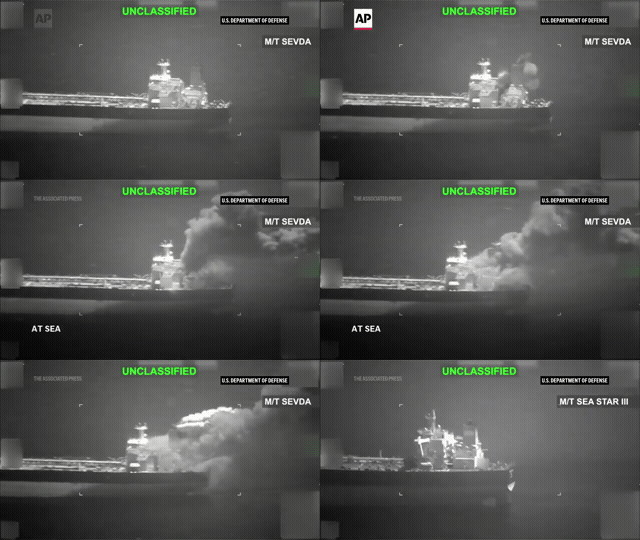
World
WASHINGTON — May 9, 2026 : The United States Central Command (CENTCOM) has released operational footage showing U.S. Navy aircraft disabling two Iranian-flagged oil tankers in the Gulf of Oman during ongoing enforcement of the U.S. naval blockade on Iranian ports. According to CENTCOM, the latest operation took place on May 8, when the tankers M/T Sea Star III and M/T Sevda attempted to transit toward Iranian ports through the Strait of Hormuz region. U.S. officials stated that both vessels failed to comply with repeated warnings issued by American forces enforcing blockade measures. CENTCOM said U.S. Navy F/A-18 Super Hornets launched from the aircraft carrier USS George H.W. Bush carried out precision strikes targeting the smokestacks of both tankers, disabling the vessels before they could continue their transit. Officials confirmed that both ships were unladen at the time of the operation. Earlier Interdiction of M/T Hasna The latest strikes followed a similar enforcement action conducted earlier in the week. On May 6, U.S. forces disabled the Iranian-flagged tanker M/T Hasna in the Gulf of Oman after the vessel reportedly ignored repeated warnings while attempting to sail toward an Iranian port. According to CENTCOM, an F/A-18 Super Hornet launched from the USS Abraham Lincoln fired several 20mm cannon rounds at the tanker’s rudder, disabling its steering system and stopping the vessel from continuing its transit. U.S. officials stated that M/T Hasna was also unladen. CENTCOM confirmed that all three vessels — Hasna, Sea Star III, and Sevda — are no longer transiting toward Iran. Ongoing U.S. Naval Blockade The operations form part of the broader U.S. naval blockade launched on April 13, 2026, targeting vessels entering or departing Iranian ports and coastal areas. According to U.S. military officials, the operation currently involves more than 15,000 personnel, approximately 20 warships, and around 200 aircraft operating across the region. CENTCOM stated that more than 70 tankers carrying over 166 million barrels of Iranian oil have been prevented from movement since the blockade began. U.S. officials estimate the affected shipments have a combined value exceeding $13 billion. Adm. Brad Cooper, commander of U.S. Central Command, said U.S. forces remain committed to full enforcement of the blockade and praised the precision and operational execution of the naval aviators involved in the missions. Regional Maritime Tensions The latest incidents come amid continuing tensions surrounding maritime security in the Strait of Hormuz and the Gulf of Oman. U.S. officials have described the blockade as part of broader efforts to restrict maritime traffic linked to Iranian ports following months of attacks on commercial shipping in the region. According to U.S. authorities, Iranian forces previously used explosive drone boats, ballistic missiles, and sea mines in attacks targeting international commercial vessels operating near the Strait of Hormuz. Among the incidents cited by U.S. officials were a projectile strike on the oil tanker Skylight, which reportedly killed two Indian crew members and injured three others, and a drone boat attack on the MKD VYOM that caused a major engine room fire resulting in one fatality. U.S. officials also referenced the sinking of a tugboat sent to assist the damaged vessel Safeen Prestige, leaving several crew members missing. CENTCOM stated that the latest interdictions are part of continued enforcement measures aimed at preventing Iranian-linked maritime traffic from reaching Iranian ports during the blockade period.
Read More → Posted on 2026-05-09 17:50:35
World
BRUSSELS — May 9, 2026 : Belgium has established a phased schedule to transfer its entire fleet of 53 F-16 fighter jets to Ukraine by the end of 2029, according to information confirmed by the office of Belgian Defense Minister Theo Francken. The transfer plan is directly tied to the gradual introduction of new Lockheed Martin F-35A Lightning II fighters into Belgian Air Force service. Under the current roadmap, Belgium plans to deliver seven F-16s in 2026, five aircraft in 2027, 14 in 2028, and the remaining 27 aircraft in 2029. Four of the aircraft scheduled for the first transfer phase have already been withdrawn from operational use and will instead be used as training platforms for Ukrainian maintenance personnel and technicians. Belgian defense officials stated that the timeline could still be adjusted depending on the operational requirements of the Belgian Air Force and Belgium’s commitments within NATO. Although Belgium previously committed to supplying F-16s under multinational agreements signed in 2024, no operational aircraft have yet been transferred to Ukraine. Belgium continues to participate in the international F-16 training program for Ukrainian personnel. In March 2024, the Belgian Air Force deployed two F-16BM two-seat trainer aircraft to Denmark to support pilot instruction efforts. Belgian instructors are also currently training Ukrainian pilots at the Fetești Air Base training center in Romania. F-35 Deliveries Driving Transfer Schedule The pace of the F-16 handover remains dependent on the delivery of Belgium’s replacement F-35 fighters. Belgium signed a contract in 2018 for 34 F-35A aircraft, with original deliveries expected to begin in 2023. However, the Belgian Air Force only received its first four aircraft in October 2025. The jets are currently based at Florennes Air Base. In February 2026, Belgium confirmed plans to expand the procurement by ordering an additional 11 F-35A aircraft, increasing the planned fleet to 45 fighters. The additional acquisition, valued at approximately €1.67 billion, includes a requirement for final assembly and testing to take place at the Italian FACO facility in Cameri. Defense analysts have noted that production rates at the Cameri facility are slower than those of U.S.-based assembly lines, which could further affect the operational transition schedule and delay the retirement of Belgium’s remaining F-16 fleet. U.S.-Supported Maintenance Framework To support the long-term operation of the aircraft transferred to Ukraine, the United States Department of Defense awarded a $235.4 million maintenance contract in January 2026 to Belgian aerospace company Sabena Aerospace Engineering. The agreement covers medium-level and depot-level maintenance, engine servicing, logistics management, and material support for Ukrainian-operated F-16s through January 2029. Maintenance work will be conducted at the company’s facility in Woluwe-Saint-Lambert. Continued Modernization of the F-16 Fleet Despite the planned retirement of the aircraft, Belgium continues testing new capabilities on its F-16 fleet. The Belgian Air Force has recently evaluated the integration of 70mm FZ275 Laser Guided Rockets developed by Forges de Zeebrugge and Thales on F-16AM fighters. The trials focused on improving counter-unmanned aerial systems capabilities by allowing aircraft to engage smaller drones with lower-cost precision-guided rockets instead of using more expensive missiles such as the AIM-120 AMRAAM. Belgium first received General Dynamics F-16 Fighting Falcon aircraft in 1979 as part of a joint NATO procurement program, with official service entry beginning in 1980. The country acquired approximately 160 aircraft in multiple variants, many of which were assembled domestically by the Belgian aerospace company SABCA. During the 1990s, the fleet underwent extensive Mid-Life Update modernization programs that upgraded avionics, radar systems, and weapons integration, extending the operational lifespan of the aircraft for more than four decades.
Read More → Posted on 2026-05-09 17:47:03Search
Top Trending in 24 Hours
-
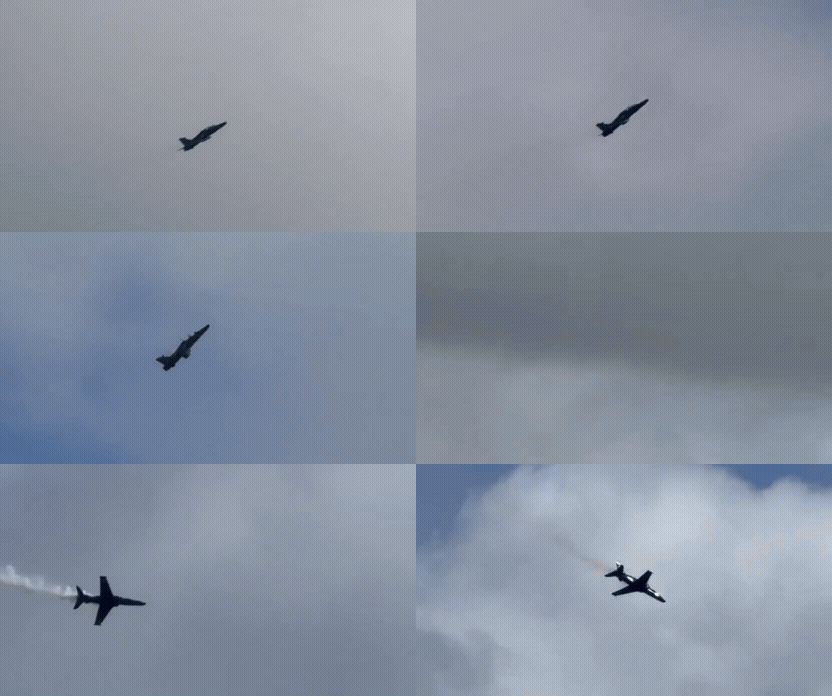 UK Air Force Hawk T2 Trainer Aircraft Crashes Near Valley After Takeoff, Both Pilots Eject Safely
-
 U.S. Space Force Awards Impulse Space $28 Million Contract for 2029 Orbital Surveillance Mission
-
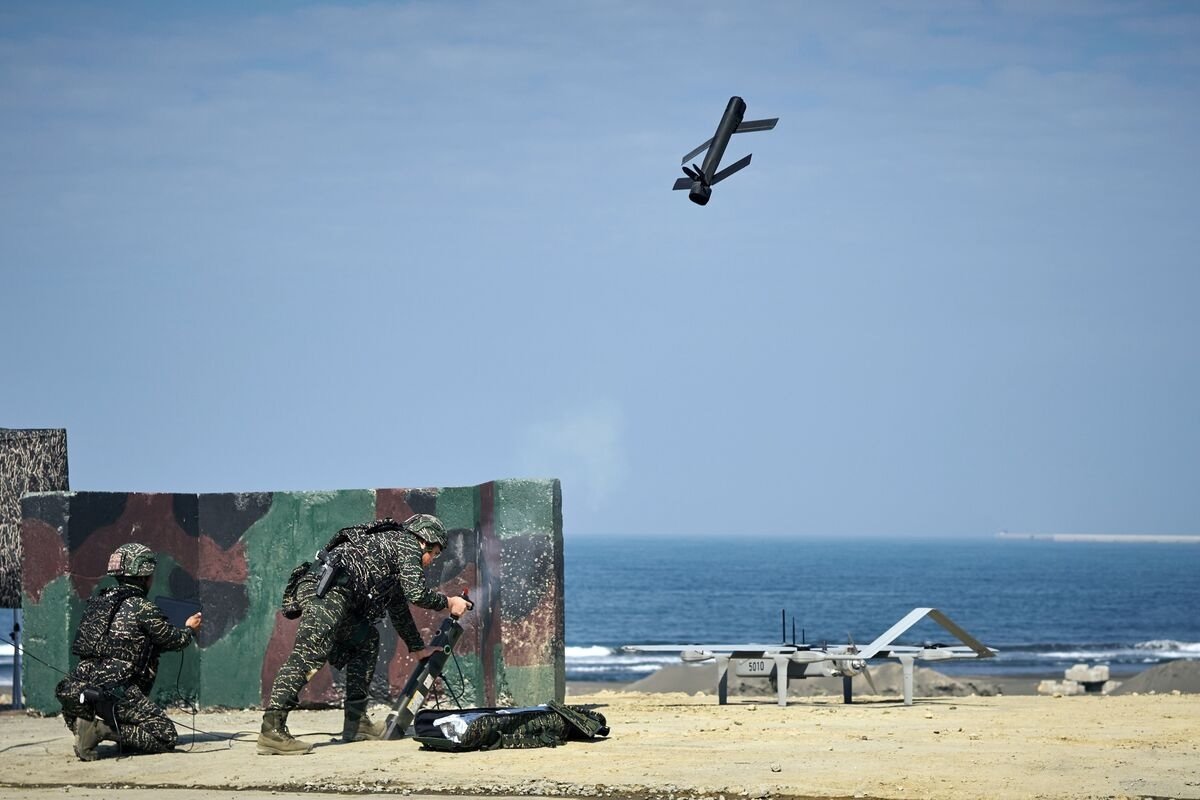 Taiwan Integrates Attack Drones Into Three-Service Live-Fire Exercise at Jiupeng for First Time
-
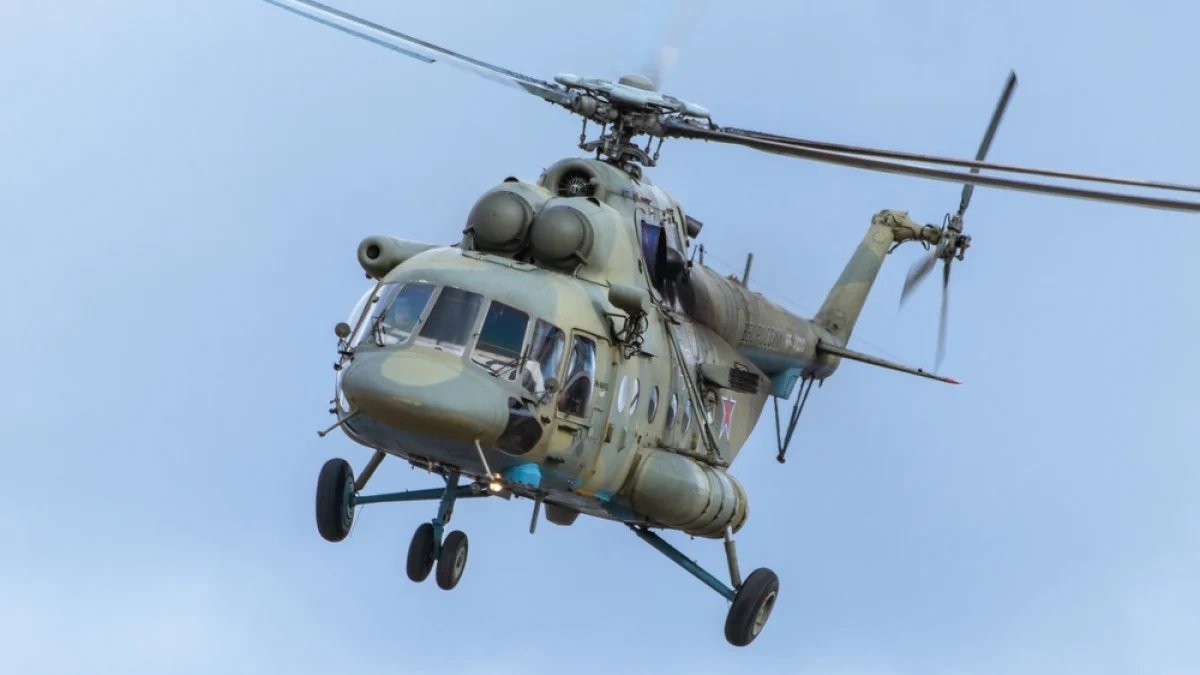 Russian Mi-8 Military Helicopter Crosses Into Polish Airspace for 42 Seconds Near Braniewo
-
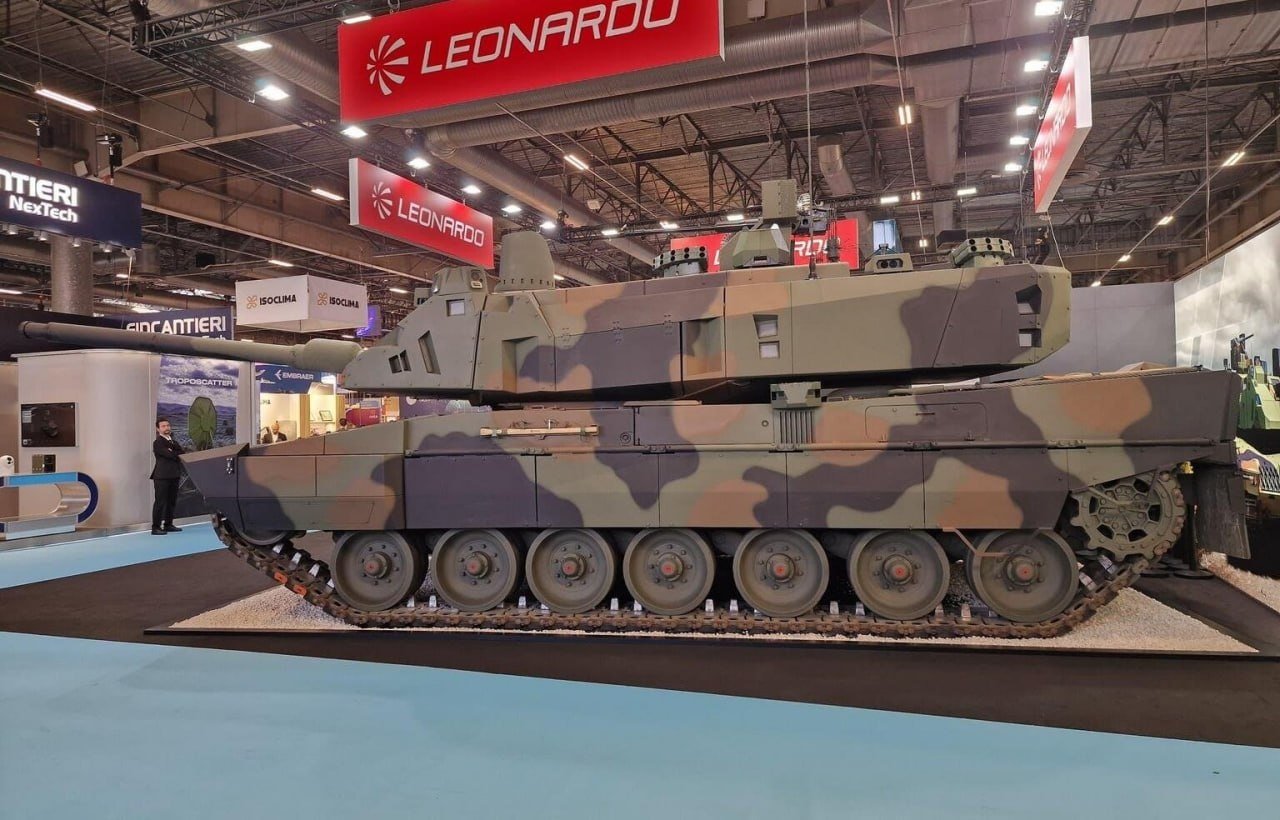 Italy Allocates Up to €5.14 Billion for Procurement of 132 New Main Battle Tanks
-
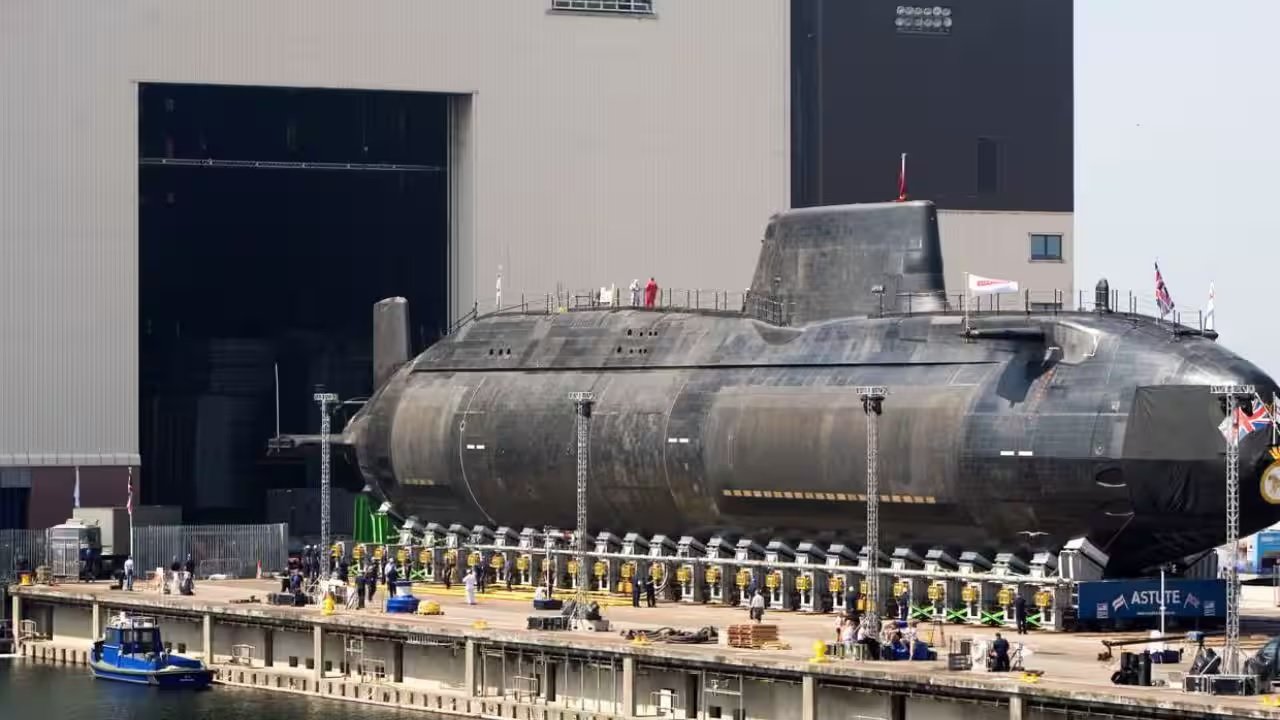 UK Announces £6 Billion Investment to Double Nuclear Submarine Production Rate
-
 Roketsan KARAOK Anti-Tank Missile Successfully Hits Aerial Target for First Time
-
 Dutch Firm DeltaQuad Launches Evo-LE VTOL UAV With Up to Eight-Hour Endurance
Top Trending in 4 Days
-
 U.S. Army Awards $10.64 Million Contract to Ukrainian Drone Maker Skyeton for Raybird Systems
-
 India’s xTerra Robotics Launches Indigenous DHAV-Hy Wheeled-Legged Quadruped for Industrial Inspection
-
 U.S. Space Force Seeks Rapid-Response Satellites for Close-Range Orbital Inspections
-
 North Korea Fires Short-Range Ballistic Missile Toward Sea of Japan After Freedom Edge 26
-
 U.S. Government Seizes Almasirah.net, Houthi-Linked News Website
-
 Ukraine Reports First Use of Fire Point’s FP-7 Tactical Ballistic Missile inMoscow-Region Strikes on Oil Refinery
-
 US Navy Submarine Director Outlines Four-Pillar Plan to Raise Build Rates
-
 U.S. Delivers First CH-47F Chinook to Egypt Under 12-Helicopter Deal