Washington — April 11, 2026 : The United States is continuing to expand its military presence across the Middle East as of April 11, 2026, deploying additional aircraft, ground forces, and naval assets into the U.S. Central Command (CENTCOM) area of responsibility. The movements are taking place while a ceasefire between the United States and Iran remains in effect and as diplomatic negotiations are underway in Islamabad, Pakistan.
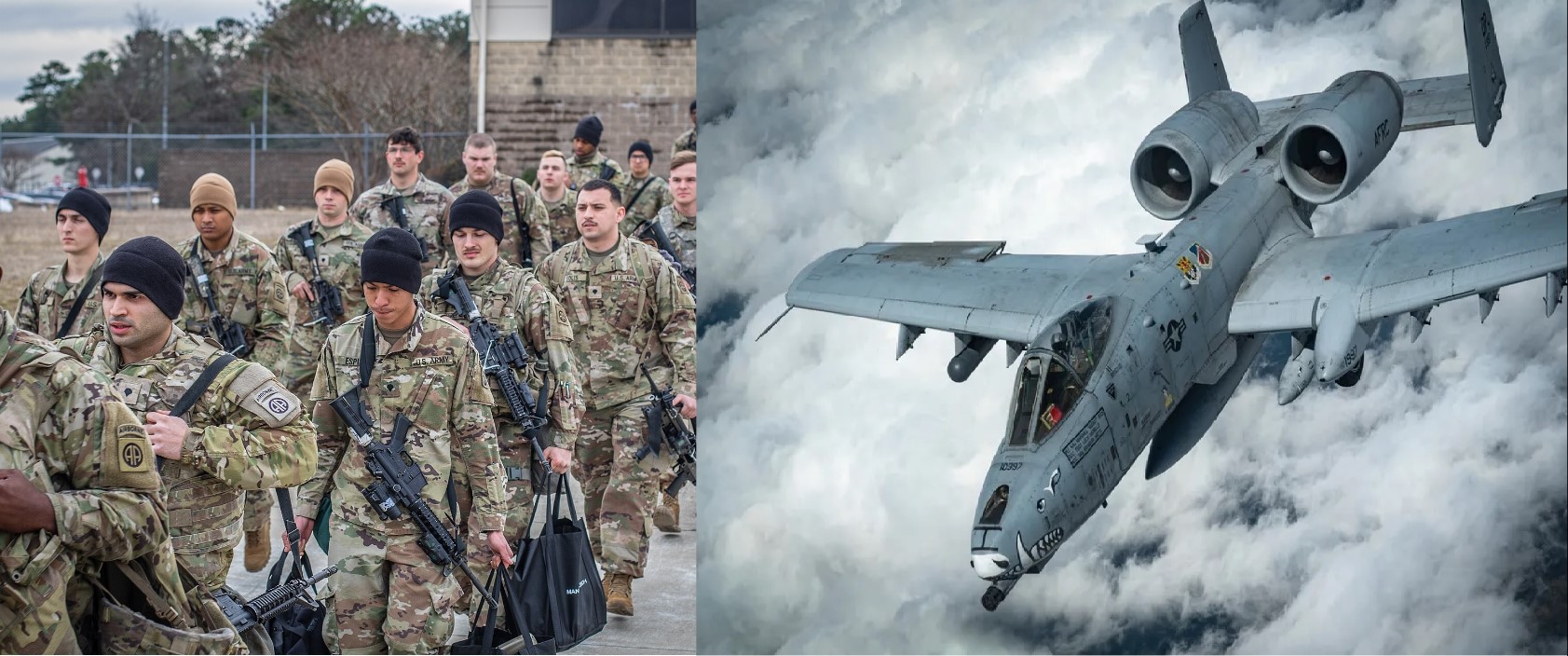
According to U.S. officials cited by The Wall Street Journal, additional attack aircraft—assessed to include A-10 Thunderbolt II platforms—have recently landed at locations within the region. These aircraft are being integrated into ongoing operations, adding to the existing airpower already deployed in theater.
Ground Force Reinforcements and Rotational Movements
In parallel with the aviation deployments, up to 2,000 soldiers from the U.S. Army’s 82nd Airborne Division are expected to arrive in the coming days. The deployment includes elements of the division headquarters, enabling units, and brigade combat teams trained for rapid deployment missions and the securing of key operational objectives.
Some personnel from the 82nd Airborne Division have already begun arriving as part of a scheduled rotation and force surge. The division is structured to conduct immediate-response operations, including airfield seizures and contingency missions requiring rapid insertion.
In addition to Army forces, thousands of U.S. sailors and Marines are scheduled to deploy to the region, further reinforcing joint operational capabilities across land and maritime domains.
Naval Strike and Amphibious Groups Transit to Region
Significant naval reinforcements are also underway, with multiple U.S. Navy and Marine Corps assets currently en route to the Middle East. The carrier strike group centered on the USS George H.W. Bush, which departed Naval Station Norfolk on March 31, 2026, is transiting toward CENTCOM waters. The group includes more than 6,000 sailors and is accompanied by guided-missile destroyers and support vessels.
Separately, the USS Boxer Amphibious Ready Group, carrying the 11th Marine Expeditionary Unit (MEU), is also moving toward the region. The MEU consists of approximately 2,500 Marines and provides amphibious assault, expeditionary, and crisis response capabilities.
Due to transit distances, both the carrier strike group and the amphibious ready group are expected to take more than one week to arrive in the operational theater.
Expansion of A-10 Fleet and Operational Role
The recent arrival of additional A-10 Thunderbolt II aircraft contributes to an expanded fleet presence in the region. The A-10 platform, designed for close air support, has been employed in recent operations targeting Iranian fast-attack vessels in the Strait of Hormuz.
In addition to maritime missions, the aircraft have supported ground operations, including engagements involving aligned militia groups operating in Iraq. The platform’s operational flexibility allows it to be used across both land and maritime environments within the CENTCOM area.
Pentagon Position and Operational Context
The U.S. Department of Defense has not issued a public statement detailing the specific operational purpose of the latest deployments. However, officials have previously characterized similar force adjustments as measures intended to maintain operational flexibility and ensure readiness during ongoing regional activities.
The current movements align with earlier announcements regarding reinforcements to support U.S. operations in the Middle East. No changes to the existing ceasefire terms have been announced in connection with these deployments.
Diplomatic Engagements in Islamabad
The military buildup is occurring alongside diplomatic efforts hosted by Pakistan in Islamabad. U.S. negotiators, led by Vice President JD Vance and including special envoy Steve Witkoff and Jared Kushner, have arrived in Pakistan for discussions with Iranian representatives.
The talks are aimed at establishing a longer-term resolution following the ceasefire. Pakistan is serving as the host and mediator for the negotiations, which are ongoing as of April 11, 2026.
Parallel Military and Diplomatic Tracks
The simultaneous continuation of military deployments and diplomatic negotiations reflects a dual-track approach. While discussions between U.S. and Iranian delegations proceed in Islamabad, U.S. forces continue to reposition and reinforce capabilities across the Middle East.
The Department of Defense has not provided additional details regarding basing locations, exact timelines for all incoming units, or further operational planning related to the deployments.
——— End of Article ———