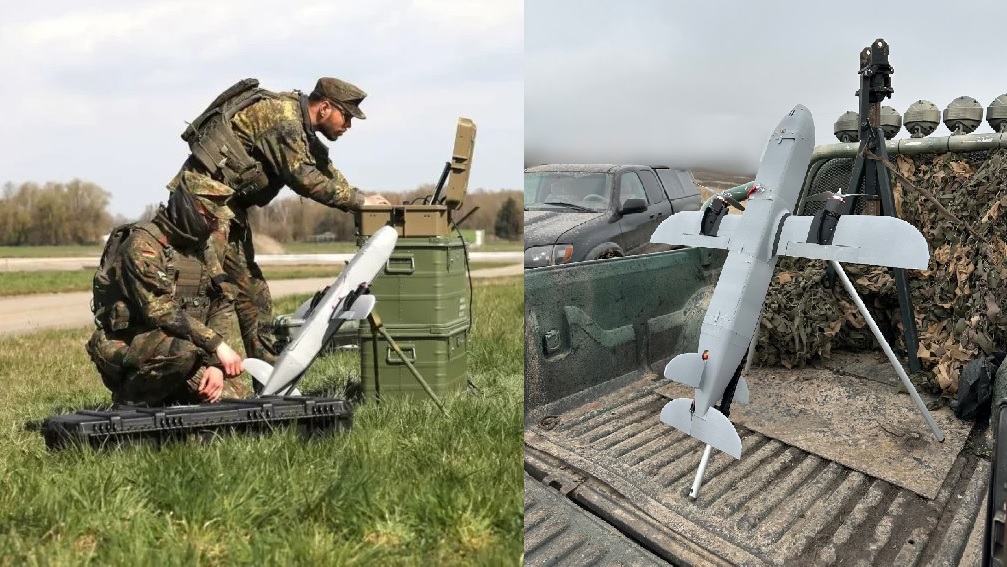
BERLIN, — April 11, 2026 : The German government has awarded a defense procurement contract to TYTAN Technologies, a Munich-based startup, for the supply of more than 1,000 METIS Interceptor drones to the National Guard of Ukraine. The program is fully funded by Berlin as part of ongoing military assistance to Ukraine, though officials have not disclosed the total contract value or delivery timeline.
The agreement is intended to strengthen Ukraine’s layered air defense network against persistent threats from unmanned aerial systems, particularly mass deployments of loitering munitions and kamikaze drones such as the Iranian-designed Shahed series.
METIS Interceptor Capabilities and Specifications
The METIS Interceptor is a high-speed counter-unmanned aerial system (C-UAS) designed to engage NATO Class II drone threats. It has undergone testing in Ukrainian operational environments since late 2024, providing real-world validation under combat conditions.
According to system specifications, the METIS has an operational range of up to 45 kilometers and can reach a flight ceiling of approximately 6 kilometers. The interceptor is capable of achieving a maximum speed of 400 kilometers per hour and operates with a maximum takeoff weight of around 6 kilograms.
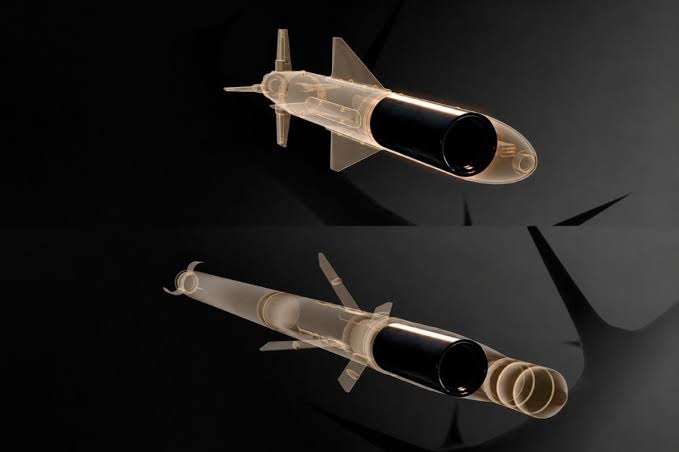
The system supports two engagement modes. In its primary configuration, it employs a kinetic “hit-to-kill” mechanism, destroying targets through direct high-speed collision. Alternatively, it can be equipped with a 1-kilogram high-explosive warhead designed to neutralize more robust or reinforced aerial threats.
Earlier development variants of the METIS platform demonstrated speeds exceeding 250 kilometers per hour, operational ranges beyond 15 kilometers, and altitudes up to 5,000 meters. Testing conducted under Ukraine’s Brave1 defense innovation initiative indicated performance improvements reaching approximately 300 kilometers per hour and a range of 20 kilometers prior to the latest enhancements.
Autonomous Systems and Operational Integration
The METIS system incorporates onboard artificial intelligence to enable real-time detection, tracking, classification, and engagement of aerial targets. The platform uses computer vision technologies, including thermal imaging, to support operations in varied conditions.
It is designed for multi-drone deployment, allowing a single human operator to supervise and control multiple interceptors simultaneously while maintaining authority over the final engagement decision within the kill chain.
The system features a modular, open architecture that allows integration with existing radar systems, sensor suites, and command-and-control networks. This enables interoperability with broader air defense layers and facilitates deployment across different operational environments.
Additionally, the interceptor is engineered for cost-effective mass production and deployment. Its design incorporates additive manufacturing techniques, including a largely 3D-printed airframe, enabling rapid scaling, simplified logistics, and efficient replacement of components.
Production, Industrial Base, and Partnerships
TYTAN Technologies, founded in 2023 and headquartered in Munich, maintains production facilities in Germany and has expanded its manufacturing footprint with a new site in Bavaria, which became operational in January 2026. This facility supports development, system integration, and scaled production of interceptor systems.
The company aims to achieve manufacturing output of up to 3,000 interceptor drones per month by the end of 2026. In parallel, TYTAN has established operational and testing capabilities within Ukraine to support frontline deployment and iterative system improvements.
The firm has secured prior procurement agreements with Ukrainian forces for thousands of METIS units and also holds a multi-million euro contract with the German armed forces for base protection systems.
TYTAN Technologies has formed industrial partnerships with German defense companies, including HENSOLDT for sensor integration and DEUTZ for production scaling. These collaborations are intended to support system performance optimization and supply chain expansion.
Funding and Strategic Context
In February 2026, TYTAN Technologies raised €30 million in a Series A funding round led by Armira and the NATO Innovation Fund, bringing its total funding to approximately €46 million. The investment is being used to expand manufacturing capacity across Germany, Ukraine, and allied markets, as well as to advance development of AI-based systems for integration into broader air-defense architectures.
The METIS Interceptor is designed to address the cost imbalance in modern air defense operations, where relatively expensive missile systems are often used to intercept low-cost drones. By enabling high-volume, lower-cost interception, the system supports sustained defense against large-scale unmanned aerial threats.
Deployment Role and Support Structure
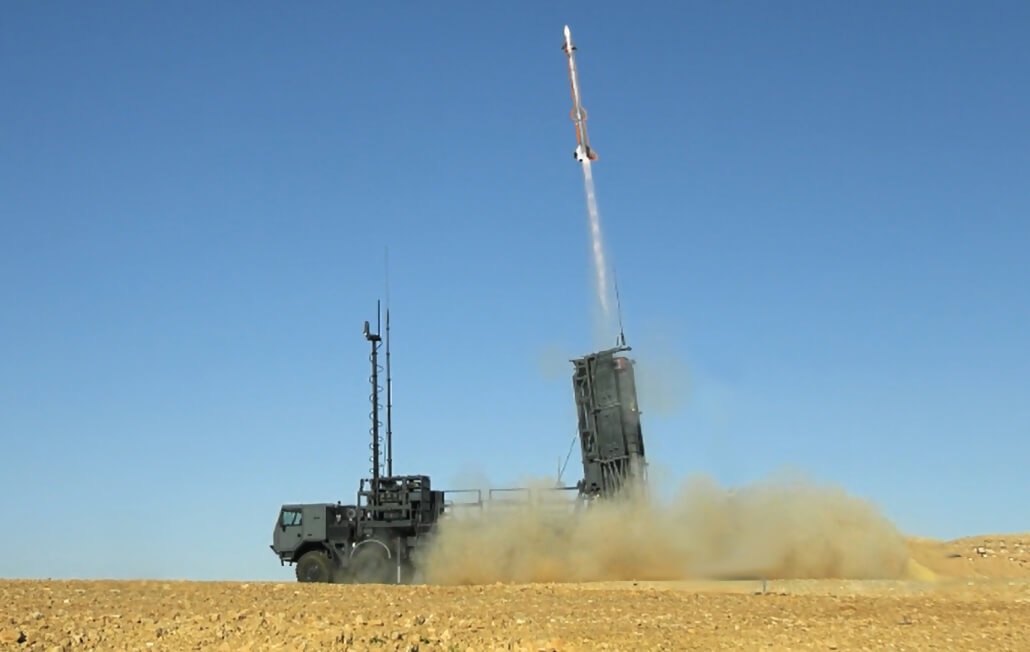
The METIS system forms part of a layered counter-drone strategy aimed at protecting critical infrastructure and military assets. The drones can be deployed from modular container-based launch systems, which can be mounted on armored vehicles or used in static defensive configurations.
The contract includes logistics and support elements aligned with the operational requirements of the National Guard of Ukraine. While specific delivery schedules remain undisclosed, the scale of the procurement indicates a focus on rapid deployment and sustained operational availability.
Germany’s decision to fund and supply over 1,000 METIS Interceptor drones reflects continued European efforts to enhance Ukraine’s defensive capabilities through scalable and technologically advanced systems tailored to evolving battlefield conditions.
——— End of Article ———