
World
WASHINGTON / NEW YORK — May 14, 2026 : The United States has approved a new round of artificial intelligence semiconductor sales to Chinese technology companies, marking a significant easing of export restrictions that had limited China’s access to advanced U.S.-made chips for several years. According to reports citing industry insiders, the U.S. Department of Commerce has authorised approximately 10 major Chinese companies to purchase NVIDIA H200 artificial intelligence processors under a controlled licensing framework. The approved firms reportedly include Alibaba, Tencent, ByteDance and JD.com. The move comes amid reports that Washington is preparing to further ease or remove several remaining semiconductor trade restrictions affecting exports to China. Under the current licensing arrangements, each approved Chinese customer is permitted to purchase up to 75,000 NVIDIA H200 chips. The processors can be supplied directly by NVIDIA or through authorised hardware and distribution partners, including Lenovo and Foxconn. The approvals build on policy adjustments first announced in December 2025 by U.S. President Donald Trump. At the time, Trump stated that exports of NVIDIA’s H200 processors would be allowed under a regulated framework that included a 25 percent fee on such sales. The U.S. Department of Commerce formally implemented the policy in January 2026, allowing case-by-case licensing for the H200 and similar processors produced by companies such as AMD. Under the export framework, NVIDIA must certify that sufficient chip supplies remain available for the U.S. domestic market before shipments are approved. Chinese buyers are also required to demonstrate adequate security procedures and provide assurances that the processors will not be used for military or surveillance purposes. In addition, exports to China are capped at no more than 50 percent of the volume sold within the United States, while shipments remain subject to third-party technical verification. The revised policy applies specifically to H200-class processors and other compliant AI chips designed to remain within U.S. export performance thresholds. More advanced semiconductors, including certain Blackwell-series processors, continue to face stricter export controls and licensing requirements. The policy shift coincides with ongoing diplomatic engagements between Washington and Beijing. NVIDIA Chief Executive Officer Jensen Huang recently joined a U.S. delegation accompanying President Trump to Beijing for meetings with Chinese President Xi Jinping aimed at discussing trade and technology cooperation. Before U.S. export controls were imposed, China accounted for approximately 20 to 25 percent of NVIDIA’s total revenue, making it one of the company’s largest international markets after the United States. Since the restrictions were introduced, NVIDIA has reported near-zero AI chip revenue from China in several recent quarters. Following reports of the approvals and potential additional easing measures, NVIDIA shares rose sharply in trading. Investors viewed the development as a possible pathway for the company to recover part of the revenue lost due to sanctions and regain market share in China’s expanding AI infrastructure sector. Industry analysts estimate that renewed access to Chinese customers could restore several billion dollars in annual revenue for NVIDIA if demand materialises within existing licensing and volume limits. The company has developed export-compliant processors, including the H20 and H200, specifically to meet U.S. regulatory thresholds while continuing sales to overseas markets. The easing of restrictions also reflects broader changes in the global semiconductor market. During the sanctions period, China accelerated efforts to expand domestic semiconductor production and reduce reliance on foreign suppliers. Chinese manufacturers supported by state-backed industrial policies have increased their share of the domestic AI server market, with local suppliers now estimated to hold roughly 41 percent of the sector. Supporters of the revised export policy argue that controlled semiconductor exports help maintain U.S. technological leadership while supporting domestic chipmakers and generating additional government revenue through licensing fees. Critics, including lawmakers from both major U.S. political parties, have continued to raise concerns that advanced AI processors could indirectly support Chinese military or strategic technological development despite end-use restrictions and verification measures. The latest measures do not represent a complete removal of all semiconductor export controls. Advanced AI accelerators exceeding defined performance thresholds remain restricted, and U.S. authorities continue to maintain oversight mechanisms intended to prevent diversion or unauthorised use of exported hardware. As of 14 May 2026, NVIDIA had not issued an official public statement regarding the latest approvals or reports of a broader rollback of semiconductor trade restrictions.
Read More → Posted on 2026-05-14 15:46:33
World
BOSTON — May 14, 2026 :The U.S. Army has selected the Rogue 1 loitering munition system developed by Teledyne FLIR Defense for the Low Altitude Stalking and Strike Ordnance (LASSO) programme, the company announced on 13 May 2026. Under the agreement, Teledyne FLIR Defense will deliver up to 130 Rogue 1 systems and related components to the Army for testing and evaluation beginning in summer 2027. The contract carries a two-year performance period and supports the Army’s ongoing effort to equip Infantry Brigade Combat Teams with man-portable precision strike systems capable of operating beyond line of sight. The LASSO programme is intended to provide dismounted infantry units with a ground-launched uncrewed aerial system carrying a lethal payload for long-range precision strikes against armoured vehicles, soft-skinned targets and enemy personnel while minimising collateral damage in complex operational environments. Man-Portable Precision Strike System Rogue 1 is a vertical takeoff and landing loitering munition designed for rapid deployment without requiring a dedicated launcher or vehicle transport. The complete system weighs approximately 10 pounds (4.5 kilograms) and is carried in a single launch tube, enabling operation by a single soldier. The electric-powered platform has an endurance of more than 30 minutes, burst speeds exceeding 70 mph (113 km/h) and an operational range of over 12 miles (20 kilometres). The system was developed for use in communication- and GPS-denied environments and incorporates hardened encrypted datalinks, image-matching navigation technology and alternative visual and thermal navigation modes. The drone is equipped with electro-optical sensors and FLIR Boson 640+ thermal imaging cameras for day and night reconnaissance missions. According to the company, the gimballed payload integrates the targeting sensors directly with the warhead system to improve strike accuracy against moving and stationary targets. Modular Payloads and Recoverable Design Rogue 1 supports multiple mission-specific payloads, including an Explosively Formed Penetrator warhead for engaging heavily armoured vehicles, a directional blast-fragmentation payload for soft targets and inert payloads for training operations. A notable feature of the platform is its recoverability. The munition incorporates a mechanical interrupt fuzing system that allows operators to safely disengage and recover the drone if a mission is aborted or operational conditions change. The warhead can be defused in flight, allowing the system to be reused in future missions. Integration With Black Hornet Nano-Drone Dr. JihFen Lei, president of Teledyne FLIR Defense and senior vice president of Teledyne’s Defense and Aerospace Group, stated that Rogue 1 was developed to meet the Army’s requirements for precision and autonomous strike capability. Lei added that the system can be integrated with the company’s Black Hornet nano-drone in a combined reconnaissance and strike configuration. In this arrangement, the miniature reconnaissance drone identifies and tracks targets before Rogue 1 is launched to conduct the attack. Expanding U.S. Military Adoption The Army’s LASSO selection represents the third major U.S. military adoption of the Rogue 1 platform since its launch in spring 2024. The loitering munition has already been fielded by U.S. Special Operations Command under the Ground Organic Precision Strike Systems programme and by the U.S. Marine Corps through the Organic Precision Fires-Light programme. The contract further expands Teledyne Technologies Incorporated presence in the defence unmanned systems sector amid growing demand for portable precision strike capabilities across U.S. military modernisation programmes.
Read More → Posted on 2026-05-14 15:22:35
World
KYIV — May 14, 2026 : Ukrainian interceptor drone crews operating the STING platform destroyed more than 300 Russian aerial targets during a single day-and-night combat period on May 13–14, 2026, according to Ukrainian drone manufacturer Wild Hornets. The interceptions were recorded during what Ukrainian military officials described as the largest Russian drone assault since the start of the full-scale war. Wild Hornets announced on May 14 that three STING interceptor units accounted for more than 200 confirmed aerial kills during the operation. According to the company, one crew alone achieved 120 interceptions in a single operational cycle, breaking the single-crew interception record twice within the same combat period. The manufacturer added that additional after-action reports from crews were still being processed and that the final number of destroyed targets could rise further. The engagements took place during a sustained Russian aerial campaign lasting approximately 36 hours. Ukraine’s Air Force reported that Russian forces launched a total of 1,567 strike drones against Ukrainian territory, including Shahed, Gerbera, Italmas and Parody decoy variants. The attack package also included 56 missiles, among them Kh-101 cruise missiles, ballistic missiles and Kinzhal aeroballistic missiles. According to Ukrainian military data, air defence forces intercepted 1,362 drones and 41 missiles during the assault. Ukrainian defences relied on a layered network that combined aviation assets, surface-to-air missile systems, electronic warfare units, mobile fire groups and specialized interceptor drones. Wild Hornets stated that the operational results highlighted the growing importance of drone-on-drone interception within Ukraine’s air defence architecture. The company noted that interceptor drones provide a lower-cost and sustainable alternative to using expensive surface-to-air missile systems against large-scale drone attacks. The STING interceptor was developed by the Wild Hornets volunteer group specifically to counter Iranian-designed Shahed strike drones, which Russia regularly employs in mass attacks against Ukrainian cities and infrastructure. The platform uses a bullet-shaped aerodynamic design optimized for high-speed aerial interception missions. According to the manufacturer, the STING exceeds speeds of 340 kilometres per hour and can operate at altitudes of up to three kilometres. The interceptor has an engagement range of approximately 25 kilometres and reportedly achieves a combat hit rate of between 80 and 90 percent in operational use. Unit cost estimates range from approximately $2,100 to $2,500 per drone. A key element of the system is its integration with the Hornet Vision Ctrl control network. The relay-based digital architecture provides high-definition video transmission and low-latency remote control over extended distances. Wild Hornets stated that recent serial deployment of the system allows operators to control interceptor drones from distances of up to 2,000 kilometres away from combat zones. Earlier in April 2026, a pilot from the Ukrainian BULAVA unit identified as Roman “Hulk” reportedly used the Hornet Vision Ctrl system to destroy two Shahed drones while operating from a control point located 500 kilometres away. Alongside STING operations, Ukrainian unmanned air defence units also reported additional developments involving the P1-SUN interceptor system. During the same reporting period, Ukrainian crews successfully destroyed Russian Gerbera drones equipped with onboard FPV drones for the first time. The operation involved personnel from the 58th Separate Motorized Infantry Brigade and the 302nd Anti-Aircraft Missile Regiment, with five aerial targets neutralized in a single day. The expanded use of systems such as STING and P1-SUN reflects Ukraine’s increasing reliance on specialized remotely operated interceptor platforms designed to counter high-volume aerial threats while reducing risks to air defence personnel and limiting expenditure on conventional missile interceptors.
Read More → Posted on 2026-05-14 14:39:40
World
KYIV, Ukraine — May 14, 2026 : Ukrainian defence technology company Fire Point has unveiled additional details regarding “Project Freya,” a proposed pan-European integrated air and missile defence system designed to counter ballistic missile threats through a combination of Ukrainian interceptor technology and NATO-compatible European radar and command infrastructure. The project was outlined by Fire Point co-owner and chief designer Denys Shtilerman, who described the system as an open-architecture network capable of integrating with existing European air defence assets while offering a lower-cost alternative to current Western missile defence systems. FP-7.x Interceptor Forms Core of Freya System At the centre of the project is the FP-7.x interceptor missile, developed from Fire Point’s earlier FP-7 tactical ballistic missile program. The original FP-7 was designed as a short-range surface-to-surface missile with a strike range of approximately 200–300 kilometres, carrying a 150-kilogram warhead and achieving a reported circular error probable of 14 metres. According to Fire Point, the missile has now been adapted into an interceptor platform capable of engaging incoming ballistic threats. The company stated that the FP-7.x is constructed primarily from advanced carbon-fibre composite materials, reducing both radar visibility and manufacturing costs. Fire Point estimates the interceptor’s cost per engagement at under $1 million, substantially below the cost of comparable Western interceptor systems such as the Patriot PAC-3. The interceptor underwent a successful test in February 2026. Specifications released by the company show the FP-7.x measures 7.25 metres in length, with an outer diameter of 1.15 metres and a fuselage diameter of 0.53 metres. The missile uses a domestically produced solid-fuel motor and is launched through a hot-launch system from a lightweight mobile launcher developed by Fire Point. During flight, the interceptor can reportedly achieve speeds between 1,500 and 2,000 metres per second. Fire Point compared this to the Russian Iskander-M ballistic missile, which reaches approximately 2,100 metres per second during the final stage of its active trajectory. The company also stated that portions of the interceptor draw from technologies associated with the Soviet-era 48N6 missile used in S-300 and S-400 air defence systems, while incorporating redesigned electronics, simplified structures, and modern composite materials. Guidance System and European Radar Integration For terminal guidance, the FP-7.x is equipped with an Image Infra-Red (IIR) homing system. Fire Point additionally confirmed that, following an agreement signed in April 2026, the interceptor will also integrate semi-active seeker heads manufactured by German defence company Diehl Defence. The Freya system is designed to operate with multiple European radar platforms. Proposed early warning radar options include the Swedish SAAB Giraffe 8A and Giraffe 4A systems, France’s Thales Ground Master 400, and Germany’s Hensoldt TRML-4D. For target illumination and fire-control guidance, Fire Point plans to integrate either Denmark’s Weibel GFTR-2100/48 radar or Italy’s Leonardo KRONOS Land radar system. The command-and-control component of the project is based on the Kongsberg Fire Distribution Center developed by Norway’s Kongsberg. The centre incorporates Network Access Nodes modules and open-architecture software allowing integration of custom Ukrainian and European defence components. Link 16 Integration and NATO-Compatible Network A central element of the Freya project is integration with NATO’s Link 16 tactical data exchange protocol. Ukraine formally secured access to the network on 29 May 2025 through a licence agreement for NATO’s non-commercial CRC System Interface software. According to Fire Point, the Link 16 network enables real-time exchange of tactical information between land, air, and maritime forces while supporting secure communication and automated operational control. Within the Freya system, Link 16 provides radar connectivity through the ASTERIX protocol and supports a full-duplex communication channel for real-time course correction of the FP-7.x interceptor during flight operations. The system is also capable of transmitting weapons targeting data, equipment telemetry, voice communications, and battlefield coordination information between connected units. Ukraine’s operational-tactical situational awareness system “Delta” has already been integrated into the Link 16 network, enabling interoperability with NATO-compatible tactical communication infrastructure currently operating inside Ukraine. European Cooperation and Industrial Expansion Fire Point, founded in Kyiv in 2022, has expanded rapidly during the war and was recently valued by international investors at more than $2.5 billion. The company is currently cooperating with European missile manufacturer MBDA on further missile development linked to the Freya project. Ukraine and Germany have also agreed to deepen cooperation on ballistic missile interceptor production and accelerate programs focused on integration with European radar and digital communications systems. Additional international support has come from Norway, which allocated funding last year for the procurement of surface-to-air missiles intended for Ukrainian air defence systems operating from Soviet-era launch platforms. To support long-term missile production, Fire Point plans to establish a solid rocket fuel manufacturing facility in Denmark. The proposed plant will supply fuel for the FP-7.x interceptor and other Ukrainian missile systems. The Danish government previously approved temporary suspension of more than 20 laws and regulatory procedures to accelerate construction timelines for the facility and expand defence industrial production capacity. Project Freya represents one of the largest Ukrainian-led attempts to integrate domestic missile interceptor technology with a broader European missile defence architecture, combining Ukrainian missile production with NATO-compatible radar, communications, and comma
Read More → Posted on 2026-05-14 14:28:58
World
KYIV — May 14, 2026 : Ukraine has introduced a new package of sanctions aimed at companies supporting the supply chains of Russia’s missile manufacturing sector, focusing on firms that provide equipment, raw materials, electronics, and technical services used in the production of advanced missile systems, including the Iskander ballistic missile and S-400 air defence system. The measures were enacted through decrees signed by Ukrainian President Volodymyr Zelensky following decisions by Ukraine’s National Security and Defence Council. According to Presidential Commissioner for Sanctions Policy Vladyslav Vlasiuk, the sanctions are intended to disrupt the operational networks that sustain Russian missile production rather than targeting the primary manufacturers alone, many of which are already under extensive international restrictions. Vlasiuk stated that the sanctions package focuses on companies whose products and services are essential for the final assembly and continued production of Russian missile systems. He added that Ukraine plans to share the collected information with international partners in an effort to coordinate additional restrictive measures. The sanctions primarily target suppliers connected to three major Russian defence facilities: the JSC Moscow Machine-Building Plant Avangard, which manufactures missiles for the S-300 and S-400 air defence systems; the Federal State Enterprise Perm Powder Plant, responsible for producing gunpowder and solid rocket fuel; and the JSC Votkinsk Machine-Building Plant, the manufacturer of Iskander short-range ballistic missiles. Among the entities sanctioned is Unitest-Rentgen LLC, which supplied inspection and quality-control equipment used in missile component production at the Avangard plant. Ukrainian authorities also stated that the company previously cooperated with the Moscow Institute of Thermal Technology, the developer of Russia’s Topol-M, Yars, and Bulava strategic missile systems. Ukraine also imposed restrictions on A2 Group LLC, identified as a supplier of raw materials used in the production of gunpowder and rocket fuel for the Perm Powder Plant. Officials said these materials are critical for ammunition manufacturing and missile propulsion systems. Additional sanctions were introduced against RT-Komplektatsiya, a subsidiary of the sanctioned Russian state defence corporation Rostec, and Spetstekhnologiya. Ukrainian authorities accused both firms of assisting the Russian defence-industrial sector in circumventing existing international sanctions through the import of restricted electronics and specialised industrial equipment. The sanctions package also includes Inforion, an information technology company accused of developing secure data management and software systems for Russian law enforcement and state security agencies. Ukrainian officials said the latest measures reflect a broader strategy aimed at weakening Russia’s domestic defence manufacturing capability by targeting secondary suppliers and logistical support networks that enable missile production to continue despite existing international sanctions.
Read More → Posted on 2026-05-14 14:06:33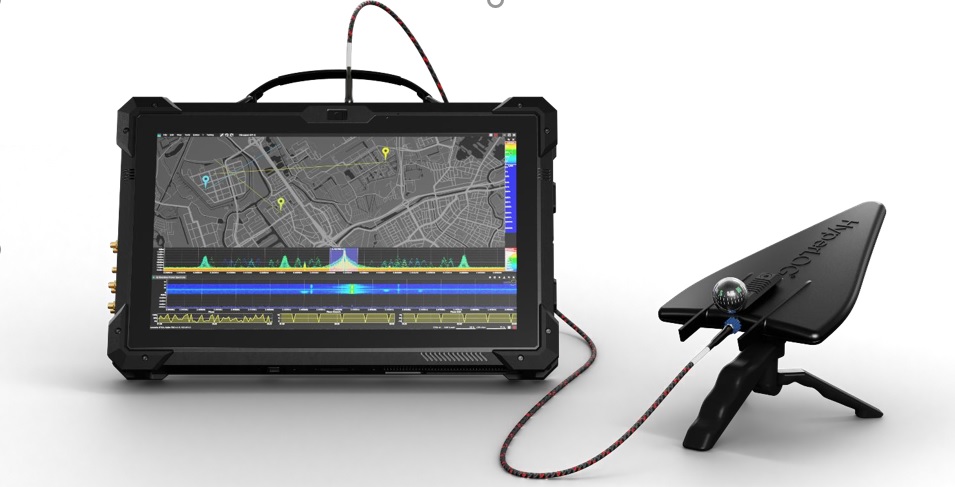
World
HELSINKI — May 14, 2026 : German electronic warfare technology company Aaronia AG will publicly unveil its new AARTOS DF2 direction-finding system during the AOC Europe 2026 electronic warfare symposium in Helsinki from May 19 to 21. The company will participate as a Gold Sponsor at Booth 4F21, where it plans to showcase its latest counter-unmanned aerial systems (C-UAS), spectrum monitoring, and electromagnetic situational awareness technologies. Organized by the Association of Old Crows, AOC Europe is one of the leading electronic warfare conferences in Europe, bringing together military officials, government agencies, defense industry companies, and academic specialists. The 2026 event is being held under the theme “Re-Arming Europe for Electromagnetic Spectrum Superiority,” reflecting the growing European focus on electronic warfare and counter-drone capabilities following the widespread battlefield use of Shahed-series drones and FPV attack drones in Ukraine. SPECTRAN V6 Mobile to Serve as Core Demonstration Platform Aaronia’s exhibition will center around the SPECTRAN V6 Mobile portable real-time spectrum analyzer, which serves as the hardware foundation for the company’s AARTOS drone detection and electronic warfare systems. The portable analyzer covers a frequency range from 9 kilohertz to 140 gigahertz, providing a 490 megahertz real-time bandwidth and a 3 terahertz-per-second sweep speed. These specifications are designed to allow operators to detect short-duration or transient radio-frequency emissions, including drone control links, radar activity, and jamming signals that may be missed by conventional spectrum analyzers. The system operates on Windows 11 and is powered by an AMD Ryzen 7 Core 8845HS processor with an AMD Radeon 780M GPU. The platform includes 64 gigabytes of DDR5 RAM and an integrated 2-terabyte M.2 NVMe storage drive, with additional expansion available through extra M.2 slots. Connectivity features include USB Power Delivery ports, HDMI output, dual 2.5-gigabit Ethernet interfaces, and an SD card reader, all protected by weather-resistant covers intended for field operations. The unit also incorporates a 15-inch display with 1,500 nits brightness for outdoor visibility and a hot-swappable battery system capable of delivering up to 4.5 hours of continuous runtime. The standard package includes the OmniLOG 30800 omnidirectional broadband antenna, designed for isotropic measurements between 300 megahertz and 8 gigahertz without requiring manual antenna alignment. RTSA-Suite PRO Enables Multi-Sensor Networking The SPECTRAN V6 platform is operated through Aaronia’s RTSA-Suite PRO software, which supports networking multiple spectrum analyzers into distributed sensor architectures. According to the company, the software provides automatic pulse classification, real-time demodulation and decoding, 3D map visualization, RF propagation analysis, and Smart Buffering for extended full I/Q recording. The software can also integrate terrain data and building models to improve signal visualization and geolocation performance. Aaronia stated that networking multiple SPECTRAN V6 systems allows coverage areas and detection sensitivity to scale according to the number of deployed sensors rather than being limited to a single platform. AARTOS DF2 Expands Direction-Finding Capabilities The newly introduced AARTOS DF2 forms part of the wider AARTOS DDS product family, which ranges from the X2 to X9 variants and supports integrated drone detection, RF classification, tracking, and geolocation. The AARTOS direction-finding lineup also includes the DF4 and DF9 systems, ranging from handheld operator units to networked multi-sensor configurations intended for large-area monitoring and electronic surveillance missions. The systems utilize Aaronia’s latest IsoLOG DF antenna series, supporting real-time angle-of-arrival direction finding up to 18 gigahertz, while a future extension to 40 gigahertz is currently under development. For higher-frequency applications, the company’s PowerLOG horn antenna series extends monitoring capability up to 70 gigahertz, supporting the detection of advanced radar and communications systems operating in millimeter-wave frequency bands. Integrated RF Detection and Optical Verification For lower-frequency signal localization, the AARTOS systems combine Power of Arrival (POA) and Time Difference of Arrival (TDOA) algorithms. According to Aaronia, this enables automatic three-dimensional triangulation of transmitters, real-time flight-path recording, and simultaneous localization of multiple emitters, including GPS position and altitude data. The systems also integrate camera platforms capable of automatically tracking detected aerial objects and providing optical verification of drones and payloads. Aaronia stated that the integrated RF detection, geolocation, and optical verification architecture is intended to support military and security operators operating in complex electromagnetic environments where drone control links, radar emissions, and electronic attack signals must be identified and localized in real time. The company added that the systems are designed for both mobile and stationary deployments, supporting operational requirements for counter-UAS, electronic warfare, and electromagnetic spectrum monitoring missions.
Read More → Posted on 2026-05-14 13:55:41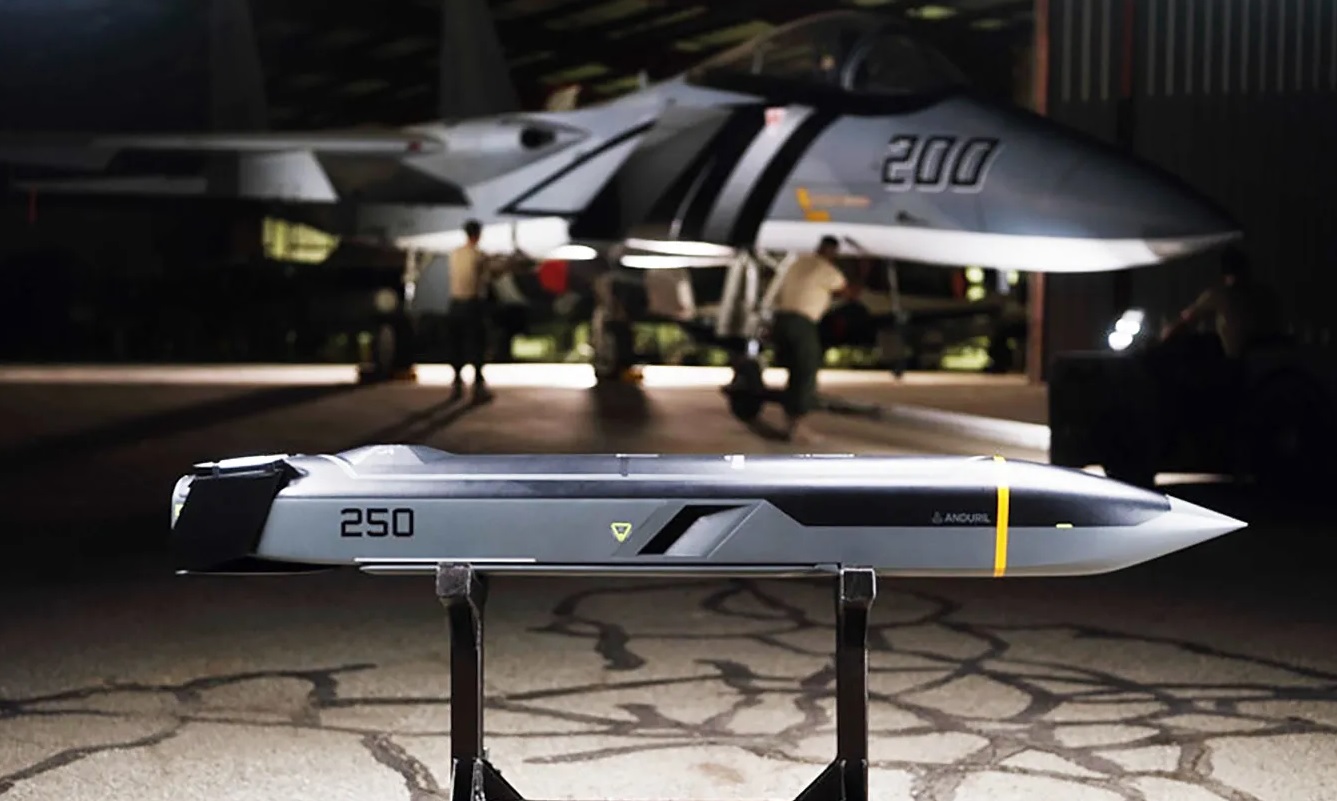
World
WASHINGTON — May 14, 2026 : Anduril Industries and the United States Department of War have signed a framework agreement to scale production of the Barracuda-500M (SLB-500M) surface-launched cruise missile system for the U.S. Army under the broader Ground-Launched Low-Cost Containerized Munition programme. The agreement, announced on May 13, 2026, was concluded with the Office of the Undersecretary of War for Research and Engineering (OSW(R&E)) and provides for the production and delivery of at least 3,000 Barracuda-500M systems over a three-year period to the Army’s Program Acquisition Executive FIRES (PAE FIRES). The contract establishes annual production targets of no fewer than 1,000 complete missile systems, with first deliveries scheduled for the first half of 2027. As part of the programme, Anduril will also provide associated containerised launch systems, beginning with an initial delivery of more than 60 launchers in 2027. The company stated that production quantities could increase further depending on future Department of War requirements. Long-Range Precision Strike System The Barracuda-500M is a subsonic, turbojet-powered stand-off strike missile designed for operations against both land and maritime targets. The weapon carries a 100-pound high-explosive payload and has a range exceeding 500 nautical miles (approximately 575 miles). According to technical specifications released by the company, the missile is capable of performing 5G+ evasive manoeuvres to reduce interception risk and can remain airborne in a loitering configuration for up to 120 minutes before target engagement. The system is also designed with a modular architecture that allows integration of different onboard sensors and mission packages. The missile can integrate with Anduril’s Lattice for Mission Autonomy software, enabling autonomous and collaborative operations between multiple systems in contested operational environments. The open-system architecture also allows operators to use existing military fire-control systems to select targets and initiate launches without requiring dedicated infrastructure. Containerised Launch Architecture The surface-launched variant is housed inside a standard 20-foot ISO shipping container, with each launcher capable of carrying up to 16 complete missile systems. The launch units are designed as self-contained systems requiring no additional fixed infrastructure, allowing rapid deployment in dispersed or austere operational environments. The company also stated that the missile can be deployed independently of the containerised launcher configuration to support different operational requirements and mission profiles. High-Volume Manufacturing Model Anduril stated that the Barracuda family was engineered from the outset for scalable, high-volume production. Approximately 70 percent of the missile’s components are commercially available commodity parts, while the remaining systems are sourced through open-architecture supply arrangements involving multiple vendors to reduce supply-chain risks. According to the company, assembly of a single missile requires approximately 30 hours and can be completed using ten common hand tools, an approach intended to simplify production expansion during sustained procurement periods. To support immediate manufacturing requirements, Anduril invested more than $40 million into a dedicated 115,000-square-foot production facility in Southern California, where production of Barracuda variants is already underway. Future full-rate production of the Barracuda-500M and related systems is expected to transition to Arsenal-1, Anduril’s planned 5-million-square-foot manufacturing facility near Columbus, Ohio. The nearly $1 billion facility is designed to support flexible large-scale weapons manufacturing with production lines capable of shifting rapidly between systems based on operational demand. Expansion of Rocket Motor Production The company has also expanded its domestic solid rocket motor manufacturing capacity to support Barracuda booster production. Anduril invested $75 million in private funding alongside $58 million in Defense Production Act Title III funding to expand a rocket motor production facility in Mississippi. Following the expansion, the company stated it has become the third U.S. supplier of solid rocket motors, strengthening domestic supply capacity for precision-guided weapon programmes. Anduril expects overall production capacity for the Barracuda-500 family to reach the high single-digit thousands of systems annually by the end of the current year as the programme advances toward full-rate production.
Read More → Posted on 2026-05-14 13:48:35
World
LONDON — May 14, 2026 : The United Kingdom has signed a contract worth nearly £1 billion (approximately $1.35 billion) for the procurement of 72 RCH 155 wheeled self-propelled howitzers for the British Army, the Ministry of Defence announced on May 13, 2026. The acquisition is intended to restore Britain’s close support artillery capability following the transfer of AS90 artillery systems to Ukraine, while also supporting domestic defence manufacturing and sustaining more than 500 jobs across the country. The contract was awarded by the Organisation for Joint Armament Cooperation (OCCAR) on behalf of the British Army to ARTEC GmbH, a joint venture between KNDS and German defence manufacturer Rheinmetall. Deliveries are scheduled to begin in 2028, with the Ministry of Defence aiming to achieve a minimum deployable operational capability before the end of the decade. Replacement for AS90 Fleet The procurement replaces the British Army’s AS90 self-propelled howitzers, which served as the Army’s primary close support artillery system for more than 30 years before being donated to Ukraine in 2023. The transfer created a temporary capability gap within the Army’s artillery force structure, with the UK currently operating 14 Swedish-designed Archer artillery systems as an interim solution. Lieutenant General Simon Hamilton, Deputy Chief of the General Staff, said the UK had accepted operational risk in order to support Kyiv during the early stages of the war. “Britain answered the call for aid by providing artillery systems to Ukraine at the outbreak of the war. We knew the risk — the gap in our warfighting capability — that this would present,” Hamilton stated. “The success of bringing the RCH 155 onto contract to develop our 155mm Close Support Artillery requirement, in collaboration with Germany, marks the first significant milestone in replenishing this capability.” Mobility and Automated Firepower The RCH 155 represents a significant shift from the tracked AS90 platform, integrating the Artillery Gun Module (AGM) onto the Boxer 8x8 wheeled chassis. The configuration provides improved operational mobility, with the vehicle capable of reaching road speeds of up to 100 kilometres per hour and travelling approximately 700 kilometres without refuelling. The system was designed with lessons drawn from the war in Ukraine, where static artillery positions have become increasingly vulnerable to counter-battery radars, drones and precision-guided munitions. The RCH 155 is able to fire and rapidly reposition within seconds, reducing exposure to enemy fire. Unlike conventional self-propelled howitzers requiring crews of four or five personnel, the RCH 155 can be operated by two soldiers from a protected crew compartment using an automated control interface. The turret can engage targets in any direction without repositioning the vehicle. The howitzer is capable of firing up to eight rounds per minute and can strike targets at distances of up to 70 kilometres when using extended-range guided ammunition. Standard unguided 155 mm artillery rounds generally achieve ranges between 30 and 40 kilometres. The platform is also compatible with NATO-standard precision-guided projectiles. The Boxer-based system has a combat weight of under 39 tonnes and shares logistical commonality with other Boxer armoured vehicles already in British Army service. The vehicle is also designed for high tactical mobility, including the ability to cross trenches up to two metres wide and climb vertical obstacles measuring 0.8 metres. UK Industrial Production and Job Support Domestic industrial participation formed a central requirement of the programme. Rheinmetall will manufacture the weapon systems, including the barrel, breech, recoil system and trunnions, at its large-calibre production facility in Telford. The site will use British steel supplied by Sheffield Forgemasters, which received more than £420 million in UK government investment last year. Meanwhile, KNDS UK will manufacture Boxer drive modules at its facility in Stockport, supporting domestic armoured steel fabrication and vehicle production capabilities. The programme is expected to support approximately 100 jobs in Telford, 100 jobs in Stockport, and an estimated 300 additional positions across the wider UK defence supply chain. The contract builds upon a £52 million Early Capability Demonstrator agreement signed in December 2025 and a £53 million long-lead item contract awarded earlier in 2026 to prepare industrial production capacity ahead of the full procurement decision. UK-Germany Defence Cooperation The programme also fulfills key commitments under the UK-Germany Trinity House Agreement, a bilateral defence cooperation pact signed in October 2024 aimed at strengthening interoperability between British and German armed forces within NATO. UK Defence Secretary John Healey said the procurement would support both military readiness and the British defence industry. “This major investment is defence delivering for the battlefield and for Britain’s economy,” Healey stated. “By securing next-generation artillery with Germany, not only are we rearming to strengthen NATO against growing Russian aggression but also creating highly skilled jobs here in Britain.” German Defence Minister Boris Pistorius said the programme would improve operational integration between NATO allies while modernising artillery capabilities. “The RCH 155 will significantly enhance the artillery’s firepower, safety and flexibility,” Pistorius said. “Together with the United Kingdom, we are demonstrating that we take interoperability within NATO seriously and are putting it into practice.”
Read More → Posted on 2026-05-14 13:42:36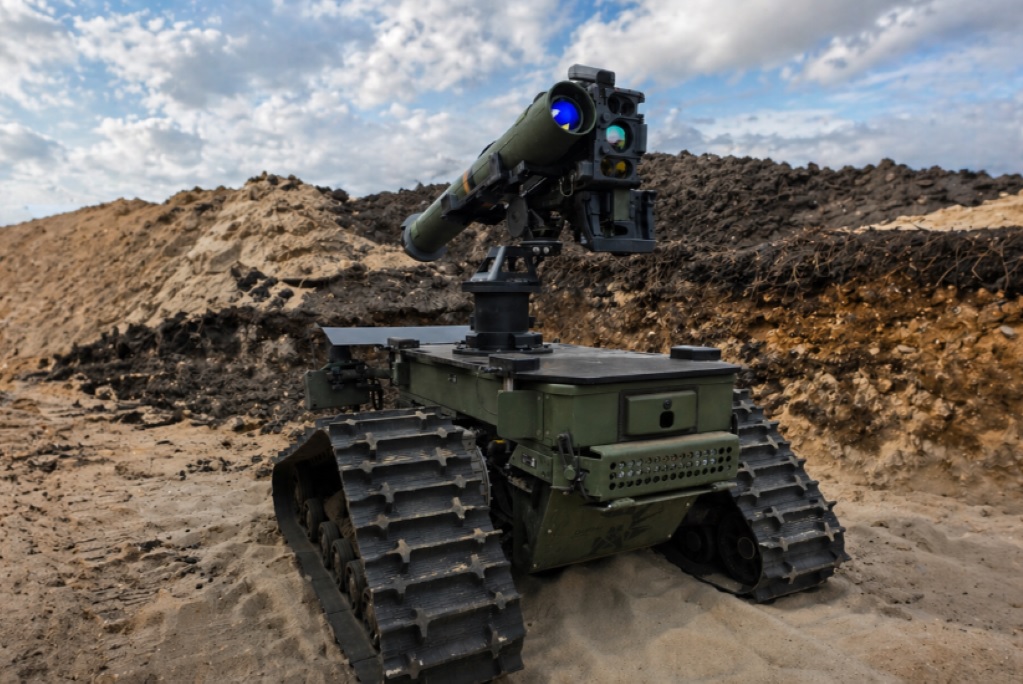
World
ÜBERLINGEN, Germany — May 14, 2026 : Diehl Defence, in cooperation with RAFAEL Advanced Defense Systems and EuroSpike GmbH, has successfully completed a series of live-firing trials involving the SPIKE LR guided missile launched from the Ziesel unmanned ground vehicle (UGV), marking the first successful integration of a modern guided missile system on the Ziesel platform. The trials were conducted over a five-day period and involved the successful launch of 17 SPIKE LR guided missiles. According to the participating companies, the primary objective of the testing campaign was to evaluate the structural load-bearing capability and operational resilience of the Ziesel platform under repeated live-fire conditions. During the tests, the UGV reportedly maintained stable operational performance and successfully withstood the stresses generated during missile launches. The milestone was achieved only three months after Diehl Defence first presented the Ziesel UGV equipped with a SPIKE launcher configuration during the Enforce Tac 2025 exhibition in Nürnberg. Platform Configuration and Technical Characteristics The Ziesel UGV used during the trials was an upgraded configuration featuring revised hardware and software improvements compared to earlier variants. The vehicle is based on the tracked platform developed by Mattro and measures approximately 1.6 metres in length and 1.3 metres in width. It has an empty weight of 380 kilograms and can carry payloads exceeding 500 kilograms. The platform is powered by exchangeable 11 kWh lithium-ion battery packs and can reach speeds of up to 20 kilometres per hour. Its fully electric propulsion system significantly reduces acoustic and thermal signatures, lowering detectability during battlefield operations. According to Diehl Defence, the compact tracked design and high manoeuvrability enable the Ziesel to accompany infantry formations through dense wooded terrain and difficult operating environments without restricting troop movement. Prior to its current role as an armed effector carrier, the Ziesel platform had already undergone operational testing in logistical support and casualty evacuation (CASEVAC) configurations. Autonomous Capability and Sensor Integration The UGV is integrated with Diehl Defence’s PLATON autonomy kit, which provides autonomous navigation and follow-me functionality. The system enables operation without dependence on highly detectable active sensors such as LiDAR or GPS, reducing vulnerability to electronic warfare interference, jamming, and battlefield detection. The autonomy package also allows the vehicle to navigate obstacles independently while maintaining low observability during operations. SPIKE LR Missile System The SPIKE LR guided missile integrated on the Ziesel platform is designed primarily for anti-armour operations and has an operational range of up to 5.5 kilometres. The missile employs fifth-generation dual-mode seeker technology that combines an uncooled infrared imaging sensor with a high-resolution daylight camera. Connected through a fibre-optic data link, the system supports both fire-and-forget and fire-observe-update engagement modes. The missile also incorporates all-weather-capable optronic targeting systems and a tandem high-explosive anti-tank warhead intended to maximise penetration capability against protected targets while maintaining high engagement precision. Growing Interest in Armed UGV Systems EuroSpike GmbH, the European joint venture responsible for the SPIKE missile programme, includes Diehl Defence, Rheinmetall Electronics, and RAFAEL Advanced Defense Systems as partner companies. The companies stated that unmanned ground-based systems are receiving increasing military attention due to growing demand for versatile payload platforms capable of extending stand-off distances and reducing direct exposure of soldiers in hazardous combat environments. According to Diehl Defence, the Ziesel UGV is currently undergoing evaluation by several armed forces, including those of Germany and Ukraine. Future Development Plans Following completion of the firing campaign, the participating companies announced plans to continue development of the integration concept and advance toward additional testing milestones. A formal demonstration involving military representatives from multiple armed forces is also scheduled to showcase the operational capabilities and technical potential of the Diehl Defence Ziesel UGV integrated with the SPIKE LR missile system.
Read More → Posted on 2026-05-14 13:33:45
World
BRUSSELS — May 13, 2026 : NATO Secretary-General Mark Rutte has proposed that alliance members allocate 0.25% of their Gross Domestic Product (GDP) annually toward military assistance for Ukraine, a move that would significantly expand long-term support for Kyiv and raise total allied security assistance to an estimated $143 billion per year if adopted across the alliance. The proposal was presented during a recent closed-door meeting of NATO ambassadors and is intended to establish a predictable and structured funding mechanism for Ukraine’s future defense requirements. NATO officials said the target would apply proportionally across member states according to the size of their economies. The initiative follows recent requests from Ukrainian defense officials, who estimated the country’s defense requirements for the coming year at approximately $120 billion and asked international partners to help cover the shortfall. NATO’s previous baseline commitment for Ukraine was approximately €40 billion, or around $43 billion, annually. At present, annual military assistance from NATO allies is estimated at roughly $47–48 billion through existing bilateral aid packages and NATO-coordinated mechanisms, including the Prioritised Ukraine Requirements List (PURL). Adoption of the proposed 0.25% benchmark would therefore represent a substantial increase in long-term allied support. Opposition From Major NATO Members The proposal has already faced resistance from several major NATO members, including France and the United Kingdom. Officials from both countries have reportedly expressed concerns regarding the rigid nature of a fixed GDP-based contribution system and its potential impact on national defense budgets and fiscal planning. Some allies argue that mandatory percentage targets do not adequately account for differences in domestic economic conditions, existing bilateral security arrangements, or non-military support already being provided to Ukraine. Concerns have also been raised about institutionalizing long-term financial obligations at a time of broader economic pressures across Europe. Burden-Sharing Disputes Inside the Alliance The debate has also highlighted continuing disagreements within NATO regarding burden-sharing and the distribution of military assistance responsibilities. Several Nordic and Baltic member states have argued that countries located closer to NATO’s eastern flank are carrying a disproportionately large share of support for Ukraine. Governments in the region have increasingly pushed for larger Western European economies to adopt more formalized contribution commitments. Countries such as Estonia and Latvia have already exceeded the proposed 0.25% threshold through bilateral military aid and have publicly supported the establishment of alliance-wide proportional funding commitments. Upcoming NATO Discussions in Sweden The proposal is expected to become a central topic during the upcoming NATO foreign ministers’ meeting scheduled for May 21–22 in Helsingborg. The gathering will be the first NATO ministerial meeting hosted by Sweden since joining the alliance in 2024. Alliance members are expected to discuss the proposed financial targets, broader questions surrounding long-term military assistance for Ukraine, and ongoing disagreements over burden-sharing ahead of the NATO summit scheduled for July 2026 in Ankara. NATO continues coordinating security assistance to Ukraine through frameworks including the Comprehensive Assistance Package and the Ukraine Defence Contact Group. Alliance members previously exceeded earlier funding baselines by providing more than €50 billion in security assistance during 2024, followed by additional military aid commitments in 2025 and 2026.
Read More → Posted on 2026-05-13 16:59:33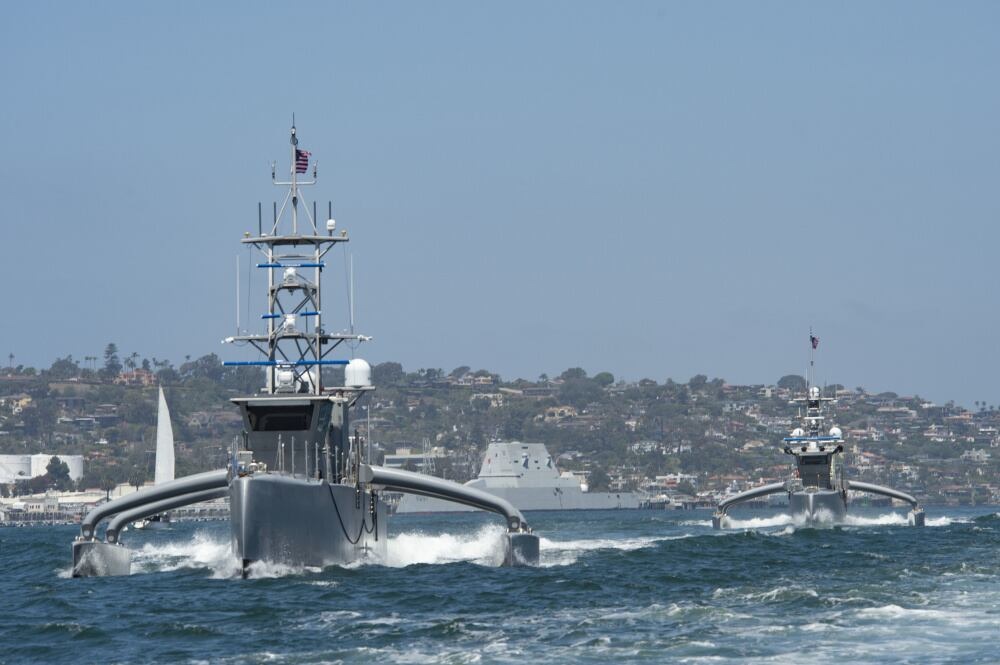
World
WASHINGTON — May 13, 2026 : The U.S. Navy is accelerating procurement of its Medium Unmanned Surface Vessel (MUSV) program under a long-term strategy aimed at expanding distributed naval operations and strengthening force presence in the Indo-Pacific region amid growing maritime competition with China. According to the Navy’s May 2026 Shipbuilding Plan, the service has allocated $171 million in Fiscal Year 2027 for the procurement of three MUSVs, while planning a broader acquisition effort valued at $3.11 billion through FY31. The procurement program will add 47 new unmanned surface vessels during the Future Years Defense Program period following FY26. The latest shipbuilding plan formally places the MUSV alongside traditional battle force and auxiliary ships for the first time, reflecting the Navy’s assessment that the platform has progressed beyond the experimental phase and is now suitable for operational fleet integration. Procurement Timeline and Fleet Expansion The Navy’s acquisition schedule outlines a rapid increase in procurement over the next several fiscal years. Current planning includes: FY26: 36 MUSVs funded through the One Big Beautiful Bill Act FY27: 3 vessels FY28: 10 vessels FY29: 10 vessels FY30: 12 vessels FY31: 12 vessels Under the projected inventory plan, the Navy expects the MUSV fleet to expand from 39 vessels in FY27 to 49 in FY28, 59 in FY29, 71 in FY30, 83 in FY31, and 95 vessels by FY32 before stabilizing at an estimated long-term operational inventory of approximately 72 vessels following initial retirement cycles. Unlike traditional warship procurement, the MUSV program is funded through the “Other Procurement, Navy” account rather than standard shipbuilding accounts. The budget structure reflects an acquisition strategy focused on rapid procurement, shorter upgrade cycles, iterative development, and faster integration of emerging technologies. Modular Payload Architecture The MUSV is being developed around a modular and containerized payload system intended to support multiple mission profiles without requiring permanent ship redesigns. Planned mission packages include: Anti-Submarine Warfare (ASW) sensors and effectors Anti-Surface Warfare (ASuW) systems Missile strike modules C4I command-and-control systems Electronic warfare payloads Communications relay systems Distributed sensing and surveillance packages The Navy intends for the same payload containers to be compatible across several vessel classes, including frigates, Littoral Combat Ships (LCS), and MUSVs. Standardized interfaces for power, cooling, and data integration are intended to allow naval commanders to rapidly configure force packages based on operational requirements. Officials say the concept will enable a single frigate or Littoral Combat Ship to control multiple unmanned vessels equipped with different mission modules during forward deployments. Operational Role in Distributed Maritime Operations The MUSV program forms part of the Navy’s broader Distributed Maritime Operations doctrine, which emphasizes dispersing combat capability across a larger number of platforms rather than concentrating capabilities on a limited number of crewed warships. Under this concept, MUSVs can operate ahead of carrier strike groups or expeditionary strike groups as: Radar pickets Acoustic surveillance nodes Electronic emitters Decoys Communications relays Armed extensions of crewed surface combatants In contested environments, the vessels are expected to support reconnaissance and sensing missions without immediately exposing destroyers, amphibious assault ships, or other high-value crewed platforms to risk. Navy planners also view the MUSV as a method of increasing operational pressure on adversaries by forcing them to identify, track, and potentially engage a larger number of distributed autonomous platforms across wide maritime areas. Origins of the MUSV Program The Navy’s unmanned surface vessel development effort is based on several years of operational testing and prototype development. The earliest operational prototypes were the Sea Hunter and Seahawk autonomous vessels originally developed through DARPA’s Anti-Submarine Warfare Continuous Trail Unmanned Vessel (ACTUV) program in partnership with the Office of Naval Research. Built by Leidos, the vessels measure approximately 41 meters in length and displace around 142 metric tons at full load. Both are based in San Diego and have participated in exercises including Integrated Battle Problem 23.1, Integrated Battle Problem 23.2, and RIMPAC 2022, where they operated as distributed maritime sensing platforms in support of anti-submarine warfare and maritime domain awareness missions. A separate acquisition effort began in July 2020 when Naval Sea Systems Command awarded L3Harris Technologies a contract valued at approximately $35 million for a new MUSV prototype. Contract options could raise the total value to more than $281 million for up to eight additional vessels. The prototype design used a commercially derived 195-foot hull developed by Gibbs & Cox and Incat Crowther, constructed by Swiftships, and integrated with L3Harris’ ASView autonomous navigation system. Program requirements focused on endurance, modularity, self-deployment capability, autonomous navigation, and open-architecture mission integration. Acquisition Strategy and Industrial Base Expansion The Navy is pursuing the MUSV through an acquisition strategy using Other Transaction Authority (OTA) agreements and a marketplace-based procurement model for the MUSV Family of Systems program. The approach is intended to accelerate prototyping and operational testing while allowing participation from smaller shipbuilders and non-traditional defense contractors alongside established naval industry firms. According to Navy planning documents, the service intends to evaluate commercially mature technologies capable of operational testing by September 2026, with potential production deliveries beginning in FY27. The MUSV expansion is also linked to the Navy’s broader Golden Fleet Initiative and its long-term 30-year shipbuilding strategy focused on increasing fleet size, expanding operational flexibility, and strengthening the U.S. maritime industrial base. The Department of the Navy’s FY27 budget request includes approximately $65.8 billion allocated for shipbuilding and related maritime programs.
Read More → Posted on 2026-05-13 16:46:14
World
FORT CARSON, Colo. — May 13, 2026 : The U.S. Army has completed operational evaluations of the CX2 Wraith autonomous electronic warfare drone during Exercise Ivy Mass at Fort Carson, Colorado, testing the platform’s ability to detect and identify hostile electronic emitters in contested electromagnetic environments. The evaluation was conducted in May 2026 by Apache Company’s Electronic Warfare Platoon, 4-10 Cavalry, 3rd Armored Brigade Combat Team, 4th Infantry Division, in support of the division’s Next Generation Command and Control (NGC2) modernization initiative. The program is intended to improve battlefield sensor integration and operational data-sharing capabilities ahead of larger Army Project Convergence exercises. Autonomous Missions Conducted by Army Personnel During the two-week exercise, the 4-10 Cavalry Electronic Warfare Platoon executed nearly a dozen planned autonomous missions using the Wraith platform. Army personnel conducted the sorties independently without contractor assistance, successfully delivering radio frequency threat geolocation and target confirmation data to ground commanders. The exercise provided electronic warfare soldiers operational experience with a system designed to address a key capability gap within brigade-level formations: the ability to autonomously detect, classify, and visually confirm hostile electronic emitters in GPS-denied environments. According to Army evaluation data, the Wraith supported battlefield operations by locating enemy electronic activity and enabling commanders to identify and fix opposing force positions while maintaining freedom of maneuver for adjacent units. Wraith Combines RF Detection and EO/IR Target Confirmation The CX2 Wraith is a quadrotor unmanned aerial vehicle designed for autonomous airborne electronic warfare missions. The platform folds to compact transport dimensions of approximately 15 by 48.5 by 20 inches and weighs about 32 pounds, allowing rapid deployment and transport by tactical units. The system has an operational endurance of roughly 45 minutes. The drone integrates radio frequency sensors with electro-optical and infrared gimballed optics into a single airborne package. This sensor fusion architecture enables the aircraft to perform multiple functions during one autonomous sortie. The system first detects an electronic emitter through its radio frequency signature, then characterizes the signal type before optically confirming the target using its EO/IR payload. Army evaluators tested the drone against simulated battlefield emitters, including radar systems, jammers, communications arrays, and drone control links operating in dense electromagnetic conditions. By combining RF detection, signal classification, and optical confirmation into a single autonomous platform, the Wraith consolidates functions that traditionally require multiple intelligence, surveillance, reconnaissance, and ground-based electronic warfare assets operating together. Designed for GPS-Denied Operations A primary focus of the evaluation was the Wraith’s ability to operate in electronically contested environments where GPS signals are degraded, spoofed, or jammed. The platform uses CX2’s proprietary Pathfinder navigation software together with hardened Global Navigation Satellite System protections and layered non-GPS navigation architecture. Instead of relying primarily on satellite navigation links, the system uses onboard processing and autonomous navigation protocols to maintain operational capability under electronic attack conditions. This capability is considered increasingly important for modern battlefield operations, where adversary electronic warfare systems are expected to target GPS-dependent platforms and communications networks. The Wraith also incorporates resilient communications architecture intended to continue transmitting operational data in degraded electromagnetic environments. Onboard Processing Supports Threat Classification During Exercise Ivy Mass, the Wraith’s onboard processing engine matched detected emissions against known electronic signature databases to classify threats in real time. According to the evaluation, the platform successfully differentiated between multiple signal types in crowded electromagnetic conditions where numerous emitters were active simultaneously. The resulting intelligence data was transmitted directly to ground commanders to support targeting and battlefield maneuver decisions. The Army stated that the platform enabled rapid geolocation and confirmation of enemy electronic positions across the exercise area without requiring external specialist support. Part of Broader Army Electronic Warfare Modernization Exercise Ivy Mass served as the 4th Infantry Division’s culminating training event integrating air, ground, and sustainment operations through the Army’s Next Generation Command and Control framework. The evaluation forms part of broader Army efforts to restore and modernize electronic warfare capabilities at brigade level and below following lessons identified in recent conflicts, particularly the growing importance of electromagnetic spectrum operations in high-intensity warfare. Military planners have increasingly emphasized the need for autonomous systems capable of identifying hostile radars, jammers, and communications systems before friendly forces are detected, especially in environments where traditional GPS-based navigation and communications cannot be relied upon. CX2, based in El Segundo, launched the Wraith platform in December 2025. The company develops artificial intelligence-enabled hardware and software systems focused on electromagnetic warfare operations and contested-environment sensing technologies for military applications.
Read More → Posted on 2026-05-13 16:02:54
World
WASHINGTON — May 13, 2026 : The United States has imposed sanctions on three Chinese commercial satellite companies accused of providing Iran with satellite imagery and geospatial intelligence used to monitor and target U.S. and allied military positions during Operation Epic Fury, according to an announcement by the U.S. Department of State on May 8, 2026. The sanctions were announced days before U.S. President Donald Trump is scheduled to travel to Beijing for a summit with Chinese President Xi Jinping. The upcoming discussions are expected to focus on trade relations, regional security issues, and the aftermath of the recent Middle East conflict. The sanctioned entities are The Earth Eye, also known as TEE or Beijing Mumei Starry Sky Technology Co. Ltd.; Meentropy Technology (Hangzhou) Co. Ltd., operating as MizarVision; and Chang Guang Satellite Technology Co. Ltd. (CGST). U.S. officials stated that the companies supplied imagery and geospatial intelligence that enabled Iranian military forces to identify and monitor American facilities during Operation Epic Fury. According to the State Department, the sanctions are part of a broader package targeting 11 entities and three individuals based in Iran, China, Belarus, and the United Arab Emirates for supporting Iranian ballistic missile, unmanned aerial vehicle, and military procurement networks. U.S. Secretary of State Marco Rubio stated that the provision of satellite imagery to Iran endangered American and partner personnel in the Middle East and that the United States would continue to hold third-country entities accountable for supporting Iranian military operations. U.S. officials outlined separate roles for each sanctioned company in the intelligence support network. The Earth Eye, a Beijing-based satellite ground station operator, allegedly provided satellite imagery directly to Tehran during the conflict. Intelligence reports also indicated that the company previously built and launched a satellite acquired by Iran’s Islamic Revolutionary Guard Corps (IRGC), which was later used to monitor U.S. military sites. MizarVision, identified as a Chinese geospatial intelligence company, was accused of publishing open-source satellite imagery detailing U.S. troop activity and military deployments during Operation Epic Fury. Chang Guang Satellite Technology, one of China’s major commercial satellite operators based in Changchun, Jilin Province, allegedly collected operational imagery of U.S. and allied military facilities in response to Iranian requests. The State Department stated that the imagery provided by the companies supported Iranian military strike planning during the conflict. Operation Epic Fury, launched by the United States on February 28, 2026, targeted Iranian missile forces, missile production infrastructure, naval assets, and other military facilities. Chang Guang Satellite Technology had previously been sanctioned by the United States in December 2023 under Executive Order 14024. U.S. authorities had earlier accused the company of supplying satellite imagery to Yemen’s Iran-backed Houthi movement for operations targeting U.S. military assets. The sanctions introduce an additional point of tension ahead of the planned summit between Washington and Beijing. U.S. officials have recently called on China to use its economic and diplomatic influence to encourage Tehran to maintain the ceasefire established after the conclusion of Operation Epic Fury. In response, the Chinese Ministry of Foreign Affairs and the Chinese Embassy in Washington criticized the sanctions, stating that China opposes unilateral sanctions lacking a basis in international law. Chinese officials maintained that Beijing strictly regulates exports of dual-use technologies and applies a cautious policy regarding arms-related exports. Despite the dispute, Chinese officials indicated that Beijing remains prepared to continue engagement with the United States during the upcoming presidential summit and to pursue cooperation while managing bilateral differences through dialogue.
Read More → Posted on 2026-05-13 15:52:55
World
WASHINGTON — May 13, 2026 : Classified U.S. intelligence assessments indicate that Iran has retained approximately 70 percent of its operational missile arsenal despite extensive U.S.-led strikes launched on February 28, 2026, according to information cited by The New York Times on May 13. The assessments state that Iran has restored operational access to 30 of 33 missile facilities located along the Strait of Hormuz, representing roughly 91 percent of the network. Intelligence findings also indicate that nearly 90 percent of Iran’s underground missile storage facilities and launch pads are again operational following the conflict. The data suggests that U.S. planners significantly overestimated the level of damage inflicted on Iranian missile infrastructure during the campaign and underestimated Tehran’s ability to rapidly restore military facilities and underground launch systems. Underground Missile Network Remained Operational The destruction of Iran’s missile infrastructure had been one of the primary objectives of U.S. military operations during the conflict. Alongside strikes targeting senior political leadership and critical civilian infrastructure, U.S. forces sought to disable Iran’s ballistic and cruise missile capabilities, which Tehran relies upon as its principal strategic deterrent against the United States and allied regional powers. According to intelligence assessments, the survival of much of Iran’s missile capability was linked to the resilience of its extensive underground military infrastructure. Over the past four decades, Iran expanded and modernized its missile program with significant North Korean technical assistance. Intelligence officials assessed that this cooperation extended beyond missile production to the construction of fortified underground tunnel complexes and multi-level missile bases. Many of these facilities are reportedly connected through underground rail systems located hundreds of meters below ground, enabling Iranian forces to redeploy launchers and missile stockpiles while remaining protected from sustained aerial bombardment. U.S. assessments reportedly concluded that facilities constructed using North Korean tunneling and concealment methods proved particularly difficult to destroy. Only three of the 33 missile facilities along the Strait of Hormuz remain fully inaccessible, according to the intelligence findings. Missile Defense Systems Faced Growing Pressure The continued functionality of Iran’s underground launch network placed increasing pressure on U.S. and allied missile defense systems throughout the conflict. A late-March report by Israeli newspaper Haaretz stated that approximately 8 out of 10 Iranian missiles launched toward Israeli targets were successfully penetrating regional air defense systems as interceptor inventories declined and radar infrastructure sustained damage. Footage recorded from forward operating positions during the conflict also showed repeated interception failures involving Patriot missile defense systems. Defense analysts subsequently assessed that destroying Iranian missiles before launch remained the most effective method for limiting strike operations. Iran’s missile arsenal was estimated before the war at between 2,500 and more than 3,000 ballistic missiles, making it one of the largest missile inventories in the Middle East. During the conflict, Iranian forces also employed hypersonic glide vehicles in strikes against high-value targets in Israel. Iranian Air Force F-4 fighter aircraft were additionally observed operating from the underground Oghab 44, also known as Eagle 44, airbase during the conflict. U.S. Precision Munitions and Interceptor Stocks Declined While much of Iran’s missile infrastructure remained operational, U.S. inventories of advanced precision-guided weapons and missile interceptors experienced substantial depletion during the campaign. An April assessment published by the Center for Strategic and International Studies stated that sustained combat operations had significantly reduced stockpiles of Precision Strike Missiles (PrSM), Patriot interceptors, THAAD interceptors, SM-3 and SM-6 missiles, and Tomahawk cruise missiles. The report noted that stocks of the Precision Strike Missile — extensively used against Iranian missile facilities — were close to exhaustion by mid-April. The U.S. Air Force’s inventory of GBU-57 bunker-penetrating bombs was also assessed as nearly depleted. The munition, designed specifically to strike deeply fortified underground facilities, had already been used against Iranian targets in June 2025 before the current conflict began. Each GBU-57 is estimated to cost more than $370 million and was never produced in large quantities. Strategic Concerns Following the Conflict Defense analysts and officials have expressed concern regarding the long-term strategic implications of the conflict, particularly the disparity between the depletion of U.S. precision munitions and the continued operational capability of Iran’s missile infrastructure. Analysts noted that Iran’s missile arsenal was primarily developed to deter the United States, Israel, Turkey, and the United Arab Emirates, while the United States must maintain sufficient stockpiles to address potential future contingencies involving China, Russia, and North Korea. The conflict concluded in early April 2026 following a Pakistan-brokered ceasefire agreement.
Read More → Posted on 2026-05-13 15:44:45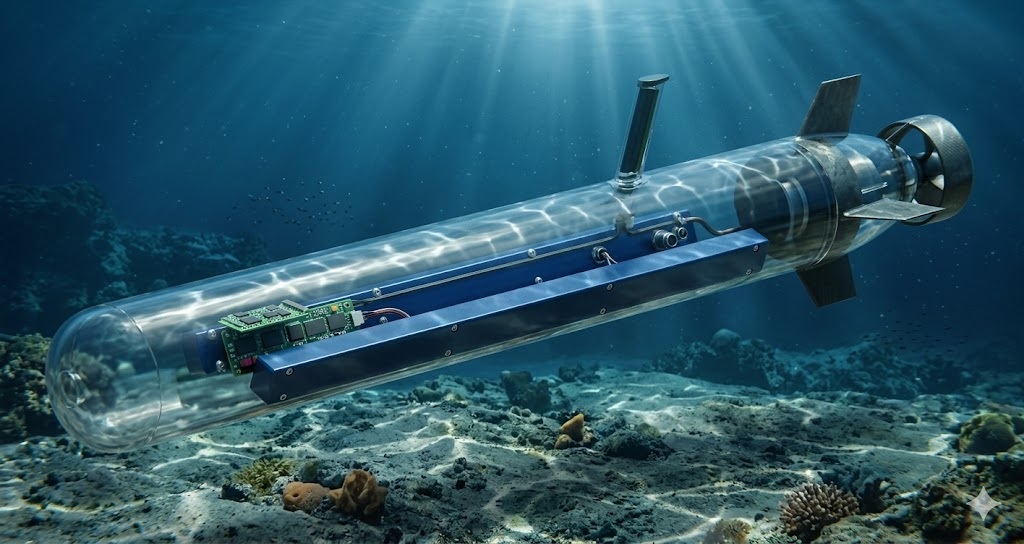
World
SALEM, New Hampshire — May 13, 2026 : Klein Marine Systems has unveiled the MANTIS UUV, a new side scan sonar system specifically developed for autonomous underwater vehicle (UUV) platforms, as defense, commercial, and scientific operators continue expanding the use of autonomous maritime systems for long-duration underwater missions. The newly introduced system is designed to provide consistent, high-resolution sonar imagery across varying survey ranges and operational speeds while reducing payload demands on compact autonomous platforms. The announcement comes amid growing demand for underwater systems capable of operating with reduced crew requirements and increased onboard processing capability. SmartArray Technology and Compact Integration At the center of the MANTIS UUV is Klein’s proprietary SmartArray Technology, which integrates critical sonar electronics directly into the transducer array rather than separating them into dedicated payload compartments. The approach differs from conventional sonar architectures commonly used on underwater survey systems. According to the company, this configuration reduces the overall system footprint while lowering size, weight, and power (SWaP) requirements — a key consideration for UUV manufacturers and operators working with limited payload capacity. The design also preserves internal vehicle space for additional sensors, batteries, or mission-specific equipment while simplifying installation and integration planning. Ted Curley, Executive Vice President and General Manager of Klein Marine Systems, stated that the system was developed to combine advanced imaging performance with onboard processing and practical integration for future autonomous underwater operations. Sonar Performance and Technical Specifications The MANTIS UUV employs multi-channel side scan sonar technology and is engineered to maintain operational effectiveness at vehicle speeds between 6 and 8 knots across all survey ranges. Klein stated that the motion-tolerant design helps mitigate image degradation caused by underwater vehicle movement and dynamic operating conditions. The baseline sonar configuration operates at 600 kHz, while additional 720 kHz and 850 kHz frequency options are available to support different mission profiles and imaging requirements. The system provides swath coverage of up to 150 meters per side, enabling a total coverage width of 300 meters during survey operations. Resolution specifications include 1.0 cm across-track resolution and 10 cm along-track resolution at ranges up to 50 meters. Advanced signal processing capabilities integrated into the system include: Dynamic focusing Multiple-look processing Adaptive beamforming These processing techniques are intended to improve image consistency, target identification, and sonar clarity during autonomous underwater operations. Real-Time Data Processing and Ethernet-Based Architecture The MANTIS UUV incorporates onboard real-time data processing capabilities, allowing sonar information to be analyzed during active missions rather than relying entirely on post-mission review. Klein stated that this capability supports autonomous decision-making workflows and provides a foundation for machine learning and AI-assisted underwater analysis applications. The system uses an Ethernet-centric architecture for control and data interfaces, which the company says reduces integration complexity for modern autonomous underwater platforms. The sonar is also fully compatible with the company’s SonarPro NXT software platform, enabling mission playback, detailed data review, and post-survey analysis. Operational Applications Klein Marine Systems identified several operational roles for the MANTIS UUV across defense, commercial, and scientific sectors. These include: Route survey operations for mine countermeasures (MCM) Search and recovery (SAR) missions Hydrographic and geophysical surveys Offshore infrastructure inspection Environmental habitat mapping and seafloor monitoring The company stated that the system is intended for missions requiring both high-speed survey capability and high-resolution underwater imaging performance. Expanding Autonomous Underwater Systems Market The MANTIS UUV enters a growing market for autonomous underwater technologies as naval forces, offshore operators, and research organizations increasingly invest in autonomous maritime systems for persistent underwater operations. Based in Salem, New Hampshire, Klein Marine Systems supplies sonar systems to military, commercial, and scientific users in more than 80 countries. The company’s product portfolio supports applications ranging from naval mine countermeasures and subsea infrastructure inspection to hydrographic surveying and seafloor mapping.
Read More → Posted on 2026-05-13 15:35:01Search
Top Trending in 24 Hours
-
 U.S. Space Force Awards Impulse Space $28 Million Contract for 2029 Orbital Surveillance Mission
-
 Taiwan Integrates Attack Drones Into Three-Service Live-Fire Exercise at Jiupeng for First Time
-
 UK Air Force Hawk T2 Trainer Aircraft Crashes Near Valley After Takeoff, Both Pilots Eject Safely
-
 Russian Mi-8 Military Helicopter Crosses Into Polish Airspace for 42 Seconds Near Braniewo
-
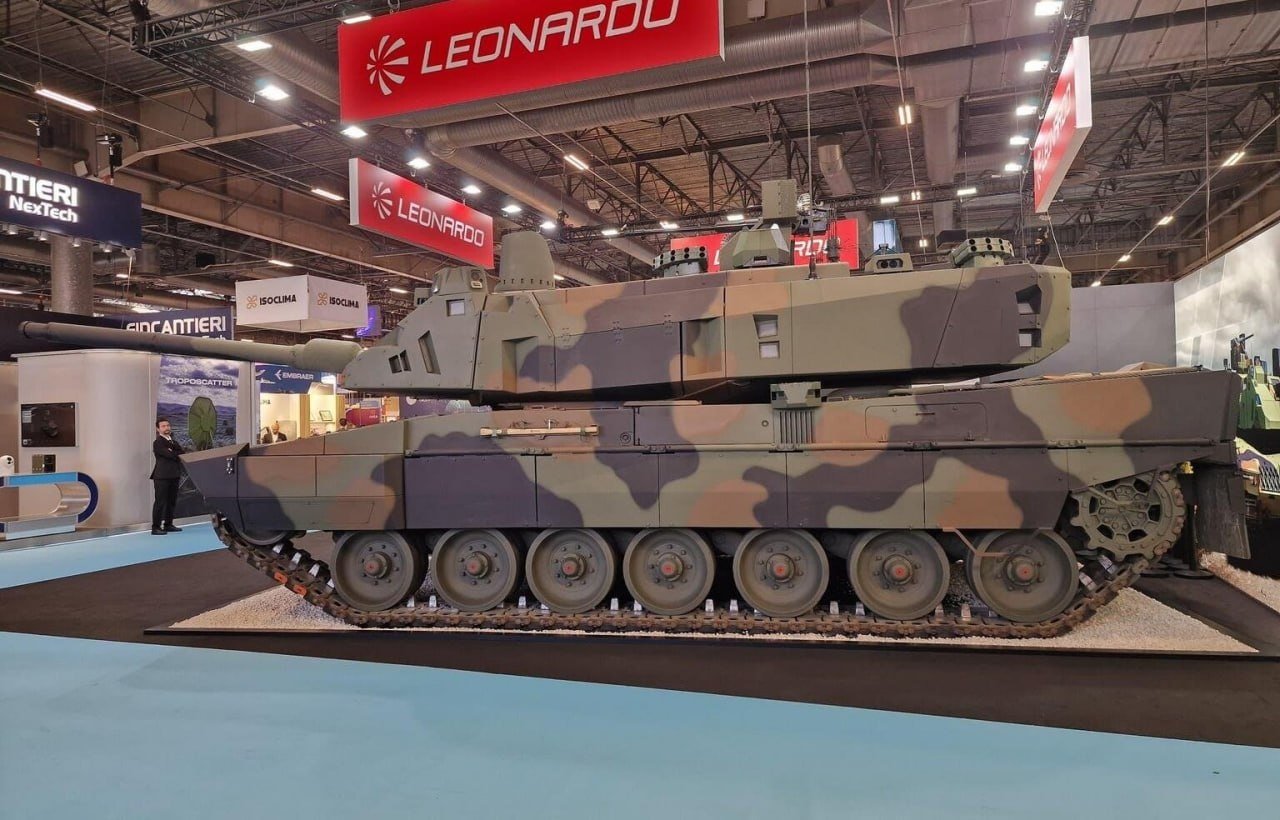 Italy Allocates Up to €5.14 Billion for Procurement of 132 New Main Battle Tanks
-
 Roketsan KARAOK Anti-Tank Missile Successfully Hits Aerial Target for First Time
-
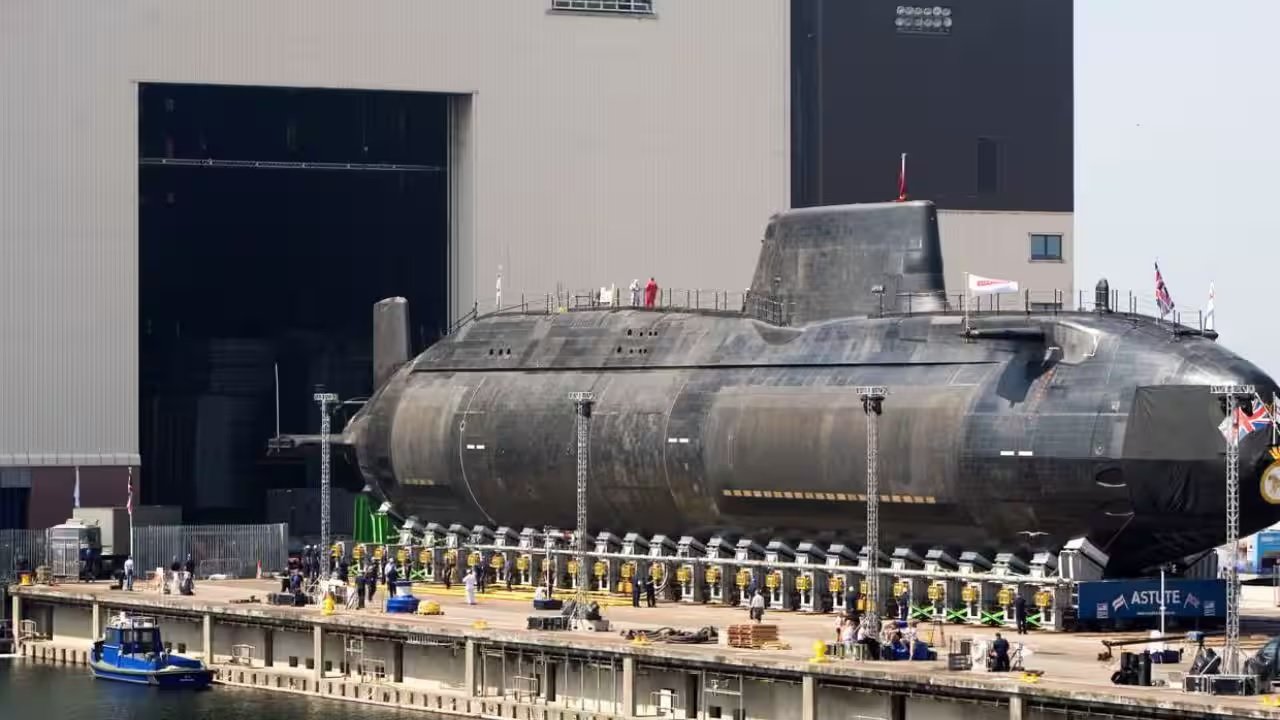 UK Announces £6 Billion Investment to Double Nuclear Submarine Production Rate
-
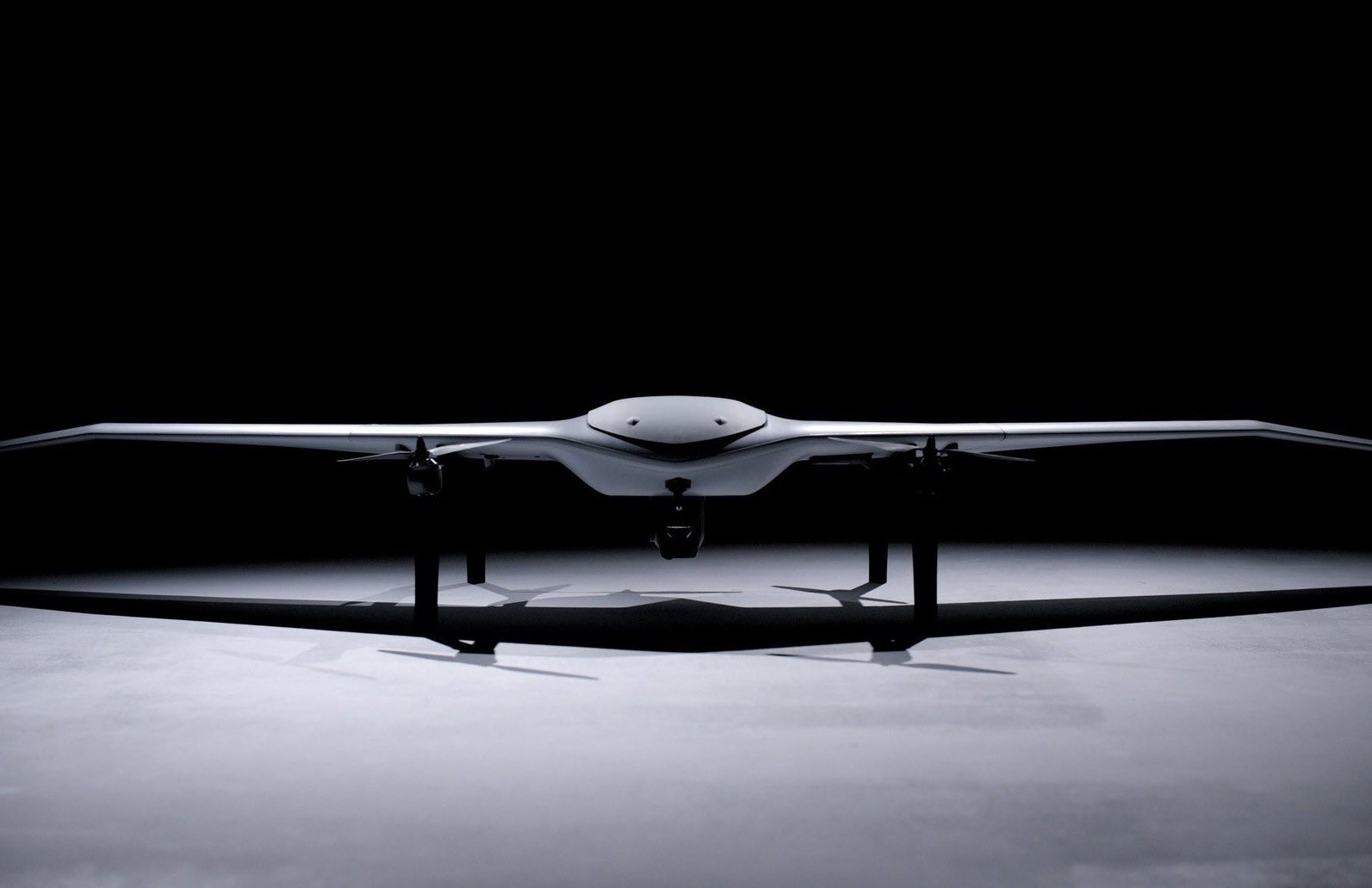 Dutch Firm DeltaQuad Launches Evo-LE VTOL UAV With Up to Eight-Hour Endurance
Top Trending in 4 Days
-
 U.S. Army Awards $10.64 Million Contract to Ukrainian Drone Maker Skyeton for Raybird Systems
-
 India’s xTerra Robotics Launches Indigenous DHAV-Hy Wheeled-Legged Quadruped for Industrial Inspection
-
 U.S. Space Force Seeks Rapid-Response Satellites for Close-Range Orbital Inspections
-
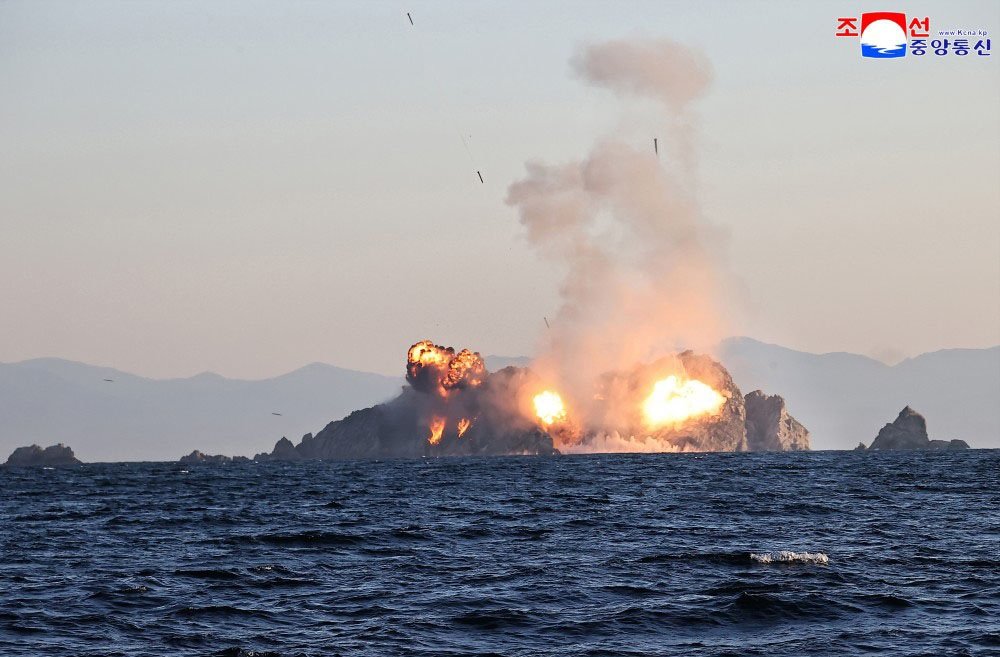 North Korea Fires Short-Range Ballistic Missile Toward Sea of Japan After Freedom Edge 26
-
 U.S. Government Seizes Almasirah.net, Houthi-Linked News Website
-
 Ukraine Reports First Use of Fire Point’s FP-7 Tactical Ballistic Missile inMoscow-Region Strikes on Oil Refinery
-
 U.S. Delivers First CH-47F Chinook to Egypt Under 12-Helicopter Deal
-
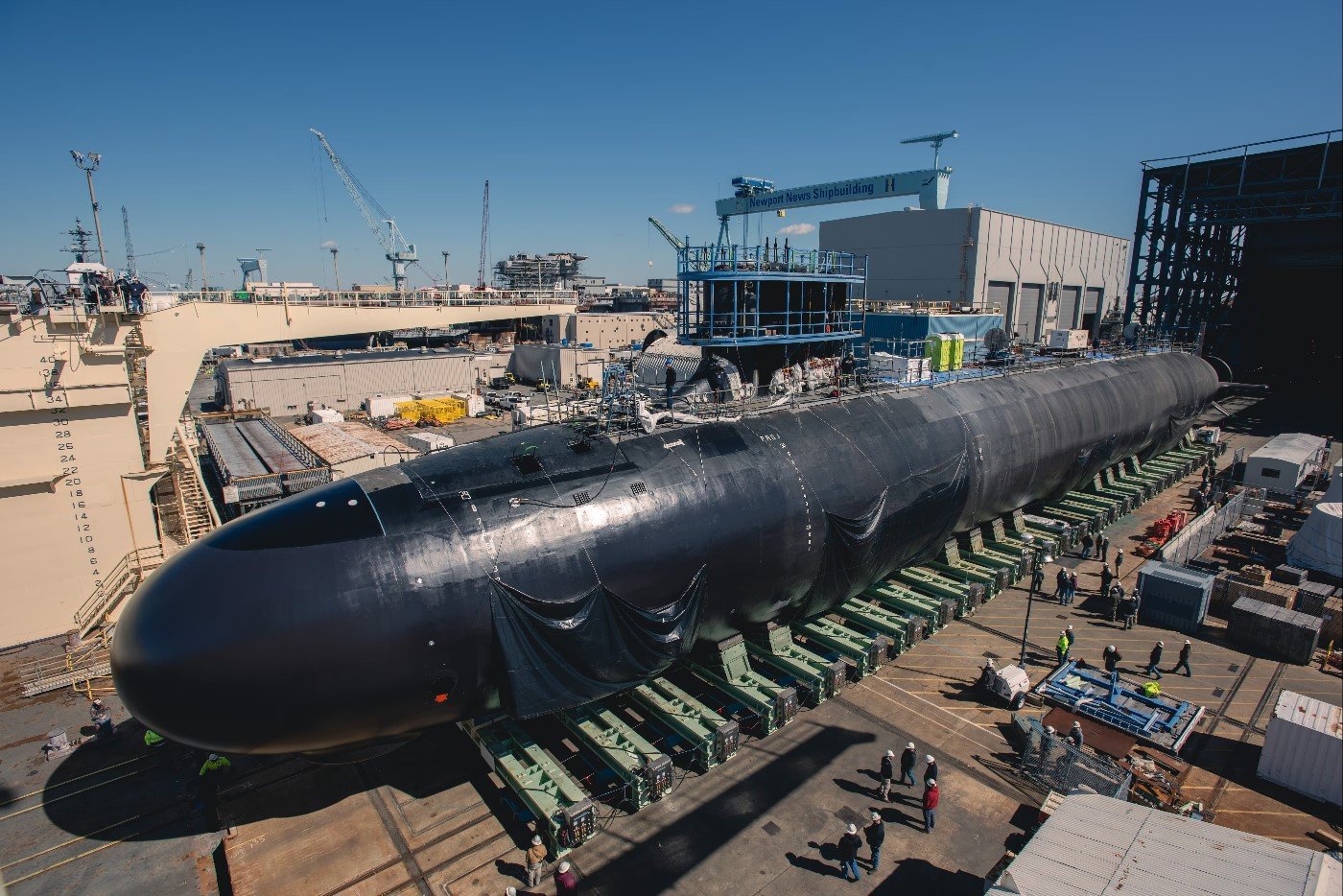 US Navy Submarine Director Outlines Four-Pillar Plan to Raise Build Rates