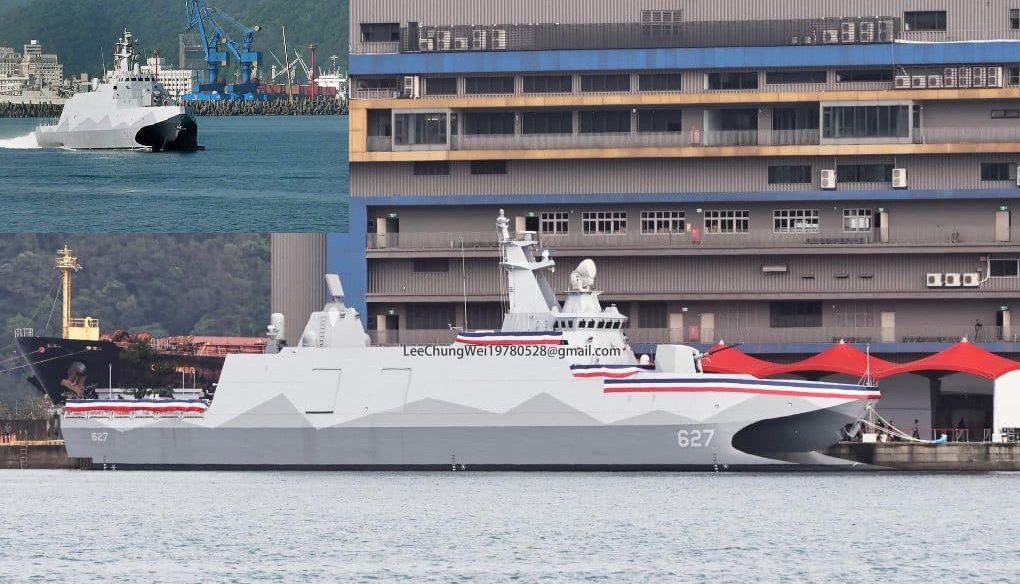
KAOHSIUNG, Taiwan — The Republic of China (ROC) Navy officially commissioned ROCS Tan Chiang (PGG-627), the first Batch 2 Tuo Chiang-class catamaran corvette, during a ceremony held on July 24 at Tsoying Naval Base in Kaohsiung. The commissioning marks another step in Taiwan's naval modernization and domestic warship construction program.
Taiwanese President Lai Ching-te presided over the ceremony at the island's largest naval facility. Senior officials attending included Minister of National Defense Wellington Koo, National Security Council Secretary-General Joseph Wu, and Navy Commander Admiral Chiang Cheng-Kuo. Sister ships Tuo Chiang and Ta Chiang also participated in the event.
Tan Chiang is the eighth vessel in the Tuo Chiang-class and the first ship of the second production batch (Batch 2/Flight II). The ROC Navy plans to commission a total of 12 Tuo Chiang-class corvettes by the end of 2026.
In his remarks, President Lai thanked Navy personnel, research and development teams, Lungteh Shipbuilding, and companies across Taiwan's defense supply chain for overcoming technical challenges to bring the new warship into service. He said that building warships domestically supports Taiwan's defense autonomy, allows maintenance without foreign assistance, and strengthens military resilience.
Fire-Control Radar Changed for Batch 2
The most significant change introduced with the Batch 2 vessels is the replacement of the fire-control radar.
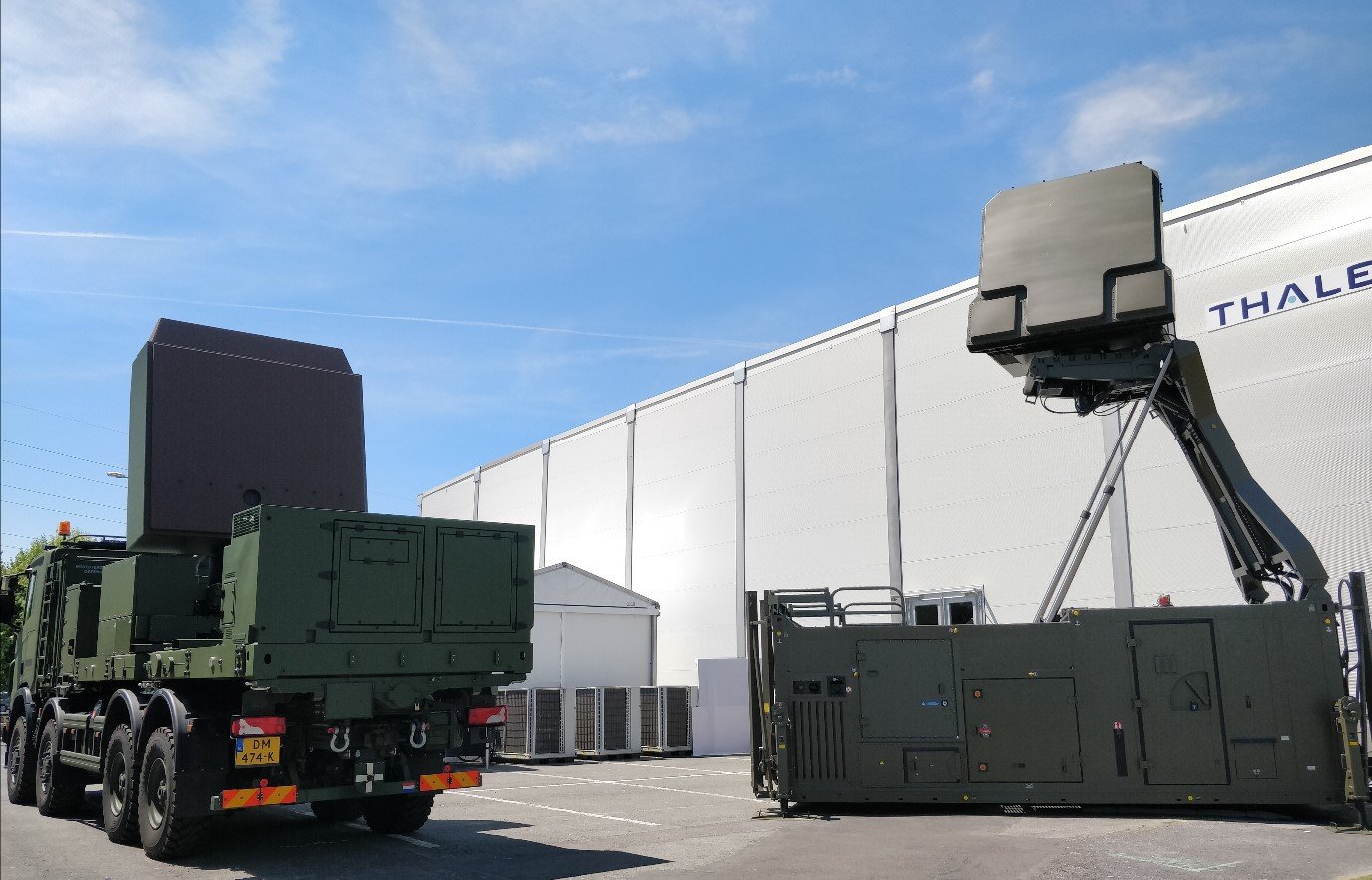
The first production batch of Tuo Chiang-class corvettes is equipped with the Thales STIR 1.2 EO Mk2 fire-control radar. However, after the French government did not approve further export licenses for the Thales radar systems to Taiwan, the ROC Navy adopted the Leonardo NA-30S Mk2 fire-control radar for the second production batch.
Beginning with ROCS Tan Chiang, all Batch 2 corvettes will use the Leonardo NA-30S Mk2, a dual-band X-band and Ka-band radar featuring a low-observable antenna design intended to improve tracking performance against sea-skimming missiles and low-flying targets.
The follow-on ships are divided into two production groups. The first group—Ta Chiang (PGG-619), Fu Chiang (PGG-620), Hsu Chiang (PGG-621), Wu Chiang (PGG-623), An Chiang (PGG-625), and Wan Chiang (PGG-626)—uses the STIR 1.2 EO Mk2 radar, while the second group, beginning with Tan Chiang, is fitted with the Leonardo system. Taiwan has operated STIR-series radars since the 1980s.
Designed for High-Speed Coastal Operations
Built by Lungteh Shipbuilding, the Tuo Chiang-class is designed for coastal warfare using asymmetric tactics against larger naval forces.
The corvette features a 65-meter wave-piercing catamaran hull with low radar observability, providing improved stability at sea while reducing its radar cross-section. Powered by MTU diesel engines driving waterjets, the vessel has a full-load displacement of approximately 685–732 tonnes and can reach speeds of 40 to 45 knots. Its engine exhaust is also pre-cooled to reduce the ship's infrared signature.
Despite its relatively compact size, the vessel carries a substantial weapons package. It is armed with up to eight Hsiung Feng II subsonic anti-ship missiles, eight Hsiung Feng III supersonic anti-ship missiles, 16 TC-2N (Sea Sword II) medium-range surface-to-air missiles, an Otobreda 76mm main gun, and a Phalanx Close-In Weapon System (CIWS).
According to the information provided, the ships can also fire Hsiung Feng III supersonic extended-range missiles against land and sea targets at ranges of up to 400 kilometers.
Peacetime and Wartime Missions
According to Taiwan's Ministry of National Defense, the Tuo Chiang-class corvettes perform a wide range of missions during both peacetime and wartime.
During peacetime, the vessels conduct maritime patrols, escort transport ships to offshore islands, participate in readiness exercises, and operate alongside larger surface combatants to help secure sea lines of communication. They are also tasked with providing rapid defense of offshore islands and responding to operational contingencies.
In wartime, the corvettes support sea-control operations as part of surface combat task groups and can independently command and control missile boats. Their missions include joint counter-blockade and strike operations, engaging hostile naval forces approaching Taiwan's coastline, extending operational reach, patrol and port-area defense, reconnaissance, offensive and defensive minelaying, support for special operations, infiltration missions, and transporting supplies to offshore islands.
Remaining Batch 2 Ships
Construction of the five Batch 2 vessels began in 2024, with deliveries scheduled between March and December 2026. Tan Chiang was delivered in March 2026 before entering service during the commissioning ceremony on July 24. The remaining vessels are expected to join the ROC Navy by the end of the year, completing the planned 12-ship Tuo Chiang-class fleet.
——— End of Article ———