
World
BERLIN — May 9, 2026 : Russian Ambassador to Germany Sergey Nechaev has stated that Moscow has no intention of attacking NATO or any member state of the alliance, while warning that any attack on Russia by NATO would trigger a serious response. In remarks published on May 8, Nechaev dismissed claims that Russia is preparing for war with NATO, calling such speculation unfounded. “No one is planning to attack NATO,” Nechaev said, adding that suggestions Russia intends to go to war with NATO countries are “nonsense.” At the same time, the Russian ambassador warned that if NATO were to attack Russia, “it will be serious,” reflecting Moscow’s continued opposition to NATO’s military posture in Europe. Criticism of European Military Preparations Nechaev criticised what he described as the growing militarisation of Europe and the lack of political dialogue between Russia and European countries. He pointed to discussions in German political and defence circles that reference the possibility of a future conflict with Russia around 2029–2030. According to the ambassador, such reports are creating concern in Russia and are negatively affecting relations between Moscow and Berlin. He said the developments do not support efforts toward a peaceful settlement of the conflict in Ukraine. German defence planning has increasingly focused on long-term military preparedness. General Carsten Breuer, Chief of Defence of the Bundeswehr, has previously stated that Germany must be prepared for a potential Russian threat by 2029. Germany has also been developing a national wartime preparedness strategy known as “OPLAN DEU,” aimed at strengthening readiness in the event of a major NATO-related conflict. Concerns Over Weapons Deliveries to Ukraine The ambassador also criticised continued Western military assistance to Ukraine, describing ongoing weapons deliveries as part of a broader process of militarisation across Europe. Nechaev’s remarks come amid continuing diplomatic tensions between Russia and Germany over Berlin’s support for Kyiv. In April 2026, Germany’s Foreign Ministry summoned the Russian ambassador following statements and actions from Russian officials that German authorities viewed as threats directed at targets on German territory. The diplomatic dispute followed reports linked to Russia’s publication of information concerning European companies involved in the production of military drones and equipment supplied to Ukraine. Statements Circulated in Russian Media Russian state media and social media platforms widely circulated Nechaev’s latest comments. Some reports were accompanied by archival footage showing Russian naval exercises and military drills involving Russia and China. Nechaev has served as Russia’s ambassador to Germany since 2018. His latest statements reflect Moscow’s broader diplomatic position regarding NATO expansion, European defence policies, and Western military support for Ukraine.
Read More → Posted on 2026-05-09 17:39:54
World
MOORESTOWN, N.J., — May 9, 2026 : The U.S. Missile Defense Agency (MDA) has awarded Lockheed Martin a $407.16 million contract modification to continue engineering, integration, development, and certification work for the Aegis Guam System, a major component of the U.S. military’s expanding missile defense network in the Indo-Pacific region. The modification, awarded on May 7 on a sole-source basis, increases the cumulative value of the underlying Aegis Ballistic Missile Defense (BMD) Weapon Systems contract from approximately $1.528 billion to more than $1.935 billion. The work is scheduled to continue through December 2029. According to the Department of War, the contract is structured as a hybrid cost-plus-fixed-fee and cost-plus-incentive-fee arrangement, a format commonly used for complex defense development programs involving evolving technical requirements. The structure allows the government and contractor to share development risks while providing financial incentives tied to schedule and performance targets. Initial Funding and Contract Structure At the time of the award, the government obligated $78.7 million in immediate funding under the modification. The obligated amount includes $76.16 million in fiscal year 2026 research, development, test, and evaluation (RDT&E) funds and $2.6 million in fiscal year 2026 procurement funds. Remaining funding is expected to be distributed incrementally over the duration of the program. The contract modification, identified as P00151 under contract HQ0851-21-C-0002, will support ongoing software integration, systems engineering, testing, and certification activities required for the Guam missile defense architecture. Lockheed Martin will perform the majority of the work at its Moorestown, New Jersey, facility, while additional integration and testing operations will take place in Guam. The Missile Defense Agency office in Dahlgren, Virginia, is serving as the contracting authority managing the effort. Integrated Missile Defense Architecture The Aegis Guam System is part of the military’s broader Enhanced Integrated Air and Missile Defense (EIAMD) initiative designed to establish a persistent, layered, and 360-degree defense capability for Guam. The program adapts the Aegis combat system architecture, widely used aboard U.S. Navy destroyers and cruisers, into a fixed land-based configuration tailored specifically for Guam’s operational environment. Rather than functioning as a standalone interceptor platform, the system is being developed as a distributed battle-management architecture linking Navy, Army, and joint-service sensors and weapons into a unified network. The Guam defense system is expected to integrate with the U.S. Army’s Integrated Battle Command System (IBCS), enabling coordinated engagements using multiple interceptor systems, including Standard Missile-3 (SM-3), Standard Missile-6 (SM-6), Terminal High Altitude Area Defense (THAAD), and Patriot Advanced Capability-3 (PAC-3). For detection and tracking, the system will utilize the TPY-6 radar, a ground-based variant of Lockheed Martin’s AN/SPY-7(V)1 solid-state radar technology designed to track ballistic, cruise, and advanced maneuvering missile threats. Strategic Importance of Guam Guam remains one of the most strategically important U.S. military locations in the Indo-Pacific region. The island hosts Andersen Air Force Base and Naval Base Guam, both of which support logistics, command-and-control operations, and force projection activities across the Pacific theater. The territory lies within range of ballistic, cruise, and hypersonic missile systems operated by China and North Korea, increasing the urgency of establishing a permanent and integrated missile defense network for the island. Defense planners view the Aegis combat system as a proven operational foundation because of its long record of intercepting short-, medium-, and intermediate-range ballistic missile threats. The ongoing work under the latest contract modification will focus on adapting those capabilities to Guam’s fixed-site defense requirements and validating system performance against regional threat scenarios. Long-Term Development Effort Lockheed Martin continues to serve as the Combat System Engineering Agent for Aegis programs, supporting software development, testing, certification, integration, and sustainment activities across the missile defense enterprise. The broader Guam Defense System is intended to provide continuous protection for critical military infrastructure on the island, including airfields, naval facilities, logistics hubs, and command-and-control assets as the United States expands its regional defense posture in the Indo-Pacific.
Read More → Posted on 2026-05-09 17:29:53
World
HUALIEN, TAIWAN — May 9, 2026 : The Chiashan Air Force Base tunnel complex in eastern Taiwan remains one of the Republic of China Air Force (ROCAF)’s most heavily fortified military installations, designed to preserve air combat and command capabilities during potential missile and air attacks from China. Located in Hualien County within Taiwan’s Central Mountain Range, the facility is carved deep inside a granite mountain and forms a major part of Taiwan’s hardened underground defense infrastructure. The complex was developed under “Project Jian’an III”, also known as the Jian’an No. 3 Project or “Optimal Mountain,” a military engineering initiative launched to strengthen the survivability of Taiwan’s air force assets. Construction of the underground base officially began in 1984 after Taiwanese engineers studied advanced tunneling methods in Europe in 1981. The excavation project required approximately eight years to complete and entered service around 1992–1993. Total construction costs were estimated at roughly $1 billion, equivalent to more than 27 billion New Taiwan Dollars at the time. Engineers used the New Austrian Tunnelling Method to excavate the mountain structure. The underground facility consists of separate northern and southern tunnel systems. Each network contains five horizontal and five vertical tunnels arranged in a crisscross configuration across multiple underground levels. Internal taxiway tunnels were built high enough to accommodate fighter aircraft movement and maintenance operations, with some sections reaching the height of approximately three stories. The Chiashan complex can shelter, arm, refuel, and repair more than 200 fighter aircraft, including Taiwan’s upgraded F-16V Viper fleet. The underground infrastructure also contains command-and-control centers, underground fuel stations, medical facilities, power generation systems, ammunition storage areas, and stockpiles of food, fuel, and water intended to support military operations for several months during wartime conditions. Ten reinforced steel blast doors protect the entrances and exits of the tunnel system. These doors were engineered to withstand nearby explosions and are connected to multiple surface runways through long taxiway tunnels, allowing aircraft to move rapidly from underground shelters to launch positions while reducing exposure to enemy surveillance and precision strikes. Part of the installation also supports civilian aviation operations through Hualien Airport. Taiwan designed the granite mountain structure to resist conventional air and missile attacks. Military assessments indicate that destroying the underground complex itself with conventional weapons would be extremely difficult because of the depth and natural protection provided by the mountain. Publicly available defense analyses suggest that specialized earth-penetrating nuclear weapons would likely be required to completely destroy the underground bunker system. However, recent military assessments have increasingly focused on the vulnerability of the base’s exposed runway infrastructure. Analysts have noted that the People’s Liberation Army (PLA) may attempt to disable the facility through a “runway trap” strategy rather than directly penetrating the mountain complex. Under this approach, Chinese forces could use large numbers of conventional ballistic missiles, including DF-11 and DF-15 systems, alongside long-range rocket artillery such as the PCH-191 multiple rocket launcher, to repeatedly crater runways and taxiways outside the bunker entrances. Such strikes could temporarily prevent aircraft from taking off even if the underground shelters remain intact, effectively trapping fighter aircraft inside the mountain facility until repairs are completed. Chinese military discussions have also referenced the potential use of high-yield conventional munitions, including fuel-air explosive warheads carried by heavy Dongfeng missile systems, to generate intense blast and heat effects near tunnel entrances in an effort to disrupt operations and damage external infrastructure. Despite these vulnerabilities, the Chiashan Air Force Base remains a central component of Taiwan’s defense planning and force protection strategy. The facility supports Taiwan’s broader military objective of maintaining survivable air combat capabilities and preserving the ability to conduct counter-attack operations during a large-scale regional conflict.
Read More → Posted on 2026-05-09 16:27:58
World
PYONGYANG — May 9, 2026 : North Korea has initiated large-scale production of its new Juche-107 155mm self-propelled howitzer, according to footage released by state media following a visit by leader Kim Jong Un to a major munitions production facility. During the inspection, Kim Jong Un and senior military officials reviewed active assembly lines producing the artillery system, which North Korean authorities said will be deployed to three battalions assigned to long-range artillery units positioned along the southern border by the end of 2026. State media reported that the Juche-107 is capable of striking targets at ranges exceeding 60 kilometers. Transition to 155mm Standard The Juche-107 was first unveiled in 2018, although the design has undergone several modifications before entering broader production. The system represents a significant modernization effort for the Korean People’s Army (KPA), which has historically relied on Soviet-standard 152mm artillery systems and domestically developed 170mm long-range guns. The adoption of the NATO-standard 155mm caliber reflects a transition similar to that undertaken by the Chinese People’s Liberation Army. Defense analysts say the shift offers several operational and logistical advantages, including interoperability with Chinese artillery systems, improved export potential and the ability to utilize captured South Korean and U.S. artillery ammunition during wartime conditions. North Korean media also reported that Kim reviewed testing data related to terrain mobility, underwater crossing capability and firing trials involving upgraded shells. Officials highlighted the system’s automatic firing functions and battlefield information-processing capabilities during the inspection. Impact of Ammunition Exports to Russia The transition toward the Juche-107 is occurring alongside North Korea’s continued military exports to Russia for operations in Ukraine. Pyongyang, which maintains one of the world’s largest peacetime artillery forces, has become a major supplier of artillery ammunition to Russian forces. Recent intelligence assessments indicate that North Korea has transferred approximately 33,000 containers of military cargo to Russia, including more than 15 million 152mm artillery shells. Analysts believe the large-scale export of older ammunition stockpiles has accelerated the KPA’s transition toward the new 155mm artillery system. Despite this modernization effort, military analysts expect older 152mm artillery systems to remain in service for decades due to the scale of North Korea’s existing artillery inventory. The KPA is therefore expected to continue operating three primary heavy artillery calibers simultaneously — 152mm, 155mm and 170mm. Continued Role of 170mm Artillery North Korea’s 170mm artillery systems, particularly the M1989 Koksan self-propelled gun, continue to attract international attention following reports of their deployment in the Ukrainian theater. In June 2025, Lieutenant General Kyrylo Budanov stated that the systems had demonstrated effective battlefield performance, citing their long-range firing capability and accuracy. Ukrainian intelligence estimated that Russia had received approximately 120 units, enough to equip around four artillery regiments. It remains unclear whether the systems in Ukraine are being operated solely by Russian personnel, by deployed KPA units, or through a joint operational structure involving both forces. Defense analysts have suggested that a combined operational arrangement is the most likely scenario. Future Modernization Plans Analysts expect North Korea to continue modernizing the Juche-107 through incremental upgrades while potentially developing a next-generation 170mm artillery platform in parallel. Attention has also focused on the possibility of foreign technology transfers linked to Pyongyang’s expanding defense cooperation with China and Russia. Defense observers note that China’s SH16 is regarded as one of the most advanced automated artillery systems currently in service, while Russia’s 2S35 Koalitsiya-SV has emerged as a highly advanced artillery program since entering limited service in 2023. Analysts believe technologies associated with these systems could influence future variants of the Juche-107 as North Korea continues efforts to modernize its artillery forces while maintaining its large legacy inventory.
Read More → Posted on 2026-05-09 16:13:09
World
ANKARA — May 9, 2026 : Turkey is advancing its “Blue Homeland” (Mavi Vatan) doctrine to expand maritime influence across a strategic corridor stretching from the Aegean Sea to the Horn of Africa and the Red Sea, combining naval deployments, defence partnerships and energy exploration initiatives to strengthen its position in surrounding waters. The doctrine, first developed in 2006 by Turkish naval officers including Rear Admiral Cem Gürdeniz and Admiral Cihat Yaycı, defines Turkey’s claimed territorial waters, continental shelf and exclusive economic zone (EEZ) across the Black Sea, Aegean Sea and Eastern Mediterranean. Turkish officials estimate the doctrine covers nearly 462,000 square kilometres of maritime territory. Turkey does not recognise some provisions of the United Nations Convention on the Law of the Sea (UNCLOS) that grant full EEZ rights to islands. Ankara instead argues that maritime boundaries should be based primarily on continental shelf principles linked to mainland coastlines, a position that has led to disputes with Greece and Cyprus in the Eastern Mediterranean. Naval Expansion and Military Exercises The Blue Homeland doctrine has become a central component of Turkey’s defence and foreign policy strategy since gaining greater political prominence after 2016. Ankara conducts annual “Mavi Vatan” naval exercises to demonstrate operational capabilities across multiple maritime regions. The latest exercise, “Mavi Vatan 2026,” was held from April 3 to April 9 across the Black Sea, Aegean Sea and Eastern Mediterranean. The drills involved approximately 15,000 military personnel, 120 naval vessels and 50 aircraft. Turkish forces carried out simultaneous naval and air operations, including live-fire exercises, unmanned aerial vehicle missions and unmanned surface vehicle operations designed to test command-and-control coordination across different theatres. Expansion Toward the Red Sea and Horn of Africa Turkey has also expanded its strategic reach beyond the Mediterranean into the Red Sea, Gulf of Aden and Horn of Africa. In January 2026, the Turkish Parliament approved a one-year extension of naval deployments in the Gulf of Aden, Arabian Sea and Somali territorial waters, effective from February 10. The mandate grants President Recep Tayyip Erdogan authority to determine the scale, timing and location of naval operations without requiring additional parliamentary approval. Ankara maintains a military training base and military academy in Somalia and has strengthened defence and maritime cooperation agreements with Mogadishu. Turkish authorities have also announced plans to begin offshore oil and natural gas exploration off Somalia’s coast in 2026 following ongoing seismic surveys. Turkey’s regional security network additionally includes military cooperation agreements with Libya and a forward-operating military base in Qatar. Ankara also remains engaged in reconstruction and stabilisation efforts in Syria while closely monitoring developments in Yemen. Eastern Mediterranean Energy Competition A major component of the Blue Homeland strategy involves securing access to offshore energy resources in the Eastern Mediterranean. Turkey signed a maritime boundary memorandum of understanding with Libya’s former Government of National Accord in 2019, extending Turkey’s claimed EEZ into areas overlapping with Greek and Cypriot claims. The agreement intensified maritime disputes in the region and increased tensions surrounding offshore energy exploration activities. Turkish officials argue that control over maritime transit routes and access to natural gas reserves are critical for national energy security and economic development, particularly as Turkey remains heavily dependent on imported energy supplies. Regional Response and Strategic Impact Turkey’s maritime strategy has drawn criticism from Greece, Cyprus, the European Union and several NATO members, which argue that Ankara’s claims challenge established maritime boundaries and violate international law. Greece and Cyprus maintain that islands are entitled to full maritime zones under UNCLOS and reject Turkey’s interpretation of continental shelf boundaries. Israel has also raised concerns regarding overlapping interests in Eastern Mediterranean gas fields and infrastructure projects, including the EastMed pipeline initiative involving Israel, Greece, Cyprus and Egypt. In response to Turkey’s expanding maritime posture, Greece, Cyprus, Israel and Egypt have increased cooperation in energy exploration and regional defence coordination. The growing competition has contributed to repeated diplomatic disputes and naval stand-offs during Turkish seismic surveys and military exercises in contested waters. Analysts say the tensions have also complicated regional energy export projects and created additional pressure within NATO due to disputes between alliance members Greece and Turkey. Turkey continues to integrate the Blue Homeland doctrine into long-term defence planning and foreign policy through naval deployments, bilateral agreements and energy exploration initiatives aimed at strengthening its influence across critical maritime routes linking the Black Sea, Eastern Mediterranean and Red Sea regions.
Read More → Posted on 2026-05-09 16:06:04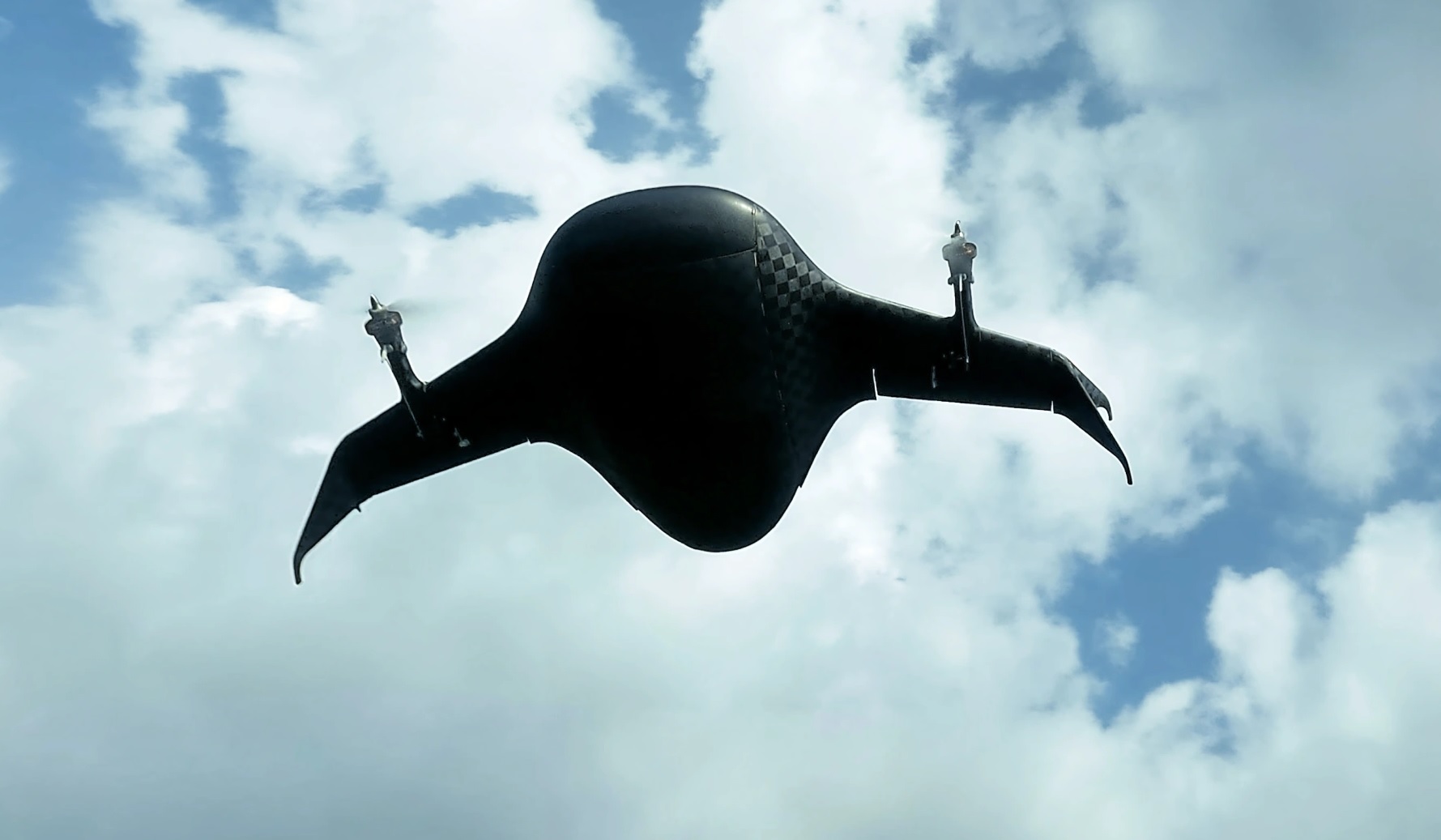
World
BENGALURU, India — May 9, 2026 : Bengaluru-based autonomous logistics startup Airbound has unveiled a new ultra-lightweight autonomous VTOL (vertical take-off and landing) drone designed to reduce delivery costs and improve last-mile logistics operations across healthcare and commercial sectors. The aircraft, known as the TRT drone, combines vertical take-off capability with fixed-wing forward flight. The drone launches vertically like a helicopter and transitions mid-air into airplane-style cruise flight, eliminating the need for runways or launchpads. Airbound said the platform has been developed for zero-infrastructure delivery operations. The TRT drone uses a blended-wing-body tailsitter design and is manufactured primarily from carbon fibre composites and structural foams. According to the company, the proprietary structure is six times lighter and 2.2 times stiffer than conventional drone frames. The drone’s core skeletal frame weighs approximately 350 grams, while the aircraft’s total all-up weight is 2.5 kilograms. The drone can carry payloads of nearly 1 kilogram and travel up to 40 kilometres on a single charge. It operates at a cruise speed of around 60 kilometres per hour and features a 1.4-metre wingspan. Airbound said the aircraft achieves a lift-to-drag ratio of 12 and operates at approximately 60 decibels, allowing quieter operations compared to traditional multi-rotor drones. The drone can fly at altitudes of up to 400 feet in compliance with aviation regulations. The company stated that the aerodynamic blended-wing-body configuration provides nearly four times the efficiency of standard quadcopter drones. The aircraft operates autonomously using onboard sensors and navigation systems capable of adapting to wind and weather conditions. Its nose cone incorporates Kevlar material to ensure GPS and radio signals remain unobstructed during flight operations. Founded by Naman Pushp, Airbound focuses on developing autonomous delivery aircraft engineered and manufactured in India. The startup said its approach prioritises weight reduction, material efficiency, and aerodynamic performance to lower logistics costs. The company estimates the drone’s energy consumption cost at around 10 paise per kilometre and is targeting delivery costs below ₹5 per shipment. Airbound is currently conducting a medical logistics pilot programme with Narayana Health in Bengaluru. Since January 2026, the company has completed more than 700 flights with a zero-failure record as part of the partnership. Under the programme, the drones transport diagnostic samples and medical supplies between Narayana Health’s Chandapura Clinic and a central laboratory in Electronic City. Each flight carries up to 40 diagnostic samples along a 4-kilometre aerial route. The drone network currently supports up to 20 flights daily, compared with three or four daily transfers previously conducted through road-based courier services. Following the pilot operations, Airbound plans to establish a permanent aerial logistics corridor for Narayana Health and expand similar medical drone delivery infrastructure to additional cities, including Kolkata. To support expansion plans, Airbound recently secured $8.65 million in seed funding led by Lachy Groom of Physical Intelligence. The funding round also included participation from Humba Ventures and Lightspeed Venture Partners, along with senior executives from Tesla, SpaceX, and Anduril. The latest investment brings the company’s total funding to $10.4 million. Airbound said the capital will be used to scale manufacturing capacity, expand its workforce, and support broader deployment of autonomous delivery operations across India.
Read More → Posted on 2026-05-09 15:13:56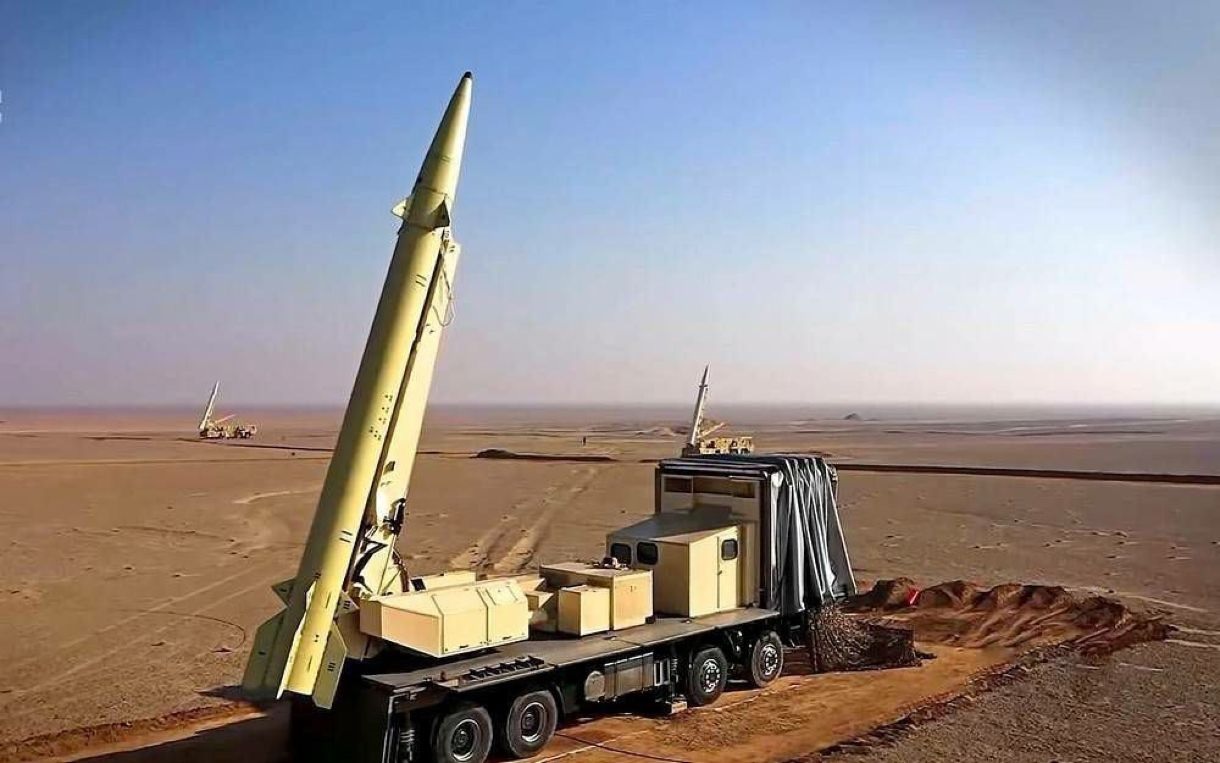
World
WASHINGTON, — May 9, 2026 : Newly analyzed commercial satellite imagery from ports in southern Russia and northern Iran indicates that large shipments of components intended for ballistic missile production have recently been transferred from Russia to Iran through the Caspian Sea corridor, according to defense assessments and maritime activity analysis. The shipments are believed to support ongoing efforts by Iran to replenish and expand its ballistic missile inventory following recent regional conflicts and extensive missile operations conducted by the Islamic Revolutionary Guard Corps Aerospace Force (IRGC Aerospace Force). Maritime Transfers Through Northern Iranian Ports According to the assessments, cargo vessels departed from Russian ports, including Astrakhan, before docking at northern Iranian ports such as Bandar-e Anzali. The Caspian Sea route has increasingly become a central logistics corridor for military-related transfers between Moscow and Tehran. Recent satellite imagery has shown increased cargo handling activity and vessel movement at both Russian and Iranian port facilities. Analysts assessing the shipping patterns believe the transferred materials include components linked to missile propulsion systems, guidance equipment, and structural assemblies required for ballistic missile production. Iran Increasing Reliance on Foreign-Manufactured Components The Iranian Ministry of Defense and Armed Forces Logistics (MODAFL) has gradually begun replacing domestically produced ballistic missile components with parts manufactured in Russia and China. Components that Iranian defense companies can no longer produce efficiently or in sufficient quantities are now increasingly being sourced externally. Defense analysts say the shift reflects continuing strain on Iran’s domestic military production sector following years of sanctions, procurement restrictions, and the operational demands created by recent missile campaigns. The imported components are believed to be intended primarily for the IRGC Aerospace Force, which has accelerated efforts to restore missile stockpiles after launching large numbers of missiles during regional escalations, including the June 2025 “12-Day War” and other operations targeting Israel and regional sites. Expansion of Military Cooperation The missile component transfers are part of broader military-technical cooperation between Iran, Russia, and China under Tehran’s expanding “Look East” strategy, which has increased Iran’s dependence on Russian and Chinese military support and technology. According to defense assessments, Russia has also provided Iran with high-resolution satellite imagery from its orbital assets. Iranian military planners have reportedly used the imagery to monitor military facilities and improve targeting data across the Middle East. China has expanded its cooperation with Iran through the integration of Iranian military systems into the BeiDou Navigation Satellite System, reducing Iran’s reliance on Western GPS infrastructure. Chinese assistance has additionally included radar systems, surveillance equipment, and materials associated with solid-propellant missile production. Ongoing Missile Replenishment Efforts Officials and analysts monitoring the transfers say the continued supply of foreign-produced components has enabled Iran to accelerate the restoration of portions of its ballistic missile inventory while continuing modernization efforts within the IRGC Aerospace Force. The MODAFL continues to oversee the integration of imported missile-related components into Iran’s broader ballistic missile program as international scrutiny over military procurement and arms-control enforcement in the region remains ongoing.
Read More → Posted on 2026-05-09 15:01:31
World
LONDON — May 9, 2026 : A leaked classified document prepared by Russia’s Main Intelligence Directorate (GRU) has revealed a proposal to supply Iran with thousands of advanced fiber-optic guided drones, long-range satellite-guided unmanned systems, and specialized operator training intended to strengthen Tehran’s military capabilities in the Persian Gulf. The confidential 10-page document, obtained by The Economist and reported on May 7-8, outlines plans for the transfer of 5,000 short-range fiber-optic First-Person-View (FPV) drones similar to systems Russian forces have extensively deployed during operations in Ukraine. The proposal also includes an unspecified number of longer-range drones equipped with satellite guidance technology, with reports indicating the possible integration of Starlink-like communication terminals. Fiber-Optic Drones Designed to Bypass Electronic Warfare According to the leaked files, the short-range drones would rely on fiber-optic cables rather than conventional radio-frequency communications. As the drones operate, they spool out a physical cable that maintains a direct connection between the operator and the aircraft, allowing continuous transmission of control signals and live video feeds. Because the systems do not depend on radio frequencies, they are resistant to traditional electronic warfare measures such as signal jamming and interference. Military analysts note that this technology has become increasingly important in Ukraine, where both Russian and Ukrainian forces have heavily relied on electronic warfare systems to disrupt conventional drones. Russian forces have used similar models, including the “Prince Vandal of Novgorod” (KVN) fiber-optic drone, in contested operational environments. Reports indicate such systems can conduct precision strikes at distances ranging from 15 to 30 kilometers while maintaining stable communications in heavily jammed areas. Long-Range Systems and Satellite Guidance In addition to the fiber-optic FPV drones, the proposal includes longer-range unmanned systems equipped with satellite-based navigation and communication systems. The document does not specify the exact number or models involved, though references in the files suggest the possible use of Starlink-like satellite communication terminals to maintain connectivity during operations. The leaked material reportedly contains six diagrams and a regional map showing Iranian coastal areas and islands in the Persian Gulf, including locations near the Strait of Hormuz and Kharg Island. Training Program for Iranian Operators The GRU proposal also details a structured training and recruitment program intended to prepare Iranian personnel to operate both the short-range and long-range drone systems. One recruitment option outlined in the document involves selecting candidates from among the estimated 10,000 Iranian students currently studying at Russian universities. Additional recruits would reportedly be drawn from other vetted communities considered politically reliable. According to the proposal, all candidates would undergo background investigations and loyalty screening before receiving specialized instruction on drone operations, targeting procedures, and system maintenance. The recruitment strategy aligns with recent reports that Russian universities and affiliated institutions have offered financial incentives, academic leave, and career opportunities to students participating in drone warfare programs or assisting in the production of attack munitions linked to the war in Ukraine. Focus on Potential Persian Gulf Operations The leaked assessment frames the proposed drone transfers as part of efforts to help Iran counter potential United States military operations in the Persian Gulf. The document specifically references scenarios involving attempts to reopen the Strait of Hormuz or conduct amphibious operations targeting strategic assets such as Kharg Island. According to the GRU assessment, slow-moving amphibious landing ships could be vulnerable to coordinated drone attacks launched from concealed coastal positions located between 15 and 30 kilometers from their targets. The Strait of Hormuz, which measures roughly 30 kilometers wide at several points, falls within the operational range described for the proposed fiber-optic drone systems. Military analysts say the introduction of large numbers of fiber-optic drones into the Gulf region could force naval planners to reassess existing escort and defensive strategies. Standard electronic warfare systems used by naval vessels are primarily designed to disrupt radio-controlled threats and may have limited effectiveness against drones operating through physical fiber-optic links. Expanding Russia-Iran Military Cooperation The leaked GRU document represents one of the clearest reported examples of expanding military cooperation between Moscow and Tehran involving advanced drone warfare technology. Iran has previously supplied Russia with Shahed-series drones that have been used extensively during operations in Ukraine. In return, Russia has increased military and technical cooperation with Iran across several defense sectors. The proposal was reportedly prepared for presentation to Iranian officials as part of broader discussions aimed at strengthening bilateral defense ties. It remains unclear whether Iran formally accepted the proposal or whether any drone transfers, operator training, or deployments have already taken place.
Read More → Posted on 2026-05-09 14:49:54
World
WARSAW — May 9, 2026 : Poland has officially signed a €43.7 billion low-interest defence loan agreement with the European Union under the bloc’s Security Action for Europe (SAFE) programme, securing the largest allocation awarded to any participating member state. The agreement was signed on Friday during a ceremony attended by Deputy Prime Minister and Defence Minister Władysław Kosiniak-Kamysz, Finance Minister Andrzej Domański, representatives of state development bank BGK, European Commission officials including Commissioners Piotr Serafin and Andrius Kubilius, and Prime Minister Donald Tusk. Poland became the first of 19 participating European Union member states to finalize funding under the SAFE programme, while Lithuania is expected to be the next country to complete the process. SAFE Programme and Funding Structure The SAFE programme is a €150 billion European Union defence financing initiative established to strengthen military readiness and accelerate defence procurement across Europe following security concerns linked to Russia’s ongoing war against Ukraine. The mechanism places strong emphasis on European defence manufacturing, requiring at least 65 percent of funded procurement to be sourced domestically or from European partner countries. Under the agreement, Poland will receive an initial advance payment of approximately €6.5 billion, representing 15 percent of the total allocation, with the first transfer expected as early as May. The financing is structured as a 45-year low-interest loan backed by the European Union’s credit rating, while the remaining funds will be distributed in twice-yearly tranches through 2030. Officials stated that nearly 89 percent of the financing will support Poland’s domestic defence industry and military modernization programmes over the next four years. Political Dispute Over Financing Mechanism The finalization of the agreement followed internal political disputes regarding the structure of the financing arrangement. President Karol Nawrocki vetoed legislation connected to the SAFE mechanism, arguing that the European Union could potentially suspend financing under the 45-year arrangement for political reasons. He also raised concerns that European procurement quotas could limit Poland’s defence purchasing flexibility and affect existing defence cooperation with suppliers from the United States and South Korea. To proceed with the agreement, Prime Minister Donald Tusk’s government approved a resolution authorizing state development bank BGK to secure the SAFE financing and transfer the funds through the Armed Forces Support Fund, a domestic mechanism established in 2022 to finance military procurement. Government officials stated that the revised arrangement would allow most major weapons programmes to continue according to schedule, although some projects originally included in the investment proposal may lose funding. Approximately 7 billion zlotys previously planned for the border guard and police will not be released under the new structure. Defence Priorities and Procurement Plans SAFE financing is expected to support several of Poland’s key defence priorities, including the East Shield border fortification programme along the borders with Russia and Belarus. The project combines physical defensive barriers with electronic warfare systems, drone detection technology, surveillance infrastructure and anti-drone capabilities. Additional funding will be directed toward air defence systems, artillery, armored vehicles and large-scale ammunition production. Polish officials expect approximately 40 arms procurement contracts financed through SAFE funding to be finalized by the end of May. Domestic Defence Industry Beneficiaries A major share of the allocation is expected to strengthen Poland’s domestic defence industry, with the state-owned Polish Armaments Group projected to be the largest overall beneficiary through its subsidiaries. Among the companies expected to receive SAFE-backed contracts is MESKO, which manufactures ammunition and missile systems including the Piorun air-defence system. Fabryka Broni Łucznik is also expected to benefit through contracts linked to the production of Grot rifles, Beryl rifles and VIS 100 pistols. Additional expected beneficiaries include Huta Stalowa Wola, producer of the Krab howitzer, Rak mortar and Borsuk infantry fighting vehicle, and Wojskowe Zakłady Elektroniczne, which develops radar, electronic warfare and air-defence components. Other companies expected to receive SAFE-supported orders include WZL No. 1, which services military aircraft and helicopters, Zakłady Mechaniczne Tarnów, producer of machine guns, sniper rifles, grenade launchers and anti-aircraft systems, ammunition manufacturer Dezamet, and CENZIN, which specializes in arms trade, equipment supplies and modernization services. The SAFE programme also supports Poland’s broader military modernization strategy, including plans to allocate 4.8 percent of GDP to defence spending in 2026.
Read More → Posted on 2026-05-09 14:42:43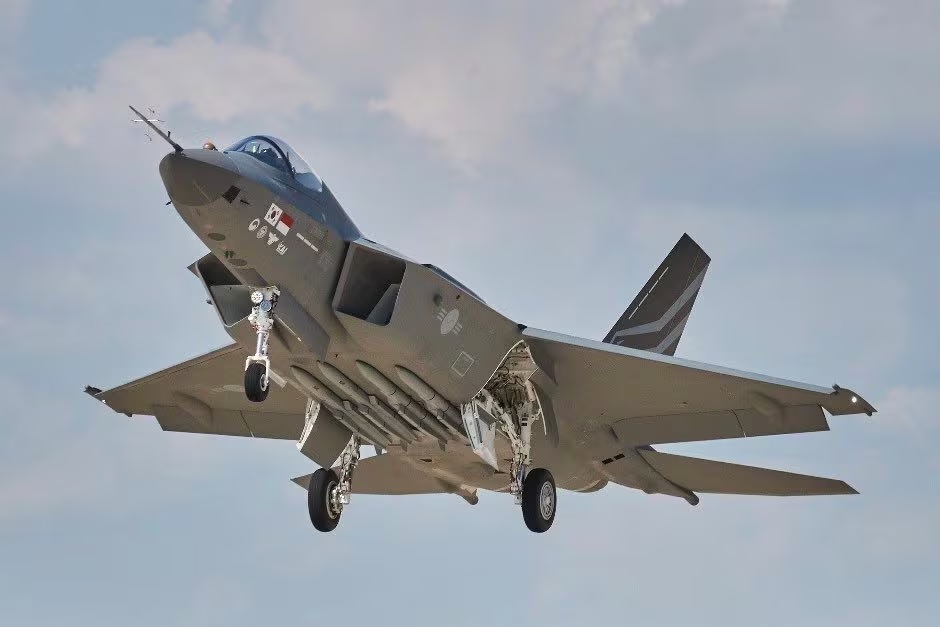
World
SEOUL — May 9, 2026 : South Korea’s indigenous KF-21 Boramae fighter jet has received final combat suitability approval from the Ministry of National Defense, completing the development phase of the Block-I air-to-air variant and clearing the aircraft for operational deployment with the Republic of Korea Air Force (ROKAF). The Defense Acquisition Program Administration (DAPA) announced on May 7, 2026, that the fighter successfully met all required operational capability standards following a multi-year testing and verification campaign. The approval formally concludes the KF-21 Block-I system development program, which began in December 2015. The first serial production aircraft, manufactured by Korea Aerospace Industries, rolled off the assembly line in March 2026 and is scheduled for delivery to the ROKAF in September 2026. Extended Flight Testing Completed DAPA stated that the final approval followed an extended operational evaluation process conducted after the aircraft received provisional combat suitability certification in May 2023. Between May 2021 and February 2026, six KF-21 prototypes completed more than 1,600 accident-free test flights covering approximately 13,000 flight test conditions. The evaluation campaign verified the aircraft’s flight stability, structural integrity, durability, mission systems, and operational reliability under combat-related conditions. The testing program also included aerial refueling trials, weapons release evaluations, flight performance analysis, and system integration verification across the aircraft’s operational envelope. Flight testing concluded on January 13, 2026, approximately two months ahead of the original schedule. The first production aircraft later completed its maiden flight on April 15, 2026, in Sacheon. Technical Configuration and Combat Systems The KF-21 Boramae was developed as a 4.5-generation multirole fighter intended to replace South Korea’s aging F-4 Phantom II and F-5 Tiger II fleets. The aircraft incorporates semi-stealth design features, including a reduced frontal radar cross-section and semi-recessed weapon integration for selected air-to-air munitions. The Block-I configuration is optimized primarily for air superiority and air-to-air combat missions. The aircraft is powered by two General Electric F414-GE-400K turbofan engines and can achieve a maximum speed of Mach 1.81, or approximately 2,200 kilometers per hour. The fighter is equipped with the domestically developed APY-016K Active Electronically Scanned Array (AESA) radar produced by Hanwha Systems. The radar system enables simultaneous detection and tracking of multiple aerial targets during combat operations. The KF-21 Block-I includes 10 external hardpoints and can carry a maximum weapons payload of approximately 7,700 kilograms. The aircraft has been integrated with MBDA Meteor beyond-visual-range missiles and IRIS-T short-range air-to-air missiles. Phased Deployment Plan South Korea is fielding the KF-21 through a phased capability expansion program designed to accelerate operational deployment while additional mission systems continue development. Under the current production schedule, South Korea plans to deliver 40 Block-I aircraft to the ROKAF between 2026 and 2028. Development of the Block-II variant is continuing in parallel. The upgraded configuration is intended to expand the aircraft’s air-to-ground and maritime strike capabilities through additional weapons integration and mission system enhancements. DAPA plans to acquire an additional 80 Block-II aircraft between 2029 and 2032, bringing the planned KF-21 fleet to 120 aircraft by 2032. Strategic and Industrial Significance DAPA officials described the approval as a major milestone for South Korea’s domestic aerospace and defense industry. Noh Ji-man, head of DAPA’s Korean Fighter Program Group, stated that the certification demonstrates South Korea has secured independent fighter jet development capabilities through cooperation between the military, government agencies, and domestic industry partners. The KF-21 program represents South Korea’s largest indigenous aerospace development effort to date, combining a domestically designed airframe with locally developed avionics, radar systems, and integrated weapons systems to meet ROKAF operational requirements. System development for the KF-21 program is scheduled to formally conclude in June 2026, with operational integration into frontline air force units expected to continue following the first deliveries later this year.
Read More → Posted on 2026-05-09 14:29:25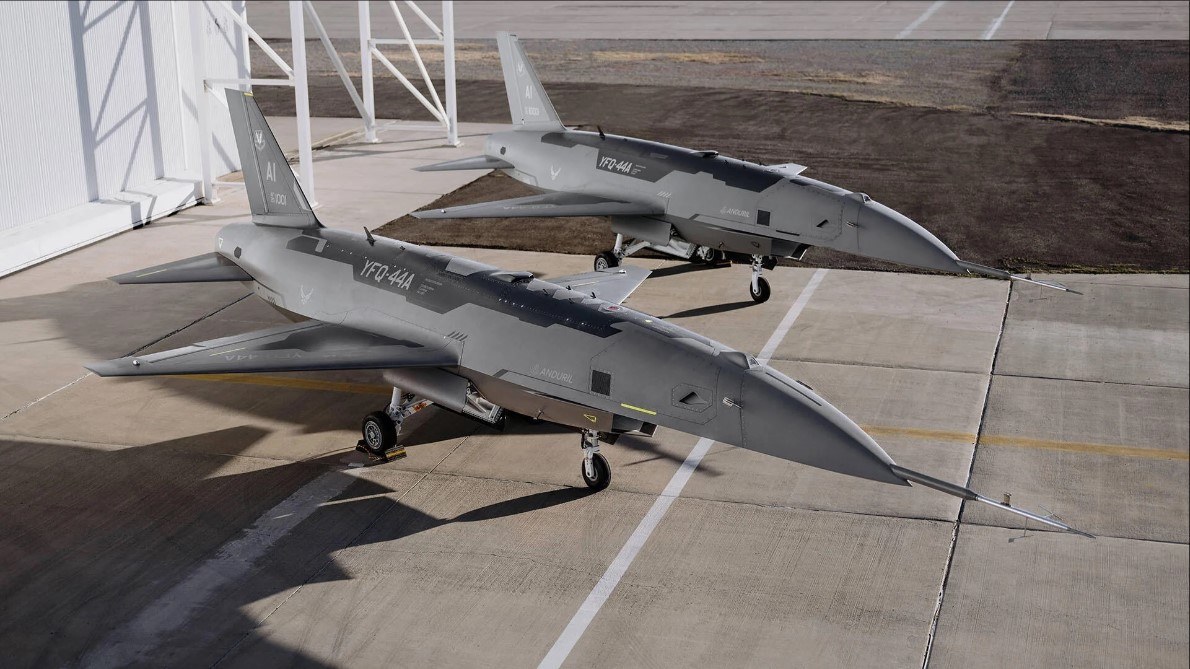
World
WASHINGTON — May 9, 2026 : The U.S. Air Force is moving forward with plans to procure more than 150 Collaborative Combat Aircraft (CCA) before fiscal year 2031, marking a major shift from experimental autonomous aviation programs toward operational deployment alongside crewed fighter aircraft. The procurement objective was outlined during congressional budget testimony delivered on April 29, 2026, as the Department of the Air Force presented its fiscal year 2027 budget request. Air Force leadership identified the CCA program and the future Boeing F-47 as the service’s two primary modernization priorities. The Department of the Air Force requested a record $338.8 billion budget for fiscal year 2027. Within the proposal, funding for the CCA program would increase from $891 million enacted in fiscal year 2026 to $1.431 billion in fiscal year 2027. The request includes approximately $996.5 million in procurement funding for Increment 1 production aircraft and an additional $150 million in advance procurement funding for fiscal year 2028. Pentagon budget documents indicate the total CCA-related request reaches roughly $2.37 billion when procurement, research, development, testing, and evaluation funding are combined. Officials stated that the planned “150-plus” aircraft inventory will include low-rate production platforms, operational experimentation fleets, training aircraft, and initial operational squadrons under the Future Years Defense Program through 2031. Autonomous Aircraft to Support Crewed Fighters The Air Force plans to integrate CCAs with frontline fighter aircraft including the Lockheed Martin F-35 Lightning II, Lockheed Martin F-22 Raptor, Boeing F-15EX Eagle II, and the future F-47. Rather than replacing crewed fighters, the autonomous aircraft are intended to function as missile carriers, intelligence, surveillance and reconnaissance platforms, electronic warfare systems, passive targeting nodes, and decoys. The Air Force stated that the concept is designed to provide additional combat capacity without requiring proportional increases in pilot numbers or sustainment costs. The initiative also reflects growing Pentagon concerns regarding pilot shortages, industrial production rates, missile expenditure, and maintaining tactical aircraft inventories during a prolonged conflict against peer adversaries such as China. Unlike the Northrop Grumman B-21 Raider, which remains in low-rate production, and the F-47, which is still in engineering and manufacturing development, CCA prototypes are already undergoing flight testing and operational experimentation. Increment 1 Aircraft Under Development Two aircraft have been selected for Increment 1 of the program: the General Atomics YFQ-42A Dark Merlin developed by General Atomics Aeronautical Systems and the Anduril YFQ-44A Fury produced by Anduril Industries. The YFQ-42A Dark Merlin evolved from the XQ-67A Off-Board Sensing Station program and uses a modular “common chassis” design intended to simplify production and mission adaptation. The aircraft emphasizes endurance, persistence, and low-observable performance through a long fuselage, dorsal intake configuration, and internal payload bay. The platform is optimized for ISR, electronic warfare, passive targeting, and stand-off missile support missions. Air Force and industry officials estimate the aircraft’s combat radius exceeds 1,300 kilometers during subsonic operations. The aircraft supports internal carriage of AIM-120 AMRAAM missiles and sensor payloads. Developmental testing is currently underway in California, while operational experimentation activities continue at Nellis Air Force Base. The YFQ-44A Fury originated from Blue Force Technologies before the company was acquired by Anduril Industries. The aircraft is powered by a Williams FJ44-4M turbofan engine producing approximately 17.8 kilonewtons of thrust and is designed for tactical responsiveness and close integration with crewed fighters. Reported performance figures include speeds approaching Mach 0.95, sustained maneuvering at 4.5 g, peak maneuvering up to 9 g, and operational altitudes reaching 15,200 meters. Unlike the Dark Merlin, the Fury carries weapons on external hardpoints. Flight testing with inert AIM-120 Captive Air Training Missiles has already begun as the platform progresses toward escort, interception, and electronic warfare support missions. Anduril confirmed that production activities for the aircraft have started at the company’s Arsenal-1 manufacturing facility. Operational Testing at Nellis Air Force Base Operational experimentation is being conducted through the Experimental Operations Unit (EOU) at Nellis Air Force Base under Air Combat Command. Activated in June 2025, the EOU serves as both a testing organization and doctrinal development center for autonomous aviation. Current activities include evaluating distributed targeting, sensor fusion, communications resilience, pilot workload management, and human-machine teaming procedures in electronically contested environments. Lt. Col. Matthew Jensen, commander of the EOU, stated that operational personnel rather than engineers are directly flying and evaluating the aircraft during experimentation activities. The Air Force is also studying how many autonomous aircraft a single pilot can supervise effectively and determining acceptable levels of autonomous authority during communications disruptions or electronic warfare conditions. To support future deployment of advanced aircraft at Nellis Air Force Base, the Air Force requested approximately $730 million in fiscal year 2027 military construction funding for new hangars and support infrastructure associated with the F-47 program, which is expected to conduct its first flight in 2028. International Participation Expands The CCA initiative is also expanding through international cooperation. On April 23, 2026, the U.S. Department of the Air Force and the Netherlands Ministry of Defence formalized an agreement integrating the Netherlands into Increment 1 experimentation activities. Under the agreement, the Netherlands will finance two prototype aircraft assigned to the EOU while Dutch personnel participate directly in operational testing, autonomy development, and command-and-control experimentation alongside U.S. forces. The aircraft will remain U.S.-owned assets. The partnership supports interoperability with the Netherlands’ F-35A fleet and reflects broader NATO interest in autonomous force multiplication concepts for smaller fighter fleets. Air Force leadership stated that affordability, industrial scalability, modular systems, supply chain resilience, and open architecture development remain the principal challenges to fielding hundreds of survivable autonomous combat aircraft over the coming decade.
Read More → Posted on 2026-05-09 14:20:21
World
DUBAI — May 8, 2026 : Iran’s Islamic Revolutionary Guard Corps (IRGC) Navy has issued a radio advisory instructing commercial vessels operating in the Strait of Hormuz to remain at least 10 miles away from United States warships, amid continued military tensions and disruptions to maritime traffic in the region. The advisory was broadcast over VHF Channel 16, the international emergency radio frequency used for maritime communications. According to an audio recording shared with CNN, a voice identified as part of the IRGC Navy warned vessels to keep their distance from US naval ships “for your safety,” adding that Iranian forces could use “missiles and drones” against American warships during potential operations. The warning followed overnight skirmishes and heightened naval activity in the Strait of Hormuz, one of the world’s most strategically important shipping routes for global energy supplies. Maritime industry sources cited by CNN stated that Iranian forces also contacted commercial ships operating in the northern section of the waterway and instructed them to move southward toward Dubai. The vessels reportedly complied with the instructions. Sources further reported hearing intense gunfire in parts of the strait during the same period. The IRGC advisory forms part of broader Iranian maritime measures introduced during the ongoing confrontation surrounding the US-led “Project Freedom” operation. The operation, launched by the United States to escort and guide commercial shipping through the Strait of Hormuz, has involved increased US naval deployments and convoy protection efforts. US officials have stated that several merchant vessels have successfully completed transit operations under naval support. Iranian authorities, however, have disputed some US claims regarding safe passage operations and have continued enforcement activities in the area. The IRGC has previously issued directives regarding designated shipping corridors and warned that vessels deviating from assigned routes could be considered security threats. Iranian forces have also seized commercial ships in certain instances during the current standoff. The United Kingdom Maritime Trade Operations (UKMTO) centre has stated that commercial traffic through the Strait of Hormuz remains “significantly reduced” due to the security situation. In recent advisories, the organisation warned that navigation through the waterway carries a “high risk based upon recent attacks on ships in the area” and confirmed several security-related incidents over the past 48 hours. The latest developments come after the United States implemented a naval blockade on April 13 targeting commercial shipping linked to Iranian ports. Following the start of the blockade, US Central Command reported intercepting dozens of vessels suspected of violating restrictions. Iran responded by increasing IRGC naval patrols, deploying drones, and conducting seizures of cargo vessels transiting the strait. Marine traffic monitoring data indicates that a growing number of commercial ships are currently loitering on both sides of the Strait of Hormuz rather than attempting transit, reflecting continued uncertainty among shipping operators and insurers over the security environment. US Central Command has maintained that American naval forces are operating to ensure freedom of navigation and protect commercial shipping, while responding to threats in self-defence. Iranian state-affiliated media outlets have reported missile and drone operations targeting US forces, although US officials have denied reports that American warships sustained damage during recent encounters. No new operational changes to commercial transit procedures or US naval deployments in the region have been officially announced by either Washington or Tehran. International maritime authorities and naval forces continue to monitor the situation closely as tensions persist in the Strait of Hormuz.
Read More → Posted on 2026-05-08 18:09:55
World
MOSCOW — May 8, 2026 : Russia has doubled production of combat aircraft since the start of the war in Ukraine, according to Rostec Chief Executive Sergei Chemezov, who presented the claim during a formal meeting with Russian President Vladimir Putin. The statement, published through the Kremlin’s official channels, forms part of Moscow’s broader effort to demonstrate that Russia’s military-industrial sector has adapted to wartime conditions despite extensive Western sanctions imposed since 2022. Russian officials have repeatedly argued that defence production has expanded significantly and that the country’s aerospace industry is successfully replacing combat losses while sustaining ongoing operations. Independent production figures and battlefield loss assessments from 2025, however, indicate that Russia’s aircraft manufacturing sector continues to face significant constraints, with confirmed deliveries falling short of official procurement goals and attrition rates exceeding replacement output. Combat Aircraft Deliveries Fell Short of Official Targets According to an analysis published by the Ukrainian defence outlet Militarnyi, Russia delivered at least 30 new tactical combat aircraft to the Russian Aerospace Forces during 2025. The majority of those aircraft consisted of upgraded variants of existing Soviet-era platforms rather than large-scale deliveries of next-generation systems. The confirmed deliveries included approximately 14 to 15 Su-34M frontline bombers, 12 Su-35S multirole fighters delivered across six separate batches, two Su-30SM2 multirole aircraft, and roughly two Su-57 fifth-generation fighters. The Su-34M remained the largest single category of deliveries during the year. The aircraft currently serves as Russia’s primary frontline strike bomber and has been widely employed in glide-bomb operations during the war in Ukraine. The Su-35S continued to support air-superiority and escort missions in contested airspace. Militarnyi noted that the operational status and readiness level of the reported Su-57 deliveries remain unclear. Independent assessments cited by NV indicated that Russia’s procurement targets for 2025 aimed for production of as many as 57 combat aircraft across the Su-34, Su-35, Su-30 and Su-57 programmes. Based on the verified delivery figures, actual output reached roughly half of the planned target. Wartime Attrition Continued to Exceed Production While Russia continued delivering new aircraft throughout 2025, combat and operational losses remained substantially higher than replacement rates. According to assessments referenced by NV, the Russian Aerospace Forces lost 65 aircraft during the year in the war against Ukraine. The losses included aircraft destroyed in aerial operations as well as assets damaged or destroyed during Ukrainian strikes on Russian airbases. Throughout 2025, Ukrainian long-range attacks targeted multiple forward operating airfields, including facilities where Russian aircraft were parked in exposed positions. Among the aircraft reportedly struck were MiG-29 fighters and Il-38N maritime patrol aircraft. When measured against the approximately 30 newly delivered aircraft, the reported losses resulted in a net reduction of around 35 tactical aircraft during the year. The figures indicate that current production capacity remains insufficient to fully replace wartime attrition. Su-57 Programme Continues to Face Delays Russia has continued to present the Su-57 fifth-generation fighter programme as a central element of its long-term military modernisation strategy. However, production levels remain limited. Only about two Su-57 aircraft were reportedly delivered during 2025. Although Russia’s United Aircraft Corporation later announced the transfer of another modernised batch of Su-57 fighters in February 2026, the company did not disclose the number of aircraft involved. Open-source intelligence estimates currently place the total operational Su-57 fleet at around 30 aircraft. Analysts continue to identify development and production difficulties within the programme, particularly involving the Izdeliye 177 next-generation engine. The engine only entered flight-testing stages in late 2025 after repeated delays, slowing broader plans for full-rate production of the fighter. Sanctions Continue to Affect Aerospace Manufacturing Western sanctions targeting Russia’s aerospace and defence industries have remained in place since 2022, focusing on restrictions involving precision manufacturing equipment, avionics, semiconductors, specialised alloys, and electronic components required for advanced aircraft production. Russia has attempted to mitigate those restrictions through domestic component substitution programmes, parallel import networks, and the reallocation of industrial resources toward defence manufacturing. Despite those measures, analysts assess that supply chain disruptions and reduced access to advanced tooling and electronics continue to affect production efficiency and limit expansion capacity. The wider pressures affecting Russia’s aviation sector were also reflected in Chemezov’s remarks regarding civilian aerospace production. During the same meeting with Putin, the Rostec chief stated that serial production of the domestically developed MS-21 passenger aircraft is now expected to begin in 2027, highlighting continued delays within Russia’s civil aviation industry alongside ongoing military production demands. Although Russian officials maintain that aircraft production has significantly increased since the beginning of the war, independently verified delivery data and wartime loss figures indicate that current output levels have not yet reached a point where they can fully offset ongoing combat attrition within the Russian Aerospace Forces.
Read More → Posted on 2026-05-08 17:37:35
World
SAN FERNANDO, Spain — May 8, 2026 : Spanish naval shipbuilder Navantia has laid the keel for the seventh Avante 2200-class corvette being built for the Royal Saudi Naval Forces (RSNF), marking another milestone in the ongoing ALSARAWAT naval programme between Spain and Saudi Arabia. The vessel, identified as Construction No. 576, will enter service as HMS Neom. The keel-laying ceremony took place at Navantia’s shipyard in San Fernando, located in the Bay of Cádiz, and was conducted as a working event attended by representatives from Navantia’s programme teams and RSNF personnel. The Saudi delegation was led by Commodore Fareed M. Alharbi, accompanied by members of the Project Control Office team. Senior representatives from Navantia also attended the event, including Alberto Cervantes, Director of the Corvette and Maritime Action Vessels Business Unit. During the ceremony, the first structural block of HMS Neom was placed on the slipway, formally initiating assembly of the ship. The vessel now joins HMS Al-Madinah, the first ship in the current three-vessel batch, as both ships move toward launch preparations scheduled for the coming months. The corvette forms part of the second series of three Avante 2200-class vessels ordered by the Saudi Arabian Ministry of Defense under a contract signed in December 2024. The agreement follows the successful completion and delivery of the first batch of five Avante 2200 corvettes, which were handed over to the RSNF between 2022 and 2024. The Avante 2200 is a multi-mission corvette designed for a broad range of naval and maritime security operations. Its mission profile includes exclusive economic zone patrols, maritime traffic surveillance and control, search and rescue operations, protection of strategic assets, intelligence gathering, and support for anti-surface warfare, anti-submarine warfare, anti-air warfare, and electronic warfare missions. The vessels have an overall length of approximately 104 metres, a beam of around 14 metres, and a draught of about 4.3 metres. Full-load displacement ranges between 2,200 and 2,470 tonnes depending on configuration. Each ship is capable of accommodating up to 111 personnel. Powered by four diesel engines in a combined diesel and diesel (CODAD) configuration, the corvettes are capable of achieving maximum speeds of between 25 and 27 knots. Operational range is estimated at approximately 4,500 to 5,000 nautical miles. The combat systems fitted aboard the class include a 76mm main naval gun, an eight-cell vertical launch system for surface-to-air missiles, torpedoes, and smaller calibre weapon stations. The ships are also equipped with a stern flight deck and enclosed hangar capable of supporting operations involving a 10-ton class helicopter. Under the terms of the current programme, Navantia will complete and deliver the first vessel of the second batch directly from Spain. The second and third ships, including HMS Neom, will undergo final completion work in Saudi Arabia. This includes installation, integration, and testing of combat systems through the SAMINavantia joint venture, continuing the industrial cooperation model established during the previous contract. The programme also includes a broader support and training package covering integrated logistic support, operational assistance, and crew training. Navantia will additionally support an operational evaluation phase conducted by the Spanish Navy at Rota Naval Base, where support services for the ships will be provided. As part of the Industrial Participation Agreement linked to the programme, Navantia is also responsible for training approximately 100 Saudi engineers in naval engineering and shipbuilding disciplines. According to Navantia, the construction of the three corvettes is expected to generate approximately four million hours of industrial activity in the Bay of Cádiz region. The programme is projected to sustain up to 2,000 jobs, including direct, indirect, and induced employment throughout the duration of the contract. The keel-laying of HMS Neom marks continued progress in the second batch of Avante 2200 corvettes and further expands long-term defence industrial cooperation between Spain and Saudi Arabia in the naval sector.
Read More → Posted on 2026-05-08 17:30:10
World
WASHINGTON, — May 8, 2026 : Saudi Arabia and Kuwait have lifted restrictions on U.S. military use of their bases and airspace, according to a report by The Wall Street Journal. The decision removes a key obstacle and clears the way for the possible restart of the U.S. naval operation known as “Project Freedom” as early as this week. Pentagon officials have stated that operations under Project Freedom could resume as early as this week. The Trump administration is now considering restarting the naval mission to guide commercial ships through the Strait of Hormuz. Access for U.S. basing and overflight operations in Saudi Arabia was restored following a second phone call between President Donald Trump and Saudi Crown Prince Mohammed bin Salman. Project Freedom is a U.S.-led mission to escort and guide merchant vessels through the Strait of Hormuz amid disruptions to commercial shipping in the region. The operation was launched earlier in May 2026 and involved U.S. Navy guided-missile destroyers, aircraft, and multi-domain unmanned platforms. It was paused after only a short period when Saudi Arabia and Kuwait imposed restrictions on the use of their bases and airspace. The Strait of Hormuz is a critical chokepoint for global energy supplies. The mission relies heavily on regional basing and overflight permissions to provide air and naval support for commercial shipping. The restrictions had been put in place shortly after the initial launch of the operation. Their removal follows high-level discussions between the United States and the Gulf states. No official confirmation of the exact restart date or operational details has been released by the Pentagon or the White House at this time. Further information on the scope and timeline of any resumed operations is expected in the coming days.
Read More → Posted on 2026-05-08 17:23:16Search
Top Trending in 24 Hours
-
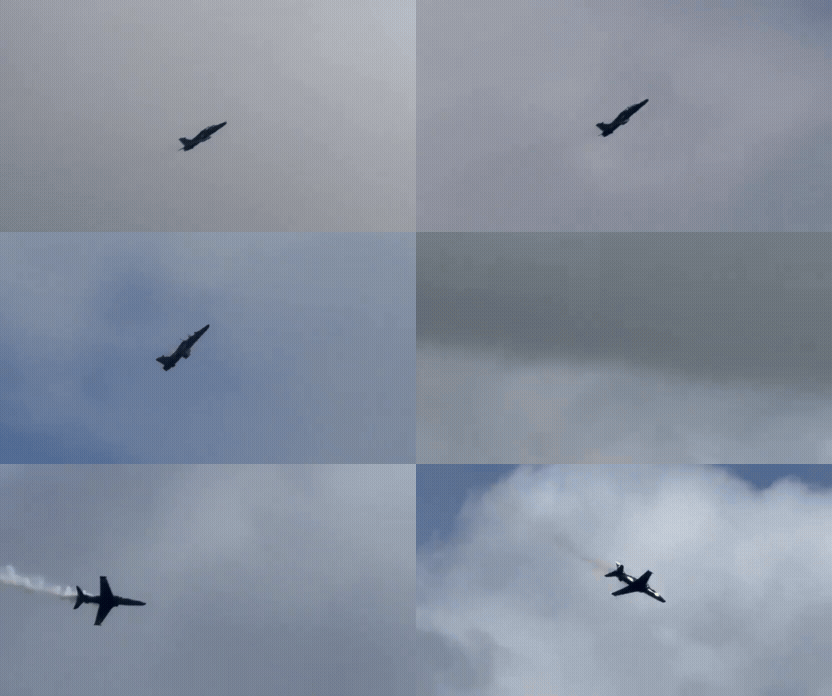 UK Air Force Hawk T2 Trainer Aircraft Crashes Near Valley After Takeoff, Both Pilots Eject Safely
-
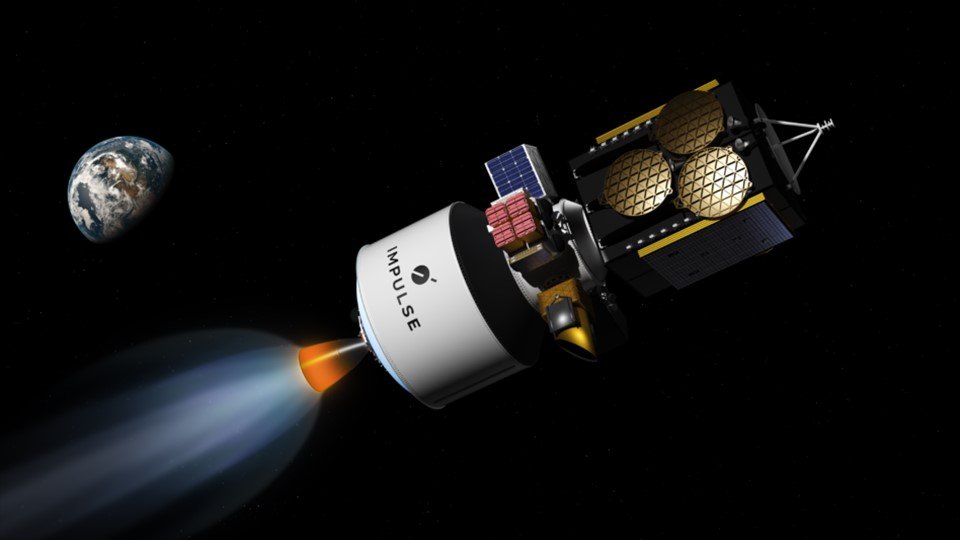 U.S. Space Force Awards Impulse Space $28 Million Contract for 2029 Orbital Surveillance Mission
-
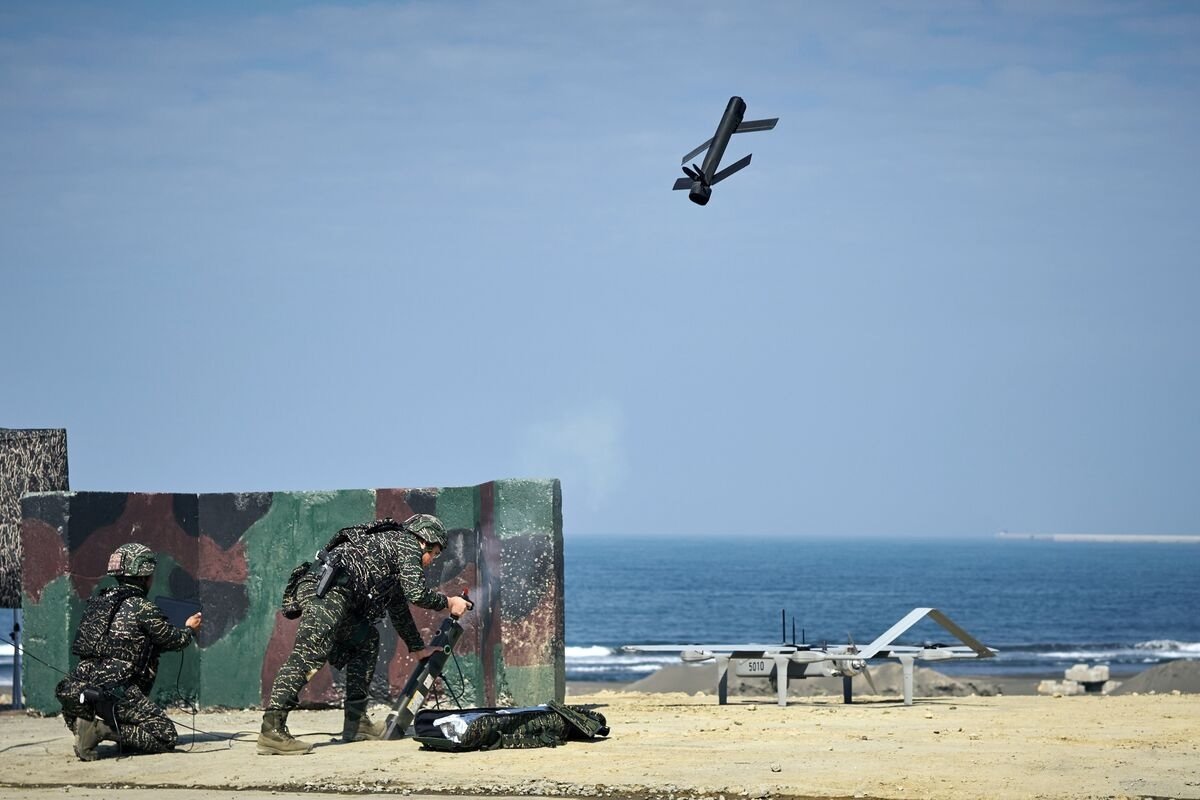 Taiwan Integrates Attack Drones Into Three-Service Live-Fire Exercise at Jiupeng for First Time
-
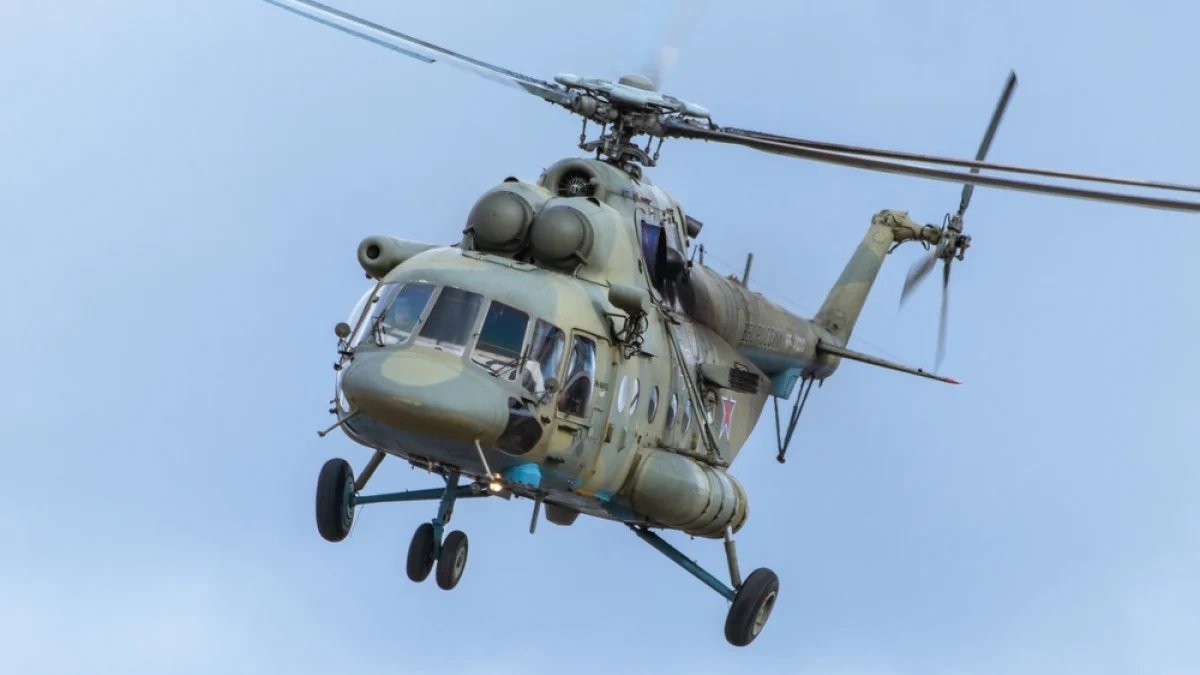 Russian Mi-8 Military Helicopter Crosses Into Polish Airspace for 42 Seconds Near Braniewo
-
 Roketsan KARAOK Anti-Tank Missile Successfully Hits Aerial Target for First Time
-
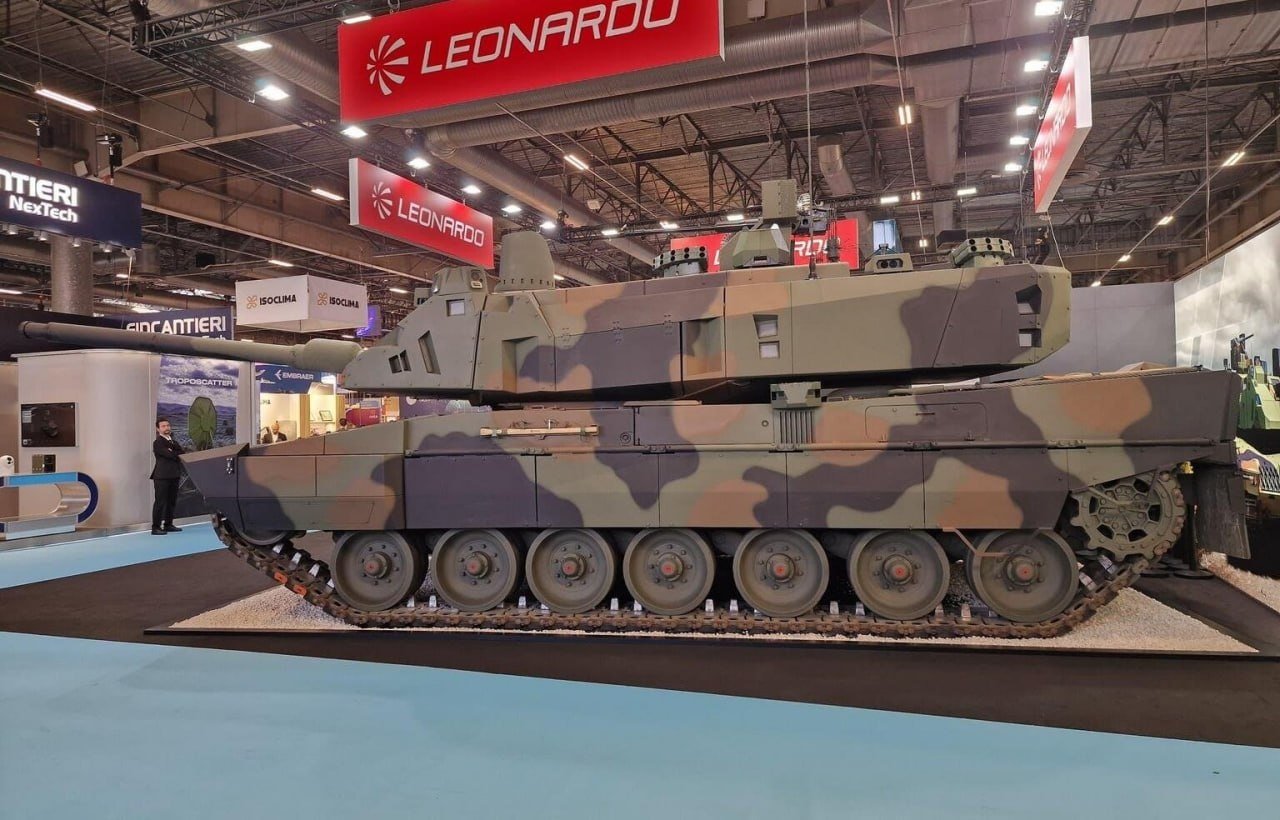 Italy Allocates Up to €5.14 Billion for Procurement of 132 New Main Battle Tanks
-
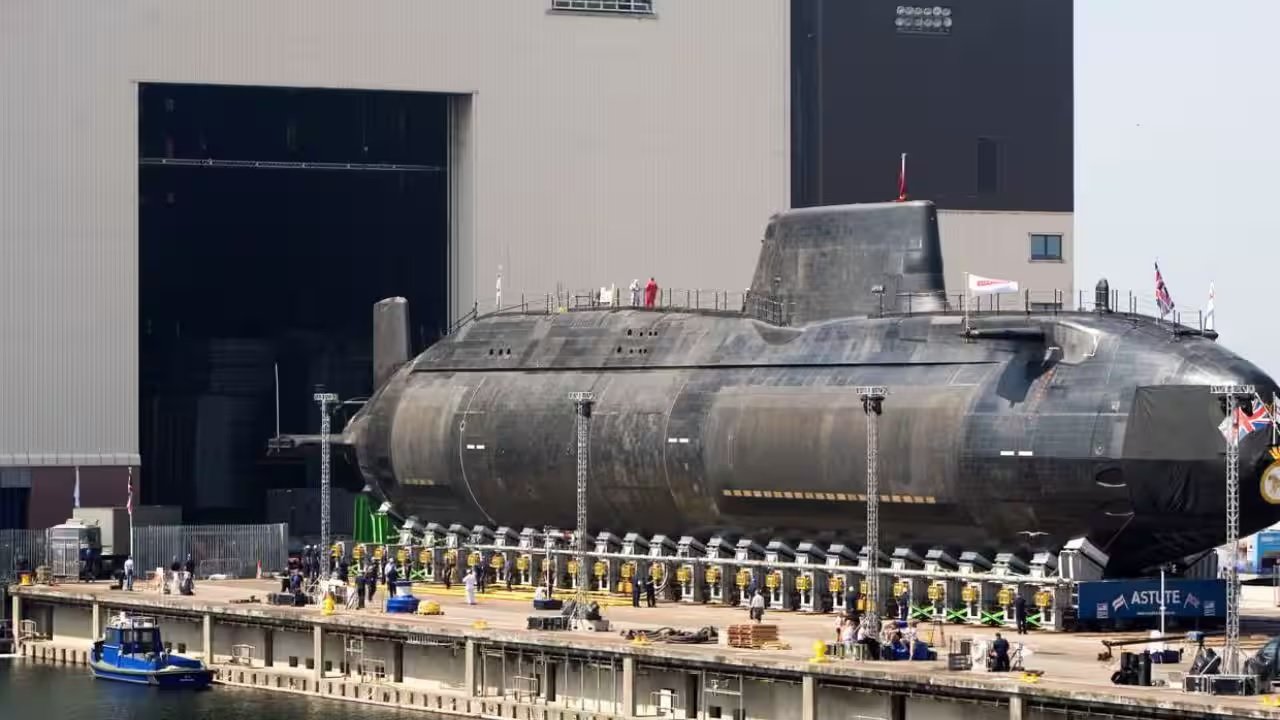 UK Announces £6 Billion Investment to Double Nuclear Submarine Production Rate
-
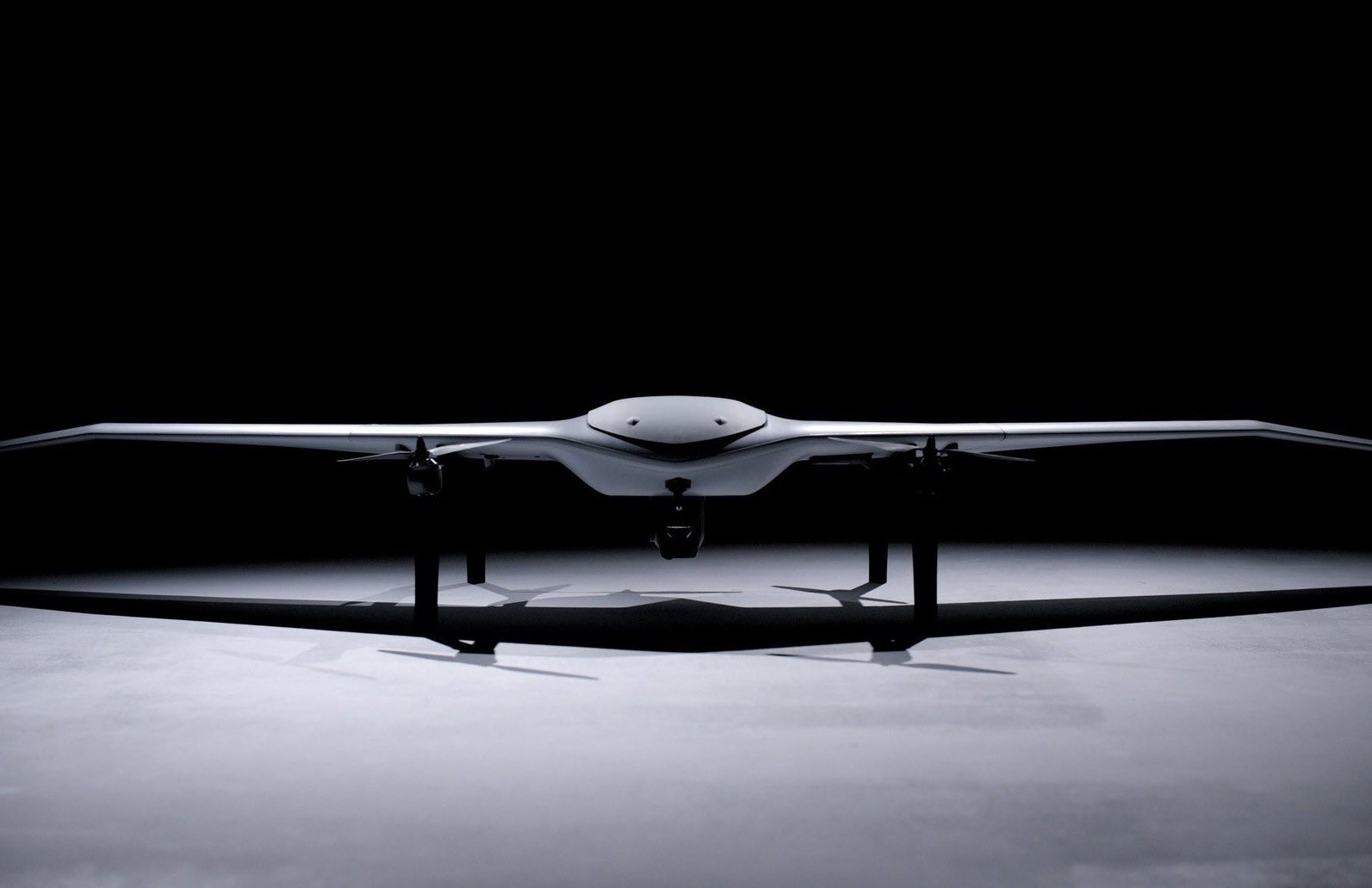 Dutch Firm DeltaQuad Launches Evo-LE VTOL UAV With Up to Eight-Hour Endurance
Top Trending in 4 Days
-
 U.S. Army Awards $10.64 Million Contract to Ukrainian Drone Maker Skyeton for Raybird Systems
-
 India’s xTerra Robotics Launches Indigenous DHAV-Hy Wheeled-Legged Quadruped for Industrial Inspection
-
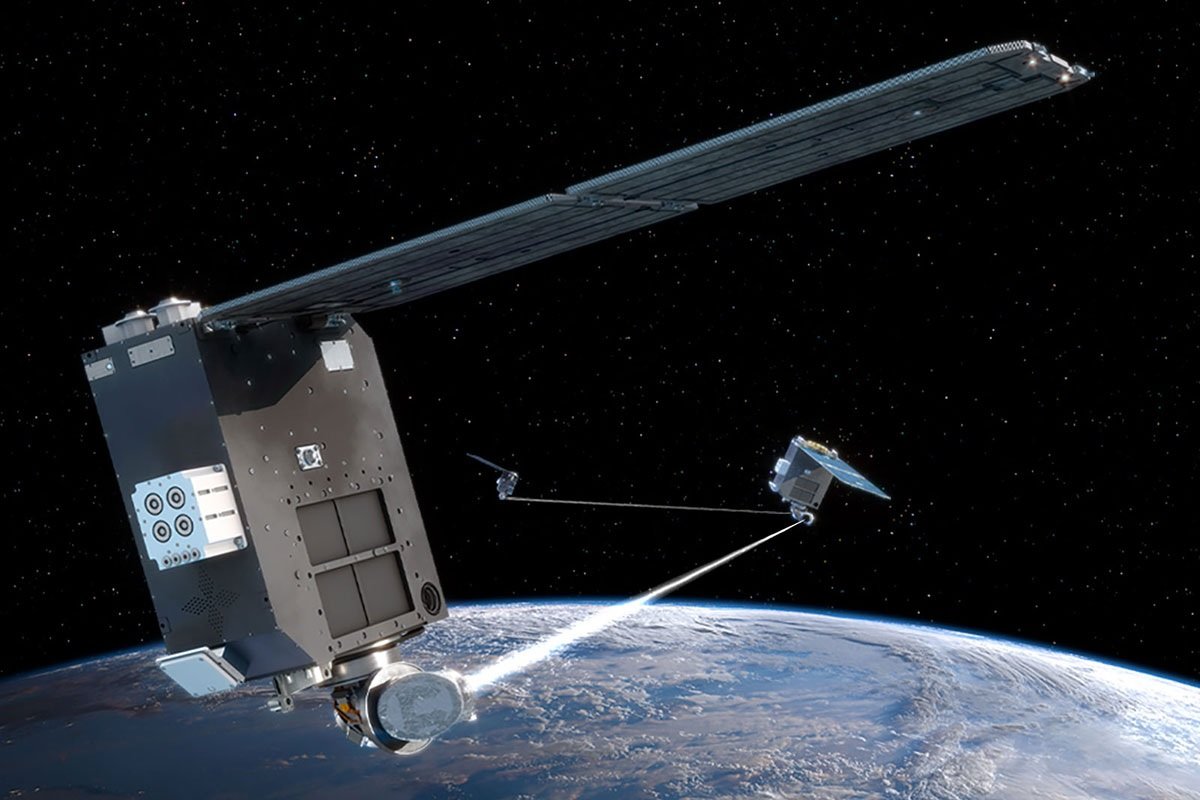 U.S. Space Force Seeks Rapid-Response Satellites for Close-Range Orbital Inspections
-
 North Korea Fires Short-Range Ballistic Missile Toward Sea of Japan After Freedom Edge 26
-
 Ukraine Reports First Use of Fire Point’s FP-7 Tactical Ballistic Missile inMoscow-Region Strikes on Oil Refinery
-
 U.S. Government Seizes Almasirah.net, Houthi-Linked News Website
-
 US Navy Submarine Director Outlines Four-Pillar Plan to Raise Build Rates
-
 U.S. Delivers First CH-47F Chinook to Egypt Under 12-Helicopter Deal