World
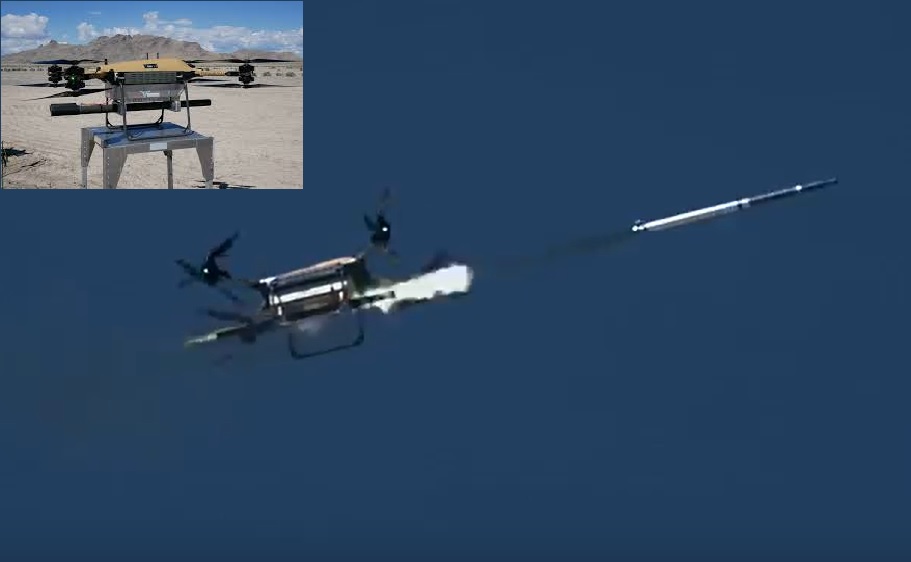
FORT RUCKER, Alabama — May 31, 2026 : Defense industry partners, alongside multiple U.S. Army aviation and development organizations, successfully tested a three-shot rocket launcher integrated onto a TRV 150 logistics drone during a live-fire event at Fort Rucker on May 20, aiming to extend precision-strike capabilities to lower-echelon formations, including the battalion level. The test combined the TRV 150 tactical resupply drone, manufactured by Survice Engineering Company, with a three-pack Advanced Precision Kill Weapon System (APKWS) launcher developed by BAE Systems FalconWorks. The system fires 70 mm laser-guided rockets derived from standard Hydra rockets fitted with APKWS guidance kits, adding a precision engagement capability to a platform primarily designed for logistics and resupply missions. The demonstration was supported by the Program Executive Office–Maneuver Air, Aviation Future Concepts Directorate, U.S. Army Combat Capabilities Development Command (DEVCOM) Armaments Center, Capability Program Executive Aviation, and the U.S. Army Aviation Center of Excellence. According to Survice Engineering, the project was an industry-led and self-funded initiative, rather than a government requirement. Clark Dutterer, vice president of business development for Survice Engineering, said the company identified a potential operational capability and moved forward without waiting for formal Army requirements. “Normally, industry waits for requirements to come out of the government, and they meet that requirement,” Dutterer said. “In this case, we saw that there was something that we could prove out, a new capability, and we didn’t want to wait for a requirement. We self-funded this to go ahead and do that.” The project has been supported through internal research and development funding since January 2025, focusing on integrating existing fielded technologies rather than developing a new weapons system. Platform and Weapon Integration The TRV 150 is currently fielded as a logistics and resupply platform and serves as a program of record with both the U.S. Army and Marine Corps. Developed in collaboration with Malloy Aeronautics and derived from the Malloy T-150 copter, the aircraft is an electric vertical take-off and landing (eVTOL) drone designed for logistics resupply operations. The platform has a payload capacity of up to 150 pounds (68 kilograms), allowing it to carry the three-shot APKWS launcher and munitions. Each APKWS-guided 70 mm rocket weighs approximately 15.8 kilograms, remaining within the drone’s carrying limits when integrated with launcher hardware. Rob Baltrusch, chief engineer at Survice Engineering, described the drone as the “pickup truck” of the sky, noting that it provides power, data connections, and expansion interfaces for different payloads. The TRV 150 operates through an interface based on the Android Tactical Assault Kit (ATAK) and uses simplified encrypted communications to reduce operator workload. “It calculates all of the range estimation and takes a lot of the pilot duties away from the Soldier, to where they can literally give it a grid coordinate, wait, and it tells you if it can make it there, delivers the payload, and calculates the route,” Baltrusch said. Flight Testing and Safety Evaluation Testing at Fort Rucker focused on evaluating the drone’s flight-control software and physical response during rocket launches. Engineers assessed yaw and impulse compensation, particularly when firing from the outboard tubes of the horizontally mounted launcher. Because multirotor drones can experience instability during weapon release, maintaining airborne stability and safe weapons deployment was a primary objective. Tristan Decker, a system safety engineer with the DEVCOM Armaments Center, said Fort Rucker’s safety protocols for unmanned aerial systems helped streamline testing and operational procedures. Expanding Precision Strike to Lower Echelons The integration of APKWS onto the TRV 150 aims to move precision-guided strike capability closer to frontline formations. APKWS rockets are currently deployed from platforms such as the AH-64 Apache and other higher-tier aviation systems. Integrating the same munition onto the TRV 150 could make precision engagement capabilities available at the battalion level and below, increasing expeditionary flexibility. “APKWS is currently deployed from Apache and other more exquisite assets, so core and above deployment,” Dutterer said. “With that same effect on a TRV 150, you’re bringing it down to potentially battalion and below, and making it more expeditionary. You can wrap different [concepts of operations] around it for different units, depending on what their needs may be.” The effort also aligns with senior military guidance requiring unmanned aerial vehicles to include a lethal payload option using existing inventory wherever possible. Previous Demonstrations and Future Testing The Fort Rucker demonstration followed an earlier single-shot test at Dugway Proving Ground in May 2025, which included an air-to-air engagement against a Group 2 fixed-wing drone and two air-to-ground engagements. The May 20 test marked the first successful flight and firing using a three-shot launcher, expanding payload and testing capability beyond the earlier demonstration. Both the TRV 150 and APKWS rockets are currently in service with Ukraine’s defense forces, highlighting the operational relevance of the capability in modern conflict environments. The system is scheduled for further evaluation during Joint Readiness Exercises (J-REX), including tier-two experimentation at White Sands Missile Range in June 2026 and Eglin Air Force Base in September 2026. Future tests will evaluate the system in base defense, air defense, and counter-unmanned aerial system (counter-UAS) roles, including its ability to defeat one-way attack drones. Officials said the effort is intended to provide expeditionary units with a more adaptable precision-strike capability using mature technologies already in service, though no formal program of record for the armed configuration has been announced.
Read More → Posted on 2026-05-31 13:54:22
World
OTTAWA — May 31, 2026 : Ottawa-based defence technology startup Dominion Dynamics has secured major private investment and government support to develop what could become Canada's first domestically produced Autonomous Collaborative Platform (ACP), an uncrewed combat aircraft designed to operate alongside crewed fighter jets in long-range and high-risk missions, particularly across the Arctic region. Founded by Canadian-born former Anduril Industries executive Erik Pence, Dominion Dynamics is developing a sovereign Canadian "loyal wingman" aircraft intended to operate alongside the Royal Canadian Air Force (RCAF)'s future fleet of Lockheed Martin F-35A fighter aircraft. Funding Supports Development Programme To support the initiative, Dominion Dynamics has secured advisory services and up to C$500,000 in funding from the National Research Council of Canada Industrial Research Assistance Program (NRC IRAP), alongside C$21 million in seed funding led by Toronto-based venture capital firm Georgian. Additional participation in the investment round came from Bessemer Venture Partners and the British Columbia Investment Management Corporation (BCI). Speaking during the CANSEC defence exhibition in Ottawa, Dominion Dynamics Head of Growth Robert Waye said the company plans to complete a subscale prototype of a long-range, weaponised Autonomous Collaborative Platform within 18 months. Waye said the aircraft is being designed around Canada's northern defence requirements and Arctic operational conditions. "We saw there's market opportunity to build an airframe that meets the requirements of the RCAF in their Northern mandates, so that's the aircraft that we're designing for," Waye said. Aircraft Optimised for Arctic Operations Internally referred to as "Scout," the Autonomous Collaborative Platform is being developed for long-range operations into Canada's Arctic frontier. The aircraft is expected to operate from southern Canada while retaining the ability to launch from short and unimproved runways, enabling deployment into remote northern regions. Dominion Dynamics said the aircraft must be capable of flying thousands of miles into the Arctic while carrying a heavy weapons payload, supporting missions including surveillance, strike coordination and electronic warfare. Airframe Design and Engine Discussions A concept rendering released in March depicts the aircraft as a large delta-wing platform equipped with two embedded turbofan engines, reflecting requirements for long range, endurance and payload capacity. Dominion Dynamics is currently in discussions with several engine manufacturers, including Pratt & Whitney Canada, regarding potential integration of the PW800 engine. The aircraft's larger size is intended to support extended operations and the ability to carry multiple weapons simultaneously. Operating Alongside the F-35 Although the Royal Canadian Air Force has not publicly released formal requirements or announced a programme of record for an Autonomous Collaborative Platform, Dominion Dynamics is proceeding with development using a combination of private investment and government support while consulting with RCAF officials. The ACP is designed to operate alongside the Lockheed Martin F-35A, supporting missions through surveillance, electronic warfare, strike support and extended operational reach. Autonomy and Arctic Communication Challenges Dominion Dynamics anticipates that while the aircraft will generally operate alongside crewed fighters, Arctic missions may sometimes place the platform beyond the communication range of a pilot in a crewed aircraft. In such situations, the ACP would be supervised by ground-based operators through satellite communications links, allowing continued operations over long distances while maintaining human oversight. Simulation and Digital Testing As part of its development efforts, Dominion Dynamics is developing a simulation engine to digitally test combat scenarios, mission profiles and operational concepts before physical manufacturing begins. The work is being supported through advisory services and up to C$500,000 in funding from NRC IRAP. The digital environment is being developed in partnership with AI computing provider Denvr, enabling engineers to evaluate autonomy functions, mission planning and operational coordination in a virtual environment. The company stated that the aircraft will feature a modular architecture designed for interoperability with NATO and Five Eyes command-and-control networks. Manufacturing Expansion and Future Production On June 1, Dominion Dynamics plans to relocate to a 35,000-square-foot facility near Ottawa, which will support prototype manufacturing, systems integration, testing and future aircraft production. The ACP programme also builds upon Dominion Dynamics' broader defence technology portfolio, including Auranet, a distributed and attritable mesh network currently deployed to monitor remote Arctic airstrips. While the Royal Canadian Air Force has not announced a formal acquisition programme for a collaborative combat aircraft, Dominion Dynamics is continuing prototype development with the aim of delivering a platform tailored to Canada's geography, Arctic operational environment and long-range defence requirements.
Read More → Posted on 2026-05-31 13:37:55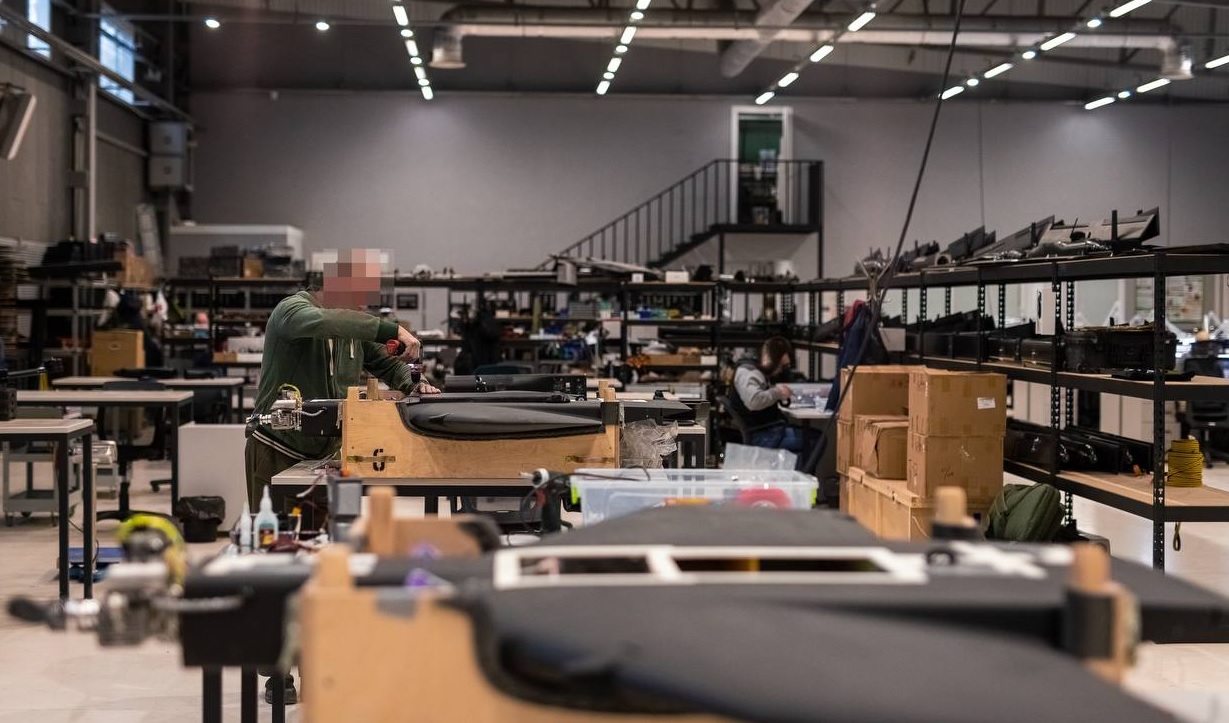
World
OTTAWA — May 31, 2026 : Canada and Ukraine have finalized a government-to-government agreement to manufacture Ukrainian-designed uncrewed aerial systems (UAS) in Canada, integrating Ukraine’s drone production capabilities into the North American defence industrial ecosystem. The arrangement, signed on May 29, 2026, during the CANSEC defence exhibition in Ottawa, establishes a 50-50 joint venture named Airlogix-Sentinel to support the Armed Forces of Ukraine and strengthen allied production capacity. The agreement was signed by representatives of Canada’s Department of National Defence and Ukraine’s Ministry of Defence, marking expanded defence-industrial cooperation between the two countries. Airlogix-Sentinel Joint Venture The newly established Airlogix-Sentinel joint venture brings together Ukrainian defence technology company Airlogix and Sentinel Research and Development, a Hamilton, Ontario-based uncrewed systems manufacturer. The partnership will oversee production of Ukrainian-designed drones in Canada, with systems supplied to the Armed Forces of Ukraine. Under the agreement, Sentinel will manufacture drone airframes through an intellectual property licensing arrangement with Airlogix, enabling Canadian facilities to produce Ukrainian-designed systems. Airlogix is known for the GOR tactical reconnaissance drone, designed for battlefield surveillance, intelligence gathering, operational planning, and reconnaissance missions. Sentinel’s manufacturing portfolio includes the Rekam fixed-wing system, Rekam Ascent vertical-takeoff drone, and Rekam Echo jet-powered system. Although officials have not disclosed production volumes, timelines, or delivery schedules, the joint venture’s initial focus will be on reconnaissance drones intended to support intelligence collection and battlefield awareness. Dmytro Piatrin, Chief Commercial Officer of Airlogix, stated the immediate objective is to deliver operational planning and intelligence-support systems to frontline units as rapidly as possible. Expanding Drone Production Outside Ukraine Ukraine’s defence industry currently produces a broad range of combat-tested uncrewed systems, including first-person-view (FPV) attack drones, long-range strike drones, reconnaissance drones, loitering munitions, and naval surface drones. Ukrainian officials report domestic drone production has expanded to several million units annually, though manufacturing remains vulnerable to Russian long-range missile and drone strikes, supply-chain disruptions, component shortages, and production bottlenecks. By transferring part of drone manufacturing to Canada, Ukraine seeks to improve industrial resilience and reduce wartime vulnerabilities. Manufacturing outside Ukraine provides geographical security, removes production infrastructure from the range of Russian strikes, and creates industrial redundancy through an additional supply line. The arrangement also gives Ukraine greater access to North American suppliers, components, and industrial manufacturing capabilities capable of supporting production at scale. Canadian Defence Commitments and Military Assistance The manufacturing agreement supports an August 2025 commitment by Canadian Prime Minister Mark Carney to invest in drone systems, counter-drone capabilities, and electronic warfare through international industrial partnerships. Alongside the announcement at CANSEC, Canadian Minister of National Defence David J. McGuinty confirmed approximately $2 billion in military assistance for Ukraine during the 2026–2027 fiscal year, continuing Canada’s financial and military support. Implications for Canada and NATO For Canada, the Airlogix-Sentinel partnership provides access to combat-tested drone technologies refined in contested battlefield conditions. Ukrainian systems have been modified to operate in environments affected by GPS interference, spoofing, jamming, and electronic warfare, offering lessons for Canadian defence modernization. The partnership supports Canada’s Defence Industrial Strategy, domestic manufacturing activity, industrial modernization, workforce development, and expertise in uncrewed and autonomous systems. The agreement also reflects growing NATO interest in distributed and decentralized defence production models designed to improve industrial resilience and accelerate procurement by combining allied manufacturing capacity with combat-tested technologies. Long-Term Industrial Cooperation Officials from both countries stated that drones produced under the Airlogix-Sentinel joint venture will be transferred to the Armed Forces of Ukraine under existing Canada-Ukraine defence cooperation frameworks. At this stage, no production targets, exact quantities, timelines, or additional drone models beyond reconnaissance-focused capabilities have been publicly disclosed. Officials described the arrangement as an initial step toward long-term industrial cooperation in uncrewed systems, counter-drone technologies, and autonomous military capabilities.
Read More → Posted on 2026-05-31 13:28:09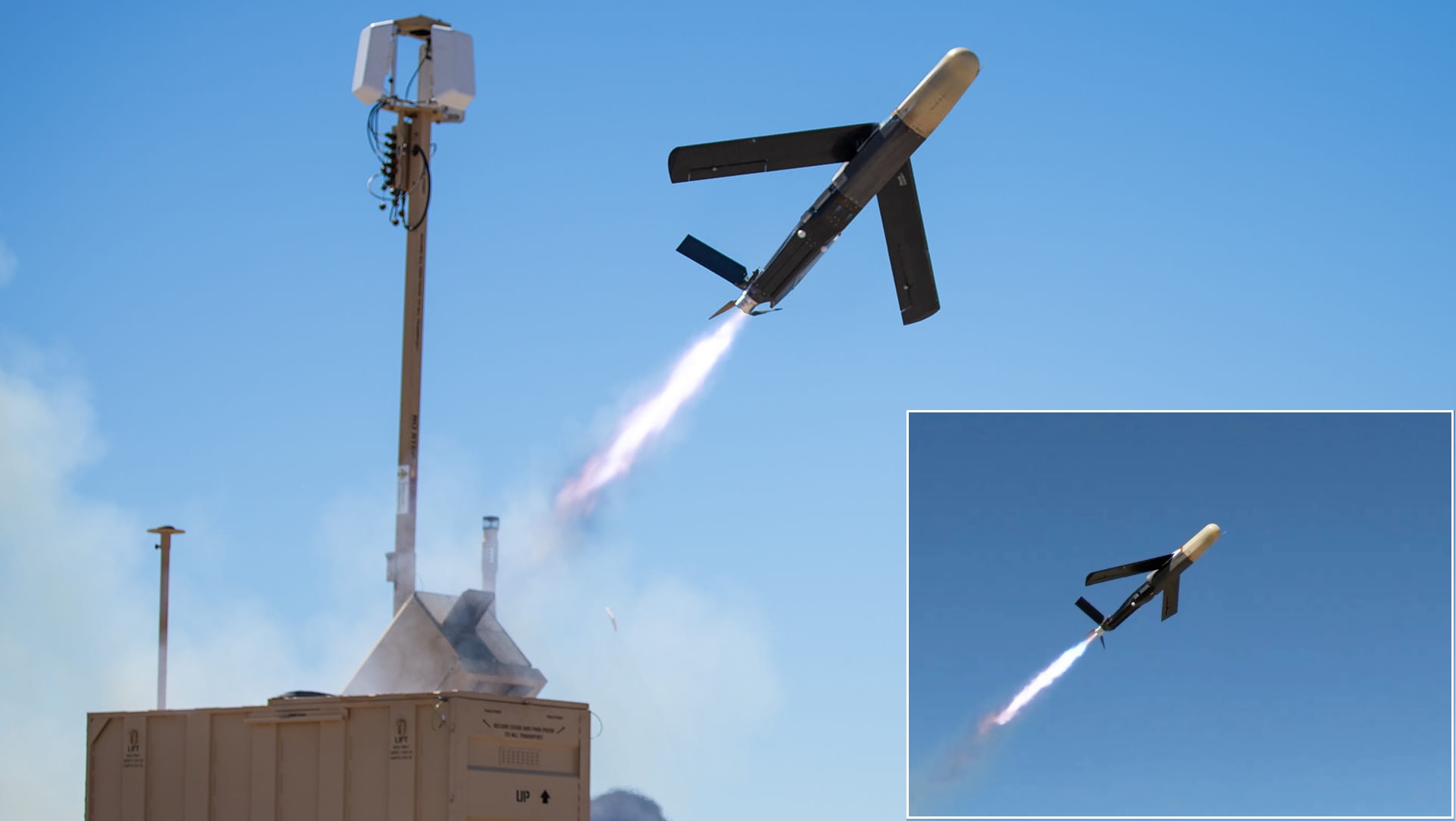
World
WASHINGTON — May 30, 2026 : Raytheon, an RTX business, has successfully demonstrated its reusable Coyote Block 3 Non-Kinetic (3NK) counter-drone system during a recent U.S. Army test, validating a new capability designed to counter increasingly complex drone swarm threats while reducing operational costs and limiting collateral damage. According to Raytheon, the Coyote Block 3NK successfully completed its full operational cycle during the demonstration, including launch, airborne loitering, threat detection, swarm interception, and safe recovery after mission completion. The system reportedly defeated multiple drone swarms during the exercise, confirming its ability to remain operational after engagements rather than being expended like traditional interceptors. Unlike conventional kinetic counter-drone interceptors that rely on explosive warheads or direct-impact destruction, the Block 3NK employs a non-kinetic payload intended to disable hostile unmanned aerial systems without physical collision. While Raytheon has not publicly disclosed the system’s exact mechanism, defense analysts suggest the interceptor may use electronic warfare effects, radio-frequency disruption, or directed-energy technologies to interfere with drone navigation, communications, or control systems. The non-kinetic approach is intended to reduce risks to nearby personnel, military infrastructure, civilian areas, and friendly forces by avoiding explosive fragmentation and debris commonly associated with conventional interceptors. During demonstration footage released by the company, targeted drones were observed losing control and falling from the sky without visible explosions or direct impact. A major feature of the Coyote Block 3NK is its recoverable and reusable design. After completing an engagement, the interceptor can be returned, refurbished, and redeployed for future operations, addressing a growing challenge faced by air-defense planners as relatively inexpensive drones increasingly force defenders to rely on costly missile interceptors. The reusable concept is intended to improve sustainability and provide a more cost-effective response to large-scale drone attacks. Originally developed as a small tube-launched unmanned aerial system capable of deployment from land, sea, and air platforms, the Coyote family has evolved into a modular counter-drone platform supporting surveillance, reconnaissance, electronic warfare, and air-defense operations across several U.S. military programmes. Raytheon stated that both kinetic and non-kinetic variants of the Coyote system are designed to defeat small and larger unmanned aerial systems at extended ranges and higher altitudes than many comparable systems in their class. The company has also introduced upgrades aimed at improving launch speed, engagement range, flight performance, and operational flexibility against heavier payload threats. The Coyote interceptor forms a key component of the U.S. Army’s Low, Slow, Small-Unmanned Aircraft Integrated Defeat System (LIDS), a layered counter-drone architecture designed to detect, track, identify, and neutralize aerial threats using radar, electronic warfare systems, command-and-control networks, and interceptors. The system integrates with Raytheon’s Ku-band Radio Frequency System (KuRFS) radar, which provides targeting data and guidance for engagements against incoming drones. Raytheon’s role in the Army’s counter-drone efforts has expanded significantly in recent years. The company was awarded a major counter-UAS contract valued at up to $5 billion through 2033 under the Army’s LIDS programme, covering Coyote interceptors, launch systems, fixed and mobile configurations, and KuRFS radar systems. Tom Laliberty, president of Land & Air Defense Systems at Raytheon, said the Coyote system is designed to provide warfighters with a cost-effective defence against both individual drones and swarm attacks while maintaining an affordable operational advantage against evolving unmanned threats. The successful demonstration reflects continuing efforts by the U.S. military to field reusable, scalable, and sustainable counter-drone systems capable of defending forces against increasingly coordinated unmanned aerial threats.
Read More → Posted on 2026-05-30 17:23:51
World
KYIV — May 30, 2026 : Ukraine’s Main Intelligence Directorate (GUR) of the Ministry of Defense has confirmed a major expansion in its long-range unmanned strike capability, announcing that its drone division is now operating systems capable of reaching distances of up to 3,500 kilometers. The disclosure was made by the commander of the GUR’s long-range drone unit, known by the call sign “Vector,” who stated that the increased operational reach places all regions of European Russia and territories extending as far as the Krasnoyarsk region in Siberia within potential strike range. According to Vector, Ukrainian forces are now capable of reaching areas across Russia up to the Ural Mountains, marking a significant increase in operational depth. The announcement reflects a substantial evolution in Ukraine’s long-range strike capability. Earlier in the conflict, Ukrainian unmanned systems primarily operated within a range of approximately 1,000 kilometers. Vector noted that long-range UAVs are now being launched in higher numbers as part of systematic strike operations intended to disrupt military-related infrastructure deep inside Russian territory. Long-Range Drone Fleet Expands According to military operators, one of the primary platforms used for deep-strike missions is the domestically developed Liutyi strike drone. The UAV is reported to routinely cover distances between 1,500 and 1,700 kilometers depending on operational and weather conditions while carrying payloads estimated at 50 to 70 kilograms. Ukraine has also introduced a jet-powered strike platform known as Peklo, which operators describe as functioning similarly to a cruise missile. The system reportedly flies at speeds ranging between 700 and 1,000 kilometers per hour and has already been employed in precision strikes against selected infrastructure targets, including facilities in the Moscow region. The reported 3,500-kilometer capability suggests continued expansion beyond previously disclosed systems. In March 2025, Ukrainian President Volodymyr Zelenskyy stated that a Ukrainian-developed long-range drone capable of flying 3,000 kilometers had successfully completed testing, describing it as an important milestone in the country’s indigenous defense-industrial program. Operational Planning and Air Defense Penetration Vector stated that deep-strike operations rely on a structured planning process designed to improve survivability against Russian air defense networks and electronic warfare systems. According to the GUR commander, intelligence teams first identify the positioning of Russian air defense assets, including Pantsir and Tor surface-to-air missile systems, while simultaneously mapping areas affected by electronic warfare intended to disrupt UAV navigation. Flight routes are then programmed to exploit identified gaps in radar and missile coverage. To increase strike effectiveness, Ukrainian operators also deploy unarmed decoy drones aimed at saturating enemy radar systems and occupying defensive resources. These decoys are intended to improve the likelihood that armed UAVs successfully reach their assigned targets. Vector stated that repeated strike operations have gradually reduced the effectiveness of some layered Russian air defense sectors, creating operational corridors for drone formations. Advances in Navigation and Drone Production The expansion of long-range strike capabilities coincides with rapid growth in Ukraine’s domestic drone industry. Since the start of Russia’s full-scale invasion in 2022, Ukraine has transitioned from relying largely on commercial drone components to producing increasingly sophisticated military-grade systems domestically. Recent defense assessments estimate Ukraine’s total annual drone production capacity has expanded to approximately 10 million UAVs across multiple operational classes, ranging from frontline tactical systems to long-range strike platforms. Newer generations of Ukrainian drones have also received upgrades intended to improve resistance against electronic warfare and GPS jamming. Military operators report that long-range UAVs increasingly rely on inertial navigation systems, ground triangulation, and visual navigation technologies to maintain route accuracy in electronically contested environments. Drones Become Central to Ukraine’s Military Strategy Unmanned aerial systems have become a central component of Ukraine’s military planning, with operational estimates indicating drones are currently used to engage approximately 80 to 85 percent of frontline targets. Officials argue that long-range UAV operations are intended to disrupt logistics networks, reduce pressure on frontline units, target military-industrial facilities, and force Russia to distribute air defense assets across a wider geographic area. The newly confirmed 3,500-kilometer operational range is expected to significantly expand Ukraine’s ability to target logistics hubs, air bases, ammunition depots, transport infrastructure, defense manufacturing facilities, and military support sites located deep inside Russian territory as Kyiv continues to prioritize domestically produced long-range strike systems.
Read More → Posted on 2026-05-30 17:10:40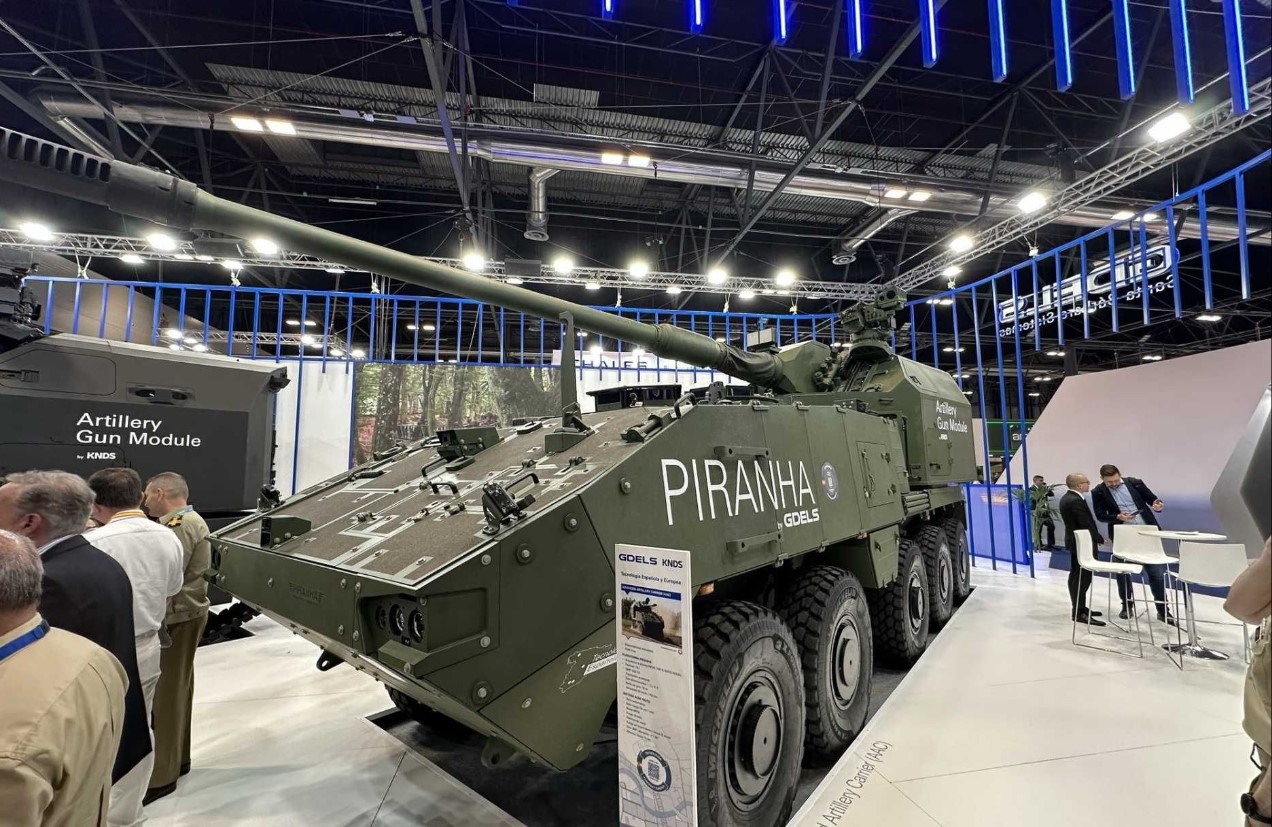
World
PARIS — May 30, 2026 : General Dynamics European Land Systems (GDELS) and KNDS Germany have partnered to develop a next-generation wheeled self-propelled artillery system that integrates the fully automated 155 mm Artillery Gun Module (AGM) onto the newly introduced PIRANHA Heavy Mission Carrier (HMC) 10x10 armored chassis. The platform, first unveiled during the Future Artillery Conference in Paris earlier this year, is designed to provide NATO and allied militaries with a highly mobile, protected, and long-range artillery capability suited to modern high-intensity warfare. The joint development comes as NATO member states and allied armed forces continue to accelerate artillery modernization efforts following lessons from recent conflicts. Modern battlefields increasingly expose artillery systems to persistent drone surveillance, counter-battery radars, loitering munitions, and precision-guided strikes, creating growing demand for platforms capable of executing rapid “shoot-and-scoot” operations while maintaining high levels of protection and operational mobility. At the center of the new artillery platform is the KNDS Artillery Gun Module (AGM), an unmanned and fully automated turret armed with a NATO-standard 155 mm/L52 cannon. The automated loading mechanism significantly reduces crew workload while enabling a high rate of fire and Multiple Rounds Simultaneous Impact (MRSI) capability, allowing multiple projectiles fired on different trajectories to strike a target simultaneously. Depending on ammunition type, the system can engage targets at ranges exceeding 40 kilometers, while extended-range and rocket-assisted projectiles can further increase engagement distance. The artillery module supports conventional ammunition, precision-guided munitions, and future long-range projectiles, while also retaining the ability to conduct both indirect and direct fire missions against moving land and maritime targets when required. The AGM is mounted on the newly introduced PIRANHA HMC 10x10 platform developed by GDELS specifically to support heavy mission payloads beyond the capability of conventional wheeled armored vehicles. The chassis incorporates a reinforced automotive structure and multi-link suspension system designed to carry heavy combat systems while preserving operational mobility across both road networks and off-road terrain. The vehicle has a gross weight of up to 40 tonnes and payload capacity of approximately 17 to 18 tonnes. The platform features five axles, four of which are steerable, allowing improved maneuverability and a turning radius of less than 18 meters despite the vehicle’s size. This mobility profile enables long-distance operational redeployment without the transport burden typically associated with tracked artillery systems. One of the system’s key engineering characteristics is its ability to fire without deploying stabilizing outriggers or vertical supports, a requirement commonly associated with many truck-mounted artillery platforms. Instead, the PIRANHA HMC chassis absorbs recoil forces directly through its structural design and suspension system. This configuration enables 360-degree firing capability while significantly reducing setup and withdrawal times during artillery missions. The absence of external stabilizers improves responsiveness and survivability by allowing artillery crews to relocate quickly after firing, reducing exposure to counter-battery attacks and surveillance systems. Automation plays a central role in the platform’s operational design. According to GDELS and KNDS, the system can be operated by a standard crew of only two personnel without restrictions, supported by advanced robotics, automated ammunition handling, and digital fire-control technologies. Space remains available for an optional third crew member or additional ammunition and mission equipment. The integrated digital architecture supports autonomous navigation, fire-control calculations, targeting, and command functions, enabling artillery formations to shorten sensor-to-shooter timelines. The system is designed to receive target information from drones, surveillance systems, radars, and battlefield management networks and rapidly execute fire missions within minutes. The PIRANHA HMC 10x10 occupies a distinct operational category between lighter wheeled artillery systems and heavier tracked self-propelled howitzers. While tracked systems often require heavy transporters for long-distance movement, the wheeled platform can rapidly redeploy using existing road infrastructure while retaining armored protection and cross-country mobility. The system is already entering procurement pathways. In November 2024, Switzerland’s procurement agency armasuisse selected the AGM mounted on the PIRANHA IV 10x10 chassis as the future backbone of the Swiss Army’s motorized artillery force, replacing aging M109 tracked self-propelled howitzers that have remained in service for more than 50 years. By leveraging the globally operated PIRANHA vehicle family, GDELS and KNDS seek to provide existing operators with commonality in logistics, maintenance, spare parts, and training infrastructure. KNDS also offers the AGM integrated onto the BOXER 8x8 platform, known as the RCH 155, alongside tracked variants, supporting interoperability and standardization across NATO artillery forces. The partnership between GDELS and KNDS Germany reflects broader European defense industrial cooperation aimed at delivering mature, scalable, and interoperable artillery systems to meet growing operational requirements. As NATO members continue to invest in long-range precision fires and protected mobile artillery, the PIRANHA HMC 10x10 AGM platform is positioned as a new option for future artillery modernization programs.
Read More → Posted on 2026-05-30 17:00:04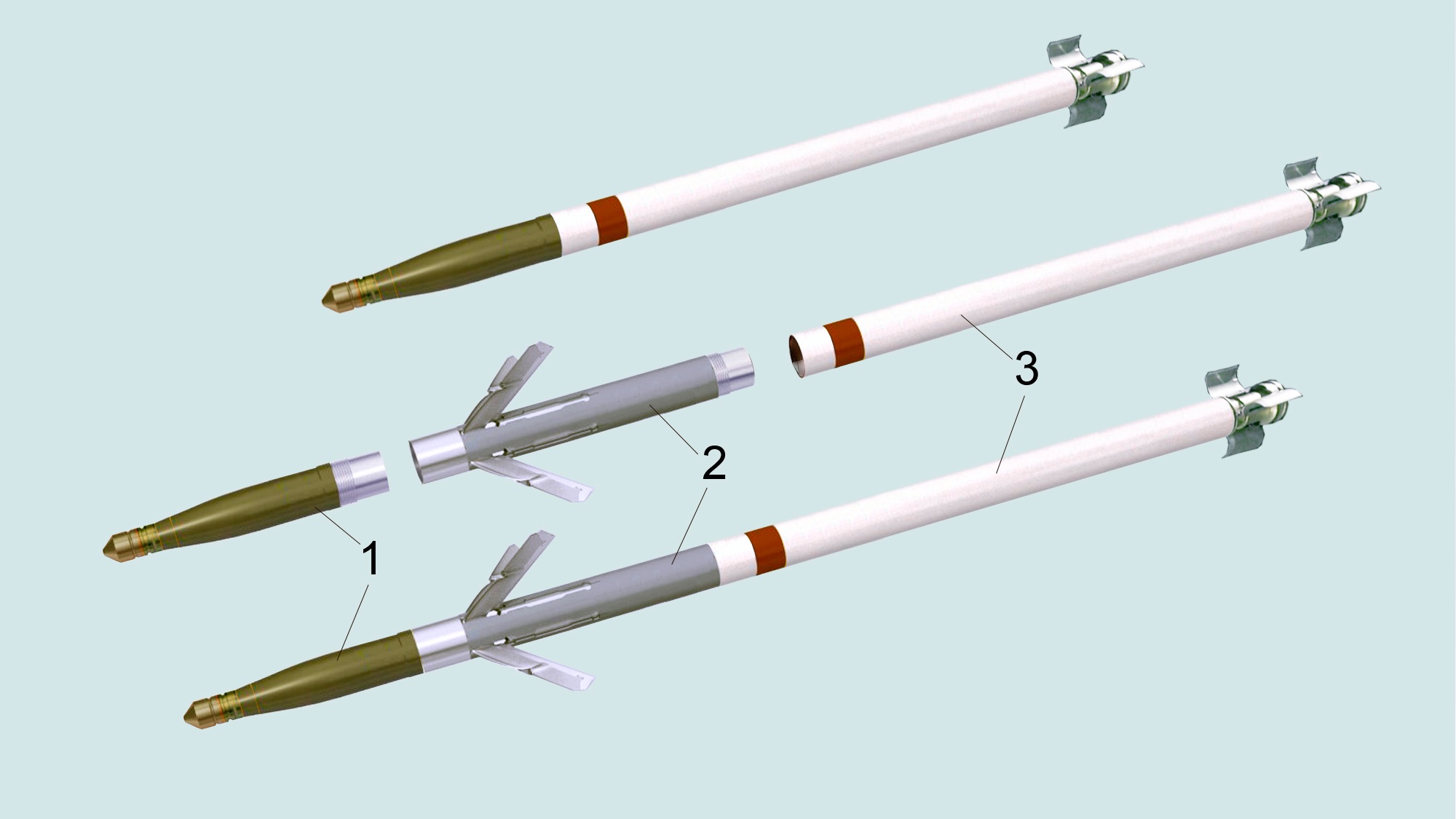
World
WASHINGTON — May 30, 2026 : The U.S. Department of Defense has awarded L3Harris Technologies a $48.5 million contract to produce proximity fuzes for the Advanced Precision Kill Weapon System (APKWS), supporting efforts to improve counter-drone and cruise missile defense capabilities. The contract was issued by the Naval Surface Warfare Center Indian Head Division and awarded to L3Harris Fuzing and Ordnance Systems in Cincinnati, Ohio. If all contract options are exercised, the agreement could reach approximately $98.4 million, with production continuing through September 2028. Funding reflects adoption across multiple military branches, with approximately 68 percent coming from U.S. Air Force ammunition procurement accounts and around 28 percent from the Navy and Marine Corps. The contract follows prototype development completed under a separate Other Transaction Agreement and was awarded directly to accelerate fielding of the capability. APKWS Adapted for Air-to-Air Drone Intercepts The APKWS is a 70-millimeter (2.75-inch) precision-guided rocket developed from the Hydra 70 rocket family. Originally designed as a low-cost precision strike weapon for ground targets, the system uses a laser-guidance kit produced by BAE Systems that converts unguided rockets into guided munitions. The upgraded proximity fuze expands the rocket’s air-to-air role. Developed using radio-frequency sensor technology from Technology Service Corporation (TSC) and integrated with an L3Harris safe-and-arm device, the fuze detonates when the rocket passes near a target rather than requiring a direct hit. This enables fragmentation to engage drones and cruise missiles more effectively, improving interception success against fast-moving or maneuvering aerial threats. Testing and Combat Use The Pentagon’s Joint Counter-Small Unmanned Aircraft Systems Office validated the fuze during testing at Yuma Proving Ground, Arizona. During evaluations, the system demonstrated a reported 100 percent effectiveness rate against Group 3 drones, which typically operate above 1,200 meters (3,940 feet) and at speeds exceeding 185 kilometers per hour (115 miles per hour). The upgraded air-to-air APKWS variant, designated AGR-20F, achieved its first combat intercepts in 2024 when U.S. Air Force F-16 aircraft operating over the Red Sea used proximity-fuzed rockets to shoot down Houthi drones. Lower-Cost Counter-Drone Capability An APKWS round costs an estimated $20,000 to $30,000, compared with roughly $400,000 for an AIM-9X Sidewinder missile, providing a lower-cost option for counter-drone operations. The system also increases aircraft magazine capacity. Because APKWS rockets use standard 70-millimeter launcher pods, an F-16 equipped with six seven-tube launchers can carry up to 42 guided rockets, offering significantly greater engagement capacity than conventional air-to-air missile loadouts. Continued Development and Wider Integration In February 2026, BAE Systems received a contract worth up to $145 million under the Fixed Wing, Air Launched, Counter-Unmanned Aircraft Systems Ordnance (FALCO) program to develop a dual-mode APKWS variant for counter-drone missions. The upgraded configuration combines laser guidance with a Long Wave Infrared (LWIR) seeker, allowing the rocket to continue tracking targets after launch and reducing the need for continuous laser designation. The Marine Corps is also integrating the air-to-air APKWS variant onto legacy F/A-18C/D Hornet aircraft under Aviation Plan 2026 to expand counter-drone capacity while preserving higher-cost missile inventories. The proximity fuze technology has additionally been adapted for ground-based defense through L3Harris’ Vehicle-Agnostic Modular Palletized ISR Rocket Equipment (VAMPIRE) system, which combines sensors and APKWS launchers into a mobile counter-drone platform. VAMPIRE systems deployed to Ukraine in 2023 have been used against Russian drone attacks using the same proximity-fuzed rocket concept.
Read More → Posted on 2026-05-30 16:12:27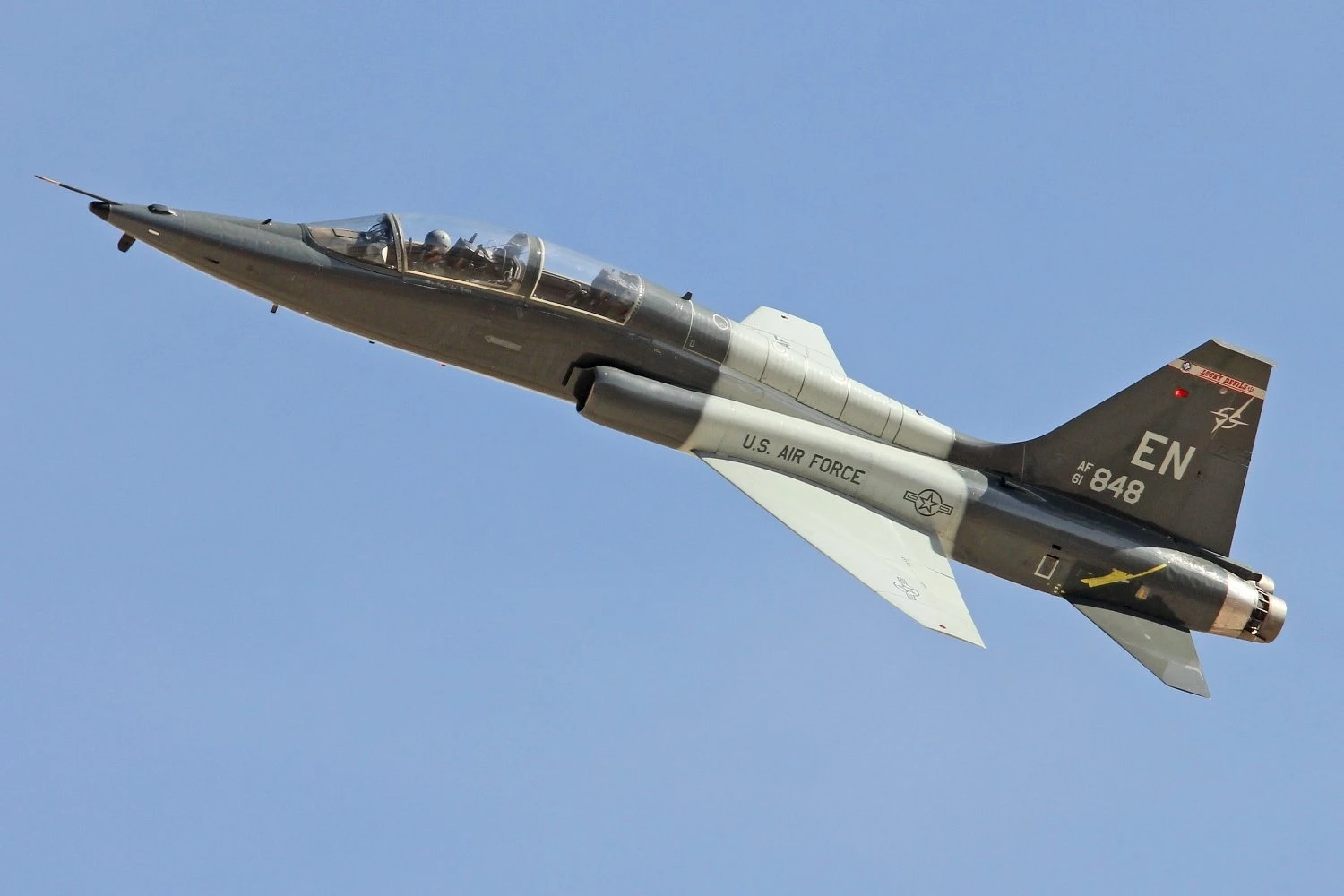
World
WASHINGTON, — May 30, 2026 : The U.S. Air Force has lifted the fleet-wide operational pause for the T-38 Talon trainer aircraft following the completion of inspection procedures developed after a training mishap involving the platform earlier this month. The pause officially ended on May 28, allowing inspected aircraft to gradually return to flying operations in the coming days. The operational stand-down was imposed on May 20 and affected approximately 546 T-38 aircraft assigned across four major Air Force commands: Air Education and Training Command (AETC), Air Combat Command (ACC), Air Force Materiel Command (AFMC), and Air Force Global Strike Command (AFGSC). The measure was introduced after a May 12 crash involving a T-38 assigned to Columbus Air Force Base in Mississippi, with the Air Force temporarily suspending operations to support safety assessments and engineering reviews. According to the Air Force, collaborative engineering and maintenance teams across the joint force finalized detailed inspection procedures to ensure aircraft safety before returning individual airframes to service. Aircraft that complete mandatory inspections and any required maintenance are expected to resume flying incrementally, while affected commands continue efforts to minimize disruptions to training pipelines, operations, and readiness. The May 12 mishap occurred at approximately 12:00 p.m. during a routine training mission involving a T-38 assigned to the 14th Flying Training Wing at Columbus Air Force Base, which operates under AETC’s 19th Air Force. The aircraft crashed in rural Lamar County, Alabama, near the Mississippi border. Both crew members ejected safely, and no fatalities or serious injuries were reported. A Safety Investigation Board continues to examine the cause of the incident, with the operational pause initially intended to allow investigators to locate and assess evidence from the crash site. During the temporary grounding, aircrews and student pilots across affected commands increased simulator-based training to maintain operational proficiency and meet flight currency requirements. The pause also affected international training activities, temporarily halting flying operations for Canadian pilots participating in fighter lead-in training through the Euro-NATO Joint Jet Pilot Training (ENJJPT) program at Sheppard Air Force Base in Texas. The T-38 Talon, a twin-engine supersonic trainer designed and produced by Northrop Corporation, entered service with the U.S. Air Force in 1961 and became the world’s first supersonic trainer aircraft. More than 70,000 Air Force pilots have trained on the platform since its introduction. Nearly 1,200 aircraft were produced between 1961 and 1972, with approximately 500 remaining in operational service today. Beyond AETC training duties, the aircraft is also used by ACC for fighter lead-in training, AFGSC for bomber pilot preparation, and NASA as a proficiency and companion trainer for astronauts. Columbus Air Force Base has experienced previous T-38-related incidents in recent years. In November 2022, a T-38C crashed roughly 20 miles from the installation, with the pilot ejecting safely and sustaining non-life-threatening injuries. Two weeks later, another T-38C experienced an in-flight emergency that resulted in a gear-up landing. As the Air Force works to sustain pilot training capacity, it is continuing the transition toward the Boeing-Saab T-7A Red Hawk, the planned replacement for the aging T-38 fleet. In April 2026, the service approved low-rate initial production after the program achieved Milestone C and placed an initial order for 14 aircraft valued at $219 million. Initial Operational Capability for the T-7A remains scheduled for 2027, with procurement plans calling for 23 aircraft in fiscal year 2027, followed by 36 in 2028 and 42 in 2029. The aircraft is intended to prepare pilots for fourth- and fifth-generation combat platforms, including the F-15EX, F-35A, F-22, B-21 Raider, and future systems such as the F-47.
Read More → Posted on 2026-05-30 15:55:48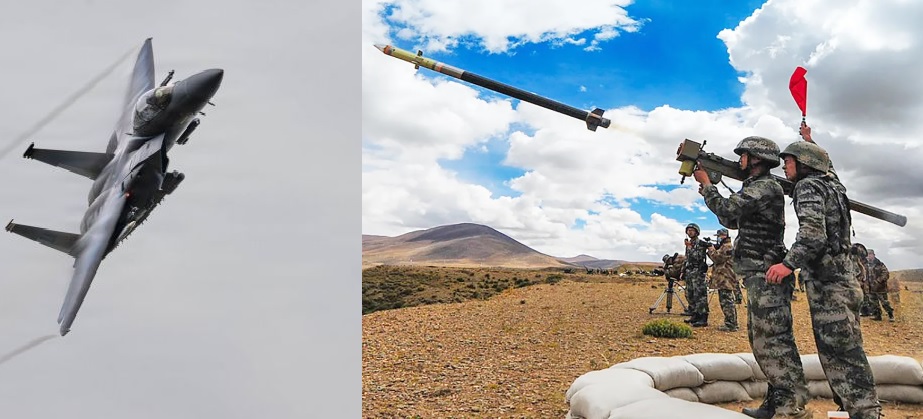
World
WASHINGTON, — May 30, 2026 : U.S. intelligence and defense officials are investigating the April downing of an American F-15E Strike Eagle over southwestern Iran after evidence indicated the aircraft was likely struck by a Chinese-manufactured shoulder-launched missile system, according to officials familiar with the matter. The incident, which occurred on April 3 in Iran’s Kohgiluyeh and Boyer-Ahmad province, marked the first known combat loss of a U.S. crewed aircraft during the recent conflict and the first time in decades that a U.S. fighter jet was reportedly brought down by hostile enemy fire. U.S. officials believe the aircraft was likely hit while operating at lower altitude during combat operations. Rescue Operation After Shootdown Both crew members aboard the F-15E successfully ejected after the strike and established communication using onboard systems following the aircraft’s loss. According to Pentagon officials, the pilot was rescued within several hours during an initial recovery mission. During that operation, Iranian forces struck a U.S. Black Hawk helicopter involved in the rescue effort, wounding crew members, although the helicopter remained operational and was able to continue flying. The weapons systems officer avoided capture after taking cover in the foothills of the Zagros Mountains. U.S. forces recovered the officer alive on April 5 during a nighttime combat search-and-rescue mission involving dozens of aircraft, specialized commando personnel, and extensive air cover. Suspected Chinese-Made Missile Under Investigation U.S. intelligence agencies are investigating indications that the F-15E was struck by a Chinese-manufactured man-portable air defense system (MANPADS), a shoulder-fired missile designed to target low-flying aircraft. Such systems are typically around seven feet long, weigh approximately 40 pounds, and are designed to engage helicopters and fixed-wing aircraft operating at lower altitudes. Officials have not determined whether the suspected missile system was recently transferred to Iran or drawn from military stockpiles acquired years earlier. Investigators have not reached a final conclusion regarding the specific weapon involved, and intelligence reviews remain ongoing. Questions Over Chinese Radar Support In addition to the missile investigation, U.S. officials are examining whether China supplied Iran with a YLC-8B UHF-band long-range early-warning radar system capable of detecting low-observable aircraft. Developed by China’s Nanjing Research Institute of Electronics Technology, the YLC-8B is designed to detect targets with a radar cross-section of roughly one square meter at ranges between 270 and 330 kilometers and may track aircraft beyond 200 kilometers under certain conditions. The radar operates in the UHF frequency band, which analysts say can reduce the effectiveness of radar-absorbent materials commonly used on stealth aircraft. Defense analysts note that such systems could strengthen Iran’s layered air-defense architecture by improving long-range detection capabilities against advanced aircraft, including the F-35 Lightning II and B-2 Spirit. The system is also designed for rapid deployment and dismantling, reportedly requiring less than 30 minutes to become operational or relocated. However, U.S. intelligence agencies have not confirmed whether the radar was fielded or operational during the recent conflict. U.S. Assessment and Chinese Response A U.S. official familiar with the matter said Washington remains aware of Chinese support to Iran but assessed that such assistance “was not significant” and had “no decisive operational impact” on the overall course of hostilities. Military planners and intelligence analysts continue reviewing operational data from the shootdown to evaluate how foreign-made missile systems, sensor networks, and defense supply chains could influence future U.S. aerial operations and regional military planning. China’s embassy in Washington rejected allegations of direct involvement, stating that Beijing exercises strict oversight of military exports, complies with international obligations, and acts responsibly in defense-related cooperation. Chinese officials described claims surrounding assistance to Iran as unfounded. Broader Concerns Over Chinese Support to Iran The investigation comes amid wider scrutiny of alleged Chinese support to Tehran during the conflict. Earlier, the U.S. State Department imposed sanctions on three Chinese satellite companies — The Earth Eye, Meentropy Technology (Hangzhou), and Chang Guang Satellite Technology — accusing them of providing imagery and geospatial intelligence that enabled Iranian forces to identify and monitor American military facilities during Operation Epic Fury. The sanctions formed part of a broader package targeting 11 entities and three individuals in Iran, China, Belarus, and the United Arab Emirates. Beijing rejected those allegations. The incident also adds complexity to U.S.-China relations as the Trump administration continues diplomatic efforts related to ceasefire negotiations with Iran while preparing for discussions with Chinese leadership. Previous U.S. intelligence assessments cited by media reports suggested China had explored supplying additional air-defense systems to Tehran, while some officials believed portions of that intelligence were publicly disclosed to expose or discourage such transfers.
Read More → Posted on 2026-05-30 15:46:45
World
WARSAW — May 30, 2026 : Poland has finalized a major package of defense procurement contracts valued at 60 billion PLN (approximately €14.18 billion) with domestic manufacturer Huta Stalowa Wola (HSW), financed through the European Union’s Security Action for Europe (SAFE) initiative. The SAFE mechanism, valued at €150 billion, is intended to help European Union member states modernize military capabilities through defense-related financing. The contracts were expedited by Poland’s Armaments Agency ahead of the May 2026 deadline for signing unilateral procurement agreements under the SAFE framework. Under the terms of the agreements, all contracted equipment is scheduled for delivery to the Polish Armed Forces by 2030, supporting Warsaw’s ongoing ground force modernization program. Expansion of the Borsuk Infantry Fighting Vehicle Program A central element of the procurement package is an executive order for 146 additional Borsuk Infantry Fighting Vehicles (IFVs), valued at approximately 7.5 billion PLN ($2.07 billion). The contract follows an earlier March 2025 agreement worth 6.6 billion PLN for 111 vehicles, increasing Poland’s confirmed Borsuk orders to 257 units. The current acquisition package is expected to equip four mechanized infantry battalions, while 25 vehicles will be reserved for training purposes. The procurement also forms part of a broader framework agreement signed in 2023, covering the potential acquisition of nearly 1,400 tracked vehicles built on the Universal Modular Tracked Platform. Developed domestically to replace Soviet-era BMP-1 infantry fighting vehicles, the Borsuk weighs 28 metric tons and carries a crew of three alongside six infantry troops. The platform is powered by an MTU 8V199 turbo diesel engine and retains an open-water amphibious crossing capability, allowing mobility across rivers and water obstacles. The vehicle is equipped with the ZSSW-30 unmanned turret, jointly developed by HSW and WB Group. The system integrates a 30mm Mk44S Bushmaster II autocannon alongside two Spike-LR anti-tank guided missiles, providing anti-armor and infantry support capabilities. To meet expected production requirements, HSW introduced a dual-shift manufacturing model in the third quarter of 2025 and is targeting an output capacity of approximately 100 Borsuk vehicles annually by mid-2026. Artillery, Mortars, and Support Systems Beyond the Borsuk procurement, the 60 billion PLN package includes a broad range of artillery systems and supporting equipment manufactured by HSW. The agreements include 96 AHS Krab 155mm self-propelled howitzers, intended to form four Regina modular artillery battalions. The Krab system combines a modified South Korean K9 Thunder chassis with a turret derived from the British AS-90M Braveheart design and can fire extended-range projectiles at distances of up to approximately 40 kilometers. Poland has also approved procurement of more than 1,000 support vehicles for the Homar-K multiple launch rocket system (MLRS) fleet. The Homar-K is Poland’s domestically integrated variant of the South Korean K239 Chunmoo system, mounted on Jelcz 8×8 vehicles and designed to provide long-range rocket artillery capabilities. Additional support vehicles will be acquired for six K9PL-equipped artillery battalions, complementing Poland’s wider artillery modernization effort under the K9 program. Further contracts include 64 RAK-120 self-propelled mortars, accompanied by support vehicles for eight mortar companies. The 120mm mortar system, mounted on the Rosomak armored platform, is capable of delivering rapid indirect fire support. The procurement package additionally covers 11 Bobak-K mine-laying systems, dozens of Waran armored personnel carriers designated for artillery support roles, and refinancing arrangements for existing Rosomak wheeled armored vehicles integrated with the ZSSW-30 turret, shifting those contracts under the SAFE financing structure rather than creating new procurement orders. Poland’s SAFE Financing and Domestic Industrial Policy Poland has emerged as the largest beneficiary of the EU SAFE initiative, securing approximately €43.7 billion (around 190 billion PLN) in defense-related loans. Warsaw has directed that roughly 90 percent of SAFE funding be spent domestically, supporting the national defense industry and an estimated 10,000 companies across Poland’s supply chain network. HSW, a subsidiary of the state-owned Polska Grupa Zbrojeniowa (PGZ) defense group, is expected to play a central role in delivering the systems covered by the agreements. The acquisitions are intended to strengthen Poland’s broader military modernization effort by improving integration between mechanized infantry, armored formations, artillery systems, and battlefield support capabilities, complementing recently acquired platforms including K2 main battle tanks, HIMARS launchers, Homar-K systems, and K9PL self-propelled artillery.
Read More → Posted on 2026-05-30 15:17:46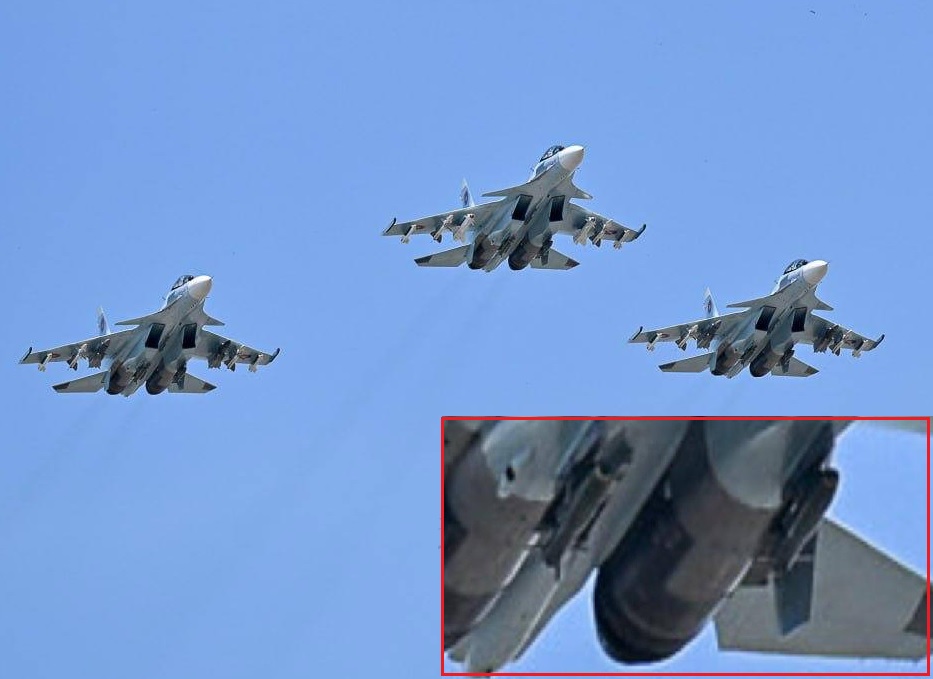
World
YEREVAN, — May 30, 2026 : Armenia’s Air Force publicly displayed Iranian-made Yasin precision-guided glide bombs mounted on its Sukhoi Su-30SM multirole fighters during Republic Day celebrations in Yerevan on May 28, providing the clearest public indication to date of previously undisclosed military procurement cooperation between Armenia and Iran. All three operational Su-30SM fighters flew over Republic Square carrying two Yasin glide bombs each on external hardpoints, marking the first public appearance of Armenian Su-30SM aircraft equipped with precision-guided air-to-ground munitions. The display indicates that Armenia has successfully integrated Iranian-origin strike weapons onto Russian-built aircraft that were originally delivered without a complete weapons package. Armenia’s Su-30SM Procurement and Weapons Gap Armenia signed a contract with Russia in January 2019 to procure four Su-30SM multirole fighters for approximately $120 million, with deliveries completed by May 2020. However, the aircraft arrived without primary medium- or long-range guided munitions, significantly limiting their operational utility and restricting their role as strategic deterrence platforms. The absence of compatible weapons became a subject of political scrutiny after the 2020 Nagorno-Karabakh war. Former Chief of the Armenian General Staff Movses Hakobyan stated in November 2020 that Armenia had acquired the aircraft without Su-30SM-compatible air-to-air missiles, citing Russian export restrictions. He argued that the procurement process had failed to secure the weapons necessary to make the aircraft combat-ready. Prime Minister Nikol Pashinyan later acknowledged in March 2021 that Armenia had received the aircraft but had not acquired missiles before the war. As a result, the fighters were not employed in combat operations during the conflict and were subsequently used mainly for pilot training, ceremonial flights and limited operational duties. The Republic Day flyover carrying Yasin munitions represents the first public demonstration of Armenia’s Su-30SM fleet equipped with serviceable precision-guided strike ordnance. Yasin Glide Bomb: Technical Characteristics and Strike Role The Yasin glide bomb, officially unveiled by Iran in 2019, is a precision-guided standoff munition developed for air-to-ground strike operations. The weapon is generally configured with either a 225-kilogram (500-pound) or larger warhead and uses deployable folding wings to extend engagement range after release. The munition combines an internal inertial navigation system (INS) with satellite-assisted guidance capable of using navigation systems such as GPS, GLONASS and BeiDou. According to technical assessments, this enables precision targeting with a reported circular error probable (CEP) below 10 meters. Iranian state-linked sources have cited an engagement range of up to 120 kilometers under favorable launch conditions. However, independent analysts and assessments based on launch altitude and aircraft performance estimate a more realistic operational range of approximately 50–60 kilometers when released from high altitude at speed. The glide bomb converts altitude-derived energy into extended flight distance after release, allowing aircraft to strike targets while remaining outside the immediate engagement envelope of many short-range air defense systems. This capability provides Armenia with a limited standoff strike option against forward military positions, logistics hubs and command infrastructure. Integration Challenges Between Russian Aircraft and Iranian Weapons Defense analysts assess that integrating Iranian-made Yasin glide bombs onto Russian-built Su-30SM aircraft likely required technical modifications because the two systems do not share common native electronic communication protocols. One likely integration method involves an autonomous pre-briefed targeting mode, in which target coordinates are programmed into the bomb’s onboard guidance system before takeoff. Under this arrangement, pilots manually release the munition from a designated launch point while onboard systems independently guide the weapon to its programmed target. A second possible approach involves the use of an umbilical translation interface, a hardware adapter installed between the aircraft and munition that converts the Su-30SM’s release signals into commands compatible with the Iranian weapon. Both approaches carry operational limitations. Since targeting data is generally uploaded before flight, pilots may be unable to update coordinates in real time if a target changes position after takeoff, reducing flexibility against dynamic battlefield targets. Armenia’s Expanding Defense Diversification Strategy The public appearance of Iranian glide bombs on Armenian aircraft reflects a broader shift in Yerevan’s defense procurement policy following supply delays and restrictions affecting military cooperation with Russia. Between 2011 and 2020, Russia accounted for approximately 94 percent of Armenia’s major arms imports. That dependence has declined since the 2020 Nagorno-Karabakh conflict as Armenia accelerated efforts to diversify military suppliers. Defense spending increased substantially between 2020 and 2025, reaching approximately $1.7 billion, while total procurement programs are estimated at around $2.5 billion. India has emerged as Armenia’s largest new defense supplier, with acquisitions including ATAGS towed artillery systems, MArG self-propelled artillery, Pinaka multiple-launch rocket systems, Akash surface-to-air missile systems, anti-drone technologies, Konkurs-M anti-tank missiles and ammunition. Armenia and India also signed agreements covering military training and institutional cooperation. France has expanded military ties with Armenia through artillery transfers, defense cooperation agreements, training programs and planned deliveries of Mistral short-range air defense systems. Armenia has additionally signed defense cooperation arrangements with the Czech Republic, though specific procurement details remain undisclosed. Iran has increasingly been viewed as a practical logistics and procurement partner due to Armenia’s geographic constraints. With borders closed by Azerbaijan and Turkey, Iran and Georgia remain Armenia’s primary overland transportation corridors for military deliveries. Strategic Significance of the Republic Day Display The Republic Day flyover represents the clearest public evidence to date that Armenia has secured a practical air-to-ground precision strike capability for its Su-30SM fleet through alternative procurement channels outside the original Russian supply framework. The display also resolves longstanding questions surrounding how Armenia intended to arm aircraft that had remained operationally constrained since delivery. Neither Armenia’s Ministry of Defense nor Iranian authorities have publicly confirmed the apparent transfer, procurement quantity or financial terms associated with the Yasin glide bombs. Armenia currently operates three of the four Su-30SM aircraft originally acquired from Russia. The Republic Day appearance carrying Iranian-made Yasin glide bombs marks the first confirmed public indication that the fleet has moved beyond training and ceremonial use toward an operational standoff strike role.
Read More → Posted on 2026-05-30 14:47:20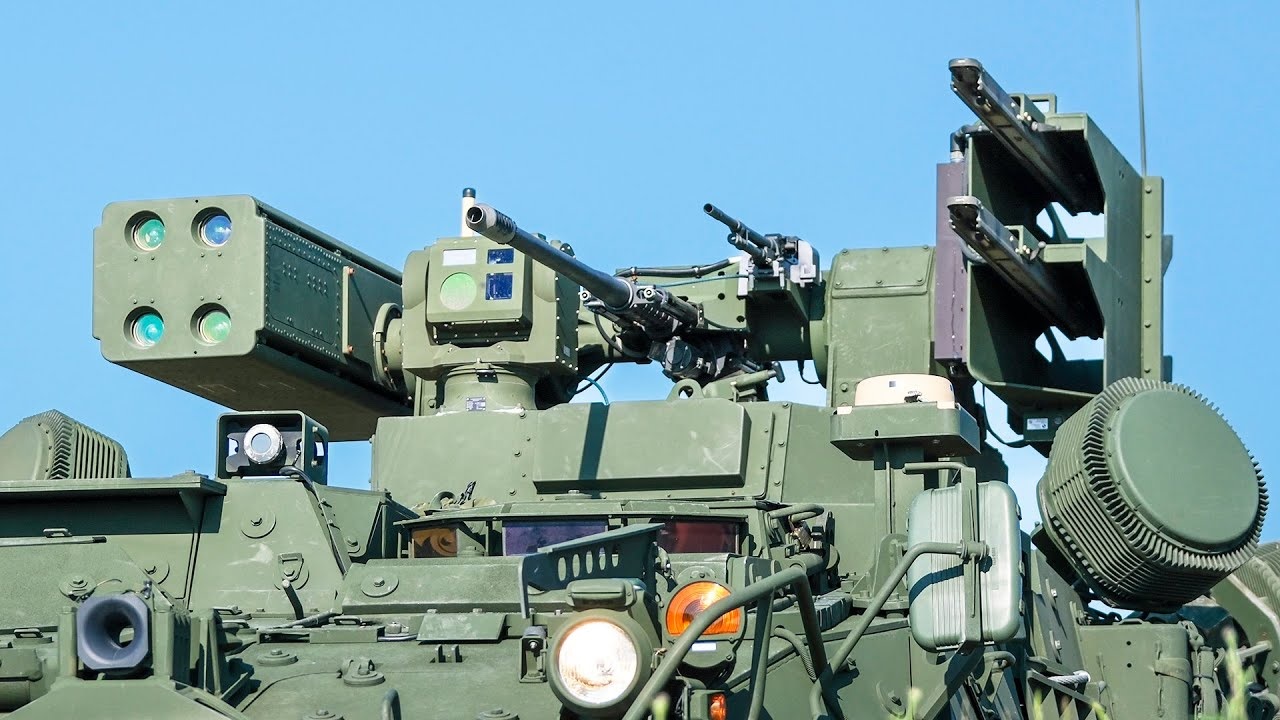
World
WASHINGTON — May 30, 2026 : The U.S. Army is seeking $461 million for its Maneuver Short-Range Air Defense (M-SHORAD) program in the fiscal year 2027 budget, a significant increase from the $296 million allocated in the previous fiscal year, as the service continues efforts to rebuild short-range air defense capabilities reduced during the post-Cold War period and years of counterinsurgency operations. The funding request reflects a broader modernization effort to strengthen protection for ground forces against an expanding range of aerial threats, including unmanned aircraft systems (UAS), rotary-wing aircraft, cruise threats, and conventional fixed-wing platforms. Army planners have divided the investment into three parallel priorities: developing a next-generation interceptor missile, advancing directed energy air defense systems, and expanding short-range protection to light and airborne formations through modular platforms. Rebuilding Short-Range Air Defense Capability The Army’s renewed focus on short-range air defense follows force structure reductions made in the early 2000s, when air defense formations were downsized to support operations in Iraq and Afghanistan, where hostile air threats were largely absent. By the mid-2000s, the Army had reduced active short-range air defense capability to two active-component battalions alongside selected National Guard units. Recent conflicts, particularly the war in Ukraine, have prompted a reassessment of those decisions. The widespread use of drones against armored vehicles, logistics convoys, and fixed positions has highlighted the need for mobile air defense systems capable of moving alongside maneuver forces and protecting frontline formations from persistent low-altitude threats. SGT Stout Forms the Core of Current Capability The Army’s current M-SHORAD capability is built around the SGT Stout, a modified Stryker A1 armored vehicle formally named in honor of Sgt. Mitchell Stout, a Medal of Honor recipient killed during the Vietnam War. Designed to accompany brigade combat teams, the platform combines mobility with layered air defense capability through a Mission Equipment Package developed by Leonardo DRS. The system integrates multiple weapons designed to counter varying threat profiles. These include FIM-92 Stinger surface-to-air missiles for short-range engagements, AGM-114L Longbow Hellfire missiles adapted for aerial targets, an XM914 30mm automatic cannon for drones and close-range threats, an M240 7.62mm machine gun for secondary protection, and a Ku-band 360-degree radar system for target detection and tracking. $215 Million for Next Generation Short Range Interceptor The largest share of the FY2027 request, approximately $215 million, is allocated to the Next Generation Short Range Interceptor (NGSRI) program, which is intended to replace the legacy Stinger missile introduced during the 1980s. Army officials view the replacement as necessary because the Stinger’s single-mode infrared seeker, limited engagement range, and smaller warhead present challenges against modern aerial threats, particularly maneuverable drones with reduced thermal signatures and swarm tactics. Lockheed Martin and Raytheon are developing competing interceptor systems featuring multi-mode seekers, advanced signal processing, and increased engagement ranges. In May 2026, Lockheed Martin completed a seeker characterization flight test for its QuadStar missile at White Sands Missile Range, while Raytheon has reported multiple successful subsystem demonstrations. Although the Army is targeting production by 2028, a June 2025 report from the Government Accountability Office (GAO) identified seven immature critical technologies within the program that could affect development timelines. $95 Million for Directed Energy Air Defense The FY2027 request also includes approximately $95 million for upgrades to the Directed Energy M-SHORAD (DE M-SHORAD) system, which replaces traditional kinetic interceptors with a 50-kilowatt high-energy laser. Raytheon, which received a $123 million development contract in 2021, delivered initial prototypes to the Army in 2023. During live-fire testing at Yuma Proving Ground, Arizona, the laser-equipped platform successfully engaged Group 1 through Group 3 unmanned aircraft. Army officials consider the system’s primary advantage to be lower engagement costs and increased magazine depth, as laser engagements do not require physical missile reloads and significantly reduce per-shot costs. FY2027 funding will focus on broadening the laser system’s target set to include helicopters, rockets, artillery, and mortar threats while improving performance based on operational feedback. $108 Million for Air Defense of Light Forces The remaining $108 million is allocated to M-SHORAD Increment 4, a program intended to provide air defense capability to light and airborne formations, including units such as the 101st Airborne Division. Army officials have stated that Stryker-mounted systems are not optimized for airborne insertions or expeditionary missions involving light infantry formations. To address the requirement, the Army is developing a modular palletized or “sled” system capable of integration with lighter platforms, including the Joint Light Tactical Vehicle (JLTV), Infantry Squad Vehicle (ISV), Humvee, and commercial pickup trucks. According to Army requirements outlined in a November 2025 Request for Information (RFI), the system must be transportable aboard a C-130 aircraft and support dismounted maneuver operations. The Army is targeting an initial operational capability for fiscal year 2029. Expanding Air Defense Across the Force The FY2027 budget request reflects a broader Army effort to restore short-range air defense as an organic capability integrated across multiple force structures. By pursuing interceptor modernization, directed energy systems, and mobile air defense solutions for light formations simultaneously, the Army aims to ensure both armored brigades and expeditionary units maintain protection against increasingly diverse aerial threats.
Read More → Posted on 2026-05-30 14:35:53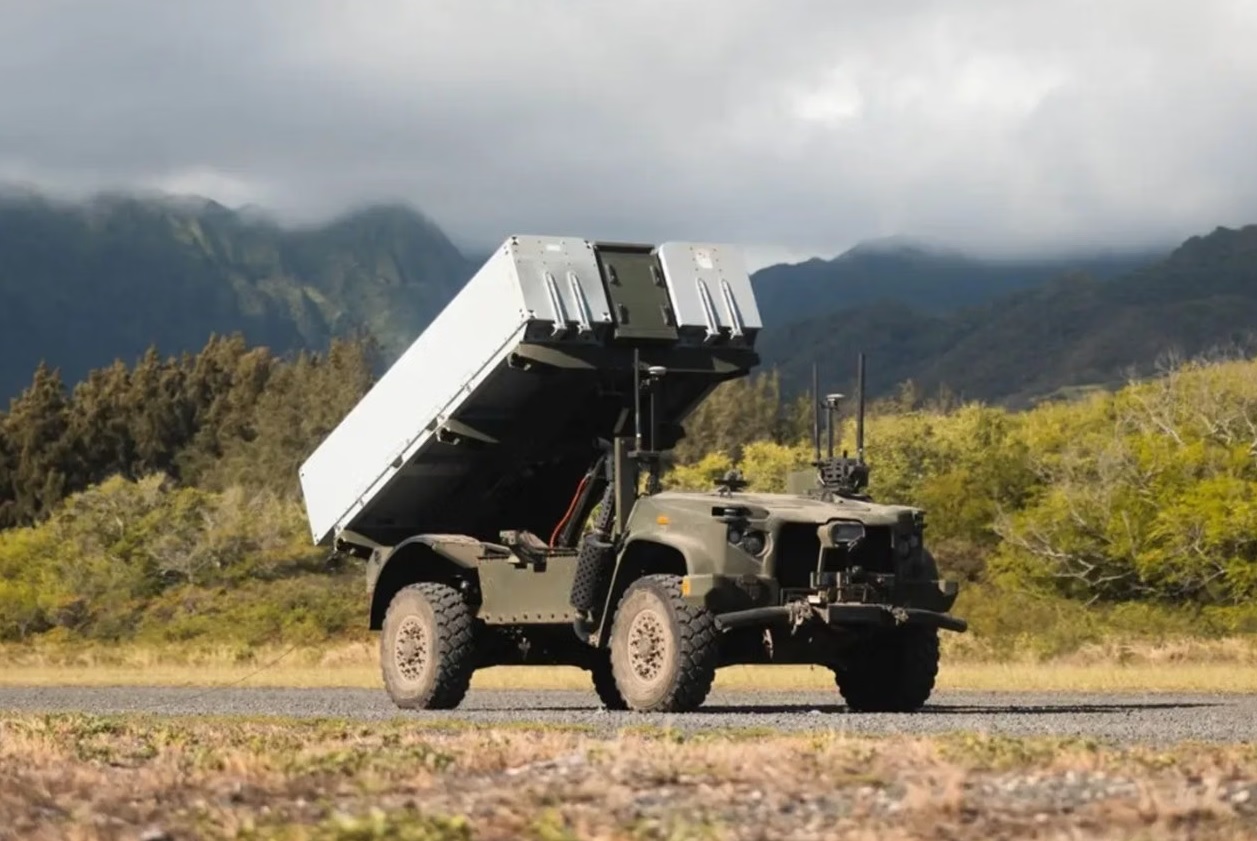
World
OSHKOSH, Wis. — May 30, 2026 : The U.S. Marine Corps has awarded Oshkosh Defense a $70.6 million contract for the production of additional Remotely Operated Ground Unit for Expeditionary Fires (ROGUE-Fires) carriers, extending procurement of the unmanned launch platform central to the Navy/Marine Expeditionary Ship Interdiction System (NMESIS). The award, announced on May 30, 2026, was issued by Marine Corps Systems Command (MARCORSYSCOM) on a sole-source basis and funded through Fiscal Year 2025 and Fiscal Year 2026 Marine Corps procurement appropriations. Under the contract, Oshkosh Defense will continue production of ROGUE-Fires vehicles through September 2028. While the exact number of launch platforms included in the award has not been publicly disclosed, production will primarily take place in Oshkosh, Wisconsin, with additional supporting work conducted in Virginia, Maryland, and Pennsylvania. The procurement reflects continued Marine Corps investment in unmanned long-range strike systems intended to support distributed maritime operations in contested environments. Contract Supports Expansion of NMESIS Capability ROGUE-Fires serves as the launch platform for NMESIS, a ground-based maritime strike system designed to provide the Marine Corps with a remotely operated anti-ship capability. The system combines the Naval Strike Missile (NSM) with an unmanned mobile launcher, enabling Marines to engage hostile surface vessels from dispersed coastal positions while minimizing direct exposure of personnel to enemy fire. The continued procurement of additional carriers supports the Marine Corps’ broader transition toward distributed anti-access and area-denial operations, particularly in maritime regions where mobile and survivable missile forces are considered essential. By relying on unmanned launch vehicles, the Marine Corps aims to establish harder-to-target expeditionary strike networks capable of operating inside contested areas while rapidly relocating after launch. ROGUE-Fires Built on JLTV Platform The ROGUE-Fires carrier is derived from Oshkosh Defense’s Joint Light Tactical Vehicle (JLTV), adapting an existing tactical platform into an autonomous launch system capable of operating without an onboard crew. The vehicle retains the JLTV’s independent suspension, expeditionary mobility, and off-road performance while integrating robotic control systems and remote-driving technologies. Autonomous architecture for the vehicle has been developed in partnership with Forterra, a company specializing in autonomous ground mobility systems. Demonstrated configurations incorporate autonomous navigation capabilities, secure communications, and launcher assemblies capable of carrying two ready-to-fire Naval Strike Missiles. The system is intended to operate across austere terrain and expeditionary environments where conventional missile systems may face deployment limitations. Naval Strike Missile Provides Long-Range Precision Fires At the center of NMESIS is the Naval Strike Missile, a fifth-generation anti-ship missile developed by Kongsberg Defence & Aerospace and integrated for U.S. production through Raytheon. The missile has a range exceeding 185 kilometers and is designed to strike hostile surface combatants operating in contested maritime environments. The NSM employs a sea-skimming flight profile, imaging infrared seeker, autonomous target-recognition capability, and terrain-reference navigation. Unlike missile systems dependent primarily on radar guidance, the NSM is designed to maintain effectiveness in environments where electronic warfare or electromagnetic disruption may degrade conventional targeting systems. Role in Marine Corps Expeditionary Strategy The procurement of additional ROGUE-Fires carriers is closely linked to the Marine Corps’ Expeditionary Advanced Base Operations (EABO) concept. Under this operational framework, small Marine units deploy across islands and coastal regions to establish temporary firing positions capable of controlling maritime chokepoints and strategic sea lanes. The concept emphasizes mobility, survivability, and rapid repositioning. Following missile launches, NMESIS-equipped units are expected to relocate quickly to reduce vulnerability to enemy surveillance and counterfire systems. In geographically fragmented operating areas such as the Indo-Pacific, dispersed launch positions could establish overlapping anti-ship engagement zones intended to complicate hostile naval movement. Marine Corps planners view the system as an important component of maritime denial operations, particularly in regions where adversary naval and missile forces continue to expand. Operational Testing and Exercise Integration The Marine Corps has tested NMESIS during multiple operational demonstrations and large-scale exercises across the Pacific. Previous exercises, including Sink at Sea Live Fire Training Exercises (SINKEX) in Hawaii and broader maritime strike demonstrations, validated the system’s ability to conduct engagements using targeting data received from external platforms. Testing confirmed that NMESIS can receive targeting information from aircraft, naval vessels, intelligence systems, and networked sensors, enabling missile launches beyond the direct line of sight of the launch platform. Earlier demonstrations also marked one of the first operational uses of an unmanned, ground-based anti-ship missile system within U.S. military service. Industrial Cooperation and Program Structure The NMESIS program relies on cooperation among several defense companies supporting different aspects of the system. Oshkosh Defense manufactures the launch platform, Forterra provides autonomous driving technologies, Kongsberg supplies the Naval Strike Missile, and Raytheon supports U.S.-based missile production and integration. Oshkosh Defense recently showcased the ROGUE-Fires platform during the Modern Day Marine 2026 exposition in Washington, D.C., highlighting its role in supporting distributed maritime operations and expeditionary precision fires. The latest $70.6 million contract reflects the Marine Corps’ continued effort to expand distributed precision-strike networks and unmanned expeditionary capabilities. As the service advances force modernization efforts, additional ROGUE-Fires carriers are expected to strengthen the operational reach of Marine Littoral Regiments and broader maritime deterrence requirements in contested regions, particularly across the Indo-Pacific.
Read More → Posted on 2026-05-30 14:20:27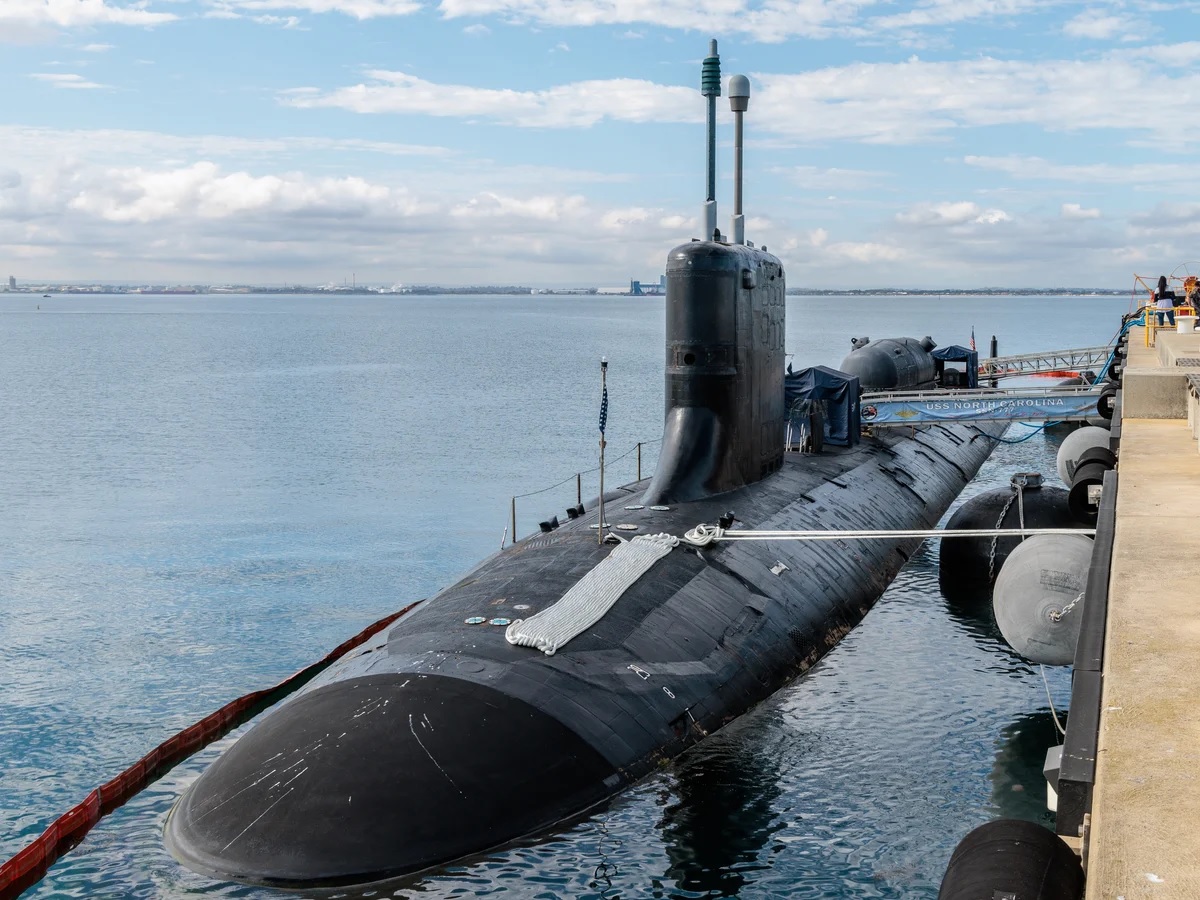
World
SINGAPORE — May 30, 2026 : Defence ministers from Australia, the United States and the United Kingdom met on the sidelines of the Shangri-La Dialogue security summit in Singapore on Saturday to finalise next steps in the AUKUS trilateral security partnership, confirming that AUKUS Pillar I remains on schedule while announcing new cooperation measures on submarine operations, industrial coordination and uncrewed maritime technologies. Australian Deputy Prime Minister and Minister for Defence Richard Marles, U.S. Secretary of Defense Pete Hegseth and UK Defence Secretary John Healey reaffirmed their commitment to AUKUS, describing continued progress toward Australia’s acquisition of conventionally armed, nuclear-powered submarines and the strengthening of trilateral defence cooperation across the Indo-Pacific. Streamlined Virginia-Class Submarine Acquisition The ministers announced a revised approach to Australia’s acquisition of U.S.-built Virginia-class submarines under AUKUS Pillar I, confirming that Canberra will exclusively purchase three in-service submarines instead of a previously proposed mix of new and in-service variants. According to officials, the decision is intended to simplify supply chain management, operational planning, training and maintenance requirements for the Royal Australian Navy while improving cost efficiency. The revised plan is also expected to reduce additional pressure on U.S. shipyards currently managing Virginia-class submarine production and sustainment requirements. The ministers additionally noted continued progress on the development of SSN-AUKUS, a conventionally armed, nuclear-powered attack submarine programme designed to provide Australia and the United Kingdom with advanced warfighting capability. Officials said the programme remains supported by substantial national investments, including the United Kingdom’s £6 billion commitment announced in 2025. Submarine Rotational Force-West at HMAS Stirling The meeting also finalised arrangements for the establishment of Submarine Rotational Force–West (SRF-West) at HMAS Stirling in Western Australia, a key element of the AUKUS submarine pathway intended to expand regional submarine maintenance and sustainment capacity. The United States has authorised the deployment of U.S. Navy support elements to HMAS Stirling and will begin rotating personnel later this year. The first deployment of a U.S. nuclear-powered submarine to the Australian base is scheduled for 2027, followed by a rotational presence of a UK Astute-class submarine. British officials reaffirmed London’s commitment to rotational submarine deployments and highlighted the successful completion earlier this year of a Submarine Maintenance Period for HMS Anson, a UK Astute-class submarine serviced at HMAS Stirling. Officials said SRF-West is intended to accelerate Australia’s readiness to regulate, operate, maintain and sustain a sovereign conventionally armed, nuclear-powered submarine capability by improving maintenance access, logistics support and operational readiness. Australian Infrastructure Investments To support the wider AUKUS submarine programme, Australia outlined major infrastructure and logistics spending linked to submarine operations and sustainment. The investments include up to AUD 8 billion for SRF-West facilities and logistics support at HMAS Stirling, an initial AUD 3.9 billion payment toward the construction of a new Submarine Construction Yard in South Australia and AUD 12 billion for the Henderson Defence Precinct, which will provide contingency docking and depot-level maintenance capabilities. Officials said these investments form part of the broader AUKUS submarine pathway and are intended to support long-term sustainment and sovereign industrial capability. AUKUS Pillar II Signature Project on Uncrewed Undersea Vehicles Alongside submarine cooperation, the ministers announced the first AUKUS Pillar II “Signature Project,” focused on jointly developing payloads and enabling systems for uncrewed undersea vehicles (UUVs), with the first capabilities expected to enter service in 2027. The project will support the development of sensors, weapons systems and enabling technologies capable of operating across the UUV fleets of all three AUKUS partners. Officials said the systems are intended to improve surveillance, reconnaissance and strike operations while expanding capabilities for logistics support, anti-submarine warfare, anti-surface warfare, mine countermeasures, electronic warfare and contested littoral manoeuvres. The UK Ministry of Defence said the project will also strengthen efforts to protect critical seabed infrastructure, including underwater pipelines and telecommunications cables, while supporting collective deterrence across the Indo-Pacific and Euro-Atlantic regions. The technology is expected to contribute to the Royal Navy’s transition toward a “Hybrid Navy” model combining crewed and uncrewed systems, while also reinforcing the future SSN-AUKUS submarine fleet through shared payload integration between the United Kingdom, Australia and the United States. Defence Industry Cooperation and Innovation UK Defence Secretary John Healey announced the winners of the 2025 AUKUS Maritime Innovation Challenge, which focused on technologies supporting command, control and teaming of undersea systems. The selected companies — Decision Analysis Services Ltd. in Basingstoke, SEA Ltd. in Frome, A-2i in Dorchester and MSI Transducers in Boston, United States — will share £3 million to further develop and test their technologies. The UK Ministry of Defence said the funding supports defence innovation, industrial growth and skilled employment across companies of varying sizes. The ministers also confirmed steps to expand the AUKUS licence-free trade environment by narrowing the list of excluded technologies subject to export controls. They reaffirmed support for the Advanced Capabilities Industry Forum, which is intended to strengthen cooperation across the trilateral defence industrial base. Officials said the latest agreements build upon the Geelong Treaty signed in July 2025, which established a formal framework for expanded defence cooperation between Australia and the United Kingdom under the wider AUKUS partnership.
Read More → Posted on 2026-05-30 14:07:52
World
Taganrog, Russia — May 30, 2026 : Ukrainian unmanned systems forces carried out an overnight drone strike on Russian military and energy infrastructure in the Rostov region on May 29–30, targeting the aviation hub and port facilities in Taganrog, according to Ukrainian officials and regional authorities. Major Robert “Madyar” Brovdi, Commander of Ukraine’s Unmanned Systems Forces (USF), said the operation was conducted by the “Birds of the 1st Separate Center of the USF” under the coordination of the newly established USF Deep Strike Center. Brovdi stated that the operation destroyed two Tupolev Tu-142 long-range aircraft, including a rare Tu-142MR strategic radio-relay variant, and an Iskander operational-tactical missile launcher positioned near Taganrog. Footage released by the Ukrainian military appeared to show strikes on aircraft undergoing work at facilities linked to the Taganrog aviation complex. Strike on Taganrog Aviation Hub Situated along the coast of the Sea of Azov, Taganrog serves as a major center of Russia’s aviation industry and military aircraft maintenance network. The targeted complex includes the Beriev Aircraft Company and the 325th Aircraft Repair Plant, facilities responsible for the repair, modernization, and servicing of several Russian military aircraft platforms. The facilities support amphibious aircraft, A-50 airborne early warning aircraft, transport aircraft including the Il-76, An-12 and An-72, as well as Tu-95MS and Tu-142 strategic bombers. The surrounding industrial zone also hosts Atlant Aero, an enterprise reportedly involved in unmanned aircraft development. Rare Tu-142MR Strategic Aircraft Defense and aviation analysts identified one of the reportedly destroyed aircraft as a Tu-142MR, known by the NATO reporting name “Bear J.” Derived from the Tu-142 maritime patrol and anti-submarine warfare aircraft, the platform performs a specialized communications role within Russia’s nuclear command-and-control structure. According to aviation journalist Piotr Butowski, the aircraft operates using the Oryol communications system, enabling national command authorities to relay launch instructions to submerged ballistic missile submarines (SSBNs), guided missile submarines (SSGNs), and attack submarines (SSNs). The aircraft performs a role comparable to the U.S. E-6 Mercury (TACAMO) platform. The Tu-142MR is visually distinguishable by a forward-pointing pod mounted on the tailfin and a ventral fairing housing a very low frequency (VLF) trailing wire antenna used to maintain communications with submerged submarines. Analysts estimate that between seven and fourteen Tu-142MR airframes were produced, with approximately twelve believed to remain in operational service, split between Russia’s Northern Fleet at Kipelovo and Pacific Fleet at Mongokhto. The fleet has reportedly undergone upgrades under the “Kipelovo” modernization programme to improve compatibility with newer-generation submarines. As no active production line for the Tu-142 family exists, the loss of an operational aircraft could affect fleet availability. Conflicting Claims Over Aircraft Status Conflicting reports emerged following the strike regarding the condition of the aircraft present at Taganrog. A Russian military blogger operating under the name “FighterBomber” claimed the damaged airframes included a Tu-142MK and a Tu-142MR transferred from Nikolaev, Ukraine, for repairs in 1998 and 2002 and later abandoned because of insufficient funding. However, defense analysts note that Taganrog remains Russia’s principal maintenance and modernization center for the Tu-142 fleet, suggesting the aircraft were more likely active Russian platforms undergoing repair, maintenance, or upgrade work. Iskander Launcher and Port Infrastructure Targeted In addition to the aviation assets, Brovdi reported the destruction of an Iskander operational-tactical missile system launcher at a firing position located in marshland near Taganrog. The mobile Iskander system is used by Russian forces to launch short-range ballistic and cruise missiles against targets in Ukraine. Drone strikes also reportedly affected commercial and energy-related infrastructure in the city’s port zone. Rostov Oblast Governor Yuri Slyusar said drone impacts caused fires involving a commercial oil tanker, a specialized fuel storage reservoir, and a port administrative building within the Port of Taganrog industrial area. Additional drone activity was reported in neighboring Krasnodar Krai, where an oil facility in Armavir was reportedly targeted during the coordinated overnight operation. Previous Strikes on Taganrog Facilities The latest operation follows earlier Ukrainian strikes on military-industrial facilities in Taganrog. In November 2025, satellite imagery reportedly showed the destruction of two rare Russian aircraft at the Beriev plant, including an A-60 laser aircraft and an A-100LL airborne early warning and control platform based on the Il-76 airframe. The 325th Aircraft Repair Plant was also reportedly targeted in late May 2026 prior to the latest overnight operation. Russian authorities have not officially confirmed the reported destruction of the aircraft or missile system, and independent verification of the full extent of damage remains limited.
Read More → Posted on 2026-05-30 13:44:51Search
Top Trending in 24 Hours
-
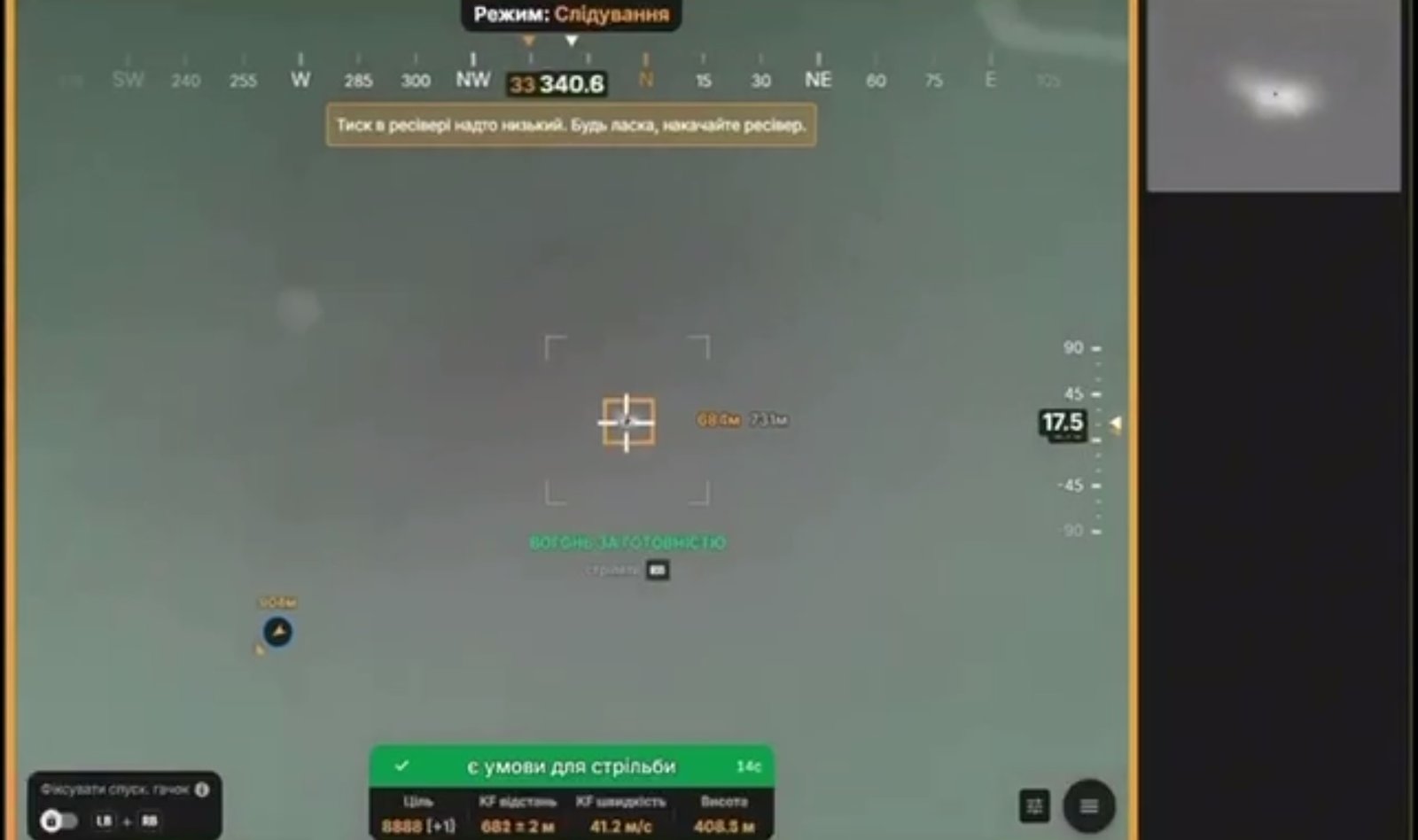 Ukraine’s Blysk Laser Air Defence System Shoots Down Russian Jet-Powered Geran Drone
-
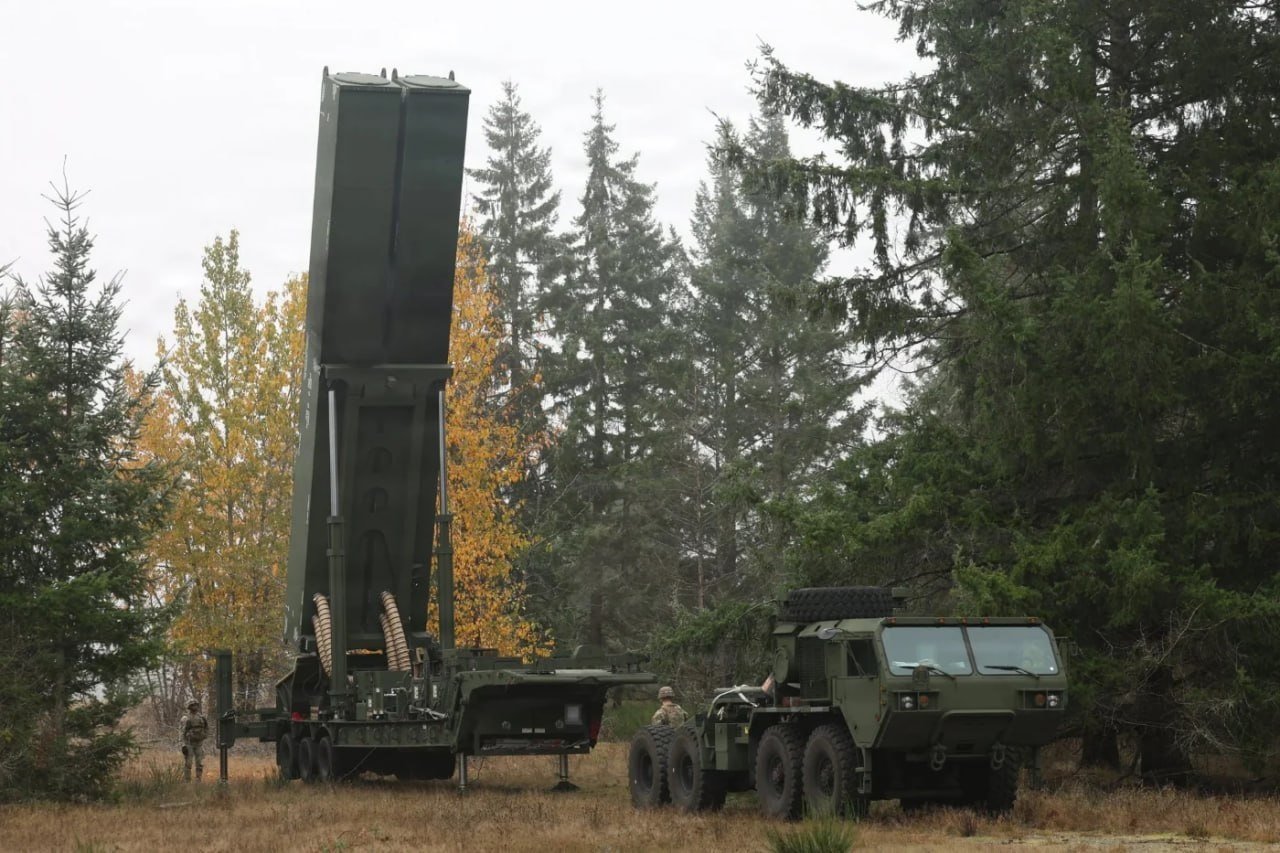 U.S. Army Declares First Dark Eagle Hypersonic Missile Battery Ready for Combat Deployment
-
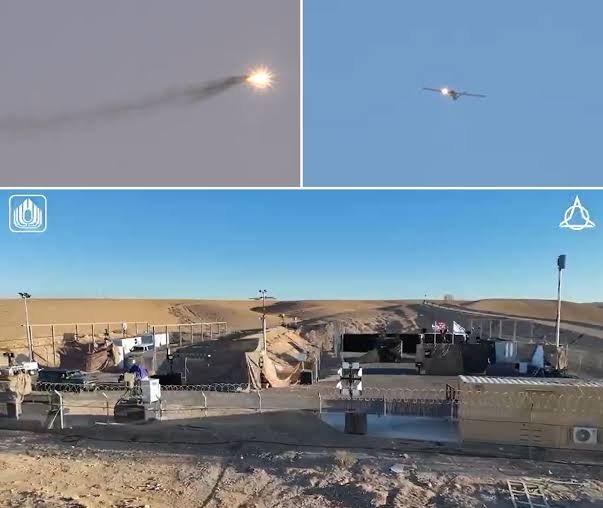 Israel and US Test 20 Counter-Drone Systems in First Joint Trials on Israeli Soil
-
 Europe Opens Largest Satellite Factory in Belgium to Build Starlink Alternative
-
 India's SiGaN Validates First 20-Watt GaN RF Power Amplifier, Opens Commercial Orders
-
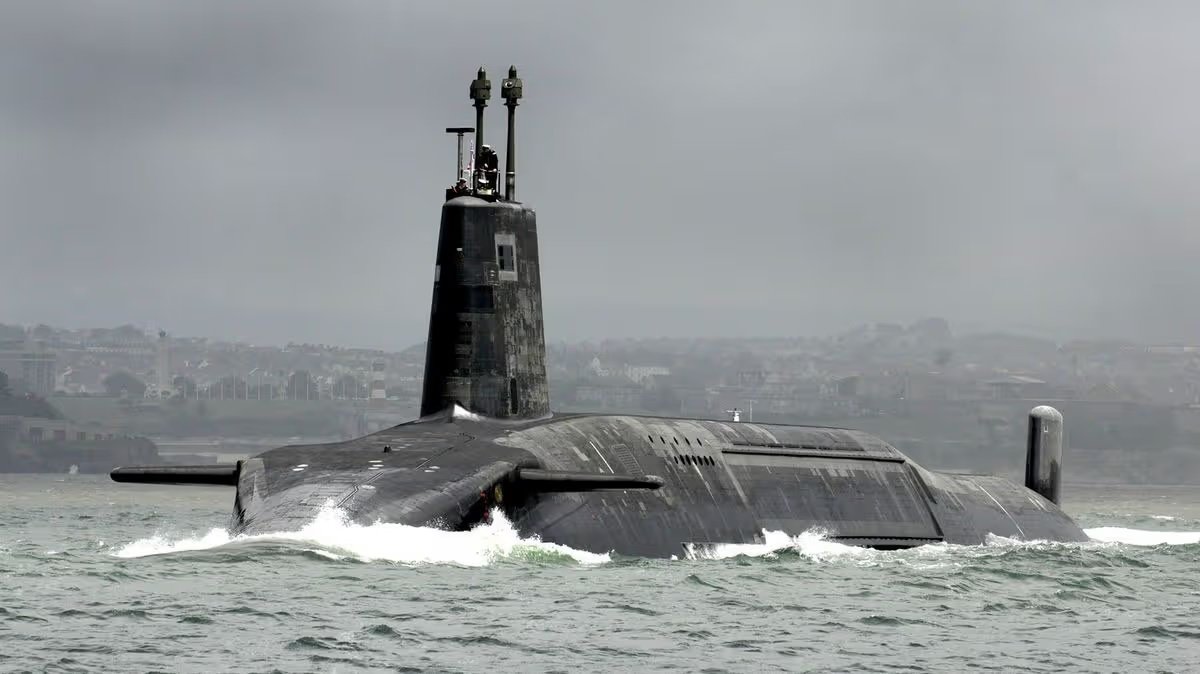 Babcock Signs Record £8.7 Billion Deal to Support UK Nuclear Submarine Fleet
-
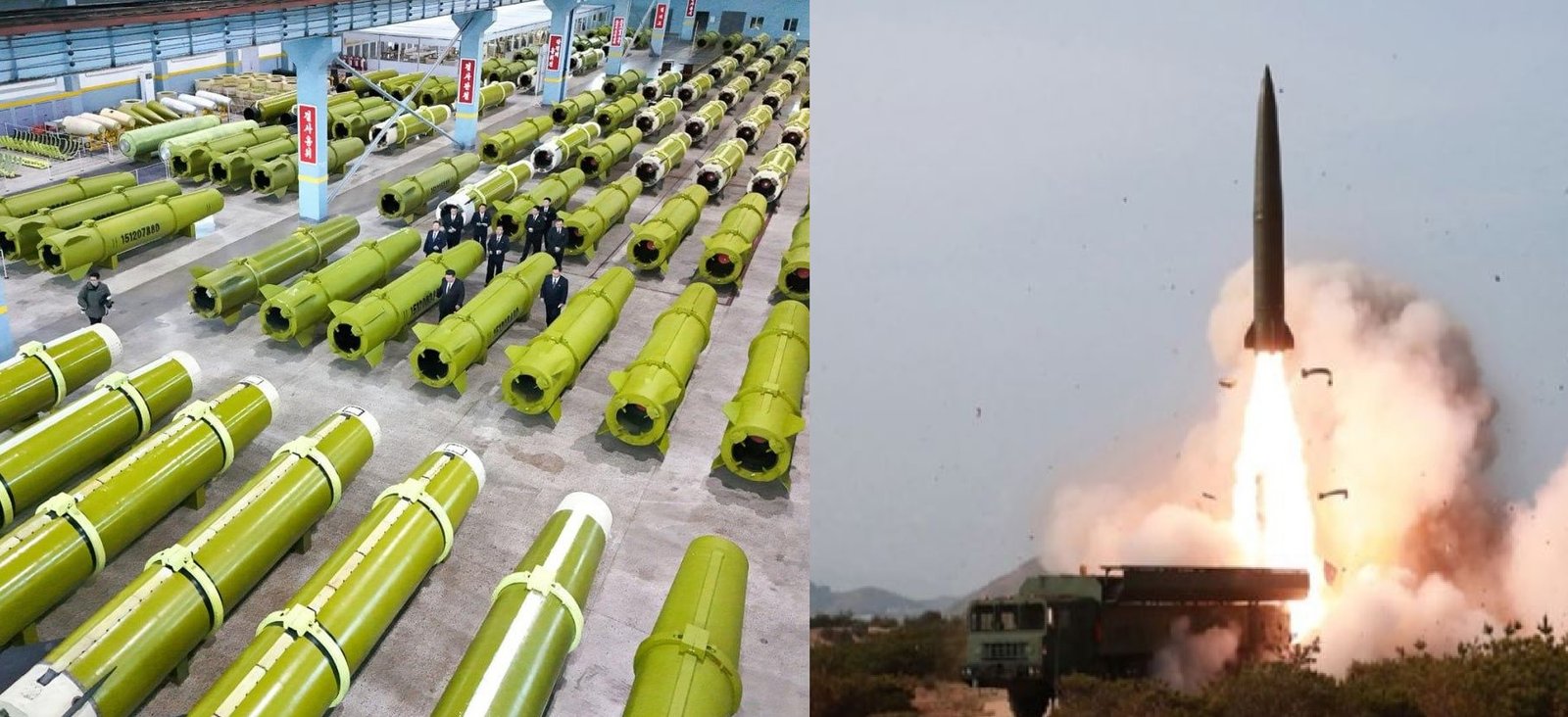 North Korea Suspends KN-23 Missile and Artillery Deliveries to Russia Amid Diplomatic Tensions
-
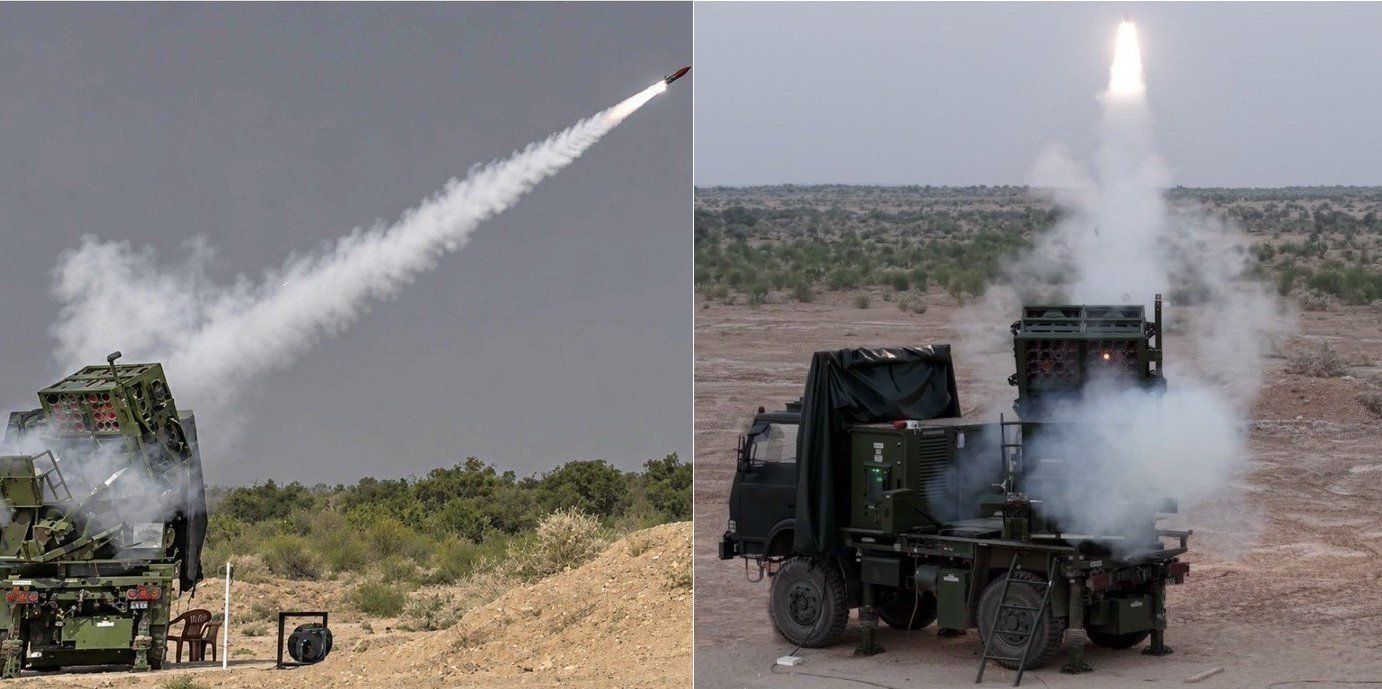 India’s Bhargavastra Counter-Swarm Drone System Completes Pokhran Trials Ahead of Army Demonstration
Top Trending in 4 Days
-
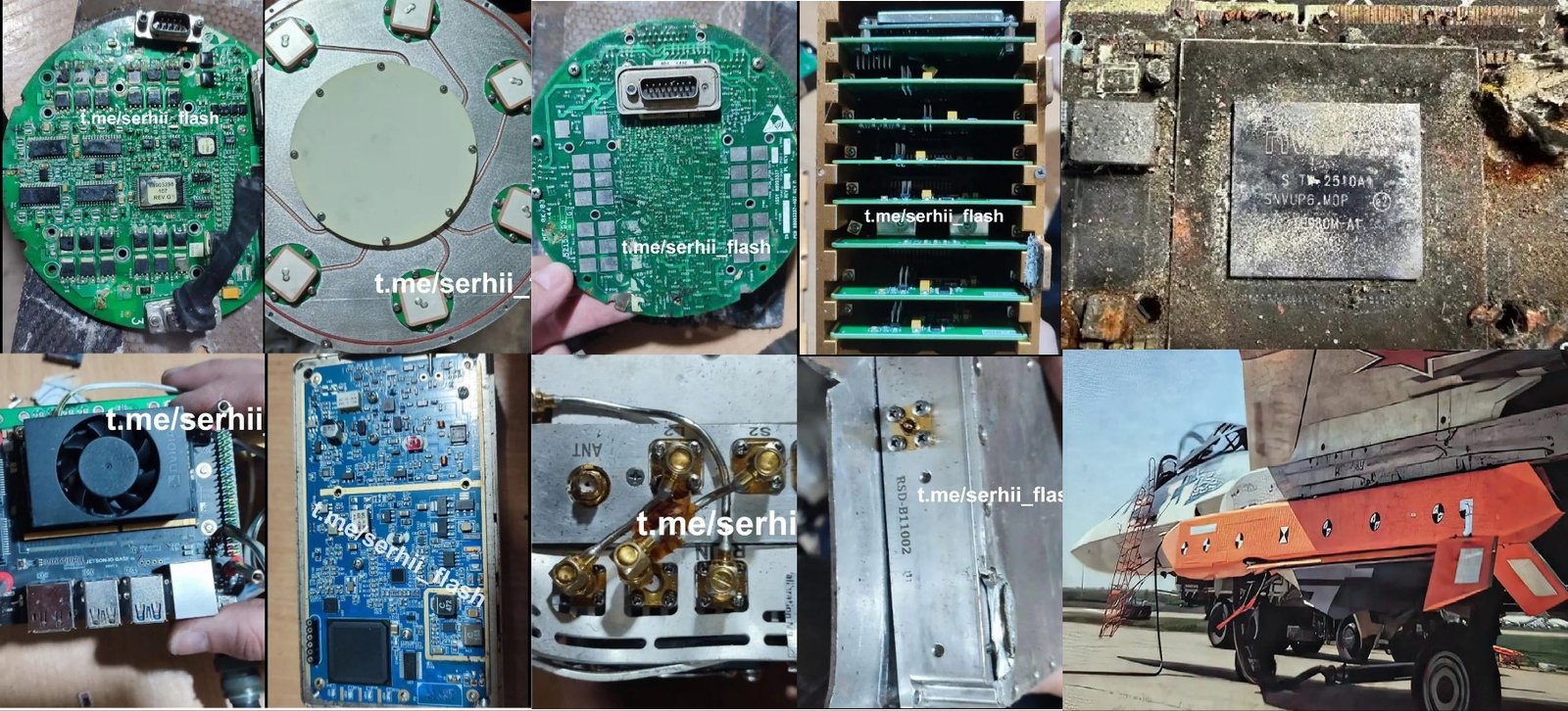 Russian Drones and Cruise Missiles Found Using Civilian NVIDIA AI Chips in Ukraine
-
 Western Intelligence Warns Russia Could Launch Nuclear-Armed Satellite as Early as December
-
 NASA Suspends Science Operations on Perseverance Rover and Mars Odyssey After Hardware Failures
-
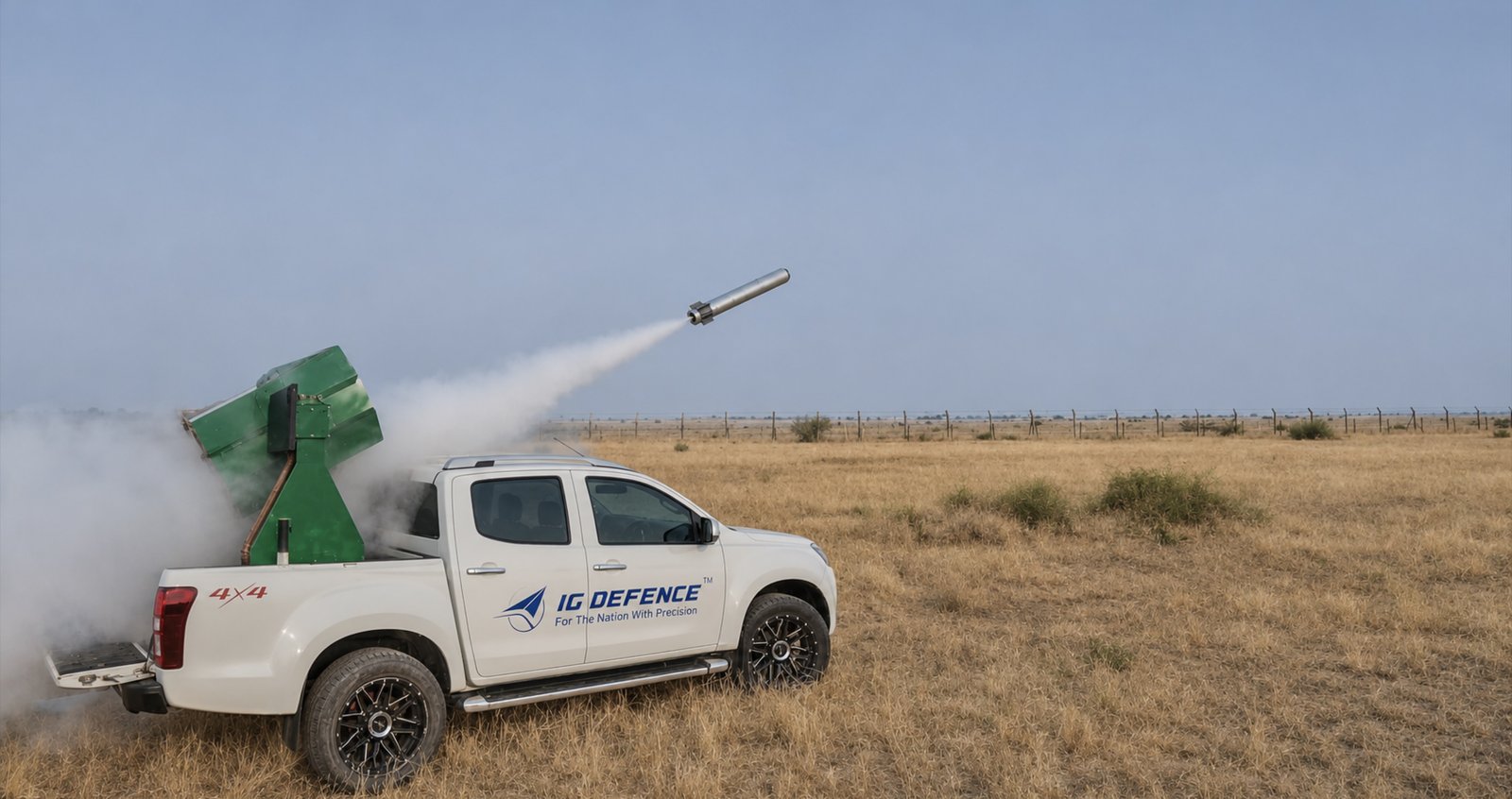 IG Defence Successfully Test-Fires JWALA MK-1 Counter-Drone Missile at Pokhran
-
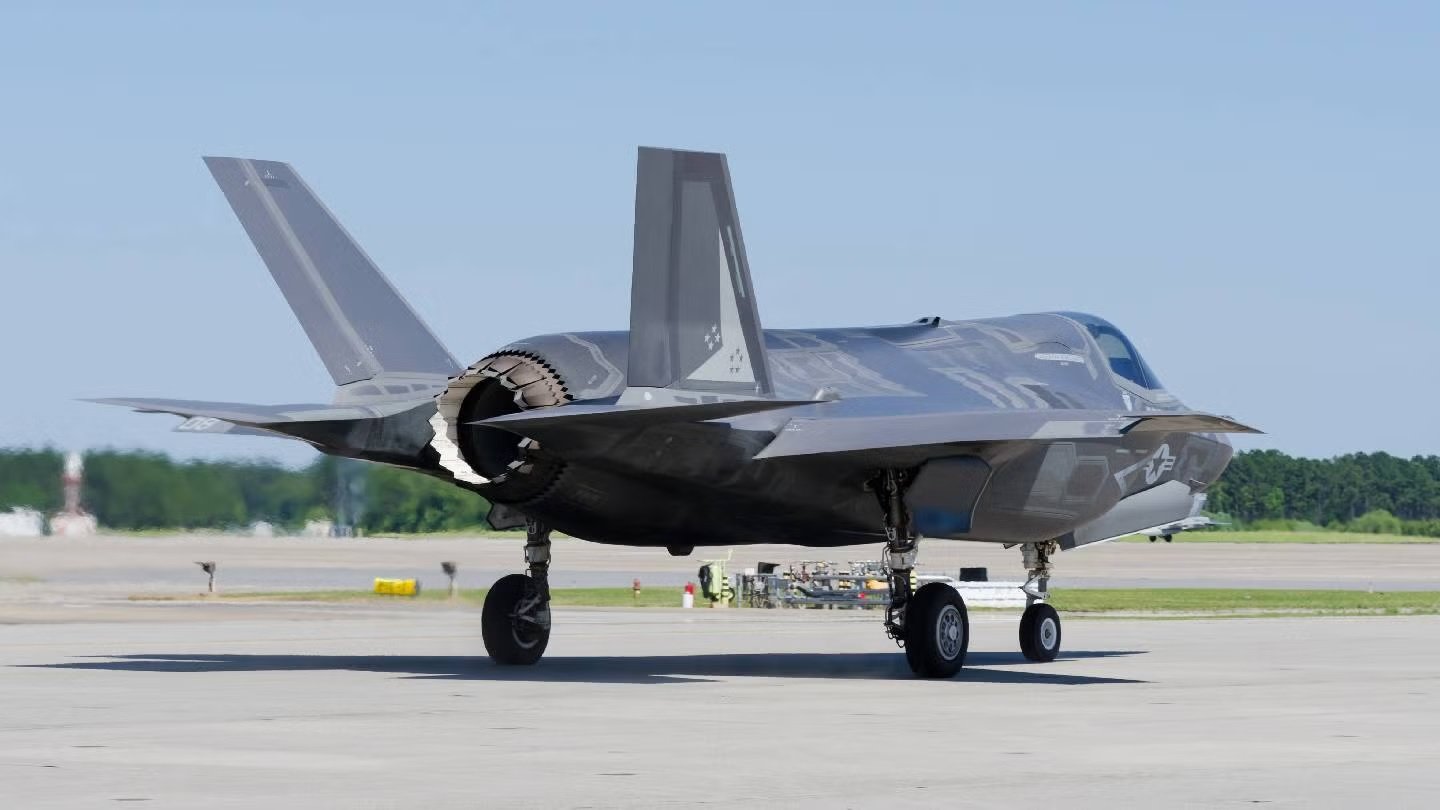 U.S. Awards Lockheed Martin $330.6 Million Contract for Long-Lead Materials Supporting 75 F-35 Lot 22 Aircraft
-
Ukraine’s Blysk Laser Air Defence System Shoots Down Russian Jet-Powered Geran Drone
-
 Chinese Military Warns U.S. AI Could Threaten China’s Nuclear Missile Survivability
-
 Ukraine Strikes Five Russian Warplanes, Including Three Kinzhal-Capable MiG-31s at Savasleyka Airbase