Washington, April 11, 2026 : Iran has not been able to fully restore normal shipping activity through the Strait of Hormuz due to its inability to locate and clear all naval mines deployed during recent operations, according to United States officials cited by The New York Times.
The officials said that incomplete documentation during the deployment phase, combined with the movement of some mines due to sea currents, has left Iranian authorities without an accurate assessment of their positions. As a result, only a limited maritime corridor remains operational, restricting broader commercial traffic through the strategic waterway.
Deployment Gaps and Navigational Constraints
According to U.S. officials, the mines were laid in a non-systematic manner, with some locations not recorded and others placed in conditions that allowed them to drift from their original positions. This has reduced the reliability of previously issued navigation charts and limited Iran’s ability to designate safe transit routes.
At present, Iran is allowing vessel movement through a narrow corridor coordinated by the Islamic Revolutionary Guard Corps (IRGC), where ships are required to comply with toll arrangements. However, authorities have not expanded access beyond this controlled passage due to unresolved safety concerns.
Technical Challenges in Mine Clearance
Officials stated that the situation reflects a broader technical limitation in naval mine countermeasure operations. Mine clearance requires specialized equipment to detect and neutralize devices that may be anchored, floating, or resting on the seabed. These operations are significantly more complex than initial deployment.
Iran does not possess sufficient mine countermeasure assets to rapidly address the issue, including the mines it deployed itself. U.S. officials noted that even the United States maintains limited large-scale rapid clearance capability, relying on a small number of specialized platforms such as littoral combat ships configured for mine countermeasures.
Iranian Foreign Minister Abbas Araghchi acknowledged these constraints on April 8, 2026, stating that the Strait of Hormuz would remain open “with due consideration of technical limitations.” U.S. officials interpreted this statement as a reference to the challenges associated with locating and removing the mines.
Types of Mines Deployed
Details from earlier reports indicate that Iran employed multiple types of naval mines from its existing inventory during the operation.
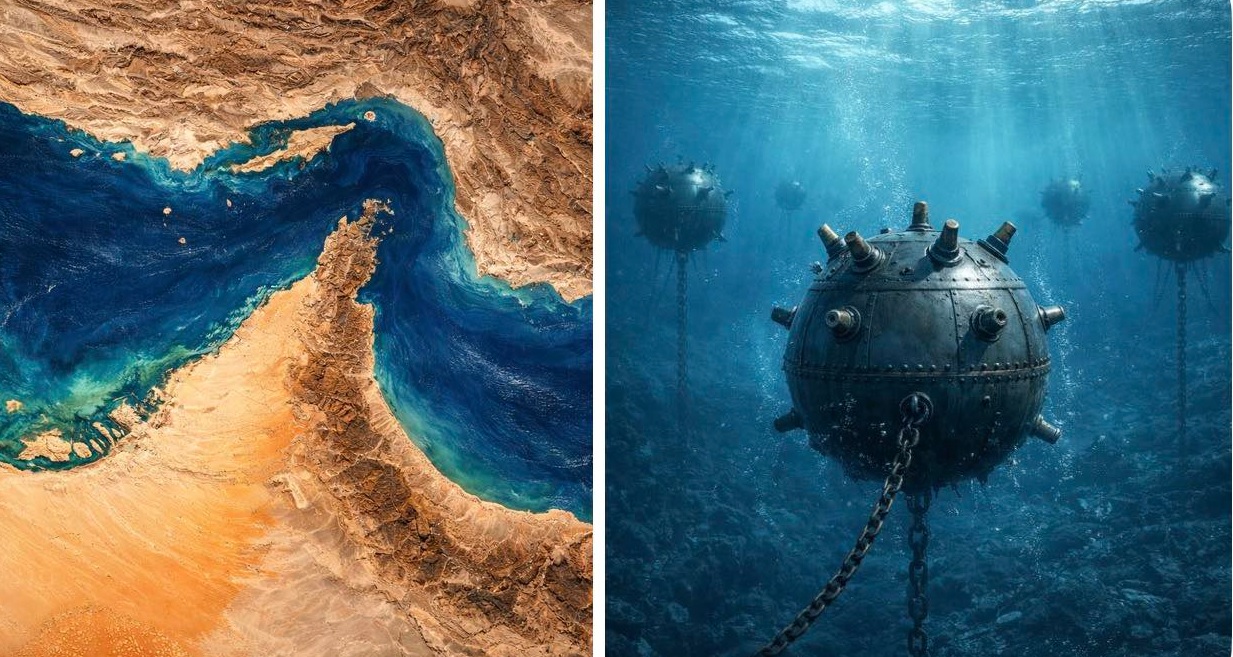
Among them is the Mahan 3, a 300-kilogram moored buoyant mine equipped with acoustic sensors capable of detecting vessels at a range of approximately 10 feet. This type is designed to operate in water depths of up to 100 meters and detonates based on acoustic signatures.
Another system identified is the Maham 7, a 220-kilogram bottom mine that rests on the seabed and can be deployed from small boats or helicopters. Iran also fields the Maham 2, a heavier bottom influence mine weighing around 320 kilograms, which responds to acoustic, magnetic, or pressure signatures generated by passing ships.
In addition, Iran maintains inventories of moored contact mines, including variants based on older designs with electrically activated horns, as well as domestically produced influence mines developed with foreign technical input.
Estimates place Iran’s total naval mine stockpile between 2,000 and 6,000 units. This includes drifting mines, which float with ocean currents and detonate upon contact, increasing the difficulty of tracking and clearance.
Methods of Deployment
The mines were deployed using a combination of platforms, including small vessels operated by the IRGC, submarines, and other maritime assets. U.S. officials stated that the absence of comprehensive mapping during this process has contributed directly to the current inability to account for all devices.
Some mines are believed to have shifted from their initial positions due to environmental factors, further complicating detection efforts and rendering earlier safe-route data incomplete.
Impact on Global Shipping
The Strait of Hormuz, which connects the Persian Gulf to the Gulf of Oman, is a critical maritime chokepoint handling approximately 20 percent of global oil trade. The presence of unlocated mines has led to reduced tanker traffic and continued uncertainty for commercial shipping operators.
While limited transit continues under Iranian coordination, broader reopening efforts have not progressed in line with U.S. expectations for unrestricted passage.
Diplomatic Context and Ongoing Talks
The issue of mine clearance remains a central topic in ongoing diplomatic discussions. U.S. officials have linked the full restoration of safe maritime navigation to ceasefire-related negotiations involving Iran.
Talks addressing the situation are scheduled to take place in Pakistan, where both sides are expected to discuss mechanisms for restoring full access to the waterway. No official timeline has been provided for the complete removal of the mines or normalization of shipping activity.
Neither U.S. nor Iranian authorities have disclosed the exact number of mines that remain unlocated.
——— End of Article ———