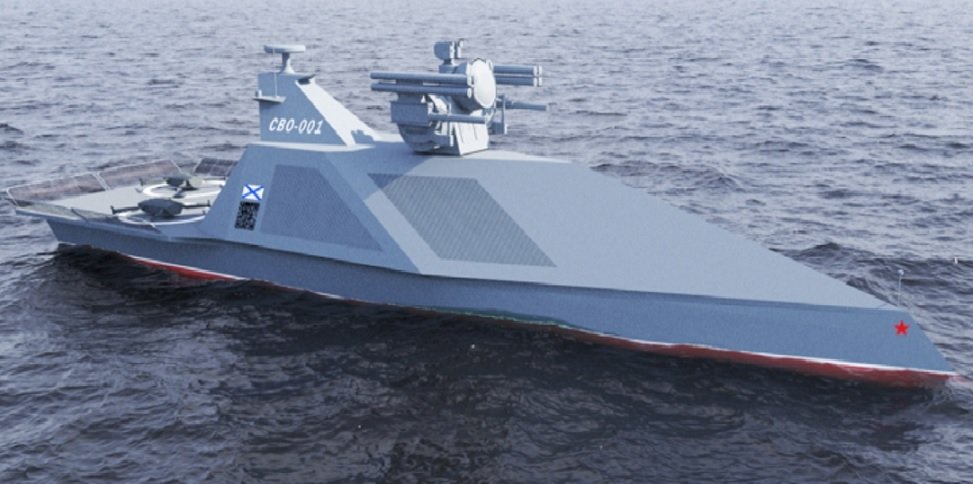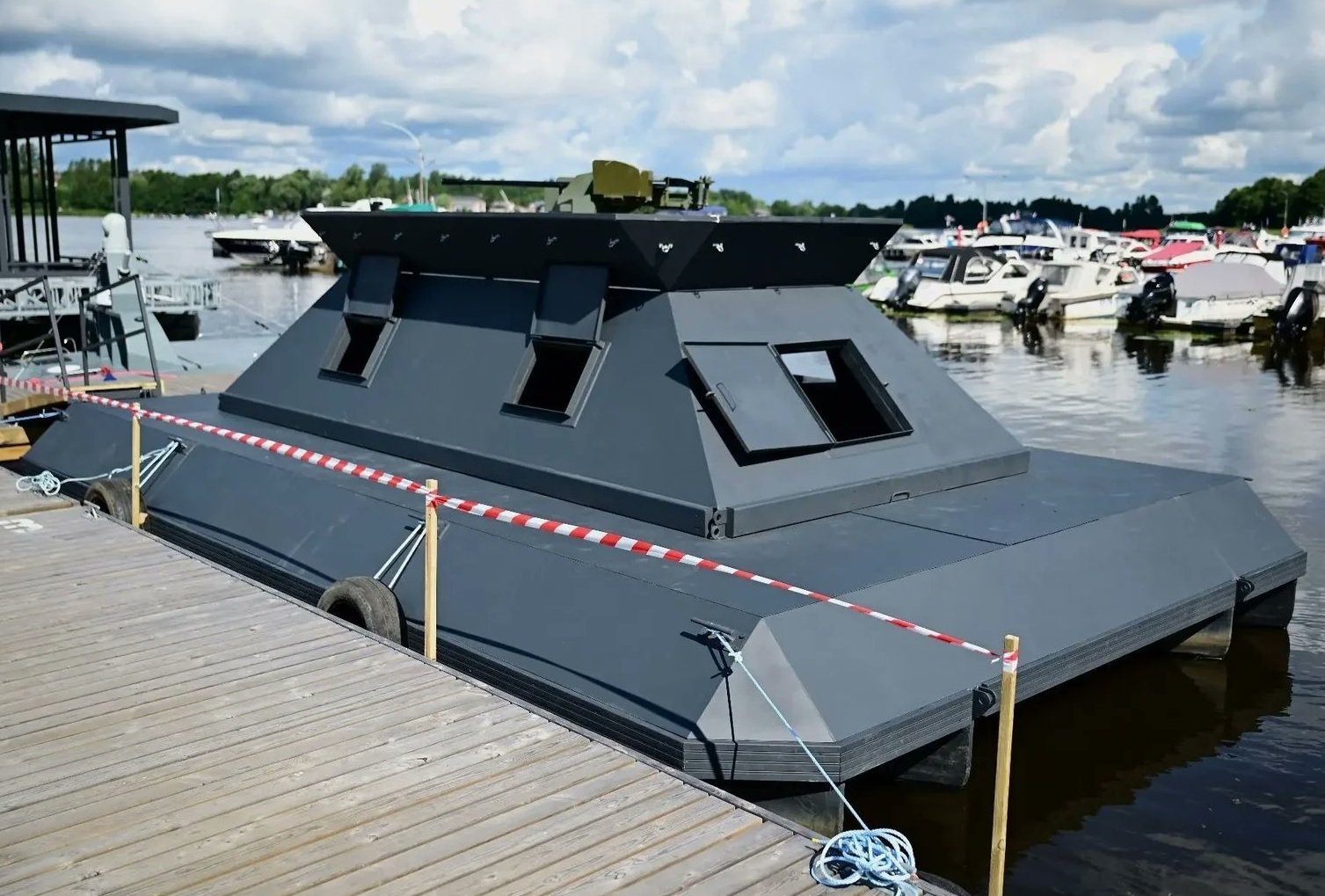
VYBORG, Russia — Russia has unveiled an experimental floating fire support platform known as the Plot-40 (Плот-40), a new system designed to help protect naval bases, ports, energy facilities and other coastal infrastructure from uncrewed surface vessels (USVs) and unmanned aerial vehicles (UAVs).
The prototype was presented during a working visit to Vyborg by Alexander Drozdenko, governor of Russia's Leningrad region, who also released photographs and videos of the platform. According to regional officials, the project was launched after an analysis of recent attacks on naval facilities identified vulnerabilities in traditional defence systems against modern uncrewed threats.
Designed as a stationary or semi-stationary platform, the Plot-40 is intended to remain at sea for extended periods while serving as a surveillance and fire support post for the protection of critical maritime infrastructure.
Prototype Designed for Long-Endurance Coastal Protection
The Plot-40 is equipped with a roof-mounted remotely operated machine-gun module. However, several technical and operational details have not been disclosed.
Officials have not confirmed whether the weapon system requires an onboard operator or whether the platform is intended to use artificial intelligence for automatic target classification and engagement. The platform's displacement has also not been made public.
According to Drozdenko, one of the platform's key advantages is its ability to remain deployed at sea for long periods while continuously monitoring surrounding waters. He also stated that production of the Plot-40 will be fully localized within the Leningrad region and that no comparable platform is currently in service elsewhere in Russia.
The showcased system is a working prototype. Following its assembly, the project received preliminary approval from a specialized research institute of the Russian Navy, allowing it to proceed with its initial on-water demonstrations.
Developed by Marinplast
The Plot-40 was presented by the Vyborg-based company Marinplast (ООО "Маринпласт"), which specializes in floating piers, pontoons and related marine structures. Company head Sergey Nemtsov briefed Governor Drozdenko on the project during the presentation.
Regional authorities said production of the platform has been localized within the Leningrad region and confirmed that support for similar projects developed by local enterprises will continue.
Broader Focus on Uncrewed Naval Systems
The Vyborg presentation also included prototype uncrewed surface vessels currently undergoing trials for strike and reconnaissance missions, reflecting Russia's broader efforts to expand the use of unmanned systems in naval operations.
Among the projects highlighted was the Briz (Breeze) uncrewed surface logistics vessel, developed jointly by the Russian companies Sea Project (Si Proekt) and Bezekipazhnaya Logistika (Unmanned Logistics).
The Briz resembles a rigid-hulled inflatable boat (RHIB) fitted with additional equipment superstructures and is being promoted by its developers for civilian applications.
The vessel includes an internal cargo compartment in the bow with automated doors and is powered by a Yaroslavl diesel engine. It is equipped with remote and autonomous navigation systems, an Automatic Identification System (AIS), and collision avoidance technology.
During recent testing, the Briz completed a voyage from the Northern Dvina River to the Solovetsky Islands in the White Sea while carrying a 150 kg payload. According to the developers, the vessel completed the one-way journey in 21 hours and operated autonomously for more than 90 percent of the round trip. At maximum capacity, the Briz is designed to transport up to 500 kg of cargo over long distances.
The developers have described the Briz as a platform for delivering parcels and humanitarian aid to remote settlements in Russia's Arkhangelsk region.
Response to Evolving Maritime Threats
The introduction of the Plot-40 and continued testing of the Briz reflect Russia's ongoing efforts to strengthen the use of unmanned and automated systems for maritime operations.
According to regional officials, the Plot-40 project was initiated after recent attacks demonstrated that conventional coastal defence systems require additional capabilities to counter emerging threats from uncrewed surface vessels and aerial drones. The experimental platform is intended to provide persistent surveillance and defensive fire support around naval facilities and other critical coastal infrastructure while remaining deployed at sea for extended periods.
——— End of Article ———