WASHINGTON — President Donald Trump has temporarily paused plans to expand U.S. military strikes against Iran after senior military officials warned that a broader campaign could significantly reduce the supply of Patriot air defense interceptors needed to protect American forces across the Middle East.
According to a report by The New York Times, the decision followed 13 consecutive days of U.S. military strikes against Iranian targets. The pause came after a high-level White House meeting on Friday attended by Cabinet members and senior advisers, including Vice President JD Vance and Chairman of the Joint Chiefs of Staff Gen. Dan Caine.
Military Warns of Shrinking Patriot Missile Stocks
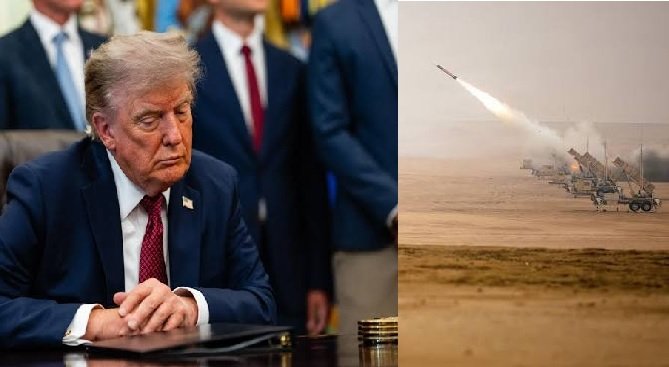
During the meeting, military leaders reportedly informed the president that while expanding military operations against Iran remained operationally feasible, doing so could dangerously reduce the number of Patriot interceptor missiles available to U.S. Central Command (CENTCOM), which oversees American military operations across the Middle East.
The concern comes as the Pentagon has already used more than 1,200 Patriot interceptor missiles in recent months, placing significant pressure on available inventories. Defense officials warned that any further large-scale operations could affect the military's ability to defend U.S. forces and bases across the region.
The importance of maintaining sufficient interceptor stocks was reinforced after an Iranian ballistic missile recently penetrated U.S. air defenses in Jordan, killing three American service members.
Broader Strike Options Were Under Consideration
Before the decision to pause the expansion, the Trump administration had been considering a multi-stage bombing campaign against additional Iranian military targets.
Options under review reportedly included strikes on coastal radar systems, anti-ship missile launchers, attack boats, energy facilities, and certain nuclear-related sites. Other reported options included targeting railway bridges used to transport military supplies.
At the same time, the Pentagon has continued moving additional weapons, military equipment, and logistical support to the Middle East to maintain readiness if the security situation changes or diplomatic efforts fail.
Officials Assess Risks of Wider Conflict
Officials also evaluated the broader consequences of an expanded military campaign. According to the report, advisers warned that increased strikes could lead to stronger Iranian retaliation, place additional pressure on Gulf allies, disrupt global energy markets, slow the global economy, and worsen existing refugee challenges in the region.
Diplomatic Window Opens
The pause has also created an opportunity for renewed diplomatic engagement. Hours before the decision took effect, an Omani delegation arrived in Tehran to discuss a possible framework for reopening the Strait of Hormuz, one of the world's most important maritime routes for global oil shipments.
Speaking to reporters on Friday, President Trump said the U.S. military remains prepared for military action but emphasized that diplomacy is currently the preferred approach.
"We're talking to them right now. I think they're getting more and more serious as the days go by," Trump said.
He also added that he does not believe Tehran is ready to reach an immediate agreement.
Trump: Military Ready, Diplomacy Preferred
Earlier in the week, Trump had stated that U.S. forces were "locked and loaded" and ready to act if necessary. In a separate interview on Thursday, he said he was considering a military operation that would be "bigger than ever before," but by Friday he had decided to delay any major expansion of the campaign.
White House Reaffirms Diplomatic Approach
White House Communications Director Steven Cheung said the administration continues to favor a negotiated solution while keeping military options available.
Cheung said President Trump "has always been consistent in saying he prefers a diplomatic solution," but added that all options remain available if Iran continues activities that threaten the Strait of Hormuz or U.S. regional partners.
Military Readiness Maintained During Pause
Following the temporary halt, U.S. strikes paused for the first time in nearly two weeks after 13 consecutive nights of operations. At the same time, the administration has continued economic pressure on Iran through additional Treasury sanctions targeting companies and individuals linked to Iranian financial networks.
Defense officials stressed that the pause does not represent an end to military planning. Instead, it is intended to preserve critical air defense resources while allowing diplomatic efforts to continue. U.S. forces remain on alert, and additional military assets continue to be positioned across the Middle East to ensure readiness if negotiations do not produce results.
Strategic Impact
The developments highlight how the availability of key air defense munitions, particularly Patriot interceptor missiles, has become an important factor in shaping U.S. military planning as tensions with Iran continue.
Source : aa.com.tr
——— End of Article ———