World
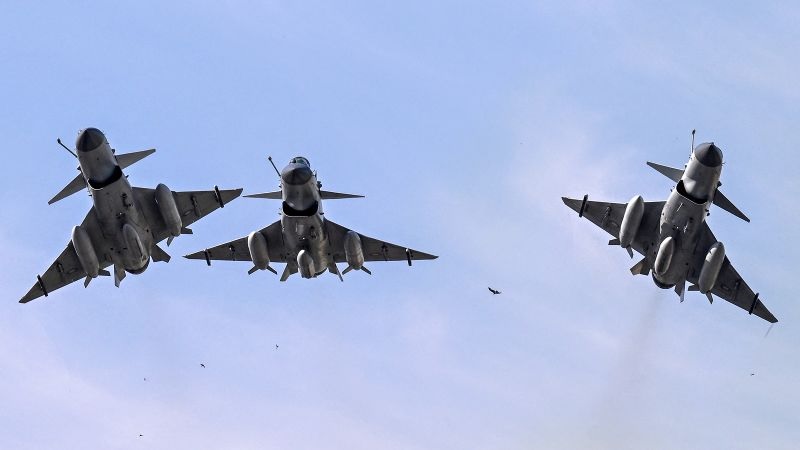
BEIJING — May 8, 2026 : China has officially confirmed for the first time that Chinese technical personnel were deployed to support the Pakistan Air Force (PAF) during the four-day military conflict between Pakistan and India in May 2025, publicly acknowledging direct operational assistance provided during the clashes. The confirmation was made through interviews aired by China’s state broadcaster CCTV featuring engineers from the Chengdu Aircraft Design and Research Institute, a division of the state-owned Aviation Industry Corporation of China (AVIC), which develops the J-10 fighter aircraft series. The broadcast marks the first official Chinese acknowledgment that Chinese personnel were physically present in Pakistan during active combat operations involving India. Chinese Engineers Confirm Deployment to Pakistan During the televised interview, AVIC engineer Zhang Heng stated that he was deployed to a Pakistani operational support base during the conflict to assist with technical maintenance and combat support for Pakistan’s fleet of Chinese-built J-10CE fighter aircraft. Zhang described the operational environment at the base, saying Chinese personnel regularly heard fighter jets taking off alongside air-raid sirens while conducting maintenance and support activities. He said the working conditions were physically demanding, with temperatures at the base approaching 50 degrees Celsius during daytime operations. According to Zhang, the Chinese team remained focused on ensuring that the aircraft and associated systems operated at their “full combat potential” throughout the conflict. He added that the deployment reflected the close working relationship developed between Chinese technical teams and Pakistan Air Force personnel through continuous cooperation and operational coordination. Another engineer from the same institute, Xu Da, also confirmed his involvement in the deployment. Xu compared the J-10CE fighter aircraft to a “child” that the engineering team had developed and eventually transferred to the user after years of work and testing. Speaking about the aircraft’s reported combat performance, Xu stated that the engineering team was not surprised by the outcome, saying the aircraft had simply been waiting for the opportunity to demonstrate its operational capabilities under combat conditions. J-10CE Fighter and PL-15 Missile System The J-10CE is the export version of China’s J-10C 4.5-generation multirole fighter aircraft. The platform is equipped with an active electronically scanned array (AESA) radar and is compatible with advanced Chinese air-to-air weapons, including the PL-15 series beyond-visual-range air-to-air missile. Pakistan remains the only confirmed foreign operator of the J-10CE fighter. In 2020, Islamabad ordered 36 J-10CE aircraft along with approximately 250 PL-15 missiles as part of efforts to strengthen its air combat capabilities following India’s acquisition of French-built Rafale fighter jets. The Pakistan Air Force also operates the JF-17 Thunder, a fighter aircraft jointly developed by China and Pakistan that serves as one of the PAF’s primary combat platforms. According to data published by the Stockholm International Peace Research Institute (SIPRI), China accounted for nearly 80 percent of Pakistan’s total arms imports between 2021 and 2025, highlighting the depth of defence cooperation between the two countries. Aerial Engagements During the 2025 Conflict The May 2025 conflict marked the first reported combat deployment of the J-10CE platform. During the aerial clashes over the disputed Kashmir region, Pakistani officials claimed that J-10CE fighters armed with PL-15E missiles successfully struck an Indian Air Force Rafale fighter after firing multiple beyond-visual-range missiles during the engagement. Pakistani and Chinese sources initially stated that at least one Rafale fighter had been shot down during the engagement, which would have represented both the first reported combat loss of a Rafale aircraft and the first known combat success for the J-10CE. However, subsequent Indian reports and independent defence assessments disputed parts of those claims. According to Indian accounts and independent analysts, the Rafale aircraft identified in Pakistani claims was able to return safely and land despite sustaining damage during the engagement. Indian forces later recovered several unexploded PL-15E missiles on the ground, including one missile reportedly found largely intact near Hoshiarpur in the Indian state of Punjab. Independent defence experts reviewing India’s documentation verified the recovery of unexploded missile components and also confirmed that at least one damaged Rafale aircraft landed safely after the engagement. Analysts noted that several recovered missiles failed to detonate after launch, with reports suggesting that the Rafale’s electronic warfare and countermeasure systems may have disrupted or jammed aspects of the missiles’ guidance and engagement process during the encounter. Strategic and Defence Implications Defence analysts have described the recovery of relatively intact PL-15E missile components as a significant intelligence opportunity for India because it potentially allows detailed examination of Chinese missile technology, including propulsion systems, radar seekers, guidance electronics, and internal architecture. Chinese defence officials have largely avoided directly addressing reports regarding technical failures involving the recovered missiles. Public comments from Chinese officials have instead emphasized the missile system’s operational capabilities and export presence while calling for regional stability and restraint. The CCTV interviews with Chinese engineers are viewed as an important public acknowledgment of the extent of China’s operational and technical support relationship with Pakistan during the conflict. The statements also underline the growing strategic defence partnership between Beijing and Islamabad, which has expanded over the past decade through joint aircraft development programmes, weapons transfers, training cooperation, and logistical support arrangements. The J-10CE has attracted increased international attention following the 2025 conflict due to its reported operational use and the broader implications for Chinese military aviation exports in international defence markets. AVIC and Chinese authorities have not released additional operational details regarding the deployment of Chinese technical personnel or the specific combat activities carried out during the conflict beyond the statements aired by CCTV.
Read More → Posted on 2026-05-08 15:59:34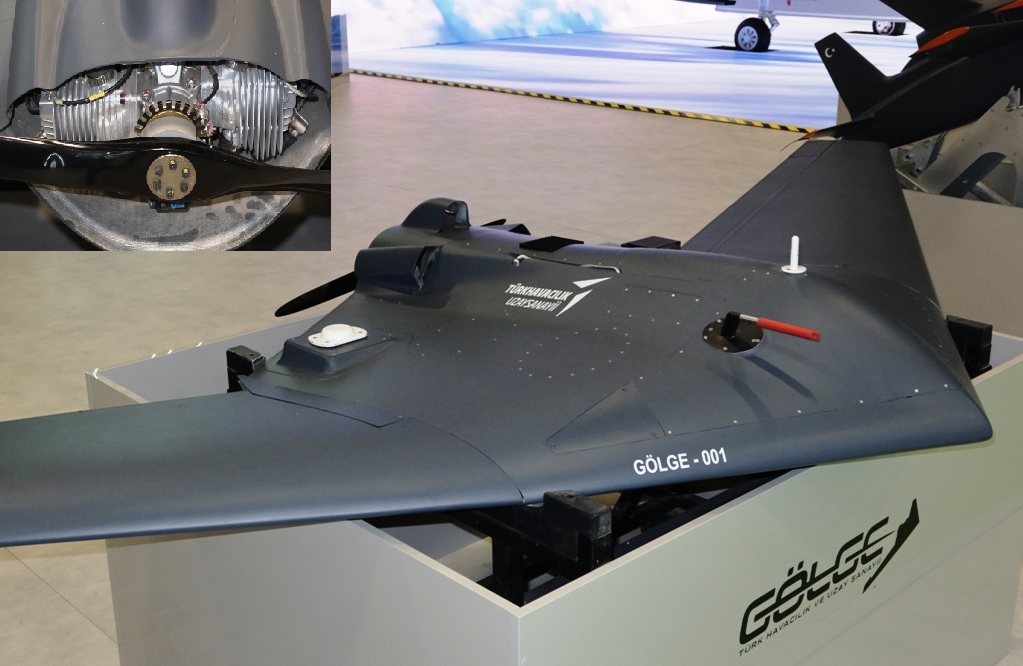
World
ISTANBUL — May 8, 2026 : Turkish Aerospace Industries (TAI) presented its Anka-III unmanned combat aerial vehicle (UCAV) alongside the newly introduced Gölge unmanned aerial system during SAHA Expo 2026 in Istanbul, offering a detailed look at two closely connected unmanned platforms developed under the company’s expanding aerospace programme. The exhibition marked the first major public presentation of the Gölge platform, which originated as an intermediate-scale technology demonstrator created to support the development of the larger Anka-III UCAV. Displayed side by side, the two aircraft showed a strong visual resemblance through their flying-wing layouts and stealth-oriented aerodynamic shaping, despite major differences in size, propulsion, and operational role. Anka-III Development Programme Advances Toward Production The Anka-III is a jet-powered stealth UCAV currently progressing through production development. TAI confirmed during the exhibition that the first production aircraft is scheduled for delivery in 2028. Designed as a heavy-class unmanned combat platform, the Anka-III has a maximum take-off mass of 6,500 kilograms and can carry payloads weighing up to 1,200 kilograms. The aircraft measures 7.9 metres in length and has a wingspan of 12.5 metres. According to specifications released by TAI, the aircraft is capable of flying at speeds up to Mach 0.7, operating at altitudes reaching 40,000 feet, and remaining airborne for up to 10 hours. At the exhibition, TAI also highlighted the aircraft’s modular payload capability through the display of a full-scale Anka-III model carrying two externally mounted “Süper Şimşek” strike UAVs beneath its wings. The configuration demonstrated the company’s focus on multi-platform unmanned operations and expandable strike mission capability. Gölge Developed from Anka-III Technology Demonstrator TAI stated that the Gölge programme originated from a smaller technology demonstrator used during the Anka-III development process. The platform was initially developed to validate flight control systems, aerodynamic behaviour, and autonomous operational functions intended for the larger UCAV. Following successful testing and validation activities, engineers adapted the demonstrator into a separate operational platform under the name Gölge. Although the two aircraft maintain similar design characteristics, TAI estimates commonality between the airframes at approximately 30 percent. The Gölge is considerably smaller, featuring a five-metre wingspan delta-wing configuration and a maximum take-off mass of approximately 100 kilograms. Propulsion and Flight Characteristics Unlike the jet-powered Anka-III, the Gölge uses a 14-horsepower two-cylinder engine driving a two-blade pusher propeller. The propulsion system is supported by three air intakes, including two positioned laterally on the fuselage and a third mounted on the upper section of the airframe to provide engine cooling. The aircraft is launched using a catapult-assisted take-off system and recovered using a parachute landing mechanism. TAI stated that the Gölge can reach speeds of approximately 165 kilometres per hour, equivalent to around 90 knots. The aircraft has an operational ceiling of 12,000 feet, a reported operational range of 1,300 kilometres, and an endurance of up to 10 hours. Stealth Design Limited by Propeller Configuration While the Gölge incorporates stealth-oriented shaping similar to the Anka-III, company representatives indicated that the aircraft does not achieve the same radar-discretion characteristics as the larger UCAV. The exposed pusher propeller creates what engineers describe as a micro-Doppler radar effect, reducing the effectiveness of the low-observable airframe design. Due to these limitations, TAI is expected to use conventional construction materials for the Gölge rather than the more advanced radar-absorbent materials associated with the Anka-III programme. Avionics and Payload Configuration The Gölge incorporates several integrated avionics and communication systems distributed across the airframe. A standard GNSS antenna is installed on the right wing, while the left wing houses a Controlled Reception Pattern Antenna (CRPA) designed to improve resistance against jamming and spoofing threats. An RF antenna positioned on the forward upper fuselage supports the aircraft’s onboard data link system, enabling line-of-sight communication with ground control stations at distances of up to 100 kilometres. The aircraft’s primary payload consists of electro-optical and infrared imaging systems mounted beneath the fuselage. To protect the sensor package during parachute recovery operations, the payload retracts fully into the airframe prior to landing. The Gölge has a payload capacity of 15 kilograms and is expected to support intelligence, surveillance, and reconnaissance missions. Production Readiness and Domestic Interest Industry sources present at SAHA Expo stated that TAI has completed industry testing activities for the Gölge and is prepared to begin serial production of the platform. The company has reportedly received interest from three undisclosed domestic users within Türkiye, although no procurement contracts, pricing information, or delivery schedules were announced during the exhibition. The side-by-side presentation of the Anka-III and Gölge reflected TAI’s broader development strategy of using lower-cost demonstrator platforms to reduce risk and accelerate validation processes for larger unmanned combat aircraft programmes. TAI did not release additional details regarding export opportunities or future production quantities for either platform during SAHA Expo 2026.
Read More → Posted on 2026-05-08 15:47:50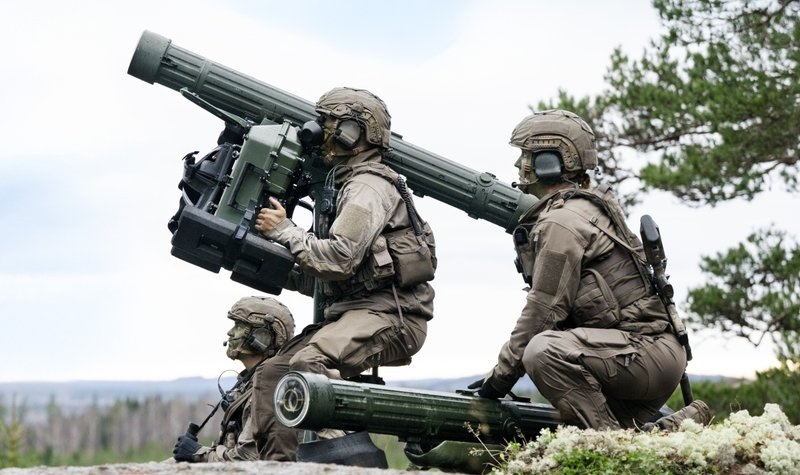
World
KARLSKOGA, Sweden — May 8, 2026 : Swedish defence company Saab has officially unveiled the Bolide 2 missile, a next-generation interceptor developed for the RBS 70 short-range air defence (SHORAD) system. The new missile introduces a larger warhead, enhanced terminal flight performance, expanded sensor coverage, and a modular architecture designed to simplify future upgrades and adaptation to evolving aerial threats. The Bolide 2 will become the standard missile for the modern RBS 70 NG air defence system, with initial customer deliveries scheduled to begin in 2027. Saab stated that the missile has been developed to improve operational effectiveness against a wide range of airborne threats, including aircraft, helicopters, cruise missiles, and unmanned aerial systems. Larger Warhead and Redesigned Internal Structure A central element of the Bolide 2 programme was increasing lethality without increasing the overall size or weight of the missile. Saab engineers redesigned several internal components and introduced lighter structural materials to accommodate a larger explosive payload while maintaining the missile’s existing dimensions. According to Saab, the Bolide 2 carries 50 percent more explosive material than the original Bolide missile and generates 40 percent more fragmentation. Because the fragmentation pattern is dispersed over the same area as the earlier missile, the density of fragments within the blast zone is significantly higher, improving the probability of destroying or disabling airborne targets. To offset the increased explosive content, Saab replaced the traditional steel outer casing with an aluminum shell. The company also replaced the original copper shaped-charge liner with an aluminum cone. Saab representatives stated that the aluminum cone reduces over-penetration while increasing pressure and spalling effects inside the target after detonation. Guidance and Flight Performance Improvements The Bolide 2 retains the unjammable laser beam-riding guidance method that has characterized the RBS 70 missile family for decades. Saab stated that the guidance system continues to provide strong resistance against electronic warfare and jamming attempts while maintaining accurate target tracking. The missile also introduces an inertial navigation unit intended to improve maneuverability and engagement capability at higher altitudes. According to Saab, the additional navigation capability enhances flight stability and targeting performance against fast-moving and maneuvering threats. Further improvements were made to the missile’s proximity fuse system. Saab increased the number of laser-based proximity sensors positioned around the missile’s nose section, creating a wider detection area intended to improve detonation reliability against agile targets and small drones. Designed for Emerging Air Threats Saab stated that the Bolide 2 programme was developed in response to the increasing complexity of modern air threats, particularly the rapid growth in the use of small unmanned aerial systems on the battlefield. Mats-Olof Rydberg, Saab’s head of Ground-Based Air Defence, noted that while the earlier Bolide missile was already capable of engaging commercial drones, the Bolide 2 improves that capability significantly and allows such targets to be intercepted more effectively. Despite the internal redesigns and expanded warhead, the missile maintains the same operational engagement envelope as the earlier Bolide variant. Saab confirmed that the Bolide 2 retains an effective intercept range of up to 9 kilometers and altitude coverage of approximately 5,000 meters. Modular Design and Backward Compatibility The Bolide 2 was developed over a period of approximately four and a half years. Saab stated that modularity was incorporated into the missile’s architecture to simplify future upgrades and allow adaptation to emerging operational requirements without extensive redesign work. Stefan Öberg, head of Saab’s Missile Systems business unit, said the missile was designed to provide operators with greater flexibility across different deployment configurations. “With Bolide 2 we are ready to provide our customers with an even more capable missile, ready to be adapted for any new threats in the sky,” Öberg said. “RBS 70 users can benefit from improvements including a more powerful warhead, whether they are operating in the man-portable role or, as is increasingly common, from a vehicle firing unit,” he added. Saab confirmed that maintaining backward compatibility with existing launch systems was a key requirement during development. As a result, the Bolide 2 can be fired from both the latest RBS 70 NG launchers and earlier generations of the RBS 70 platform already in operational service. Testing and Operational Role The company stated that the missile has successfully completed a series of live test firings during the development phase. Saab did not disclose the exact number of trials conducted but confirmed that testing validated the missile’s new warhead configuration, guidance performance, and engagement capability. The RBS 70 family has remained in operational service since the late 1970s and is currently used by more than 20 countries. The system supports both man-portable and vehicle-mounted configurations and is designed for day-and-night, all-weather operations when paired with compatible sighting systems. The latest RBS 70 NG variant incorporates upgraded thermal imaging systems, improved target tracking, and enhanced command-and-control integration. With the introduction of the Bolide 2 missile, Saab is further expanding the operational capability of the RBS 70 family while preserving compatibility with existing launcher infrastructure and operator inventories.
Read More → Posted on 2026-05-08 15:31:30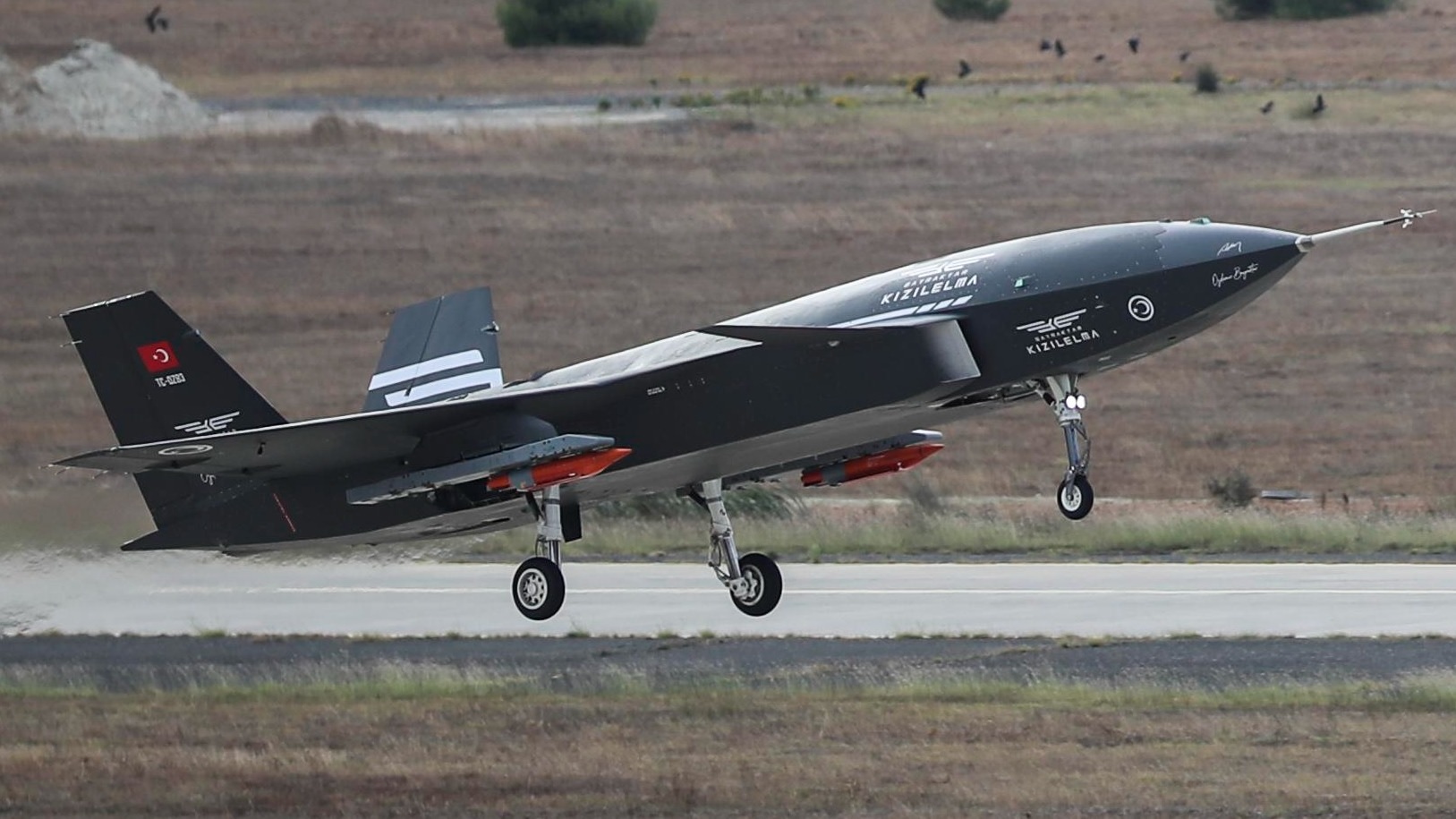
World
ISTANBUL — May 8, 2026 : Indonesia has officially become the first international customer for Türkiye’s Bayraktar Kızilelma unmanned combat aerial vehicle (UCAV), following the signing of a major framework agreement between Turkish defence company Baykar and Indonesia’s PT Republik Aero Dirgantara during the SAHA 2026 International Defence, Aerospace and Space Industry Fair in Istanbul. The agreement, signed on May 6, covers the procurement of an initial batch of 12 Bayraktar Kızilelma aircraft, equivalent to one operational squadron, with deliveries scheduled to begin in 2028. The contract also includes options for four additional squadrons, potentially increasing Indonesia’s total acquisition to 60 aircraft. Baykar Chief Executive Officer Haluk Bayraktar confirmed that Indonesia is the first export customer for the Kızilelma platform since the aircraft completed its maiden flight on December 14, 2022. The deal represents a significant expansion of defence-industrial cooperation between Ankara and Jakarta, particularly in unmanned systems, aerospace manufacturing, missile technology, and advanced defence electronics. Comprehensive Industrial Cooperation Package The agreement extends beyond aircraft procurement and establishes a broad industrial cooperation framework inside Indonesia. Under the arrangement, PT Republik Aero Dirgantara — a subsidiary of Indonesian defence and aerospace company Republikorp — will support local integration, sustainment, and future production activities related to the Kızilelma programme. The framework includes technology transfer, local production capability, maintenance, repair and overhaul (MRO) infrastructure, technical certification activities, workforce training programmes, and the establishment of integration centres for the aircraft inside Indonesia. The project further expands an existing defence partnership between Baykar and Republikorp that was formalized in February 2025 for the local production of Bayraktar TB3 and Bayraktar Akıncı unmanned aerial vehicles. Indonesian facilities are expected to support assembly operations, mission systems integration, sustainment activities, and long-term operational support for Turkish-origin unmanned combat platforms. Part of Broader Türkiye–Indonesia Defence Expansion Indonesia’s acquisition of the Kızilelma forms part of a wider defence modernization programme involving multiple Turkish defence companies. In July 2025, Indonesia finalized an estimated $10 billion agreement with Turkish Aerospace Industries (TUSAŞ) for the procurement of 48 Kaan fifth-generation fighter aircraft. Initial deliveries of the Kaan fighters are expected in the early 2030s. PT Republik Aero Dirgantara has also been designated to support future Kaan maintenance infrastructure, simulator systems, and associated support facilities inside Indonesia. At the same time, Republikorp-linked entities expanded cooperation with Turkish missile manufacturer Roketsan through a separate joint venture signed in June 2025. That agreement focuses on the gradual local production of Atmaca anti-ship missiles, the Çakır compact cruise missile, and the Hisar and Sungur air defence systems. During the SAHA 2026 exhibition, Turkish defence electronics company Aselsan additionally signed contracts related to unmanned naval vehicle payloads, mission systems, and military communication equipment for the Indonesian Armed Forces. Kızilelma Programme Background The Bayraktar Kızilelma originated from Baykar’s MIUS (Muharip İnsansız Uçak Sistemi) programme, which was launched in 2013 as part of Türkiye’s effort to develop an indigenous jet-powered unmanned combat aircraft. Baykar publicly disclosed the programme in July 2021. Development expenditures for the aircraft are estimated at approximately $1 billion. The first prototype was assembled in March 2022 and completed its maiden flight on December 14, 2022. Since then, the programme has progressed through a series of flight-test campaigns focused on autonomous flight control, high-speed handling, weapons integration, and manned-unmanned operational concepts. Aircraft Design and Technical Specifications The Bayraktar Kızilelma is designed as a low-observable unmanned fighter platform capable of conducting strike, interdiction, suppression of enemy air defences (SEAD), reconnaissance, and air-to-air combat missions. The aircraft features a blended stealth-oriented fuselage, canard-delta aerodynamic configuration, side-mounted engine intakes, and twin outward-canted vertical stabilizers designed to reduce frontal radar signature while maintaining maneuverability at high angles of attack. The platform measures 14.5 metres in length, has a wingspan of 10 metres, and stands 3.5 metres high. The aircraft has a maximum takeoff weight of 8,500 kilograms and supports an internal payload capacity of 1,500 kilograms. To preserve low observability during combat operations, the Kızilelma incorporates internal weapons bays. Additional payload configurations are supported through six external wing hardpoints and two internal weapon stations. The aircraft is equipped with an Active Electronically Scanned Array (AESA) radar, electro-optical targeting systems, and infrared search and track (IRST) sensors to support target acquisition, tracking, and situational awareness. Autonomous and Manned-Unmanned Teaming Capabilities The Kızilelma has been designed around artificial intelligence-supported operational concepts, including “loyal wingman” missions and manned-unmanned teaming operations alongside piloted combat aircraft. The aircraft supports autonomous takeoff, landing, taxiing, navigation, and coordinated mission execution through integrated onboard control systems. Communication architecture includes both line-of-sight and beyond-line-of-sight connectivity for networked operations. Baykar has stated that the platform is intended to support beyond-visual-range combat capability and future distributed autonomous air combat operations. Performance specifications released by the company indicate a cruise speed of approximately Mach 0.6 and a maximum speed approaching Mach 0.9. The aircraft has a combat radius of approximately 930 kilometres, or 500 nautical miles, an operational altitude of 25,000 feet, and a service ceiling reaching 45,000 feet. Endurance is reported to exceed three hours depending on mission configuration. Prototype Development and Flight Testing The Kızilelma flight test campaign has focused on validating autonomous control systems, aerodynamic performance, and coordinated operations with crewed combat aircraft. In April 2023, the aircraft conducted a formation flight with a Turkish Air Force F-16 during the Teknofest aerospace event, demonstrating manned-unmanned coordination capability. By June 2023, the aircraft had reached an altitude of 9.5 kilometres during its twelfth flight test. The third prototype, designated TC-ÖZB3 (PT3), completed its maiden flight on September 25, 2024. The prototype introduced revised avionics architecture, aerodynamic refinements, structural modifications, and an afterburning engine configuration assessed to be based on the AI-322F turbofan series. The afterburning configuration enables transonic flight performance and improved maneuver capability during high-stress flight operations. In December 2025, two Kızilelma aircraft successfully completed an autonomous close-formation flight simultaneously, marking the first documented fighter-class UCAV formation flight conducted without onboard pilots. Strategic Implications for Indonesia Indonesia’s acquisition provides the country with early access to a new class of autonomous combat aircraft while the platform continues progressing through operational integration and low-rate production phases. The procurement is expected to support Indonesia’s long-range deterrence capability, autonomous warfare development, and future manned-unmanned combat operations in the Indo-Pacific region. The broader framework agreement also includes future autonomous systems research, local aerospace workforce development, technical certification programmes, and integrated support infrastructure tied to Kızilelma operations inside Indonesia. Further details regarding aircraft variants, production timelines, operational integration, and localized manufacturing activities are expected to be released in the coming months.
Read More → Posted on 2026-05-08 15:22:46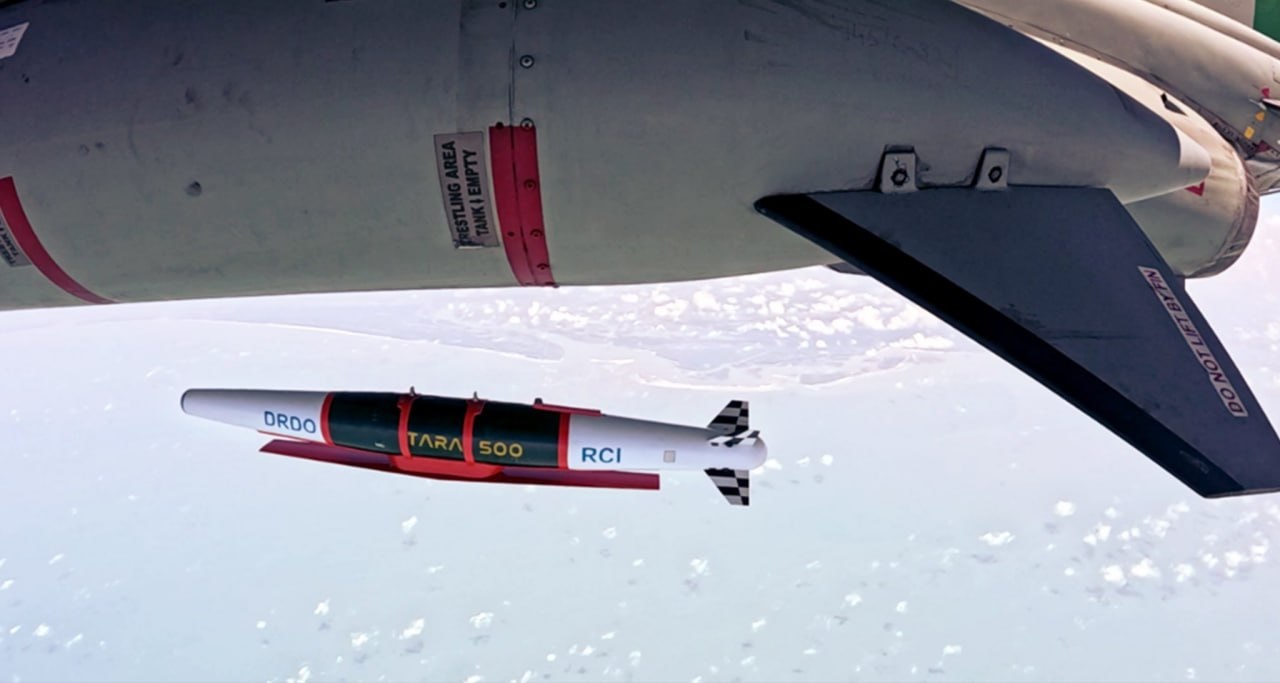
World
NEW DELHI — May 8, 2026 : The Defence Research and Development Organisation (DRDO) and the Indian Air Force (IAF) have successfully conducted the maiden flight-trial of the indigenous Tactical Advanced Range Augmentation (TARA) glide weapon system, marking a major milestone in India’s efforts to expand its domestically developed precision-strike capabilities. The trial was carried out on May 7, 2026, off the coast of Odisha in the Bay of Bengal. During the test, the TARA long-range glide weapon was released from a Su-30 MKI fighter aircraft, validating the system’s range-extension, navigation, and precision-guidance capabilities under operational conditions. TARA is India’s first indigenous glide weapon system and has been developed as a modular range-extension kit designed to convert conventional unguided bombs into precision-guided stand-off weapons. The programme is intended to significantly enhance the effectiveness of existing aerial munitions while reducing dependence on imported glide bomb systems. The weapon system has been designed and developed by DRDO’s Research Centre Imarat (RCI), Hyderabad, in collaboration with other DRDO laboratories and domestic defence industry partners. Development-cum-Production Partners (DcPP) and Indian manufacturers associated with the programme have already initiated production activities for the system. Indigenous Precision-Strike Capability TARA is regarded as the indigenous equivalent of the Israeli SPICE ER series and is designed to provide the Indian Air Force with a low-cost precision-strike capability using existing conventional bomb inventories. The modular kit can be integrated with 250 kg, 450 kg, and 500 kg general-purpose or high-speed low-drag bombs, resulting in multiple variants designated as TARA-250, TARA-450, and TARA-500. Once released from an aircraft at altitude, the weapon uses aerodynamic lift and advanced navigation systems to travel extended distances toward its designated target. The stand-off capability enables combat aircraft to strike ground-based targets while remaining outside the effective range of hostile radar-guided air defence systems. Officials stated that the system is intended to improve the lethality, flexibility, and survivability of IAF strike operations by transforming existing “dumb” bombs into precision-guided munitions without requiring entirely new weapon inventories. Guidance and Navigation Systems The TARA weapon system incorporates a fibre-optic gyro-based inertial navigation system (INS) combined with multi-GNSS satellite guidance for mid-course navigation and trajectory correction. For terminal engagement, the weapon can be equipped with multiple seeker options, including electro-optical, imaging infrared, and semi-active laser (SAL) seekers, depending on operational requirements and target profiles. According to defence officials, the semi-active laser seeker variant is capable of achieving a Circular Error Probable (CEP) of less than three metres during the terminal phase of engagement. The electro-optical and imaging infrared seekers are also designed to maintain target acquisition and engagement capability in contested environments where satellite navigation signals may be jammed, spoofed, or disrupted. The guidance architecture allows the system to conduct precision attacks against fixed and semi-mobile ground targets while maintaining operational effectiveness in electronically contested battlespaces. Platform Integration and Operational Role The maiden trial involved the release of the glide weapon from a Su-30 MKI fighter aircraft. However, the TARA system has been designed for integration across multiple Indian Air Force combat platforms. In addition to the Su-30 MKI, the weapon is planned for deployment on Jaguar strike aircraft, Mirage 2000 fighter jets, and the indigenous Light Combat Aircraft (LCA) Tejas. Officials stated that the modular design allows the system to be adapted across different aircraft types and bomb classes, providing the Indian Air Force with a flexible stand-off strike capability using existing operational infrastructure. The successful trial demonstrated the weapon’s ability to extend strike range while improving accuracy and mission survivability for frontline combat aircraft. Production and Indigenous Development The TARA programme forms part of India’s broader efforts to strengthen indigenous defence manufacturing and reduce reliance on imported precision-guided weapon systems. DRDO officials stated that the programme was executed with extensive participation from domestic industry partners, including Development-cum-Production Partners responsible for manufacturing and supply-chain support. Production-related activities for the system have already commenced, indicating progress toward future operational induction into the Indian Air Force inventory. The programme also reflects ongoing efforts to expand India’s indigenous portfolio of precision-guided munitions, glide bombs, and stand-off strike systems developed under the country’s defence self-reliance initiatives. Official Statements Defence Minister Rajnath Singh congratulated the DRDO, the Indian Air Force, Development-cum-Production Partners, and industry teams associated with the programme following the successful maiden trial. He described the achievement as an important step in advancing India’s indigenous defence manufacturing ecosystem and enhancing domestic aerospace and precision-strike capabilities. Dr. Samir V. Kamat, Secretary of the Department of Defence Research and Development and Chairman of DRDO, also congratulated the scientific teams, military personnel, and industry partners involved in the successful development and testing of the TARA system. Further Development Additional developmental trials, platform integration activities, and operational evaluation exercises are expected in the coming months as the TARA glide weapon system progresses toward operational induction with the Indian Air Force. The successful maiden flight-trial marks a significant development in India’s ongoing efforts to expand indigenous stand-off precision-strike capabilities using domestically developed technologies and existing conventional aerial munitions.
Read More → Posted on 2026-05-08 14:48:10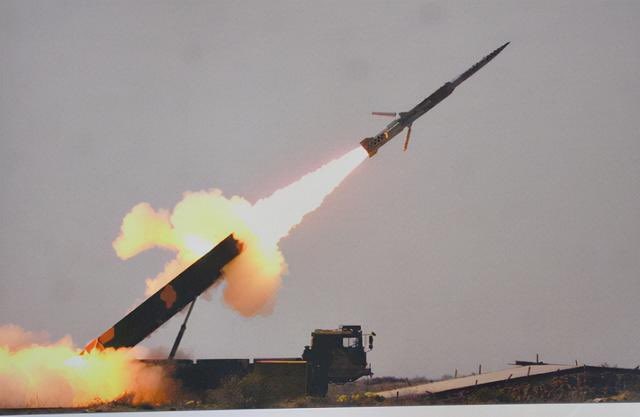
World
ISLAMABAD — May 8, 2026 : Pakistan has officially unveiled the Fatah-3 supersonic cruise missile, introducing a new high-speed precision-strike system into the country’s expanding conventional missile arsenal and significantly extending the capabilities of the Fatah missile family. The missile was publicly displayed on May 7 under the Pakistan Army Rocket Force Command during a presentation of newly developed indigenous defence systems. The unveiling marks Pakistan’s formal entry into the supersonic cruise missile category with a domestically fielded system designed for both land-attack and anti-ship operations. Defence analysts have identified the Fatah-3 as a localized derivative of China’s HD-1 supersonic cruise missile developed by Guangdong Hongda, although Pakistani military authorities have not officially confirmed the design origin. The displayed system featured a road-mobile twin-canister transporter-erector-launcher (TEL), a configuration intended to enhance operational mobility and survivability through rapid deployment and repositioning. Missile Specifications and Strike Role According to technical assessments based on the publicly displayed system, the Fatah-3 is capable of reaching speeds between Mach 3 and Mach 4 and has an estimated operational range of approximately 290 to 450 kilometres. The missile reportedly carries a warhead weighing between 240 and 400 kilograms. The system is designed to perform precision land-attack missions as well as anti-ship strike operations. Analysts state that the missile incorporates terrain-following and sea-skimming flight profiles intended to reduce radar visibility and shorten defensive reaction times during terminal engagement. The missile is believed to use a ramjet propulsion system supported by a solid rocket booster for initial acceleration after launch. Guidance reportedly combines satellite navigation with terminal seeker systems to improve targeting accuracy during the final phase of flight. The twin-canister TEL configuration enables the missile system to conduct rapid launch-and-relocation operations, improving survivability against counterbattery fire and pre-emptive strikes during high-intensity conventional engagements. Expansion of the Fatah Missile Family The Fatah-3 represents a major expansion of Pakistan’s Fatah missile programme, which previously focused on guided rocket artillery and subsonic cruise missile systems. Earlier systems in the family included the Fatah-I guided rocket system with a reported range of approximately 140 kilometres and the Fatah-II with an estimated range between 290 and 400 kilometres. Pakistan had also earlier introduced the Fatah-IV, a subsonic land-attack cruise missile reportedly capable of striking targets at ranges of around 750 kilometres. With the introduction of the Fatah-3, Pakistan has now expanded the series into the supersonic cruise missile category, adding a high-speed precision-strike capability intended for operations against both fixed land targets and moving maritime targets. Comparison With India’s BrahMos Missile Regional defence analysts widely regard the Fatah-3 as Pakistan’s direct conventional response to India’s BrahMos supersonic cruise missile programme. While both systems operate in the supersonic strike category, the Fatah-3 is assessed to be significantly lighter than many BrahMos variants. Current estimates place the Fatah-3 launch weight between approximately 1.2 and 1.5 tonnes, compared to more than 2.5 tonnes for several BrahMos configurations. Analysts note that the reduced launch weight may simplify transportation and deployment requirements while allowing greater launcher mobility. However, propulsion architecture and terminal flight performance remain key factors in overall missile survivability and operational effectiveness. Propulsion and Terminal Flight Characteristics Technical assessments indicate that the Fatah-3 employs a solid-fuel ramjet propulsion system, whereas the BrahMos uses a liquid-fuel ramjet configuration. Defence technology specialists note that many solid-fuel ramjet-based supersonic cruise missiles face operational limitations related not to peak velocity, but to terminal energy management during the final engagement phase. According to aerospace analysts, restricted throttling authority, grain regression dynamics and limited combustion modulation can reduce sustained specific excess power during high-G terminal manoeuvres. During engagements against manoeuvring naval targets, these limitations may affect post-turn energy retention and overall endgame agility. Analysts state that such constraints can result in a comparatively smaller no-escape envelope and may make interception easier under certain layered air-defence conditions despite the missile’s high speed. In contrast, liquid-fuel ramjet systems such as the BrahMos maintain greater throttle responsiveness and sustained dynamic pressure throughout terminal flight. This enables improved energy recovery during sea-skimming manoeuvres, sharper evasive flight profiles and stronger manoeuvre authority under aggressive lateral loading conditions. Defence specialists note that missile survivability depends not only on raw velocity, but also on terminal manoeuvrability, seeker stabilization and sustained energy management during the final attack phase. Chinese HD-1 Connection and System Development The Chinese HD-1 missile family, which analysts believe formed the baseline for the Fatah-3, was originally developed as a multi-role high-speed strike system capable of conducting both anti-ship and land-attack missions. The adoption of a solid-fuel propulsion architecture is assessed to simplify storage, transportation and launch preparation compared with older liquid-fuel missile systems. Analysts state that such systems generally require less complex handling procedures and support faster launch readiness during operational deployment. Pakistan military officials described the Fatah-3 programme as part of broader efforts aimed at strengthening indigenous defence production and improving self-reliance in precision-strike technologies. The missile was unveiled alongside several other newly developed systems, including a long-range rocket-dispensed mine system. Some defence reports have also indicated the possibility of future air-launched and sea-launched variants of the Fatah-3, although no official confirmation or timeline has been released. Regional Security Context The public unveiling took place near the first anniversary of last year’s four-day conflict between India and Pakistan, a confrontation that intensified regional focus on stand-off precision strike systems, survivable launch platforms and integrated air-defence penetration capabilities. Pakistan has not released detailed official operational data or complete technical specifications for the Fatah-3 beyond the public presentation. Most currently available information is based on visual analysis of the displayed missile system, comparative studies with the Chinese HD-1 design and independent technical assessments by defence analysts. The introduction of the Fatah-3 adds a new supersonic precision-strike capability to Pakistan’s conventional missile inventory and reflects the continuing expansion of long-range strike systems across South Asia. Additional details regarding operational integration, deployment status and future variants are expected in the coming months.
Read More → Posted on 2026-05-08 14:41:30
Secrets/Mystery
The Department of War, in coordination with the White House, ODNI, DOE, AARO, NASA, FBI, and other agencies under the Presidential Unsealing and Reporting System for UAP Encounters (PURSUE), released the first batch of declassified files today on the dedicated site WAR.GOV/UFO. This initial tranche, labeled Release 01 and cleared on May 8, 2026, contains 161–162 files. These consist primarily of PDF documents, along with photos, infrared imagery, videos, transcripts, and eyewitness reports. The materials span historical records (dating back to the late 1940s) and more recent incidents (up to 2025). All files are explicitly designated as unresolved UAP cases, meaning the government has not reached a definitive determination on their nature due to insufficient data in many instances. The Department of War has stated that it welcomes private-sector review and will continue separate reporting on resolved cases as required by statute. Composition of the Released Files The bulk of the release consists of sections and serials from a single FBI case file: 65_HS1-834228961_62-HQ-83894. These documents cover investigative records of UFO and “flying disc” sightings from approximately June 1947 to July 1968. They include eyewitness testimonies, public reports, photographic evidence (such as from Oak Ridge, TN), media clippings, and technical notes. Some pages in this file appear to have fewer redactions or newly declassified sections compared to earlier public versions available in the FBI Vault. Additional materials include: NASA Apollo mission records: Transcripts from Apollo 17 (1972) in which crew members described observing “jagged, angular fragments” or unknown phenomena from the spacecraft. One archival photograph from Apollo 17 shows three light points or dots in a triangular formation above the lunar surface. An accompanying Pentagon caption notes there is “no consensus about the nature of the anomaly,” though a preliminary analysis suggests it could be a physical object. Similar imagery and transcripts from Apollo 12 are also referenced in media coverage. Recent military and law-enforcement sightings: An FBI interview summary with a drone pilot (September 2023) describing a “linear object” with a bright light (visible bands within the light) that appeared in the sky, remained visible for 5–10 seconds, and then vanished. Infrared still images (black-hot mode) captured from a helicopter over the western United States in September and December 2025 showing unidentified objects. A composite image based on multiple eyewitness reports (September 2023) depicting an apparent ellipsoid, bronze-metallic object (estimated 130–195 feet in length) that materialized from a bright light and disappeared instantaneously. Other items such as older State Department cables, additional historical sighting reports (spanning roughly 80 years), and assorted photos/sketches of unexplained aerial or transmedium objects. No videos from the 46 previously referenced congressional UAP videos are included in this batch, according to early reporting. Key Findings (or Lack Thereof) No files in Release 01 provide evidence of extraterrestrial life, recovered alien technology, crashed spacecraft, or non-human intelligence. The materials do not contain any government conclusions confirming UAP as anything other than unexplained phenomena. The official position, repeated across the site and agency statements, is that these are unresolved cases. Many lack sufficient data for identification. Where preliminary notes exist (such as on the Apollo 17 image), they stop short of definitive classification and note the absence of consensus. This aligns with prior AARO assessments (e.g., the 2024 report), which found no evidence of alien technology or extraterrestrial origins in reviewed UAP cases while acknowledging that some incidents remain unexplained due to limited sensor data or other factors. Context and Limitations The release is the first in a rolling series, with additional tranches expected every few weeks as more records are reviewed and declassified. Tens of millions of records across agencies (many originally on paper) are being examined. Because the files were posted only hours ago, comprehensive independent scientific or technical analysis is not yet available. UFO research communities (e.g., on Reddit) and media outlets have begun reviewing the documents, with early reactions describing the contents as “more of the same” — intriguing but ambiguous historical and recent reports without smoking-gun revelations. The Department of War and supporting agencies emphasize that the public and private sector can now examine the raw data directly and form their own conclusions. For historical context, additional resolved or previously released UAP materials remain available at AARO.mil. In summary, today’s release advances government transparency on UAP by making previously classified or restricted records publicly accessible in one location. It does not resolve the underlying questions about the phenomena but provides the raw materials for further study. Future releases under PURSUE will determine whether additional clarity emerges on specific cases. The full set of 161+ files can be accessed directly at WAR.GOV/UFO.
Read More → Posted on 2026-05-08 14:26:32
Secrets/Mystery
WASHINGTON — May 8, 2026: The Department of War (DOW) on Friday announced the first public release of declassified government records related to Unidentified Anomalous Phenomena (UAP) under a new interagency transparency initiative known as the Presidential Unsealing and Reporting System for UAP Encounters (PURSUE). The release follows a directive issued by President Donald J. Trump ordering federal agencies to identify, review, and declassify records connected to UAP incidents, unidentified flying objects, alleged extraterrestrial-related information, and related government investigations. Officials described the initiative as the first centralized U.S. government effort to publicly consolidate and release historical and contemporary UAP materials from across multiple agencies. The newly launched portal, WAR.GOV/UFO, will serve as the central repository for released records and future updates. The Department of War stated that additional files will continue to be published on a rolling basis every few weeks as security reviews and declassification procedures are completed. Initial Release Includes Videos, Photos and Intelligence Records According to the Department of War, the initial tranche — designated “Release 01” and cleared on May 8, 2026 — contains 161 declassified files, while accompanying departmental summaries referenced 162 unresolved case records included in the broader release package. The files include videos, photographs, sensor data, operational reports, intelligence memorandums, transcripts, cables, and original source documents collected across several decades by various U.S. government agencies. Among the released materials are FBI records associated with case file 65_HS1-834228961_62-HQ-83894, historical UAP sighting reports spanning nearly 80 years, and declassified State Department communications. The archive also includes NASA mission transcripts and imagery linked to the Apollo 12 and Apollo 17 lunar missions. Officials familiar with the release stated that some of the records contain imagery and sensor observations involving airborne or transmedium objects that investigators were unable to conclusively identify at the time. Several accompanying assessments reportedly note that no consensus was reached regarding the nature of certain anomalies, while preliminary evaluations in some cases suggested the possible presence of physical objects rather than equipment malfunctions or natural atmospheric phenomena. The Department of War emphasized that all files underwent security review procedures before publication in order to protect classified intelligence sources, collection methods, and operational capabilities. However, officials noted that many of the released records have not yet undergone complete analytical review concerning anomaly resolution. PURSUE Program Coordinates Multiple Federal Agencies The PURSUE initiative is being conducted through coordination between the White House, the Office of the Director of National Intelligence (ODNI), the Department of Energy (DOE), the Department of War’s All-domain Anomaly Resolution Office (AARO), the National Aeronautics and Space Administration (NASA), the Federal Bureau of Investigation (FBI), and other U.S. intelligence agencies. The Department of War stated that the PURSUE program is primarily focused on unresolved historical records, while AARO will continue issuing separate reports on resolved UAP investigations as required under existing federal statutes. Officials also confirmed that the review process involves tens of millions of records across government agencies, including large quantities of archival paper documents that require digitization and classification review before release. Administration Officials Describe Release as Transparency Effort Secretary of War Pete Hegseth said the release reflects the administration’s effort to expand public access to government-held UAP information. “The Department of War is in lockstep with President Trump to bring unprecedented transparency regarding our government’s understanding of Unidentified Anomalous Phenomena,” Hegseth said. “These files, hidden behind classifications, have long fueled justified speculation, and it is time the American people see them for themselves.” Director of National Intelligence Tulsi Gabbard stated that the Intelligence Community is coordinating closely with the Department of War to support the continuing declassification effort. “The American people have long sought transparency about the government’s knowledge of unidentified anomalous phenomena,” Gabbard said. “Today’s release is the first in what will be an ongoing joint declassification and release effort.” FBI Director Kash Patel said the bureau would continue supporting the initiative as additional files are prepared for publication. “The FBI remains committed to supporting this rolling declassification effort with the same rigor and integrity we bring to every national security matter,” Patel stated. NASA Administrator Jared Isaacman said NASA would continue contributing scientific analysis and technical review to the broader effort. “At NASA, our job is to bring the brightest minds and most advanced scientific instruments to bear, follow the data, and share what we learn,” Isaacman said. Congressional Pressure and Earlier Disclosures The release comes amid growing congressional and public pressure for broader transparency regarding UAP investigations and historical government records. On March 31, 2026, the House Committee on Oversight and Government Reform formally requested that Secretary Hegseth provide more than 40 UAP-related video files, citing concerns related to military airspace security, aviation safety incidents, and whistleblower allegations concerning undisclosed government holdings. Friday’s disclosure also expands on an earlier release conducted on April 29, 2026, when the White House Office of Science and Technology Policy published a smaller collection of UAP-related records dating back to 2012. Those materials included Navy F/A-18 Super Hornet sensor footage, internal memorandums, and references to crash retrieval-related procedures. Additional Releases Planned The Department of War stated that WAR.GOV/UFO will remain the permanent centralized portal for future disclosures. According to officials, the platform categorizes records by submitting agency, incident date, and geographic location in order to support public review and independent research. The department added that members of the public, academic institutions, and private-sector analysts are encouraged to examine the released materials and form independent conclusions regarding unresolved cases contained within the archive. Additional tranches of declassified UAP records are expected to be released on a continuing basis as interagency reviews and security assessments are completed.
Read More → Posted on 2026-05-08 14:08:30
World
EDWARDS AIR FORCE BASE, California — May 7, 2026 : Northrop Grumman has officially commenced flight testing of the XRQ-73 SHEPARD hybrid-electric uncrewed aircraft at Edwards Air Force Base, marking a significant milestone in the Defense Advanced Research Projects Agency’s (DARPA) Series Hybrid Electric Propulsion AiRcraft Demonstration (SHEPARD) programme. The programme is being conducted in collaboration with the Air Force Research Laboratory (AFRL) and is intended to evaluate hybrid-electric propulsion technologies integrated with autonomous mission systems for future lightweight military aircraft. First Flight and Flight Test Campaign According to Northrop Grumman, the first flight of the XRQ-73 took place in April 2026. The aircraft is currently undergoing a broader flight test campaign at Edwards Air Force Base to assess propulsion performance, aircraft handling, efficiency, and autonomous operational capabilities. Recent flights were remotely piloted by Dr. Mike McLean, a test pilot from Scaled Composites, the Northrop Grumman subsidiary responsible for aircraft prototyping, construction, and research flight testing. The XRQ-73 was designed and developed primarily by Northrop Grumman and Scaled Composites under DARPA’s X-Prime rapid prototyping framework, which focuses on reducing integration risks and accelerating development of mission-specific aircraft concepts through iterative demonstrations. Aircraft Design and Configuration The XRQ-73 is classified as a Group 3 Uncrewed Aircraft System (UAS) and features a tailless flying-wing design intended to support efficient aerodynamic performance and reduced detectability. The aircraft weighs approximately 1,250 pounds (567–570 kilograms) and is designed to operate at altitudes up to approximately 18,000 feet (5,500 meters). Reported performance figures indicate operational speeds ranging from roughly 111 mph to 285 mph (180 km/h to 460 km/h), or up to approximately 250 knots depending on mission profile and flight configuration. Initial test aircraft have also been observed with wingtip vertical surfaces integrated into the flying-wing configuration during early-stage flight evaluations. Hybrid-Electric Propulsion Architecture The defining feature of the XRQ-73 is its series hybrid-electric propulsion system, which differs significantly from conventional aircraft propulsion arrangements. Rather than mechanically driving the propulsion system directly, the aircraft uses a small internal combustion gas turbine engine solely as an onboard electrical generator. The turbine burns liquid hydrocarbon fuels such as gasoline or diesel to produce electricity, which charges onboard battery systems. Electric motors powered by those batteries then drive the aircraft’s ducted fan propulsors. This architecture is intended to combine the endurance and energy density advantages of liquid fuels with the operational benefits of electric propulsion technologies. Operational Advantages Northrop Grumman and DARPA have identified several operational advantages associated with the XRQ-73’s propulsion system. One of the primary benefits is reduced acoustic signature. Because the aircraft’s propulsion fans are powered by electric motors rather than directly by a combustion engine, the system operates significantly more quietly than traditional propulsion arrangements. This lower acoustic profile could improve survivability and reduce detectability during Intelligence, Surveillance, and Reconnaissance (ISR) missions. The propulsion architecture is also designed to improve fuel efficiency and reduce emissions. Since the gas turbine functions exclusively as a generator, it can operate continuously at an optimized low RPM rather than repeatedly changing power settings to generate thrust. This allows more efficient fuel consumption and more stable power generation. Another major advantage is extended operational endurance. Fully battery-powered aircraft are typically constrained by limited energy storage capacity and short endurance. The XRQ-73 addresses this limitation through its onboard turbine-powered generation system, which acts as a range extender while preserving many of the advantages associated with electric propulsion. SHEPARD Programme Background The SHEPARD programme builds upon earlier hybrid-electric aviation research efforts conducted by DARPA, AFRL, and the Intelligence Advanced Research Projects Activity (IARPA). The XRQ-73 is a direct successor to the earlier XRQ-72 Great Horned Owl (GHO) experimental aircraft programme. Technologies initially developed under the GHO effort have been scaled and integrated into the larger XRQ-73 platform with an operationally representative fuel fraction and mission system architecture. DARPA’s X-Prime framework, under which SHEPARD is being executed, is specifically intended to accelerate development of advanced aerospace concepts through rapid prototyping and early flight validation. Industry Partners and Development Team Although Northrop Grumman Aeronautics Systems serves as the programme’s prime contractor, the XRQ-73 development effort involves multiple specialized industry partners. Scaled Composites is responsible for aircraft prototyping, construction, and flight test support. Additional participating companies include: Cornerstone Research Group Brayton Energy PC Krause and Associates EaglePicher Technologies These firms contribute technologies and subsystems related to energy storage, propulsion integration, thermal management, and aircraft systems engineering. Strategic and Operational Significance The primary objective of the current flight test campaign is to demonstrate the military utility of hybrid-electric propulsion systems for autonomous aircraft operations. According to Northrop Grumman, the XRQ-73 programme is intended to expand the operational possibilities of future uncrewed air systems by combining low-signature electric propulsion with the range and endurance advantages of liquid-fuel-powered energy generation. The company stated that technologies evaluated through the SHEPARD programme could support entirely new mission profiles and improve operational flexibility for future U.S. Department of Defense autonomous aviation programmes. The flight test campaign also contributes to Northrop Grumman’s broader autonomous aviation portfolio. The company reports accumulating more than 500,000 autonomous flight test hours over seven decades of unmanned and autonomous aerospace development programmes. Data gathered during ongoing testing at Edwards Air Force Base is expected to inform future hybrid-electric aircraft designs and the continued evolution of lightweight autonomous military aviation systems.
Read More → Posted on 2026-05-07 16:52:58
World
ISTANBUL — May 7, 2026 : Turkish defence company Pasifik Teknoloji has signed a framework export contract for the supply of 101,035 unmanned systems to an officially undisclosed country, according to a company announcement released on May 5. While the Turkish firm did not identify the customer, defence industry sources familiar with the agreement confirmed that the buyer is Pakistan. The deal is among the largest publicly disclosed drone export agreements concluded by a Turkish defence manufacturer and marks Pasifik Teknoloji’s first announced defence export contract. The procurement package is centred on a large-scale order for 100,000 MERKUT FPV kamikaze drones and also includes 10 ALPIN unmanned helicopters, 25 DUMRUL mini unmanned helicopters developed by Titra Technology, 500 DELİ tactical kamikaze drones, and 500 KORGAN autonomous ground support and surveillance units. Pasifik Teknoloji did not disclose the financial value of the agreement or provide a delivery schedule. In its regulatory filing, the company described the customer only as a “friendly and allied” country. Pakistani authorities have not officially commented on the reported acquisition. Pakistan Expands Unmanned Warfare Inventory Defence sources stated that the procurement forms part of Pakistan’s broader effort to expand and replenish its unmanned warfare inventory following losses sustained during Operation Sindoor in May 2025. During the operation, Pakistan deployed large numbers of Turkish-origin attack drones against Indian targets. Indian air defence systems reportedly intercepted and destroyed all incoming drones before they could inflict damage on operational positions, according to Indian military reporting, satellite imagery assessments released after the conflict, and findings verified by multiple independent sources. The latest acquisition reflects Pakistan’s continued emphasis on loitering munitions, FPV strike drones, and autonomous battlefield systems intended for future high-intensity operations. The agreement also highlights the expanding defence relationship between Turkey and Pakistan, particularly in the unmanned systems sector. The two countries have previously cooperated on drone programmes and defence-industrial initiatives, while discussions regarding local assembly and production facilities inside Pakistan have continued in recent years. MERKUT FPV Drone Forms Bulk of the Package The MERKUT FPV kamikaze drone represents the largest component of the agreement by volume, accounting for 100,000 units under the framework contract. Designed for short-range strike operations and attrition-based drone warfare, the MERKUT system reportedly offers a flight endurance of 20 to 30 minutes and an operational communication range of up to 8 kilometres. The drone is equipped with thermal imaging systems for day and night operations under varying weather conditions. It also incorporates a high-security fuse mechanism and an automated proximity detonation feature, allowing the warhead to detonate without requiring direct operator input at impact. According to released specifications, the detonation distance can be adjusted between approximately 20 centimetres and 5 metres depending on operational requirements. The warhead uses guided fragmentation munitions containing roughly 950 impact elements intended to increase effectiveness against personnel and lightly protected targets. The size of the order suggests a focus on large-scale deployment of low-cost FPV drones designed to saturate enemy air defences and maintain sustained battlefield pressure during prolonged operations. Pasifik Teknoloji has positioned the MERKUT platform within the volume-production segment of the global drone market, targeting cost-effective attrition warfare capability. ALPIN Platform Adds Heavy-Lift VTOL Capability The package also includes 10 ALPIN unmanned helicopters, a heavy-lift vertical take-off and landing (VTOL) platform capable of fully automatic mission execution. The ALPIN system can carry payloads of up to 200 kilograms, including fuel, and reportedly offers endurance exceeding nine hours with a control radius of approximately 200 kilometres. Equipped with thermal and night-vision cameras, the platform is designed to support logistics resupply, casualty evacuation, surveillance, intelligence collection, and weapons transport missions without requiring prepared runways or conventional aviation infrastructure. The helicopter is intended to provide operational flexibility in remote and contested operational environments. DUMRUL Mini Helicopter Supports Tactical Missions The framework agreement further includes 25 DUMRUL mini armed unmanned helicopters developed by Titra Technology. The electrically powered platform is designed with a low acoustic signature and supports reconnaissance, surveillance, and short-range precision strike missions. The DUMRUL system has a payload capacity of up to 8 kilograms, a flight endurance of approximately 120 minutes, and an operational ceiling of 4,000 metres. According to technical specifications, the platform operates within a control radius of around 20 kilometres and can be equipped with 60mm and 81mm mortar rounds as well as laser-guided mini-munitions. The system is intended for tactical battlefield operations requiring low visibility and precision engagement capability. DELİ and KORGAN Systems Expand Multi-Domain Operations In addition to the helicopter and FPV drone systems, the contract includes 500 DELİ tactical kamikaze drones and 500 KORGAN autonomous ground support and surveillance units. The DELİ platform is a fixed-wing loitering munition intended for tactical strike operations and is designed to complement the larger FPV drone fleet with additional precision attack capability. The KORGAN autonomous ground units form the terrestrial component of the package and are intended to reduce personnel exposure in forward operational areas while supporting reconnaissance, surveillance, and autonomous ground operations. The inclusion of both aerial and ground unmanned systems indicates a broader focus on integrated multi-domain unmanned warfare operations combining strike, reconnaissance, logistics, and autonomous support capabilities within a unified operational framework. Framework Structure Allows Future Expansion Pasifik Teknoloji stated that the agreement has been structured as a framework contract, allowing phased deliveries and the possibility of future expansion orders. No production or delivery timeline has been released publicly. Neither the company nor Pakistani officials have disclosed whether the systems will be delivered directly from Turkey or assembled locally under future industrial cooperation arrangements. Turkey and Pakistan have steadily expanded defence cooperation across the naval, aerospace, and unmanned systems sectors over the past decade. Pakistan’s recent procurement activity indicates continued investment in autonomous warfare capabilities and low-cost precision strike systems as part of broader military modernisation efforts.
Read More → Posted on 2026-05-07 16:43:23
World
BEIJING — May 7, 2026 : Chinese authorities have sentenced former defense ministers Wei Fenghe and Li Shangfu to death with a two-year reprieve after both were convicted on corruption-related charges, according to rulings announced by Chinese state media on Wednesday. The judgments, published by Xinhua News Agency, represent the most severe punishment imposed on senior military officials during President Xi Jinping’s ongoing anti-corruption campaign inside the People’s Liberation Army (PLA). The military court found Wei guilty of accepting bribes and abusing his authority in military personnel promotions. Li was convicted of accepting and offering bribes, as well as facilitating appointments and promotions for specific individuals within the military structure. Both men were stripped of political rights for life and had all personal property confiscated. Under Chinese law, a death sentence with a two-year reprieve is typically reduced to life imprisonment if the convicted individual does not commit additional crimes during the suspension period. Chinese authorities stated that, following commutation, both Wei and Li will serve life sentences without the possibility of parole, sentence reduction, or further commutation. Senior PLA Figures Brought Down Wei Fenghe served as China’s defense minister from 2018 to 2023 and previously held senior leadership roles within the PLA Rocket Force, the branch responsible for China’s nuclear missile and strategic deterrence capabilities. Li Shangfu succeeded Wei as defense minister in 2023 but remained in office for less than eight months before disappearing from public view amid corruption investigations. He later became the shortest-serving defense minister in the history of the People’s Republic of China. Both former officials had also served as members of China’s powerful Central Military Commission (CMC), the top military command body chaired by Xi Jinping. In 2024, the Communist Party of China expelled both men for what authorities described as “serious violations of discipline,” the standard phrase used in major corruption investigations involving senior officials. Expansion of the Military Purge The sentencing comes as China continues a broad anti-corruption campaign across the PLA that began intensifying in 2023 following major scandals within the PLA Rocket Force. The Rocket Force was the first branch to face extensive restructuring after investigations uncovered corruption linked to procurement, promotions, and operational management. The campaign later expanded to the Central Military Commission, senior procurement departments, and top military leadership. Analysts have described the current purge as the largest crackdown inside the Chinese military since the era of Mao Zedong. According to reports cited by Bloomberg and international defense researchers, nearly a fifth of the PLA’s generals have been removed, investigated, or disappeared from public view since the campaign accelerated under Xi Jinping’s third term. Of the 79 generals personally promoted by Xi, at least 14 have reportedly come under investigation or been removed from active leadership positions. Research published by the Center for Strategic and International Studies indicated that the purge has affected a substantial portion of the PLA’s senior command structure, creating significant vacancies across several branches of the military. Corruption Networks Inside the PLA Investigations conducted during the anti-corruption campaign exposed widespread corruption throughout multiple levels of the PLA. Reports indicated that cadets seeking admission to leading military academies allegedly paid bribes of up to $16,000 to secure passing examination scores or entry approvals. Officers were also accused of paying senior commanders and generals to obtain promotions and preferred assignments. According to reports, some officers later recovered those costs through kickbacks connected to procurement contracts and internal military projects. Authorities also uncovered corruption involving equipment procurement, weapons acquisition programs, and armaments production systems. Separate reports citing U.S. intelligence assessments alleged that corruption within the Rocket Force contributed to operational failures, including defective missile silo construction and maintenance irregularities affecting parts of China’s strategic missile infrastructure. Impact on China’s Military Leadership The removal of Wei Fenghe and Li Shangfu has added to a period of major instability within China’s senior military leadership. The anti-corruption campaign has resulted in rapid turnover across several PLA branches, including the Rocket Force and senior command structures linked to procurement and strategic operations. Defense analysts say the campaign reflects Beijing’s efforts to strengthen internal discipline, reinforce political loyalty to the Communist Party, and tighten centralized control over the military during an ongoing modernization program. At the same time, analysts note that the removal of experienced commanders and senior officials could create operational and institutional challenges as the PLA continues efforts to modernize its forces and expand military capabilities. Following Li Shangfu’s removal, Dong Jun was appointed as China’s defense minister. The sentencing of Wei Fenghe and Li Shangfu is expected to remain a significant development in China’s wider military restructuring efforts as investigations continue across senior PLA ranks and defense procurement systems.
Read More → Posted on 2026-05-07 16:33:03
World
ISTANBUL — May 7, 2026 : Turkiye and Spain have begun preliminary government-to-government discussions regarding the potential sale of the KAAN fifth-generation stealth fighter aircraft, Turkish Aerospace Industries (TUSAŞ) CEO Mehmet Demiroğlu confirmed during the SAHA 2026 International Defense and Aerospace Exhibition in Istanbul. Demiroğlu stated that the discussions were initiated after the Spanish Air and Space Force requested information regarding a “top-tier fifth-generation fighter” as Madrid evaluates long-term options to modernise its combat aviation fleet. The negotiations remain at an early stage, and neither government has announced a formal procurement decision. Spain Seeking Interim Stealth Fighter Capability Spain’s interest in the KAAN programme comes amid growing concerns over delays to the Future Combat Air System (FCAS), the multinational sixth-generation fighter programme jointly developed by Spain, France, and Germany. The FCAS platform is not expected to become operational until the 2040s, creating a capability gap for the Spanish Air and Space Force over the next decade. To maintain operational readiness during this transition period, Spain has extended the service life of its EF-18M Hornet fighter fleet into the late 2030s while simultaneously reinforcing its Eurofighter Typhoon inventory through additional acquisitions and upgrade programmes. Madrid has also moved away from the possibility of acquiring the U.S.-built F-35 Lightning II. Spanish defence planning has reportedly prioritised platforms that provide greater operational autonomy, particularly in areas related to software access, system integration, and domestic weapons compatibility. Restrictions associated with technology transfer and independent integration of national systems into the F-35 platform have been viewed as a limiting factor in Spain’s long-term procurement considerations. Within this context, the KAAN is being evaluated as a potential interim fifth-generation combat aircraft capable of bridging the gap until FCAS enters operational service. Technology Transfer and Industrial Participation Industry sources familiar with the discussions indicated that technology transfer and industrial cooperation form a central component of the preliminary negotiations between Ankara and Madrid. Spain is reportedly seeking a framework that would allow domestic defence companies to integrate indigenous mission systems, electronic warfare equipment, sensors, communications architecture, and national munitions into the aircraft while retaining long-term control over upgrades and operational modifications. The structure of the ongoing talks reflects Spain’s broader defence procurement strategy, which increasingly emphasises industrial participation and sovereign control over critical military technologies. Hurjet Agreement Strengthens Bilateral Aerospace Cooperation The current discussions build upon an expanding aerospace and defence relationship between Turkiye and Spain established through the Hurjet advanced trainer programme. In late 2025, Spain finalised a €2.6 billion agreement with TUSAŞ for the procurement of 30 Hurjet advanced jet trainers and light combat aircraft under its integrated advanced pilot training system programme. Deliveries are scheduled to begin in 2028. The Hurjet package includes ground-based simulation systems, logistics infrastructure, maintenance support, and long-term sustainment arrangements. The agreement also incorporates industrial cooperation involving Airbus España and Spanish defence companies. Defence analysts view the Hurjet programme as an important precedent for the KAAN discussions, particularly in areas involving industrial participation, subsystem integration, maintenance cooperation, and long-term support structures. Strategic Significance of a Potential KAAN Export If the negotiations ultimately result in a formal agreement, the KAAN would become the first Turkish-developed fifth-generation fighter aircraft exported to a NATO and European Union member state. Such a development would represent a major milestone for Turkiye’s domestic aerospace industry and would significantly expand the international profile of the country’s indigenous combat aviation sector. The KAAN programme has already secured its first major export customer. In July 2025, Indonesia signed a contract for 48 KAAN fighter aircraft, with deliveries planned over a ten-year period. The agreement also included provisions for industrial cooperation and local participation. KAAN Programme and Aircraft Capabilities The KAAN fighter is being developed under Turkiye’s National Combat Aircraft programme as a long-term replacement for the Turkish Air Force’s F-16 fleet beginning in the 2030s. The twin-engine stealth fighter completed its maiden flight on February 21, 2024, marking a major milestone in Turkiye’s indigenous fighter development efforts. The aircraft is designed with low-observability features, internal weapons bays, advanced sensor fusion architecture, and high maneuverability characteristics intended for both air superiority and multirole combat operations. Current KAAN prototypes are powered by General Electric F110 engines, while Turkiye continues parallel development efforts aimed at integrating an indigenous engine into future production variants. The aircraft is also equipped with advanced avionics systems, including the domestically developed MURAD active electronically scanned array (AESA) radar and integrated mission systems intended to support network-centric warfare operations. SAHA 2026 Procurement Milestone During the SAHA 2026 exhibition, Turkiye’s Defence Industries Secretariat signed the official domestic procurement contract for the KAAN programme, marking another administrative and production milestone as the aircraft progresses through flight testing, systems integration, and future serial production planning. Neither Turkiye nor Spain has disclosed details regarding the number of aircraft potentially under discussion, projected delivery timelines, financial terms, or specific industrial participation requirements. Formal technical and political consultations between Ankara and Madrid are expected to continue as the KAAN programme advances through its ongoing development and testing phases.
Read More → Posted on 2026-05-07 16:12:59
World
DUBAI — May 7, 2026 : Satellite imagery has detected a substantial oil spill spreading across waters near Iran’s Kharg Island in the northern Persian Gulf, raising concerns around one of the region’s most important crude oil export hubs. Synthetic aperture radar (SAR) imagery identified a broad surface slick originating from waters surrounding Kharg Island, which handles approximately 90 percent of Iran’s crude oil exports. At the time of detection, multiple oil tankers, including very large crude carriers (VLCCs), were simultaneously loading at the terminal. Copernicus Sentinel-2 imagery collected on May 6 showed at least three large crude carriers positioned at the facility during active loading operations. Maritime tracking data also indicated sustained tanker activity around the island. The source of the spill has not been determined. Analysts have not established whether the discharge originated from a tanker, a loading operation, subsea pipeline infrastructure, offshore facilities, or the terminal itself. Iranian authorities and the National Iranian Oil Company have not issued an official statement regarding the incident, and no estimate has been released concerning the volume of oil discharged. Kharg Island is located about 25 kilometres off Iran’s southern coast and serves as the country’s primary oil export terminal. The island includes offshore loading berths capable of handling supertankers, onshore storage facilities, and pipeline connections to mainland oil fields, including Gachsaran and Aghajari. Export operations are mainly conducted through the eastern “T-Jetty” and the western “Sea Island” loading terminal. The facility also contains extensive crude storage infrastructure connected through subsea and mainland pipelines. The spill was identified using synthetic aperture radar technology, which detects changes in sea surface roughness caused by hydrocarbon films. Oil on the water surface suppresses small waves, creating darker signatures in radar imagery compared to surrounding waters. The technology allows monitoring during low-visibility conditions and at night. Environmental specialists note that the Persian Gulf’s shallow and semi-enclosed geography can slow natural dispersion of oil spills. The Gulf has limited water exchange through the Strait of Hormuz, which can increase the persistence of surface contamination. Regional weather conditions, including northwesterly Shamal winds, may also affect the movement of the slick and complicate recovery operations by creating water-in-oil emulsions. No information has been released regarding containment measures, environmental monitoring, or operational changes at the terminal following the detection. The incident follows earlier reports of oil releases observed near other Iranian islands, including Qeshm and Lavan, during March and April 2026. Those incidents were linked to reported strikes on oil infrastructure. The current spill near Kharg Island has not been attributed to any specific event. Investigations into the source, extent, and movement of the spill are ongoing.
Read More → Posted on 2026-05-07 15:56:04
World
KYIV, Ukraine — May 7, 2026 : Ukrainian defence technology company Celebra Tech has integrated its “Tryzub” laser complex into a mobile counter-drone platform designed to counter a wide range of aerial threats, including FPV attack drones, reconnaissance unmanned aerial vehicles (UAVs), and larger long-range strike drones. The system is currently undergoing final testing, according to information provided by the company to the Ukrainian defence outlet Militarnyi. The development represents the latest stage in the evolution of the Tryzub programme, also referred to as “Trident,” which has progressed from an experimental concept into an approved combat prototype intended to strengthen Ukraine’s expanding counter-drone defence network. Engagement Capabilities and Operational Range According to technical specifications released by Celebra Tech, the Tryzub laser system has an effective engagement range of approximately 800 to 900 metres against small and fast-moving FPV drones commonly used in frontline attack operations. The company stated that the system is capable of engaging reconnaissance UAVs at distances of up to 1,500 metres. In addition, developers reported that the laser complex is now practically capable of engaging larger aerial targets, including Shahed-type long-range strike drones, at distances of up to 5 kilometres. If operational testing confirms the stated capability, the system could provide Ukrainian forces with an additional method of countering long-range one-way attack drones that have been widely used against military positions, energy infrastructure, and industrial facilities. Radar Integration and Fire-Control Improvements During the development process, Celebra Tech introduced several upgrades intended to improve reaction time, targeting precision, and operational effectiveness. One of the most significant additions is the integration of external radar data into the system’s fire-control architecture. Early-generation laser air-defence systems typically relied primarily on optical sensors for target detection and tracking, limiting engagement windows and reducing effectiveness against rapidly approaching aerial threats. By integrating radar data directly into the Tryzub’s targeting system, the platform can receive advance warning and trajectory information before a target becomes visible through optical systems. According to the company, this allows the laser to orient toward incoming threats earlier, calculate flight paths more accurately, and reduce engagement delays during high-tempo attack scenarios. The system also incorporates AI-assisted terminal guidance, automatic target acquisition, and automated target tracking functions. Celebra Tech stated that the automated tracking capability is intended to reduce operator workload during sustained drone attacks. Tracking small and highly manoeuvrable FPV drones manually through optical sights can become increasingly difficult during prolonged operations, particularly under combat stress and operator fatigue. Automation allows personnel to focus on threat prioritisation and overall system management rather than continuous manual tracking. Mobile Platform and Survivability The Tryzub laser complex is mounted on a trailer-based mobile platform designed for rapid redeployment between operational sectors. Mobility has become an important requirement for air-defence systems operating in Ukraine, where fixed radar installations and static missile launch positions remain vulnerable to reconnaissance and retaliatory strikes. The trailer-mounted configuration allows the system to be repositioned quickly to protect military positions, critical infrastructure, and newly threatened areas. According to the company, the platform can deploy, engage targets, and relocate rapidly after operations, reducing the likelihood of detection and counter-fire. Potential Role in Infrastructure Protection Beyond conventional military deployment, Celebra Tech stated that the Tryzub system could potentially be integrated into private air-defence networks intended to protect industrial facilities, energy infrastructure, and strategically important enterprises. The concept of supplementary private-sector air defence has gained increased attention in Ukraine as large-scale drone attacks continue to place pressure on state-operated air-defence resources. The company noted that, if the system can be produced and maintained at an economically sustainable cost, it could provide a distributed layer of active protection against routine low-cost drone attacks targeting infrastructure facilities. Celebra Tech also stated that the high-power laser system may have future applications in mine-clearance and demining operations. Development History and Public Demonstration The existence of the Tryzub laser programme was first publicly disclosed in December 2024 by Vadym Sukharevsky, the first commander of Ukraine’s Unmanned Systems Forces. The first public demonstration of the system took place in April 2025. During the demonstration, the laser complex successfully engaged a ground target and used the laser to disable the optical camera of a fibre-optic-guided FPV drone. Since that demonstration, engineers have continued refining the system’s guidance, targeting, and tracking functions ahead of potential operational deployment. Celebra Tech stated that additional improvements remain underway and that a more detailed public presentation of the Tryzub platform is expected in the near future. Broader Directed-Energy Development The Tryzub programme forms part of Ukraine’s broader effort to expand domestically developed directed-energy and counter-drone technologies as the country seeks sustainable and lower-cost methods of defending against large-scale unmanned aerial attacks. The continued development of mobile laser-based air-defence systems reflects Ukraine’s increasing focus on layered counter-UAV capabilities designed to complement traditional missile and gun-based air-defence networks.
Read More → Posted on 2026-05-07 15:47:18
World
WASHINGTON — May 7, 2026 : The United States has formally presented Iran with a new nuclear framework that would establish the basis for a broader diplomatic agreement covering Tehran’s nuclear activities, sanctions relief, and maritime security in the Strait of Hormuz, according to details reported by The Wall Street Journal and officials familiar with the negotiations. If Iran accepts the framework, both sides would enter a 30-day period of formal technical negotiations aimed at finalizing a comprehensive agreement. The proposal forms part of a one-page memorandum of understanding intended to halt current hostilities and define the parameters for future U.S.-Iran engagement. The framework was delivered to Iranian officials through intermediaries during ongoing diplomatic contacts involving regional mediators, including previous discussions held in Pakistan. Core U.S. Nuclear Demands At the center of the proposal is a requirement that Iran formally attest that it does not seek to develop or acquire nuclear weapons. U.S. officials have consistently maintained that any future agreement must contain enforceable and verifiable measures preventing Iran from obtaining a nuclear weapons capability. The framework outlines several key conditions related to Iran’s nuclear infrastructure and enrichment activities. Among the most significant provisions is a 20-year moratorium on uranium enrichment. The demand represents a revision of earlier U.S. positions that reportedly sought a permanent prohibition on enrichment activities inside Iran. The proposal also requires Iran to transfer all existing enriched uranium stockpiles out of the country. The removal of enriched material has remained a central U.S. objective throughout negotiations, aimed at limiting Iran’s ability to produce weapons-grade uranium. In addition, the framework calls for the dismantlement of Iran’s major nuclear facilities at Fordow, Natanz, and Isfahan. Fordow is an underground enrichment facility built deep inside a mountain and has long been viewed by Western governments as one of Iran’s most protected nuclear sites. Natanz serves as Iran’s primary uranium enrichment complex, while Isfahan contains uranium conversion facilities and centrifuge-related infrastructure connected to the broader nuclear program. The proposal further imposes a complete ban on underground nuclear work, reflecting longstanding U.S. concerns regarding hardened and concealed enrichment facilities. Inspection and Verification Measures To verify compliance, the framework includes provisions for on-demand inspections by the International Atomic Energy Agency (IAEA). Under the proposed terms, international inspectors would be granted rapid access to facilities and activities covered under the agreement. The framework also includes predefined penalties for violations, obstruction of inspections, or non-compliance with agreed nuclear restrictions. U.S. officials have emphasized that verification mechanisms remain essential to any future agreement with Tehran. Earlier diplomatic exchanges reportedly showed that Iranian negotiators had proposed a significantly shorter enrichment suspension lasting only several years, along with a monitored down-blending process for uranium stockpiles. The current U.S. framework, however, maintains the requirement for a two-decade halt and physical transfer of enriched materials. Strait of Hormuz and Maritime Provisions Beyond the nuclear provisions, the proposal addresses maritime security and commercial navigation through the Strait of Hormuz, one of the world’s most strategically important energy transit routes. Under the framework, Iran would gradually reopen and normalize transit through the strait in coordination with phased U.S. easing of restrictions associated with its naval blockade on Iranian ports. The memorandum specifies that both sides would lift restrictions affecting transit through the Strait of Hormuz within 30 days of signing any preliminary agreement. The reopening process would occur in stages tied to implementation benchmarks under the agreement. Sanctions Relief Linked to Compliance The United States has proposed a performance-based sanctions relief mechanism rather than immediate economic concessions. Under the framework, sanctions relief would not be granted upfront. Instead, the easing of financial and trade restrictions would occur gradually and only after verified Iranian compliance with nuclear and maritime obligations. The approach reflects the Trump administration’s position that economic incentives must remain directly connected to measurable implementation steps. Economic Impact of Current Restrictions The maritime and economic components of the negotiations come amid significant pressure on Iran’s trade and energy sectors. According to maritime and economic assessments referenced during the talks, more than 90 percent of Iran’s approximately $109.7 billion annual trade depends on southern maritime shipping routes. Current restrictions are affecting roughly 1.5 million barrels per day in oil exports while also disrupting petrochemical shipments from key Iranian ports. Economic analysts estimate that the continuation of the blockade could result in approximately $13 billion in monthly economic losses for Iran. The restrictions have also contributed to rising inflationary pressures and concerns that storage limitations could eventually force production shutdowns at some oil facilities if exports remain constrained. Ongoing Diplomatic Contacts The latest framework follows months of indirect and direct exchanges between Washington and Tehran involving multiple regional intermediaries. Diplomatic efforts intensified following earlier discussions facilitated through Pakistan and other regional actors seeking to reduce tensions and establish conditions for renewed nuclear negotiations. Iran has previously described some U.S. demands as excessive or unreasonable, particularly those related to long-term enrichment restrictions and the future dismantlement of nuclear infrastructure. Iranian officials are currently reviewing the latest proposal, and no formal public response to the detailed terms has yet been issued by Tehran. U.S. officials have described the framework as an attempt to establish a structured pathway for negotiations while simultaneously addressing concerns related to nuclear oversight, sanctions enforcement, maritime access, and regional stability. If Tehran accepts the initial framework, negotiators from both sides are expected to begin a 30-day phase of intensive technical discussions covering implementation timelines, verification procedures, dismantlement processes, sanctions sequencing, and maritime coordination measures linked to the reopening of the Strait of Hormuz.
Read More → Posted on 2026-05-07 15:37:45
Science
GENEVA — May 7, 2026 : International health authorities are investigating a cluster of hantavirus infections identified among passengers and crew aboard the Dutch-flagged expedition cruise vessel MV Hondius, after seven individuals developed severe respiratory illness during a voyage spanning South America, Antarctica, and the South Atlantic. According to information released by the World Health Organization (WHO), the vessel departed Ushuaia, Argentina, on 1 April 2026 and later transited through Antarctica, South Georgia, and several remote islands while en route to the Canary Islands. The ship is currently anchored off the coast of Cape Verde as investigations and medical response operations continue. Among the 147 passengers and crew members on board, seven people became ill between 6 and 28 April 2026. Of those affected, three individuals have died, one remains in critical condition, and three others are experiencing mild symptoms. Several patients have been medically evacuated for treatment at shore-based facilities. Health officials said the illnesses initially presented with fever and gastrointestinal symptoms before progressing rapidly in severe cases to pneumonia, acute respiratory distress syndrome (ARDS), shock, and respiratory failure. Laboratory testing has confirmed hantavirus infection in two patients, while five additional cases remain classified as suspected infections pending further diagnostic analysis. The WHO stated that it is working in coordination with health authorities from the countries involved, as well as with the ship’s operator, Oceanwide Expeditions, to provide medical guidance, epidemiological support, and information to passengers and crew. Based on currently available evidence and the known transmission characteristics of hantaviruses, the organization has assessed the overall risk to the global population as low. WHO officials said the assessment could be revised as additional laboratory findings, contact tracing data, and environmental investigations become available. Public health teams are continuing to monitor the situation closely while implementing infection prevention measures aboard the vessel. Investigators are examining several possible sources of exposure, including contact with rodents or contaminated environments during shore excursions in regions where hantaviruses are known to circulate naturally. Authorities are also reviewing passenger movement patterns, onboard interactions, and environmental conditions during the voyage. Hantaviruses belong to the family Hantaviridae and are primarily carried by rodents, which act as natural reservoir hosts without typically showing signs of illness. Human infection most commonly occurs through inhalation of aerosolized viral particles from rodent urine, droppings, or saliva. Transmission may also occur through rodent bites, scratches, or contact with contaminated surfaces followed by touching the eyes, nose, or mouth. The virus identified in the current cluster is reported to be the Andes virus, a hantavirus strain endemic to parts of South America. The Andes virus is the only hantavirus species for which limited person-to-person transmission has been documented. Health authorities noted, however, that such transmission is considered rare and generally requires prolonged close contact with an infected individual. Medical experts classify hantavirus disease into two primary clinical syndromes. Old World hantaviruses, found mainly in Europe and Asia, are associated with hemorrhagic fever with renal syndrome (HFRS), which primarily affects the kidneys and can involve internal bleeding complications. New World hantaviruses, found in the Americas, are linked to hantavirus pulmonary syndrome (HPS), also referred to as hantavirus cardiopulmonary syndrome (HCPS), a severe respiratory illness characterized by rapid pulmonary deterioration. Symptoms of hantavirus infection typically develop between one and eight weeks after exposure. Early manifestations often resemble influenza-like illness and include fever, fatigue, headaches, dizziness, chills, and muscle aches, particularly affecting the thighs, hips, and back. Gastrointestinal symptoms such as nausea, vomiting, diarrhea, and abdominal pain are also commonly reported. In cases progressing to HPS, patients may develop coughing and severe shortness of breath within four to ten days after the onset of initial symptoms. Fluid accumulation in the lungs can rapidly lead to respiratory failure, low blood pressure, cardiovascular collapse, and shock. WHO data indicate that the fatality rate for HPS outbreaks has reached up to 40 percent in some documented cases. There is currently no specific antiviral treatment or licensed vaccine for hantavirus infection. Clinical management primarily depends on early recognition of symptoms and intensive supportive care, including oxygen therapy, mechanical ventilation, hemodynamic monitoring, and fluid management in critical care settings. Public health authorities emphasized that most hantavirus infections worldwide are linked to environmental exposure rather than sustained human-to-human transmission. Preventive measures focus largely on reducing contact with rodents and safely handling potentially contaminated areas. Recommended precautions include sealing buildings to prevent rodent entry, storing food in rodent-proof containers, and avoiding dry sweeping or vacuuming of rodent droppings, which can aerosolize infectious particles. Health agencies advise using wet-cleaning methods with disinfectants or bleach solutions while wearing gloves and protective masks when cleaning areas suspected of rodent contamination. The name “hantavirus” originates from the Hantan River, where the virus first gained international attention during the Korean War between 1951 and 1953. More than 3,000 United Nations troops developed hemorrhagic fever during that period. In 1978, scientists isolated the Hantaan virus from the striped field mouse (Apodemus agrarius) near the Hantan River, establishing the rodent link associated with hantavirus disease. A separate milestone in hantavirus research occurred in 1993 during an outbreak in the Four Corners region of the southwestern United States, where an unexplained respiratory illness led researchers to identify hantavirus pulmonary syndrome caused by the Sin Nombre virus carried by deer mice. WHO stated that contact tracing and onboard infection control measures remain active aboard the MV Hondius while investigations continue into the origin and transmission pathway of the current cluster. Health authorities are expected to release further updates as laboratory sequencing and epidemiological analysis progress.
Read More → Posted on 2026-05-07 15:28:01
World
ISTANBUL — May 7, 2026 : Turkish defence manufacturer MKE has publicly unveiled the prototype of its new Attila 155/52 mm truck-mounted howitzer during SAHA Expo 2026, presenting a highly mobile artillery platform designed to support rapid indirect fire operations and modern “shoot-and-scoot” battlefield tactics. The Attila was displayed in the outdoor exhibition area alongside MKE’s Gürhan 155/52 mm tracked self-propelled howitzer. Company officials stated that the prototype was completed only five days before the opening of the exhibition, highlighting the accelerated pace of development behind the project. Development Approach and Chassis Integration To shorten development timelines and reduce engineering risks, MKE integrated the proven barrel and recoil system of the T-155 Panter towed howitzer onto a 6×6 T815 tactical truck chassis supplied by Czech manufacturer Tatra Defence Vehicles. The Tatra chassis was selected primarily for its mobility characteristics and cost efficiency. The platform uses a central backbone tube combined with independent swing half-axles, providing high off-road mobility and vibration dampening performance comparable to vehicles equipped with fully independent suspension systems while maintaining lower production and maintenance costs. The Attila measures 11,500 mm in length, 3,000 mm in width and 3,800 mm in height. In combat configuration, the vehicle has a total weight of 29 tonnes. Powered by its 6×6 drivetrain, the system can achieve a maximum road speed of 85 km/h and has an operational range of up to 850 km, enabling it to accompany mechanized formations during long-distance operations. Main Armament and Loading System The artillery system is equipped with a NATO-standard 155 mm 52-caliber gun and incorporates a custom-developed semi-automatic loading mechanism intended to reduce crew workload while maintaining sustained fire capability. The system is operated by a four-person crew. During loading operations, two loaders manually place the projectile and modular charge onto dedicated loading trays. Projectiles are positioned on the right-side tray while charges are placed on the left-side tray. Once positioned, the automated mechanism transfers the ammunition and charges to the breech before ramming them into the chamber. According to MKE, the arrangement enables the Attila to sustain a firing rate of between four and six rounds per minute. Ammunition Storage and Platform Deployment To maximize onboard ammunition capacity, the Attila uses a honeycomb-style storage configuration. A magazine located on the right side of the vehicle behind the engine compartment carries 36 projectiles, while a matching compartment on the left side stores 36 full modular charges. The system incorporates hydraulically operated deployment mechanisms to speed up firing preparation procedures. A two-step access platform lowers within three seconds, allowing the crew to reach the ammunition magazines. At the rear of the vehicle, another platform deploys in approximately three seconds to provide access to the loading system. Two stabilizing spades are simultaneously lowered to anchor the vehicle during firing operations. Fire Control and Targeting Systems The fire control architecture is housed in two compartments positioned behind the charge magazine on the left side of the vehicle. The fire control system computer allows the gunner to enter targeting coordinates and firing data. The system is linked to an onboard radar designed to measure muzzle velocity and provide ballistic corrections for improved firing accuracy. The howitzer has an elevation range from -3 degrees to +65 degrees and an azimuth traverse of ±17 degrees from the vehicle’s centerline. Additional control systems are installed in a compartment on the right side of the chassis, where operators use a touch-screen interface to manage the deployment and retraction of platforms and stabilizing equipment. According to MKE, the computerized deployment system continuously monitors operational sequences through integrated sensors. If an anomaly or incorrect sequence is detected, the system automatically blocks further movement. The howitzer can also be operated entirely in manual mode if required, placing responsibility for deployment verification on the crew. Although the current prototype is not yet connected to a wider battlefield networking architecture, MKE stated that full networking capability is planned for future production-standard configurations. Rapid Deployment Capability The Attila has been specifically developed for rapid “shoot-and-scoot” artillery operations intended to reduce vulnerability to counter-battery radar systems and drone surveillance. According to company data, the system can become ready to fire within 60 seconds after stopping at a firing position. After completing a fire mission, the howitzer can retract its stabilizing equipment and leave the position within 45 seconds. Prototype Configuration and Future Testing The current prototype is fitted with an unarmored driver cabin. However, MKE indicated that armored cabin options could be incorporated into future production models depending on operational requirements and customer preferences. Some reported specifications list ammunition capacity at 38 rounds, though the displayed prototype configuration carries 36 projectiles and 36 modular charges. The Attila forms part of Turkey’s broader effort to expand indigenous artillery and mobile fire support capabilities. The program complements other MKE artillery projects, including the Gürhan tracked self-propelled howitzer, the 105 mm Uran vehicle-mounted howitzer and the T-155 TTA wheeled integration project, which mounts the Panter artillery system on an 8×8 chassis. Following the conclusion of SAHA Expo 2026, the Attila prototype is scheduled to undergo its first live-fire trials as part of the next stage of testing and evaluation for potential future service with the Turkish Land Forces.
Read More → Posted on 2026-05-07 14:47:42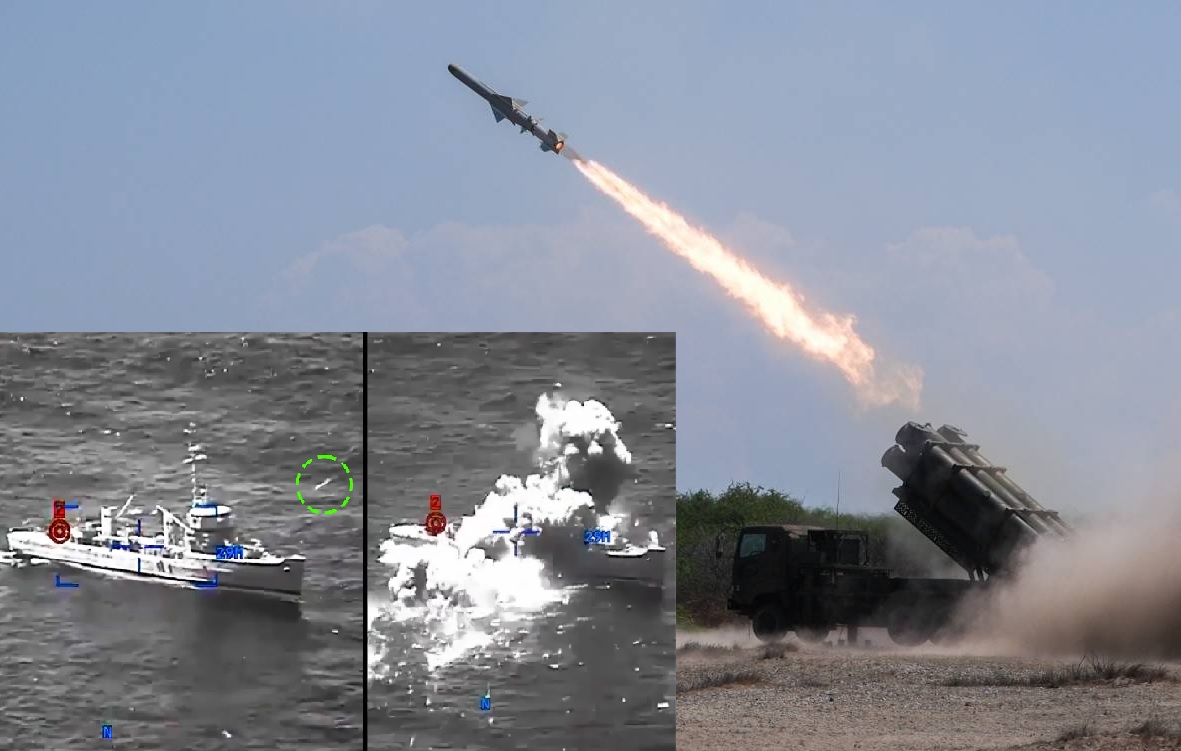
World
PAOAY, Philippines — May 7, 2026 : Japanese Ground Self-Defense Force (JGSDF) personnel fired two Type 88 surface-to-ship missiles during a multinational maritime strike exercise under Exercise Balikatan 2026, sinking a decommissioned Philippine Navy vessel in the South China Sea, referred to by the Philippines as the West Philippine Sea. The live-fire event took place on May 6 from the sand dunes at Culili Point near Laoag City in Ilocos Norte province in northwestern Luzon. The missiles were launched from a single JGSDF 6×6 coastal defense launcher vehicle and struck the target vessel positioned approximately 75 kilometers offshore. Military officials confirmed the target was hit around six minutes after launch and subsequently sank. The target vessel was the former BRP Quezon (PS-70), an Auk-class minesweeper originally built for the United States Navy during World War II. The vessel was transferred to the Philippine Navy in 1967 and later served as a patrol corvette for more than five decades before being decommissioned in 2021. The maritime strike formed one of the capstone activities of Exercise Balikatan 2026, which ran from April 20 to May 8. The exercise involved approximately 17,000 military personnel from seven participating nations: the Philippines, the United States, Japan, Australia, Canada, France, and New Zealand. The 2026 edition marked the first active participation of Japanese combat troops in Balikatan and the first deployment of Japanese combat forces onto Philippine territory since the end of World War II. Japanese participation in the exercise was enabled through the Japan-Philippines Reciprocal Access Agreement (RAA), ratified on September 11, 2025. Japan deployed approximately 1,400 troops across the broader exercise, while 70 JGSDF personnel were directly involved in the missile firing operation at Culili Point. Before the Japanese missile launch, a United States Army High Mobility Artillery Rocket System (HIMARS) launcher fired a Guided Multiple Launch Rocket System (GMLRS) munition at the ex-BRP Quezon. Additional simulated engagements were also conducted using a Philippine Navy C-Star anti-ship missile system and a United States Marine Corps Navy/Marine Expeditionary Ship Interdiction System (NMESIS). The NMESIS platform, deployed by the Hawaii-based 3rd Marine Littoral Regiment, was present in the Philippines for the first time during the exercise. The system consists of an unmanned Joint Light Tactical Vehicle (JLTV) carrying two Kongsberg Naval Strike Missiles. Although it did not fire live ordnance during the event, the system participated in the broader maritime strike scenario. Exercise planners integrated the maritime strike into a wider operational framework focused on coastal defense, interoperability, and maritime denial operations in the Luzon Strait. Two days before the missile firing, American, Canadian, and Philippine forces conducted a separate counter-landing live-fire exercise designed to repel a simulated amphibious assault. Additional activities during Balikatan included maritime key terrain seizure drills on remote islands in the Luzon Strait. Systems such as HIMARS and NMESIS were transported into forward operating areas using landing craft and C-130J Hercules aircraft to rehearse rapid deployment and area denial operations across strategic maritime chokepoints. Defense analysts consider the Luzon Strait a critical corridor linking the South China Sea to the Pacific Ocean. The exercise scenario emphasized maintaining operational control of the strait and improving allied coordination across the First Island Chain. The JGSDF employed the Mitsubishi Heavy Industries-built Type 88 anti-ship missile system during the exercise. The system, which has remained in Japanese service for more than 35 years, uses a six-tube launcher mounted on a 6×6 chassis. The missile measures 5.08 meters in length, carries a 225-kilogram high-explosive warhead, travels at high subsonic speed, and has an operational range of approximately 180 kilometers. Japan is currently transitioning from the Type 88 system to the newer Type 12 surface-to-ship missile, which features extended range and updated targeting and guidance systems. The Balikatan firing represented the first operational live use of the Type 88 missile system by Japan outside its national territory and the first JGSDF missile launch conducted from Philippine soil. Philippine Defense Secretary Gilberto Teodoro Jr. and Japanese Defense Minister Shinjiro Koizumi attended the live-fire event at Culili Point. Following the exercise, Teodoro stated that the activity demonstrated future interoperability potential between Philippine and Japanese forces. He said the exercise involved extensive coordination in planning, force organization, and resource management before the final missile engagement phase. One day before the maritime strike, Teodoro and Koizumi met in Manila and signed a joint statement aimed at expanding bilateral defense equipment and technology cooperation. The agreement followed Tokyo’s revisions to its Three Principles on the Transfer of Defense Equipment and Technology, which eased restrictions on defense exports and overseas military cooperation. The Philippines is currently evaluating additional Japanese defense equipment acquisitions, including second-hand TC-90 light aircraft and Abukuma-class destroyers. Manila has already received five TC-90 aircraft from Japan for maritime patrol missions. Philippine officials, however, indicated that the Type 88 missile system is not being considered for procurement. The Armed Forces of the Philippines currently relies on the Indian-manufactured BrahMos cruise missile system for its coastal defense and anti-ship missile requirements. Military officials from participating nations described the Balikatan 2026 maritime strike activities as part of continuing efforts to improve interoperability, joint operational planning, and maritime defense coordination among allied and partner forces operating in the Indo-Pacific region.
Read More → Posted on 2026-05-07 14:32:04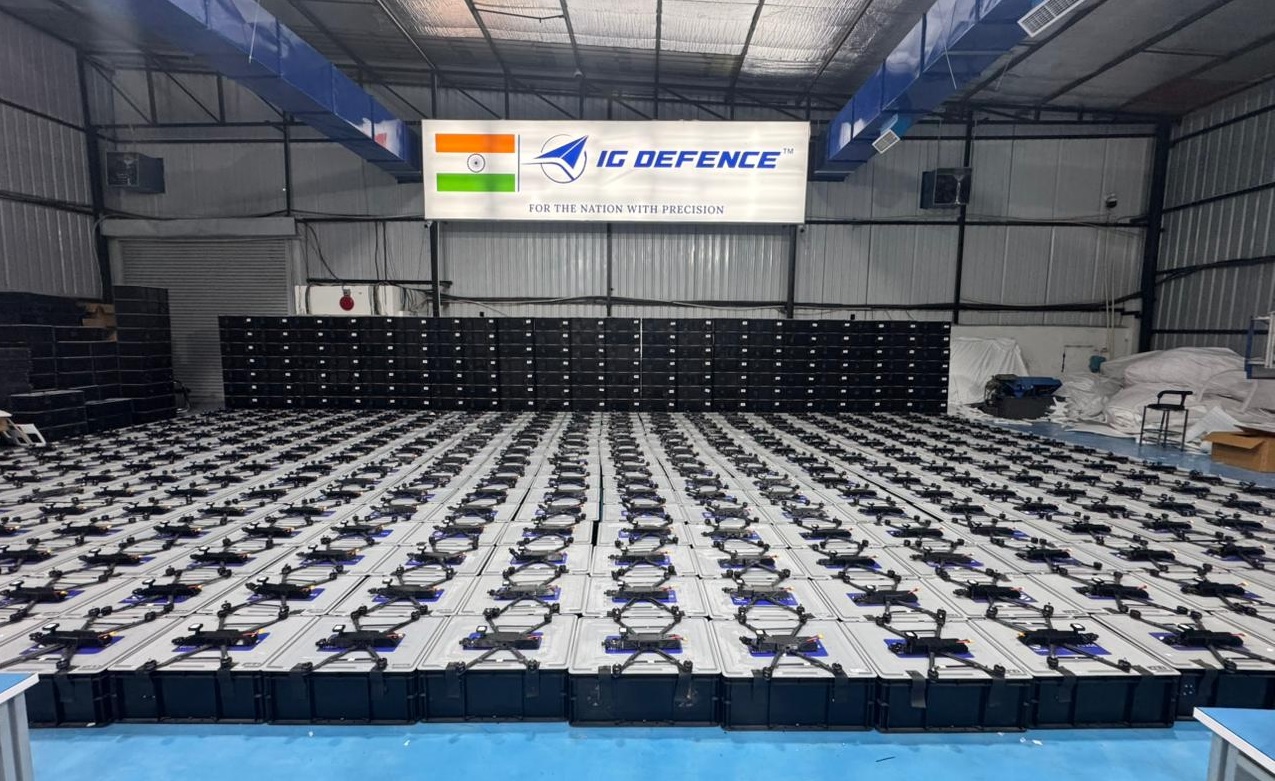
India
NEW DELHI — May 7, 2026 : India’s transition toward large-scale unmanned warfare capabilities is accelerating as indigenous defence technology company IG Defence increases production of First-Person View (FPV) kamikaze drones to 200 units per day, amid growing military emphasis on volume-led combat preparedness and rapid deployment capabilities. The expansion reflects a broader shift within the Indian armed forces toward high-volume unmanned systems designed for precision strike, surveillance, and tactical battlefield operations across sensitive theatres including the Line of Actual Control (LAC) and the Line of Control (LoC). Military Leadership Highlights Need for Large-Scale Drone Capacity Senior military leadership has repeatedly underscored the importance of industrial-scale drone manufacturing in future warfare scenarios. Former Chief of Army Staff General Manoj Mukund Naravane recently stated that India must develop the capability to manufacture as many as 40,000 drones per month during future contingencies. He noted that modern conflicts increasingly depend on industrial adaptability and rapid production scalability rather than solely on conventional platforms. Army Chief General Upendra Dwivedi has similarly outlined operational requirements for unmanned systems, stating that each Army corps may require between 8,000 and 10,000 UAVs, including FPV drones, to maintain tactical dominance in contested airspace and support frontline operations. The Indian Army has subsequently accelerated efforts to integrate indigenous FPV and loitering munition platforms into operational formations, while also restructuring units to incorporate dedicated unmanned aerial vehicle (UAV) capabilities. Operation Sindoor Accelerated Indigenous Drone Deployment IG Defence’s manufacturing expansion follows the operational deployment of its FPV kamikaze drones during Operation Sindoor in May 2025. The operation was launched following the Pahalgam terror attack and involved the use of multiple indigenous systems for surveillance, reconnaissance, mapping, and precision strike missions. FPV kamikaze drones supplied by IG Defence were deployed alongside other domestically developed platforms during the operation. Following Operation Sindoor, the Government of India acknowledged the company’s contribution through an official Press Information Bureau (PIB) release recognising the operational role played by indigenous drone systems. Over the past financial year, IG Defence has supplied thousands of FPV kamikaze drones to the Indian Army as part of the military’s expanding unmanned warfare inventory. IG FPV Striker Designed for Precision Strike Operations The company’s primary platform, the IG FPV Striker, is an indigenous loitering munition designed for precision engagement missions in contested environments. The system combines real-time targeting capability, high manoeuvrability, rapid-response deployment, and cost-efficient strike functionality. FPV kamikaze drones are increasingly being viewed as critical battlefield tools in asymmetric and dynamic combat environments where low-cost precision systems can provide tactical advantages. Modern FPV drones are capable of high-speed manoeuvres and can reportedly reach speeds of up to 180 kilometres per hour. The systems are also being integrated with modular warhead configurations and emerging AI-enabled swarm capabilities intended to support coordinated multi-target operations. Military planners increasingly regard FPV strike systems as cost-effective alternatives for tactical missions against fortified positions, logistical infrastructure, and moving battlefield targets. Production Expansion Linked to UP Defence Corridor To support long-term production requirements, IG Defence has expanded its industrial infrastructure through a memorandum of understanding signed with the Government of Uttar Pradesh. The agreement covers the establishment of an advanced drone manufacturing and research and development facility within the Uttar Pradesh Defence Corridor. The facility is intended to support mass production of FPV striker drones and related unmanned systems. The company stated that scaling domestic manufacturing capacity remains essential to meeting the Indian armed forces’ future operational requirements. Warfare Transitioning Toward Systems-Driven Operations Maj. Gen. R.C. Padhi (Retd.), Senior Vice President at IG Defence, said modern warfare is rapidly shifting from traditional platform-centric models toward systems-driven and volume-led operations. “The character of warfare is changing faster than ever before. We are witnessing a transition from platform-centric warfare to systems-driven, volume-led engagements. FPV Kamikaze Drones enable tactical dominance at a fraction of traditional costs, and their large-scale deployment will be central to future combat readiness,” he said. He added that indigenous production capability and rapid scalability are becoming increasingly important components of national security preparedness. Indigenous Drone Ecosystem Expanding Under Atmanirbhar Bharat Alongside FPV strike systems, IG Defence is also developing counter-UAS platforms, intelligence, surveillance and reconnaissance (ISR) systems, logistics drone swarms, and combat training solutions aligned with the armed forces’ growing unmanned operational requirements. The broader expansion of domestic drone production aligns with the Government of India’s Atmanirbhar Bharat initiative, which aims to reduce dependence on foreign defence imports while strengthening indigenous defence manufacturing capabilities. Increased participation from private industry, defence start-ups, and MSMEs has contributed to the rapid growth of India’s unmanned systems sector, particularly following operational lessons drawn from Operation Sindoor and recent international conflicts where loitering munitions and drone swarms have played a significant tactical role. As global militaries continue adapting to drone-centric operational models, India’s emphasis on scalable indigenous production reflects an evolving defence doctrine in which the ability to rapidly manufacture and deploy large numbers of unmanned systems is becoming a core operational requirement.
Read More → Posted on 2026-05-07 14:23:55
World
WASHINGTON — May 7, 2026 : The United States has temporarily paused “Project Freedom,” a military operation aimed at escorting commercial shipping through the Strait of Hormuz, after Saudi Arabia suspended American access to its airspace and key military facilities needed to support the mission, according to multiple U.S. and regional officials. The decision came days after U.S. President Donald Trump publicly announced the initiative on social media on Sunday, a move that reportedly surprised several Gulf allies and triggered immediate diplomatic concerns across the region. Project Freedom was designed to ensure the safe transit of commercial vessels through the Strait of Hormuz amid ongoing tensions between Washington and Tehran and concerns over disruptions to maritime traffic in one of the world’s most strategically important energy corridors. According to officials familiar with the matter, Saudi Arabia informed Washington that it would not permit the U.S. military to launch aircraft from Prince Sultan Airbase, located southeast of Riyadh, nor allow American military flights through Saudi airspace for operations directly linked to the mission. The base currently hosts U.S. fighter aircraft, refueling tankers, and air defense systems that form part of Washington’s regional military posture. U.S. officials said a subsequent phone conversation between President Trump and Saudi Crown Prince Mohammed bin Salman failed to resolve disagreements over military access and operational coordination tied to the initiative. Kuwait also reportedly declined to provide access to its air bases and airspace for the operation, further complicating logistical planning for the U.S. military. Diplomatic sources indicated that several Gulf states had not been fully consulted before the public announcement of the operation and were concerned about the possibility of further escalation in the region. While a White House official stated that regional allies had been notified in advance, officials acknowledged that the absence of formal authorization for basing rights, overflight access, and operational support from Gulf host nations significantly limited the military’s ability to sustain the mission as originally planned. Prior to the suspension, the U.S. military had begun positioning additional naval assets in the Gulf in preparation for expanded escort operations through the strait. U.S. Central Command confirmed that on the first day of the mission, which began on or around May 4, two U.S.-flagged commercial vessels transited the Strait of Hormuz accompanied by two U.S. Navy guided-missile destroyers. The Pentagon had described the operation as defensive in nature and focused on protecting commercial shipping from potential interference during passage through the waterway. Earlier this week, U.S. Defense Secretary Pete Hegseth outlined the planned scale of Project Freedom, describing it as a broad maritime protection effort involving guided-missile destroyers and more than 100 land- and sea-based military assets. The operation was expected to include fighter aircraft, surveillance drones, helicopters, and airborne refueling support intended to provide continuous monitoring and air cover across the maritime corridor. However, the execution of that operational framework depended heavily on access to Gulf airspace and regional military installations, particularly in Saudi Arabia and Kuwait. In a statement posted to Truth Social on Tuesday, President Trump confirmed that Project Freedom would be “paused for a short period of time” while diplomatic efforts continue to determine whether a broader agreement between the United States and Iran can be finalized. The administration is currently engaged in discussions aimed at reducing tensions following the fragile ceasefire reached between Washington and Tehran on April 8. Regional governments have expressed concern that a large-scale U.S. military escort operation in the Strait of Hormuz could increase the risk of wider confrontation and expose Gulf states to retaliatory attacks or economic disruption. A Saudi source familiar with the discussions said Riyadh remains supportive of ongoing diplomatic initiatives, including mediation efforts led by Pakistan aimed at facilitating a long-term understanding between the United States and Iran. According to officials familiar with the negotiations, the White House is also drafting a memorandum of understanding intended to formalize a framework for maritime security, de-escalation, and the continued flow of commercial shipping through the Strait of Hormuz without relying on unilateral military escort operations. The Strait of Hormuz remains one of the world’s most critical maritime chokepoints, handling a significant share of global oil and liquefied natural gas exports. The U.S. military continues to maintain naval and air assets across the Gulf region while monitoring developments related to maritime security and ongoing diplomatic negotiations.
Read More → Posted on 2026-05-07 14:15:13Search
Top Trending in 24 Hours



Top Trending in 4 Days
-
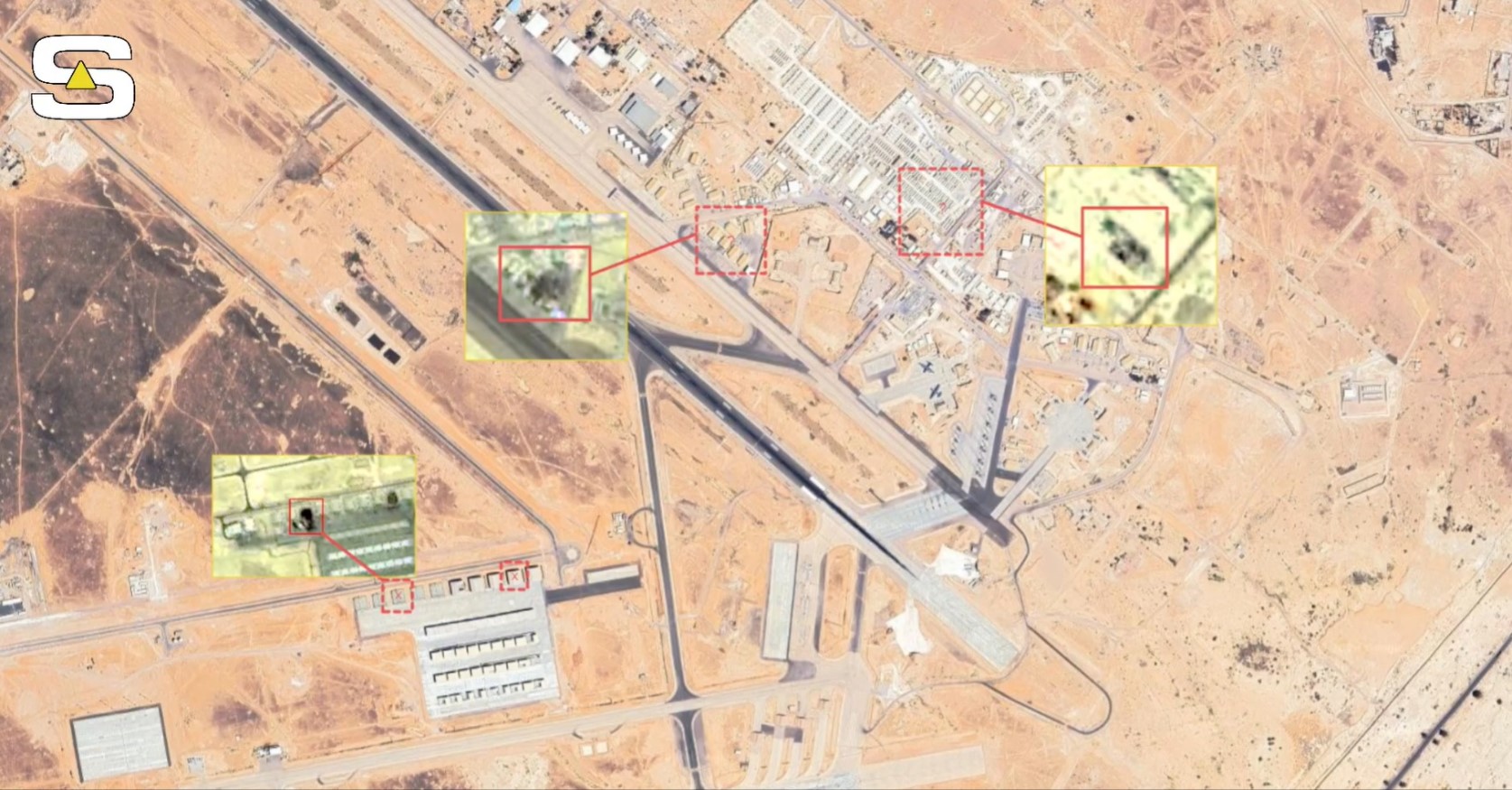 New Satellite Imagery Reveals Extensive Damage at Jordan's Muwaffaq al-Salti Air Base After Iranian Missile Strike
-
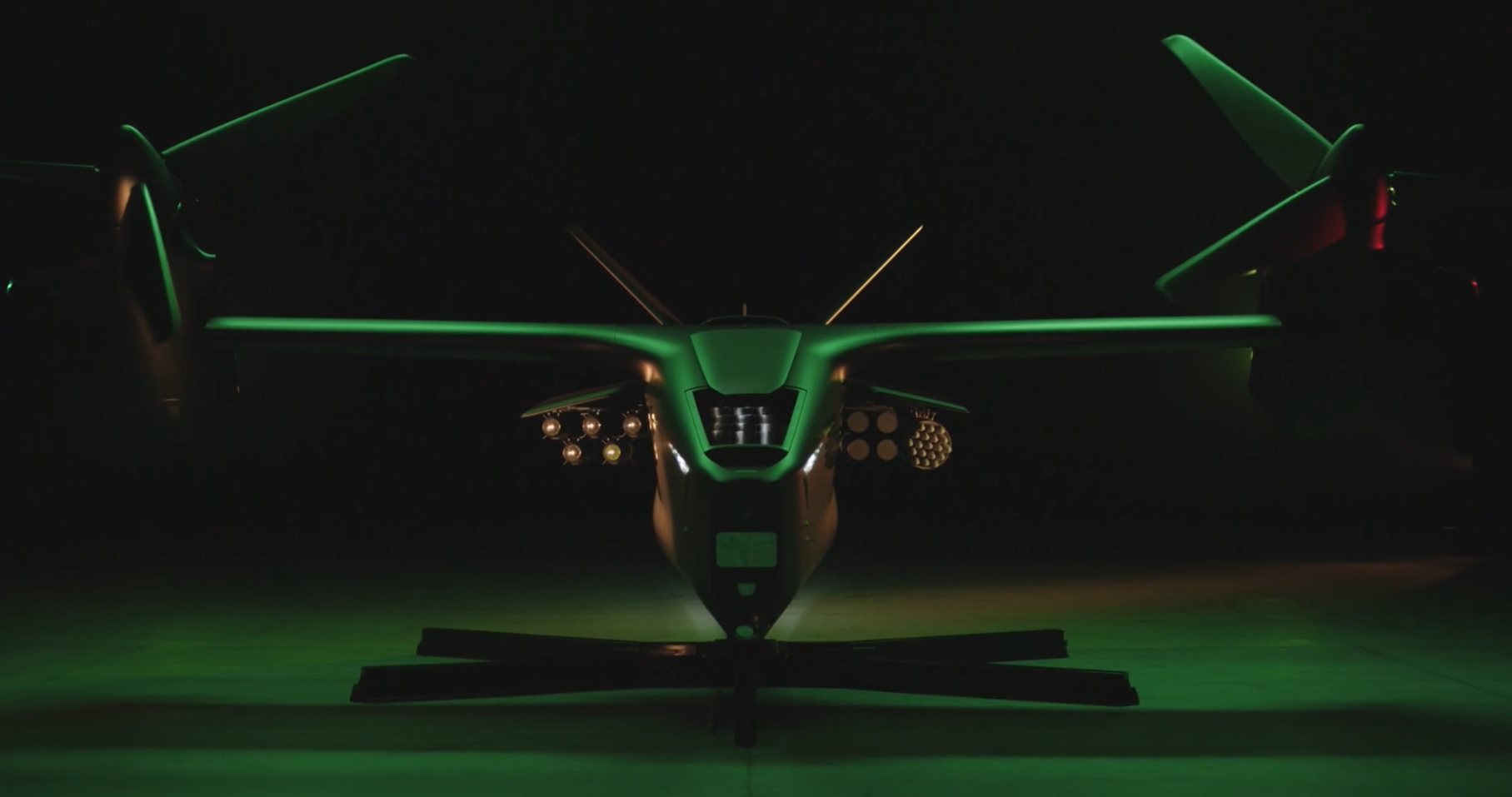 Anduril Unveils Thunder Autonomous Attack Rotorcraft Built with Archer Aviation to Support Apache Helicopters
-
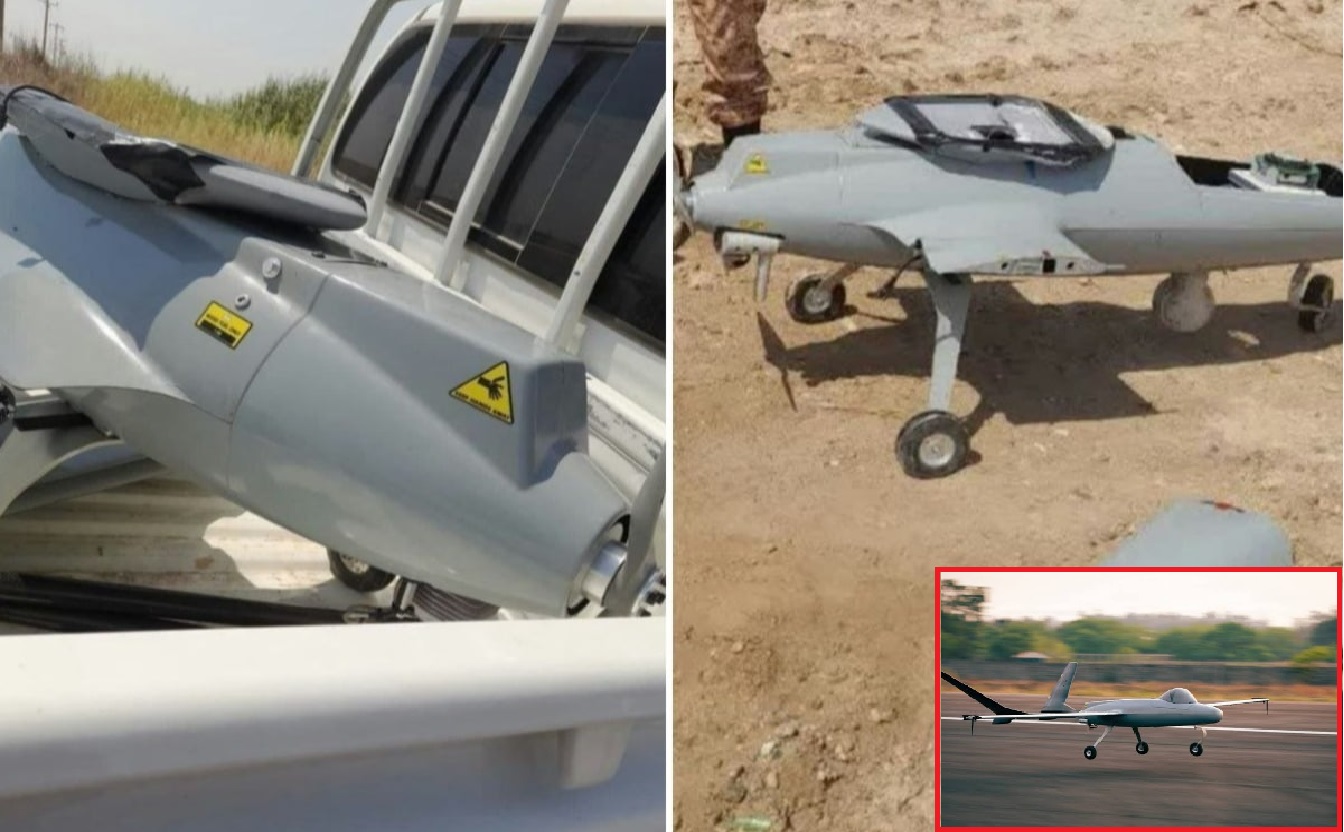 Iran Claims It Shot Down U.S.-Operated Polish-Built Tiguar-M Drone, Releases Images
-
 U.S. Space Force Awards Slingshot Aerospace $69.2 Million Contract to Develop AI Space Training Platform
-
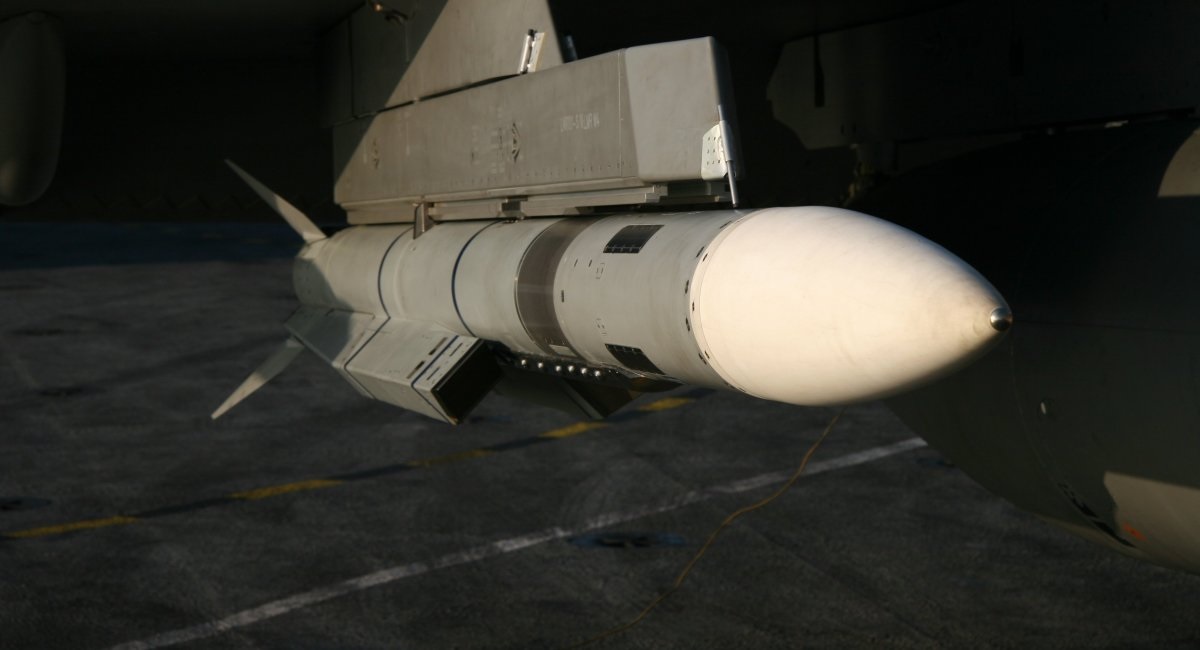 UK Cancels Meteor Missile Mid-Life Upgrade, Prioritizes Next-Generation FASE Air-to-Air Missile Programme
-
 NASA, Draper Cancels CP-12 Lunar Lander Mission After Development Delays Push Mission Beyond 2030
-
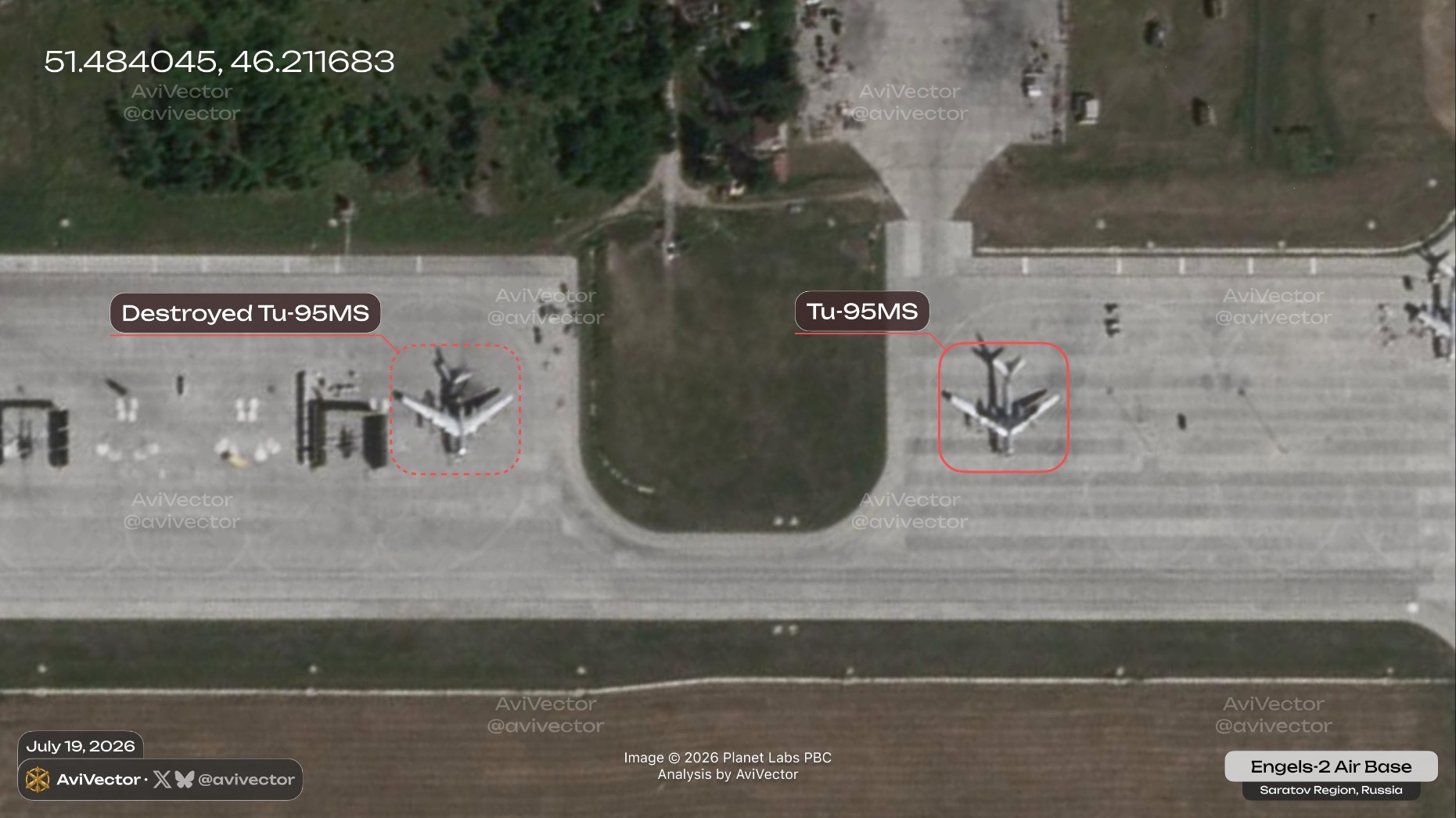 Satellite Images Confirm Russian Tu-95MS Bomber Destroyed After Ukrainian Drone Strike on Engels-2 Air Base
-
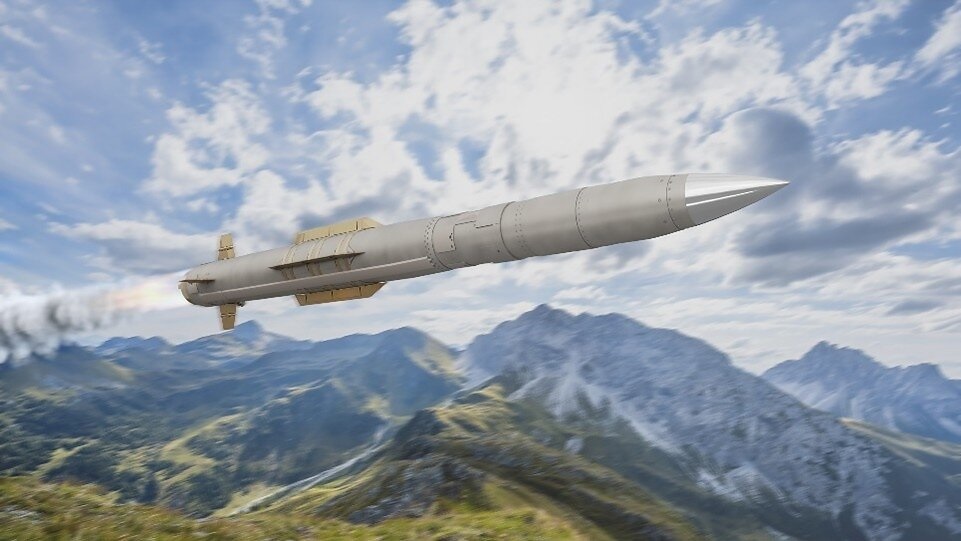 Lockheed Martin Unveils Lower-Cost PAC-3 ACE Interceptor for Patriot Air Defense System
