World
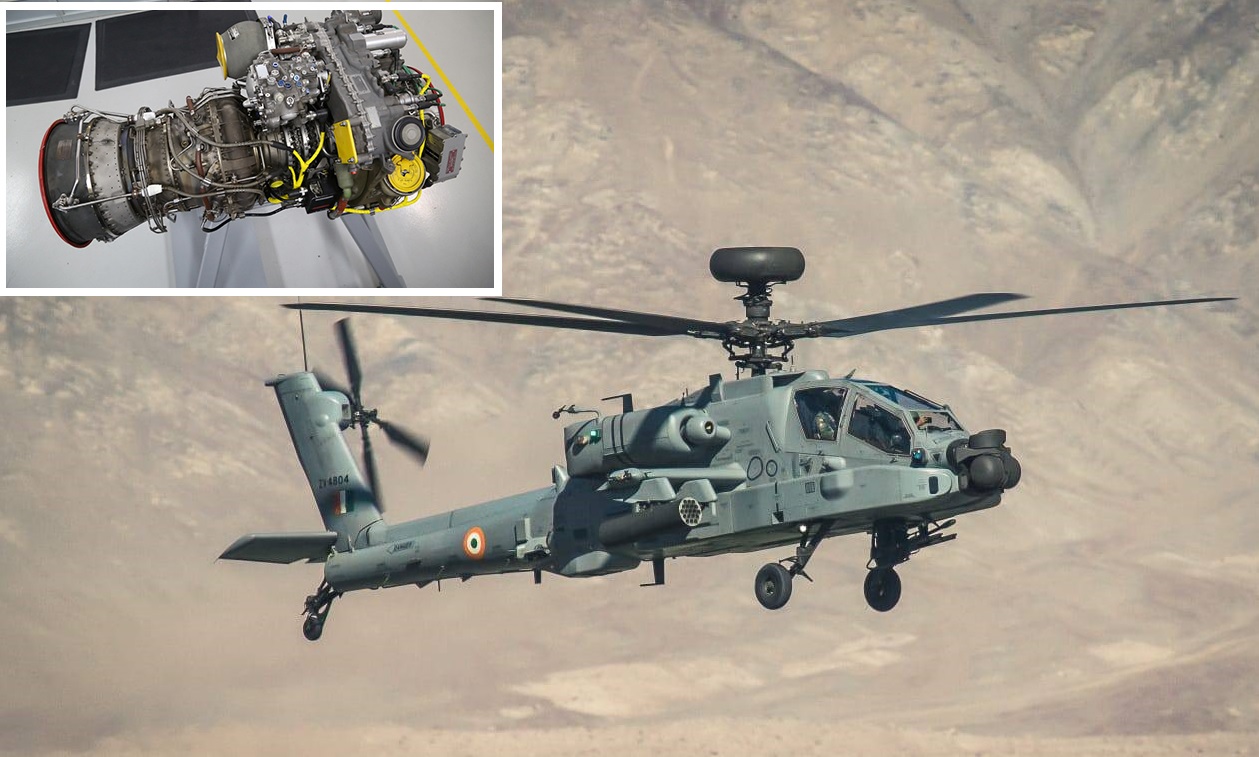
LONDON, — May 21, 2026 : GE Aerospace has been awarded a three-year contract by Boeing Defence UK to provide engine support services for the British Army’s fleet of AH-64E Apache Guardian attack helicopters. The agreement covers maintenance and support for the T700-GE-T701D turboshaft engines powering the AH-64E fleet and establishes a localized support network within the United Kingdom intended to improve aircraft availability and operational readiness while reducing dependence on overseas repair channels. The contract is structured under a Performance Based Logistics (PBL) model, under which compensation is tied directly to operational performance metrics such as fleet readiness and aircraft availability rather than the number of labor hours performed or spare parts supplied. The arrangement is designed to align industrial support with the British Army’s operational requirements by incentivizing reduced downtime and sustained mission capability. As part of the agreement, GE Aerospace will permanently station a field service representative at Wattisham Flying Station, the British Army’s primary Apache operating base in Suffolk. The on-site support presence is intended to provide immediate technical assistance to military maintenance crews and flight operations personnel. Major repair and overhaul work for the engines will be carried out at StandardAero’s facility in Gosport on England’s south coast. The site serves as a major rotary-wing maintenance, repair, and overhaul hub supporting several UK military aviation programs. Paul Ferraro, Vice President and General Manager for Defense Engines and Services at GE Aerospace, said the contract strengthens regional support and services for the UK Apache fleet while helping ensure readiness and availability. The T700-GE-T701D is the latest production variant of the T700 engine family, which has remained in continuous production since the late 1970s. The engine produces approximately 1,800 shaft horsepower and incorporates full-authority digital engine control (FADEC), improving fuel efficiency, engine management, and pilot workload compared with earlier variants. According to publicly available program data, the T700 engine family has accumulated more than 100 million flight hours worldwide, with over 25,000 engines delivered to approximately 130 operators across 50 countries. In addition to the Apache, the engine family powers platforms including the UH-60 Black Hawk and the SH-60 Seahawk. The British Army is currently transitioning from the earlier AH-64D Longbow Apache to the AH-64E Guardian under a government-to-government agreement signed with the United States in 2020. The modernization effort follows two decades of operational service by the AH-64D fleet, including combat deployments in Afghanistan. The UK plans to field a fleet of 50 AH-64E helicopters. The AH-64E variant incorporates upgraded avionics, improved networking capability, enhanced sensors, and greater interoperability with allied forces. The aircraft is also capable of coordinating operations with unmanned aerial systems. The UK Apache modernization effort aligns with broader allied procurement trends. Australia is also acquiring the AH-64E under Project LAND 4503, reflecting continued allied investment in the Boeing platform and its support infrastructure. Because the T700 engine family supports a significant portion of NATO and allied helicopter operations across missions including close air support, air assault, medical evacuation, maritime patrol, and search and rescue, maintaining regional maintenance and supply-chain capability remains an important operational requirement for allied forces. The three-year contract provides the British Army with a dedicated domestic repair and support framework intended to sustain Apache fleet readiness and ensure consistent engine maintenance aligned with operational requirements.
Read More → Posted on 2026-05-21 15:11:21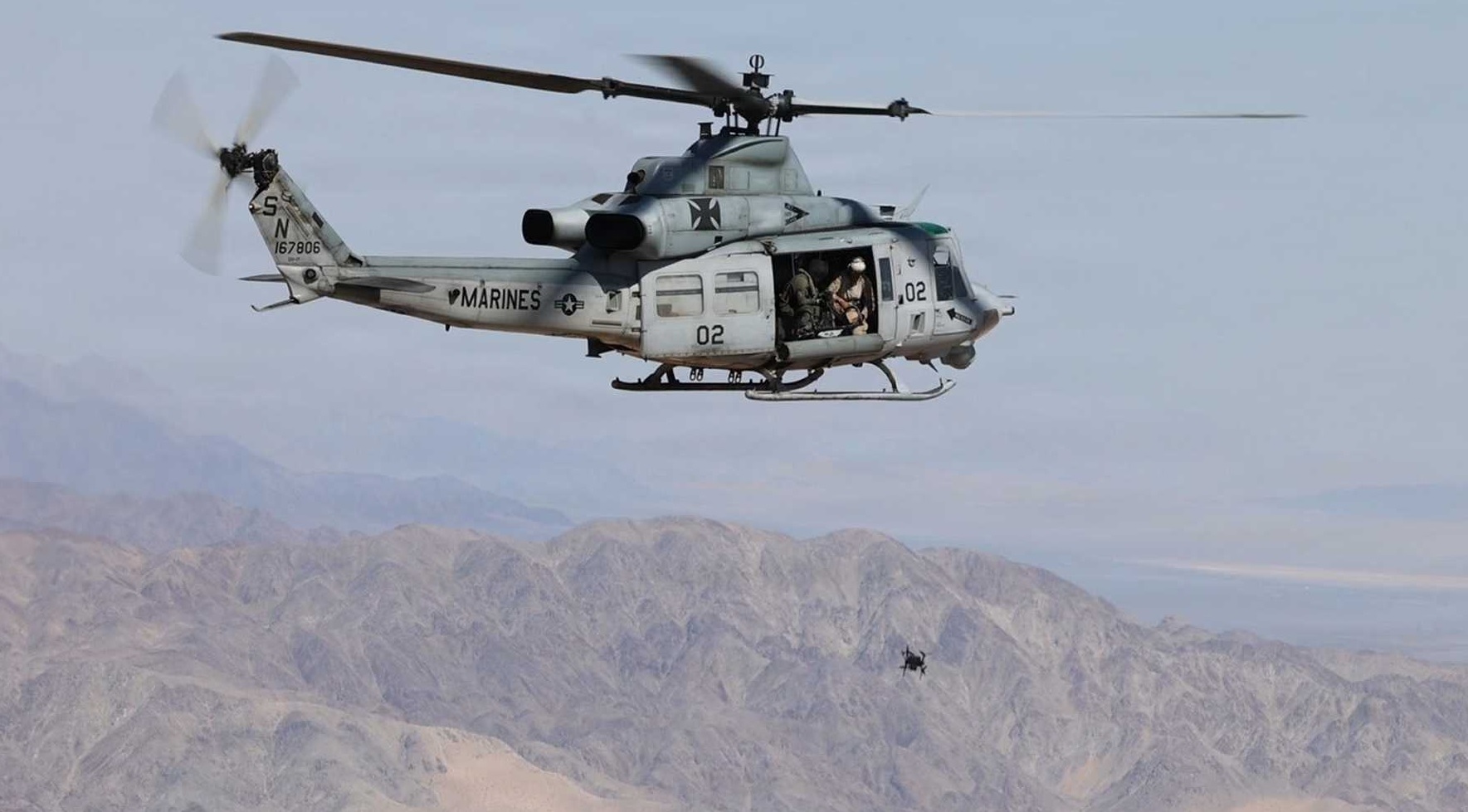
World
MARINE CORPS AIR GROUND COMBAT CENTER TWENTYNINE PALMS, Calif., — May 21, 2026 : The U.S. Marine Corps has demonstrated the use of UH-1Y Venom and AH-1Z Viper helicopters as airborne control platforms for first-person view (FPV) drones, validating a concept designed to extend operational reach while reducing risk to crewed aircraft operating near contested areas. The demonstration involved Marines from Marine Light Attack Helicopter Squadron 169 (HMLA-169), Marine Aircraft Group 39, 3rd Marine Aircraft Wing, and the 3rd Light Armored Reconnaissance Battalion, 1st Marine Division. The exercise was conducted at Marine Corps Air Ground Combat Center Twentynine Palms, California, as part of ongoing efforts to integrate uncrewed systems into Marine Corps aviation operations. During the exercise, Marines from the 3rd Light Armored Reconnaissance Battalion launched a Neros Archer FPV drone from a ground position before transferring control authority to a specialized operator team aboard a UH-1Y Venom helicopter operating miles away from the target area. Operators inside the aircraft then maneuvered the drone toward its designated target, demonstrating the helicopter’s ability to function as an airborne command and remote-control platform. The UH-1Y Venom served as an elevated communications and coordination node during the mission. By operating at higher altitude, the aircraft extended radio line-of-sight communications and reduced limitations caused by terrain, urban infrastructure, and ground-level interference that commonly affect drone operations. Capt. Quinton Thornbury, a UH-1Y Venom pilot with HMLA-169, said the primary objective of the exercise was to test the feasibility of deploying and controlling an FPV drone from a moving helicopter. “The primary objective was to test the feasibility of a non-kinetic drop and deployment of a first-person view drone from a moving helicopter, which we were able to do today,” Thornbury said. “From there, validate that we can control the maneuver of that drone from the back of the aircraft.” According to the Marine Corps, the concept is intended to address the growing threat posed by advanced integrated air defense systems that increasingly force conventional rotary-wing aircraft to operate from greater stand-off distances. By combining the endurance, altitude, and networking capabilities of the H-1 helicopter fleet with expendable FPV drones, the service aims to shift terminal battlefield risk from crewed aircraft to uncrewed systems. Sgt. Matthew Pocklington, a UH-1Y crew chief with HMLA-169, said the tactic allows helicopter crews to continue supporting ground forces while remaining farther from hostile threats. “This tactic allows us to keep our air crews safe and sound while pushing the lethal edge of the battlefield out to where the enemy is,” Pocklington said. “We are still providing our ground support, and close air support, but in a way that lets the drones close with and destroy the enemy, rather than putting our Marines in harm’s way.” The exercise used the Neros Archer FPV drone manufactured by Neros Technologies. The Marine Corps stated that the Archer system was selected because it is currently the most widely used FPV drone among Marine infantry units and already benefits from an established logistics and support network, which could accelerate integration across aviation units. Officials also highlighted the drone’s compact size and precision targeting capability, noting that the system can support operations in complex combat environments while reducing the risk of collateral damage. The demonstration further showed the potential for FPV drones to function as remote extensions of helicopter sensors and strike capabilities. Marine Corps officials stated that the concept could provide commanders with additional options for engaging enemy armor, fortified positions, and maritime targets using low-cost attritable systems instead of relying solely on expensive guided munitions. The integration is expected to provide operational advantages for the AH-1Z Viper attack helicopter. Under conventional tactics, the aircraft often must approach closer to targets for visual identification and engagement using onboard cannons or rockets. By assigning forward reconnaissance and terminal strike functions to FPV drones, helicopter formations can detect, track, and engage threats from significantly greater distances while reducing exposure to enemy air defenses. The Marine Corps said the demonstration forms part of broader efforts to evaluate new methods for integrating crewed aviation platforms with uncrewed systems across future operational environments.
Read More → Posted on 2026-05-21 15:04:18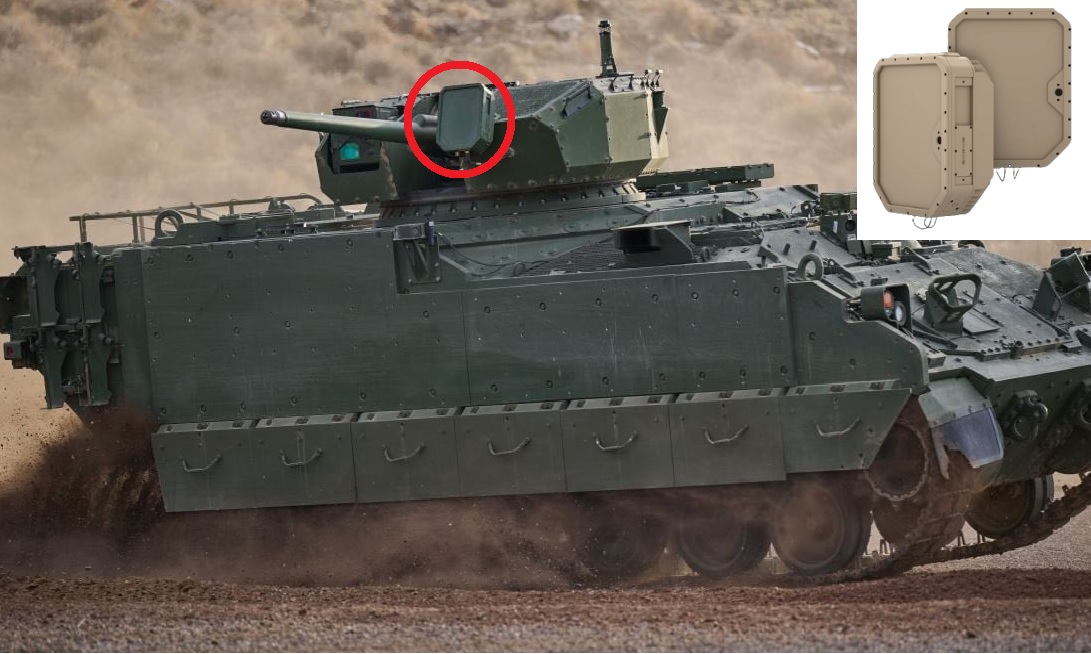
World
FORT CAVAZOS, Texas — May 21, 2026 : The U.S. Army’s 1st Cavalry Division is evaluating two prototype Armored Multi-Purpose Vehicle 30mm variants (AMPV-30) equipped with EchoShield radar systems for counter-unmanned aerial system (C-UAS) operations. The vehicles were developed and supplied by BAE Systems as company-funded prototypes and delivered to the Army in April 2026 under the service’s “Transformation in Contact” (TiC) 2.0 initiative. The program is intended to accelerate the field testing of emerging technologies by placing new systems directly into operational units for soldier evaluation. AMPV-30 Configuration The AMPV platform was originally developed by BAE Systems to replace the U.S. Army’s legacy M113 armored vehicle family, providing improved survivability, mobility, and onboard power generation for Armored Brigade Combat Teams (ABCTs). The AMPV-30 configuration transforms the standard support vehicle into a mobile counter-drone platform designed to provide localized air defense protection for armored formations operating in contested environments. The prototypes are equipped with the Kongsberg Gruppen MCT-30 remotely operated turret, derived from the RT-20 design. The turret is armed with a Mk 44 Bushmaster II 30mm autocannon capable of firing programmable airburst munitions (PABM), which are designed to engage aerial targets by creating fragmentation patterns along the drone’s projected flight path. The turret also includes a coaxial 7.62mm machine gun and can be configured to carry additional weapons such as FGM-148 Javelin anti-tank guided missiles or laser-guided 70mm rockets depending on mission requirements. EchoShield Radar Integration To provide aerial target detection and tracking capability, the AMPV-30 integrates the EchoShield radar system developed by U.S.-based radar manufacturer Echodyne. The radar is externally mounted on the vehicle and provides continuous low-altitude airspace surveillance for detecting and tracking small unmanned aerial systems operating near the ground. EchoShield is a software-defined cognitive 4D pulse-Doppler radar utilizing Echodyne’s proprietary Metamaterials Electronically Steered Array (MESA) architecture. The system operates in the Ku-band frequency range between 15.4 and 16.6 GHz and is specifically optimized to detect low-flying, slow-moving, and small radar cross-section targets in cluttered battlefield environments. The radar dynamically adjusts waveforms and beam scheduling through software to improve target detection and tracking performance without requiring physical hardware modifications. Radar Specifications According to published technical specifications, the EchoShield radar provides high-fidelity tracking data, including range, azimuth, elevation, and velocity information. Key specifications include: Tracking capacity for more than 1,000 objects simultaneously Angular tracking accuracy of less than 0.5 degrees in both azimuth and elevation Field of view of 130 degrees in azimuth and 90 degrees in elevation Track update rates of up to 10 Hz Detection range of approximately 3 kilometers for Group 1 drones Detection range of up to 11.4 kilometers for larger Group 3 UAVs Maximum instrumented range of 30 kilometers depending on mission configuration The radar panel measures approximately 42.5 × 33 × 18 centimeters, weighs 17.8 kilograms, and consumes less than 250 watts during operation, allowing integration onto mobile armored platforms with limited impact on vehicle power requirements. EchoShield also incorporates native target classification capability using Doppler signatures to distinguish drones from environmental clutter and other airborne objects, including hovering UAVs operating close to the ground. Operational Evaluation The AMPV-30 prototypes are being evaluated as part of the Army’s broader modernization effort to improve protection against emerging drone threats on the battlefield. The integration of mobile radar surveillance, programmable airburst munitions, and armored mobility reflects a shift in Army doctrine toward providing armored and cavalry formations with organic short-range air defense capabilities rather than relying solely on dedicated air defense artillery units. The Army has stated that the AMPV-30 vehicles remain prototype systems developed for testing and capability assessment purposes. At present, there is no formal procurement requirement or funded acquisition program for the configuration. The ongoing evaluation is intended to assess the operational effectiveness of combining counter-drone detection and engagement systems onto the AMPV platform to support future battlefield requirements.
Read More → Posted on 2026-05-21 14:37:42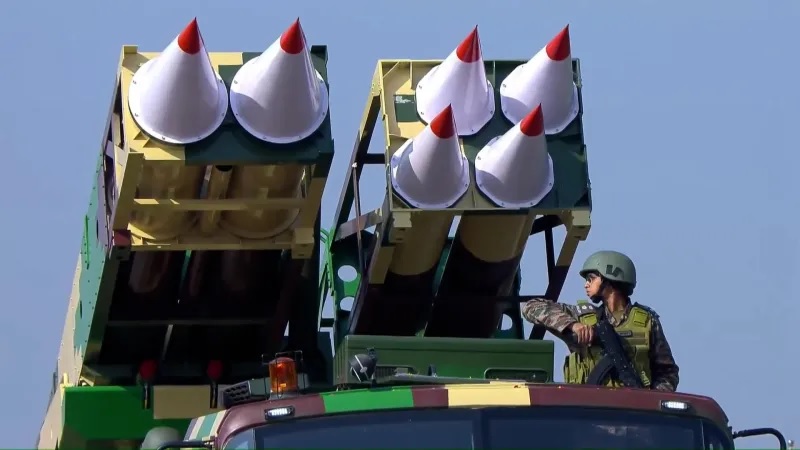
India
NEW DELHI, — May 20, 2026 : Pune-based private defence manufacturer Nibe Limited has successfully conducted firing trials of its indigenous Suryastra long-range rocket system for the Indian Army at the Integrated Test Range (ITR) in Chandipur, Balasore, Odisha. The consecutive trials were carried out on May 18 and 19 under an emergency procurement programme initiated by the Indian Army. The trials evaluated the system’s long-range strike capability, precision, operational reliability, and readiness for deployment. According to official trial data, the 150-kilometre range variant achieved a Circular Error Probable (CEP) of 1.5 metres, while the 300-kilometre range variant achieved a CEP of 2 metres. Both rocket variants successfully met all required operational and performance parameters during the demonstrations. CEP is a standard military metric used to measure the accuracy of guided weapons, indicating the radius within which 50 percent of fired munitions are expected to land. Defence analysts note that achieving a CEP of two metres or below at ranges extending up to 300 kilometres reflects a high degree of precision for long-range artillery systems. Indigenous Universal Rocket Launcher System The Suryastra is described as India’s first indigenous universal multi-caliber rocket launcher system. It has been developed by Nibe Limited under a technology collaboration agreement with Israeli defence company Elbit Systems and is based on the Precise and Universal Launching System (PULS) platform. The launcher is designed with modular architecture, enabling it to fire multiple categories of rockets and missiles from interchangeable launch pods without requiring hardware modifications. The system can integrate precision-guided rockets of different calibres, allowing operational flexibility across varying mission requirements. In addition to guided rockets, the Suryastra system is capable of launching loitering munitions and kamikaze drones with operational ranges of up to 100 kilometres. The integration of loitering munitions provides real-time reconnaissance and strike capability, allowing battlefield surveillance alongside precision engagement of targets. Mobility and Operational Capability The Suryastra launcher is mounted on a high-mobility all-terrain vehicle platform and incorporates “shoot-and-scoot” capability. This allows the launcher to rapidly relocate after firing, reducing vulnerability to enemy counter-battery strikes and improving survivability during combat operations. Military experts state that such highly mobile rocket systems are increasingly important in modern warfare environments where rapid deployment, mobility, and precision engagement are critical operational requirements. Indian Army Procurement Programme The firing demonstrations were conducted under a procurement contract signed between the Indian Army and Nibe Limited in January 2026 under the Army’s Emergency Procurement framework. The contract is valued at approximately ₹292.69 crore, equivalent to around $31 million. The agreement includes the supply of: Two Suryastra Universal Rocket Launcher systems Replenishment-cum-loader vehicles 150 km and 300 km range rockets and ammunition Ground support equipment and accessories Spare parts and engineering support packages Comprehensive technical and maintenance support Deliveries under the contract are scheduled to be completed in phased tranches within a 12-month period. Strategic and Industrial Significance The Suryastra programme is being manufactured in India under technology transfer arrangements and is intended to strengthen the Indian Army’s long-range precision strike capability. Defence experts note that the system bridges an operational gap between conventional artillery platforms and more expensive ballistic missile systems by providing rapid-response stand-off strike capability at extended ranges. The successful trials also represent a significant development under the government’s Aatmanirbhar Bharat initiative aimed at expanding indigenous defence manufacturing capacity. The programme marks one of the first instances of an Indian private-sector defence company successfully manufacturing and demonstrating a long-range guided rocket system of this category for the Indian Armed Forces. Nibe Limited stated that the successful demonstrations validated the performance, precision, and operational readiness of the Suryastra system for future induction into Indian Army artillery formations following completion of deliveries and additional evaluations.
Read More → Posted on 2026-05-21 14:23:09
World
BEIJING, — May 20, 2026 : Chinese customs authorities have halted the import and domestic clearance of Nvidia’s GeForce RTX 5090D V2 graphics processing unit (GPU), effectively blocking sales of the China-specific gaming chip across the country, according to reports from Chinese technology industry sources and motherboard manufacturers. The restriction reportedly took effect on May 15 and coincided with the state visit to Beijing by U.S. President Donald Trump. Nvidia CEO Jensen Huang was also present in China during the visit after reportedly joining the U.S. delegation at the last minute during a stop in Alaska. Huang traveled alongside several American technology executives participating in trade and diplomatic discussions. The development came as the U.S. Department of Commerce reportedly authorized approximately 10 major Chinese companies to purchase Nvidia H200 artificial intelligence processors under a controlled licensing framework. The approvals were viewed as part of a limited export mechanism allowing select Chinese firms to access restricted AI hardware under strict regulatory conditions. At the same time, Beijing moved to block Nvidia’s GeForce RTX 5090D V2, a consumer-oriented Blackwell-based GPU specifically engineered for the Chinese market to comply with U.S. export regulations. The RTX 5090D V2 was developed by Nvidia as a downgraded version of the standard RTX 5090. The China-specific model featured 24GB of VRAM instead of 32GB and used a narrower memory bus intended to reduce performance in advanced computing and AI workloads while remaining within U.S. export compliance limits. Although marketed primarily toward gamers and professional 3D creators, industry reports indicated that Chinese AI developers increasingly adopted the GPU as an alternative to restricted enterprise-grade AI accelerators. Some reports also stated that certain firms modified the cards to increase VRAM capacity to as much as 48GB in an effort to improve AI model training performance and bypass built-in limitations. According to Chinese supply chain sources and local technology publications, customs officials informed importers, retailers, and motherboard manufacturers that the RTX 5090D V2 would no longer receive processing approvals or sales permits. Logistics companies reportedly received notices stating that import clearance for the product would not be granted. The move represents a significant policy shift because the restriction was initiated by Beijing rather than Washington. Analysts said the action reflects broader Chinese industrial efforts aimed at reducing reliance on modified American semiconductor products while accelerating the transition toward domestically developed alternatives. Chinese semiconductor companies including Huawei and Cambricon are expected to benefit as authorities continue encouraging AI developers and technology firms to adopt local hardware ecosystems and reduce dependence on foreign suppliers. Because the RTX 5090D V2 was manufactured exclusively for China, the customs restriction leaves Nvidia with limited alternative destinations for existing inventory. The development also adds further pressure on Nvidia’s China business following multiple rounds of U.S. export restrictions affecting advanced GPUs and AI accelerators, including earlier limitations involving the RTX 4090D and enterprise Blackwell products. Nvidia has not issued an official statement regarding the reported customs action as of the latest available information. No formal public decree or comprehensive government blacklist update has been independently confirmed beyond customs notifications referenced by industry sources and Chinese manufacturers.
Read More → Posted on 2026-05-20 16:41:03
World
HILL AIR FORCE BASE, Utah — May 20, 2026 : The U.S. Air Force has awarded a $40 million indefinite-delivery/indefinite-quantity (IDIQ) contract to IAP World Services for the replacement of aging radomes protecting AN/FPS-124 short-range radar systems across the North Warning System (NWS) in northern Canada. The contract, announced on May 19, covers the production, transportation, installation, removal, and disposal of 28-foot composite radome assemblies through May 20, 2035. Work will be conducted at multiple locations across Canada and Florida under the management of the Air Force Life Cycle Management Center’s Homeland Surveillance Branch at Hill Air Force Base. The program is intended to restore and sustain protective infrastructure for unattended AN/FPS-124 low-altitude surveillance radars that form part of the binational North Warning System jointly operated by the United States and Canada under North American Aerospace Defense Command. The radar network provides early-warning coverage against low-flying aircraft and cruise missile threats approaching North America through Arctic routes North Warning System Infrastructure The North Warning System consists of approximately 15 AN/FPS-117 long-range radar sites and between 36 and 39 AN/FPS-124 short-range radar installations distributed across Alaska, Yukon, the Northwest Territories, Nunavut, Labrador, and other Arctic regions. The AN/FPS-124 systems serve as gap-filler radars designed to detect low-altitude targets beneath the coverage envelope of long-range radar systems affected by terrain masking and radar horizon limitations. The sites support continuous surveillance along the polar approaches to North America. Most of the existing radome structures were installed between 1990 and 1992 during the modernization effort that replaced the earlier Distant Early Warning (DEW) Line infrastructure. Arctic Environmental Degradation After more than three decades of exposure to Arctic operating conditions, the radomes have experienced structural degradation caused by extreme wind loading, repeated freeze-thaw cycles, icing, ultraviolet exposure, thermal cycling, and sea salt corrosion at coastal locations. According to contract documentation, the Air Force determined that complete replacement of the radome assemblies is required rather than localized repair work due to the condition of the structures. The program includes the disassembly and disposal of existing assemblies, installation of new composite radomes, and replacement of SCR-T28D zenith panels incorporating OSHA 1910.140-compliant fall-arrest anchor systems. Existing infrastructure components, including lightning protection systems, acrylic domes, photocell assemblies, and antenna interfaces, will remain in service where applicable. Contract Structure and Procurement The contract combines fixed-price and cost-reimbursement elements to account for operational uncertainties associated with Arctic sustainment work, including weather disruptions, transportation constraints, and limited seasonal access to remote radar sites. The contract also includes provisions for spare parts, technical data packages, installation and maintenance training materials, and contractor support services. Procurement activities began with a presolicitation notice issued on May 27, 2025, followed by a formal request for proposals released on August 5, 2025. Four proposals were submitted during the competition process. Initial planning documents estimated the effort at approximately $21.7 million, though the final contract ceiling increased to $40 million as sustainment and logistics requirements expanded. At the time of award, $4.576 million in fiscal years 2025 and 2026 funding had been obligated. AN/FPS-124 Radar Capabilities The AN/FPS-124 radar was specifically developed for unattended Arctic operations and low-altitude target detection during the late Cold War period. The radar operates within the 1218–1398 MHz frequency band using six selectable frequencies and provides 360-degree surveillance coverage ranging from approximately 3.2 kilometers to 113 kilometers. The system incorporates an electronically scanned stripline antenna array, eliminating the need for large rotating mechanical assemblies. Additional features include pulse compression, Doppler filtering, clutter cancellation, zero-Doppler detection capability, and Kalman-filter-based target tracking. The radar is capable of processing up to 200 target tracks every six seconds while maintaining high operational reliability in remote Arctic conditions. Remote Arctic Operations Radar data collected at the sites is processed locally and transmitted through satellite communications links to NORAD command centers, including Regional Operations Control Centers at Elmendorf Air Force Base and CFB North Bay. Many North Warning System locations operate without permanent on-site personnel and rely on autonomous power systems, remote diagnostics, and periodic maintenance visits supported by helicopter lift or seasonal air transport. Operational locations within the network include Hall Beach, Cambridge Bay, Cape Dyer, Saglek, Resolution Island, Dewar Lakes, Shepherd Bay, Brevoort Island, Cartwright, and Rowley Island. The sustainment effort will support continued operation of the North Warning System while future over-the-horizon radar networks, distributed sensing systems, and next-generation Arctic surveillance capabilities remain under development by the United States and Canada.
Read More → Posted on 2026-05-20 16:15:34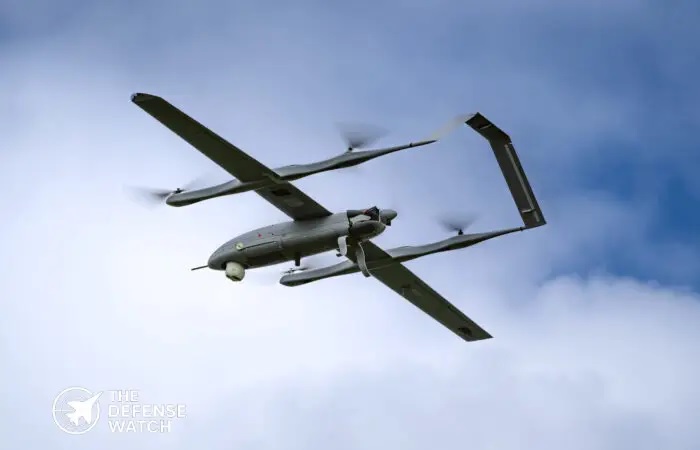
World
JACKSONVILLE, Florida — May 20, 2026 : Redwire Corporation has secured a multi-year contract to supply its Penguin Mk3 tactical uncrewed aerial system (UAS) to an undisclosed NATO allied nation, supporting the country’s ongoing tactical drone modernization program. The agreement, announced on May 19, was awarded through a competitive tender process and is valued in the “high eight-figure” range, placing the contract between $10 million and $99 million. The deal further expands Redwire’s defense presence among NATO operators following its 2025 acquisition of drone manufacturer Edge Autonomy for $925 million. Penguin Mk3 Designed for Long-Endurance ISR Missions The Penguin Mk3 is the latest version of Redwire’s fixed-wing tactical drone platform, developed to meet evolving operational requirements for NATO and allied forces. The aircraft is designed with a modular architecture that allows future software and hardware upgrades without replacing the core airframe, providing long-term operational flexibility. The system combines vertical takeoff and landing (VTOL) capability with fixed-wing endurance. Electric lift rotors enable launch and recovery without the need for runways or catapult systems, while an electronic fuel-injected internal combustion engine powers the aircraft during forward flight. According to company specifications, the Penguin Mk3 can exceed speeds of 60 knots (111 km/h), operate within a communication radius of 180 kilometers, and remain airborne for up to 14 hours during a single deployment. The drone can carry payloads of up to 8 kilograms, including electro-optical and infrared surveillance systems used for intelligence, surveillance, and reconnaissance (ISR) missions. The aircraft is also configured for all-weather operations and includes internal battery heaters and a heated pitot tube for operations in low-temperature environments. Fixed-Wing Drones Offer Greater Range and Endurance Fixed-wing tactical drones such as the Penguin Mk3 operate differently from rotary-wing quadcopters and FPV drones widely used in modern conflicts. While rotary systems are optimized for hovering, short-range reconnaissance, and precision strike operations, fixed-wing aircraft prioritize endurance, operational range, and persistent surveillance capability. Powered by fuel rather than batteries alone, the Penguin Mk3 can conduct extended ISR missions over large geographic areas while operating at higher altitudes and greater distances from frontline threats. This operational profile allows the system to monitor troop movements, artillery positions, and logistics routes for extended periods while remaining outside the effective range of small arms fire and some short-range electronic warfare systems. Combat Use in Ukraine Redwire has increasingly emphasized the Penguin platform’s operational record in Ukraine. The company has delivered more than 250 Penguin aircraft directly to the Ukrainian Armed Forces since 2022, with deliveries continuing through 2026. The system was also specifically identified in United States security assistance packages for Ukraine announced in July 2023 and December 2024, indicating sustained operational demand for the platform during active combat operations. Redwire recently showcased the Penguin Mk3 during the 2026 SOF Week defense exhibition, where the company highlighted the aircraft’s combat-tested operational experience and upgrade potential for allied military customers. European Operations to Handle Sustainment Program execution and long-term sustainment for the NATO customer will be managed through Redwire’s European operations, including regional engineering, maintenance, and logistical support infrastructure. European-based sustainment capability has become increasingly important for NATO members seeking rapid access to spare parts, technical support, and maintenance services without depending on transatlantic supply chains during potential crisis situations. Redwire currently employs approximately 1,400 personnel across Europe and North America, with its European defense operations expanding alongside increased regional demand for tactical unmanned systems. Steve Adlich, President of Redwire Defense Tech, said the contract reflects the company’s long-term approach to tactical UAS modernization for NATO allies. “Penguin Mk3 builds on years of operational, combat experience to deliver a scalable, adaptable solution aligned with the demands of modern defense environments,” Adlich said following the contract announcement. The contract represents continued international demand for long-endurance tactical drone systems as NATO countries expand ISR capabilities and modernize battlefield reconnaissance assets in response to evolving security requirements across Europe.
Read More → Posted on 2026-05-20 16:01:07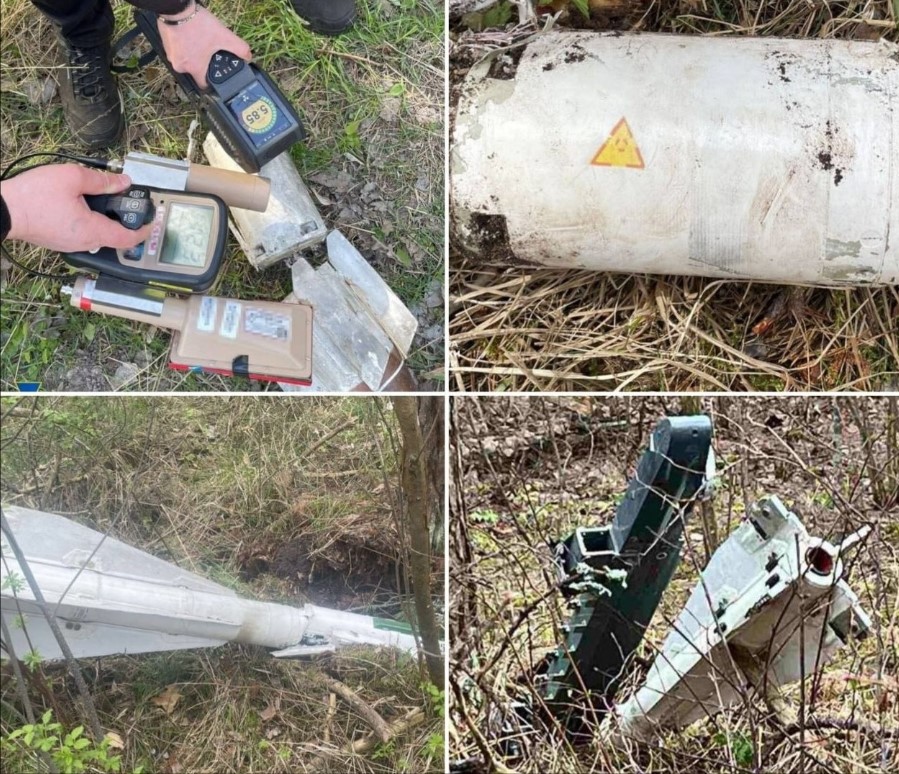
World
CHERNIHIV OBLAST, Ukraine, — May 20, 2026 : Ukraine’s Security Service (SBU) announced that laboratory testing conducted on missile fragments recovered from a modified Russian strike drone in the Chernihiv region detected depleted uranium components within the warhead assembly. According to the SBU, the debris was recovered after a Russian aerial attack carried out during the night of April 6–7, 2026, near the village of Kamka in northern Ukraine’s Chernihiv Oblast. Counterintelligence officers and investigators examining the crash site identified parts of an R-60 air-to-air missile mounted on a modified Geran-2 (Shahed-type) unmanned aerial vehicle. Radiation Detected at Crash Site During radiation reconnaissance operations at the impact area, Ukrainian specialists recorded gamma radiation levels reaching 12 microsieverts per hour (μSv/h). The SBU stated that the detected level significantly exceeded natural background radiation and could present a health risk to individuals exposed to the debris at close range. Subsequent laboratory analysis confirmed that striking elements inside the missile warhead contained depleted uranium materials, specifically identifying the presence of Uranium-235 and Uranium-238 isotopes. The SBU stated that the findings were established through forensic and radiological examinations conducted after the recovery of the wreckage. Modified R-60M Missile Identified Military analysts involved in the investigation identified the recovered weapon as an R-60M, a modernized version of the Soviet-designed R-60 short-range infrared-guided air-to-air missile. According to Ukrainian specialists, older variants of the missile traditionally used tungsten-based internal components, while the recovered R-60M configuration incorporated depleted uranium rods within parts of the warhead assembly. The SBU stated that Russian forces have increasingly adapted air-to-air missiles for use on unmanned strike platforms during large-scale drone attacks. Ukrainian analysts believe the modification is intended to target Ukrainian fighter aircraft and helicopters attempting to intercept incoming drones. Emergency Containment Operation Following the discovery, a joint operation involving the SBU, the State Emergency Service of Ukraine (SESU), and units of the Ukrainian Armed Forces was conducted to secure the area and neutralize potential radiological hazards. Officials stated that the missile warhead was isolated, rendered safe, and transported to a designated radioactive waste storage facility for controlled containment and storage. The Chernihiv Oblast Prosecutor’s Office, working under procedural supervision with the SBU, has opened a pre-trial criminal investigation under Article 438 of the Criminal Code of Ukraine, which concerns alleged violations of the laws and customs of war. Public Safety Advisory Ukrainian authorities issued a public warning urging civilians not to approach or handle debris from drones, missiles, or other military ordnance discovered after attacks. According to the SBU, the primary danger associated with depleted uranium arises when damaged or burned components release microscopic radioactive and chemically toxic particles into the surrounding environment. Residents were instructed to immediately report suspicious debris to emergency services and avoid any direct contact with wreckage until specialist teams complete inspection and decontamination procedures. The findings were publicly disclosed by the SBU on May 20, 2026. No independent international verification of the laboratory analysis had been publicly reported at the time of the announcement.
Read More → Posted on 2026-05-20 15:48:25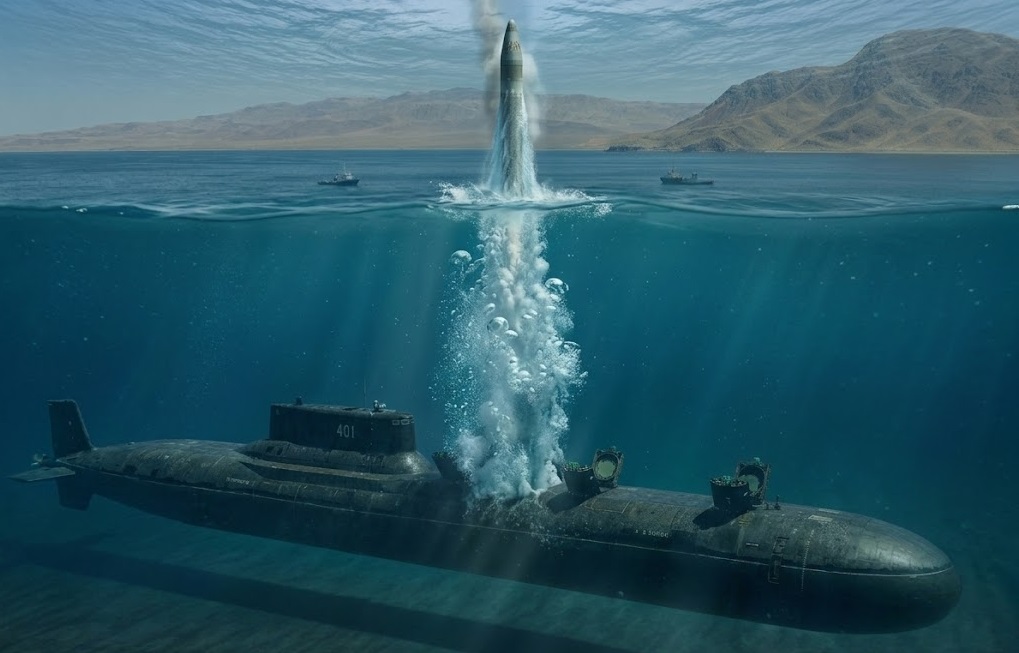
India
VISAKHAPATNAM, — May 20, 2026 : India has reportedly conducted a successful underwater “pop-up” ejection test of its next-generation K-5 submarine-launched ballistic missile (SLBM) in the Bay of Bengal near Visakhapatnam, marking another important step in the development of the country’s long-range sea-based nuclear deterrent. According to defence reports, the trial was carried out from a submerged underwater platform following a firing exercise notification issued for the region. The test has not yet been officially confirmed by the Defence Research and Development Organisation (DRDO) or the Ministry of Defence. The K-5 missile is being developed by the DRDO’s Advanced Systems Laboratory (ASL) in Hyderabad as part of India’s strategic “K-series” submarine-launched ballistic missile programme, named after former President Dr. A.P.J. Abdul Kalam. The missile is expected to become India’s longest-range SLBM once operational. Pop-Up Test and Launch Validation The recent trial involved a “pop-up” or cold-launch ejection procedure, which is considered a critical engineering validation before full powered flight testing begins. During the exercise, an unpowered missile was ejected from a submerged vertical launch tube using a high-pressure gas generator system. After breaching the water surface, the missile’s launch dynamics, hydrodynamic stability, structural integrity, and ejection trajectory were monitored through onboard sensors and tracking systems. The missile’s rocket motors were intentionally not ignited during the test, and the missile subsequently fell back into the sea after the required launch data was recorded. The test primarily focused on validating the performance of the missile canister, gas-ejection mechanism, structural nose cap, and underwater launch systems under high-pressure submerged conditions. Successful validation of these systems is considered essential before progressing to integrated powered flight trials. Defence analysts note that cold-launch technology significantly reduces the thermal and acoustic signature generated during submarine launches, as the missile’s rocket motor ignites only after clearing the water surface. This helps maintain the stealth of the launch platform and reduces the risk of exposing the submarine’s position. K-5 Missile Specifications The K-5 is reported to be a three-stage, solid-fuel submarine-launched ballistic missile with an estimated strike range of approximately 5,000 to 6,000 kilometres. Some assessments suggest the missile could eventually achieve a longer operational range. The missile is estimated to weigh around 20 tonnes and measure approximately 12 metres in length with a diameter between 2.4 and 2.45 metres. Reports indicate that it will be capable of carrying a payload of around two tonnes and achieving speeds exceeding Mach 7 during flight. One of the major advancements associated with the K-5 programme is the planned integration of Multiple Independently Targetable Re-entry Vehicle (MIRV) capability. This would allow a single missile to carry multiple nuclear warheads capable of striking separate targets independently while deploying penetration aids and countermeasures against missile defence systems. Strategic Importance The K-5 is intended to significantly expand the operational reach of India’s sea-based nuclear deterrent. India’s currently operational K-4 SLBM has a reported range of around 3,500 kilometres, requiring submarines to operate closer to strategic regions for certain target coverage. With the K-5’s extended range, Indian ballistic missile submarines would be able to remain within the comparatively secure waters of the Bay of Bengal while maintaining strategic reach. Defence experts consider this important for strengthening survivability and second-strike capability under India’s nuclear doctrine. The MIRV capability also increases strike flexibility by allowing a smaller number of missiles to engage multiple targets. Analysts state that this would improve the effectiveness of India’s sea-based deterrent while reducing dependence on larger launch salvos. Programme Development and Future Trials The latest underwater ejection test follows the successful November 2025 static test of the K-5’s 10-ton-class stage-2 solid rocket motor at DRDO facilities in Hyderabad. With the completion of the pop-up phase, the programme is expected to move toward full flight-development trials from submerged platforms. Future tests are expected to evaluate powered flight performance, guidance systems, navigation accuracy, stage separation, and maximum operational range before eventual induction into service. The K-5 is planned for deployment aboard India’s expanding fleet of nuclear-powered ballistic missile submarines (SSBNs). Initial testing and integration are expected to involve the stretched S4-class submarines, while the missile is primarily intended for the future S5-class SSBNs currently under development. The upcoming S5-class submarines are expected to displace between 13,500 and 17,000 tonnes and be powered by a 190 MW nuclear reactor. The K-5 missile is projected to enter operational service alongside the S5-class fleet during the early 2030s. India’s SLBM programme began with the K-15 Sagarika missile and later advanced to the longer-range K-4 system. The K-5 represents the next stage in the evolution of India’s underwater strategic deterrent and the sea-based component of the country’s nuclear triad. All information regarding the March 2026 pop-up test is based on publicly available defence analysis reports and open-source tracking accounts, as no official confirmation has yet been released by Indian authorities.
Read More → Posted on 2026-05-20 15:44:02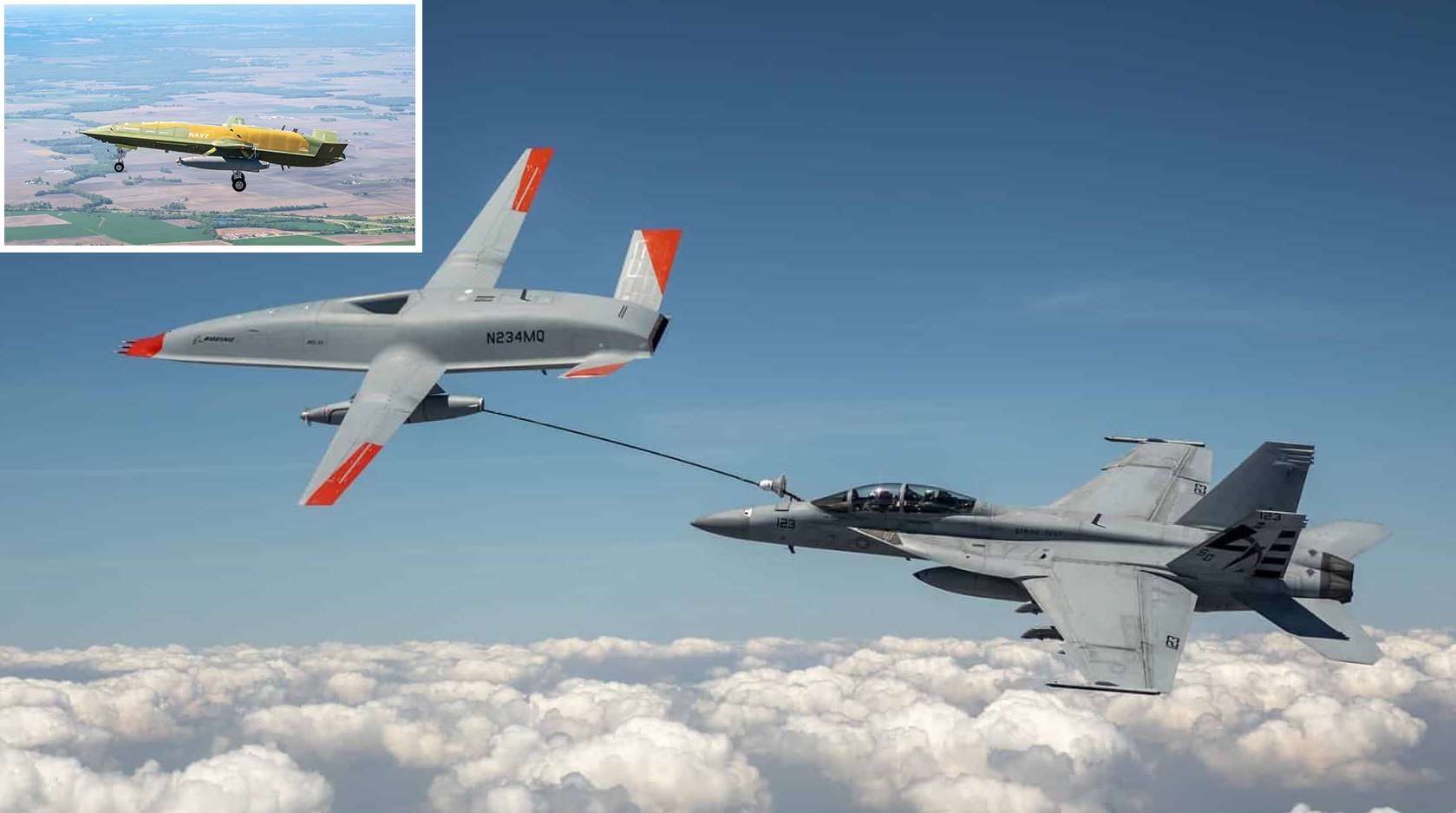
World
WASHINGTON, — May 20, 2026 : The U.S. Navy’s MQ-25A Stingray uncrewed aerial refueling aircraft has officially received Milestone C approval, allowing the program to transition into Low-Rate Initial Production (LRIP) and marking a major advancement toward operational carrier deployment. Acting Secretary of the Navy Hung Cao announced the decision during a Senate Armed Services Committee hearing on May 19, less than a month after the aircraft completed its first production-representative flight. According to the Navy’s Portfolio Acquisition Executive for Aviation, the first LRIP contract covering three MQ-25A aircraft is expected to be awarded this summer. The agreement will also include priced options for three additional aircraft under Lot 2 and five aircraft under Lot 3. “Unmanned refueling extends our reach against any adversary,” Cao said during the hearing. He stated that moving the MQ-25A Stingray into production would strengthen the operational capability and flexibility of U.S. carrier strike groups while increasing the availability of combat aircraft within the carrier air wing. Vice Adm. John E. Dougherty IV, Portfolio Acquisition Executive for Aviation, described Milestone C approval as a critical step for the program, stating that the aircraft would provide persistent aerial refueling capability and expand operational capacity across the air wing. Capt. Daniel Fucito, manager of the Unmanned Carrier Aviation Program Office (PMA-268), stated that the aircraft, production infrastructure, and supporting program elements are prepared to advance fleet capability, readiness, and operational capacity. Boeing, the prime contractor for the program, welcomed the approval. Troy Rutherford, vice president of Boeing’s MQ-25 program, stated that the company remains focused on delivering the aircraft to the fleet and integrating the system into carrier air wing operations. First Production Aircraft Completes Maiden Flight The production-representative MQ-25A completed its maiden flight on April 25, 2026, from MidAmerica St. Louis Airport in Mascoutah, Illinois. The aircraft flew for approximately two hours and successfully demonstrated basic flight controls, engine performance, autonomous taxiing, takeoff, landing, and handling characteristics during a pre-planned mission profile. Both Boeing and Navy Air Vehicle Pilots controlled the aircraft using the Unmanned Carrier Aviation Mission Control System (UMCS) MD-5 ground control station, which integrates Lockheed Martin’s MDCX control system. The sortie was supported by a company-owned TA-4J Skyhawk and a U.S. Navy UC-12M Huron operating as chase aircraft. The production-standard MQ-25A incorporates several modifications compared with the earlier T1 demonstrator, including a redesigned engine air inlet, a straight-wing configuration, and folding wings optimized for carrier deck handling and storage operations aboard aircraft carriers. The aircraft carried a Cobham Aerial Refueling Store (ARS) pod, the same system currently used by the Navy’s F/A-18 fleet. According to a Navy report submitted to Congress in August 2025, the MQ-25A is expected to deliver between 14,000 and 16,000 pounds of fuel at a range of 500 nautical miles while maintaining endurance exceeding 12 hours. The first flight of the production-representative aircraft occurred nearly seven years after the initial flight of the Boeing-owned MQ-25 T1 test asset in September 2019. Production Structure and Procurement Plans The aircraft used during the maiden flight is the first of four Engineering Development Model (EDM) aircraft being produced under an $805 million contract awarded to Boeing in 2018. The complete MQ-25 test fleet will include four Engineering Development Model aircraft, five System Demonstration Test Articles, and two dedicated ground test articles for static and fatigue testing. Assembly work is being conducted at Boeing’s 300,000-square-foot production facility in Mascoutah, Illinois. The U.S. Navy plans to procure a total of 76 MQ-25A aircraft, including EDM and System Demonstration aircraft. Current Navy estimates place the total program cost for 72 production aircraft at approximately $13 billion. Expanding Carrier Strike Group Reach The MQ-25A Stingray is designed primarily to provide carrier-based aerial refueling support for U.S. Navy aircraft operating from carrier strike groups. The aircraft will assume the aerial refueling mission currently performed by F/A-18E/F Super Hornets assigned to carrier air wings. By shifting this role to the MQ-25A, the Navy intends to free Super Hornets for combat and strike missions while reducing structural fatigue on the fighter fleet and improving aircraft availability. The Stingray will also become the first operational carrier-based uncrewed aircraft in U.S. Navy service, establishing a foundation for future manned-unmanned teaming operations aboard aircraft carriers. In addition to aerial refueling, the MQ-25A will support recovery tanking missions and provide intelligence, surveillance, and reconnaissance (ISR) capabilities for carrier strike groups. The Navy previously demonstrated the platform’s aerial refueling capability in 2021, when the Boeing-owned MQ-25 T1 test asset successfully transferred fuel to a U.S. Navy F/A-18F Super Hornet during the first air-to-air refueling mission conducted between an uncrewed tanker and a manned receiver aircraft. Fleet Integration and Carrier Qualification The Fleet Replacement Squadron for the MQ-25A, Unmanned Carrier-Launched Multi-Role Squadron Ten (VUQ-10), was established at Naval Air Station Patuxent River in October 2022. The Navy also plans to establish two operational squadrons, VUQ-11 and VUQ-12. Following completion of the initial flight-test series, the first production-representative aircraft is scheduled to relocate later this year to Naval Air Station Patuxent River to begin carrier qualification testing. Carrier qualification operations are expected to take place aboard the USS Theodore Roosevelt (CVN-71) as the Navy prepares the MQ-25A for operational integration into future carrier strike group deployments.
Read More → Posted on 2026-05-20 15:02:00
World
WASHINGTON / WARSAW — May 20, 2026 : The United States has announced a significant restructuring of its military presence in Europe, including the cancellation of a planned deployment of approximately 4,000 troops to Poland and the continued reduction of American forces across the continent under the Trump administration’s revised defense strategy. The Pentagon confirmed that the U.S. Army’s 2nd Armored Brigade Combat Team, 1st Cavalry Division — known as the “Black Jack” brigade — will no longer proceed with its scheduled nine-month rotational deployment to Poland. The brigade, based at Fort Cavazos, Texas, had been preparing to deploy with heavy armored vehicles, tanks, and support equipment. According to U.S. officials, the decision was implemented after some personnel and military equipment had already begun arriving in Poland, requiring planners to coordinate their return to the United States. Force Reduction Across Europe The canceled deployment forms part of a broader reduction in the U.S. military footprint in Europe. The Department of Defense is reducing its force posture from four brigade combat teams to three, while also moving forward with the previously announced withdrawal of roughly 5,000 U.S. troops from Germany. Combined, the two measures remove nearly 9,000 planned or active personnel from the European theater, marking one of the most notable adjustments to U.S. troop levels in Europe in recent years. During testimony before lawmakers, NATO Supreme Allied Commander Europe and Commander of U.S. European Command, Gen. Alexus Grynkewich, stated that the reductions include the return of the armored brigade combat team from Poland, the cancellation of a planned long-range fires battalion deployment, and several smaller force adjustments. Gen. Grynkewich said the changes are part of a longer-term force posture review and would be implemented gradually over several years in coordination with NATO allies rather than through a rapid withdrawal process. Strategic Shift Under “America First” Policy The drawdown aligns with the administration’s National Defense Strategy, which calls for the United States to provide “critical but more limited” support for European defense while encouraging NATO allies to assume a greater share of conventional deterrence responsibilities. Gen. Grynkewich noted that European NATO members have significantly expanded their ground combat capabilities since 2022, allowing Washington to reduce portions of its conventional presence while continuing to provide specialized military capabilities that allies cannot yet fully replicate. He also stated that the current troop reductions do not affect NATO’s regional defense plans or operational readiness on the alliance’s eastern flank. Vice President JD Vance has repeatedly argued that European nations should take greater responsibility for their own defense, saying that U.S. military resources must increasingly focus on other strategic priorities. Administration officials have also linked the force posture review to growing frustration over what they describe as insufficient support from some European allies for broader U.S. strategic operations outside Europe, particularly regarding tensions involving Iran. Poland Reassured Over Continued U.S. Presence Despite the reductions, U.S. officials have sought to reassure Poland that Washington remains committed to regional security cooperation. Defense Secretary Pete Hegseth held discussions with Polish Deputy Prime Minister and Defense Minister Władysław Kosiniak-Kamysz, describing Poland as a “model U.S. ally” and emphasizing that approximately 10,000 rotational and permanent American troops are expected to remain stationed in the country. Polish President Karol Nawrocki and other Eastern European leaders have continued to advocate for a sustained U.S. military presence in the region. Polish officials previously indicated willingness to host additional American forces relocated from Germany in an effort to strengthen deterrence along NATO’s eastern border near Russia. Congressional Concerns and NATO Debate The abrupt cancellation of the Poland deployment has also generated concern in Washington. During recent congressional hearings, Representative Don Bacon criticized the decision, warning that the sudden halt could create uncertainty among Eastern European and Baltic allies. The force reductions are expected to face further legislative scrutiny under provisions included in the proposed 2026 National Defense Authorization Act (NDAA), which would restrict reductions of U.S. troop levels in Europe below 76,000 personnel unless the Pentagon certifies that such moves would not compromise U.S. or NATO security commitments. The United States currently maintains approximately 80,000 troops across Europe. U.S. officials have described the latest reductions as limited in scope for the near term and part of a broader long-term review of American global military deployments.
Read More → Posted on 2026-05-20 14:53:06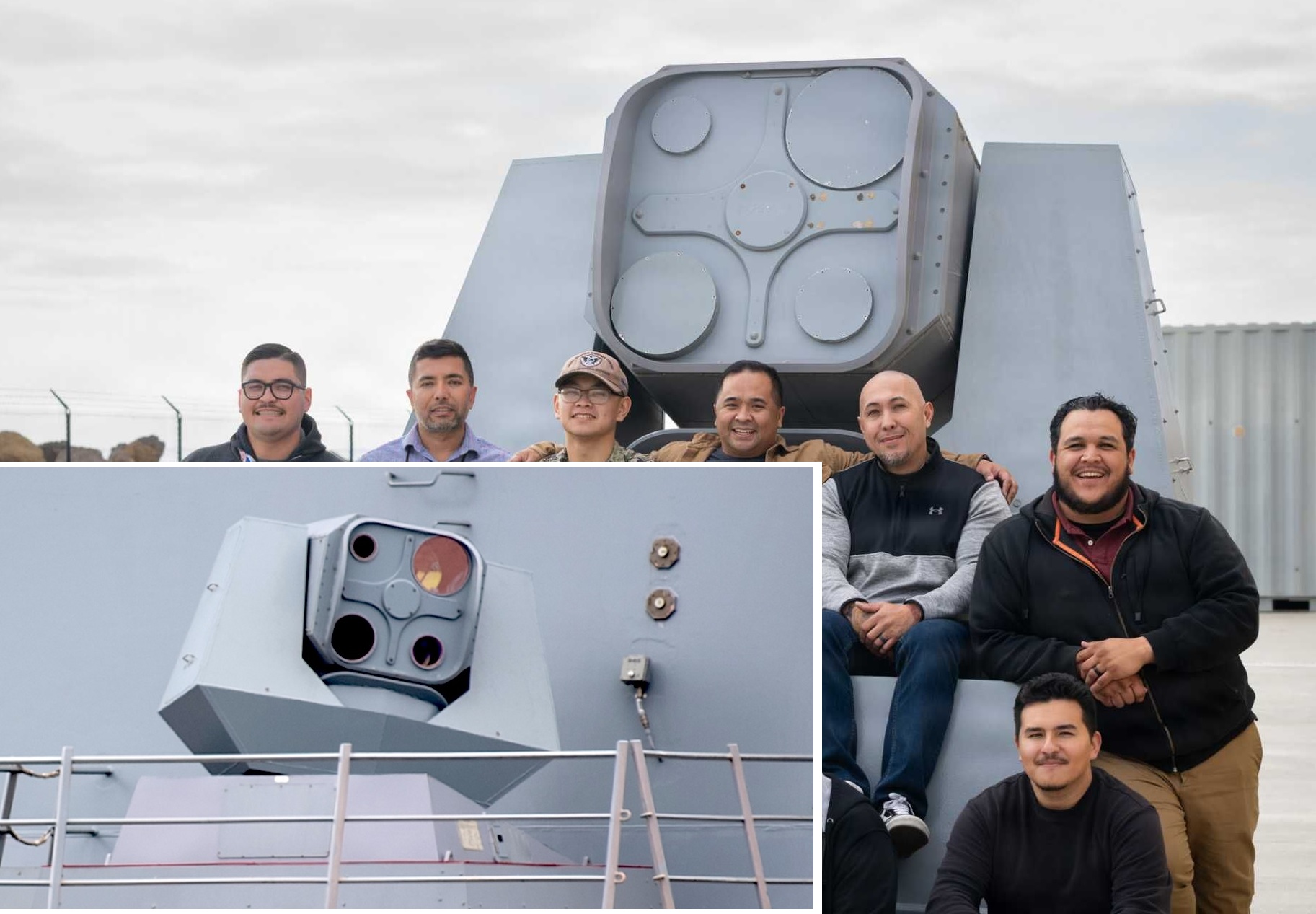
World
POINT MUGU, Calif. — May 20, 2026 : The U.S. Navy has completed the inaugural operational training cycle for the Optical Dazzling Interdictor, Navy (ODIN) laser weapon system at the Directed Energy Systems Integration Laboratory (DESIL) at Naval Base Ventura County Point Mugu, marking the Navy’s first formalized operator certification and sustainment framework for shipboard directed-energy weapons. Announced on May 12, 2026, the milestone represents a transition of the ODIN program from rapid prototyping into sustained operational fleet integration. The training initiative is managed by the Naval Surface Warfare Center Port Hueneme Division (NSWC PHD), which has been designated as the Navy’s official ODIN training authority. The newly established curriculum supports the Laser Weapon System Operator Navy Enlisted Classification (NEC), introduced on February 4, 2026, for sailors within the fire controlman rating responsible for advanced combat and fire-control systems aboard surface warships. The NEC supports ODIN systems currently deployed aboard seven Arleigh Burke-class guided-missile destroyers, while an additional unit remains assigned to Point Mugu for training and testing activities. Directed-Energy Training Framework Established The first operational training course concluded in late March 2026 at DESIL. To qualify for the NEC certification, sailors must complete two separate five-day training courses covering both operational and technical sustainment requirements. The Laser Weapon System Console Operation course focuses on target acquisition, tracking, lock maintenance, sensor management, firing procedures, and alert handling. The second course covers preventive maintenance, corrective diagnostics, subsystem replacement, Maintenance Requirement Cards, optical alignment, thermal management, laser safety procedures, cooling systems, and shipboard power-distribution requirements. According to the Navy, existing ordnance training pipelines were insufficient for the specialized technical demands associated with directed-energy weapons. The NEC was therefore developed jointly by NSWC PHD, the Navy Manpower Analysis Center (NAVMAC), the Office of the Chief of Naval Operations (OPNAV), and Program Executive Office Integrated Warfare Systems. ODIN Designed for Counter-Drone and ISR Denial Missions ODIN is a low-power infrared laser dazzler developed primarily for counter-unmanned aerial systems (C-UAS) and counter-intelligence, surveillance, and reconnaissance (C-ISR) missions. Rather than physically destroying targets, the system functions as a “soft-kill” capability designed to disrupt or degrade enemy optical and infrared sensors. The laser directs concentrated optical energy onto electro-optical imaging systems carried by unmanned aircraft, saturating infrared cameras and imaging arrays. The process causes image blooming, contrast degradation, and sensor disruption, interfering with navigation, surveillance, targeting, and reconnaissance functions. Depending on atmospheric conditions, target range, and dwell time, the laser may temporarily disable or permanently damage optical systems. By blinding electro-optical payloads, ODIN can render hostile drones mission-ineffective without physically destroying the aircraft. The system also incorporates high-resolution optical sensors and telescopic surveillance systems capable of identifying and tracking aerial contacts beyond unaided visual range during force-protection operations. Layered Ship Defense and Operational Limitations The Navy developed ODIN in response to increasing concerns regarding low-cost reconnaissance drones supporting maritime ISR and anti-ship targeting operations. Directed-energy systems are also intended to address the growing cost imbalance between inexpensive drones and high-cost missile interceptors traditionally used for ship defense. Unlike kinetic interceptors, ODIN relies primarily on shipboard electrical power and cooling systems, allowing engagements at the speed of light without requiring physical ammunition reloads. This provides what Navy officials describe as effectively unlimited magazine depth as long as sufficient electrical power and cooling capacity remain available. However, Navy officials continue to emphasize that directed-energy systems remain affected by environmental and operational limitations. Humidity, salt spray, fog, smoke, atmospheric attenuation, beam scattering, and thermal blooming can reduce beam coherence and engagement range. Effectiveness may also decline against hardened optical systems equipped with reflective coatings, filters, or autonomous navigation redundancy. As a result, ODIN is integrated within the Navy’s layered ship self-defense architecture alongside electronic warfare systems, Phalanx Close-In Weapon Systems (CIWS), and surface-to-air missile defenses rather than replacing kinetic interceptors entirely. Rapid Development and Fleet Integration Development of ODIN began in 2018 under the Naval Surface Warfare Center Dahlgren Division through Program Executive Office Integrated Warfare Systems following an urgent operational requirement issued by Pacific Fleet commanders. The system progressed from concept approval to initial operational deployment in approximately 30 months, significantly accelerating traditional procurement timelines. The first operational installation occurred aboard USS Dewey (DDG-105) during a 2019–2020 maintenance availability period. By 2026, operational ODIN systems had been installed aboard seven Arleigh Burke-class destroyers, including USS Dewey and USS Stockdale. Although the program currently remains outside the Navy’s formal acquisition baseline and does not yet possess stable program-of-record funding, the expansion of training, sustainment infrastructure, and fleet certification indicates movement toward long-term operational integration. DESIL Expands Directed-Energy Operations DESIL, established in May 2020, serves as the Navy’s primary facility for maritime directed-energy integration, operational testing, experimentation, and fleet evaluation. The 18,500-square-foot, three-story facility provides direct access to the Point Mugu Sea Range, which encompasses approximately 36,000 square miles of controlled sea and airspace. The site includes a permanently installed ODIN unit, sustainment workshops, operator consoles, rooftop laser emission positions, and integrated targeting capability for maritime, airborne, and land-based targets. Unlike conventional Surface Combat Systems Training Command facilities, DESIL combines operational hardware, engineers, maintainers, and live-range access within a single location. This enables sailors to train directly on operational systems rather than relying solely on simulator-based environments. Navy officials noted that live operational training is essential because small unmanned aerial systems operating at extended ranges frequently appear only as single-pixel signatures on operator displays, requiring realistic tracking and engagement practice under operational conditions. The ODIN unit currently installed at DESIL was transferred from USS Kidd (DDG-100) during a two-year maintenance availability in Everett, Washington. Additional destroyers entering extended maintenance periods are expected to rotate ODIN systems through Point Mugu to support future experimentation, sustainment development, operator training, and fleet integration efforts. HELIOS Integration and Future Expansion NSWC PHD plans to gradually transition the curriculum from civilian-led instruction to a “military training military” structure in which previously qualified sailors return as fleet instructors. The inaugural training cycle also included personnel from the Board of Inspection and Survey to prepare for future readiness inspections involving directed-energy-equipped warships. Regional Maintenance Centers are expected to receive additional sustainment training in order to decentralize technical support and reduce reliance on deployable specialist teams. The DESIL instructional framework is also being adapted for sailors assigned to the High Energy Laser with Integrated Optical-dazzler and Surveillance (HELIOS) system installed aboard USS Preble (DDG-88). Unlike ODIN’s low-power soft-kill architecture, HELIOS operates at approximately 60 kilowatts and is integrated directly into the Aegis Combat System, providing ISR capability, sensor dazzling functions, and limited hard-kill engagement capability. ODIN remains a standalone bolt-on capability focused primarily on ISR denial and counter-UAS operations, though both systems share portions of the Laser Weapon System Console interface and several sustainment procedures. In addition to HELIOS integration, DESIL continues supporting the Navy’s broader directed-energy modernization efforts, including the Solid State Laser Technology Maturation program and ongoing experimentation involving the former USS Portland Laser Weapon System Demonstrator hardware.
Read More → Posted on 2026-05-20 14:47:15
World
BALTIMORE, — May 20, 2026 : Northrop Grumman has delivered its 1,000th AN/APG-83 Scalable Agile Beam Radar (SABR) system, marking a significant production milestone in the modernization of fourth-generation fighter aircraft operated by the United States and allied nations. The milestone was announced on May 19 at the company’s radar manufacturing facility in Baltimore, Maryland, where SABR systems are assembled for both domestic and international operators. The AN/APG-83 is an Active Electronically Scanned Array (AESA) fire control radar designed primarily for the F-16 Fighting Falcon, replacing older mechanically scanned radar systems that have remained in service for decades. AESA Radar Technology Unlike conventional mechanically scanned radars that rely on physically rotating antenna assemblies, the APG-83 uses hundreds of electronically controlled transmit-receive modules to direct the radar beam almost instantly without moving parts. This architecture enables faster target acquisition, simultaneous tracking of multiple targets, improved reliability, and enhanced resistance to electronic jamming and spoofing. The radar also provides high-resolution synthetic aperture radar (SAR) ground mapping, moving target indication capability, and improved detection performance in contested electromagnetic environments. Publicly available information associated with the program indicates detection ranges of up to approximately 370 kilometers, depending on operational conditions and target profiles. Fifth-Generation Technology Integration Northrop Grumman developed the APG-83 using technology derived from the AN/APG-77 radar used on the F-22 Raptor and the AN/APG-81 radar integrated into the F-35 Lightning II. The company adapted those technologies into a configuration compatible with existing F-16 airframes while remaining within the aircraft’s original size, power, and cooling limitations. This allows operators to install the radar without requiring major structural modifications to the aircraft. F-16 Modernization Program The APG-83 serves as the standard radar for the U.S. Air Force F-16V modernization program and is installed as baseline equipment on all newly built F-16 Block 70 and Block 72 aircraft produced by Lockheed Martin. The U.S. Air Force is currently upgrading 608 F-16C/D Block 40/42 and 50/52 aircraft with the system as part of a broader fleet sustainment effort intended to keep the aircraft operational through the mid-2040s. Separate modernization work is also underway for Air National Guard F-16 units. More than 3,000 F-16 aircraft remain operational across approximately 25 countries, making the fighter one of the most widely used combat aircraft in the world. Many operators are pursuing modernization programs to maintain operational effectiveness against advanced air defense and electronic warfare threats. Operational Feedback Operational users have reported substantial improvements following the installation of the APG-83. In 2022, Lt. Col. Shaun Loomis of the 480th Fighter Squadron described the transition to SABR-equipped aircraft as a “night and day” improvement after nearly two decades with largely unchanged radar hardware. During Exercise Ramstein Flag in April 2025, a Greek F-16V pilot stated that the radar significantly improved long-range target tracking and overall situational awareness during multinational air operations. International Operators Taiwan became the first international customer for the APG-83 after receiving its first export systems in late 2016. Additional operators selecting F-16 variants equipped with the radar include Greece, Bulgaria, Slovakia, Bahrain, Jordan, and Singapore. Singapore previously signed a $2.43 billion modernization agreement for its F-16 Block 52 fleet, including the installation of 70 APG-83 radar systems. Northrop Grumman stated that the radar is currently deployed in nine countries. Integration With Electronic Warfare Systems The APG-83 integrates with Northrop Grumman’s Integrated Viper Electronic Warfare Suite (IVEWS), allowing simultaneous operation of radar and electronic warfare functions without mutual signal interference. According to the company, the radar’s software-defined architecture also enables future capability upgrades through software updates rather than extensive hardware modifications, reducing maintenance requirements and minimizing aircraft downtime. The system is powered by domestically produced American microelectronics intended to strengthen supply chain reliability and long-term sustainment. Expansion to Other Aircraft Platforms Although primarily associated with the F-16 program, Northrop Grumman has also explored integration of the SABR architecture on additional military aircraft platforms. The company previously conducted fit checks for U.S. Marine Corps F/A-18C/D Hornet aircraft and developed the SABR-GS variant for modernization of the Rockwell B-1 Lancer bomber fleet. Northrop Grumman stated that the 1,000-unit production milestone reflects continued global demand for AESA radar modernization programs as air forces seek to extend the operational relevance of legacy fighter fleets while incorporating capabilities associated with fifth-generation combat aircraft.
Read More → Posted on 2026-05-20 14:39:51
World
STOCKHOLM, — May 20, 2026 : Swedish defense and security company Saab has received a SEK 460 million (approximately $48.9 million) order from Lithuania for the procurement of Carl-Gustaf M4 weapon systems and associated training equipment, with deliveries scheduled between 2026 and 2029. The order forms part of a newly signed ten-year framework agreement between Saab and the Lithuanian Ministry of National Defence. In addition to the initial order value, the contract includes optional procurements that could increase the total value of the agreement to SEK 640 million over its duration. According to Saab, the procurement package includes Carl-Gustaf M4 recoilless rifle systems, sub-calibre adapters for training ammunition, and Carl-Gustaf Outdoor Trainers designed to improve operational readiness and collective training capabilities for Lithuanian forces. The agreement also includes cooperation with Lithuania’s domestic defense industry in accordance with national regulations, supporting local logistics, maintenance, and defense technology capabilities. “We are proud to continue providing the Lithuanian forces with the highly effective capabilities of the Carl-Gustaf weapon together with our training equipment, enabling the soldiers to prepare for and carry out their missions safely and with confidence,” said Görgen Johansson, head of Saab’s Dynamics business area. The Carl-Gustaf is an 84 mm man-portable, multi-role recoilless rifle system used by more than 40 countries worldwide. Designed primarily for dismounted infantry units, the weapon system is capable of engaging armored vehicles, structures, and enemy personnel across different battlefield environments. The M4 variant represents the latest evolution of the Carl-Gustaf family and incorporates several design improvements over earlier versions. Built using titanium and carbon fiber components, the system weighs approximately 6.6–7 kilograms and measures less than one meter in length, making it lighter and more compact than the previous M3 variant. The weapon supports a wide range of 84 mm ammunition types, including High-Explosive Dual-Purpose (HEDP) rounds for anti-armor and urban warfare operations, as well as high-explosive, smoke, illumination, and anti-structure munitions. The system also supports multiple sighting configurations, including open sights, red-dot sights, telescopic optics, and advanced fire-control devices. Saab stated that the associated training systems, including Outdoor Trainers and sub-calibre adapters, are intended to support advanced and collective skills training across a range of operational scenarios while improving training efficiency and safety. The latest order builds on Lithuania’s participation in a multinational Carl-Gustaf M4 framework agreement joined in 2022 alongside Sweden, Estonia, and Latvia. Lithuania also placed a previous order for Carl-Gustaf M4 systems and spare equipment in early 2025 as part of its broader military modernization efforts. The procurement comes as Lithuania continues increasing defense spending and strengthening military readiness along NATO’s eastern flank. The Baltic country has invested heavily in infantry weapons, armored vehicles, air defense systems, and military infrastructure in recent years, allocating approximately 4% of its GDP to defense amid regional security concerns. Regional cooperation through shared framework agreements among Baltic nations is also expected to improve interoperability, simplify logistics and ammunition support, and reduce procurement costs for NATO-aligned forces operating in Northern and Eastern Europe. Saab has not disclosed the number of weapon systems or training units included in the current order. Deliveries are expected to begin later this year and continue through 2029.
Read More → Posted on 2026-05-20 14:29:24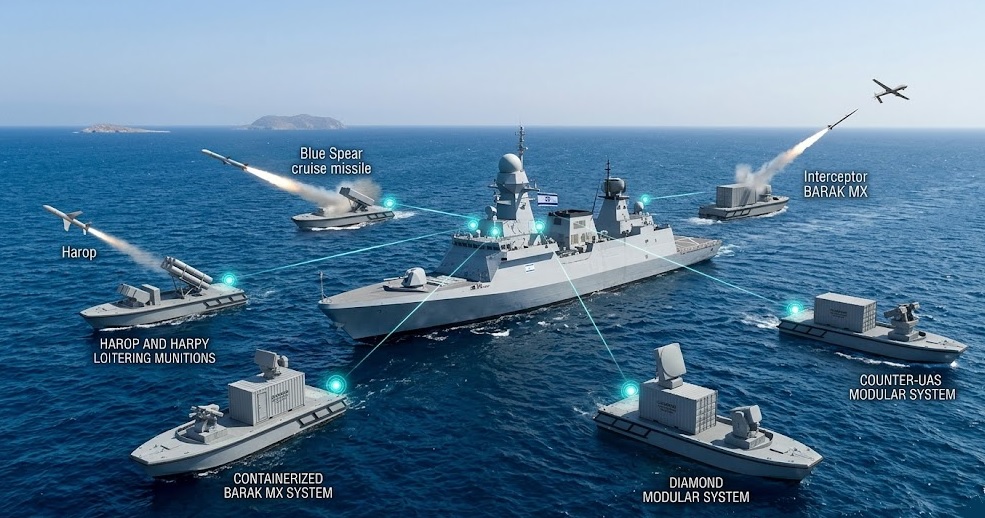
World
TEL AVIV, — May 20, 2026 : Israel Aerospace Industries (IAI) has unveiled DIAMOND, a hybrid and modular naval warfare solution designed to expand the operational capabilities of modern frigates through the use of remotely operated wing ships operating alongside a mothership frigate. The system is intended to support distributed maritime operations by decentralising offensive and defensive capabilities across multiple platforms. According to IAI, modular combat systems installed on smaller wing ships can be remotely controlled directly from the mothership while remaining fully integrated with the frigate’s radar, battle management and fire-control systems. IAI said the concept effectively expands the operational deck space and combat footprint of existing frigates without requiring the construction of additional major surface combatants. The company stated that the system is designed to provide greater operational flexibility, increased firepower and faster responses to evolving maritime threats. Modular Mission Configuration According to the company, the wing ships can be rapidly configured depending on operational requirements. The modular payloads use a standard container-based footprint, allowing systems to be deployed, replaced or reconfigured within hours. The DIAMOND architecture supports plug-and-play integration of multiple combat systems and mission packages. These include Harop, Harpy and Mini-Harpy loitering munitions, Blue Spear cruise missiles, LORA ballistic missiles and the BARAK MX air defence interceptor family. The system can also integrate counter-unmanned aerial system capabilities and additional mission-specific payloads. IAI stated that the wing ships are intended to increase the number of available interceptors and precision strike systems while extending the frigate’s effective operational range and combat endurance. The vessels are designed to support simultaneous offensive and defensive operations against both maritime and land-based targets. Distributed Maritime Operations The company described DIAMOND as part of a broader shift in naval warfare from platform-centric operations toward distributed and networked combat structures. By dispersing weapons and mission systems across multiple remotely operated platforms, the concept is intended to improve survivability, operational flexibility and force persistence in contested maritime environments. Boaz Levy, chairman of the board of Israel Aerospace Industries, said the system represents a new stage in maritime defence operations based on modular architecture and distributed combat capabilities. “IAI, as a system house for innovation is proud to lead the next generation in maritime defense with the introduction of the DIAMOND solution,” Levy said. He added that the system is designed to enable navies to transition rapidly between defensive and offensive missions while adapting continuously to changing operational requirements. Guy Barlev, executive vice-president and general manager of IAI’s Systems, Missiles and Space Group, said modern naval warfare increasingly requires adaptive and networked force structures rather than reliance on individual platforms. Barlev stated that DIAMOND was developed to expand combat capacity, survivability and mission endurance without relying on costly fleet expansion programmes. He said the concept is intended to transform how naval forces project power and defend strategic assets in contested operational environments. Off-the-Shelf Naval Solution According to IAI, DIAMOND is being offered as an integrated off-the-shelf solution designed to avoid lengthy warship construction programmes and complex integration processes. The company stated that the system can rapidly switch between mission configurations while supporting continuous modernisation as operational requirements and threats evolve. IAI added that the solution is intended to reduce operational timelines and costs while enabling navies to increase combat capacity using existing frigate fleets. No additional technical specifications, deployment schedules or detailed performance parameters for the wing ships have been publicly disclosed at this stage.
Read More → Posted on 2026-05-20 14:20:11
World
LONDON, — May 19, 2026 : The United Kingdom is preparing a major funding increase estimated at approximately £6 billion for the Global Combat Air Programme (GCAP), the trilateral sixth-generation stealth fighter initiative being jointly developed with Japan and Italy. The proposed investment is intended to support long-term development work and enable the signing of a full international contract with the programme’s industrial partners. The funding package is expected to form part of a wider UK defence spending settlement, although the proposal still requires final approval from the Treasury. British officials are aiming to finalize the agreement before the expiration of a temporary bridge funding arrangement scheduled to end in June 2026. Programme Designed to Replace Existing Fighter Fleets GCAP was established to develop a next-generation combat aircraft intended to replace the Eurofighter Typhoon currently operated by the United Kingdom and Italy, as well as the Mitsubishi F-2 used by the Japan Air Self-Defense Force. Programme partners continue to target an operational service entry date of 2035, a timeline viewed as important due to the planned retirement schedules of current fighter fleets. The future aircraft is expected to incorporate advanced stealth characteristics, sensor fusion systems, networked warfare capabilities, and integration with unmanned platforms. Officials involved in the programme have stated that the aircraft is being designed for operations in highly contested environments while supporting cooperation with autonomous systems and future collaborative combat drones. Interim Funding Agreement Nears Expiration The push for a long-term financial agreement follows increasing concern among both industry executives and partner governments regarding programme delays and funding uncertainty. In April 2026, GCAP partners approved a temporary contract worth approximately £686 million to maintain ongoing development and engineering work for a limited three-month period. The interim arrangement was introduced while the UK government finalized broader defence budget decisions. Industry officials have warned that failure to secure a long-term contract could disrupt workforce planning and industrial development activities. Executives from BAE Systems indicated that companies participating in GCAP may be forced to reduce costs and redeploy personnel if stable funding is not confirmed. Approximately 4,000 UK-based employees across BAE Systems, Rolls-Royce, and Leonardo are currently assigned to the programme, supporting work in areas including aircraft design, propulsion development, avionics, mission systems, digital engineering, and advanced manufacturing technologies. Japan Presses UK for Long-Term Commitment Japan has recently intensified diplomatic efforts urging Britain to formalize its financial commitment to the programme without additional delays. During a recent visit to Tokyo by UK Foreign Secretary Yvette Cooper, Japanese Defence Minister Shinjirō Koizumi reportedly emphasized that the United Kingdom needed to proceed with the signing of the full international development contract. Japanese officials have expressed concern that uncertainty surrounding UK defence spending decisions could affect wider strategic cooperation between London and Tokyo. According to officials familiar with the discussions, progress on GCAP has become closely linked to broader UK-Japan security relations and long-term Indo-Pacific defence cooperation. Officials also noted that continued delays could complicate preparations for a planned visit to Britain by Japanese Prime Minister Sanae Takaichi. Italy Advances Long-Term Funding Plan Italy has already approved a substantial long-term financial contribution for the programme’s early development stages. Italy’s parliamentary defence committee authorized approximately €8.77 billion in funding through 2037 as part of the country’s commitment to GCAP development activities. Italian parliamentary documents also showed that projected early-phase programme costs have increased significantly. Updated estimates place initial development expenses at approximately €18.6 billion, compared with earlier projections of around €6 billion. The increase reflects expanding requirements associated with technology maturation, testing infrastructure, prototype development, and system integration work. Industrial Structure and Development Activities The industrial framework supporting GCAP is based on a trilateral treaty signed by the United Kingdom, Japan, and Italy in December 2023. The programme’s primary industrial entity, Edgewing, was established as a joint venture headquartered in Reading, England. The partnership is equally owned by BAE Systems of the United Kingdom, Leonardo of Italy, and Japan Aircraft Industrial Enhancement Co., which is backed by Mitsubishi Heavy Industries. Edgewing is responsible for overseeing the aircraft’s design, development, and future delivery activities across all three partner nations. In addition to the main fighter programme, participating companies are currently developing a demonstrator aircraft intended to validate emerging technologies and operational concepts. The prototype is expected to conduct its first flight before the end of 2027, marking Britain’s first combat-air demonstrator flight since the Eurofighter development era. Next Phase of the Programme The UK Ministry of Defence has reiterated that Britain remains committed to GCAP and continues to work closely with Japan and Italy on finalizing the next stage of the programme. Once approved, the proposed £6 billion funding package is expected to provide the financial basis required for transitioning GCAP from its current interim development phase into a full long-term programme structure. The agreement would allow partner governments and industrial teams to expand engineering work, testing activities, technology integration, and production planning over the coming decade.
Read More → Posted on 2026-05-19 17:59:47
World
TEHRAN, — May 19, 2026 : Iran’s main crude oil export facility at Kharg Island has recorded no major tanker loading activity for at least ten days, according to recent satellite imagery and maritime tracking data, highlighting the growing operational impact of the ongoing U.S. naval blockade on Iranian oil exports. Satellite images reviewed in mid-May showed that no large ocean-going crude tankers had been positioned at Kharg Island’s export berths since May 8. The island, located in the northern Persian Gulf, is Iran’s primary crude export hub and historically handles the majority of the country’s seaborne oil shipments through its network of loading jetties designed for very large crude carriers (VLCCs) and other large tankers. The extended absence of loading operations marks one of the longest interruptions recorded at the facility since the current regional tensions escalated. Maritime monitoring data also showed a buildup of more than 20 empty or waiting vessels anchored near Kharg Island, indicating increasing congestion and delays linked to restrictions on tanker movements in the region. The disruption follows the U.S. decision on April 13 to impose a naval blockade targeting Iranian ports and oil export routes after escalating regional conflicts and Iran’s efforts to strengthen control over the Strait of Hormuz. U.S. naval assets and Central Command forces have since increased patrols and interdiction operations around the strategic waterway, affecting commercial vessel traffic associated with Iranian crude exports. With operations at Kharg Island heavily constrained, Iran has shifted part of its export activity to the Jask oil terminal on the Gulf of Oman. The terminal, located east of the Strait of Hormuz, was developed as an alternative export route that allows crude shipments to bypass the narrow strait and reduce dependence on the Persian Gulf export corridor. Recent satellite imagery identified the sanctioned Aframax tanker Vernon loading crude at the Jask terminal. The vessel was observed moored at one of the terminal’s single buoy mooring systems connected to onshore storage infrastructure and pipeline networks. The use of Jask reflects Iran’s attempt to maintain limited export capability despite increasing restrictions around Kharg Island and the Strait of Hormuz. Commercial shipping intelligence firms reported that tanker routing patterns linked to Iranian crude exports have changed significantly in recent weeks, with some vessels remaining anchored offshore for extended periods as floating storage. While a limited number of empty tankers have continued operating in the region, the sustained absence of regular crude loadings at Kharg Island suggests mounting pressure on Iran’s export logistics and storage infrastructure. U.S. Treasury Secretary Scott Bessent recently stated that Washington believes Iran’s oil storage capacity is approaching its limits, arguing that restrictions on tanker access have reduced Iran’s ability to move or store crude exports at sea. Analysts monitoring the situation noted that prolonged disruption at Kharg Island could eventually affect Iran’s crude production levels if export bottlenecks continue. Kharg Island remains connected to Iran’s broader oil production system through extensive pipeline and storage networks, making it central to the country’s energy export operations. Any sustained interruption at the facility has the potential to reduce overall export volumes and force greater reliance on secondary terminals such as Jask. No official statement from Iranian authorities regarding the current status of loading operations at Kharg Island had been issued in the latest publicly available reports. Commercial satellite providers and maritime tracking firms continue monitoring tanker positions, anchorage activity, and export movements across the Persian Gulf and Gulf of Oman as additional imagery becomes available.
Read More → Posted on 2026-05-19 17:43:19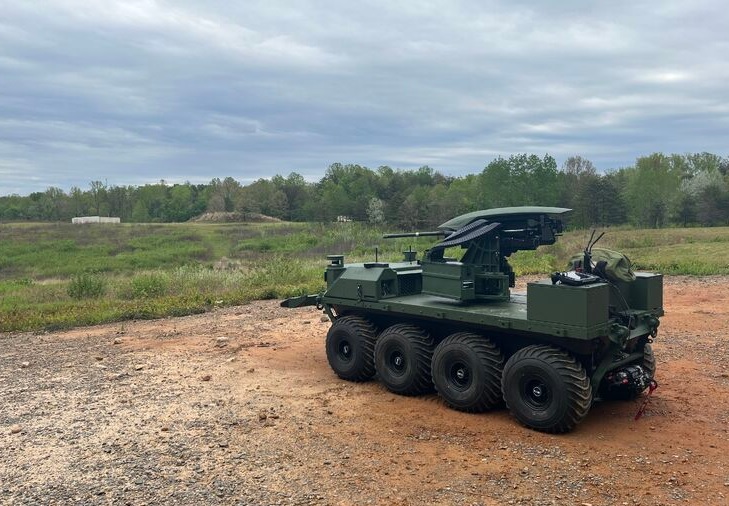
World
QUANTICO, Virginia — May 19, 2026 : American Rheinmetall has completed a week-long operator training program for the United States Marine Corps Warfighting Laboratory (MCWL) centered on the Fieldranger Remotely Controlled Weapon Station (RCWS), concluding with day and night live-fire exercises at Marine Corps Base Quantico. The training involved Marines from Fleet Marine Force combat units and personnel from the Supporting Establishment. The program combined classroom instruction with practical exercises focused on system operation, tactical employment, target acquisition, and sensor management under operational conditions. The Commanding General of the Marine Corps Warfighting Laboratory observed the final live-fire phase of the course, where Marines conducted simulated mission scenarios using the Fieldranger system. During the event, senior leadership and operators discussed potential battlefield applications and future operational concepts for remotely operated weapon systems within Marine Corps formations. Marine Corps Base Quantico, located south of Washington, D.C., covers more than 50,000 acres and operates over 40 live-fire ranges. The installation serves as a major testing and evaluation site for emerging military technologies and advanced combat systems. Fieldranger RCWS Designed for Protected Operations The Rheinmetall-developed Fieldranger is a family of remotely operated weapon stations designed for integration on multiple vehicle platforms, ranging from light tactical vehicles to heavily armored combat systems. The weapon station allows crews to conduct surveillance, identify targets, aim weapons, and engage threats while remaining inside the protected interior of the vehicle. All Fieldranger variants incorporate a stabilized electro-optical sensor package consisting of a high-resolution day camera, thermal imager, and laser rangefinder. The integrated system enables accurate target detection and engagement during day and night operations, including in poor weather and low-visibility environments. The Fieldranger family includes four primary variants configured for different operational roles: Fieldranger Light weighs less than 75 kilograms and supports 5.56mm or 7.62mm machine guns. Fieldranger Multi weighs approximately 200 kilograms and can mount either a .50 caliber heavy machine gun or a 40mm automatic grenade launcher. Fieldranger Dual weighs around 260 kilograms and supports a primary weapon alongside a coaxial secondary armament. Fieldranger 20 is equipped with a 20mm Oerlikon automatic cannon for medium-caliber fire support missions. Focus on Reducing Crew Vulnerability The training also emphasized the operational advantages of remotely controlled weapon stations compared to traditional ring-mounted crew-served weapons. Conventional vehicle-mounted gun positions often expose operators above the vehicle’s roofline, increasing vulnerability to small arms fire, fragmentation, and sniper attacks. The U.S. military identified these risks during operations in Iraq and Afghanistan, where elevated turret positions contributed to casualties during convoy security and patrol missions. Remote weapon stations reduce this exposure by allowing operators to remain under armor while using stabilized optics and automated fire-control systems for observation and engagement tasks. In addition to improving crew protection, RCWS platforms provide greater firing stability during vehicle movement and reduce operator fatigue during prolonged missions. Ongoing Marine Corps and Rheinmetall Collaboration The Quantico training represents another stage in the continuing partnership between American Rheinmetall and the Marine Corps Warfighting Laboratory, which was established in 1995 to support the development of expeditionary warfare concepts and evaluate emerging operational technologies. In recent years, cooperation between the two organizations has increasingly focused on autonomous and unmanned ground systems integration. In early 2023, American Rheinmetall Vehicles delivered the Mission Master SP autonomous unmanned ground vehicle (UGV) to the Marine Corps for evaluation. The platform was later tested during the multinational Talisman Sabre exercise in Queensland, Australia, in summer 2023, followed by additional assessments during the Apollo Shield exercise at Marine Corps Base Twentynine Palms, California, later that year. In March 2024, Rheinmetall conducted a live-fire demonstration at Fort Clinton, Ohio, featuring the Mission Master SP integrated with the Fieldranger RCWS. The demonstration evaluated capabilities including armed reconnaissance, sentry overwatch, fire support, flank security, and screening operations. Those evaluations followed a structured “crawl-walk-run” methodology designed to assess how infantry units can effectively operate alongside autonomous ground vehicles in combat environments. The Fieldranger RCWS used during the recent Quantico training is the same system previously integrated with the Mission Master SP platform during earlier demonstrations and field evaluations. American Rheinmetall has not released further details regarding future procurement decisions or additional follow-on testing activities related to the Fieldranger system.
Read More → Posted on 2026-05-19 17:24:13
World
MOSCOW, — May 19, 2026 : Russian state corporation Rostec, through its subsidiary Russian Helicopters, has officially presented the upgraded Ka-32A11M firefighting helicopter, a modernized version of the Ka-32 platform designed for operations in low-temperature environments. The aircraft was displayed during international aerospace exhibitions, including the Russia-China Expo, the China Helicopter Exposition, and IDEX. The Ka-32A11M is an upgraded variant of the Ka-32 family, which has been used for firefighting, search-and-rescue, cargo transport, and utility missions for several decades. More than 190 helicopters from the Ka-32 series are currently in service across over 20 countries, including Russia, China, Canada, Spain, Switzerland, South Korea, and Indonesia. New SP-32 Firefighting System The central upgrade of the Ka-32A11M is the integration of the new SP-32 fire-extinguishing system. The system includes a four-compartment water tank capable of carrying up to 4,000 liters of water and 400 liters of foam agent. According to Russian Helicopters, the helicopter can automatically refill the full water load within approximately 60 seconds. The SP-32 system incorporates electrically heated components, including the water tank, pipes, water cannon, and water bucket-flap mechanisms. These heating elements are designed to prevent freezing during winter operations and allow the helicopter to conduct firefighting missions in temperatures as low as -20 degrees Celsius. The helicopter is also equipped with a horizontal water cannon that can operate while hovering. This capability enables crews to direct water streams toward upper floors of high-rise buildings and industrial facilities, including oil and gas infrastructure, while avoiding dense smoke conditions that can complicate vertical water drops. Avionics and Engine Upgrades The Ka-32A11M modernization program includes the replacement of previously imported systems with domestically produced components. The helicopter now features a digital “glass cockpit” equipped with multifunction color LCD displays and an upgraded flight and navigation suite intended to reduce pilot workload. The avionics package is fully compatible with night-vision goggles (NVG), expanding the helicopter’s operational capability during nighttime and low-visibility missions. The aircraft is powered by VK-2500PS-02 engines managed by the BARK automatic digital control system. Russian Helicopters stated that the upgraded engines improve flight performance in hot and mountainous environments while increasing payload capability by approximately 1,600 kilograms under demanding operating conditions. Coaxial Rotor Configuration The Ka-32A11M retains the coaxial twin-rotor configuration developed by the Kamov Design Bureau. The absence of a tail rotor allows the helicopter to maintain a compact airframe while improving maneuverability and hovering stability in confined urban areas and mountainous terrain. According to the manufacturer, the rotor configuration enables the aircraft to maintain stable positioning near fire zones despite strong updrafts and turbulence, making it suitable for firefighting operations between high-rise buildings and in dense urban environments. International Display and Market Presence The Ka-32A11M was presented as part of Rostec’s broader helicopter lineup at the Russia-China Expo alongside other Russian platforms, including the Mi-8/171 series and the Ansat medical evacuation helicopter. Russian Helicopters stated that more than 450 Russian-made helicopters are currently operating in China. Company representatives also noted continued international interest in the Ka-32 platform for specialized aerial firefighting missions. Development Background The modernization program for the Ka-32A11M began several years ago, with initial flight testing of the upgraded prototype conducted in 2021. The program includes certification activities, avionics modernization, propulsion upgrades, and the integration of the new SP-32 firefighting system. Russian Helicopters did not disclose production schedules, export agreements, or delivery timelines for the upgraded helicopter during the exhibition presentations.
Read More → Posted on 2026-05-19 17:13:22
World
WASHINGTON, — May 19, 2026 : A newly released report by the Congressional Research Service (CRS) has outlined significant U.S. aircraft losses and damage sustained during Operation Epic Fury, the ongoing American military campaign against Iranian military infrastructure launched in coordination with Israel earlier this year. According to the report, U.S. forces lost or sustained damage to 42 aircraft during the opening phase of the operation, which began on February 28, 2026. The campaign has focused on strikes against Iranian missile production facilities, naval assets, air defense systems, and military infrastructure across multiple regions. The CRS report, updated on May 13, states that the figures were compiled from Department of Defense statements, U.S. Central Command releases, and publicly available reporting. The document notes that the numbers may change as operations continue and further investigations are completed. The Pentagon has conducted more than 13,000 sorties during the first 39 days of the campaign. Acting Pentagon Comptroller Jules W. Hurst III recently told lawmakers that the broader operational cost of the Iran campaign has reached approximately $29 billion. Defense estimates cited alongside the report indicate that replacing the affected fixed-wing aircraft, helicopters, and unmanned systems could exceed $7 billion, depending on procurement configurations and modernization requirements. Fighter and Attack Aircraft Losses Among the crewed combat aircraft listed in the report were four F-15E Strike Eagle fighters. According to CRS data, three of the aircraft were destroyed in friendly fire incidents over Kuwait on March 2, 2026. All six aircrew members involved successfully ejected and were later recovered. An additional F-15E was reportedly shot down over Iranian territory on April 5 during combat operations. Both crew members were recovered through combat search-and-rescue operations. The report states that replacing the out-of-production F-15E aircraft with newer F-15EX fighters could cost approximately $500 million. One F-35A Lightning II stealth fighter also sustained combat damage from Iranian ground fire on March 19 while operating over Iran. The pilot conducted an emergency landing and was later reported in stable condition. The CRS report further lists the loss of one A-10 Thunderbolt II ground-attack aircraft during the campaign, though additional operational details were not publicly released. Tankers, Special Operations Aircraft, and Support Platforms Support aircraft accounted for a significant portion of the reported losses and damage. Seven KC-135 Stratotanker aerial refueling aircraft were affected during operations. The figure includes one aircraft that crashed, resulting in the deaths of six crew members. Five additional KC-135s reportedly sustained damage from Iranian missile or drone attacks targeting regional air facilities. The report notes that replacing the affected tanker fleet with KC-46A Pegasus aircraft could cost an estimated $1.8 billion. Two MC-130J Commando II special operations aircraft were also destroyed inside Iran. According to the report, deteriorating ground conditions prevented the aircraft from departing the area, leading U.S. personnel to destroy the aircraft to prevent capture. One E-3 Sentry airborne warning and control aircraft sustained damage while on the ground, while one HH-60W Jolly Green II combat rescue helicopter was also reported damaged during operations. Estimated repair or replacement costs for the HH-60W were placed between $70 million and $80 million. Heavy Unmanned Aircraft Losses Unmanned aerial systems represented the largest share of losses recorded in the report, accounting for more than 60 percent of the total aircraft affected. The CRS document states that 24 MQ-9 Reaper drones were lost during the campaign. Based on current procurement costs and mission configurations, replacing the aircraft could cost approximately $720 million. The report also confirmed the crash of one MQ-4C Triton high-altitude naval surveillance drone. The aircraft has an estimated replacement value between $235 million and $250 million. The document notes that unmanned systems were heavily used throughout the operation for reconnaissance, targeting support, maritime surveillance, and strike coordination missions across Iranian territory and surrounding maritime areas. Operational and Congressional Considerations Operation Epic Fury was launched as part of coordinated U.S. and Israeli military actions targeting Iranian military infrastructure. Israel’s parallel campaign has been conducted under the designation Operation Roaring Lion. The CRS report does not assess the broader strategic outcome of the campaign or ongoing diplomatic developments. Instead, it focuses on cataloging reported aircraft losses and operational attrition for congressional review. The report highlights that the losses involved both combat-related incidents and non-combat events, including friendly fire and operational mishaps. It also underscores the wide range of aircraft types involved in the operation, including fighters, airborne warning aircraft, aerial refueling tankers, helicopters, special operations platforms, and unmanned systems. The Department of Defense has not yet issued a single comprehensive public assessment of all losses associated with Operation Epic Fury. CRS stated that additional details may emerge as investigations by CENTCOM and other defense agencies are completed and as combat operations continue.
Read More → Posted on 2026-05-19 17:03:00Search
Top Trending in 24 Hours
-
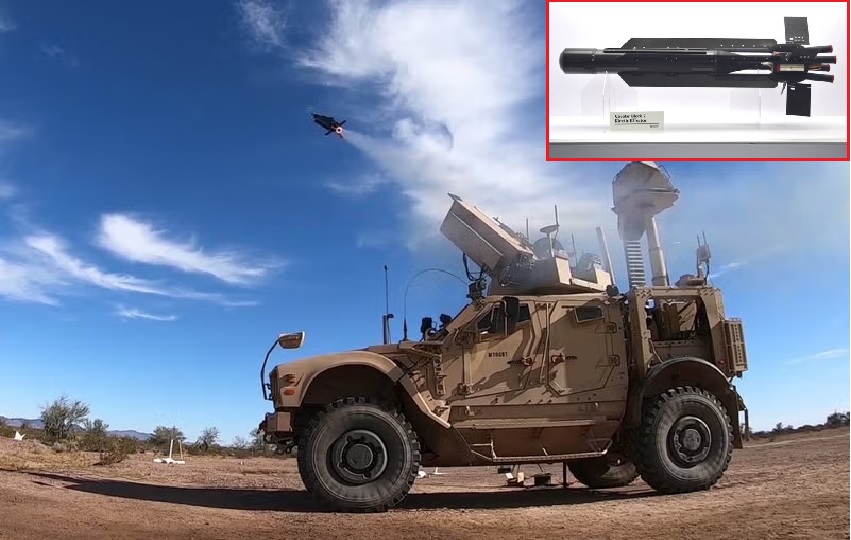 Raytheon Ramps Up Coyote Counter-Drone Missile Production After U.S. Army Reports 600 Successful Combat Intercepts During Iran Conflict
-
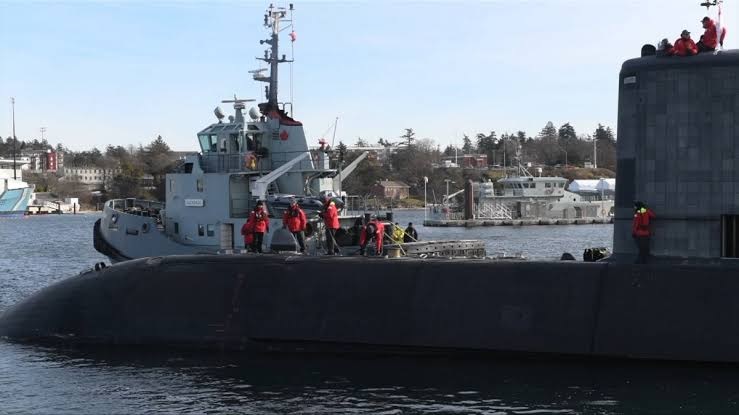 Canada Awards Babcock $1.1 Billion Six-Year Contract Extension to Support Victoria-Class Submarine Fleet
-
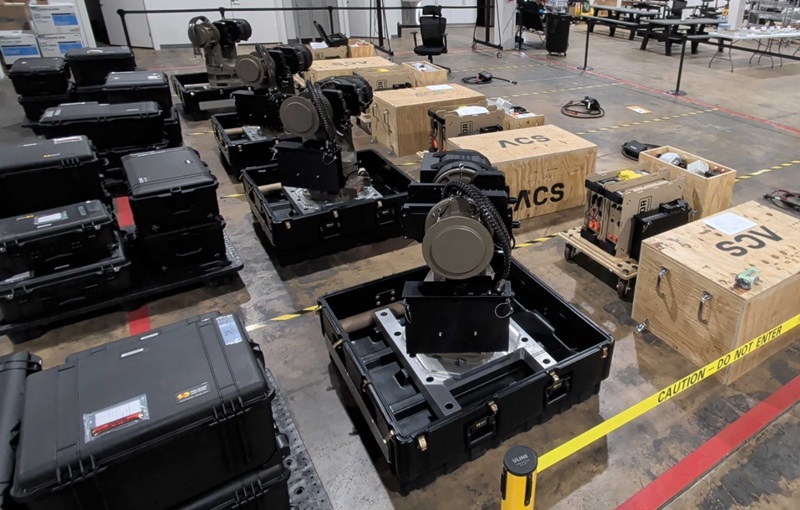 U.S. Marine Corps Selects AI-Powered Bullfrog Weapon Station for L-MADIS Counter-Drone Platform
-
 U.S. Navy Awards Raytheon $1.8 Billion Contract Extension for SPY-6 Radar Systems
-
 Lockheed Martin Launches $9 Billion U.S. Munitions Expansion to Boost THAAD, PAC-3 and PrSM Production
Top Trending in 4 Days
-
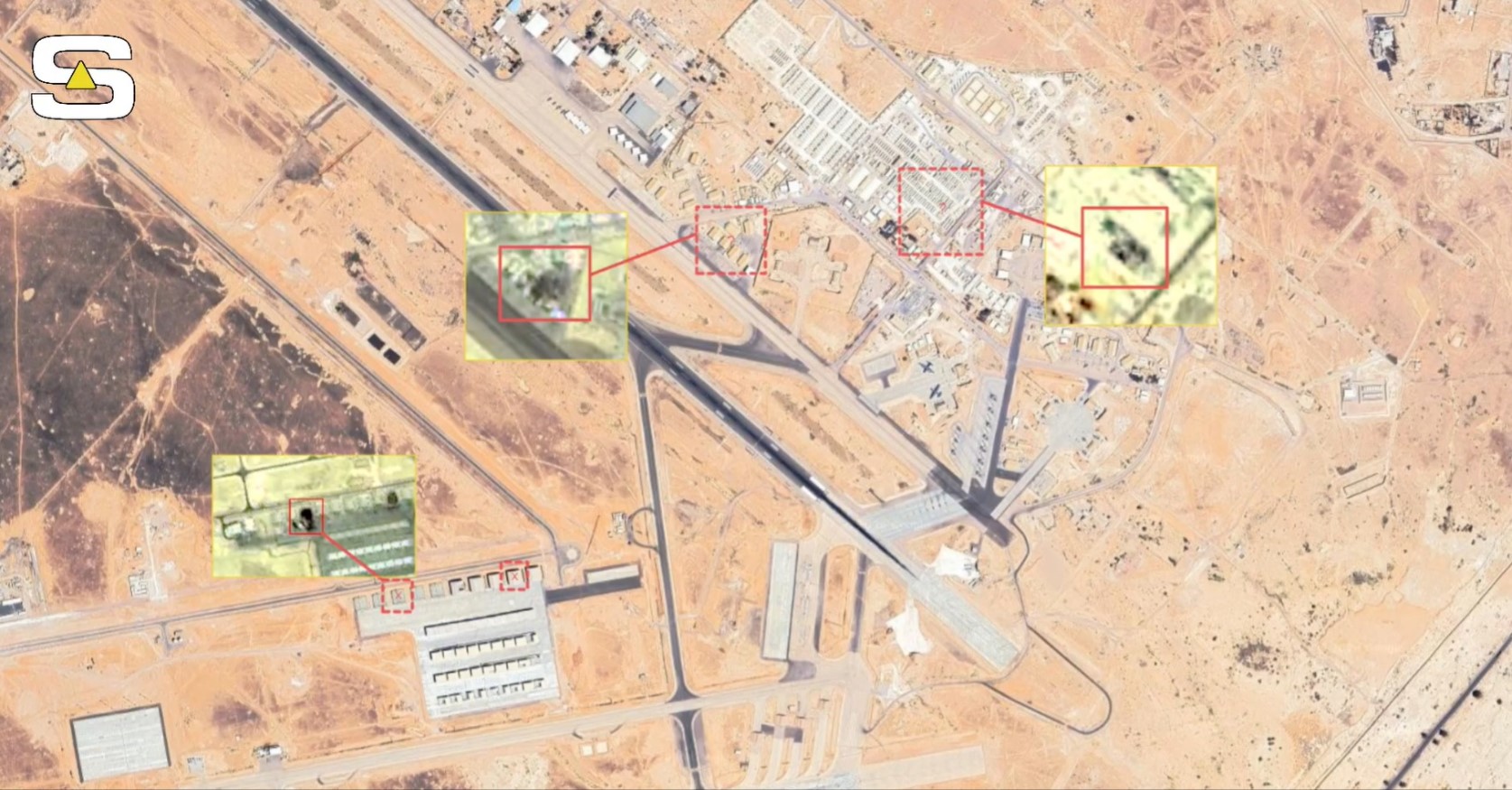 New Satellite Imagery Reveals Extensive Damage at Jordan's Muwaffaq al-Salti Air Base After Iranian Missile Strike
-
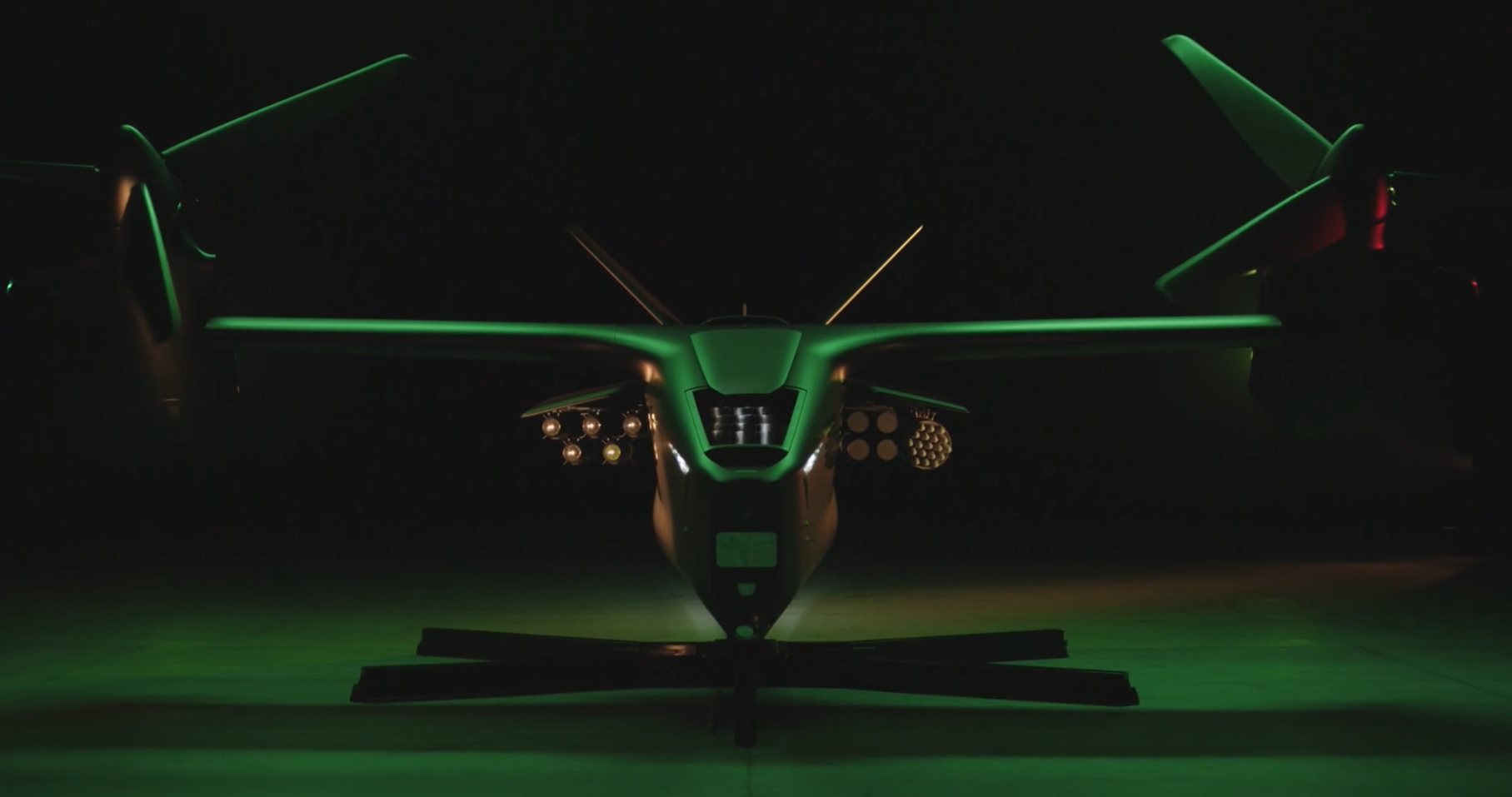 Anduril Unveils Thunder Autonomous Attack Rotorcraft Built with Archer Aviation to Support Apache Helicopters
-
 U.S. Space Force Awards Slingshot Aerospace $69.2 Million Contract to Develop AI Space Training Platform
-
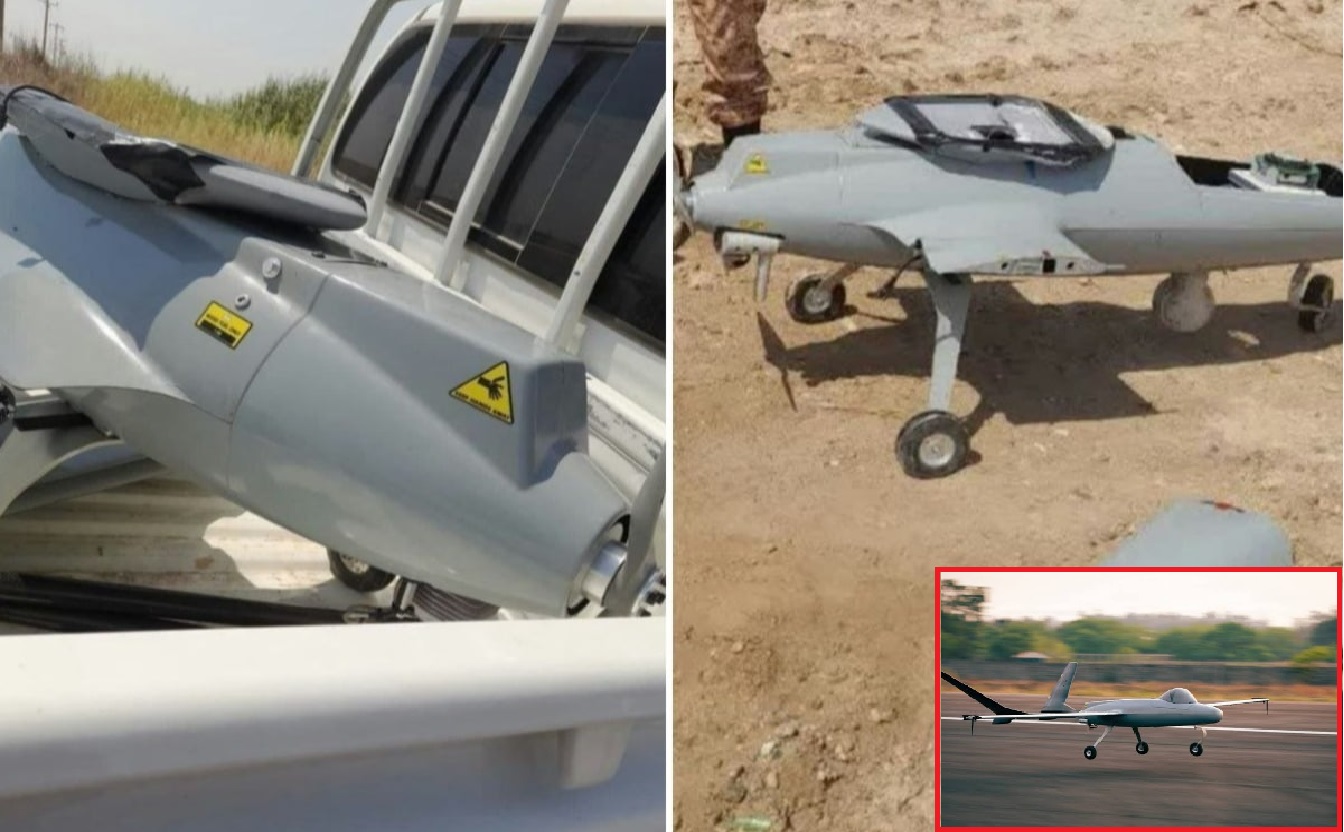 Iran Claims It Shot Down U.S.-Operated Polish-Built Tiguar-M Drone, Releases Images
-
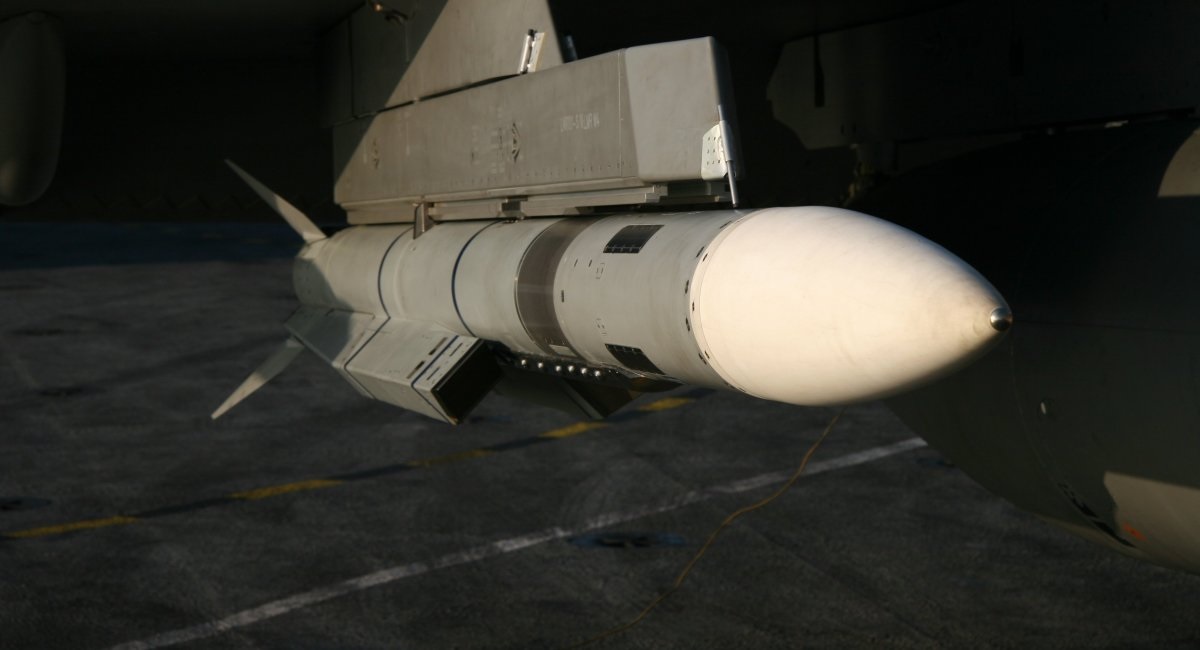 UK Cancels Meteor Missile Mid-Life Upgrade, Prioritizes Next-Generation FASE Air-to-Air Missile Programme
-
 NASA, Draper Cancels CP-12 Lunar Lander Mission After Development Delays Push Mission Beyond 2030
-
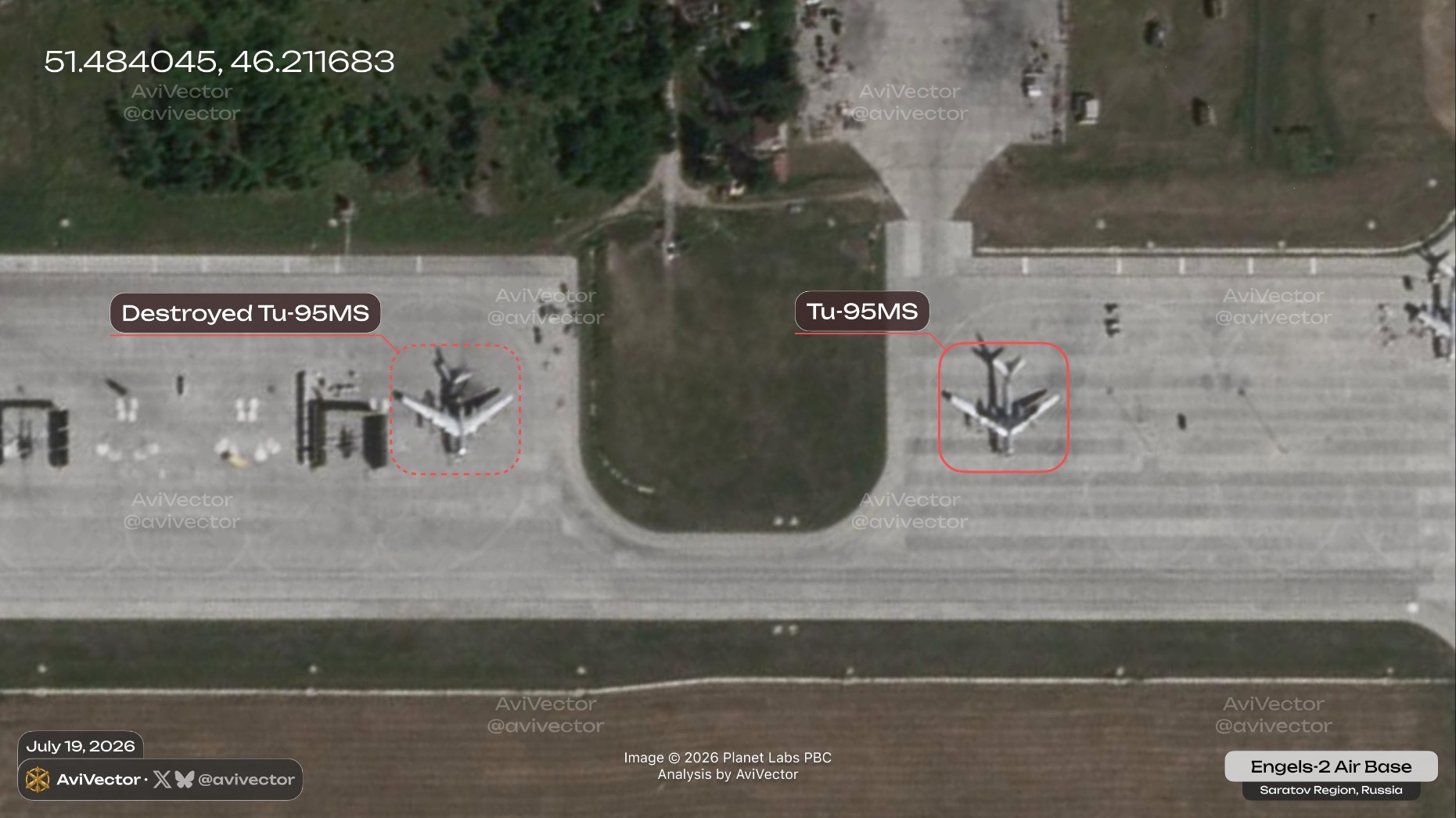 Satellite Images Confirm Russian Tu-95MS Bomber Destroyed After Ukrainian Drone Strike on Engels-2 Air Base
-
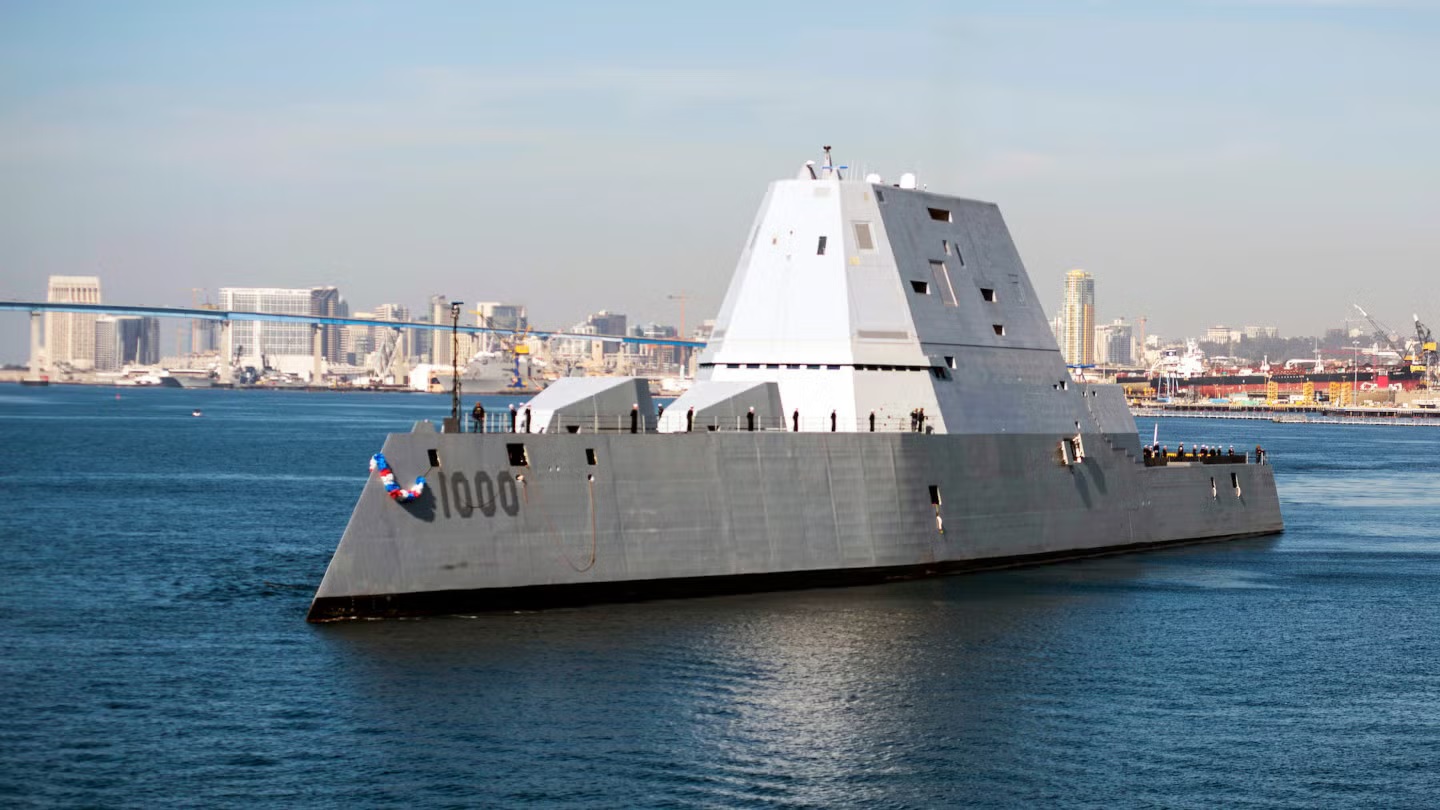 U.S. Navy's Zumwalt Destroyer Hypersonic Missile Upgrade Program Delayed by Two Years as Costs Top $2 Billion: GAO Reports
