India
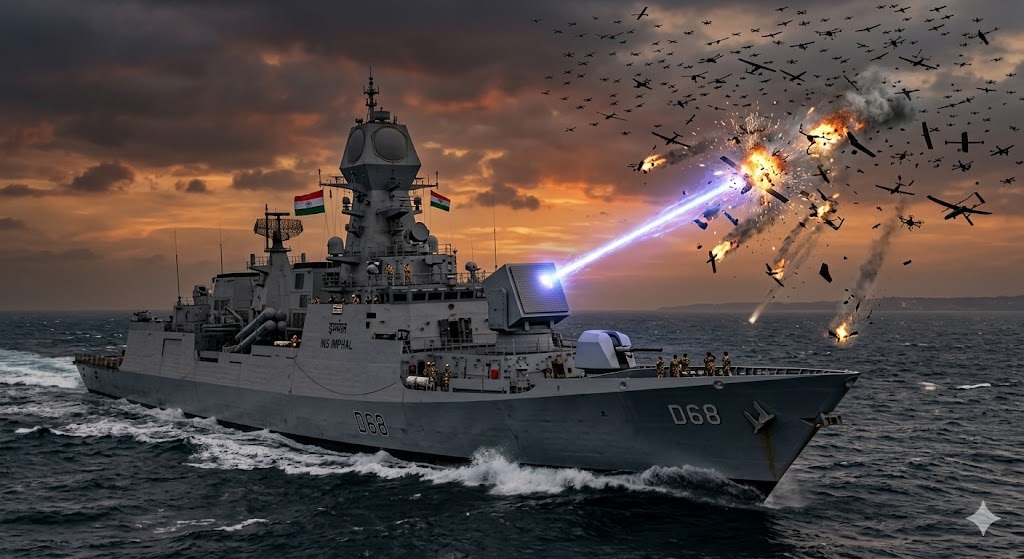
NEW DELHI — May 19, 2026 : The Indian Navy has awarded Bengaluru-based defence technology company Tonbo Imaging a contract for the integration and commissioning of a High Power Microwave (HPM) system for naval platforms under the ADITI 3.0 innovation framework. The programme is supported by the Ministry of Defence’s Innovations for Defence Excellence (iDEX) initiative and the Defence Innovation Organisation (DIO). Under the agreement, Tonbo Imaging will carry out system integration and commissioning activities for the HPM system. Following successful development, validation, and operational acceptance, the company will supply multiple production units to the Indian Navy. High Power Microwave systems are a class of directed-energy weapons that use concentrated electromagnetic energy to disable or disrupt electronic systems, sensors, communications equipment, and unmanned platforms. Unlike conventional kinetic weapons, HPM systems operate without physical projectiles or explosive warheads. The Indian Navy’s focus on HPM technology reflects growing interest in non-kinetic countermeasures for emerging maritime threats, including drone swarms and unmanned systems. Directed-energy systems are increasingly being explored for their potential role in electronic warfare and layered naval defence operations. A major factor in Tonbo Imaging’s selection is its indigenous capability in vacuum tube technologies, which are used as the primary power sources in operational HPM systems. According to the company, vacuum tube-based sources remain necessary for generating the extremely high peak power and pulse energy levels required for effective HPM applications. Arvind Lakshmikumar, Managing Director and CEO of Tonbo Imaging India Limited, said the company has invested for several years in developing indigenous HPM technologies and critical sub-systems. He stated that while solid-state radio frequency systems are widely used in many applications, they currently cannot achieve the required power output within the size, weight, and efficiency limitations needed for operational naval platforms. The contract marks an expansion of Tonbo Imaging’s role beyond electro-optics and imaging systems into advanced defence electronics, embedded systems, directed-energy technologies, and integrated mission systems. The ADITI (Advanced Defence Technology Incubation) framework was established to support the development, integration, and validation of advanced defence technologies before induction into military service. The programme is part of broader government efforts to strengthen indigenous defence manufacturing and increase private sector participation in strategic technology development. The development follows earlier indigenous work in directed-energy systems by the Defence Research and Development Organisation (DRDO) and its Microwave Tube Research and Development Centre (MTRDC), which in January 2026 unveiled a prototype High Power Microwave system designed to disable small quadcopters and unmanned aerial systems. Further technical specifications, deployment timelines, and operational details related to the Indian Navy’s HPM programme were not disclosed.
Read More → Posted on 2026-05-19 16:31:02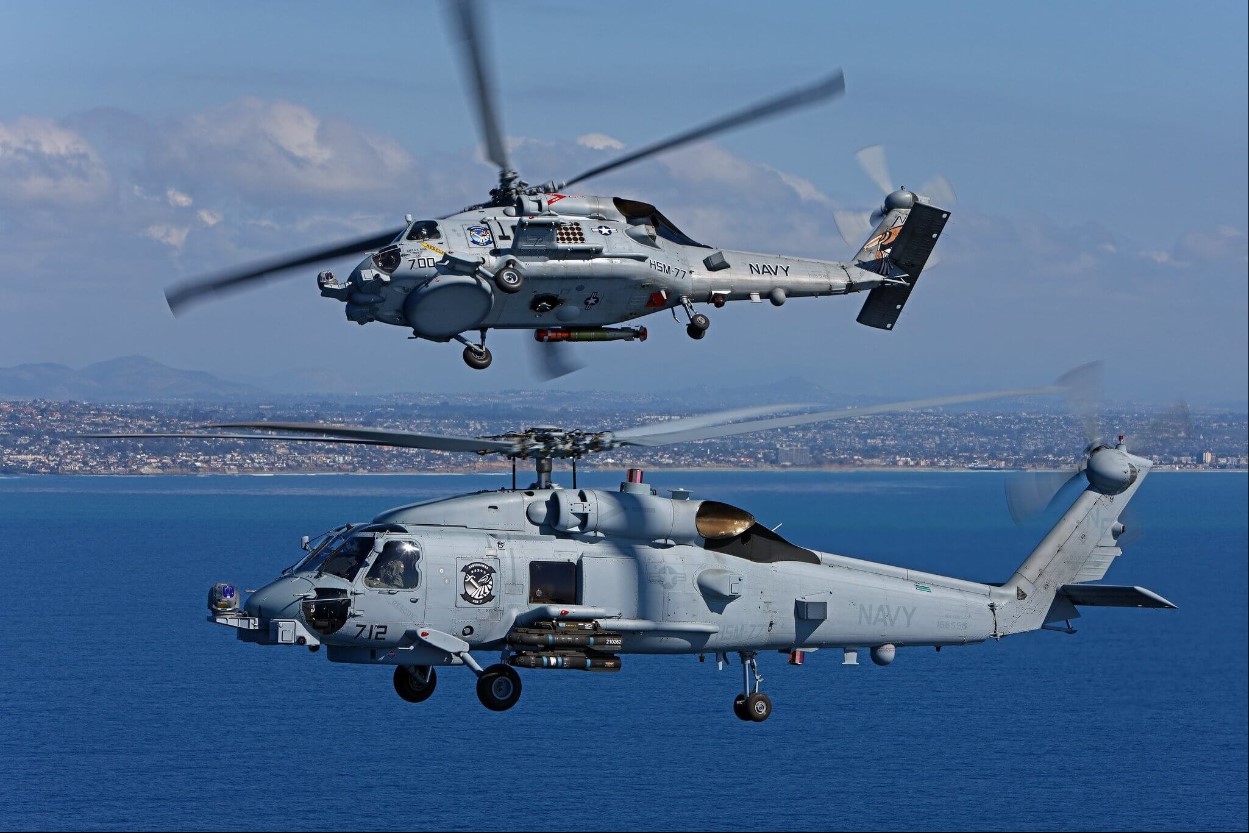
World
WASHINGTON, D.C., — May 19, 2026 : The United States Department of State has approved a potential Foreign Military Sale (FMS) to the Republic of Korea for 24 MH-60R Seahawk multi-mission helicopters and associated military equipment in a package valued at an estimated $3.0 billion. The Defense Security Cooperation Agency (DSCA) announced that it has delivered the required certification notifying the U.S. Congress of the proposed transaction under the Arms Export Control Act. Strengthening South Korea’s Naval Capabilities According to U.S. officials, the proposed sale is intended to strengthen the Republic of Korea Navy’s ability to address current and future security threats while supporting Washington’s broader foreign policy and national security objectives in the Indo-Pacific region. The State Department stated that South Korea remains a major U.S. ally and an important force for political stability and economic progress in the region. The acquisition is expected to improve Seoul’s maritime defense capabilities, particularly in anti-submarine warfare and anti-surface warfare operations. Defense officials noted that the additional helicopters will provide South Korea with an enhanced deterrence capability amid continued regional maritime and submarine developments around the Korean Peninsula. The approval follows South Korea’s previous order of 12 MH-60R helicopters placed in 2020. Deliveries from that earlier acquisition recently entered operational service with the Republic of Korea Navy. U.S. authorities stated that South Korea will have no difficulty integrating the aircraft and associated systems into its armed forces and emphasized that the proposed sale will not alter the basic military balance in the region. Helicopters and Major Defense Equipment The proposed package includes: Twenty-four (24) MH-60R Multi-Mission Helicopters Fifty-two (52) Embedded GPS/Precise Positioning Service/Inertial Navigation Systems with Selective Availability Anti-Spoofing Modules, including 48 installed systems and four spare units Twenty-four (24) Airborne Low Frequency Sonars Eight (8) M240D 7.62mm machine guns Sensors, Avionics, and Mission Systems The package also contains a broad range of advanced avionics, sensors, mission equipment, and operational systems designed to support maritime combat and surveillance missions. Included systems are: APS-153(V) multi-mode maritime radars AN/AAS-44C(V) multi-spectral targeting systems AN/ALQ-210 Electronic Support Measures systems AN/AVS-9 Night Vision Devices Joint Mission Planning Systems Tactical Operational Flight Trainers Training Simulators and Operational Machine Interface Assistants Aviation Maintenance Weapons Loading Trainers Engines and Defensive Systems The proposed sale also covers propulsion systems and aircraft survivability equipment, including: T700-GE-401D engines Spare engine containers AN/AAR-47 missile warning systems AN/ALE-47 electronic countermeasure dispensers M514 impulse cartridges MJ20 cartridge actuated devices WB53 fire extinguisher cartridge actuated devices CCU-136A/A impulse cartridges Communications and Identification Equipment To support secure operations and interoperability, the package includes: AN/APX-123 Identification Friend or Foe (IFF) transponders KIV-78 IFF Mode 4/5 cryptographic appliques Standard communications equipment and associated support systems Logistics, Training, and Technical Support The agreement also includes extensive sustainment and operational support elements intended to maintain long-term readiness of the fleet. These include spare and repair parts, support and test equipment, ferry support, technical documentation, publications, personnel training, training equipment, and U.S. Government and contractor engineering, technical, logistics, integration, and testing support services. In addition, the package covers obsolescence engineering and integration activities required to support production readiness for South Korea’s MH-60R helicopters. Principal Contractor Lockheed Martin Rotary and Mission Systems, based in Owego, New York, has been identified as the principal contractor for the proposed program. The Defense Security Cooperation Agency stated that the proposed transaction will not negatively affect U.S. defense readiness. Background on the MH-60R Seahawk The MH-60R Seahawk is the U.S. Navy’s primary maritime helicopter platform and is derived from the UH-60 Black Hawk helicopter family. The aircraft is designed for anti-submarine warfare, anti-surface warfare, maritime surveillance, intelligence gathering, logistics support, and search and rescue operations. The helicopter is equipped with advanced radar systems, airborne low-frequency sonar, electronic warfare systems, targeting systems, and secure communications equipment for naval missions. South Korea’s continued procurement of the MH-60R forms part of a broader naval modernization effort focused on improving maritime domain awareness and strengthening undersea warfare capabilities. Congressional Review Process The State Department’s approval represents an executive branch authorization under the Foreign Military Sales process and does not finalize the sale. The proposed transaction will now proceed through the congressional review process before final agreements, production schedules, and implementation details are completed.
Read More → Posted on 2026-05-19 16:08:54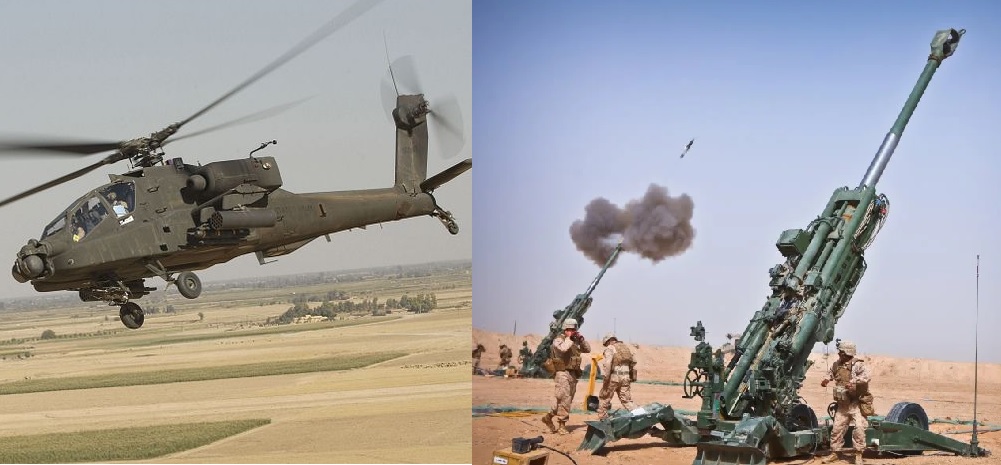
India
WASHINGTON, May 19, 2026 — The United States State Department has approved two Foreign Military Sales (FMS) sustainment packages for India worth a combined $428.2 million, aimed at maintaining the operational readiness of India’s AH-64E Apache attack helicopters and M777A2 Ultra-Light Howitzers. The proposed agreements, notified to the US Congress through the Defense Security Cooperation Agency (DSCA), focus on long-term maintenance, logistics, technical assistance, training, and lifecycle support for existing Indian military platforms rather than the acquisition of new systems. US officials stated that the proposed sales support Washington’s foreign policy and national security objectives by strengthening the defence capabilities of India, which the United States describes as a major defence partner and a key contributor to stability in the Indo-Pacific and South Asia regions. Apache Helicopter Sustainment Package The first package, valued at approximately $198.2 million, provides follow-on support for India’s AH-64E Apache attack helicopter fleet. Boeing and Lockheed Martin have been identified as the principal contractors. The package includes engineering support, technical and logistics assistance, personnel training, technical documentation, publications, and other programme support services required to maintain operational readiness. India currently operates 28 AH-64E Apache helicopters acquired through two separate agreements with the United States. The Indian Air Force received 22 helicopters between 2019 and 2020, while six additional helicopters for the Indian Army began arriving in late 2025. The AH-64E Apache is equipped with a 30 mm M230 chain gun, AGM-114 Hellfire anti-tank missiles, Hydra 70 rockets, Longbow fire-control radar, and advanced targeting and night-vision systems designed for day and night combat operations. M777A2 Howitzer Support Package The second package, valued at approximately $230 million, focuses on sustainment support for India’s M777A2 Ultra-Light Howitzers. BAE Systems will serve as the principal contractor for the programme. The agreement includes spare parts, repair and return services, ancillary equipment, technical assistance, field service representatives, training support, depot-level maintenance capability, and related logistics services. India originally ordered 145 M777A2 howitzers under a $737 million agreement signed in 2016. The first 25 systems were delivered in fully assembled “fly-away” condition, while the remaining 120 were assembled in India through cooperation between BAE Systems and Mahindra Defence Systems. The M777A2 is designed using lightweight titanium and aluminium alloys, allowing rapid deployment by helicopters and transport aircraft. The artillery system has been extensively deployed in high-altitude and mountainous regions due to its mobility and operational flexibility. Focus on Lifecycle Management The proposed agreements highlight the increasing emphasis within US-India defence cooperation on lifecycle sustainment and long-term operational support for advanced military systems. Defence officials stated that steady access to spare parts, maintenance infrastructure, technical expertise, and repair capability is essential for ensuring continuous operational availability of frontline military equipment. The State Department noted that the proposed sales would improve India’s ability to meet current and future security requirements while strengthening homeland defence capabilities and supporting deterrence efforts in the region. US officials also stated that the agreements would not alter the basic military balance in South Asia and would not affect the readiness of US armed forces. Expanding US-India Defence Cooperation The sustainment packages form part of broader defence cooperation between Washington and New Delhi, which has expanded significantly over the past decade through defence trade, joint military exercises, technology collaboration, and interoperability initiatives. India has become one of the largest operators of US-origin military systems in the Indo-Pacific region, including transport aircraft, maritime surveillance platforms, helicopters, artillery systems, and naval equipment. The proposed Foreign Military Sales packages will now undergo a mandatory review period in the US Congress before final implementation under the FMS programme.
Read More → Posted on 2026-05-19 16:00:20
World
STOCKHOLM, — May 19, 2026 : The Swedish government has selected French shipbuilder Naval Group to provide the Swedish Navy’s next-generation Luleå-class frigates, choosing the French Frégate de Défense et d’Intervention (FDI) design in a procurement valued at approximately 40 billion Swedish kronor ($4.25 billion). The announcement was made during a press conference aboard the Visby-class corvette HMS Härnösand at Skeppsbron in Stockholm. The event was attended by Prime Minister Ulf Kristersson, Defense Minister Pål Jonson, and Supreme Commander Michael Claesson. The procurement represents Sweden’s largest naval defense acquisition in decades and forms part of a broader modernization effort following the country’s accession to NATO. Swedish officials stated that the new frigates will significantly expand the Navy’s air-defense, anti-submarine warfare, and long-range operational capabilities in the Baltic Sea region. Prime Minister Kristersson described the program as a major step toward strengthening Sweden’s ground- and surface-based air-defense network and transitioning the Swedish Navy from a primarily coastal-defense force into a NATO-integrated maritime force capable of conducting extended regional operations. Selection Process and Evaluation The Luleå-class competition involved three European proposals: the Babcock Arrowhead 120, Navantia’s ALFA 4000, and Naval Group’s FDI platform. According to Defense Minister Jonson, the Swedish government selected the FDI design based on delivery speed, platform maturity, and long-term operational efficiency. The FDI frigate is already in active production at Naval Group’s Lorient shipyard in France. Sweden expects the first vessel to be delivered by 2030, with the remaining three ships scheduled for delivery at a rate of one vessel annually. Officials stated that the maturity of the FDI design was a key factor in the decision. The platform has already entered service with the French Navy and has also been ordered by Greece, reducing developmental risks compared with competing proposals that would have required additional engineering work. The Swedish government also emphasized the benefits of joining an existing frigate program, including shared lifecycle support, future upgrades, logistics cooperation, and reduced long-term maintenance costs with other FDI operators. Evolution of the Luleå-Class Program The program originally began in 2021 as a Saab-led initiative to develop four enlarged “Visby Generation Two” air-defense corvettes derived from the Visby-class design. Following Russia’s full-scale invasion of Ukraine in 2022 and Sweden’s subsequent NATO application, operational requirements changed significantly. The Swedish Navy identified the need for larger surface combatants with improved endurance, vertical launch systems, stronger area air-defense capability, and enhanced interoperability with NATO forces. In 2023, British shipbuilder Babcock was contracted to support the development of a larger frigate-sized concept. However, between 2024 and 2026, the Swedish Defence Materiel Administration (FMV) shifted the acquisition strategy toward evaluating existing foreign frigate platforms in order to accelerate deliveries and reduce program risk. The final requirement settled on a frigate-sized vessel measuring approximately 120 meters in length with a displacement of around 4,000 tonnes. Supreme Commander Michael Claesson stated that Sweden’s decision not to proceed with the Saab-Babcock proposal would not affect ongoing defense cooperation with the United Kingdom under the Joint Expeditionary Force (JEF) framework. Combat Systems and Swedish Integration Although the Luleå-class will utilize the French hull design and Naval Group’s SETIS combat management system instead of Saab’s traditional 9LV architecture, the ships will incorporate a wide range of Swedish-developed weapons and sensors. The frigates will be equipped with Saab RBS 15 anti-ship missiles, Torped 47 lightweight anti-submarine torpedoes, Saab Trackfire remote weapon stations, Giraffe 1X radar systems, and BAE Systems Bofors 57 mm and 40 mm naval guns. For air defense, the vessels will field the Aster 30 long-range surface-to-air missile alongside the CAMM-ER medium-range missile system. Swedish officials noted that the integration of the Aster 30 represents a major increase in capability, as the Swedish Navy has not operated a dedicated naval long-range air-defense missile system since the retirement of the Seacat system in the early 1980s. The Aster 30 will provide long-range area air defense and limited ballistic missile interception capability, while CAMM-ER missiles will strengthen protection against aircraft, cruise missiles, and precision-guided munitions. The ships are also expected to support anti-submarine warfare operations optimized for Baltic Sea conditions, with the Torped 47 system specifically designed for shallow-water environments. Program Timeline and Fleet Role The four vessels are expected to be named HSwMS Luleå, HSwMS Norrköping, HSwMS Trelleborg, and HSwMS Halmstad. The ships are intended to become the core of Sweden’s future surface fleet and will contribute to NATO maritime operations in Northern Europe and the Baltic region. The Luleå-class frigates will provide Sweden with expanded fleet air-defense capability, improved anti-submarine warfare performance, and greater operational endurance compared with the current Visby-class corvettes. With the evaluation phase now concluded, the Swedish Defence Materiel Administration will proceed with final contract negotiations with Naval Group to maintain the planned 2030 delivery schedule for the first vessel.
Read More → Posted on 2026-05-19 15:35:18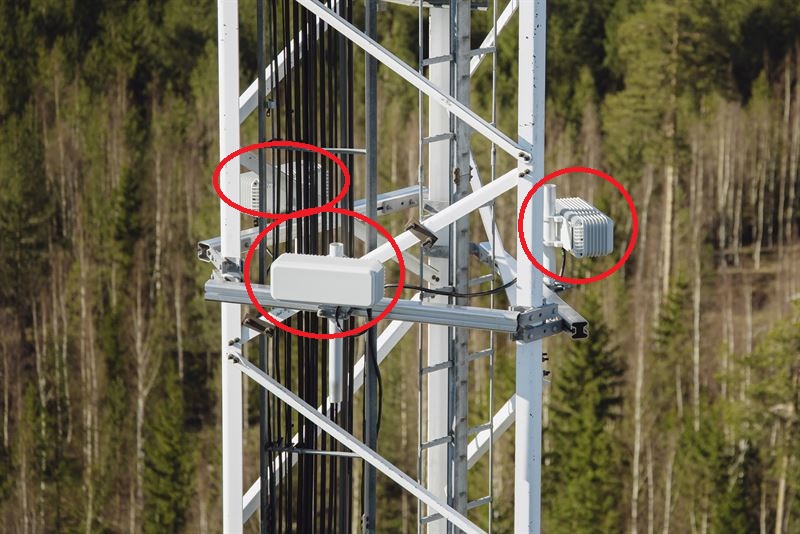
World
HELSINKI, — May 19, 2026 : Swedish defense and security company Saab has introduced the Sirius Compact L24R, a new fixed-panel passive electronic warfare (EW) sensor developed for strategic surveillance and national security missions. The system was unveiled during the AOC EW Europe symposium in Helsinki as part of Saab’s expanding Sirius Compact electronic support measures (ESM) portfolio. The Sirius Compact L24R is designed to provide persistent wide-area surveillance by detecting, tracking, classifying, and localizing radar emissions from multiple threats, including fighter aircraft, surveillance radars, and surface vessels. Unlike conventional active radar systems that emit signals and reveal their position, the L24R operates passively by intercepting electromagnetic emissions, enabling covert monitoring of the spectrum without transmitting detectable signals. Strategic Surveillance Role Saab developed the L24R specifically for fixed-site strategic surveillance applications. The sensor is intended for installation on existing infrastructure such as towers and masts, allowing operators to establish long-duration monitoring coverage across large operational areas. The company stated that the new sensor extends the Sirius Compact R-ESM portfolio beyond tactical deployments into persistent strategic intelligence and surveillance operations. The system is designed to support national security missions requiring continuous electromagnetic monitoring and early warning capabilities. “The new Sirius Compact sensor, L24R, is a welcome extension to the existing tactical Sirius Compact R-ESM portfolio, with a sensor built specifically for persistent, fixed-site surveillance, offering wide area strategic coverage,” said Carl-Johan Bergholm, head of Saab’s Surveillance business area. Technical Specifications According to Saab, the Sirius Compact L24R provides frequency coverage from 1 to 18 GHz, covering the L-band through Ku-band spectrum commonly used by military radar systems. The sensor measures 450 mm x 170 mm x 170 mm and weighs approximately 8 kilograms. Saab stated that the system consumes 65 watts of power and operates without requiring external cooling equipment, simplifying deployment and sustainment requirements. The L24R also supports single-cable integration, reducing installation complexity and enabling rapid deployment in operational environments. Modular and Scalable Design Although optimized for fixed installations, Saab stated that the L24R maintains the modular and compact design characteristics of the broader Sirius Compact family. The company noted that the system can also support mobile deployment concepts where required. Its lightweight structure and scalable architecture allow integration into remote or austere locations where infrastructure access and maintenance capabilities may be limited. Saab stated that the sensor is installation-agnostic and can be integrated into different operational networks and platforms. Autonomous Operation and Secure Data Handling A key feature of the Sirius Compact L24R is its autonomous signal-processing capability. The system continuously intercepts and processes electromagnetic emissions to generate situational awareness and intelligence data in real time. Saab stated that sensitive threat libraries and classified intelligence data are not stored locally on the device itself. Instead, processed information is transmitted directly into command-and-control (C2) systems and distributed defense networks. According to the company, this approach supports cybersecurity protection and enables intelligence sharing across multiple connected platforms. The passive operational design also supports low-observable surveillance missions by reducing the risk of detection associated with active radar transmissions. Growing Demand for Passive EW Systems The launch of the L24R reflects increasing international demand for passive sensing and distributed electronic warfare technologies. Defense and security organizations are investing in systems capable of providing spectrum awareness, maritime surveillance, border monitoring, and early warning without relying solely on large airborne surveillance platforms or active radar networks vulnerable to detection and targeting. Passive electronic warfare systems are increasingly viewed as critical components of layered defense architectures, particularly in contested electromagnetic environments. Sirius Compact Family Expansion The Sirius Compact series includes both radar electronic support measures (R-ESM) and communication electronic support measures (C-ESM) variants designed for tactical and operational use. Previous Sirius Compact variants, including the L20R, A20R, and A21R, were developed for deployment on drones, ground vehicles, naval vessels, and man-portable configurations. The introduction of the L24R adds a dedicated fixed-site strategic surveillance capability to the existing product line. Research, development, and manufacturing activities for the Sirius Compact family are conducted across Saab facilities in Sweden and Finland. Earlier this year, Saab expanded its production capacity in Finland by establishing serial production operations for Sirius Compact sensors at a new facility in Tampere in response to growing market demand for compact passive EW systems.
Read More → Posted on 2026-05-19 15:21:22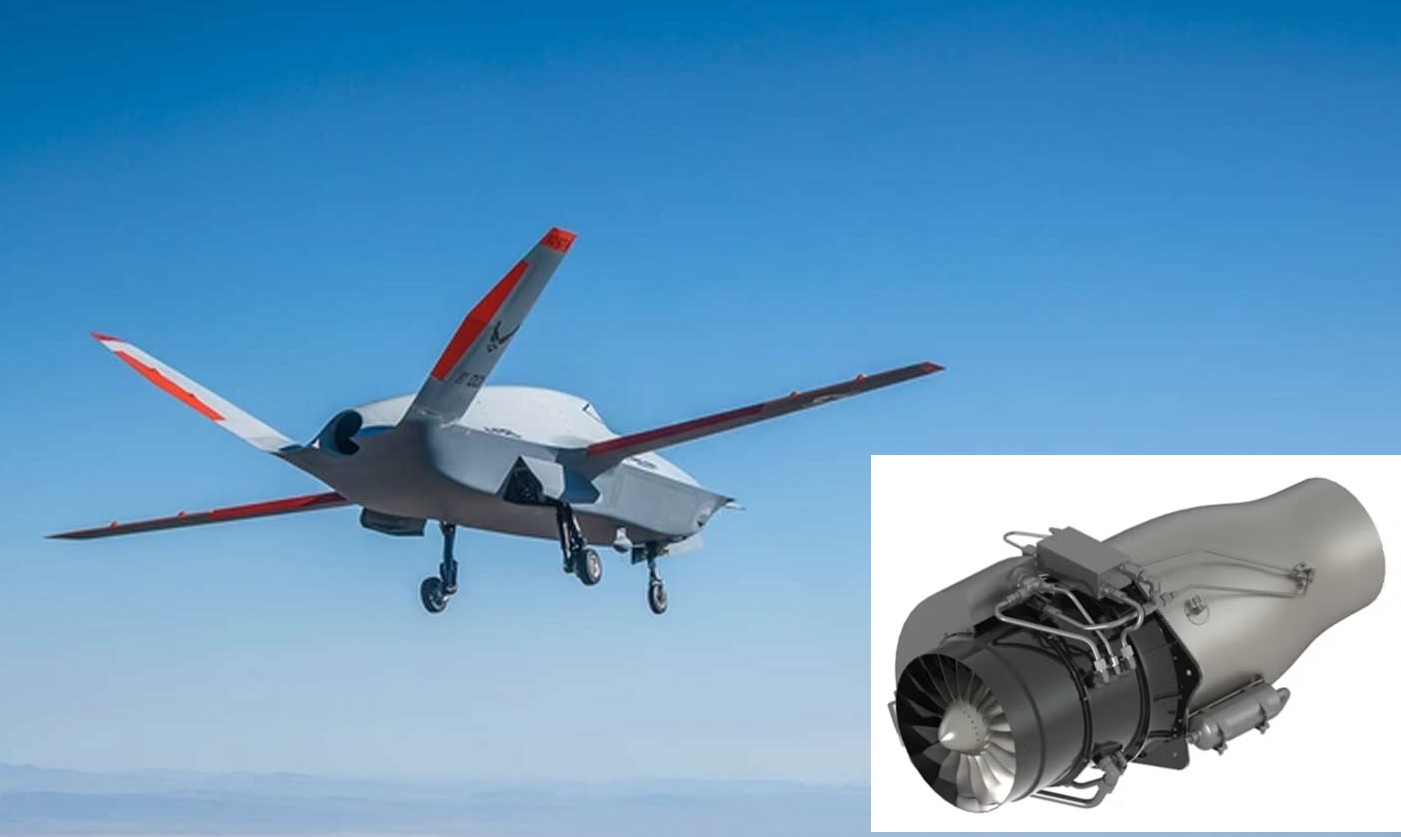
World
EVENDALE, Ohio — May 19, 2026 : GE Aerospace has secured a United States Air Force contract to advance the preliminary design of the GE426 turbofan engine, a new propulsion system being developed for the medium-thrust class of Collaborative Combat Aircraft (CCA) and Autonomous Collaborative Platforms (ACP) intended to operate alongside crewed fighter aircraft. The GE426, unveiled on May 19, is designed to generate between 4,000 and 9,000 pounds of thrust. The contract award follows the successful completion of the engine program’s concept design review in August 2025 and marks the next stage in maturing the propulsion system for future Air Force autonomous combat aircraft programs. Air Force Expands Autonomous Combat Aircraft Program The Autonomous Collaborative Platform initiative is managed by the Air Force Research Laboratory (AFRL) and forms the technical foundation for the U.S. Air Force’s broader effort to field large numbers of artificial intelligence-enabled uncrewed aircraft. These systems are intended to operate alongside manned fighter jets and support missions including surveillance, electronic warfare, weapons carriage, strike support, and operations in contested airspace. Rather than developing a single aircraft design, the Air Force is pursuing a family of autonomous platforms across multiple sizes and mission categories. This strategy has led the service to support several propulsion programs simultaneously in order to provide different thrust options for future aircraft requirements. In February 2026, the Air Force awarded engine development contracts to four industry teams: Beehive Industries, Honeywell, Pratt & Whitney, and a joint team formed by GE Aerospace and Kratos Defense & Security Solutions. The awards support propulsion development efforts for CCA Increment 2 and other ACP variants under the Air Force Life Cycle Management Center’s Propulsion Directorate. According to Air Force officials, the multi-vendor approach is intended to ensure a broad industrial base and provide multiple propulsion solutions for the evolving autonomous fleet. GE426 Expands GE Aerospace’s Propulsion Portfolio The GE426 is positioned in the medium-thrust category and is intended for larger autonomous combat aircraft requiring greater payload capacity, longer operational range, and increased mission flexibility compared to smaller attritable drone designs. GE Aerospace is also developing the GEK1500 engine in partnership with Kratos. That engine produces approximately 1,500 pounds of thrust and targets smaller collaborative combat aircraft applications. The GEK1500 is derived from the GEK800 cruise missile engine, which previously powered the Valkyrie-class experimental drone. With the introduction of the GE426, GE Aerospace now covers multiple propulsion categories within the Air Force’s autonomous combat aircraft strategy, ranging from lightweight autonomous systems to larger medium-thrust combat platforms. The company has not disclosed the financial value of the latest Air Force contract or released detailed technical specifications beyond the engine’s thrust range. However, GE Aerospace stated that affordability, manufacturability, scalability, and operational readiness are core design priorities for the program. Steve Russell, Vice President and General Manager of Edison Works at GE Aerospace, stated that the company intends to apply development processes used during the GEK800 program to accelerate the GE426 effort while maintaining cost and production targets required for future operational deployment. Lessons From CCA Increment 1 The Air Force’s push for purpose-built propulsion systems follows lessons learned during the initial phase of the Collaborative Combat Aircraft program. Under CCA Increment 1, General Atomics’ YFQ-42A and Anduril’s YFQ-44A were selected as competing prototype aircraft. General Atomics conducted the first flight of the YFQ-42A in August 2025, while Anduril flew the YFQ-44A in October 2025. To accelerate development timelines, both aircraft used commercially available off-the-shelf engines rather than dedicated propulsion systems designed specifically for collaborative combat aircraft missions. The prototypes are currently undergoing autonomy integration testing using mission software developed by Shield AI and Collins Aerospace. Defense officials have acknowledged that while commercial engines enabled rapid prototype testing, they do not fully meet the long-term operational requirements of future autonomous fleets. Key concerns include durability, fuel efficiency, manufacturing scalability, sustainment costs, and low-cost mass production capability. The GE426 and related propulsion programs are intended to address those limitations as the Air Force prepares for larger operational deployments in future CCA increments. Affordability and Production Scale Remain Central The Air Force’s long-term acquisition plans place significant emphasis on affordability and manufacturing scalability. Current budget projections estimate approximately $9 billion in spending on collaborative combat aircraft programs through fiscal year 2029. The service plans to acquire at least 1,000 Increment 1 aircraft before the end of the decade, making large-scale engine production a critical requirement for all participating contractors. Air Force officials have stated that propulsion systems requiring highly specialized manufacturing methods or exceeding strict unit cost targets could negatively affect the overall affordability model of the CCA program. GE Aerospace stated that producibility is a central design constraint for the GE426 program, reflecting the Air Force’s focus on scalable manufacturing and rapid production capability. Competitive Industry Development Efforts Several other companies are advancing propulsion systems for autonomous combat aircraft under related Air Force contracts. Honeywell is developing the SkyShot 1600 engine, which can be configured as either a turbojet or turbofan and is designed to generate between 800 and 2,800 pounds of thrust. Beehive Industries is developing an engine in the approximately 1,000-pound thrust class using additive manufacturing techniques based on metal powder production processes. Pratt & Whitney is also continuing propulsion development work under a separate Air Force contract focused on future autonomous aircraft applications. According to Air Force officials, successful small- and medium-thrust engines developed under the ACP and CCA programs could eventually be adapted for additional military systems, including uncrewed aircraft, aerial targets, and missile platforms. Such expansion could increase future production demand into the thousands of units across multiple defense programs. Next Development Phase The GE426 preliminary design phase will refine the engine configuration in accordance with Air Force medium-thrust autonomous aircraft requirements. Future program milestones are expected to include prototype manufacturing, ground testing, and flight demonstration activities depending on program progress and future funding decisions. GE Aerospace stated that the GE426 program remains part of the company’s broader strategy to expand propulsion technologies across small-, medium-, and large-thrust categories supporting next-generation autonomous combat aircraft operations.
Read More → Posted on 2026-05-19 15:11:37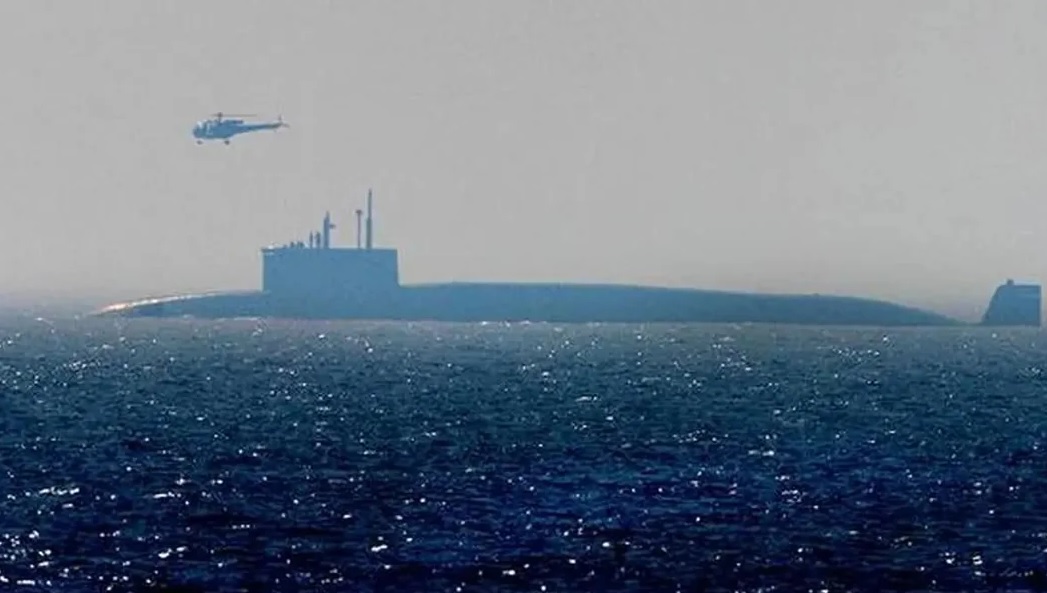
India
VISAKHAPATNAM, — May 19, 2026 : India’s fourth and final Arihant-class nuclear-powered ballistic missile submarine (SSBN), currently designated S4* and expected to be commissioned as INS Arisudan, is undergoing advanced sea trials following its launch at the Ship Building Centre (SBC) in Visakhapatnam in October 2024. The submarine is expected to formally enter service with the Indian Navy around 2027, completing the first production series of India’s indigenous SSBN fleet under the classified Advanced Technology Vessel (ATV) programme. The submarine was launched on October 16, 2024, in the presence of Defence Minister Rajnath Singh. Following harbour integration and system validation trials, the vessel reportedly departed Visakhapatnam in late December 2025 to begin sea trials, a phase expected to continue through 2026 before commissioning preparations are finalized. Expanded Arihant-Class Design The S4* is the second “stretched” Arihant-class submarine and incorporates a larger hull section dedicated to missile storage and launch systems. The submarine is estimated to displace around 7,000 tonnes, compared to the 6,000-tonne displacement of the lead boat INS Arihant. The extended configuration increases the submarine’s missile carrying capacity while maintaining reduced acoustic signatures and survivability features designed for long-duration strategic patrols. Constructed with an indigenous content level estimated at 75–80 percent, the submarine reflects continued progress in India’s domestic nuclear submarine construction programme. The vessel was built at the Ship Building Centre in Visakhapatnam with support from Indian defence research, naval engineering, and heavy industrial sectors operating under the ATV programme. Missile Capability and Armament A major upgrade introduced with INS Aridhaman and S4* is the expansion of the vertical launch system (VLS) configuration. Earlier submarines in the class — INS Arihant and INS Arighaat — were equipped with four VLS tubes primarily optimized for K-15 Sagarika submarine-launched ballistic missiles. The later stretched variants feature eight VLS tubes, enabling the submarine to carry up to eight K-4 submarine-launched ballistic missiles (SLBMs). Developed by the Defence Research and Development Organisation (DRDO), the K-4 missile has a reported strike range of approximately 3,500 kilometres, significantly extending India’s sea-based deterrence reach. The submarine can alternatively carry up to 24 K-15 Sagarika SLBMs with a shorter range of around 750 kilometres. Specification Details Class Arihant-class SSBN (Stretch Variant) Displacement Approx. 7,000 tonnes Propulsion 83 MW Compact Light Water Reactor Primary Armament 8 × K-4 SLBMs Alternative Armament 24 × K-15 Sagarika SLBMs Torpedo Tubes 6 × 533 mm Expected Commissioning Around 2027 The integration of the K-4 missile allows the submarine to operate from relatively secure patrol zones in the Bay of Bengal and wider Indian Ocean while retaining the ability to engage distant strategic targets. Completion of India’s First SSBN Fleet India currently operates three Arihant-class submarines. INS Arihant (S2), the country’s first indigenous SSBN, was commissioned in August 2016. INS Arighaat (S3) entered service in August 2024, while INS Aridhaman (S4), the first stretched variant, was commissioned on April 3, 2026. The commissioning of S4* will complete the four-submarine Arihant-class production line. According to reports from January 2026, the Indian Navy’s ship-naming committee proposed the name INS Arisudan for the vessel. Final approval remains subject to clearance from the Defence Ministry and the President of India. All Four Arihant-Class SSBNs Reportedly Observed Together On January 27, 2026, all four Arihant-class submarines — S2, S3, S4, and S4* — were reportedly observed simultaneously at the Ship Building Centre in Visakhapatnam in imagery assessed by the International Institute for Strategic Studies (IISS). The reported sighting marked the first known instance in which all four Arihant-class submarines were identified together at the facility, highlighting the advanced stage of India’s indigenous SSBN programme and the near-completion of the class. Strategic Importance of the Arihant-Class The Arihant-class forms the sea-based leg of India’s nuclear triad alongside land-based ballistic missiles and air-delivered nuclear systems. Operating under India’s “No First Use” nuclear doctrine, the SSBN fleet provides a survivable second-strike capability designed to ensure deterrence credibility. Indian naval planners generally consider a fleet of at least four SSBNs necessary to maintain a Continuous At-Sea Deterrent (CASD) posture. Such a structure enables one submarine to remain on deterrence patrol while others rotate through maintenance, transit, training, or crew preparation cycles. Broader Submarine Modernization Programme Alongside the SSBN programme, India is expanding its nuclear-powered attack submarine capabilities. In late 2024, the Indian government approved Project 77, a ₹40,000 crore programme to construct the first two indigenous nuclear-powered attack submarines (SSNs) at Visakhapatnam. To bridge capability requirements before indigenous SSNs enter service in the mid-2030s, the Indian Navy is also expected to receive a leased Russian Akula-class nuclear-powered attack submarine by 2028. Development work is additionally continuing on the next-generation S5-class ballistic missile submarines, which are expected to feature larger displacement, increased missile capacity, and longer-range strategic systems beyond the current Arihant-class design.
Read More → Posted on 2026-05-19 15:00:48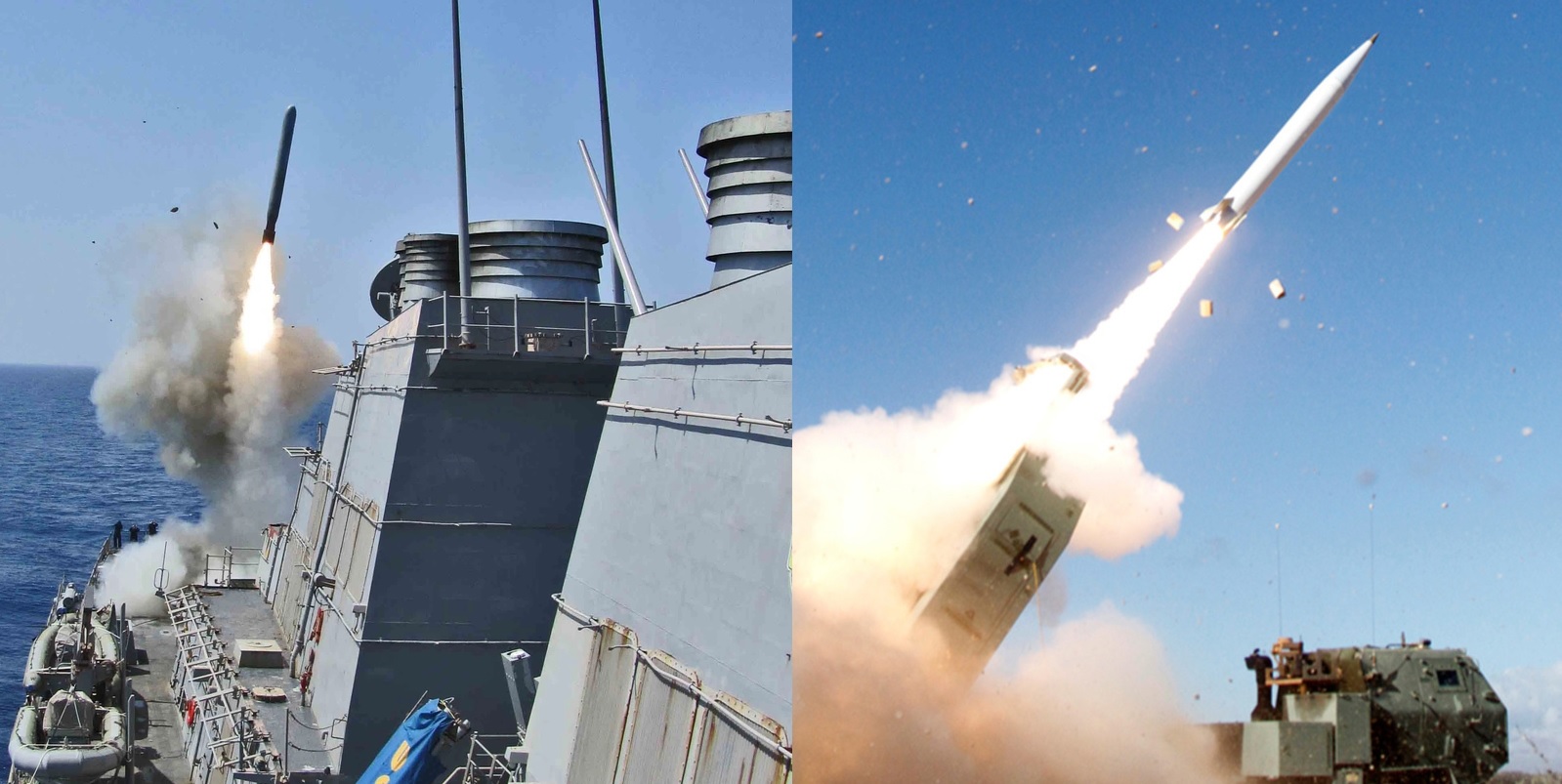
World
WASHINGTON — May 19, 2026 : The U.S. Department of Defense has initiated one of its largest recent long-range munitions procurement efforts, announcing framework agreements for the future acquisition of more than 10,000 low-cost cruise missiles and over 12,000 hypersonic missiles as part of a broader strategy to expand strike capacity, replenish depleted inventories, and strengthen deterrence capabilities in the Indo-Pacific region. The procurement initiative centers on the Pentagon’s Low-Cost Containerized Missiles (LCCM) program, which is designed to establish a large-scale pipeline for affordable precision-strike weapons that can be produced rapidly and deployed across multiple operational environments. The Department is simultaneously advancing a parallel hypersonic missile effort aimed at scaling production of lower-cost high-speed strike systems for future naval and air operations. Defense officials stated that the strategy reflects a shift toward a “high-low mix” of munitions, combining smaller inventories of advanced high-cost weapons with larger numbers of lower-cost systems capable of sustaining long-duration operations. Pentagon Awards LCCM Framework Agreements The Department of Defense awarded LCCM framework agreements to four companies — Anduril Industries, CoAspire, Leidos, and Zone 5 Technologies — to support future production contracts running from 2027 through 2029. Under the agreements, each company is expected to deliver approximately 3,000 missiles and associated launch systems during the three-year procurement period. The contracts establish fixed unit pricing for future production lots and are intended to accelerate acquisition timelines while reducing overall procurement costs. The effort is being led by the U.S. Army Program Executive Office for Fires in coordination with the Office of the Under Secretary of Defense for Research and Engineering, the U.S. Air Force weapons acquisition office, and additional defense agencies. The Pentagon plans to begin procuring test missiles from all four contractors starting in June 2026 to support experimentation, operational assessments, and a Military Utility Assessment process that will determine final production requirements and integration pathways. Containerized Missile Concept Expands Deployment Options A central element of the LCCM program is the use of standardized containerized launch systems capable of operating from dispersed locations on land and at sea. The missiles are designed to launch from commercial-style 20-foot ISO containers, enabling rapid deployment and flexible basing arrangements. The containerized approach has generated growing interest within the U.S. Navy, particularly for maritime strike operations and unmanned naval platforms. Chief of Naval Operations Adm. Daryl Caudle has previously emphasized the Navy’s interest in low-cost, distributed, and difficult-to-target launch systems capable of supporting maritime operations across contested regions. Several participating companies are now adapting their missile systems for deployment aboard unmanned surface vessels and other maritime platforms. Anduril Expands Barracuda Missile Production Anduril will supply the Surface-Launched Barracuda-500M (SLB-500M), a containerized cruise missile derived from the company’s Barracuda family of precision-strike weapons. The SLB-500M is designed to strike both land and maritime targets and carries a 100-pound payload with a range exceeding 500 nautical miles. Each 20-foot launch container can accommodate up to 16 missiles. The company has announced partnerships with Kraken Technology Group, HD Hyundai Heavy Industries, and Edison Chouest Offshore to integrate containerized Barracuda launch systems onto unmanned surface vessels. The air-launched Barracuda variant has already received the U.S. Air Force designation AGM-189A. According to company statements, Anduril intends to scale production to at least 1,000 missiles annually beginning in 2027. CoAspire and Leidos Develop Modular Cruise Missile Variants CoAspire will contribute the GHOST missile, a ground-launched and rocket-boosted variant of its Rapidly Adaptable Affordable Cruise Missile-Extended Range (RAACM-ER). The company stated that the missile uses a 3D-printed aluminum fuselage intended to reduce manufacturing complexity and lower production costs. CoAspire is also integrating maritime-targeting sensors to support operations against moving naval targets and contested electronic warfare environments. Leidos will provide an LCCM design derived from its AGM-190A Small Cruise Missile, also known as Black Arrow. The enlarged variant incorporates a modular airframe and Weapon Open Systems Architecture configuration designed to simplify future upgrades and subsystem integration. According to the company, the design supports both ground-launch and maritime-launch configurations. Zone 5 Technologies, which was acquired by Kongsberg Defence & Aerospace, is also participating in the program following earlier work on the Rusty Dagger cruise missile developed for the U.S. Air Force’s Extended Range Attack Munition initiative. Pentagon Advances Blackbeard Hypersonic Missile Program Alongside the cruise missile initiative, the Pentagon has also expanded efforts to field lower-cost hypersonic weapons through an agreement with Castelion for the Blackbeard hypersonic missile program. Following completion of flight testing and validation activities, the Department of Defense plans to award a multi-year procurement contract covering a minimum production rate of 500 Blackbeard missiles annually. Defense officials are additionally seeking congressional authorizations and appropriations to support procurement of more than 12,000 Blackbeard missiles over a five-year period. The U.S. Navy has identified Castelion as a potential supplier for future carrier-based hypersonic strike requirements. Current planning includes integration of an air-launched Blackbeard variant onto the Boeing F/A-18E/F Super Hornet fleet. The hypersonic missile program is intended to complement existing long-range strike systems such as the AGM-158C Long Range Anti-Ship Missile and the AGM-84 Harpoon while providing greater speed, range, and production scale for operations against advanced air defense networks. Castelion is also partnering with Saronic Technologies to integrate containerized Blackbeard launchers onto the company’s 180-foot Marauder unmanned surface vessel. Strategic Focus on Indo-Pacific Operations The Pentagon’s large-scale procurement effort is heavily aligned with evolving operational requirements in the Indo-Pacific region, where U.S. defense planners increasingly view affordable long-range strike weapons as essential for countering large naval formations and advanced integrated air defense systems. Defense officials stated that the new procurement framework is intended to establish a repeatable production model capable of sustaining large missile inventories without relying exclusively on expensive high-end systems such as the Tomahawk Land Attack Missile. Under Secretary of Defense for Research and Engineering Emil Michael stated that the agreements are designed to accelerate delivery timelines while encouraging private-sector investment in manufacturing infrastructure and production capacity. Under Secretary of Defense for Acquisition and Sustainment Michael Duffey said the initiative also expands the U.S. munitions industrial base by creating long-term demand signals for non-traditional defense suppliers and emerging technology firms. The Department of Defense is expected to finalize operational requirements and production allocations following completion of the assessment and testing phase scheduled to begin later in 2026.
Read More → Posted on 2026-05-19 14:44:07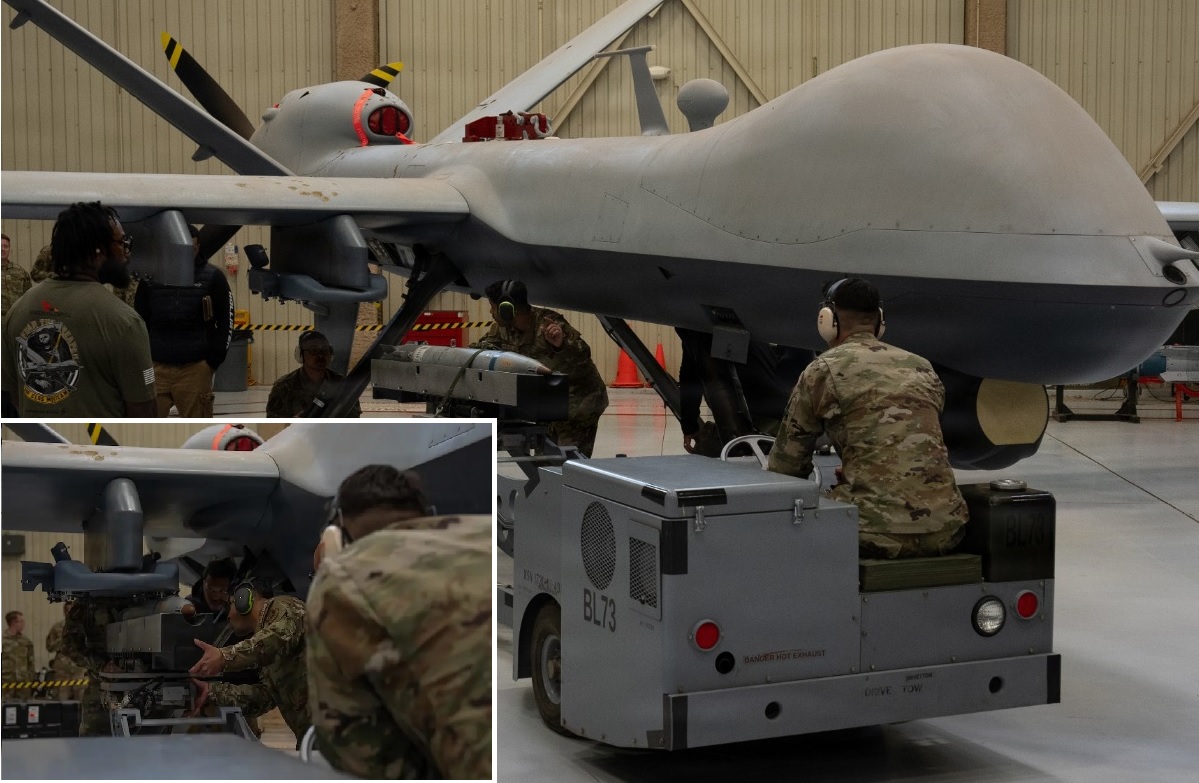
World
CANNON AIR FORCE BASE, N.M. — May 19, 2026 : The U.S. Air Force Special Operations Command (AFSOC) has officially integrated the GBU-39B Small Diameter Bomb (SDB) weapon system onto MQ-9 Reaper aircraft assigned to the 27th Special Operations Wing (SOW), significantly expanding the drone’s long-range precision strike capabilities in support of special operations missions. The capability reached operational status within the wing during the spring of 2026 as part of broader Air Commando modernization efforts aimed at improving survivability and precision engagement options in increasingly contested operational environments. Precision Strike Capability for MQ-9 Fleet Manufactured by Boeing, the GBU-39B is a 250-pound, low-yield, all-weather precision-guided glide bomb designed to strike targets while limiting collateral damage. The weapon uses a combined GPS and inertial navigation guidance system and deploys folding wings after release, allowing it to glide extended distances toward designated targets. According to U.S. Air Force data, the munition carries approximately 36 pounds of high explosive and can penetrate up to one meter of steel-reinforced concrete. When released from sufficient altitude and speed, the GBU-39B can glide up to 60 miles and strike within one meter of its intended target. The extended standoff range allows MQ-9 Reaper aircraft to engage targets while remaining outside the reach of many ground-based air defense systems, improving aircraft survivability during operations in contested airspace. “In this shifting battlespace, adversaries layer lethal obstacles to deny us,” said U.S. Air Force Lt. Col. Joshua Swann, an MQ-9 squadron commander assigned to the 27th Special Operations Wing. “The GBU-39’s reach guarantees we can stay in a fight under hostile threats and continue to solve the joint force’s hard tactical problems.” BRU-78 Dual Carriage System Expands Weapon Loadout To field the GBU-39B effectively, the MQ-9 utilizes the BRU-78 Dual Carriage System developed by L3Harris specifically for the Reaper platform. The 88-pound carriage system integrates two BRU-71 pneumatic ejector units, enabling the drone to carry two GBU-39B munitions on a single hardpoint without requiring structural modifications to the aircraft. Before the introduction of the BRU-78 system, each MQ-9 pylon was limited to carrying a single conventional munition. The upgraded configuration doubles the number of weapons available on a given station, allowing the aircraft to remain on station longer and prosecute multiple targets during a single sortie. “When striking targets, our intent is to maximize effects and minimize collateral damage,” said an MQ-9 pilot assigned to the 27th Special Operations Wing. “Carrying a higher number of low-yield munitions allows us to stay on station longer and provide more effective support to our troops on the ground.” GBU-39B Service History and Combat Use The GBU-39B first entered U.S. Air Force service in 2006 and has since become one of the military’s widely used precision-guided standoff weapons. According to Air Force information, the United States and partner nations have employed more than 17,000 Small Diameter Bombs across operations ranging from counterterrorism missions to large-scale conventional warfare. The weapon has previously been integrated onto multiple combat aircraft, including the F-15E Strike Eagle, F-16 Fighting Falcon, F-22 Raptor, F-35 Lightning II, B-1B Lancer, and B-2 Spirit bomber fleets. Within the 27th Special Operations Wing, the GBU-39B is also carried by AC-130 Ghostrider II gunships, which can carry up to eight of the munitions on wing-mounted stations. “The GBU-39 is one of our most versatile munitions,” said U.S. Air Force Lt. Col. Clifford Lucas, an AC-130 squadron commander assigned to the 27th Special Operations Wing. “By putting this level of adaptable firepower under our wings, we ensure our warfighters always have the exact tool needed to eliminate the threat.” Broader Modernization Effort The MQ-9 Reaper, manufactured by General Atomics Aeronautical Systems, has served as a primary intelligence, surveillance, reconnaissance, and strike platform for the U.S. military for nearly two decades. Valued at approximately $34 million per aircraft depending on configuration, the platform has been extensively employed in both counterterrorism and conventional military operations. Air Force officials stated that integrating long-range glide munitions onto the MQ-9 forms part of a broader effort to adapt legacy platforms to evolving operational requirements and increasingly sophisticated threats. Previous testing involving GBU-39B integration and BRU-78 dual carriage configurations was conducted during 2025 at multiple Air Force facilities before the capability entered operational service with the 27th Special Operations Wing. “This capability gives our crews greater flexibility to deliver precision effects while supporting the Joint Force across the spectrum of conflict,” said U.S. Air Force Col. Robert Johnston, commander of the 27th Special Operations Wing. “Our Air Commandos remain focused on providing relevant, ready and lethal options for today’s fight and while preparing for tomorrow’s challenges.” The 27th Special Operations Wing, based at Cannon Air Force Base, New Mexico, operates MQ-9 Reaper aircraft in support of global special operations missions, including intelligence gathering, armed overwatch, and precision strike operations.
Read More → Posted on 2026-05-19 14:36:16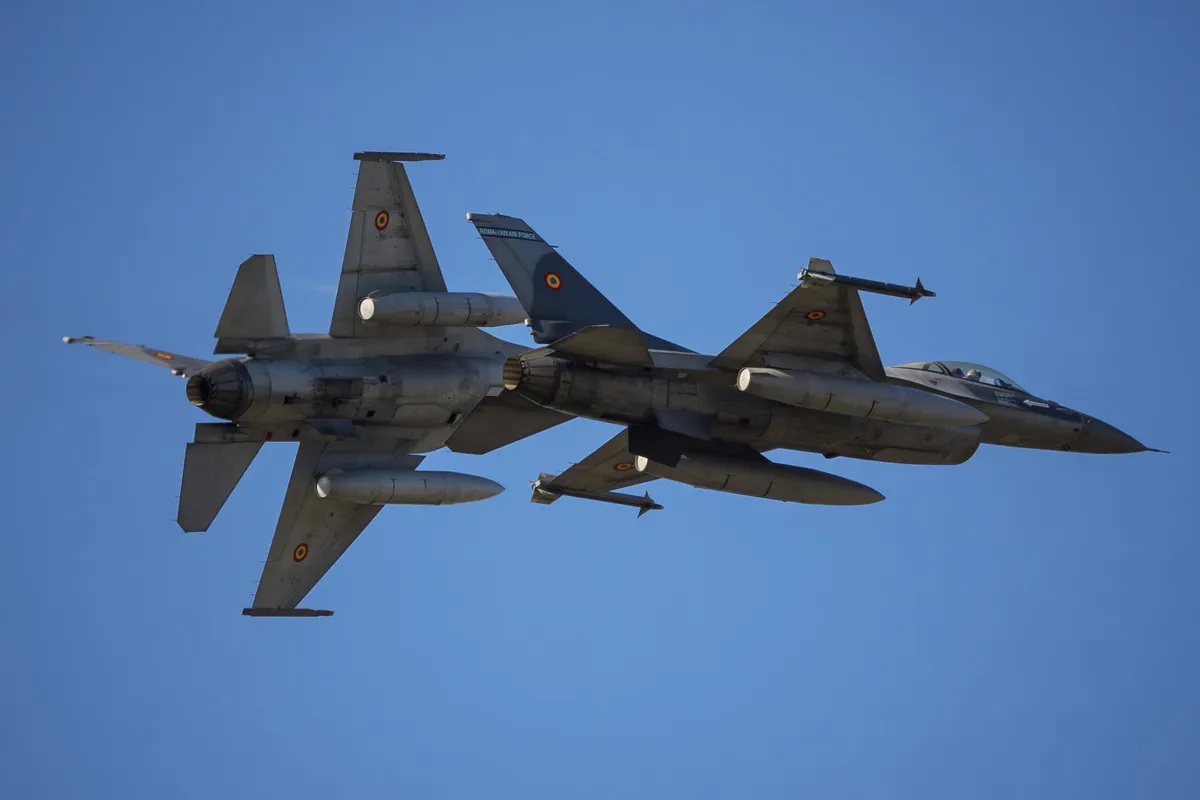
World
TALLINN / ŠIAULIAI, — May 19, 2026 : A Romanian Air Force F-16 Fighting Falcon operating under NATO’s Baltic Air Policing mission shot down a drone that entered Estonian airspace from Russian territory on Tuesday, after regional air defense authorities determined the aircraft posed a potential threat to air traffic safety and national security. Estonian authorities assessed the unmanned aerial vehicle as likely Ukrainian in origin and said it may have deviated from its intended route due to Russian electronic warfare measures, including GPS spoofing and jamming activity near the border region. Drone Entered Estonian Airspace From Russia According to the Estonian Defense Forces, the drone was detected at approximately 12:00 p.m. local time entering the south-eastern corner of Estonian airspace from Russia before continuing north-east toward central Estonia. Initial tracking information was provided by Latvian authorities after the drone was observed moving near Latvian-controlled monitoring sectors. Estonian radar systems subsequently confirmed the airspace violation, prompting the activation of agreed NATO and national air defense procedures. At the time of the incident, two Romanian F-16 fighters assigned to NATO’s Baltic Air Policing mission were already airborne on a routine training sortie from Šiauliai Air Base in Lithuania. NATO command redirected the aircraft to intercept the target as the closest available allied assets in the region. The intercept operation was coordinated through the Latvian Control and Reporting Center in cooperation with Estonian air defense authorities. Romanian F-16 Conducted Missile Engagement The Romanian fighters intercepted the drone south of Põltsamaa near Lake Võrtsjärv. Following visual identification conducted under standard peacetime engagement procedures, one of the F-16s launched a single air-to-air missile at the target. The drone was destroyed at approximately 12:14 p.m. local time. Romanian and Estonian defense officials did not disclose the exact missile type used during the engagement. Romanian F-16s deployed for Baltic Air Policing missions normally carry two AIM-120C AMRAAM missiles and two AIM-9X Sidewinder missiles as part of their standard air defense configuration. Romanian Acting Defense Minister Radu Miruță identified the pilot involved in the interception as Lieutenant Colonel Costel-Alexandru Pavelescu. The Romanian Ministry of Defense stated that all NATO identification, verification, and engagement authorization procedures were completed before the missile was launched. Romanian officials described the interception as the first kinetic engagement conducted by the current Romanian Baltic Air Policing detachment, known as the “Carpathian Vipers.” Miruță announced that he would propose awarding the pilot the First Class Peace Envoy Emblem. Wreckage Fell Near Residential Area The wreckage of the drone fell in a marshy and wooded area near Kablaküla village in Põltsamaa Municipality, close to Lake Võrtsjärv in southern Estonia. Authorities stated that debris landed approximately 30 meters from the nearest residential building. No injuries, fires, or property damage were reported. Bomb disposal teams, rescue services, police units, and security personnel secured the impact area shortly after the incident. Estonian authorities warned residents not to approach or touch any debris and instructed the public to report findings directly to emergency services. Search and recovery operations continued throughout Tuesday afternoon as investigators worked to collect wreckage fragments and assess the drone’s technical characteristics. Officials have not publicly released photographs or identified the drone model. The Estonian Internal Security Service opened a criminal investigation under statutes concerning attacks against air traffic safety. Estonia and Latvia Issued Air Threat Alerts Following confirmation of the airspace breach, Estonia activated its EE-Alarm warning system for several southern counties, including Tartu, Jõgeva, Viljandi, Valga, Võru, and Põlva. The alert remained active until approximately 12:45–12:55 p.m. local time, after authorities confirmed the airspace was secure. Latvia also issued temporary airspace threat warnings for several municipalities near its eastern border during the operation. Estonian Defense Minister Hanno Pevkur confirmed that Latvian authorities had provided advance information regarding the drone’s movement before it entered Estonian territory. Pevkur stated that Ukraine’s defense minister later apologized during a telephone conversation regarding the incident and welcomed the successful interception. He reiterated that Estonia has not granted permission for non-allied countries to use its airspace for military operations and noted that Ukraine had not requested authorization. Ukrainian Foreign Ministry spokesperson Heorhii Tykhyi also issued a public apology, describing the incident as unintended. Romanian Detachment Operating From Lithuania Romania deployed its current Baltic Air Policing detachment to Šiauliai Air Base in early April 2026. The deployment includes approximately six F-16 aircraft and around 100 personnel. The Romanian contingent operates alongside a French Air and Space Force Rafale detachment stationed at the same Lithuanian base and replaced a previous Spanish Air Force rotation. The deployment supports NATO’s Baltic Air Policing and Eastern Sentry activities, which maintain continuous Quick Reaction Alert coverage over the airspace of Estonia, Latvia, and Lithuania from bases including Šiauliai and Ämari. According to NATO Allied Air Command, the current mission marks Romania’s fourth Baltic Air Policing deployment from Lithuania. Romania first contributed to the mission in 2007 using MiG-21 LanceR aircraft before transitioning to F-16 operations after the retirement of the MiG-21 fleet. Incident Follows Previous Drone Violations Tuesday’s interception occurred amid continuing Ukrainian strikes on targets inside Russia and coincided with Russian air defense activity and temporary flight restrictions at airports in Pskov and at Pulkovo Airport. The incident also follows several previous drone incursions in the Baltic region. On March 25, 2026, a drone entering from Russian airspace struck the chimney of the Auvere power plant in north-eastern Estonia. In September 2025, Polish and allied aircraft, including Dutch F-35 fighters, intercepted and destroyed Russian drones that crossed into Polish airspace during a large-scale Russian missile and drone attack against Ukraine. Estonian Air Force Commander Brigadier General Riivo Valge stated that while the immediate threat had been neutralized, authorities continue monitoring the region for possible additional airspace violations linked to ongoing military activity near NATO’s eastern border. No further unauthorized drones were reported in Estonian airspace following the interception.
Read More → Posted on 2026-05-19 14:23:04
World
TOKYO, — May 18, 2026 : Japan’s Ministry of Defense has released a comprehensive new briefing outlining a major expansion of the country’s military space capabilities, including increased defense spending, organizational restructuring, satellite development programs, and deeper operational cooperation with allies. The May 2026 document, titled “Strengthening Defense Capabilities in the Space Domain,” presents space as an increasingly contested operational environment and details how Japan plans to strengthen its ability to monitor, protect, and operate assets in orbit. Space Operations Group Expansion At the center of the expansion is the continued growth of the Space Operations Group within the Japan Air Self-Defense Force. The organization, headquartered at Fuchu Air Base in Tokyo, is expected to reach approximately 880 personnel by the end of fiscal year 2026. The force has expanded significantly since the creation of the original 20-member Space Operations Squadron in 2020. Personnel levels increased to approximately 670 members by the end of fiscal year 2025 as Japan accelerated the development of military space operations. As part of the restructuring, the Air Self-Defense Force is scheduled to be renamed the Aerospace Self-Defense Force during fiscal year 2026 to reflect the growing role of space operations in national defense planning. According to the ministry, the Space Operations Group will include three Space Operations Squadrons, a Space Support Unit, and a Space Intelligence Group. These units will oversee space situational awareness operations, satellite interference monitoring, intelligence collection, and operational support functions related to military space activities. Rapid Increase in Space Defense Spending The briefing shows a sharp increase in Japan’s space-related defense budget over the past several years. Space defense spending reached approximately 174 billion yen in fiscal year 2026 on a contract basis. The ministry stated that spending increased from approximately 79 billion yen in fiscal year 2022 to around 540 billion yen in fiscal year 2025, reflecting the rapid pace of capability development and infrastructure expansion. The funding increase supports satellite procurement programs, surveillance systems, launch infrastructure, and the establishment of new operational units dedicated to space missions. Threat Assessment and Orbital Security Concerns The Ministry of Defense briefing identifies the rapid growth of foreign military satellite capabilities as one of the primary drivers behind Japan’s expansion plans. Citing Military Balance 2024 data, the document states that China’s military satellite fleet increased from approximately 40 satellites in 2012 to 237 satellites in 2024 across multiple mission categories. The ministry outlined several threats it considers risks to Japanese and allied space assets, including: Physical co-orbital anti-satellite weapons Electronic jamming systems High-power microwave directed-energy systems Ground-based laser dazzling systems Cyber attacks targeting ground control facilities Anti-satellite missile systems The briefing also highlighted the growing danger posed by orbital debris. According to NASA figures referenced in the document, more than 30,000 tracked objects are currently present in orbit. Japan’s Space Domain Awareness network now operates continuously to monitor collision risks and provide warnings to satellite operators. Satellite Development Programs Japan is simultaneously expanding domestic satellite programs intended to strengthen independent surveillance and tracking capabilities. A constellation of information-gathering satellites is scheduled to begin operations during fiscal year 2026. Several private companies are participating in the effort through government-supported contracts. QPS Research Institute is developing small satellites capable of onboard imagery processing and optical communications transmission. IHI Aerospace and the Japan Aerospace Exploration Agency (JAXA) are using the HTV-X cargo spacecraft platform to demonstrate infrared sensors designed for detecting and tracking hypersonic glide vehicles. NTT Data is developing tactical AI satellites capable of integrating information from multiple data sources while supporting two-way communications with ground systems. Initial deployment is planned for fiscal year 2027. Mission Assurance and Launch Capabilities The Ministry of Defense has also initiated multiple programs focused on mission assurance and satellite resilience. Canon Electronics is developing a multi-orbit observation satellite designed to monitor spacecraft operating from low Earth orbit through geostationary orbit. Astroscale is conducting demonstrations involving rendezvous and proximity operations at geostationary altitude, along with optical communication data transfer between satellites. Space One is developing an upgraded Kairos small launch vehicle equipped with methane-engine technology and configurable payload systems intended to support responsive launch operations for defense missions. Expansion of Space Surveillance Infrastructure Japan’s space surveillance infrastructure is also being expanded through new radar systems, monitoring equipment, and planned orbital assets. The ministry confirmed that its Space Situational Awareness operations system has been operational since March 2023. Satellite interference monitoring equipment entered service in March 2024. SSA radar systems, including a facility near Sanyo-Onoda in Yamaguchi Prefecture, became operational in March 2025. Additional laser ranging equipment is scheduled for deployment during fiscal year 2026. A dedicated Space Domain Awareness satellite is also planned for launch during fiscal year 2026. Cooperation With the United States and Allies Japan’s military space expansion is being carried out alongside increased cooperation with allied nations, particularly the United States. In December 2024, the United States established U.S. Space Forces Japan at Yokota Air Base, creating a permanent American military space presence in the country to improve operational coordination and interoperability. During defense ministerial talks in March 2025, Japan and the United States confirmed cooperation on the development of a low Earth orbit satellite constellation focused on hypersonic glide vehicle detection and tracking. The two countries are also continuing collaboration under the Protected Anti-Jam Tactical Satellite Communications (PATS) framework. Japan has additionally expanded participation in multinational space security initiatives. The country joined the Combined Space Operations (CSpO) initiative in 2023 alongside the United States, Australia, Canada, France, Germany, Italy, New Zealand, Norway, and the United Kingdom. The Space Operations Group also joined the NATO-led multinational space exercise AsterX in 2024, increasing Japan’s participation in allied operational planning and military space exercises. Current Capability Assessment The Ministry of Defense briefing acknowledges that Japan currently remains behind several major space powers in dedicated military satellite capabilities. According to figures included in the document, China currently operates 167 reconnaissance satellites, while the United States maintains 46 early warning satellites. Japan currently operates no dedicated military reconnaissance or early warning satellite constellations at a comparable scale. The ministry identified commercial satellite constellations beginning operations in fiscal year 2026 as a near-term solution to narrow the capability gap. Future tactical AI satellite deployments and multi-orbit observation platforms are expected to support longer-term expansion plans. The document describes the overall effort as part of Japan’s broader strategy to establish sustained operational capabilities in space while strengthening surveillance, resilience, and allied interoperability in response to evolving security challenges in orbit.
Read More → Posted on 2026-05-18 17:56:01
World
SEOUL, South Korea — May 18, 2026 : The Republic of Korea Marine Corps has publicly unveiled the KAAV-II, its next-generation amphibious infantry fighting vehicle, for the first time, revealing a new unmanned turret armed with a 40mm Cased Telescoped Ammunition (CTA) autocannon as part of South Korea’s ongoing amphibious warfare modernization program. Developed by Hanwha Aerospace, the KAAV-II is intended to replace or supplement the Marine Corps’ current fleet of KAAV-7A1 assault amphibious vehicles, which are derived from the AAV-7 platform currently in service. The unveiling provided the clearest look so far at the vehicle’s combat configuration and the advanced systems planned for integration into South Korea’s future armored vehicle fleet. Defense observers, including military commentator Mason Yeonhaku, noted that several technologies incorporated into the KAAV-II are also planned for the upcoming K-NIFV (Korean New Infantry Fighting Vehicle) program. By integrating these systems into the KAAV-II first, South Korean developers are establishing a common technological foundation for multiple next-generation armored platforms. A central feature of the KAAV-II is its unmanned turret equipped with a 40mm CTA autocannon. The new turret replaces the manned weapon station mounted on existing KAAV vehicles, which currently use a 40mm automatic grenade launcher alongside a 12.7mm heavy machine gun. The unmanned configuration is designed to improve crew survivability while increasing available internal space for embarked Marines and mission equipment. According to available defense data, the KAAV-II has a combat weight of approximately 35 tons and is designed to improve both amphibious mobility and ground combat effectiveness. The 40mm CTA autocannon is intended to provide greater firepower against light armored vehicles and low-altitude aerial threats, including unmanned aerial systems. The weapon system also reflects the increasing adoption of higher-caliber automatic cannons on modern infantry fighting vehicles to address evolving battlefield requirements. Development of the KAAV-II began around 2015 as part of the Republic of Korea Marine Corps’ long-term modernization effort. A scale model of the vehicle was first displayed during the Seoul ADEX defense exhibition in 2019. Since then, the program has continued through testing and development phases focused on improving water mobility, protection, and digital battlefield integration. The vehicle is expected to incorporate advanced command-and-control systems, modern sensor suites, and elements of active protection technologies aligned with systems under development for the K-NIFV program. Reports from South Korean defense sources indicate that the KAAV-II is also designed to achieve higher water speeds than current amphibious assault vehicles, with some estimates placing projected speeds at approximately 20 kilometers per hour or higher through the use of upgraded propulsion systems. Despite the recent public unveiling, the physical KAAV-II prototype has remained absent from several major South Korean defense exhibitions in recent years. Journalists and defense analysts attending events such as KADEX, MADEX, and Seoul ADEX reported that only scale models of the vehicle were displayed, while other future systems, including the HPRS and K-NIFV prototypes, were exhibited in person. Industry reports indicated that Hanwha Aerospace reduced public appearances of the physical prototype following a fatal amphibious testing accident near Pohang in September 2023. The incident reportedly resulted in additional evaluations and safety reviews during the vehicle’s ongoing development process. The Republic of Korea Marine Corps currently operates approximately 164 KAAV vehicles. Once development and testing requirements are completed, the KAAV-II is expected to proceed to mass production and gradually enter operational service alongside existing K-21 Infantry Fighting Vehicles and current-generation KAAV platforms. The KAAV-II program forms part of South Korea’s broader effort to strengthen indigenous amphibious warfare and armored combat capabilities while improving interoperability across future military vehicle programs.
Read More → Posted on 2026-05-18 17:43:33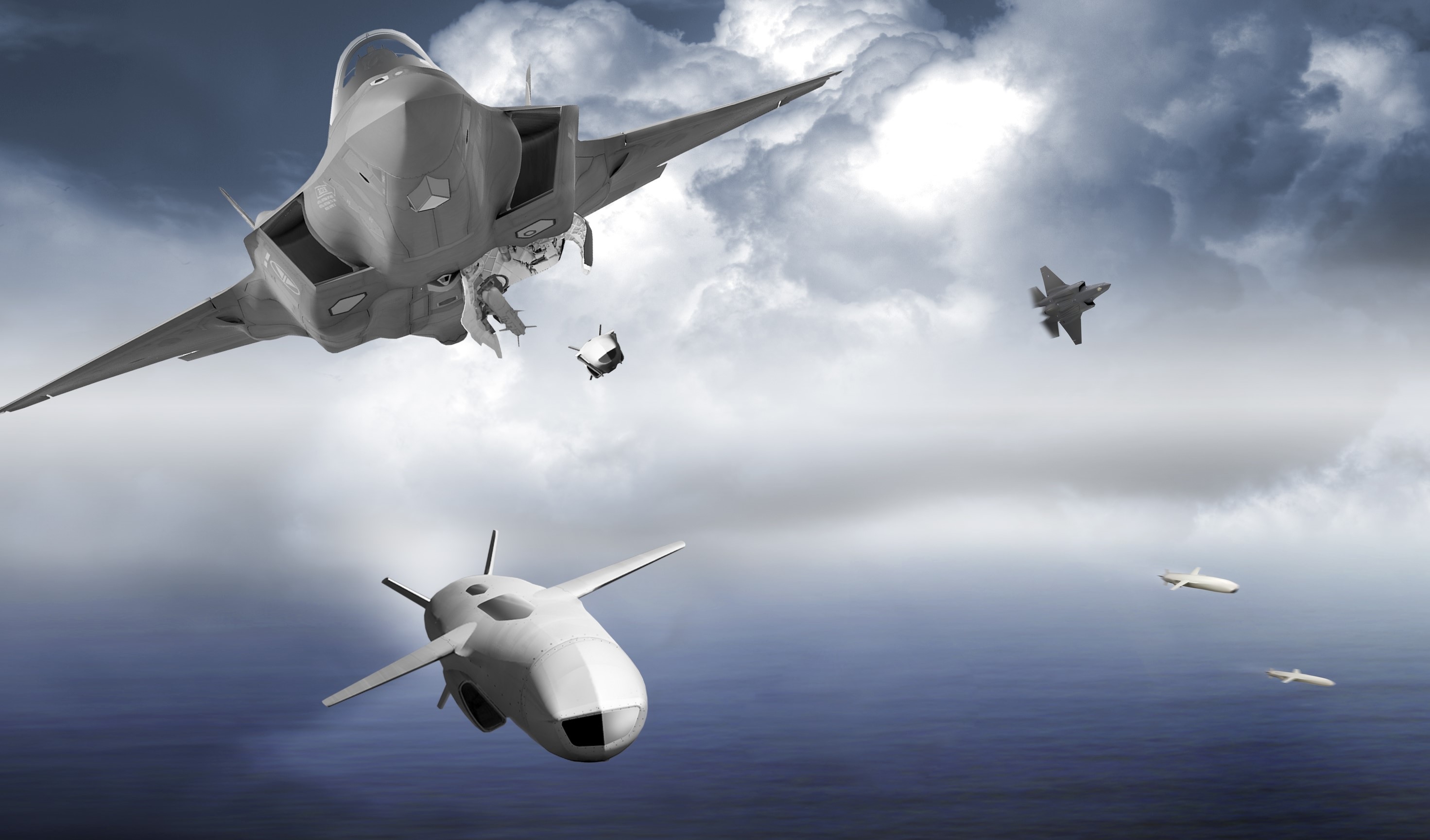
World
OSLO, Norway — May 18, 2026 : Germany has signed a follow-on contract with Norwegian defense manufacturer Kongsberg Defence & Aerospace for additional Joint Strike Missiles (JSM) intended for the German Air Force’s future fleet of F-35A Lightning II fighter aircraft. The agreement, finalized in May 2026, is valued at approximately NOK 3.5 billion and represents a further expansion of Germany’s precision-strike capabilities under its ongoing air force modernization program. The new procurement follows Germany’s initial JSM contract signed on June 30, 2025, which was valued at roughly NOK 6.5 billion. With the original order, Germany became the fifth nation to procure the missile system after Norway, Japan, Australia, and the United States. The agreement is structured as a government-to-government sale between Germany and Norway, with the Norwegian Defence Materiel Agency (NDMA) acting as the contracting authority on behalf of Berlin. The additional order is intended to increase missile stockpiles and readiness levels ahead of the introduction of Germany’s future F-35 fleet into operational service. F-35 Modernization Program Germany’s acquisition of the Joint Strike Missile is directly connected to its purchase of 35 F-35A Lightning II fighter jets through the U.S. Foreign Military Sales program. The aircraft are expected to gradually replace part of the German Air Force’s aging Panavia Tornado IDS strike fleet, including aircraft assigned to NATO nuclear-sharing missions. Deliveries of the first German F-35A aircraft are scheduled to begin in 2026. Initial pilot training and operational preparation will take place at Ebbing Air National Guard Base in Fort Smith, Arkansas, before the aircraft are transferred to their permanent operating location at Büchel Air Base in Germany in 2027. Øyvind Kolset, Executive Vice President of Kongsberg and head of the company’s Missiles and Aerostructures division, stated that the additional contract demonstrates the importance of the JSM for F-35 operations and supports Germany’s efforts to build up operational missile readiness for the future fleet. Joint Strike Missile Capability The Joint Strike Missile was jointly developed by Kongsberg and Raytheon Missiles & Defense as an advanced air-launched precision strike weapon derived from the Naval Strike Missile (NSM). The missile is currently the only weapon in its category specifically designed for internal carriage inside the weapons bays of the F-35A and F-35C variants, allowing the aircraft to retain its low-observable stealth characteristics during strike missions. Designed for both anti-ship and land-attack operations, the missile incorporates advanced navigation systems, low-altitude terrain-following flight profiles, and automatic target recognition technology. The JSM has a length of approximately 4 meters and a stowed width of 480 mm, dimensions specifically engineered to meet the internal carriage requirements of the F-35 platform. Certification of the missile for operational use is planned alongside the rollout of the F-35 Block 4 software standard, which is expected to introduce expanded weapons integration and enhanced combat capabilities for the aircraft. Expanding Germany-Norway Defense Cooperation Officials from both countries described the agreement as part of a broader expansion of bilateral defense cooperation between Berlin and Oslo. Norwegian Defence Minister Tore O. Sandvik stated that the missile agreements reflect the objectives of the Hansa Agreement signed earlier in 2026, which was established to strengthen operational defense cooperation between the two NATO members. According to Sandvik, the agreements demonstrate how the strategic partnership is being translated into practical military capabilities that support both national defense requirements and NATO collective security objectives. Kongsberg President and Chief Executive Officer Eirik Lie said the company is engaged in several additional projects with German industry partners beyond the JSM program. These include combat systems for the Type 212CD submarine program, remote weapon stations, and development of a new supersonic strike missile in cooperation with Diehl Defence and MBDA. The company is also working with European defense technology firm Helsing on projects related to advanced space and defense technologies as part of wider European industrial cooperation efforts. Procurement Overview Contract Phase Date Signed Estimated Value Key Details Initial JSM Order June 30, 2025 NOK 6.5 Billion Germany became the fifth JSM operator Follow-On JSM Order May 2026 NOK 3.5 Billion Expands missile inventory for F-35 readiness The latest procurement further strengthens Germany’s long-range strike capabilities as the Luftwaffe prepares for the operational introduction of the F-35A and continues broader modernization efforts within NATO’s integrated defense framework.
Read More → Posted on 2026-05-18 17:31:08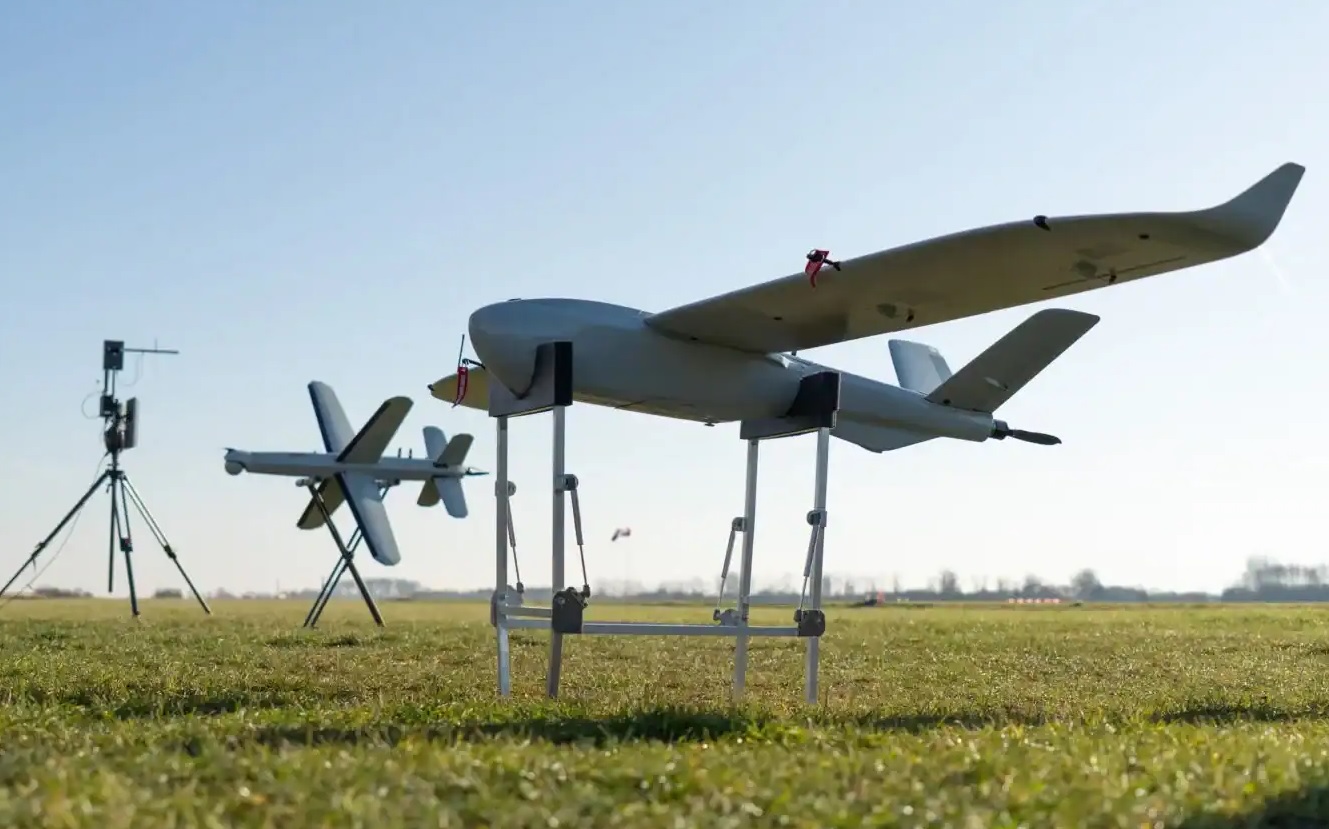
World
OLÍN, Czech Republic — May 18, 2026 : U&C UAS, a Czech Republic-based drone manufacturer founded by Ukrainian defense industry specialists, has secured a contract to supply reconnaissance unmanned aerial systems (UAS) to U.S. Army units stationed in Europe, marking a significant step in the company’s expansion into NATO and international defense markets. The agreement is being facilitated through ATP Gov, a U.S. government contractor serving as the intermediary between the manufacturer and the U.S. military. The systems will support intelligence, surveillance, and reconnaissance (ISR) missions for American forces operating across the European theater. The contract follows a series of operational evaluations conducted during military exercises designed to simulate modern high-intensity warfare conditions. According to the company, U.S. Army representatives assessed the drone platform under demanding operational scenarios that included communications degradation, electronic warfare interference, and sustained operational tempos similar to real combat environments. Following the evaluation process, U.S. military officials determined that the platform demonstrated strong reliability, operational efficiency, and stable performance during extended ISR missions. Evaluators noted that the system improved existing reconnaissance capabilities by providing persistent airborne surveillance and real-time intelligence transmission in contested environments. David Jirman, Chief Commercial Officer of U&C UAS, confirmed the agreement and stated that the customer highly valued the company’s ability to deliver critical ISR capabilities. “Our valued customer highly appreciated our ability to provide critical ISR capabilities, ensuring sustained surveillance and real-time data transmission to significantly enhance situational awareness,” Jirman said. “Our UAS system is a versatile reconnaissance tool and a reliable solution capable of meeting the stringent requirements of modern military missions.” Neither U&C UAS nor ATP Gov disclosed the value of the contract, the number of systems ordered, delivery timelines, or the exact U.S. Army units and deployment locations involved. The company also did not publicly identify the drone model included in the agreement. However, U&C UAS is primarily known for its Stork LR, also referred to as the Leleka-LR, an autonomous reconnaissance drone system designed for long-endurance ISR missions. The platform is equipped with encrypted digital communication systems and is engineered to maintain operations in electronically contested environments where GPS disruption and signal interference are common. The agreement comes as the U.S. military continues expanding its ISR requirements across Europe following the deterioration of the regional security environment since February 2022. U.S. forces deployed in Poland, Romania, Germany, and the Baltic states maintain elevated readiness levels and increasingly rely on persistent airborne surveillance to support operational awareness and force protection missions. Military reconnaissance drones are used to monitor border regions, observe troop and equipment movements, support base security, and provide early warning against emerging threats. Long-endurance ISR platforms also supplement larger unmanned systems by delivering continuous tactical intelligence in areas where satellite coverage may be limited or manned reconnaissance flights carry increased operational risk. U&C UAS was established in July 2022 in the Czech Republic by co-owners of Ukrainian drone manufacturer DeViRo, one of Ukraine’s largest producers of military reconnaissance drones and the developer of the widely used Leleka-100 system. The company operates a manufacturing facility in Kolín and focuses on producing unmanned systems for NATO member states and international defense customers. The company’s Ukrainian origins have provided direct operational experience in contested battlefield conditions heavily affected by electronic warfare and drone operations. According to the company, this experience has influenced the design, maintenance, and operational structure of its reconnaissance systems. Manufacturing operations within the Czech Republic also ensure compliance with NATO industrial and interoperability standards. U&C UAS is registered under the NATO codification system with NCAGE code 8400G, allowing integration into allied military logistics and procurement frameworks. ATP Gov, the U.S.-based contractor facilitating the procurement, specializes in unmanned systems and defense acquisition programs while maintaining compliance with applicable U.S. procurement regulations, including National Defense Authorization Act (NDAA) requirements. The U.S. Army agreement represents an important development in U&C UAS’s international export strategy. The contract follows a separate agreement signed in February 2026 with India’s TUNGA Aerospace Industries Private Limited involving UAV deliveries, training, and potential technology cooperation. Together, the recent agreements highlight the company’s transition from a regional drone supplier into an emerging international provider of reconnaissance and ISR systems for allied military forces.
Read More → Posted on 2026-05-18 17:04:11
India
ISLAMABAD / RIYADH, — May 18, 2026 : Pakistan has deployed approximately 8,000 military personnel, a squadron of JF-17 fighter jets, military drones and advanced air defence systems to Saudi Arabia under the framework of a confidential Strategic Mutual Defence Agreement signed between the two countries in 2025, according to Pakistani security and government sources. The deployment, which reportedly began in early April, represents the first major operational activation of the bilateral defence pact signed in Riyadh on September 17, 2025, by Saudi Crown Prince Mohammed bin Salman and Pakistani Prime Minister Shehbaz Sharif. Deployment Details According to officials familiar with the arrangement, the Pakistani military package dispatched to Saudi Arabia includes around 8,000 troops operating in training, advisory and defensive roles. The deployment adds to thousands of Pakistani military personnel already stationed in the Kingdom under previous bilateral security agreements. Pakistan has also deployed a full squadron of approximately 16 JF-17 Thunder fighter aircraft, jointly developed by Pakistan and China. The fighter jets were reportedly transferred to King Abdulaziz Air Base in Dhahran during the initial phase of the operation. In addition to the aircraft deployment, Pakistan has sent two operational squadrons of military unmanned aerial vehicles (UAVs) and the Chinese-manufactured HQ-9 long-range surface-to-air missile defence system. Sources stated that all military hardware is being operated by Pakistani personnel, while Saudi Arabia is covering the financial costs associated with the deployment, including operational and logistical expenses. Strategic Mutual Defence Agreement The deployment falls under the Strategic Mutual Defence Agreement signed between Islamabad and Riyadh in September 2025. Although the full text of the agreement remains classified, officials from both countries have confirmed that the pact considers aggression against one state as aggression against the other. Security sources indicated that provisions within the agreement allow for the possible deployment of up to 80,000 Pakistani troops to Saudi Arabia if regional security conditions worsen. Pakistani Defence Minister Khawaja Asif has previously stated that the agreement effectively extends Pakistan’s strategic deterrence umbrella to Saudi Arabia, strengthening the Kingdom’s defence posture amid growing regional instability. Regional Security Environment The military deployment comes amid heightened tensions across the Middle East linked to the ongoing confrontation involving Iran and the United States. The move also follows previous Iranian strikes targeting Saudi energy infrastructure and oil facilities in recent years. At the same time, Pakistan has continued diplomatic efforts aimed at reducing tensions between Washington and Tehran. Islamabad has recently hosted high-level discussions focused on preserving a temporary ceasefire and encouraging broader diplomatic engagement between the two sides. Pakistan’s simultaneous role as a military partner of Saudi Arabia and a diplomatic intermediary between Iran and the United States reflects its increasingly complex position within the regional security environment. Defence Analysts’ Assessment Defence and geopolitical analysts said the practical structure of the 2025 defence pact reflects a longstanding strategic arrangement between Islamabad and Riyadh rather than a fully reciprocal military alliance. Under the arrangement, Pakistan provides trained military manpower, combat-capable systems and security guarantees, while Saudi Arabia offers financial assistance, investment and broader economic cooperation that supports Pakistan’s domestic economy. Analysts noted that the agreement does not include provisions for reciprocal Saudi troop deployments in the event of an attack on Pakistan. Instead, the operational focus remains centred on reinforcing Saudi territorial defence capabilities through Pakistani military support. Saudi Arabia, which hosts several United States military facilities, has increasingly sought to diversify its regional security structure beyond exclusive reliance on Washington. Analysts view the expanded military partnership with Pakistan as part of Riyadh’s broader effort to strengthen its deterrence capabilities through cooperation with a nuclear-armed ally possessing significant operational military experience. First Major Activation of the Pact Officials familiar with the deployment stated that the agreement remains defensive in nature and does not authorize Pakistani forces stationed in Saudi Arabia to conduct offensive operations against third countries from Saudi territory. The current deployment marks the first major operational implementation of the 2025 Strategic Mutual Defence Agreement and reflects a significant expansion of military coordination between Pakistan and Saudi Arabia, including the stationing of Pakistani fighter aircraft, drone units, air defence systems and combat-ready personnel on Saudi soil.
Read More → Posted on 2026-05-18 16:14:49
World
BERLIN — May 18, 2026 : European aerospace company Destinus and German defense contractor Rheinmetall have accelerated the joint development of the RUTA Block 3 long-range precision strike missile, a system designed to engage targets at distances of up to 2,000 kilometers. Flight testing is scheduled to begin in Ukraine in 2027 as part of a broader European effort to expand industrial-scale production of deep precision strike weapons. The program is intended to strengthen Europe’s long-range strike capabilities while reducing reliance on limited stockpiles through sustained manufacturing capacity. According to the companies, the initiative focuses on combining sovereign European design authority with scalable production across multiple industrial sites. RUTA Block 3 Designed for Long-Range Precision Strike The RUTA Block 3 missile is being developed as the newest member of the RUTA strike missile family, extending the operational architecture already validated through earlier variants. The system is designed for operations in contested environments and incorporates a standard ISO containerized launch configuration, allowing deployment from land-based launchers, maritime platforms, and fixed-site installations. The missile will be powered by a next-generation turbojet engine derived from an enlarged version of the Destinus T220 engine currently under development. It is expected to carry a 250-kilogram-class payload and will incorporate advanced autonomous navigation systems optimized for operations in GNSS-denied or degraded environments. In addition to autonomous navigation, the missile will include terminal sensing and target detection systems intended to improve strike accuracy during the final engagement phase. Flight-test campaigns for the Block 3 system are planned to begin in Ukraine in 2027. Evolution of the RUTA Missile Family The RUTA missile family has progressed through several development stages, moving from operational validation to serial production. RUTA Block 1, the baseline variant, is currently in mass serial production in the Netherlands. Destinus has continued expanding annual production capacity for the missile family across its European industrial network. The second variant, RUTA Block 2, was developed with support from Ukraine’s Brave1 defense technology platform. The missile is designed as an extended-range cruise system capable of striking targets at distances exceeding 700 kilometers while carrying a 250-kilogram payload. Block 2 incorporates low-altitude terrain-following flight capability and is currently undergoing flight testing in Ukraine ahead of a planned production ramp-up in 2026. Earlier program details released by the companies indicated that the missile also features folding wings, an in-line booster, and a containerized launch architecture similar to the Block 3 configuration. The newly announced Block 3 variant is intended to provide long-range deep strike capability while maintaining compatibility with the broader RUTA production and deployment architecture. Distributed European Production Structure To support industrial-scale manufacturing, the RUTA program is organized across three primary European hubs located in the Netherlands, Ukraine, and Germany. The Netherlands serves as the main engineering, design, and manufacturing authority for the RUTA family, where large-scale production is already underway. Ukraine will support development activities and operational flight testing for the Block 3 variant while also producing selected essential missile components locally. Germany will host the planned joint venture Rheinmetall Destinus Strike Systems, which will manage high-rate mass production, qualification, certification, and final system integration for the Bundeswehr and additional European institutional customers. The joint venture was announced in April 2026 and is expected to be formally established later this year following regulatory approvals. Rheinmetall is expected to hold a 51 percent stake in the partnership, while Destinus will retain the remaining 49 percent. Production Timeline and Industrial Expansion Production at Rheinmetall’s Unterlüß facility in Germany is scheduled to begin with RUTA Block 1 and Block 2 systems during the 2026–2027 timeframe, complementing existing serial production operations in the Netherlands. Manufacturing of the RUTA Block 3 missile at the Unterlüß facility is planned to begin following completion of flight testing and certification activities. Rheinmetall executives stated that the accelerated establishment of the joint venture is intended to support the planned production schedule and expand European manufacturing capacity for long-range precision strike systems. European Control and Regulatory Compliance Destinus representatives stated that the partnership is intended to transition Europe’s long-range strike capability toward sustainable industrial-scale production while maintaining full European control over development and manufacturing activities. Both companies confirmed that all development, production, and export operations related to the RUTA program will comply with applicable national and European legislation, export control regulations, and required government approvals. The collaboration combines Destinus’ missile architecture and aerospace system development capabilities with Rheinmetall’s experience in defense manufacturing, qualification, and large-scale industrial production.
Read More → Posted on 2026-05-18 16:04:08
World
TAIPEI, Taiwan — May 18, 2026 : The Republic of China Army (ROCA) is moving forward with a modernization program for its domestically produced CM-34 Clouded Leopard infantry fighting vehicles (IFVs), introducing an upgraded weapon system capable of firing programmable airburst ammunition. The enhanced variant is expected to receive the designation CM-34A1, with operational testing scheduled to conclude by the end of June. The upgrade program is being carried out by Taiwan’s Ministry of National Defense (MND) Armaments Bureau in cooperation with the National Chung-Shan Institute of Science and Technology (NCSIST), the two organizations responsible for the development and production of the Clouded Leopard armored vehicle family. New Mk-44 ABM Cannon Integration The primary improvement in the CM-34A1 centers on its main armament. Existing CM-34 vehicles currently use the first-generation 30 mm Mk-44 Bushmaster II long-barrel cannon. Under the new upgrade, the vehicle will receive the second-generation Mk-44 Air Burst Munition (ABM) Bushmaster cannon, which introduces programmable and timed firing functions. The new system enables the vehicle to fire airburst high-explosive ammunition designed to detonate at a pre-set point in flight. This capability improves effectiveness against infantry positioned behind cover, trench systems, unarmored vehicles, and other battlefield targets that are difficult to engage using conventional direct-fire ammunition. Military sources familiar with the program indicated that the upgraded weapon system will be integrated onto a new version of the CM-34 built on the second-generation Clouded Leopard 8x8 wheeled chassis. CM-34 Clouded Leopard Program The CM-34 is an infantry fighting vehicle variant within Taiwan’s Clouded Leopard armored vehicle family, a domestically developed 8x8 platform designed for mechanized infantry and rapid deployment operations. The program was developed to reduce reliance on foreign armored vehicle imports while strengthening Taiwan’s indigenous defense industry. Serial production of the CM-34 began in 2019, and the vehicle has since become a key component of Taiwan’s motorized infantry formations. Earlier production figures indicated that more than 300 vehicles had been manufactured by 2023, with additional procurement orders later approved for military police and security units. The standard CM-34 configuration is armed with a 30 mm Mk-44 Bushmaster II chain gun paired with a coaxial 7.62 mm machine gun. The vehicle is designed to provide both armored troop transport and direct fire support during combat operations. Mobility and Protection Systems The Clouded Leopard platform was developed for high mobility across Taiwan’s road infrastructure and urban terrain. The 8x8 wheeled vehicle can reportedly reach speeds of up to 100 kilometers per hour on paved roads. The vehicle is equipped with modular composite armor designed to provide protection against small arms fire and artillery fragments. Additional onboard systems include thermal imaging equipment for crew operations in low-visibility conditions, digital fire-control systems, and a full Chemical, Biological, Radiological, and Nuclear (CBRN) protection suite. The second-generation chassis used for the CM-34A1 is expected to provide improved integration capacity for upgraded combat systems and future modernization requirements. Taiwan’s Ongoing Defense Modernization The CM-34A1 project forms part of Taiwan’s broader effort to modernize its ground forces and expand domestic defense manufacturing capabilities. In recent years, Taiwan has continued investing in locally produced armored vehicles, missile systems, naval platforms, and unmanned technologies as part of its long-term military modernization strategy. Once operational testing and evaluation are completed later this year, the ROCA and the Ministry of National Defense are expected to proceed with further integration and deployment of the upgraded CM-34A1 vehicles into active military service.
Read More → Posted on 2026-05-18 15:49:00
World
ATHENS/ANKARA, — May 18, 2026 : Greece is preparing for a possible declaration extending its territorial waters in the Aegean Sea to 12 nautical miles as Türkiye moves forward with legislation tied to its “Blue Homeland” (Mavi Vatan) maritime doctrine, according to Greek and Turkish diplomatic sources. The developments mark a significant stage in the long-running maritime dispute between the two neighboring NATO members over territorial waters, continental shelves, exclusive economic zones (EEZs), and maritime jurisdiction in the Aegean and Eastern Mediterranean. Currently, both Greece and Türkiye maintain six-nautical-mile territorial limits in the Aegean Sea. Greece argues that under the United Nations Convention on the Law of the Sea (UNCLOS), coastal states are legally entitled to extend territorial waters up to 12 nautical miles. Athens previously expanded its territorial waters in the Ionian Sea to 12 nautical miles in 2021. Greek diplomatic sources stated that Athens is considering administrative and legal measures related to a potential Aegean extension before Türkiye formally adopts its proposed maritime legislation. Greek officials maintain that all Greek islands possess full maritime rights under UNCLOS, including territorial seas, continental shelves, contiguous zones, and EEZs. Greek Foreign Minister Giorgos Gerapetritis recently reiterated that Greece retains the sovereign right to extend its territorial waters under international law. Greek Defense Minister Nikos Dendias also stated that Greek islands possess the same maritime rights as mainland territories under UNCLOS. Türkiye, however, rejects the full application of island-based maritime jurisdiction in the Aegean Sea. Ankara argues that the geographical structure of the semi-enclosed sea requires special consideration and maintains that granting full maritime zones to Greek islands located close to the Turkish coast would limit Türkiye’s access to international waters. Sources within Türkiye’s ruling Justice and Development Party (AKP) indicated that a comprehensive maritime zones bill linked to the “Blue Homeland” doctrine is expected to be submitted to parliament after the religious holiday ending on May 31, 2026. The proposed legislation aims to formally codify Türkiye’s maritime claims across the Black Sea, Aegean Sea, and Eastern Mediterranean into domestic law. Under the draft framework, Türkiye would preserve its current six-nautical-mile territorial limit in the Aegean while reaffirming 12-nautical-mile limits in the Black Sea and Mediterranean Sea. The bill also reportedly includes provisions allowing the Turkish president to declare maritime areas with special status and addresses issues involving disputed “grey zones” in the Aegean. Turkish officials say the legislation is intended to strengthen the country’s domestic maritime legal framework and protect sovereign rights related to seabed resources, hydrocarbons, fisheries, and mineral exploration. According to Turkish sources, the proposed law would require Turkish approval for economic, scientific, and environmental activities conducted within maritime areas claimed by Ankara as part of its EEZ. The dispute remains closely tied to the 1995 resolution passed by the Turkish Grand National Assembly, which declared that any unilateral Greek extension of territorial waters beyond six nautical miles in the Aegean would constitute a casus belli, or cause for war. Turkish presidential adviser Cagri Erhan recently reaffirmed that the parliamentary resolution continues to represent official Turkish policy. Greece has rejected Türkiye’s position, stating that maritime rights are governed by international law and not unilateral domestic legislation. Greek officials have described the proposed Turkish bill as lacking international legal validity and emphasized that UNCLOS remains the primary legal framework governing maritime jurisdiction. The dispute over maritime boundaries has gained additional importance due to natural gas discoveries and energy exploration projects in the Eastern Mediterranean over the past two decades. Control over EEZs and seabed resources has become increasingly significant for regional energy development, offshore drilling operations, and proposed pipeline routes. Turkish officials maintain that the “Blue Homeland” doctrine is intended to secure Türkiye’s maritime interests and prevent regional energy arrangements that exclude Ankara. Greek officials, meanwhile, continue to emphasize that maritime delimitation must be resolved through international legal mechanisms and diplomatic engagement. Despite ongoing disagreements, diplomatic communication channels between Athens and Ankara remain active. Both governments continue discussions aimed at managing tensions in the Aegean while advancing their respective legal and strategic positions on maritime jurisdiction.
Read More → Posted on 2026-05-18 15:41:05
Ukraine Begins Using Long-Range Hybrid Drones Armed With NURS Rockets for Deep Strikes Inside Russia
World
KYIV, Ukraine — May 18, 2026 : Ukraine’s Armed Forces have begun deploying modified long-range unmanned aerial vehicles (UAVs) capable of launching unguided aviation rockets during strike missions up to 500 kilometers inside Russian-controlled territory, according to Major Robert “Magyar” Brovdi, Commander of Ukraine’s Unmanned Systems Forces (USF). The new systems combine the functions of a kamikaze drone and a rocket-launch platform, allowing the UAVs to carry both a heavy explosive payload and multiple air-to-ground rockets in a single mission. Ukrainian officials say the development is intended to increase the effectiveness of deep-strike operations against Russian logistics, air defense positions, command nodes, and fuel infrastructure located far from the front line. Hybrid Drone Configuration According to Brovdi, the modified drones are equipped with a 60-kilogram high-explosive strike warhead along with up to eight NURS unguided aviation rockets. NURS rockets are traditionally used by attack helicopters and close air support aircraft against ground targets. The drones reportedly operate at distances where conventional Ukrainian aircraft and helicopters cannot safely conduct missions because of Russian air defense coverage. Brovdi stated that combining a kamikaze strike capability with rocket deployment creates additional tactical options for attacking defended targets. “No helicopter or plane can get to where the freedom-loving Ukrainian unmanned bird flies. Therefore, this combined method of using kamikaze + 8 NURS opens up completely different opportunities,” Brovdi said. The rockets are intended to suppress nearby defensive elements such as machine gun teams, MANPADS crews, and mobile surface-to-air missile (SAM) operators before the drone’s primary warhead strikes the main objective. Development and Early Testing Brovdi said the concept of integrating NURS rockets onto drones was first tested in 2022 during combat operations in eastern Ukraine. Initial deployments reportedly took place in the Bakhmut and Soledar sectors with the “Klima” unit, as well as near Urozhaine and Krasnohorivka. During the early operational phase, the drones were used primarily against Russian helicopters and defensive positions along the line of combat contact. Reflecting on the first combat tests, Brovdi remarked, “Although we survived, I didn’t like it.” Since then, the system has evolved into a dedicated long-range strike platform designed for operations deep behind Russian lines. Operations in Crimea The Unmanned Systems Forces stated that the hybrid drones have already been used in occupied Crimea. Video footage released by Brovdi reportedly showed drones striking a communications node connected to Russia’s Black Sea Fleet near Myrnyi (Mirne). According to Ukrainian military sources, the drones launched NURS rockets before the UAV’s main warhead impacted the target. Ukrainian officials say the dual-strike approach allows the system to engage defensive personnel and infrastructure simultaneously during a single attack run. Large-Scale Drone Operations The announcement came shortly after one of Ukraine’s largest coordinated long-range drone attacks of the war. On May 17, 2026, Ukrainian forces launched nearly 600 UAVs across 14 Russian regions, according to Russian authorities. Russia claimed that air defenses intercepted 556 drones, although several strategic facilities in and around Moscow were reportedly struck during the operation. Target Facility Location Strategic Sector Elma-Zelenograd Technopark Zelenograd, northwest of Moscow Microelectronics and defense manufacturing Angstrem Semiconductor Plant Zelenograd High-precision weapons components Solnechnogorsk Oil Depot Moscow Region Fuel logistics and storage Moscow Oil Refinery Kapotnya District, Moscow Fuel production and supply Residents in Moscow and nearby regions reported explosions and structural damage following the strikes. In a later statement, Brovdi commented that “Moscow never sleeps,” signaling the continuation of Ukrainian long-range drone operations. Expanding Unmanned Warfare Capabilities The integration of unguided aviation rockets into long-range UAV platforms marks a further expansion of Ukraine’s unmanned warfare capabilities. Ukrainian forces have increasingly relied on drones for reconnaissance, electronic warfare, precision strikes, and long-range attacks against military infrastructure beyond the frontline. Military analysts note that the hybrid drone concept provides Ukraine with a relatively low-cost method of striking protected targets while reducing risks to manned aircraft. The use of rockets against nearby defensive units may also improve the survivability and effectiveness of long-range drone strikes against heavily defended facilities. Ukraine’s Unmanned Systems Forces continue to expand both the operational range of UAVs and the variety of munitions integrated into drone platforms as part of broader efforts to increase long-range strike capacity during the ongoing conflict.
Read More → Posted on 2026-05-18 15:28:42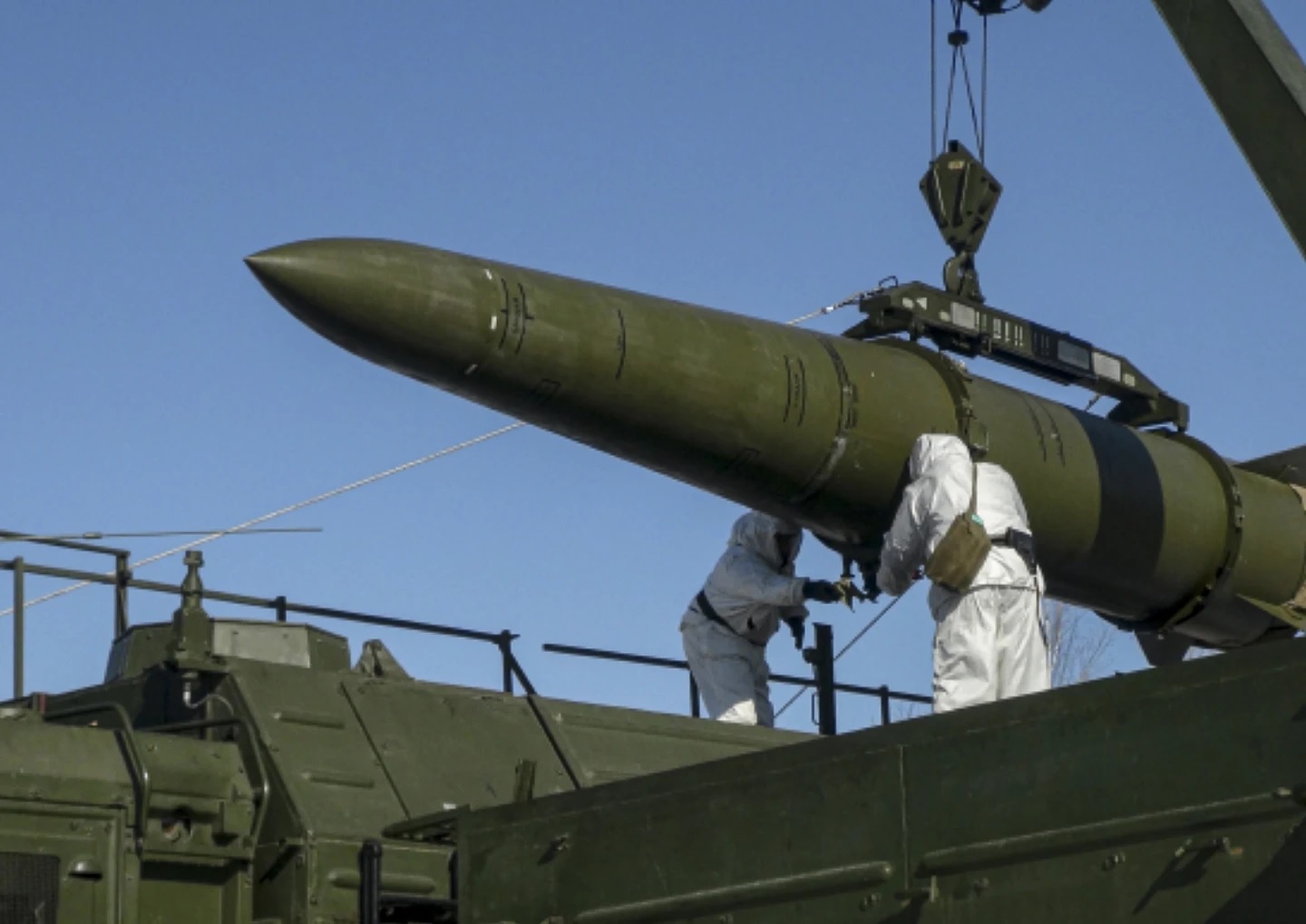
World
MINSK, — May 18, 2026 : Belarus and Russia have launched joint military exercises involving units trained in the combat use and logistical support of tactical nuclear weapons, the Belarusian Defense Ministry announced on Monday. The drills are being conducted under the command of the Chief of the General Staff of the Belarusian Armed Forces, who also serves as First Deputy Minister of Defense. Missile forces and aviation units from both countries are participating in the exercises, which focus on operational coordination, deployment readiness, and the handling of nuclear-capable systems. Focus on Nuclear Support and Deployment Operations According to the Belarusian Defense Ministry, the exercises are designed to evaluate personnel training and improve the operational readiness of forces equipped with modern weapons systems, including special munitions. In coordination with Russian military personnel, participating units are practicing the transport and delivery of nuclear warheads, as well as procedures related to their preparation for potential operational use. The drills also include coordination between missile forces, aviation units, and logistical support structures responsible for handling nuclear munitions. Military officials stated that one of the primary objectives of the training is to test the ability of units to conduct combat operations from temporary and unprepared positions across Belarusian territory. The exercises place particular emphasis on: Rapid redeployment of troops and equipment over long distances Concealed and coordinated troop movements Deployment from temporary operational sites Maintaining combat readiness during mobile operations Coordination of missile and aircraft systems capable of carrying tactical nuclear weapons Belarusian officials described the activities as routine and planned exercises conducted within the framework of the Russia-Belarus Union State. The Defense Ministry stated that the drills are not directed against third countries and do not pose a threat to regional security. Expansion of Russia-Belarus Nuclear Cooperation The exercises are part of a broader expansion of military and nuclear cooperation between Moscow and Minsk that has accelerated since the beginning of Russia’s full-scale invasion of Ukraine. In May 2023, Russia announced the deployment of tactical nuclear weapons to Belarus, marking the first deployment of Russian nuclear weapons outside Russian territory since the collapse of the Soviet Union. On May 25, 2023, the two countries signed agreements regulating the storage, deployment, and operational procedures governing the weapons. Belarus later confirmed that the transfer process had been completed by the end of 2023. Under the agreements, Russia retains full control over the nuclear weapons stationed in Belarus and maintains authority over any decision regarding their potential use. Since then, Belarusian military units have undergone extensive training related to the operation of nuclear-capable delivery systems and support infrastructure. Missile Systems and Nuclear-Capable Platforms Several strategic weapons systems are linked to the current exercises and Belarus’ ongoing military modernization efforts. Belarus has already deployed Russian-made Iskander-M and Iskander-K short-range ballistic missile systems, which are capable of carrying tactical nuclear warheads. In August 2023, the Belarusian Defense Ministry released photographs showing Belarusian troops operating Iskander systems during military exercises. The drills also involve upgraded military aircraft adapted for nuclear delivery missions. Aviation units from both Belarus and Russia are participating in the current maneuvers. In 2025, Russia reportedly deployed the Oreshnik hypersonic ballistic missile system to Belarusian territory as part of expanded strategic cooperation between the two countries. Belarus is also continuing development of its domestically produced Polonez multiple rocket launcher system. According to defense officials, Russian specialists are assisting efforts to modify the system for compatibility with nuclear warheads. Regional Security Developments The latest exercises are taking place amid broader changes in the international security environment and growing regional tensions in Eastern Europe. The New START arms control treaty between Russia and the United States formally expired in February 2026, ending the last remaining bilateral restrictions on the deployment of strategic nuclear arsenals by the two countries. Regional security concerns have also increased along Belarus’ borders. On May 15, Ukrainian President Volodymyr Zelenskyy stated that Russia continues attempts to draw Belarus more directly into the conflict in Ukraine. Following those statements, Ukrainian authorities ordered additional reinforcements to defensive positions along the northern border with Belarus, particularly in areas connected to the Chernihiv and Kyiv directions and regions bordering NATO member states. Continuing Joint Nuclear Training Belarusian and Russian forces have conducted multiple joint exercises involving tactical nuclear scenarios in recent years. Previous drills included operations involving missile forces, aviation units, and logistical support personnel responsible for transporting and preparing special munitions. The current exercises continue that pattern, with a focus on operational deployment, mobility, and coordination between Belarusian and Russian military units. The Belarusian Defense Ministry has not announced a timeline for the completion of the exercises.
Read More → Posted on 2026-05-18 15:02:57Search
Top Trending in 24 Hours
-
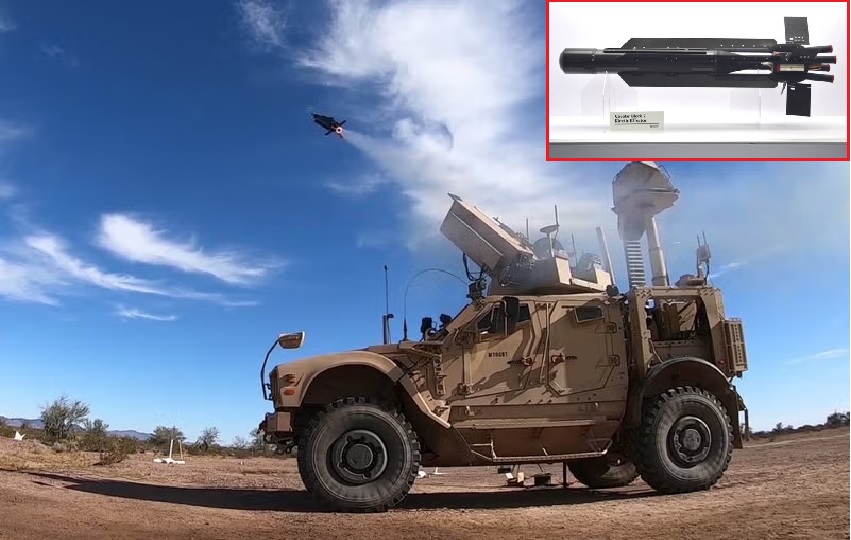 Raytheon Ramps Up Coyote Counter-Drone Missile Production After U.S. Army Reports 600 Successful Combat Intercepts During Iran Conflict
-
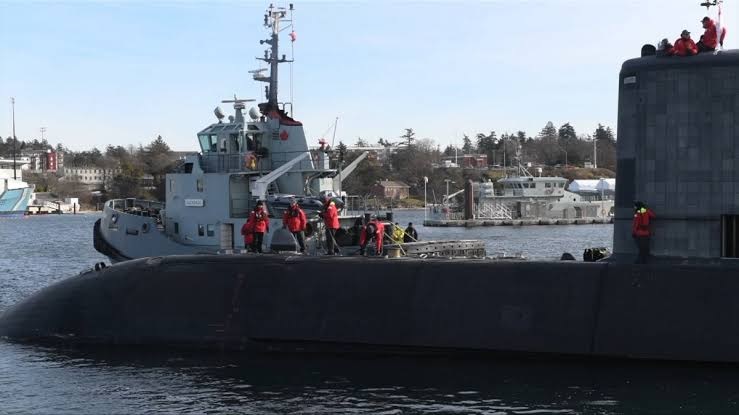 Canada Awards Babcock $1.1 Billion Six-Year Contract Extension to Support Victoria-Class Submarine Fleet
-
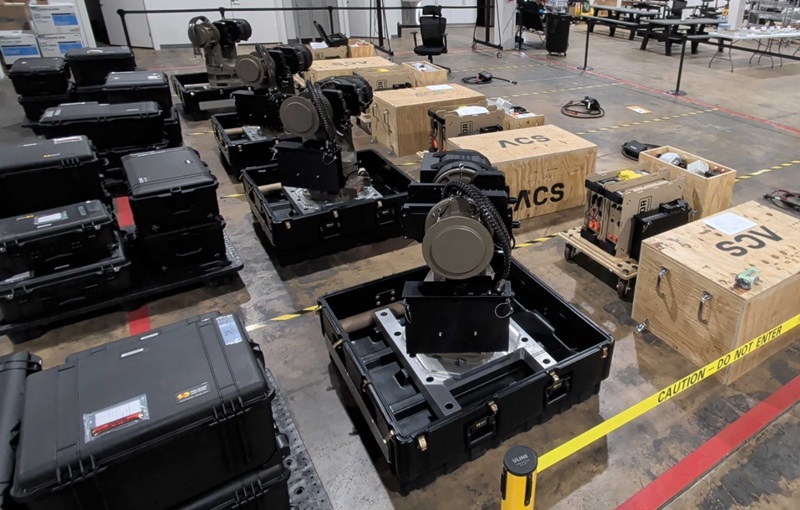 U.S. Marine Corps Selects AI-Powered Bullfrog Weapon Station for L-MADIS Counter-Drone Platform
-
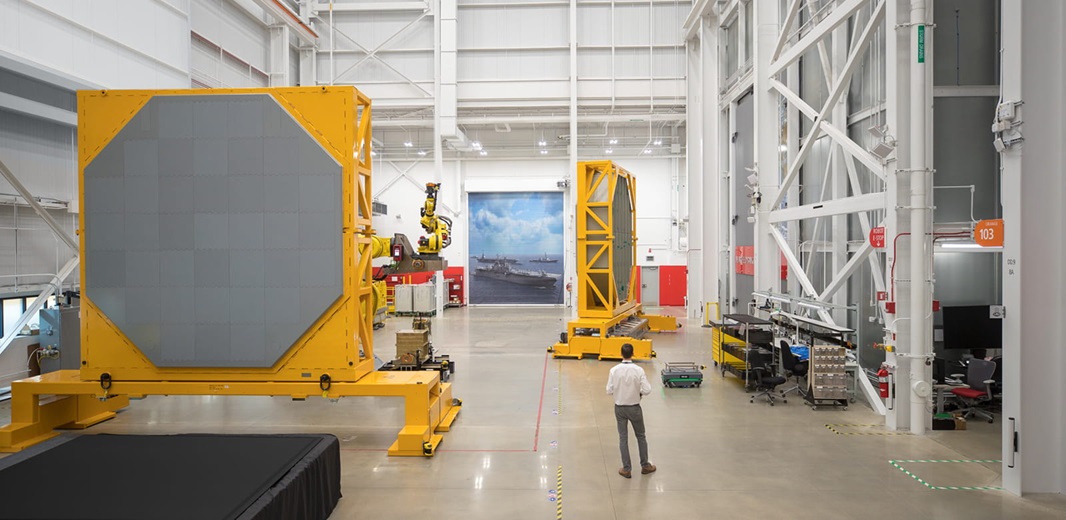 U.S. Navy Awards Raytheon $1.8 Billion Contract Extension for SPY-6 Radar Systems
-
 Lockheed Martin Launches $9 Billion U.S. Munitions Expansion to Boost THAAD, PAC-3 and PrSM Production
Top Trending in 4 Days
-
 New Satellite Imagery Reveals Extensive Damage at Jordan's Muwaffaq al-Salti Air Base After Iranian Missile Strike
-
 Anduril Unveils Thunder Autonomous Attack Rotorcraft Built with Archer Aviation to Support Apache Helicopters
-
 U.S. Space Force Awards Slingshot Aerospace $69.2 Million Contract to Develop AI Space Training Platform
-
 Iran Claims It Shot Down U.S.-Operated Polish-Built Tiguar-M Drone, Releases Images
-
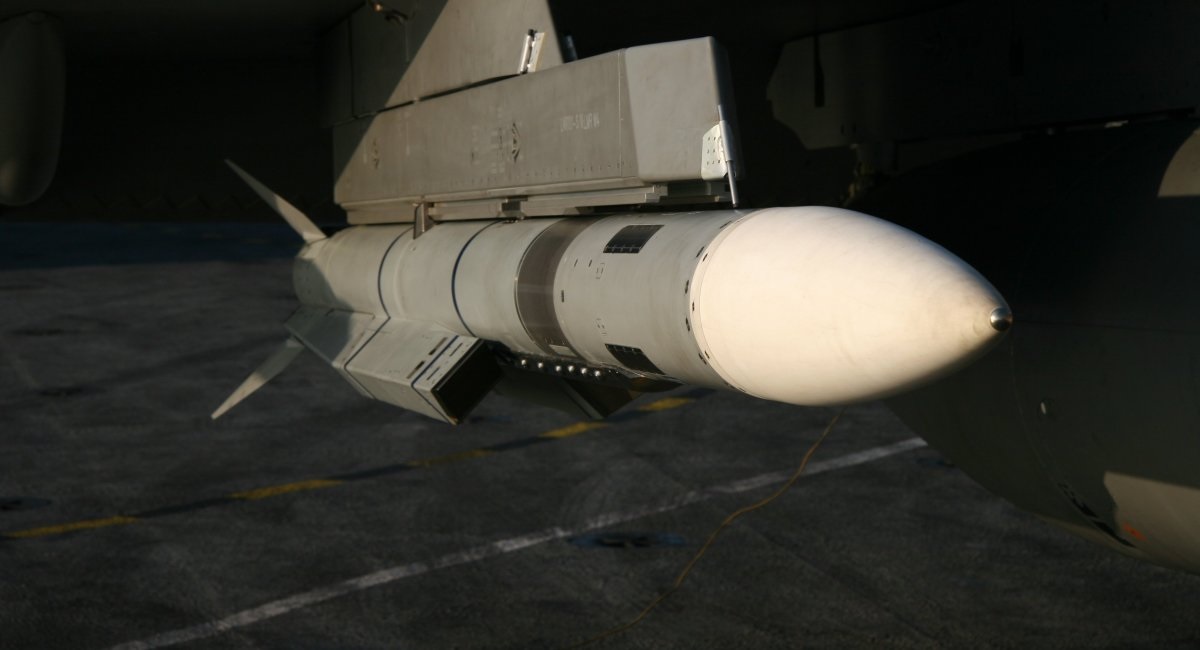 UK Cancels Meteor Missile Mid-Life Upgrade, Prioritizes Next-Generation FASE Air-to-Air Missile Programme
-
 NASA, Draper Cancels CP-12 Lunar Lander Mission After Development Delays Push Mission Beyond 2030
-
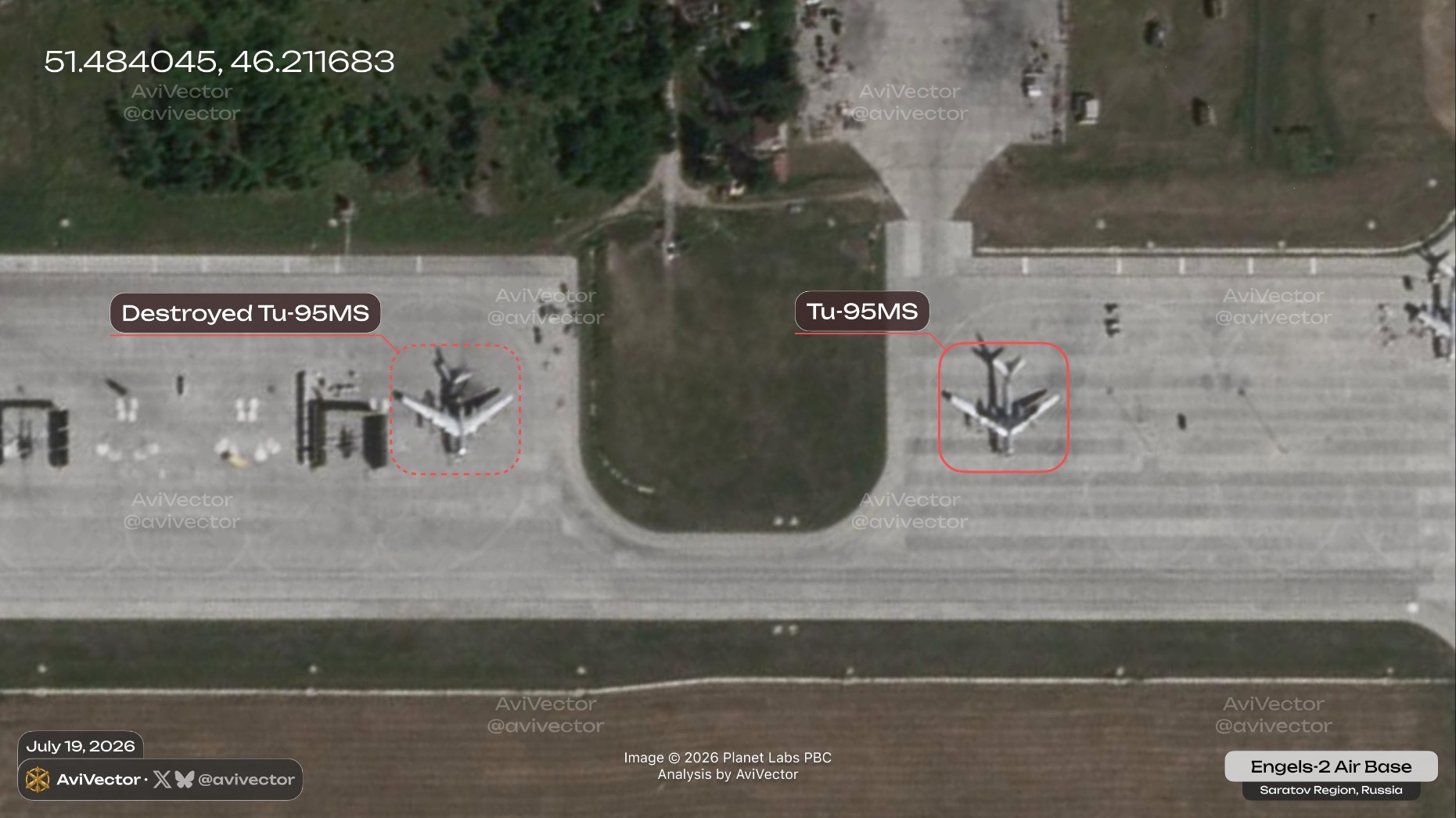 Satellite Images Confirm Russian Tu-95MS Bomber Destroyed After Ukrainian Drone Strike on Engels-2 Air Base
-
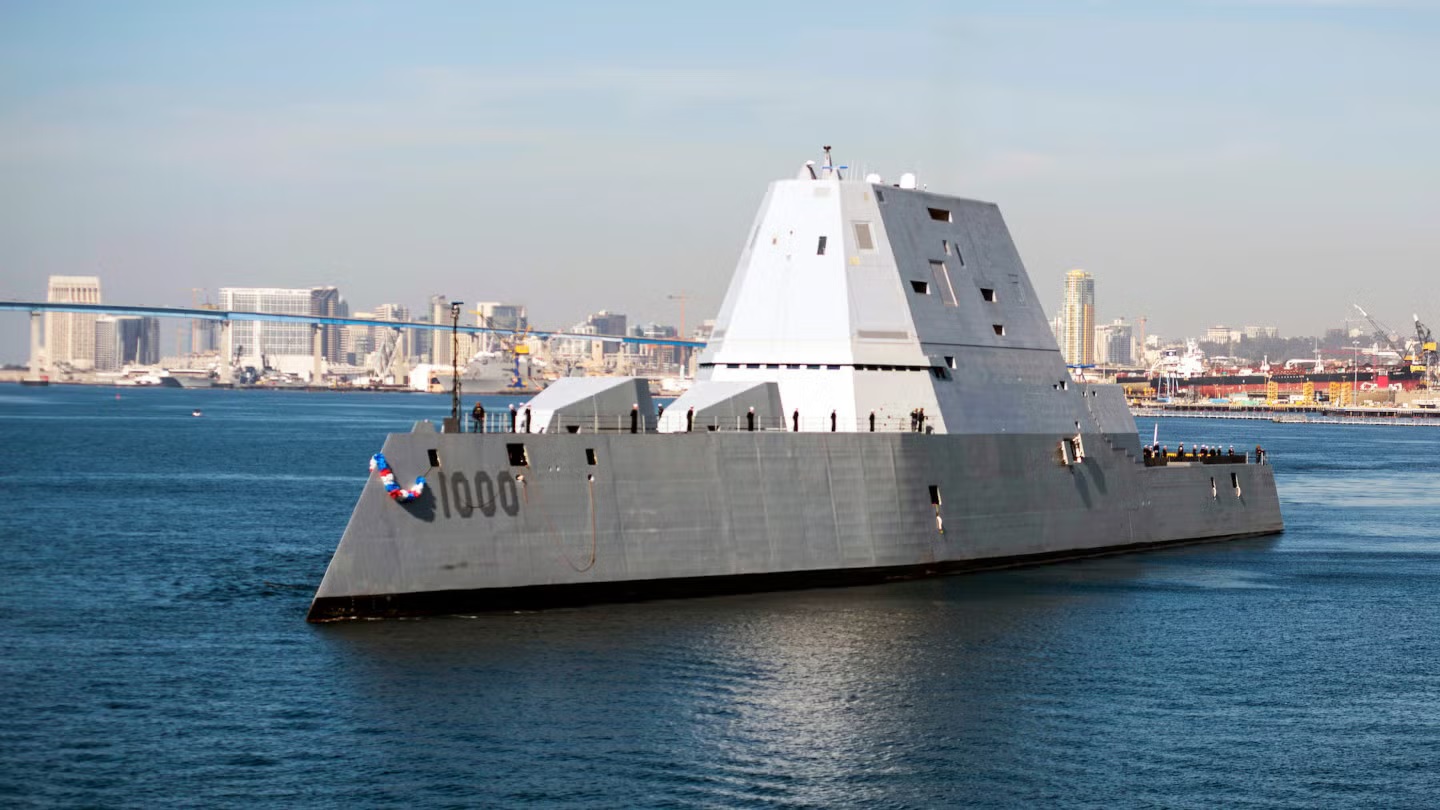 U.S. Navy's Zumwalt Destroyer Hypersonic Missile Upgrade Program Delayed by Two Years as Costs Top $2 Billion: GAO Reports
