
India
VISAKHAPATNAM, — May 20, 2026 : India has reportedly conducted a successful underwater “pop-up” ejection test of its next-generation K-5 submarine-launched ballistic missile (SLBM) in the Bay of Bengal near Visakhapatnam, marking another important step in the development of the country’s long-range sea-based nuclear deterrent. According to defence reports, the trial was carried out from a submerged underwater platform following a firing exercise notification issued for the region. The test has not yet been officially confirmed by the Defence Research and Development Organisation (DRDO) or the Ministry of Defence. The K-5 missile is being developed by the DRDO’s Advanced Systems Laboratory (ASL) in Hyderabad as part of India’s strategic “K-series” submarine-launched ballistic missile programme, named after former President Dr. A.P.J. Abdul Kalam. The missile is expected to become India’s longest-range SLBM once operational. Pop-Up Test and Launch Validation The recent trial involved a “pop-up” or cold-launch ejection procedure, which is considered a critical engineering validation before full powered flight testing begins. During the exercise, an unpowered missile was ejected from a submerged vertical launch tube using a high-pressure gas generator system. After breaching the water surface, the missile’s launch dynamics, hydrodynamic stability, structural integrity, and ejection trajectory were monitored through onboard sensors and tracking systems. The missile’s rocket motors were intentionally not ignited during the test, and the missile subsequently fell back into the sea after the required launch data was recorded. The test primarily focused on validating the performance of the missile canister, gas-ejection mechanism, structural nose cap, and underwater launch systems under high-pressure submerged conditions. Successful validation of these systems is considered essential before progressing to integrated powered flight trials. Defence analysts note that cold-launch technology significantly reduces the thermal and acoustic signature generated during submarine launches, as the missile’s rocket motor ignites only after clearing the water surface. This helps maintain the stealth of the launch platform and reduces the risk of exposing the submarine’s position. K-5 Missile Specifications The K-5 is reported to be a three-stage, solid-fuel submarine-launched ballistic missile with an estimated strike range of approximately 5,000 to 6,000 kilometres. Some assessments suggest the missile could eventually achieve a longer operational range. The missile is estimated to weigh around 20 tonnes and measure approximately 12 metres in length with a diameter between 2.4 and 2.45 metres. Reports indicate that it will be capable of carrying a payload of around two tonnes and achieving speeds exceeding Mach 7 during flight. One of the major advancements associated with the K-5 programme is the planned integration of Multiple Independently Targetable Re-entry Vehicle (MIRV) capability. This would allow a single missile to carry multiple nuclear warheads capable of striking separate targets independently while deploying penetration aids and countermeasures against missile defence systems. Strategic Importance The K-5 is intended to significantly expand the operational reach of India’s sea-based nuclear deterrent. India’s currently operational K-4 SLBM has a reported range of around 3,500 kilometres, requiring submarines to operate closer to strategic regions for certain target coverage. With the K-5’s extended range, Indian ballistic missile submarines would be able to remain within the comparatively secure waters of the Bay of Bengal while maintaining strategic reach. Defence experts consider this important for strengthening survivability and second-strike capability under India’s nuclear doctrine. The MIRV capability also increases strike flexibility by allowing a smaller number of missiles to engage multiple targets. Analysts state that this would improve the effectiveness of India’s sea-based deterrent while reducing dependence on larger launch salvos. Programme Development and Future Trials The latest underwater ejection test follows the successful November 2025 static test of the K-5’s 10-ton-class stage-2 solid rocket motor at DRDO facilities in Hyderabad. With the completion of the pop-up phase, the programme is expected to move toward full flight-development trials from submerged platforms. Future tests are expected to evaluate powered flight performance, guidance systems, navigation accuracy, stage separation, and maximum operational range before eventual induction into service. The K-5 is planned for deployment aboard India’s expanding fleet of nuclear-powered ballistic missile submarines (SSBNs). Initial testing and integration are expected to involve the stretched S4-class submarines, while the missile is primarily intended for the future S5-class SSBNs currently under development. The upcoming S5-class submarines are expected to displace between 13,500 and 17,000 tonnes and be powered by a 190 MW nuclear reactor. The K-5 missile is projected to enter operational service alongside the S5-class fleet during the early 2030s. India’s SLBM programme began with the K-15 Sagarika missile and later advanced to the longer-range K-4 system. The K-5 represents the next stage in the evolution of India’s underwater strategic deterrent and the sea-based component of the country’s nuclear triad. All information regarding the March 2026 pop-up test is based on publicly available defence analysis reports and open-source tracking accounts, as no official confirmation has yet been released by Indian authorities.
Read More → Posted on 2026-05-20 15:44:02
India
NEW DELHI — May 19, 2026 : The Indian Navy has awarded Bengaluru-based defence technology company Tonbo Imaging a contract for the integration and commissioning of a High Power Microwave (HPM) system for naval platforms under the ADITI 3.0 innovation framework. The programme is supported by the Ministry of Defence’s Innovations for Defence Excellence (iDEX) initiative and the Defence Innovation Organisation (DIO). Under the agreement, Tonbo Imaging will carry out system integration and commissioning activities for the HPM system. Following successful development, validation, and operational acceptance, the company will supply multiple production units to the Indian Navy. High Power Microwave systems are a class of directed-energy weapons that use concentrated electromagnetic energy to disable or disrupt electronic systems, sensors, communications equipment, and unmanned platforms. Unlike conventional kinetic weapons, HPM systems operate without physical projectiles or explosive warheads. The Indian Navy’s focus on HPM technology reflects growing interest in non-kinetic countermeasures for emerging maritime threats, including drone swarms and unmanned systems. Directed-energy systems are increasingly being explored for their potential role in electronic warfare and layered naval defence operations. A major factor in Tonbo Imaging’s selection is its indigenous capability in vacuum tube technologies, which are used as the primary power sources in operational HPM systems. According to the company, vacuum tube-based sources remain necessary for generating the extremely high peak power and pulse energy levels required for effective HPM applications. Arvind Lakshmikumar, Managing Director and CEO of Tonbo Imaging India Limited, said the company has invested for several years in developing indigenous HPM technologies and critical sub-systems. He stated that while solid-state radio frequency systems are widely used in many applications, they currently cannot achieve the required power output within the size, weight, and efficiency limitations needed for operational naval platforms. The contract marks an expansion of Tonbo Imaging’s role beyond electro-optics and imaging systems into advanced defence electronics, embedded systems, directed-energy technologies, and integrated mission systems. The ADITI (Advanced Defence Technology Incubation) framework was established to support the development, integration, and validation of advanced defence technologies before induction into military service. The programme is part of broader government efforts to strengthen indigenous defence manufacturing and increase private sector participation in strategic technology development. The development follows earlier indigenous work in directed-energy systems by the Defence Research and Development Organisation (DRDO) and its Microwave Tube Research and Development Centre (MTRDC), which in January 2026 unveiled a prototype High Power Microwave system designed to disable small quadcopters and unmanned aerial systems. Further technical specifications, deployment timelines, and operational details related to the Indian Navy’s HPM programme were not disclosed.
Read More → Posted on 2026-05-19 16:31:02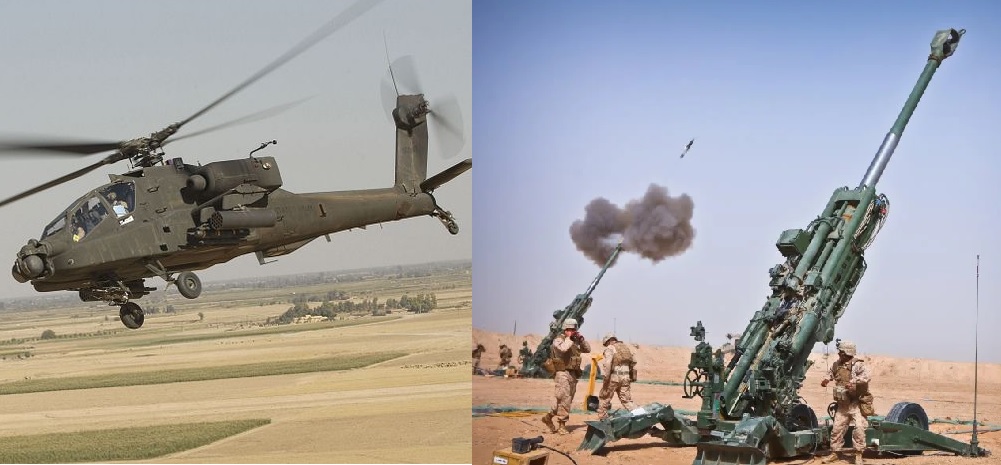
India
WASHINGTON, May 19, 2026 — The United States State Department has approved two Foreign Military Sales (FMS) sustainment packages for India worth a combined $428.2 million, aimed at maintaining the operational readiness of India’s AH-64E Apache attack helicopters and M777A2 Ultra-Light Howitzers. The proposed agreements, notified to the US Congress through the Defense Security Cooperation Agency (DSCA), focus on long-term maintenance, logistics, technical assistance, training, and lifecycle support for existing Indian military platforms rather than the acquisition of new systems. US officials stated that the proposed sales support Washington’s foreign policy and national security objectives by strengthening the defence capabilities of India, which the United States describes as a major defence partner and a key contributor to stability in the Indo-Pacific and South Asia regions. Apache Helicopter Sustainment Package The first package, valued at approximately $198.2 million, provides follow-on support for India’s AH-64E Apache attack helicopter fleet. Boeing and Lockheed Martin have been identified as the principal contractors. The package includes engineering support, technical and logistics assistance, personnel training, technical documentation, publications, and other programme support services required to maintain operational readiness. India currently operates 28 AH-64E Apache helicopters acquired through two separate agreements with the United States. The Indian Air Force received 22 helicopters between 2019 and 2020, while six additional helicopters for the Indian Army began arriving in late 2025. The AH-64E Apache is equipped with a 30 mm M230 chain gun, AGM-114 Hellfire anti-tank missiles, Hydra 70 rockets, Longbow fire-control radar, and advanced targeting and night-vision systems designed for day and night combat operations. M777A2 Howitzer Support Package The second package, valued at approximately $230 million, focuses on sustainment support for India’s M777A2 Ultra-Light Howitzers. BAE Systems will serve as the principal contractor for the programme. The agreement includes spare parts, repair and return services, ancillary equipment, technical assistance, field service representatives, training support, depot-level maintenance capability, and related logistics services. India originally ordered 145 M777A2 howitzers under a $737 million agreement signed in 2016. The first 25 systems were delivered in fully assembled “fly-away” condition, while the remaining 120 were assembled in India through cooperation between BAE Systems and Mahindra Defence Systems. The M777A2 is designed using lightweight titanium and aluminium alloys, allowing rapid deployment by helicopters and transport aircraft. The artillery system has been extensively deployed in high-altitude and mountainous regions due to its mobility and operational flexibility. Focus on Lifecycle Management The proposed agreements highlight the increasing emphasis within US-India defence cooperation on lifecycle sustainment and long-term operational support for advanced military systems. Defence officials stated that steady access to spare parts, maintenance infrastructure, technical expertise, and repair capability is essential for ensuring continuous operational availability of frontline military equipment. The State Department noted that the proposed sales would improve India’s ability to meet current and future security requirements while strengthening homeland defence capabilities and supporting deterrence efforts in the region. US officials also stated that the agreements would not alter the basic military balance in South Asia and would not affect the readiness of US armed forces. Expanding US-India Defence Cooperation The sustainment packages form part of broader defence cooperation between Washington and New Delhi, which has expanded significantly over the past decade through defence trade, joint military exercises, technology collaboration, and interoperability initiatives. India has become one of the largest operators of US-origin military systems in the Indo-Pacific region, including transport aircraft, maritime surveillance platforms, helicopters, artillery systems, and naval equipment. The proposed Foreign Military Sales packages will now undergo a mandatory review period in the US Congress before final implementation under the FMS programme.
Read More → Posted on 2026-05-19 16:00:20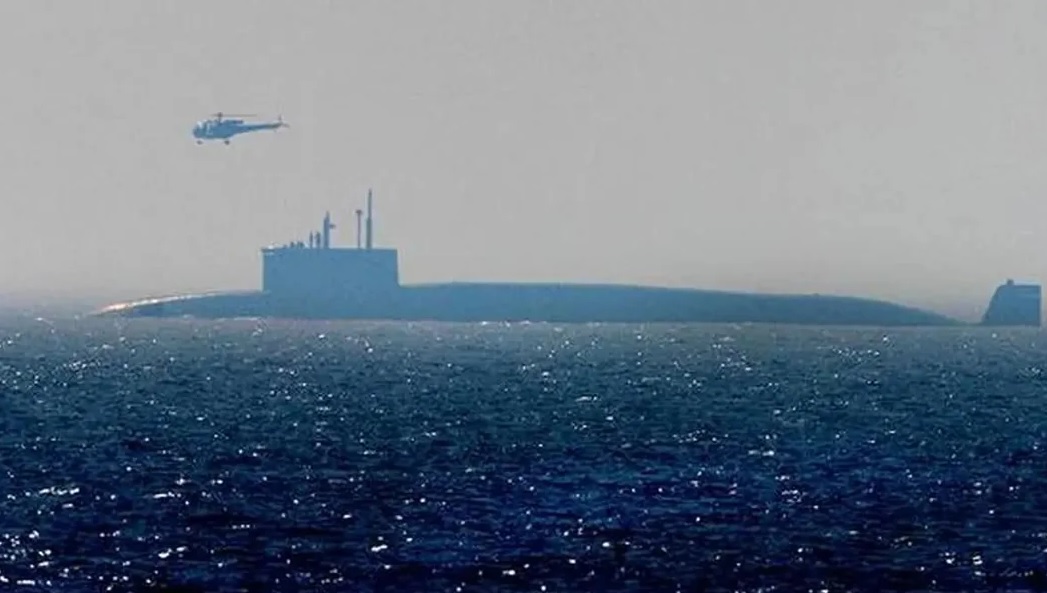
India
VISAKHAPATNAM, — May 19, 2026 : India’s fourth and final Arihant-class nuclear-powered ballistic missile submarine (SSBN), currently designated S4* and expected to be commissioned as INS Arisudan, is undergoing advanced sea trials following its launch at the Ship Building Centre (SBC) in Visakhapatnam in October 2024. The submarine is expected to formally enter service with the Indian Navy around 2027, completing the first production series of India’s indigenous SSBN fleet under the classified Advanced Technology Vessel (ATV) programme. The submarine was launched on October 16, 2024, in the presence of Defence Minister Rajnath Singh. Following harbour integration and system validation trials, the vessel reportedly departed Visakhapatnam in late December 2025 to begin sea trials, a phase expected to continue through 2026 before commissioning preparations are finalized. Expanded Arihant-Class Design The S4* is the second “stretched” Arihant-class submarine and incorporates a larger hull section dedicated to missile storage and launch systems. The submarine is estimated to displace around 7,000 tonnes, compared to the 6,000-tonne displacement of the lead boat INS Arihant. The extended configuration increases the submarine’s missile carrying capacity while maintaining reduced acoustic signatures and survivability features designed for long-duration strategic patrols. Constructed with an indigenous content level estimated at 75–80 percent, the submarine reflects continued progress in India’s domestic nuclear submarine construction programme. The vessel was built at the Ship Building Centre in Visakhapatnam with support from Indian defence research, naval engineering, and heavy industrial sectors operating under the ATV programme. Missile Capability and Armament A major upgrade introduced with INS Aridhaman and S4* is the expansion of the vertical launch system (VLS) configuration. Earlier submarines in the class — INS Arihant and INS Arighaat — were equipped with four VLS tubes primarily optimized for K-15 Sagarika submarine-launched ballistic missiles. The later stretched variants feature eight VLS tubes, enabling the submarine to carry up to eight K-4 submarine-launched ballistic missiles (SLBMs). Developed by the Defence Research and Development Organisation (DRDO), the K-4 missile has a reported strike range of approximately 3,500 kilometres, significantly extending India’s sea-based deterrence reach. The submarine can alternatively carry up to 24 K-15 Sagarika SLBMs with a shorter range of around 750 kilometres. Specification Details Class Arihant-class SSBN (Stretch Variant) Displacement Approx. 7,000 tonnes Propulsion 83 MW Compact Light Water Reactor Primary Armament 8 × K-4 SLBMs Alternative Armament 24 × K-15 Sagarika SLBMs Torpedo Tubes 6 × 533 mm Expected Commissioning Around 2027 The integration of the K-4 missile allows the submarine to operate from relatively secure patrol zones in the Bay of Bengal and wider Indian Ocean while retaining the ability to engage distant strategic targets. Completion of India’s First SSBN Fleet India currently operates three Arihant-class submarines. INS Arihant (S2), the country’s first indigenous SSBN, was commissioned in August 2016. INS Arighaat (S3) entered service in August 2024, while INS Aridhaman (S4), the first stretched variant, was commissioned on April 3, 2026. The commissioning of S4* will complete the four-submarine Arihant-class production line. According to reports from January 2026, the Indian Navy’s ship-naming committee proposed the name INS Arisudan for the vessel. Final approval remains subject to clearance from the Defence Ministry and the President of India. All Four Arihant-Class SSBNs Reportedly Observed Together On January 27, 2026, all four Arihant-class submarines — S2, S3, S4, and S4* — were reportedly observed simultaneously at the Ship Building Centre in Visakhapatnam in imagery assessed by the International Institute for Strategic Studies (IISS). The reported sighting marked the first known instance in which all four Arihant-class submarines were identified together at the facility, highlighting the advanced stage of India’s indigenous SSBN programme and the near-completion of the class. Strategic Importance of the Arihant-Class The Arihant-class forms the sea-based leg of India’s nuclear triad alongside land-based ballistic missiles and air-delivered nuclear systems. Operating under India’s “No First Use” nuclear doctrine, the SSBN fleet provides a survivable second-strike capability designed to ensure deterrence credibility. Indian naval planners generally consider a fleet of at least four SSBNs necessary to maintain a Continuous At-Sea Deterrent (CASD) posture. Such a structure enables one submarine to remain on deterrence patrol while others rotate through maintenance, transit, training, or crew preparation cycles. Broader Submarine Modernization Programme Alongside the SSBN programme, India is expanding its nuclear-powered attack submarine capabilities. In late 2024, the Indian government approved Project 77, a ₹40,000 crore programme to construct the first two indigenous nuclear-powered attack submarines (SSNs) at Visakhapatnam. To bridge capability requirements before indigenous SSNs enter service in the mid-2030s, the Indian Navy is also expected to receive a leased Russian Akula-class nuclear-powered attack submarine by 2028. Development work is additionally continuing on the next-generation S5-class ballistic missile submarines, which are expected to feature larger displacement, increased missile capacity, and longer-range strategic systems beyond the current Arihant-class design.
Read More → Posted on 2026-05-19 15:00:48
India
ISLAMABAD / RIYADH, — May 18, 2026 : Pakistan has deployed approximately 8,000 military personnel, a squadron of JF-17 fighter jets, military drones and advanced air defence systems to Saudi Arabia under the framework of a confidential Strategic Mutual Defence Agreement signed between the two countries in 2025, according to Pakistani security and government sources. The deployment, which reportedly began in early April, represents the first major operational activation of the bilateral defence pact signed in Riyadh on September 17, 2025, by Saudi Crown Prince Mohammed bin Salman and Pakistani Prime Minister Shehbaz Sharif. Deployment Details According to officials familiar with the arrangement, the Pakistani military package dispatched to Saudi Arabia includes around 8,000 troops operating in training, advisory and defensive roles. The deployment adds to thousands of Pakistani military personnel already stationed in the Kingdom under previous bilateral security agreements. Pakistan has also deployed a full squadron of approximately 16 JF-17 Thunder fighter aircraft, jointly developed by Pakistan and China. The fighter jets were reportedly transferred to King Abdulaziz Air Base in Dhahran during the initial phase of the operation. In addition to the aircraft deployment, Pakistan has sent two operational squadrons of military unmanned aerial vehicles (UAVs) and the Chinese-manufactured HQ-9 long-range surface-to-air missile defence system. Sources stated that all military hardware is being operated by Pakistani personnel, while Saudi Arabia is covering the financial costs associated with the deployment, including operational and logistical expenses. Strategic Mutual Defence Agreement The deployment falls under the Strategic Mutual Defence Agreement signed between Islamabad and Riyadh in September 2025. Although the full text of the agreement remains classified, officials from both countries have confirmed that the pact considers aggression against one state as aggression against the other. Security sources indicated that provisions within the agreement allow for the possible deployment of up to 80,000 Pakistani troops to Saudi Arabia if regional security conditions worsen. Pakistani Defence Minister Khawaja Asif has previously stated that the agreement effectively extends Pakistan’s strategic deterrence umbrella to Saudi Arabia, strengthening the Kingdom’s defence posture amid growing regional instability. Regional Security Environment The military deployment comes amid heightened tensions across the Middle East linked to the ongoing confrontation involving Iran and the United States. The move also follows previous Iranian strikes targeting Saudi energy infrastructure and oil facilities in recent years. At the same time, Pakistan has continued diplomatic efforts aimed at reducing tensions between Washington and Tehran. Islamabad has recently hosted high-level discussions focused on preserving a temporary ceasefire and encouraging broader diplomatic engagement between the two sides. Pakistan’s simultaneous role as a military partner of Saudi Arabia and a diplomatic intermediary between Iran and the United States reflects its increasingly complex position within the regional security environment. Defence Analysts’ Assessment Defence and geopolitical analysts said the practical structure of the 2025 defence pact reflects a longstanding strategic arrangement between Islamabad and Riyadh rather than a fully reciprocal military alliance. Under the arrangement, Pakistan provides trained military manpower, combat-capable systems and security guarantees, while Saudi Arabia offers financial assistance, investment and broader economic cooperation that supports Pakistan’s domestic economy. Analysts noted that the agreement does not include provisions for reciprocal Saudi troop deployments in the event of an attack on Pakistan. Instead, the operational focus remains centred on reinforcing Saudi territorial defence capabilities through Pakistani military support. Saudi Arabia, which hosts several United States military facilities, has increasingly sought to diversify its regional security structure beyond exclusive reliance on Washington. Analysts view the expanded military partnership with Pakistan as part of Riyadh’s broader effort to strengthen its deterrence capabilities through cooperation with a nuclear-armed ally possessing significant operational military experience. First Major Activation of the Pact Officials familiar with the deployment stated that the agreement remains defensive in nature and does not authorize Pakistani forces stationed in Saudi Arabia to conduct offensive operations against third countries from Saudi territory. The current deployment marks the first major operational implementation of the 2025 Strategic Mutual Defence Agreement and reflects a significant expansion of military coordination between Pakistan and Saudi Arabia, including the stationing of Pakistani fighter aircraft, drone units, air defence systems and combat-ready personnel on Saudi soil.
Read More → Posted on 2026-05-18 16:14:49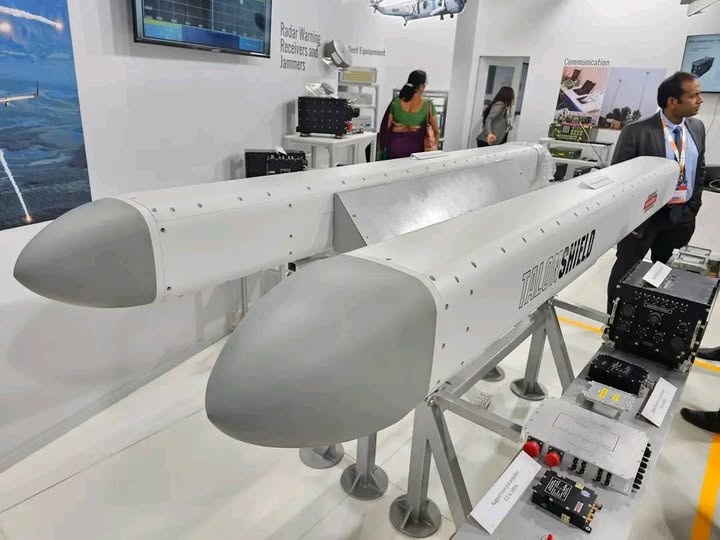
India
NEW DELHI — May 17, 2026 : Data Patterns (India) Ltd. is preparing to commence flight testing of its indigenously developed TALON SHIELD Airborne Self-Protection Jammer (ASPJ) pod with the Indian Air Force (IAF) in the coming months, as part of a broader effort to strengthen the electronic warfare capabilities of the Su-30MKI fighter fleet through domestically developed systems. The TALON SHIELD programme is intended to provide the IAF with an indigenous airborne electronic warfare solution capable of countering modern radar-guided threats while reducing long-term reliance on imported defence equipment. According to programme details, the complete testing and certification process is expected to take between 18 months and two years. The TALON SHIELD is a high-band self-protection jammer pod specifically designed for integration with the Su-30MKI multirole fighter aircraft. The system incorporates Active Electronically Scanned Array (AESA) technology based on Gallium Nitride (GaN) transmit-receive modules, enabling high-power electronic attack operations, agile beam steering and simultaneous multi-band functionality. The jammer is capable of operating across several frequency ranges, including L-band and S-band, to counter a broad range of airborne and ground-based radar systems. A key component of the system is its Digital Radio Frequency Memory (DRFM)-based electronic warfare architecture. Using DRFM techniques, the pod can intercept hostile radar emissions, digitally process the received signals and retransmit manipulated responses designed to confuse enemy sensors and missile seekers. The system is designed to conduct multiple forms of electronic countermeasures, including noise jamming, deceptive jamming and velocity gate pull-off techniques against fire-control radars, search radars, airborne interception radars and radar-guided missile systems. The TALON SHIELD is configured as a dual-pod arrangement mounted on the aircraft’s wingtip or underwing pylons. When operated together, the paired pods provide 360-degree electronic protection coverage around the aircraft. The system has been engineered for direct installation on the Su-30MKI without requiring significant structural modifications to the airframe. Ground integration trials and hardware compatibility testing have already been completed on Su-30MKI platforms in coordination with the Electronics and Radar Development Establishment (LRDE) in Bengaluru. Data Patterns has also completed aerodynamic validation, liquid-cooling evaluations and prototype manufacturing ahead of the upcoming flight test campaign. According to company officials, the upcoming trial programme will include captive carriage testing, avionics integration assessments, electromagnetic compatibility checks and live flight evaluations under operational conditions. The company has additionally offered the TALON SHIELD system for no-cost, no-commitment flight trials with the IAF. The indigenous jammer pod is being positioned as a replacement for foreign-origin self-protection jammer systems currently used on the Su-30MKI fleet, including the Russian SAP-518 and Israeli EL/L-8222 electronic warfare pods. The programme aligns with India’s wider defence industrial strategy focused on increasing indigenous content in critical aerospace and electronic warfare technologies under the “Make in India” initiative. The development is also linked to the IAF’s broader Super Sukhoi modernization programme, valued at approximately ₹65,000 crore, which aims to upgrade more than 250 Su-30MKI aircraft with new-generation indigenous systems. Planned upgrades under the programme include the Virupaksha AESA radar, next-generation Radar Warning Receivers (NG-RWRs), upgraded mission avionics and advanced electronic warfare suites intended to improve survivability in contested operational environments. In November 2025, the Ministry of Defence issued a Request for Information (RFI) for the procurement of 100 Aircraft Self-Protection Jammer pods for the Su-30MKI fleet. The RFI specified a minimum indigenous content requirement of 50 percent and outlined a delivery timeline of 36 months following the award of a production contract. Data Patterns is currently preparing for the expected Request for Proposal (RFP) phase while continuing development and validation activities for the TALON SHIELD system. Successful completion of the upcoming flight testing and certification campaign would enable operational integration of the TALON SHIELD across frontline Su-30MKI squadrons and support India’s continuing efforts to expand indigenous capabilities in advanced airborne electronic warfare systems.
Read More → Posted on 2026-05-17 15:57:45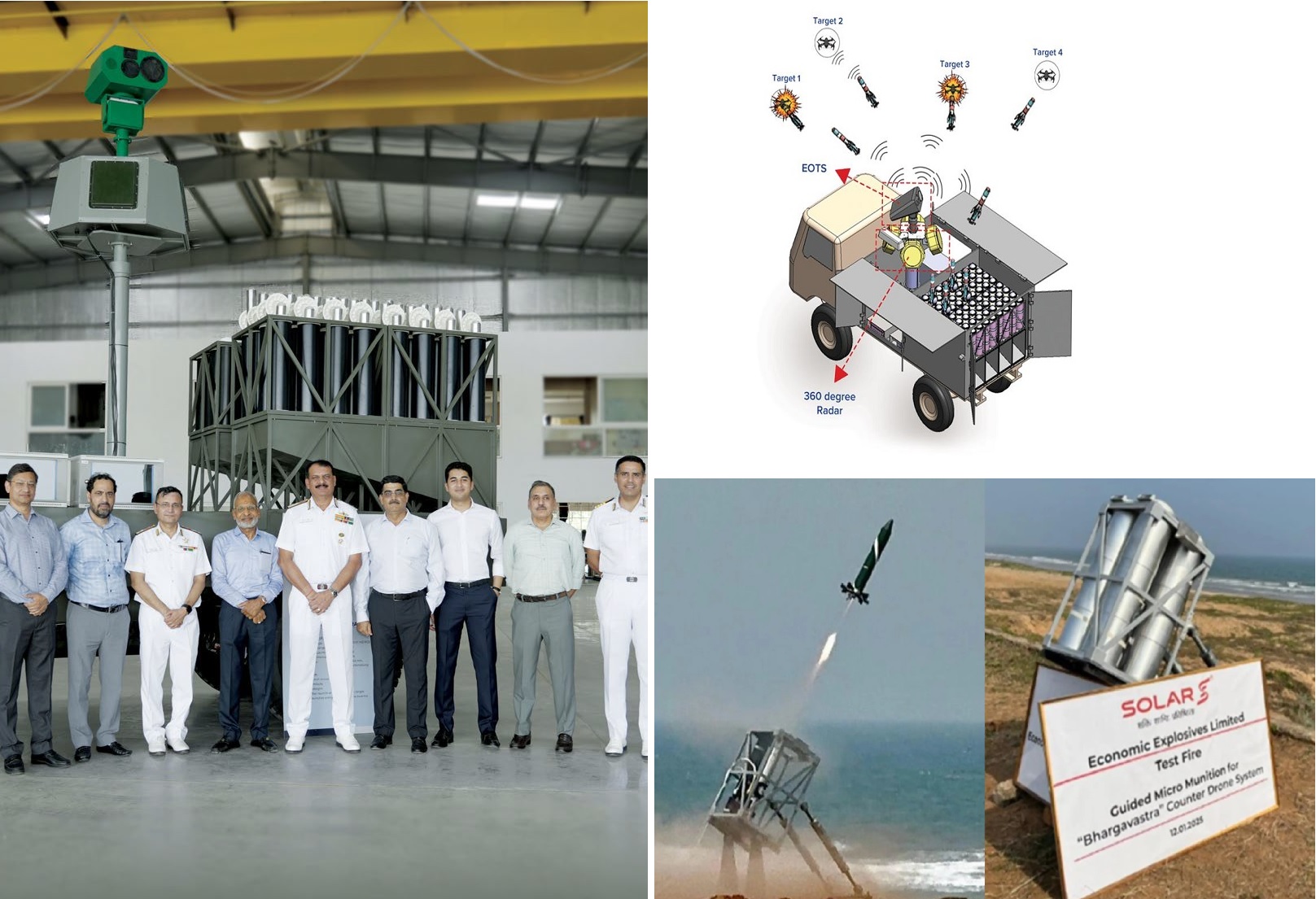
India
NAGPUR, India — May 16, 2026 : Solar Defence and Aerospace Limited (SDAL), a subsidiary of Solar Industries India Limited, has entered the final phase of testing for its indigenous Bhargavastra counter-drone system, with comprehensive trials scheduled for completion by the end of 2026. The Bhargavastra system is a hard-kill Counter-Unmanned Aerial System (C-UAS) developed to detect, track and neutralise hostile unmanned aerial vehicles (UAVs), loitering munitions and coordinated drone swarms. The programme was initiated by SDAL in response to the growing use of low-cost drones and autonomous aerial threats in modern warfare environments. Multi-Layer Counter-Drone Architecture Bhargavastra uses a layered interception architecture combining unguided micro-rockets and guided micro-missiles. The first defensive layer employs unguided micro-rockets designed to create a fragmentation effect with a lethal radius of approximately 20 metres. This layer is intended to rapidly engage and disrupt large drone swarms through area saturation. The second layer consists of precision-guided micro-missiles capable of hit-to-kill engagements against individual aerial targets. Each guided interceptor weighs approximately 2.5 kilograms and is powered by a solid-propellant rocket motor. The system is designed to neutralise aerial threats at ranges exceeding 2.5 kilometres. According to SDAL, Bhargavastra is among the few dedicated anti-drone systems globally capable of carrying and firing a large salvo of interceptors from a single launcher configuration. The platform carries up to 64 micro-missiles or micro-rockets arranged in an 8×8 cassette layout. All 64 interceptors can be launched in salvo mode within approximately 10 seconds, enabling simultaneous engagement of multiple aerial targets and dense drone swarms with 360-degree coverage. Detection and Command Network The system integrates an advanced Command-and-Control Centre equipped with C4I (Command, Control, Communications, Computers and Intelligence) technology for target detection, tracking and engagement coordination. Bhargavastra’s radar system can reportedly detect medium and large UAVs at ranges of up to 10 kilometres, while smaller drones can be identified at distances exceeding 6 kilometres. To improve tracking accuracy against targets with low radar signatures, the platform also incorporates an Electro-Optical/Infrared (EO/IR) sensor suite for visual and thermal target identification. Once a threat is confirmed, the system can rapidly assign and launch interceptors against incoming aerial targets using either guided or unguided munitions depending on the threat profile. Mobility and Operational Flexibility The complete Bhargavastra platform is mounted on a 4×4 high-mobility light truck, allowing rapid deployment and repositioning in operational areas. The system has been engineered for operations across multiple terrain conditions, including deserts, plains and high-altitude mountainous regions up to 5,000 metres above sea level. Its modular architecture also allows the integration of optional soft-kill systems, including radio-frequency jamming and GPS spoofing modules. This enables operators to combine electronic warfare measures with kinetic interception capabilities to establish a layered anti-drone defence network. The munitions used by the system were developed by Economic Explosives Limited, another company within the Solar Group. Trial Progress and Testing Milestones Testing of the Bhargavastra system began at the Gopalpur Seaward Firing Range in Odisha in January 2025 in the presence of Indian Army officials. During the initial trial phase, the system successfully engaged a stationary aerial target at a range of 2.5 kilometres and an altitude of approximately 400 metres. A follow-up firing achieved a successful engagement against a moving electronic target, validating the system’s tracking and interception capabilities. Additional evaluation firings were conducted in May 2025 before senior Indian Army Air Defence officers. The tests included two single-rocket firings and one rapid salvo launch involving two rockets fired within two seconds. SDAL stated that all launch parameters and operational objectives were successfully achieved during the trials. The current final testing phase is intended to evaluate the system’s operational reliability, target engagement accuracy, salvo-launch performance and battlefield readiness under varied environmental and tactical conditions ahead of the projected completion timeline in late 2026. Indigenous Counter-Drone Development Bhargavastra forms part of India’s broader effort to strengthen indigenous counter-drone and short-range air-defence capabilities through domestic defence industry participation. The system is the first micro-missile-based counter-drone platform of its type developed entirely by an Indian private-sector company. Upon successful completion of final trials and certification, the platform is expected to proceed toward user evaluation and potential induction into Indian Army Air Defence units.
Read More → Posted on 2026-05-16 16:35:24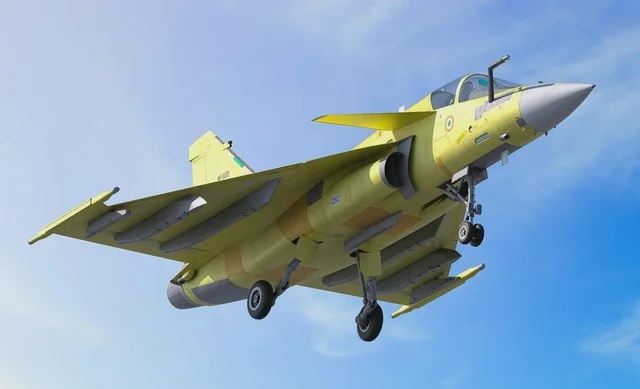
India
BENGALURU — May 16, 2026 : Hindustan Aeronautics Limited (HAL) has revised the rollout timeline for the first prototype of the indigenous Light Combat Aircraft (LCA) Tejas Mk2 to March 2027, extending the schedule for one of the Indian Air Force’s (IAF) principal fighter modernisation programmes. The updated target was disclosed during HAL’s Q4 FY26 earnings call, where company officials confirmed that structural assembly of the aircraft remains underway in coordination with the Aeronautical Development Agency (ADA). The revised schedule places the official rollout toward the end of the 2026–27 financial year. The Tejas Mk2 programme, also known as the Medium Weight Fighter (MWF), has experienced several timeline revisions over recent years as development activities continue across multiple agencies involved in the project. Programme Delays Linked to Integration and Technical Coordination Earlier expectations within the programme had indicated that an unofficial rollout could have already taken place, while the maiden flight was at one stage expected as early as the coming months. However, HAL officials stated that additional work related to structural integration, systems validation, and inter-agency coordination remains ongoing. The Tejas Mk2 is being jointly developed by HAL and ADA under the broader supervision of the Defence Research and Development Organisation (DRDO). Officials familiar with the programme stated that the aircraft’s development depends heavily on continuous coordination between the participating organisations for subsystem approvals, testing milestones, and technical clearances. Defence analysts noted that the revised rollout schedule is primarily tied to the integration of the General Electric F414-INS6 engine, which has been selected as the powerplant for the aircraft. The engine produces approximately 98 kN of thrust with afterburner and represents a substantial increase in capability compared to the GE F404 engines used on the Tejas Mk1 and Mk1A variants. HAL management described the GE F414 programme as the larger milestone for the overall project, stating that the rollout and maiden flight are secondary to successful engine integration, testing, and certification activities. Technical discussions between HAL and GE Aerospace regarding licensed production and technology transfer for the F414 engine have reportedly concluded, while the final agreement remains under finalisation. Eight engines have already been delivered for development and testing purposes. Multiple Timeline Revisions Since Initial Approval The Tejas Mk2 programme has undergone several schedule adjustments since its early development phase. Initial projections had targeted prototype rollout by August 2022. The schedule was later revised to the end of 2022 and subsequently shifted again into 2023. Following approval from the Cabinet Committee on Security (CCS) in September 2022, updated estimates projected rollout by late 2025 or early 2026. In early 2026, the Defence Research and Development Organisation estimated that the aircraft’s maiden flight could occur between June and July 2026. The latest revision now places the rollout target in March 2027, delaying the expected first flight beyond earlier projections. The CCS approved the programme with a sanctioned cost of approximately ₹10,000 crore, covering prototype development, testing, certification, and associated programme activities. Designed as a Medium-Weight Multirole Fighter The Tejas Mk2 is being developed as a 4.5-generation multirole combat aircraft intended to bridge the capability gap between the lighter Tejas Mk1A and India’s future Advanced Medium Combat Aircraft (AMCA). The aircraft is expected to replace several aging IAF fleets, including the Jaguar DARIN III, MiG-29UPG, and Mirage 2000 aircraft currently in service. Compared to the Tejas Mk1A, the Mk2 incorporates a larger and redesigned airframe with improved aerodynamic characteristics. The aircraft features close-coupled canards positioned near the cockpit section to enhance manoeuvrability, stability, and overall flight performance. The fighter will have a maximum take-off weight of approximately 17.5 tonnes, compared to 13.5 tonnes for the Mk1A. Payload capacity has also been significantly increased, allowing the aircraft to carry up to 6.5 tonnes of weapons and external stores across 11 hardpoints, compared to 3.5 tonnes across seven hardpoints on earlier Tejas variants. Advanced Indigenous Systems and Extended Combat Capability The Tejas Mk2 is planned to incorporate several indigenous systems and avionics upgrades aimed at improving survivability and network-centric combat capability. The aircraft will be equipped with the indigenous Uttam Active Electronically Scanned Array (AESA) radar and an indigenous electronic warfare suite. Additional avionics improvements include sensor fusion capability, advanced cockpit displays, enhanced mission systems, and compatibility with a wider range of precision-guided munitions and beyond-visual-range air-to-air missiles. The redesigned airframe also provides greater internal fuel capacity, extending operational endurance and combat reach. The aircraft is expected to achieve a combat range of approximately 1,200 kilometres, extendable to nearly 3,000 kilometres with external fuel tanks and aerial refuelling support. Prototype and Testing Plan Development of the Tejas Mk2 is being carried out jointly by DRDO, ADA, and HAL. The programme currently plans for four prototypes during the development phase. According to programme details, two prototypes will be dedicated to flight testing activities, while the remaining two aircraft will focus on weapons integration and systems evaluation. Following rollout, the aircraft will undergo ground testing, taxi trials, systems validation, and certification procedures overseen by the Centre for Military Airworthiness and Certification (CEMILAC). Flight testing will proceed only after successful completion of these stages. Indian Air Force Requirement The Indian Air Force has indicated an initial requirement for 120 Tejas Mk2 aircraft, although long-term production numbers could eventually exceed 200 fighters depending on future squadron requirements and procurement plans. The aircraft is intended to support the IAF’s long-term effort to restore squadron strength while increasing the proportion of domestically developed combat platforms within the force structure. Serial production and induction schedules will ultimately depend on the successful completion of development, engine integration, certification, and flight testing activities over the coming years.
Read More → Posted on 2026-05-16 15:17:23
India
PUTTAPARTHI, ANDHRA PRADESH — May 14, 2026 : Union Defence Minister Rajnath Singh and Andhra Pradesh Chief Minister N. Chandrababu Naidu will preside over the foundation stone laying and grounding ceremonies for multiple aerospace and defence projects across Andhra Pradesh on May 15, 2026, in a major push to expand India’s indigenous defence manufacturing and aerospace infrastructure under the Aatmanirbhar Bharat initiative. The primary event will take place at Puttaparthi in Sri Sathya Sai District, where the foundation stone will be laid for the Aircraft Integration and Flight Testing Centre of the Aeronautical Development Agency under the Defence Research and Development Organisation. The facility will support aircraft integration, systems validation, testing and certification activities for the Advanced Medium Combat Aircraft (AMCA) programme, India’s fifth-generation stealth fighter project. The AMCA testing and integration complex is planned with an estimated investment of ₹15,803 crore and will cover approximately 650 acres. The Andhra Pradesh government has allocated around 150 acres adjacent to the Puttaparthi airport runway for the core facility, along with an additional 200 acres for satellite offices, residential infrastructure and support services. The state government will also facilitate the extension of the Puttaparthi runway to 10,000 feet, alongside the construction of a new Air Traffic Control tower, advanced navigation systems and weather monitoring infrastructure. The facility is expected to conduct aircraft assembly, systems integration, validation and flight certification for the AMCA programme, which aims to manufacture around 140 fifth-generation stealth fighters. The first prototype is expected between late 2026 and early 2027. The centre is also intended to support future indigenous combat aircraft and unmanned aerial systems programmes. The project is projected to generate approximately 7,500 direct highly-skilled jobs. During the visit, Rajnath Singh will also lay the foundation stone for a new Naval Systems Manufacturing Facility of Bharat Dynamics Limited at T. Sirasapalli village in Anakapalli district. The Andhra Pradesh government has allocated around 160 acres for the project. The facility will manufacture advanced underwater weapon systems, including heavy-weight and light-weight torpedoes, along with integrated naval combat systems to support the operational requirements of the Indian Armed Forces. Grounding ceremonies will also be conducted for multiple private-sector defence manufacturing projects in Madakasira, Sri Sathya Sai District. Agneyastra Energetics Limited, a subsidiary of Kalyani Strategic Systems Limited, will begin work on its Defence Energetics Facility after acquiring approximately 949.65 acres from the Andhra Pradesh Industrial Infrastructure Corporation. The project will include high explosives manufacturing, ammunition filling and gun propellant production facilities, with provisions for future expansion into energetics for rockets, missile systems, space launch vehicles and advanced defence applications. HFCL Limited will also commence construction of its Ammunition & Electric Fuzes Plant at Madakasira. The company has been allotted 1,000 acres in two phases, including 329 acres in Phase I and 671 acres in Phase II. Supported by an estimated investment of ₹230 crore, the facility will manufacture artillery ammunition shells, TNT filling systems, Multi-Mode Hand Grenades developed in collaboration with DRDO, and electronic fuzes including point detonating, time and proximity variants. The plant is designed to produce around 40 lakh units annually, with completion targeted for December 2027. Expansion-related grounding ceremonies will also be held for Premier Explosives Limited as part of the state’s broader defence manufacturing expansion plans. In Kurnool, the Andhra Pradesh government will formally initiate projects linked to the proposed Drone City initiative, aimed at developing a dedicated hub for unmanned aerial systems, avionics and drone-related manufacturing. Participating companies include Drogo Drones Private Limited, Dronelab Technologies Pvt Ltd, HC Robotics Pvt Ltd, SenseImage Technologies Private Limited, Aerpace Industries, JDK Fly Drone World Pvt Ltd and Latrics. Several Memorandums of Understanding (MoUs) between the Andhra Pradesh government and private aerospace and defence companies are also expected to be signed during the event under the state’s Aerospace and Defence Policy 2025–30. The projects across Puttaparthi, Madakasira, Anakapalli and Kurnool are intended to establish an integrated aerospace and defence manufacturing corridor in southern India, connecting emerging production centres with the established aerospace and defence research ecosystem in Bengaluru.
Read More → Posted on 2026-05-14 17:11:55
India
MUMBAI — May 14, 2026 : Indian defence and engineering company Larsen & Toubro (L&T) has entered into a strategic collaboration with France-based maritime technology firm Exail to provide an advanced Unmanned Mine Counter-Measure (MCM) Suite for the Indian Navy’s upcoming Mine Counter Measure Vessel (MCMV) programme. The partnership will support the Indian Navy’s planned procurement of 12 Mine Counter Measure Vessels intended to replace ageing minesweepers and strengthen the navy’s mine warfare capabilities. Under the arrangement, L&T will act as the prime contractor and offer the unmanned MCM suite to shipyards participating in the MCMV construction programme, while Exail will serve as the technology partner supplying its mine warfare and unmanned maritime systems currently deployed by several navies worldwide. According to the companies, the unmanned suite will integrate autonomous and remotely operated systems capable of detecting, classifying, identifying and neutralising naval mines through stand-off operations. The systems are designed to reduce operational risks to crews and manned vessels during mine clearance missions. The package is expected to include unmanned surface vessels (USVs), autonomous underwater vehicles (AUVs), and remotely operated vehicles (ROVs), forming a multi-layered mine countermeasure capability for the Indian Navy. The systems will operate alongside advanced sonar-equipped MCMVs being planned under the programme. L&T will be responsible for assembly, integration, testing and lifecycle support of the systems in India as part of the collaboration. The partnership also includes localisation efforts aligned with the Government of India’s “Make in India” and “Aatmanirbhar Bharat” initiatives aimed at increasing indigenous defence manufacturing and domestic industrial participation in major military procurement programmes. The Indian Navy’s MCMV programme received Acceptance of Necessity (AoN) approval from the Defence Acquisition Council in July 2025 with an estimated project value of approximately ₹44,000 crore. The vessels are expected to feature non-magnetic hulls and advanced mine-hunting sonars to improve survivability and operational effectiveness in contested maritime environments. Initial vessel deliveries are projected between 2030 and 2037. India currently operates legacy minesweeping platforms and has an overall long-term requirement for up to 24 Mine Counter Measure Vessels to secure key coastal approaches, ports and strategic maritime routes. The induction of unmanned mine warfare systems is intended to address capability gaps while modernising the navy’s underwater threat response infrastructure. Arun Ramchandani, Senior Vice President and Head of Precision Engineering & Systems at L&T, stated that the collaboration combines L&T’s defence engineering and maritime integration capabilities with Exail’s operational expertise in unmanned mine warfare technologies. Jérôme Bendell, CEO of Exail’s Maritime Systems Business Line, said the partnership reflects a broader objective of supporting long-term sovereign unmanned maritime system development in India, including potential local production of next-generation naval drones and autonomous maritime platforms.
Read More → Posted on 2026-05-14 15:37:19
India
NEW DELHI — May 14, 2026 : The Indian Air Force (IAF) has finalised the Request for Proposal (RFP) for the acquisition of 114 Multi-Role Fighter Aircraft (MRFA), marking a significant milestone in India’s largest ongoing fighter aircraft procurement programme. The development comes ahead of Prime Minister Narendra Modi’s scheduled visit to France later in June 2026 and indicates growing alignment toward the selection of the Rafale fighter aircraft manufactured by Dassault Aviation. According to defence officials, the structure of the RFP and earlier decisions taken by the Defence Acquisition Council (DAC) suggest that the programme is now moving beyond a conventional multi-vendor competition and evolving into a strategic government-to-government framework centred on the Rafale platform, which is already operational with the IAF. Procurement Structure Under the procurement plan, the 114 aircraft will be acquired through a two-part structure designed to address immediate operational requirements while expanding India’s domestic aerospace manufacturing sector. The RFP provides for 22 aircraft to be delivered in fly-away condition directly from France, including trainer variants. The remaining 92 aircraft will be manufactured in India through a technology transfer arrangement under the “Make in India” initiative. Defence officials stated that the inclusion of 22 ready-built aircraft reflects the IAF’s assessment of current operational requirements and consideration of global production and supply-chain constraints at Dassault Aviation’s Mérignac production facility. Local Manufacturing and Technology Transfer A central component of the programme is the phased localisation of manufacturing activities within India. The RFP reportedly mandates a 50 to 60 percent localisation target for the India-built aircraft. To meet these requirements, Dassault Aviation is expected to significantly expand its industrial ecosystem in India through partnerships with Indian private-sector firms and Micro, Small and Medium Enterprises (MSMEs). The programme is expected to include local assembly infrastructure, component manufacturing, supply-chain integration, and transfer of advanced aerospace manufacturing technologies. Potential Indian industrial partners under consideration include Tata Advanced Systems Limited, Mahindra, and the Adani Group. Manufacturing operations are expected to be executed through a joint venture model, with final assembly lines under consideration at locations including Nagpur and Hyderabad. Programme Timeline The Defence Acquisition Council approved the 114-aircraft MRFA programme in February 2026. Defence sources indicated that the approval framework was closely aligned with the Rafale platform, effectively positioning the aircraft as the preferred solution for the IAF’s medium-weight fighter requirement. The RFP is expected to be formally issued to Dassault Aviation in the coming months. Following commercial and technical negotiations, the programme will proceed for approval by the Cabinet Committee on Security before final contract signature. If the agreement is finalised by the end of 2026, delivery of the first batch of fly-away aircraft is projected between 2029 and 2030. Deliveries of the India-manufactured aircraft would begin in later phases as domestic production facilities achieve operational capability. Strategic Significance The programme is expected to deepen defence-industrial cooperation between India and France while expanding long-term aerospace manufacturing capabilities within India. The procurement structure indicates a broader level of coordination between New Delhi and Paris extending beyond a standard defence acquisition arrangement. The new aircraft will operate alongside the IAF’s existing fleet of 36 Rafale fighter jets currently in service. The programme also includes provisions linked to upgrading the current fleet to the Rafale F4 configuration. The overall acquisition is estimated to be valued at approximately ₹3.25 lakh crore, making it one of India’s largest defence aviation programmes. India is also expected to become the first country outside France to manufacture the Rafale fighter aircraft domestically. The procurement remains critical for the Indian Air Force as it continues efforts to restore its fighter squadron strength, which remains below the sanctioned requirement of 42 squadrons.
Read More → Posted on 2026-05-14 14:17:11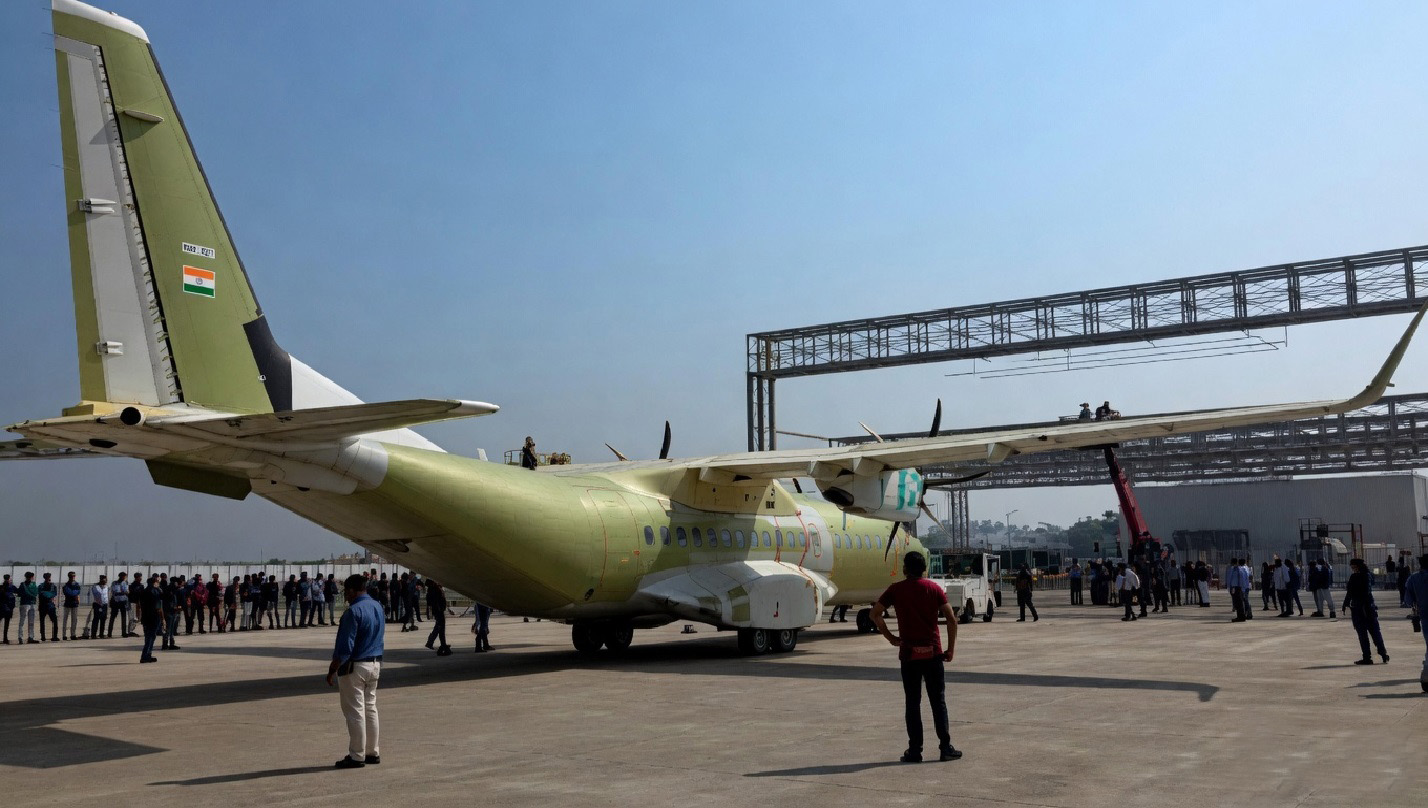
India
VADODARA, Gujarat — May 12, 2026 : Tata Advanced Systems Limited (TASL) has officially rolled out the first Airbus C295 military transport aircraft assembled at its Final Assembly Line (FAL) facility in Vadodara, Gujarat, marking a significant milestone in India’s domestic aerospace manufacturing sector. The rollout represents the first time a private Indian company has established and operationalised a complete military aircraft final assembly line in the country. The aircraft has been assembled under the ₹21,935 crore contract signed in September 2021 between the Indian Ministry of Defence and Airbus Defence and Space for the acquisition of 56 C295 transport aircraft for the Indian Air Force (IAF). Under the programme structure, the first 16 aircraft are being delivered in fly-away condition from Airbus’s production facility in Seville, Spain. The remaining 40 aircraft are designated for manufacturing and assembly in India at the Vadodara facility. With the rollout of this aircraft, TASL has completed the first military aircraft assembled entirely by an Indian private-sector enterprise. Production Programme and Assembly Operations The Vadodara Final Assembly Line, inaugurated in October 2024, integrates detail-part manufacturing, sub-assembly production, major component assembly, tooling, jigs, testing systems and complete aircraft final assembly operations within a single industrial complex. TASL is responsible for structural assembly, aircraft integration, installation and testing of engines and avionics, rainwater testing, flight testing, and long-term maintenance and fleet support activities, including future upgrades and modifications. According to programme data, more than 85 percent of the structural and assembly work for the locally manufactured aircraft is being carried out within India. Over 13,000 detailed parts used in a single aircraft are being manufactured domestically across production facilities located in Vadodara, Hyderabad, Nagpur and Bengaluru. Hyderabad also serves as the location for the Main Component Assembly operations under the programme. A total of 37 Indian suppliers from both private and public sector industries contributed components for the first locally assembled aircraft. In addition, 21 special manufacturing and aerospace certification processes have been qualified under the programme. Production at the Vadodara facility is expected to continue in phases, with all 40 India-manufactured aircraft scheduled for delivery to the Indian Air Force by August 2031. The first locally assembled aircraft was rolled out ahead of the original programme schedule. Development of Domestic Aerospace Supply Chain The C295 programme is being positioned as a major step in the expansion of India’s domestic aerospace and defence manufacturing ecosystem through localisation and industrial supply-chain integration. The programme has established a distributed production network involving multiple Indian manufacturing hubs and supplier firms engaged in precision aerospace fabrication, structural assembly, systems integration and component production. According to industry projections associated with the programme, the manufacturing ecosystem is expected to generate more than 600 direct highly skilled jobs, over 3,000 indirect jobs and an additional 3,000 medium-skill employment opportunities across the Indian aerospace and defence sectors. India currently represents the largest global customer for the Airbus C295 platform with a total order of 56 aircraft. Aircraft Specifications and Indian Air Force Role The Airbus C295 is a twin-engine tactical military transport aircraft designed for medium-lift logistical and operational missions. The aircraft is being inducted primarily to replace the Indian Air Force’s ageing fleet of Avro HS-748 transport aircraft, which have remained operational for more than six decades. The aircraft has a payload capacity ranging from 5 to 10 tonnes and can transport up to 71 troops or 50 paratroopers. It is equipped with a rear ramp door designed for rapid troop deployment, cargo loading and airdrop operations. The C295 is also designed with short take-off and landing (STOL) capability, enabling operations from semi-prepared, high-altitude and austere airstrips. Aircraft produced under the Indian programme are additionally being fitted with an indigenous Electronic Warfare Suite developed by Indian defence public sector undertakings. No official delivery date for the first India-assembled aircraft to the Indian Air Force has been publicly announced. However, production at the Vadodara facility is expected to gradually expand over the coming years to meet the contractual delivery timeline ending in 2031.
Read More → Posted on 2026-05-12 14:03:51
India
BENGALURU — May 11, 2026 : Tonbo Imaging has introduced the AVG50, a high-altitude autonomous surveillance system designed for persistent long-range monitoring in rugged and elevated operational environments. Developed as part of the company’s Avenger series of electro-optical and infrared payloads, the system is intended to support military and homeland security requirements involving continuous border and remote-area surveillance. The AVG50 integrates high-definition thermal imaging, daylight optics, and Short-Wave Infrared (SWIR) sensors within a multi-sensor payload architecture. The system is supported by artificial intelligence-enabled processing for automated target recognition and continuous video target tracking. According to the company, the surveillance device provides a functional detection and identification range exceeding 40 kilometers. Unlike conventional pan-tilt surveillance structures, the AVG50 utilizes an aerodynamic external profile combined with a multi-axis inertial stabilization system optimized for high-altitude conditions. The design is intended to reduce the effects of wind resistance, turbulence, and mechanical vibration while maintaining stable long-range imagery and target tracking performance. The electro-optical and infrared sensor suite enables the system to detect and monitor targets that are difficult to identify through conventional radar systems, including platforms employing radar-stealth characteristics. The integration of thermal, daylight, and SWIR imaging allows the device to maintain operational effectiveness during day and night operations and under challenging weather conditions. The AVG50 is engineered for unattended deployment in isolated and hard-to-access locations. It is powered by an integrated fuel-cell energy system capable of supporting months of continuous operation without frequent maintenance or battery replacement. The system also incorporates secure long-range communications modules for transmitting real-time imagery, surveillance data, and tracking information to remote command centers. The surveillance platform forms part of Tonbo Imaging’s broader portfolio of electro-optical systems developed for reconnaissance, surveillance, and target acquisition across land, naval, and aerial domains. Related systems within the Avenger family, including the Avenger-S50, are four-axis stabilized payloads deployed on aerial platforms such as drones, combat helicopters, maritime patrol aircraft, aerostats, and ground-based surveillance systems. These payloads typically integrate cooled HD MWIR thermal imagers, low-light CMOS HD color cameras, SWIR sensors, laser range finders, infrared illuminators, and laser pointers. Internationally, the AVG50 enters a market segment currently occupied by a limited number of defense manufacturers specializing in ultra-long-range electro-optical surveillance systems. Comparable systems include the SPEED-ER platform developed by Controp Precision Technologies in Israel, as well as long-range surveillance systems produced by Elbit Systems, Teledyne FLIR, and Safran Electronics & Defense. These platforms similarly combine thermal, SWIR, and daylight imaging technologies for long-range border monitoring and target acquisition applications. Tonbo Imaging stated that the AVG50 is intended to support persistent surveillance operations in contested, mountainous, and remote environments where long-endurance autonomous monitoring is required. The company did not release details regarding deployment status, operational users, platform integration, or procurement contracts associated with the system.
Read More → Posted on 2026-05-11 17:16:09
India
NEW DELHI/SINGAPORE — May 11, 2026 : India has refused to accept a liquefied natural gas (LNG) cargo from Russia’s U.S.-sanctioned Portovaya LNG facility, leaving the 138,200-cubic-metre tanker Kunpeng stranded near Singaporean waters without a confirmed discharge destination, according to a Reuters report published on May 11. The vessel had loaded LNG at Russia’s Portovaya plant on the Baltic Sea and was initially scheduled to deliver the cargo to the Dahej LNG import terminal in Gujarat, operated by Petronet LNG Ltd. However, the tanker later withdrew its broadcast destination, with shipping data indicating the cargo had been rejected before arrival. Indian officials communicated the refusal during Russian Deputy Energy Minister Pavel Sorokin’s visit to New Delhi on April 30. Sorokin held discussions with India’s Minister of Petroleum and Natural Gas, Hardeep Singh Puri, as both sides reviewed ongoing energy cooperation and Russian supply proposals. According to sources familiar with the matter, the cargo was identified as originating from the sanctioned Portovaya LNG plant despite documentation indicating non-Russian origin. The United States imposed sanctions on Portovaya LNG and Russia’s Arctic LNG 2 project in January as part of broader measures targeting Moscow’s energy export revenues following the war in Ukraine. The Portovaya LNG facility, operated by Gazprom, has an annual production capacity of 1.5 million tonnes and began operations in September 2022. Since the sanctions were introduced, exports from the facility have declined significantly, with only limited shipments reported to destinations including Kaliningrad and China. India continues to remain one of the largest buyers of Russian seaborne crude oil under existing arrangements and temporary U.S. sanction waivers. However, LNG shipments present greater compliance challenges than crude oil cargoes. While crude shipments can be obscured through ship-to-ship transfers and blended cargoes, LNG trade depends on specialized cryogenic carriers, fixed receiving terminals, and closely monitored infrastructure that allows easier tracking of cargo origin. The rejection marks a shift from earlier discussions held in March between Sorokin and Puri, when both sides explored the possibility of resuming direct LNG supplies from Russia, including cargoes from the Arctic LNG 2 project. Reports at the time suggested a broader energy agreement could be finalized pending Indian approval. The development comes as global gas markets remain under pressure due to tighter supplies and continuing disruptions to Middle Eastern shipping routes, including the Strait of Hormuz. Despite growing supply concerns, Indian authorities opted against accepting cargo linked to sanctioned Russian facilities. India remains open to importing authorized Russian gas volumes, but most unsanctioned Russian LNG production is already tied to long-term contracts with existing buyers, limiting availability for new spot sales. With the Kunpeng cargo rejected, Russia faces increasing difficulty redirecting sanctioned LNG exports, leaving China among the few remaining markets willing to receive such shipments. Ship-tracking data from LSEG and analytics firms including Kpler confirmed the tanker’s movements and the origin of the cargo. As of May 11, no alternative buyer or revised destination for the shipment had been announced.
Read More → Posted on 2026-05-11 16:48:45
India
BENGALURU, — May 11, 2026 : The Aeronautical Development Agency (ADA) has selected L&T Technology Services (LTTS) as the single vendor for the design and development of the Mission Data Preparation Software (MDPS) Phase-1 for the Light Combat Aircraft (LCA) Mk-2 and its future variants. The development marks an important step in the advancement of the LCA Mk-2 program, as ADA continues work on the aircraft’s avionics, mission planning systems, and operational integration ahead of prototype flight testing. Mission Data Preparation Software The Mission Data Preparation Software (MDPS) is a ground-based system used to configure mission-specific operational data before a fighter aircraft undertakes a mission. The software enables mission planners and operational units to prepare and upload critical combat information directly into the aircraft’s mission computers and avionics systems. The MDPS supports several key operational functions, including route and waypoint planning, navigation database integration, target designation, weapon loadout configuration, and threat analysis. The system also allows operators to map hostile radar coverage, surface-to-air missile locations, and electronic warfare threats to optimize mission planning and survivability. In addition, the software pre-configures electronic warfare parameters, radar operational modes, sensor settings, and precision-guided weapon data before transfer into the aircraft through secure interfaces or data cartridges. Post-flight retrieval and analysis capabilities are also included to assist with maintenance evaluation and mission performance assessment. Phase-1 of the project focuses on the core architecture and initial software implementation required for the LCA Mk-2’s advanced avionics framework and mission computer environment. LCA Mk-2 Program The LCA Mk-2, also known as the Tejas Mk-2 or Medium Weight Fighter (MWF), is an advanced 4.5-generation multirole combat aircraft being developed by ADA under the Defence Research and Development Organisation (DRDO) for the Indian Air Force. The aircraft has been designed as a larger and more capable successor to the Tejas Mk-1A and is intended to replace aging platforms such as the Mirage 2000, Jaguar, and MiG-29 fleets in Indian Air Force service. The platform is powered by the General Electric F414-INS6 engine and features a maximum take-off weight of approximately 17.5 tonnes. Compared to earlier Tejas variants, the aircraft incorporates an enlarged airframe, close-coupled canards for improved maneuverability, and expanded payload capability through 11 weapon stations. The LCA Mk-2 will also integrate the indigenous Uttam Mk2 Active Electronically Scanned Array (AESA) radar, an advanced Infrared Search and Track (IRST) system, and an electronic warfare suite known as ‘Swayam Raksha Kavach.’ The suite includes radar warning receivers, self-protection jammers, and missile approach warning systems designed to improve survivability in contested operational environments. The aircraft’s avionics architecture further incorporates sensor fusion, network-centric warfare compatibility, and upgraded mission computer systems intended to support future indigenous weapons and sensors. Development Timeline The ₹10,000 crore LCA Mk-2 development program, approved by the Cabinet Committee on Security in 2022, is currently progressing through prototype manufacturing and systems integration stages. Hindustan Aeronautics Limited (HAL) is accelerating assembly activities for the prototypes and has reportedly issued strict delivery schedules to private-sector suppliers for precision-machined structural and avionics components required for the aircraft. The first prototype is currently undergoing structural integrity assessments, avionics integration checks, flight control validation, and ground testing procedures ahead of its maiden flight. According to recent confirmations from DRDO officials, the first flight of the LCA Mk-2 is expected between June and July 2026. Following initial testing and certification activities, four prototypes are planned to be completed by 2027. Final Operational Clearance (FOC) and serial production are currently targeted for the 2028–2029 timeframe. Strategic Significance The selection of LTTS for the Mission Data Preparation Software program reflects ADA’s increasing use of domestic private-sector capabilities for critical aerospace software and mission systems development. The LCA Mk-2 program aims to achieve an indigenization level of nearly 80 percent through the integration of locally developed avionics, mission systems, sensors, and electronic warfare technologies. The MDPS project is expected to support secure and indigenous mission planning capabilities for the Indian Air Force while strengthening India’s long-term self-reliance in advanced combat aviation and network-centric warfare technologies.
Read More → Posted on 2026-05-11 16:02:56Search
Top Trending in 24 Hours
-
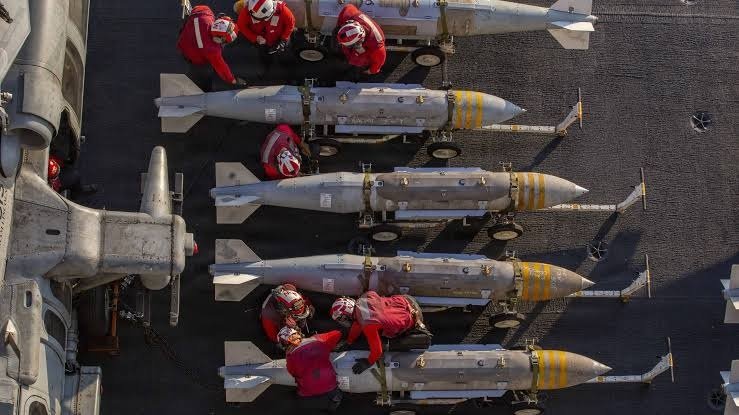 Pentagon Inspector General Report Finds Iran War Caused U.S. Ammunition Shortfalls and Industrial Bottlenecks
-
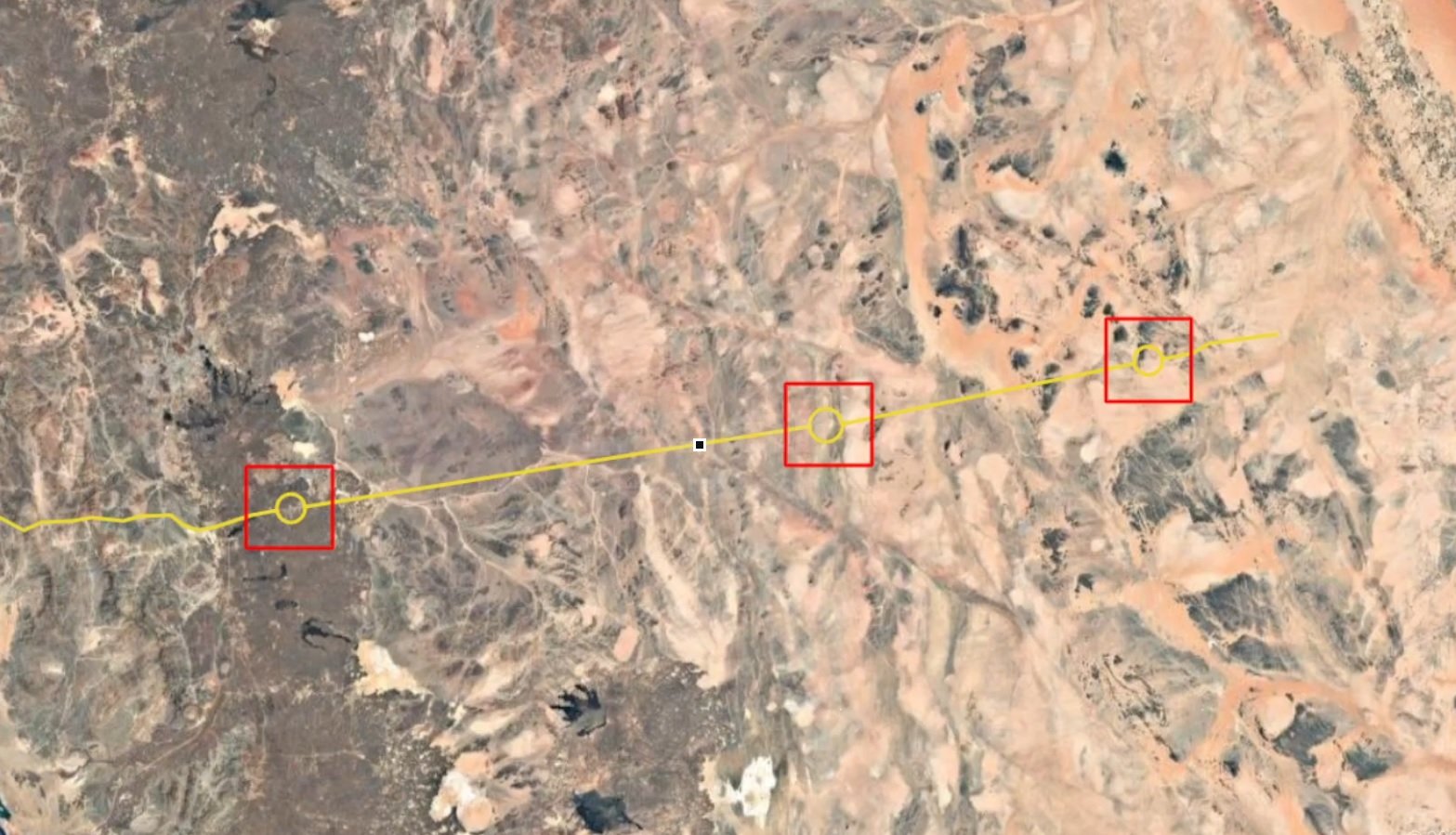 Satellite Imagery Shows Extensive Damage to Saudi Arabia’s East-West Oil Pipeline, Indicating More Than a Single Strike
-
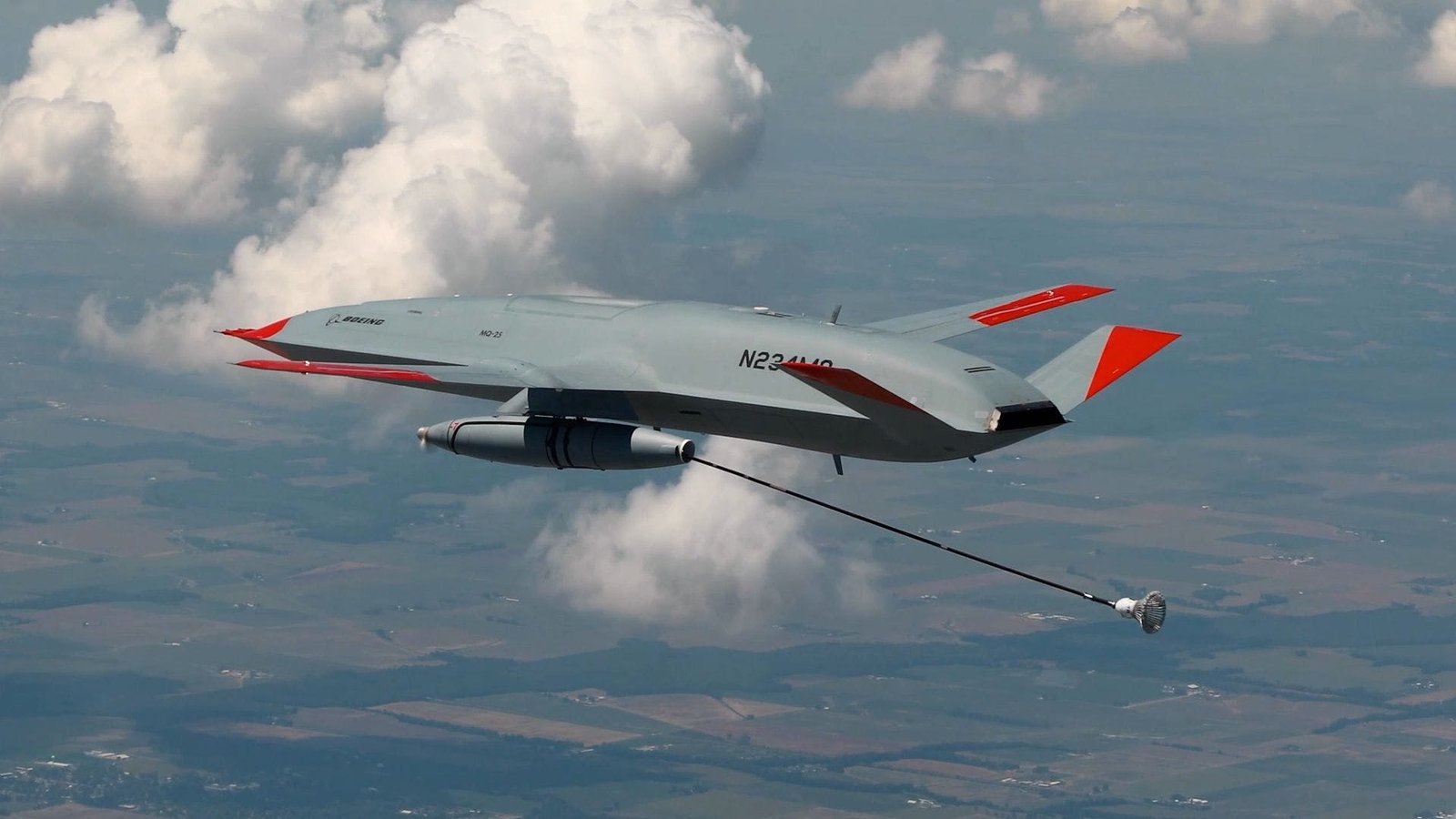 U.S. Navy Awards Boeing $562 Million Contract for First Production MQ-25A Stingray Tanker Drones
-
 Pentagon and Honeywell Complete Four-Hour Pacific Flight Using Quantum Magnetic Navigation Without GPS
-
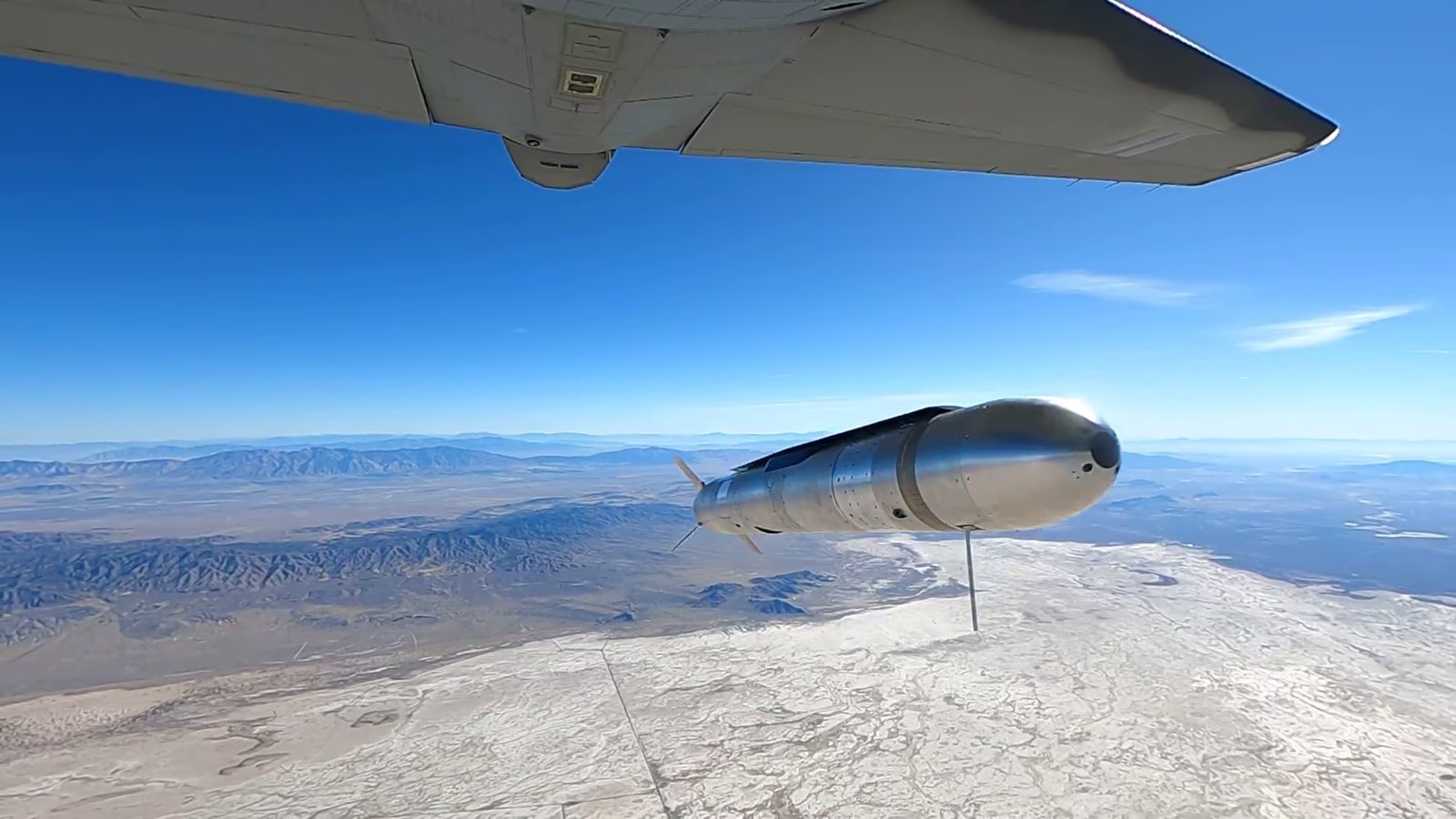 U.S. Air Force Special Operations Command Clears AGM-190A Havoc Spear for Wider Service After Combat Evaluation in Africa
-
 U.S. Confirms Deployment of On-Orbit Space Control Weapons for First Time
-
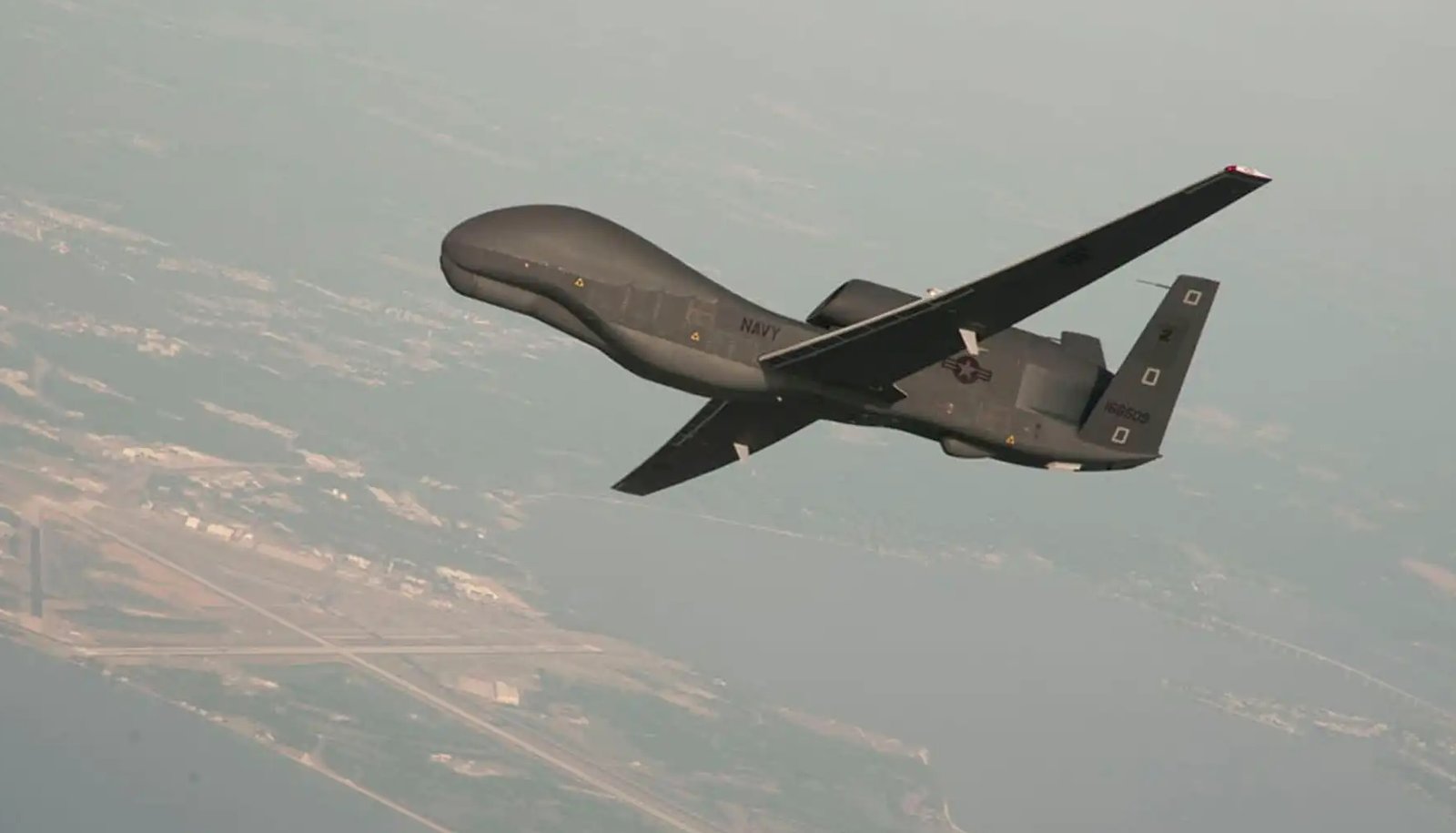 Japan Air Self-Defense Force Loses Contact With Global Hawk Surveillance Drone Off Tottori Coast; Aircraft Presumed Crashed
-
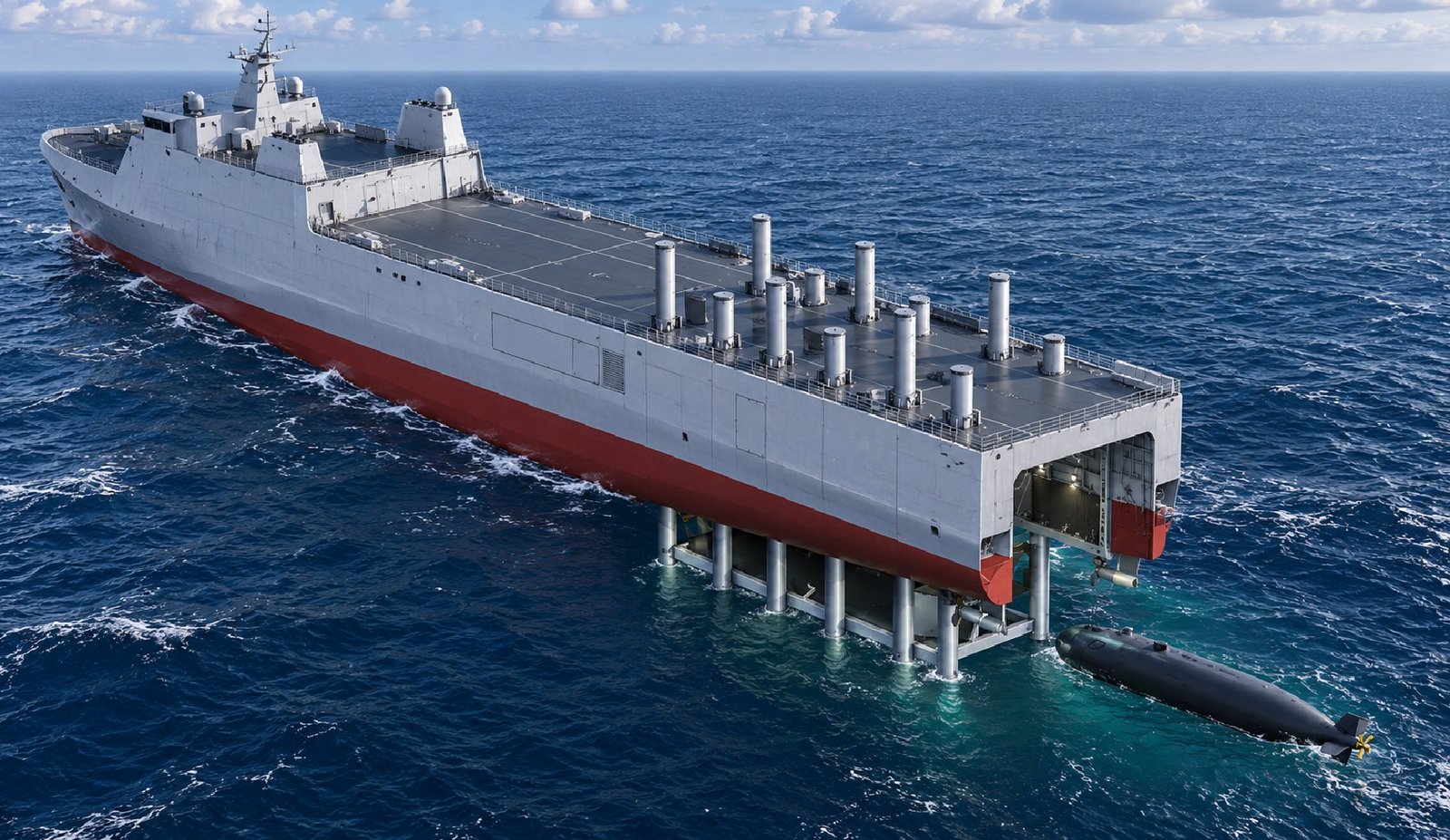 China Builds New Shanghai Vessel to Serve as Mothership for Large Uncrewed Submarines
Top Trending in 4 Days
-
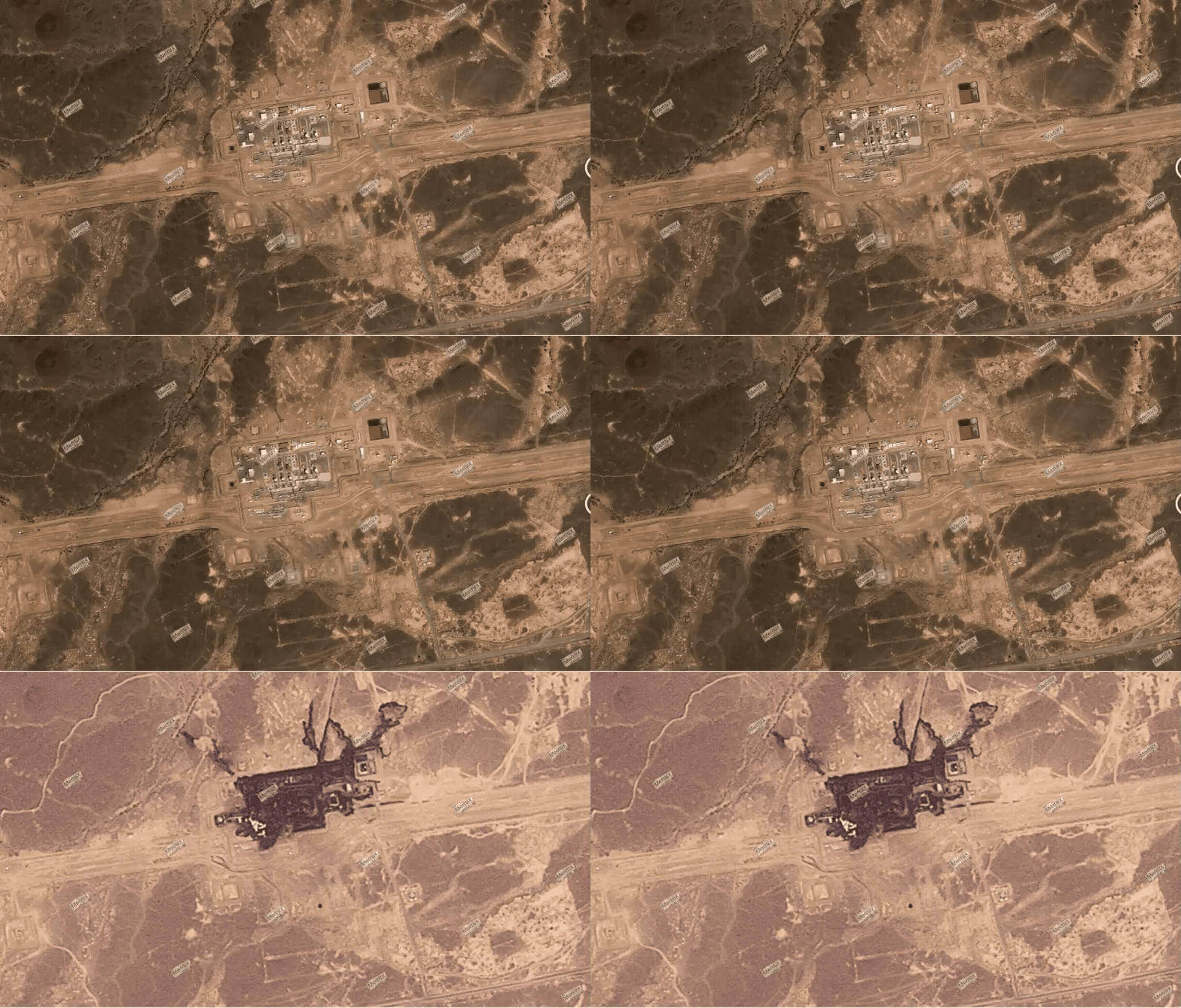 Satellite Imagery Shows Heavy Damage to Saudi East–West Oil Pipeline Pumping Stations
-
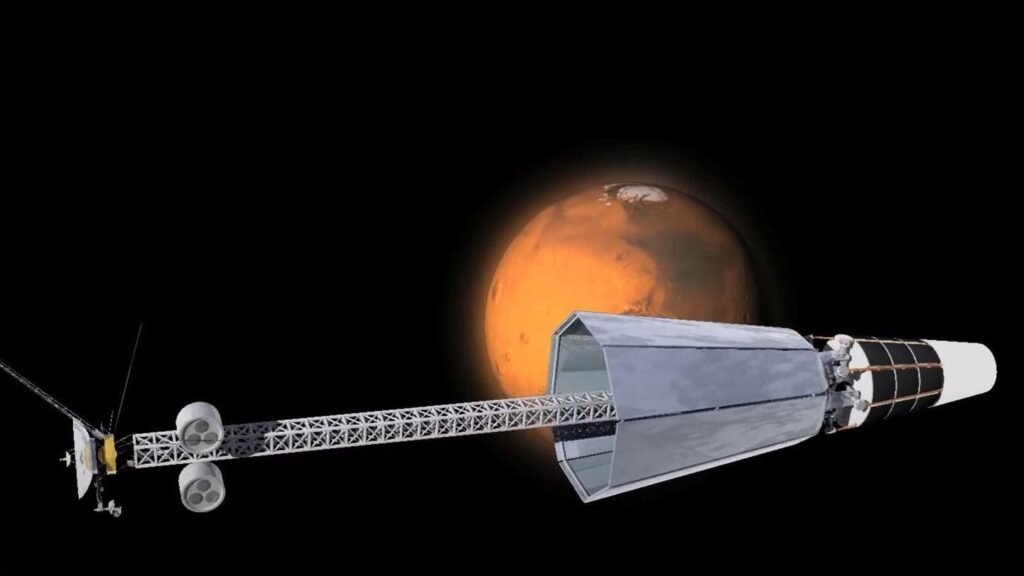 U.S. Air Force Awards Antares $161 Million to Develop Nuclear Reactor for Spacecraft
-
 Pentagon Awards BlueHalo Up to $99.8 Million Contract for Orbital Battlespace R&D Program
-
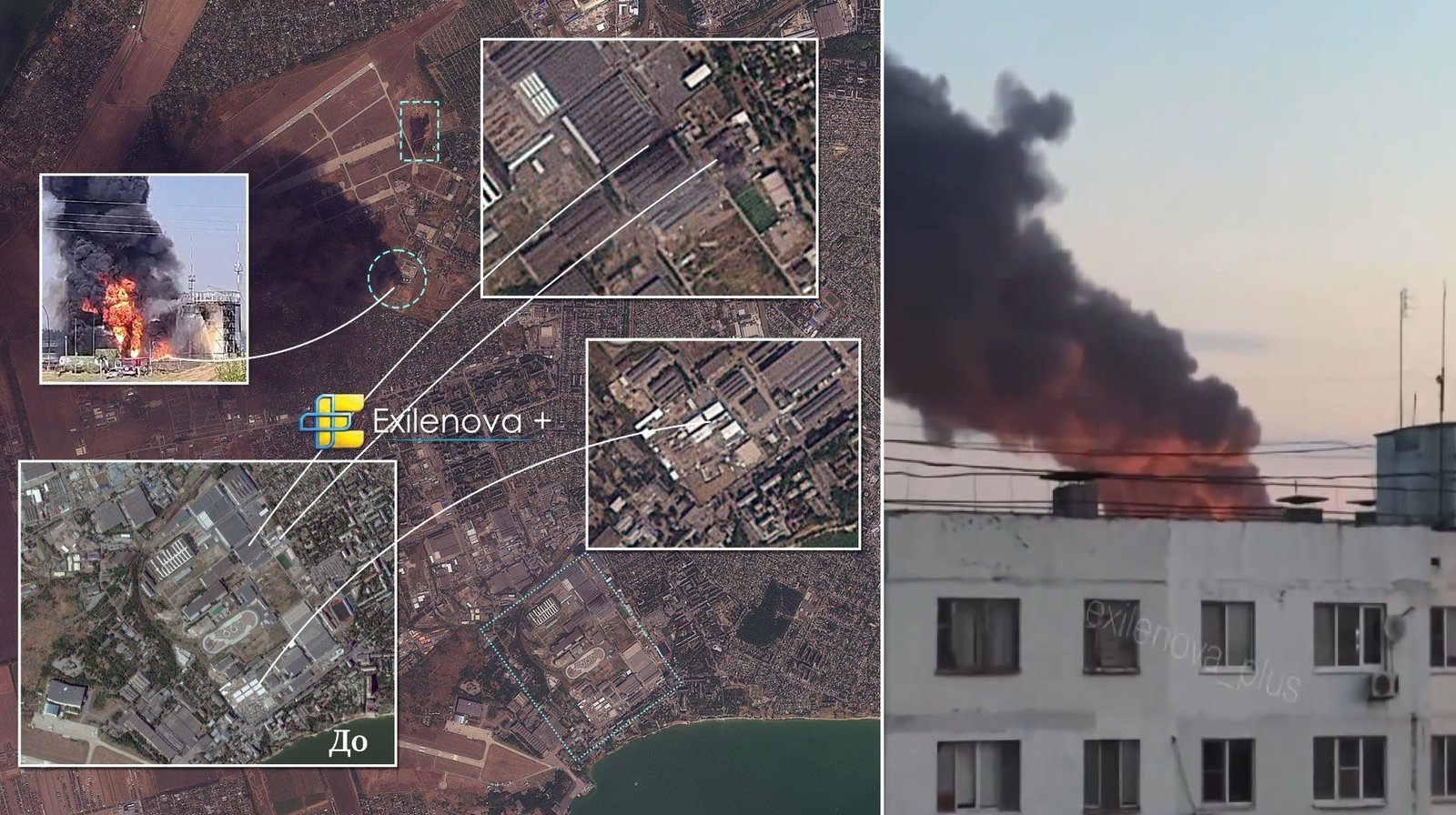 Ukrainian Drones Strike Russian UAV Manufacturer and Chemical Plants in Taganrog and Tolyatti
-
 U.S. Officials Link Chinese Satellite Imagery to Iranian Strike That Killed Three American Soldiers in Jordan
-
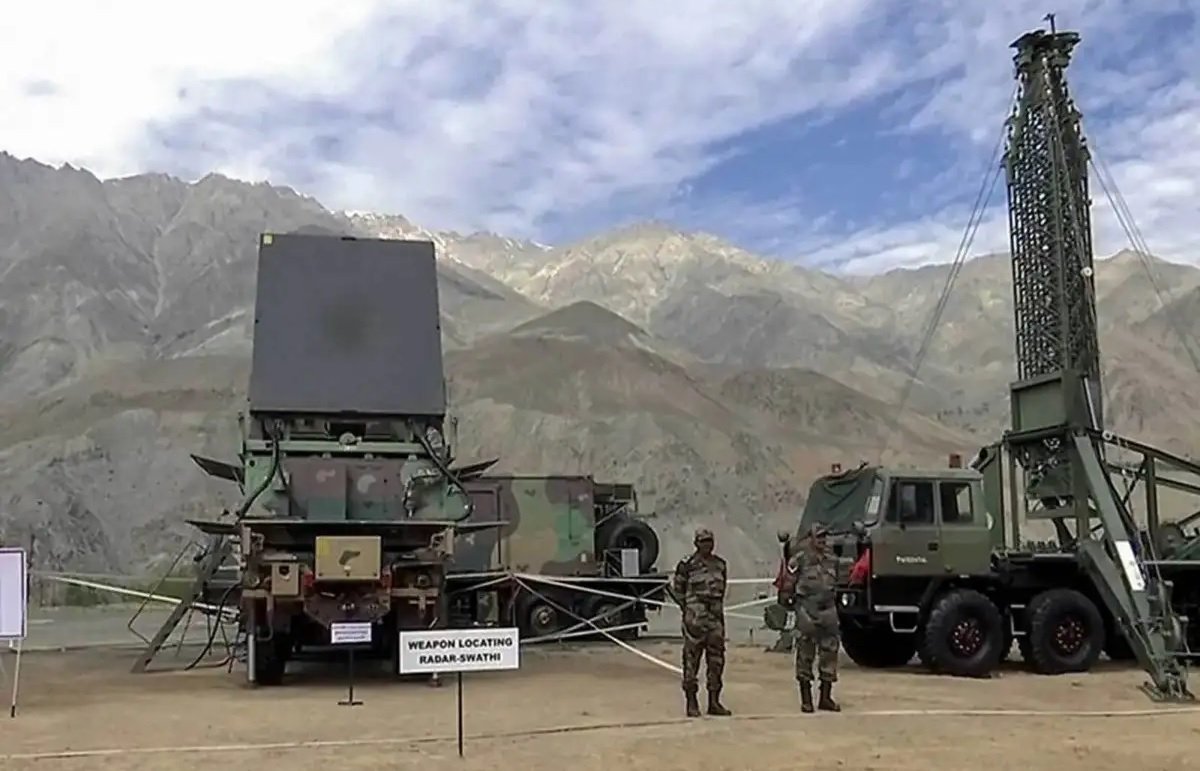 DRDO Demonstrates Indigenous 3.5×3 mm GaN Chip Delivering 30 Watts for Next-Generation Radars and Electronic Warfare
-
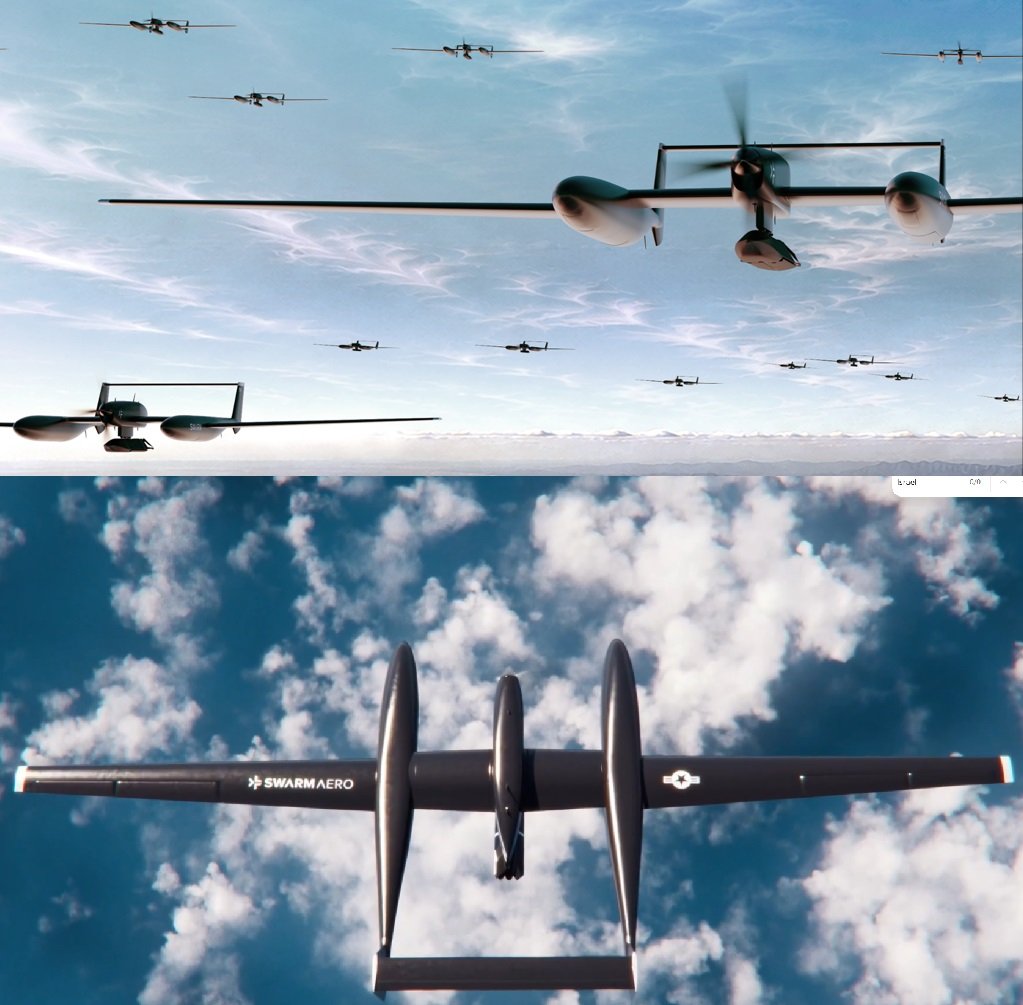 U.S. Firm Swarm Aero Unveils Gamera Group 5 UAS With 9,000-Nautical-Mile Range and Heavy Strike Payload
-
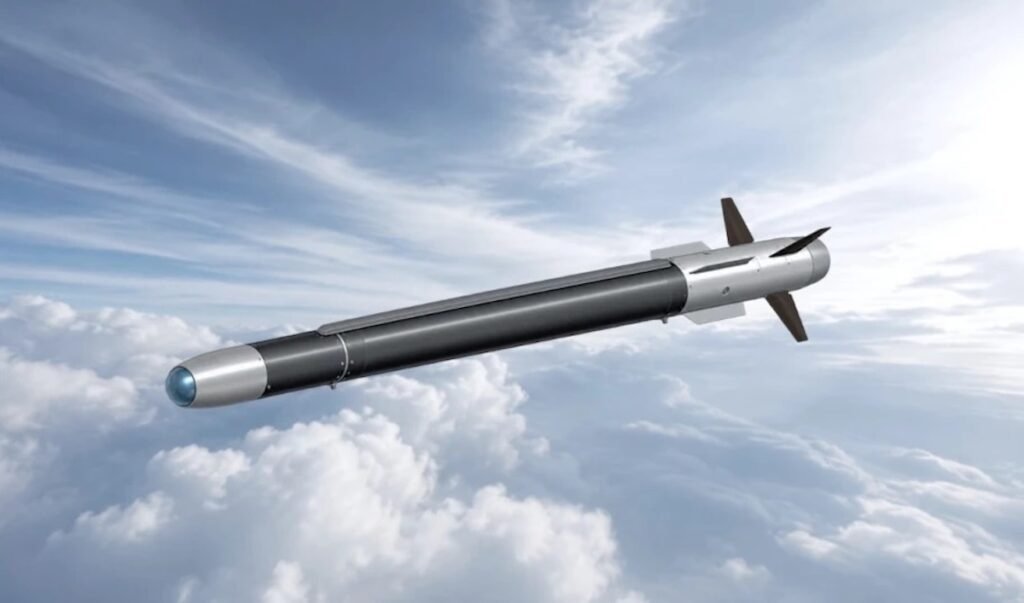 MBDA and Poland’s WITU Advance Low-Cost Supersonic Interceptor Against Swarm Attacks, Seeker Trials Successfully Completed