WASHINGTON — The U.S. Space Development Agency (SDA) has awarded General Dynamics Mission Systems a contract with a ceiling value of $400.4 million to develop the ground segment for Tranche 3 of the Proliferated Warfighter Space Architecture (PWSA), the Pentagon's low Earth orbit satellite network designed to provide missile warning, missile tracking, and resilient military communications.
The cost-plus-award-fee, cost-plus-fixed-fee, and cost-no-fee letter contract was awarded on July 24, 2026, and covers software development, testing, integration, and operations and maintenance of the ground segment mission and service applications required to support Tranche 3 capabilities.
At the time of the award, the SDA obligated $60,665,380 in fiscal year 2026 research, development, test and evaluation (RDT&E) funding. The work is scheduled to continue through September 30, 2030 under contract FA2401-26-C-0003, which was awarded as a sole-source acquisition.
Ground Segment to Support Tranche 3 Operations
The ground segment forms the operational backbone of the satellite constellation. It includes the software, communications infrastructure, mission applications, and operations centers used to command satellites, manage missions, direct tracking activities, and deliver data to military users.
General Dynamics Mission Systems, headquartered in Fairfax, Virginia, will perform the work across multiple locations, including Scottsdale, Arizona; Seattle, Washington; Grand Forks, North Dakota; Redstone Arsenal, Alabama; and Chantilly, Virginia. The contract team is based in Scottsdale, while the company's space business is headquartered in Chantilly.
The new contract continues General Dynamics' role in developing the PWSA ground architecture. The company received a contract worth approximately $324.5 million in 2022 to establish the ground operations and integration segment for Tranche 1. In 2024, the SDA awarded a $491 million contract modification to expand that work for Tranche 2. The Tranche 3 award extends the existing ground architecture rather than introducing a new system.
Supporting the Tracking Layer
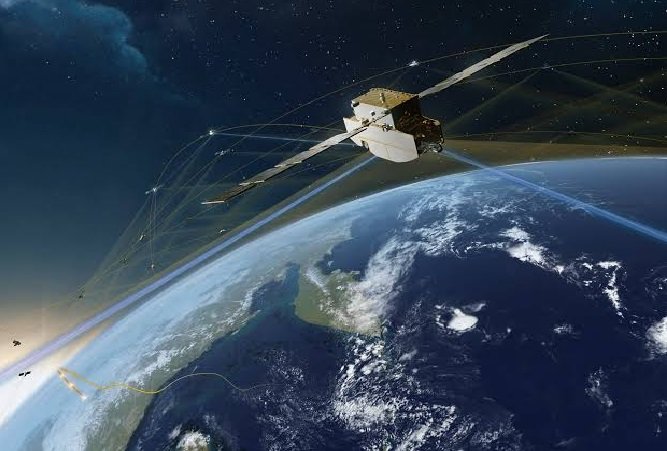
The Proliferated Warfighter Space Architecture is a network of satellites in low Earth orbit designed to provide resilient military space capabilities, including communications, missile warning, missile tracking, and related missions.
The Tracking Layer is responsible for detecting missile launches and generating tracking data that supports missile intercept operations. The new ground segment will support the operation and integration of the Tranche 3 Tracking Layer satellites after they are deployed.
In December 2025, the SDA awarded approximately $3.5 billion in contracts to build 72 Tranche 3 Tracking Layer satellites. Lockheed Martin, Rocket Lab, Northrop Grumman, and L3Harris Technologies each received contracts to manufacture 18 satellites, with launches planned no earlier than fiscal year 2029.
PWSA Expansion Continues
The PWSA is being developed through a spiral acquisition approach, with new tranches introducing additional capabilities at regular intervals.
According to the SDA, Tranche 1 is planned to include 154 operational satellites—126 Transport Layer satellites and 28 Tracking Layer satellites—along with four demonstration spacecraft operating at an altitude of approximately 1,000 kilometers (620 miles).
As of mid-July 2026, the agency had placed 63 Tranche 1 satellites into orbit, including more than 60 data transport satellites. Initial warfighting capability for Tranche 1 is expected in 2027.
Existing Operations Centers
The Tranche 3 ground segment will integrate with the SDA's existing Space Operations Centers located in Grand Forks, North Dakota, and Redstone Arsenal, Alabama, which currently manage Tranche 1 satellite operations.
Once the Tranche 3 Tracking Layer satellites enter service, the new ground infrastructure will support their integration with the existing PWSA architecture, enabling command, control, mission management, and operational support across the expanding satellite network.
——— End of Article ———