KEYPORT, Washington — The U.S. Navy has successfully evaluated a counter-unmanned underwater vehicle (C-UUV) capability during Exercise Lanternfish 2026, demonstrating integrated technologies designed to detect, track, and classify autonomous underwater threats in realistic port protection scenarios.
The multinational capability development and demonstration event brought together technology and personnel from the United States, the United Kingdom, and Australia to assess emerging undersea defense technologies and strengthen cooperation between the U.S. Navy, AUKUS partners, and industry.
Joint Technology Demonstration
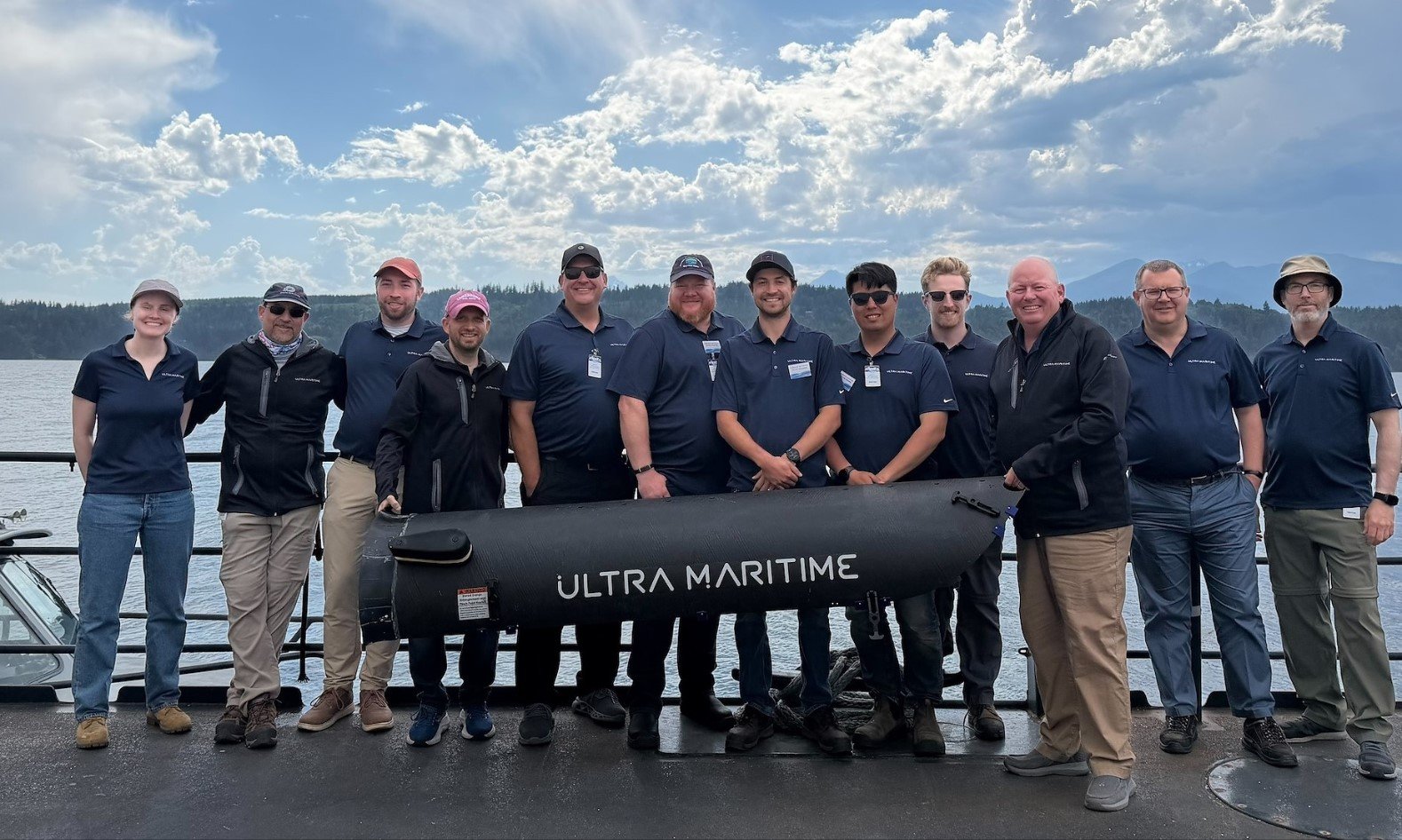
The demonstration combined Ultra Maritime's Sea Spear deployable sonar system with Anduril Industries' Seabed Sentry autonomous undersea system and the Lattice battle management platform.
During operations in the waters off Keyport, Washington, Sea Spear consistently detected, tracked, and classified medium- and large-diameter unmanned underwater vehicles (UUVs), also known as autonomous underwater vehicles (AUVs). The system provided persistent acoustic sensing and transmitted track data for further processing.
Sea Spear is a lightweight deployable sonar system that can operate from both manned and unmanned platforms. Depending on mission requirements, it can function either as a permanent installation or as an attritable asset. The system is intended to support persistent sensing in ports, maritime choke points, remote locations, and other strategically important waterways.
Integration with Navy Command-and-Control Network
As part of the exercise, acoustic tracks generated by Sea Spear were received by Anduril's Seabed Sentry, which then published the data to the Lattice battle management platform.
Lattice processed the acoustic information and transmitted the operational picture through the U.S. Navy's cUxV command-and-control (C2) architecture. This allowed operators at the Navy's Unmanned Operations Center (UOC) to monitor both subsea and surface assets in real time.
According to the demonstration, Seabed Sentry was able to detect an autonomous underwater vehicle and automatically send an alert through the Navy's existing command-and-control system without requiring a human operator to manually relay the information.
Open Architecture Supports Interoperability
The exercise also demonstrated end-to-end integration between Ultra Maritime's sensing technology, Anduril's software, and the Navy's command-and-control architecture used during the exercise.
Using Lattice's open software architecture, the system incorporated acoustic tracks from Sea Spear and delivered the resulting operational picture into the Navy's C2 network. According to the participating companies, this integration was completed without custom engineering between the participating systems in the exercise environment.
Lattice, previously employed in air defense and counter-intrusion operations, was adapted for the undersea domain through Seabed Sentry, enabling edge processing and fusion of acoustic data.
Focus on Emerging Undersea Threats
Exercise Lanternfish focused on technologies designed to address the increasing use of autonomous underwater systems that can operate in ports, harbors, coastal waterways, and other critical maritime areas.
According to the exercise information, these systems can pose threats to ports, pipelines, undersea cables, and other maritime infrastructure. Traditional harbor defense systems have primarily been designed to detect larger submarines and surface vessels, while smaller autonomous underwater vehicles require specialized sensors, faster data processing, and integrated command-and-control capabilities.
The demonstration showed how deployable acoustic sensors and an integrated command-and-control network can support the detection and tracking of autonomous underwater threats while providing operators with a common operational picture across multiple domains.
Multinational Collaboration
Lanternfish is a multinational capability development and demonstration event involving autonomous underwater vehicle and subsea technologies from Australia, the United Kingdom, and the United States. The exercise is intended to enhance collaboration among the U.S. Navy, AUKUS partners, and industry in the development and evaluation of future undersea capabilities.
Ultra Maritime-Anduril Partnership
The demonstration builds on the exclusive partnership between Ultra Maritime and Anduril Industries, announced in April 2025.
The partnership combines Ultra Maritime's Sea Spear deployable acoustic arrays and AI-enabled acoustic processing with Anduril's undersea autonomy systems, including Dive XL, Seabed Sentry, and the Lattice software framework. The collaboration aims to support distributed undersea surveillance for U.S. and allied forces.
Ultra Maritime develops anti-submarine warfare solutions across airborne, surface, and undersea domains and operates in the United States, Canada, the United Kingdom, and Australia. The company continues to invest in autonomous undersea sensing technologies to support scalable and distributed surveillance networks.
No Procurement Decision Announced
The U.S. Navy has not announced any procurement decisions related to the technologies demonstrated during Exercise Lanternfish 2026. The event served as an operational capability demonstration to evaluate the integration of autonomous sensing, acoustic processing, and command-and-control technologies under realistic conditions.
——— End of Article ———