NEW DELHI — April 28, 2026 : The Ministry of Defence has issued a Request for Information (RFI) seeking the damp lease of three ultra heavy-lift helicopters to strengthen the Indian Air Force (IAF) ability to rapidly move heavy equipment, troops, and supplies, particularly in high-altitude and remote border regions.
The RFI outlines an accelerated procurement timeline, requiring delivery within three to six months of contract signing, alongside a mandated 95 percent fleet availability. The requirement is intended to address an immediate operational gap in transporting heavy artillery, armored vehicles, and large troop contingents to forward areas along India’s northern and eastern borders.
Operational Requirement and Lease Model
The proposed acquisition will follow a “damp lease” model, under which the supplier provides the aircraft, flight crew, maintenance, insurance, and technical support, while the IAF supplies loadmasters or cabin crew. This arrangement shifts maintenance responsibility to the vendor and is structured to help achieve the high availability benchmark specified in the RFI.
The helicopters are expected to support a range of missions, including logistics sustainment in terrain with limited road access, high-altitude deployments, disaster relief operations, and routine heavy transport tasks.
Technical Specifications
The RFI defines stringent performance criteria for the platform. The Ministry requires a helicopter capable of carrying a minimum payload of 20,000 kilograms (20 tonnes), either internally or as an external load. The aircraft must have a cruising speed exceeding 230 km/h and be capable of transporting at least 45 fully equipped troops or accommodating 20 medical stretchers.
In addition to performance metrics, the Ministry has emphasized rapid induction and sustained operational readiness, with a delivery window of three to six months and a 95 percent availability requirement.
Only Platform Meeting 20-Tonne Payload Requirement
A key technical condition in the RFI is the 20,000 kg payload threshold, which significantly narrows the pool of eligible platforms. As of 2026, the Mil Mi-26 is the only operational helicopter in the world that fully meets this requirement.
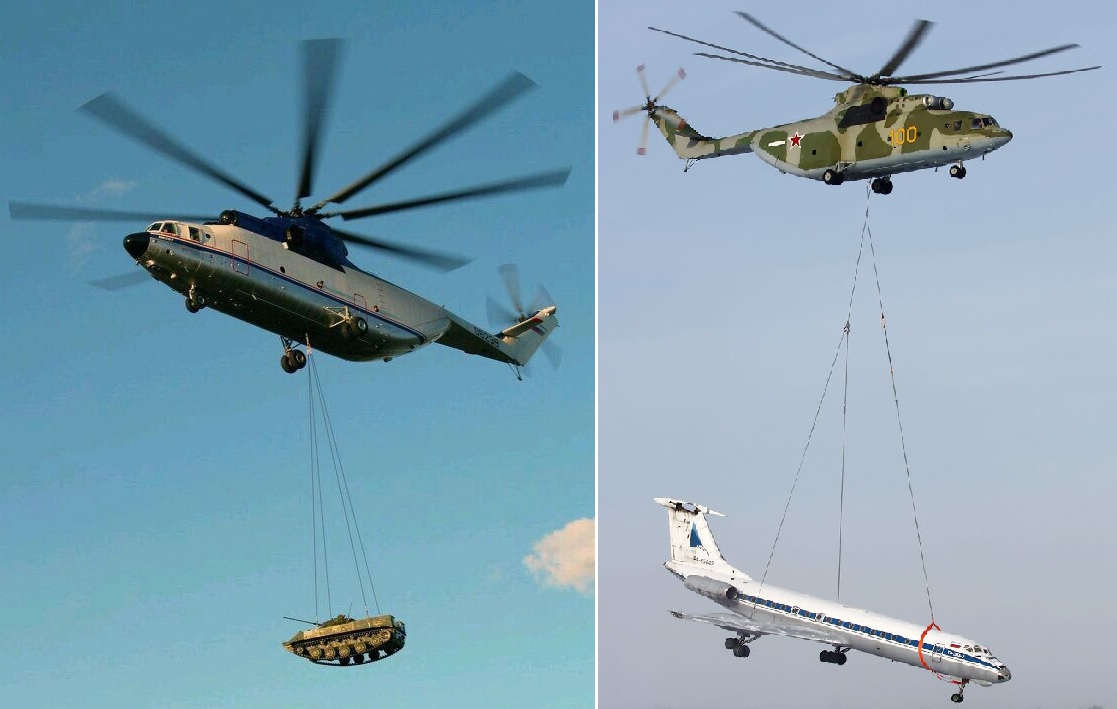
The Mi-26 offers a certified maximum payload of 20 tonnes, both for internal and external lift operations, along with a cruising speed of approximately 255 km/h. It can carry up to 90 troops or 60 stretchers, exceeding the Ministry’s baseline troop and medical evacuation requirements. Its capability to transport extremely heavy and oversized loads, including artillery systems and armored vehicles in a single sortie, aligns directly with the operational intent behind the RFI.
No other helicopter currently in active service matches this 20-tonne payload benchmark, making the Mi-26 uniquely compliant with the Ministry’s stated ultra heavy-lift criteria.
Sikorsky CH-53K King Stallion as Second Near Contender
The Sikorsky CH-53K King Stallion, the U.S. Marine Corps’ newest heavy-lift helicopter, emerges as the second closest contender after the Mi-26, though it does not meet the full payload requirement.
The CH-53K has demonstrated external lift capabilities of up to 16,329 kg (36,000 lb) during testing, with a standard operational payload of approximately 15,876 kg (35,000 lb). While these figures fall short of the 20,000 kg threshold, they represent the highest payload capacity among Western heavy-lift helicopters currently in service or entering service.
The platform is designed with modern avionics, fly-by-wire controls, and improved lift efficiency, making it relevant for high-intensity logistics operations. However, the CH-53K is not yet in widespread international service and would require further evaluation against the full set of RFI parameters, including availability, delivery timelines, and sustainment requirements under a damp lease model.
Chinook as a Practical Option Despite Payload Gap
The Boeing CH-47F Chinook, already in service with the IAF, represents another operationally relevant platform, though it does not meet the 20-tonne payload requirement.
The IAF operates 15 Chinooks, inducted starting in 2019 under a 2015 contract. The platform has a maximum payload capacity of approximately 10–12 tonnes and can carry up to 55 troops. It exceeds the RFI’s speed requirement and is optimized for high-altitude operations.
Despite not meeting the payload threshold, the Chinook’s established logistics chain, maintenance infrastructure, and operational familiarity within the IAF may position it as a practical candidate under a damp lease arrangement, particularly given the urgent delivery timeline and the need for high availability.
Fleet Context and Capability Gap
The IAF’s heavy-lift capability has historically relied on a mix of Mi-26 and Chinook helicopters. The Mi-26 provided unmatched single-lift capacity, while the Chinook enhanced reliability and operational flexibility.
However, India’s Mi-26 fleet, inducted in the late 1980s, has faced prolonged grounding due to maintenance challenges and technical life expiry, despite ongoing overhaul efforts. This has resulted in a gap in true ultra heavy-lift capability.
Next Steps
Responses to the RFI will allow the Ministry of Defence to evaluate available options and leasing models. Potential pathways may include Mi-26-based solutions, CH-53K evaluation, or alternative platforms offering partial compliance with strong support packages.
The RFI represents a short- to medium-term measure aimed at restoring critical heavy-lift capacity while broader modernization and long-term acquisition plans continue.
——— End of Article ———