NEW DELHI — April 28, 2026 : The Ministry of Defence has issued a Request for Proposal (RFP) for the procurement of 83 Carrier Air Defence Tracked (CADET) systems intended to modernize the Indian Army’s air defence architecture for mechanised formations. The programme will be executed under the “Buy (Indian-IDDM)” category, mandating a minimum of 65 per cent indigenous content.
The CADET platform is defined as a high-mobility, tracked command-and-control vehicle designed to host and operate the Akashteer Air Defence Control and Reporting System. It is intended to function as a mobile node within the Army’s air defence network, accompanying armoured and mechanised units across varied operational environments.
Key Technical Requirements
The RFP specifies a set of operational, environmental, and technical parameters to ensure the platform’s suitability for deployment across plains, deserts, semi-deserts, and high-altitude sectors:
-
Operating Altitude: Certified capability up to 5,000 metres for high-altitude operations
-
Operational Range: Minimum range of 320 kilometres
-
Auxiliary Power: Integration of a 30 kW Auxiliary Power Unit (APU) to support onboard systems without running the main engine
-
Navigation Systems: Integration of Global Navigation Satellite System (GNSS)
-
Electronic Compliance: Full adherence to military-grade Electromagnetic Interference and Electromagnetic Compatibility (EMI/EMC) standards
-
Service Life: Minimum operational lifespan of 20 years
The tracked configuration is intended to ensure mobility parity with tanks and infantry combat vehicles, allowing the system to operate alongside frontline formations in difficult terrain.
Operational Role and System Integration
The CADET system is structured to act as a forward-deployed command-and-control node within ground-based air defence networks. By integrating the Bharat Electronics Limited-developed Akashteer system, the platform will process real-time inputs from multiple radar and sensor networks.
Akashteer enables automated detection, tracking, and engagement coordination for aerial threats, including aircraft, helicopters, unmanned aerial systems (UAS), and missiles. The system assigns engagement tasks to nearby Self-Propelled Air Defence units and anti-aircraft guns, reducing response times and improving coordination.
The system operates within a broader C4ISR framework and is designed to interface with the Integrated Air Command and Control System of the Indian Air Force and the Indian Navy’s TRIGUN network, creating a unified air picture across services.
CADET is also designed with an open architecture, allowing integration of future counter-UAS systems such as the Integrated Drone Detection and Interdiction System. Its vehicle-mounted configuration enables deployment in contested electronic warfare environments while maintaining operational continuity.
Platform Design and Configuration
The CADET platform features a tracked chassis with a box-type superstructure to house crew, mission systems, and electronic equipment. External mounting provisions are included for sensors, communication modules, and potential weapon systems.
The design allows for scalability and modular integration, enabling the platform to support evolving air defence technologies while maintaining compatibility with existing systems.
Global Operational Comparisons
The concept of tracked, mobile air defence command platforms is consistent with operational doctrines followed by major militaries:
-
Russia: The Barnaul-T Air Defence Command System provides automated command and control for short-range air defence units and is deployed on tracked chassis to accompany manoeuvre formations.
-
United States: The Armored Multi-Purpose Vehicle (AMPV) in its Mission Command variant (M1286) functions as a protected mobile command post for brigade-level operations, though not exclusively dedicated to air defence.
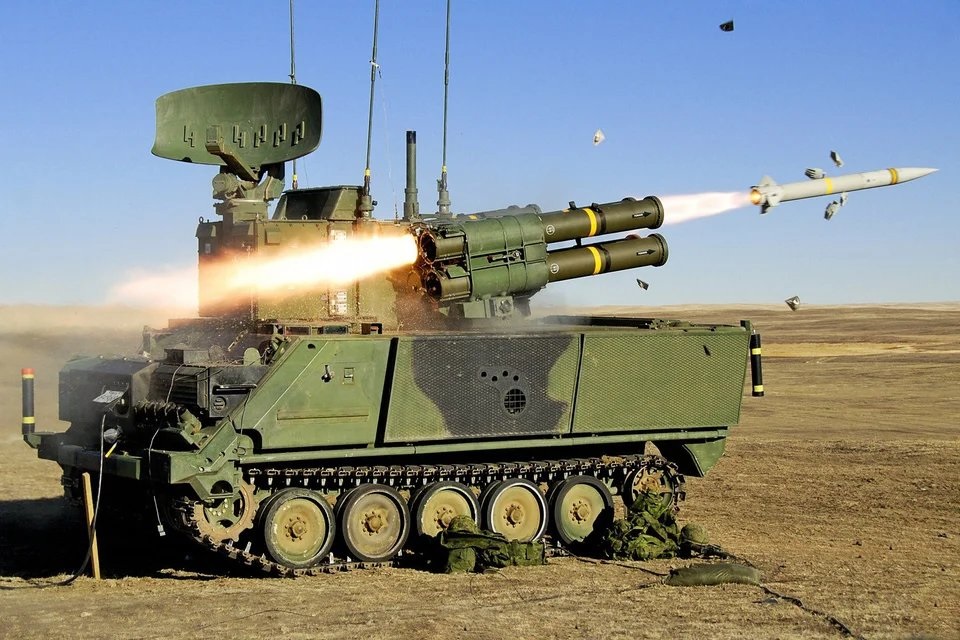
Other mobile air defence platforms globally include systems such as the Pantsir-S1 and 2K22 Tunguska, which combine guns and missiles on mobile platforms for close-range protection of mechanised forces, and the AN/TWQ-1 Avenger mounted on wheeled chassis.
However, no foreign system is clearly documented as fully certified for multi-terrain operations up to 5,000 metres altitude in the same way the CADET requirement specifies. This requirement, combined with the strict indigenous content mandate, increases the likelihood that a domestically developed platform will be selected.
Indigenous Platform Options
To meet the indigenous content requirement, the CADET system must be integrated onto a domestically produced tracked platform. Two primary options are under consideration:
BMP-2 “Sarath” (Legacy Platform):
The BMP-2 Sarath, produced by Armoured Vehicles Nigam Limited, is currently in service in large numbers. Variants of this platform are already used for specialized roles such as the NAMICA missile carrier and Akash missile launch systems. Its established logistics and maintenance ecosystem make it a viable option.
Vikram VT-21 Advanced Armoured Platform (Modern Platform):
The Vikram VT-21 Advanced Armoured Platform, developed by the Defence Research and Development Organisation in collaboration with Tata Advanced Systems Limited and Bharat Forge Limited, represents a newer alternative.
The tracked variant (AAP-Tr), flagged off for trials in April 2026, aligns with CADET requirements through:
- High power-to-weight ratio and automatic transmission suited for operations up to 5,000 metres
- Modular design capable of reconfiguration from a combat role to command-and-control functions
- Internal volume sufficient for hosting Akashteer systems and the 30 kW APU
- Advanced composite construction (including GFRP and CFRP) providing STANAG 4569 Level 4 and 5 protection
- Gross weight below 25 tonnes
- Indigenous content exceeding 65 per cent
At present, Indian-developed platforms already meet the 65 per cent indigenous content baseline, directly fulfilling the procurement categorization requirements outlined in the MoD’s RFP, further strengthening their position in the selection process.
Procurement Context and Expected Outcome
The RFP emphasizes domestic development under the government’s indigenous procurement policy, aligning with broader self-reliance objectives in defence manufacturing. The CADET system is envisioned as a common tracked platform capable of carrying current and future air defence systems while maintaining mobility alongside mechanised units.
Upon induction, the system is expected to enhance the Army’s ability to deploy layered air defence in forward areas without dependence on fixed infrastructure. The selection process will involve evaluating the operational suitability, production timelines, and lifecycle support of candidate platforms, particularly between the established BMP-2 base and the newer Vikram VT-21 platform.
The programme represents a step toward integrating automated command-and-control capabilities with mobile air defence assets, enabling real-time co
——— End of Article ———