
World
ANDOVER, Mass., — April 14, 2026 : Raytheon, a business unit of RTX, has signed a $3.7 billion direct commercial sale contract to provide Patriot Guidance Enhanced Missile–Tactical (GEM-T) interceptors to Ukraine, aimed at strengthening the country’s air and missile defense capabilities. The agreement covers the delivery of GEM-T interceptors, an upgraded variant of the Patriot Advanced Capability-2 (PAC-2) missile family used by U.S. forces and international operators. The missiles are designed to counter a range of airborne threats, including tactical ballistic missiles, cruise missiles, and hostile aircraft. Raytheon did not disclose a delivery timeline. System Role and Technical Capabilities The GEM-T interceptor serves as a principal effector within the Patriot air defense system. It incorporates enhanced guidance and fuse systems to improve engagement performance against maneuvering and low-altitude targets. Unlike the PAC-3 interceptor, which uses a hit-to-kill approach optimized primarily for ballistic missile defense, the GEM-T employs a proximity-fuzed warhead and supports a broader mission set. The Patriot system is a ground-based air and missile defense network that uses phased-array radar to detect and track threats before launching interceptors to neutralize them prior to impact. In Ukraine, Patriot batteries have been deployed to protect urban centers, critical infrastructure, and military installations from long-range aerial attacks. European Production and Industrial Role Production for the contract will be centered at a new GEM-T manufacturing facility in Schrobenhausen, Germany, operated by COMLOG, a joint venture between Raytheon and MBDA Deutschland. The site is intended to support this contract as well as additional international orders. The facility is part of broader efforts to strengthen supply chain resilience and accelerate replenishment of interceptor inventories. Expansion work at the Schrobenhausen site has been underway since 2024 to address increasing demand across European and allied defense programs. Capacity Expansion and Corporate Investment Raytheon stated it is increasing production capacity for GEM-T interceptors through internal investments, second-sourcing initiatives, and expansion of its global supply chain. “Raytheon is focused on maximizing production capacity, ensuring a steady, reliable supply of these combat-proven interceptors for the U.S. and allies like Ukraine who rely on Patriot to protect their citizens, infrastructure and sovereignty,” said Phil Jasper. RTX reported more than $88 billion in global sales in 2025 and is expanding manufacturing output to meet growing international demand for air and missile defense systems. Strategic Context and Previous Procurement The contract forms part of ongoing international efforts to sustain Ukraine’s air defense requirements amid continued missile and drone attacks. Patriot remains one of the most widely fielded air and missile defense systems globally, serving as the foundation of air defense for 19 countries, including NATO members such as Germany and Netherlands. Earlier related procurement included a $478 million contract in 2024 awarded through the NATO Support and Procurement Agency to replenish GEM-T missiles donated by partner nations, including Germany, to Ukraine. The latest agreement reflects continued coordination between industry and allied governments to maintain interceptor availability and support layered air defense operations across Ukraine and other regions facing elevated demand.
Read More → Posted on 2026-04-14 14:06:21
World
BERLIN, — April 14, 2026 : Boeing has initiated production of the first CH-47F Block II Chinook heavy-lift helicopter for the German Air Force, marking the formal start of manufacturing under Germany’s Schwerer Transporthubschrauber (STH) program. The aircraft, bearing construction number M1701, is the first of a planned 60 helicopters ordered to replace the aging CH-53G Sea Stallion fleet by 2030. Production is underway at Boeing’s facility in Philadelphia, where major structural assemblies—including the aft section, cabin, and cockpit—are currently in progress. Final assembly of the first aircraft is expected over the coming year. Deliveries to Germany are scheduled to begin in 2027 and continue into the early to mid-2030s. Program Structure and Contract Details The acquisition is being executed through the U.S. Foreign Military Sales (FMS) framework, following an intergovernmental agreement signed between Germany and the United States in July 2023. In October 2025, the U.S. Department of Defense awarded Boeing a contract valued at approximately $876 million to support production of up to 60 aircraft, along with associated logistics and training. The overall German heavy-lift helicopter program is valued at approximately €7 billion and is financed through the Bundeswehr’s special defense fund established under modernization initiatives. Industrial Support and Maintenance Framework Sustainment and training for the fleet will be supported by German industry partners. Technical personnel training will be conducted by Aero-Bildung GmbH, while airframe maintenance will be handled by Lufthansa Technik. Engine maintenance for the Honeywell T55 engines will be carried out by Rolls-Royce Germany. These arrangements are based on partnerships defined during the original selection process. Force Structure and Basing Changes The introduction of the CH-47F Block II will lead to structural adjustments within Helicopter Wing 64 (Hubschraubergeschwader 64). The wing’s headquarters will relocate from Laupheim Air Base to Holzdorf Air Base by October 1, 2026. Holzdorf Air Base will become the central hub for Germany’s transport helicopter operations, hosting the main operational element of the wing—three squadrons with 47 helicopters—as well as an additional 12-aircraft squadron linked to the headquarters relocation. One aircraft will be assigned to the Bundeswehr’s technical center WTD 61 in Manching for testing, evaluation, and certification activities. Capability and Operational Role The CH-47F Block II represents the latest configuration of the tandem-rotor Chinook platform, incorporating upgrades that enhance payload and range compared to earlier variants. The helicopter is capable of carrying up to 12 tons of payload, either internally or via external cargo hooks, and can transport up to 36 troops or 24 medical stretchers. The German configuration includes extended-range fuel tanks and provisions for air-to-air refueling, enabling compatibility with tanker aircraft such as the Airbus A400M and KC-130J. The aircraft is equipped with a digital avionics suite, automated flight control systems, and integrated self-protection systems including missile, radar, and laser warning sensors. Strategic Context Germany’s selection of the Chinook supports interoperability with NATO partners, including the United States, United Kingdom, and Netherlands, all of which operate the platform. The shared system is intended to facilitate coordinated operations, logistics integration, and joint mission readiness. The production of aircraft M1701 proceeds in line with the planned schedule, marking a key milestone in Germany’s effort to modernize its heavy-lift helicopter capability while ensuring continuity of operations as the CH-53G fleet is phased out.
Read More → Posted on 2026-04-14 13:58:53
World
KYIV, — April 13, 2026 : Ukraine has presented a new domestically developed long-range strike system, the Areion missile-drone, during an updated defense technology exhibition hosted at the Ministry of Foreign Affairs. The display was organized to mark the Day of the Defense Industry Worker and attended by foreign diplomats. The Areion is described as a modification of the Palianytsia turbojet-powered drone-missile system and was exhibited alongside the RK-360 Neptune anti-ship cruise missile. According to information released at the exhibition, the Areion carries a warhead of up to 120 kilograms and has an operational range of up to 600 kilometers. The system is supplied in a launch container compatible with the Neptune missile complex, allowing integration with existing Ukrainian launch infrastructure. In addition, it can be transported and launched from trailers or semi-trailers, similar to the deployment concept used for the Palianytsia, enabling flexible ground-based operations without reliance on dedicated military vehicles. The Areion builds directly on the Palianytsia platform, a domestically developed hybrid system combining characteristics of a cruise missile and an unmanned aerial vehicle. The Palianytsia was first publicly unveiled by President Volodymyr Zelenskyy on August 24, 2024, during Ukraine’s Independence Day, and was confirmed to have been used in combat operations against Russian military targets on the same day. Developed by the Kyiv-based Luch Design Bureau, which also produces the Neptune missile system, the Palianytsia has a total weight of approximately 320 kilograms and an earlier payload capacity of up to 100 kilograms. It is powered by a single-circuit turbojet engine, enabling speeds of up to 900 km/h and flight at altitudes between 15 and 500 meters. The system uses a combination of inertial navigation (INS) and GPS guidance and is launched from ground-based platforms. Upgraded versions have a reported range of up to 650 kilometers. The Palianytsia entered mass production in late 2024 and has since been used in strikes against Russian military infrastructure, including airfields and logistics facilities located within 600–700 kilometers of Ukrainian territory. While the Areion retains compatibility with existing Neptune launch systems and the mobility of trailer-based deployment, no additional technical specifications—such as speed, propulsion modifications, or guidance upgrades—have been disclosed at the current exhibition. The Foreign Ministry display also included other Ukrainian-developed systems, including the Flamingo drone, Buntar-3, GOR, January, Sova-150, interceptor drones Octopus and STING, the LTEJ Mirage electronic warfare system, and models of light-class surface-to-air missile systems. The exhibition forms part of Ukraine’s ongoing effort to demonstrate progress in domestically developed long-range strike capabilities. No operational deployment details for the Areion have been announced.
Read More → Posted on 2026-04-13 17:57:52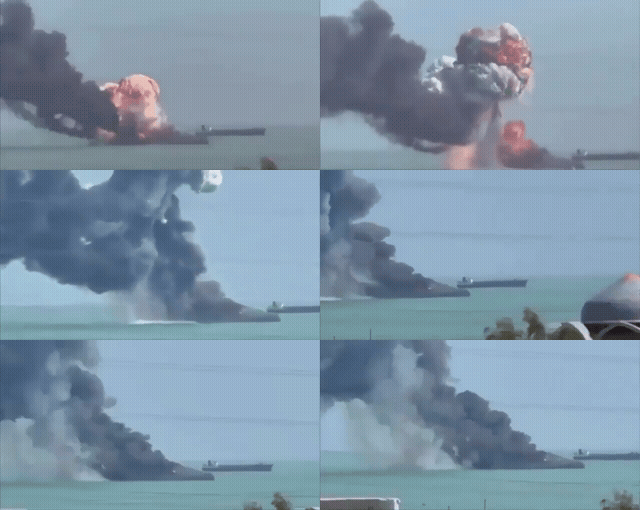
World
TEHRAN, — April 13, 2026 : Iran has claimed that its naval forces destroyed a United States vessel near the port of Bandar Abbas in the Strait of Hormuz, according to a statement issued via the official X account of the Iranian Armed Forces on April 13. Iranian authorities stated that the incident occurred after the American vessel allegedly approached Iran’s coastline. The operation was carried out by Iran’s navy, which, according to the statement, resulted in the destruction of the vessel. No details were provided regarding the ship’s classification or any potential casualties. In its statement, Iran referred to the target as a U.S. ship but did not identify it as a warship. Iran also released video footage showing a vessel engulfed in flames and producing thick smoke. The imagery does not allow clear identification of the ship type. Independent analysts have noted that the visible structure in the footage does not clearly match known classes of military warships, though no definitive conclusion has been reached. At the time of the Iranian claim, U.S. President Donald Trump stated that Iran’s naval power had been “completely destroyed.” The Iranian announcement followed shortly after this statement. There has been no official confirmation of the incident from the United States or independent maritime authorities. The United States Navy has not issued any comment, and no acknowledgment of vessel loss has been made by the U.S. Department of Defense. The claim coincided with the start of a U.S. Central Command maritime blockade initiated at 10:00 a.m. Eastern Time on April 13, targeting all maritime traffic entering or exiting Iranian ports and coastal areas. The blockade applies to Iranian ports in the Arabian Gulf and the Gulf of Oman but does not restrict vessels transiting the Strait of Hormuz to or from non-Iranian ports. The U.S. action followed the collapse of high-level negotiations between U.S. and Iranian delegations held in Islamabad, Pakistan, on April 11 and 12, 2026, which ended without agreement. The discussions had focused on Iran’s nuclear program and regional maritime security issues. Bandar Abbas, located along the Strait of Hormuz, serves as Iran’s primary naval headquarters and has been a focal point in the ongoing conflict that began earlier in 2026. Previous incidents reported in March 2026 included fires on vessels at the port following U.S. and Israeli operations; those incidents are separate from the April 13 claim. Iran has previously warned that military vessels approaching the Strait of Hormuz would face a response. The Islamic Revolutionary Guard Corps Navy has stated that it maintains operational control over the waterway and permits passage under defined conditions for non-military vessels. Earlier on April 13, Iran also announced a counter-blockade affecting ports across the Middle East, stating that vessels would not be allowed to use regional ports until U.S. measures are lifted. As of April 13, no further operational details regarding the claimed incident have been released, and the situation remains unverified pending independent confirmation.
Read More → Posted on 2026-04-13 17:45:34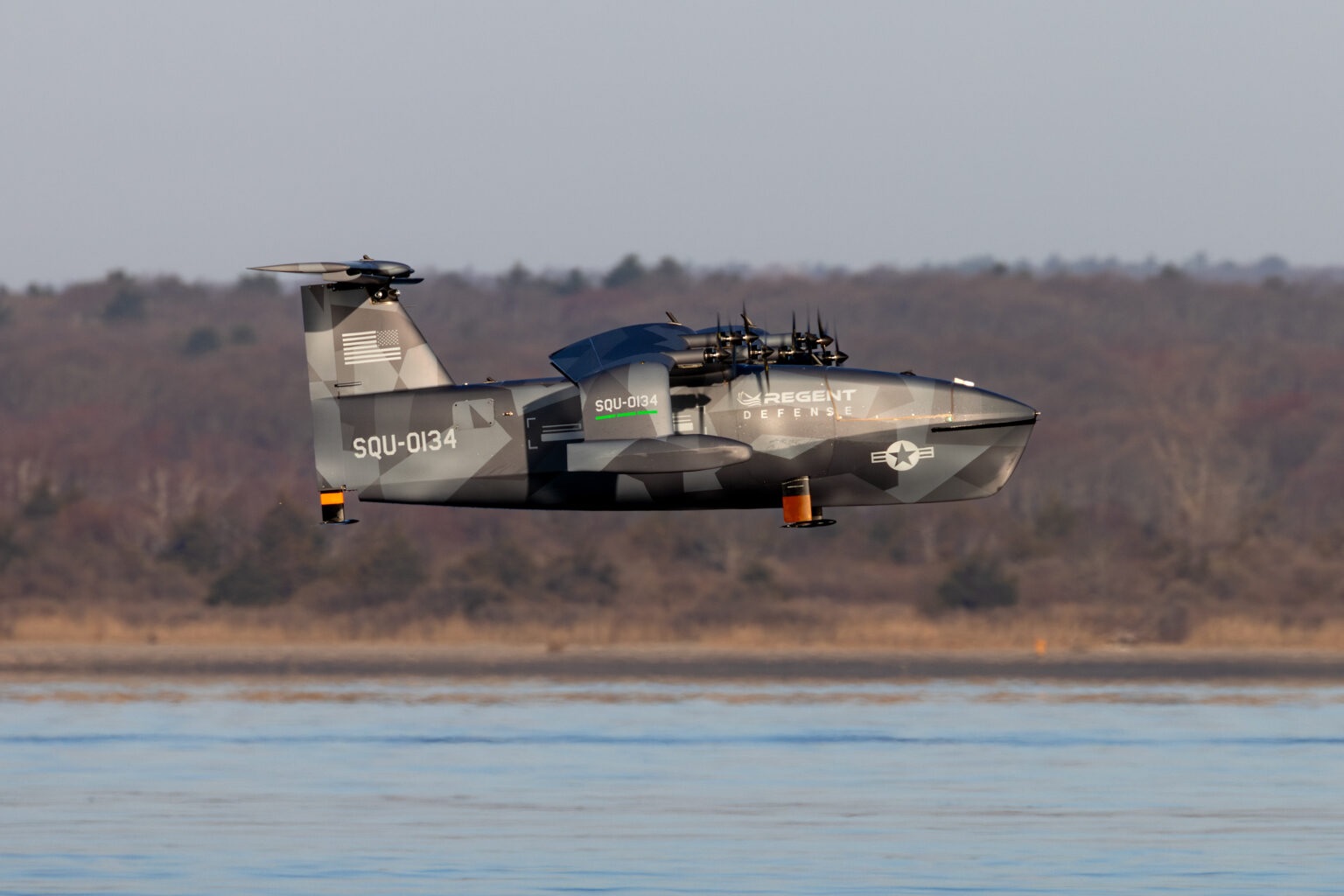
World
NORTH KINGSTOWN, R.I., — April 13, 2026 : U.S.-based maritime technology company REGENT announced on Monday that it has successfully completed a ground-effect flight test of its autonomous Squire Seaglider, marking what it described as the first U.S. flight of a defense-focused wing-in-ground effect craft. The April 13 demonstration represents a transition from early-stage validation to live flight testing, advancing the Squire platform toward potential operational deployment with military users. The test follows progressive system development after the U.S. Coast Guard granted testing clearance in 2025. Program Development and Strategic Context REGENT is positioning the Squire Seaglider to address operational requirements in contested maritime environments, particularly in coastal regions and across the Indo-Pacific. The platform is designed to support missions without reliance on traditional infrastructure such as ports, airstrips, or large surface vessels. Earlier in 2026, on February 9, company leadership briefed U.S. Secretary of Defense Pete Hegseth and senior officials at the Seabee Museum in Quonset, Rhode Island. The briefing focused on the system’s role in addressing gaps in contested logistics and distributed maritime operations. During the meeting, Hegseth emphasized the importance of accelerating field deployment of emerging operational systems. Billy Thalheimer, co-founder and chief executive officer of REGENT, stated that the flight milestone demonstrates the operational potential of Seaglider technology for defense applications. Technical Characteristics and Performance The Squire is an uncrewed, fully electric wing-in-ground effect vehicle that operates just above the water’s surface. It utilizes a cushion of compressed air between its wings and the water to reduce aerodynamic drag, enabling higher efficiency compared to conventional marine vessels while maintaining a low operational profile. According to REGENT, the platform has the following specifications: Maximum speed of 70 knots (approximately 81 mph) Operational range exceeding 100 nautical miles (around 115 miles) on a single charge Payload capacity of 50 pounds Dimensions of 13 feet in length, 5.5 feet in height, and an 18-foot wingspan The vehicle operates across multiple phases, including float, hydrofoil, and ground-effect flight modes. It reaches hydrofoil speeds of approximately 35 knots before transitioning to sustained ground-effect flight at higher speeds. REGENT stated that the Squire can take off and land in sea states of up to 2 feet and maintain operational capability across varying conditions while in flight. Its low-altitude profile allows it to remain above sonar detection while reducing radar visibility. The system is being developed for missions including intelligence, surveillance and reconnaissance (ISR), tailored logistics, search and rescue (SAR), and anti-submarine warfare (ASW) support. Tom Huntley, general manager of REGENT Defense, said the platform is intended to provide speed, range, and mission flexibility across wide maritime areas without dependence on fixed infrastructure. Testing Progress and Manufacturing Since receiving regulatory clearance, REGENT has expanded the Squire’s operational envelope, onboard systems, and autonomous flight controls through a structured test program. The April 13 flight forms part of a broader 2026 test campaign that began in March. The company is also conducting parallel development of its larger Viceroy Seaglider prototype in Rhode Island. The Viceroy is designed to carry up to 12 passengers and approximately 3,500 pounds of cargo, supporting both commercial and defense applications. Ongoing sea trials are taking place in Narragansett Bay. REGENT is establishing a 255,000-square-foot manufacturing facility in Rhode Island to support production of its Seaglider platforms. Contracts and Financial Position REGENT currently holds a contract valued at $15 million with the U.S. Marine Corps related to the Squire program. The company is backed by investors including Lockheed Martin, Founders Fund, and 8090 Industries. According to REGENT, its commercial order backlog exceeds $10 billion, reflecting demand across both civilian and defense markets. The Squire Seaglider is being developed under REGENT Defense as part of a broader portfolio of hybrid and autonomous maritime platforms.
Read More → Posted on 2026-04-13 17:33:25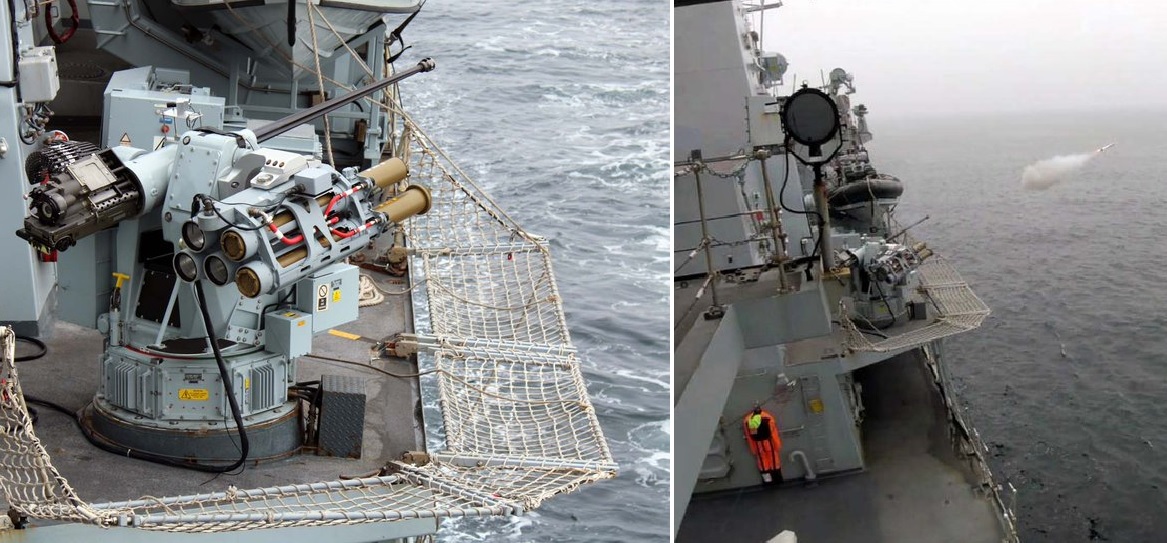
World
PARIS, — April 13, 2026 : France has approved a comprehensive upgrade to the close-range defense architecture of its frigate fleet, adding Mistral missile launchers, dedicated counter-unmanned aerial systems (C-UAS) jamming capabilities, and enhanced optronics for gun direction. The decision follows operational feedback from recent deployments, particularly in the Red Sea, where French vessels faced sustained drone threats. The upgrades will be applied primarily to the five Defense and Intervention Frigates (FDI), also known as the Amiral Ronarc’h class, with integration planned during construction or through retrofits. The lead ship, Amiral Ronarc’h, was delivered in October 2025. Under the program, each FDI frigate will receive Sadral or Simbad-RC Mistral launcher systems configured as two twin launchers (2 × 2). These systems employ MBDA’s Mistral short-range surface-to-air missile, an infrared-guided, fire-and-forget interceptor designed for close-in defense. The remotely operated Simbad-RC variant allows engagements without exposing crew. The Mistral 3 missile offers engagement ranges of up to approximately 8 kilometers and is optimized to counter low-signature targets such as drones and fast attack craft. In parallel, the French Navy is fielding dedicated electronic warfare systems to provide non-kinetic countermeasures against unmanned threats. The Neptune and MAJES electronic warfare suites, developed by MC2 Technologies, are designed to disrupt drone navigation and communication links. Neptune functions as a high-power GNSS jammer, while MAJES DB6 targets UAV command frequencies. These systems have already been deployed operationally on FREMM-class frigates, including Languedoc, Alsace, and Lorraine, where they enabled successful UAV neutralization through jamming during Red Sea escort missions. Additional systems such as Safran’s Skyjacker C-UAS solution are also being introduced to expand electronic countermeasure options. The upgrade package also includes improvements to gun direction through the integration of advanced electro-optical/infrared (EO/IR) systems. The Safran Paseo XLR optronic suite, developed under urgent operational requirements, provides high-definition TV imaging, third-generation mid-wave infrared sensors, and optional short-wave infrared capability. The system supports continuous 360-degree surveillance and enhances target detection and identification in degraded visibility conditions. These optronic enhancements are integrated with the ships’ fire-control systems, improving the accuracy and responsiveness of onboard weapons, including the 76 mm Oto Melara Super Rapid main gun and 20 mm Nexter Narwhal remote weapon stations. The upgrades enable more effective engagement of small, low-flying, or fast-moving unmanned threats and allow simultaneous direction of multiple gun systems via onboard ballistic computation. The FDI frigates already feature a baseline armament of 16 Sylver A50 vertical launch cells for Aster 15 and Aster 30 surface-to-air missiles, with the final two ships in the class to be constructed with 32 cells. Earlier units are scheduled for retrofit to reach the same capacity in the 2030s. Each vessel also carries eight Exocet MM40 Block 3c anti-ship missiles, two twin torpedo tubes for MU90 lightweight torpedoes, and remote weapon stations. Similar counter-drone upgrades have been applied or tested on the Aquitaine-class FREMM multi-mission frigates and Horizon-class air-defense destroyers, forming a fleet-wide approach. The enhancements establish a layered defense structure combining medium- to long-range interception using Aster missiles, close-range kinetic engagement via Mistral systems and naval guns, and non-kinetic disruption through dedicated electronic warfare. The modernization is being implemented under France’s current military programming law and reflects a shift toward addressing asymmetric aerial threats, including drone swarms and unmanned surface systems. While the upgrades apply broadly across the French Navy’s first-rank frigates, no detailed timeline has been disclosed beyond integration with the FDI program and planned retrofits extending into the 2030s.
Read More → Posted on 2026-04-13 17:12:41
World
TEHRAN/WASHINGTON, — April 13, 2026 : Iran on Monday announced a counter-blockade affecting ports across the Middle East, stating that vessels will not be permitted to use regional port facilities while the United States maintains its naval blockade on Iranian ports and coastal areas. The announcement was made by Iranian armed forces through an official military spokesperson and coincided with the start of the U.S. blockade earlier in the day. Iranian authorities said the measures would remain in effect until the United States lifts its restrictions. According to the statement, maritime security in the Persian Gulf and the Sea of Oman must apply equally to all countries. “Security is either for everyone or for no one,” the spokesperson said, adding that if Iranian port access in these waters is restricted, other regional ports would also face similar conditions. The counter-blockade applies to vessels seeking access to ports across the Persian Gulf and the Sea of Oman, which include facilities belonging to multiple Middle Eastern countries. Iranian officials described the U.S. move as illegal and characterized it as an act of piracy. They said the response is conditional and will be reversed once the U.S. blockade ends. The U.S. Central Command confirmed that its naval blockade began at 10:00 a.m. Eastern Time on April 13. The operation targets all maritime traffic entering or exiting Iranian ports in the Arabian Gulf and the Gulf of Oman. U.S. officials stated that ships transiting the Strait of Hormuz to or from non-Iranian ports are not affected by the measure. The U.S. administration, under President Donald Trump, said the blockade is intended to restrict Iran’s maritime activity, including oil shipments and revenue flows, following the collapse of diplomatic efforts. The decision came after high-level negotiations between U.S. and Iranian delegations in Islamabad, Pakistan, on April 11 and 12 failed to produce an agreement on a ceasefire or related terms. Those talks, hosted by Pakistan, involved senior officials including U.S. Vice President JD Vance and Iranian Foreign Minister Abbas Araghchi. U.S. representatives said Iran did not agree to proposed terms, while Iranian officials stated that discussions had progressed before U.S. demands changed and were followed by the blockade announcement. Prior to the latest development, Iran’s Islamic Revolutionary Guard Corps (IRGC) had warned that it could assert control over maritime traffic in the Strait of Hormuz if Iranian access was restricted. The newly announced counter-blockade expands that position beyond Iranian waters to include broader regional port access. Iranian political and military officials, including parliamentary members and advisers, said the United States is attempting to increase pressure through maritime restrictions and indicated that Tehran has additional response options. The reciprocal measures have had immediate economic effects. Global oil prices moved higher amid concerns over potential disruption to shipping routes through the Strait of Hormuz, a key corridor for international energy supplies. Financial markets also reacted, with declines reported in several regions. In India, stock markets opened lower, while Pakistan’s KSE-100 index dropped sharply by nearly 6,000 intraday points following the breakdown of negotiations. International responses have begun to emerge. Israeli Prime Minister Benjamin Netanyahu expressed support for the U.S. action during a cabinet meeting, stating that Israel is coordinating with Washington on the issue. Despite the escalation, diplomatic engagement has not fully ceased. Officials from Pakistan, Egypt, and Turkey are continuing backchannel discussions with both sides. These efforts are aimed at bridging differences and reaching an agreement before the current ceasefire window, which is set to expire on April 21. No operational details have been released by Iran regarding how the counter-blockade will be enforced or which specific ports may be directly affected. Both the U.S. naval blockade and Iran’s counter-measures remain in effect as of April 13.
Read More → Posted on 2026-04-13 16:56:45
World
WASHINGTON / TAMPA / ISLAMABAD — April 13, 2026 : The United States has initiated a targeted naval blockade restricting maritime access to Iranian ports, with U.S. Central Command (CENTCOM) confirming that enforcement began on Monday, April 13, at 10:00 a.m. Eastern Time. The operation applies to all vessels, regardless of nationality, traveling to or from Iranian ports and coastal areas. According to CENTCOM, the blockade covers maritime approaches to ports located along both the Arabian Gulf and the Gulf of Oman, forming a comprehensive restriction on Iran’s seaborne trade routes. More than 15 U.S. warships are deployed to support the blockade, according to the Wall Street Journal (WSJ), citing a senior U.S. official. The vessels include an aircraft carrier, several guided-missile destroyers, an amphibious assault ship, and additional naval platforms. These assets are capable of launching helicopters for boarding operations, while some ships can direct and hold commercial vessels in designated maritime zones as part of enforcement measures. Blockade Scope and Maritime Directives U.S. military officials described the action as a “targeted port blockade,” emphasizing that enforcement will focus specifically on ships entering or departing Iranian ports rather than imposing a full closure of regional waterways. CENTCOM stated that the blockade will be implemented impartially, with no exemptions based on a vessel’s flag or origin. Commercial vessels operating in the region have been instructed to monitor official “Notice to Mariners” communications and maintain contact with U.S. naval forces via bridge-to-bridge radio channel 16 when approaching the Gulf of Oman and the Strait of Hormuz. The command has not disclosed detailed rules of engagement or specific enforcement protocols but indicated that additional operational guidance would be communicated directly to maritime operators. Strait of Hormuz Transit Remains Open U.S. officials clarified that the Strait of Hormuz will remain open for international shipping not destined for Iran. Vessels transiting the strait to or from non-Iranian ports will not be impeded, preserving freedom of navigation through one of the world’s most critical maritime chokepoints. The distinction underscores that the measure is designed to restrict access to Iranian port infrastructure while allowing broader regional and global commerce to continue. Collapse of U.S.-Iran Talks in Islamabad The blockade follows the breakdown of high-level negotiations between the United States and Iran held in Islamabad, Pakistan, on April 11 and April 12. The talks, which lasted approximately 21 hours, concluded without agreement. U.S. Vice President JD Vance, who led the American delegation, stated that Iran declined to accept U.S. terms, particularly regarding its nuclear program and issues related to maritime access in the Strait of Hormuz. Iranian officials, in turn, characterized U.S. demands as excessive. Pakistan hosted the negotiations as part of mediation efforts aimed at achieving a ceasefire in the ongoing U.S.-Iran conflict that began earlier in 2026. No further rounds of negotiations have been scheduled following the impasse. On April 12, President Donald Trump announced that the U.S. Navy would begin steps to block ships entering or leaving the Strait of Hormuz area. CENTCOM’s subsequent clarification limited the scope of the action to Iranian ports rather than the entire strait. Enforcement Precedents and Expected Operations Recent U.S. maritime enforcement actions indicate the operational approach likely to be employed. On January 9, 2026, the United States Coast Guard, supported by U.S. Marines, boarded and seized the oil tanker MT Olina in the Caribbean Sea. The vessel was suspected of transporting embargoed oil as part of efforts to disrupt so-called shadow fleet operations. Military analysts assess that similar boarding, inspection, and seizure operations could be conducted in waters near Iran to enforce compliance with the blockade. U.S. naval forces are expected to intercept vessels, redirect them, or detain them as necessary if they attempt to access Iranian ports. Economic Impact and Trade Exposure The blockade targets a critical vulnerability in Iran’s economy, which relies heavily on maritime trade routes. According to available estimates, more than 90 percent of Iran’s annual trade, valued at approximately $109.7 billion, passes through the Gulf region and the Strait of Hormuz. A senior fellow at the Foundation for Defense of Democracies estimates that the blockade could result in daily losses of approximately $276 million in exports and $159 million in imports, totaling $435 million per day, or roughly $13 billion per month. Prior to the blockade, Iran exported approximately 1.5 million barrels of oil per day, generating about $139 million in daily revenue. In addition, petrochemical exports valued at $19.7 billion over a nine-month period—equivalent to roughly $54 million per day—are also at risk under the current restrictions. Market Reaction and Strategic Context Global energy markets responded immediately following the announcement, with crude oil prices rising by approximately 8 percent to exceed $100 per barrel. The increase reflects concerns over potential supply disruptions, reduced Iranian exports, and heightened regional uncertainty. The blockade represents a significant escalation in the ongoing U.S.-Iran confrontation. Its stated objective is to apply sustained economic pressure by limiting Iran’s ability to conduct maritime trade while maintaining international shipping flows through the Strait of Hormuz. CENTCOM has confirmed that enforcement operations began as scheduled on April 13. Further details regarding implementation and engagement protocols are expected to be released as the operation continues.
Read More → Posted on 2026-04-13 15:58:46
World
RIYADH / JERUSALEM — April 13, 2026 : A senior source within the Saudi royal family has called for a United States-led ground invasion of Iran aimed at regime change, stating that current military operations have failed to achieve their strategic objectives. The remarks, reported by Israeli media on April 13, 2026, reflect Riyadh’s internal assessment of the ongoing regional conflict and its view of potential outcomes. Call for Expanded U.S. Military Strategy According to the Saudi source, the ongoing campaign of aerial and naval strikes against Iran over the past two months has not produced the intended results. Instead of weakening Tehran’s posture, the official assessed that Iran has become more assertive toward the United States, Israel, and regional actors including Saudi Arabia. The source argued that a decisive shift in strategy is required, advocating for a ground invasion modeled on the 2003 U.S.-led operation in Iraq that resulted in the removal of Saddam Hussein’s government. The official stated that regime change in Iran cannot be achieved through limited strikes alone and requires a sustained military presence on the ground. The remarks also emphasized that Iran continues to advance its nuclear program, including uranium enrichment activities, despite ongoing military pressure. The source described the current Iranian leadership under Ayatollah Ali Khamenei as posing a greater long-term strategic challenge than Iraq under Saddam Hussein, citing the continued development of nuclear capabilities. Conditions for Post-Regime Leadership The Saudi source outlined specific criteria for any future government in Iran following a potential regime change. According to the assessment, a successor leadership must be secular in nature, capable of governing effectively, and broadly acceptable to the Iranian population across key urban centers such as Tehran, Isfahan, and Mashhad. The official explicitly advised against supporting exiled opposition figure Reza Pahlavi as a potential leader. While acknowledging his visibility and role in recent political developments, the source suggested that an alternative figure with wider domestic acceptance and stronger regional relationships would be more suitable for leading a transition. In January 2026, Pahlavi called for mass demonstrations from exile in the United States. The appeal contributed to widespread protests across all 31 Iranian provinces, followed by extensive government crackdowns and communication restrictions. Despite his prominence among some opposition groups, the Saudi assessment indicates reservations about his ability to unify the country. Saudi Arabia’s Position on the Conflict The Saudi source clarified that Riyadh does not consider itself a direct participant in the ongoing conflict between Iran, the United States, and Israel. The official stated that Saudi Arabia neither initiated nor actively supported the current military campaign. However, the Kingdom has been affected by developments linked to the conflict. In late February 2026, Iranian drone strikes targeted Saudi Aramco’s Ras Tanura refinery in what was described as a retaliatory action connected to U.S. and Israeli operations. The source reiterated that Saudi Arabia’s approach remains focused on containment and response to direct threats. Each incident involving Iranian actions would be addressed individually, but no decision has been taken to formally enter the war. Background: Escalation and Ceasefire The comments come during a temporary ceasefire that began on April 8, 2026, following a period of sustained escalation across the region. The conflict traces back to January 2026, when widespread civilian protests in Iran and subsequent state crackdowns contributed to heightened tensions. The United States responded by increasing its military presence in the region. By late February 2026, the situation escalated into direct confrontation, with U.S. and Israeli forces conducting strikes on Iranian military infrastructure and leadership targets. Iran responded with large-scale missile and drone attacks against U.S. and allied positions across the Middle East, including sites in Kuwait, the United Arab Emirates, and Saudi Arabia. Regional and Strategic Context The Saudi source’s remarks align with broader concerns among Gulf states that limited military measures may not be sufficient to alter Iran’s strategic behavior or regional influence. Officials in the region have indicated that without significant changes to Iran’s political or military posture, long-term stability is unlikely. Saudi Arabia and Iran have maintained a prolonged geopolitical rivalry. During the 1980s Iran-Iraq War, Saudi Arabia provided financial support to Iraq. Following the 2003 removal of Saddam Hussein, Iran expanded its influence across Iraq, Syria, Lebanon, Yemen, and Palestinian territories through allied governments and non-state actors. Despite a China-brokered diplomatic agreement in 2023 aimed at reducing tensions between Riyadh and Tehran, underlying disputes related to Iran’s nuclear program, regional proxy networks, and security concerns have persisted. The current conflict has included strikes on Iranian nuclear infrastructure, retaliatory missile launches, and ongoing discussions regarding potential ceasefire arrangements and maritime security measures in the Strait of Hormuz. The Saudi source indicated that ending military operations without substantive changes to Iran’s leadership or policies would not address the underlying security concerns of regional states. The remarks were delivered anonymously, and no official confirmation has been issued by the Saudi government.
Read More → Posted on 2026-04-13 15:51:22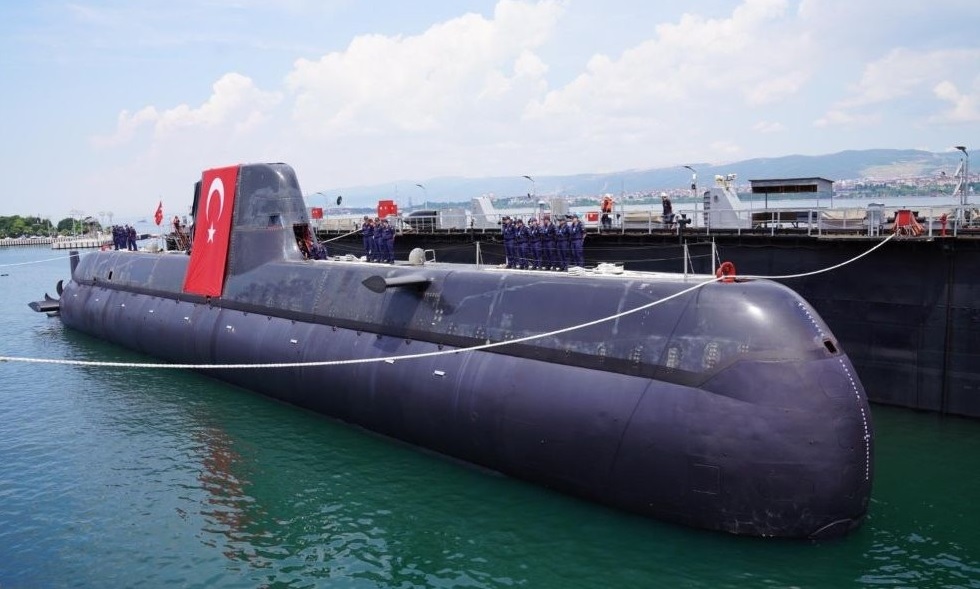
World
ANKARA, — April 13, 2026 : The Turkish Naval Forces have equipped a Reis-class submarine with a Dry Deck Shelter (DDS) module, enabling submerged deployment of SAT (Sualtı Taarruz) commandos, according to footage and official statements released on April 13, 2026 showing the submarine operating at sea. The integration marks a functional expansion of Turkey’s New Type Submarine Project, also known as the Reis-class or Type 214TN program, which forms the backbone of the country’s next-generation conventional submarine fleet. Program Background and Industrial Structure The Reis-class submarines are license-built derivatives of Germany’s Type 214 design, developed under cooperation with ThyssenKrupp Marine Systems (TKMS). Construction is being carried out at Gölcük Naval Shipyard, with Turkish industry providing substantial subsystem integration. Domestic defense firms STM and Aselsan are responsible for key structural sections and onboard electronics, including locally integrated sensors and combat systems. The program reflects a hybrid model combining foreign design support with indigenous manufacturing and system integration. A total of six submarines are planned under a contract signed in 2009, valued at approximately €2.06 billion. Deliveries are scheduled to continue through 2029. Platform Specifications and Capabilities Each Reis-class submarine measures approximately 68.5 meters in length and has a submerged displacement of around 2,040 to 2,050 tons. The vessels are capable of reaching a maximum submerged speed of about 20 knots. A defining feature of the class is its air-independent propulsion (AIP) system based on proton exchange membrane (PEM) fuel cells. This allows the submarines to remain submerged for extended durations—potentially several weeks—without snorkeling, significantly reducing detection risk. The submarines are equipped with eight 533 mm torpedo tubes capable of launching heavyweight torpedoes, guided missiles, and naval mines. The standard crew complement is 27 personnel, with additional capacity for up to 11 SAT commandos. The class integrates the ISUS 90-72 sonar and weapon control system, combined with Turkish-developed electronic subsystems. The submarines are designed to replace the Preveze-class fleet and precede future indigenous submarine programs under the MILDEN project. Fleet Status and Timeline The first submarine, TCG Pirireis (S-330), was commissioned on August 24, 2024, at Aksaz Naval Base. The second unit, TCG Hızırreis (S-331), entered service in December 2025. The third submarine, TCG Muratreis (S-332), was launched in May 2025 and is undergoing outfitting and trials. Three additional boats—TCG Aydınreis, TCG Seydi Ali Reis, and TCG Selman Reis—are in various stages of construction or outfitting, with deliveries planned through 2029. While official sources have not confirmed which specific submarine has received the DDS in the latest rollout, earlier references indicate that TCG Pirireis has previously operated with a SAT commando container. Dry Deck Shelter Integration The Dry Deck Shelter (DDS) is a modular, externally mounted structure attached to the submarine’s deck. It provides a sealed, pressurized environment connected to the submarine’s hull via an access trunk. This configuration enables SAT personnel to prepare equipment within the shelter while the submarine remains submerged. A lockout chamber allows divers to exit and re-enter the submarine underwater at periscope or shallow depths without requiring the vessel to surface. The DDS can support deployment of swimmer delivery vehicles (SDVs), combat diving gear, and small insertion craft. By maintaining a closed pressure environment, the system preserves both acoustic and visual stealth during special operations missions. Operational Role of SAT Commandos SAT (Sualtı Taarruz) commandos are the Turkish Navy’s specialized maritime special operations unit. Their mission profiles include underwater demolition, amphibious reconnaissance, sabotage of maritime infrastructure, and direct-action operations in coastal environments. The Reis-class submarines were designed with provisions to carry SAT teams. The addition of the DDS expands deployment methods beyond torpedo-tube launches or surface-based insertions, enabling more flexible and covert operational options. Strategic and Regional Context The DDS-equipped Reis-class submarines are expected to support covert maritime operations in the Black Sea and the eastern Mediterranean. These regions are characterized by dense naval activity, contested maritime zones, and strategic chokepoints. The combination of AIP-enabled endurance and DDS-supported special operations capability allows the Turkish Navy to conduct extended submerged missions while maintaining a reduced operational signature. Program Significance The integration of the Dry Deck Shelter reflects a standard capability enhancement seen in submarines configured for special operations support across multiple navies. Within the Turkish context, it aligns with broader naval modernization efforts focused on survivability, endurance, and multi-role operational flexibility. The Reis-class program continues to progress with ongoing sea trials, system integration, and phased delivery of remaining submarines through the end of the decade.
Read More → Posted on 2026-04-13 15:33:25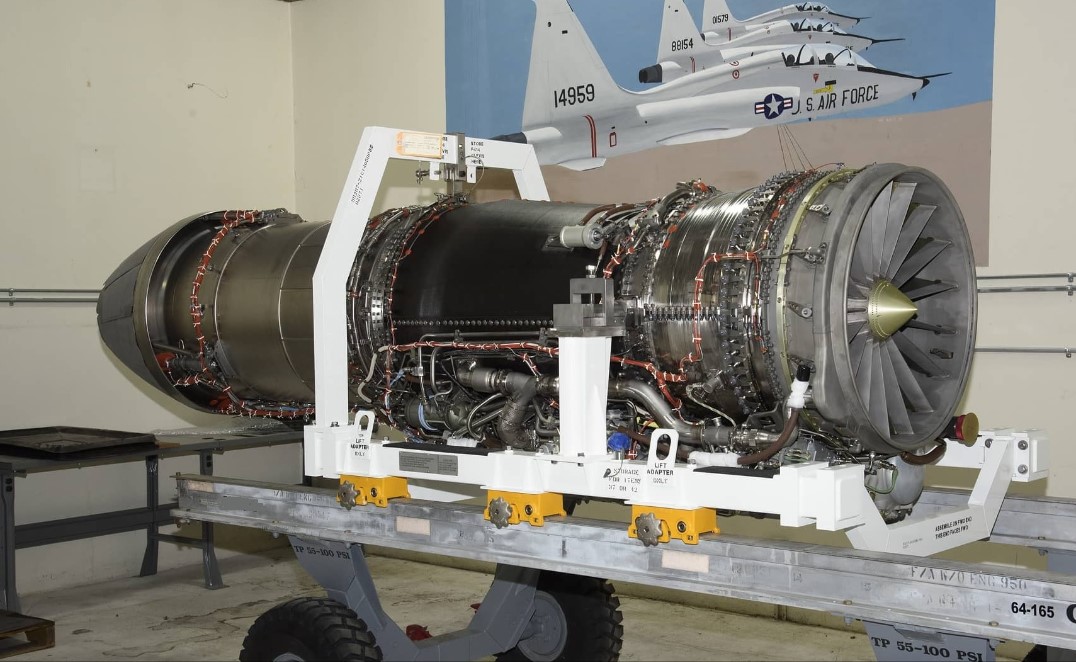
India
NEW DELHI, — April 13, 2026 : India and the United States have reached a significant milestone in defence aerospace cooperation as GE Aerospace and Hindustan Aeronautics Limited (HAL) concluded technical discussions on the co-production of the F414 fighter jet engine. In parallel, GE Aerospace has signed a contract with the Indian Air Force (IAF) to establish an in-country maintenance, repair, and overhaul (MRO) depot for the F404-IN20 engines powering the Light Combat Aircraft (LCA) Tejas fleet. F414 Co-Production Moves to Commercial Phase The completion of technical discussions marks the end of the most complex phase of the F414 engine co-production agreement, particularly covering the transfer of technology (ToT), which accounts for approximately 80 percent of the programme by value and is largely focused on manufacturing processes. With technical parameters now finalized, the programme will transition into the commercial negotiation phase. The final contract is scheduled to be signed within the current financial year. Under the agreement, a domestic production facility will be established by HAL. The manufacturing line is expected to become operational within two years following the signing of the final contract. The initial scope includes the production of 99 F414 engines, with provisions to scale output as the Indian Air Force projects a requirement for approximately 120 to 130 Tejas Mk-2 fighter aircraft. The F414 engines are designated to power the upcoming Tejas Mk-2 variant. The programme is expected to support the development of infrastructure required for manufacturing a 4.5-generation class fighter engine in India. It will also facilitate the creation of testing facilities, exposure of the workforce to advanced manufacturing technologies, and development of practical expertise in engine production processes. From an operational perspective, the arrangement aligns stakeholder interests. The Indian Air Force secures engine availability for future platforms, while the Ministry of Defence advances its objective of reducing import dependence in defence procurement. Rita Flaherty, Vice President for Sales and Business Development for Defence and Systems at GE Aerospace, stated that agreement has been reached on all technical aspects of the work related to the F414 programme. F404-IN20 Depot Facility for Tejas Fleet Alongside the F414 progress, GE Aerospace has finalized a separate contract with the Indian Air Force to establish a domestic depot-level MRO facility for the F404-IN20 engines currently in service with the Tejas Mk-1 and Mk-1A fleets. The facility will be fully owned, operated, and maintained by the Indian Air Force. GE Aerospace will provide technical support, including training of personnel, supply of specialized equipment, support staff, and necessary spare parts required to operationalize the depot. The F404-IN20 is the highest-thrust variant of the F404 engine family and is equipped with full authority digital engine control (FADEC). It currently powers the operational Tejas LCA fleet. Once operational, the depot facility is expected to eliminate the need to send engines overseas for major servicing. This is anticipated to reduce turnaround times for engine maintenance and improve fleet availability and operational readiness. Strengthening Domestic Sustainment Ecosystem These parallel developments indicate a structural shift in India’s military aviation sustainment and manufacturing ecosystem. The establishment of a domestic production line for F414 engines, combined with a local MRO facility for the F404 fleet, reduces reliance on foreign supply chains and overseas repair infrastructure. The initiatives are aligned with India’s broader defence indigenisation objectives by integrating manufacturing, maintenance, and lifecycle support capabilities within the country.
Read More → Posted on 2026-04-13 15:21:10
World
TEL AVIV, — April 13, 2026 : The Israeli military has confirmed that more than 250 Hezbollah members and commanders were killed during a coordinated wave of airstrikes conducted on April 8, marking the largest single strike under the ongoing Operation Roaring Lion. According to the Israel Defense Forces (IDF), the strikes were carried out across multiple locations, including Beirut, the Bekaa Valley, and southern Lebanon. The operation targeted Hezbollah headquarters, intelligence and command centers, and associated military infrastructure, and was executed within a short timeframe as part of a synchronized assault. Military officials identified several senior Hezbollah figures among those killed. These include Hassan Mustafa Nasser, head of the group’s logistics support headquarters; Ali Qassem, Abu Ali Abbas, and Ali Hijazi, all described as senior intelligence commanders; and Abu Muhammad Habib, deputy commander of Hezbollah’s missile unit. Casualty figures released by Lebanon’s health ministry reported a total of 357 fatalities resulting from the April 8 strike wave. The ministry’s data does not distinguish between civilian and combatant deaths. Based on Israeli assessments, at least 70 percent of those killed were Hezbollah members. The IDF stated that, with the latest figures, the total number of Hezbollah fighters killed since the start of the current campaign has now exceeded 1,500. Operation Roaring Lion began on February 28, 2026, initially as a joint United States-Israel military initiative targeting Iranian military infrastructure. The scope of the operation later expanded into Lebanon following Hezbollah’s entry into the conflict. Israeli authorities have not released additional details regarding further casualties or the operational impact of the April 8 strikes beyond the confirmed figures. The military stated that assessments are ongoing to verify additional data and evaluate the impact on Hezbollah’s operational capabilities.
Read More → Posted on 2026-04-13 14:48:34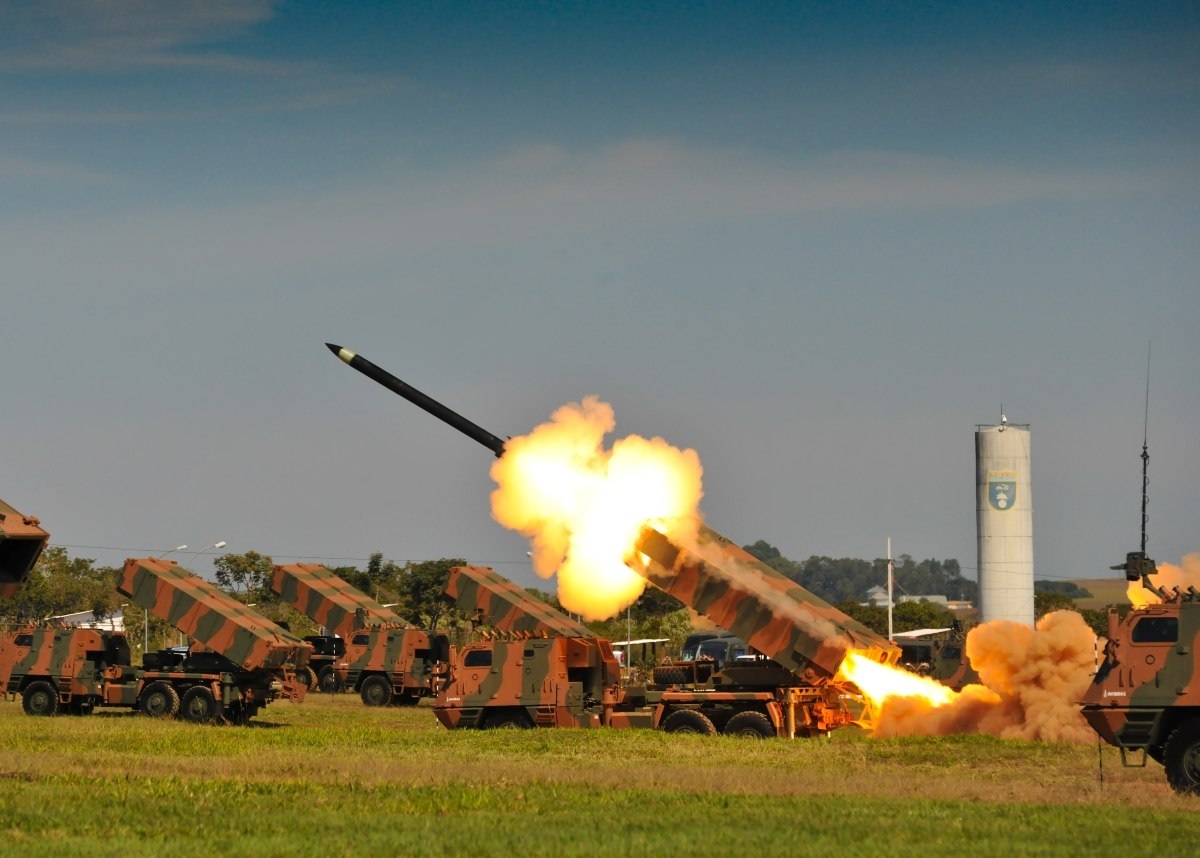
World
BRASÍLIA, — April 13, 2026 : The Brazilian Army has initiated the development of the S+100 tactical ballistic missile, a new precision-strike system intended for integration into the Astros II multiple launch rocket system (MLRS). The program is being executed by the Army’s Logistics Command and the Department of Science and Technology in partnership with Brazilian defense manufacturer Avibras. The S+100 missile builds on the earlier S-80 project and is designed to enhance Brazil’s tactical strike capabilities while remaining fully compatible with the universal launch modules currently used by the Astros II system. This compatibility allows the new missile to be deployed without requiring modifications to existing launch platforms. The Astros II, mounted on a Tectran 6×6 truck chassis, serves as the backbone of Brazil’s long-range precision artillery and has a proven operational record, including deployment by Saudi Arabia during Operation Desert Shield in 1992. The missile program is advancing alongside a broader restructuring of Avibras, which has been under judicial recovery since 2022. A newly implemented corporate structure, capitalized with approximately $499.8 million, has stabilized the company’s financial position. This restructuring enables Avibras to retain control of its intellectual property and prevents acquisition by foreign defense entities. As part of its recovery plan, Avibras is scheduled to resume production activities in May 2026. The company also plans to expand its workforce significantly, increasing personnel from around 200 employees to more than 1,000 technical specialists to support new contracts and ongoing development programs. In parallel with the S+100 initiative, Avibras engineers are nearing completion of the MTC-300 cruise missile, which is approximately 90 percent developed. The MTC-300 has a reported range of up to 300 kilometers and is powered by a turbojet engine. It is designed to achieve target accuracy within 30 meters and will also be deployed via the Astros II platform, providing a complementary strike capability alongside ballistic systems. The concurrent development of the S+100 tactical ballistic missile and the MTC-300 cruise missile reflects a continued effort by the Brazilian Army to expand the operational flexibility, range, and precision of its domestically produced missile systems.
Read More → Posted on 2026-04-13 14:42:02
World
CHEREPOVETS, Russia, — April 13, 2026 : Unmanned aerial vehicles (UAVs) struck a major chemical production facility in the city of Cherepovets, located in Russia’s Vologda region, on the afternoon of April 13, targeting key ammonia production infrastructure after traveling more than 800 kilometers. According to footage published by the analytical Telegram channel Exilenova+, fires and black smoke were observed at two of the plant’s three primary ammonia production units. The affected units—identified as Ammonia-1 and Ammonia-2—have a combined annual production capacity of approximately 900,000 tons. There were also reports indicating a possible strike on ammonia storage facilities associated with these units. The targeted facility, known as Cherepovets-Azot and part of the PhosAgro group’s Apatit JSC complex, is one of Russia’s largest ammonia producers. The impacted units account for about 6 percent of the country’s total ammonia output, while the overall plant contributes roughly 10 percent of national production. In addition to ammonia, the broader complex produces ammonium nitrate, phosphorus-based fertilizers, and other chemical materials used in agriculture and industry. Following the start of the full-scale invasion, protective measures had been implemented at the site, including the installation of a special metal structure designed to shield ammonia storage infrastructure from drone strikes. Regional authorities confirmed the aerial attack but emphasized defensive actions. Vologda region governor Georgy Filimonov initially reported that two drones had been intercepted. In a subsequent update, he stated that Russian air defense forces had shot down a total of 13 drones approaching the facility. The extent of operational disruption at the plant remains unclear. Russian authorities have not released information regarding casualties or the current status of production at the affected units.
Read More → Posted on 2026-04-13 14:36:40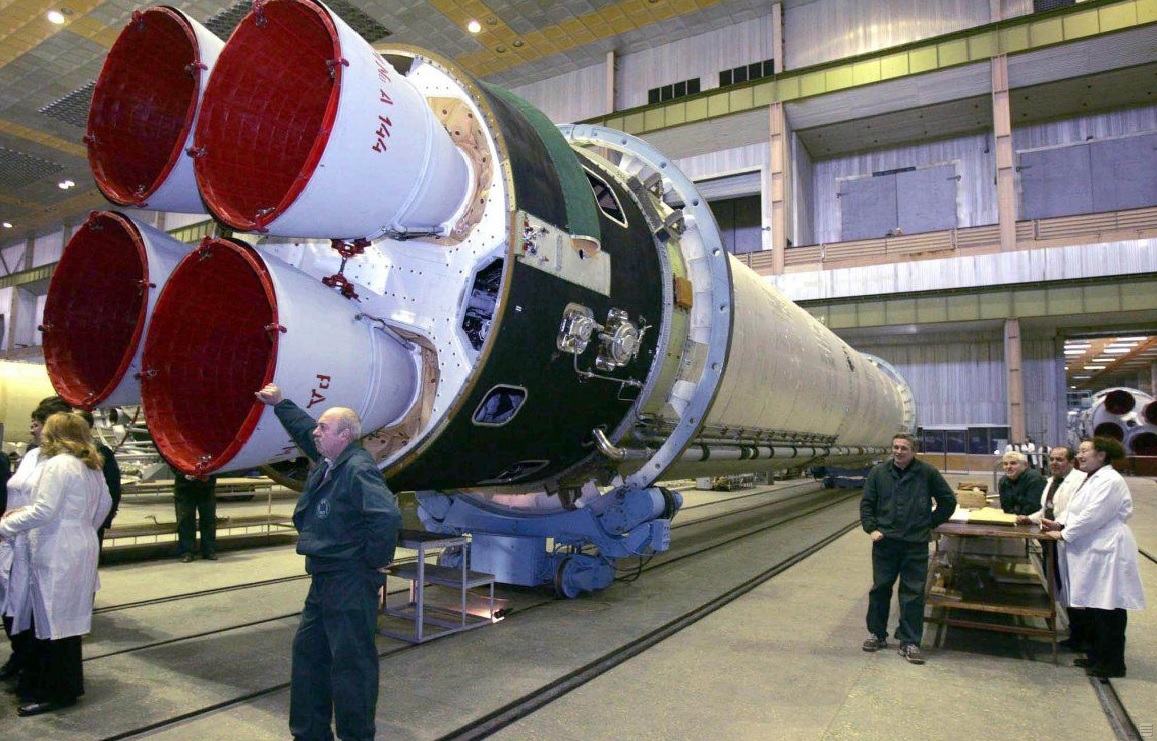
World
KYIV, — April 13, 2026 : Ukraine’s Main Intelligence Directorate (GUR) has carried out two rocket launches into space and conducted an air-launched rocket carrier test during the ongoing war with Russia, according to Fedir Venislavsky, Chairman of the Subcommittee on State Security, Defense and Defense Innovation of the Verkhovna Rada Committee on National Security, Defense and Intelligence. Venislavsky disclosed the operations in an interview with RBC-Ukraine, stating that both space launches exceeded altitudes of 100 kilometres and 204 kilometres respectively. He said the missions were conducted as part of combat tasks under the leadership of then-GUR Chief Kyrylo Budanov and other intelligence officials. The launches were officially recorded using technical monitoring systems. Combat-Oriented Space Operations According to Venislavsky, the launches were not experimental or research-focused activities. He described them as operational missions linked to Ukraine’s military objectives, including the capability to engage hostile assets operating in space. Specific operational details were not disclosed. “The unit achieved both unique technical results and accomplished purely military objectives,” Venislavsky said, referring to the GUR working group responsible for the missions. Air-Launched Rocket Carrier Test In addition to the space launches, the same working group conducted a rocket carrier test launched from a transport aircraft flying at approximately 8,000 metres altitude. Venislavsky stated that this represents the first such launch on the European continent and the second globally, following a similar United States test in the mid-1970s. He noted that Ukraine’s launch altitude in this case exceeded that of previous comparable tests. Launching from an altitude of 8,000 metres allows the rocket to avoid the densest layers of the atmosphere, reducing energy consumption during the initial phase of flight. Venislavsky explained that this improves efficiency and enhances the effectiveness of the rocket’s mission profile. Hypersonic Weapons Capability Venislavsky also disclosed the existence of a category of Ukrainian-developed missiles that has not been widely reported. He stated that these systems are capable of striking targets at distances of up to 500 kilometres while travelling at hypersonic speeds. “We have rockets that almost no one knows about, but which are capable of striking enemy territory at distances of up to 500 kilometres and flying at hypersonic speeds,” he said. “And we are successfully using them in the course of combat operations.” He added that these systems are intended for specialized operations and are linked to the technologies used in the recent space launches and air-launch missions, suggesting that the rocket carriers involved are derived from or related to this hypersonic programme. Dual-Use Launch Platform and Space Capability The air-launch concept is expected to support both military and civilian applications. Venislavsky stated that the platform could be used in the future as an airborne launch system for deploying satellites and other spacecraft, in addition to strike missions. Ukraine has already reached preliminary agreements with international partners prepared to supply satellites. According to Venislavsky, the country possesses the technical and industrial capability to manufacture rocket carriers, refine existing systems, and place payloads into orbit. He noted that Ukraine is entering a group of fewer than ten countries with functioning space technologies, supported by existing scientific expertise and industrial capacity. “Both science and industry already have experience in this field,” Venislavsky said, adding that further development depends on funding levels. Funding Constraints and International Cooperation Venislavsky identified financing as the primary constraint on expanding these capabilities. Under current wartime conditions, Ukraine’s state budget is largely allocated to security and defense needs, limiting available resources for large-scale space and industrial programmes. He indicated that future progress will depend on increased involvement from international partners, particularly in funding and technical cooperation. The confirmation of two space launches and an air-launched rocket test during active conflict demonstrates that Ukraine has established a working technical foundation for both military and dual-use space operations.
Read More → Posted on 2026-04-13 14:28:58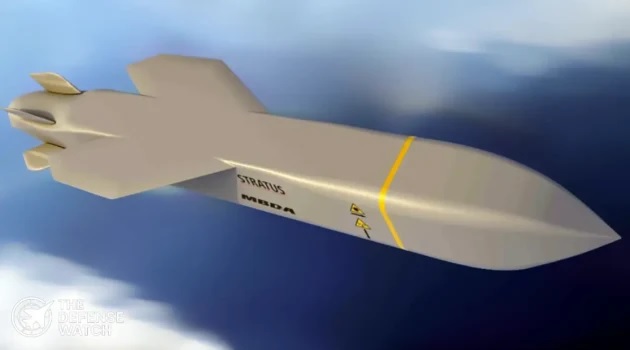
World
PARIS, — April 13, 2026 : France is advancing the development of the STRATUS supersonic missile program to restore its Suppression of Enemy Air Defenses (SEAD) capability and support high-intensity operations within NATO frameworks. The effort reflects a shift in operational planning toward first-day-of-war penetration requirements in contested environments. The program was detailed during an April 2026 parliamentary hearing on updates to France’s Military Programming Law (LPM) 2024–2030. Chief of the Armed Forces Staff, General Fabien Mandon, outlined the requirement for a new multi-role missile system to equip the forthcoming Dassault Rafale F5 standard and future naval platforms. The updated defense framework includes a €36 billion increase in funding across the 2024–2030 period, supporting modernization priorities including advanced strike capabilities. Program Structure and Industrial Framework The STRATUS missile family is being developed by MBDA under the multinational Future Cruise/Anti-Ship Weapon (FC/ASW) program. In September 2025, MBDA formally rebranded the system as STRATUS. The program operates under a trilateral cooperation model involving France, the United Kingdom, and Italy, combining shared development responsibilities with national design authority. The STRATUS family consists of two complementary variants designed for interoperability across multiple mission profiles. The United Kingdom is leading the development of the subsonic low-observable “STRATUS LO” variant, optimized for land-attack missions. France is responsible for the supersonic branch, designated “STRATUS RS”, previously referred to as RJ10. Technical Characteristics and Testing Progress The STRATUS RS is designed as a high-supersonic missile operating below Mach 5. It uses ramjet propulsion and emphasizes survivability through speed and maneuverability rather than stealth. The missile supports a multi-role mission set, including SEAD/DEAD (Destruction of Enemy Air Defenses), anti-ship warfare, deep strike operations, and engagement of high-value airborne targets such as Airborne Early Warning and Control (AEW&C) aircraft and aerial refueling tankers. Seeker development for the RS variant is being conducted jointly by Thales Group and MBDA UK. Propulsion trials for the ramjet engine have been completed in supersonic wind tunnels at Bourges, a key French center for ramjet research and testing. The missile is designed as a multi-role penetrator rather than a dedicated anti-radiation system, allowing flexibility across dynamic operational scenarios. Addressing Capability Gaps French defense officials indicated that dedicated SEAD and electronic warfare capabilities had declined following the Cold War. The emergence of layered Integrated Air Defense Systems (IADS), long-range surface-to-air missile systems, mobile radars, and maritime Anti-Access/Area Denial (A2/AD) networks has created a requirement for systems capable of neutralizing defenses at the outset of a conflict. The STRATUS RS is intended to fill capability gaps not addressed by current French systems. The SCALP cruise missile remains optimized for long-range, pre-planned strikes against fixed targets using subsonic, low-observable flight profiles. The Exocet family provides anti-ship capability, with the AM39 offering approximately 70 km range and the MM40 Block 3C extending to the 250 km class with enhanced electronic warfare resistance. The MdCN naval cruise missile delivers long-range land-attack capability from surface ships and submarines. None of these systems combine high-supersonic speed, maneuverability, anti-radiation targeting capability, and anti-ship functionality within a single platform. The STRATUS RS is designed to compress adversary decision cycles by reducing engagement timelines and limiting the effectiveness of modern air and missile defenses. Integration with Rafale F5 Combat System France’s 2026 update to the LPM explicitly links the development of a new SEAD and anti-ship missile to the Rafale F5 standard. The aircraft is being developed as part of a broader networked combat architecture rather than a standalone platform. Dassault Aviation is concurrently developing an Unmanned Combat Aerial System (UCAS) derived from the nEUROn demonstrator, intended for collaborative combat operations after 2030. Within this architecture, the Rafale F5, escort drones, electronic warfare assets, and STRATUS missiles will operate as an integrated system. Operationally, the STRATUS RS is designed to function as a corridor-opening weapon. When launched from outside heavily defended zones, it forces adversary radar systems to either emit signals—risking detection and destruction—or shut down, creating exploitable gaps in air defense coverage. These gaps can then be used by follow-on strike systems, including SCALP, MdCN, AASM guided munitions, uncrewed combat aerial vehicles, or manned aircraft. Operational Role and Timeline The STRATUS RS is intended as a first-day-of-war capability for operations in contested environments. Its speed and maneuverability increase penetration probability against both land-based air defenses and naval targets equipped with modern interception systems. The program remains in the assessment and development phase, with service entry planned for the early 2030s. The effort supports the European defense industrial base while maintaining sovereign design authority within MBDA and reinforcing trilateral cooperation among France, the United Kingdom, and Italy. French defense planning positions the STRATUS program as a key component in restoring a suppressed air-defense penetration capability that had diminished since the 1990s, aligning future airpower capabilities with evolving operational requirements.
Read More → Posted on 2026-04-13 14:08:58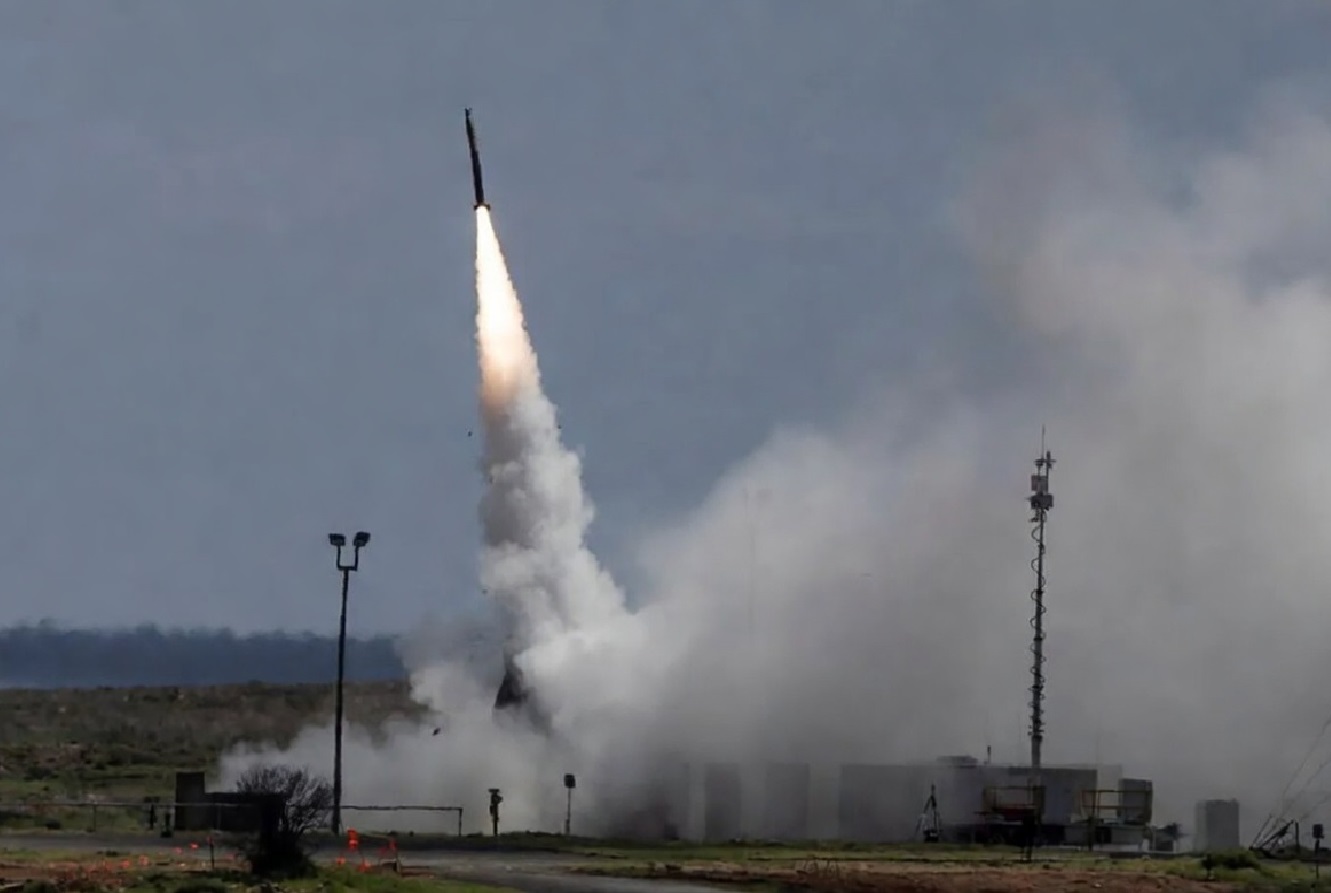
World
CANBERRA, — April 13, 2026 : The Australian Army has successfully conducted the first test firing of a domestically manufactured Guided Multiple Launch Rocket System (GMLRS) missile, marking a significant step in the country’s efforts to establish sovereign missile production capabilities, according to the Department of Defence. The test took place on April 9, 2026, at the Woomera Test Range in South Australia, where the surface-to-surface missile was launched from an M142 High Mobility Artillery Rocket System (HIMARS). The firing represents the first experimental launch of a GMLRS missile produced within Australia and forms part of the Australian Army’s long-range fires program. The GMLRS is a precision-guided munition designed to strike targets at ranges of approximately 70 to 85 kilometers, extending well beyond traditional artillery systems. The April 9 activity also marked the third live-fire exercise involving Australian HIMARS systems since their delivery in March 2025, supporting accelerated training and the development of initial operational capability. The missiles used in the test were assembled at a newly established production facility in Port Wakefield, South Australia, which officially opened in December 2025. The facility was constructed and brought online within seven months, with key construction and fit-out work carried out by Intract Australia, an Indigenous-owned company. Prior to the commencement of operations, Australian engineers underwent specialized training at Lockheed Martin’s Camden, Arkansas facility to support technology transfer and local manufacturing readiness. The Port Wakefield site is now the second facility globally capable of assembling GMLRS missiles, following Lockheed Martin’s U.S.-based plant, and positions Australia as the only country outside the United States producing the system. The manufacturing initiative operates under the Guided Weapons and Explosive Ordnance (GWEO) Enterprise, supported by a $320 million government investment aimed at strengthening domestic industrial capability. The facility currently supports approximately 20 on-site manufacturing roles, with additional employment generated across a broader national supply chain expected to expand as Australian suppliers are progressively integrated into GMLRS component production. Australian authorities have indicated that the facility is intended to meet both domestic operational requirements and potential export demand, with the long-term objective of embedding Australian industry within global guided weapons supply chains. Australia has so far procured 42 HIMARS launchers through the United States Foreign Military Sales (FMS) program. In September 2025, the U.S. Department of State approved a potential additional sale of 48 HIMARS systems, although a final procurement agreement has not yet been concluded. Minister for Defence Industry Pat Conroy stated that domestic missile production is central to national defence planning. He noted that the successful test demonstrates progress in developing sovereign guided weapons capability and supports broader efforts to strengthen defence self-reliance. Australia and the United States are currently engaged in discussions to expand local production capabilities beyond GMLRS. These discussions include potential future manufacturing of Precision Strike Missiles (PrSM) and the exploration of hypersonic systems, with the current program intended to serve as a foundational industrial base for more advanced long-range strike capabilities. The April 9 test forms part of Australia’s wider strategy to enhance long-range strike capability, improve industrial resilience, and transition toward domestic production of advanced defence systems.
Read More → Posted on 2026-04-13 13:59:10
World
KOMsomolsk-on-Amur, Russia — April 12, 2026 : A fire has been reported at the Komsomolsk-on-Amur Aviation Plant (KnAAZ), a key production facility in Russia’s Far East responsible for manufacturing advanced combat aircraft, including the Su-57 fifth-generation fighter and the Su-35S multirole fighter. The incident occurred at the plant’s Workshop No. 46, according to open-source intelligence assessments. Initial footage of the fire was circulated on social media by the Telegram channel Exilenova+, after which analysts from the CyberBoroshno community conducted geolocation analysis and identified the affected structure as the composite materials workshop. Composite Manufacturing Facility Identified as Impacted Area Workshop No. 46 plays a central role in the production of polymer composite material (PCM) components used in Sukhoi aircraft. Technical assessments indicate that the facility manufactures approximately 300 types of composite parts for the Su-57 program, including around 100 large structural elements. These components include aileron panels, air intake structures, flaperons, fuselage flooring sections, and outer wing tips—elements essential to both aerodynamic performance and structural integrity. The Su-57 relies extensively on such composite materials to reduce radar cross-section and overall weight, making the workshop a critical node in its production chain. Manufacturing processes within Workshop No. 46 are largely manual due to the precision required in composite layup and curing. While partial automation was introduced in 2016, including the integration of a laser-based material marking system, the production environment continues to depend on skilled technicians and controlled fabrication conditions. This specialization limits the ability to rapidly replicate the facility’s output elsewhere. Greater Impact Expected on Su-57 Production Although the workshop supports both Su-35S and Su-57 production lines, analysts assess that disruption to composite manufacturing will have a disproportionately greater effect on the Su-57 program. Compared to the Su-35S and earlier Su-30MK2 platforms, the Su-57 incorporates a significantly higher proportion of composite structures. Industry estimates indicate that producing a full set of composite components for a single Su-57 requires approximately eight times more labor than for a Su-35S. As a result, any sustained interruption at Workshop No. 46 could slow or temporarily halt final airframe assembly for the fifth-generation fighter. While production loads could theoretically be redistributed to other domestic facilities, including ONPP Technologiya, analysts note that such measures would only partially compensate for lost capacity and are likely to introduce scheduling delays. Production Context and Fleet Status The fire comes at a time when KnAAZ is operating at full capacity to meet a long-term state defense order announced in 2024, with deliveries scheduled through 2030. The plant has been working under constraints linked to Western sanctions, which have increased reliance on domestically sourced materials and manufacturing systems. Available production data indicates that in 2025 the plant delivered seven batches of Su-35S fighters. While official batch sizes are not publicly disclosed, industry estimates suggest each batch includes two to three aircraft. In the same year, two Su-57 aircraft were delivered to the Russian Armed Forces. The total number of Su-57 aircraft produced to date, including prototypes, is estimated at between 20 and 25 units. The fleet previously sustained damage in June 2024, when two Su-57 aircraft were reportedly affected by a Ukrainian drone strike at an airbase. The repair status of those aircraft has not been publicly confirmed. Lack of Official Confirmation on Cause and Damage As of April 12, 2026, Russian authorities, including KnAAZ, the Sukhoi Company, the United Aircraft Corporation (UAC), and emergency services, have not issued official statements regarding the cause of the fire or the extent of damage to Workshop No. 46 and its equipment. The Komsomolsk-on-Amur Aviation Plant, named after Yuri Gagarin, remains the only facility in Russia certified for serial production of the Su-57. It operates as part of the United Aircraft Corporation under the Rostec state conglomerate and is a central component of Russia’s military aviation manufacturing infrastructure.
Read More → Posted on 2026-04-12 18:21:59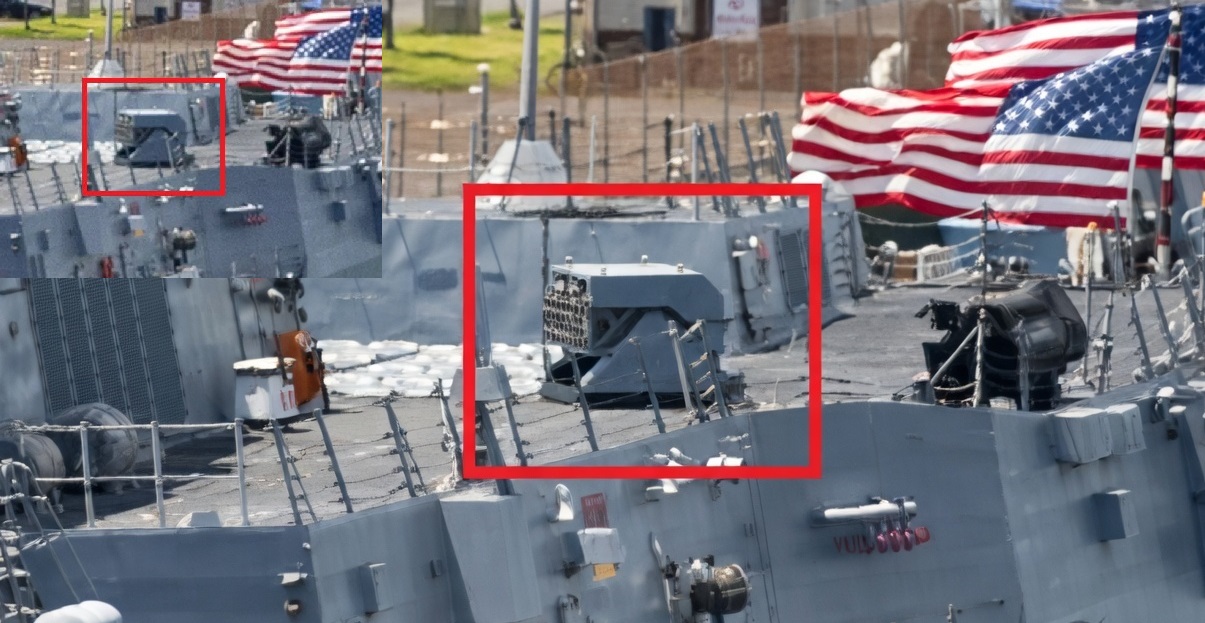
World
PEARL HARBOR, Hawaii, — April 12, 2026 : A previously unrecognized launcher system has been installed on the U.S. Navy USS Carl M. Levin (DDG-120), an Arleigh Burke-class guided-missile destroyer, according to open-source imagery and defense analysis. The system was first observed in a U.S. Marine Corps photograph taken on March 29, 2026, while the ship was at its homeport in Pearl Harbor, Hawaii. The image was publicly released on April 8, 2026. System Location and Physical Characteristics The launcher is mounted on the aft upper deck of the vessel, positioned between the port-side torpedo tubes and the rear Mk 41 Vertical Launch System (VLS) array, near the stern section of the superstructure. Visual assessment indicates a multi-cell configuration mounted on a circular base, suggesting the system may have a traversing or rotating capability. While it is not definitively confirmed whether the launcher is fixed or fully trainable, its structure appears designed to elevate for firing. The system was not visible in photographs of the ship taken as recently as December 2025, indicating a relatively recent installation. The external design does not fully correspond with any launcher currently documented in widespread operational use aboard Arleigh Burke-class destroyers. Possible System Identification and Roles Defense analysts have proposed several possible identifications based on visual similarities and prior Navy integration concepts. One possibility is that the launcher is related to the White Spike counter-drone interceptor developed by Zone 5 Technologies. The White Spike system is a modular, multi-domain interceptor designed primarily for counter-unmanned aerial system (C-UAS) missions. Publicly available configurations show a four-cell launcher with a trapezoidal front profile. Although the unit observed aboard USS Carl M. Levin differs in some details, it shares notable structural similarities that could indicate a modified or navalized variant. Another potential configuration involves the AGM-179 Joint Air-to-Ground Missile (JAGM), developed by Lockheed Martin. Lockheed Martin has previously proposed multi-cell JAGM launch modules for installation on Arleigh Burke-class destroyers in similar aft-deck positions. The JAGM, derived from the AGM-114 Hellfire family, incorporates dual-mode guidance combining millimeter-wave radar and infrared or semi-active laser targeting. Originally designed for engaging surface targets, it has also been evaluated for counter-drone and counter–fast attack craft roles, offering multi-domain engagement capability. A third possibility is that the launcher supports deployment of non-kinetic or auxiliary payloads, including decoys, electronic warfare systems, or small unmanned platforms. The U.S. Navy has been exploring containerized launch solutions capable of deploying off-board countermeasures to confuse or divert incoming threats such as anti-ship missiles. Broader Operational Context The installation aligns with ongoing U.S. Navy efforts to enhance close-in defensive capabilities against emerging threats, particularly unmanned aerial systems and drone swarms. Current naval air defense often relies on high-cost interceptors, creating an unfavorable cost-exchange ratio when engaging low-cost drones. In 2025, similar aft-deck launcher installations were observed on other Arleigh Burke-class destroyers, including the USS Bainbridge (DDG-96) and the USS Winston S. Churchill (DDG-81). Those ships were fitted with launchers for Coyote counter-drone interceptors, reflecting a broader push to integrate lower-cost, scalable defensive systems across the fleet. The addition of a compact launcher on USS Carl M. Levin suggests continued evaluation of diverse solutions to address capability gaps in layered maritime defense. Platform Background and Capabilities USS Carl M. Levin is a Flight IIA Technology Insertion variant of the Arleigh Burke class. The destroyer is equipped with a 96-cell Mk 41 Vertical Launch System, two triple torpedo tubes, a 5-inch naval gun, and a range of advanced sensors and combat systems. The newly observed launcher adds a supplementary capability layer within the ship’s close-in defense zone without replacing or displacing existing systems. Such modular additions allow for rapid experimentation and integration of emerging technologies. Open-Source Reporting and Official Status The launcher was first highlighted by open-source analysts, including the Japanese-language blog OSINFO, based on the March 29 imagery. Additional reporting by defense publication The War Zone also noted the system’s presence. As of April 12, 2026, the U.S. Navy has not issued any official statement confirming the launcher’s identity, operational role, or technical specifications. The system’s exact purpose and the type of munitions it is designed to deploy remain unconfirmed. The development is consistent with ongoing Navy initiatives to incorporate cost-effective counter-unmanned systems and adaptable payload launchers to address evolving threats in contested maritime environments.
Read More → Posted on 2026-04-12 17:59:22
World
MÖNCHENGLADBACH, Germany — April 12, 2026 : Germany has introduced a newly engineered 5-axis Computer Numerical Control (CNC) machine for aerospace manufacturing, incorporating a specialized parallel kinematic head to enable high-speed machining of complex aluminium components. The system is designed to achieve a material removal rate of up to 12 liters (12,000 cubic centimeters) per minute, targeting efficiency improvements for aerospace subcontractors and original equipment manufacturers (OEMs) producing large monolithic aerostructures. Parallel Kinematic Head Enables High Dynamic Performance The defining feature of the machine is its parallel kinematic head architecture, based on principles similar to the Sprint Z3 concept used in advanced aerospace machining systems. Unlike conventional fork-type or trunnion-based 5-axis heads that rely on sequential rotary axis movements, the system uses three radially arranged linear drives to control spindle motion simultaneously. This configuration allows continuous angular adjustment of the spindle within a conical working envelope of ±45 degrees without requiring large swivel movements. By reducing the moving mass and distributing loads across multiple drives, the system achieves acceleration levels of up to 1G along with high jerk values, enabling rapid directional changes during machining. The machine is equipped with a high-power spindle capable of continuous operation at speeds of up to 30,000 revolutions per minute. Combined with the dynamic head movement, the system maintains consistent peak aluminium removal rates of 12 liters per minute while adhering to tight dimensional tolerances required in aerospace manufacturing. Focus on Monolithic Aerostructure Production The machine is optimized for machining large monolithic components, a standard practice in modern aircraft manufacturing where parts are milled from solid aluminium or aluminium-lithium alloy billets. This approach improves structural integrity and reduces overall weight compared to assemblies made from multiple smaller components. Primary applications include wing ribs and spars, which define aerodynamic shape and load distribution, as well as fuselage frames and bulkheads that serve as critical load-bearing structures. These components typically involve complex pocketing operations, deep cavities, and freeform surfaces requiring simultaneous 5-axis machining. In typical aerospace workflows, up to 90 percent or more of the original material is removed during machining. A raw billet weighing approximately 4,000 kilograms can be reduced to a finished component weighing around 120 kilograms. The machine’s high removal rate significantly reduces cycle times during these heavy roughing operations while supporting subsequent finishing processes with high surface quality. Capability for Single-Setup Machining The system supports full 5-axis simultaneous machining, allowing complex geometries to be produced in a single setup. This reduces the need for multiple fixtures and repositioning, minimizing alignment errors and non-cutting time. The machine is also capable of handling undercuts, curved surfaces, and deep internal features, which are common in aerospace structural parts and moulds for composite layups. Applications extend to structural brackets, frames, engine casings, turbine-related aluminium components, and tooling used in composite manufacturing processes. Comparison with Global Machine Tool Systems Within the global machine tool market, the system operates in a segment defined by high-volume aluminium machining for aerospace applications. Conventional 5-axis CNC systems from manufacturers such as DMG MORI and Hermle are widely used for high-precision machining but typically employ serial kinematic architectures, including trunnion tables or swivel heads. While highly versatile, these machines generally deliver lower peak material removal rates compared to dedicated high-volume systems. At a comparable performance level, Japan’s Makino MAG series, including models such as the MAG1 and MAG3, provides similar aluminium machining capability. These machines use horizontal machining center configurations with high-speed spindles and optimized chip evacuation systems rather than parallel kinematic heads. At the upper end of volumetric material removal, Sweden’s Modig Machine Tool produces the RigiMill system, which exceeds 16.4 liters (1,000 cubic inches) per minute in aluminium removal under optimized conditions. These machines achieve higher throughput using dual-spindle configurations and highly rigid structural designs. Relation to Existing Parallel Kinematic Systems The German system aligns with established parallel kinematic machining platforms such as the Ecospeed series developed by Starrag, which also utilizes Sprint Z3-based head technology. Ecospeed machines, in operation since 1999, are used for machining large aerostructures, including components up to 20 meters in length, and achieve comparable removal rates in aluminium. Other parallel kinematic solutions, including pentapod-based systems such as those developed by Metrom, provide high dynamic motion with acceleration levels around 10 m/s² and feed speeds approaching 1 meter per second. These systems are typically deployed in specialized high-productivity machining environments. Distinction from Hard Metal Machining Systems The newly introduced CNC machine is specifically optimized for aluminium and aluminium-alloy machining. It is not designed for hard metals such as titanium or Inconel, which require different machine characteristics. Machines intended for titanium aerospace components, including systems such as Starrag’s STC series or specialized platforms from Grob, emphasize high torque, damping capacity, and structural rigidity rather than high spindle speed and maximum material removal rate. These systems represent a separate category of machining technology tailored to different material properties. Industry Context The introduction of this machine reflects ongoing efforts within Germany’s machine tool sector to improve productivity, reduce machining cycle times, and support cost-efficient production of complex aerospace components. By combining high-speed spindle operation, parallel kinematic motion control, and large-scale material removal capability, the system addresses increasing demand for lightweight, high-strength aerostructures in modern aircraft manufacturing. Further details regarding the manufacturer, model designation, and deployment timelines have not been disclosed in the initial announcement.
Read More → Posted on 2026-04-12 17:50:41Search
Top Trending in 24 Hours
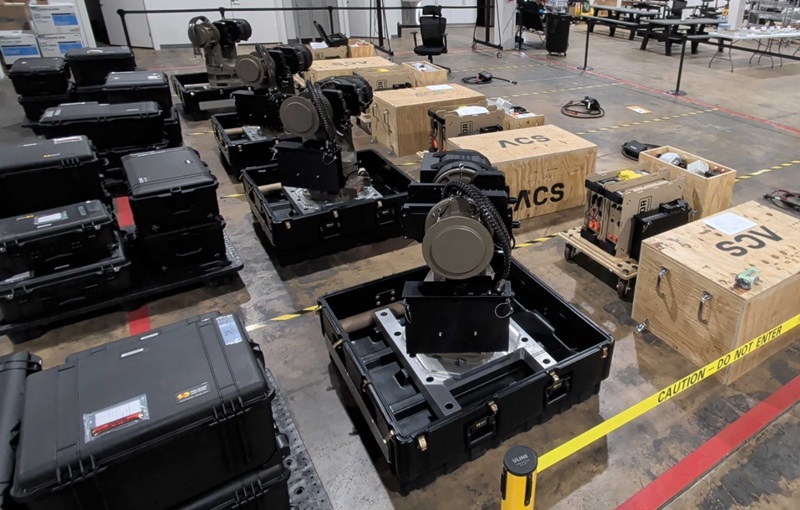
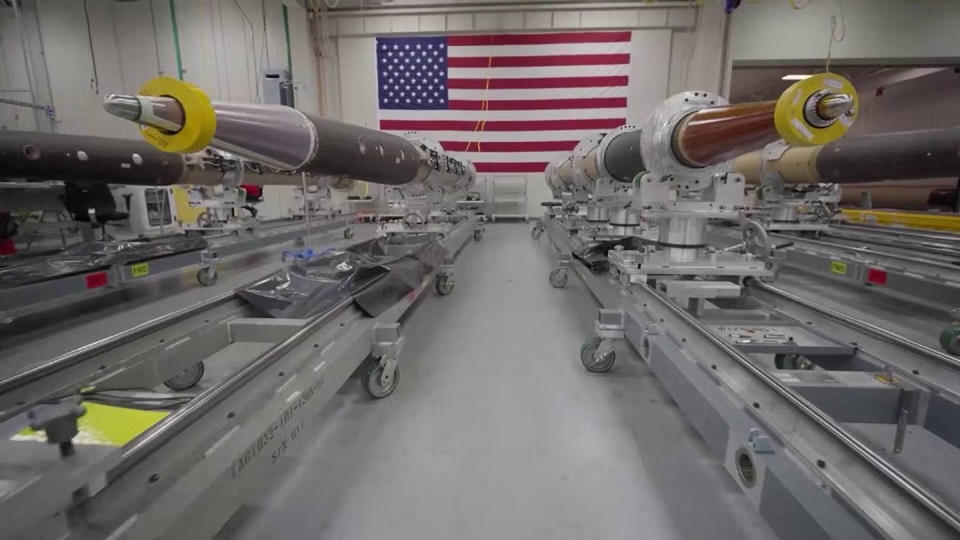

Top Trending in 4 Days
-
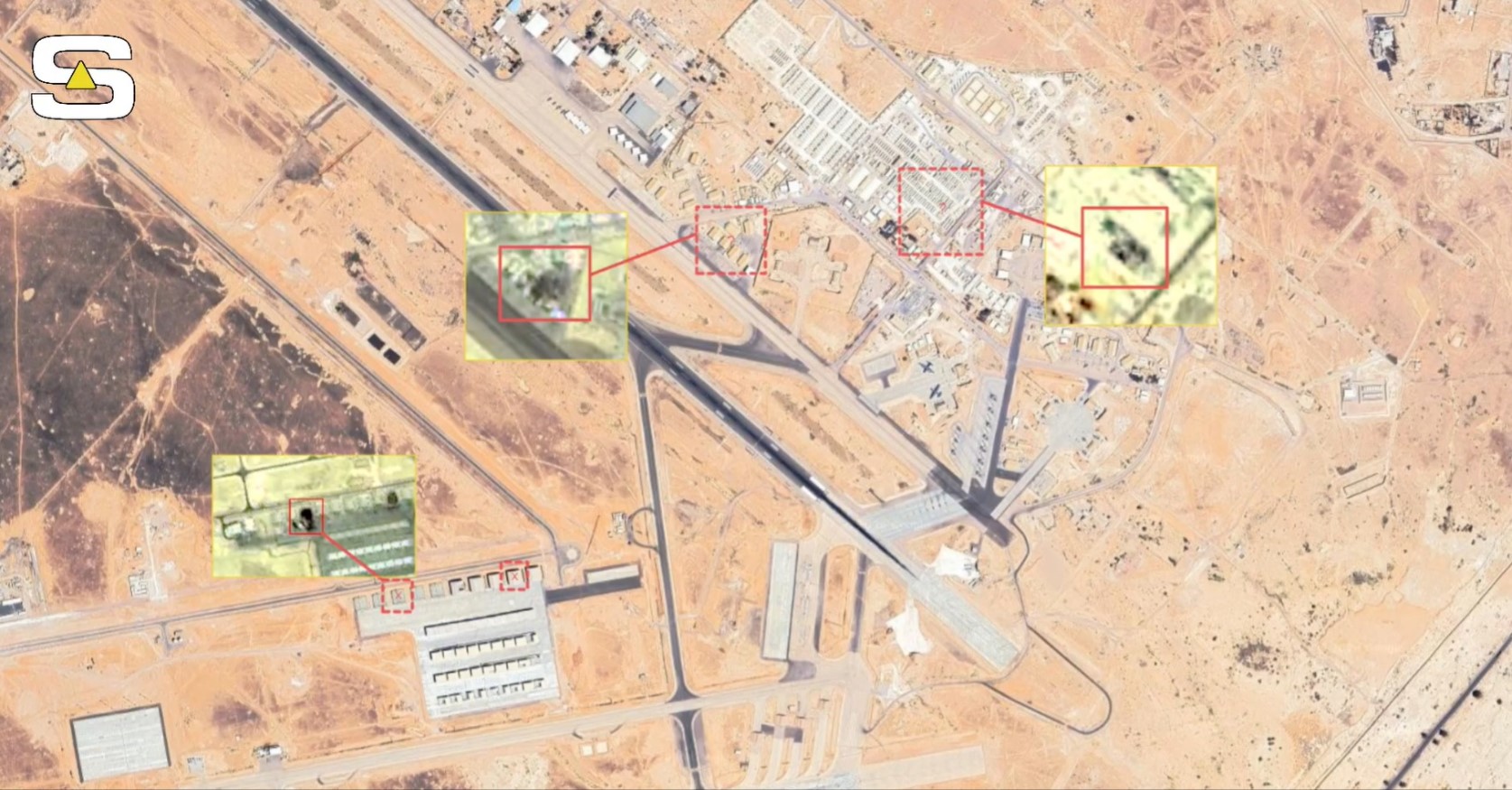 New Satellite Imagery Reveals Extensive Damage at Jordan's Muwaffaq al-Salti Air Base After Iranian Missile Strike
-
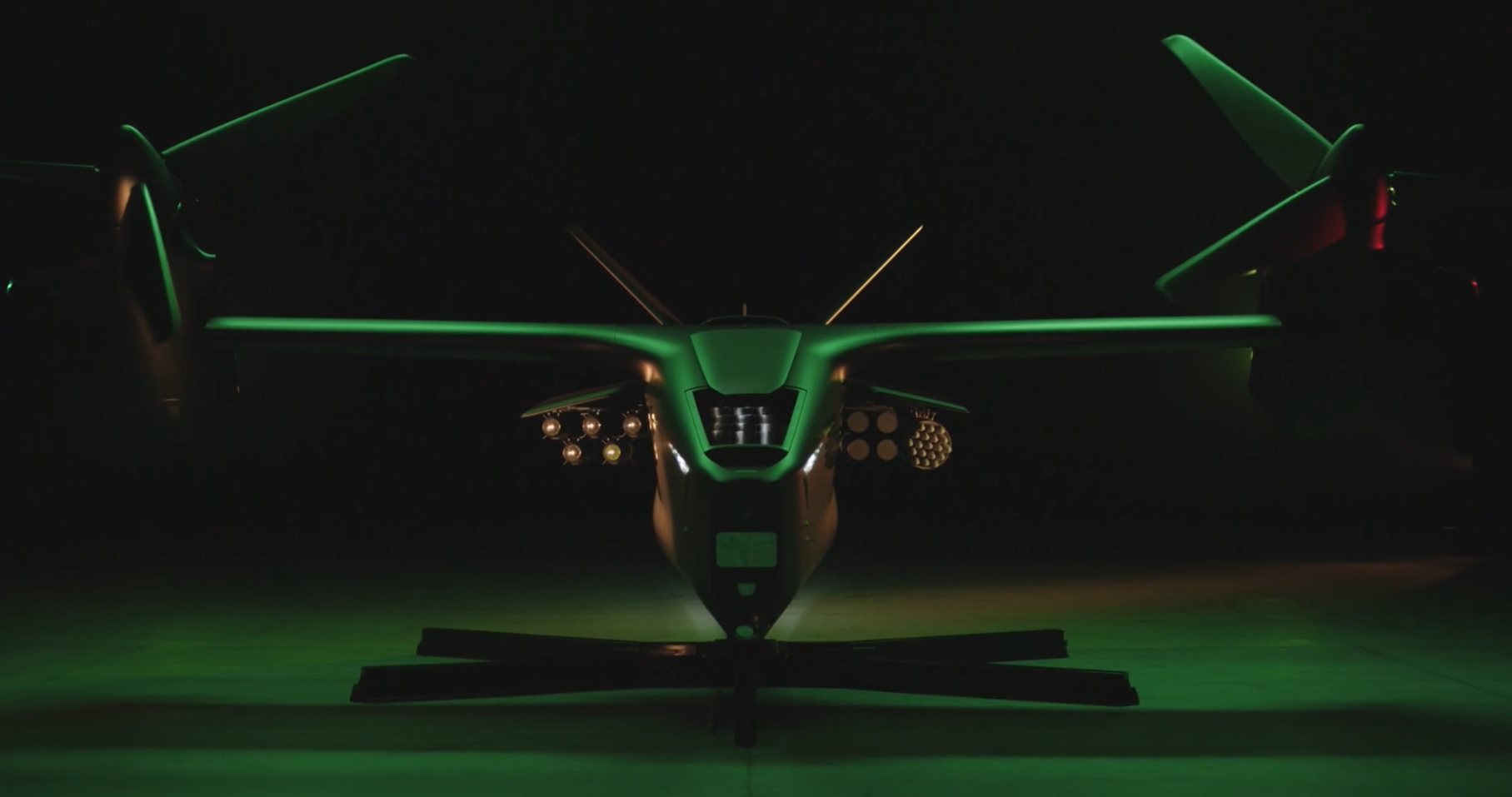 Anduril Unveils Thunder Autonomous Attack Rotorcraft Built with Archer Aviation to Support Apache Helicopters
-
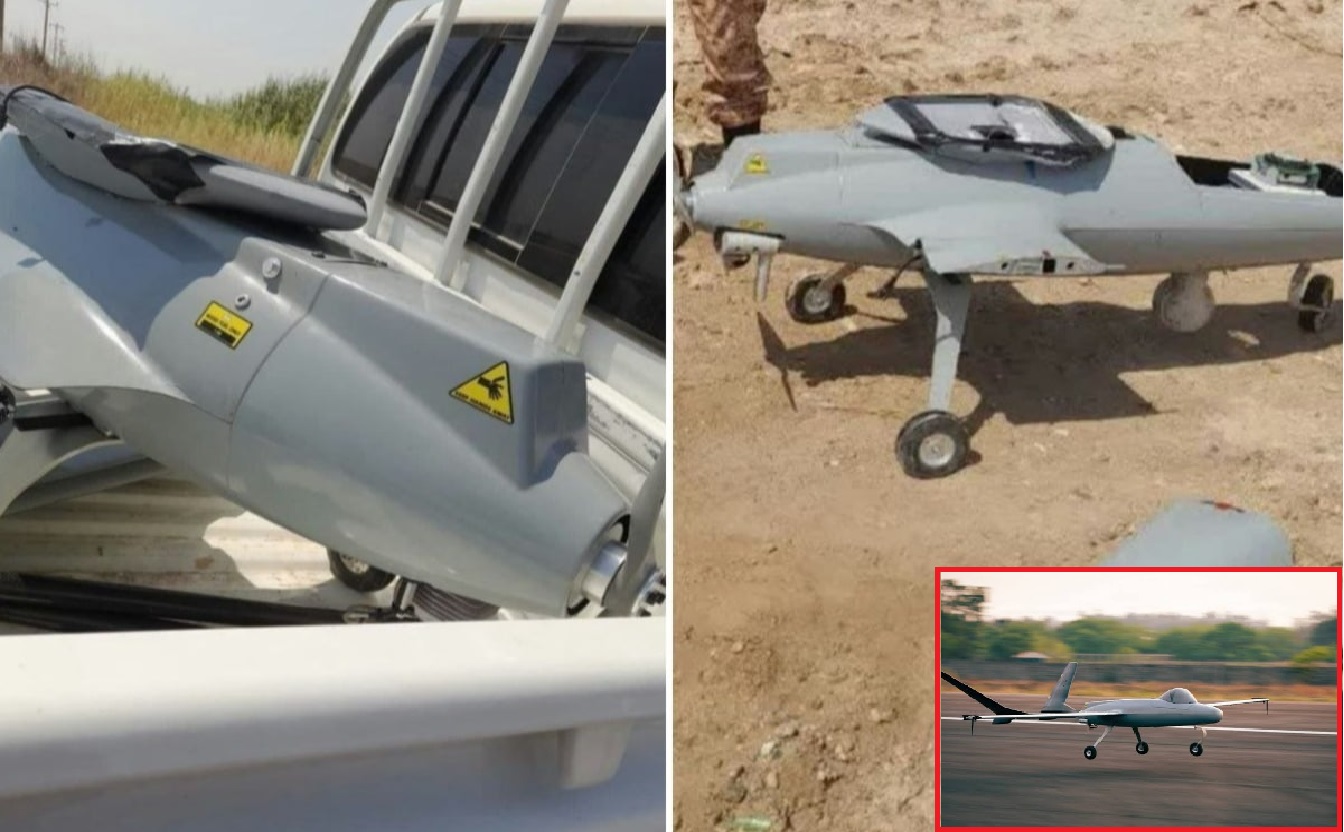 Iran Claims It Shot Down U.S.-Operated Polish-Built Tiguar-M Drone, Releases Images
-
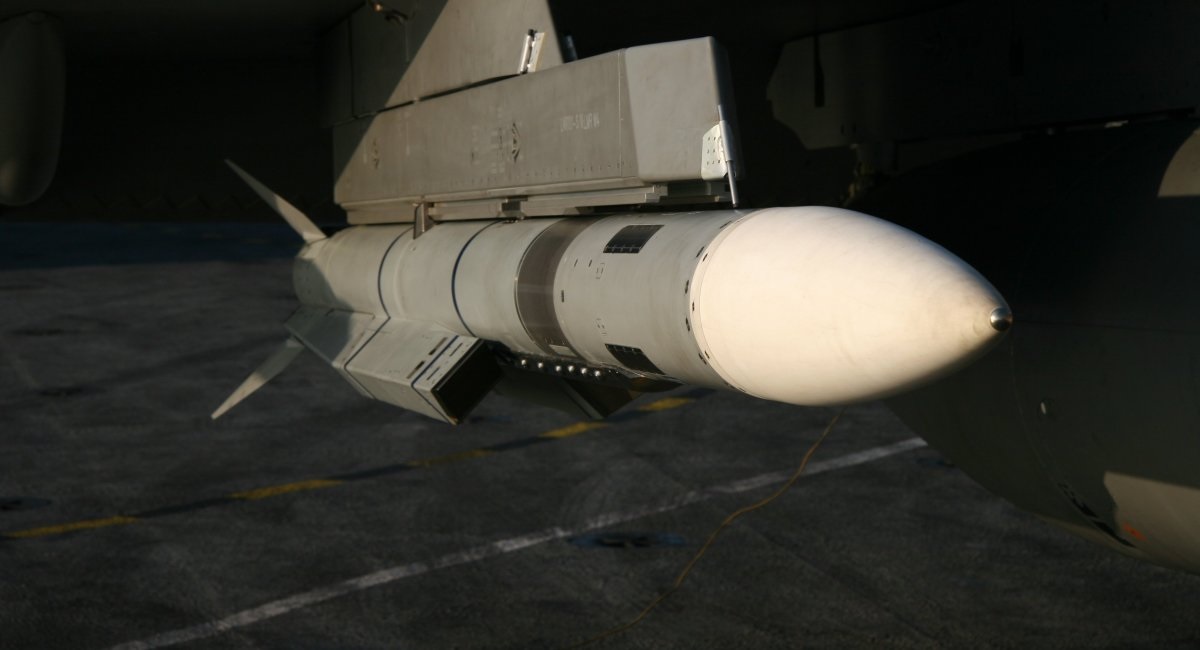 UK Cancels Meteor Missile Mid-Life Upgrade, Prioritizes Next-Generation FASE Air-to-Air Missile Programme
-
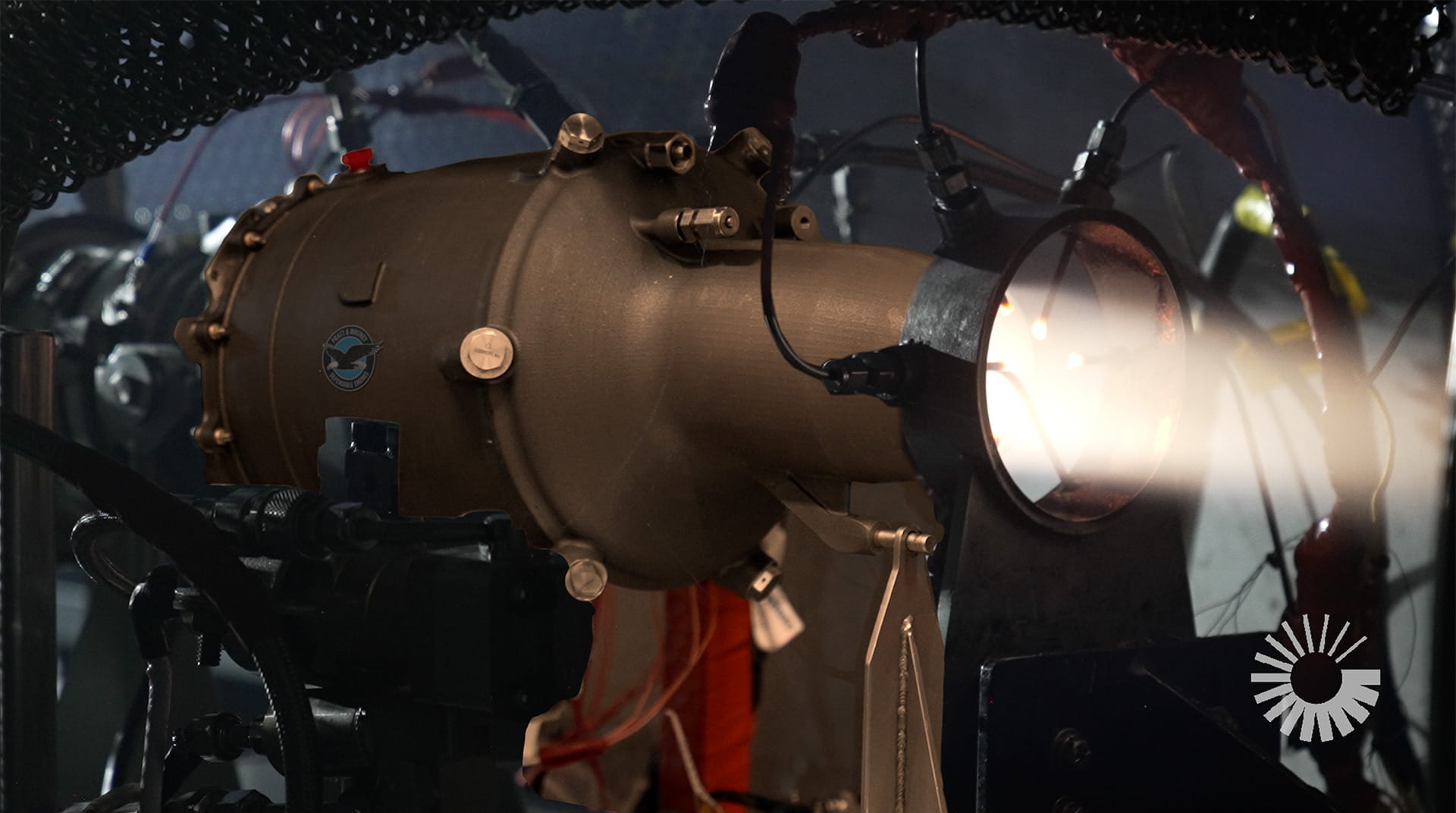 Pratt & Whitney Completes Testing of 3D-Printed TJ150 Engine for Military Applications
-
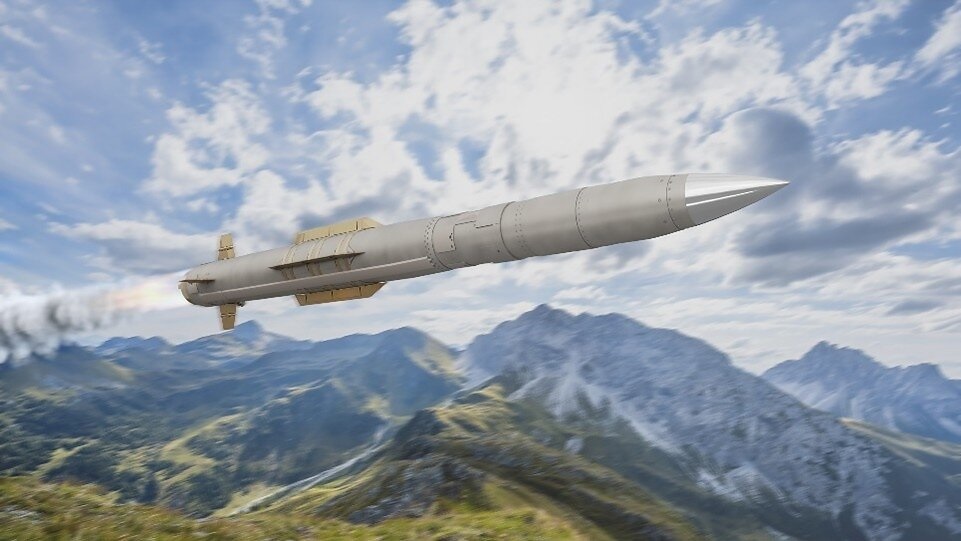 Lockheed Martin Unveils Lower-Cost PAC-3 ACE Interceptor for Patriot Air Defense System
-
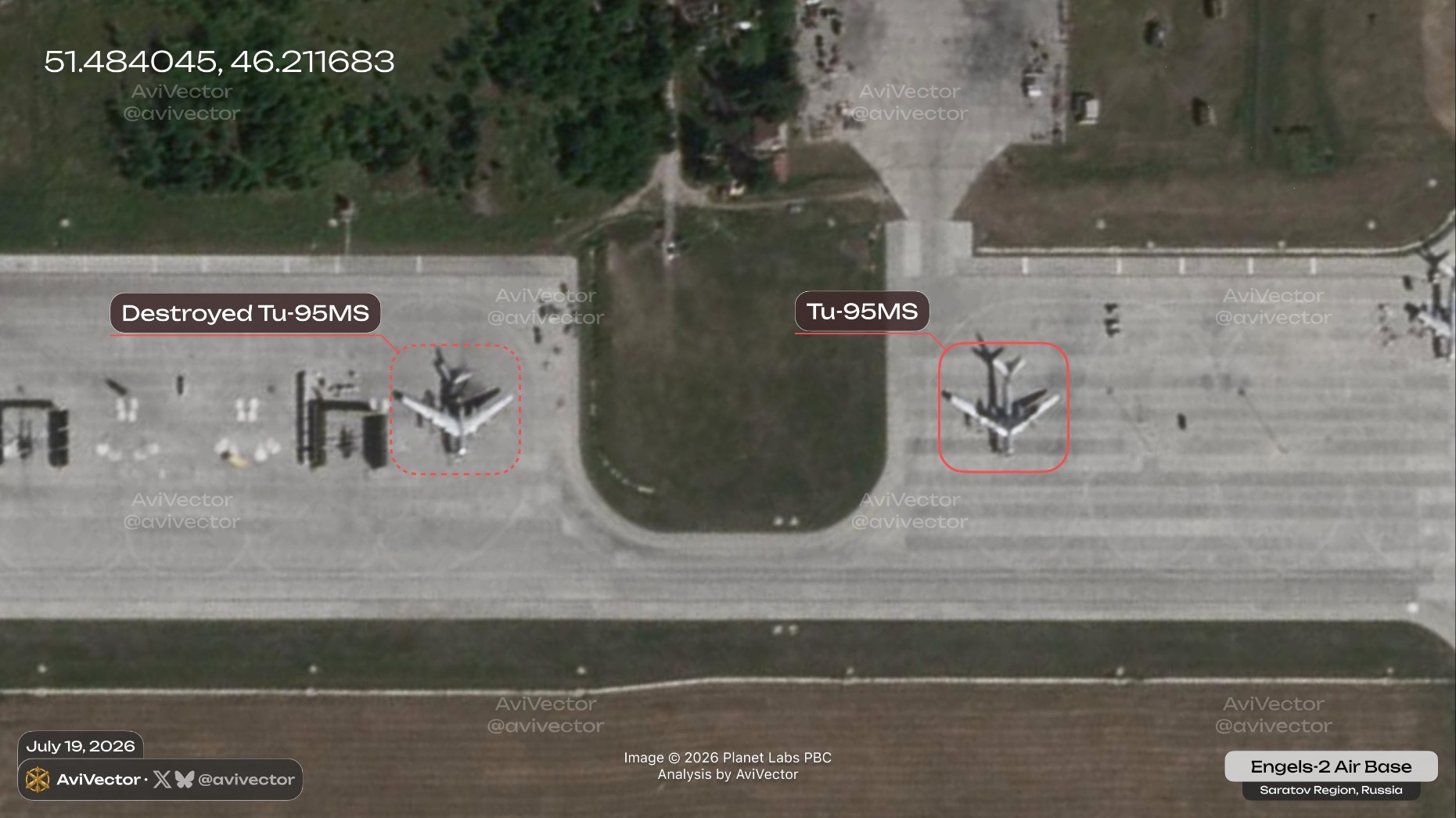 Satellite Images Confirm Russian Tu-95MS Bomber Destroyed After Ukrainian Drone Strike on Engels-2 Air Base
-
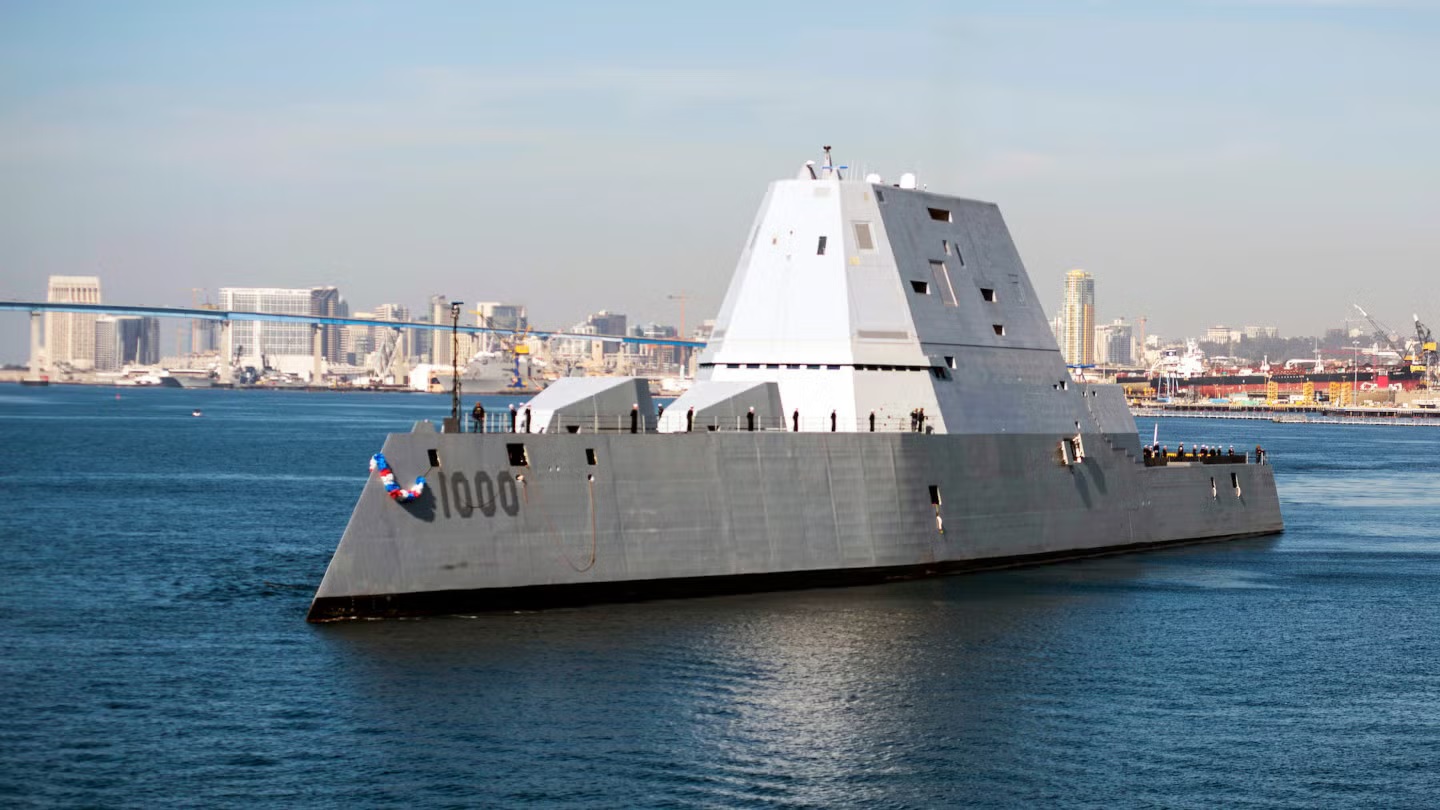 U.S. Navy's Zumwalt Destroyer Hypersonic Missile Upgrade Program Delayed by Two Years as Costs Top $2 Billion: GAO Reports
