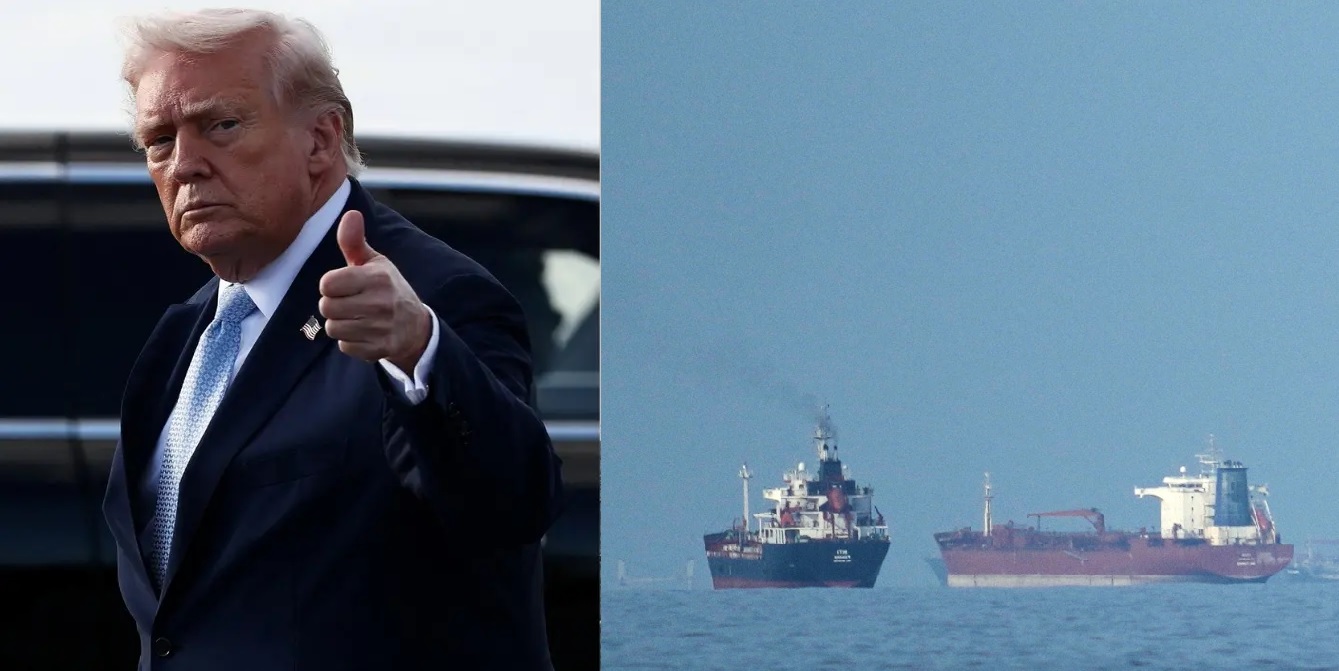
WASHINGTON / TAMPA / ISLAMABAD — April 13, 2026 : The United States has initiated a targeted naval blockade restricting maritime access to Iranian ports, with U.S. Central Command (CENTCOM) confirming that enforcement began on Monday, April 13, at 10:00 a.m. Eastern Time.
The operation applies to all vessels, regardless of nationality, traveling to or from Iranian ports and coastal areas. According to CENTCOM, the blockade covers maritime approaches to ports located along both the Arabian Gulf and the Gulf of Oman, forming a comprehensive restriction on Iran’s seaborne trade routes.
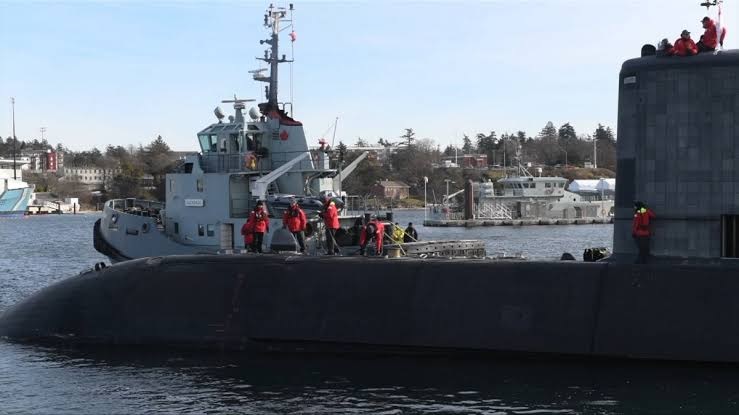
More than 15 U.S. warships are deployed to support the blockade, according to the Wall Street Journal (WSJ), citing a senior U.S. official. The vessels include an aircraft carrier, several guided-missile destroyers, an amphibious assault ship, and additional naval platforms. These assets are capable of launching helicopters for boarding operations, while some ships can direct and hold commercial vessels in designated maritime zones as part of enforcement measures.
Blockade Scope and Maritime Directives
U.S. military officials described the action as a “targeted port blockade,” emphasizing that enforcement will focus specifically on ships entering or departing Iranian ports rather than imposing a full closure of regional waterways.
CENTCOM stated that the blockade will be implemented impartially, with no exemptions based on a vessel’s flag or origin. Commercial vessels operating in the region have been instructed to monitor official “Notice to Mariners” communications and maintain contact with U.S. naval forces via bridge-to-bridge radio channel 16 when approaching the Gulf of Oman and the Strait of Hormuz.
The command has not disclosed detailed rules of engagement or specific enforcement protocols but indicated that additional operational guidance would be communicated directly to maritime operators.
Strait of Hormuz Transit Remains Open
U.S. officials clarified that the Strait of Hormuz will remain open for international shipping not destined for Iran. Vessels transiting the strait to or from non-Iranian ports will not be impeded, preserving freedom of navigation through one of the world’s most critical maritime chokepoints.
The distinction underscores that the measure is designed to restrict access to Iranian port infrastructure while allowing broader regional and global commerce to continue.
Collapse of U.S.-Iran Talks in Islamabad
The blockade follows the breakdown of high-level negotiations between the United States and Iran held in Islamabad, Pakistan, on April 11 and April 12. The talks, which lasted approximately 21 hours, concluded without agreement.
U.S. Vice President JD Vance, who led the American delegation, stated that Iran declined to accept U.S. terms, particularly regarding its nuclear program and issues related to maritime access in the Strait of Hormuz. Iranian officials, in turn, characterized U.S. demands as excessive.
Pakistan hosted the negotiations as part of mediation efforts aimed at achieving a ceasefire in the ongoing U.S.-Iran conflict that began earlier in 2026. No further rounds of negotiations have been scheduled following the impasse.
On April 12, President Donald Trump announced that the U.S. Navy would begin steps to block ships entering or leaving the Strait of Hormuz area. CENTCOM’s subsequent clarification limited the scope of the action to Iranian ports rather than the entire strait.
Enforcement Precedents and Expected Operations
Recent U.S. maritime enforcement actions indicate the operational approach likely to be employed. On January 9, 2026, the United States Coast Guard, supported by U.S. Marines, boarded and seized the oil tanker MT Olina in the Caribbean Sea. The vessel was suspected of transporting embargoed oil as part of efforts to disrupt so-called shadow fleet operations.
Military analysts assess that similar boarding, inspection, and seizure operations could be conducted in waters near Iran to enforce compliance with the blockade. U.S. naval forces are expected to intercept vessels, redirect them, or detain them as necessary if they attempt to access Iranian ports.
Economic Impact and Trade Exposure
The blockade targets a critical vulnerability in Iran’s economy, which relies heavily on maritime trade routes. According to available estimates, more than 90 percent of Iran’s annual trade, valued at approximately $109.7 billion, passes through the Gulf region and the Strait of Hormuz.
A senior fellow at the Foundation for Defense of Democracies estimates that the blockade could result in daily losses of approximately $276 million in exports and $159 million in imports, totaling $435 million per day, or roughly $13 billion per month.
Prior to the blockade, Iran exported approximately 1.5 million barrels of oil per day, generating about $139 million in daily revenue. In addition, petrochemical exports valued at $19.7 billion over a nine-month period—equivalent to roughly $54 million per day—are also at risk under the current restrictions.
Market Reaction and Strategic Context
Global energy markets responded immediately following the announcement, with crude oil prices rising by approximately 8 percent to exceed $100 per barrel. The increase reflects concerns over potential supply disruptions, reduced Iranian exports, and heightened regional uncertainty.
The blockade represents a significant escalation in the ongoing U.S.-Iran confrontation. Its stated objective is to apply sustained economic pressure by limiting Iran’s ability to conduct maritime trade while maintaining international shipping flows through the Strait of Hormuz.
CENTCOM has confirmed that enforcement operations began as scheduled on April 13. Further details regarding implementation and engagement protocols are expected to be released as the operation continues.
——— End of Article ———