PARIS, — April 13, 2026 : France is advancing the development of the STRATUS supersonic missile program to restore its Suppression of Enemy Air Defenses (SEAD) capability and support high-intensity operations within NATO frameworks. The effort reflects a shift in operational planning toward first-day-of-war penetration requirements in contested environments.
The program was detailed during an April 2026 parliamentary hearing on updates to France’s Military Programming Law (LPM) 2024–2030. Chief of the Armed Forces Staff, General Fabien Mandon, outlined the requirement for a new multi-role missile system to equip the forthcoming Dassault Rafale F5 standard and future naval platforms. The updated defense framework includes a €36 billion increase in funding across the 2024–2030 period, supporting modernization priorities including advanced strike capabilities.
Program Structure and Industrial Framework
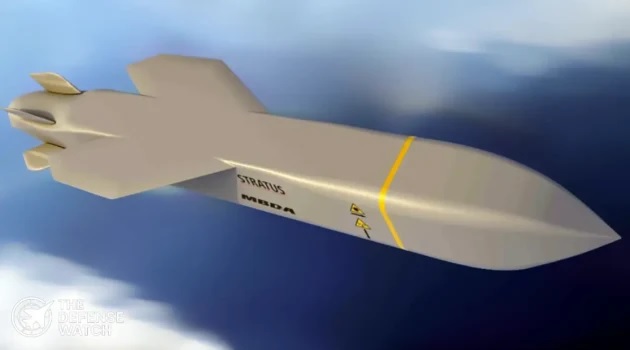
The STRATUS missile family is being developed by MBDA under the multinational Future Cruise/Anti-Ship Weapon (FC/ASW) program. In September 2025, MBDA formally rebranded the system as STRATUS. The program operates under a trilateral cooperation model involving France, the United Kingdom, and Italy, combining shared development responsibilities with national design authority.
The STRATUS family consists of two complementary variants designed for interoperability across multiple mission profiles. The United Kingdom is leading the development of the subsonic low-observable “STRATUS LO” variant, optimized for land-attack missions. France is responsible for the supersonic branch, designated “STRATUS RS”, previously referred to as RJ10.
Technical Characteristics and Testing Progress
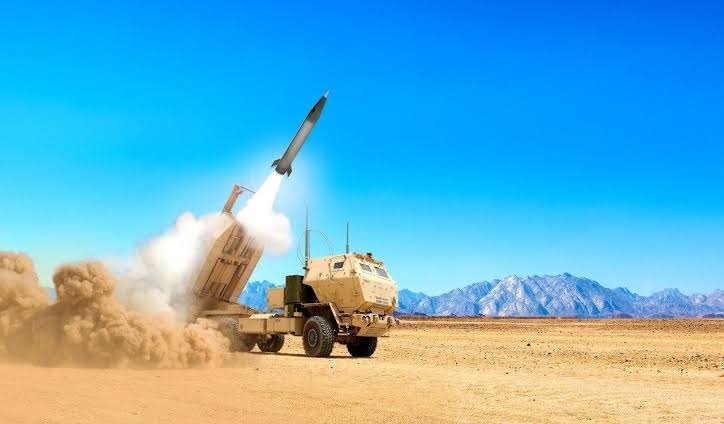
The STRATUS RS is designed as a high-supersonic missile operating below Mach 5. It uses ramjet propulsion and emphasizes survivability through speed and maneuverability rather than stealth. The missile supports a multi-role mission set, including SEAD/DEAD (Destruction of Enemy Air Defenses), anti-ship warfare, deep strike operations, and engagement of high-value airborne targets such as Airborne Early Warning and Control (AEW&C) aircraft and aerial refueling tankers.
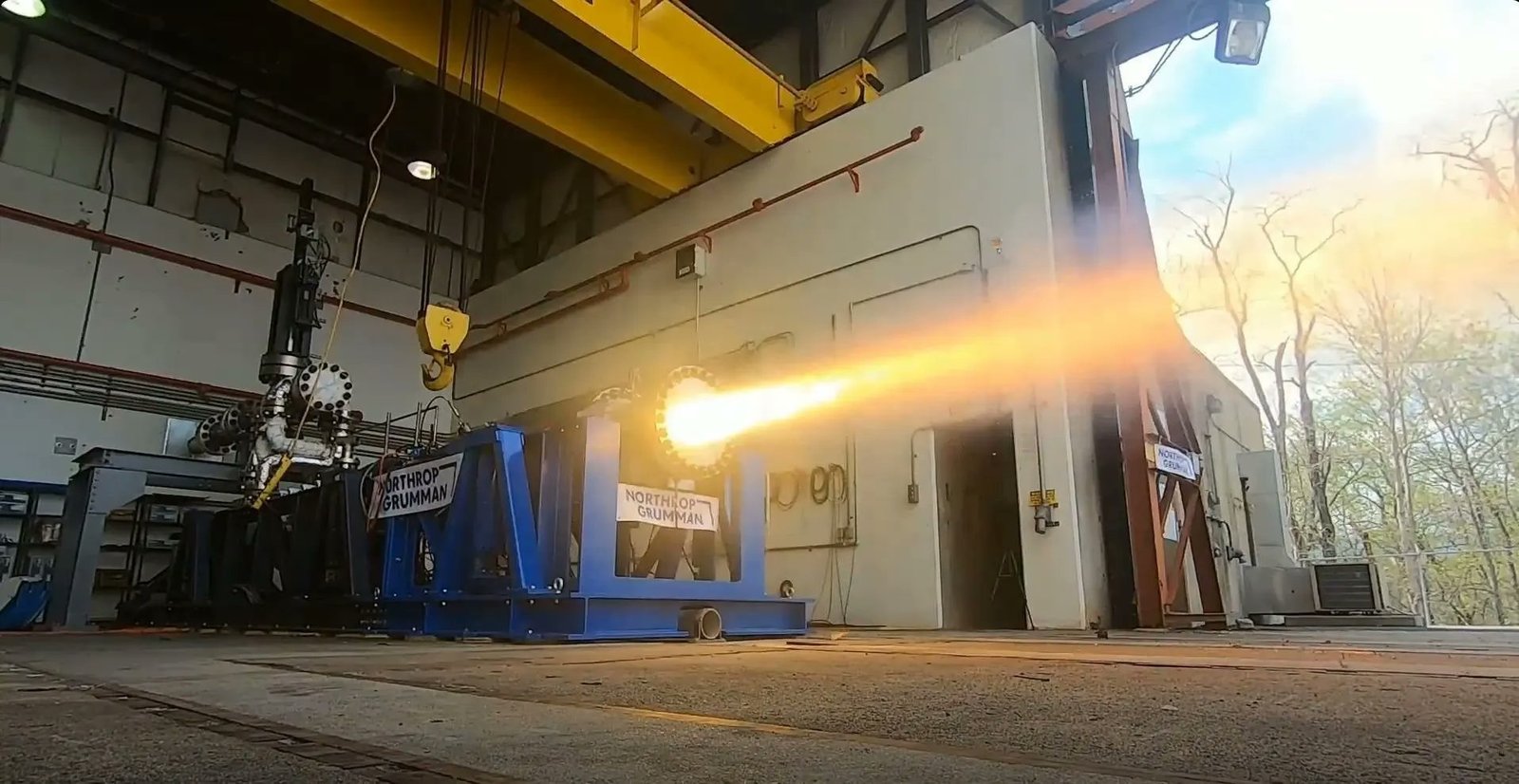
Seeker development for the RS variant is being conducted jointly by Thales Group and MBDA UK. Propulsion trials for the ramjet engine have been completed in supersonic wind tunnels at Bourges, a key French center for ramjet research and testing. The missile is designed as a multi-role penetrator rather than a dedicated anti-radiation system, allowing flexibility across dynamic operational scenarios.
Addressing Capability Gaps
French defense officials indicated that dedicated SEAD and electronic warfare capabilities had declined following the Cold War. The emergence of layered Integrated Air Defense Systems (IADS), long-range surface-to-air missile systems, mobile radars, and maritime Anti-Access/Area Denial (A2/AD) networks has created a requirement for systems capable of neutralizing defenses at the outset of a conflict.
The STRATUS RS is intended to fill capability gaps not addressed by current French systems. The SCALP cruise missile remains optimized for long-range, pre-planned strikes against fixed targets using subsonic, low-observable flight profiles. The Exocet family provides anti-ship capability, with the AM39 offering approximately 70 km range and the MM40 Block 3C extending to the 250 km class with enhanced electronic warfare resistance. The MdCN naval cruise missile delivers long-range land-attack capability from surface ships and submarines.
None of these systems combine high-supersonic speed, maneuverability, anti-radiation targeting capability, and anti-ship functionality within a single platform. The STRATUS RS is designed to compress adversary decision cycles by reducing engagement timelines and limiting the effectiveness of modern air and missile defenses.
Integration with Rafale F5 Combat System
France’s 2026 update to the LPM explicitly links the development of a new SEAD and anti-ship missile to the Rafale F5 standard. The aircraft is being developed as part of a broader networked combat architecture rather than a standalone platform.
Dassault Aviation is concurrently developing an Unmanned Combat Aerial System (UCAS) derived from the nEUROn demonstrator, intended for collaborative combat operations after 2030. Within this architecture, the Rafale F5, escort drones, electronic warfare assets, and STRATUS missiles will operate as an integrated system.
Operationally, the STRATUS RS is designed to function as a corridor-opening weapon. When launched from outside heavily defended zones, it forces adversary radar systems to either emit signals—risking detection and destruction—or shut down, creating exploitable gaps in air defense coverage. These gaps can then be used by follow-on strike systems, including SCALP, MdCN, AASM guided munitions, uncrewed combat aerial vehicles, or manned aircraft.
Operational Role and Timeline
The STRATUS RS is intended as a first-day-of-war capability for operations in contested environments. Its speed and maneuverability increase penetration probability against both land-based air defenses and naval targets equipped with modern interception systems.
The program remains in the assessment and development phase, with service entry planned for the early 2030s. The effort supports the European defense industrial base while maintaining sovereign design authority within MBDA and reinforcing trilateral cooperation among France, the United Kingdom, and Italy.
French defense planning positions the STRATUS program as a key component in restoring a suppressed air-defense penetration capability that had diminished since the 1990s, aligning future airpower capabilities with evolving operational requirements.
——— End of Article ———