KYIV, — April 13, 2026 : Ukraine’s Main Intelligence Directorate (GUR) has carried out two rocket launches into space and conducted an air-launched rocket carrier test during the ongoing war with Russia, according to Fedir Venislavsky, Chairman of the Subcommittee on State Security, Defense and Defense Innovation of the Verkhovna Rada Committee on National Security, Defense and Intelligence.
Venislavsky disclosed the operations in an interview with RBC-Ukraine, stating that both space launches exceeded altitudes of 100 kilometres and 204 kilometres respectively. He said the missions were conducted as part of combat tasks under the leadership of then-GUR Chief Kyrylo Budanov and other intelligence officials. The launches were officially recorded using technical monitoring systems.
Combat-Oriented Space Operations
According to Venislavsky, the launches were not experimental or research-focused activities. He described them as operational missions linked to Ukraine’s military objectives, including the capability to engage hostile assets operating in space. Specific operational details were not disclosed.
“The unit achieved both unique technical results and accomplished purely military objectives,” Venislavsky said, referring to the GUR working group responsible for the missions.
Air-Launched Rocket Carrier Test
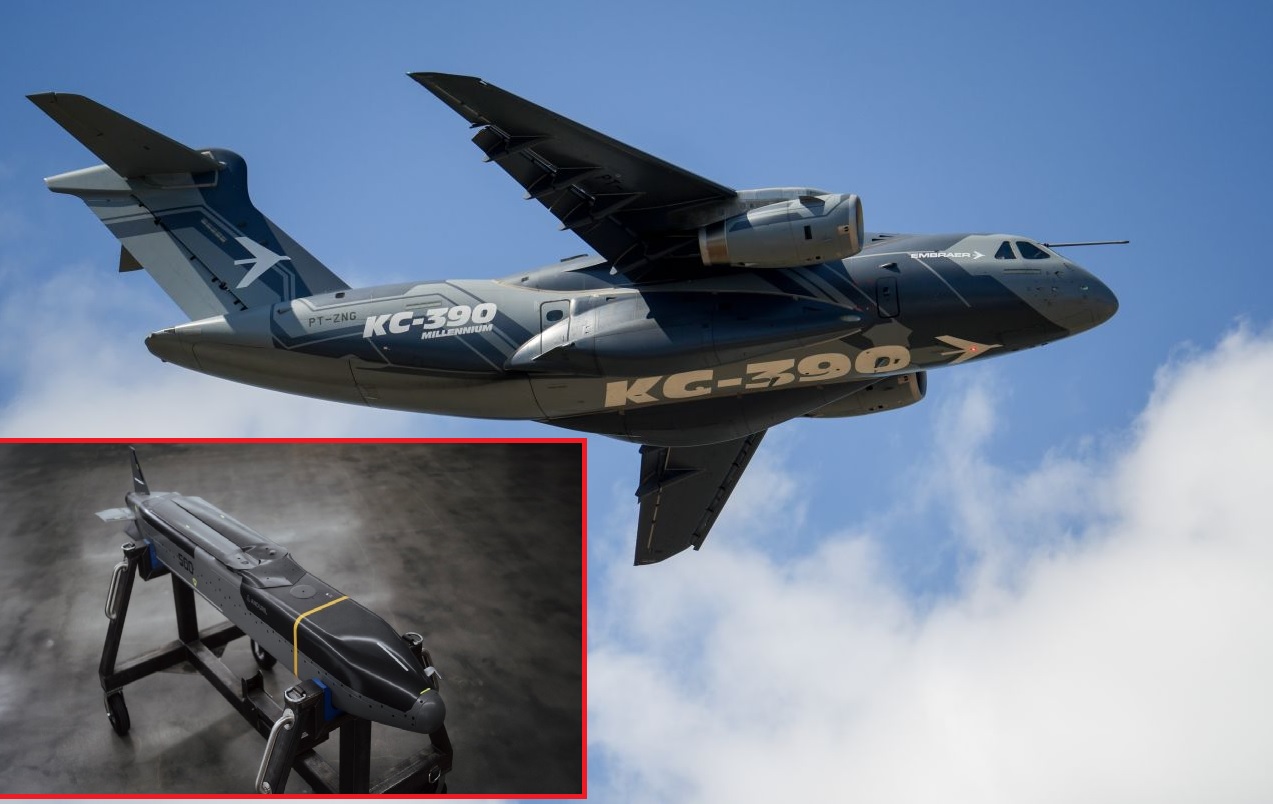
In addition to the space launches, the same working group conducted a rocket carrier test launched from a transport aircraft flying at approximately 8,000 metres altitude. Venislavsky stated that this represents the first such launch on the European continent and the second globally, following a similar United States test in the mid-1970s.
He noted that Ukraine’s launch altitude in this case exceeded that of previous comparable tests.
Launching from an altitude of 8,000 metres allows the rocket to avoid the densest layers of the atmosphere, reducing energy consumption during the initial phase of flight. Venislavsky explained that this improves efficiency and enhances the effectiveness of the rocket’s mission profile.
Hypersonic Weapons Capability
Venislavsky also disclosed the existence of a category of Ukrainian-developed missiles that has not been widely reported. He stated that these systems are capable of striking targets at distances of up to 500 kilometres while travelling at hypersonic speeds.
“We have rockets that almost no one knows about, but which are capable of striking enemy territory at distances of up to 500 kilometres and flying at hypersonic speeds,” he said. “And we are successfully using them in the course of combat operations.”
He added that these systems are intended for specialized operations and are linked to the technologies used in the recent space launches and air-launch missions, suggesting that the rocket carriers involved are derived from or related to this hypersonic programme.
Dual-Use Launch Platform and Space Capability
The air-launch concept is expected to support both military and civilian applications. Venislavsky stated that the platform could be used in the future as an airborne launch system for deploying satellites and other spacecraft, in addition to strike missions.
Ukraine has already reached preliminary agreements with international partners prepared to supply satellites. According to Venislavsky, the country possesses the technical and industrial capability to manufacture rocket carriers, refine existing systems, and place payloads into orbit.
He noted that Ukraine is entering a group of fewer than ten countries with functioning space technologies, supported by existing scientific expertise and industrial capacity.
“Both science and industry already have experience in this field,” Venislavsky said, adding that further development depends on funding levels.
Funding Constraints and International Cooperation
Venislavsky identified financing as the primary constraint on expanding these capabilities. Under current wartime conditions, Ukraine’s state budget is largely allocated to security and defense needs, limiting available resources for large-scale space and industrial programmes.
He indicated that future progress will depend on increased involvement from international partners, particularly in funding and technical cooperation.
The confirmation of two space launches and an air-launched rocket test during active conflict demonstrates that Ukraine has established a working technical foundation for both military and dual-use space operations.
——— End of Article ———