World
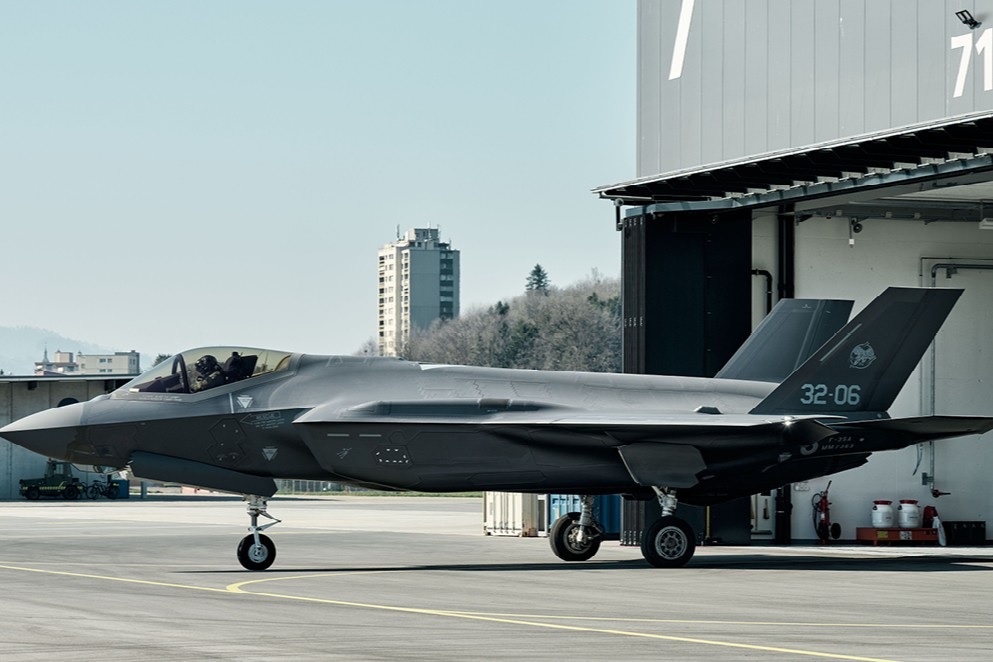
LISBON, February 26, 2026 : The United States has formally advocated for the selection of the Lockheed Martin F-35A Lightning II as Portugal evaluates options to replace the Portuguese Air Force (FAP)’s aging fleet of F-16 Fighting Falcon aircraft. The diplomatic engagement comes as Lisbon continues parallel discussions with European aerospace manufacturers regarding potential alternatives. U.S. Ambassador to Portugal John Arrigo stated in an interview with CNN Portugal on February 23 that the F-35A would ensure interoperability with leading European air forces and strengthen Portugal’s operational integration within NATO structures. He described the aircraft as a fifth-generation stealth platform and said that more than 900 F-35 aircraft are either in service or on order across Europe. Arrigo also noted that approximately 25 percent of the aircraft’s components are manufactured in Europe and urged Portugal to increase defense spending from around 2 percent of gross domestic product to NATO’s 5 percent target by 2035. Current Fleet and Replacement Requirement The Portuguese Air Force currently operates approximately 25 F-16AM/BM aircraft based at Monte Real Air Base. The fleet was acquired during the 1990s under the Peace Atlantis programs and consists of 21 single-seat F-16A variants and four two-seat F-16B aircraft. The jets range in age from 31 to 42 years and have undergone mid-life upgrades, including modernization to the Operational Flight Program S3.25 standard. FAP leadership has confirmed that the F-16 fleet will remain operational until a fifth-generation replacement is introduced. Chief of Staff João Cartaxo Alves stated in December 2025 that the replacement process is underway at the institutional level. He indicated that the air force is prioritizing the acquisition of at least 14 fifth-generation fighters, with the total number potentially increasing to 28 aircraft procured in one or two phases. Alves also acknowledged that the modernization process should have begun approximately two decades earlier. The proposed procurement program is estimated to range between €3.0 billion and €4.8 billion, depending on the final aircraft selection and quantity. Government Position and Procurement Status Portuguese Defense Minister Nuno Melo stated in November 2025 that no formal tender process had been launched and no acquisition decision had been made. He previously emphasized the need to evaluate geopolitical considerations and assess European defense options that could provide economic returns to Portugal’s domestic aerospace and defense industry. The fighter replacement program forms part of the Airpower Transformation Plan 2024–2030. While technical requirements are being finalized by the air force for submission to political authorities, no official timeline has been announced for issuing a formal tender or selecting a preferred platform. European Industry Engagement Portugal has engaged in discussions with multiple European aerospace manufacturers as part of its evaluation process. Sweden’s Saab has presented the Saab JAS 39 Gripen E/F as a cost-effective alternative, emphasizing lower operating and maintenance costs as well as potential industrial participation for Portuguese firms. France’s Dassault Aviation has offered the Dassault Rafale multirole fighter. Dassault Chief Executive Officer Éric Trappier confirmed the company’s readiness to supply the aircraft. The proposal aligns with broader French government efforts, led by President Emmanuel Macron, encouraging European nations to prioritize domestically produced defense systems. In addition, Airbus Defence and Space, representing the Eurofighter consortium, has signed a Memorandum of Understanding (MoU) with the Portuguese Cluster for Aeronautics, Space and Defence Industries (AED) to examine potential integration of Portuguese companies into the supply chain should the Eurofighter Typhoon be selected. Strategic and Operational Considerations The evaluation process is expected to assess multiple factors, including acquisition and lifecycle costs, delivery schedules, industrial participation, NATO interoperability, and the avoidance of capability gaps in national air defense. Portugal is not currently a member of the F-35 program. A selection of the F-35A would place the country among a growing group of European operators, including Denmark, Norway, and the Netherlands, which have already transitioned or committed to the platform. The Portuguese government has not announced a decision date. Political authorization will be required before a formal procurement phase can begin.
Read More → Posted on 2026-02-26 14:45:38
World
SOUDA BAY, GREECE / WASHINGTON, February 26, 2026 : The United States Navy aircraft carrier USS Gerald R. Ford (CVN-78) departed Naval Support Activity Souda Bay on the Greek island of Crete on February 26 after completing a scheduled four-day port visit for refueling and resupply operations. The nuclear-powered carrier is now transiting eastward through the Mediterranean Sea and is expected to reach its initial operating area off the Israeli coast within 24 hours. U.S. defense officials indicated that the deployment is part of the current American naval posture in the eastern Mediterranean and surrounding waters. The USS Gerald R. Ford had arrived at Souda Bay earlier in the week for routine logistical support. No details were released regarding the specific escort ships currently accompanying the carrier strike group, though officials confirmed that it continues to operate with its assigned surface combatants and support vessels. Initial Deployment Off Israel According to U.S. defense sources, the carrier’s initial tasking involves operating off the coast of Israel to support regional air defense requirements. The vessel’s embarked Carrier Air Wing 8 provides fighter, attack, electronic warfare, airborne early warning, and helicopter squadrons capable of countering drones and cruise missile threats. Military planners stated that the carrier’s aviation assets could complement Israel’s air defense systems in the event of potential Iranian ballistic missile launches or other aerial threats. The ship’s presence offers extended early warning coverage and additional interception capability in the eastern Mediterranean theater. Alternative Operational Theaters Under Consideration While the carrier is proceeding toward the Israeli coast for its initial deployment, U.S. naval officials noted that its final station will depend on evolving security assessments over the next 24 to 48 hours. Three primary operational options remain under consideration: Eastern Mediterranean: The carrier may maintain position off Israel to provide sustained defensive air coverage and maritime security support. Red Sea / Gulf of Aden: Naval commanders could direct the carrier strike group to transit the Suez Canal and deploy off the coast of Yemen. Such a positioning would serve as a deterrent against Houthi forces and aim to prevent renewed attacks on international shipping lanes and long-range strikes directed toward Israel. Arabian Sea: A third option would involve continuing transit into the Arabian Sea to integrate with the USS Abraham Lincoln Carrier Strike Group, which has been operating in the region since January 2026. Operating both carrier strike groups in proximity would significantly increase available tactical aviation assets, expanding the number of strike aircraft in the area for potential military operations targeting Iran. Vessel Specifications and Capabilities USS Gerald R. Ford is the lead ship of the Ford-class aircraft carriers and is currently the world’s largest aircraft carrier. The vessel has a full-load displacement of approximately 100,000 tons and is powered by two nuclear reactors, enabling sustained high-speed operations without reliance on conventional fuel. The carrier has a crew of nearly 4,600 personnel, including ship’s company and embarked air wing members. Its design incorporates advanced systems for aircraft launch and recovery, increased sortie generation rates, and enhanced radar and command-and-control capabilities compared to previous Nimitz-class carriers. The USS Gerald R. Ford was redirected to the Middle East following prior operations in the Caribbean, aligning with the current U.S. military presence in the region. The USS Abraham Lincoln Carrier Strike Group remains deployed in the broader Middle East area. The carrier’s movement from Souda Bay forms part of ongoing U.S. naval operations in the eastern Mediterranean, with further deployment decisions expected to reflect regional security developments in the coming days.
Read More → Posted on 2026-02-26 14:30:49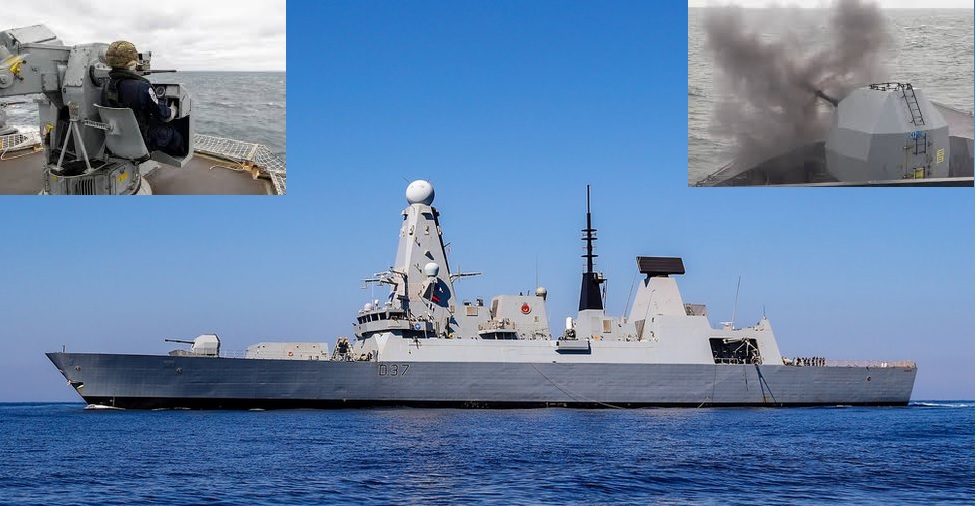
World
CARDIGAN BAY, WALES / LONDON — February 26, 2026 : The Royal Navy has confirmed that the Type 45 destroyer HMS Duncan (D37) has successfully completed Exercise Sharpshooter, a 72-hour live and synthetic training event conducted at the Ministry of Defence’s Aberporth Range in Cardigan Bay. The exercise was designed to evaluate the ship’s ability to defend critical national infrastructure against coordinated, multi-axis threats in a high-tempo operational environment. The Portsmouth-based destroyer operated as the central unit of a notional task group tasked with protecting offshore energy installations, subsea data cables, and coastal logistics hubs. The scenario required the ship to counter simultaneous waves of hostile aerial and surface threats, including uncrewed systems, aircraft, and simulated cruise and ballistic missiles. The tempo and structure of the exercise were informed by recent operational experience in the Red Sea, including the 2023–2024 deployment of HMS Diamond. Multi-Layered Air and Surface Defence Testing HMS Duncan employed its integrated air and missile defence architecture throughout the three-day trial. The ship’s operations room fused data from multiple radar and sensor inputs to classify, prioritise, and engage targets under strict time constraints while maintaining continuous Defence Watches. At extended ranges, the Sea Viper (PAAMS) system was exercised in synthetic mode against simulated cruise missile, ballistic missile, aircraft, and maritime vessel threats. Closer-range engagements involved live-fire serials using the Phalanx Close-In Weapon System, the 30 mm DS30M Mk I cannon, heavy machine guns, and the 4.5-inch naval gun. More than 200 rounds were expended from the 4.5-inch naval gun, including naval gunfire support serials. An embarked Wildcat helicopter from 815 Naval Air Squadron operated from the flight deck to extend the defensive perimeter. The helicopter engaged fast-moving aerial targets using Martlet lightweight multirole missiles at ranges of up to six kilometres. The live threat environment was delivered in partnership with industry providers QinetiQ and Inzpire, alongside Royal Navy Fleet Operational Standards and Training teams. The ship engaged five-metre Hammerhead uncrewed surface vessels capable of speeds up to 50 mph, as well as Banshee Whirlwind aerial targets flying at speeds exceeding 200 mph. By the conclusion of the exercise, HMS Duncan had tracked and neutralised five aerial targets and sunk two Hammerhead uncrewed surface vessels, meeting all assigned objectives. Engineering Resilience and Damage Control Exercise Sharpshooter incorporated concurrent onboard emergency scenarios to assess human endurance and system resilience alongside combat performance. While maintaining combat readiness around the clock, the crew responded to simulated internal fires, battle damage, and technical faults. Weapon engineers conducted fault diagnosis and repairs during operational pauses. Minor issues identified with the 30 mm medium-calibre gun were rectified between firing serials. Personnel responsible for the 4.5-inch naval gun reported successful sustained firing throughout the exercise period. The training model required sustained operations under Defence Watches, with crew members managing fatigue while continuing to conduct target tracking, threat evaluation, and live engagements. Operational Context and Strategic Relevance Exercise Sharpshooter forms part of a wider series of trials at Aberporth Range aimed at preparing Royal Navy surface ships for contemporary maritime threats, including the growing use of uncrewed aerial and surface systems by state and non-state actors. Previous iterations have included HMS Dauntless in 2025 and participation by the Royal Netherlands Navy. The exercise also reflects heightened attention to the protection of European subsea and offshore infrastructure following incidents of suspected sabotage in the Baltic Sea. By conducting the trial in home waters, the Royal Navy assessed the Type 45 destroyer’s capacity for both expeditionary air defence and the immediate protection of UK domestic maritime infrastructure. HMS Duncan is the sixth and final ship of the Daring-class (Type 45) destroyers. As part of ongoing modernisation efforts under the Sea Viper Evolution programme, the class continues to serve as the Royal Navy’s principal area air-defence platform for carrier strike groups and maritime security operations. The Royal Navy stated that Exercise Sharpshooter demonstrated the ship’s ability to conduct layered defensive operations while sustaining damage-control procedures and engineering continuity over a continuous 72-hour period.
Read More → Posted on 2026-02-26 14:15:07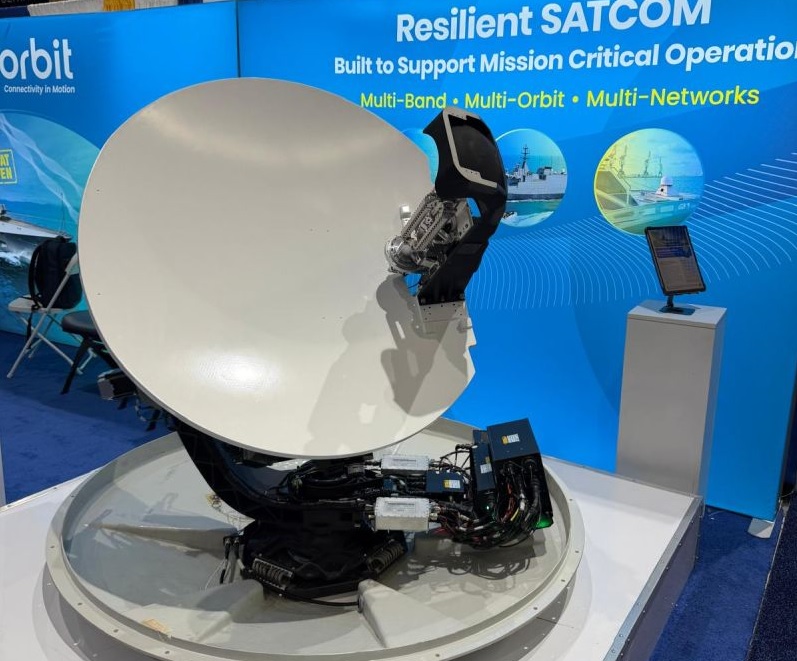
World
NETANYA, Israel — February 26, 2026 : Orbit Communication Systems Ltd. (TASE: ORBI) has been awarded a $3.2 million follow-on contract by the Israeli Ministry of Defense (IMoD) for the supply of advanced satellite communication (SATCOM) systems. The order centers on the company’s Multi-Purpose Terminal (MPT) series and is intended to support operational connectivity requirements across multiple defense platforms. The new award builds on previous procurements by the IMoD and continues Orbit’s role in supplying sovereign defense communication infrastructure. In December 2024, the company received a $9.1 million tender for additional MPT systems scheduled for delivery during 2025. Contract Scope and Operational Role The $3.2 million order includes delivery of Orbit’s stabilized MPT SATCOM terminals configured for defense operational needs on mobile platforms. The systems are designed to maintain continuous connectivity across multiple satellite constellations while operating in complex terrain, contested environments, and adverse weather conditions. The MPT terminals are engineered to interface with satellites operating in Low Earth Orbit (LEO), Medium Earth Orbit (MEO), Geostationary Earth Orbit (GEO), and Highly Elliptical Orbit (HEO). This multi-orbit compatibility enables resilient network links and supports uninterrupted communications during maneuvering operations. The systems are intended to support network-centric warfare frameworks and modern C4ISR (Command, Control, Communications, Computers, Intelligence, Surveillance, and Reconnaissance) architectures used by defense forces. Technical Specifications and Platform Integration Orbit’s MPT family consists of stabilized Very Small Aperture Terminal (VSAT) systems available in Ku-band and Ka-band configurations, with support for additional X-band operations. Antenna aperture variants include 30 cm, 46 cm, 60 cm, and 87 cm models. The terminals deliver broadband data throughput exceeding 126 Mbps forward links and up to 29 Mbps return links in certain configurations. These performance parameters enable live video streaming, high-volume data transfers, and real-time ISR communications. The systems are optimized for low Size, Weight, and Power (SWaP) requirements, allowing integration across a range of platforms including: Airborne intelligence, surveillance, and reconnaissance (ISR) aircraft Rotary-wing aircraft Naval vessels and submarines Armored ground vehicles Unmanned surface vessels (USVs) Other unmanned systems The terminals are compliant with military and environmental standards including MIL-STD-188-164C, MIL-STD-810G, MIL-STD-461G, and RTCA DO-160G. These certifications support reliable signal tracking, polarization compensation, and uninterrupted performance during platform motion and dynamic maneuvers. Company Profile and Global Footprint Headquartered in Netanya, Israel, Orbit Communication Systems Ltd. develops and supplies airborne communications management systems, satellite-tracking maritime and airborne terminals, and ground station solutions. The company operates production, marketing, sales, and customer service activities in the United States, Europe, and the Far East. Orbit serves commercial operators, major air forces, navies, space agencies, and New Space companies. Its SATCOM solutions are deployed on mission aircraft, naval vessels, armored vehicles, rotary-wing platforms, and unmanned systems worldwide, including airborne platforms operated by the U.S. military and NATO member states. The company is controlled by the FIMI Investment Fund. Orbit’s broader product portfolio includes the OceanTRx maritime SATCOM series, Gaia earth observation ground stations, and airborne audio management systems. Executive Statement Daniel Eshchar, Chief Executive Officer of Orbit, stated that the company continues to provide the Israeli Ministry of Defense with satellite communication systems designed to deliver resilient and secure connectivity. He noted that the operational importance of secure communications continues to increase, particularly in complex and contested environments, and confirmed that Orbit will continue investing in product innovation for customers in Israel and international markets. Pending Acquisition by Kratos In November 2025, Kratos Defense & Security Solutions, Inc. signed a definitive agreement to acquire 100 percent of Orbit Technologies Ltd. for $356.3 million in cash. The transaction is expected to close by the end of March 2026, subject to regulatory approvals. The newly announced IMoD contract is part of Orbit’s continuing engagement in defense SATCOM supply programs and reflects sustained procurement activity for multi-orbit communication capabilities across Israeli defense platforms.
Read More → Posted on 2026-02-26 14:00:49
World
ANKARA / SEOUL / ASTANA — February 25, 2026 : Three military fighter aircraft from Turkey, South Korea and Kazakhstan were lost in separate training-related incidents within a 24-hour period on February 25, 2026. The accidents involved two F-16C Fighting Falcons operated by the Turkish Air Force and the Republic of Korea Air Force, and one Su-30SM multirole fighter operated by Kazakhstan’s Air Defense Forces. Authorities in all three countries have initiated formal investigations. One pilot was killed, while three others survived after ejecting. Turkish Air Force F-16C Crash in Balıkesir The first incident occurred at 00:56 local time in northwestern Turkey. An F-16C assigned to the 9th Main Jet Base Command crashed shortly after takeoff from Balıkesir Air Base during a nighttime mission. According to the Turkish Ministry of National Defense, radio and radar contact with the aircraft was lost approximately six minutes after departure. The crash occurred near Naipli village in the Karesi district of Balıkesir province, close to the Istanbul–İzmir motorway. Search and rescue teams were deployed immediately and located scattered wreckage across a wide area. Security forces and firefighters secured the crash site, and a section of the motorway was temporarily closed as a precaution due to debris. The pilot, Air Force Major İbrahim Bolat, was killed in the crash. The Ministry confirmed his death in an official statement. The Balıkesir Public Prosecutor’s Office, along with a specialized crash examination team, has begun a formal investigation. Authorities are examining possible factors including mechanical malfunction, pilot-related issues, and environmental conditions. A procedural ruling will be issued following completion of the investigation. Republic of Korea Air Force F-16C Crash in Yeongju Later the same day, at approximately 19:31 local time, a Republic of Korea Air Force F-16C single-seat fighter jet crashed during a scheduled nighttime training flight. The aircraft was assigned to Chungju Air Base and went down in a mountainous area near Yongsan-ri in Anjeong-myeon, close to the city of Yeongju in North Gyeongsang Province. The pilot successfully initiated the ejection sequence prior to impact. According to South Korean authorities, the pilot was initially suspended in a tree before being rescued by emergency responders. He sustained no life-threatening injuries and was transferred to the Korean Air Force Aerospace Medical Center for evaluation. The crash triggered a localized hillside fire, which was extinguished shortly after fire crews arrived at the scene. No civilian casualties or property damage were reported. Local authorities temporarily evacuated some nearby residents as a precaution. The Republic of Korea Air Force has established a special task force led by the Vice Chief of Staff to investigate the cause of the accident. A detailed technical and operational review is underway. Kazakhstan Air Defense Forces Su-30SM Crash in Karaganda Region In a separate and unrelated incident, a Sukhoi Su-30SM fighter jet belonging to the Kazakhstan Air Defense Forces crashed during a scheduled training flight in the Karaganda Region of central Kazakhstan. The Kazakh Defense Ministry stated that an emergency occurred while the twin-engine multirole aircraft was conducting routine operations. Both pilots onboard successfully ejected before impact. Search and rescue units recovered the crew members and placed them under medical supervision. Officials confirmed that neither pilot sustained life-threatening injuries. The crash site was secured by military personnel. Authorities reported no threat to the civilian population or nearby infrastructure. A special commission headed by the chief of the flight safety department has been formed to determine the circumstances of the aircraft’s loss. The commission includes specialized flight service personnel and will issue a formal legal and procedural assessment once the investigation is completed. Investigations Underway The three incidents occurred in different geographic regions under separate operational commands and flight conditions. There is no indication that the crashes are connected. All three air forces have launched independent investigations focused on technical performance, operational procedures and environmental factors. Findings will be released upon completion of the respective inquiries.
Read More → Posted on 2026-02-25 18:05:35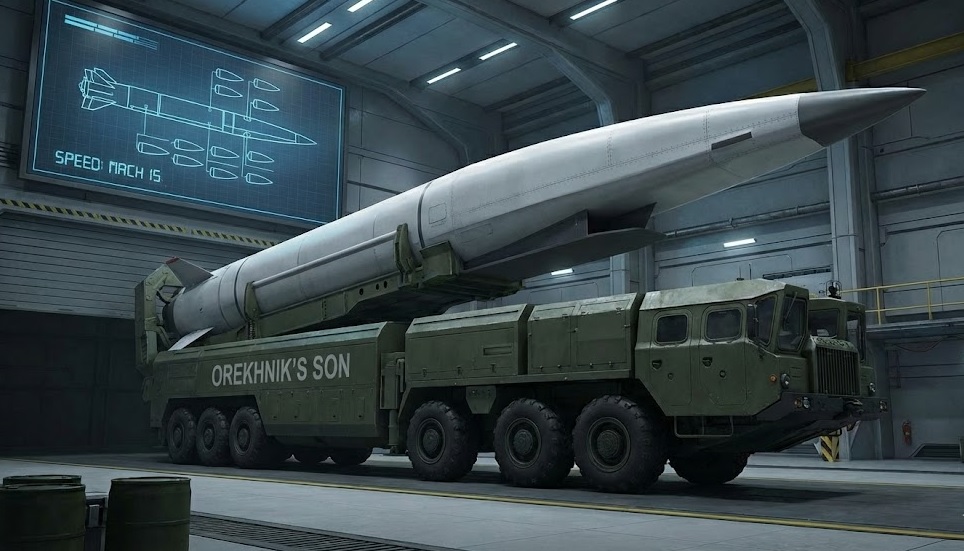
World
MOSCOW — Feb. 25, 2026 : Russia’s defense industry is reportedly developing a more advanced version of the Oreshnik intermediate-range ballistic missile (IRBM), according to statements published in Russian media and attributed to retired Colonel Viktor Baranets. The new system is unofficially referred to as “Orekhnik’s son” or “Son of Oreshnik” and is described as an upgraded, more powerful iteration of the existing missile. Development and Reported Capabilities According to media reports, the upgraded missile is designed to carry eight kinetic warheads, an increase over the configuration of the current Oreshnik system. The warheads are intended for deep-penetration strikes against fortified and underground facilities, with a stated capability to destroy targets located at depths of approximately 30 meters. The missile is also reported to feature a hypersonic flight profile, enabling rapid long-range deployment. Based on the specifications cited in the reports, the system would be capable of reaching London within eight minutes of launch. Assuming a launch from western Russian territory near Moscow, the approximate straight-line distance to London is about 2,500 kilometers. Covering this distance in 8 minutes (480 seconds) would require an average speed of approximately 5.2 kilometers per second, or about 18,750 kilometers per hour. This corresponds to roughly Mach 15–16, depending on atmospheric conditions. Baranets, a retired Russian colonel and military commentator for Komsomolskaya Pravda, stated that engineering efforts are currently focused on improving strike precision and overall accuracy. He said these enhancements are aimed at increasing the effectiveness of the system against strategic targets in Ukraine and Western countries. In addition to accuracy improvements, Baranets indicated that specialists are working on expanding payload capacity, advancing fuel technology, and integrating updated guidance systems. He described the project as intended to surpass the current Oreshnik missile in power and overall combat parameters. There has been no official confirmation of the new system from the Russian Ministry of Defense. The information available is based on media reports and statements attributed to Baranets. Background on the Oreshnik Missile The existing Oreshnik, meaning “Hazel Tree,” is a road-mobile intermediate-range ballistic missile capable of hypersonic speeds exceeding Mach 10. The system is equipped with six multiple independently targetable reentry vehicles (MIRVs), each carrying submunitions. It can be configured to carry either nuclear or conventional payloads. The missile has an estimated operational range of between 3,500 and 5,500 kilometers. It is derived from the RS-26 Rubezh program and entered service in 2025. The Oreshnik was first used in combat on Nov. 21, 2024, against a target in Dnipro, Ukraine. A second reported use occurred on Jan. 8, 2026, against targets in the Lviv region. Following its introduction, Oreshnik systems were placed on combat duty in Belarus. Strategic Context The reported development of “Orekhnik’s son” follows the deployment of the original Oreshnik system during the ongoing conflict in Ukraine. By increasing the number of kinetic warheads from six to eight and expanding its underground strike capability to approximately 30 meters, the upgraded missile is described as part of broader efforts by Russia’s defense sector to enhance systems capable of penetrating fortified structures and modern air and missile defense architectures across the European theater. All currently available details regarding the new missile remain based on media reporting and expert commentary, with no formal announcement or technical specifications released by Russian defense authorities.
Read More → Posted on 2026-02-25 17:52:23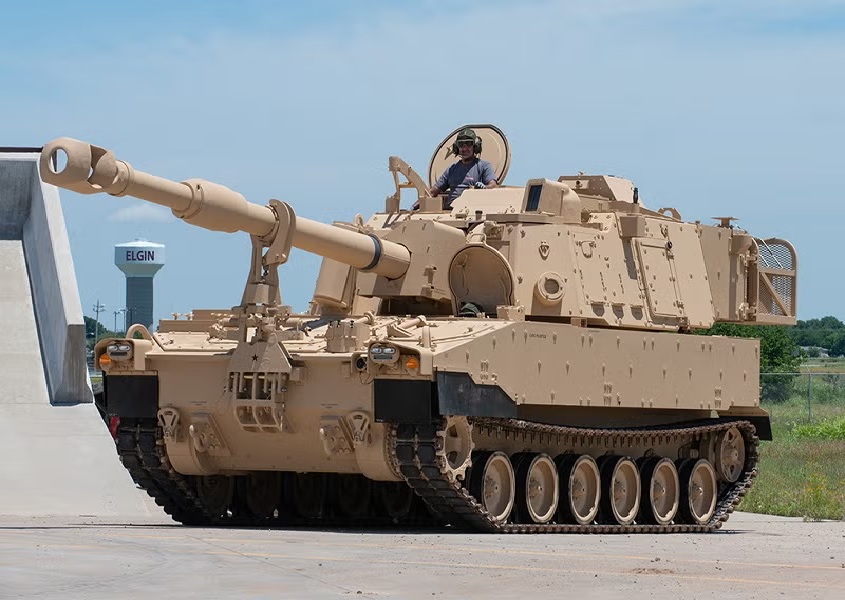
World
YORK, Pennsylvania — Feb. 25, 2026 : BAE Systems has been awarded a U.S. Army contract valued at more than $500 million for the production of additional M109A7 Paladin Self-Propelled Howitzers and M992A3 Ammunition Carriers. The contract was finalized in December 2025 and publicly announced this week. The award supports operational requirements for the U.S. Army’s Armored Brigade Combat Teams (ABCTs) and continues the service’s modernization of its tracked artillery fleet. Platform Overview The M109A7 is the current production variant of the M109 family of 155mm self-propelled howitzers. It is designed to deliver indirect fire support in conventional and high-intensity combat operations. The system incorporates a modernized architecture built around a digital backbone. It features advanced digital fire control systems intended to improve targeting precision, responsiveness, and overall lethality. The upgraded system architecture enables integration with contemporary battlefield command-and-control networks. The M109A7 is built on a chassis common with the Bradley Fighting Vehicle platform. It is powered by a 675-horsepower engine and can reach a maximum speed of approximately 38 miles per hour (61 kilometers per hour). The vehicle has a combat weight ranging between 35 and 38 tons, with a specified maximum weight of 35,380 kilograms. Dimensionally, the howitzer measures approximately 9.7 meters in length, 3.9 meters in width, and 3.3 meters in height. It is operated by a crew of four personnel and is capable of firing up to four rounds per minute. The system offers a maximum firing range between 22 and 30 kilometers, depending on the type of ammunition employed. M992A3 Ammunition Carrier The contract also includes production of the M992A3 Ammunition Carrier, which operates in conjunction with the M109A7. The M992A3 is designed to transport, manage, and resupply 155mm artillery ammunition during combat operations. It enables sustained fire missions by providing logistical support directly alongside the howitzer units in the field. Production Locations Manufacturing and assembly of the M109A7 and M992A3 systems will take place across multiple BAE Systems facilities in the United States, including: York, Pennsylvania Elgin, Oklahoma Anniston, Alabama The York facility serves as a primary production site for the Paladin program. Program Continuity and Prior Awards The latest $500 million contract follows a $473 million award issued to BAE Systems in January 2026 for the production of 40 additional M109A7 sets and associated ammunition carriers. In May 2024, the company received a separate $423 million contract for self-propelled howitzers under the same program. These successive awards reflect continued procurement of the M109A7 platform as the U.S. Army replaces older variants within the M109 fleet. Dan Furber, Program Director for Artillery and Combat Support within BAE Systems’ Combat Mission Systems business, stated that the M109A7 is designed to provide operational capability for current and future battlefield requirements and that the company continues to support the U.S. Army and allied customers under the Paladin program. The M109A7 remains the primary tracked 155mm self-propelled artillery system in U.S. Army production, supporting Armored Brigade Combat Teams with mobile, protected indirect fire capability.
Read More → Posted on 2026-02-25 17:39:35
World
AURORA, Colorado — Feb. 25, 2026 : U.S.-based aerospace and defense company Ursa Major has unveiled its new HAVOC medium-range hypersonic missile system at the Air & Space Forces Association’s Air Warfare Symposium, outlining a production-focused approach aimed at delivering scalable, affordable hypersonic capability to the joint force. The HAVOC Missile System was formally introduced on Feb. 24 during the annual symposium hosted by the Air & Space Forces Association. Company officials described HAVOC as a complete, medium-range hypersonic weapon system engineered for rapid manufacturing and operational deployment in relevant quantities. System Design and Operational Scope HAVOC is designed as a multi-domain hypersonic missile capable of operating in both endo-atmospheric and exo-atmospheric flight regimes. The system is structured around a modular core vehicle that can function either as a strike weapon or as a maneuverable hypersonic target for testing and training purposes. The missile architecture allows integration with multiple solid rocket motor boosters, enabling launch from a range of platforms. According to the company, these include fighter aircraft, bomber aircraft, naval vertical launch systems, and ground-based launchers. Extended-range configurations are supported through alternative booster pairings. Ursa Major stated that HAVOC was developed to address survivability and maneuverability requirements while ensuring the system can be produced at scale. The company emphasized that the missile was designed from inception with manufacturability and industrial scalability as core objectives. Draper Liquid Rocket Engine The HAVOC system is powered by Ursa Major’s Draper engine, a 4,000-pound-thrust tactical liquid rocket engine that uses storable hydrogen peroxide and kerosene propellants. The engine is characterized as safe and storable, with a cost profile lower than comparable airbreathing propulsion systems such as scramjets. Unlike traditional boost-glide systems or fixed-burn solid rocket motors, the Draper engine enables throttle control and restart capability throughout all phases of flight. This allows the missile to adjust speed and trajectory mid-flight. Company officials indicated that this throttle-and-restart functionality removes the requirement for expensive thermal protection systems typically associated with sustained hypersonic flight, contributing to lower overall system costs and supply chain simplification. Production Model and Cost Targets Ursa Major plans to manufacture between 80 and 90 percent of HAVOC’s components in-house, leveraging advanced additive manufacturing techniques and modern production processes. The company maintains additive manufacturing operations in Youngstown, Ohio, in addition to its headquarters in Berthoud, Colorado. The firm has set a target all-up-round cost of under $3 million per missile. Company representatives stated that affordability, rapid production timelines, and scalable manufacturing capacity are central to the HAVOC program’s structure. Chris Spagnoletti, appointed Chief Executive Officer of Ursa Major on Feb. 19, said the system was developed to prioritize speed of delivery and industrial capacity alongside performance. Development Background and Flight Heritage Ursa Major brings more than a decade of hypersonic propulsion development experience to the HAVOC program. The company’s Hadley liquid rocket engines have previously flown at hypersonic speeds in multiple test missions, validating propulsion performance under operational flight conditions. In addition to propulsion systems, Ursa Major has participated in complete vehicle development through the Affordable Rapid Missile Demonstrator program in partnership with the Air Force Research Laboratory. That program is on track for an upcoming flight, according to company statements. The company indicated that HAVOC aligns with Department of Defense hypersonic priorities, including rapid design-build-test-learn cycles, cost reduction in hypersonic systems, expansion of industrial production capacity, and development of next-generation capabilities to support operational inventories. Corporate Overview Ursa Major specializes in hypersonic propulsion, solid rocket motors, space mobility, and launch systems. The company stated that it is focused on strengthening the U.S. defense industrial base through vertically integrated production and flexible system architectures applicable across land, air, sea, and space domains. The HAVOC Missile System represents the company’s entry into complete hypersonic weapon systems designed for medium-range applications, combining liquid propulsion, modular integration, and high-rate manufacturing objectives within a single platform.
Read More → Posted on 2026-02-25 17:31:18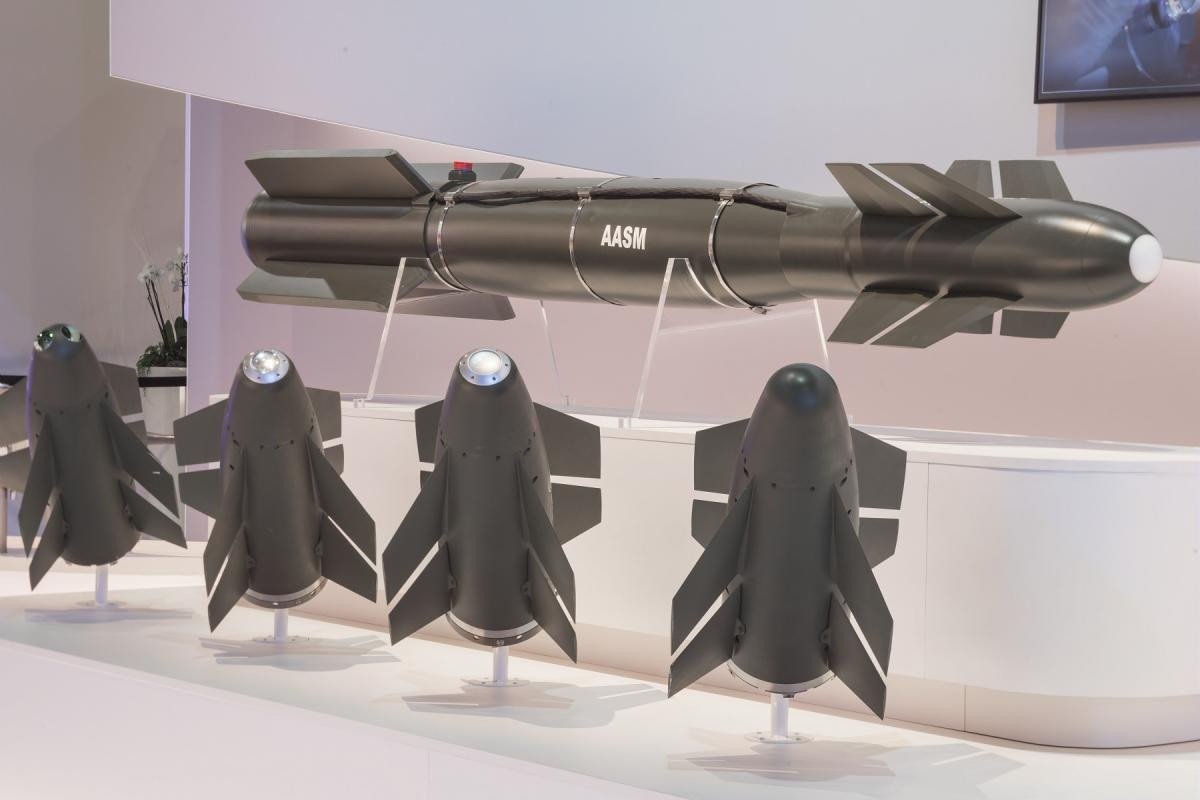
World
KYIV, Feb. 25, 2026 : France will deliver a record batch of AASM Hammer precision-guided aerial bombs to Ukraine, according to a February 25 report by RBC-Ukraine citing the press service of the French Ministry of Defense. The expanded deliveries follow a bilateral meeting in Kyiv between Ukrainian Defense Minister Mykhailo Fedorov and French Minister of the Armed Forces and Veterans Affairs Catherine Vautrin. During the meeting, the two ministers signed a Letter of Intent establishing a framework for joint weapons production in both Ukraine and France. The agreement outlines expanded industrial cooperation between the two countries and provides a basis for sustained production and supply of key munitions, including the AASM Hammer, for the Ukrainian Air Force. Record-Level Deliveries Ukraine and France are working toward a record level of AASM Hammer deliveries. France initially announced plans in early 2024 to supply the precision-guided bombs to Ukraine at a rate of approximately 50 units per month. Deliveries began in 2024 and have continued, with the current batch representing the largest volume transferred since the start of the program. The increase in supply is supported by expanded production capacity in France. Safran Electronics & Defense, the manufacturer of the AASM guidance kits, increased output by 30 percent in 2025 compared with 2024. Production reached approximately 1,080 units in 2025, up from 830 units in 2024. The higher production rate supports both sustained deliveries to Ukraine and the replenishment of French Armed Forces stockpiles. System Configuration and Technical Specifications The AASM (Armement Air-Sol Modulaire) Hammer is a modular precision-guided munition developed by Safran. It is designed to convert conventional unguided bombs into stand-off precision weapons through the addition of a guidance and range-extension kit. The configuration supplied to Ukraine is based on a 242-kilogram high-explosive Mk 82 bomb, representing the 250 kg-class variant of the system. The complete kit consists of a nose-mounted guidance section and a tail-mounted range-extension module equipped with folding wings and a solid-fuel rocket booster. The weapon employs a combined GPS, inertial navigation system (INS), and laser guidance package. This hybrid guidance system enables a circular error probable (CEP) of up to 10 meters. The inclusion of the rocket booster provides a stand-off range exceeding 70 kilometers, allowing launch aircraft to strike ground targets from outside many short- and medium-range air defense envelopes. The AASM family can also be fitted to Mk 83 and Mk 84 bomb bodies in heavier weight classes, though the version supplied to Ukraine is based on the Mk 82 warhead. Integration with Ukrainian Aircraft The AASM Hammer has been integrated across multiple aircraft types operated by the Ukrainian Air Force. These include Soviet-era platforms such as the Su-27, MiG-29, Su-25, and Su-24, as well as Western-supplied F-16 Fighting Falcon aircraft and French Mirage 2000-5F fighter jets. According to the report, the bombs are being used continuously in operations against Russian military positions. The stand-off capability provided by the system allows Ukrainian aircraft to engage targets at extended distances while reducing exposure to air defense systems. Industrial and Operational Context The AASM Hammer entered service with the French Air and Space Force in 2008 and is also operated by several other countries. France’s decision to expand production reflects both operational demand in support of Ukraine and the requirement to maintain national stockpiles. The newly signed Letter of Intent on joint weapons production is intended to broaden long-term defense-industrial cooperation between Kyiv and Paris. In addition to guided munitions, French military assistance to Ukraine includes the transfer of Mirage 2000-5F fighter aircraft and other defense systems. The latest record-level delivery of AASM Hammer bombs forms part of this broader assistance framework and marks a continued expansion of Franco-Ukrainian defense collaboration.
Read More → Posted on 2026-02-25 17:22:23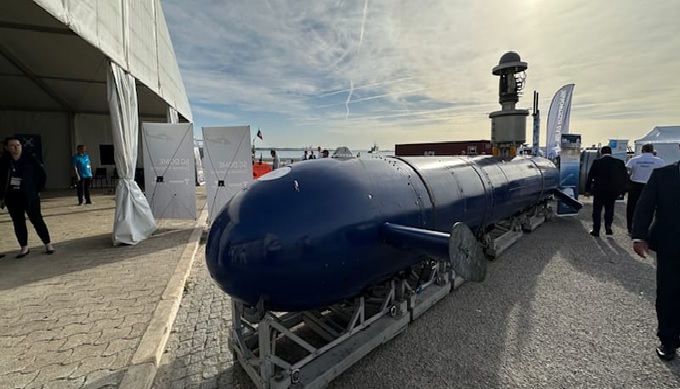
World
ECKERNFÖRDE, Germany, Feb. 25, 2026 : Israel Aerospace Industries (IAI), in cooperation with ThyssenKrupp Marine Systems (TKMS), has formally delivered its BlueWhale autonomous underwater vehicle (AUV) to the German Navy at the Eckernförde naval base near Kiel. The handover marks the first international sale of the Israeli-developed large unmanned submarine system. The procurement, estimated to be valued at tens of millions of euros, reflects Germany’s expanding integration of unmanned maritime platforms into its naval force structure. The BlueWhale was developed by IAI’s ELTA division and incorporates key subsystems from German industry, including an advanced towed array sonar supplied by ATLAS Elektronik, a TKMS subsidiary. The delivery ceremony was attended by senior defense and industry officials, including Jens Plötner, State Secretary in the German Federal Ministry of Defense; Vice Admiral Jan Christian Kaack, Inspector of the German Navy; IAI President and CEO Boaz Levy; and Michael Ozegowski, Executive Vice President of TKMS ATLAS Elektronik. System Specifications and Design Designated ELI-3325, the BlueWhale is a large-displacement, fully autonomous underwater vehicle designed for extended covert maritime missions without onboard crew. The platform measures 10.9 meters in length, 1.12 meters in diameter and weighs approximately 5.5 tons. It is engineered to be transported inside a standard 40-foot shipping container, enabling deployment by land, air or sea. The electric-powered vehicle can dive to depths of up to 300 meters and operate at an average submerged speed of 7 knots. Depending on mission profile and energy consumption, it can remain deployed for two to four weeks, with endurance reaching up to 30 days. The propulsion system is supported by a high-efficiency battery bank designed for sustained underwater operations. Sensor Suite and Mission Systems The BlueWhale is equipped with a telescopic mast that deploys surface sensors while maintaining hull protection when submerged. Mast-mounted systems include radar, day/night electro-optical and infrared cameras, signals intelligence (SIGINT) equipment, satellite communications (SATCOM), and real-time data transmission capability. Below the surface, the vehicle integrates multiple sonar systems for detection and mapping tasks. The towed array sonar developed by ATLAS Elektronik supports anti-submarine warfare (ASW) operations. A flank array sonar enables detection of ships and submarines, while a synthetic aperture sonar provides high-resolution seabed imaging for mine detection and underwater mapping. The system is configured for unmanned ASW missions, covert maritime operations, acoustic intelligence collection, detection of targets above and below the surface, and seabed mine identification. Its autonomous architecture allows persistent reconnaissance without exposing personnel to operational risk. Operational Evaluation and Baltic Deployment Context The formal delivery follows operational experimentation (OPEX) trials conducted by the German Navy and the Bundeswehr Technical Center in the Baltic Sea in late 2024. The Baltic operational environment, characterized by shallow waters, dense maritime traffic and the presence of critical underwater infrastructure such as communication cables and energy pipelines, served as a testbed for system performance validation. The BlueWhale’s integration aligns with the German Navy’s “Kurs Marine 2035+” modernization program, which aims to transition toward a hybrid fleet structure combining manned submarines with unmanned underwater systems. Vice Admiral Kaack has stated that unmanned platforms will expand sensor coverage and support sustained maritime surveillance missions within this framework. The system was publicly unveiled in 2023 prior to its evaluation phase. Bilateral Defense Cooperation and Export Prospects The BlueWhale acquisition reflects broader defense cooperation between Germany and Israel. In recent years, Germany has concluded major procurement agreements with Israel, including the Arrow 3 missile defense system and Heron unmanned aerial vehicles. Following its first export delivery to Germany, IAI is pursuing additional international opportunities for the BlueWhale platform. Greece has emerged as a potential customer. In 2025, IAI signed a memorandum of understanding with Hellenic Aerospace Industry to jointly offer the system to the Hellenic Navy for evaluation. With its operational entry into the German Navy, the BlueWhale becomes part of Europe’s expanding unmanned underwater capabilities, supporting persistent intelligence, surveillance and mine countermeasure missions within NATO maritime frameworks.
Read More → Posted on 2026-02-25 17:07:54
World
BERLIN, February 25, 2026 : The Budget Committee of the German Bundestag has approved two framework agreements with a combined ceiling of approximately €4.3 billion for the procurement of loitering munitions for the Bundeswehr, introducing strict financial and procedural conditions before the full amount can be accessed. The approval followed prior clearance from the Defence Committee earlier the same day, with Reuters and dpa reporting the decision in the afternoon. The framework agreements cover the acquisition of the HX-2 loitering munition produced by Helsing and the Virtus loitering munition manufactured by STARK Defence. Each company will receive a separate framework contract under the arrangement. Initial €270 Million Tranche Authorized Under the first firm order placed within the framework, the Bundeswehr will procure systems worth approximately €270 million. This initial tranche includes 4,300 HX-2 loitering munitions from Helsing and 2,200 Virtus loitering munitions from STARK Defence. Serial deliveries may commence only after both systems successfully complete formal acceptance trials and verification procedures. The committee stipulated that any additional orders or the exercising of contract options beyond the initial tranche will require separate, subsequent approval from the Budget Committee. Financial Structure and Conditional Caps Although the overall framework is valued at €4.3 billion, the Budget Committee has imposed an initial call-off limit of €1 billion per supplier. Access to the remaining funds within the original ceiling will require the Federal Ministry of Defence to submit additional documentation, including a formal justification of operational need, a comprehensive market analysis, a detailed price examination, and verified proof of system performance. The structure maintains the availability of the full €4.3 billion amount over the contract’s seven-year term but links further disbursements to parliamentary oversight and additional evaluation. Originally, the framework agreement with STARK Defence had been planned at nearly €3 billion, while the agreement with Helsing was structured at approximately €1.3 billion. Despite the differing financial allocations, the contractual design allows for a comparable number of loitering munitions to be called up from each supplier over time. Technical Characteristics of the Systems The HX-2 loitering munition developed by Helsing is an electrically powered X-wing system with a take-off weight of approximately 12 kilograms. It has a stated operational range of up to 100 kilometres and a maximum speed of 220 kilometres per hour. The system incorporates onboard artificial intelligence capabilities and supports multiple payload configurations, including anti-tank and anti-structure warheads. The Virtus loitering munition produced by STARK Defence is described as a software-defined system equipped with German-designed warheads. It supports modular payload configurations and is designed for integration into network-enabled operational frameworks. Operational Integration and Deployment Loitering munitions, often referred to as strike drones, have become a standard component of modern military operations. The Bundeswehr intends to integrate the newly procured systems into operational units, with the 45th Armoured Brigade designated as the first major formation to be equipped. The brigade is permanently stationed in Lithuania and forms part of Germany’s forward-deployed presence in Eastern Europe. Rheinmetall’s FV-014 Under Consideration The original procurement plan envisaged the simultaneous acquisition of three loitering munition systems. However, the third system, the FV-014 strike drone manufactured by Rheinmetall, was temporarily delayed pending an additional demonstration to confirm system maturity. According to available information, the required demonstration was successfully completed several days before the Budget Committee’s session. Observers expect that a separate procurement proposal for the FV-014 will be submitted to the Bundestag in the near future and will likely be subject to similar conditional oversight. Delivery Timeline The framework agreements have a term of seven years. Initial deliveries under the first €270 million tranche are scheduled to begin in early 2027, subject to the successful completion of acceptance trials and verification procedures.
Read More → Posted on 2026-02-25 16:04:29
World
HUDSON, N.H., Feb. 25, 2026 : BAE Systems has delivered its 100,000th Advanced Precision Kill Weapon System (APKWS) laser-guidance kit, marking a significant production milestone for the precision munition program. The delivery underscores sustained demand from U.S. armed forces and allied nations for a low-cost, combat-proven precision-strike capability. The APKWS guidance kit converts standard unguided 2.75-inch Hydra 70 rockets into precision-guided munitions. The system consists of a mid-body guidance and control section approximately 18.5 inches in length, installed between the rocket motor and the warhead. It employs a Distributed Aperture Semi-Active Laser Seeker (DASALS), with seeker optics integrated into the forward control canards to detect reflected laser energy and guide the rocket to its designated target. This configuration enables accurate engagements while reducing collateral damage. Multi-Mission Capability Across Domains Designed as a multi-mission system, APKWS supports a wide range of operational profiles. The guidance kit can be deployed from rotary-wing and fixed-wing aircraft, unmanned aircraft systems (UAS), maritime vessels, static launch positions, and mounted ground platforms. It is capable of executing air-to-surface, surface-to-surface, surface-to-air, and air-to-air engagements. In recent years, the system has been increasingly utilized in counter-unmanned aircraft systems (C-UAS) roles. It is currently deployed internationally as an affordable and effective solution to counter hostile drone threats. Integration and Operational Efficiency A key feature of the APKWS guidance kit is its seamless integration with both new and existing rocket motors, warheads, and fuzes. The system does not require modifications to launch platforms or fire-control systems. Due to its straightforward design, operators require minimal additional training, and maintenance requirements remain limited. The guidance kits are fielded across all major branches of the U.S. military, including the U.S. Navy, U.S. Army, U.S. Air Force, and U.S. Marine Corps. The system is also available to partner nations through U.S. foreign military sales programs. Production History and Contract Support BAE Systems has maintained full-rate production of the APKWS guidance kit for more than 12 years. The company was selected as prime contractor in 2006, and the system entered service in 2012. Initial operational capability was achieved on platforms including the AH-1W and UH-1Y helicopters. Since its introduction, APKWS has been integrated onto additional aircraft such as the MH-60 series, AV-8B, F-16, A-10, and AH-64, as well as ground launchers and vessel-mounted systems. In December 2025, the U.S. Navy awarded BAE Systems a $1.7 billion multi-year contract to support continued production of the guidance kits. The company has stated that it continues to invest in system upgrades, mission-specific variants, and emerging technologies to address evolving operational requirements. “With over a decade of proven performance, reliability, and accuracy, APKWS guidance kits have supported precision-strike missions worldwide,” said Neeta Jayaraman, director of Precision Guidance and Sensing Solutions at BAE Systems. “This milestone demonstrates our ability to deliver innovative technology rapidly and at scale. With our new production contract, we’re poised to support evolving mission needs for years to come.” Manufacturing of the APKWS guidance kits takes place at BAE Systems’ production facilities in Hudson, New Hampshire, and Austin, Texas. All details in this report are based on official information released by BAE Systems and associated program documentation.
Read More → Posted on 2026-02-25 15:49:36
World
LONDON/DUBAI : Iran loaded nearly 20.1 million barrels of crude oil at its Kharg Island export terminal between February 15 and February 20, 2026, according to shipping analytics data from Kpler, marking one of the most concentrated export surges in recent months. The six-day total is almost three times the volume recorded over the same period in January and represents an implied export pace of more than 3 million barrels per day. The rate significantly exceeds Iran’s recent average daily export levels, which industry trackers estimate at approximately 1.5 million to 1.8 million barrels per day. Export Data and Tracking Methodology Kpler records export volumes once cargoes depart Iranian ports. By contrast, TankerTrackers.com counts shipments only after tankers have fully cleared Iranian waters and are confirmed to be en route to international destinations. Samir Madani, co-founder of TankerTrackers.com, estimates Iranian crude exports will average between 1.5 million and 1.6 million barrels per day for February overall, with stronger flows recorded after February 15 lifting the monthly average. The surge in mid-February loadings materially raised export totals compared with earlier weeks of the month. Satellite Imagery and Vessel Activity Commercial satellite imagery and vessel-tracking data show a marked increase in tanker traffic around Kharg Island during the February 15–20 window. The number of tankers observed in waters southeast of the terminal more than doubled from eight to 18 over the period. A partial satellite snapshot taken on February 22 showed nine tankers remaining in the vicinity. Several vessels identified on February 15 had remained stationary during the loading period, while others departed after completing cargo operations. At the same time, crude storage levels on the island declined as barrels were transferred to tankers. A Bloomberg analysis of satellite imagery indicated that at least seven storage tanks appeared full on February 15, while by February 20 six tanks showed visibly lower levels. According to TankerTrackers.com, storage utilization at Kharg Island stood at roughly 67% during the weekend following the surge. Storage levels had previously reached approximately 88% on January 26, equivalent to around 30 million barrels in tank capacity. Strategic Importance of Kharg Island Kharg Island, located in the Persian Gulf about 15 miles off Iran’s coast, handles approximately 90% of the country’s seaborne crude exports. The facility includes multiple loading jetties and large onshore storage tanks connected via subsea pipelines to mainland oil fields. Oil production and exports remain a central component of Iran’s economy. Most crude shipments are directed to China. Iran maintains a fleet of tankers for exports, including vessels operating under various flags, and cargoes typically transit the Strait of Hormuz before entering international shipping routes. Regional Context The increase in Iranian export activity coincides with broader Middle East crude exports exceeding 19 million barrels per day in February, the highest level recorded since April 2020. The surge also comes amid an expanded United States military presence in the Middle East. No official announcements regarding direct military action against Iranian energy infrastructure have been issued by U.S. authorities, and Iranian officials have not released statements concerning the recent loading activity. Industry analysts note that similar increases in tanker loading activity were observed during previous periods of heightened regional tension, including in 2024 and shortly before U.S. air strikes last year. As of February 25, Kharg Island terminal operations continue without interruption, with elevated tanker traffic remaining visible through commercial satellite monitoring.
Read More → Posted on 2026-02-25 15:41:38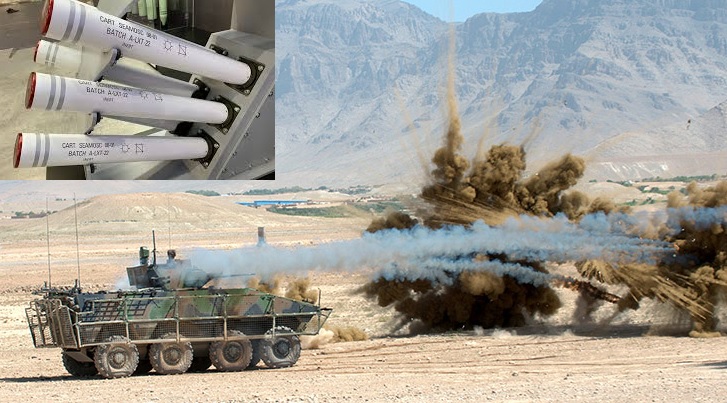
World
BRUSSELS, Feb. 25, 2026 : The Belgian Ministry of Defense has awarded a €161 million framework agreement to French defense manufacturer Etienne Lacroix Group for the supply of GALIX smoke grenades to the Belgian Armed Forces. The contract award was published on the European Union’s Tenders Electronic Daily (TED) platform under reference 128352-2026, listing Etienne Lacroix Tous Artifices as the successful bidder. Under the terms of the framework agreement, Belgium can place orders for munitions over a defined period without reopening competition for each individual procurement. A first tranche valued at €23 million has already been called up, initiating production and delivery of the smoke grenades. The total estimated value of €161 million represents the maximum ceiling for potential supplies throughout the duration of the agreement. Support for CaMo Modernization Program The procurement is directly linked to Belgium’s Capacité Motorisée (CaMo) program, a strategic land forces modernization initiative conducted in partnership with France. Through the CaMo program, the Belgian Land Component is acquiring 382 VBMR Griffon multi-role armored vehicles and 60 EBRC Jaguar reconnaissance and combat vehicles to replace legacy platforms and standardize capabilities with the French Army. The GALIX system serves as the primary passive self-protection suite for these incoming vehicles. It was co-developed by Etienne Lacroix Group and KNDS France, formerly known as Nexter. The system is integrated into the Griffon and Jaguar platforms as part of their baseline survivability architecture. Local assembly of the Griffon vehicles has begun at a production facility in Staden, Belgium. Operational integration of the new mechanized fleet is scheduled to continue through 2031. The activation of the initial €23 million tranche ensures that the first vehicles entering service will be equipped with their designated defensive countermeasures. GALIX System Characteristics and Function GALIX is a vehicle-mounted, multi-purpose passive self-defense system designed for armored land platforms, including main battle tanks, infantry fighting vehicles, and armored personnel carriers. The system consists of mortar-like launchers integrated into a vehicle’s chassis or turret, capable of firing 80mm grenades in rapid salvos. When linked to onboard threat detection systems, GALIX can respond automatically to hostile actions. Upon detection of a laser rangefinder, laser designator, anti-tank guided missile, or other targeting system, the fire control unit calculates the direction of the threat and deploys smoke grenades accordingly. Typically using GALIX 13 or comparable multi-spectral combat smoke munitions, the system generates a dense smoke screen approximately 20 meters from the vehicle within one second of firing. The obscurant is designed to disrupt visual observation, laser targeting systems, night vision devices, and thermal imaging sensors across multiple infrared bands. By degrading an adversary’s targeting capability, the system provides time and space for evasive maneuver or repositioning. Long-Term Supply Framework The framework agreement establishes a long-term supply mechanism aligned with Belgium’s phased vehicle deliveries under the CaMo program. By securing the contract ceiling of €161 million, the Ministry of Defense ensures availability of sufficient munitions stocks to support training, operational deployment, and lifecycle requirements for the Griffon and Jaguar fleets. Etienne Lacroix Group, headquartered in France, specializes in pyrotechnic countermeasures, decoys, and self-protection systems for land, air, and naval platforms. The company designs and manufactures the GALIX family of launchers and associated munitions and operates production facilities in France. It has supplied similar systems to several NATO member states and maintains international partnerships for defense exports. The award forms part of Belgium’s broader land forces modernization efforts, which include enhancements to both active and passive protection systems as new armored platforms enter service.
Read More → Posted on 2026-02-25 15:16:25
World
ROSYTH, Scotland — Feb. 25, 2026 : Babcock International Group has achieved two significant milestones in the Royal Navy’s Type 31 Inspiration-class frigate programme at its Rosyth shipyard in Scotland, marking continued progress under the £1.25 billion contract awarded in 2019. In a joint ceremony held on February 24, the company completed the structural rollout of HMS Active, the second ship in the five-vessel class, while also conducting the ceremonial steel cutting for HMS Bulldog, the fourth frigate in the series. The milestones reflect steady advancement in construction sequencing and manufacturing efficiency at the purpose-built Venturer Building assembly hall. Structural Rollout and Construction Progress HMS Active emerged from the covered assembly facility following completion of its primary structural build phase. The rollout signifies that the ship’s main structural blocks have been integrated and assembled, clearing the way for the vessel to enter the water for the first time before moving into the next stages of outfitting, systems integration, and sea trials. On the same day, the steel-cutting ceremony for HMS Bulldog formally marked the beginning of fabrication work on the fourth of the five planned Inspiration-class ships. Steel cutting represents the first physical stage of construction, initiating the manufacturing process for hull blocks and structural components. The five ships in the class are HMS Venturer, HMS Active, HMS Formidable, HMS Bulldog and HMS Campbeltown. HMS Venturer, the lead ship, rolled out in mid-2025. The keel for HMS Formidable, the third vessel, was laid at the end of 2025. Modular Manufacturing and Facility Investment The Type 31 programme is being delivered using a modular construction model designed to improve production efficiency and schedule predictability. According to Babcock, lessons learned from the build sequence of the first two vessels have been applied to subsequent ships to streamline integration and reduce bottlenecks. A greater proportion of compartment assembly and systems outfitting is now being completed within manufacturing bays before the main structural blocks are consolidated in the central build hall. This approach reduces integration time during final assembly and supports adherence to delivery timelines. Babcock has invested approximately £200 million in upgrading and modernising the Rosyth facility, including the construction of the Venturer Building, which enables the simultaneous assembly of two frigates under cover. The infrastructure supports digital design integration, advanced manufacturing techniques, and improved logistics coordination across the supply chain. Employment and Industrial Impact The programme sustains approximately 2,500 highly skilled jobs, with the majority based in Fife, Scotland. Employment extends across a broad network of United Kingdom and international suppliers, including numerous small and medium-sized enterprises (SMEs). The project is considered a core component of the United Kingdom’s sovereign naval shipbuilding strategy, strengthening domestic capability in the design, integration and construction of complex surface combatants. In addition to industrial employment, the programme supports apprenticeship schemes and engagement with local colleges to develop technical skills. The Scottish Government has provided more than £90 million in enterprise agency funding since 2006 to aerospace, defence, marine and space companies to reinforce Scotland’s advanced manufacturing base. Operational Role of the Type 31 Frigates The Inspiration-class frigates will form a key element of the Royal Navy surface fleet. Designed as versatile general-purpose warships, they are intended to undertake a range of missions including maritime interception operations, intelligence gathering, defence engagement, presence missions, and humanitarian assistance. Vice Admiral Steve Moorhouse, Fleet Commander, stated that the class has been designed with modularity and adaptability to enable capability upgrades throughout its operational life. The ships’ combat systems architecture is structured to allow incremental enhancements in response to evolving operational requirements. All five vessels are scheduled to enter service by the early 2030s. Arrowhead 140 Design and Export Programme The Type 31 frigates are based on Babcock’s Arrowhead 140 design, a platform that has secured international export contracts. The design has been selected by Poland for its Miecznik frigate programme and has been adopted in Indonesia, where multiple Arrowhead 140-based frigates are currently under construction under licensed design and build arrangements. The export success of the Arrowhead 140 platform has reinforced the industrial base supporting the Type 31 programme, providing continuity of production expertise and supply chain engagement beyond the United Kingdom order. With the structural completion of HMS Active and the commencement of fabrication for HMS Bulldog, the Rosyth facility continues phased construction across the five-ship programme as it progresses toward full fleet delivery in the next decade.
Read More → Posted on 2026-02-25 14:57:19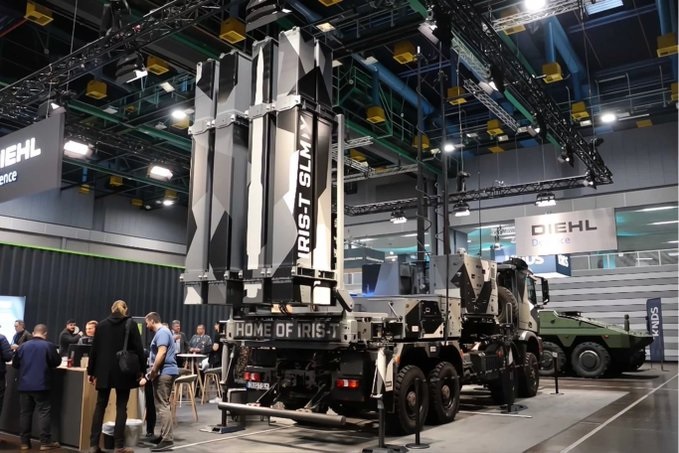
World
NUREMBERG, Germany, Feb. 25, 2026 : Diehl Defence introduced the IRIS-T SLM/X air defense system on February 24 during Enforce Tac 2026, presenting a new launcher configuration capable of firing both IRIS-T SLM and IRIS-T SLX interceptors from a single platform. The exhibition took place in Nuremberg from February 23 to 25, 2026. The IRIS-T SLM/X configuration is built around a common eight-canister launcher that allows mixed missile loads while maintaining eight ready-to-fire rounds per vehicle. The system is designed to extend engagement envelopes within the existing IRIS-T Surface Launched (SL) architecture without altering radar or command structures already in service. Common Launcher with Mixed Interceptor Capability The central development in the SLM/X configuration is the integration of both the medium-range SLM and extended-range SLX interceptors into a unified launcher system. Operators can configure missile loads according to mission requirements. Possible configurations include four SLM and four SLX interceptors, seven of one variant with one of the other, or a full complement of eight identical missiles. The launcher supports vertical firing from sealed transport and launch canisters. It is unmanned and incorporates its own fire control computer, generator, and communication antennas. Automated leveling enables firing readiness within 10 minutes after emplacement. Reload time is approximately 15 minutes. Launchers can operate at distances of up to 20 kilometers from the tactical operations center. Mounted on standardized 20-foot ISO container frames, the launcher can be transported by road, rail, sea, or air. The system is compatible with C-130 and A400M transport aircraft. Engagement Envelope and Interceptor Specifications The IRIS-T SLM variant provides engagement ranges of up to 60 kilometers and altitudes of up to 20 kilometers. The missile entered service in 2022 and is derived from the IRIS-T air-to-air missile family. It has a combat weight of 110 kilograms and is powered by a solid-fuel rocket motor with thrust vector control, produced by Nammo. The motor features an enlarged 152 mm diameter compared to the air-launched version. The missile reaches speeds of up to 1,020 meters per second (approximately Mach 3). Guidance combines inertial navigation, GPS support, and a two-way data link for midcourse updates. In the terminal phase, the missile uses an imaging infrared seeker exposed after the jettisoning of a modified ogive nose cone. The warhead weighs 11.4 kilograms and is equipped with impact and proximity fuzes. The SLX interceptor extends the operational reach of the IRIS-T SL architecture to a maximum range of 100 kilometers and altitudes up to 30 kilometers, with an interception range of approximately 80 kilometers. The missile incorporates a dual seeker and a dual-pulse motor to achieve extended range while remaining compatible with existing IRIS-T SLM launchers and fire units. Integration of the SLX does not require modifications to command posts or radar systems. The combined SLM/X configuration enables coverage against aircraft, helicopters, cruise missiles, drones, and standoff weapons. Both interceptor variants provide 360-degree engagement capability and rely on networked target data. Fire Unit Structure and System Integration A typical German fire unit consists of one Hensoldt TRML-4D radar, one IBMS-FC command post, and three launchers with eight missiles each, providing a total of 24 ready interceptors. The SLM/X configuration maintains full compatibility with this structure, preserving commonality in launcher hardware, command systems, and radar inputs. The system’s unified architecture is intended to support logistical efficiency and streamlined training by avoiding the need for separate launcher platforms for different engagement ranges. Distribution of defense assets can be adjusted without structural changes to tactical operations centers. IRIS-T Family and Development Status The IRIS-T family includes the SLS (short-range), SLM (medium-range), SLX (extended-range), and HYDEF variants. The SLM entered operational service in 2022. The SLX remains in development for integration into existing SLM launchers and fire units without changes to established command and radar configurations. In addition to the IRIS-T SLM/X, Diehl Defence presented other systems at Enforce Tac 2026, including the Unmanned Ground Vehicle Ziesel equipped with the PLATON autonomy kit and the GARMR counter-UAV system. Diehl Defence, headquartered in Germany, employs 4,588 personnel and reported sales of €1.827 billion in 2024. The company operates 18 locations worldwide and has a history spanning 120 years. Its product portfolio includes air defense systems, guided missiles, ammunition, training systems, and protection equipment.
Read More → Posted on 2026-02-25 14:33:26
World
LONDON / WASHINGTON, Feb. 25, 2026 : The United Kingdom and the United States have tentatively resumed work on their multibillion-pound Tech Prosperity Deal, restarting discussions with a narrowed focus on civil nuclear energy cooperation after the broader agreement was paused in December 2025 amid wider trade disagreements. The renewed engagement is limited to nuclear and fusion-related components of the pact, while other sectors originally covered under the agreement — including artificial intelligence and quantum computing — remain on hold. Civil Nuclear and Fusion Talks Restart Senior officials from both governments have begun fresh discussions aimed at advancing joint nuclear infrastructure initiatives and coordinating regulatory processes for advanced reactor technologies. As part of the restart, London and Washington are preparing to host a joint summit dedicated to commercial fusion technologies, reflecting continued bilateral interest in long-term clean energy development. The operational focus centers on streamlining regulatory pathways, accelerating licensing timelines for advanced nuclear systems, strengthening supply chains for advanced nuclear fuels, and reducing reliance on Russian nuclear fuel supplies by the end of 2028. The civil nuclear cooperation framework forms part of the Tech Prosperity Deal memorandum of understanding signed on September 18, 2025, during U.S. President Donald Trump’s state visit to the United Kingdom. The agreement originally covered collaboration across strategic science and technology sectors, including artificial intelligence, civil nuclear energy, fusion, quantum technologies, and telecommunications. Hartlepool Advanced Modular Reactor Deployment A key project under the resumed dialogue is the partnership between UK utility Centrica and U.S.-based nuclear engineering company X-energy to deploy advanced modular reactors at the existing Hartlepool nuclear site in North East England. Centrica and X-energy signed a joint development agreement on September 15, 2025, to deploy X-energy’s Xe-100 advanced modular reactors in the United Kingdom. The Hartlepool site, jointly owned by EDF and Centrica, was identified as the preferred first location. The existing Hartlepool nuclear power station is scheduled to cease operations in 2028. The proposed deployment involves up to 12 Xe-100 units, delivering a combined capacity of approximately 960 megawatts. Each Xe-100 reactor produces 80 megawatts of electricity or 200 megawatts of thermal heat. At full deployment, the Hartlepool project is expected to generate enough electricity to power approximately 1.5 million homes. The initiative forms part of a broader plan to establish a UK fleet of up to 6 gigawatts of advanced modular reactor capacity. The Hartlepool development is projected to create up to 2,500 skilled jobs and generate more than £12 billion in lifetime economic value. The site has been designated for new nuclear development under the UK government’s National Policy Statement. In addition to electricity generation, the reactors are expected to provide high-temperature heat for heavy industries in Teesside. Initial full-scale project activities are targeted to begin in 2026, with first electricity generation anticipated in the mid-2030s, subject to regulatory approvals. Rolls-Royce SMR U.S. Regulatory Entry Another central element of the resumed cooperation is coordinated support for Rolls-Royce as it progresses through the United States regulatory and licensing process for its small modular reactor (SMR) technology. Rolls-Royce announced in September 2025 that it had formally entered the U.S. regulatory process for its SMR design. Earlier in 2025, Rolls-Royce SMR Ltd was selected as the preferred bidder to develop the United Kingdom’s first commercial small modular reactors. Under the Tech Prosperity Deal’s nuclear provisions, both governments committed to supporting streamlined regulatory alignment and cooperation to accelerate deployment of advanced nuclear technologies in each other’s markets. AI and Quantum Pillars Remain Paused While the civil nuclear components have resumed, other major pillars of the Tech Prosperity Deal remain inactive. When signed in September 2025, the agreement included frameworks for shared artificial intelligence computing infrastructure, quantum benchmarking task forces, and telecommunications development. Discussions in these areas have not advanced during the current restart phase. Officials have described the resumed cooperation as phased and sector-specific, indicating that broader implementation remains contingent on progress in separate trade negotiations. Background to the Suspension The Tech Prosperity Deal was suspended in December 2025 following tensions linked to wider macroeconomic trade negotiations between the two countries. The pause reportedly followed frustration within the U.S. administration regarding the United Kingdom’s resistance to addressing specific non-tariff barriers during parallel trade discussions. The current restart signals a sector-by-sector approach, allowing both governments to proceed with areas of strategic alignment while continuing negotiations on broader trade matters. No official joint statement has yet been issued by the UK government or the U.S. administration regarding the resumed discussions. The Financial Times first reported the restart on February 25, 2026, citing multiple individuals briefed on the talks.
Read More → Posted on 2026-02-25 14:24:38
World
NUREMBERG, Germany — Feb. 25, 2026 : German manufacturer Rotinor GmbH is presenting its Black Shadow 730 electric diver propulsion device (DPV) at Enforce Tac 2026, outlining the system as a low-signature underwater mobility platform for maritime special operations forces. The company is positioning the platform as an intermediate capability between individual fin swimming and larger swimmer delivery vehicles (SDVs), with an emphasis on extended range, payload flexibility, and modular deployment options. Technical Configuration and Propulsion System The Black Shadow 730 is built around Rotinor’s patented E-jet water-jet propulsion architecture. Unlike conventional diver scooters that rely on exposed propellers, the E-jet system uses an internally enclosed rotating impeller to accelerate water through a jet channel. The configuration eliminates exposed moving parts and reduces both acoustic and visual signatures compared with combustion-powered or open-propeller systems. The unit operates electrically and is emission-free. Power is supplied by high-energy lithium iron phosphate (LiFePO4) battery modules driving an 8 horsepower (5.9 kW) electric motor. The propulsion system offers ten selectable power levels, allowing operators to regulate output from low-observable transit speeds to maximum sprint performance. Performance specifications for the Black Shadow 730 variant include: Motor Output: Up to 5.9 kW (8 hp) Thrust: Up to 735 Newtons Top Speed: Up to 12.5 km/h Maximum Range: Approximately 20 km Endurance: More than three hours of average operating time Maximum Diving Depth: 60 meters Length: Approximately 1.76 meters Weight: Approximately 110 kilograms The platform is designed to maintain thrust efficiency while carrying additional payloads or supporting two-person operations via a T-bar towing belt configuration. Control Architecture and Navigation Systems Rotinor has incorporated ergonomic and digital control features intended to reduce operator workload during extended underwater missions. The Black Shadow is controlled via twin grips fitted with piezoelectric sensors and a trigger-based throttle system. An automatic emergency stop function activates when the throttle trigger is released. Steering is achieved by shifting body weight while secured in a dedicated harness system. The harness is engineered to absorb thrust loads and minimize arm fatigue during prolonged high-power operation. A central cockpit integrates an illuminated TFT display providing real-time operational data, including: Power setting level Remaining battery capacity and endurance Current depth Water temperature Elapsed mission time Navigation aids include a digital bearing scale and target marker system. For operations in low-visibility or confined environments, the Black Shadow integrates active sonar imagery to enhance obstacle detection and situational awareness. Optional multi-level LED headlight systems are available for turbid water or night operations. Deployment Methods and Modularity The Black Shadow 730 has been developed with multiple insertion and launch concepts to limit exposure of surface vessels in contested environments. Documented and proposed deployment options include: Submarine Launch: Compatibility with submarine torpedo tube deployment concepts. Aerial Insertion: Para-drop capability using a dedicated parachute harness system for fixed-wing aircraft or helicopter deployment. Surface Launch: Conventional deployment from rigid-hull inflatable boats or support vessels. The system’s modular structure allows adaptation for different mission payloads, including sensor packages, explosive charges, or reconnaissance equipment. Mission Profiles Rotinor outlines three primary operational categories for the Black Shadow platform: Covert Reconnaissance and Hydrographic SurveyThe DPV extends approach distances while preserving diver stamina for objective-area tasks. It supports sensor emplacement and underwater mapping missions. Offensive Combat DivingThe system facilitates ship sabotage, port infrastructure interdiction, clandestine sensor placement, and emplacement of explosive charges. Two-person transport capability increases payload carriage capacity compared with single-operator scooters. Defensive and Constabulary OperationsThe Black Shadow can support port security, hull inspection, underwater explosive ordnance disposal (EOD), and maritime law enforcement tasks. Sonar-assisted navigation reduces collision risk and shortens search timelines. Market Position and Adoption The Black Shadow 730 is marketed primarily to NATO-aligned armed forces and specialized maritime law enforcement units. Poland’s Formoza naval special operations unit, part of the Polish Navy, has procured multiple systems under a multi-million zloty contract. Open-source reporting has indicated testing and evaluation interest from U.S. special operations entities. Rotinor continues to present the platform at European defense and security exhibitions as part of its international marketing strategy. Within the global DPV market, the Black Shadow is positioned against systems such as the U.S.-manufactured Stidd DPD and propulsion platforms produced by Italy-based SUEX. Larger enclosed swimmer delivery vehicles, including the Torpedo Seal, occupy a higher tier in terms of cost, complexity, and logistical requirements. Rotinor differentiates the Black Shadow through its jet-drive propulsion architecture, integrated digital navigation and sonar suite, relatively high sprint speed, and compatibility with aerial and submarine insertion concepts. Company Background Rotinor GmbH is a German manufacturer specializing in high-performance diving propulsion systems. In addition to the Black Shadow line, the company produces other submersible mobility platforms, including the Divejet RD2 compact submersible. At Enforce Tac 2026, Rotinor is presenting the Black Shadow 730 as a scalable underwater mobility solution intended for integration into naval special forces, coast guard special units, and counterterrorism formations responsible for maritime and critical infrastructure security.
Read More → Posted on 2026-02-25 14:17:13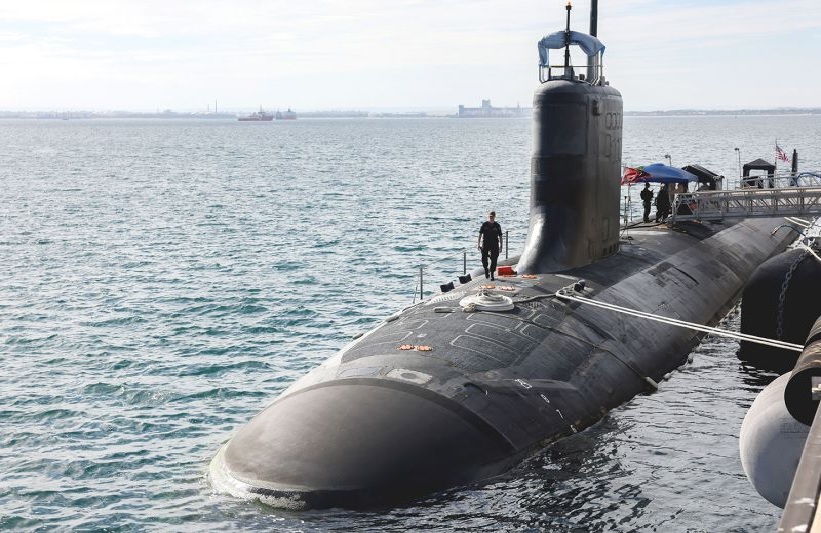
World
CAMDEN, N.J., Feb. 25, 2026 : L3Harris Technologies has received its largest-ever full-rate production contract for submarine communications systems from General Dynamics Electric Boat, securing delivery of 26 integrated communications shipsets for the U.S. Navy’s Virginia-class attack submarines and Columbia-class ballistic missile submarines. The award, announced on February 18, 2026, sustains a standardized production pipeline through 2033. Financial terms of the agreement were not disclosed. Contract Scope and Strategic Context The follow-on contract supports modernization of undersea command-and-control systems as anti-submarine warfare networks and maritime surveillance capabilities become more advanced globally. In addition to production for U.S. Navy platforms, the agreement includes options that could extend support to future Columbia-class submarines and allied navies. The inclusion of potential allied support is significant amid expanded submarine cooperation frameworks such as the AUKUS partnership, under which Australia is expected to acquire Virginia-class submarines. L3Harris will supply fully integrated communications shipsets designed to maintain low observability while ensuring reliable connectivity for intelligence updates, coordinated strike operations, and time-sensitive tasking. The systems are intended to provide a standardized communications baseline across both submarine classes. “The ability for submarines to operate undetected is vital to the U.S. Navy’s strategic advantage,” said Nino DiCosmo, President of Maritime, Space and Mission Systems at L3Harris. “With decades of experience in submarine technology and in partnership with General Dynamics Electric Boat, L3Harris will deliver highly reliable, undetectable communications systems to enhance operational effectiveness.” Communications Architecture and Capabilities The production configuration centers on L3Harris’ MarCom IP-Integrated Communications Core, built on an open-architecture framework. The system integrates legacy shipboard communications technologies, including POTS, ISDN and VoIP, with modern Internet Protocol networks. It performs switching, conferencing, call processing and external systems interfacing within a non-blocking architecture. The MarCom system features modular and ruggedized packaging designed to withstand internal damage, ensuring communications continuity during combat conditions. Its radio-agnostic design allows compatibility with multiple transmission systems without requiring structural changes to the core architecture. Complementing the hardware core is the Symphony automation layer. Symphony enables unmanned radio room operations by allowing operators to activate pre-planned communications configurations through a browser-style interface. The system automates switch and router connections, baseband routing, cryptographic management and radio-frequency distribution. Symphony also incorporates automated failure detection and emission control functions, allowing submarines to transition between communication profiles while minimizing radio-frequency exposure and operator workload. Crew-level interaction is conducted through the K2 tactical terminal. The K2 supports simultaneous access to multiple secure circuits and integrates both tactical voice networks, such as intercoms and alarms, and IP-based data systems. The architecture uses SRTP protocols and AES-256 encryption and maintains separation between secure (“red”) and unsecure (“black”) networks through a dual-homed, failover-capable configuration. Integration Across Two Submarine Classes The 26 shipsets will be integrated into two core components of U.S. undersea operations. The Virginia-class (SSN) consists of nuclear-powered fast-attack submarines designed for anti-submarine warfare, land-attack missions, intelligence collection and special operations in both littoral and open-ocean environments. The class incorporates photonics masts instead of traditional optical periscopes and features a reconfigurable torpedo room with a lockout trunk for special operations forces. Block III variants introduced the Large Aperture Bow array to enhance passive acoustic detection. Block V boats include the Virginia Payload Module (VPM), which adds four large-diameter payload tubes. Each tube can carry seven Tomahawk cruise missiles, increasing strike capacity by 28 additional missiles per submarine. The Columbia-class (SSBN), currently under development by General Dynamics Electric Boat in partnership with Huntington Ingalls Industries’ Newport News Shipbuilding, will replace the aging Ohio-class ballistic missile submarines. The Columbia class is designed to serve as the Navy’s sea-based nuclear deterrent into the 2080s. The submarines will incorporate electric-drive propulsion and carry 16 Trident II D5 (Life Extension) ballistic missiles. The U.S. Navy has established a requirement for the lead Columbia-class submarine to be patrol-ready no later than October 2030. For the class’s strategic mission, secure and reliable reception of authenticated directives without compromising stealth is a core operational requirement. Production and Industrial Impact The full-rate production award formalizes a standardized communications baseline across two active submarine production lines and ensures continuity of capability through the next decade. By aligning Virginia-class and Columbia-class communications systems under a common architecture, the Navy and its prime contractors are establishing interoperability, automation and emission-control as baseline requirements rather than incremental upgrades. The contract expands L3Harris’ long-standing role in U.S. Navy submarine programs, which have included communications and imaging systems for the Ohio-class and Los Angeles-class submarines. Headquartered in Melbourne, Florida, L3Harris Technologies provides integrated communications and mission systems across multiple defense platforms. With production locked through 2033, the agreement supports sustained modernization of U.S. undersea command-and-control infrastructure as the Navy fields its next-generation strategic deterrent while continuing Virginia-class construction.
Read More → Posted on 2026-02-25 14:02:06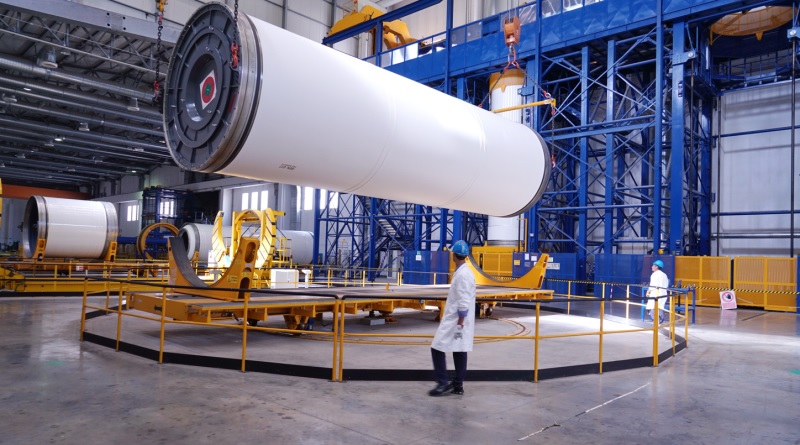
World
RICHMOND, Va., Feb. 25, 2026 : Avio USA Inc., the American subsidiary of Avio S.p.A., will establish a new solid rocket motor manufacturing facility in Hurt, located in Pittsylvania County, Virginia, expanding the company’s footprint in the United States and strengthening domestic propulsion manufacturing capacity. The announcement follows Avio’s earlier confirmation on December 11, 2025, that it had selected Virginia as the destination state for the project. On February 23, 2026, the company formally identified the Southern Virginia Multimodal Park in Hurt as the site of the new facility. Facility Scope and Production Plans The project involves the development of an approximately 860,000-square-foot manufacturing complex at the Southern Virginia Multimodal Park. The site will repurpose property formerly occupied by a Burlington Industries textile mill, which closed in 2007. The plant will focus exclusively on the production of solid rocket motors for defense applications, including tactical propulsion systems and missile platforms, as well as for the commercial space sector. Company officials said the investment is intended to address domestic supply chain constraints and position Avio USA as a vertically integrated merchant supplier within the U.S. defense industrial base. In late 2025, Avio USA signed supply agreements with major U.S. defense contractors, including Lockheed Martin and Raytheon, for the future delivery of solid rocket motors from the Virginia facility. The total capital investment is expected to exceed $500 million. The project is projected to create more than 1,000 jobs in Pittsylvania County. Incentive Structure and State Support To secure the project, Virginia state and local authorities assembled a performance-based incentive package. Subject to approval by the Virginia General Assembly, Avio USA will be eligible for a special appropriation of up to $97.7 million through the Major Employment and Investment (MEI) Project Commission. The incentive is tied directly to the company’s capital investment levels and the fulfillment of the proposed job creation commitments. In addition, local performance-based incentives exceeding $33.6 million have been approved by the Staunton River Regional Industrial Facility Authority and partner jurisdictions. Workforce training assistance will be provided at no cost through the Virginia Talent Accelerator Program. The initiative is designed to support recruitment and training as the facility ramps up operations. The Virginia Economic Development Partnership coordinated the project in collaboration with the Staunton River Regional Industrial Facility Authority, Pittsylvania County, the City of Danville, the Southern Virginia Regional Alliance, the Virginia Tobacco Region Revitalization Commission, and the Major Employment and Investment Project Approval Commission. Official Statements Virginia Governor Abigail Spanberger said the investment will support both regional economic development and national defense priorities. “Avio USA’s historic investment in Pittsylvania County represents a major win for Southern Virginia, for the Commonwealth, and for our national security,” Spanberger said. “By investing more than $500 million in Pittsylvania County, Avio USA will create over 1,000 high-quality jobs and revitalize domestic production of critical defense technologies. Virginia is proud to support this project and the talented workforce that powers the Commonwealth’s resilient defense industrial base.” Secretary of Commerce and Trade Carrie Chenery said the project reflects the region’s manufacturing infrastructure and workforce capacity. “Avio USA’s investment highlights why Virginia has remained a national leader for the advanced manufacturing and defense industries,” Chenery said. “Pittsylvania County’s prepared sites, skilled workforce, and strong regional partnerships made a project of this scale possible. Together, Avio USA, Pittsylvania County, and the Commonwealth of Virginia will continue to strengthen our nation’s defense industries.” VADM (Ret.) James Syring, Chief Executive Officer of Avio USA, said the company’s selection of Virginia followed extensive coordination with state and local partners. “We are grateful to the Commonwealth of Virginia and Pittsylvania County for their partnership in advancing this strategic investment, which expands Avio USA’s manufacturing footprint and directly supports the Department of War’s effort to significantly ramp missile production,” Syring said. He added that the company’s propulsion background positions it to expand domestic production capacity. “With more than a century of propulsion leadership, Avio’s proven capabilities, industrial expertise, and enduring legacy uniquely position us to strengthen and scale the U.S. defense industrial base. I am confident that we have made the right choice with our selection of the Commonwealth and Pittsylvania County for our factory location given the complete local, regional, and state support we’ve received, including a business-friendly climate, a best-in-class Virginia Talent Accelerator offering, and competitive custom investment incentives. We are proud to support our U.S. government and defense customers by accelerating solid rocket motor production at the speed and capacity required to meet today’s national security priorities.” Company Background Founded in 1912 and headquartered in Colleferro, near Rome, Italy, Avio S.p.A. specializes in the design, development, and production of space launch systems and propulsion components. The company operates in Italy, France, the United States, and French Guiana. Avio USA Inc. was established in Arlington, Virginia, in 2022 to address demand in the North American market. The new facility in Hurt represents the company’s most significant U.S. manufacturing expansion to date. The project remains performance-based, with state and local incentives contingent on Avio USA meeting specified capital investment and employment milestones as construction and operations progress.
Read More → Posted on 2026-02-25 13:47:03Search
Top Trending in 24 Hours
-
 U.S. Navy Awards Northrop Grumman $1.2 Billion Deal for Three New E-2D Advanced Hawkeyes
-
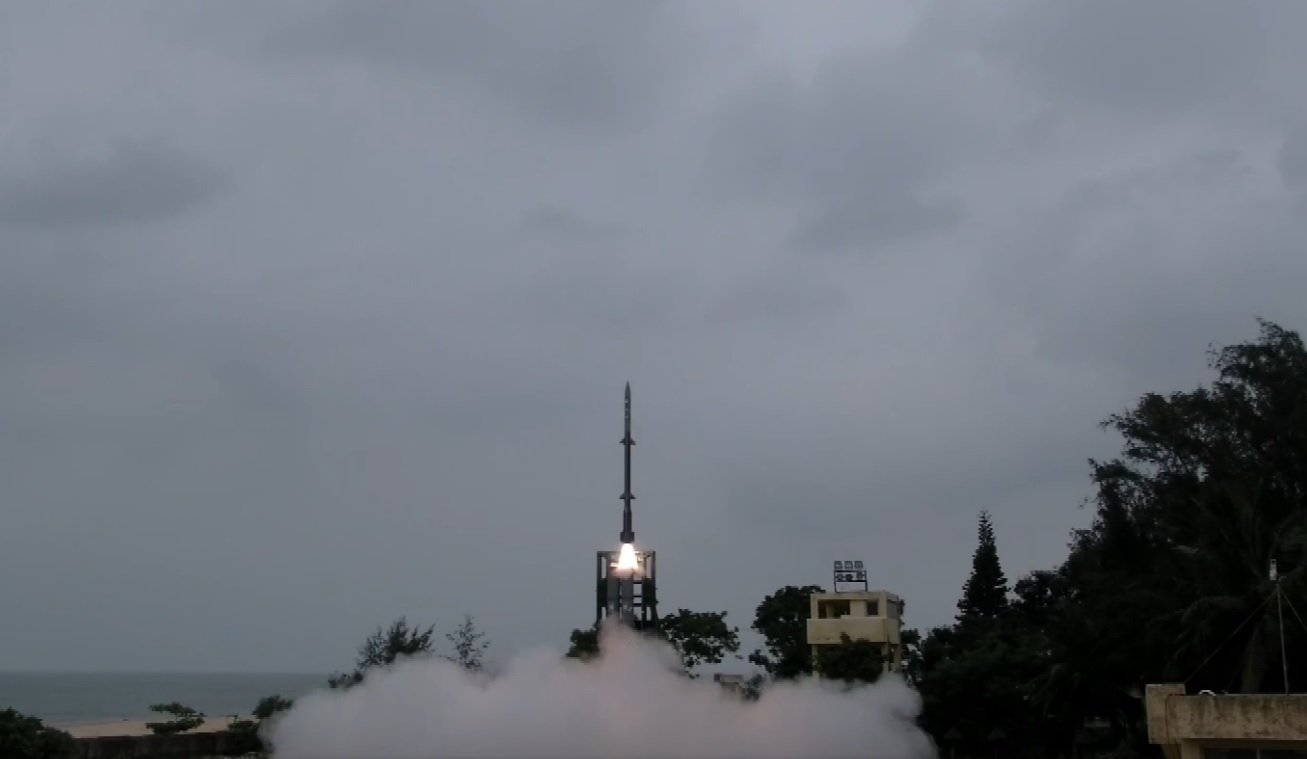 DRDO Successfully Conducts Maiden Flight Test of 150-km-Range Kusha M1 Air Defence Missile
-
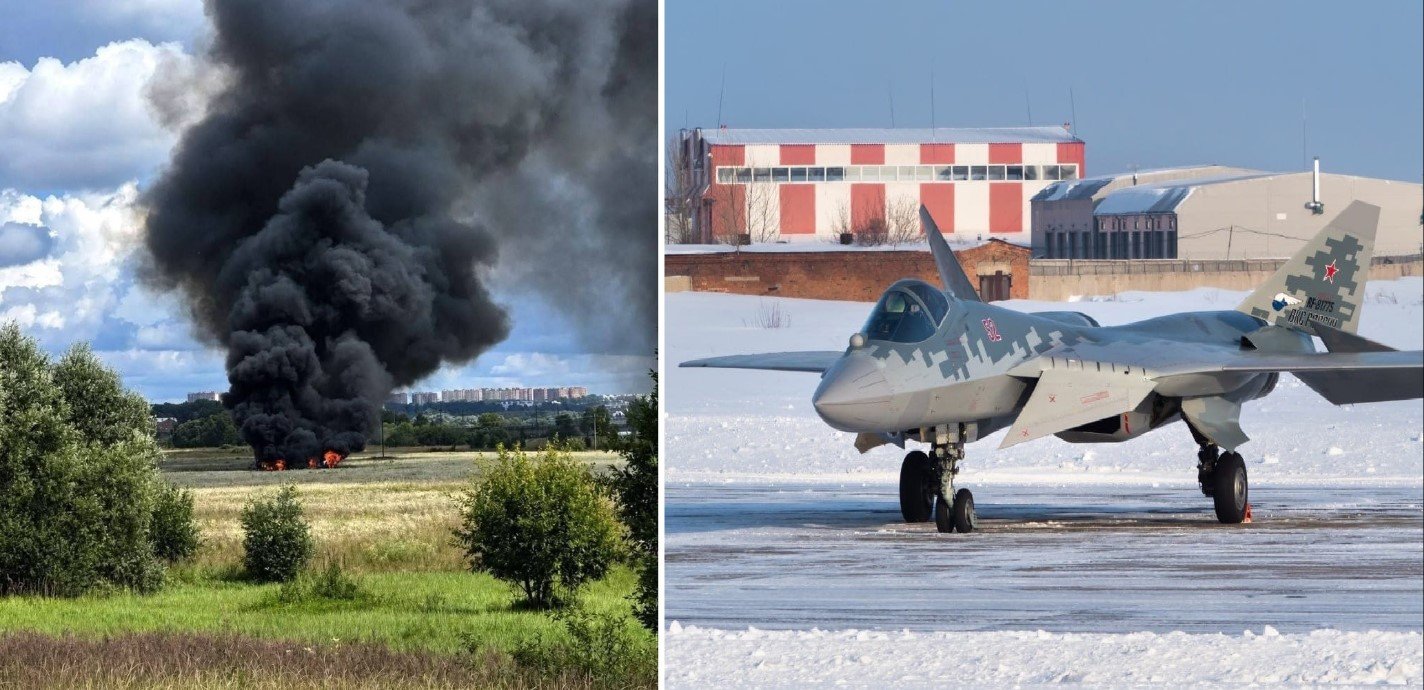 Russian Su-57 Stealth Fighter Crashes During Training Flight Near Moscow, Pilot Ejects Safely
-
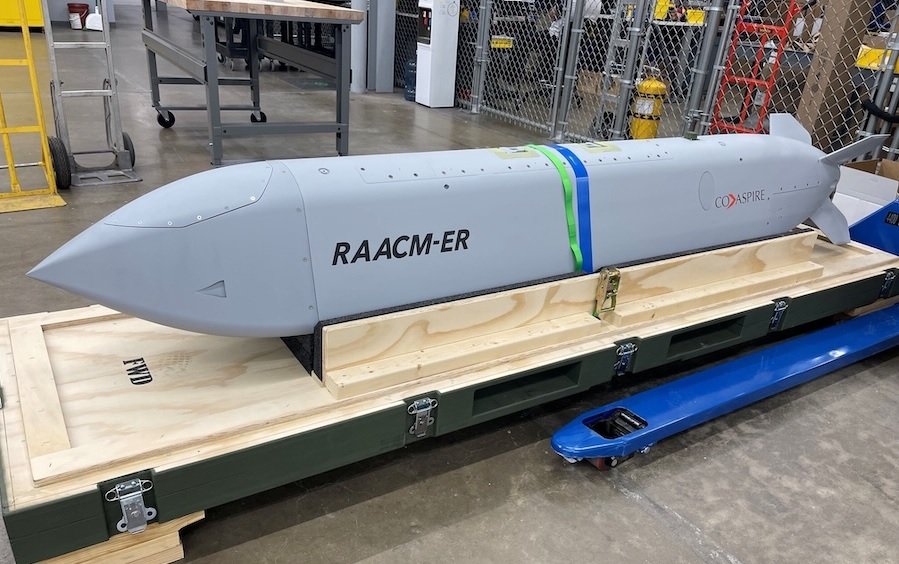 U.S. Navy Selects CoAspire to Build Ground-Launched CHAOS Cruise Missile Under $70 Million Program
-
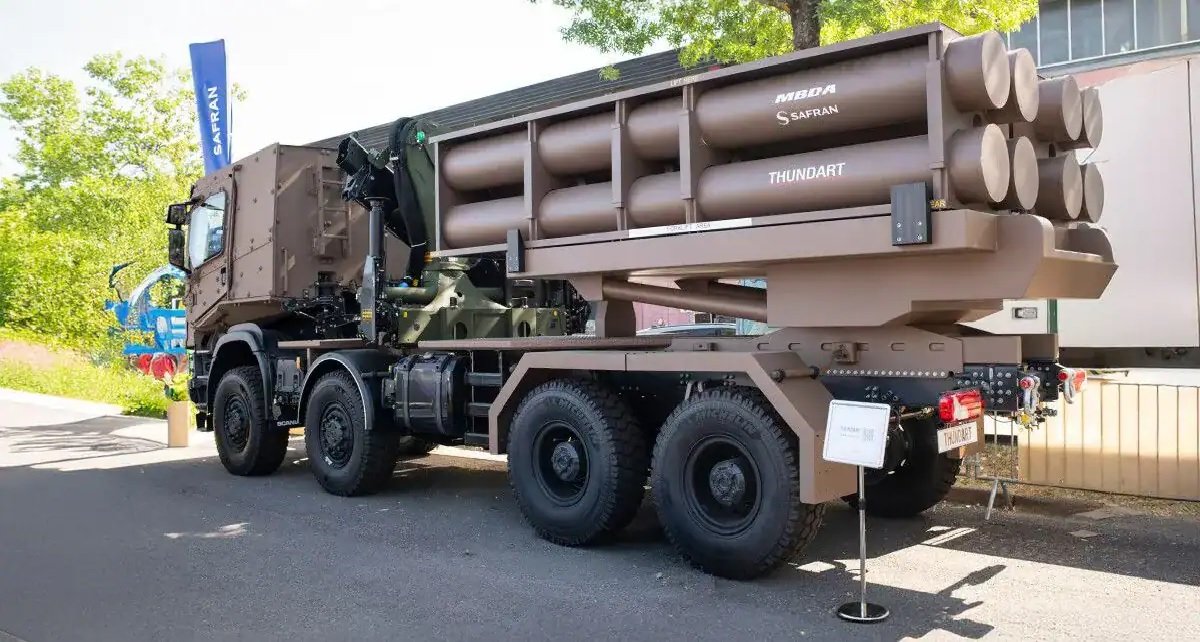 France's THUNDART Long-Range Rocket System May Undergo Prototype Combat Testing in Ukraine
-
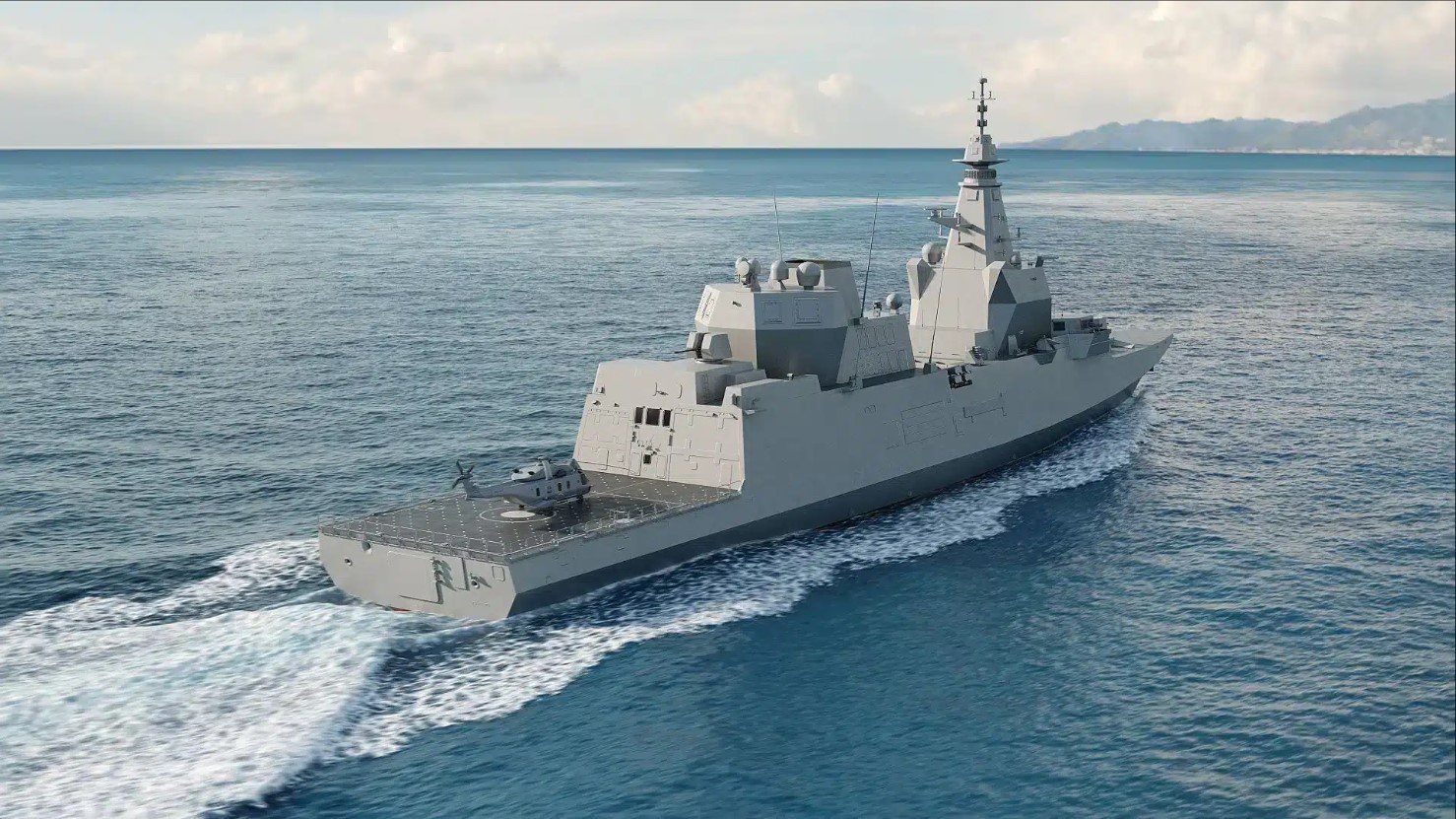 Portugal Orders Three FREMM EVO Frigates from Italy in €3.9 Billion Naval Deal
-
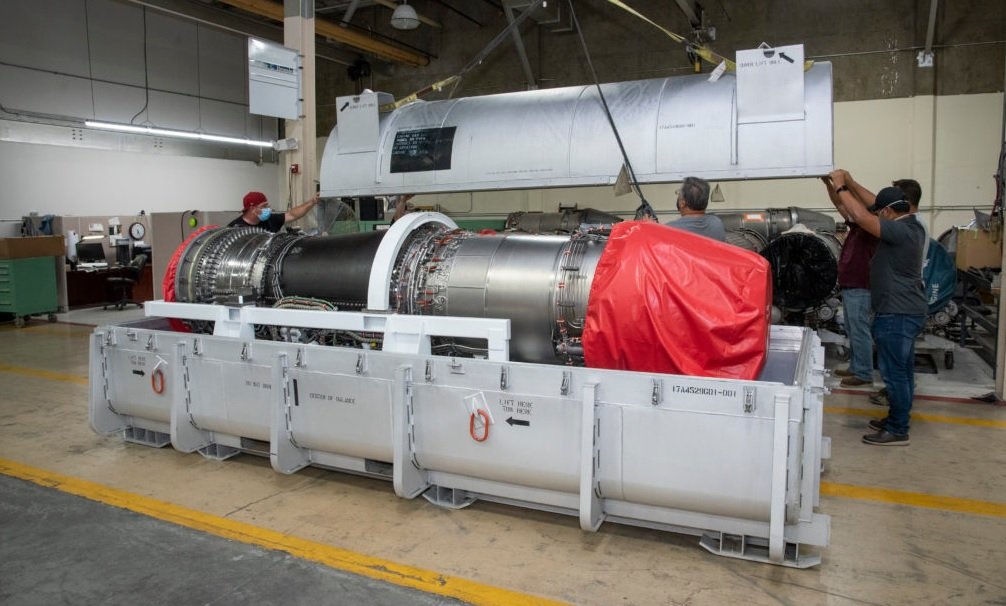 GE Aerospace and Magellan Aerospace Corporation Sign Strategic MoU for F414 Engine Sustainment in Canada
-
 Destinus Unveils Vorexon Interceptor Concept to Defend Critical Sites from Artillery Threats
Top Trending in 4 Days
-
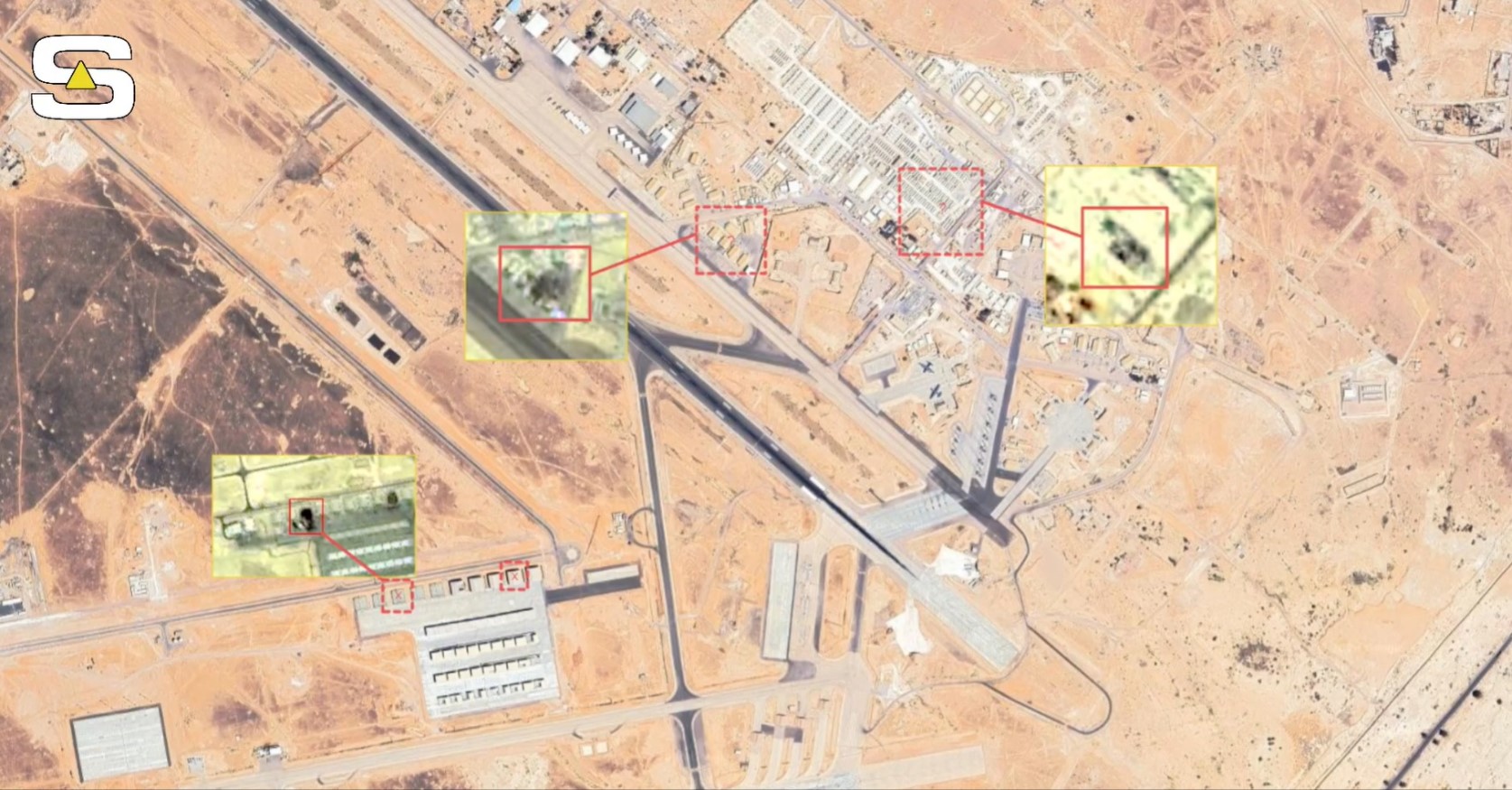 New Satellite Imagery Reveals Extensive Damage at Jordan's Muwaffaq al-Salti Air Base After Iranian Missile Strike
-
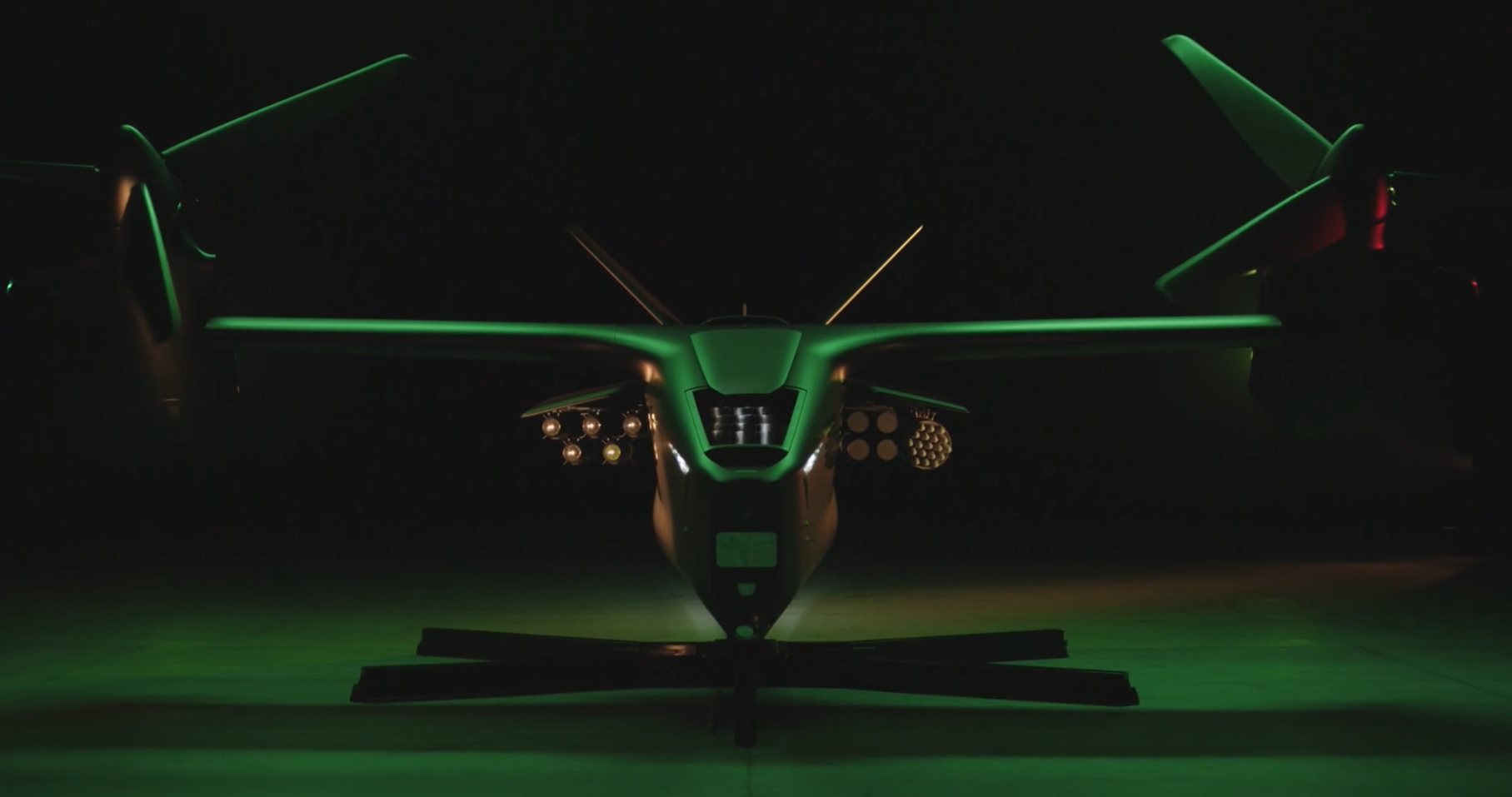 Anduril Unveils Thunder Autonomous Attack Rotorcraft Built with Archer Aviation to Support Apache Helicopters
-
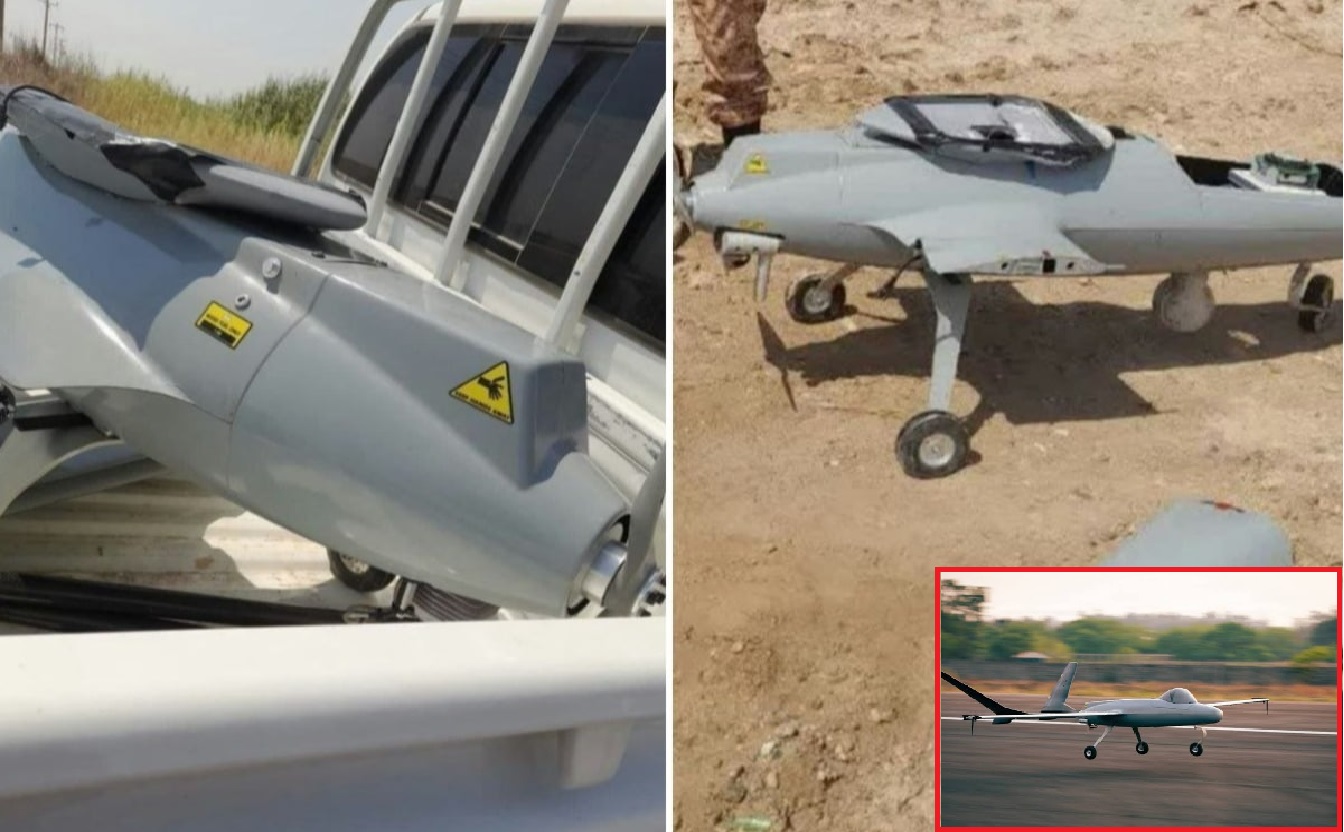 Iran Claims It Shot Down U.S.-Operated Polish-Built Tiguar-M Drone, Releases Images
-
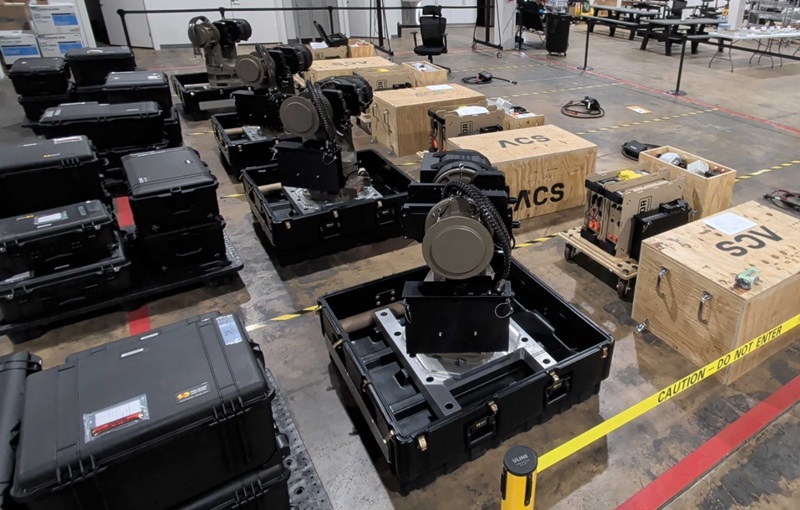 U.S. Marine Corps Selects AI-Powered Bullfrog Weapon Station for L-MADIS Counter-Drone Platform
-
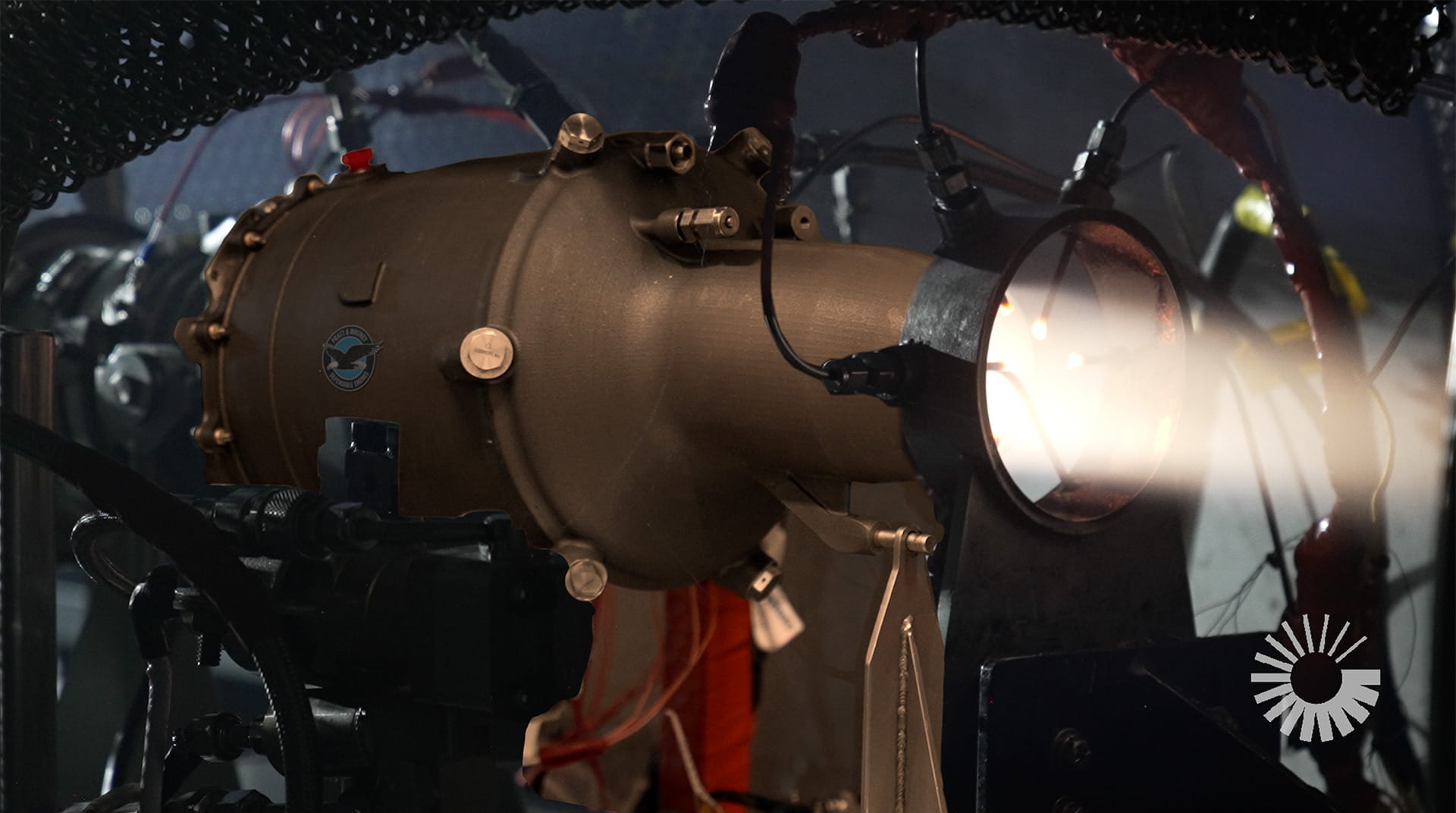 Pratt & Whitney Completes Testing of 3D-Printed TJ150 Engine for Military Applications
-
 Lockheed Martin Unveils MORFIUS X-Rotor High-Power Microwave System That Can Neutralize 50+ Drones in One Flight
-
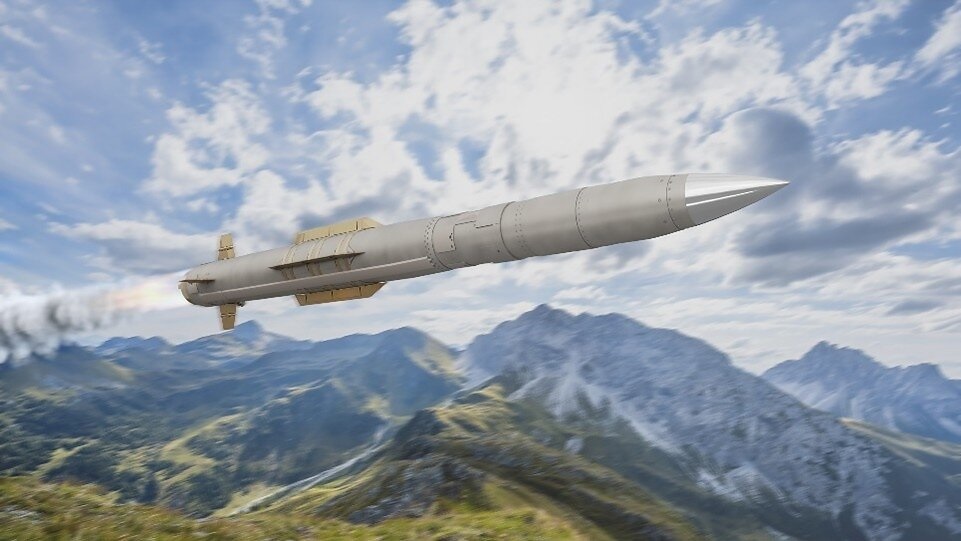 Lockheed Martin Unveils Lower-Cost PAC-3 ACE Interceptor for Patriot Air Defense System
-
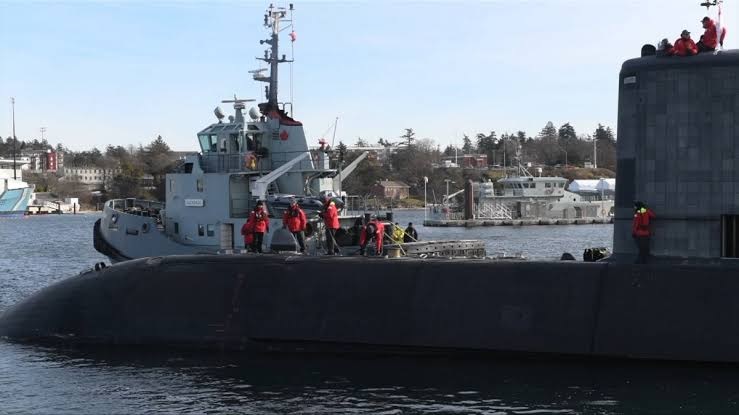 Canada Awards Babcock $1.1 Billion Six-Year Contract Extension to Support Victoria-Class Submarine Fleet
