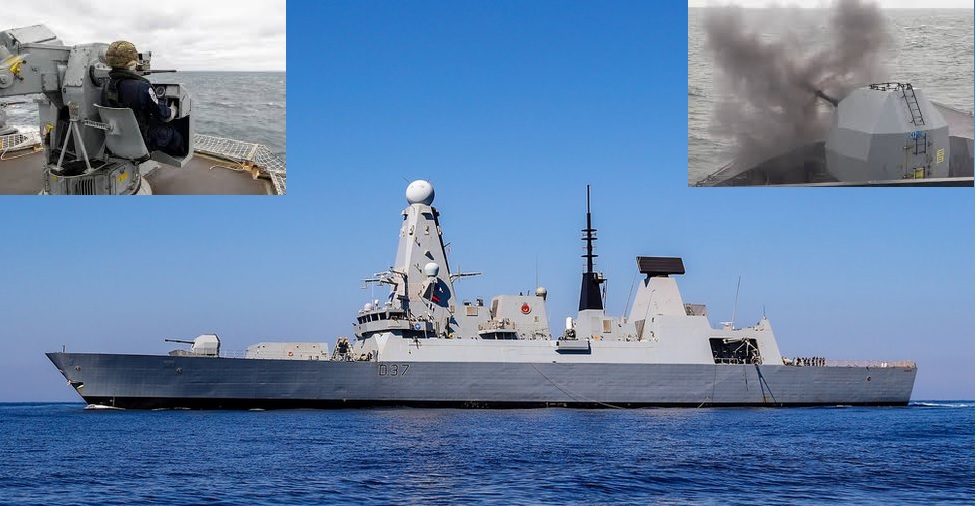
CARDIGAN BAY, WALES / LONDON — February 26, 2026 : The Royal Navy has confirmed that the Type 45 destroyer HMS Duncan (D37) has successfully completed Exercise Sharpshooter, a 72-hour live and synthetic training event conducted at the Ministry of Defence’s Aberporth Range in Cardigan Bay. The exercise was designed to evaluate the ship’s ability to defend critical national infrastructure against coordinated, multi-axis threats in a high-tempo operational environment.
The Portsmouth-based destroyer operated as the central unit of a notional task group tasked with protecting offshore energy installations, subsea data cables, and coastal logistics hubs. The scenario required the ship to counter simultaneous waves of hostile aerial and surface threats, including uncrewed systems, aircraft, and simulated cruise and ballistic missiles. The tempo and structure of the exercise were informed by recent operational experience in the Red Sea, including the 2023–2024 deployment of HMS Diamond.
Multi-Layered Air and Surface Defence Testing
HMS Duncan employed its integrated air and missile defence architecture throughout the three-day trial. The ship’s operations room fused data from multiple radar and sensor inputs to classify, prioritise, and engage targets under strict time constraints while maintaining continuous Defence Watches.
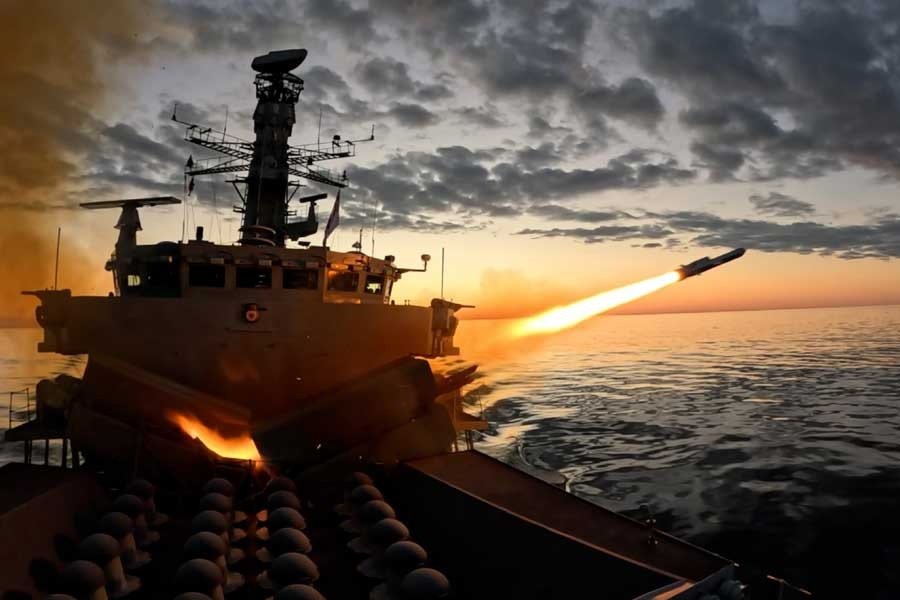
At extended ranges, the Sea Viper (PAAMS) system was exercised in synthetic mode against simulated cruise missile, ballistic missile, aircraft, and maritime vessel threats. Closer-range engagements involved live-fire serials using the Phalanx Close-In Weapon System, the 30 mm DS30M Mk I cannon, heavy machine guns, and the 4.5-inch naval gun. More than 200 rounds were expended from the 4.5-inch naval gun, including naval gunfire support serials.
An embarked Wildcat helicopter from 815 Naval Air Squadron operated from the flight deck to extend the defensive perimeter. The helicopter engaged fast-moving aerial targets using Martlet lightweight multirole missiles at ranges of up to six kilometres.
The live threat environment was delivered in partnership with industry providers QinetiQ and Inzpire, alongside Royal Navy Fleet Operational Standards and Training teams. The ship engaged five-metre Hammerhead uncrewed surface vessels capable of speeds up to 50 mph, as well as Banshee Whirlwind aerial targets flying at speeds exceeding 200 mph. By the conclusion of the exercise, HMS Duncan had tracked and neutralised five aerial targets and sunk two Hammerhead uncrewed surface vessels, meeting all assigned objectives.
Engineering Resilience and Damage Control
Exercise Sharpshooter incorporated concurrent onboard emergency scenarios to assess human endurance and system resilience alongside combat performance. While maintaining combat readiness around the clock, the crew responded to simulated internal fires, battle damage, and technical faults.
Weapon engineers conducted fault diagnosis and repairs during operational pauses. Minor issues identified with the 30 mm medium-calibre gun were rectified between firing serials. Personnel responsible for the 4.5-inch naval gun reported successful sustained firing throughout the exercise period.
The training model required sustained operations under Defence Watches, with crew members managing fatigue while continuing to conduct target tracking, threat evaluation, and live engagements.
Operational Context and Strategic Relevance
Exercise Sharpshooter forms part of a wider series of trials at Aberporth Range aimed at preparing Royal Navy surface ships for contemporary maritime threats, including the growing use of uncrewed aerial and surface systems by state and non-state actors. Previous iterations have included HMS Dauntless in 2025 and participation by the Royal Netherlands Navy.
The exercise also reflects heightened attention to the protection of European subsea and offshore infrastructure following incidents of suspected sabotage in the Baltic Sea. By conducting the trial in home waters, the Royal Navy assessed the Type 45 destroyer’s capacity for both expeditionary air defence and the immediate protection of UK domestic maritime infrastructure.
HMS Duncan is the sixth and final ship of the Daring-class (Type 45) destroyers. As part of ongoing modernisation efforts under the Sea Viper Evolution programme, the class continues to serve as the Royal Navy’s principal area air-defence platform for carrier strike groups and maritime security operations.
The Royal Navy stated that Exercise Sharpshooter demonstrated the ship’s ability to conduct layered defensive operations while sustaining damage-control procedures and engineering continuity over a continuous 72-hour period.
——— End of Article ———