
World
DENVER, Feb. 24, 2026 : Anduril Industries’ YFQ-44A prototype, developed under the U.S. Air Force’s Collaborative Combat Aircraft (CCA) program, is formally in the weapons integration testing phase after being observed carrying an AIM-120 Advanced Medium-Range Air-to-Air Missile (AMRAAM) during a recent flight test. The transition to weapons integration was confirmed during a keynote address at the Air & Space Forces Association Warfare Symposium on Feb. 23, 2026, when Air Force Chief of Staff Gen. Kenneth Wilsbach presented the first official image of the unmanned aircraft, internally designated “Fury,” with the missile mounted externally on a hardpoint. Progression of the YFQ-44A Program The YFQ-44A first achieved powered flight on Oct. 31, 2025. Since that maiden flight, the program has moved from early semi-autonomous flight testing into evaluations involving external payloads. The recent sighting with an inert AIM-120 indicates the program’s advancement into a new developmental stage focused on weapon system integration. The AIM-120 carried during the test was an inert training version without an active warhead or propulsion. According to Air Force officials, the current phase utilizes inert munitions exclusively to assess the aerodynamic effects of a loaded configuration, verify structural integrity with external stores, and validate systems interfaces before any live-fire or separation testing is conducted. Purpose of Captive Carry Evaluations Captive carry testing with inert munitions is a standard developmental step. For the YFQ-44A, these evaluations are critical because the design carries weapons externally rather than in an internal bay. Engineers and test personnel use these flights to monitor aerodynamic behavior, structural loads, vibration characteristics, and overall airworthiness in a controlled environment. The data gathered will inform future testing, including live separation and firing events planned later in the year. Operational Role and Program Objectives The YFQ-44A is built around the “loyal wingman” concept, intended to operate alongside manned aircraft such as the F-35 Lightning II, F-22 Raptor, and F-15EX. As part of the Air Force’s CCA Increment 1 effort, the platform is being developed to expand the sensor network, increase the quantity of available munitions in a contested battlespace, and enhance overall mission effectiveness through semi-autonomous operations linked with crewed fighters. The broader objective of the CCA program is to provide “affordable mass” — a term used by Air Force planners to describe the ability to deploy larger numbers of lower-cost uncrewed aircraft that can augment current combat air forces with additional sensors, communications nodes, and weapons. Comparative Progress and Next Steps The YFQ-44A is one of two prototype designs in Increment 1. The competing General Atomics YFQ-42A is also progressing through its own testing schedule. Both aircraft are focused on integrating air-to-air weapons, with the AIM-120 AMRAAM selected as the primary missile for initial integration. Program officials expect weapons integration and captive carry testing to continue throughout 2026. Following successful evaluations with inert munitions, live-fire testing and separation trials are planned for later phases. A production decision for the Increment 1 CCA is anticipated in fiscal year 2026. Testing at California Location Images published by the U.S. Air Force on Feb. 23, 2026, show the YFQ-44A conducting captive carry testing at a California flight test location. The test flights form part of the structured evaluation process, aimed at validating performance and safety with externally mounted munitions before advancing to more complex weapons trials. All information in this article is drawn from U.S. Air Force statements and imagery released on Feb. 23-24, 2026, along with official program details regarding the CCA and YFQ-44A test activities.
Read More → Posted on 2026-02-24 18:22:18
World
PALMDALE, California / Falls Church, Virginia — February 24, 2026 : Northrop Grumman and the United States Air Force have accelerated production capacity of the B-21 Raider strategic bomber following continued progress in ground and flight testing. The aircraft remains on schedule for its first operational delivery to Ellsworth Air Force Base in 2027. Final assembly of the B-21 is underway at Northrop Grumman’s manufacturing facility in Palmdale, California. The production effort is supported by a nationwide industrial network that includes more than 400 suppliers across 40 U.S. states. The program involves over 8,000 industry and Air Force personnel engaged in design, manufacturing, testing and sustainment preparation. Production Expansion Backed by $5 Billion Investment To support the higher production rate, Northrop Grumman has invested more than $5 billion in digital engineering systems and manufacturing infrastructure dedicated to the B-21 program. The investment includes advanced software development tools, digital modeling systems and factory modernization initiatives aimed at increasing throughput and reducing long-term sustainment costs. The company’s digital ecosystem integrates engineering, manufacturing and testing environments. Augmented reality tools are used on the production floor to allow technicians to visualize assembly tasks, identify potential fitment or integration issues before physical installation, and coordinate directly with design engineers in real time. According to company officials, the digital framework has reduced software certification timelines by approximately 50 percent, enabling faster validation of upgrades and future technology insertions. The shared digital architecture also supports real-time validation of aircraft performance during testing phases. Testing Progress and Operational Efficiency Multiple B-21 aircraft are currently undergoing flight testing. Program officials report that aircraft performance in both ground and flight tests is exceeding earlier digital modeling expectations, reinforcing confidence in the platform’s design and manufacturing quality. The Combined Test Force — a joint team composed of Northrop Grumman and Air Force personnel — has increased testing cadence as additional aircraft joined the test fleet in 2025. Maintainers are now able to service a test aircraft and prepare it for a subsequent flight within 24 hours. Concurrent ground testing is being conducted to evaluate the aircraft’s performance under extreme mission conditions and validate operational resilience. The program’s digital environment enables coordinated flight test planning and immediate analysis of collected data, allowing faster identification of issues and implementation of design refinements. Strategic Role and Technical Architecture The B-21 Raider is designed as a dual-capable strategic deterrent aircraft, able to deliver both conventional and nuclear payloads. It is intended to provide the United States with long-range strike capability capable of holding targets at risk globally. The aircraft incorporates sixth-generation stealth technologies informed by decades of operational experience with low-observable platforms. Modernized stealth manufacturing processes are designed to improve maintainability and reduce lifecycle costs compared to earlier stealth systems. Built on an open architecture framework, the B-21 is engineered to support seamless hardware and software upgrades. This approach allows mission systems, sensors and weapons integration to evolve in response to emerging threats without requiring extensive structural redesign. Beyond its role as a bomber, the B-21 is designed to function as a node within a broader “family of systems.” The aircraft will integrate data, sensors and weapons networks to provide enhanced situational awareness and precision strike coordination across joint and allied forces. In an industry-first data-sharing arrangement, Northrop Grumman and the Air Force share access to the B-21’s digital twin — a comprehensive digital representation of the aircraft. The agreement is intended to improve upgrade agility, cost control and sustainment efficiency over the life of the fleet. Sustainment and Readiness Preparation Parallel to production and testing, Northrop Grumman is developing training, sustainment and fleet management systems to ensure operational readiness upon initial deployment. These tools are being informed by current flight test data and supported by decades of sustainment experience across other defense platforms. The objective is to ensure that the B-21 enters service with established maintenance processes, digital support systems and scalable sustainment infrastructure capable of supporting fleet expansion. Industrial Base and Workforce The B-21 program represents a large-scale national industrial effort. The workforce includes engineers, technicians, maintainers and Air Force operators collaborating across multiple facilities in the United States. The distributed supply chain is designed to ensure production scalability while maintaining quality and schedule discipline. Investments in manufacturing capacity across multiple facilities are intended to support long-term production ramp-up as the Air Force expands the B-21 fleet. Historical Namesake The “Raider” designation honors the Doolittle Raid of World War II. On April 18, 1942, 80 airmen led by Lt. Col. James “Jimmy” Doolittle launched 16 B-25 Mitchell medium bombers in a strike mission that influenced the trajectory of the Pacific theater. Program officials state that the historical reference reflects the legacy of long-range strike innovation that the B-21 program seeks to continue. Program Status The B-21 Raider remains in production with final assembly ongoing in California. Flight and ground testing are continuing as production capacity increases. The first operational aircraft remains on track for delivery to Ellsworth Air Force Base in 2027, marking the beginning of the platform’s integration into the Air Force’s long-range strike fleet.
Read More → Posted on 2026-02-24 18:17:45
World
AURORA, Colorado — February 24, 2026 : GE Aerospace has been awarded a contract by the U.S. Defense Logistics Agency (DLA) to improve operational readiness of the J85 engine, the propulsion system that powers the U.S. Air Force’s primary supersonic training aircraft, the T-38 Talon. The agreement focuses on strengthening fleet management and supply chain performance to directly support the Air Force’s pilot training mission. Under the contract, GE Aerospace will deploy digitally enabled sustainment tools designed to optimise parts availability, streamline logistics processes and enhance maintenance planning across the J85 engine ecosystem. Contract Structure and Scope The contract represents GE Aerospace’s first digitally enabled TrueChoice™ Defense agreement specifically for the J85 engine programme. It includes an initial seven-month baseline period, followed by a four-year and five-month option period. No contract value was disclosed in the announcement. Through the agreement, GE Aerospace will provide fleet management and supply optimisation capabilities intended to increase aircraft availability and reduce sustainment delays. The initiative is designed to ensure that a greater proportion of T-38 aircraft remain mission capable for pilot instruction and advanced flight training. AI-Enabled Logistics Integration To execute the programme, GE Aerospace is collaborating with Palantir Technologies to integrate artificial intelligence and advanced data analytics into the J85 sustainment framework. The partnership combines GE Aerospace’s propulsion engineering expertise with Palantir’s data integration and AI capabilities. The digital platform consolidates information from multiple enterprise organisations, including the U.S. Air Force, the Defense Logistics Agency, and GE Aerospace. By integrating disparate datasets into a unified system, the platform is designed to: Predict precise timelines for when specific J85 engine parts will be required. Identify emerging supply chain constraints and bottlenecks before they affect operational readiness. Provide logistics personnel with a comprehensive data view covering more than 6,000 individual J85 engine components. The objective is to enable faster and more informed decision-making across maintenance, repair and overhaul activities, while improving overall supply chain visibility. Foundation in Prior Testing The formal contract follows a test programme that validated the use of digital logistics tools for J85 sustainment. During the pilot phase, the integrated data platform was used by multiple organisations responsible for managing a supply network encompassing over 6,000 engine parts. According to the company, the test programme demonstrated that advanced analytics could improve supply chain transparency, reduce logistical delays and support more proactive engine sustainment planning. Operational Context: J85 and T-38 Fleet The J85 engine has powered the T-38 Talon since the aircraft entered service in 1961. The T-38 remains the U.S. Air Force’s primary supersonic trainer, preparing pilots for fighter and bomber aircraft operations. More than 1,000 T-38 aircraft have been produced. The fleet continues to play a central role in training new pilots as the Air Force advances the transition to the T-7A Red Hawk under its next-generation trainer programme. The J85 programme is one of the longest-running military engine programmes in operation. Since production began in 1959, more than 13,000 J85 engines have been manufactured, accumulating over 75 million flight hours worldwide. Industry Statement Asha Belarski, General Manager of Customer Support and Sustainment for Defense & Systems at GE Aerospace, stated that the contract is intended to directly support increased readiness for the J85 engine and the Air Force’s primary training fleet. She said that integrating enterprise-wide data and applying AI to predict demand and identify constraints earlier would help maintain higher aircraft availability and support pilot training requirements. Sustainment Strategy GE Aerospace stated that continued investment in digital capabilities under the TrueChoice Defense platform is aimed at addressing ongoing supply chain constraints, improving parts availability and enhancing lifecycle sustainment performance. By aligning engineering expertise with AI-driven analytics, the programme seeks to maintain readiness across the J85 sustainment network while supporting the long-term training requirements of the U.S. Air Force.
Read More → Posted on 2026-02-24 18:07:38
World
DUBAI, February 24, 2026 : Iran’s Islamic Revolutionary Guard Corps Navy (IRGCN) has deployed a large number of fast attack craft across the Persian Gulf as United States carrier strike groups operate in and move toward the region, according to open-source defence assessments published between February 23 and 24. The deployment centers on Iran’s extensive fleet of small, high-speed vessels designed for shallow-water operations. Defence tracking data indicates that more than 1,500 fast attack boats are currently positioned across key sectors of the Gulf. Of these, over 250 vessels are equipped with anti-ship cruise missiles, forming the primary strike component of the force. Fleet Composition and Armament The missile systems identified aboard the armed fast attack craft include the Nasr, Kowsar, Ghader, and Zafar anti-ship cruise missile variants. In addition, select vessels are fitted with the longer-range Abu Mahdi cruise missile, a turbojet-powered, sea-skimming system with a reported range exceeding 1,000 kilometres. Many of the fast attack craft displace less than 10 tons and are capable of speeds ranging between 50 and 110 knots. The vessels are configured for rapid maneuvering and coordinated swarm formations in confined maritime environments. Intelligence assessments further indicate that some boats have been equipped with anti-air missile launchers with reported engagement ranges exceeding 100 kilometres. These systems are intended to provide localized air defence coverage against reconnaissance aircraft and strike assets operating over the Gulf. Asymmetric Maritime Strategy The fast attack fleet forms a central component of Iran’s asymmetric naval doctrine tailored to littoral environments such as the Strait of Hormuz and the wider Persian Gulf. The IRGCN emphasizes rapid “hit-and-run” tactics and swarm operations designed to complicate targeting solutions for larger conventional warships. Operations by the surface fleet are supported by coastal infrastructure and concealed launch facilities along the Iranian shoreline. The vessels operate in coordination with Ghadir-class diesel-electric midget submarines, which are specifically designed for shallow-water missions. The integration of small surface combatants, mini-submarines, and shore-based assets provides layered coverage across key maritime corridors. International Naval Exercises Over the past year, Iran has conducted joint naval drills with the Russian Federation and the People’s Republic of China in the Gulf of Oman and the northern Indian Ocean. Defence analysts assess that these trilateral exercises have focused on improving coordination, communication procedures, and tactical interoperability among participating naval units. The recent deployment in the Persian Gulf follows these exercises and reflects sustained operational readiness activities within the IRGCN. U.S. Naval Presence The Iranian fleet activity coincides with the deployment of U.S. naval assets to the region. The USS Abraham Lincoln carrier strike group is operating in the area, while the USS Gerald R. Ford and its escorts are reported to be operating in or heading toward regional waters. No official statement regarding the current operational posture has been issued by Iranian authorities. All details cited are based on open-source defence reporting and monitoring assessments dated February 23–24, 2026.
Read More → Posted on 2026-02-24 17:56:54
India
NEW DELHI, February 24, 2026 : The Indian Navy has issued an Expression of Interest (EoI) for the indigenous design and development of a 30mm Naval Surface Gun (NSG) integrated with an Electro-Optical Fire Control System (EOFCS), marking a further step in the service’s effort to expand domestic capability in critical naval weapon systems. The EoI was uploaded on the Indian Navy’s official website on December 30, 2025. The deadline for submission of responses by interested industry participants is February 25, 2026. The project is being progressed under the Make-II category of the Defence Acquisition Procedure (DAP) 2020 with Indian-IDDM (Indigenously Designed, Developed and Manufactured) status. Under the Make-II framework, prototype development is to be funded by industry, with assured procurement by the government upon successful completion of development and trials. Project Framework and Industrial Participation The Navy has invited participation from eligible Indian companies, industry consortia, original equipment manufacturers (OEMs), micro, small and medium enterprises (MSMEs), and start-ups. The EoI specifies that the programme will proceed even if only a single vendor qualifies. Selected development agencies will be required to design, develop and deliver two prototype systems for evaluation by the Navy. Following successful trials and validation, procurement is planned under the Buy (Indian-IDDM) category, ensuring that the final product is indigenously designed, developed and manufactured in India. The initiative aligns with the Government of India’s Aatmanirbhar Bharat programme aimed at strengthening domestic defence manufacturing capability and reducing reliance on imported systems. Operational Requirement and System Role The proposed 30mm Naval Surface Gun is intended to be a stabilised, remotely operated, networked weapon system integrated with an electro-optical fire control suite. The system is designed to enhance close-in defence capabilities of Indian naval platforms against evolving maritime and aerial threats. According to the EoI, the primary operational role of the system includes engagement and neutralisation of: Unmanned Aerial Vehicles (UAVs) and drone swarms Fast inshore attack craft Asymmetric maritime threats The system is intended to function as a primary weapon on smaller surface combatants and auxiliary vessels, and as a secondary weapon on larger ships. It may also be considered for retrofit on existing naval platforms. Technical and Integration Requirements The integrated Electro-Optical Fire Control System will include thermal imagers, daylight television cameras, and laser rangefinders. This configuration is intended to enable autonomous target acquisition, continuous tracking, and accurate engagement in both day and night conditions, as well as in low-visibility environments and contested electromagnetic scenarios. The gun system is required to integrate seamlessly with the host ship’s Combat Management System (CMS), allowing centralised fire control and real-time data sharing across the vessel’s networked architecture. Design requirements also specify adherence to deck integration weight limits and the ability to withstand harsh marine operating conditions. The system must be capable of operating under exposure to shock, vibration, electromagnetic interference, and corrosive maritime environments. Replacement of Legacy Systems The indigenous 30mm NSG programme is intended to gradually replace aging foreign-origin close-in weapon systems currently in service with the Indian Navy and the Indian Coast Guard. These include legacy Soviet-era platforms such as the 30mm CRN-91 and the AK-630. By shifting to an indigenously designed and manufactured system, the Navy aims to enhance supply chain security, ensure availability of spares, and reduce maintenance turnaround times. Procurement Background The EoI follows the grant of Acceptance of Necessity (AoN) by the Defence Acquisition Council (DAC) in late October 2025. The DAC cleared the procurement of 30mm Naval Surface Guns as part of a larger defence acquisition package valued at approximately ₹79,000 crore. The AoN specified that the guns would enhance the capability of the Indian Navy and the Indian Coast Guard to undertake low-intensity maritime operations, including anti-piracy missions and coastal security tasks. Industrial Developments Indian shipbuilders have already demonstrated progress in this segment. In May 2025, Garden Reach Shipbuilders & Engineers (GRSE) completed sea acceptance firing trials of a 30mm Naval Surface Gun onboard a newly constructed Anti-Submarine Warfare Shallow Water Craft (ASW SWC), in collaboration with domestic and international technology partners. The current EoI seeks to standardise and further indigenise the capability through a structured development and procurement process. Upon successful prototype development and evaluation, the 30mm Naval Surface Gun integrated with EOFCS is expected to be deployed across a range of Indian naval platforms, including frigates, corvettes, offshore patrol vessels, smaller combatants, and auxiliary vessels, with potential integration on future shipbuilding programmes as well as retrofits on existing fleets.
Read More → Posted on 2026-02-24 17:42:05
World
Aurora, Colorado | February 24, 2026 : A scale model of the F-22 Raptor configured with low-observable external drop tanks and underwing infrared search and track (IRST) pods was displayed on February 23, 2026, at the annual Warfare Symposium hosted by the Air & Space Forces Association. The event is being held from February 23 to 25 at the Gaylord Rockies Resort & Convention Center and brings together representatives from the United States Air Force, the United States Space Force, and the aerospace industry. Images of the model were shared publicly on February 23, 2026, by defence analyst Alex Hollings on X (@AlexHollings52). The display represents the clearest public visualization to date of a combined configuration integrating the Low Drag Tank and Pylon (LDTP) system and podded IRST sensors on the F-22 platform. No official technical specifications, performance metrics, or integration timelines were released in connection with the model’s presentation. Configuration Overview The model depicts the F-22 equipped with low-observable external fuel tanks referred to as the Low Drag Tank and Pylon system. These tanks are designed to increase fuel capacity and extend operational range while minimizing aerodynamic drag and radar cross-section penalties typically associated with conventional external drop tanks. The configuration also includes underwing-mounted IRST pods. These systems provide passive detection and tracking of airborne targets by sensing infrared signatures rather than emitting radar signals. The IRST capability supplements the aircraft’s AN/APG-77 active electronically scanned array radar by enabling long-range sensing without active emissions. Both the LDTP system and IRST integration are part of ongoing modernization efforts focused on sustaining and enhancing the viability of Block 30/35 F-22 aircraft. Test aircraft have previously been observed with similar external configurations during flight testing, though detailed performance information has not been publicly disclosed. Technical Context The F-22 Raptor traditionally operates using internal fuel storage and internal weapons bays to preserve its low observable characteristics. External fuel tanks, while extending range, generally increase radar signature and drag, reducing survivability in high-threat environments. The LDTP system displayed on the model appears shaped according to stealth design principles, suggesting efforts to reduce radar reflections while maintaining aerodynamic efficiency. The design indicates compatibility with supersonic flight and attempts to mitigate the radar cross-section penalties typically associated with conventional drop tanks. If operationally fielded, such tanks could increase combat radius and loiter time without significantly compromising survivability during key mission phases, particularly in contested airspace. The addition of IRST pods introduces enhanced passive sensing capability. Infrared search and track systems detect thermal emissions from aircraft and missiles, allowing target identification without radar transmissions. In operational environments characterized by electronic warfare and anti-access strategies, passive sensing reduces electromagnetic exposure and supports survivability. Although externally mounted, the pods displayed on the model appear optimized for signature management. The IRST capability may improve detection of low-observable aircraft, cruise missiles, and other airborne threats at extended ranges. Operational Implications Combining extended fuel capacity with passive detection enhances the F-22’s first-look, first-shot advantage. Increased range enables deeper penetration into contested areas, longer defensive counter-air patrols, and expanded coverage without immediate reliance on forward operating bases. Extended endurance may also reduce dependence on vulnerable airfields that could be exposed to long-range precision strikes. This is particularly relevant in geographically expansive theaters such as the Indo-Pacific, where distributed operations and extended reach are central to current operational planning concepts. Enhanced sensor capability supports electromagnetic discretion while improving situational awareness. In networked force architectures, an F-22 equipped with LDTP tanks and IRST pods could function as a survivable node contributing to distributed sensing and air dominance missions. Industry and Modernization Context The configuration presented in the model suggests that Lockheed Martin is exploring options to enhance the operational flexibility of the F-22 while preserving its low observable characteristics. Historically, the aircraft has relied on internal systems to maintain reduced radar cross-section. The addition of specially shaped external tanks indicates an effort to balance endurance and stealth within evolving operational requirements. The scale model shown at the 2026 Warfare Symposium reflects ongoing modernization initiatives intended to sustain the F-22’s operational relevance. Whether the combined LDTP and IRST configuration progresses from conceptual representation to full operational integration remains subject to future clarification from the United States Air Force and industry stakeholders. All information referenced in this report is derived from the public display at the 2026 AFA Warfare Symposium and reporting published on February 23 and 24, 2026.
Read More → Posted on 2026-02-24 17:29:47
World
Washington, February 24, 2026 : The administration of U.S. President Donald Trump is weighing potential military action against Iran as internal deliberations intensify over how to pressure Tehran to curb its nuclear program without triggering a broader regional conflict, according to multiple reports published February 24. Officials familiar with White House discussions say the president has expressed dissatisfaction with what he views as limited military leverage and has asked advisers to present strike options that could significantly degrade Iran’s nuclear and military capabilities. The objective, according to those accounts, is to compel Iranian leaders to return to negotiations under revised U.S. terms. The discussions come amid stalled nuclear diplomacy and a substantial U.S. force posture in the Middle East designed to support both deterrence and potential contingency operations. Military Assessment and Internal Deliberations Senior military officials, including General Dan Caine, Chairman of the Joint Chiefs of Staff, have cautioned that limited or narrowly targeted strikes are unlikely to achieve decisive political outcomes. Reports first detailed by Axios and corroborated by CBS News indicate that in private meetings General Caine warned that an attack on Iran’s heavily fortified and dispersed assets would not constitute a singular, conclusive operation. Military planners have outlined several concerns in their assessments to the president: Any strike on Iranian territory would likely prompt retaliation by Tehran and affiliated armed groups operating in Iraq, Syria and Lebanon, potentially targeting U.S. personnel, facilities and regional partners. Limited strikes could escalate into a sustained military engagement requiring additional U.S. troops, munitions and logistical resources. Iran’s strategic depth, hardened nuclear facilities and extensive missile inventory differ substantially from past U.S. operations against less capable adversaries. Officials have emphasized that while planners are obligated to provide options, they are also required to present the potential operational and strategic consequences of each course of action. A senior military official told CBS News that the Pentagon’s role is to offer unbiased advice, including assessments of escalation risks and force requirements. President’s Public Response Following media reports describing internal caution among military leaders, President Trump addressed the issue publicly on social media. He rejected suggestions that General Caine opposed military action. “General Caine, like all of us, would like not to see War but, if a decision is made on going against Iran at a Military level, it is his opinion that it will be something easily won,” the president wrote. He added that Caine “has not spoken of not doing Iran, or even the fake limited strikes that I have been reading about, he only knows one thing, how to WIN and, if he is told to do so, he will be leading the pack.” The White House referred further inquiries to the president’s public statements. No formal statement detailing internal deliberations has been issued by the administration. Diplomatic Engagement Despite the military planning, diplomatic efforts remain active. Special Envoy Steve Witkoff and senior adviser Jared Kushner are advising the president to allow additional time for negotiations. They are scheduled to meet Iranian Foreign Minister Abbas Araghchi in Geneva later this week. In an interview with Fox News over the weekend, Witkoff outlined the administration’s position, questioning why Iran had not formally stated its willingness to forgo a nuclear weapon under current U.S. pressure measures. He said it had been difficult to move Tehran toward that position. The outcome of the upcoming Geneva discussions is expected to factor into the president’s decision-making process regarding potential next steps. U.S. Military Deployments The United States has expanded its military presence in the region in recent weeks. Two aircraft carrier strike groups — the USS Abraham Lincoln and the USS Gerald R. Ford — are positioned within operational range of Iranian territory. The deployments represent one of the largest recent U.S. naval buildups in the Middle East. In addition, the Pentagon has reinforced regional air and missile defense systems, including Patriot batteries and Terminal High Altitude Area Defense (THAAD) systems, to protect U.S. forces and allied infrastructure. Twelve F-22 Raptor fighter aircraft have also been repositioned to the U.S. Central Command area of responsibility, strengthening air superiority and rapid-response capabilities. The Defense Department has stated that the deployments are defensive in nature and intended to deter Iranian aggression. Officials acknowledge, however, that any offensive U.S. action would immediately test those defensive systems. Potential Iranian countermeasures could include missile strikes against U.S. bases or maritime actions affecting commercial traffic in the Strait of Hormuz. Strategic Considerations According to reporting from CBS News and other outlets including The New York Times, The Guardian and The Times of Israel, the core issue under discussion is whether military force can achieve the administration’s political objective of compelling Iran to accept stricter nuclear terms. Military assessments indicate that air or missile strikes alone rarely compel immediate capitulation and can instead prompt retaliation or prolonged confrontation. Iran maintains a network of regional partner groups and possesses a large ballistic missile arsenal, factors cited by planners in evaluating escalation scenarios. Officials have also noted that comparisons to previous targeted operations, such as the removal of Venezuelan leader Nicolás Maduro, may not be applicable given Iran’s size, military capacity and the hardened nature of its nuclear facilities. Current Status As of February 24, 2026, no decision has been announced regarding military action. Diplomatic talks remain ongoing, and contingency planning continues within the Pentagon. The administration’s next steps are expected to depend in part on the results of the upcoming Geneva discussions and broader assessments of regional risk, deterrence posture and the likelihood that additional pressure could alter Tehran’s negotiating position.
Read More → Posted on 2026-02-24 17:03:11
World
Falls Church, Virginia — February 24, 2026 : Northrop Grumman has officially designated its YFQ-48A prototype as “Talon Blue,” identifying the aircraft as its U.S. Air Force–aligned offering under the company-funded Project Talon portfolio. The aircraft is positioned as a candidate for future increments of the U.S. Air Force’s Collaborative Combat Aircraft program (CCA), which seeks to field autonomous or semi-autonomous uncrewed aircraft capable of operating alongside crewed fighter platforms. The U.S. Air Force assigned the YFQ-48A designation to the prototype in December 2025. Talon Blue represents Northrop Grumman’s revised submission following lessons learned from earlier CCA phases, with an emphasis on affordability, modularity and production speed. Design, Weight Reduction and Manufacturing Changes The YFQ-48A Talon Blue has been redesigned to improve manufacturability and reduce cost compared to Northrop Grumman’s previous CCA concepts. According to company data, the aircraft is approximately 1,000 pounds lighter than earlier designs. A central feature of the redesign is the adoption of advanced modular manufacturing techniques using composite materials. These changes have reduced the aircraft’s total part count by 50 percent. The modular approach is intended to simplify assembly processes and enable scalable production. Northrop Grumman estimates that the updated production architecture can shorten manufacturing timelines by roughly 30 percent while maintaining operational capability. The aircraft is structured to meet U.S. Air Force requirements for lower-cost, attritable systems that can be fielded in larger numbers than traditional crewed fighters. Tom Jones, corporate vice president and president of Northrop Grumman Aeronautics Systems, stated that the company is investing ahead of demand to ensure production readiness and mission capability at fielding. Role Within the Collaborative Combat Aircraft Program The CCA program is designed to expand combat capacity by pairing autonomous aircraft with crewed platforms such as fifth-generation fighters. These uncrewed systems are intended to increase combat mass, perform high-risk missions, provide sensor support and carry weapons. Talon Blue is designed to function as an autonomous “wingman,” capable of receiving tasking from pilots in crewed aircraft and executing missions that may include surveillance, electronic warfare support, sensor extension and weapons employment. The platform aligns with the Air Force’s objective of deploying cost-effective uncrewed aircraft that can operate in contested environments. Under the first CCA increment, the Air Force selected designs from General Atomics (YFQ-42A) and Anduril Industries (YFQ-44A) for engineering and manufacturing development. The YFQ-48A Talon Blue is positioned as a candidate for later increments of the program. Project Talon Portfolio Structure Talon Blue forms part of Northrop Grumman’s internally funded Project Talon portfolio. The portfolio focuses on modular, rapidly deployable and cost-effective aircraft systems designed to meet evolving autonomous mission requirements. Project Talon integrates both hardware and software development. The company states that combined investment in airframe design, digital infrastructure and autonomy software is intended to support rapid iteration and scalable solutions for future operational demands. The naming “Talon Blue” reflects two historical references within Northrop’s aerospace lineage: “Talon” references the T-38 Talon jet trainer, while “Blue” references Tacit Blue, a stealth demonstrator from the 1980s that influenced later low-observable aircraft development. Talon IQ and Autonomy Development A central element of the Project Talon portfolio is the Talon IQ ecosystem, which serves as Northrop Grumman’s next-generation autonomous testbed environment. Talon IQ allows internal teams and industry partners to develop, refine and validate autonomy software prior to integration into operational platforms. The ecosystem operates using the Scaled Composites Model 437 as a flying testbed. The Model 437 is a crewed experimental jet with a 41-foot wingspan powered by a Pratt & Whitney 535 engine. It completed its first flight in August 2024. Within Talon IQ, autonomy software is tested in real-world flight conditions with a safety pilot onboard, enabling risk-reduced validation of mission coordination and autonomous behaviors before deployment to production aircraft. The system incorporates Northrop Grumman’s Prism autonomy software architecture. Technical and Program Data Overview Designation: YFQ-48A Platform Name: Talon Blue Development Portfolio: Project Talon (company-funded) Program Alignment: U.S. Air Force Collaborative Combat Aircraft (CCA) Software Ecosystem: Talon IQ Autonomy Architecture: Prism software Testbed Platform: Scaled Composites Model 437 Structural Changes: 50% reduction in part count Weight Reduction: Approximately 1,000 pounds lighter than prior designs Production Impact: Estimated 30% reduction in manufacturing timeline The YFQ-48A Talon Blue is projected to achieve first flight in 2026. The aircraft incorporates feedback from earlier CCA evaluations, resulting in a smaller, simplified and lower-cost configuration compared to Northrop Grumman’s previous submissions. Operational Objective The Talon Blue is designed to meet U.S. Air Force objectives for scalable autonomous combat capability. By combining modular airframe design with a structured autonomy development ecosystem, Northrop Grumman aims to deliver a platform capable of rapid fielding while maintaining mission capability from initial deployment. All details in this report are based on Northrop Grumman’s official announcement dated February 23, 2026, the U.S. Air Force designation issued December 22, 2025, and associated technical disclosures regarding Project Talon and the Model 437 testbed aircraft.
Read More → Posted on 2026-02-24 16:25:07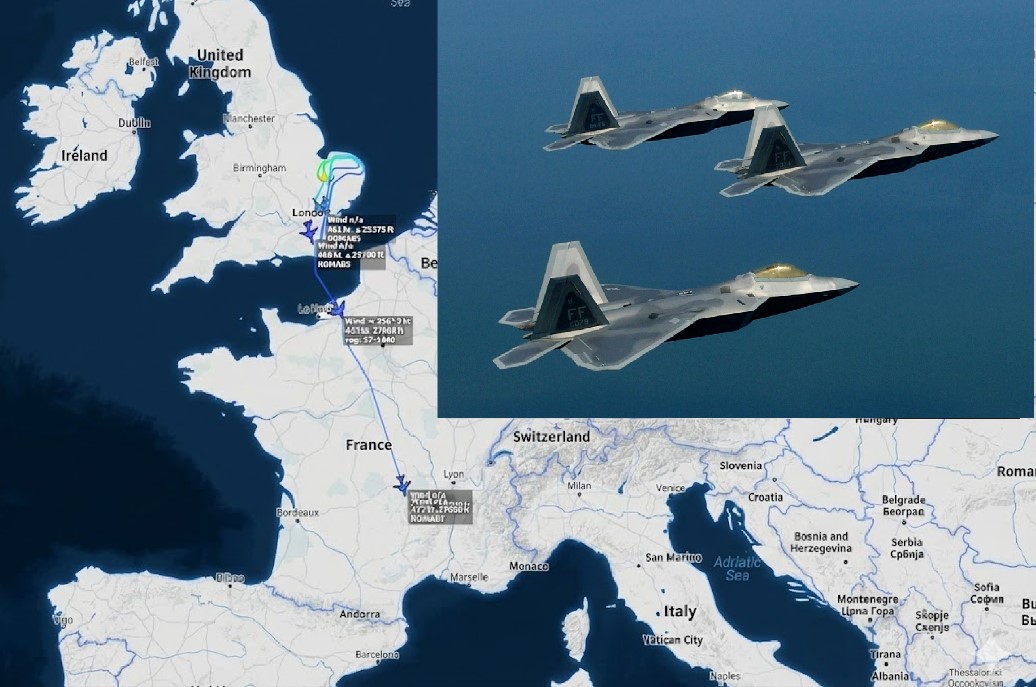
World
LAKENHEATH, United Kingdom, February 24, 2026 : Twelve F-22 Raptor fighter aircraft of the United States Air Force departed RAF Lakenheath on February 24, 2026, transferring to the United States Central Command (CENTCOM) area of responsibility in the Middle East. The movement follows the collapse of nuclear negotiations between the United States and Iran in Geneva and forms part of a broader increase in U.S. airpower presence across Europe and the Middle East. The aircraft are assigned to the 1st Fighter Wing at Joint Base Langley-Eustis. According to open-source flight-tracking data and defense observers, the fighter formation departed the United Kingdom under escort from four aerial refueling aircraft operating from RAF Mildenhall. The tanker support package included three KC-46A Pegasus aircraft using callsigns ROMA02 (tail 21-46095), ROMA03 (tail 22-46100), and ROMA05 (tail 21-46093), along with one KC-135 Stratotanker operating under callsign ROMA04 (tail 57-1440). The integration of both tanker types enabled sustained transcontinental flight operations during the onward transit to the Middle East. Transatlantic Deployment Process The movement was conducted as a “Coronet” mission, the U.S. military term for long-distance, transoceanic fighter deployments requiring coordinated tanker support. Fighter aircraft such as the F-22 do not have the range to cross the Atlantic Ocean without multiple refueling events. As part of standard procedures, the aircraft crossed the Atlantic in waves beginning February 17, 2026, staging through RAF Lakenheath before departing for CENTCOM on February 24. RAF Lakenheath is routinely used as an intermediate stop for U.S. fighter deployments because of its infrastructure and proximity to tanker assets at RAF Mildenhall. The February 24 departure marks the final leg of the transfer to operational bases within the CENTCOM theater. Potential destinations include installations such as Muwaffaq Salti Air Base in Jordan or other established facilities in the region, though no official confirmation of the exact basing location has been released. The transit from the United Kingdom to the Middle East typically requires between eight and twelve hours of flight time, depending on routing and refueling schedules. Aircraft involved in the deployment carried external fuel tanks to support extended-range operations. Broader Regional Force Posture Defense analysts assess the deployment as part of one of the largest U.S. regional force repositionings in recent decades. The United States is currently positioning more than 150 aircraft across Europe and the Middle East. The broader posture includes additional deployments of F-35 and F-16 fighter aircraft, surveillance and airborne early warning platforms, and the presence of two U.S. Navy carrier strike groups in the wider region. The repositioning also follows the evacuation of non-essential U.S. diplomatic personnel from Lebanon. Collectively, these measures increase available airpower and force protection capabilities within rapid reach of multiple regional flashpoints. The F-22 has previously operated within CENTCOM from bases including Al Dhafra Air Base in the United Arab Emirates. In earlier deployments, the aircraft conducted deterrence patrols over Syria and the Gulf region and responded to unsafe interactions involving Russian aircraft. F-22s were also deployed to the Middle East in August 2024 amid concerns over Iranian missile and drone activity. Aircraft Capabilities and Operational Role The F-22 Raptor serves as the U.S. Air Force’s primary air superiority fighter. It is designed for operations in contested airspace and incorporates low-observable characteristics, supercruise capability, advanced radar systems, and sensor fusion. The aircraft carries AIM-120 AMRAAM and AIM-9 infrared-guided missiles in internal weapons bays to preserve its radar signature. In addition to air-to-air missions, the platform retains secondary ground-attack capability. Within the CENTCOM environment, F-22 aircraft are typically tasked with defensive counter-air missions and air superiority patrols. Their operational scope can include escorting strike packages, protecting high-value airborne assets, and countering hostile aircraft, cruise missiles, and unmanned aerial systems. The aircraft are also capable of operating over maritime chokepoints such as the Strait of Hormuz and the Bab el-Mandeb, as well as air approaches to partner states in the Gulf and Israel. The KC-46A Pegasus, derived from the Boeing 767 platform, provides both boom and hose-and-drogue refueling capability in a single sortie and can carry more than 212,000 pounds of fuel. It also retains cargo and personnel transport capacity. The KC-135 Stratotanker, in service for more than six decades, continues to provide core aerial refueling capability for long-range fighter movements. Open-Source Confirmation The February 24 movement was tracked using publicly available flight transponder data and radio communications monitoring. Defense observers, including the account Archer83Able on X, identified the aircraft and tanker tail numbers involved in the mission. No formal U.S. Air Force press release has specified the final destination, mission duration, or operational timeline. The deployment positions twelve fifth-generation fighters within the U.S. Central Command theater at a time of heightened regional tension following the breakdown of diplomatic discussions over Iran’s nuclear program. The aircraft remain under U.S. Air Force command and will operate from established bases within the CENTCOM area of responsibility.
Read More → Posted on 2026-02-24 16:16:27
Space & Technology
SAN FRANCISCO, February 24, 2026 : U.S.-based artificial intelligence company Anthropic has formally accused three Chinese AI laboratories — DeepSeek, Moonshot AI and MiniMax — of conducting coordinated, large-scale distillation campaigns to extract capabilities from its Claude models, according to a company blog post published on February 23, 2026, and contemporaneous reporting by The Wall Street Journal, Reuters, Bloomberg and TechCrunch. Anthropic stated that the campaigns involved approximately 24,000 fraudulent accounts and generated more than 16 million exchanges with Claude. The company said the activity violated its terms of service and regional access restrictions, noting that Claude is not available in China. According to Anthropic, the laboratories used commercial proxy services and “hydra cluster” account architectures — networks of coordinated accounts — to evade detection and distribute traffic. The company said it traced account activity using request metadata and linked it to researchers at each laboratory. Breakdown of the Alleged Campaigns Anthropic provided a detailed account of the scope and focus of each operation. MiniMax was responsible for the largest volume of activity, generating more than 13 million exchanges. According to Anthropic, the campaign focused on agentic coding, tool use and orchestration capabilities. The company said it detected the operation while it was active and before the release of the model being trained. Anthropic added that when it released an updated Claude model during the period of activity, MiniMax redirected nearly half of its automated traffic to the new system within 24 hours in order to capture updated capabilities. Moonshot AI generated more than 3.4 million exchanges. Anthropic said the campaign targeted agentic reasoning, tool use, coding, data analysis, computer-use agent development and computer vision. The company reported that Moonshot AI initially operated hundreds of fraudulent accounts across multiple access pathways before shifting to a more targeted approach designed to reconstruct reasoning traces and internal step-by-step processes. DeepSeek conducted more than 150,000 exchanges. Although lower in total volume, Anthropic described the activity as highly specific. The company said DeepSeek targeted reasoning capabilities across diverse tasks, including rubric-based grading tasks used in reinforcement learning. Anthropic further alleged that DeepSeek used Claude to generate “censorship-safe” alternatives to politically sensitive queries involving dissidents, party leaders and authoritarianism. According to Anthropic, the associated accounts displayed synchronized traffic patterns, shared payment methods and coordinated timing consistent with load-balancing systems. Anthropic stated that the three laboratories relied on proxy services and coordinated account networks to bypass regional restrictions and usage limits. What Distillation Means in This Context Anthropic described model distillation as a standard machine-learning technique in which a large “teacher” model is used to train a smaller or more efficient “student” model. In legitimate internal use, developers feed a teacher model complex prompts, collect high-quality outputs and train a smaller system to replicate selected capabilities at lower computational cost. In the cases described, Anthropic alleged that the technique was used without authorization. Instead of training a model from scratch — a process that can require significant computational resources, time and access to training data — the laboratories allegedly generated millions of prompts to Claude, recorded its outputs and used those responses to accelerate development of their own systems. Anthropic referred to this practice as “illicit distillation” or a “distillation attack,” arguing that it enables rapid capability transfer at a fraction of the traditional cost of frontier model development. Security and Export Control Concerns Anthropic stated that the campaigns highlight potential weaknesses in export controls on advanced AI chips and models. The company argued that distillation requires substantially less computing power than full-scale model training, potentially allowing organizations to acquire advanced capabilities without direct access to restricted hardware. The company also raised concerns about safety guardrails embedded in frontier models. Anthropic said Claude is designed with safeguards intended to prevent misuse in areas such as malicious cyber activities and bioweapons development. According to the company, distilled models may replicate core capabilities while failing to preserve embedded safety constraints, increasing the risk of misuse if integrated into military, intelligence or surveillance systems or released as open-source software. Anthropic said it has strengthened detection systems, including behavioral fingerprinting, traffic analysis and specialized classifiers designed to identify coordinated querying patterns. It also reported enhancing account verification processes and sharing technical indicators with other AI developers, cloud providers and authorities. The company called for coordinated action among AI laboratories, cloud infrastructure providers and policymakers to address unauthorized distillation practices. Industry Response and Criticism Following publication of the allegations, Anthropic faced criticism from some industry figures and commentators who questioned the distinction between distillation and broader data acquisition practices in AI development. Critics noted that major AI laboratories, including U.S.-based firms, have trained foundational models on large volumes of publicly available internet data, including copyrighted materials, often without explicit permission from original creators. Tesla and xAI CEO Elon Musk commented on the social media platform X that Anthropic had itself engaged in large-scale data use and referenced a reported $1.5 billion settlement related to copyright infringement claims involving pirated books used for training data. The settlement has been cited in reporting as part of broader legal disputes over AI training practices. Anthropic has not publicly responded in detail to those specific criticisms in connection with the current allegations. Broader Context The allegations follow a memorandum issued earlier in February 2026 by OpenAI, which accused DeepSeek of using distillation techniques on OpenAI models. The claims by Anthropic and OpenAI indicate increased scrutiny among leading AI developers regarding cross-border capability transfer and competitive model training practices. As of publication, no public responses to Anthropic’s February 23, 2026 blog post have been issued by DeepSeek, Moonshot AI or MiniMax. Anthropic stated that its findings are based on internal investigations, account metadata analysis and traffic pattern assessments. All details referenced in this report originate from Anthropic’s official February 23, 2026 blog post titled “Detecting and preventing distillation attacks” and contemporaneous reporting by The Wall Street Journal, Reuters, Bloomberg and TechCrunch.
Read More → Posted on 2026-02-24 16:03:27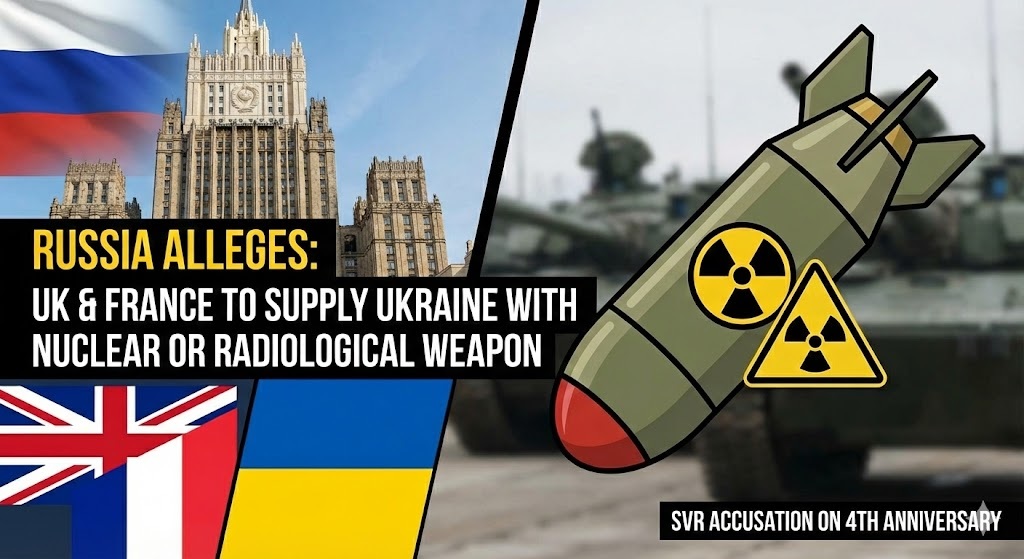
World
Moscow, February 24, 2026 : Russia’s Foreign Intelligence Service (SVR) has accused the United Kingdom and France of actively exploring options to provide Ukraine with a nuclear weapon or a radiological dispersal device, according to an official statement released through TASS on Tuesday. The announcement coincided with the fourth anniversary of Russia’s full-scale invasion of Ukraine. In its statement, the SVR press bureau said British and French political leadership circles are unwilling to accept what it described as an unfavorable outcome in the conflict and believe Ukraine requires a “wunderwaffe,” or decisive strategic weapon. The intelligence service assessed that possession of a nuclear device, or alternatively a so-called “dirty bomb,” could enable Kyiv to negotiate more favorable conditions in any future settlement of hostilities. The SVR claimed that London and Paris are discussing both the provision of such weapons and potential delivery mechanisms. According to the Russian agency, this would involve the covert transfer of European nuclear-related equipment, components and technological expertise. The statement did not include supporting documentation or independently verifiable evidence. Alleged Consideration of the TN75 Warhead The Russian intelligence report specifically referenced the French TN75 thermonuclear warhead as one option allegedly under consideration. The TN75 was originally developed for France’s M45 submarine-launched ballistic missile and later integrated into the M51.1 variant. Publicly available technical data indicate that the TN75 has an estimated yield of approximately 100 to 150 kilotons. The associated re-entry vehicle has a mass of roughly 230 kilograms, while the warhead itself is reported to weigh between approximately 115 and 230 kilograms, depending on configuration. The M51.1 missile, a three-stage solid-fuel submarine-launched ballistic missile, measures about 12 meters in length, 2.3 meters in diameter and has a launch weight of approximately 53,000 kilograms. It is assessed to have a range exceeding 8,000 kilometers. Each M51.1 missile is capable of carrying four to six multiple independently targetable re-entry vehicles (MIRVs) equipped with TN75 warheads. The system entered service with the French Navy in 2010 and is deployed aboard France’s Triomphant-class nuclear-powered ballistic missile submarines. Subsequent upgrades to the M51 platform, including the M51.2 and M51.3 variants, incorporate the newer Tête Nucléaire Océanique (TNO) warhead. The SVR did not specify how a submarine-launched warhead design would be adapted for use by Ukraine, nor did it provide details on delivery systems allegedly being discussed. Radiological Device Reference In addition to a nuclear warhead, the SVR statement referred to the possibility of a “dirty bomb,” formally known as a radiological dispersal device. Such a device combines conventional explosives with radioactive material in order to spread contamination over a localized area. Unlike a nuclear weapon, a radiological dispersal device does not involve a nuclear chain reaction and does not produce a nuclear detonation. Germany’s Reported Position According to the Russian intelligence assessment, Germany was approached regarding participation in the alleged initiative but declined involvement. The SVR described Berlin’s position as a refusal to engage in the activity. No independent confirmation of this claim has been provided. Non-Proliferation Concerns The SVR stated that the United Kingdom and France are aware that transferring nuclear weapons or related capabilities to Ukraine would constitute a violation of international law, particularly the Treaty on the Non-Proliferation of Nuclear Weapons (NPT). Both countries are recognized nuclear-weapon states under the NPT framework, while Ukraine is a non-nuclear-weapon state party to the treaty. According to the Russian statement, the principal effort of London and Paris would therefore be to ensure that any emergence of nuclear capability in Ukraine would appear to be the result of indigenous development rather than external transfer. The SVR characterized this as an attempt to avoid direct attribution and to mitigate the risk of undermining the global non-proliferation regime. The NPT, which entered into force in 1970, prohibits the transfer of nuclear weapons or control over them to non-nuclear-weapon states and obliges recognized nuclear-weapon states not to assist others in acquiring such arms. Ukraine acceded to the treaty as a non-nuclear-weapon state following the dissolution of the Soviet Union and relinquished the nuclear arsenal it inherited in the 1990s under arrangements that included security assurances in the 1994 Budapest Memorandum. International Context As of the time of the SVR release, neither the United Kingdom nor France had issued an official response to the specific allegations. No independent verification of the Russian claims has been made public. The statement was issued on February 24, marking four years since the beginning of Russia’s full-scale military operation in Ukraine. Ukraine does not currently possess nuclear weapons and remains formally committed to its non-nuclear status under international treaty obligations. All technical specifications referenced in the SVR statement correspond to publicly available information published by French defense authorities and independent defense research organizations. The Russian intelligence service’s allegations remain unaccompanied by supporting documentation or corroboration from third parties.
Read More → Posted on 2026-02-24 15:43:08
World
LONDON, Feb. 24, 2026 : The United Kingdom has introduced its largest sanctions package against Russia since 2022, announcing nearly 300 new measures on the fourth anniversary of Moscow’s full-scale invasion of Ukraine. The package targets Russia’s energy exports, military supply chains, financial institutions and associated international networks, according to a UK government press release issued on February 24. The measures are designed to further reduce revenue streams supporting Russia’s war effort and to tighten enforcement against sanctions evasion mechanisms, including oil trading structures operating outside Western regulatory systems. Energy Sector and Pipeline Operator Targeted A central component of the package is the designation of PJSC Transneft, the state-controlled company responsible for transporting more than 80% of Russia’s crude oil exports through its extensive pipeline network for oil and petroleum products. The UK also sanctioned 175 companies linked to the Dubai-based 2Rivers oil network. The network, previously associated with Coral Energy Group and linked to individuals including Tahir Garayev, has been identified by British authorities as one of the largest operators involved in trading Russian crude oil through what is commonly referred to as the “shadow fleet.” As part of the enforcement action, 48 oil tankers connected to these operations were designated. The shadow fleet typically consists of older vessels that operate outside standard Western insurance frameworks and tracking practices, including ship-to-ship transfers and disabling of automatic identification systems to facilitate crude exports while avoiding compliance with the G7 price cap mechanism. The UK further sanctioned Maritime Mutual Insurance Association, a New Zealand-based marine insurer reported to be facilitating shipments linked to Russian oil exports. LNG and Nuclear Sector Restrictions The sanctions package also addresses Russia’s liquefied natural gas (LNG) and civil nuclear sectors. Six LNG-related targets were designated, including vessels, traders, and the Portovaya and Vysotsk export terminals located in the Baltic Sea. These terminals play a role in Russia’s LNG export operations to international markets. In the nuclear sector, three civil nuclear energy companies were sanctioned along with two individuals associated with overseas nuclear contract negotiations connected to Rosatom Energy PJSC. The individuals named include Andrei Rozhdestvin and Ilya Vergizayev, identified in connection with international nuclear installation agreements. Military Supply Chain and Technology Controls To restrict the resupply of Russia’s armed forces, the UK designated 49 entities and individuals involved in supplying microelectronics, machine tools, drone components and other technology used in weapons systems manufacturing. These measures are aimed at disrupting procurement networks that source components internationally for use in unmanned aerial vehicles and other military equipment deployed in Ukraine. Financial Sector and Media Designations The financial measures include sanctions on nine Russian banks involved in processing cross-border payments. The restrictions are intended to limit Russia’s access to international financial markets and complicate transaction settlements. In addition, two Georgian television channels — Imedi TV and POSTV — were sanctioned for broadcasting state-aligned disinformation related to the war. Under the expanded regime, the UK has now sanctioned more than 3,000 individuals, entities and vessels connected to Russia since 2022. Legal and Transport Restrictions The newly announced designations impose asset freezes, prohibitions on trust services, director disqualifications and transport restrictions on designated ships and aircraft. The measures are structured to increase operational costs for oil trading networks that have redirected exports to markets including China, India and Turkey. According to UK government assessments, Russian oil revenues are currently at their lowest level since 2020. Western officials estimate that cumulative international sanctions have deprived Russia of approximately $450 billion in potential revenue over the past four years. UK Support Package for Ukraine The sanctions announcement coincided with a visit to Kyiv by UK Foreign Secretary Yvette Cooper. During the visit, Cooper announced an additional £30 million in funding for Ukraine. Of this amount, £25 million is allocated for repairing and strengthening Ukraine’s damaged energy infrastructure and supporting displaced civilians. A further £5 million is designated for international justice and accountability initiatives related to alleged war crimes connected to the conflict. The additional funding brings total UK support for Ukraine to £21.8 billion since the start of the war. Separately, Minister for Europe Stephen Doughty participated in related discussions at the United Nations Security Council in New York on the anniversary of the invasion. The measures were formally detailed in the UK government’s sanctions notice and accompanying press release issued on February 24, 2026.
Read More → Posted on 2026-02-24 15:15:43
World
LONDON, February 24, 2026 : Iran is close to finalising an agreement with China for the purchase of CM-302 supersonic anti-ship cruise missiles, according to six people familiar with the negotiations. The discussions are taking place amid a significant United States naval deployment near Iran’s coastline and follow the reimposition of United Nations arms sanctions on Tehran in September 2025. The proposed acquisition centres on the CM-302, the export version of the YJ-12 missile developed by the China Aerospace Science and Industry Corporation (CASIC). While the deal is reported to be in its final stages, the number of missiles involved, financial arrangements and delivery timelines have not been disclosed. No delivery date has been agreed. Negotiations and Diplomatic Engagement Sources said negotiations between Tehran and Beijing began at least two years ago and accelerated after the 12-day conflict between Israel and Iran in June 2025. As talks progressed into their final phase last summer, senior Iranian military and government officials travelled to China. The delegation included Iran’s Deputy Defence Minister Massoud Oraei. The visit had not previously been reported. An Iranian foreign ministry official told Reuters that Iran maintains military and security agreements with its partners and that the present period is appropriate to utilise those arrangements. China’s Ministry of Foreign Affairs stated after publication of the report that it was not aware of the talks. China’s defence ministry did not respond to a request for comment. The White House did not directly address the missile negotiations. A White House official referred to remarks by US President Donald Trump stating that “either we will make a deal or we will have to do something very tough like last time,” in reference to ongoing nuclear-related tensions. Missile Specifications and Operational Role The CM-302 is marketed by CASIC as a multipurpose supersonic missile capable of engaging both large surface vessels and land-based targets. The system is designed to evade shipborne air defences by flying at low altitude and high speed during its terminal phase. According to publicly available specifications published by CASIC and defence analysis organisations, the missile has an approximate range of 290 kilometres. It uses a solid rocket booster for initial acceleration and a liquid-fuelled ramjet engine for sustained supersonic flight. The missile can reach speeds of up to Mach 3 at high altitude and approximately Mach 2 at low altitude. It carries a warhead of around 250 kilograms and employs inertial navigation and GPS guidance, combined with active radar homing in the terminal stage. Launch platforms include naval vessels, aircraft and mobile ground-based systems. The acquisition would enhance Iran’s anti-ship strike capability in coastal and near-sea environments, particularly in strategically sensitive waterways. Pieter Wezeman, senior researcher at the Stockholm International Peace Research Institute (SIPRI), stated that the purchase would represent a significant improvement for Iran’s arsenal, which was reduced during the 2025 conflict. Danny Citrinowicz, a former Israeli intelligence officer and senior Iran researcher at the Institute for National Security Studies, said that supersonic anti-ship capability would alter operational calculations in the region and noted that such missiles are difficult to intercept. Broader Defence Discussions In addition to the CM-302, Iran is reported to be in discussions with China regarding other defence systems. These include surface-to-air missile systems, man-portable air-defence systems (MANPADS), anti-ballistic weapons and anti-satellite weapons. No agreements related to these systems have been publicly confirmed. China and Iran maintain ongoing military ties, including annual joint naval exercises conducted with Russia. In 2025, the US Treasury sanctioned Chinese entities for allegedly supplying chemical precursors used in Iran’s ballistic missile programme. China rejected the allegations and stated that it enforces export controls on dual-use materials. In September 2025, during a military parade in Beijing, Chinese President Xi Jinping told Iranian President Masoud Pezeshkian that China supports Iran in safeguarding its sovereignty, territorial integrity and national dignity. On October 18, 2025, China, Russia and Iran issued a joint letter stating that the reimposition of UN sanctions was flawed. Sanctions and Legal Context The potential transfer of the CM-302 would constitute one of the most advanced military systems supplied by China to Iran in recent years. It would contravene the United Nations arms embargo first imposed in 2006. The embargo was suspended in 2015 under the nuclear agreement but was reimposed in September 2025. The reported deal coincides with heightened military positioning by the United States in the region. US Naval Deployment The United States has assembled substantial naval forces within operational range of Iran. The aircraft carrier USS Abraham Lincoln and its strike group are currently deployed in the region. The USS Gerald R. Ford and its escorts are en route. Together, the two carrier strike groups can carry more than 5,000 personnel and approximately 150 aircraft. The US naval presence forms part of broader preparations linked to nuclear negotiations and contingency military planning. All information in this report is based on the Reuters report dated February 24, 2026, along with publicly available technical specifications of the CM-302 missile published by CASIC and defence analysis sources.
Read More → Posted on 2026-02-24 14:58:05
World
LONDON / CANBERRA, February 24, 2026 : The Australian Government has committed $310 million to acquire long-lead items from the United Kingdom for its future conventionally armed, nuclear-powered submarines under the SSN-AUKUS program, marking a further step in the development of Australia’s sovereign nuclear-powered submarine capability. The funding will support the manufacture of critical components for the nuclear propulsion systems of Australia’s first two SSN-AUKUS submarines. The submarines are scheduled to be constructed at the planned Submarine Construction Yard in Osborne, South Australia. Under the AUKUS arrangements, the United Kingdom will deliver complete, welded nuclear propulsion units for the Australian-built submarines. Manufacturing of these propulsion systems is already underway at the Rolls-Royce Submarines facility in Derby. Rolls-Royce Submarines forms a central part of the United Kingdom’s nuclear submarine enterprise and is responsible for producing the pressurised water reactor that will power the SSN-AUKUS boats. Australian officials stated that securing long-lead items at this stage is necessary to maintain the program schedule, sustain specialist industrial skills and align production timelines across the trilateral AUKUS partnership between Australia, the United Kingdom and the United States. The procurement is also intended to provide greater supply-chain resilience and schedule certainty. The $310 million payment is separate from Australia’s previously announced commitment of £2.4 billion over ten years to expand production capacity at Rolls-Royce Submarines. That investment is designed to increase the United Kingdom’s ability to meet growing demand associated with both British and Australian submarine programs. Defence Industry Dialogue in London The announcement followed Minister for Defence Industry Pat Conroy’s participation in the Australia–United Kingdom Defence Industry Dialogue (AUKDID) held in London on February 23, 2026. The meeting marked the first convening of the dialogue since 2018 and focused on advancing cooperation in submarine industrial base development and broader defence industry collaboration. Discussions during the dialogue centered on aligning industrial capacity, workforce development and supply-chain integration to support delivery of the SSN-AUKUS capability under AUKUS Pillar 1. Australian authorities reiterated that all nuclear stewardship arrangements under AUKUS will comply with Australia’s international obligations on nuclear safety, security and non-proliferation. Domestic Infrastructure and Workforce Expansion The UK procurement proceeds alongside major domestic infrastructure investment in Australia. The government has allocated an initial $3.9 billion to establish the Submarine Construction Yard at Osborne in South Australia, where the SSN-AUKUS fleet will be built. Construction of the yard is expected to enable the start of submarine construction before the end of the decade. At peak activity, up to 4,000 Australian workers are projected to be employed in designing and building the yard’s infrastructure. When submarine production reaches its peak, approximately 5,500 direct jobs are expected to be supported in South Australia for the construction of the nuclear-powered submarines. The SSN-AUKUS program calls for Australia to acquire at least eight conventionally armed nuclear-powered attack submarines. The design is based on a United Kingdom platform and will incorporate technologies from Australia, the United Kingdom and the United States. The first Australian SSN-AUKUS submarine is planned to enter service in the early 2040s. As part of preparations for sovereign capability, the Submarine Rotational Force–West is scheduled to be established at HMAS Stirling in Western Australia from 2027. The rotational presence of UK and US nuclear-powered submarines is intended to build Australian operational and maintenance experience ahead of domestic construction and sustainment. Maintenance Milestone in Western Australia In a related development, the United Kingdom’s Astute-class submarine HMS Anson is currently undergoing a scheduled maintenance period at HMAS Stirling in Western Australia. This marks the first time a UK nuclear-powered submarine has conducted maintenance in Australia. Australian and UK officials described the maintenance activity as part of broader efforts to integrate operational, logistical and industrial arrangements under the AUKUS framework. Official Statements Deputy Prime Minister Richard Marles stated that early work on critical submarine components is necessary to keep the program on schedule and support the establishment of a sovereign capability. He said the SSN-AUKUS submarines will be designed and built in partnership with trusted allies and powered by a reactor system developed by a company with decades of experience in nuclear propulsion. Minister for Defence Industry Pat Conroy said Australia continues to work with the United Kingdom and the United States to develop the capabilities, skills and knowledge required to build, operate and maintain nuclear-powered submarines. He stated that early investment in nuclear propulsion components is critical to the delivery of AUKUS and supports defence industry and workforce cooperation across the partnership. All details are drawn from the official Australian Department of Defence press release dated February 24, 2026, and associated statements issued following the Australia–United Kingdom Defence Industry Dialogue in London.
Read More → Posted on 2026-02-24 14:47:53
World
WASHINGTON, February 24, 2026 : The White House has approved a Department of Defense plan to accelerate development of the U.S. Navy’s next-generation carrier-based stealth fighter, the F/A-XX, according to an 85-page Pentagon document recently transmitted to Congress and first reported by Bloomberg Government on February 23, 2026. The authorization directs $750 million toward advancing the F/A-XX program, marking a significant policy shift after earlier hesitation within the Pentagon about funding two sixth-generation fighter programs simultaneously. Funding Framework and Budget Structure The $750 million allocation comes from a broader fiscal 2026 reconciliation tax-and-spending package totaling nearly $152 billion that was passed in 2025. The Pentagon informed Congress that the funds are specifically earmarked “to accelerate the F/A-XX aircraft.” This funding stream is separate from the formal $893 billion fiscal year 2026 defense appropriations measure passed by Congress in January 2026. Under that formal defense budget, the Navy requested $74 million for the F/A-XX program, a substantial reduction compared with the $454 million it had sought the previous year. The new $750 million allocation therefore represents a distinct and supplemental acceleration effort outside the regular defense appropriations process. Program Background and Policy Reversal The decision reverses earlier Pentagon caution regarding concurrent development of two separate sixth-generation fighter programs: the Navy’s F/A-XX and the Air Force’s F-47. Defense Secretary Pete Hegseth had previously expressed reluctance to support full-scale parallel funding of both programs, citing concerns that the domestic defense industrial base might lack the capacity to design and produce two advanced stealth aircraft simultaneously. The Air Force’s F-47 stealth fighter program was awarded to Boeing in 2025 and has been progressing under that service’s Next Generation Air Dominance initiative. The Navy’s F/A-XX program forms part of its own Next Generation Air Dominance effort but remains structurally separate, although some technology development efforts may overlap. With the White House approval, the Pentagon is now formally advancing the Navy’s program alongside the Air Force effort. Role and Operational Requirements of F/A-XX The F/A-XX is envisioned as the Navy’s sixth-generation carrier-based multirole strike fighter. It is designed to replace the F/A-18E/F Super Hornet fleet and operate in conjunction with the F-35C Lightning II. The aircraft is intended for operations in high-threat environments and is expected to feature enhanced stealth characteristics, advanced sensor fusion, and expanded multirole capabilities tailored for carrier strike group integration. Projected initial operational capability is targeted for the early to mid-2030s. Milestone Decision and Contractor Competition The newly directed $750 million will support the upcoming “F/A-XX milestone decision,” a critical phase in the Department of Defense acquisition process. This milestone involves selecting a prime contractor to transition the aircraft into full-scale engineering and manufacturing development, followed by production. According to the Pentagon document, the funds “will support critical design, risk reduction, and technology maturation efforts toward meeting operational requirements.” Boeing Co. and Northrop Grumman Corp. remain the two companies competing for the contract to build the Navy’s next-generation jet. Lockheed Martin was eliminated from the F/A-XX competition in March 2025, narrowing the field to the two remaining aerospace contractors. The milestone decision is expected to determine which company will lead detailed design and development as the program moves beyond preliminary phases. Missile Defense and Golden Dome Allocations In addition to the F/A-XX acceleration, the Pentagon’s 85-page document outlines more than $24 billion in planned spending on missile defense systems under the same fiscal framework. A significant portion of that funding prioritizes President Donald Trump’s “Golden Dome” missile defense initiative. The allocations include: $5.6 billion for development, procurement, and fielding of space-based and boost-phase interceptors $2.55 billion for general military missile defense capabilities $2.2 billion to accelerate development and deployment of hypersonic defense systems $1.975 billion for improvements to ground-based missile defenses The stated objective of these investments is to develop and restore critical missile defense infrastructure while deploying system-level defensive capabilities. Congressional Oversight and Next Steps The Pentagon transmitted the detailed funding breakdown to Congress as part of its fiscal 2026 reconciliation spending implementation. The acceleration funding for F/A-XX now positions the Navy to move forward with a contractor selection decision and advance the aircraft toward full development. The program remains distinct from the Air Force’s F-47 initiative but will proceed in parallel as part of broader sixth-generation air combat modernization efforts across the Department of Defense. All details in this report are based on the Pentagon document sent to Congress and the Bloomberg Government report published on February 23, 2026, along with associated fiscal 2026 reconciliation spending information.
Read More → Posted on 2026-02-24 14:27:13
World
HAIFA, Israel — February 24, 2026 : Elbit Systems Ltd. has announced it will supply its Helmet Display and Tracking System (HDTS) to the Israeli Air Force for installation across its fleet of UH-60 Black Hawk helicopters, locally designated “Yanshuf.” The upgrade is intended to enhance operational capability and flight safety across the medium-lift helicopter fleet. The Yanshuf fleet consists of approximately 48 UH-60A/L Black Hawk helicopters used for troop transport, search and rescue, special operations support, and general utility missions. The HDTS will be integrated into the existing avionics and sensor architecture of these aircraft without requiring major structural modifications, reflecting the system’s modular and open-architecture design. System Overview and Capabilities The HDTS, also designated ANVIS/HUD-24T, is an operationally deployed helmet-mounted system that combines legacy helmet display technology with day head-up display (HUD) capability and precise Line-of-Sight (LOS) head tracking. The system projects advanced three-dimensional Synthetic Vision Symbology (SVS) directly into the pilot’s field of view. The synthetic vision presentation depicts terrain contours, physical obstacles, and active flight-plan data in real time. By overlaying this information onto the pilot’s viewing axis, the system supports aircrew situational awareness in degraded visual environments, including dust, precipitation, fog, smoke, and night operations. According to the company, the HDTS has accumulated more than 2.5 million operational flight hours across over 7,000 helicopters on 25 different platforms worldwide. It is designed for utility, multi-role, assault, and maritime helicopter applications and can be installed on both eastern and western aircraft platforms. Support During Approach and Landing A primary operational focus of the HDTS is approach and landing, phases of flight that present elevated risk in low-visibility conditions. The system provides real-time decision support by maintaining continuous terrain and obstacle awareness even when external visual references are limited or temporarily lost. In “brownout” scenarios—when rotor wash lifts dust or sand during landing—the HDTS generates a synthetic landing-zone display. This allows the crew to retain spatial orientation and maintain defined flight safety margins during ground proximity operations. Brownout conditions are a recognized hazard in desert and unprepared landing zones, where visual cues can be significantly degraded within seconds. Line-of-Sight Tracking and Crew Coordination The helmet incorporates Line-of-Sight (LOS) head-tracking technology that continuously aligns projected symbology with the pilot’s exact viewing direction. This ensures that flight, navigation, and sensor data remain spatially consistent with where the pilot is looking. The LOS functionality also supports coordinated crew operations. By synchronizing viewing references and mission data across cockpit crew members, the system contributes to improved task distribution and reduced potential for human error during dynamic missions. Multi-Sensor and ISR Integration Built on an open and modular digital architecture, the HDTS is engineered to integrate with multiple onboard and external systems. These include Intelligence, Surveillance, and Reconnaissance (ISR) payloads, thermal imaging sensors, obstacle-detection systems, navigation and positioning equipment, and external video feeds. The integration framework allows real-time fusion of sensor inputs into the helmet display, supporting continuous operations in day and night conditions and across varying weather environments. The modular structure enables compatibility with existing helicopter systems without extensive redesign of platform avionics. Operational Context The Israeli Air Force’s Yanshuf helicopters form a core component of its rotary-wing transport capability. The aircraft conduct domestic and operational missions, including personnel movement, casualty evacuation, special operations insertion, and logistical support. The HDTS upgrade applies across the existing fleet and aligns with the Air Force’s ongoing modernization of aircrew systems and mission avionics. By incorporating synthetic vision, head-tracking precision, and multi-sensor data fusion into a single helmet-based platform, the program reflects a transition from basic helmet-mounted display technology to integrated aircrew operational systems. Company Statement Yoram Shmuely, General Manager of Elbit Systems Aerospace, stated that the agreement continues the company’s longstanding cooperation with the Israeli Air Force. “We are proud to continue our longstanding and successful cooperation with the Israeli Air Force,” Shmuely said. “Elbit Systems is a global leader in helmet system technologies, supplying advanced head-mounted solutions for a wide range of aircraft platforms worldwide. This program further strengthens Elbit’s position as a next-generation provider of integrated aircrew solutions, marking the transition from basic helmet-mounted displays to a fully operational system that unites display, precise head-tracking, synthetic symbology, and multi-sensor integration.” All details are based on the official announcement issued by Elbit Systems Ltd. on February 24, 2026.
Read More → Posted on 2026-02-24 14:06:54
World
NUREMBERG, February 24, 2026 : Diehl Defence is presenting its upgraded Ziesel unmanned ground vehicle (UGV) equipped with the proprietary PLATON autonomy kit at Enforce Tac 2026, taking place from February 23 to 25 in Nuremberg. The system is being exhibited alongside the company’s ground-based air defence and counter-drone solutions, reflecting ongoing development in unmanned ground support systems for military operations. The Ziesel UGV on display is based on the platform originally developed by the Austrian manufacturer Mattro. Diehl Defence has integrated upgraded control systems and enhanced mobility features designed to improve performance in difficult off-road environments. Platform Specifications and Configuration The vehicle measures 1.6 metres in length and 1.3 metres in width. It has a dead weight of 380 kilograms and supports a payload capacity of more than 500 kilograms. The compact dimensions are intended to enable operation in confined and compartmented terrain, including dense woodland and narrow village structures, while maintaining compatibility with infantry manoeuvre formations. The Ziesel is powered by a fully electric propulsion system using interchangeable 11 kWh lithium-ion battery packs. The electric configuration enables low acoustic signature operation, as it produces no conventional engine noise. The vehicle can reach a maximum speed of up to 20 kilometres per hour. Operational Roles Although presented within the defence systems portfolio, the Ziesel is configured as a support platform rather than a direct-fire weapon system. Its primary operational applications focus on logistics and infantry assistance. In logistics roles, the vehicle transports ammunition, weapon systems, water supplies and other heavy equipment across rough terrain, reducing the physical load on dismounted personnel. For casualty evacuation, it is designed to transport injured soldiers from operational areas, limiting the exposure of additional troops during extraction procedures. The vehicle is capable of manoeuvring alongside soldiers in restrictive terrain without obstructing troop movement. Its size and mobility allow it to navigate areas inaccessible to larger transport vehicles. PLATON Autonomy Kit The autonomous functions are enabled by Diehl Defence’s PLATON autonomy kit, a modular hardware and software solution developed in-house. A defining feature of the system is its passive navigation capability. In “follow-me” and “mule” modes, PLATON operates without active sensors such as LiDAR or GPS. Instead, it relies on passive visual inputs, including stereo camera systems. This configuration avoids emitting detectable signals and allows operation in GPS-denied or electronically jammed environments. The software enables the vehicle to autonomously transport equipment while identifying and managing physical obstacles. It can avoid obstacles such as trees or traverse them where terrain conditions permit. The system also supports waypoint navigation and the ability to learn and autonomously repeat predefined patrol or transport routes. Modular Integration Across Platforms Diehl Defence has designed PLATON as a scalable autonomy architecture that is not restricted to the Ziesel platform. The kit can be integrated into both unmanned and manned military vehicles. Current and planned integrations include the Milrem Robotics THeMIS UGV, the Rheinmetall MAN Military Vehicles HX2, and the Patria AMV and Patria 6×6 platforms. Further integration into larger military transport vehicles is scheduled during 2026. According to company information released at the exhibition, the combination of the Ziesel platform and the PLATON kit provides a unified hardware and software solution. Additional hardware adaptations and expanded autonomy functionalities are under development. Testing and Evaluation The Ziesel equipped with the PLATON system is undergoing field testing with multiple armed forces. Evaluations are being conducted by the German Bundeswehr and Ukrainian armed forces. In Ukraine, the system has been tested under combat conditions to gather operational feedback from personnel using robotic systems in active conflict environments. Trials have also been carried out in high-altitude, snow-covered terrain in Austria to assess sensor interaction and mobility performance under extreme weather conditions. All specifications, integrations and operational roles described were presented by Diehl Defence in exhibition materials and official statements dated February 24, 2026, during Enforce Tac in Nuremberg.
Read More → Posted on 2026-02-24 13:50:55
World
GENEVA, February 23, 2026 : Officials from the United States and Iran are scheduled to meet in Geneva on Thursday for negotiations described by U.S. sources as a final diplomatic effort to secure a nuclear compromise, according to reporting by The New York Times. The talks come as U.S. President Donald Trump weighs the option of authorizing a military strike against Iran if diplomacy fails. The upcoming discussions are framed within the U.S. administration as a decisive moment in ongoing tensions over Iran’s nuclear activities. According to individuals familiar with internal administration deliberations cited in the report, a structured proposal is under consideration that could serve as an alternative to military action. Proposed Nuclear Framework At the center of the discussions is a proposal that would allow Iran to retain a limited uranium enrichment capability under strict conditions. Under the reported framework: Iran would be permitted to maintain a narrowly restricted uranium enrichment program. The enrichment activity would be confined exclusively to civilian applications. Specifically, the program would support medical research and treatment purposes. The proposal is being evaluated by U.S. officials as a potential compromise that aligns with American non-proliferation objectives while permitting Tehran to maintain a baseline civilian nuclear infrastructure. The arrangement is intended to address concerns about weapons-grade development while avoiding escalation. U.S. Assessment of Iran’s Position According to the report, the Trump administration enters the Geneva talks with the assessment that Iran’s domestic and economic position is significantly weakened. U.S. officials believe that this condition increases the likelihood that Tehran may accept American terms. The administration’s internal discussions suggest that U.S. policymakers view the current moment as strategically advantageous for pressing Iran toward concessions. Military Contingency Planning While diplomatic efforts are underway, U.S. officials are simultaneously preparing alternative options should negotiations fail. According to The New York Times: President Trump is considering authorizing a limited, targeted military strike in the coming days if no agreement is reached. Internal administration discussions have also referenced the possibility of broader escalation later in the year if initial measures do not produce compliance. Such escalation could include a larger-scale military campaign aimed at Iranian leadership. The Geneva meeting is therefore being treated within the administration as a final opportunity to secure a negotiated outcome before potential military action. Neither U.S. nor Iranian officials have publicly confirmed the specific terms of the proposal. However, the reported framework reflects an effort to balance nuclear restrictions with limited civilian allowances, as both sides prepare for high-level talks in Switzerland. The outcome of Thursday’s discussions is expected to determine whether the current diplomatic channel remains viable or whether the situation shifts toward military confrontation.
Read More → Posted on 2026-02-23 18:07:48
World
MARIGNANE, France — February 23, 2026 : Airbus Helicopters has unveiled two next-generation rotorcraft concepts developed for the NATO Support and Procurement Agency (NSPA) under the NATO Next Generation Rotorcraft Capabilities (NGRC) study, marking a significant step in the alliance’s effort to replace ageing medium multi-role helicopter fleets across member nations. The proposal, formally presented on February 23, 2026, was developed in collaboration with MBDA and RTX subsidiaries Collins Aerospace and Raytheon. Airbus Helicopters is leading the overall concept study, which was awarded in July 2024 as part of a 13-month multinational industrial effort examining the design, development, delivery and long-term support of a future medium multi-role rotorcraft capability. Dual Rotorcraft Concepts for Fleet Complementarity Airbus’ NGRC proposal is structured around two integrated yet distinct aircraft concepts designed to ensure operational efficiency and fleet complementarity within NATO forces. The first is a high-performance conventional helicopter. This design follows a traditional rotorcraft configuration and is optimized for cost-efficiency, reliability and high availability in standard military operations. It is intended to provide a balanced solution for troop transport, logistics, special operations, medical evacuation and other multi-role missions. The second concept is a high-speed compound rotorcraft based on Airbus’ experience with its X3 and Racer technology demonstrators. The compound configuration incorporates additional fixed wings and lateral pusher propellers to extend the flight envelope beyond that of conventional helicopters. This arrangement enables significantly higher cruising speeds, faster acceleration and deceleration profiles, and high-rate climb and descent capabilities. Operational insights from military pilots were incorporated into the compound concept following flight evaluations of the Racer demonstrator under the European Next Generation Rotorcraft Technologies programme. According to Airbus, this feedback confirmed the operational advantages of the added wings and propulsive elements in mission scenarios requiring rapid deployment and extended reach. Modular Open System Architecture Airbus Helicopters stated that simplicity and modularity are the core design principles of its NGRC proposal. Both concepts are built around a Modular Open System Architecture (MOSA) framework to ensure that the platforms are straightforward to manufacture, maintain and upgrade over their service life. To support long-term affordability and operational flexibility, the conventional and high-speed variants are engineered to share critical commonalities. These include maintenance procedures and infrastructure, pilot and crew training frameworks, weapons systems integration, avionics suites and internal mission systems. The shared architecture is intended to reduce lifecycle costs while enabling incremental capability upgrades without major structural redesign. The future rotorcraft systems will integrate multi-platform technologies, including advanced connectivity solutions, embedded cybersecurity protocols, crewed-uncrewed teaming capabilities, multi-domain collaborative combat integration, enhanced survivability measures and battle damage repair provisions. Airbus said these features are designed to ensure interoperability with NATO standards and compatibility with emerging digital battlefield environments. Parallel Modernisation of Existing Fleet Bruno Even, Chief Executive Officer of Airbus Helicopters, stated that the two NGRC concepts form the basis for continued dialogue with NATO military partners regarding future operational requirements. He added that the company is pursuing a dual-track approach for its military portfolio. The first path focuses on the continuous improvement of the existing range. This includes Block 1 and Block 2 studies as part of a long-term evolution roadmap for the NH90 programme. Airbus’ current dual-product military lineup — the H145M, H160M and H225M — is positioned as a benchmark for affordability, connectivity and maintainability in military helicopter operations. The second path centers on next-generation rotorcraft systems, leveraging modular, multi-platform technologies aligned with NGRC objectives. NGRC Programme Context The NGRC initiative aims to identify and harness advanced technologies for a future medium multi-role rotorcraft capable of replacing ageing fleets across NATO member states. The current phase of the programme focuses on platform concepts that are high-performance, modular and fully interoperable with NATO standards. Under the July 2024 contract, Airbus Helicopters is leading the concept study while coordinating multinational industrial participation. The study analyses two integrated next-generation rotorcraft configurations and evaluates their feasibility across operational, technical and support dimensions. Airbus stated that the NGRC effort also contributes to sustaining key engineering competencies and reinforcing European industrial sovereignty in advanced rotorcraft design and manufacturing. With the unveiling of the conventional and high-speed compound concepts, Airbus Helicopters has positioned its proposal as a foundational reference for further consultations with participating NATO nations as the alliance advances through subsequent NGRC milestones.
Read More → Posted on 2026-02-23 17:48:01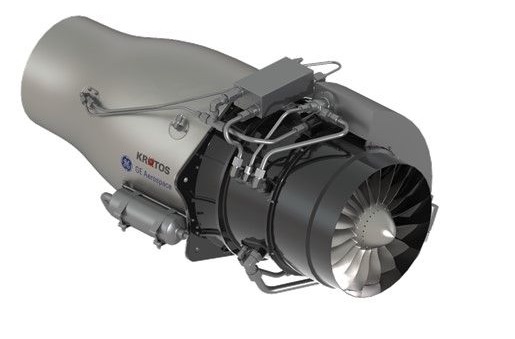
World
SAN DIEGO, California, February 23, 2026 : GE Aerospace and Kratos Defense & Security Solutions, Inc. have secured a $12.4 million contract from the U.S. Air Force to complete the preliminary design of a next-generation jet engine intended for small Collaborative Combat Aircraft (CCA) and other unmanned platforms. The award funds the initial design phase of the GEK1500 engine, a 1,500-pound-thrust propulsion system being developed to meet defined performance requirements while adhering to aggressive cost targets set by the Air Force. The program aligns with the service’s objective of enabling “affordable mass,” referring to the rapid and cost-effective production of military systems in significant quantities. Preliminary Design Focus Under the contract, the joint GE Aerospace–Kratos team will finalize the preliminary design of the GEK1500. This phase concentrates on validating performance parameters, refining system architecture, and ensuring cost controls remain aligned with Air Force expectations for scalable manufacturing. The agreement also includes an unexercised option for a subsequent development phase. If activated, that phase would involve assessing key technical risks and characterizing engine performance under relevant flight and installation conditions. Engine Specifications and Intended Platforms The GEK1500 is designed to produce 1,500 pounds of thrust and is targeted for integration across multiple defense platforms. Primary applications include: Small Collaborative Combat Aircraft (CCA), autonomous or semi-autonomous unmanned aircraft designed to operate alongside crewed fighter jets. Unmanned Aerial Systems (UAS) used for intelligence, surveillance, reconnaissance, and strike missions. Tactical and cruise missile systems requiring compact, efficient propulsion solutions. The U.S. Air Force has identified high-performance, low-cost propulsion systems as a priority area to support emerging operational concepts involving manned-unmanned teaming and distributed airpower. Leveraging the GEK800 Architecture Development of the GEK1500 builds directly on the existing GEK800 cruise missile engine architecture. The GEK800 is currently undergoing technical maturation and has recently completed altitude testing. Data collected from those tests—including metrics related to thrust performance, onboard power generation, and lifecycle cost projections—are being incorporated into the GEK1500 design process. The reuse of proven architecture is intended to reduce development timelines and control program costs while meeting required operational standards. Steve “Doogie” Russell, Vice President and General Manager of Edison Works at GE Aerospace, stated that lessons from GEK800 altitude testing are directly informing improvements in thrust output, power generation capability, and lifecycle cost management for the GEK1500 program. Stacey Rock, President of Kratos Turbine Technologies Division, said the continuation from the GEK800 program demonstrates the joint team’s ability to deliver high-performance engines designed for affordability and rapid production. Expanding Strategic Partnership The contract represents the latest step in a multi-year collaboration between GE Aerospace and Kratos Defense & Security Solutions. 2024: The companies signed a Memorandum of Understanding establishing a framework for joint development, manufacture, testing, and fielding of cost-effective propulsion systems for unmanned platforms. June 2025: The MOU expanded into a formal teaming agreement covering development of the GEK800 engine and collaboration on additional higher-thrust variants. February 2026: A new formal teaming agreement specific to the GEK1500 was established in conjunction with the current U.S. Air Force contract award. Kratos brings more than 25 years of experience in the development and production of small turbine engines for unmanned aerial systems, drones, and missile platforms. GE Aerospace contributes over a century of propulsion technology expertise and high-rate manufacturing capability. Corporate Capabilities GE Aerospace is a global propulsion, services, and aerospace systems provider with an installed base of approximately 49,000 commercial and 29,000 military aircraft engines. The company employs roughly 53,000 personnel worldwide. Kratos Defense & Security Solutions operates in defense, national security, and commercial markets, focusing on affordable unmanned systems, propulsion technologies, and related defense platforms. The GEK1500 program reflects the U.S. Air Force’s continued emphasis on scalable propulsion solutions to support small Collaborative Combat Aircraft and other unmanned operational systems.
Read More → Posted on 2026-02-23 17:34:49Search
Top Trending in 24 Hours
-
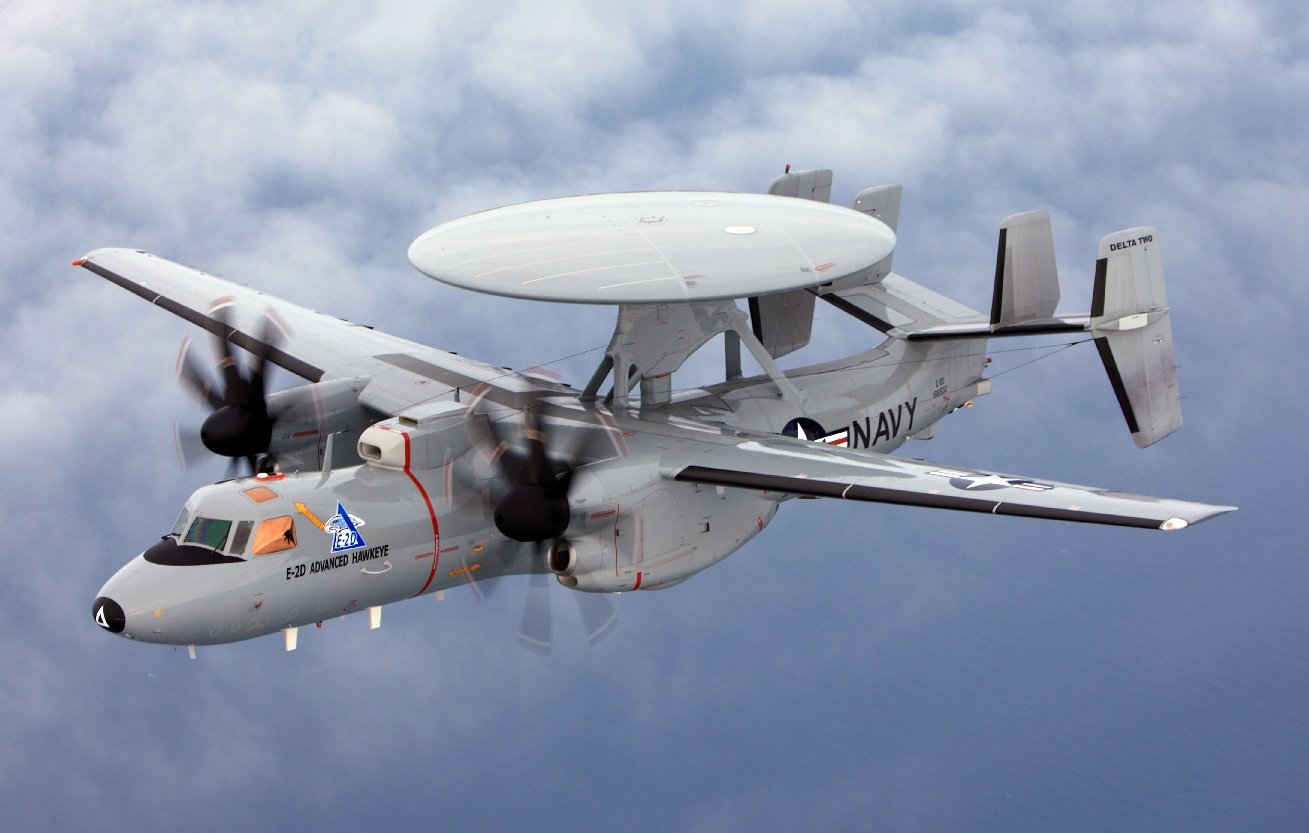 U.S. Navy Awards Northrop Grumman $1.2 Billion Deal for Three New E-2D Advanced Hawkeyes
-
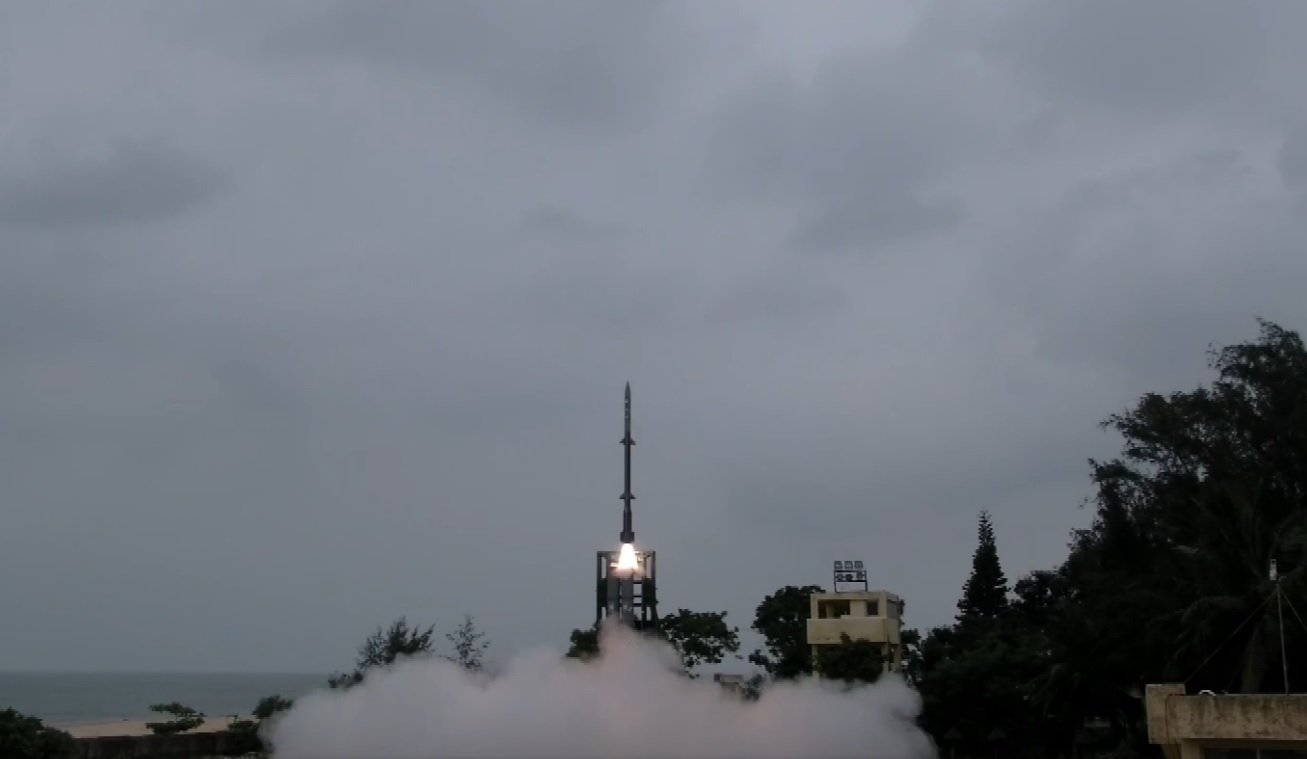 DRDO Successfully Conducts Maiden Flight Test of 150-km-Range Kusha M1 Air Defence Missile
-
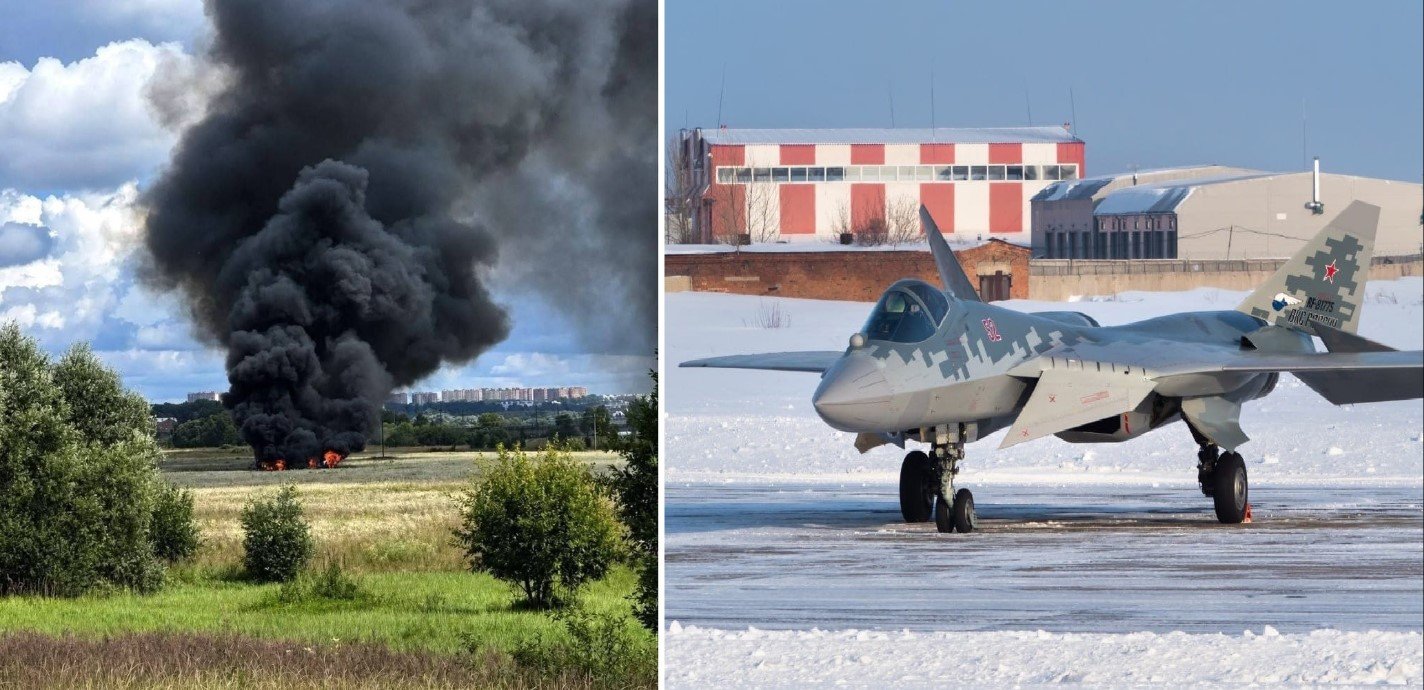 Russian Su-57 Stealth Fighter Crashes During Training Flight Near Moscow, Pilot Ejects Safely
-
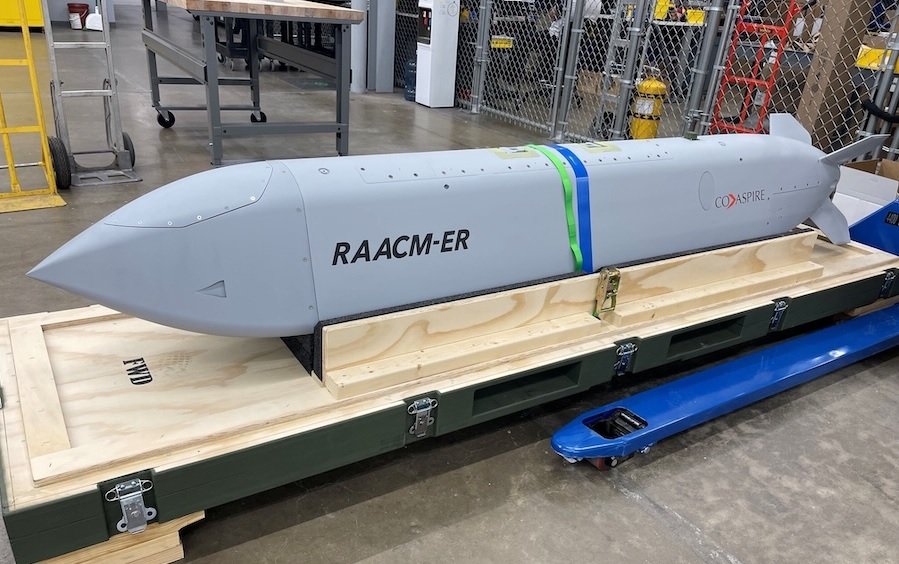 U.S. Navy Selects CoAspire to Build Ground-Launched CHAOS Cruise Missile Under $70 Million Program
-
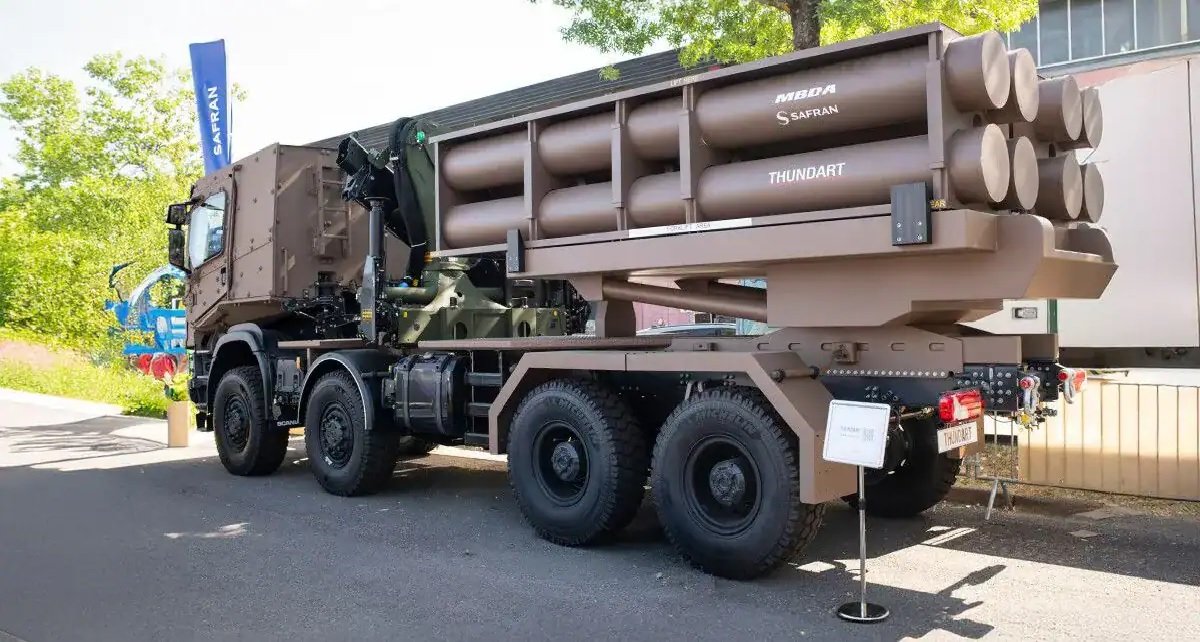 France's THUNDART Long-Range Rocket System May Undergo Prototype Combat Testing in Ukraine
-
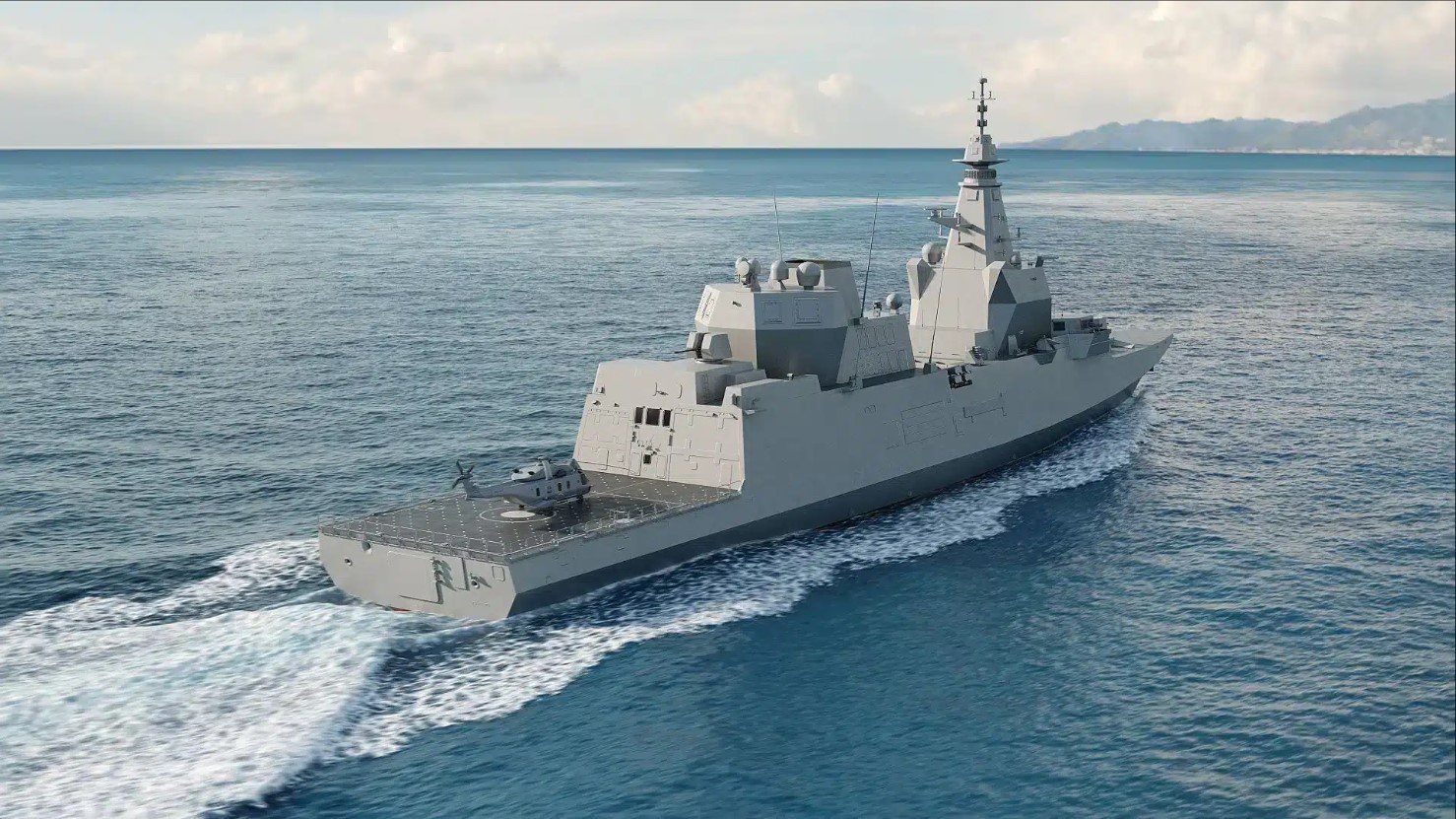 Portugal Orders Three FREMM EVO Frigates from Italy in €3.9 Billion Naval Deal
-
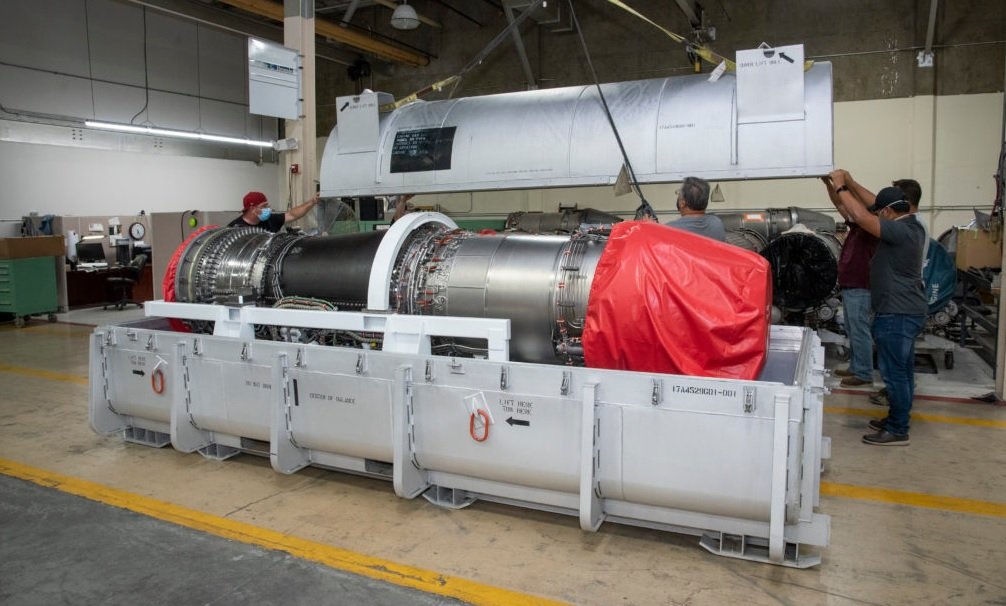 GE Aerospace and Magellan Aerospace Corporation Sign Strategic MoU for F414 Engine Sustainment in Canada
-
 Destinus Unveils Vorexon Interceptor Concept to Defend Critical Sites from Artillery Threats
Top Trending in 4 Days
-
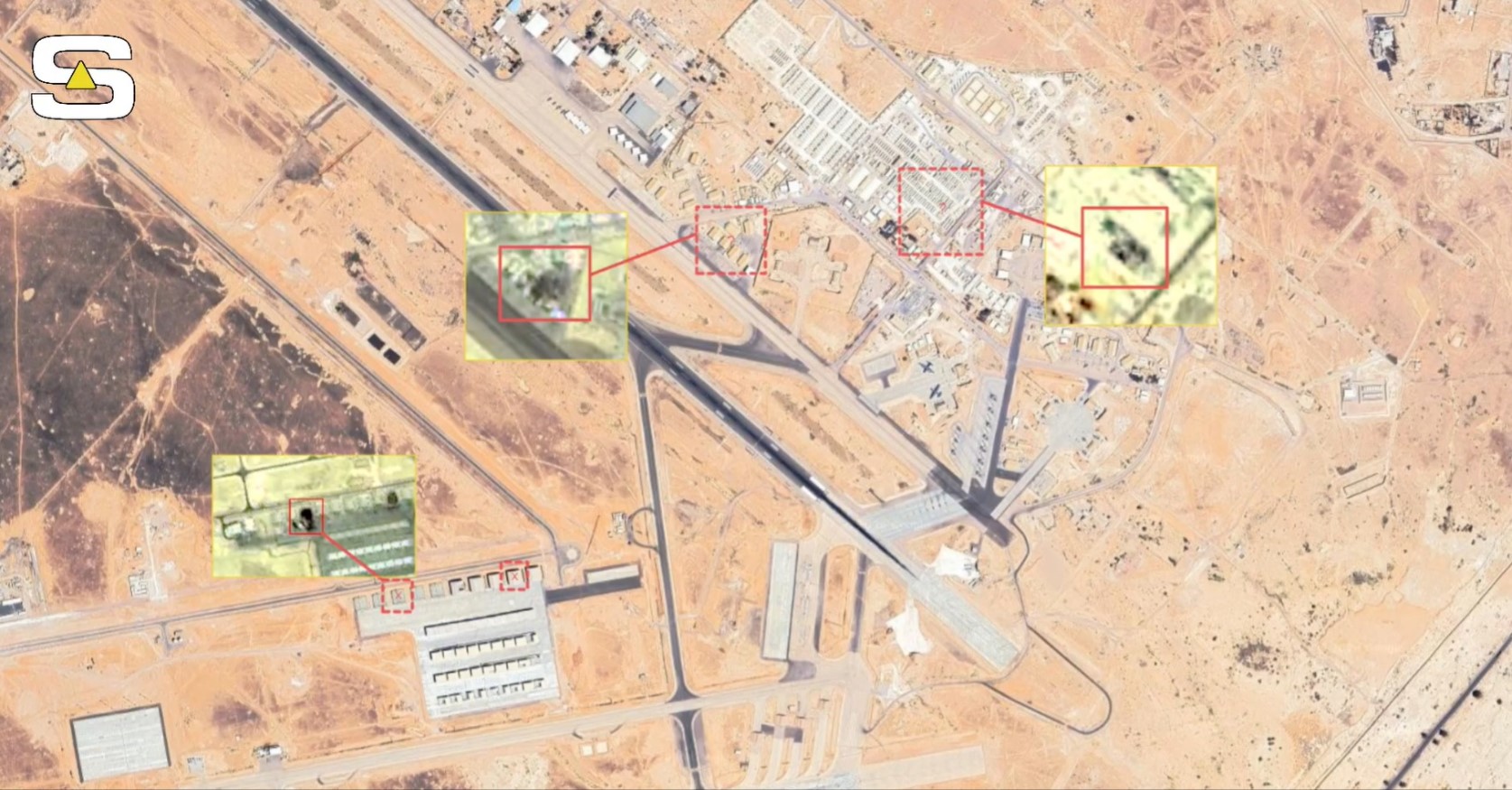 New Satellite Imagery Reveals Extensive Damage at Jordan's Muwaffaq al-Salti Air Base After Iranian Missile Strike
-
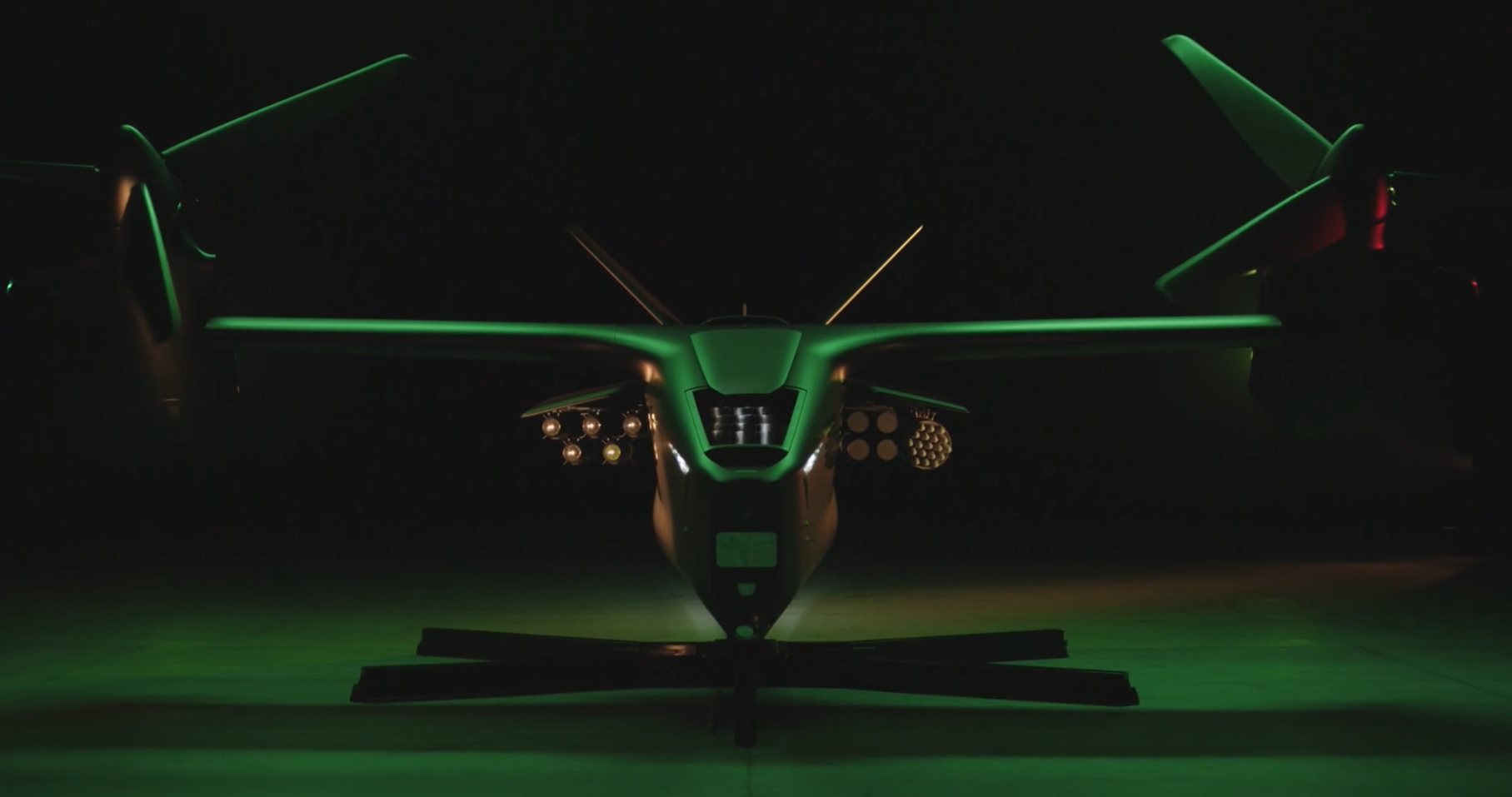 Anduril Unveils Thunder Autonomous Attack Rotorcraft Built with Archer Aviation to Support Apache Helicopters
-
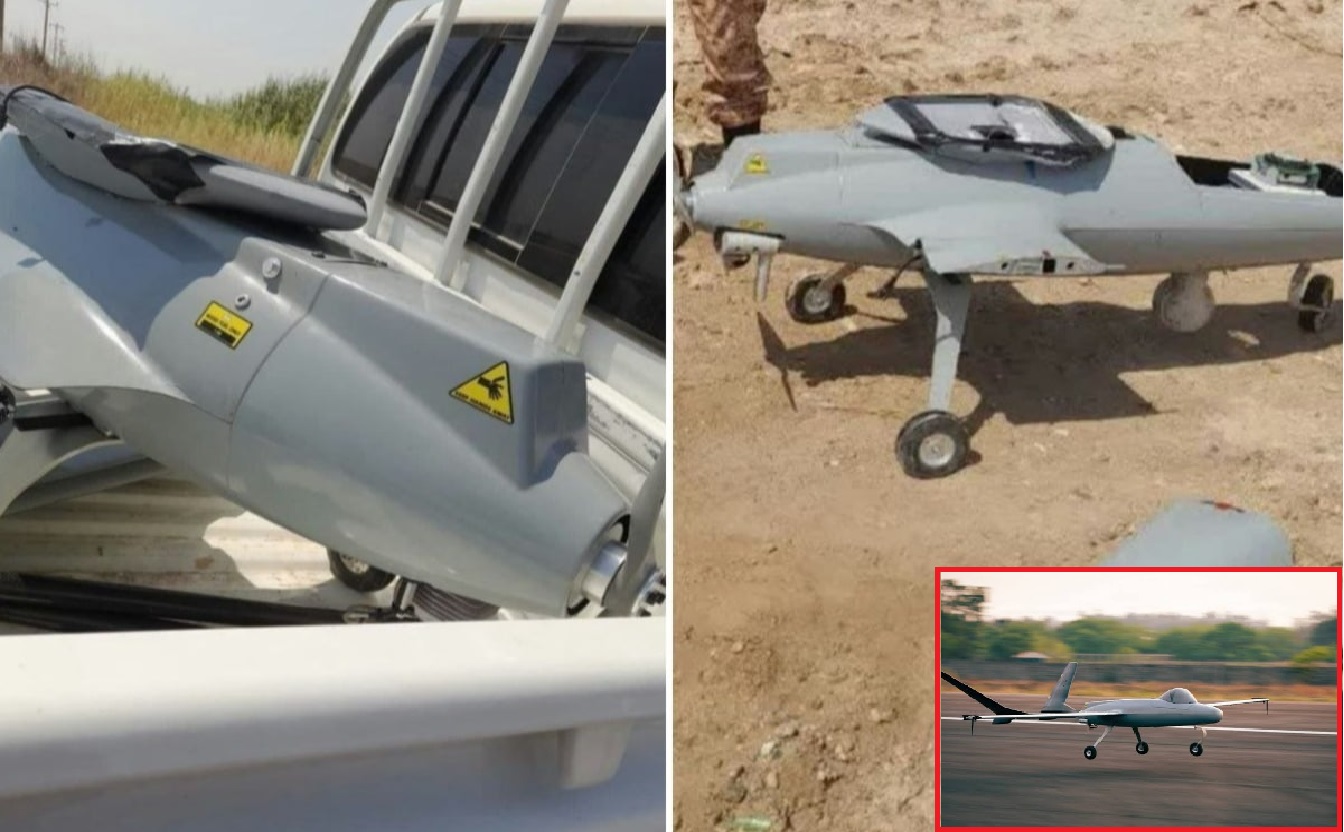 Iran Claims It Shot Down U.S.-Operated Polish-Built Tiguar-M Drone, Releases Images
-
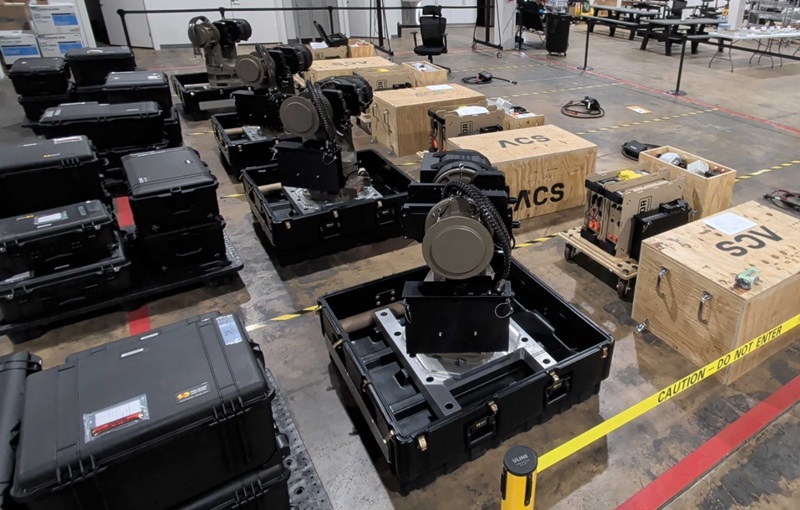 U.S. Marine Corps Selects AI-Powered Bullfrog Weapon Station for L-MADIS Counter-Drone Platform
-
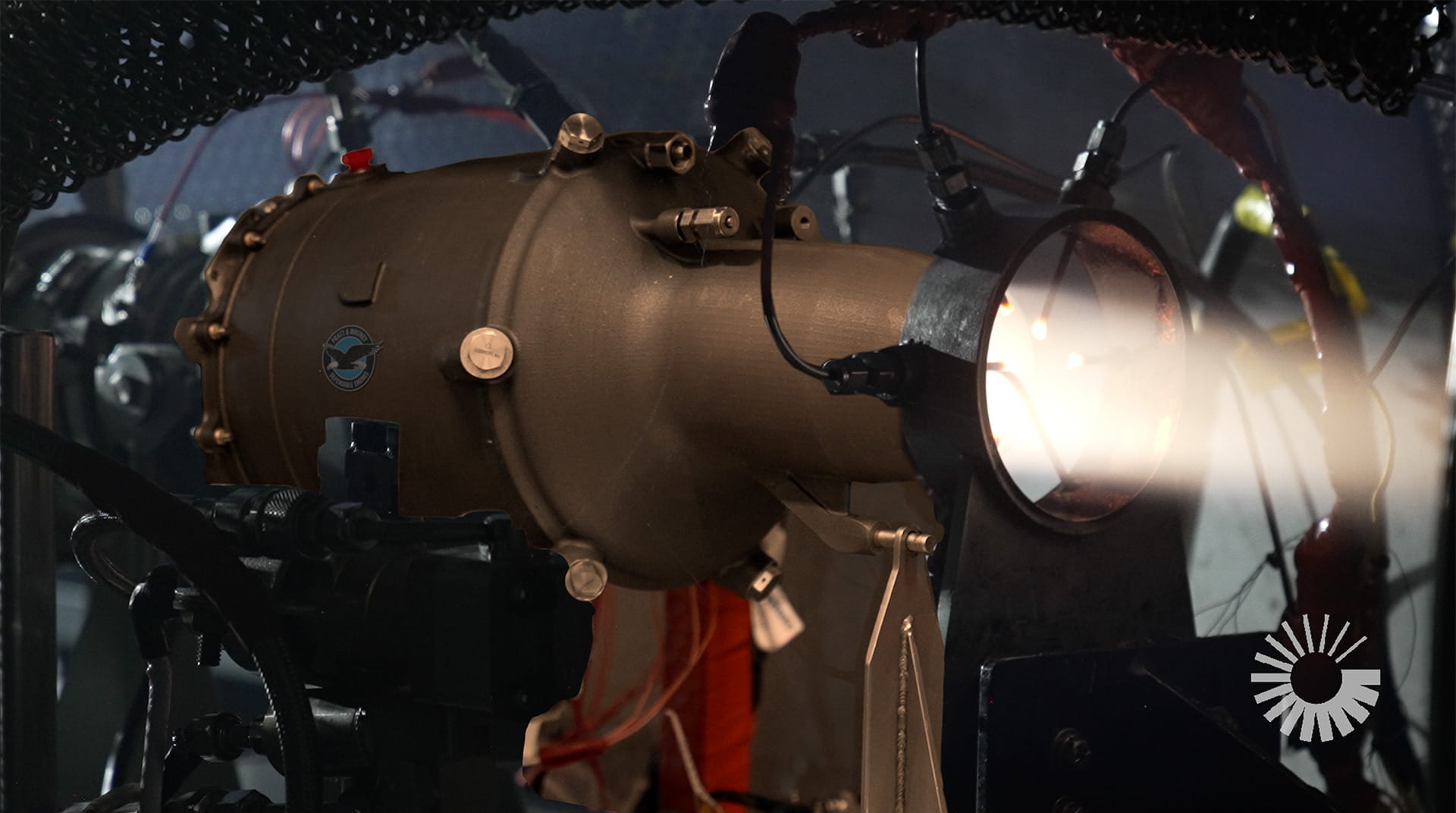 Pratt & Whitney Completes Testing of 3D-Printed TJ150 Engine for Military Applications
-
 Lockheed Martin Unveils MORFIUS X-Rotor High-Power Microwave System That Can Neutralize 50+ Drones in One Flight
-
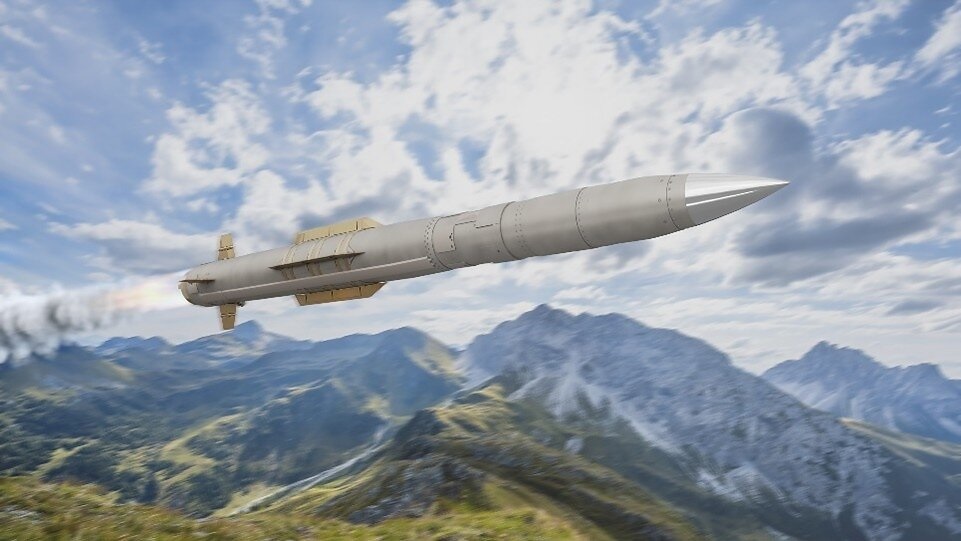 Lockheed Martin Unveils Lower-Cost PAC-3 ACE Interceptor for Patriot Air Defense System
-
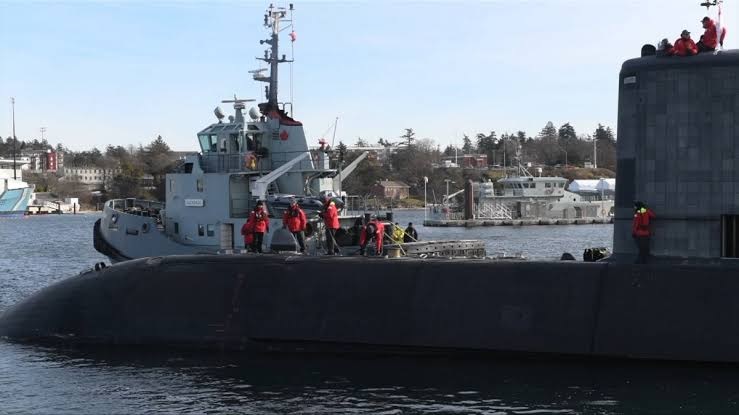 Canada Awards Babcock $1.1 Billion Six-Year Contract Extension to Support Victoria-Class Submarine Fleet
