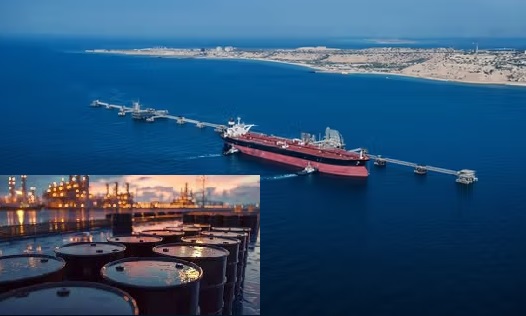
LONDON/DUBAI : Iran loaded nearly 20.1 million barrels of crude oil at its Kharg Island export terminal between February 15 and February 20, 2026, according to shipping analytics data from Kpler, marking one of the most concentrated export surges in recent months.
The six-day total is almost three times the volume recorded over the same period in January and represents an implied export pace of more than 3 million barrels per day. The rate significantly exceeds Iran’s recent average daily export levels, which industry trackers estimate at approximately 1.5 million to 1.8 million barrels per day.
Export Data and Tracking Methodology
Kpler records export volumes once cargoes depart Iranian ports. By contrast, TankerTrackers.com counts shipments only after tankers have fully cleared Iranian waters and are confirmed to be en route to international destinations. Samir Madani, co-founder of TankerTrackers.com, estimates Iranian crude exports will average between 1.5 million and 1.6 million barrels per day for February overall, with stronger flows recorded after February 15 lifting the monthly average.
The surge in mid-February loadings materially raised export totals compared with earlier weeks of the month.
Satellite Imagery and Vessel Activity
Commercial satellite imagery and vessel-tracking data show a marked increase in tanker traffic around Kharg Island during the February 15–20 window. The number of tankers observed in waters southeast of the terminal more than doubled from eight to 18 over the period.
A partial satellite snapshot taken on February 22 showed nine tankers remaining in the vicinity. Several vessels identified on February 15 had remained stationary during the loading period, while others departed after completing cargo operations.
At the same time, crude storage levels on the island declined as barrels were transferred to tankers. A Bloomberg analysis of satellite imagery indicated that at least seven storage tanks appeared full on February 15, while by February 20 six tanks showed visibly lower levels.
According to TankerTrackers.com, storage utilization at Kharg Island stood at roughly 67% during the weekend following the surge. Storage levels had previously reached approximately 88% on January 26, equivalent to around 30 million barrels in tank capacity.
Strategic Importance of Kharg Island
Kharg Island, located in the Persian Gulf about 15 miles off Iran’s coast, handles approximately 90% of the country’s seaborne crude exports. The facility includes multiple loading jetties and large onshore storage tanks connected via subsea pipelines to mainland oil fields.
Oil production and exports remain a central component of Iran’s economy. Most crude shipments are directed to China. Iran maintains a fleet of tankers for exports, including vessels operating under various flags, and cargoes typically transit the Strait of Hormuz before entering international shipping routes.
Regional Context
The increase in Iranian export activity coincides with broader Middle East crude exports exceeding 19 million barrels per day in February, the highest level recorded since April 2020.
The surge also comes amid an expanded United States military presence in the Middle East. No official announcements regarding direct military action against Iranian energy infrastructure have been issued by U.S. authorities, and Iranian officials have not released statements concerning the recent loading activity.
Industry analysts note that similar increases in tanker loading activity were observed during previous periods of heightened regional tension, including in 2024 and shortly before U.S. air strikes last year.
As of February 25, Kharg Island terminal operations continue without interruption, with elevated tanker traffic remaining visible through commercial satellite monitoring.
——— End of Article ———