World
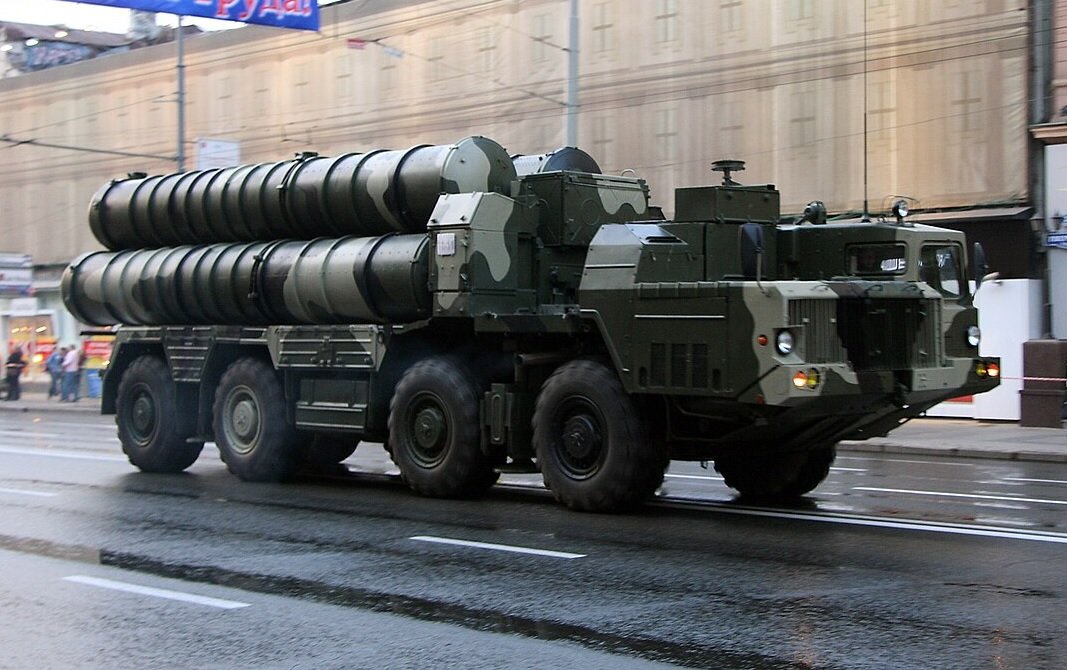
WASHINGTON, D.C. — The United States and Ukraine are jointly working to modernize Soviet-era S-300 surface-to-air missiles and develop an improved variant to strengthen Ukraine's air defense capabilities. According to Robert Hamilton, a retired U.S. Army colonel and president of the Delphi Global Research Center, the upgraded system is expected to become operational closer to the end of 2026. Speaking in an interview with PBS NewsHour, Hamilton said the project focuses on upgrading older S-300 interceptor missiles or developing a newer version with improved capabilities. He said production is expected to reach approximately 100 to a couple of hundred interceptor missiles annually once the program is underway. The initiative is part of a broader effort by the United States and Ukraine to sustain Ukraine's existing Soviet-era air defense systems while increasing the availability of interceptor missiles for launchers that remain in service. Program Builds on Earlier U.S. Commitment The modernization effort follows an announcement made in September 2024 during a meeting of the Ukraine Defense Contact Group at Ramstein Air Base, Germany. At the meeting, then-U.S. Secretary of Defense Lloyd Austin said the United States, working with several European companies, was helping Ukraine design and manufacture a replacement for the Soviet-era S-300 surface-to-air missile system as well as the R-27 air-to-air missile. Austin did not provide technical details about the replacement system or its expected capabilities. Supporting Existing Air Defense Systems At the beginning of Russia's full-scale invasion, Ukraine operated an estimated 25 to 30 S-300PT and S-300PS battalions in varying states of combat readiness. During more than four years of war, continuous Russian missile and drone attacks significantly reduced Ukraine's stockpile of S-300 interceptor missiles. As a result, Ukraine has increasingly relied on Western-supplied air defense systems and their interceptor missiles to defend against aerial attacks. The joint U.S.-Ukraine effort is intended to increase the availability of interceptor missiles for the S-300 systems that remain in Ukrainian service while supporting the long-term operation of these launchers. Localization Efforts in Ukraine Alongside the joint modernization program, Ukraine's defense industry has been working to localize the production of missiles for the S-300 and S-400 systems. According to earlier reports, this work includes integrating the missiles with European radar systems. Fire Point chief designer Denys Stielerman previously described efforts to develop components for these missiles, including plans for engine production and dynamic testing. These localization efforts are aimed at expanding domestic production capability and supporting the continued operation of existing air defense systems. Norwegian Funding Supports Missile Procurement The modernization program has also received financial support from European partners. In December 2025, the Norwegian government allocated more than 500 million Norwegian kroner for the procurement of S-300 surface-to-air missiles for Ukraine as part of its military assistance package. The funding was provided through the Joint Ukraine Multinational Program Services, Training, and Articles Rapid Timeline (JUMPSTART), a U.S.-run defense procurement mechanism designed to help partner countries rapidly purchase and transfer military equipment to Ukraine. Norway's broader assistance package also included funding for ammunition for F-16 fighter aircraft and advanced precision weapon systems. Part of Broader Air Defense Effort Hamilton said the S-300 modernization project is one of several measures aimed at addressing Ukraine's air defense requirements. He noted that the effort complements other air defense systems, including the French-Italian SAMP/T. While planned production of approximately 100 to a couple of hundred interceptor missiles per year remains limited compared with Ukraine's overall demand, the joint program is intended to improve the availability of missiles for existing S-300 launchers and strengthen the country's air defense network. According to Hamilton, the upgraded S-300 system is expected to reach operational status closer to the end of 2026, marking an important step in the ongoing cooperation between the United States and Ukraine to sustain and modernize Ukraine's air defense capabilities.
Read More → Posted on 2026-08-07 12:02:41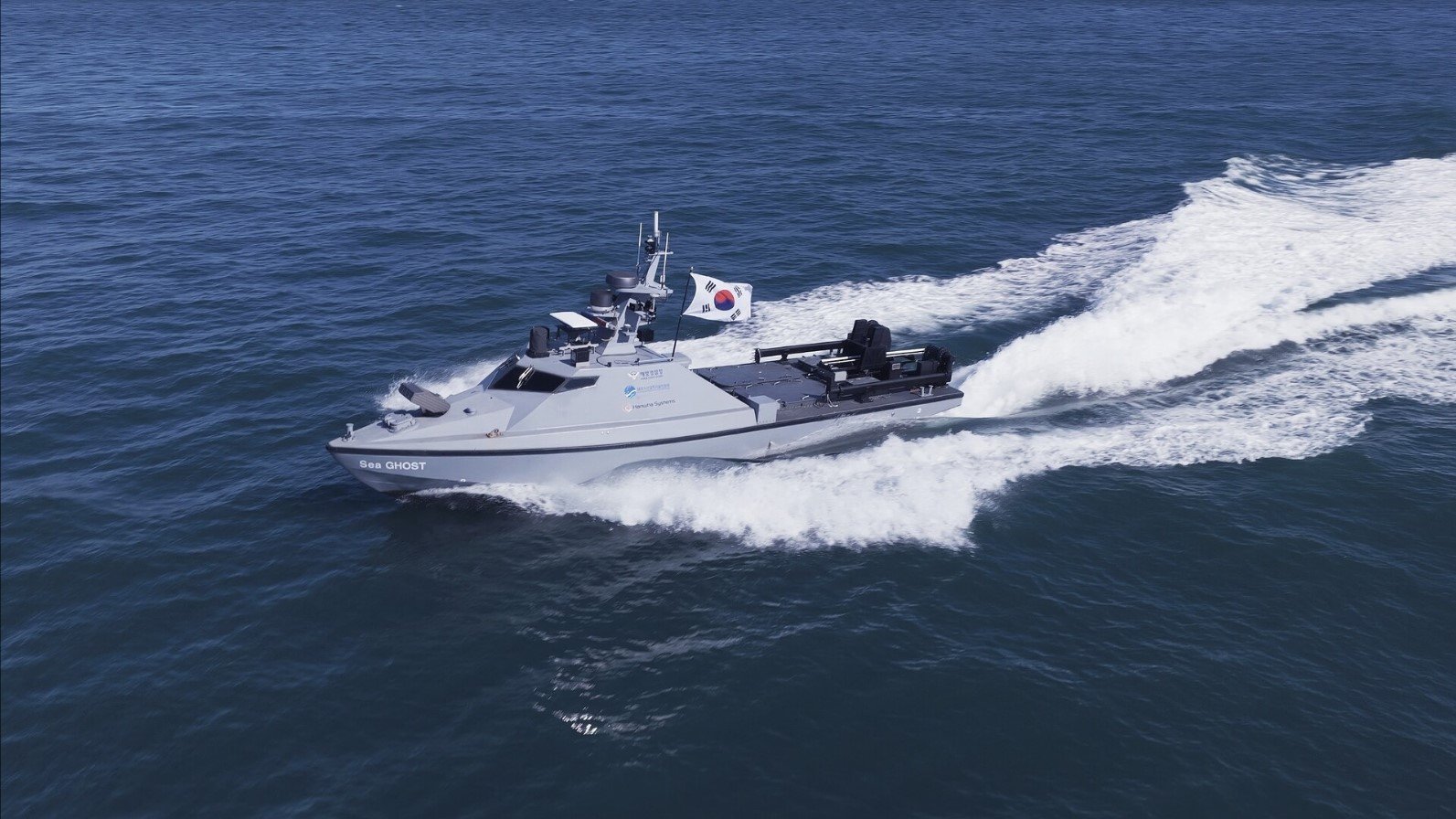
World
BUSAN, South Korea — The Republic of Korea (ROK) Navy has successfully completed its first live combat experiment combining artificial intelligence (AI) with crewed and uncrewed platforms for mine countermeasure operations, marking an important step in the country's efforts to modernize naval warfare. The exercise was conducted on August 3 at the Busan Naval Base in partnership with Hanwha Systems. It evaluated an AI-supported mine warfare system operating under the Navy's Sea GHOST (Guardian Harmonized with Operating manned Systems and Technology based unmanned systems) concept, which focuses on integrating conventional naval vessels with unmanned platforms through Manned-Unmanned Teaming (MUM-T). The demonstration tested how artificial intelligence could support commanders in planning and coordinating mine countermeasure missions while keeping human operators in control of all final decisions. Mine Blockade Scenario The exercise was based on a simulated scenario in which enemy forces blocked the Port of Busan with naval mines, preventing safe access to the harbor. To respond to the threat, the Navy deployed a hybrid task group centered on the 730-ton ROKS Ongjin (MSH-572) minesweeper. The vessel operated alongside several unmanned platforms, including an aerial reconnaissance drone, Hanwha Systems' 30-ton unmanned surface vessel (USV), the Haeryeong reconnaissance USV, and an autonomous underwater vehicle (AUV) designed for mine detection. The unmanned surface vessels were not equipped with operational mine-clearing systems during the trial and instead performed simulated operational roles. AI Supported Mission Planning A key part of the demonstration was the use of a Large Language Model (LLM)-based Automatic Mine Detection System (AMDS), described by the Navy as an "AI combat adviser" and by Hanwha Systems as an AI mission-planning platform. The AI system received natural-language commands and analyzed operational information, including weather conditions and ocean currents, before producing a mine search and sweeping plan. Rather than acting independently, the system submitted its recommendations to the commander aboard ROKS Ongjin. After reviewing and approving the proposed plan, the commander authorized mission assignments for both crewed and unmanned platforms. The exercise demonstrated that AI was used as a decision-support tool, while command authority remained with human personnel. Four Operational Phases Tested During the combat experiment, the Navy evaluated four major stages of mine countermeasure operations. The first phase focused on AI-assisted mission planning, where the system automatically prepared a search strategy using real-time operational information. The second phase tested multi-domain tactical integration, allowing the minesweeper, unmanned surface vessels, autonomous underwater vehicle, and aerial drone to operate through a single network. Communications between the platforms were supported by Eutelsat OneWeb low-Earth-orbit satellite communications. The third phase evaluated real-time target analysis. The Haeryeong USV deployed its onboard autonomous underwater vehicle into the simulated minefield, where it collected underwater information. That data was transmitted in real time to the Automatic Mine Detection System, which processed the information and identified the simulated mine locations. The final phase demonstrated countermeasure procedures, with the unmanned platforms conducting simulated mine neutralization while ROKS Ongjin moved to a safe area to avoid simulated blast damage. Remote Operation Demonstrated The trial also demonstrated the ability to remotely operate the autonomous underwater vehicle and both types of unmanned surface vessels from a land-based control center using Eutelsat OneWeb low-Earth-orbit satellite communications. According to the Navy, the exercise showed that AI-supported planning combined with coordinated crewed and uncrewed operations can improve future mine countermeasure missions by assigning higher-risk tasks to autonomous systems while keeping personnel farther from potential danger. Navy Highlights Future Role of AI Vice Admiral Kwak Kwang-seop, Commander of the Republic of Korea Fleet, said artificial intelligence and unmanned systems will become increasingly important in future naval operations. "AI technology and unmanned systems will become core capabilities on the future maritime battlefield. We must lead the future battlefield through the rapid military application of advanced technology. Moving forward, we will expand civil-government-military collaboration—leveraging Busan as an AI Transformation (AX) hub—to rapidly field AI capabilities and advance our operational capabilities through continuous combat experiments." Commander Lee Kwang-hoon, who leads the ROK Fleet's unmanned systems operations innovation division, said the trial successfully demonstrated the AI decision-support structure. He added that future work will focus on improving the system's accuracy, particularly its ability to distinguish actual naval mines from underwater objects such as rocks and fishing nets. Sea GHOST Development Continues The Sea GHOST concept was first introduced during the ROK Navy's 77th anniversary ceremony in 2022. Since then, South Korean defense companies, including Hanwha Systems and LIG Nex1, have continued developing technologies that support the concept, including anti-submarine warfare unmanned underwater vehicles (ASWUUV), the Haegum series of unmanned surface vessels, and cross-domain data links. The Busan combat experiment forms part of the Navy's broader effort to transition AI-enabled and uncrewed mine countermeasure capabilities from testing into operational fleet service. The ROK Navy plans to conduct additional combat trials as it continues developing future autonomous mine warfare capabilities.
Read More → Posted on 2026-08-07 11:48:53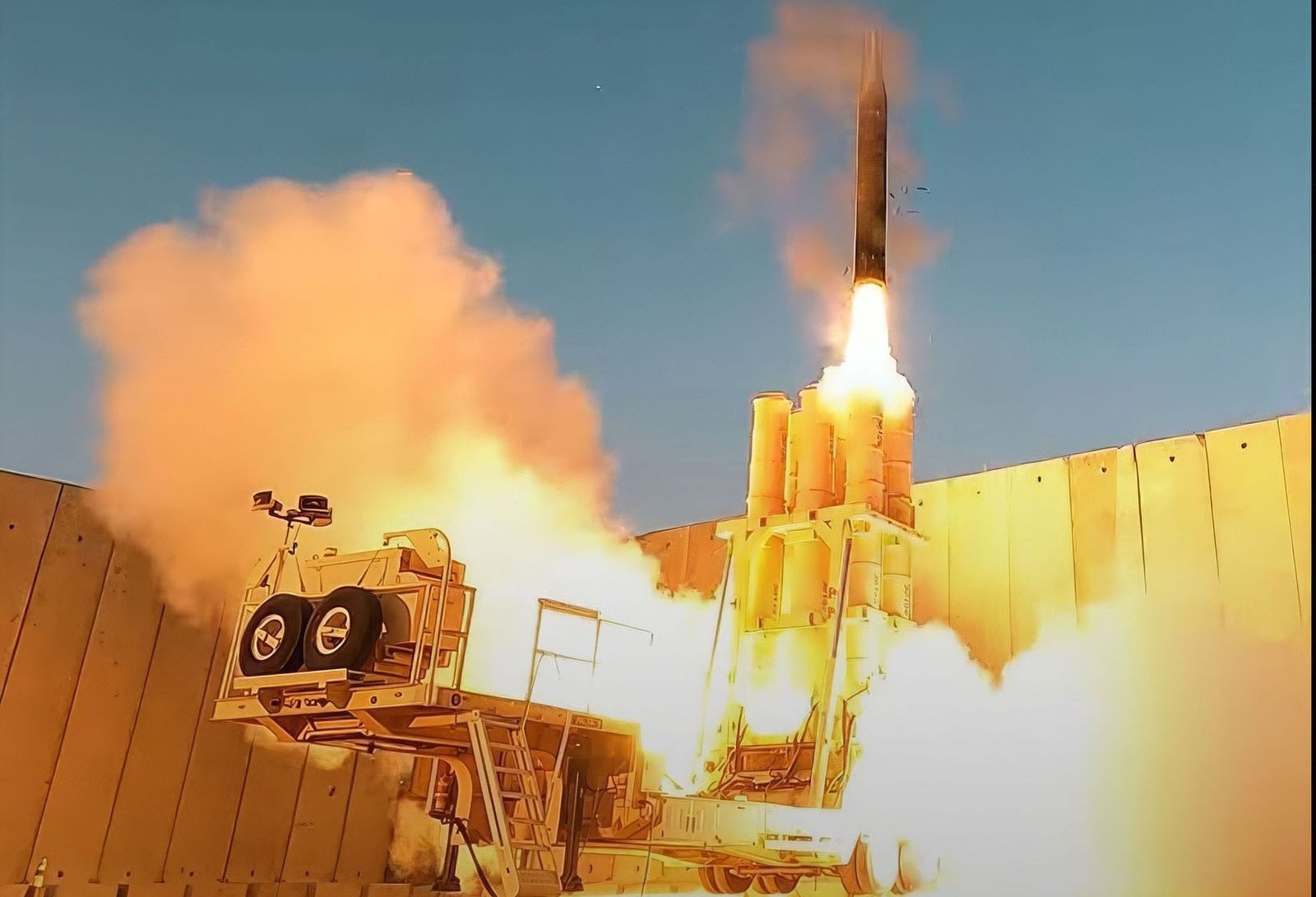
World
TEL AVIV, Israel — The Israeli Ministry of Defense, in cooperation with the U.S. Missile Defense Agency (MDA), successfully completed a planned test of the Arrow Weapon System on Wednesday from a test site in central Israel, marking another step in the long-term modernization of Israel's upper-tier missile defense capabilities. The test was conducted by the Israeli Missile Defense Organization (IMDO), part of the Directorate of Defense Research & Development (DDR&D), together with the Israel Defense Forces (IDF), Israel Aerospace Industries (IAI), and the U.S. MDA. Senior officials from both Israel and the United States were present during the launch. The exercise formed part of a multi-year development program focused on upgrading the Arrow Weapon System to address evolving ballistic missile threats. According to the Ministry of Defense, the latest test evaluated new technological improvements that will support the continued deployment of the system within the IDF. Key Layer of Israel's Air Defense Network The Arrow Weapon System is the highest layer of Israel's multi-tiered air and missile defense architecture. It includes the Arrow 2 and Arrow 3 interceptors and operates alongside David's Sling, Iron Dome, and Iron Beam. The system is designed to intercept ballistic missiles at high altitudes and, in the case of Arrow 3, outside the Earth's atmosphere using hit-to-kill technology. It relies on the Green Pine and Super Green Pine radar systems to detect and classify threats before transmitting data through an advanced command-and-control and fire control network. The Israeli Air Force's Air Defense Command operates the system. Over the past three years, Arrow 2 and Arrow 3 have been used operationally to intercept ballistic missile threats launched toward Israel from Iran and Yemen, including interceptions carried out in space and the exo-atmosphere. New Technologies Integrated Into the System Israeli defense officials said the latest phase of development incorporates advanced technologies, artificial intelligence, lessons learned from recent combat operations, and a transition toward automated manufacturing. IMDO Director Moshe Patel said the recent conflict, which he referred to as the "War of Redemption," demonstrated the importance of Israel's multi-layered air defense system. "In this test, we completed an important and significant stage in the development of the Arrow Weapon System," Patel said. "In these new developments, we incorporated advanced technologies, artificial intelligence, the application of combat lessons, and a move into automated manufacturing." He added that the successful trial represents another step toward equipping the Israel Defense Forces with the upgraded system. Joint Israeli-U.S. Development The Arrow Weapon System is jointly developed and produced by Israel and the United States. Israel Aerospace Industries serves as the prime contractor through its Systems, Missiles & Space Group, while its ELTA Group develops the radar array. Elbit Systems is responsible for the fire control system. Additional interceptor development involves government-owned Tomer, Rafael Advanced Defense Systems, and U.S.-based STARK Aerospace. Overall development and production are managed by the Israeli Ministry of Defense through IMDO in partnership with the U.S. Missile Defense Agency. Flight Test Produced Data for Future Improvements According to officials, the latest launch generated valuable flight data that will be used to improve future versions of the system. The Ministry of Defense said Israel is continuing to increase interceptor production and expand stockpiles while advancing next-generation missile defense capabilities, including work on the Arrow 4 program. During the test, a visible trail from one of the interceptors was observed over several areas, including Ashdod, leading to brief public concern before the Ministry of Defense confirmed it was part of the planned exercise. Flight paths at Ben Gurion Airport were also temporarily adjusted during the activity. Israeli Officials Highlight Continued Modernization Defense Minister Israel Katz said the successful test demonstrated the strength of Israel's defense industry and technological capabilities. He said the Arrow system has already proven its effectiveness during wartime by intercepting numerous threats from Iran and other areas and that Israel continues to upgrade the system to address current and future threats while investing in advanced defense technologies alongside strengthening its offensive capabilities. Israel Ministry of Defense Director General Maj. Gen. (Res.) Amir Baram said the country remains focused on expanding production capacity and improving missile defense capabilities following recent operations involving Iran. He said interceptor stockpiles continue to grow as a result of decisions taken over the past year, supported by continuously evolving technologies. Industry Leaders Stress Long-Term Development IAI Chairman Boaz Levy said the Arrow system continues to play an important role in Israel's defense against ballistic missile threats and reflects the long-standing partnership between Israel and the United States. He added that continued technological development has attracted interest from allied countries while strengthening Israel's security and defense industry. Head of the Directorate of Defense Research & Development, Brig. Gen. (Res.) Dr. Daniel Gold, said the latest engineering improvements combine lessons learned from recent combat operations with long-term planning to address future threats and strengthen Israel's aerial defense capabilities. IAI President and CEO Guy Bar Lev said the data collected during the test will support engineers working on the next generation of aerial defense systems, helping improve future capabilities to identify, classify, track, and intercept emerging airborne threats. The successful test represents another milestone in the ongoing modernization of the Arrow Weapon System as Israel and the United States continue their joint efforts to strengthen protection against current and future ballistic missile threats.
Read More → Posted on 2026-08-07 11:24:09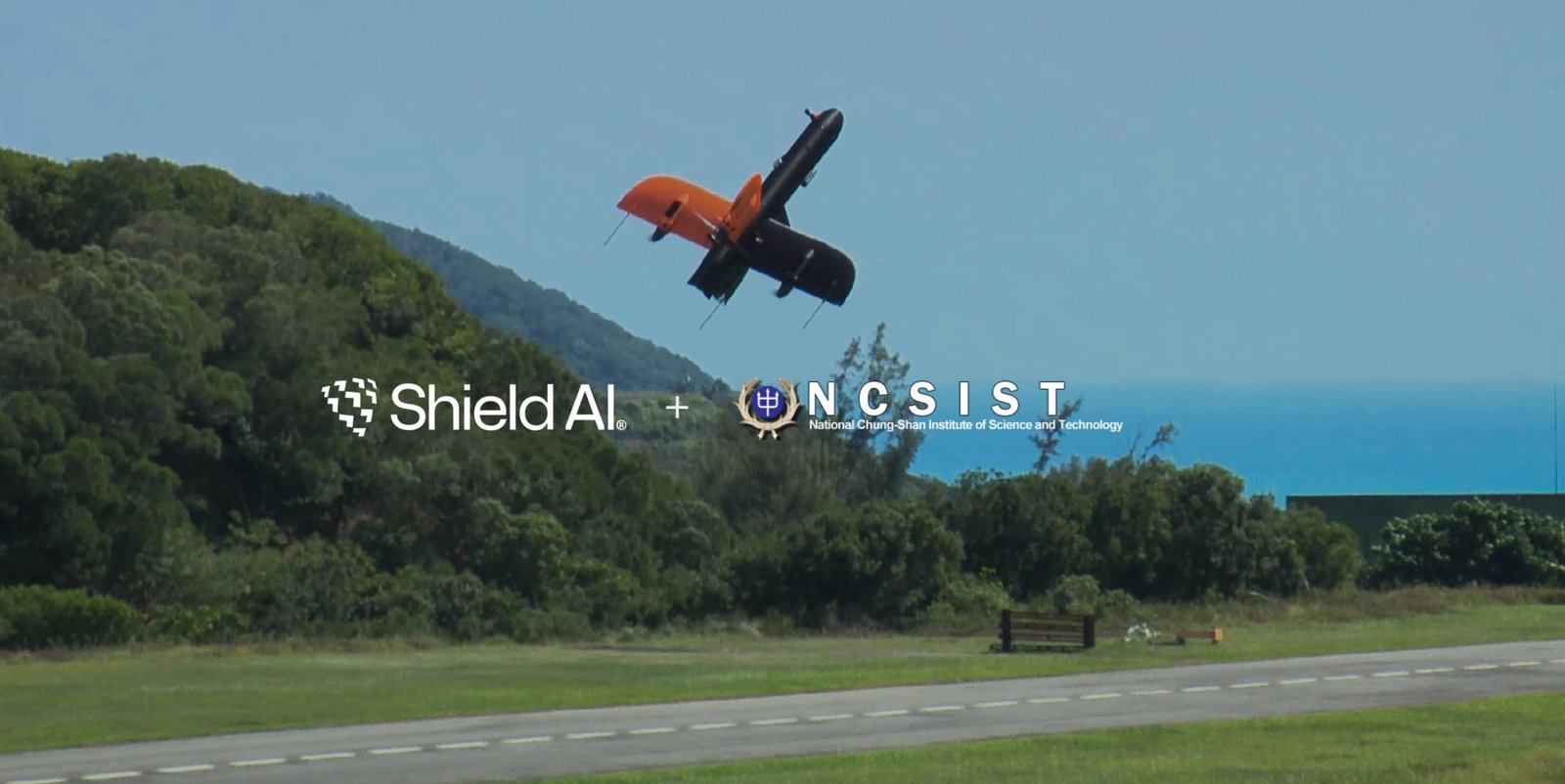
World
TAIPEI — Shield AI and Taiwan's National Chung-Shan Institute of Science and Technology (NCSIST) have successfully completed a coordinated autonomous drone swarm exercise using three Mighty Hornet III unmanned aerial vehicles (UAVs), demonstrating AI-enabled autonomous teaming and expanding their partnership to integrate the technology across more of Taiwan's unmanned defense systems. The field demonstration marked the completion of the organizations' initial contract, which was signed less than three months ago, and resulted in a significant expansion of the agreement. Under the renewed partnership, NCSIST will continue integrating Shield AI's Hivemind autonomy software into a broader range of its unmanned platforms to support multi-system operations from a single ground control station. Autonomous Swarm Demonstration During the exercise, Shield AI's Hivemind autonomy software controlled three NCSIST Mighty Hornet III drones throughout a coordinated search mission. The AI system autonomously launched all three aircraft, divided a wide-area search mission into separate sectors, assigned each UAV its own search area, and coordinated their movements in real time. Throughout the operation, the drones maintained communication with one another while carrying out their assigned tasks. The swarm also identified and navigated around a designated partial no-fly zone while continuing the mission. After completing the search operation, Hivemind executed synchronized autonomous landings for all three aircraft without direct human piloting. Integration Completed in Less Than Three Months The demonstration was completed less than three months after Shield AI and NCSIST formalized their initial agreement to integrate Hivemind into Taiwan's intelligent unmanned systems. As part of the project, embedded Shield AI engineers worked alongside Taiwanese developers, providing hands-on technical training and operational support. The collaboration enabled NCSIST engineers to independently integrate, operate, and employ the Hivemind-enabled capabilities. NCSIST President Li Shih-chiang said the institute achieved a high level of operational proficiency within a short period. "With Shield AI's support, NCSIST achieved a high level of operational proficiency with Hivemind in less than three months," Li said. "What impressed us most was not only the high performance of the AI pilot, but Shield AI's commitment to ensuring we could independently operate and employ the technology in such a short period of time. Their hands-on training and technical expertise and mentorship gave Taiwanese engineers the confidence to integrate and use Hivemind on our own." Hivemind AI Pilot Hivemind is Shield AI's autonomy software designed to function as an AI pilot that enables military platforms to sense, decide, and act independently without continuous human intervention. Unlike conventional autopilot systems that primarily follow pre-planned routes, Hivemind can adjust flight paths, avoid obstacles, and continue operating in environments where communications and GPS signals are degraded or jammed. According to Shield AI, Hivemind has been used to pilot more than 30 different platforms, including F-16 fighter aircraft, helicopters, jet-powered UAVs, drone boats, and ground vehicles. Mighty Hornet III UAV The autonomous mission was carried out using NCSIST's Mighty Hornet III, a Group 2 X-wing unmanned aircraft jointly developed by NCSIST and private industry partners. The UAV features a modular, 3D-printed airframe designed for relatively fast and low-cost production without relying on heavy factory machinery. It combines vertical takeoff and landing (VTOL) capability with the high-speed cruise performance of a fixed-wing aircraft, allowing it to operate without specialized ground launch or recovery equipment. The Mighty Hornet III is also equipped with domestically produced high-density batteries and an electro-optical/infrared (EO/IR) sensor for target identification. Partnership Expansion Following the successful demonstration, Shield AI and NCSIST agreed to expand their cooperation beyond the initial project. The next phase will focus on integrating Hivemind into additional NCSIST unmanned systems, enabling multiple autonomous platforms to operate together under the control of a single ground control station. Shield AI President and Co-founder Brandon Tseng said autonomy is becoming an essential capability for operating large numbers of unmanned systems. "You can build ten million drones, but you can't train ten million drone pilots. Autonomy is the critical enabling technology to effectively leverage drones on the battlefield," Tseng said. "Hivemind's ability to enable autonomous teaming is why autonomy is becoming one of the most important force multipliers in modern defense. Enabling sovereign development of AI pilots in Taiwan greatly enhances the defense capabilities of the country and we look forward to continuing to build with partners like NCSIST to deliver the mission autonomy Taiwan needs to deter conflict." Supporting Taiwan's Autonomous Defense Capabilities The successful field demonstration concludes the first phase of cooperation between Shield AI and NCSIST while laying the foundation for broader deployment of AI-enabled autonomy across Taiwan's unmanned systems. The expanded partnership will support future multi-platform autonomous operations by integrating Hivemind into additional NCSIST platforms under the new agreement.
Read More → Posted on 2026-08-06 16:39:59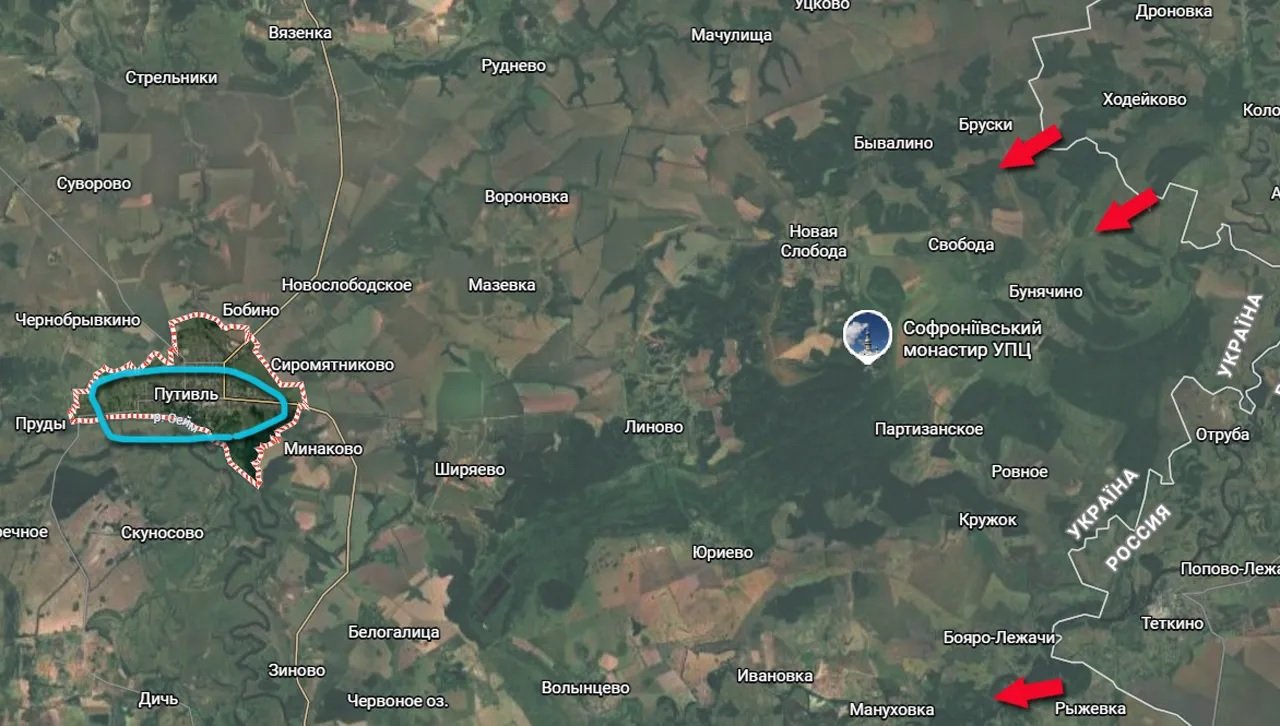
World
SUMY OBLAST, Ukraine — Russian forces have reportedly crossed the Ukrainian border near the villages of Bruski and Bunyakino in northeastern Sumy Oblast, opening a new tactical axis of advance along the northern front, according to operational reports. The reported incursion took place in the Seim River floodplain, close to a heavily wooded area locally known as the State Forest. Reports state that Russian troops have taken control of approximately 12 square kilometers of territory following the advance. Advance Reported in Seim River Floodplain According to the reports, Russian units crossed the border near Bruski and Bunyakino, two small villages in the Konotop district of Sumy Oblast located close to the Russian border. Bunyakino, also referred to in some reports as Bunyachine or Bunyakine, lies about 5 kilometers from the right bank of the Seim River, with Bruski located nearby. The surrounding area consists of floodplain terrain and forested sections that can influence troop movement and defensive positions. The Seim River is a major tributary of the Desna River, flowing through Russia's Kursk Oblast before entering Ukraine's Sumy and Chernihiv oblasts. Putivl Identified as Key Operational Direction Military analysts cited in the reports say the advance near Bruski and Bunyakino opens a new operational direction toward the town of Putivl, located approximately 22 kilometers from the Russian border. Putivl serves as an important logistical hub and sits on the regional road network connecting Sumy, Shostka, and Novgorod-Seversky. According to the assessments, if Russian forces maintain their advance and disrupt the Sumy–Putivl–Shostka highway, Ukrainian military logistics and supply routes supporting operations across northeastern Sumy Oblast and parts of eastern Chernihiv Oblast could become more difficult. Other Military Activity Reported in the Region The reported border crossing comes alongside other Russian military activity in the region. Reports indicate Russian troops are expanding positions west of the recently captured settlement of Ryazhevka, an area that previously served as a Ukrainian fortified position opposite the Russian settlement of Tyotkino in Kursk Oblast. At the same time, Sumy Oblast has experienced an increase in aerial attacks. According to regional reports, Russian forces have carried out strikes using guided aerial bombs and combat drones over the past 48 hours. Recent strikes on the city of Sumy and nearby communities reportedly caused civilian casualties and damage to infrastructure. Ukrainian Response According to the reports, Ukrainian defense forces are repositioning units to respond to the new direction of the reported advance. Local authorities continue evacuation efforts in vulnerable border communities as fighting remains active along parts of the northern frontier. Part of Ongoing Border Operations The Bruski-Bunyakino area forms part of the wider border zone in northern Sumy Oblast, where Russian forces have conducted cross-border operations at multiple locations since early 2025. Ukrainian officials and open-source monitoring groups, including DeepState, have previously documented Russian activity near settlements including Hrabovske, Novenke, Zhuravka, Yunakivka, and Khotin. Recent Ukrainian military statements have described continued attempts by small Russian assault groups and infantry units to cross the border, with Ukrainian forces responding using artillery, drones, and border guard units. Independent Verification Not Yet Available At the time of publication, no independent confirmation from major Ukrainian military sources or international news organizations was available specifically verifying the reported border crossing near Bruski and Bunyakino or the reported capture of approximately 12 square kilometers of territory. The reported developments are consistent with the broader pattern of localized fighting observed along the Sumy border throughout 2025 and into 2026, where military activity has largely focused on areas close to the international border rather than deep advances toward the city of Sumy. Ukrainian authorities and military officials continue to monitor the situation as operations remain ongoing along the northern border. Source : en.topwar.ru
Read More → Posted on 2026-08-06 15:42:45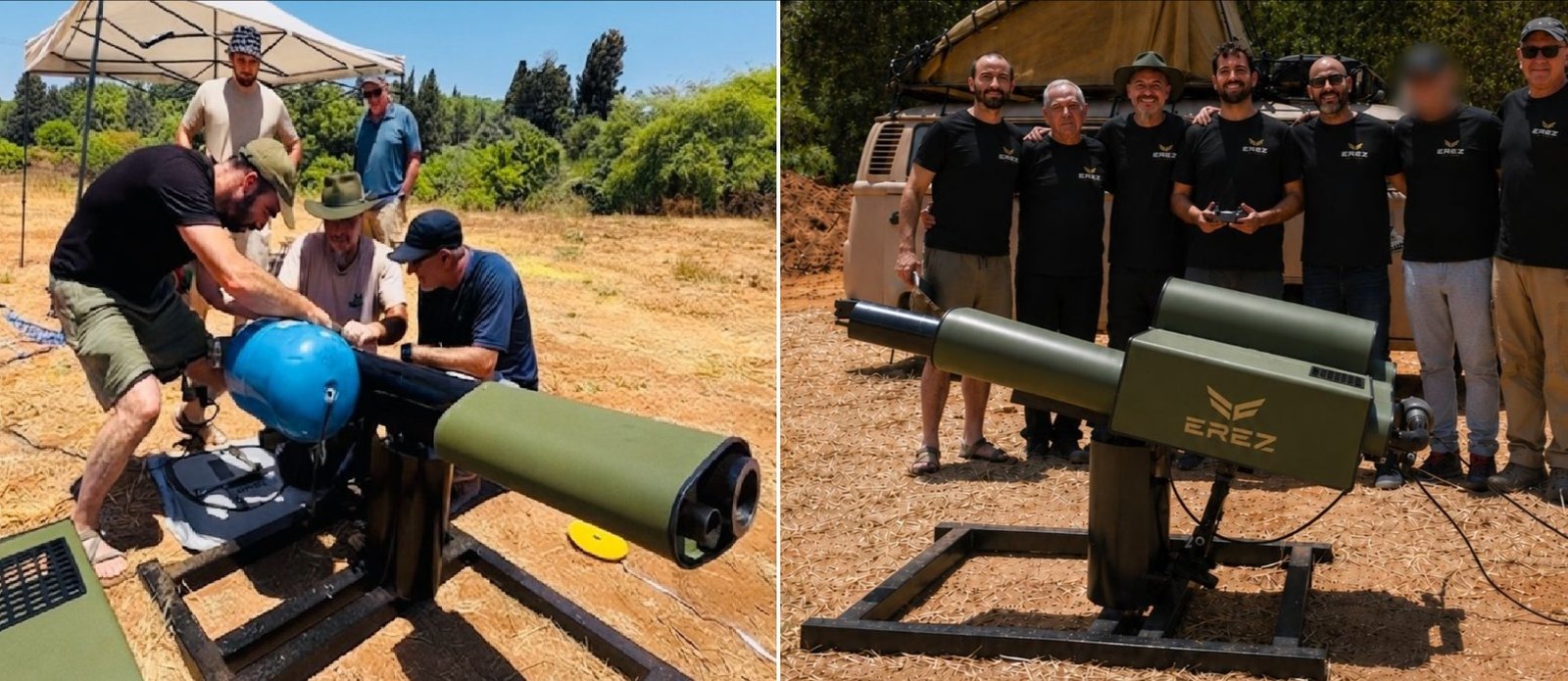
World
HOD HASHARON, Israel — Israeli defense startup Erez Defense Solutions has completed another round of field testing for its developing counter-drone defense system, focusing on the validation of a proprietary capsule and its launch mechanism as the company continues work on the technology. The company, based in Hod HaSharon, about 20 kilometers northeast of Tel Aviv in central Israel, said this week's trials concentrated on programming and integration of the system's two core components: a proprietary capsule and the mechanism used to launch it. Erez Defense Solutions did not disclose the capsule's function after launch or explain whether the system is designed to physically capture drones, disable them electronically, or destroy them. The company also did not release technical specifications or operational details of the system. According to the company, the latest testing campaign was intended to validate the performance of the launch hardware and capsule under real operating conditions rather than laboratory simulations. "Field testing is the heartbeat of our innovation. In the world of Electronic Warfare and Counter-Unmanned Aircraft Systems (C-UAS), theory is one thing, but reality is another. No simulation, however advanced, can replace the complex dynamics of the real world," the company said in a statement. Three Main Objectives Erez Defense Solutions said the latest field trials were designed around three primary objectives: Testing the physical limits of the launch hardware and proprietary capsule under demanding conditions. Verifying operational feasibility by confirming the integrity of the ballistic and mechanical launch sequence in real-field conditions. Ensuring basic reliability so the core system operates consistently and predictably during operation. The company said the trials provided important programming and integration data that will support the next stages of development. However, it did not state that the system has reached operational readiness or is ready for military deployment. The focus on mechanical validation and basic reliability indicates the project remains in an engineering development phase rather than final qualification for procurement or service entry. Growing Focus on Counter-Drone Technologies Counter-unmanned aircraft systems (C-UAS) have become an increasingly important area of defense development as small, low-cost drones continue to pose security challenges on battlefields and around military and civilian infrastructure. C-UAS solutions generally fall into two categories. Hard-kill systems neutralize drones using weapons such as missiles, guns or lasers, while soft-kill systems seek to stop drones without destroying them through methods including electronic jamming, navigation spoofing or physical capture. Israeli defense companies have introduced several counter-drone technologies in recent years, including soft-kill solutions designed for environments where limiting debris is important. Israel's defense industry has expanded work on counter-drone capabilities in response to security threats that officials say exist across multiple fronts, including cross-border drone activity and attacks linked to Iran-aligned groups. The evolving threat environment has encouraged continued investment in new C-UAS technologies by both established defense firms and emerging startups. Development Continues Erez Defense Solutions credited its engineering and development teams for the progress achieved during the latest round of testing. "The current success is a testament to the hard and precise work of our engineering and development teams, who never stop researching, learning, and improving," the company said. "We are moving forward full steam ahead to deliver a leading and reliable solution to the market." The company did not disclose information regarding its founding, funding, development timeline, customers, or potential procurement programs. As of Aug. 6, 2026, no additional verified public information about the system's technical design, operational concept, or company history had been released.
Read More → Posted on 2026-08-06 14:36:06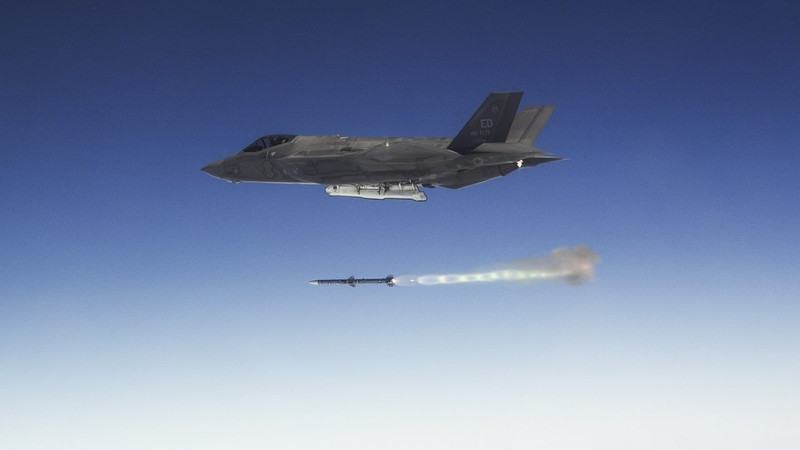
World
DARWIN, Australia — Australia will invest nearly A$736 million (approximately US$518 million) to acquire the AIM-260 Joint Advanced Tactical Missile (JATM) from the United States, becoming the first country outside the US to operate the next-generation beyond-visual-range air-to-air missile. Deputy Prime Minister and Defence Minister Richard Marles announced the acquisition on August 6 during Exercise Pitch Black at RAAF Base Darwin, Australia's premier multinational air combat training exercise. The missiles will be acquired through the US Foreign Military Sales (FMS) program and will initially be integrated with the Royal Australian Air Force's (RAAF) Boeing F/A-18F Super Hornet fleet. Integration will later expand to the Lockheed Martin F-35A Lightning II and Boeing EA-18G Growler aircraft. Marles said the AIM-260 missiles will be fitted to Australia's Super Hornets, Growlers and F-35s, with the weapon expected to operate on those aircraft in the future. However, no specific delivery schedule was announced. Strengthening Australia's Air Combat Capability The AIM-260 is a beyond-visual-range air-to-air missile (BVRAAM) developed by Lockheed Martin. It is designed to address advanced airborne threats and is intended to supplement or eventually replace the AIM-120 AMRAAM in US service. According to publicly available information, the missile has a range of at least 200 kilometres and can reach speeds of around Mach 5. The missile is also designed to fit existing launch systems and the internal weapons bays of aircraft such as the F-35, allowing fifth-generation fighters to retain their low-observable configuration while carrying the weapon internally. The AIM-260 acquisition will provide the Royal Australian Air Force with a longer-range air-to-air engagement capability against airborne targets. It will also complement the Australian Defence Force's (ADF) existing inventory of air-to-air missiles and surface-based air defence systems. Supporting Australia's Defence Strategy The purchase directly supports the priorities outlined in Australia's 2026 National Defence Strategy and the accompanying Integrated Investment Program, which call for a layered air and missile defence architecture capable of detecting and countering threats. The Australian government said the acquisition will also strengthen operational compatibility between Australian and US military forces through the shared use of the AIM-260. The announcement follows Australia's recent investments in medium-range air defence and long-range strike capabilities as part of a broader effort to modernise the Australian Defence Force. "This announcement is the latest milestone in the delivery of long-range, high-tech capabilities for our Defence Force," Richard Marles said. "The Albanese Government continues to deliver critical capabilities that will allow the ADF to strike at a longer range, deter any adversary and protect our national interests." He added that announcing the purchase during Exercise Pitch Black highlighted Australia's commitment to regional security. "It is fitting to make this announcement at Exercise Pitch Black, which is an important demonstration of Australia's commitment to the peace, stability and security of our region," Marles said. The government added that the investment will help ensure the Australian Defence Force remains capable, equipped and prepared to respond to Australia's strategic circumstances. Part of a Broader Guided Weapons Investment Defence Industry Minister Pat Conroy said the AIM-260 would place Australia at the forefront of the missile's international introduction. "JATM missiles are some of the most sophisticated air-to-air weapons in the world, and Australia will be the first country to operate them outside the US," Conroy said. He said the investment would strengthen the Australian Defence Force's ability to detect and counter threats while improving national security. "This investment will deliver the most advanced capability for our ADF to detect and counter threats, and keep Australians safe," Conroy said. "This is made possible thanks to the Albanese Government's record investment in Defence, including up to A$36 billion over the next decade for Guided Weapons and Explosive Ordnance." The AIM-260 procurement forms part of Australia's wider Guided Weapons and Explosive Ordnance enterprise, which aims to strengthen the country's long-term missile capability. Earlier US Notification and Initial Purchase Earlier in 2026, the US Congress was notified of a potential defence package valued at approximately US$3.16 billion. That notification covered up to 450 AIM-260 missiles, along with integration test vehicles, guided test vehicles, training, logistics support and other associated equipment. The Australian government's confirmed commitment of nearly A$736 million represents an initial purchase under that broader framework. No official explanation has been provided regarding the difference between the earlier US notification and Australia's announced investment. Separately, Australia is continuing efforts to expand its domestic guided weapons production capability through partnerships with international defence companies, including work involving locally developed rocket motors. Once integrated across the Royal Australian Air Force's F/A-18F Super Hornet, EA-18G Growler and F-35A Lightning II fleets, the AIM-260 is expected to strengthen Australia's long-range air combat capability and improve interoperability with US forces during future operations and joint exercises.
Read More → Posted on 2026-08-06 13:56:32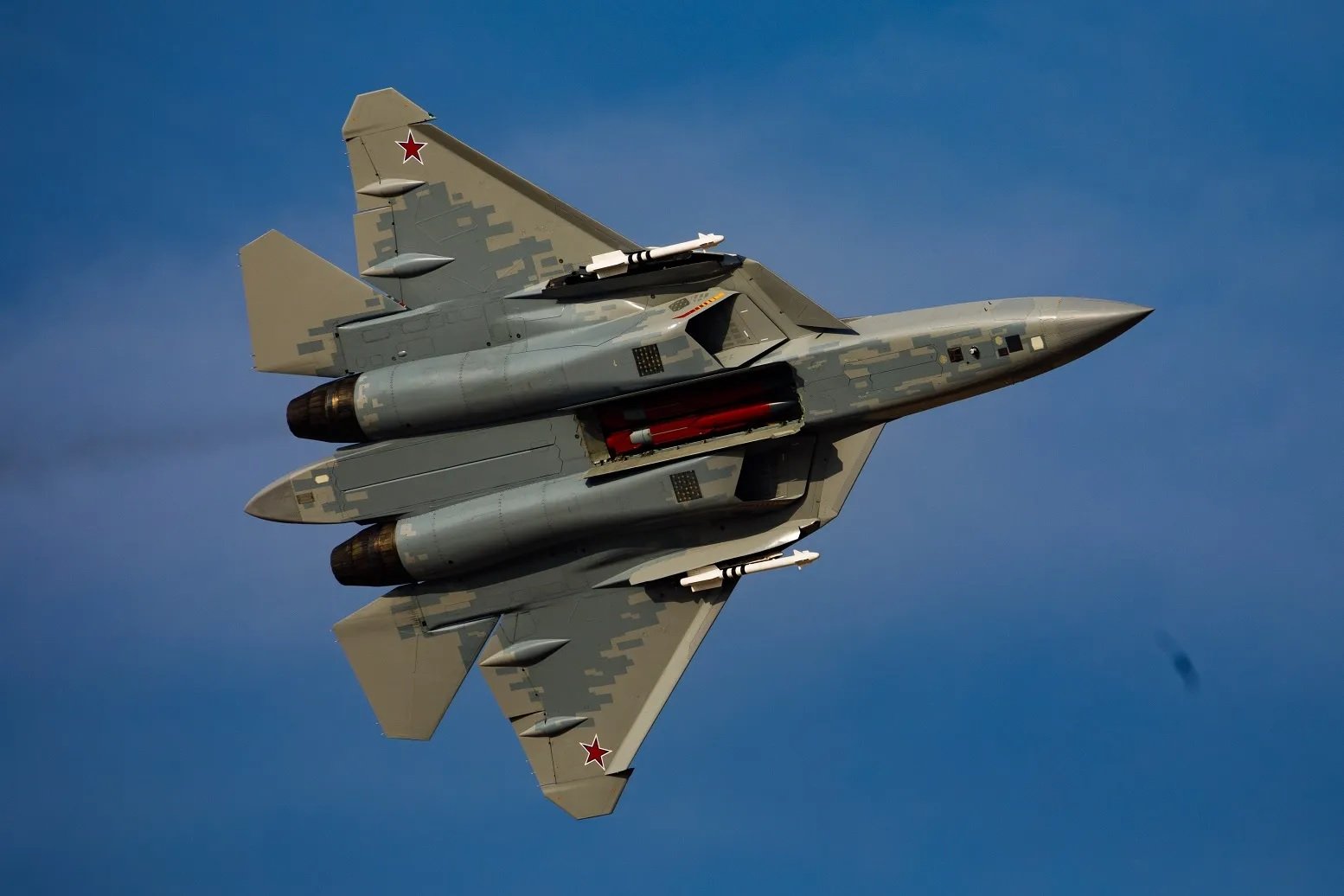
World
MOSCOW — Russia has officially confirmed that its fifth-generation Su-57 stealth fighter has achieved its first air-to-air kill during the conflict in Ukraine, marking the first official acknowledgment of such an engagement by Moscow. The announcement was made by Rosoboronexport Director General Alexander Mikheev, who said the aircraft successfully employed the newly introduced RVV-SDM medium-range air-to-air missile while operating in a heavily contested combat environment. According to Mikheev, the Su-57 has engaged airborne, ground and surface targets using Russian-made weapons while operating against advanced air-defense and electronic warfare systems. He stated that the aircraft demonstrated its capabilities in real combat conditions, including during the engagement that resulted in the confirmed aerial victory. The announcement coincides with the international debut of the RVV-SDM, a new medium-range air-to-air missile developed by Tactical Missiles Corporation primarily for the export version of the fighter, the Su-57E. RVV-SDM Designed for Internal Carriage Rosoboronexport said the RVV-SDM is designed to be carried inside the Su-57E's internal weapons bays, allowing the aircraft to retain its low-observable characteristics during combat operations. Official images released by the company show two RVV-SDM missiles mounted inside the fighter's internal weapons bay. According to Rosoboronexport, the missile features: Fire-and-forget capability An active-passive radar seeker An inertial navigation system with radio data-link for mid-course updates Improved aerodynamic performance A higher power-to-weight ratio than earlier missiles Enhanced resistance to electronic jamming The company also stated that the missile is capable of engaging fixed-wing aircraft, helicopters, cruise missiles and unmanned aerial vehicles at altitudes ranging from 15 metres to 25 kilometres and at target speeds of up to Mach 3. It is designed to operate during both day and night and under electronic countermeasure conditions. Rosoboronexport has not disclosed the missile's maximum engagement range. While some estimates suggest performance comparable to or greater than the earlier RVV-SD, no official range has been released. Defense analyst and former Indian Air Force pilot Vijainder K. Thakur has assessed that the RVV-SDM is likely an advanced development of the RVV-SD, modified for internal carriage and optimized for the Su-57's internal weapon bays. The missile is also being offered for other Russian combat aircraft and, after suitable modifications, for selected foreign platforms. First Official Confirmation of Su-57 Air-to-Air Victory Although reports claiming Su-57 aerial victories had appeared earlier this year, Russia had not officially confirmed any such engagement until now. In April 2026, reports attributed to Sergei Lebedev claimed that a Su-57 destroyed a Ukrainian aircraft over the Mykolaiv region using a long-range missile. In May, Russian media reported that a Su-57 had used an R-37M long-range missile against a Swedish Saab 340 AEW&C aircraft over eastern Ukraine. Those reports were never officially confirmed by Russian authorities. Mikheev's latest statement represents Moscow's first official acknowledgment that the Su-57 has achieved an air-to-air kill during the Ukraine conflict. Su-57 Continues to Operate Cautiously Despite the confirmed engagement, Russia has continued to employ the Su-57 cautiously during the war. The aircraft has primarily been used for stand-off strike missions launched from outside heavily defended areas protected by Western-supplied air-defense systems, including Patriot batteries. More recently, publicly available images have shown Su-57 aircraft carrying R-73 short-range air-to-air missiles on external wing pylons instead of inside internal weapon bays. Although this configuration reduces the aircraft's stealth characteristics, it is considered suitable for short-range interception missions against drones and cruise missiles. Reports indicate the aircraft has been used in anti-drone operations, including missions near Moscow and in the defense of industrial facilities. Export Campaign Focuses on Su-57E Rosoboronexport is marketing the RVV-SDM as part of its broader export package for the Su-57E. The company says international interest in the aircraft has increased following its combat record. Algeria remains the only officially confirmed export customer for the Su-57E. In November 2025, United Aircraft Corporation (UAC) Director General Vadim Badekha confirmed that the first two Su-57E aircraft had been delivered to a foreign customer and had entered combat duty. Subsequent reports and publicly available visual evidence identified Algeria as the recipient. Algeria already operates Russian-built Su-30MKA, MiG-29, and MiG-25 fighter aircraft. Russia also continues to promote the Su-57E to India, offering technology transfer and local production. However, no procurement decision has been announced by the Indian government. Alongside the RVV-SDM, Rosoboronexport is offering other weapons for the Su-57E, including the RVV-MD2 short-range missile, the RVV-BD long-range air-to-air missile, and various internally carried air-to-surface munitions. Ongoing Upgrades Under Megapolis Program The Su-57 continues to receive upgrades under Russia's long-term Megapolis development program. UAC has stated that the aircraft will continue evolving beyond 2040 through improvements to its weapons, onboard systems and overall capabilities. In February 2026, the Russian Aerospace Forces accepted another batch of Su-57 fighters featuring an updated technical configuration. Open-source analysis of official images identified visible changes to the aircraft's 101KS electro-optical complex, indicating expanded passive infrared and visual detection capabilities intended to improve situational awareness and self-protection. Separately, UAC confirmed in December 2025 that the Product 177 (Izdeliye 177) engine had entered flight testing. According to UAC, the engine produces up to 16,000 kilograms of thrust with afterburner, while offering lower fuel consumption and greater durability than the current AL-41F1 engines. The engine is planned for future integration into the Su-57 fleet. Comparison With the F-35 Russia's announcement comes months after the first officially confirmed air-to-air kill by an F-35 against a manned aircraft. In March 2026, the Israel Defense Forces (IDF) confirmed that an Israeli F-35I Adir shot down an Iranian Yak-130 over Tehran. Before that engagement, the F-35 had been employed against drones and cruise missiles in several operational theaters. The operating environments for the two aircraft differ. Ukraine's airspace is defended by modern Western air-defense systems, including the Patriot system, while previous F-35 combat operations have taken place in different operational environments. Russia has presented the Su-57's latest combat achievement alongside the introduction of the RVV-SDM as evidence of the aircraft's expanding operational role and as part of its continuing effort to promote the Su-57E and its associated weapons to international customers.
Read More → Posted on 2026-08-05 16:37:08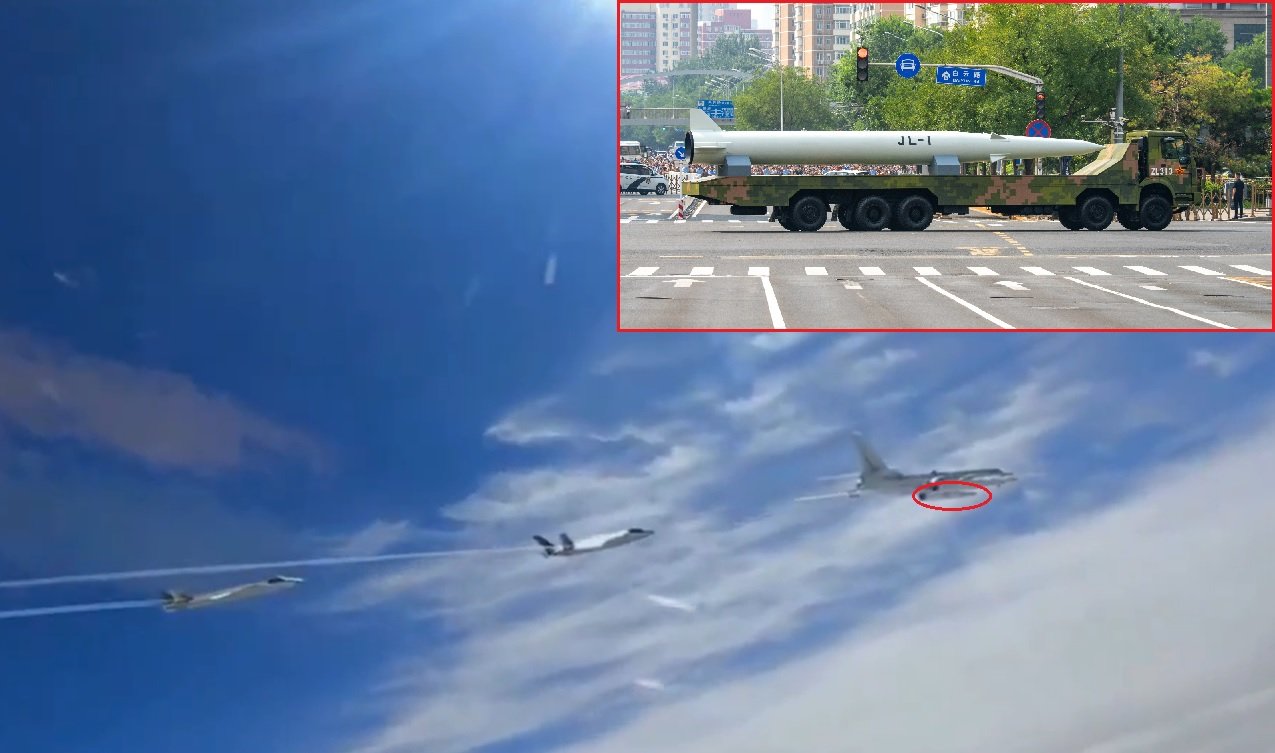
World
BEIJING — China has released the first official in-flight footage of its H-6N strategic bomber carrying what military analysts identify as the JL-1 air-launched ballistic missile (ALBM), providing the clearest official view so far of the aircraft and missile combination. The footage appeared in the final episode of the documentary Securing Victory, broadcast by state broadcaster CCTV as part of events marking the 99th anniversary of the People's Liberation Army (PLA) on August 1. The documentary was jointly released by the Central Military Commission's Political Work Department, the Cyberspace Administration of China, and China Media Group. In the video, the H-6N bomber is shown flying with a large externally mounted missile beneath its fuselage while being escorted by two J-20 fifth-generation stealth fighters. Although CCTV did not identify the weapon by name, military observers and Chinese media reports assessed it to be the JL-1, also known as Jing Lei-1 ("Startling Thunder"), based on its size and external appearance. The footage marks the first official confirmation of the JL-1 being carried by an H-6N during flight. The missile had previously appeared publicly during a military parade in Beijing in September 2025 alongside other strategic weapons, while unofficial images of the aircraft and missile combination had circulated online earlier. H-6N Modified for Air-Launched Ballistic Missile Operations The H-6N is a modified version of China's H-6 bomber family, designed to carry oversized external payloads. The aircraft features a recessed section under the fuselage to accommodate large weapons such as the JL-1 and is equipped with an aerial refueling probe to extend its operational range. According to defense assessments, the bomber has a combat radius of around 4,000 kilometers with aerial refueling support. Open-source assessments also estimate the JL-1's range at more than 5,000 kilometers, with some reports placing it at nearly 8,000 kilometers depending on payload configuration and launch profile. Launching a ballistic missile from an airborne platform provides greater operational flexibility than a ground launch by allowing the missile to begin its flight at altitude and speed. Analysts also note that an air-launched system can expand operational reach and provide additional launch options. The JL-1 is widely assessed as a nuclear-capable air-launched ballistic missile that forms the airborne component of China's nuclear triad alongside land-based and sea-based nuclear forces. Military analysts also state that the missile can carry conventional warheads for tactical missions. Footage Shows Simulated Joint Anti-Ship Exercise The documentary presents the footage within a simulated joint exercise conducted by the PLA Southern Theater Command. According to the exercise scenario, a rapidly maneuvering enemy surface fleet approaches from the southeast while ship-borne aircraft move toward the operational area. PLA forces respond by deploying reconnaissance drones, airborne early warning and control aircraft, and logistics support units before carrying out a coordinated strike. The exercise depicts anti-ship missiles being launched from multiple platforms, including destroyers, road-mobile launchers, and aircraft. The documentary also shows a Type 052D destroyer launching a YJ-20 hypersonic anti-ship missile through its vertical launch system. This is the first official confirmation of the YJ-20 being launched from a Type 052D destroyer, as the missile had previously been associated with the larger Type 055 destroyers. In addition, another H-6 bomber variant is shown releasing the YJ-12 supersonic anti-ship missile. The documentary also includes footage of DF-21D anti-ship ballistic missiles during the exercise. Analysts Outline JL-1's Intended Role Former PLA Air Force officer and military analyst Fu Qianshao said the JL-1 is intended for targets of greater strategic importance than conventional naval targets, including regional hubs, military bases, command centers, and headquarters. Fu stated that the combined reach of the H-6N and JL-1 could cover almost the entire Pacific Ocean. He also noted that while the missile serves as part of China's nuclear deterrent, it can also carry conventional warheads for tactical missions. Wang Yanan, editor-in-chief of Aerospace Knowledge magazine, described the JL-1 as a missile capable of conducting both anti-ship and ground-strike missions. Bomber and J-20 Escort Reflect Evolving Air Operations The documentary also highlights the H-6N operating alongside two J-20 stealth fighters. The combination reflects an operational approach that pairs long-range bombers with advanced fighter aircraft during extended missions. Military observers note that escort fighters can provide protection against potential interceptors while supporting the bomber as it approaches its launch position. The release of the footage comes as China continues to modernize its long-range aviation and naval strike capabilities through the development of strategic bombers, long-range precision weapons, hypersonic missile systems, aerial refueling aircraft, and fifth-generation fighters. Chinese authorities have not released additional official information regarding when the footage was recorded, the specific name of the exercise, or the operational status of the JL-1 beyond its public appearance in the documentary.
Read More → Posted on 2026-08-05 14:46:43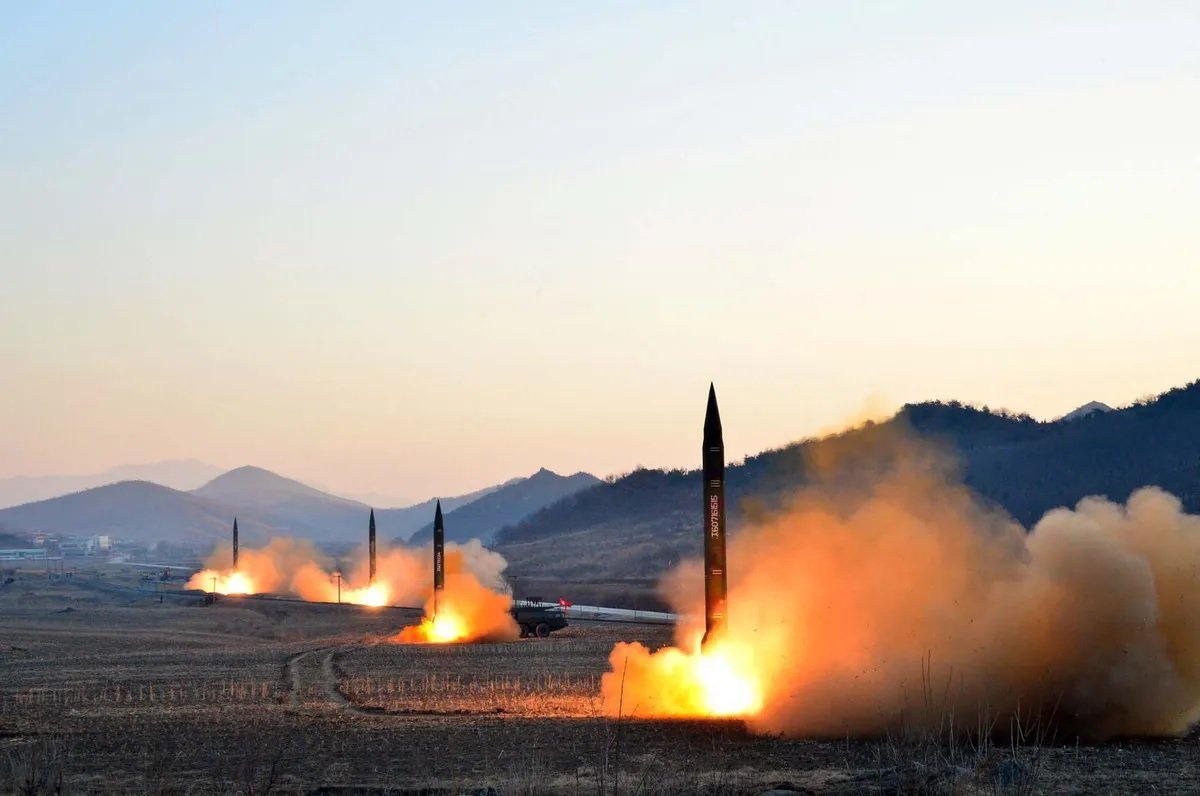
World
LONDON — A North Korean missile unit has started deploying to western Russia and could eventually operate with 120 ballistic missiles and six launchers in support of Russia's military campaign against Ukraine, according to Ukraine's Main Directorate of Intelligence (HUR). The reported deployment marks a further expansion of military cooperation between Moscow and Pyongyang following the mutual defence pact signed in 2024. While Russia has previously used North Korean-made weapons during the war, Ukrainian officials say the establishment of a dedicated North Korean missile unit would also involve North Korean personnel being integrated into Russia's missile operations. According to Andrii Cherniak, a representative of Ukraine's Main Directorate of Intelligence, Russia plans to station the unit in the Voronezh region as part of the 112th Missile Brigade. The deployment is expected to include approximately 90 North Korean personnel. Voronezh is located about 150 kilometres (95 miles) from the Ukrainian border and serves as an important logistics and staging area for Russian forces. Cherniak said North Korea has already delivered a new batch of 40 KN-23 and KN-24 ballistic missiles together with the initial personnel. He added that the final size and structure of the deployment, including the planned force of 120 ballistic missiles and six launchers, will be decided during high-level talks between Russia and North Korea scheduled for next month. The exact role that the North Korean personnel will perform within the Russian military remains unclear. North Korean Missiles Used Again Against Ukraine The reported deployment comes as Russia has resumed using North Korean ballistic missiles against Ukraine. According to Cherniak, Russia recently launched its first two North Korean ballistic missiles since August 2025, and both missiles came from the newly delivered batch of 40. One of the strikes, carried out on July 30, hit a residential house in the village of Radushne in central Ukraine, killing at least five members of the same family. Ukrainian President Volodymyr Zelenskyy later said preliminary information indicated that the weapon used in the attack was a North Korean ballistic missile. Ukraine has repeatedly warned that it faces a shortage of advanced air defence systems capable of intercepting ballistic missiles. Russia has increasingly relied on ballistic missiles because they are more difficult to intercept than many other types of missiles. Ukrainian officials have said that U.S.-made Patriot air defence systems remain the only systems that have consistently intercepted these ballistic threats. Rob Lee, a senior fellow at the Foreign Policy Research Institute, said any increase in the number of ballistic missiles available to Russia would create additional challenges for Ukraine's air defences. "Ballistic missile defence is one of Ukraine's greatest vulnerabilities, so any increase in the quantities of ballistic missiles they face will pose a greater challenge," Lee said. He added that Ukraine's air defence capability could become an even greater concern during winter if Russia resumes large-scale attacks on the country's energy infrastructure. KN-23 and KN-24 Missile Supplies According to Ukrainian military sources, North Korea's KN-23 and KN-24 ballistic missiles have a longer range and larger payload than Russia's comparable Iskander missile systems, although they are considered less accurate. Ukrainian officials have linked their use to missile strikes that resulted in high civilian casualties. Cherniak said North Korea has supplied Russia with approximately 150 ballistic missiles between late 2023 and August 2025. Russia began using KN-23 and KN-24 missiles against Ukraine during that period. Expanding Russia-North Korea Military Cooperation Military cooperation between Russia and North Korea has expanded significantly since Russia's full-scale invasion of Ukraine in 2022. In addition to missile supplies, North Korea has provided millions of artillery shells to Russia. Ukraine also says North Korea has contributed military personnel. Ukrainian officials previously reported that around 14,000 North Korean troops were deployed to Russia's Kursk region to help repel a Ukrainian cross-border operation in 2024. According to Cherniak, about 9,500 North Korean troops remain in the Kursk region, although they are not currently taking part in direct combat operations against Ukraine. Last month, President Volodymyr Zelenskyy said Russia was preparing to receive another 30,000 North Korean troops, with preparations already underway in the Voronezh region. Russian and North Korean Response The Russian Defence Ministry and North Korea's mission to the United Nations in New York did not immediately respond to written requests for comment. Cherniak said his statements were based on Ukrainian intelligence that could not be publicly disclosed. Reuters said it was unable to independently verify the intelligence claims.
Read More → Posted on 2026-08-05 11:58:34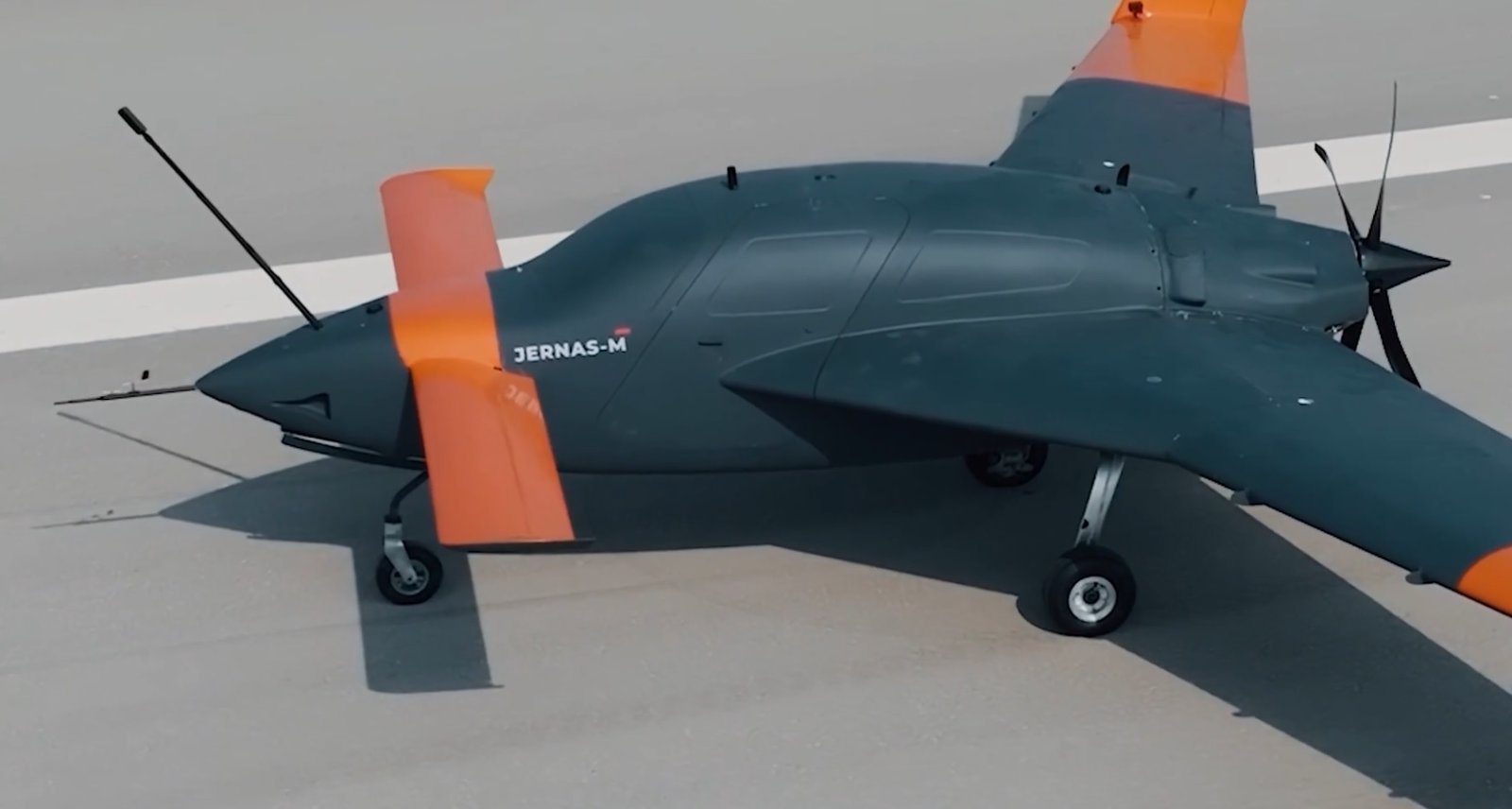
World
ABU DHABI — Abu Dhabi-based EDGE Group has released new flight test footage of its JERNAS-M unmanned aircraft, a medium-altitude, long-endurance (MALE) platform developed for intelligence, surveillance, reconnaissance (ISR), target tracking, and multi-mission operations. The state-owned Emirati defence company shared the video on X, describing the JERNAS-M as a dependable and cost-effective solution designed for continuous surveillance and modern air defence missions. According to EDGE, the platform provides persistent monitoring and target tracking while supporting long-endurance operations. Built for constant vigilance.JERNAS-M provides dependable surveillance and target tracking in an efficient, cost-effective solution built for modern air defence. Delivering the capability that matters, where it matters most. pic.twitter.com/vY1StwATD1 — EDGE (@_edgegroup) August 4, 2026 Developed by ADASI The JERNAS-M is being developed by ADASI, EDGE Group's autonomous systems subsidiary. The aircraft made its public debut at the Dubai Airshow 2025, where EDGE introduced 42 new defence products. Alongside the JERNAS-M, ADASI also unveiled the Strike fixed-wing weapon carrier and the Vortex-E counter-drone interceptor as part of its expanding unmanned systems portfolio. The JERNAS-M builds on the earlier JERNAS-S programme, which is a smaller variant of the platform. Flight Performance and Specifications According to EDGE's published specifications, the JERNAS-M has a 10-metre wingspan, an empty weight of 590 kilograms, and a maximum take-off weight of 1,200 kilograms. The aircraft is powered by an EP918Ti-185H four-stroke, four-cylinder horizontally opposed engine producing 185 horsepower at 5,800 rpm. It operates on standard automotive gasoline and carries 350 litres of fuel, with reported fuel consumption of approximately 17 litres per hour. EDGE lists both the maximum and cruising speed at 240 km/h. For intelligence, surveillance and reconnaissance (ISR) missions, the aircraft can remain airborne for up to 20 hours. When carrying its maximum payload of 280 kilograms, endurance is reduced to 12 hours. The drone has a line-of-sight operational range of 200 kilometres, while its maximum operating altitude is 30,000 feet, according to official specifications. Mission Payloads The JERNAS-M is designed as a multi-mission platform capable of carrying different mission systems. According to EDGE, it can be equipped with: Electro-optical sensors Radar systems Electronic warfare payloads In a strike configuration, the aircraft can carry one RASH MK81 bomb together with four RASH-3 munitions, according to the company's published specifications. The aircraft operates from conventional runways using tricycle landing gear and features a forward canard, winglets on the main wings, and a rear-mounted pusher propeller. Airframe Design Flight test footage released by EDGE shows an aircraft with a composite airframe featuring a forward canard, rear-mounted pusher propeller, cockpit canopy shape, fuselage design and landing gear arrangement that closely resemble the Velocity composite kit aircraft produced by Velocity Inc. of Sebastian, Florida, since the 1980s. The civilian Velocity aircraft is designed for homebuilt aviation and traces its aerodynamic heritage to Burt Rutan's Long-EZ design. EDGE has not issued an official statement confirming that the JERNAS-M is based on the Velocity airframe. However, adapting an existing civilian aircraft design is a recognised aerospace development approach that can reduce structural development work, flight testing requirements and programme costs compared with developing an entirely new airframe. Development Timeline Speaking to EDR On-Line, Marcus de Jonge, Chief Development Officer at ADASI, said the current JERNAS-M is a pre-prototype aircraft that completed its first flights shortly before the opening of the Dubai Airshow in 2025. According to de Jonge: An updated JERNAS-M design is scheduled to fly in late 2026. Production is planned for 2027. He also said the smaller JERNAS-S, which features an 8-metre wingspan, 630-kilogram maximum take-off weight, and 155-kilogram payload, is further advanced and is expected to enter production in 2026. Wider Unmanned Systems Strategy At the Dubai Airshow 2025, EDGE also announced a joint venture with U.S. defence technology company Anduril focused on the Omen runway-independent unmanned aircraft. While the partnership is centred on a different platform, industry observers have noted that cooperation in software and production could support the international reach of EDGE's wider unmanned systems portfolio. The JERNAS-M forms part of EDGE's broader effort to expand its autonomous capabilities across air, land and sea domains. Positioned in the medium-altitude, long-endurance (MALE) category, the platform is intended to provide extended surveillance, reconnaissance and target-tracking capabilities while offering a lower-cost option than many purpose-built systems in the same class.
Read More → Posted on 2026-08-05 11:28:50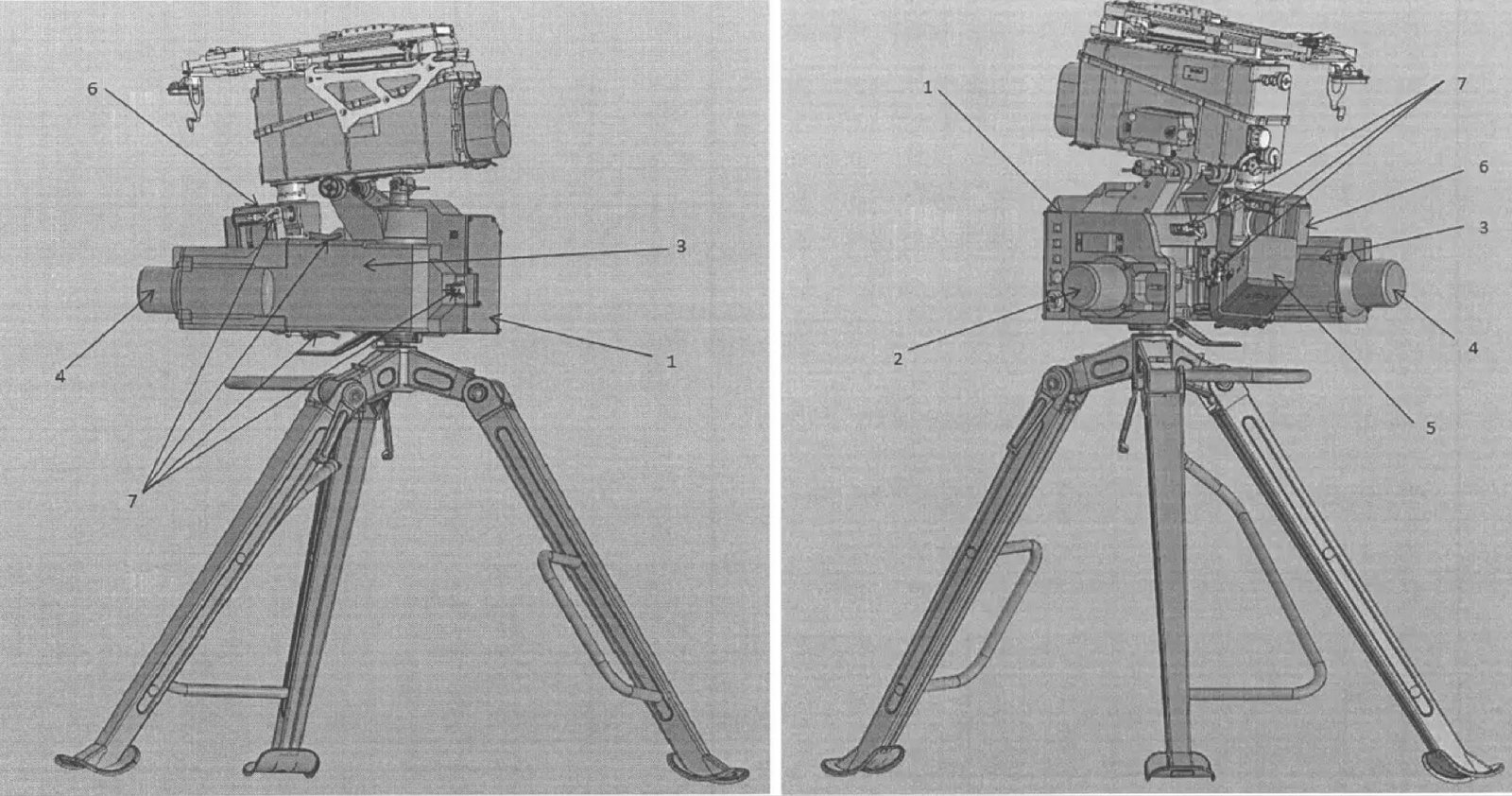
World
MOSCOW — Specialists at JSC All-Russian Research Institute "Signal" (VNII Signal) have patented a remote-control attachment for portable anti-tank missile systems (ATGMs), allowing operators to aim and fire missiles from a distance without making permanent modifications to the standard launcher. The patented system is designed as a removable attachment that can be installed quickly in the field. According to the patent, all major components are secured using adjustable fasteners, enabling rapid assembly and disassembly. This approach allows operators to switch back to the launcher's standard manual operation whenever required. Remote-Control Operation The attachment enables full remote control of the launcher through an operator's console. The system includes: Electric drives for horizontal and vertical guidance A trigger mechanism drive A video camera A command processing unit A module for remotely switching optical sight magnification An operator's control console During operation, the image from the launcher's optical sight is transmitted to the operator's console in real time. From the control panel, the operator can aim the launcher, adjust the optical magnification, and launch the missile while remaining at a safer distance from the firing position. Commands to the guidance drives and other actuators are transmitted through either wired connections or encrypted radio communication channels. Modular Design According to the patent, the system is intended to solve a key technical challenge of providing remote launcher operation without altering the original structure of the weapon. Unlike systems that require permanent modifications, the new device functions as a quick-install attachment. Once removed, the launcher can immediately return to its conventional manual operating mode. The developers said earlier technical solutions either required extensive modifications to the launcher or did not allow operators to quickly switch back to manual control. The new design addresses both of these limitations through its removable and modular configuration. Production Status The developers stated that the patented remote-control device has already been incorporated into one of the mass-produced products, indicating that the technology is being integrated into serial production. Comparison With Existing Systems The operational concept is similar to the Ukrainian Stugna-P, also known as Skif, which has long featured a remote-control panel connected by cable, allowing operators to control the launcher from a protected position. The newly patented Russian system provides comparable remote-operation capability through an attachable kit that does not require permanent modifications to the launcher. The modular design also allows the attachment to be removed quickly, restoring standard manual operation when needed. Focus on Operator Survivability The patent, reported in late July 2026, reflects efforts to improve operator survivability by allowing portable anti-tank missile launchers to be operated from a safer position while maintaining compatibility with existing launcher systems and avoiding the need to manufacture entirely new missile platforms.
Read More → Posted on 2026-08-04 13:24:02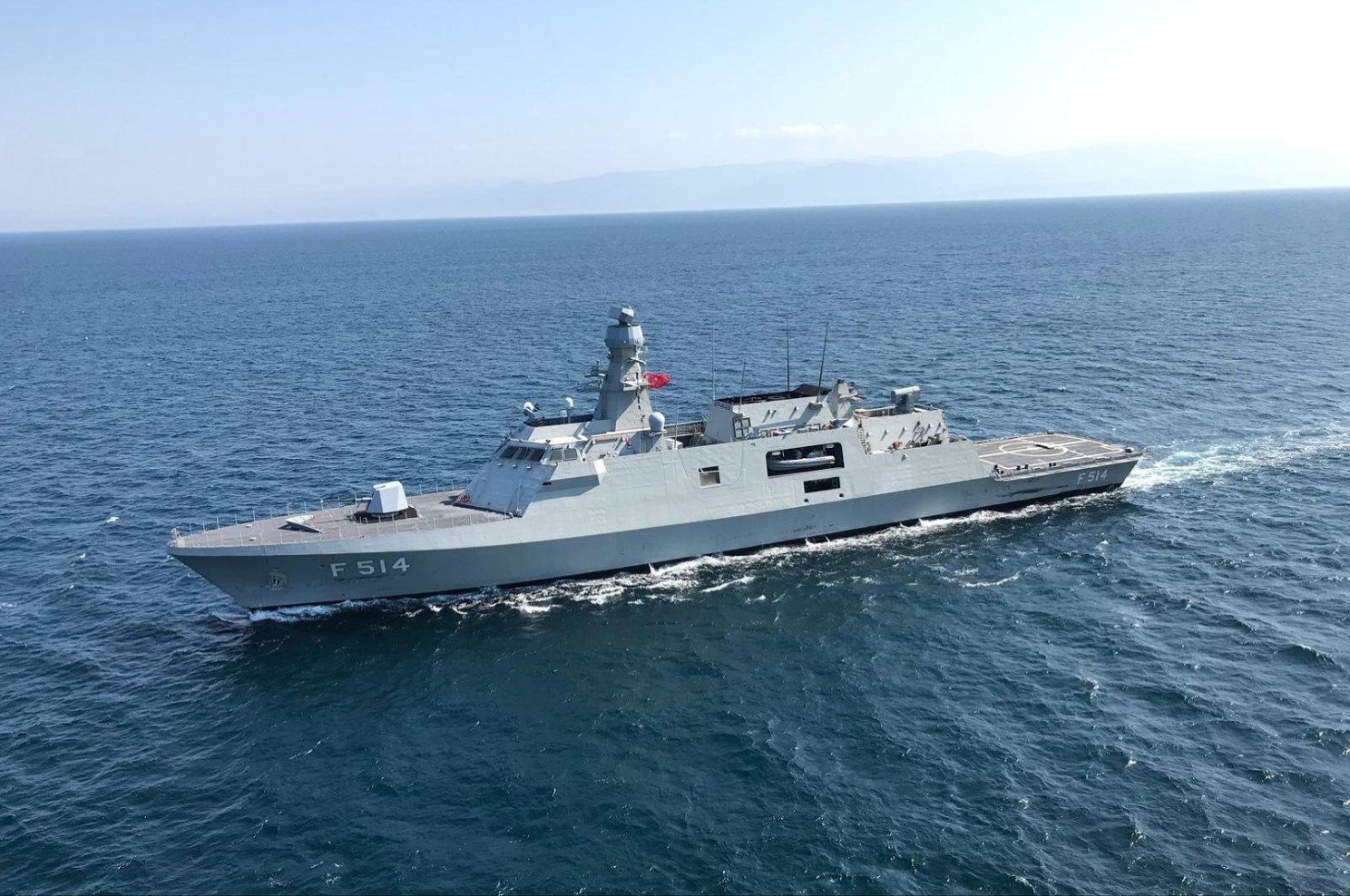
World
BUCHAREST, Romania — Turkish defense company ASELSAN has completed the integration of an extensive suite of Turkish-developed naval systems aboard the Romanian Naval Forces' newest warship, Contraamiral August Roman (pennant number 261). The program marks the first export of a warship built in Türkiye to a member of both NATO and the European Union, representing an important milestone for the Turkish defense industry. The vessel was originally built for the Turkish Navy as the Hisar-class patrol vessel Akhisar (P 1220) by ASFAT at the Istanbul Naval Shipyard. Romania acquired the ship through a government-to-government agreement signed in December 2025, with the contract valued at approximately €223 million. Ownership was transferred to Romania on June 16, 2026, and the ship was officially commissioned into the Romanian Naval Forces on June 20, 2026 after being renamed Contraamiral August Roman. Integrated Turkish Naval Systems To meet the Romanian Navy's operational requirements, ASELSAN equipped the corvette with an integrated package of surveillance, fire-control, communications, navigation, and identification systems designed to improve the ship's operational and combat capabilities. The vessel's primary sensor suite includes the CENK 200 search and target-detection radar and the AKREP 100-N fire-control radar. For reconnaissance, surveillance, and targeting, the ship is fitted with the AHTAPOT 100 electro-optical system. For secure long-range communications, ASELSAN integrated the ACROSAT 3210M X-band satellite communications system, while the KARETTA 500 anti-jam system protects the vessel's satellite navigation signals from electronic interference. ASELSAN also reported that the ship carries several additional systems, including the ALPER LPI radar, TAKS naval gun fire-control system, ARTNET integrated communications system, IDENTA identification friend-or-foe (IFF) system, ACROSAT Ku-band satellite communications, ANS inertial navigation system, and the MİTOS electronic chart display and information system. According to the company, the integrated package was selected to strengthen the corvette's surveillance, communications, fire-control, and navigation capabilities. From Turkish Navy Program to Romanian Service The warship was constructed under Türkiye's MILGEM program at the Istanbul Naval Shipyard. Construction began with the vessel being laid down on August 15, 2021, followed by its launch on September 23, 2023. The ship was handed over in December 2024, after which sea trials began. Although completed for the Turkish Navy, it was not placed into operational service. Romania moved to acquire the ready-built platform through a government-to-government agreement as part of its naval modernization efforts. Following the transfer of ownership on June 16, 2026, the vessel entered Romanian service as Contraamiral August Roman and was formally commissioned on June 20, 2026. It later arrived at the Port of Constanța on July 10, 2026. Ship Specifications and Current Armament The Contraamiral August Roman displaces approximately 2,300 tonnes and measures 99.56 metres in length with a 14.42-metre beam. The vessel has a maximum speed of 24 knots, a range of 4,500 nautical miles, and an endurance of 21 days. It operates with a crew of around 104 personnel and is capable of supporting helicopter and unmanned aerial vehicle (UAV) operations. The corvette is currently armed with an MKE 76mm main gun, an ASELSAN GOKDENIZ close-in weapon system (CIWS), and remotely operated 12.7mm machine guns. The vessel has been assigned to the Romanian Navy's 50th Corvette Division. Planned Capability Upgrades Romanian defense officials have described Contraamiral August Roman as the country's first modern warship. While the ship entered service with its initial combat configuration, Romania plans to allocate an additional €42 million during the second half of 2026 to procure further combat systems. According to Romanian plans, the future upgrades will include vertical launching systems (VLS) for air defense, torpedo capabilities, and the integration of Naval Strike Missiles (NSM) through funding provided under the European Union's SAFE program. Strategic Importance for ASELSAN The delivery expands ASELSAN's role in Romania's naval modernization program and places the company's systems aboard a warship operated by a NATO and European Union member state. ASELSAN said the program strengthens its position in the international market for naval sensors, communications, navigation, and fire-control systems. The company added that the successful integration reflects growing international demand for its naval technologies and supports its expanding participation in allied fleet modernization programs.
Read More → Posted on 2026-08-04 13:13:41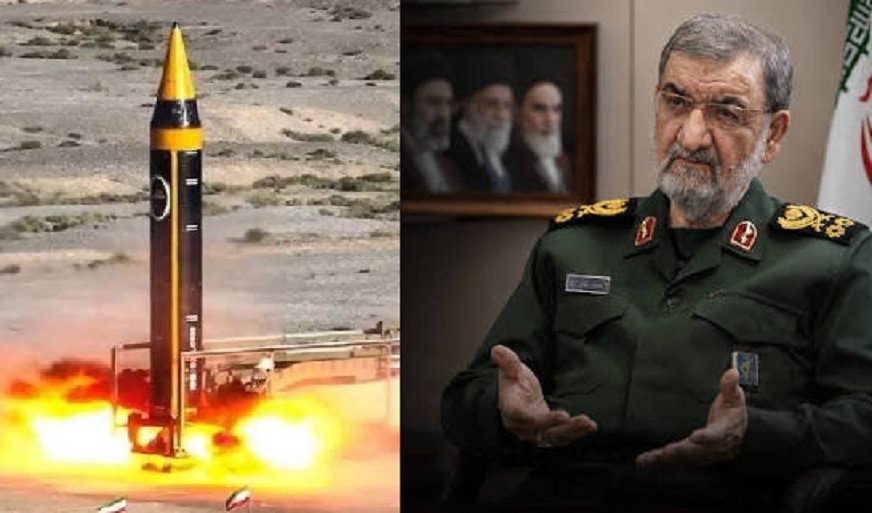
World
TEHRAN, Iran — Iran prepared retaliatory missile strikes against three locations in Ukraine following the July 25 attack on a vessel in the Caspian Sea, but suspended the planned operation after diplomatic communications with Kyiv, according to a senior Iranian official. General Mohsen Rezaei, an adviser to Iran's Supreme Leader, said during an appearance on Iranian state television that Iran's armed forces had completed preparations for the strikes. He stated that the operation was halted after Ukrainian officials reportedly said the attack on the Iranian vessel had been unintentional. "We were prepared to strike three locations in Ukraine, but after they said the attack had been a mistake, we put our response on hold to assess their claim," Rezaei said. He added that the retaliatory operation was ultimately called off. Rezaei did not identify the three intended targets or provide evidence supporting his claims. His statements have not been independently verified. Caspian Sea Incident The planned response followed a military operation in the Caspian Sea on July 25, which has become the center of a dispute between Iran and Ukraine. Iran said Ukraine attacked an Iranian commercial vessel carrying civilian cargo, causing an explosion that killed one sailor and injured another. Tehran condemned the incident as a violation of international law and said attacks on Iranian citizens and interests were unacceptable. Ukraine presented a different account of the operation. President Volodymyr Zelensky and Ukraine's Security Service (SBU) confirmed that Ukrainian Defense Forces conducted long-range strikes in the Caspian Sea. According to the SBU, the operation targeted the Russian missile boat Molnyia along with two cargo ships, Port Olya 2 and Begey, which Ukraine said were operating under international sanctions. Ukraine stated that the vessels were transporting Iranian-made missile and drone components intended for Russian forces. Separate reports identified one of the ships involved as the Iranian-owned cargo vessel Ana. Kyiv maintained that its military operation targeted vessels involved in transporting military cargo rather than civilian shipping. Diplomatic Contacts Followed the Incident Diplomatic efforts began soon after the July 25 operation. On July 28, Ukrainian Foreign Minister Andrii Sybiha spoke by telephone with Iranian Foreign Minister Abbas Araghchi. According to Iranian officials, Araghchi formally protested the strike and told Ukraine that Iran expected compensation for the damage and casualties. Iranian officials also said Ukraine described the incident as unintentional during the diplomatic exchanges, which prompted Tehran to suspend its planned military response. Sybiha later described the call as a "frank conversation" and said Ukraine's military operations are conducted solely in defense against Russian aggression and are not intended to target civilian vessels or civilians. Ukraine has not publicly confirmed or denied the specific Iranian claim that it apologized or formally acknowledged the incident as a mistake beyond the statements made following the foreign ministers' discussion. Both sides indicated during the diplomatic contacts that they did not seek further escalation. Missile Capability If Iran had decided to carry out the planned operation, several of its ballistic missile systems have the theoretical range to reach Ukrainian territory. According to the CSIS Missile Defense Project infographic published in March 2026, Iranian missile systems including the Sejjil, Emad, Ghadr-110, Shahab-3, and Khorramshahr-2 have the range to reach Ukraine. Such missiles would present a significant challenge for Ukraine's existing air defense network if employed. However, there is no independent confirmation that any missile operation was actually prepared beyond the statements made by General Rezaei. Previous False Strike Claims This is not the first time reports of Iranian strikes on Ukraine have appeared publicly. In April 2026, Iranian propaganda outlets circulated videos claiming that Iran had launched missile strikes against Kyiv, Kharkiv, and Dnipro. The footage was later identified as AI-generated, and no such strikes occurred. Wider Context The Caspian Sea has become an important transport route linking Iran and Russia. Analysts from the Armed Conflict Location & Event Data Project (ACLED) have noted that Ukraine has increasingly targeted Russian-linked maritime and oil infrastructure since May as part of efforts to disrupt Moscow's wartime logistics. The Caspian Sea shipping route has been identified as one of the supply corridors connecting Iran and Russia. Iran and Russia have also expanded military cooperation in recent years. Tehran has supplied technology and components used in the production of Shahed attack drones, which Russian forces continue to use in strikes against Ukraine. For now, Iran's reported plans to strike Ukraine remain based solely on statements made by General Mohsen Rezaei on Iranian state television. No independent evidence has been presented to confirm that preparations for such an operation were completed, and Ukrainian authorities have not publicly confirmed the specific Iranian account of the diplomatic exchanges.
Read More → Posted on 2026-08-04 12:16:19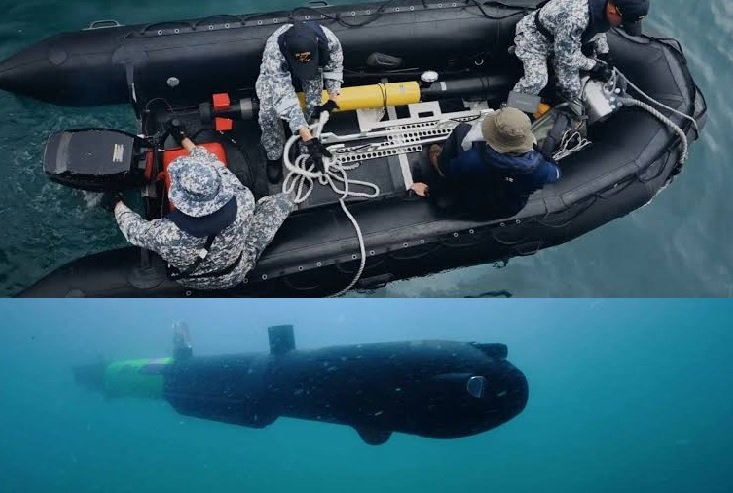
World
SINGAPORE — The Republic of Singapore Navy (RSN), in collaboration with the Defence Science and Technology Agency (DSTA) and French company RTsys Underwater Technologies, has officially deployed several COMET-MCM autonomous underwater vehicles (AUVs) to strengthen mine countermeasure operations in the Singapore Strait. The COMET-MCM systems are designed to detect, locate and identify naval mines and other suspicious objects on the seabed during the early stages of mine countermeasure missions. The deployment adds an autonomous capability to the RSN's existing mine countermeasure approach while reducing risks to personnel operating in potentially hazardous waters. Protecting One of the World's Busiest Shipping Routes The Singapore Strait is one of the world's busiest and most strategically important maritime routes. According to the announcement, nearly 150,000 ships pass through the strait each year, making it one of the most heavily used sea lanes for international trade. Any disruption caused by underwater threats such as naval mines could affect maritime traffic, regional shipping and trade across the Asia-Pacific. To strengthen maritime security, the RSN has introduced autonomous underwater technology that can carry out mine detection missions while reducing operator workload and limiting crew exposure to dangerous areas. COMET-MCM Designed for Early Mine Detection The COMET-MCM vehicles form part of the RSN's mine countermeasure operations and are used during the initial phase of missions to detect, locate and identify objects on the seafloor before further investigation and neutralization. The systems were developed by RTsys Underwater Technologies in partnership with DSTA, which managed the integration of the vehicles to meet the Singapore Navy's operational requirements. The autonomous vehicles are manufactured at RTsys's factory in Lanester, Brittany, France. Technical Capabilities The COMET-MCM is a two-man portable autonomous underwater vehicle measuring 1.9 meters in length, with a 150-millimeter hull diameter and weighing 35 kilograms. According to RTsys, the vehicle has a maximum operating depth of 300 meters and can reach speeds of up to 10 knots. It can operate for up to 20 hours at a cruising speed of 3 knots or approximately 7 hours at 7 knots. The system is equipped with a Klein high-resolution side-scan sonar and a low-light HD camera for underwater detection and identification missions. Its navigation suite includes GPS, inertial navigation, Doppler velocity log and Long Baseline (LBL) acoustic positioning, enabling accurate positioning while mapping large underwater areas. The COMET-MCM can operate either independently or as part of a coordinated fleet in swarm mode. Missions are preprogrammed before launch, allowing the vehicles to conduct autonomous operations while reducing operator workload, speeding reconnaissance and limiting the time crews spend in hazardous environments. During missions, the vehicles can transmit real-time tracking information to surface operators, complementing data collected by traditional minehunter sonar systems. Supporting Complete Mine Countermeasure Operations Data gathered by the COMET-MCM supports the full sequence of mine countermeasure operations, including detection, classification, identification and neutralization. When a potential mine or underwater contact is detected, it can be further examined using remotely operated systems or Explosive Ordnance Disposal (EOD) divers. The RSN also uses RTsys's SONADIVE handheld underwater navigation and sonar system to support divers during these missions. The system features a 12-inch display designed for underwater visibility, provides up to six hours of battery life, and allows divers to navigate accurately while communicating through an acoustic modem. It enables tactical data and text message exchanges with other divers and surface units at ranges of up to 2.2 kilometers. Decade-Long Cooperation The deployment reflects more than a decade of cooperation between the Republic of Singapore Navy, DSTA and RTsys in the field of autonomous underwater robotics. Pierre-Alexandre Caux, Sales Director at RTsys Underwater Technologies, said the operational deployment demonstrates international recognition of the company's underwater robotics and acoustic technologies. "The COMET-MCM is the result of more than a decade of cooperation with navies worldwide. Its operational deployment by the Republic of Singapore Navy is further recognition of our expertise in underwater robotics and acoustics. It demonstrates our ability to meet the demanding requirements of the world's most advanced navies in tackling the challenges of mine warfare. Finally, the COMET-MCM highlights how technological innovation can enhance national operational sovereignty." The Republic of Singapore Navy also emphasized the importance of the new capability for safeguarding a major international shipping route. "The Singapore Strait is a vital artery for global trade. With the COMET-MCMs, we are enhancing our ability to detect and identify underwater threats with greater precision, efficiency, and safety for our crews." The operational deployment of the COMET-MCM autonomous underwater vehicles strengthens the RSN's mine countermeasure capabilities by adding autonomous underwater detection and identification systems to support existing mine warfare operations while improving efficiency and reducing risks to personnel.
Read More → Posted on 2026-08-04 11:48:48Search
Top Trending in 24 Hours
-
 North Korea Fires Short-Range Ballistic Missile Toward Sea of Japan After Freedom Edge 26
-
 India’s xTerra Robotics Launches Indigenous DHAV-Hy Wheeled-Legged Quadruped for Industrial Inspection
-
 U.S. Army Awards $10.64 Million Contract to Ukrainian Drone Maker Skyeton for Raybird Systems
-
 U.S. Space Force Seeks Rapid-Response Satellites for Close-Range Orbital Inspections
-
 U.S. Delivers First CH-47F Chinook to Egypt Under 12-Helicopter Deal
-
 BEL Showcase X-Band Multi-Function Radar for QRSAM to Japanese Delegation
-
 U.S. Government Seizes Almasirah.net, Houthi-Linked News Website
-
 IRGC Experts Visit Bab El-Mandeb to Oversee Radar Installation and Tunneling, Houthi Sources Say
Top Trending in 4 Days
-
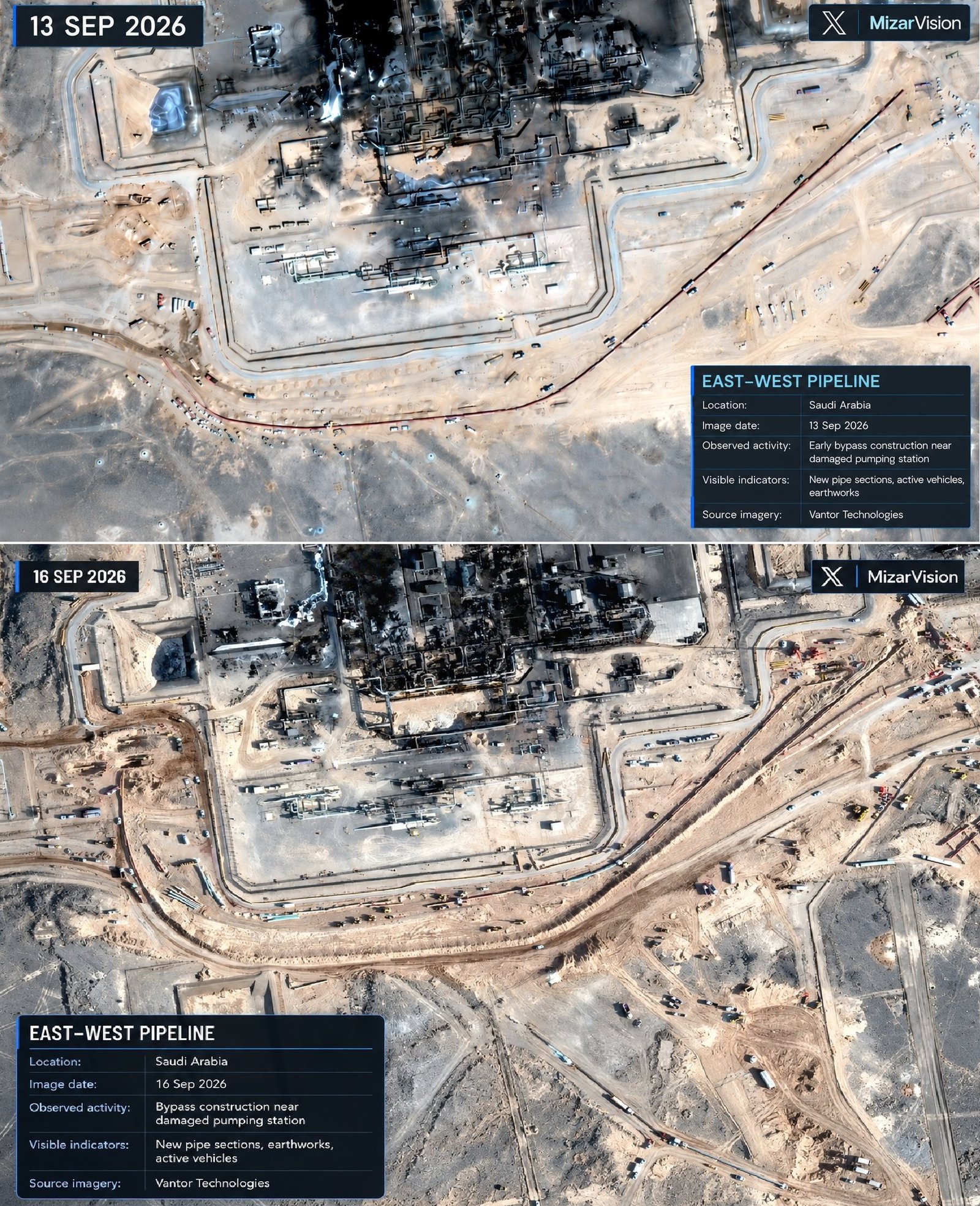 Satellite Images Show Saudi Arabia Building Emergency Bypass Around Damaged East-West Oil Pipeline Station
-
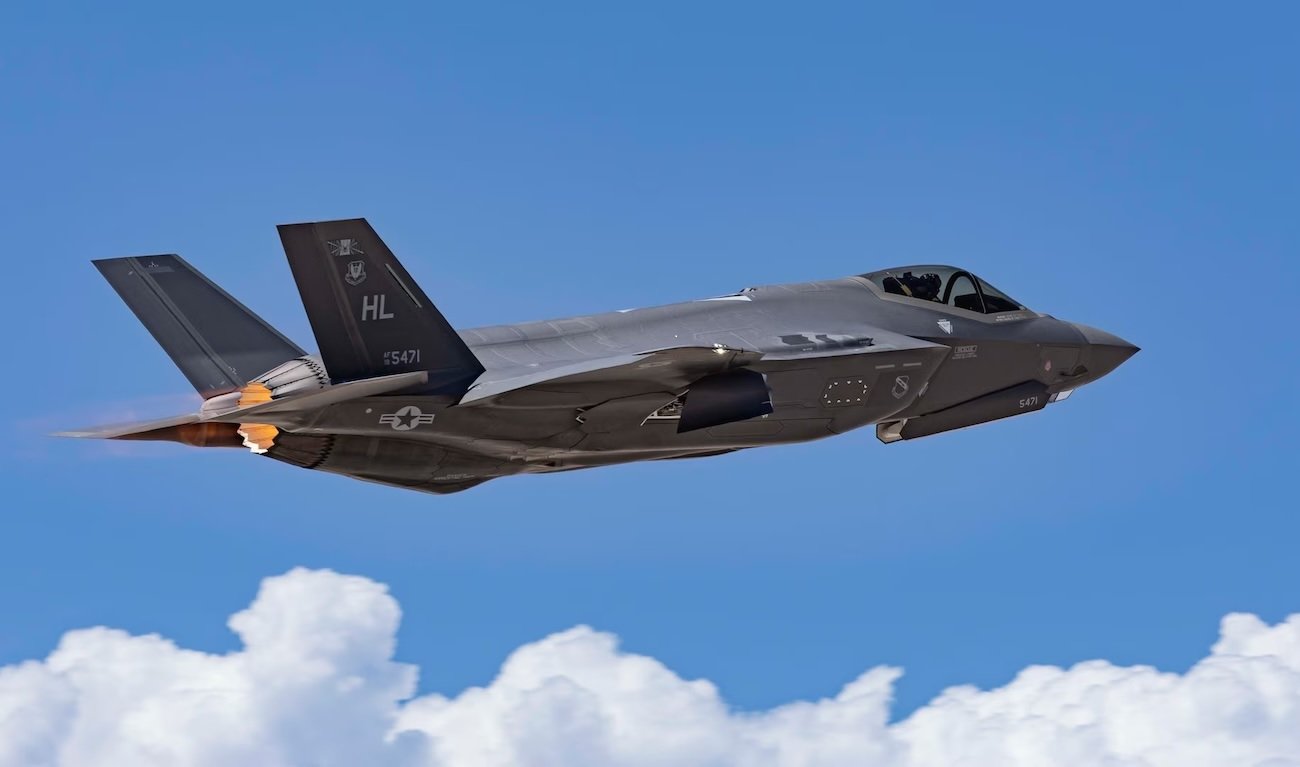 Sensitive F-35 Components Diverted to Hong Kong, Some Parts Missing
-
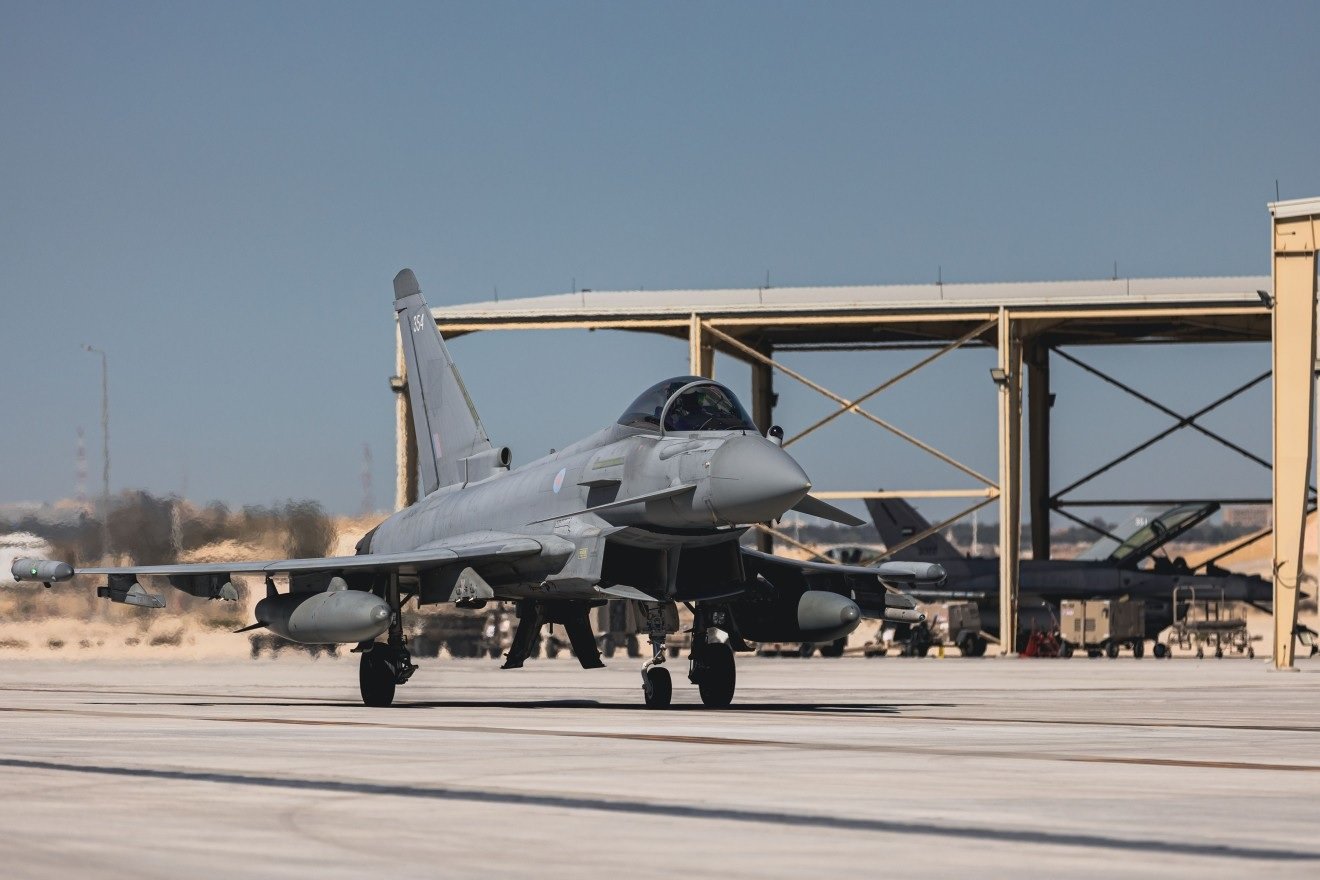 Italian Eurofighter Damaged in Houthi Attack on Saudi Arabia’s King Fahd Air Base
-
 U.S. Secures Permanent Military Rights in Greenland in Historic Security Pact with Denmark
-
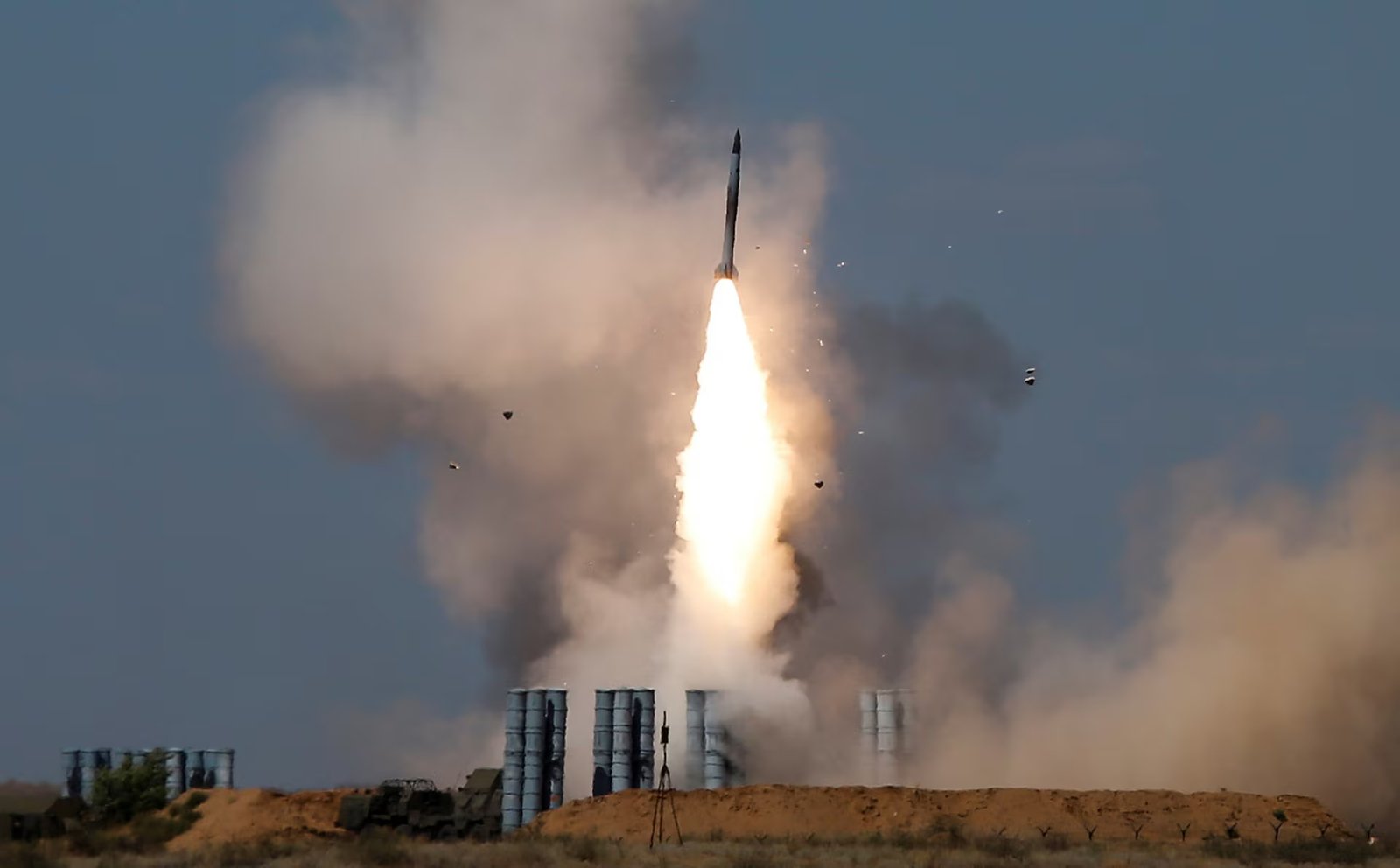 U.S. Approves Potential $2.68 Billion Air Defense Package for Ukraine Including S-300 Clone Missiles
-
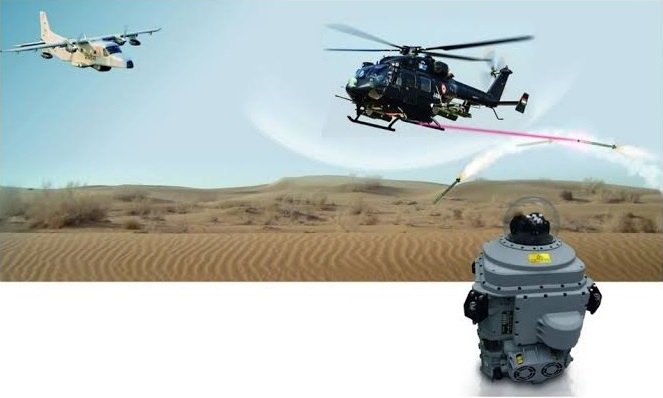 BEL Signs Export Deal with Elbit Systems for Directed Infrared Countermeasure Sub-Assemblies, Secures ₹648 Crore in Additional Orders
-
 China Privately Urges Iran to Restrain Houthis After Saudi Appeal
-
 Israeli Firm Arbe Robotics Unveils Alerion High-Resolution 4D Radar for Counter-Drone Operations