DAYTON, Ohio, June 24, 2026 — The U.S. Air Force has awarded a $12 million contract to Zone 5 Technologies to develop manufacturing capabilities for large-scale production of the AGM-188A "Rusty Dagger" missile, a low-cost, air-launched precision strike weapon developed under the Extended Range Attack Munition (ERAM) program.
The contract was issued on June 18, 2026, by the Air Force Research Laboratory (AFRL) at Wright-Patterson Air Force Base, Ohio. It represents a Phase III Small Business Innovation Research (SBIR) effort focused on transitioning the missile from prototype development to quantity production. Of the total contract value, $7.5 million was obligated immediately using fiscal year 2026 research, development, test, and evaluation funds.
Work under the contract will be carried out in Miamisburg, Ohio, with completion expected by September 2027. The manufacturing effort is intended to address supply chain, production engineering, and industrial scaling challenges required to support high-volume missile output.
The AGM-188A Rusty Dagger was developed as part of the Air Force's ERAM initiative, launched in 2024 to provide affordable, mass-producible long-range strike weapons. The Air Force has emphasized the need for low-cost precision munitions that can be produced in large quantities while maintaining precision strike capability.
Designed for Existing Aircraft Fleets
The Rusty Dagger combines characteristics of a cruise missile and a guided bomb. The weapon falls within the 500-pound (225 kg) class and carries a 45-kilogram (100-pound) warhead. Powered by a PBS Aerospace TJ80 turbojet engine, the missile can reach high-subsonic speeds exceeding Mach 0.6 and is reported to have a standoff range of approximately 460 to 930 kilometers (280 to 580 miles).
The missile uses GPS and inertial navigation systems and can incorporate autonomous visual navigation capabilities for operations in GPS-denied or electronically contested environments.
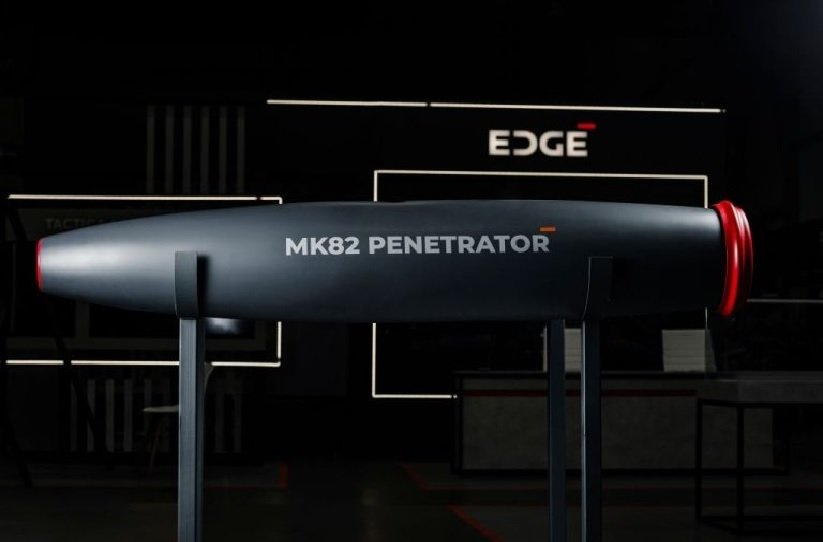
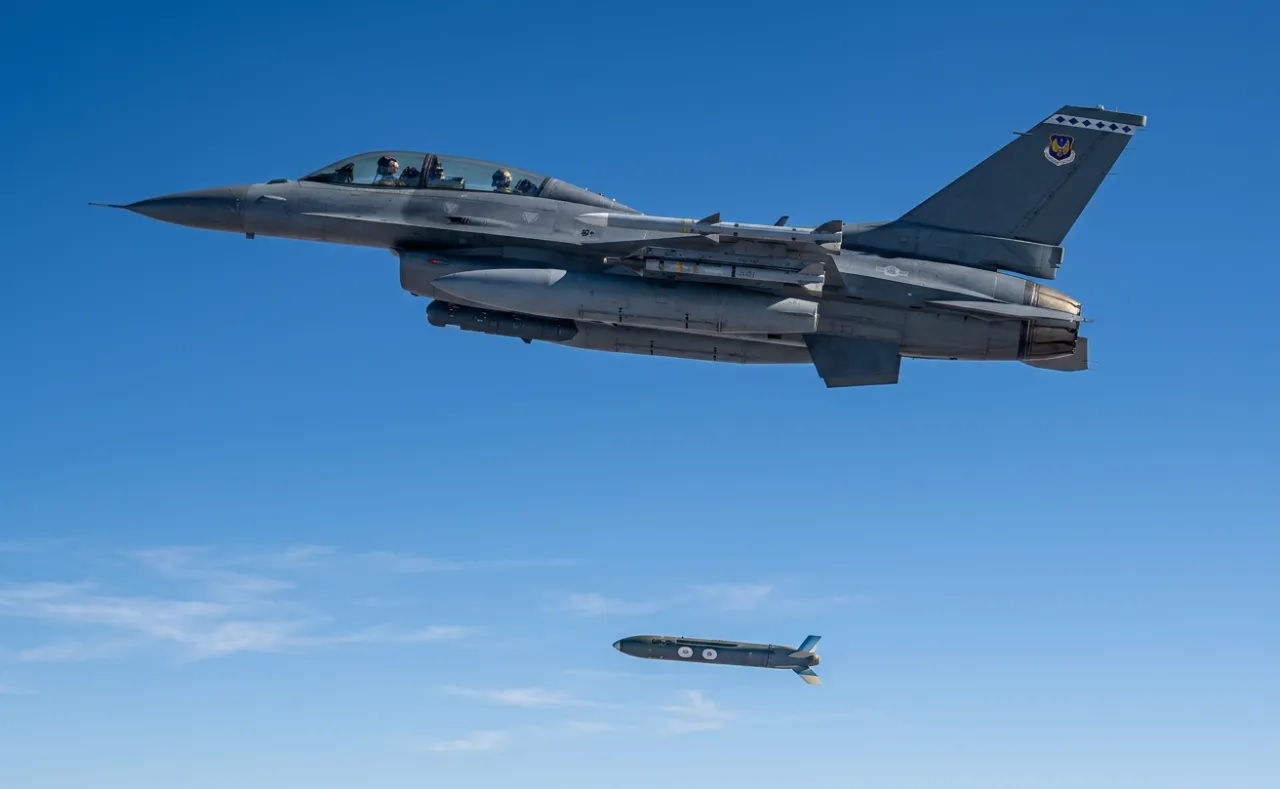
One of the key features of the Rusty Dagger is its compatibility with the size, weight, and mounting interface of the widely used Mk 82 unguided bomb. This allows aircraft already capable of carrying Mk 82 bombs to employ the missile without requiring significant modifications to weapon stations or airframes.
The design enables integration across a broad range of NATO and partner aircraft, including Ukraine's F-16 fleet and other fixed-wing combat platforms.
Rapid Development Under ERAM Program
Zone 5 Technologies, headquartered in San Luis Obispo, California, was selected under the ERAM program through the Small Business Innovation Research framework. The company moved the program through development at an accelerated pace, achieving milestones including integration testing on F-16 aircraft and successful live-warhead testing at Eglin Air Force Base, Florida.
A first production batch of approximately 840 missiles is planned for delivery in October 2026.
In August 2025, the U.S. Defense Security Cooperation Agency approved a Foreign Military Sale package allowing Ukraine to acquire up to 3,350 ERAM munitions and related equipment. The package was valued at an estimated $825 million and is supported by funding contributions from the United States, Denmark, the Netherlands, and Norway.
Reports of Possible Combat Use
The manufacturing contract follows reports of a strike conducted on June 22, 2026, against the JSC "VZPP-Sborka" semiconductor facility in Voronezh, Russia, located roughly 500 kilometers from the Ukrainian border.
The facility produces military-grade microelectronics used in several Russian defense systems, including Kh-101 cruise missiles, Iskander-K missile systems, and Pantsir-S1 air defense platforms.
Russian regional authorities acknowledged damage to production facilities, but the exact weapons used in the attack remain unconfirmed. Local monitoring sources initially reported that Storm Shadow missiles may have been involved. However, Russian military-affiliated Telegram channels, including Voevoda Broadcasts, cited by open-source intelligence account Status-6, claimed that AGM-188 Rusty Dagger missiles were employed in the strike.
Previous Russian reports have also claimed the recovery of components allegedly associated with the missile, including an eight-element Controlled Reception Pattern Antenna (CRPA) used for navigation and anti-jamming functions.
Neither the U.S. government nor Ukrainian authorities have officially confirmed the operational deployment of the AGM-188A. If confirmed, the Voronezh attack would represent the first reported combat use of the weapon.
Production Scaling Becomes Priority
The current contract focuses on establishing manufacturing processes capable of supporting large-scale production while maintaining affordability. The effort reflects broader Air Force objectives to increase precision-guided munition inventories through innovative procurement programs and participation by smaller defense firms.
Zone 5 Technologies was acquired by Kongsberg Defence & Aerospace of Norway in June 2026 and continues to operate as a subsidiary. The acquisition may provide additional industrial resources to support future production expansion.
With manufacturing technology development now underway in Ohio, the Rusty Dagger program is moving from testing and evaluation toward sustained production, supporting future long-range precision strike requirements.
——— End of Article ———